Tuesday, December 30, 2025
Home Blog Page 398

Israel cancels visas for several French lawmakers ahead of visit

The action came only days after Israel stopped two British members of parliament from the governing Labour party from entering the occupied territories.

It also came amidst diplomatic tensions after President Emmanuel Macron said France would soon recognise a Palestinian state. Macron has in turn sought to pressure Prime Minister Benjamin Netanyahu over conditions in Gaza amid the Israel-Hamas war.

Israel’s interior ministry said visas for the 27 had been cancelled under a law that allows authorities to ban people who could act against “the state of Israel”.

Seventeen members of the group, from France’s Ecologist and Communist parties, said they had been victims of “collective punishment” by Israel and called on Macron to intervene.

They announced in a statement that they had been invited on a five-day trip by the French consulate in Jerusalem.

They had intended to visit Israel and the Palestinian territories as part of their mission to “strengthen international cooperation and the culture of peace”, they added.

“For the first time, two days before our departure, the Israeli authorities cancelled our entry visas that had been approved one month ago,” they noted.

“We want to understand what led to this sudden decision, which resembles collective punishment,” stated the group.

The delegation included National Assembly deputies Francois Ruffin, Alexis Corbière and Julie Ozenne from the Ecologist party, Communist deputy Soumya Bourouaha and Communist senator Marianne Margate.

The other members were left-wing town mayors and local lawmakers.

The statement denounced the ban as a “major rupture in diplomatic ties”.

“Deliberately preventing elected officials and parliamentarians from travelling cannot be without consequences,” the group noted, demanding a meeting with Macron and action by the government to ensure Israel let them into the occupied territories.

The group added their parties had for decades called for recognition of a Palestinian state, which Macron said last week could come at an international conference in June.

Israeli authorities this month detained British members of parliament Yuan Yang and Abtisam Mohamed at Tel Aviv airport and deported them, citing the same reason. Britain’s Foreign Secretary David Lammy called the action “unacceptable”.

In February, Israel stopped two left-wing European parliament deputies, Franco-Palestinian Rima Hassan and Lynn Boylan from Ireland, from entering.

Netanyahu has reacted with fury to France’s possible recognition of a Palestinian state. He said establishing a Palestinian state next to Israel would be a “huge reward for terrorism”.

Report: Afghan student beaten at Kabul’s Embassy in Tehran, fears for safety

Mehraga Mosaddeq, an Afghan national from Parwan province, said embassy staff abruptly refused his passport renewal without justification before assaulting him.

“They punched me, strangled me, and dragged me into a room. I thought they would kill me there,” he told Shargh newspaper. The attack left him with visible injuries, requiring emergency treatment.

Mosaddeq, a political science student in Iran for over seven years, claims the violence was racially motivated, citing mistreatment of ethnic Tajiks and others opposed to the Taliban.

Despite filing a police report, he fears returning to the embassy, saying, “I just want a guarantee I’ll leave alive.”

Activists note a rise in violent incidents since the Taliban took control of Afghanistan’s diplomatic missions.

“This isn’t isolated – we’ve seen similar brutality before,” said Qamar Takavaran, a migration rights advocate. In 2023, an Iranian photographer was reportedly slapped by Taliban guards at Afghanistan’s consulate in Mashhad.

While embassies operate under their home country’s laws, legal expert Saleh Noghrehkar stressed that victims retain the right to seek international justice.

Israeli military finds ‘professional failures’ in killing of Gaza aid workers

The Palestine Red Crescent Society (PRCS) and the Israeli rights organisation Breaking the Silence rejected the findings of the Israeli probe on Sunday.

PRCS’s president told Al-Araby TV that the Israeli narrative on the killings in Rafah was “contradictory”.

“It is incomprehensible why the occupation soldiers buried the bodies of the paramedics in a criminal manner,” Younis al-Khatib said.

Al-Khatib added that the Israeli army communicated with the paramedics before killing them and that the evidence – including a video showing their ambulances flashing emergency lights – proved “the falsity of the occupation’s narrative regarding the limited visibility at the site”.

“An independent and impartial investigation must be conducted by a UN body.”

PRCS, which had medics killed by Israel in the incident, also denounced the Israeli report as “full of lies” on Sunday.

“It is invalid and unacceptable, as it justifies the killing and shifts responsibility to a personal error in the field command when the truth is quite different,” Nebal Farsakh, spokesperson for the organisation, told the AFP news agency.

The PRCS announced last week that it received confirmation from the International Committee of the Red Cross (ICRC) that one of its medics who was missing is being held by Israel.

The Israeli army on Sunday claimed that six of the aid workers who were killed and buried in a shallow mass grave along with their ambulances were Hamas “terrorists”, without providing any evidence.

It admitted its probe detected a series of “professional failures”, including partial and inaccurate reporting by the commanding officers in the field invading southern Gaza’s Rafah.

The deputy commander of the Golani Reconnaissance Battalion will be dismissed, while the commanding officer of the 14th Brigade is to receive a reprimand.

The examination also found “no evidence to support claims of execution or that any of the deceased were bound before or after the shooting”, despite the testimonies and the evidence.

The Israeli military had initially claimed that the ambulances and aid workers were not clearly marked as first responders and approached its troops “suspiciously”.

A mobile phone video recorded by one of the killed aid workers that was obtained by the New York Times showed that the crew were clearly marked and visible to Israeli forces, and were killed by Israeli fire that lasted several minutes.

United Nations and Palestinian officials later found the mass grave and the bulldozed ambulances and bodies after Israeli authorities granted access to the area of the mostly destroyed city of Rafah bordering Egypt.

The Israeli anti-occupation group Breaking the Silence said the military investigation is “riddled with contradictions, vague phrasing, and selective details”.

“Not every lie has a video to expose it, but this report doesn’t even attempt to engage with the truth,” the group announced, adding, “Another day, another cover-up. More innocent lives taken, with no accountability.”

Israel has a track record of denying accusations of wrongdoing and contradicting its own earlier statements.

Past investigations have exonerated the armed forces or placed the blame on a single individual without broader repercussions.

The UN accused the Israeli military of being responsible for the killing of the 15 aid workers, along with the killing of a Bulgarian UN staff member and wounding of six other foreign staff in Gaza’s Deir el-Balah last month.

The organisation has been forced to significantly cut its staff in Gaza as the war’s death toll continues to mount.

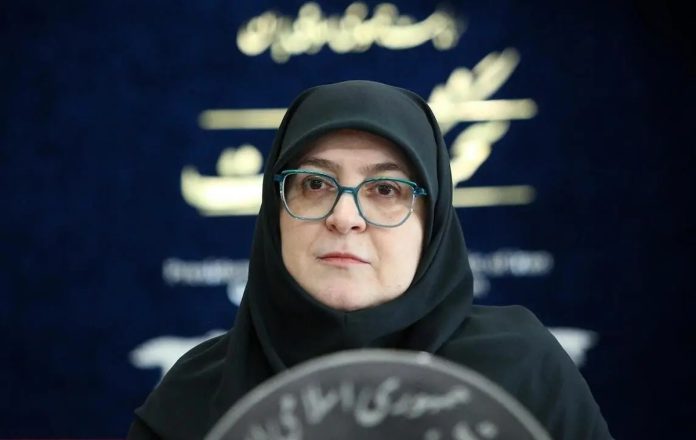
Iran welcomes any practical initiative that terminates sanctions: Spokeswoman

Mohajerani made the remark on Sunday, a day after Iranian and U.S. negotiators concluded a second round of talks over Iran’s nuclear program and the lifting of the sanctions against the country.

She told IRNA that the process of the talks has been positive so far.

“In the continuation of the talks, we welcome any practical initiative to lift the sanctions and ensure the rights of the Iranian people,” said Mohajerani.

The second round of the talks between Tehran and Washington were held in Rome, Italy. The two sides agreed to hold more discussions in the coming days.

The Rome discussions were a follow-up of negotiations held last Saturday in Muscat, Oman. During both rounds, the Iranian delegation was led by Foreign Minister Abbas Araqchi and the U.S. team was headed by Steve Witkoff, President Donald Trump’s Middle East envoy.

Mohajerani stated the talks will be pursued within the framework of the duties and missions of the Ministry of Foreign Affairs, and the administration will not divert its focus from the main path of running the country.

“The goal of these talks is to examine practical steps to reduce tensions and provide a platform for technical talks in the future,” she added.

Back in 2018, the U.S. withdrew from the 2015 Iran deal, also called the Joint Comprehensive Plan of Action (JCPOA), and initiated a “maximum pressure” campaign against Iran despite the fact that the Islamic Republic had fully honored its commitments to the agreement.

Lifting of sanctions Iran’s main demand in talks with US: Spokesman

Esmail Baghaei

On Monday, Esmail Baqaei spoke to reporters about the objectives of the negotiations and consultations, stating that all sanctions imposed against Iran are unjust and illegal.

Baqaei stressed that the oppressive sanctions have no legitimate basis, as they are rooted in concerns over Iran’s peaceful nuclear program—concerns that are entirely unfounded.

He added that it is natural for Iran’s key demand in any negotiations to be the lifting of sanctions so that Iran can conduct its normal trade and banking activities.

Referring to the US withdrawal from the Iran nuclear deal (JCPOA) in 2018, Baqaei said that given the history of broken promises, there must be guarantees that if the talks reach an agreement, it will endure, and the parties will fulfill their commitments.

Regarding Saudi Arabia’s role in the negotiations, Baqaei stated: “Our relationship with neighboring countries is based on good neighborliness. Close contacts have been maintained between Iran and all regional countries, and these consultations will continue.”

In response to a question about consultations with JCPOA member states regarding Iran-US negotiations, he said: “China and Russia are two important members of the UN Security Council and friends of Iran, and they have always been kept informed of relevant developments. We have also consulted with the three European JCPOA members and will continue to do so.”

The Iranian Foreign Ministry spokesperson also warned that a kind of alliance is forming between US Democrats and the Zionist regime to obstruct Iran-US talks.

FM Araghchi stresses strategic cooperation between Iran, Russia, China

Abbas Araghchi

Araghchi, visiting Moscow ahead of the next round of indirect nuclear talks between Tehran and Washington, described Iran-Russia relations as “closer and stronger than ever,” citing a newly ratified 20-year strategic partnership agreement.

“We are expanding economic ties despite sanctions and won’t wait for their removal,” he stated.

On trilateral cooperation with China and Russia, he said such collaboration is “essential in today’s world,” noting ongoing discussions on Iran’s nuclear issue and readiness to broaden dialogue to other areas.

“Together, we can take effective steps for international peace and security,” he added.

Addressing Western and Israeli threats, Araghchi asserted that Iran “does not yield to pressure” and is prepared to defend itself.

“I doubt military threats will materialize – the US and Israel know our capabilities,” he said, adding that diplomacy remains Iran’s priority but that it is “fully prepared for any scenario.”

Trump voices hope Russia, Ukraine make a deal within days, promises ‘big business’ with US

Trump’s comments come shortly after he threatened to pull U.S. support from the peace process altogether if either Russia or Ukraine caused negotiations to stall.

“Hopefully Russia and Ukraine will make a deal this week,” Trump wrote on Truth Social.

“Both will then start to do big business with the United States of America, which is thriving, and make a fortune.”

Trump’s post was published on Easter Sunday, amid what was supposed to be a temporary ceasefire in Russia’s war against Ukraine. Russian President Vladimir Putin on April 19 declared an “Easter truce,” promising to halt all combat operations until midnight on April 21.

Ukraine and the U.S. both called on Putin to extend the truce beyond Easter and impose a complete 30-day ceasefire. According to Kremlin Spokesperson Dmitry Peskov, Putin gave no such order.

President Volodymyr Zelensky had proposed a 30-day ban on long-range missile and drone strikes against civilian infrastructure, noting that Russia had managed to halt aerial attacks against Ukraine on Easter.

Some European leaders expressed skepticism at Putin’s Easter truce.

Trump had told reporters that he was ready to “take a pass” on negotiating a peace settlement between Russia and Ukraine.

“If for some reason one of the two parties makes it very difficult, we’re just going to say: ‘you’re foolish, you’re fools, you’re horrible people,’ and we’re just going to take a pass. But hopefully we won’t have to do that,” he said.

Earlier that day, U.S. Secretary of State Marco Rubio stated Washington would abandon its negotiation efforts in the coming days if there was no progress on an agreement.

The comments represent an abrupt about-face for the Trump administration, which has made a Ukraine-Russia peace deal a priority since the Jan. 20 inauguration. Trump spent the months leading up to his election promising to end the war in 24 hours and has repeatedly boasted about his ability to secure a deal.

Business interests have played a key role in Trump’s approach to both Ukraine and Russia.

Since Trump took office, Washington has taken steps to normalize relations with Moscow, emphasizing strengthened economic ties. Following a phone call between Trump and Putin on March 18, the Kremlin announced the leaders were interested in developing “mutually beneficial cooperation” in a number of sectors. The White House later touted the potential for “enormous economic deals” between the two countries.

White House Press Secretary Karoline Leavitt has stated that “economic partnerships” with the U.S. could serve as an incentive for Russia to end the war in Ukraine.

The Trump administration is also pursuing a minerals deal with Kyiv that would give the U.S. broad control over revenues from Ukraine’s natural resources — something Washington claims it deserves in return for military aid provided to Kyiv. The U.S. maintains the agreement would help protect Ukraine against Russian aggression, though it includes no security guarantees.

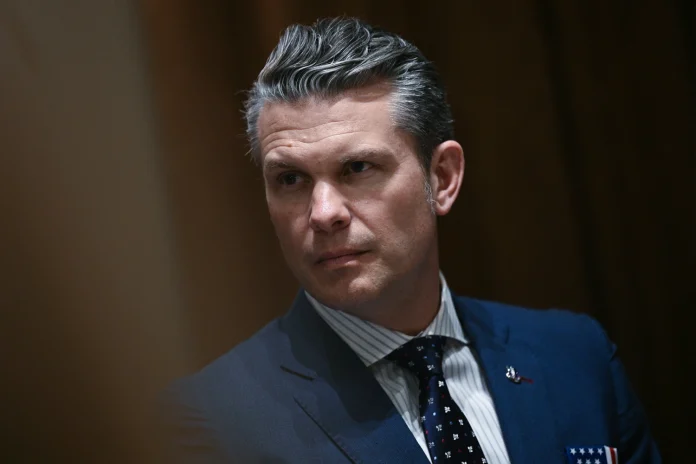
Pentagon chief shared Yemen attack details in second Signal chat: Report

Pete Hegseth

It’s the second time Hegseth has been accused of sharing sensitive military information on the commercial messaging app with unauthorised personnel.

Last month, The Atlantic magazine revealed that its editor-in-chief was inadvertently included in a Signal chat in which officials including Hegseth and National Security Advisor Mike Waltz discussed the strikes, which took place on March 15.

The revelation sparked an uproar, with US President Donald Trump’s administration facing a scandal over the accidental leak. A Pentagon Inspector-General’s probe into that leak is ongoing.

On Sunday, the Times reported that Hegseth had shared information on the same March 15 strikes with the second Signal group chat.

The information shared “included the flight schedules for the F/A-18 Hornets targeting the Houthis in Yemen”, the newspaper reported.

The outlet said that unlike the accidental leak where journalist Jeffrey Goldberg was mistakenly included in the group, this group chat was created by Hegseth. The other chat was initiated by Waltz.

“It included his wife and about a dozen other people from his personal and professional inner circle in January, before his confirmation as defence secretary,” the daily reported, citing unnamed sources.

Hegseth’s wife Jennifer is a journalist and former Fox News producer. The group also included his brother Phil and Tim Parlatore, both of whom serve in roles at the Pentagon.

Parlatore also continues to serve as Hegseth’s personal lawyer, the Times reported.

Trump largely pinned the blame for the earlier leak on Waltz, but has dismissed calls to fire top officials and insisted instead on what he called the success of the raids on the Yemeni rebels.

This week, three top Pentagon officials were put on leave pending investigations into unspecified leaks in the Defence Department.

Deputy chief of staff Darin Selnick, senior advisor Dan Caldwell and Colin Carroll hit back on Sunday, releasing a statement saying Pentagon officials had “slandered our character with baseless attacks”.

“At this time, we still have not been told what exactly we were investigated for, if there is still an active investigation, or if there was even a real investigation of ‘leaks’ to begin with,” they announced in a joint statement posted on social media.

“While this experience has been unconscionable, we remain supportive of the Trump-Vance Administration’s mission to make the Pentagon great again and achieve peace through strength.”

Locals rescue 24 wild sheep trapped in mud in southern Iran

Meisam Ghassemi, deputy director of natural resources and biodiversity at Hormozgan’s Department of Environment, said 26 wild sheep had entered the watering hole but became trapped in thick mud.

“Despite rescue efforts, two animals died due to exhaustion, while one severely weakened sheep was transferred to a veterinary clinic in Bastak for treatment,” he explained, adding, “It will be released back into the wild after recovery.”

Ghassemi attributed the incident to severe drought in Hormozgan, which has drastically reduced water sources in natural habitats.

The Department of Environment, alongside local communities and conservation volunteers, has launched efforts to provide water for wildlife and prevent similar accidents.

Authorities urged the public to report such emergencies to the nearest environment office, ranger station, or the hotline to protect wildlife.

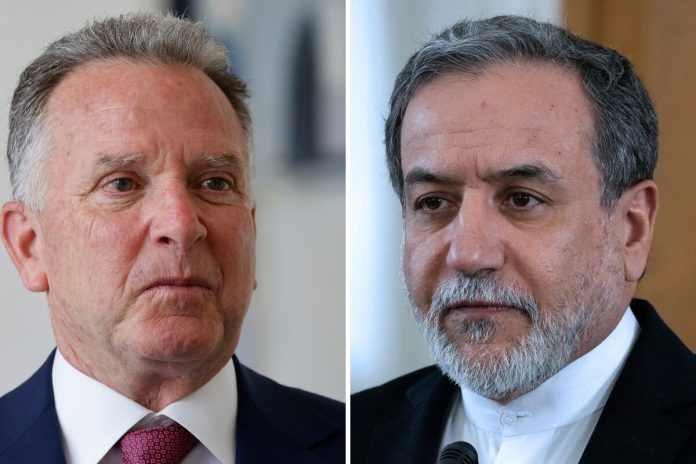
Iran emphasizes substantive sanctions relief, right to enrichment in nuclear talks with US

Araghchi Witkoff

His remarks, delivered during a meeting with the Iranian Parliament’s National Security and Foreign Policy Commission on Sunday, underscored Tehran’s firm positions in the ongoing diplomatic process.

According to the commission’s spokesperson, Ebrahim Rezaei, Gharibabadi reported that the negotiations in Rome yielded agreements on a general framework, a working agenda, and technical focal points.

He stressed that Iran’s proposals are fully aligned with national policies and the decisions of top governing bodies, particularly with regard to the complete and verifiable removal of all U.S. sanctions.

“Iran considers both congressional sanctions and presidential executive orders as components of the sanctions architecture, and their full removal is essential,” Gharibabadi was quoted as saying.

He reiterated that any agreement must bring tangible and meaningful economic benefits to the Iranian people, rather than being symbolic or superficial.

Iran also reaffirmed its unwavering stance on its right to enrich uranium, a point Gharibabadi described as a red line in the negotiations.

He emphasized that Iran’s nuclear program remains exclusively peaceful, with no intention to pursue nuclear weapons.

The Deputy Minister further conveyed Tehran’s dissatisfaction with any delay in the negotiation process, calling for serious engagement from the American side.

He urged Washington to resist external pressures, particularly from the Zionist regime, which is actively seeking to sabotage the talks.