Sunday, May 3, 2026
Home Blog Page 398

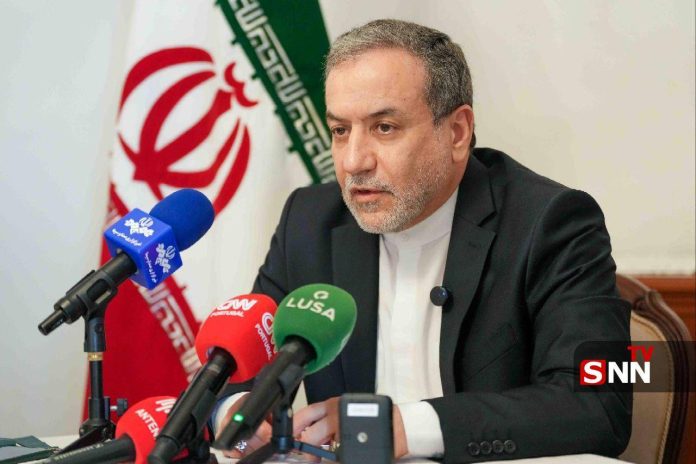
Iran FM urges de-escalation amid rising tensions between India, Pakistan

Abbas Araghchi

Speaking upon arrival in Islamabad on Monday, Araghchi emphasized Iran’s commitment to peace and stability in the region.

“We are here to hold close consultations with our Pakistani counterparts and will meet with the president, prime minister, and foreign minister of Pakistan,” he told reporters. “We seek the reduction of tensions between India and Pakistan.”

Calling Pakistan a “very good neighbor” with deep bilateral ties, Araghchi noted that Iran values its relations with both Pakistan and India and intends to support efforts for de-escalation.

According to Iranian Foreign Ministry Spokesperson Esmaeil Baqaei, Araghchi is also scheduled to visit New Delhi later this week – his first official trip to India since taking office.

Iran has previously offered its good offices to mediate between the two South Asian neighbors.

This visit marks Araghchi’s first official trip to Islamabad since assuming the role of Iran’s foreign minister.

In November last year, he was received in the Pakistani capital, where he met with top officials to discuss bilateral ties and regional and international developments.

Israel vows response to Iran after Houthi attack on Ben Gurion airport

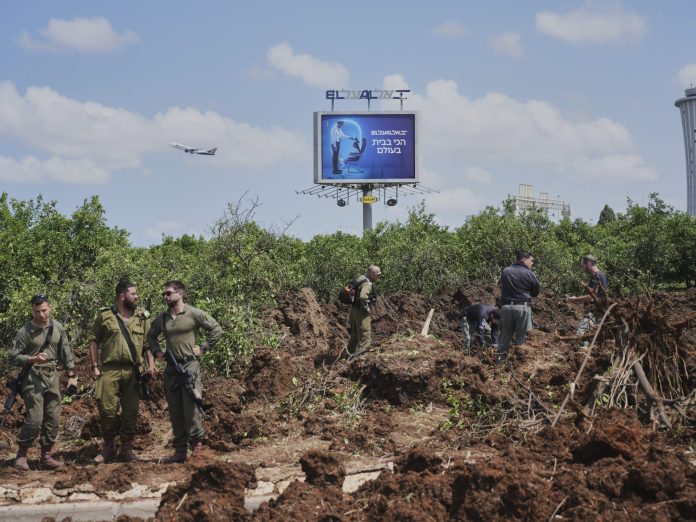
A ballistic missile launched by the Yemeni rebel group hit the perimeter of the airport on Sunday, damaging a road and a vehicle and causing air traffic to stop.

The Israeli military confirmed its defence system failed to shoot down the projectile on Sunday morning despite several attempts to intercept it, adding that an investigation was under way. Eight people were injured, according to paramedics.

Israeli media reported that the advanced US-made THAAD system and Israel’s long-range Arrow defence system failed to bring down the missile.

Writing on social media, Netanyahu said that attacks from the Houthis ultimately “emanate from Iran”.

“Israel will respond to the Houthi attack against our main airport AND, at a time and place of our choosing, to their Iranian terror masters,” Netanyahu wrote.

The Israeli prime minister has been trying to drum up support for a joint attack with the United States against Iran, despite ongoing talks between Washington and Tehran.

Responding to Israel’s threats, Iran’s Defence Minister Aziz Nasirzadeh said that Tehran would strike back if the US or Israel attacked.

“If this war is intiated by the US or the Zionist regime [Israel], Iran will target their interests, bases and forces – wherever they may be and whenever deemed necessary,” Nasirzadeh told Iranian state television.

Nasirzadeh added that Yemen’s Houthis made their own decisions when conducting attacks.

The rebel group, which has been carrying out attacks against Israel in stated opposition to its war and blockade on the Gaza Strip, claimed responsibility for the missile launched at Israel’s busiest airport. More than 18 months of Israeli attacks on Gaza have killed at least 52,500 people, according to Palestinian officials.

In a televised statement, Houthi military spokesperson Yahya Saree warned airlines that Ben Gurion airport was “no longer safe for air travel”.

The attack led to a brief suspension of flights at the airport in central Israel with some having to be redirected. All entrances to the airport were also briefly closed while train journeys towards the site were halted.

A number of major airlines, including German carrier Lufthansa, Spanish airline Air Europa, Air France, SWISS, Austrian Airlines, Brussels Airlines, Air India and Hungary’s Wizz Air announced they were cancelling flights for Sunday, with some cancelling flights on Monday and Tuesday as well.

The Houthis called on airlines flying to Israel to “take into consideration” that it would “impose a comprehensive air blockade on [Israel] by repeatedly targeting… Ben-Gurion Airport”.

Sirens blared across central Israel, prompting many to move into shelters, according to Israeli media.

Videos of the site of the impact circulating online showed the missile hit a connecting road inside the perimeter of the airport with some debris scattered on adjacent roads.

Before his social media post, Netanyahu had promised to retaliate against the Houthis and continue the war on Gaza.

In a video message in Hebrew, he stated Israel and the US will “act against them again in the future” and do so using more than one blow. He also vowed “there will be no Hamas” in Gaza.

Israeli Defence Minister Israel Katz threatened severe retaliation, too.

“Whoever attacks us, we will hit back sevenfold,” Katz said in an apparent reference in the Torah relating to severe punishment, or divine justice.

Benny Gantz, leader of the Israel Resilience party and a former war cabinet member, noted that the blame for the missile attack by the Iran-aligned group should be put on Tehran.

“It is Iran that is firing ballistic missiles at the state of Israel, and it must bear responsibility,” he said in a social media post without providing evidence.

“The shooting at the state of Israel is bound to lead to a severe reaction in Tehran,” he added.

Houthi attacks are continuing despite near daily bombardment of areas across Yemen by the United States military.

Tehran judiciary employs AI to track financial networks in fuel smuggling cases

According to Ali Alqasi, Chief Justice of Tehran Province, courts have mandated financial tracking in such cases, and initial reports confirm the integration of AI tools to support these efforts.

During a recent briefing on the status of fuel smuggling cases, Alqasi described the illicit trade as a serious contributor to energy imbalance and stressed the judiciary’s commitment to a systemic and expert-led crackdown.

A special task force involving law enforcement and relevant agencies has been established in Tehran to combat fuel smuggling more effectively.

Among recent operations, 14 illegal fuel storage centers were dismantled in Robat Karim, near the capital Tehran, uncovering over 250,000 liters of contraband fuel, he noted, adding seven individuals were arrested, accused of tapping into high-pressure gas pipelines illegally.

In nearby Shahriar County also, 100,000 liters of smuggled fuel were seized, with three suspects detained.

According to a recent report by Iran’s Anti-Smuggling Headquarters, the country is losing between 20-28 million liters of fuel daily to smuggling operations, costing the country $140 million in potential export revenues each day.

The staggering losses could theoretically provide every Iranian citizen with 4 million tomans in annual subsidies if recovered.

Iran reports double-digit growth in international flights

Iran Airport

Mohammad Amirani, Deputy Minister of Roads and Urban Development and CEO of the Iran Airports and Air Navigation Company, announced that air passenger traffic in the country rose by 6% in 1403 (March 2024–March 2025), reaching a record 40.75 million passengers across the nation’s airports, excluding Imam Khomeini International Airport.

International passenger transport grew by 21% compared to the previous year, with 3.91 million travelers on foreign, Hajj, and religious pilgrimage flights.

There were 33,078 international flight operations at Iranian airports during the same period. Meanwhile, domestic flights saw a 5% increase, carrying over 36.8 million passengers.

Aircraft movements rose 8% overall, and air cargo traffic also climbed, with 391,889 tons of goods and a 4% growth in postal shipments handled by airports nationwide.

Among Iran’s airports, Tehran’s Mehrabad Airport was the busiest, managing 115,773 takeoffs and landings and processing over 13.75 million passengers. Mashhad’s Shahid Hasheminejad Airport followed, with 63,245 aircraft movements and over 8.42 million passengers handled.

India cuts water flow to Pakistan: PTI

The two nuclear powers have been teetering on the brink of war since a deadly terrorist attack in India’s Jammu and Kashmir on April 22 claimed the lives of 26 people, mainly tourists. New Delhi has accused Islamabad of aiding and abetting cross-border militant incursions and suspended the key water-sharing Indus Waters Treaty shortly thereafter. Islamabad denied the allegations.

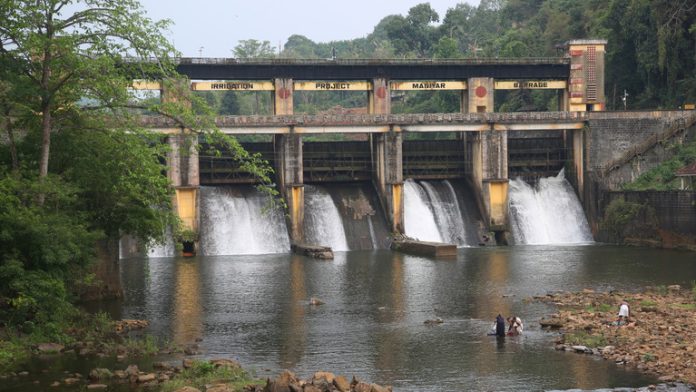
On Sunday, India’s largest news agency, the PTI, quoted the unnamed source “familiar with the matter” as saying that the country had blocked the flow of water through the Baglihar Dam on the Chenab River, and is planning to do the same at the Kishanganga Dam on the Jhelum River in the north of India-administered Jammu and Kashmir region.

Signed in 1960 under the auspices of the World Bank, the Indus Waters Treaty (IWT) governs the sharing of the Indus River system between the two regional archrivals that have fought four wars, as well as multiple border skirmishes since they gained independence from Britain in 1947.

Until recently, the agreement had endured, even in times of war. However, last Wednesday, Indian Foreign Secretary Vikram Misri announced that the treaty would be suspended “until Pakistan credibly and irrevocably abjures its support for cross-border terrorism.”

One of the world’s most water-stressed countries, Pakistan is heavily reliant on the Indus for agriculture, drinking water, and energy generation. According to some estimates, over 80% of the country’s agricultural land would be affected should India cut off water supplies to its neighbor, with staples like wheat, rice, and cotton particularly at risk.

In the wake of the terrorist attack in the Baisaran Valley, India expelled Pakistani diplomats and closed its land border, as well as its airspace to Pakistani aircraft. Islamabad, which has vehemently denied any involvement in the deadly incident, responded in kind.

Iran showcases new ballistic missile

Iran Missile

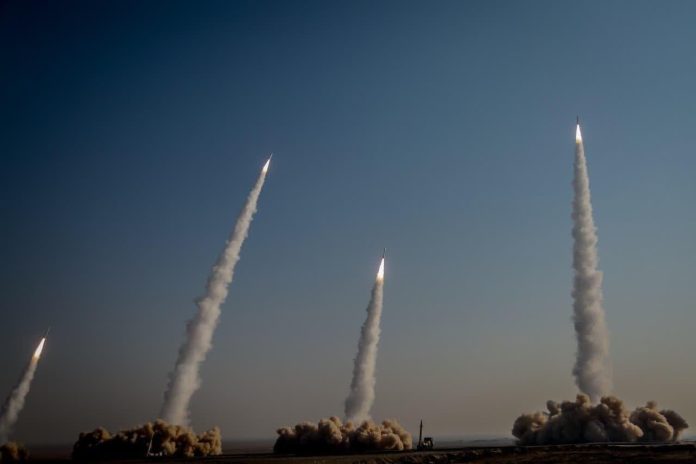
Unveiled on Sunday, Qassem Basir has been developed as an upgraded version of the Martyr Haj Qassem ballistic missile.

According to military officials, the missile has undergone significant modifications to its warhead design, enabling it to maneuver more effectively and evade missile defense systems.

Qassem Basir is equipped with a thermal imaging guidance system, enhancing its precision and making it resistant to electronic warfare.

Defense Minister Brigadier General Aziz Nasirzadeh said that the new missile was successfully launched from over 1,200 kilometers away, striking its designated target precisely, without deviation or reliance on GPS navigation.

Nasirzadeh emphasized that the missile has been enhanced both in terms of guidance and maneuverability, allowing it to bypass layered defense systems.

He noted that during testing, intense electronic interference was applied against the missile, yet it remained unaffected.

Elsewhere in his remarks, the defense minister criticized Washington for sending contradictory signals—expressing openness to negotiations on one hand while threatening military action on the other.

Nasirzadeh pointed out that Iran has never initiated a war and will not start one in the future. However, he warned that the country would respond decisively if attacked.

In the event of military aggression by the United States or Israel, the minister stated that Iran would target their interests, bases, and personnel wherever deemed necessary.

Additionally, the defense minister announced the successful testing of a new ballistic missile, developed based on experience from True Promise operations 1 and 2—massive missile strikes launched by the Iranian Armed Forces against the Israeli regime last year.

Iran has said that its military capabilities, including its missile program, are non-negotiable.

Israel calling up thousands of reservists to expand Gaza war

Israeli Army

He made the announcement on Sunday after Israeli Prime Minister Benjamin Netanyahu promised to continue the war despite growing calls from inside Israel for a deal that would bring home Israeli captives held in Gaza and end the war, which has killed more than 52,500 Palestinians.

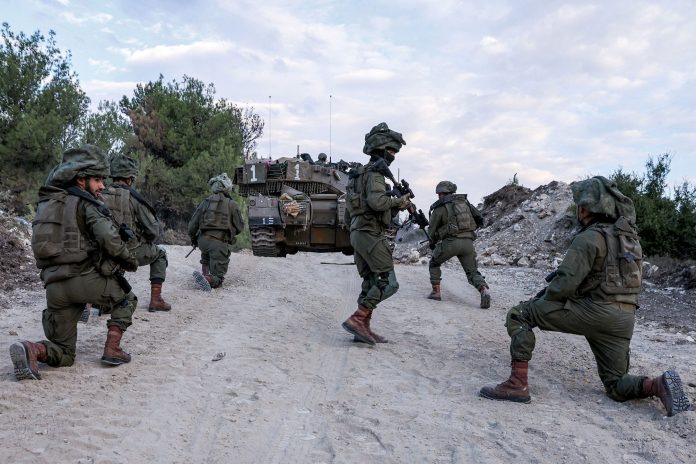
“This week, we are sending tens of thousands of draft orders to our reserve personnel to intensify and expand our action in Gaza. We are increasing the pressure to return our people [held captive in Gaza] and defeat Hamas,” Zamir said, adding that the Israeli military would “operate in additional areas and destroy all of [Hamas’s] infrastructure above and below ground”.

The military chief made the announcement during a visit to the Atlit naval base on Israel’s northern Mediterranean coast.

The announcement came before a Netanyahu-chaired security cabinet meeting to discuss an expansion of the war in Gaza, which began in October 2023 and has decimated the Palestinian enclave.

A growing movement within Israel has called for an end to the war, and an increasing number of reservists are ignoring call-ups.

Two government officials told the Reuters news agency that the cabinet would also discuss the possible resumption of aid to Gaza as humanitarian groups warn of increased starvation in the territory since Israel imposed a total blockade on March 2.

Israel continues to face widespread global outrage over the conduct of its war in Gaza, which has shattered the territory’s infrastructure as well as its healthcare system and displaced the vast majority of its 2.3 million residents at least once since the war began.

Far-right Israeli National Security Minister Itamar Ben-Gvir, in an interview with Israeli Army Radio, said he wanted to see a “powerful” expansion of the war but did not disclose details as to what new plans might entail.

“We need to increase the intensity and continue until we achieve total victory. We must win a total victory,” he added.

He demanded that Israel bomb “the food and electricity supplies” in Gaza.

Leading humanitarian groups, including the Red Cross, have warned that the humanitarian response in Gaza is on the verge of “total collapse” and Palestinians face a “daily struggle to survive” amid bombardment and the crippling blockade.

United Nations agencies have said truck convoys carrying aid are building up at the border and have not been allowed into the enclave, where a famine is looming.

Israeli officials claim an expanded military offensive would pressure Hamas into releasing the 59 remaining captives, but critics argue it further endangers their lives. Israel ending the fragile ceasefire, which saw Palestinian prisoners exchanged for Israeli captives, on March 18 has not led to any more releases.

The reserve call-ups are going out as Netanyahu promised to respond to Yemen’s Houthis after the rebels fired a missile that struck a road at Israel’s Ben Gurion International Airport, wounding six people and prompting several major airlines to suspend flights.

Netanyahu stated the response will take place “at a time and place of our choosing”.

The Houthis have stressed their fighters carried out the assault “in support of the oppressed Palestinian people” and to counter Israel’s “crime of genocide” in Gaza.

US pushes for ‘total dismantlement’ of Iran’s nuclear program

Trump

The president was asked by Kristen Welker on NBC’s Meet the Press on Sunday whether he was aiming to limit or completely abolish Iran’s nuclear program.

“Total dismantlement. Yes, that is all I would accept,” Trump said.

He questioned the necessity of the Islamic Republic having nuclear technology for electricity generation.

“They have so much oil – why do they need it? … Civilian [nuclear] energy often leads to military wars. And we don’t want them to have a nuclear weapon. It’s a very simple deal,” he stated.

“I just don’t want them to have a nuclear weapon because the world will be destroyed,” Trump added.

He made his remarks after Omani Foreign Minister Badr Al-Busaidi announced that the fourth round of indirect, mediated US-Iran talks, planned for Saturday, had been postponed indefinitely “for logistical reasons.”

Trump withdrew the US from the 2015 UN-backed deal on Iran’s nuclear program during his first term in office, accusing the Islamic Republic of secretly violating the agreement. Tehran has denied any wrongdoing but has since rolled back its own commitments under the agreement and increased its stockpile of enriched uranium.

Iranian Foreign Minister Seyed Abbas Araghchi warned last month that the country would resist any “pressure and threat” from the US.

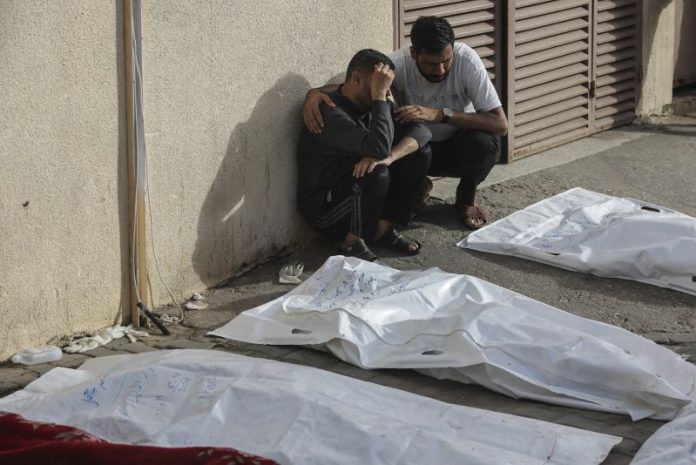
Gaza death toll surpasses 52,500 as Israel continues its genocidal war

Gaza War

A ministry statement said that 40 people were killed in Israeli attacks in the enclave in the last 24 hours, while 125 others were injured, taking the number of injuries to 118,491 in the Israeli onslaught.

“Many victims are still trapped under the rubble and on the roads as rescuers are unable to reach them,” it added.

The Israeli army resumed its assaults on the Gaza Strip on March 18 and has since killed 2,436 people and injured 6,450 others, shattering a ceasefire and prisoner exchange agreement that took hold in January.

Last November, the International Criminal Court issued arrest warrants for Israeli Prime Minister Benjamin Netanyahu and his former Defense Minister Yoav Gallant for war crimes and crimes against humanity in Gaza.

Israel also faces a genocide case at the International Court of Justice for its war on the enclave.

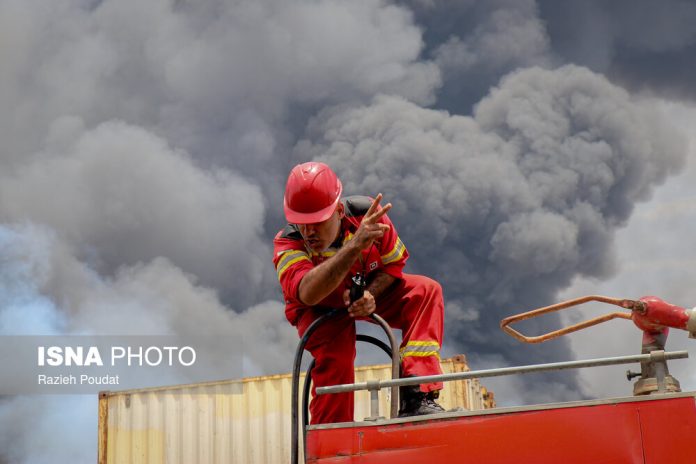
Final death toll from Iran port explosion revised to 57

Previously reported at 70 fatalities, the number was corrected following forensic examinations and family reports. According to the statement, remains recovered from various areas near the blast site—initially believed to belong to multiple individuals—were confirmed to be parts of single bodies that had been severely fragmented.

As a result, the final count stands at 57 victims, including 46 identified bodies and 11 individuals still missing.

Over 1,000 others were also wounded in the immense explosion that rocked the container port, which is located in Bandar Abbas and handles 80 million tons of goods a year.