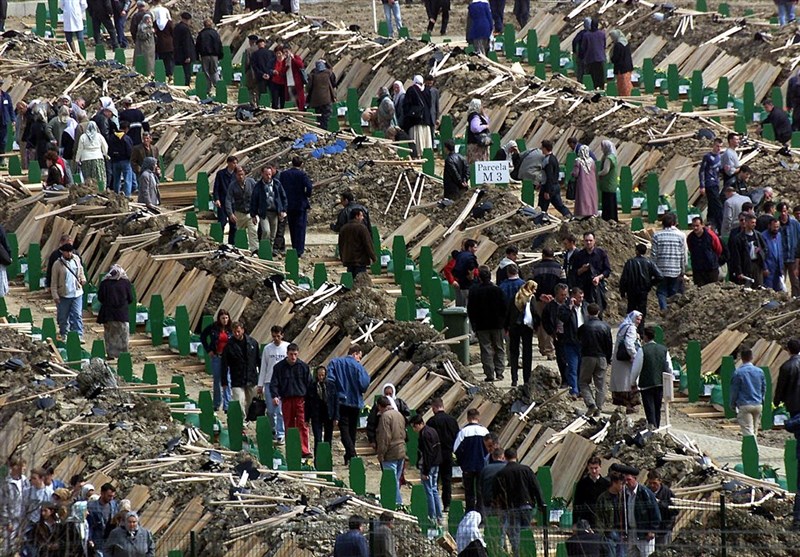
Taherian who was Iran’s first ambassador to Bosnia and Herzegovin, accompanied by Mahmoud Heydari on July 11, attended the 22nd anniversary of Srebrenica massacre and laid wreath at the tombs to remember the victims of Europe’s worst massacre since World War II.
During Srebrenica massacre in July 1995, some 8,000 Muslim men and boys were killed by Bosnian Serb forces after they conquered the town during the Balkan bloodshed.
Despite the fact that the UN has declared Srebrenica as safe haven for the refugees but the lightly-armed Dutch peacekeepers – known as Dutchbat did not show any reaction to slaughter of Muslim men and boy by the Serb forces.
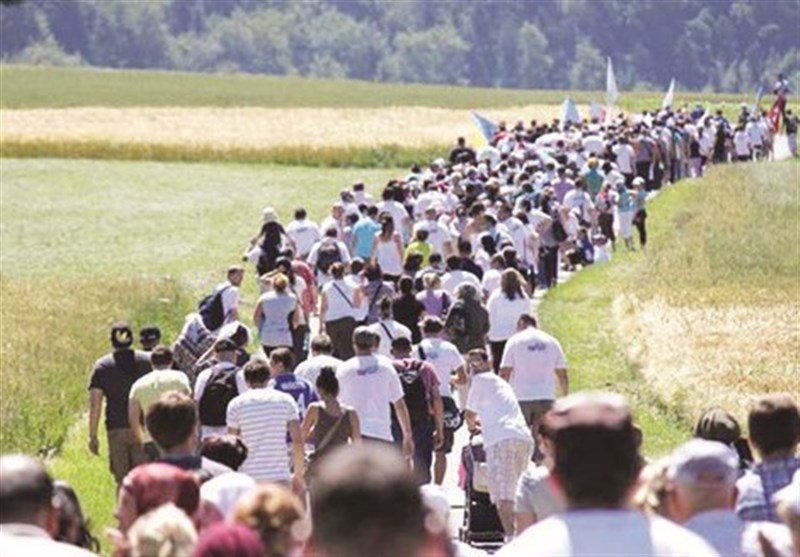
Each year, thousands attend the peace March (Mars Mira) in Bosnia and Herzegovina to commemorate mass murder of Muslims in the heart of Europe during 1995 Srebrenica genocide.
More than 5,000 participants from all over the world on July 08, 2017 attended the “March of Peace” (March Mira) from Nezuk town on forest road known “death road” which was used by Bosnians who wanted to escape to safe zone of Tuzla.
Nasrollah Farahmand, the deputy head of Iran’sHajj and Pilgrimage Organization, declared the first series of visas for Iranian Hajj pilgrims were issued electronically on Thursday.
“Although the negotiations between Iran and Saudi Arabia on the dispatch of Iranians to this year’s Hajj pilgrimage started late, all arrangements have been made for ensuring the dignity of Iranian pilgrims,” he added, according to a Farsi report by ISNA.
“Good measures have been taken to provide good services for pilgrims in the fields of food, lodging, and transportation,” he noted.
Farahmand stressed that good hotels in Mecca and Medina have been booked for Iranian pilgrims even though the number of pilgrims has increased by 22,000 compared with 2015.
In January, Iran’s Ministry of Culture responded to an official invitation by Saudi Arabia to attend meetings to discuss the resumption of the Hajj pilgrimage for Iranians and conveyed Iran’s ideas and concerns to the Saudi side.
In September 2015, a deadly human crush occurred during Hajj rituals in Mina, near Mecca.
Days into the incident, Saudi Arabia published a death toll of 770 but refused to update it despite gradually surging fatality figures from individual countries whose nationals had been among the victims of the crush.
Unofficial sources put the death toll at almost 7,000 people. Iran said about 465 of its nationals lost their lives in the incident.
Earlier that same month, a massive construction crane had collapsed into Mecca’s Grand Mosque, killing more than 100 pilgrims, including 11 Iranians, and injuring over 200 others, including 32 nationals from Iran.
Serious questions were raised about the competence of Saudi authorities to manage the Hajj rituals in the wake of the incidents, and, facing Saudi intransigence to cooperate and refusal to guarantee the safety of Iranian pilgrims, officials in the Islamic Republic subsequently decided to halt pilgrimages over security concerns.
Saudi Arabia also unilaterally severed its diplomatic ties with Iran in January 2016 after protests in front of its diplomatic premises in Tehran and Mashhad against the execution by Riyadh of eminent Saudi Shiite cleric Sheikh Nimr al-Nimr.
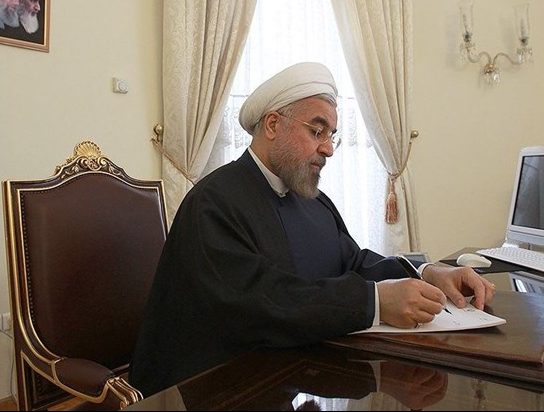
In his congratulatory message to French President Emmanuel Macron, Rouhani expressed the hope that the level of bilateral, regional, and international relations between Tehran and Paris would further increase in future given the great potentialities for mutual cooperation.
The Iranian president also wished health and success for Macron and prosperity and happiness for the French nation.
July 14 is the French National Day — called La Fête Nationale in French — commemorating the day in 1789 when crowds stormed the Bastille, a fortress used as a prison in Paris. The event marks the beginning of the French Revolution.
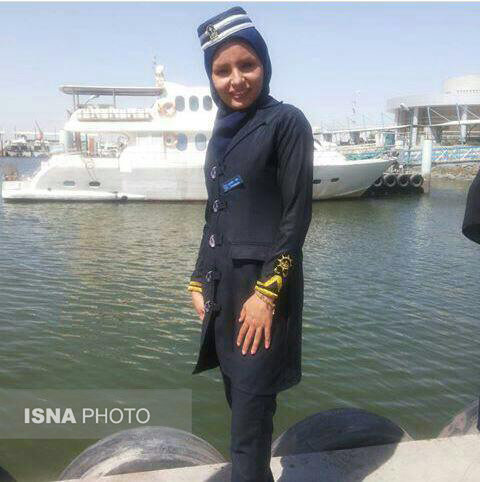
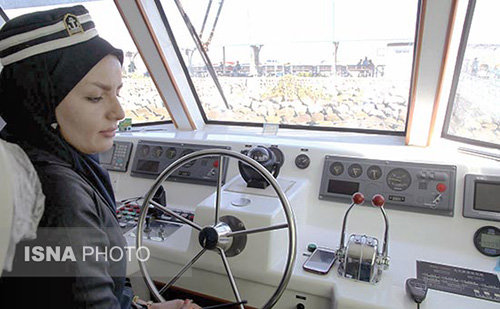
Raheleh Tahmasebi Sarvestani is an Iranian seawoman who says is in love with sailing even though you rarely see a woman on a ship as a sailor.
She has been elected as the Best Sailor of the Year (2016-2017) in Hormozgan Province in southern Iran.
Raheleh is one of the few female sailors in the naval fleet of the Islamic Republic of Iran. She is one among all Iranian women who have attempted to overcome obstacles in their way to play their social role.
In a Farsi interview with ISNA, Tahmasebi has talked about her love for sailing as well as her relentless efforts to overcome the obstacles in the way to win a job on a ship.
Excerpts of her interview follow:
Second Lieutenant of a Military Vessel
Raheleh was born in 1984. She is now the second lieutenant of military vessels between 500 to 3000 tons. “I passed my training courses on a commercial ship titled Saghar. Then I began to serve on another ship titled Hormuz Pishro and now I’m preparing for a number of exams.”
Raheleh went on saying that to become a captain, she has to undergo various training courses which may take at least 16 years. “We have to begin our carrier as a sailor. After undergoing several training courses from first to third Lieutenant, we enter a new phase with special courses for becoming a captain. Then we need to pass several other courses. In each course, the applicants must pass special trainings.”
In Love with Demanding Job
On her reasons to choose sailing as her job, the Iranian seawoman said, “I’ve always been looking for a special job for which I was ready to pay a price. First, I began to conduct some researches on the job conditions of flight attendants. Then I heard of a training course for sailing which was going to be held in the southern province of Hormozgan and decided to attend the course.”
“Having passed the course, I began to realize that I’m capable enough to take the demanding job. It made me more determined to go ahead with my decision. The job has its own problems and few women apply for this job because most people are not capable of taking it.”
Feeling Pleased as a Successful Woman
Raheleh said she is proud of herself as a successful woman in the sailing industry.
“I’m sure that I can take the job and there is a long distance ahead. One of the main reasons behind my success in this field is my love for sea and my strong will to go ahead with my decision. I believe a lover can’t forget her love under any conditions.”
Raheleh said the Iranian women can enter the sailing industry after passing the university exam or undergoing special sailing courses in the licensed institutes. She added that the sailing is a hard and muscular job which requires undergoing hard courses, but women can pass the courses if they want.
Great Expectations
She said she wants to teach women who have applied to become sailors.
“I would like to make progress in my job through taking up my educations. My greatest wish is to become the first Iranian woman commander in the navy.”
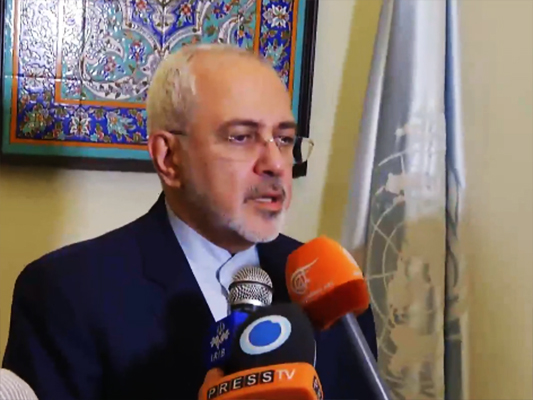
Speaking to reporters upon his arrival in New York, Mohammad Javad Zarif stressed that all parties to the deal, officially called the Joint Comprehensive Plan of Action (JCPOA), must remain committed to the terms of the agreement.
Zarif is in New York to attend the UN high-level political forum on sustainable development on Friday.
“Unfortunately up until now, the United States, while remaining at the very least possible level compliant with the agreement, has failed to observe, in times, the letter and mostly the spirit of the agreement by not allowing Iran to enjoy the full benefits of the nuclear deal. We believe they need to reconsider that position, because it is not conducive to the sustainability of the agreement,” Zarif said.
Zarif argued that the West’s policy of pressure against Iran has proved to be ineffective, adding, “The JCPOA is a multilateral agreement that was the result of many years of negotiation.”
“It was also the result of many years of pressure. After all those pressures failed to bring about the results that were expected from those who were imposing pressure on the Iranian people, there was no other choice but to reach a negotiated settlement,” added the Iranian minister.
“I think at the end of the day, everybody will see that the agreement will represent an outcome that was the best possibility for all concerned [parties],” he pointed out.
Zarif’s comments come on the second anniversary of the landmark deal, which was inked on July 14, 2017, between Tehran and the five permanent members of the United Nations Security Council – the United States, Britain, France, China and Russia – plus Germany. The JCPOA was later endorsed by a UN Security Council resolution.
Since January 2016, when the JCPOA took effect, the International Atomic Energy Organization, which monitors the technical implementation of the deal, has in numerous reports confirmed Iran’s compliance.
During his presidential campaign, US President Donald Trump described the nuclear accord with Iran as a “disaster” and vowed to unilaterally scrap it.
While he has not carried out that threat, his administration is conducting a “review” to see whether the provision of sanctions relief to Iran – a US commitment under the deal – is in America’s “national interest.”
On Tuesday, the European Union’s foreign affairs chief Federica Mogherini described the historic nuclear deal with Iran as an international agreement that “does not belong to one country,” noting that all the parties to the deal “have the responsibility to make sure that this continues to be implemented.”
In response to a question by the Press TV correspondent about the possibility of any meeting between Iranian and American officials during the New York visit, Zarif said, “For this visit, no meetings have been planned. I plan to meet not with US officials, but with members of the wider intellectual community that have impact on US policy-making.”
Battling Terror in Mideast
Zarif pointed to the ongoing campaign against terrorism and extremism across the Middle East, particularly in Iraq and Syria, and noted that the current crisis is mainly caused by the US interventionist policies in the region.
“The nightmare that we are facing in the region is a consequence of many years of intervention and short-sighted policies by the US in the region which has resulted, as expected, in the exacerbation of extremism and terrorism in our region,” he said.
Iraqi security forces and civilians in Basra celebrate the liberation of Mosul from Daesh Takfiri terrorists July 10, 2017. (Photo by AFP)
The foreign minister said Iran has been “in the forefront of fighting terrorism and extremism in the region” and expressed satisfaction over the fact that the people and governments of Iraq and Syria have succeeded in retaking their territories.
“This menace … has been the result of short-sighted policies from the outside and unfortunately, negative policies by countries in the region who continue to sponsor, to support and provide arms and money to terrorists and extremist organizations and unfortunately provide the ideology of hatred and exclusion which lies at the heart of these extremist movements,” Zarif noted.
The remarks come after Iraqi Prime Minister Haider al-Abadi formally declared victory of the country’s forces over the Daesh Takfiri terrorist group on Monday, one day after the country’s military and Popular Mobilization Forces took full control of the strategic city of Mosul.
Zarif underlined Iran’s determination to help end violence in Syria through a negotiated settlement at Astana peace talks, adding, “We support a comprehensive ceasefire throughout Syria, excluding obviously terrorist and extremist organizations, particularly Daesh and al-Nusra.”
“We have been in consultation with Russia and Turkey in the Astana process and outside the Astana process in order to make sure that successful implementation of our agreements would continue and would further be enhanced in order to make sure that the suffering of the Syrian people is reduced and hopefully move forward to humanitarian assistance to all Syrians throughout Syria,” the top diplomat pointed out.
Syria’s warring parties have attended five rounds of peace talks brokered by Iran, Russia and Turkey in the Kazakh capital, Astana. The Astana discussions produced a memorandum of understanding on de-escalation zones in Syria that sharply reduced fighting in the Arab country.
The negotiations are aimed at bringing an end to the foreign-backed militancy in Syria, which began in March 2011.
Niu Xiping, Secretary of the Party Committee of China’s Confucius Research Institute, said the seminar will be held in collaboration with Peking University, Iran’s Allameh Tabataba’i University, and Confucius Institute of China.
He added that 30 intellectuals from China and other countries are going to participate in the seminar.
Xiping made the announcement on Tuesday in a meeting with the advisor to the Research Deputy of Islamic Culture and Communications Organization Mohammad Hossein Mozaffari and Iran’s Cultural Attaché in China Mohammad Rasoul Almasieh.
In this meeting, Mozaffari talked about the goals of Islamic Culture and Communications Organization, according to a Farsi report by the Fars News Agency.
He said establishment and development of ties between Iranian cultural institutions and the cultural institutions of other countries is one of the main tasks of this organization.
Mozaffari also pointed to the important position of the Confucius and expressed his readiness to develop cooperation between the two countries in various cultural fields.
He also invited members of China’s Confucius Research Institute to participate in the Asian Cultural Forum in Tehran, and Xiping welcomed the idea.
Study of the Silk Road Project, the shared destiny of mankind, and the development of cultural relations were among the other topics discussed by the two sides.
Iran’s Vice-Presidency for Science and Technology declared these expatriate researchers are from top universities across the world who have set up several technology companies inside Iran.
Their return has been facilitated by the Iranian government’s successful program called ‘Cooperation with Non-resident Experts and Scientists’, according to the vice-presidency, as cited in a Farsi report by Mehr.
“In order to form an appropriate infrastructure with the aim of using the scientific and technological capacity of expat Iranian specialists in various fields, we have promoted cooperation with more than 40 universities, research institutes and prominent domestic science and technology centres since a few years ago,” the vice-presidency announced.
The body stressed that the collaboration has led to return of 710 Iranian researchers and experts from top universities across the world to the country in the past 28 months.
“The majority of these people are back from universities in US, Canada and European countries. They are working on various collaborative models including post doctorate, specialized duty service, faculty recruitment, knowledge-based companies and guest lecturers.”
“The number is expected to increase due to the relative success of the project and the credibility it is gaining among Iranian expats and the leading science and technology centres inside the country,” it added.
“A short while after the implementation of this project, more than 40 technology companies have been set up by these individuals in various fields. It has also led to creation of job for a large number of talented Iranian university students and graduates,” the vice-presidency stated.
According to the scientific body, as a result of collaboration with these experts, a number of laboratories and growth centres have been established in universities and the new products have been registered with US and European patent.
“The continuation of this process will lead to the improvement of the quality of domestic science and technology centres and at the same time will boost the international communications of these centers with universities and institutes in which these Iranian experts have been working.”
A Farsi report by Tasnim says Zardak Kebab, which is traditionally made in Iran’s central Province of Isfahan, is rich in iron and haemoglobin.
Zardak kebab is actually a kind of Shami Kebab which is made both in sweet and sweet-and-sour variations.
For the sweet-and-sour taste, vinegar or palm sap and grape syrup is used.
Ingredients:
Minced mutton: 250gr
Carrots: 4 medium-sized ones
Chickpea Flour: As much as required
Onions: A small one
Palm sap or grape syrup: As much as required
Vinegar: As much as required
Water: ¼ Cup
Salt, saffron, turmeric: As much as required
Tail fat or sesame oil: As much as required
Instructions:
First mix the meat with salt, turmeric, and grated onion and carrots. Then add the chickpea flour and rub on it till the mixture becomes firm. Take walnut-size amounts of the mixture, form them and then fry them in sesame oil or tail fat oil.
To make the sauce, mix the palm sap or grape syrup with water and vinegar and put it on heat. Then add saffron and put the sauce aside. After that, put the fried kebabs in a pan and pour the sauce on them. Then leave the pan on low heat for 30 to 40 minutes till kebabs are fully marinated in the sauce. Now it’s time to serve the Iranian Zardak Kebab.
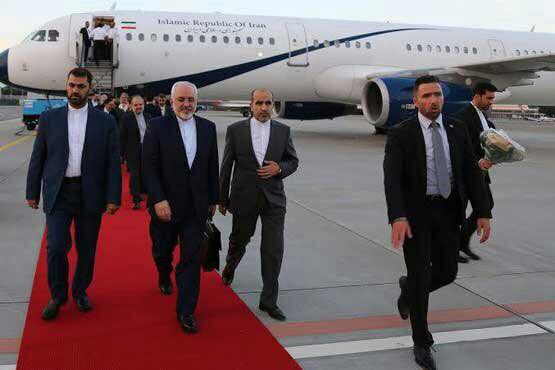
FM Zarif, along with his deputies Seyyed Abbas Araqchi and Majid Takht-Ravanchi, arrived in New York to attend a series of international meetings and press conferences of the United Nations.
The Iranian foreign minister plans to attend the UN’s annual political forums, which have started on July 10 and will be underway until July 19.
A delegation from Iran’s Environmental Protection Organization is also accompanying Zarif in this trip.
The High Level Political Forum on Sustainable Development (HLPF) in 2017, one of the forums Zarif will attend, will be held based on the theme of “Eradicating poverty and promoting prosperity in a changing world”.
Leaders, heads of state, senior members of civil society and businesses, academics and other experts from around the world will take part in the UN General Assembly’s political forums.
According to Foreign Ministry Spokesman Bahram Qassemi, the top Iranian diplomat is also scheduled to sit down with scholars and officials from different countries on the sidelines of the conference.
Zarif will also deliver a speech at the Council on Foreign Relations (CFR) in a ceremony attended by CFR chairman Richard Haass on July 17, 2017, the spokesman said earlier.
Kamran Oveisi, who is the deputy director of Al-Taha University’s Quran and Science Research Centre, says skin health is one of the few issues that Islamic scholars have not paid close attention to.
In a Farsi interview with Young Journalists Club, the Assistant Professor at University of Medical Sciences of Iranian Army added that the beauty and health of the skin is divided into two important categories: polishing and softening the skin, as well as preventing and treating dermatological problems.
“According to some Islamic narratives, the use of melons is advised for skin cleansing, removal of pregnancy freckles, dark pigmentation, and even the reduction of boils.”
Oveisi quoted some narratives from the Fourteen Infallibles [Prophet Muhammad and his grandsons] as saying that raisins are useful for improving memory while they polish the body and skin color.
Quoting a narrative from Imam Ali (AS) regarding the usefulness of raisins for skin health, Oveisi said it is best for a person to eat 21 red raisins in a fasting mode.
Referring to a well-known quote by Imam Kadhim (AS), he said to have a young, delicate and clear skin, especially in older ages, one must have fruits.
“Most religious advice and narratives for the treatment and beauty of skin are focused on consumption of fruits and vegetables,” he concluded.


 Second Lieutenant of a Military Vessel
 Feeling Pleased as a Successful Woman