Wednesday, April 22, 2026
Home Blog Page 3921

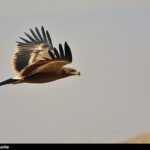
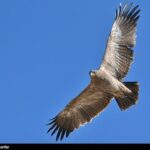
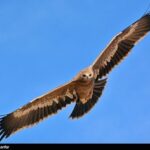
Golden Eagles in Iran’s Alborz and Zagros Mountains

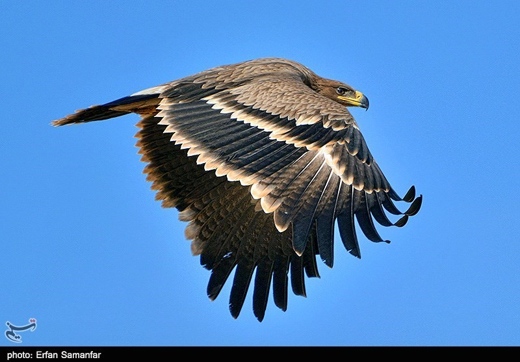
Iran wildlife-Golden Eagles

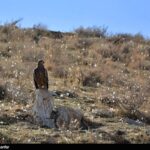
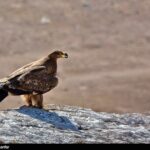
Among other places in the world the Golden Eagle inhabits the mountainous regions of Iran.

The eagle’s habitat is mainly barren or wooded mountains and highland wooded lakes. That said, it moves to low lands, plains and semi-deserts in heavy winters.

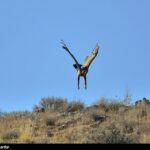
The big bird, whose wing span is 2 m, can lift weights as heavy as 7 kg.

The Golden Eagle feeds primarily on rabbits and hares in Iran, although it can kill large prey such as cranes, young sheep, young ibex and domestic livestock.

Golden Eagles live in their nesting territory all year, but some may migrate due to lack of food during the winter.

They are loyal to their mates during their lifetime. An eagle will usually look for a new mate only if its companion dies.

They stay away from human activity; they live mostly in areas where they can’t be disturbed by people. When they are disturbed, they abandon their nest.

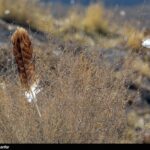
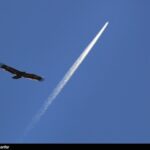
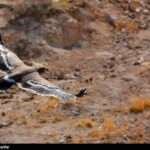
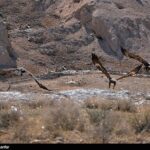
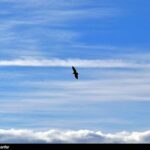
The following are photos Tasnim News Agency put online of the giant birds on January 10:


The controversy a speech on the floor caused

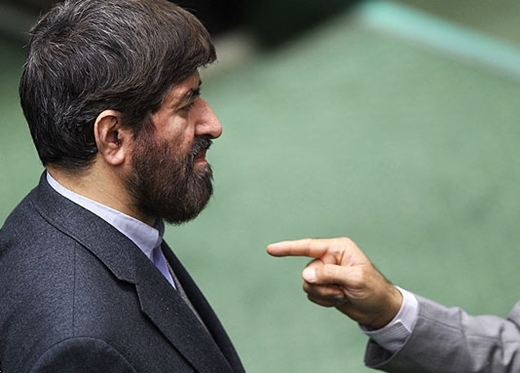
Motahari

The contentious comments of Ali Motahari, a principlist MP, on parliament floor on Sunday (January 11) sparked a brawl that disrupted the legislative proceedings.


What did Motahari say?

Ali Motahari led off his speech with a condemnation of terror attacks on journalists in France, saying, “We condemn the recent terror attacks in Paris, although repeated publication by the satirical magazine Charlie Hebdo of cartoons of the Prophet is condemnable too.”

On domestic issues, he said, “As everybody knows on December 30, 2009 [the day Iranians turned out in force to renew allegiance to the Supreme Leader and the ideals of the Islamic Revolution] people defended the revolution and the Islamic Republic despite violations committed by the two sides of the Sedition. If we try to make December 30 a symbol of division of the nation, it will not be a Day of God anymore….”


A call on the president

That comment pushed up tension levels in the chamber and finally led to physical efforts by some MP to force Ali Motahari to stop his speech.

Motahari went on to say, “Everybody knows that I’m not attached to Messrs. [Mir-Hossein] Mousavi and [Mehdi] Karroubi. Actually I voted for Mr. [Mohsen] Rezaei in the 2009 election.”

He added, “I want to defend a bigger issue and that is the Islamic treatment of the government’s critics as Imam Ali (PBUH) acted in dealing with his opponents. His critics and opponents stayed free and enjoyed full social rights as long as they did not take up arms. Imam’s opponents would criticize him in the mosque as he delivered his sermons, and Imam would not let anybody attack them.”

Shouts of protest by the MPs quickly turned into slogans against the son of Ayatollah Motahari, and chants of ‘Down with the seditionist’ and ‘Down with the hypocrite’ soon echoed in the chamber.

He then put forward a proposal on how to end the controversies surrounding the 2009 incidents and said, “The solution is this: we should confess to our mistakes in 2009, among them a lack of proper reaction to [televised] debates, announcement of national celebrations […]”

The rush of deputies toward parliament’s pulpit to bring down Ali Motahari was so forceful that Abed Fattahi, Nader Ghazipour and Mesbahi Moghadam formed a human wall between Motahari and the attackers calling on him to stop his speech. Some MPs were even trying to get into a physical fight with him.

At this time, the deputy speaker who presided over Sunday’s open session turned into a critic of Motahari’s remarks. Telling Motahari that what has been done to these two people [Mousavi and Karroubi] has come with maximum compassion.

Mohammad Hassan Aboutorabi Fard objected to the remarks by saying, “Raising the issue this way will draw the protest of MPs who are here to represent people. You are expected to take into account our national interests, religious orders and the Constitution.”

Following the attack by the MPs, the deputy speaker ordered the end of the open session.


What does the Constitution say?

The incident came despite the fact that Article 86 the Constitution states: “Members of the Assembly are completely free in expressing their views and casting their votes in the course of performing their duties as representatives, and they cannot be prosecuted or arrested for opinions expressed in the Assembly or votes cast in the course of performing their duties as representatives.”


Reactions

Newspapers and MPs with different political leanings reacted differently to Motahari’s comments.


Against

For instance, Javan, a principlist daily which represents the viewpoints of the Islamic Revolution Guard Corps, wrote, “The behavior of Ali Motahari shows that his radical views have been taking him down a very steep slope over the years. He now dares talk audaciously against the beliefs of the people.”

Javad Jahangirzadeh, an MP representing Orumiyeh in the Islamic Consultative Assembly, said, “Those who seek to undermine the December 30 epic should know that December 30 is a Day of God and will remain so.”

Kayhan, another principlist daily, said in its editorial, “What Motahari says every once in a while, like his comments on January 11, draws a very warm welcome from American and Zionist media and admiration from anti-revolutionaries.

“What he said this time around is nothing new. Others have made similar remarks time and again in the past without drawing much attention from the enemy and anti-revolution circles. No doubt, it is not his comment that makes him important to the enemy. What is important is that he is associated with Ayatollah [Morteza] Motahari.

“Anti-revolutionaries and the media affiliated to them have without fail identified him as ‘Ali Motahari, the son of Ayatollah Motahari’. Hardly can you find one medium which has not associated him with his esteemed martyred father.

“So one can easily conclude that without association with Martyr Morteza Motahari, Ali Motahari would be unimportant to the same media which are now hailing him.”


For

Some MPs and newspapers defended the conduct of Ali Motahari. For instance, Abdolvahid Fayazi, who represents Nour in the chamber, said, “Such incidents damage the reputation of the assembly and play into the hands of foreign media which are always bent on undermining the Islamic establishment.

“In defending what they had done, some deputies alleged that Mr. Motahari had charged them. He continued his speech as calmly and politely as possible. His bravery is praiseworthy.”

Mohammad Bagheri Bonab said, “Mr. Motahari just expressed his views. If other deputies had objections to what he was saying, they should have waited their turn to express their objection. They shouldn’t have made the atmosphere tense. Besides, the presiding board could have acted better in bringing things under control.”

And Masoud Pezeshkian, who represents Tabriz in the Islamic Consultative Assembly, said, “The presiding board and MPs failed to abide by the law. Parliament should be above such incidents. MPs should have allowed Mr. Motahari to complete his speech. […] What happened yesterday seemed to be much of a show to secure qualification [from the Guardian Council ahead of next parliamentary elections.]”


Complaint filed and the top MP reacted

According to Tuesday’s edition of Arman-e Emrooz daily, on January 12 Parliament Speaker Ali Larijani told reporters, “There are more important issues in the country we need to address, the less tense the atmosphere, the better the MPs can focus on settlement of issues. It [contributing to creation of a calm environment] is a national duty.

“We need to create a calm atmosphere in the assembly. Media can play an effective role on that front. As the Supreme Leader has said calm and harmony are necessary for the country.”

In response to a question as to whether the Presiding Board has received a complaint, he said he was not aware of any such thing.

But Safar Naimi-Raz, who represents Astara in the chamber, said more than 50 MPs have filed a complaint against Motahari with the board that supervises the performance of the deputies.

He went on to say although he was the one who was involved in the dispute with the principlist MP, he had not signed the letter of complaint.

Iranians won’t forget China’s cooperation over the years

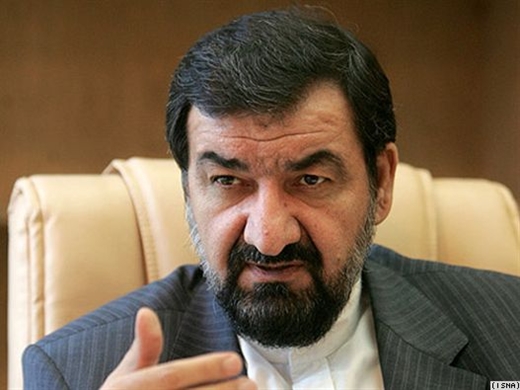
Mohssen Rezai

The secretary of the Expediency Council says that the Chinese have been the most cooperative party in nuclear talks between Iran and P5+1.

Mohsen Rezaei made the comment at a ceremony which saw Iran contract out Masjed Soleyman Petrochemical Complex to a Chinese company. The following is the partial translation of his remarks as reported by Sharq daily on January 12:

Plans are being made to turn Masjed Soleyman [in Khuzestan Province] into a special energy zone home, among other plants, to an aluminum factory to be constructed through Chinese finances.

If the Chinese companies have good cooperation [with Iran], the stage can be set for the two countries to jointly invest in Iraq thanks to Iran’s involvement in different Iraqi sectors.

Britain’s interaction with people in Iran and those in Masjed Soleyman differed from the way China behaves. The British government entered the region 107 years ago, dipped into its oil reserves and ceded a small chunk (15 percent) of its revenues to Iran.

The Chinese government, however, intends to make investment in Masjed Soleyman and pour in financial and technological resources into the region.

The Iranians will not forget China’s cooperation in recent years. During the nuclear talks, the Chinese cooperated with Iran more than their fellow P5+1 members.

Although Iran’s assets have been blocked in many countries [due to sanctions], none of them can take any measures to allow Iran to use its own money. But, China has channeled the money into Iran through financing.

Iranian players fire two shots at sanctions

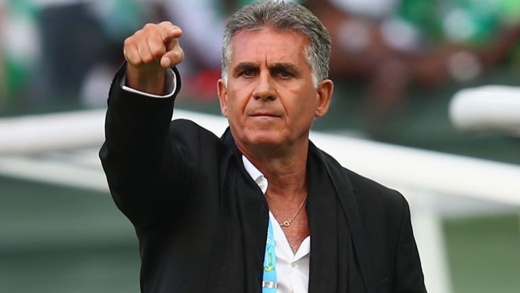
Carlos Queiroz

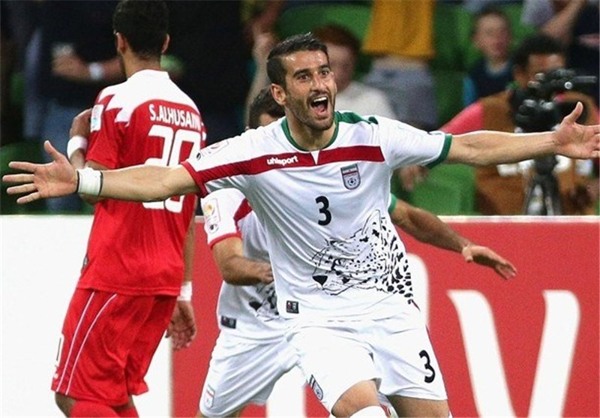
The Iranian bid to secure the AFC Asian Cup for a fourth time got off to a winning start in Melbourne, Australia on January 11 when the national team defeated Bahrain 2-0. It may sound superstitious, but in all three tournaments which eventually saw Iran lift the trophy, it had secured a 2-0 win in their opening match. That has raised hopes among avid fans of the national squad that it may win the title for a fourth time after its last championship 39 years ago. The following is a partial translation of a report Sharq daily filed on what the Iranian manager said after the game:

In a post-match press conference Iran coach Carlos Queiroz dismissed sanctions as an unfair tool and said that his team was being victimized by the sanctions.

He further said that Iran were unable to organize friendlies because their money was unfairly stuck at FIFA.

Queiroz went on to thank his men for their performance on the pitch and said sporting the national jersey puts a ton of weight on the shoulders of players. My players performed very well today.

[…]

Iran-Bahrain

Mountaineering stick with piezoelectric generator; technology at the disposal of climbers

Mountaineering stick

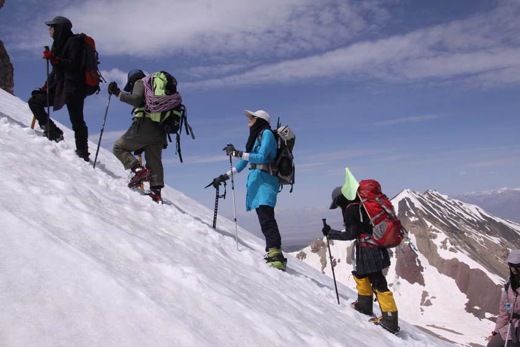
The Islamic Republic News Agency (IRNA) has reported that researchers at Semnan University have developed and registered a telescopic mountaineering stick which can produce electricity through a multilayer piezoelectric generator. What comes next is the translation of the report the official news agency filed on the invention on January 11:

“A telescopic mountaineering stick with a multilayer piezoelectric generator [which can generate an electric charge in response to applied stress] has been developed by Ali Khoshani and Omid Hamed Tabei, students at the Faculty of Mechanical Engineering, and Ramezan Ali Haji Ghorbani, who is a faculty member,” Head of the Center for Intellectual Property Ownership at Semnan Science and Technology Park Davood Maroofi said.

“That the gear is very practical makes it as must-have equipment for mountaineers,” he added.

Haji Ghorbani said, “The climbing stick is designed to help mountaineers produce the energy they need for heating, cooking, heating up food, charging batteries and so on.”

He added, “The needed energy can be generated by piezoelectric transducers implanted inside the stick which convert the constant mechanical stress exerted by a mountaineer.”

The invention has been registered at the Industrial Property General Office affiliated with the State Organization for Registration of Deeds and Properties.

Residence in Tehran dates back to 7,000 years ago

Tehran-archaeology

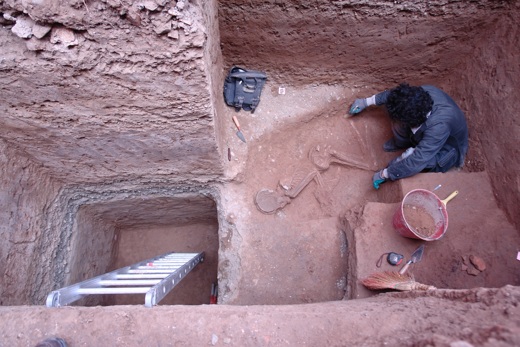
Archeological excavations in Molavi Street, south of Tehran, have produced a human skeleton that dates back to the 5th millennium B.C. What appears below is a partial translation of a report filed by the website of the Research Center of Iran’s Cultural Heritage, Handicrafts and Tourism Organization (www.richt.ir) on the finding:

“The remarkable find has pushed the history of residence in Tehran back to 7,000 years ago. Earlier, the oldest archeological finds in Tehran belonged to Gheytarieh Hills in the northeast and were 3,000 years old. The recent excavations carried out in an area between Mohammadieh and Ghiam squares have also produced a lot of underground items,” said Mohammad Esmail Esmaili Jolodar, who leads a team of archeologists tasked with carrying out excavations in and around the city’s Grand Bazaar.

[…]

He also added that after due measures to preserve the skeleton, it will be transferred to the National Museum of Iran to be put on public display.

[…]

Iran’s classic cars receive registration documents

Iran classic cars

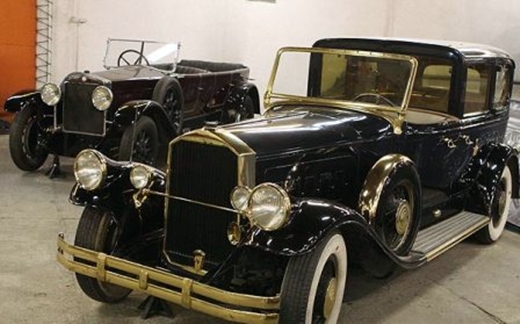
On January 11, registration documents for classic cars in Iran were unveiled with Director of the Cultural Heritage, Handicrafts and Tourism Organization Masoud Soltanifar in attendance. The following is the translation of a report the Islamic Republic News Agency (IRNA) filed on the ceremony:

During the ceremony at Niavaran Palace Complex which brought together a number of classic car collectors and officials with the Touring and Automobile Club of the Islamic Republic of Iran (TACI), the efforts of three collectors who have contributed to maintaining classic cars were appreciated.

Also, 50 classic cars which were among the first to have been granted a registration document were put on display and the endeavors of five owners [to maintain classic cars] were praised.

In 2010 a working group led by the Cultural Heritage, Handicrafts and Tourism Organization was tasked with locating and maintaining classic cars, said deputy director of the organization Mohammad Hassan Talebian, adding, “Unfortunately, a large number of Iran’s classic cars have either been scrapped or taken out of the country and ended up in collections abroad.”

Talebian stated that the transfer of classic cars beyond Iran’s national borders has now stopped.

Underscoring the fact that the history of transportation in some of Iran’s neighboring countries is no more than four decades, he said, “Although transportation is Iran is a century old, some neighboring countries hold exhibitions in which a lot of Iranian classic cars are on display.”

He went on to say, “So far, as many as 300 classic car collectors have been identified out of which for 60 licenses have been issued.”

The move to issue registration documents for classic cars is aimed at preserving this cultural heritage, Talebian concluded.

TACI President Abdolghasem Iraji presented a report about the measures the working shop has taken to identify and maintain classic cars and said, “A considerable number of the country’s 15,000 classic cars have either been scrapped or taken out of the country, creating an alarming trend that has worried classic car owners and fans.”

Excavations in Hormozgan unearth early orthography

Iran's history

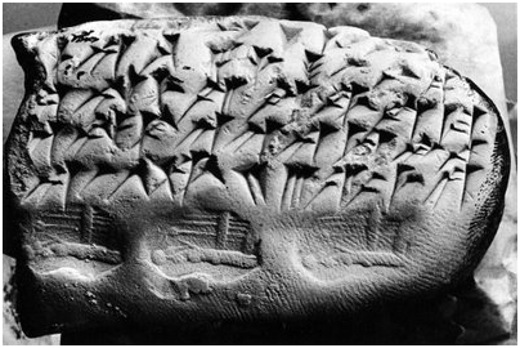
Director General of Cultural Heritage and Tourism of Hormozgan has announced the discovery of a pottery piece with early orthography on it, and the first discovered ancient stamp in the province.

The recent archeological excavations in a historical site in Hormozgan Province in south of Iran have led to the discovery of an ancient pottery piece engraved with early orthography and a stamp used by individuals in trade exchanges.

Abbas Norouzi told Mehr News that the piece of pottery with early orthography on it dates back to 5,000 years ago.

“The piece was unearthed in an area between Kamiz Village and Kheirabad Village in Roudan; the initial studies have confirmed that the orthography belongs to the Elamite period, approximately 2700 BC,” he said, noting that the piece was now in the possession of archaeologists and linguists of Iran’s Cultural Heritage Organization for further investigation.

He also referred to the discovery of an ancient stamp in Hormozgan belonging to the third millennium BC. According to Norouzi, the stamp was used in trade transactions and sealing.

An unearthed human skull during the excavations has marks of a surgical operation on it. According to Norouzi, the skull dates back to some 5,000 years ago. There are two holes on the skull indicating surgery performed on the brain. Earlier instances of such brain surgeries have already been discovered in Egypt as well as Shahr-e Sukhteh (the Burnt City), an archaeological site located in Sistan and Baluchistan Province, in southeastern Iran.

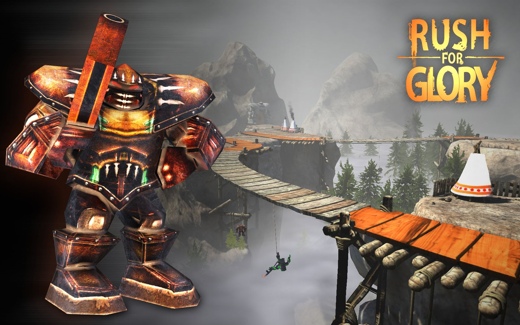
Iranian game Rush for Glory hailed overseas

Iranian-Game

The developer of Iranian video game Rush for Glory, popular among foreign gamers, has announced the game’s upcoming release in Iran’s market.

Sajad Bigjani, the project director of Rush for Glory at Parse Game Studio, also said the game would soon be released for the new-generation console Xbox One.

“Rush for Glory is a 3D Tower Defense Game that has so far been released in Germany, Britain, the US, Poland and Czech via a German distributor. The game is also available on Steam and other digital game stores,” he said.

Bigjani noted that the game has not been released in Iran yet, but has succeeded in drawing a positive response overseas.

The game has a seven out of 10 rating on Steam’s official site.

“To release the game on a console we have planned to change a lot of things about the gameplay, the controller, game levels, characters and other elements,” he said.

Bigjani said that Iran’s game market has enormous potential for the game and Parse Game Studio is eager to release Rush for Glory in Iran as soon as they find a proper game distributor.

Rush for Glory is a challenging and rewarding 3D Tower Defense Game, in which players defend their base against an alien invasion. By strategically building towers and upgrading them, the player can keep his base safe and further progress through the extensive single-player campaign.

Over 30 types of enemies, terrifying level bosses as well as a wide variety of towers and upgrades have made Rush for Glory a unique Tower Defense experience.

Parse Game Studio is an Iranian independent game development studio focused on making casual games for PC and tablets.

Iran to repair historic Dar ul-Funun as tourist attraction: Official

Iran-history

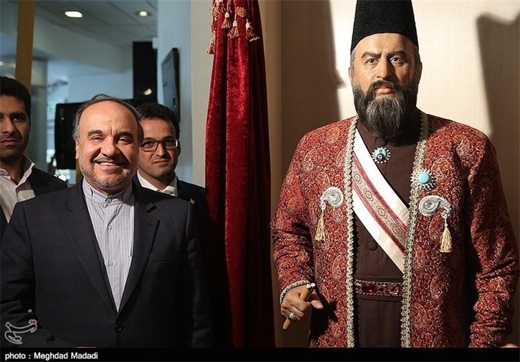
Darol FonoonHead of Iran’s Cultural Heritage, Handicrafts and Tourism Organization (ICHHTO) unveiled plans for the restoration of the building of Dar ul-Funun, the first modern university in Iran, to attract tourists to the historic site.
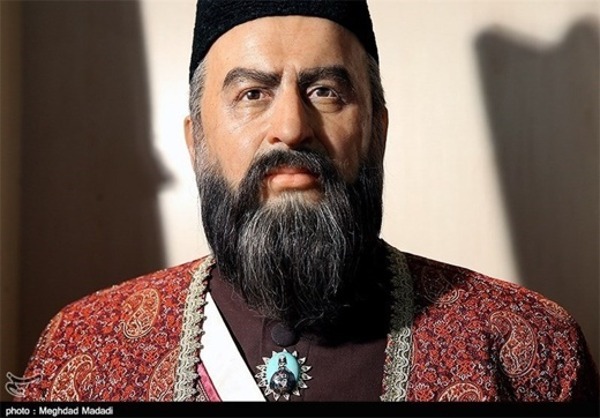

Masoud Soltanifar told reporters in Tehran on Sunday that Dar ul-Funun – Polytechnic – will undergo restoration within the next two years.

He said turning the historic site into a tourist attraction is a top priority.

Part of the complex will also change into a museum of education, Soltanifar said on the sidelines of a ceremony to unveil statue of Amir Kabir, founder of Dar ul-Funun.

Known as the first modern institute of higher education in Iran, Dar ul-Funun was established in Tehran in 1851.

Amir Kabir, a highly respected vizier during the Qajar dynasty, founded the polytechnic to train students in medicine, engineering, military sciences and geology.


Iran-history