Monday, December 29, 2025
Home Blog Page 3914

Over 1,400 Planes Crossing Iran’s Sky Every Day: Official

“Today, Iran has been chosen [by airliners] as the safest air corridor in the Middle East,” Brigadier General Farzad Esmaili, the commander of Iran’s Air Defense Force, was quoted as saying by the domestic media.

The official added that over 700,000 international flights carrying a collective of above 50 million passengers had used Iran’s skies over the past Iranian calendar that started 21 March 2016.

Official figures show around 450 planes crossed Iran’s skies every day in 2014. However, the insurgency that Daesh militants waged in Iraq as well as the conflict in Ukraine pushed the number up to as high as 900 planes per day the next year, marking an increase of 100 percent.

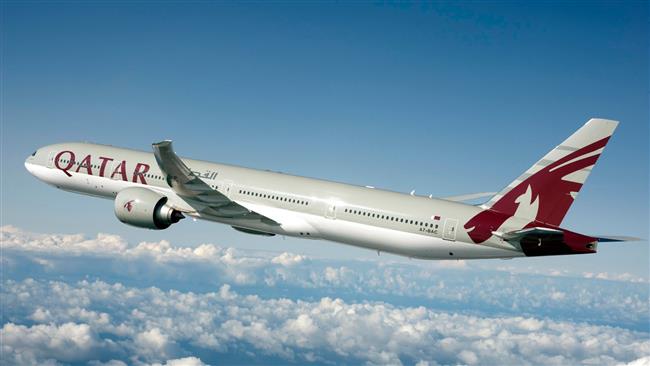
The diplomatic crisis between Qatar and Saudi Arabia and its allies forced the tiny Persian Gulf state to use Iran’s airspace for its international flights.

Accordingly, officials said this introduced an increase of 20 percent in Iran’s air traffic.

The rise in Qatar’s use of Iran’s airspace has also provided the Islamic Republic with extra air transportation fee revenues. To the same effect, the domestic media said Iran was entitled to at least $13 million per month in air traffic fees.

In June, Saudi Arabia, Oman, Kuwait, Bahrain, and the UAE closed their airspace to the Qatari planes after they cut diplomatic ties with the country, accusing the latter of supporting terrorism.

Iran to Finish Construction of New Nuclear Plant by 2025

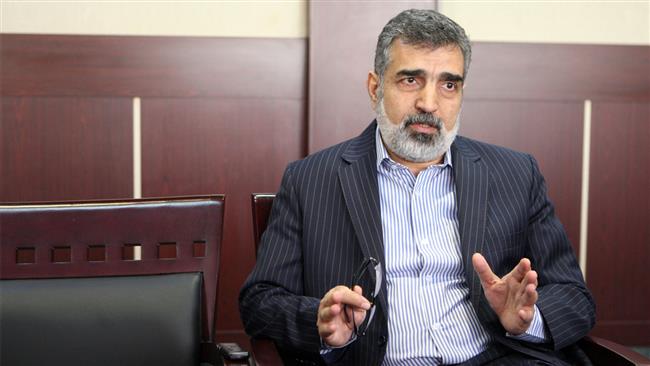
Behrouz Kamalvandi, the spokesman of the Atomic Energy Organization of Iran (AEOI), told the domestic media that a second plant would be made operational two years later than the first one.

Kamalvandi emphasized that the projects could generate a collective of 2,100 megawatts – 1,050 megawatts each – once fully operational.

Last September, Iran said it had started a 10-year project to construct a new nuclear power plant with Russia’s help.

The Islamic Republic already runs one Russian-built nuclear reactor at Bushehr, which is the country’s first nuclear energy project.

Russia signed a deal with Iran in 2014 to build up to eight more reactors in the country.

Kamalvandi further added that the construction of nuclear power plants required an investment of at least $5 billion. The figure, he said, is at least three times higher than that required for the construction of regular plants.

The official further said that Iran burns at least two million barrels of oil each year to produce enough electricity to answer its energy needs. This, he added, would cost at least $100 million if each barrel of oil is sold at $50.

Using the nuclear technology, Kamalvandi stressed, would both preserve national resources and would also help prevent the annual release of around 7 million tonnes of pollutants into the environment.

Elsewhere in his remarks, Kamalvandi said the operations to re-design Arak heavy water reactor is proceeding according to the schedule, adding that the project would finish before 2022.

He added that the re-designing of Arak reactor – whose name he said he been changed to Khandab heavy water reactor – had already entered the second phase.

Kamalvandi emphasized that Iran in cooperation with Russia and under the supervision of China and the US were involved in the project.

He said Chinese experts had endorsed Iran’s contribution to Khandab project – what he said marked a significant technical achievement for the Islamic Republic.

Iranian Envoy Raps US Pressure on IAEA

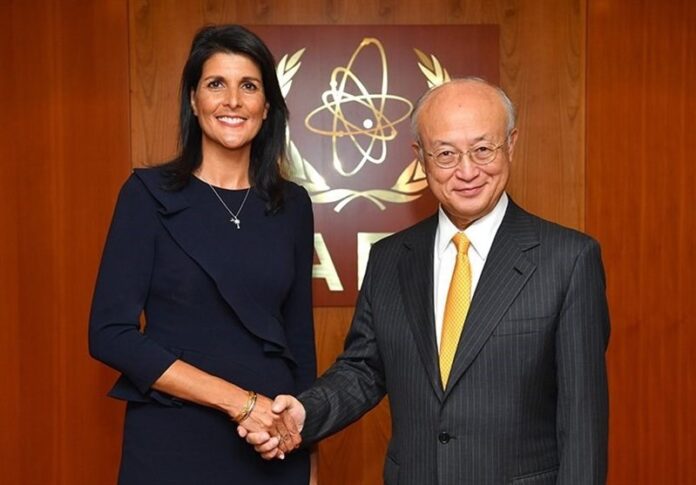
Iran’s permanent mission to the IAEA issued the warning in a statement on Thursday, a day after US President Donald Trump dispatched US Ambassador to the UN Nikki Haley to Vienna to press the UN nuclear chief on their reading of Iran’s compliance.

The statement said the objectives and the results of Haley’s trip to Vienna “contradict” the Joint Comprehensive Plan of Action (JCPOA) and Resolution 2231, which the UN Security Council has adopted to endorse the nuclear agreement between Iran and the Group 5+1 (Russia, China, the US, Britain, France and Germany).

Iran is fully aware of its obligations under the Nuclear Non-Proliferation Treaty (NPT), the Additional Protocol and the JCPOA, and remains committed to their terms, the statement added.

However, Iran will not allow a specific country to take advantage of the rules for its own political objectives, it noted.

The statement also said that Iran expects the IAEA secretary general and its inspectors to perform their tasks regarding the JCPOA with professionalism and honesty.

Prior to her trip to Vienna, Haley claimed that the visit was a fact-finding mission and part of Trump’s review of the nuclear deal with Tehran.

In a letter dated August 19 but released on August 23, Iran’s Foreign Minister Mohammad Javad Zarif warned about US adherence to the nuclear deal.

Zarif also noted that Haley’s visit to the IAEA undermined “the independence and credibility” of the inspectors.

The trip is aimed at destroying the nuclear deal by raising doubts about the accord’s stability and sustainability, Zarif wrote.

“The publicly stated purpose of this visit raises several serious concerns over further violations of the letter and spirit of” the nuclear deal by the US, Zarif added.

Iran Vows to Legally Pursue Apple’s Removal of Iranian Apps

Iran Vows to Legally Pursue Apple’s Removal of Iranian Apps

Mohammad-Javad Azari Jahromi, the 36-year-old Iranian Minister of Communications and Information Technology, has reacted to the omission of Iranian applications from the App Store by the Apple Inc.

“Apple holds 11% of Iran’s mobile phone market. Today, respecting the rights of consumers is a principle which Apple has violated. We’ll pursue the removal of [Iranian] apps,” said Azari Jahromi on his Twitter page.

According to official reports by Apple and information provided by some domestic sources, the company has shut down some of the popular applications developed by Iranians on App Store due to the US sanctions.

In a message to Iranian developers whose apps were affected by the ban, Apple said, “Under the US sanctions regulations, the App Store cannot host, distribute or do business with apps or developers connected to certain US embargoed countries.”

In reaction to Apple’s message, Azari Jahromi said the company’s response is not precise. He said some of the deleted apps were not associated with financial transactions, and some were registered in countries other than Iran due to sanctions.

The applications removed from App Store include the popular ride-hailing application Snapp as well as online shopping services Digikala and Takhfifian, among others.

Iranians Welcome Campaign to Support Domestic Food Industry

Iranians Welcome Campaign to Support Domestic Food Industry

As Iran’s food industry is suffering from the mass effects of contraband goods, new campaigns created with the main theme of supporting domestic products can play a key role in promoting job creation and economic production in Iran’s food industry and help the industry leave behind its current recession.

According to a Farsi report by the Shahrvand daily newspaper, one of the main sectors in the food industry which is now working based on international standards is chewing gum production.

Today, the sector has managed to create a campaign to get in direct touch with the people. The campaign helps anyone in the society to get familiar with the production process of chewing gum. This has created a positive feeling in the people, prompting them to buy new chewing gum types produced by domestic producers.

The campaign which has been underway for at least two weeks has been warmly welcomed by the people. Meanwhile, some chewing gum companies have presented their new products to some celebrities like Iranian famous traditional singer, Homayoun Shajarian, and popular TV puppet character, Jenab Khan.

It is noteworthy that smuggled chewing gum types which are usually offered with low prices can threaten the people’s health. Meanwhile, they also threaten the existence of Iranian-made chewing gums, leaving many working in the industry jobless.

Iran’s chewing gum market, one of the leading markets in the Middle East, is currently filled with products imported from other countries.

Minorities Free to Perform Religious Rites in Iran: Christian MP

Minorities Free to Perform Religious Rites in Iran- Christian MP

In a Farsi interview with ICANA, Yonathan Betkolia denounced as baseless the US State Department’s report on religious freedom violations in Iran, saying the report is aimed at tarnishing the cultural image of Iran across the world.

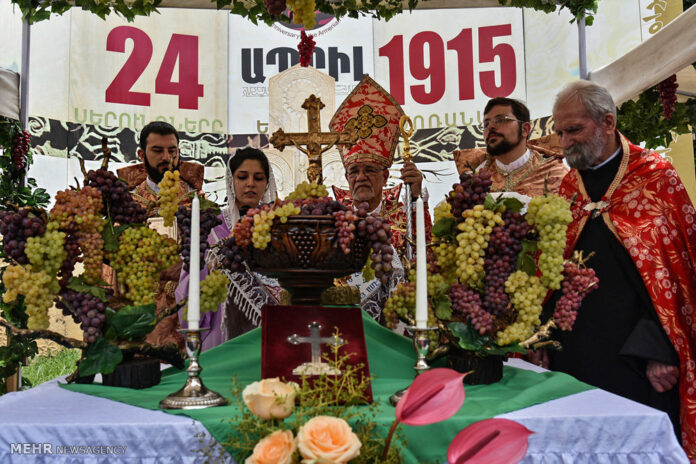
“As an Assyrian Christian in Iran, I have not seen yet a violation of religious minorities’ rights in Iran over the past four decades. The minorities enjoy absolute freedom to perform their religious rites in the country,” he said.

The representative of Iranian Assyrian Christians in the parliament went on saying that Iran’s Cultural Heritage Organization has already registered as national heritage all Christian churches across the country, and also repaired and renovated them.

“Besides their churches, the Christians in Iran also have established their own guilds as well as schools and so on,” he noted.

Betkolia also said in the Islamic Republic, minorities’ schools like those of Armenians, Jews, Zoroastrians and Assyrians are not under any pressure to teach Islamic books. “They are only obliged to teach their own religious books in their schools,” he added.

The Iranian lawmaker also noted that instead of accusing Iran of racial and religious discriminations and promoting Islamophobia across the world, the US had better stop rights violations and brutal measures adopted by its police and security forces.

“The Americans themselves don’t allow religious books to be thought in their schools but accuse Iran of violating religious freedom. This comes as minorities in Iran enjoy absolute freedom to perform their rites,” he noted.

“In the US, religious books have been burned repeatedly by extremists but we have not ever seen a similar case in Iran,” he added.

No Limit on Photojournalists’ Presence in Iran Parliament: MP

No Limit on Photojournalists’ Presence in Iran Parliament-MP

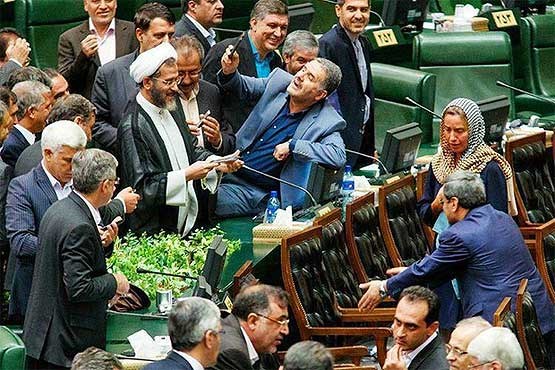
From taking selfies with Mogherini to eating pears; paparazzi put their noses into everything!

It all began when the Iranian Parliament invited dozens of foreign dignitaries to take part in the swearing-in ceremony of President Hassan Rouhani.

A few number of the MPs showed an interest in taking selfies with EU Foreign Policy Chief Federica Mogherini, something which was captured by photojournalists and went viral on social media.

Critics lashed out at the lawmakers (mostly reformists) for their enthusiasm for selfies. It was then when the phrase “selfie-taking lawmaker” was coined and made its way into Iran’s language of politics.

The criticisms were so intense that the peripheral event greatly overshadowed the positive outcome of the oath-taking ceremony.

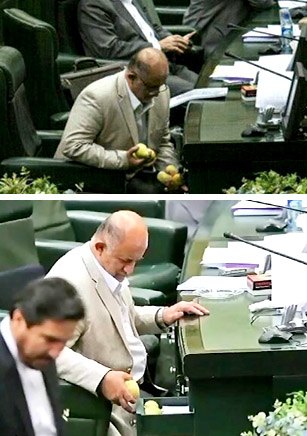
No Limit on Photojournalists’ Presence in Iran Parliament: MPNow, another topic is the front-page news in media and on social networking sites. This time, a conservative legislator leaves an important open session of parliament where lawmakers were reviewing the qualifications of President Rouhani’s nominees for ministerial posts. The MP returns after a few minutes with three pears in each hand, not knowing that photojournalists were capturing every moment of his unusual action! He was widely mocked and criticized for the pears, and the issue sparked a great controversy in coming days.

Following these two events, rumours emerged that some lawmakers (probably selfie-taking MPs and those interested in having snacks in the middle of an official session!) have set aside their political differences (irrespective of whether they are conservative or reformist) and arrived at the conclusion that the way to maintain the Parliament’s dignity is to limit the number of journalists allowed on the parliament floor. Accordingly, the same lawmakers are trying to get this restriction legalized. This issue, even if it is a mere rumour, has prompted a sharp reaction from the advocates of the free flow of information and transparency.

However, a top parliamentarian says no restrictions will be imposed on the presence of reporters and photojournalists in the Parliament, as reported by the Iranian Parliament’s Persian-language news agency ICANA.

“The legislators and the Parliament’s Presiding Board are definitely opposed to such a plan (restricting journalists),” said Behrouz Nemati, the spokesman for the Presiding Board.

He said it would be pointless to limit the activities of journalists who are simply discharging their responsibilities.

Nemati stressed that journalists should not be restricted; rather, lawmakers should correct their behaviour.

“As the cultural observer of the parliament’s Presiding Board, I announce here that photographers and journalists should continue their work seriously because no restrictions have been envisaged for them,” he added.

“A limited number of legislators have aired their grievances [over the presence of reporters], but so far no motion has been submitted to the Presiding Board to call for a limit on the presence of journalists and photographers,” he noted.

He said photojournalists have a duty to capture moments, and added a picture is sometimes more influential than hundreds of meetings and speeches.

“If some of the legislators are opposed to our views, we will definitely enter into talks with them on behalf of the Presiding Board and explain to them that they should exercise more self-restraint,” he said.

Iran Urges Bahrain to Stop Suppressing Dissidents

Iran Urges Bahrain to Stop Suppressing Dissidents

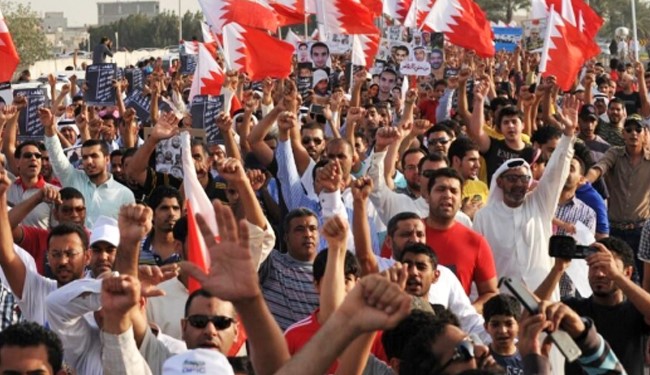
In a statement on Friday, Iran’s Foreign Ministry Spokesperson Bahram Qassemi called on Bahrain’s rulers to stop suppression and torture of the dissidents, and end their desperate efforts to derail the peaceful protests of Bahraini people.

The spokesperson said the government of Bahrain also needs to put aside failed security measures.

“Instead of resorting to military power of foreign states, it is better for the Bahraini government to sit for talks with the protesters who make up a large part of the country’s population and tackle the current problems through reconciliatory and civil methods,” he noted.

Qassemi dismissed as ‘baseless’ and ‘ridiculous’ the latest accusations raised by Bahrain’s Interior Ministry on the alleged interference of Iranian agents and organizations in the Arab country’s internal affairs, saying the reports on Tehran’s role in the internal chaos in Bahrain are totally groundless.

“The Islamic Republic of Iran has never promoted violence and destabilizing measures in any of its neighbouring countries, including Bahrain,” he noted.

“Simultaneous with the release of new reports by human rights organizations unveiling massive tortures of political activists in Bahrain’s jails, the Kingdom’s government has once again resorted to playing the blame-game, spreading lies, and making baseless claims to blame others for its internal problems,” he said.

Iran Blasts US New Strategy towards Pakistan

In a statement on Thursday, Foreign Ministry Spokesperson Bahram Qassemi said, “The US condemns other states for what is the result of its own wrong and inappropriate policies for years in the region, particularly in Afghanistan.”

He went on saying that Washington’s opportunistic strategies as well as its unilateral and meddlesome policies have only contributed to the current chaos and tensions and paved the way for growth of terrorism and extremism in the region.

The spokesperson advised the US administration not to meddle in the internal affairs of the regional states and not to impose its agenda on them.

“The regional states enjoy a high capacity to cooperate in fight against terrorism and restore stability and security to the region, and there is no need for the US destabilizing strategies which lead to the spread of terrorism,” he added.

Absolute Military Power No Longer A Decisive Factor: Iran FM

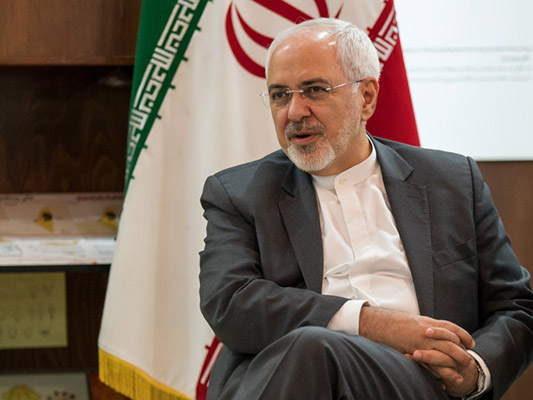
Iranian Foreign Minister Mohammad Javad Zarif says the countries regarded as “powers” in the 1970s, 80s, and 90s no longer have a determining role, and that “other instruments of power are available to us” now.

“This does not mean we want to square off against the world; rather, it means we can use all modern instruments of power such as establishing dialogue, creating concepts, reaching a consensus, etc. to make a difference in the future of our country and in developing nations,” said Zarif.

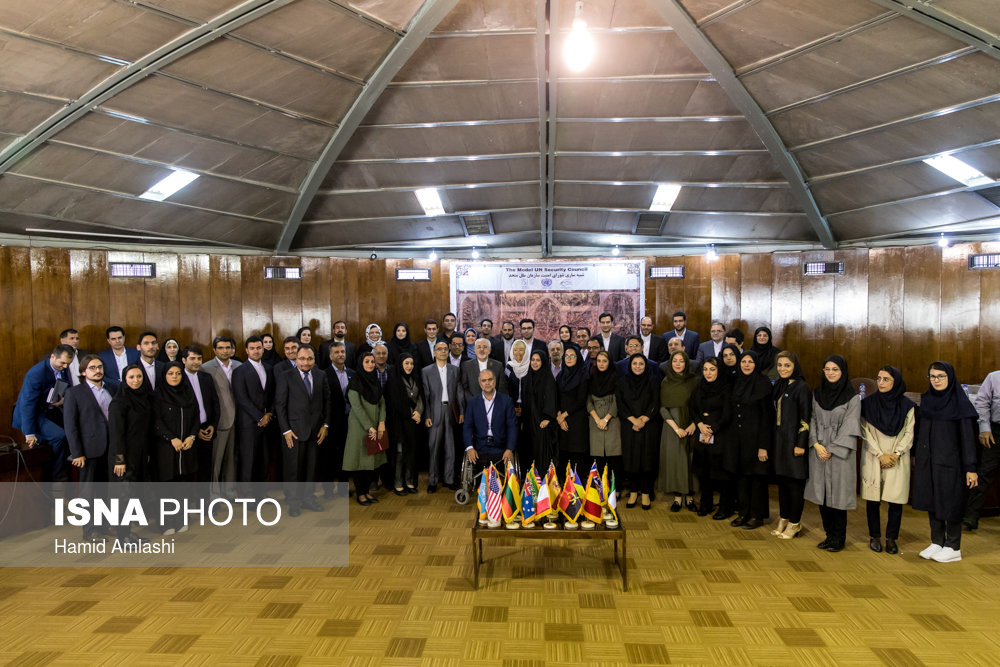
He made the remarks during a visit to a training workshop named “Simulating the UN Security Council session with a look to North Korea.” The workshop was held in Tehran’s Museum of Peace, which has been built by Iranian war veterans.

“In today’s world, players such as ISIS, the Taliban, al-Qaeda and the Nusra Front are non-state players which influence international developments,” the foreign minister added, according to a Farsi report by the Entekhab news website.
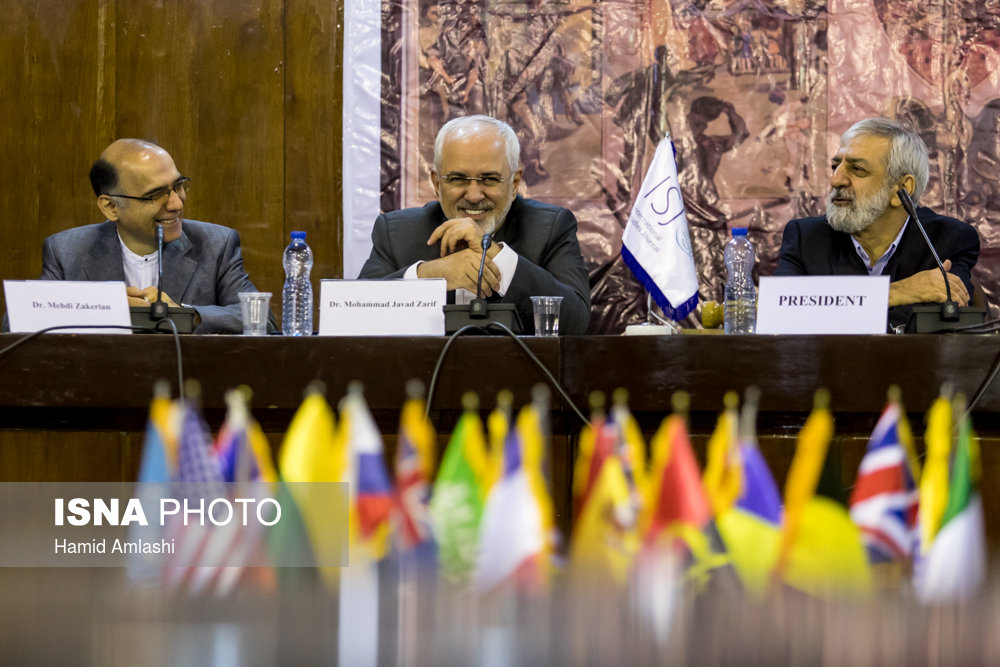
Absolute Military Power No Longer A Decisive Factor: Iran FMZarif touched upon his presence in the Munich Security Conference where, as he said, the key question raised was, “What is happening in the post-Western world?”

“Westerners are seriously looking at the world after them and publish books on it. This comes as some people criticised us [when we spoke of the post-Western world.] Unfortunately, in our country we don’t believe that we have entered the post-Western world, and this is while Westerners themselves have accepted it. I’m not saying that the West’s role has ended; what I’m saying is that the West’s monopoly in the world and in international relations has come to an end.”

“We, as representatives of governments, don’t want to accept that there are players other than governments. This is while governments take part in international discussions depending on the topic at hand such as the environment, social development and human rights.”

He said governments, especially those in the West, have claimed monopoly over international relations, but such a monopoly does not exist anymore.

“We should accept this issue as an important factor in international decision-making: If the governments’ monopoly has ended, then monopoly over instruments of power has come to an end, too.”

Iran’s diplomacy chief, who has a history of attending the meetings of the UN Security Council, General Assembly and other departments of the world body in the past as Iran’s ambassador to the UN, referred to instruments of power in the past.

“At a certain point in time in international relations, the only instrument of power was military power, from the gunboat policy to policies which legitimized war as a foreign policy instrument. War was a legitimate tool for infiltration,” added Zarif.

“First, power was only associated with the military domain; however, other instruments of power such as economy, education, etc. came onto the scene later on. Some instruments of power continue to be recognized today, and they are conceptual instruments of power. Countries and players which traditionally enjoy a low level of power use this conceptual instrument of power to make a difference. These instruments include independence-seeking, getting engaged in dialogue and consensus-building in the world.”
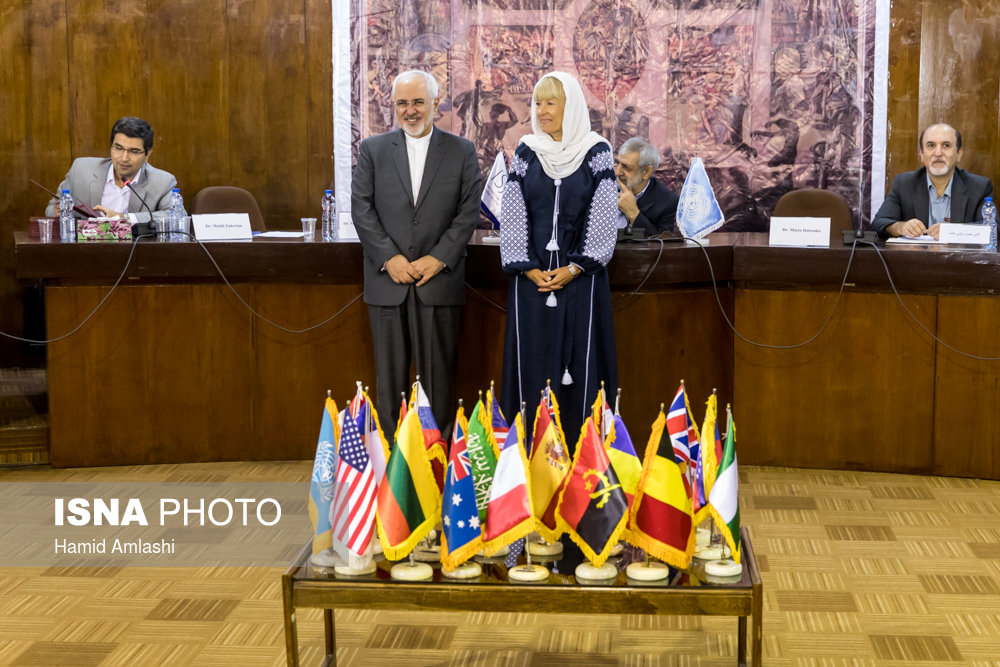
Absolute Military Power No Longer A Decisive Factor: Iran FM“What you do in these UNSC simulation workshops is that you review a mix of traditional powers. For instance, when it comes to North Korea, China and the US, they play a greater role because of their military power. In the simulated negotiations that you will hold, you’ll see that the US and China will have a greater role than Senegal or Ethiopia due to this very element of power. Still, today there is another element of power, and that is consensus-making, which is used in the UN Security Council as well.”

“Small countries such as Malta and Cape Verde have played a role in international issues in the UN Security Council, but not because of their military might; rather, because of their ideas and expertise in a particular domain. For example, Malta played a role in the rights of the seas issue. Cape Verde, because of its knowledge in that domain, has turned into one of the key players as far as the rights of the seas are concerned; so, as you see, these instruments of power move from UNESCO’s general conference and the General Assembly to the Security Council where they result in power when coupled with idea-creation, concept-building and consensus-making.”

“In the simulation exercises, those serving as representatives of countries which are not members of the UN Security Council should practice with these instruments of power as well, instruments such as thought and discourse-making.”


Our understanding of the international situation should change, and we should know that UN Security Council Resolutions are neither everything nor worthless paper.


He stressed that these instruments of power are effective in power-building.

“Our understanding of the international situation should change, and we should know that UN Security Council resolutions are neither everything nor worthless paper. When I was Iran’s ambassador to the UN, the ambassador of one of the countries said that international law is our tool box, and we use it whenever necessary. So, international law cannot be everything, and power cannot be everything, either.”

Zarif went on to say that in consensus-making or discourse-building, there are key factors which contribute to the adoption of an international decision.

“Practicing this issue is something which should be taken into consideration in the simulation process. We should learn that we should not only pay attention to the meaning of power as it was in the past, but we should understand the modern meaning of power as well.”
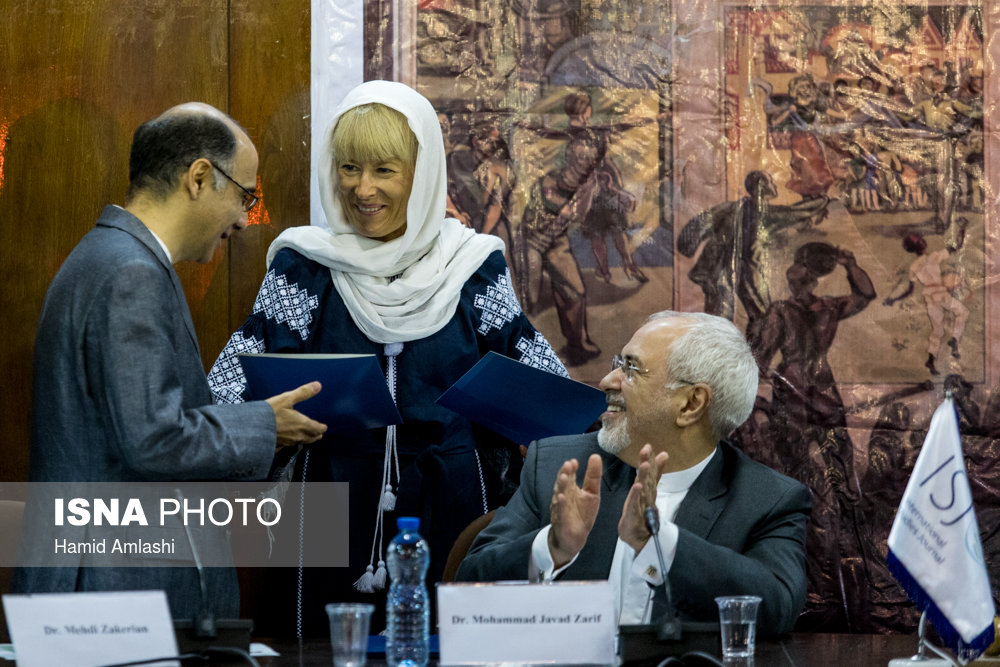
Absolute Military Power No Longer A Decisive Factor: Iran FM“The five permanent powers of the UN Security Council must like the whole world to believe that nukes mean everything and that nuclear weapons states have the final say. But such a thing has not happened. If it had happened, it would have meant that the world had to accept the five powers’ domination over all international relations because each one of these five powers can destroy itself and its enemies for dozens of times with the weapons they possess, which is called ‘mutually guaranteed destruction’.”

Iran’s foreign minister, who attended the negotiations on the eight-year Iraqi imposed war on Iran in the 1980s, further touched upon Baghdad’s use of chemical arms against Iran.

“In the [Iraqi] imposed war, chemical weapons were used, but the whole world supported [former Iraqi dictator] Saddam Hussein and did not allow the issue of chemical weapons’ use against Iran to be brought up at the UN Security Council.”

“Don’t forget that and don’t be fooled by slogans. We were there and saw that until Saddam Hussein invaded Kuwait, members of the Security Council did not issue a single statement or resolution in which the word ‘Iraq’ was mentioned despite the fact that the then UN secretary general had released six reports explicitly saying that Saddam Hussein had used chemical arms against Iranians and civilians. The Security Council members only mentioned the use of chemical arms against Iranian troops. The wording of the sentence was as if we ourselves had used chemical arms against our people.”

“Iran has paid the price for countering the absolute power in those days, and even at that time Iran showed that power is not a determining factor.”

“What is important is that we should know there are other instruments of power which we can use successfully. This does not mean we want to confront the world, but it is an approach that can have a bearing on the future of our country and developing nations and the region and international relations.”

Absolute Military Power No Longer A Decisive Factor: Iran FM