Monday, December 29, 2025
Home Blog Page 390

Iranian state media’s controversial broadcast draws criticism amid diplomatic thaw with Saudi Arabia

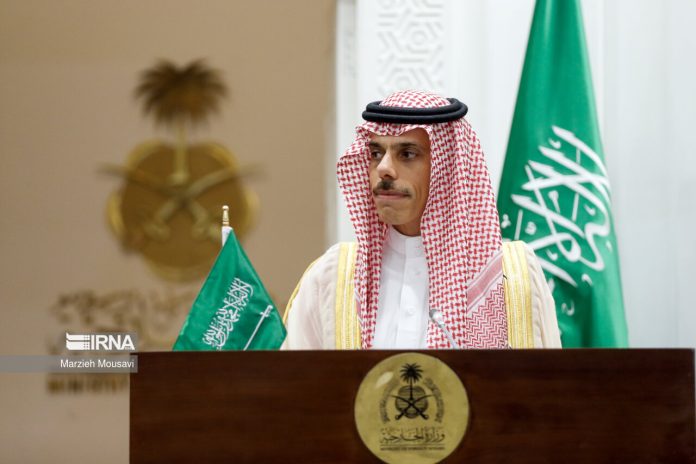
Saudi Foreign Minister Faisal Bin Farhan

Jomhouri-e Eslami newspaper sharply criticized the programming, calling it a “severe blow to national interests” that undermined Iran’s declared policy of Islamic unity and harmed the country’s negotiating position.

In another incident, the state television broadcast a controversial program, which contained sectarian material offensive to Sunni Muslims.

“At a time when our foreign policy is achieving important developments, how can those claiming to be revolutionary and Islamic work against our regional and international policies?” the article questioned.

While acknowledging some critical voices from expatriate opposition groups and Israeli commentators regarding warming Iran-Saudi relations, the newspaper emphasized that state media should support rather than undermine the country’s diplomatic initiatives.

The incident has raised questions about coordination between Iran’s foreign policy objectives and its media messaging, particularly during sensitive diplomatic engagements.

In rapid damage control, IRIB chief Peyman Jebelli condemned the content as “unforgivable,” while Deputy Director Mohsen Barmahani announced disciplinary actions against eight employees, including four arrests.

Iran slams Paraguay’s blacklisting of IRGC as illegal

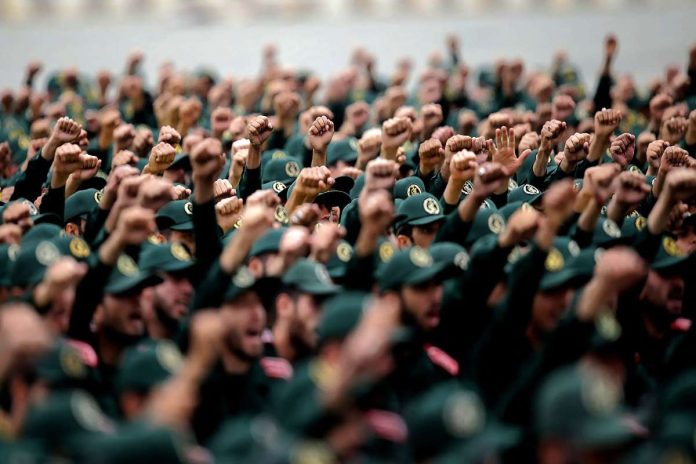
IRGC

Issa Kameli, the director general for the Americas department at the Foreign Ministry, said the Paraguayan move is “illegal, unjustifiable and in violation of international legal rules and norms.”

Paraguay designated on Thursday the Iranian elite force as a “terrorist” organization and expanded its previous blacklisting of Palestine’s Hamas and Lebanon’s Hezbollah to encompass the military and political arms of the two resistance movements.

Expressing disappointment with Paraguay’s alignment with the occupying and genocidal Israeli regime’s anti-Iran policies, Kameli emphasized Paraguay’s global accountability for its illegal action against Iran’s IRGC.

“The political action undertaken by the Paraguayan government sets a dangerous precedent, orchestrated at the behest of the Zionist regime to distract public attention from the genocide in Gaza, thereby implicating Paraguayan policymakers as complicit in the crimes currently under prosecution by the International Criminal Court,” the Iranian Foreign Ministry official added.

Kameli pointed to the lofty, empowering, and honorable position of the IRGC as part of the country’s official armed forces, and said the force has played an unparalleled role in defending the integrity of Iran and confronting terrorism, including Daesh.

He further emphasized the Iranian government’s unwavering commitment to undertaking all essential measures to safeguard the standing and reputation of the nation’s armed forces in the face of any “belligerent labeling.”

Announcing the designations in a statement, Paraguayan President Santiago Peña claimed that the move was a reaffirmation of Asuncion’s commitment to the “global fight against terrorism” while strengthening its strategic allegiances with the United States and Israel.

Pena accused the IRGC of “systemic involvement in human rights violations and participation in terrorist activities,” without providing any evidence.

The Latin American country had blacklisted Hamas and Hezbollah in 2019 but extended the designation on Thursday to their military and political arms.

The US State Department and Israeli regime praised the Paraguayan government’s anti-Iran action, with Israeli foreign minister Gideon Sa’ar urging more countries should follow suit.

Paraguay’s relationship with the illegal regime has improved under Peña, who reopened his country’s embassy in the occupied al-Quds in 2024 after it was closed by his predecessor.

The reopening made Paraguay the sixth nation with an embassy in the occupied al-Quds, joining the United States, Honduras, Guatemala, Kosovo and Papua New Guinea.

Last year, the Islamic Republic demonstrated its military might with Operation True Promise I and II, which included hundreds of retaliatory strikes by the Iranian Armed Forces against the occupied territories.

The operations manifested Iran’s finesse to pummel Israeli military and intelligence targets with surgical accuracy, filling with awe the regime’s military experts and international sympathizers.

Iranian officials have underscored that the country only deployed a fraction of its firepower during the dual reprisal.

Fourth edition of Koocheh music festival kicks off in Bushehr

Musician and festival organizer Mohsen Sharifian said concerts will be held on the Grand Ferry ship, while Lian Hall and Saadat School host free cultural events.

A classical literature night featuring Saadi and Rumi experts was held on Friday evening. Unlike previous years, no activities are planned in Bushehr’s historic district.

The grassroots festival marked its return after years of pandemic and obstacles.

The non-governmental cultural event, aimed at preserving local music and promoting Bushehr’s indigenous culture, nearly faced cancellation days before its scheduled opening.

The festival encountered last-minute hurdles when the Iranian deputy arts minister initially announced its cancellation.

Organizers responded with a statement congratulating “the real winners” of what they called a “lost cause.”

Following public backlash on social media and protests by artists, Bushehr’s Culture Ministry granted limited permission on Sunday, allowing events at Lian Hall while denying permits for the historic old quarter.

Iran denies destabilizing Syria, calls for end to occupation

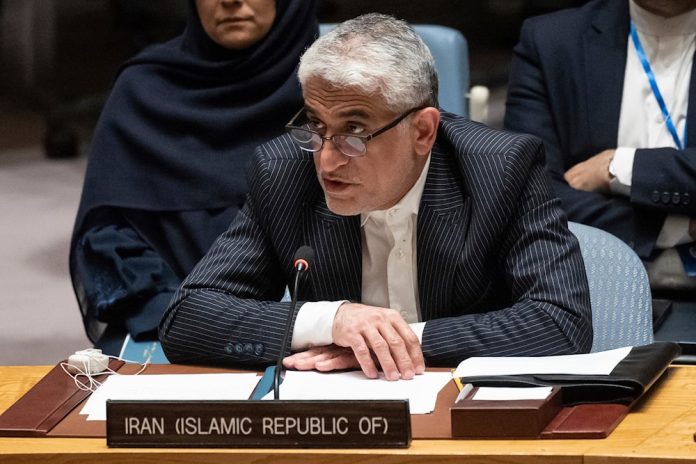
Amir Saeed Iravani

Iravani reiterated on Friday Iran’s “unwavering commitment” to Syria’s sovereignty and territorial integrity, demanding the immediate withdrawal of all unauthorized foreign forces from Syrian territory.

“Iran has never taken any action to destabilize Syria or the region,” the envoy stated, dismissing contrary claims as “biased and unacceptable.” He affirmed support for a “stable, united Syria free from terrorism, occupation, and foreign interference.”

He condemned Israel’s military aggression on Syria as violations of international law and the 1974 Agreement on Disengagement between Israel and Syria, warning that continued attacks – enabled by US political and military support – systematically degrade Syria’s defensive capabilities.

The ambassador highlighted Syria’s worsening humanitarian crisis, with 16.7 million people (70% of the population) requiring aid – the highest level since 2011. He blamed US sanctions for obstructing reconstruction and refugee returns while noting only 10% of 2025’s $1.2 billion humanitarian appeal has been funded.

Iravani emphasized combating foreign militant groups in Syria and endorsed the Syrian-led political process under UNSC Resolution 2254, including holding free elections and forming an inclusive government.

Ukraine and its backers reject key aspects of US peace plan: Reuters

Russia Ukraine War

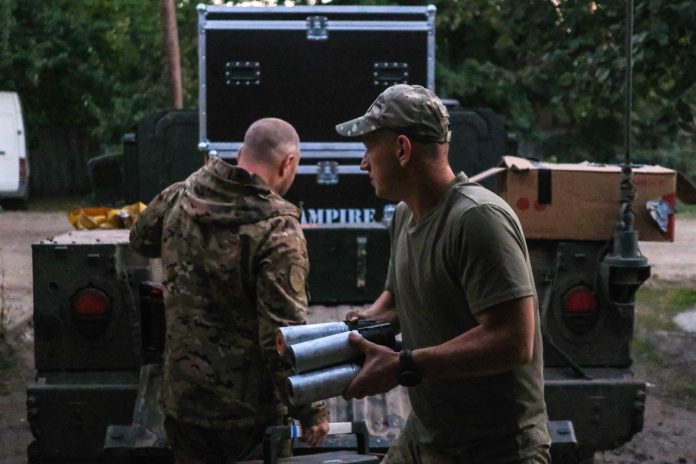
Washington tabled a proposed deal to end hostilities between Kiev and Moscow during a meeting in Paris on Thursday last week. A follow-up meeting took place in London on Wednesday, at which Ukrainian officials and their NATO European counterparts drafted counterproposal.

The London talks were downgraded at the last minute after Ukraine’s President Volodymyr Zelensky publicly rejected key American suggestions. He declared on Thursday that the European-backed “strategy” was now “on President Trump’s table.”

Having examined the drafts “in full and explicit detail” on Friday, Reuters identified four critical areas of disagreement.

The US is proposing Washington’s formal recognition of Russian sovereignty over Crimea — the former Ukrainian region that voted to join Russia following the 2014 Western-backed armed coup in Kiev — and a cessation of hostilities along the current frontline.

Kiev and its European backers are only willing to discuss territorial issues after a ceasefire has been established.

The US document offers a “robust security guarantee” for Ukraine from willing nations, according to Reuters. The Euro-proposal rival proposal insists that no restrictions be placed on Ukraine’s military, including the deployment of foreign troops on its territory, and calls for the US to provide NATO-like protection to Ukraine.

Russia demands Ukraine remains neutral and insists that it will not accept any NATO troop presence, or troops from bloc members as part of a coalition, in the country.

Reuters reported that the US is advocating for the removal of restrictions imposed on Russia since 2014, while Kiev and the Europeans propose a “gradual easing of sanctions after a sustainable peace is achieved,” paired with a threat of snapback measures for non-compliance.

The US framework includes mentions of financial compensation for Ukraine, but lacks specifics. The Kiev-backed counterproposal identifies frozen Russian assets in Western countries as a source for such payments, according to Reuters. Russia has labeled the seizure of its funds illegal and views any use of these assets to support Ukraine as “theft.”

Members of the Trump administration have blasted Zelensky for attempting to negotiate a deal through the media rather than in confidential discussions. The US president has warned that he may withdraw from his mediation efforts altogether if either party stalls progress.

Official: Iran hosts 6.1 million Afghan nationals, immigration growth rate stops

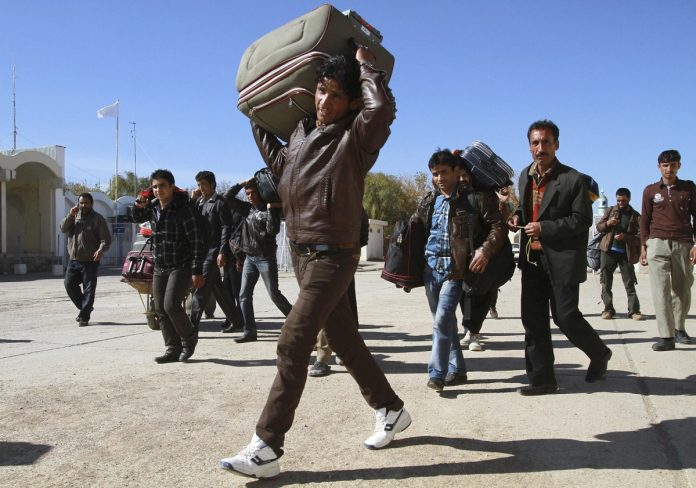
Afghan Refugees

The announcement by the committee spokesperson, Ebrahim Rezaei, came during a parliamentary meeting on Friday attended by senior officials, including security and immigration representatives.

Officials highlighted key issues, including infrastructure strain in the northeastern provincial capital, Mashhad, where 1.2 million of the city’s 2.5 million marginalized residents are Afghans.

Economic burdens, such as subsidies for healthcare, education, and energy, were also discussed, alongside efforts to combat human smuggling networks.

Security concerns dominated the meeting, with officials citing geopolitical threats and the activities of Israel as major risks.

Criticism was directed at bureaucratic delays, with demands for stricter border enforcement and diplomatic talks with Afghanistan’s Taliban.

The committee urged balanced policies, stressing Iran’s civilizational ties to Afghanistan while demanding firm action against illegal entry.

Iran has been hosting Afghan migrants, millions of them undocumented, for several decades. However, their bulging presence in recent years, specifically since the Taliban takeover in 2021, has caused serious social and economic problems in the country, which has triggered outcries at home to expel them.

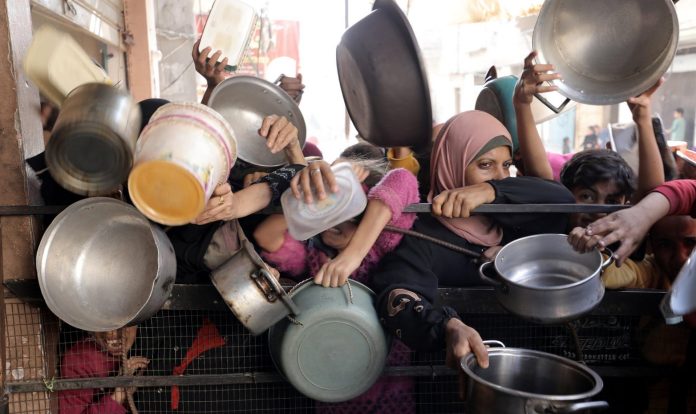
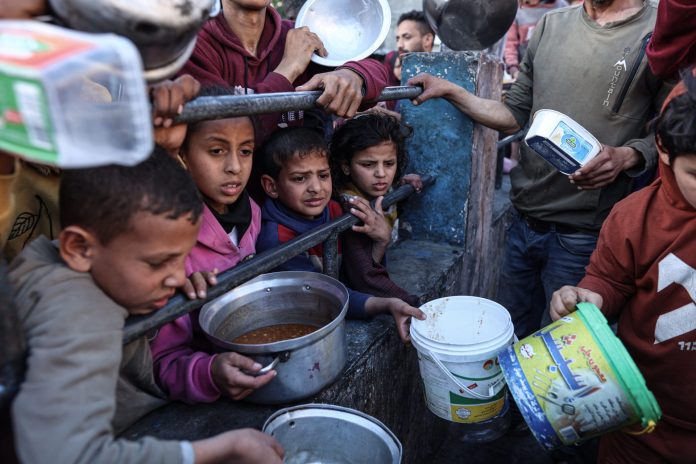
Gaza government warns of imminent mass deaths from famine due to Israel’s siege

Gaza War

In a statement, the Government Media Office held Israel and its backers responsible for a “genocide documented in sound and image.”

“We warn of the worsening humanitarian catastrophe in Gaza as the complete Israeli siege and closure of crossings enters its 55th day, leading to the spread of famine and endangering the lives of over 2.4 million people,” the office said.

The office added that famine in Gaza is now “a grim reality, not a threat,” with 52 recorded deaths due to hunger and malnutrition including 50 children, describing the situation as “one of the most horrifying forms of slow, deliberate killing.”

It noted that more than 60,000 children suffer from acute malnutrition, while over a million children are facing daily hunger, leading to visible wasting and frailty.

Calling it “a final call before the catastrophe,” the office stressed that any delay in response would amount to “clear complicity and active participation in the crime, a stain on the conscience of humanity and history.”

It demanded the urgent and unconditional opening of a safe humanitarian corridor “to save the lives of over 2.4 million Palestinians in Gaza before it’s too late.”

The office also called for independent international investigation of “the crime of starvation and slow killing committed by the Israeli occupation.”

On March 2, Israel shut all three Gaza crossings to humanitarian aid and fuel, resuming its onslaught. The blockade has plunged Gaza’s 2.4 million residents, already dependent on aid after nearly 19 months of war, into extreme poverty, according to World Bank data.

Nearly 51,400 Palestinians have been killed in Gaza in a brutal Israeli onslaught since October 2023, most of them women and children.

The International Criminal Court issued arrest warrants last November for Israeli Prime Minister Benjamin Netanyahu and his former Defense Minister Yoav Gallant for war crimes and crimes against humanity in Gaza.

Israel also faces a genocide case at the International Court of Justice for its war on the enclave.

Weeks into Israel’s aid blockade, Gaza faces deepening hunger: UNRWA

Gaza War

In a statement, the agency said on Friday it has “nearly 3,000 UNRWA trucks of lifesaving aid (that) are ready to enter Gaza,” but Israeli authorities continue to block aid supplies from entering.

“The people in Gaza are hungry and the situation is desperate,” the agency added, decrying how “humanitarian aid is being used as a bargaining chip and a weapon of war.”

The UN agency reiterated its appeal that Israel’s “siege must be lifted, supplies must flow in, the hostages must be released, the ceasefire must resume.”

The UNRWA earlier stated that “overcrowded shelters (across Gaza) are in a terrible condition, service providers are struggling to operate, and the last resources are being depleted.”

Israel has closed Gaza’s border crossings to food, medical supplies, and humanitarian aid since March 2, triggering a deepening humanitarian disaster, according to reports from government bodies, human rights groups, and international agencies.

The UNRWA recently warned that Gaza is on the brink of “extreme hunger” due to the continued blockade.

The Israeli army resumed its onslaught on Gaza on March 18, shattering a Jan. 19 ceasefire and prisoner exchange agreement.

Israel has killed more than 51,400 Palestinians in the enclave since October 2023, most of them women and children.

The International Criminal Court issued arrest warrants last November for Israeli Prime Minister Benjamin Netanyahu and his former Defense Minister Yoav Gallant for war crimes and crimes against humanity in Gaza.

Israel also faces a genocide case at the International Court of Justice for its war on the enclave.

The UN has also warned of the growing malnutrition problem in the Gaza Strip due to Israel’s nearly two-month blockade of humanitarian aid to the enclave.

“As a result, hunger is spreading in Gaza. Malnutrition is deepening in Gaza, and injured people and other patients remain untreated in Gaza, and as we’ve said before, people are dying,” spokesman Stephane Dujarric told reporters on Friday.

Citing the Office for the Coordination of Humanitarian Affairs (OCHA), Dujarric said Israel, “as the occupying power, has clear obligations under international law, which include ensuring food, medical supplies, public health services are available, and facilitating humanitarian relief when they’re not otherwise supplied.”

Also addressing the displacement of Palestinians in the besieged enclave, Dujarric stated it remains a “major concern.”

He noted the OCHA had completed an initial analysis of the displacement order issued on Thursday by Israel for areas of North Gaza.

“The order covers 7.5 square kilometers, which is roughly 2% of the Gaza Strip. Overall, about 70% of the Gaza Strip is now under displacement orders or in ‘no-go’ zones, where Israeli authorities require aid personnel to coordinate their movements,” he added.

Crimea will stay with Russia: US

Crimea officially joined the Russian Federation in 2014 after a referendum that followed a Western-backed coup in Kiev. Ukraine and its backers have dismissed the results of the referendum as illegitimate, and Kiev has continued to claim sovereignty over the peninsula, vowing to take it back by any means necessary.

In an interview to mark his first 100 days in office, Trump said Crimea “went to the Russians” long ago and suggested that “everyone understands” that Ukraine will not be able to get it back.

“Crimea will stay with Russia” under a final settlement of the Ukraine conflict, Trump went on to say, adding that even Ukraine’s Volodymyrr Zelensky understands this.

“It’s been with them for a long time,” the US president stated, noting that Russia had its submarines there “long before any period that we’re talking about” and that the majority of Crimeans speak Russian.

Trump also stressed that the peninsula was “given” to Russia by former US President Barack Obama, claiming that the whole conflict is “Obama’s war,” which “should have never happened.”

Since returning to office in January, Trump has been pressuring both Moscow and Kiev to settle the conflict. During last year’s election campaign, he said he would end the hostilities “within 24 hours” of entering the White House. He told Time, however, that he said this “figuratively” as an “exaggeration.”

Recently, Trump has signaled that he has grown frustrated with the lack of progress on reaching a resolution of the Ukraine conflict. He has expressed dissatisfaction with Zelensky, saying he has found Russia much easier to negotiate with than the Ukrainian leader. In a Truth Social post this week, the US president criticized Zelensky for refusing to even consider any territorial concessions.

Russia has expressed its appreciation for Trump’s peace efforts and has repeatedly indicated that it is open to negotiations. However, Russian officials have stressed that a final peace deal must respect the territorial realities on the ground and address the root causes of the conflict, such as Ukraine’s NATO aspirations.

In his interview with Time, Trump acknowledged that Ukraine would likely never be able to join NATO. He cited Kiev’s ambitions to enter the US-led bloc as the issue that “caused the war to start.”

“If that weren’t brought up, there would have been a much better chance that [the conflict] wouldn’t have started,” he said.

Trump says open to meeting Ayatollah Khamenei, Pezeshkian

Donald Trump

Trump interview with Time magazine published on Friday, said “I think we’re going to make a deal with Iran” following indirect U.S.-Iranian talks last week in which the side agreed to draw up a framework for a potential deal.

The Republican U.S. president, speaking separately to reporters at the White House on Friday, reiterated his positive prognosis, stressing: “Iran, I think, is going very well. We’ll see what happens.”

Asked by Time whether he was open to meeting Ayatollah Khamenei or President Pezeshkian, Trump replied: “Sure.”

Expert-level talks are set to resume on Saturday in Oman, which has acted as intermediary between the longtime adversaries, with a third round of high-level nuclear discussions planned for the same day.

Asked in the interview if he was concerned Israeli Prime Minister Benjamin Netanyahu might drag the United States into a war with Iran, Trump stated: “No.”

However, when asked if the U.S. would join a war against Iran should Israel take action, he responded: “I may go in very willingly if we can’t get a deal. If we don’t make a deal, I’ll be leading the pack.”