Tuesday, December 30, 2025
Home Blog Page 3875

Riyadh Willing to Forge Ties with Tel Aviv on Countering Iran

The Basirat news website, in an analytical piece, has highlighted the Saudi Crown Prince Mohammed bin Salman’s overt and covert ties with the Tel Aviv regime, particularly with the aim of countering Iran.

Here is the full text of the piece:

Ever since Mohammed bin Salman climbed up the ladder of success and became Saudi Arabia’s crown prince, his name has been mentioned in many key Saudi cases. Bin Salman, who is said to be very close to being crowned as the Saudi king and assuming his father’s throne, has been a high-profile figure in the Saudi aggression against Yemen, and now he is on course to play a key role in the establishment of ties with Israel. Some time ago, Israeli media spoke of a secret trip to Israel by one of the members of the Al Saud dynasty. Afterwards, some Western media quoted an Emirati intelligence officer as saying that bin Salman was Riyadh’s secret emissary to Israel. Tel Aviv and Riyadh have not yet officially responded to the news; however, as the Emirati official says, the trip comes to resume the peace talks between Israel and the Palestinian Authority. The news was published days after Israeli Prime Minister Benjamin Netanyahu announced last week that Tel Aviv’s ties with the Arab world was at their highest level. Addressing the staff members of the Israel Foreign Ministry, he said the relations were at their highest level, ever, in Israel’s history.

Around three months ago, Israeli Transportation and Intelligence Minister Israel Katz asked Saudi King Salman to invite Netanyahu to visit Saudi Arabia, and send heir to the throne Mohammed bin Salman to Tel Aviv to advance common interests and counter Iran. The minister had also referred to bin Salman as an active and dynamic individual. Now with reports of bin Salman’s trip to Israel, it seems King Salman has met Israel’s demand.

Despite efforts by the Israeli regime as well as Saudi Arabia’s mediation and insistence, some Arab countries have not agreed to recognize Israel as a country so far. Nevertheless, Tel Aviv has covertly established diplomatic and economic relations with some Arab countries, including Saudi Arabia. Israeli Defense Minister Avigdor Lieberman had already called for the establishment of economic and diplomatic relations with Arab countries. As the minister says, these relations should take shape openly.

This comes as Israel signed peace agreements with Egypt and Jordan years ago. In the meantime, Israeli newspapers report of Tel Aviv forging closer security and military cooperation with Jordan on the country’s border with Syria. Israel has openly helped Egypt in fighting ISIS on the Sinai Peninsula. Maybe that is why many Israeli authorities have announced, time and again, over the past two years that Arab countries’ hostile look has been superseded by willingness to have cooperation with Israel.

The Israeli regime has got closer to Persian Gulf littoral states such as Saudi Arabia and the United Arab Emirates in recent years under the pretext of Iran’s growing influence in the region. Of course, Saudi Arabia’s alignment with Israel, especially in their campaign against Iran, is nothing new, and documents recently released by WikiLeaks show Israel and Saudi Arabia began establishing close relations in the mid-1990s. At that time, Saudi Arabia removed some companies linked to Israel from its list of banned entities. The close relationship between Tel Aviv and Riyadh grew stronger in 2002 when Saudi Arabia presented a peace plan. Saudi Arabia continued sending positive signals to Israel in 2005 when Riyadh removed level-two and level-three sanctions.

On the other hand, former Mossad Director Meir Dagan travelled to Saudi Arabia in 2010 for secret talks on Iran’s nuclear program. Also in recent months, the handing over of the ownership of Tiran and Sanafir islands to Saudi Arabia has enabled Riyadh and Cairo to jointly monitor Israeli vessels’ traversing the Tiran Strait.

The Israeli regime is banking on young and ambitious Saudi Crown Prince Mohammed bin Salman. Maybe that is why the former US ambassador to Tel Aviv said the designation of Mohammed bin Salman as the Saudi air to the throne amounted to an Israeli dream coming true. From the viewpoint of this American diplomat, bin Salman believes Riyadh and Tel Aviv have common interests and threats, which, at last, will be in the interest of Israel.

Bin Salman stands ready to return Israeli-Saudi relations back to normal within the framework of the implementation of an Arab peace plan. Meanwhile, one should not forget the role of transregional players, including the US. American President Donald Trump, during his first trip to the Middle East, spoke of the possibility of a new level of cooperation which would pave the way for more security and welfare in the region and across the world.

Bin Salman’s secret trip to Israel ushers in a new era of cordial relations that Trump had spoken of. Still, it remains to be seen whether Saudi-Israeli close relations will be conducive to a permanent and strategic agreement or will just be a transient alliance aimed at countering a common threat called Iran.

All in all, the Saudis, who have claimed to be advocates of the cause of Palestine and still do, have broken the taboo of having relations with the Israeli regime at this juncture and have no reservations about having ties with Tel Aviv, secretly or openly, within the framework of scenarios such as Iranophobia and countering the resistance front.

Iran, Kazakhstan Call for Increased Naval Relations

Kazakh Captain Niyaz Bekov met Iran’s Northern Fleet Commander Rear Admiral Ahmad Reza Baqeri upon arriving in the port city of Bandar-e Anzali  in Iran’s northern Gilan Province on the Caspian sea shores.

The first peace and friendship flotilla from Kazakhstan docked in the Iranian port city of Anzali on Wednesday.

The flotilla comprised of Oral and Saryarka warships, under the command of Captain Bekov, arrived in Anzali Port, a report by IRNA said.

Engaging with the Caspian Sea littoral countries, especially with their Navy Forces, plus increasing the security of the sea are among the goals of Iran’s Northern Fleet, Baqeri said in the meeting.

Such visits, like dispatching flotillas to neighbouring countries, is in line with enhancing political, cultural, military and even economic engagements, with the main goal of boosting security, peace and friendship in the Caspian Sea, Admiral Baqeri added.

The Kazakh Captain, for his part, said that the visit has only one message and that is peace, friendship and sustainable security in the Caspian Sea region.

The visit by Kazakh flotilla is a response to an invitation by Iran and following a visit by Iran’s flotilla to Kazakhstan.

Iranian flotilla visited Kazakhstan back in April 2017.

This is the sixth visit to the Iranian shores by flotillas form the Caspian Sea countries. Several Russian flotillas have docked in Anzali port during the past years.

Also, five Iranian flotillas have visited port cities of Iran’s neighbours on the Caspian Sea.

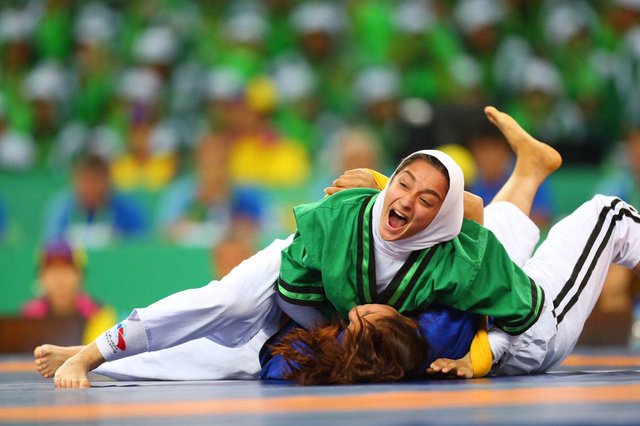
World Wrestling Body Praises Iranian Female Wrestler

The United World Wrestling has written in its report that the traditional wrestling matches of the 5th Asian Indoor and Martial Arts Games came to an end in Turkmenistan’s capital Ashgabat with the host country winning most of the gold medals.

In the traditional category, Turkmens won 23 gold medals of the 26 possible ones while Uzbekistan and Mongolia won two and one gold medals, respectively, to be the only countries that won the championship except for the host.

Pahlavani wrestling bouts were also held in three weight categories, where the Iranians won all the gold medals, according to a Farsi report by the Young Journalists Club (YJC).

The host country won 39 gold medals in Belt Wrestling Alysh, while Kyrgyzstan (with five golds), Uzbekistan (with four golds), Kazakhstan (with four golds), Mongolia (with two golds) and Iran (with one gold) were the other countries winning the title.

Zahra Yazdani was the only Iranian gold medallist in in Belt Wrestling Alysh. Yazdani’s family has introduced World and Olympic champions such as Reza Yazdani and Hassan Yazdani. Now the third champion from the Yazdani family is an 18-year-old girl named Zahra Yazdani. She snatched the gold medal in the weight category of 55 kg.

At the end of the tournament, Turkmenistan won 62 gold medals in the traditional and belt wrestling Alysh competitions to rank first among 65 countries of the Oceania.

Iran, Philippines Discuss Enhancement of Mutual Cooperation

De Venecia on Wednesday met Iran’s Deputy Foreign Minister for Asia and the Pacific Ebrahim Rahimpour in Tehran.

Referring to the two countries’ developing relations, Rahimpour hailed de Venecia’s constructive role in consolidating ties between the two countries, especially in the areas of parliamentary cooperation and people’s relations.

According to a Farsi report by ISNA, he also expressed hope that after the visits of the two presidents to both states, economic, cultural and political cooperation would expand in line with the real capacities of the two sides.

For his part, the Special Envoy of the President of the Philippines for Intercultural Dialogue and the former Speaker of the House of Representatives of the country also emphasized the development of business-economic relations with Iran.

He said that a delegation composed of a Philippine-Chinese consortium is accompanying him to launch activities and make investment in Iran. De Venecia also added that they have held a number of meetings with the authorities of the Islamic Republic of Iran and reached agreement. He further mentioned that other delegations will soon travel to Iran to follow up these agreements.

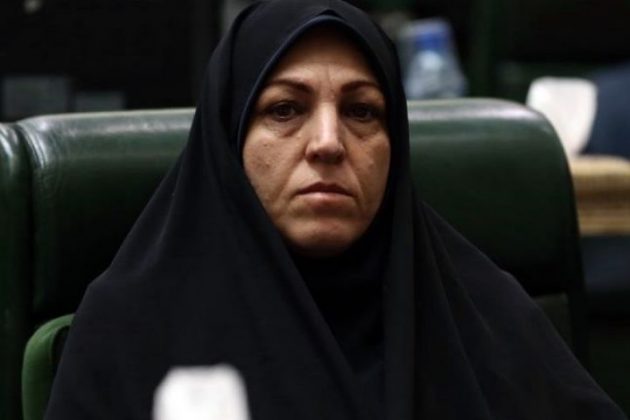
Kurdish Lady to Be Appointed as Iran’s Deputy Interior Minister

Kurdish Lady to Be Appointed as Iran’s Deputy Interior Minister

Sajjadi holds a degree in human geography from the UK. She is currently a member of the faculty of Earth Sciences and the Department of Human Geography of Shahid Beheshti University in Tehran.

During the past years, Sajjadi has conducted extensive research in the field of urban geography, sustainable urban development, demography and the environment.

With this appointment, Sajjadi will be the first Kurdish woman to be elected as a deputy minister, according to a Farsi report by the Shargh daily newspaper.

Although the appointment of female ministers in the twelfth administration of Iran was not realized, President Hassan Rouhani had promised to appoint women deputies, which now seems to be realizing.

A Look at Iranian Newspaper Front Pages on September 28

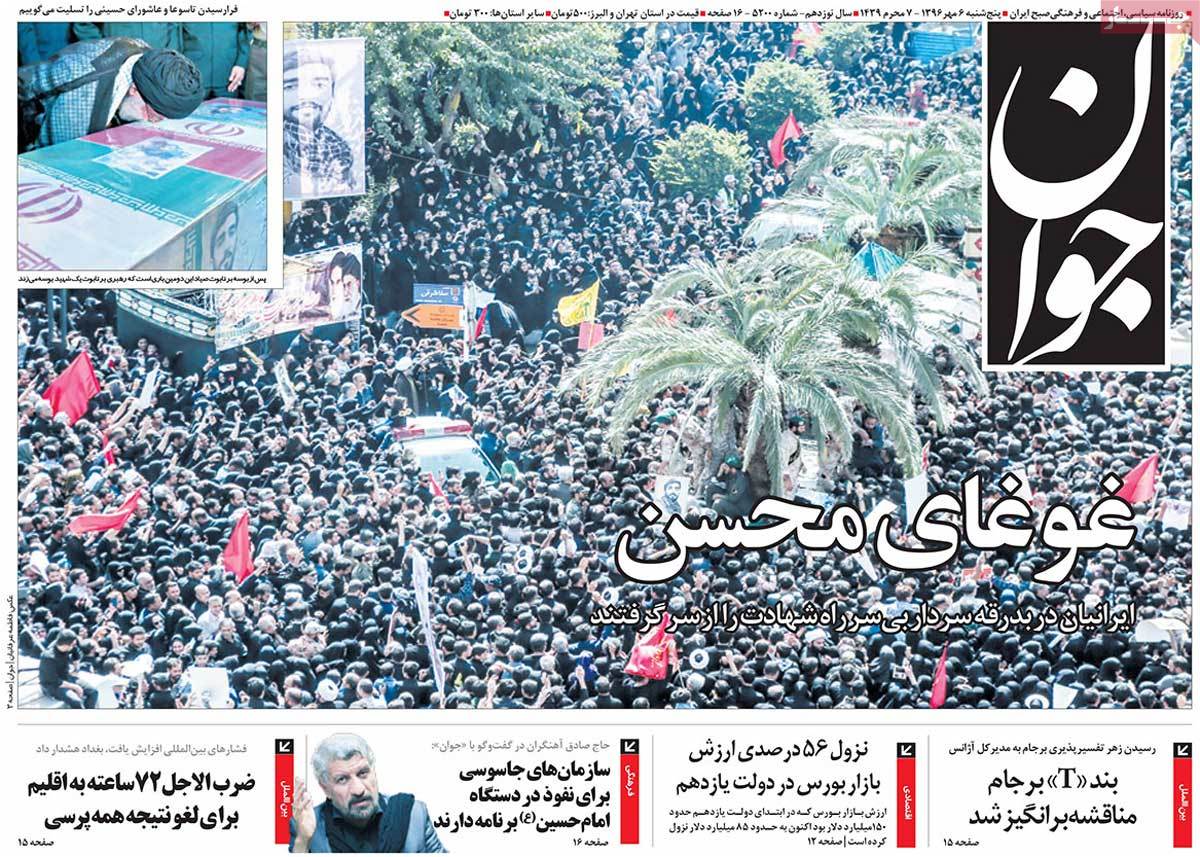
The top story in today’s newspapers was the glorious funeral ceremony held for martyr Mohsen Hojaji, the Iranian soldier who was beheaded by the ISIS terrorist group. Thousands of people including the Leader of Iran’s Islamic Revolution Ayatollah Seyyed Ali Khamenei attended the separate funerals held in Tehran and Isfahan on Wednesday.

Another top story was the alleged ambiguities in the nuclear deal between Tehran and world powers, particularly its Article T, as raised by the IAEA Chief Yukiya Amano.

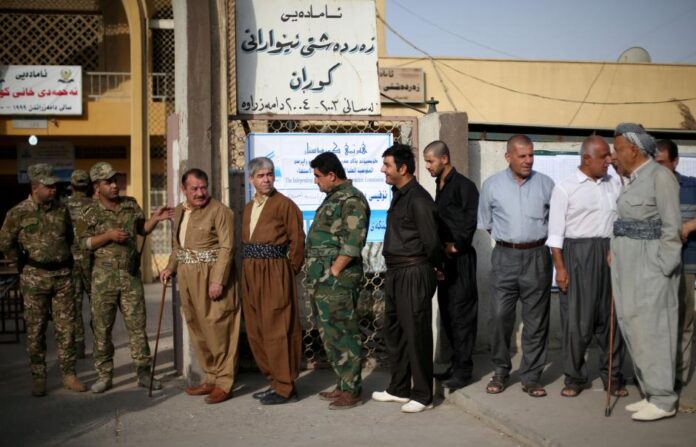
The latest developments of Iraqi Kurdistan and Iran’s strong opposition to its independence also remained a top story. The Parliament’s statement against the Kurdish referendum and a visit by the Chief of Staff of the Iranian Armed Forces Major General Mohammad Baqeri to Iraq were particularly highlighted in today’s papers.

The move by Saudi King Salman to allow women to drive and obtain driver’s licence also received great coverage today.

The above issues, as well as many more, are highlighted in the following headlines and top stories:


Aftab-e Yazd:

1- Iran Leader: God Made Martyr Hojaji a Dear One

2- Has Riyadh Given in to Modernity? A Report on Saudi Arabia’s Move to Allow Women’s Driving

3- General: US Warships Talking to Us in Persian

A Look at Iranian Newspaper Front Pages on September 28


Arman-e Emrooz:

1- Stealing Water from Iran’s Clouds: Minute Amount of 10 Billion Cubic Metres!

2- Glorious Farewell to Martyr Hojaji in Tehran, Isfahan: Along with Mohsen’s Flight

3- Possibility of Civil War in Iraq


A Look at Iranian Newspaper Front Pages on September 28


Ebtekar:

1- New Challenge of Nuclear Deal

  • Amano Creates Ambiguity in JCPOA with Article T


A Look at Iranian Newspaper Front Pages on September 28


Etemad:

1- Iran Only Recognizes Republic of Iraq: Shamkhani

2- Iran Bids Farewell to Honourable Martyr

A Look at Iranian Newspaper Front Pages on September 28


Ettela’at:

1- Baghdad Creates No-Fly Zone in Kurdistan

2- Shamkhani: Issue of Iraqi Kurdistan Region Should Be Resolved through Negotiation

3- Missile Attack on Kabul Airport amid US Defence Secretary’s Visit


A Look at Iranian Newspaper Front Pages on September 28


Ghanoon:

1- Wave of Changes in Saudi Arabia

  • King Salman Lets Women Drive after Letting Them Go to Stadiums


A Look at Iranian Newspaper Front Pages on September 28


Hamdeli:

1- The Boy Who Brought Honour for Iran

2- Iran’s Top Officer: Change in Iraq’s Geography Not Acceptable


A Look at Iranian Newspaper Front Pages on September 28


Javan:

1- Iranians Escort the Headless Martyr

2- Article T of JCPOA Sparks Controversy: IAEA Chief Challenged with JCPOA’s Interpretability

A Look at Iranian Newspaper Front Pages on September 28


Jomhouri Eslami:

1- Barzani to Be Prosecuted Based on Iraqi Parliament’s Approval

2- Iran’s Economy Up by 7 Places in Global Competitiveness Index

3- Role of Zionist Regime in Iraqi Kurdistan’s Independence


A Look at Iranian Newspaper Front Pages on September 28


Kayhan:

1- Salute to the One Who Sacrificed Himself for Imam Hussein

2- Washington Post: Iranian Warrior Buried Like an Icon

3- 3 Types of Production Loans to Be Given to Villagers with Maximum Interest Rate of 8%


A Look at Iranian Newspaper Front Pages on September 28


Kelid:

1- Iran to Develop Comprehensive Document on Tourism

2- Amirkabir University Team Claims First Place in French Micro Air Vehicle Contest

A Look at Iranian Newspaper Front Pages on September 28


Khorasan:

1- Iran’s Strategy against Iraq’s Disintegration

2- Solider of Iran


A Look at Iranian Newspaper Front Pages on September 28


Shargh:

1- Four Gov’t Bodies Receiving Highest Budgets

2- Several Flights to Iraqi Kurdistan Suspended

3- Saudi Women Allowed to Drive

A Look at Iranian Newspaper Front Pages on September 28


Iran; Elder Brother of Kurds, Iraqi Shiites

In a Farsi article in the Shargh daily newspaper on Wednesday, Bahram Valadbeygi, the director of Culture Institute of Kurdistan-Tehran, wrote that the authorities of the Islamic Republic of Iran must consider the future developments of the region intelligently and with a historical approach in order to ensure the national security of Iran and at the same time respect the public opinion of Kurdish people in the Middle East, especially the Iranian Kurdish compatriots.

“The historical bonds between Iran, Kurds and Iraqi Shiites must not be forgotten,” he added.

“Iran should turn the recent developments in Kurdistan from a threat into an opportunity and not allow traditional rivals of Iran such as Saudi Arabia and Turkey and enemies like the United States and Israel to play a more prominent role in the future of Kurdistan. The Middle East with its current crises and developments needs more convergence between Baghdad, Tehran and Erbil.”

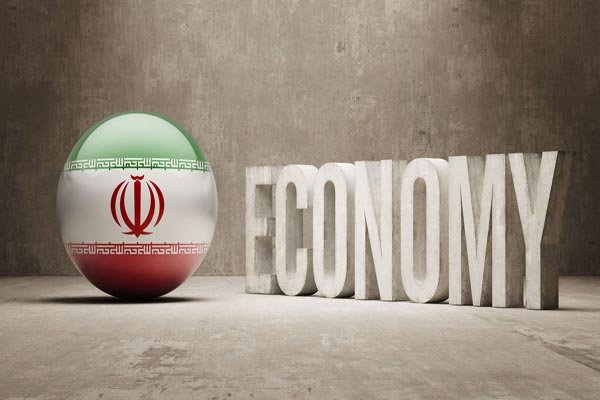
Deregulation; Best Way to Save Iran’s Economy

Iranian economy

Amir Hossein Khaleqi, a PhD holder in Policy-Making from the University of Tehran, has said in an article in the Donya-e-Eqtesad daily newspaper on Wednesday that the three important factors that make doing business harder for businessmen are ‘financial difficulties’, ‘inefficient government bureaucracy’, and ‘lack of stability in policies.’

“The fundamental problem should be sought in the legal structures and numerous regulations and procedures. It can be seen in the competitiveness report that Iran, on the one hand, interacts with other countries of the world with a ‘system of inefficient tariffs’, ‘numerous barriers to foreign trade and direct investment’, as well as ‘the absence of foreign companies in the country’.

On the other hand, there is no proper legal framework for ‘assuring investors, especially the microfinance shareholders’, “corporate governance mechanisms’, and ‘accredited reporting and auditing procedures’.”

“The same shortcomings can also be proposed to improve competitiveness for the country’s economic development. The Iranian economy does not need many regulations and licenses, what it needs is a minimum of good rules. We should allow good rules replace discretionary orders and bureaucracies of the government.”

“These rules are also for ordering and better functioning of the people involved with the economy. These rules does not originate from the opinion of governments, but instead originate from science, collective wisdom and the experience of the experts. Interacting with the world and opening up the economy to the world is a direction that may require more than anything else the consensus of the politicians,” the articles reads.

Iran Invents Device to Produce Water Out of Air Moisture

A statement by the Atomic Energy Organization’s Public Relations Department says “the device, an initiative by the AEOI Chief Ali Akbar Salehi, was designed and produced by the organization’s Atomic Science and Technologies Research Centre at the laboratory scale with a capacity to produce between half a litre to two litres of drinking water per day given the moisture density of the weather.”

“Our researchers have studied effective parameters for optimizing and expanding the scale of the device’s production and the device is expected to become operational at a high capacity in the near future,” the statement added, as cited in a Farsi report by the Mehr News Agency.

Thermo-electronic cooling is one of the main methods for reducing the temperature of the moisture to Dew Point. The device is designed in a way to work in low temperature for a long period of time. Meanwhile, it is equipped with a heat influx which leads heat from one side to another.

Using the latest technologies is one of the main ways to cope with the current water shortage across the globe. The initiative to design new devices to produce water out of air moisture has been raised and discussed in recent years. Such devices are generally called water production generators. Designed based on Dew point, the devices are used in various countries.

Many countries are suffering from lack of access to fresh water and Iran is no exception. Only 15 percent of Iran’s territory has green plant. Official figures have sounded the alarm for Iran saying the country is suffering from devastating drought.

To this end, exploring new ways to cope with the natural disasters like drought is highly significant.

Iranian FM Meets Top UN Officials in New York

Iranian FM Meets Top UN Officials in New York

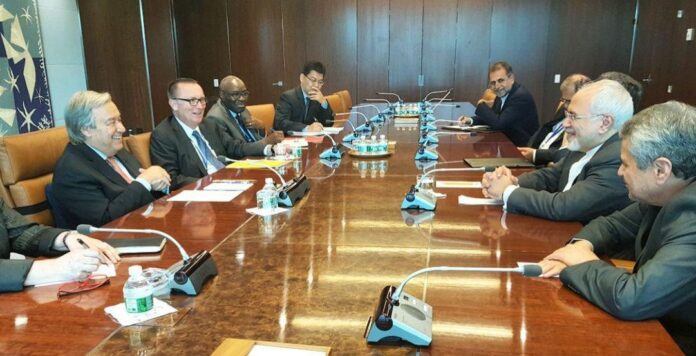
During the meeting held in New York, Zarif and Guterres discussed the nuclear deal between Iran and world powers as well as various regional and international issues.

The Iranian top diplomat earlier met with President of the UN General Assembly Miroslav Lajčák. The two sides conferred on the Iran nuclear deal, regional issues, and the most important global challenges including terrorism and immigration.

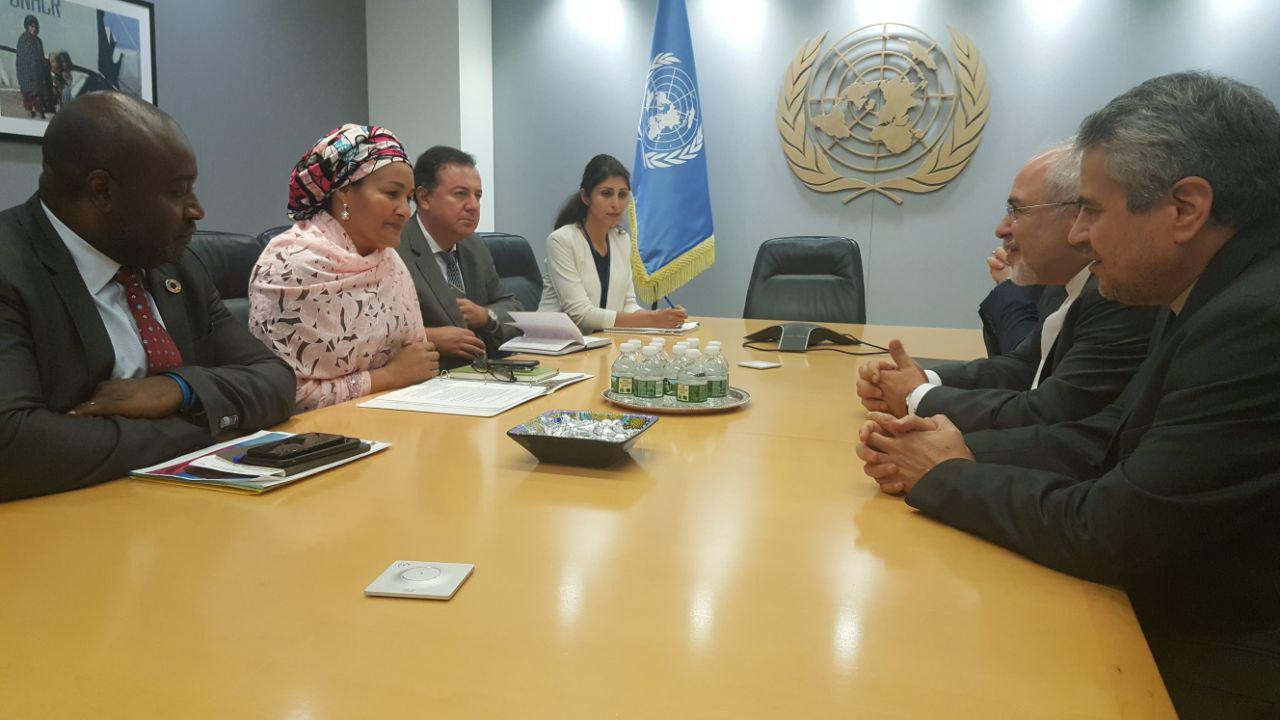
Iranian FM Meets Top UN Officials in New YorkZarif also held a meeting with Deputy Secretary-General of the United Nations Amina J. Mohammed, during which they discussed various issues, including humanitarian affairs, environmental issues, terrorism, and modifying the United Nations’ structure.

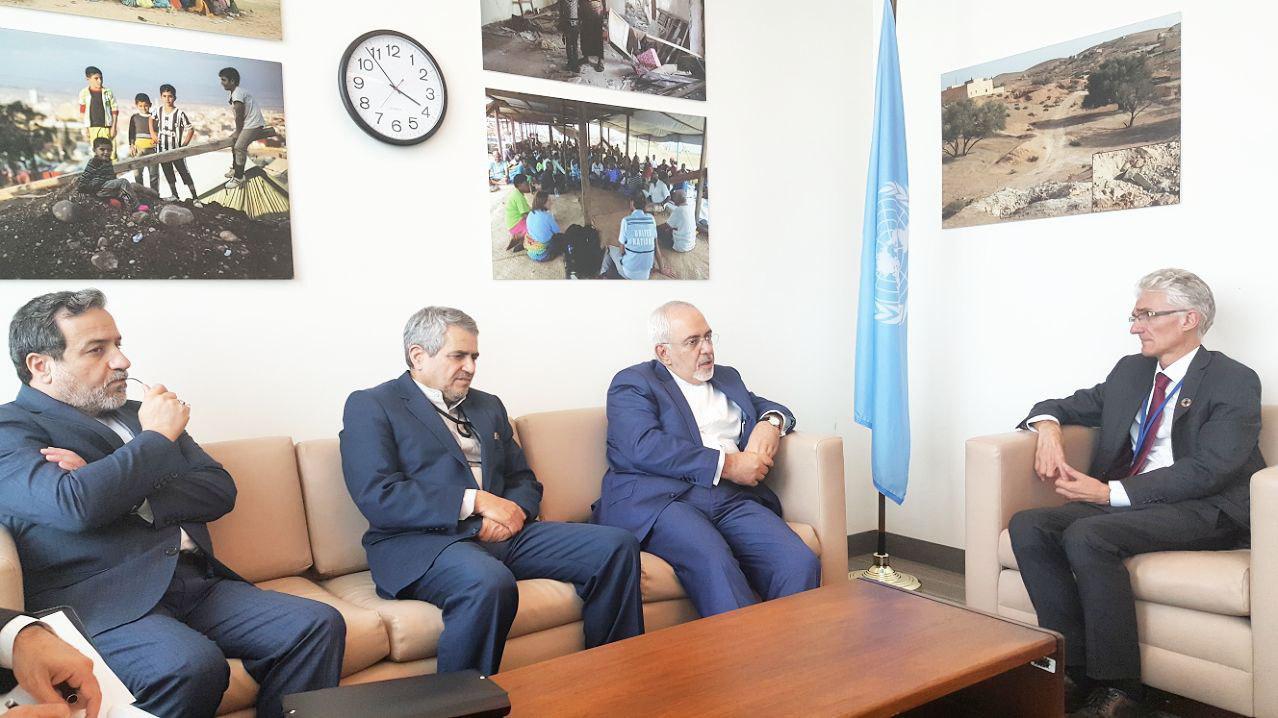
Back in Tuesday, the Iranian FM held talks with the UN Under-Secretary-General for Humanitarian Affairs, Mark Lowcock, and discussed with him the latest status of Rohingya Muslims, humanitarian situation in Yemen and also humanitarian assistance to the Syrian people.

A meeting with Under-Secretary-General of the United Nations Counter-Terrorism Office, Vladimir Ivanovich Voronkov, was also on Zarif’s agenda on Tuesday.

Iranian FM Meets Top UN Officials in New York