Tuesday, December 30, 2025
Home Blog Page 3876

A Look at Iranian Newspaper Front Pages on September 28

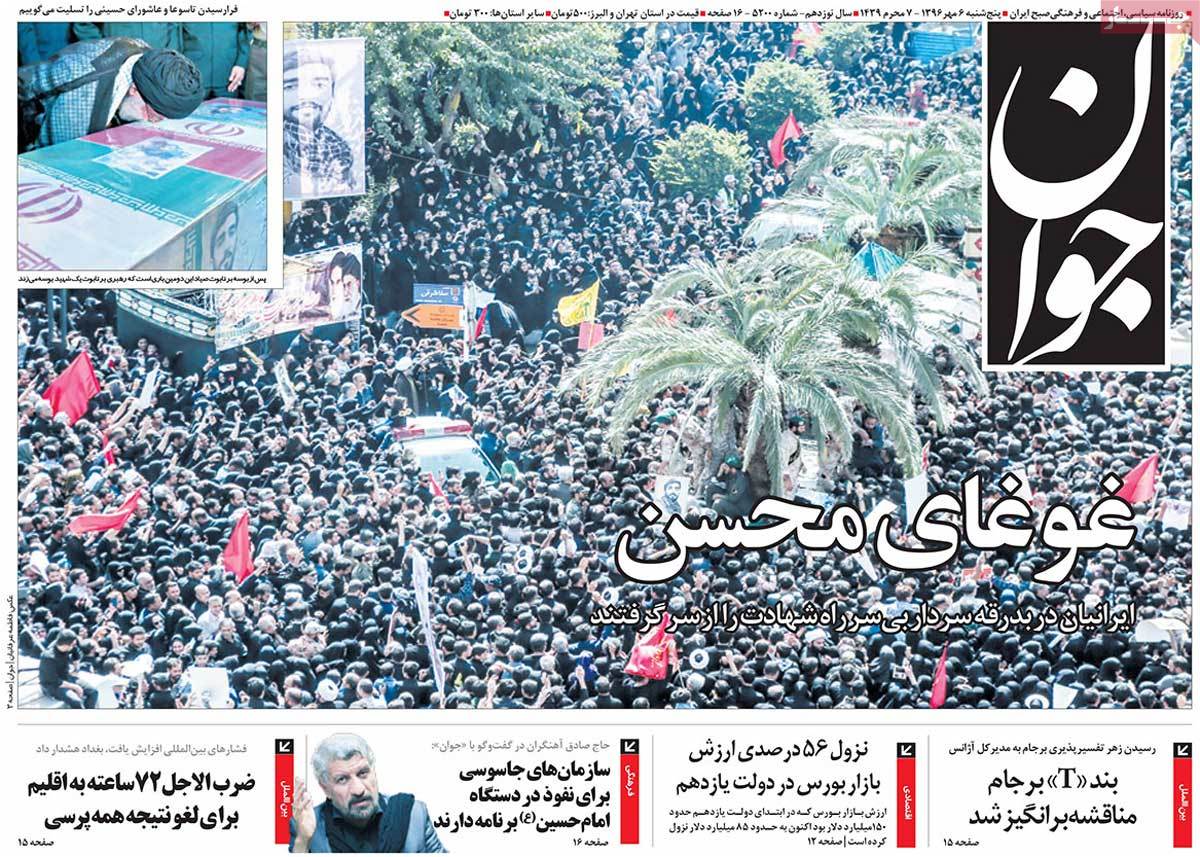
The top story in today’s newspapers was the glorious funeral ceremony held for martyr Mohsen Hojaji, the Iranian soldier who was beheaded by the ISIS terrorist group. Thousands of people including the Leader of Iran’s Islamic Revolution Ayatollah Seyyed Ali Khamenei attended the separate funerals held in Tehran and Isfahan on Wednesday.

Another top story was the alleged ambiguities in the nuclear deal between Tehran and world powers, particularly its Article T, as raised by the IAEA Chief Yukiya Amano.

The latest developments of Iraqi Kurdistan and Iran’s strong opposition to its independence also remained a top story. The Parliament’s statement against the Kurdish referendum and a visit by the Chief of Staff of the Iranian Armed Forces Major General Mohammad Baqeri to Iraq were particularly highlighted in today’s papers.

The move by Saudi King Salman to allow women to drive and obtain driver’s licence also received great coverage today.

The above issues, as well as many more, are highlighted in the following headlines and top stories:


Aftab-e Yazd:

1- Iran Leader: God Made Martyr Hojaji a Dear One

2- Has Riyadh Given in to Modernity? A Report on Saudi Arabia’s Move to Allow Women’s Driving

3- General: US Warships Talking to Us in Persian

A Look at Iranian Newspaper Front Pages on September 28


Arman-e Emrooz:

1- Stealing Water from Iran’s Clouds: Minute Amount of 10 Billion Cubic Metres!

2- Glorious Farewell to Martyr Hojaji in Tehran, Isfahan: Along with Mohsen’s Flight

3- Possibility of Civil War in Iraq


A Look at Iranian Newspaper Front Pages on September 28


Ebtekar:

1- New Challenge of Nuclear Deal

  • Amano Creates Ambiguity in JCPOA with Article T


A Look at Iranian Newspaper Front Pages on September 28


Etemad:

1- Iran Only Recognizes Republic of Iraq: Shamkhani

2- Iran Bids Farewell to Honourable Martyr

A Look at Iranian Newspaper Front Pages on September 28


Ettela’at:

1- Baghdad Creates No-Fly Zone in Kurdistan

2- Shamkhani: Issue of Iraqi Kurdistan Region Should Be Resolved through Negotiation

3- Missile Attack on Kabul Airport amid US Defence Secretary’s Visit


A Look at Iranian Newspaper Front Pages on September 28


Ghanoon:

1- Wave of Changes in Saudi Arabia

  • King Salman Lets Women Drive after Letting Them Go to Stadiums


A Look at Iranian Newspaper Front Pages on September 28


Hamdeli:

1- The Boy Who Brought Honour for Iran

2- Iran’s Top Officer: Change in Iraq’s Geography Not Acceptable


A Look at Iranian Newspaper Front Pages on September 28


Javan:

1- Iranians Escort the Headless Martyr

2- Article T of JCPOA Sparks Controversy: IAEA Chief Challenged with JCPOA’s Interpretability
A Look at Iranian Newspaper Front Pages on September 28


Jomhouri Eslami:

1- Barzani to Be Prosecuted Based on Iraqi Parliament’s Approval

2- Iran’s Economy Up by 7 Places in Global Competitiveness Index

3- Role of Zionist Regime in Iraqi Kurdistan’s Independence


A Look at Iranian Newspaper Front Pages on September 28


Kayhan:

1- Salute to the One Who Sacrificed Himself for Imam Hussein

2- Washington Post: Iranian Warrior Buried Like an Icon

3- 3 Types of Production Loans to Be Given to Villagers with Maximum Interest Rate of 8%


A Look at Iranian Newspaper Front Pages on September 28


Kelid:

1- Iran to Develop Comprehensive Document on Tourism

2- Amirkabir University Team Claims First Place in French Micro Air Vehicle Contest

A Look at Iranian Newspaper Front Pages on September 28


Khorasan:

1- Iran’s Strategy against Iraq’s Disintegration

2- Solider of Iran


A Look at Iranian Newspaper Front Pages on September 28


Shargh:

1- Four Gov’t Bodies Receiving Highest Budgets

2- Several Flights to Iraqi Kurdistan Suspended

3- Saudi Women Allowed to Drive

A Look at Iranian Newspaper Front Pages on September 28


Iran; Elder Brother of Kurds, Iraqi Shiites

In a Farsi article in the Shargh daily newspaper on Wednesday, Bahram Valadbeygi, the director of Culture Institute of Kurdistan-Tehran, wrote that the authorities of the Islamic Republic of Iran must consider the future developments of the region intelligently and with a historical approach in order to ensure the national security of Iran and at the same time respect the public opinion of Kurdish people in the Middle East, especially the Iranian Kurdish compatriots.

“The historical bonds between Iran, Kurds and Iraqi Shiites must not be forgotten,” he added.

“Iran should turn the recent developments in Kurdistan from a threat into an opportunity and not allow traditional rivals of Iran such as Saudi Arabia and Turkey and enemies like the United States and Israel to play a more prominent role in the future of Kurdistan. The Middle East with its current crises and developments needs more convergence between Baghdad, Tehran and Erbil.”

Deregulation; Best Way to Save Iran’s Economy

Iranian economy

Amir Hossein Khaleqi, a PhD holder in Policy-Making from the University of Tehran, has said in an article in the Donya-e-Eqtesad daily newspaper on Wednesday that the three important factors that make doing business harder for businessmen are ‘financial difficulties’, ‘inefficient government bureaucracy’, and ‘lack of stability in policies.’

“The fundamental problem should be sought in the legal structures and numerous regulations and procedures. It can be seen in the competitiveness report that Iran, on the one hand, interacts with other countries of the world with a ‘system of inefficient tariffs’, ‘numerous barriers to foreign trade and direct investment’, as well as ‘the absence of foreign companies in the country’.

On the other hand, there is no proper legal framework for ‘assuring investors, especially the microfinance shareholders’, “corporate governance mechanisms’, and ‘accredited reporting and auditing procedures’.”

“The same shortcomings can also be proposed to improve competitiveness for the country’s economic development. The Iranian economy does not need many regulations and licenses, what it needs is a minimum of good rules. We should allow good rules replace discretionary orders and bureaucracies of the government.”

“These rules are also for ordering and better functioning of the people involved with the economy. These rules does not originate from the opinion of governments, but instead originate from science, collective wisdom and the experience of the experts. Interacting with the world and opening up the economy to the world is a direction that may require more than anything else the consensus of the politicians,” the articles reads.

Iran Invents Device to Produce Water Out of Air Moisture

A statement by the Atomic Energy Organization’s Public Relations Department says “the device, an initiative by the AEOI Chief Ali Akbar Salehi, was designed and produced by the organization’s Atomic Science and Technologies Research Centre at the laboratory scale with a capacity to produce between half a litre to two litres of drinking water per day given the moisture density of the weather.”

“Our researchers have studied effective parameters for optimizing and expanding the scale of the device’s production and the device is expected to become operational at a high capacity in the near future,” the statement added, as cited in a Farsi report by the Mehr News Agency.

Thermo-electronic cooling is one of the main methods for reducing the temperature of the moisture to Dew Point. The device is designed in a way to work in low temperature for a long period of time. Meanwhile, it is equipped with a heat influx which leads heat from one side to another.

Using the latest technologies is one of the main ways to cope with the current water shortage across the globe. The initiative to design new devices to produce water out of air moisture has been raised and discussed in recent years. Such devices are generally called water production generators. Designed based on Dew point, the devices are used in various countries.

Many countries are suffering from lack of access to fresh water and Iran is no exception. Only 15 percent of Iran’s territory has green plant. Official figures have sounded the alarm for Iran saying the country is suffering from devastating drought.

To this end, exploring new ways to cope with the natural disasters like drought is highly significant.

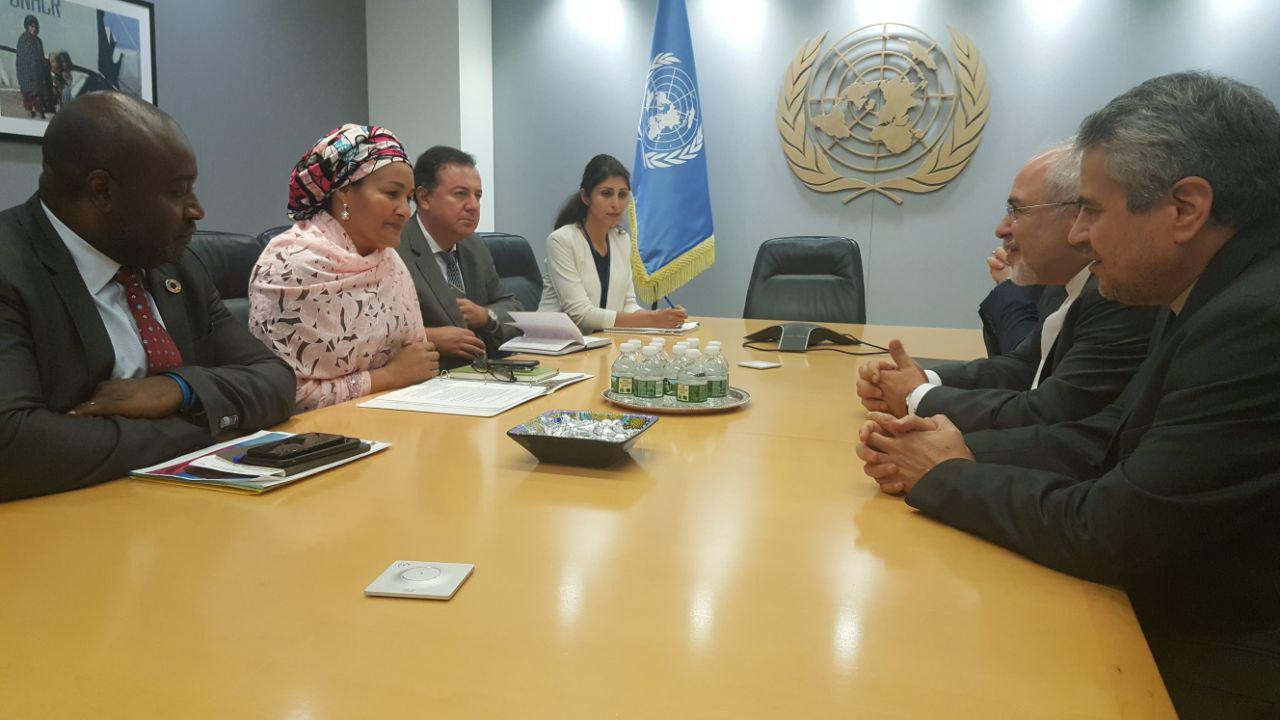
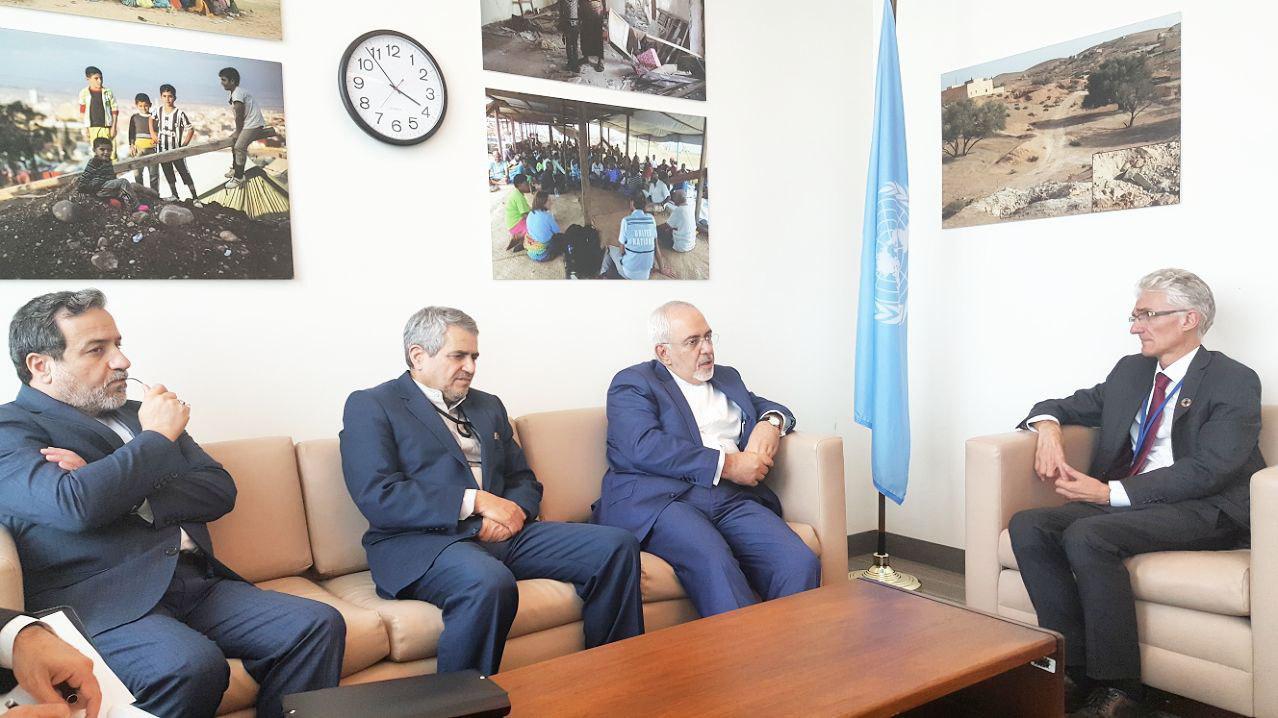
Iranian FM Meets Top UN Officials in New York

Iranian FM Meets Top UN Officials in New York

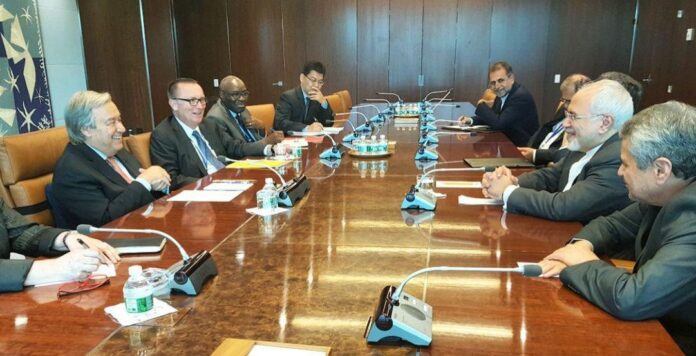
During the meeting held in New York, Zarif and Guterres discussed the nuclear deal between Iran and world powers as well as various regional and international issues.

The Iranian top diplomat earlier met with President of the UN General Assembly Miroslav Lajčák. The two sides conferred on the Iran nuclear deal, regional issues, and the most important global challenges including terrorism and immigration.

Iranian FM Meets Top UN Officials in New YorkZarif also held a meeting with Deputy Secretary-General of the United Nations Amina J. Mohammed, during which they discussed various issues, including humanitarian affairs, environmental issues, terrorism, and modifying the United Nations’ structure.

Back in Tuesday, the Iranian FM held talks with the UN Under-Secretary-General for Humanitarian Affairs, Mark Lowcock, and discussed with him the latest status of Rohingya Muslims, humanitarian situation in Yemen and also humanitarian assistance to the Syrian people.

A meeting with Under-Secretary-General of the United Nations Counter-Terrorism Office, Vladimir Ivanovich Voronkov, was also on Zarif’s agenda on Tuesday.

Iranian FM Meets Top UN Officials in New York

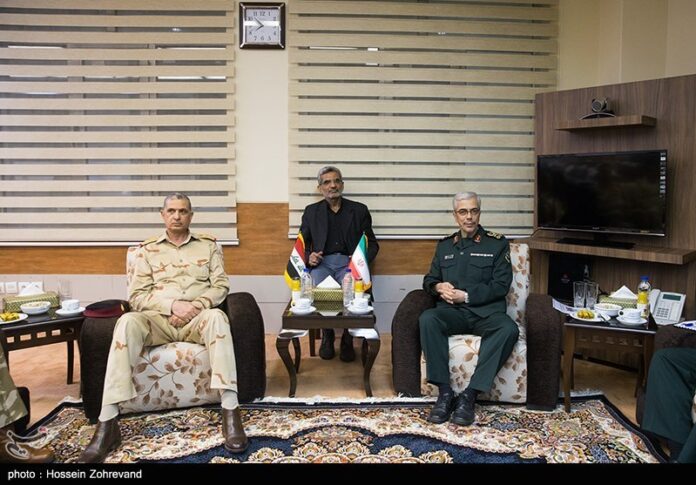
Top Officers of Iran, Iraq Meet amid Kurdish Referendum

Top Officers of Iran, Iraq Meet amid Kurdish Referendum

Chief of Staff of the Iranian Armed Forces Major General Mohammad Baqeri on Wednesday received his Iraqi counterpart Major General Othman al-Ghanmi, who arrived in Tehran at the head of a military delegation earlier in the day.

The issue of terrorism, the Kurdish independence vote and matters of mutual interest were among the major topics discussed in the meeting between the top military officials.

During the meeting, Baqeri hailed the latest achievements gained by the Iraqi army in the fight against terrorists.

“We are so pleased that the Iraqi nation and army have made great gains in the battle against terrorists and have crushed the Takfiris,” he said.

The Iraq official, for his part, said that Iraq was targeted by Takfiri terrorism, adding, however, that most of the territories held by Takfiri militants had been liberated.

He reiterated that Iraq would continue its fight against terrorism until the ultimate defeat of the terrorists.

Ghanmi also praised Iran’s full support for Iraq, particularly in hard times.

Separately on Wednesday, Baqeri met with senior military and political officials from Turkey, during which the two sides discussed a variety of issues, including the Kurdish referendum in Iraq.

Baqeri told reporters after the meeting that both the Iranian and Turkish sides were concerned that the Kurdish vote in Iraq could lead to tensions in the Arab country, the repercussions of which could haunt regional countries.

Top Officers of Iran, Iraq Meet amid Kurdish Referendum

A statement from the Iraqi military said earlier that the top ranking delegation from Iraq’s armed forces would visit Iran on Wednesday “to coordinate military efforts” without giving further details.

Ghanmi also visited neighboring Turkey, where he met with his Turkish counterpart, General Hulusi Akar, on Saturday, two days before the Kurdish referendum, the Turkish military said.

It added that two sides discussed the Kurdish referendum and stressed the importance of maintaining Iraq’s territorial integrity.

Regional powers, including Iran and Turkey, have opposed the Kurdish referendum in Iraq, warning that the controversial vote could lead to further instability in the entire Middle East, a region already ravaged with numerous conflicts and terror threats.

The European Union has also expressed concern about the vote, describing it as “counterproductive.”

The central government in Baghdad has also rejected the vote.

Despite international criticism, the Kurdish plebiscite took place on September 25.

Official results showed 92.73 percent of voters backed the secession in Monday’s non-binding referendum. Turnout was put at 72.61 percent.

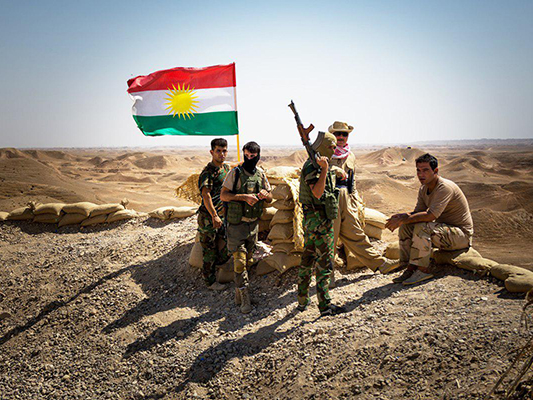
Kurdish Referendum: Geopolitical Move or Attempt to Realize a Dream?

US Favours Separation of Kurdistan Region from Iraq

In a political action, it is not the dreams that guarantee the results; rather, the results are the sum of political, economic, and geopolitical relations and calculations.

A political analyst says the recent referendum held on the independence of the Iraqi Kurdistan region has scuppered the chances of having a bright future for Iraq.

Iranian Kurdish lawmaker Heshmatollah Falahatpisheh has, in an interview with the Persian-language Iran daily on September 26, weighed in on the referendum held on the independence of the Iraqi Kurdistan region. The following is the full text of the interview.

Iraq had a bright horizon ahead in recent weeks after ISIS was brought to its knees. The unity among different groups in the country, from Popular Mobilization Units to Kurdish Peshmerga, was an ideal opportunity for closer cooperation in a bid to bridge their differences. However, the plebiscite on Kurdistan’s independence has put this bright horizon in a shroud of mystery, especially at a time when remnants of ISIS are still out there in parts of Iraq, including Kurdish regions.

The referendum held on September 25, 2017, will not only pose a challenge to Iraq’s unity, but set the scene for a serious standoff between two major forces which are confronting ISIS, namely the Iraqi military troops and Kurdish Peshmerga. The question is whether the outbreak of a conflict between these two forces will lay the groundwork for an ideal opportunity for future activities by ISIS and Takfiri groups.

The plebiscite has only aimed to make the dream of one group of people come true without providing any answers for a whole lot of issues facing Iraq and the region. In a political move, it is not dreams that guarantee the desired result, but the outcome is the overall result of political, economic and geopolitical calculations. For instance, the borders of Iraq’s Kurdistan have not officially been agreed upon, and either side has some claims on the frontiers. Add to it ambiguities in Iraq’s multi-ethnic regions populated by Arabs, Turkmens and Kurds. There are no answers to such issues each of which can trigger a costly conflict and confrontation. That means the referendum on the independence of the Iraqi Kurdistan region was held almost without political insight and prudence.

But it has come to that point. This is the reality. Under such circumstances, and given the unwarranted positions and actions taken by Kurdistan authorities, regional countries such as Iran, Turkey and Iraq should use their political insight to control the situation from now on. At the moment, the region needs serious and continuous talks with Kurds and also between influential powers in the region and in the world.

The Middle East definitely cannot afford to see another tension and confrontation, especially at a time when terrorism still has not been completely destroyed in this part of the world. Many a nation or political leader in the region will come to realize that, at this juncture, the Middle East is in dire need of powerful governments and the establishment of deeper bonds between these governments and their people.

Iran, Cyprus Call for Expansion of Bilateral Ties

During the Wednesday talks, the two sides emphasized the necessity of expanding bilateral ties in economic, political, cultural and educational fields.

Sarmadi pointed to the European Union’s support for the Joint Comprehensive Plan of Action (JCPOA) signed between Iran and world powers and said the collective reactions of the EU members can thwart the US officials’ anti-Iran rhetoric.

The Iranian diplomat also stressed tackling of the current banking problems between the Islamic Republic of Iran and Cyprus can pave the way for expansion of economic ties between the two sides.

“On the other hand, as a member of the EU, Cyprus can help the bloc develop a better understanding of the issues of extremism and terrorism,” he said.

Sofocleous, for his part, appreciated Iran’s stance towards Cyprus talks and reiterated the EU’s support for the JCPOA.

He emphasized Cyprus’ determination to expand economic and political ties with Iran and said the visit of the Cypriot delegation including economic and political officials to Iran reveals the country’s firm resolve to strengthen its relations with the Islamic Republic.

Telegram Messaging App Sued by Iran, Warned by Russia

CEO of Telegram messaging app

Tehran Prosecutor General Abbas Jafari Dolatabadi declared on Tuesday that criminal charges have been filed against the “management” of Telegram, the popular encrypted messaging app founded by Russian social-networking mogul Pavel Durov.

He said the charges stemmed from Telegram’s role as a platform for child pornography, drug and human trafficking, and extremist content, including by ISIS terrorists.

Dolatabadi said the matter had been handed to the international affairs department of the Tehran prosecutor’s office.

Telegram, which Durov launched in 2013, is used by at least 40 million Iranians for messaging as well as for exchanging news and information.

Later on Tuesday, Durov said that he was surprised to learn of the reported charges and that he believes the “real reasons are different” than child pornography and extremism.

“We are actively blocking terrorist and pornographic content in Iran,” Durov said on Twitter:

Meanwhile, Russia’s Federal Security Service (FSB) has sent an official request to the instant messenger demanding that the network decipher all user correspondence in accordance with the so-called Yarovaya laws, according to Durov.

Durov published photos of official FSB documents dated September 14, showing administrative charges against Telegram for failing to comply with the law.

The FSB’s letter indicates that it first issued its demands to Telegram on July 14 (two weeks after the messenger was added to the Russian government’s registry of “information distribution organizers”), and given five days to comply.

As a result, Telegram (a London-registered legal entity) was found to be in violation of Russian Administrative Code Article 13.31, which carries fines as high as a million rubles ($17,180).

Durov says the charges will “inevitably lead to litigation,” though he says he “lacks the opportunity” to set foot in Russia.

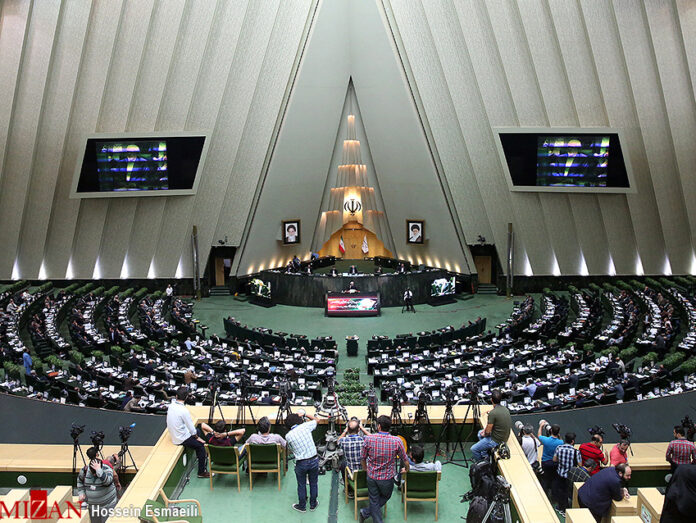
Iranian Parliament Condemns Kurdistan’s Independence Referendum

23 Iranian Lawmakers Test Positive for Coronavirus

In a statement, signed by 210 lawmakers, the parliament voiced support for the Iraqi government and legislature and condemned the Kurdistan Regional Government’s (KRG’s) plan to secede from Iraq.

The Iranian parliament believes that any measure creating crisis in Iraq would harm the Arab country’s democratic progress and that separatist measures are detrimental to the Iraqi nation and the entire region, the statement added.

The lawmakers also asked the Iranian administration to promote cooperation with the Baghdad government to prevent Zionists adventurism in Iraq.

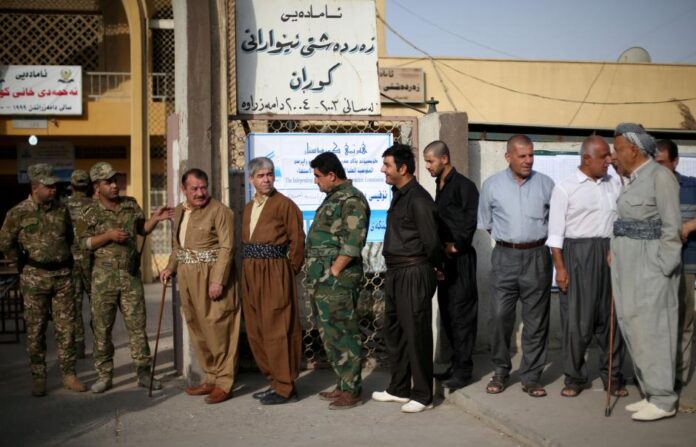
The Iraqi Kurdistan Region went ahead with its plan to hold the referendum on Monday while Iraq’s neighbors and countries in the Middle East, including Iran and Turkey, had voiced opposition to such a move and supported the Baghdad central government.

On Monday night, thousands of Kurdish people in favor of KRG’s secession from Iraq took to the streets in Erbil, with some waving Israeli flags to celebrate.