Sunday, April 12, 2026
Home Blog Page 3864

IRGC Pillar of Iran’s National Security: Reformist Leader Khatami

Addressing a group of university students in Tehran on Monday, Khatami referred to Trump’s Friday speech against the Islamic Republic, particularly his accusations against the Islamic Revolution Guards Corps, and noted that the IRGC is among the pillars of Iran’s national security.

Stressing that the IRGC, as a body with roots in the Islamic Revolution, is standing against terrorists, Khatami said it is not acceptable that someone makes such rude remarks against the Guards.

The reformist ex-president said he feels very sorry that such rude and impolite figure has become the president of one of the world’s most powerful countries.

“I am also sorry for the American people and believe that the US nation, at least their elites and elders, do not feel pleased with such a figure, and are even embarrassed,” he added, according to his official website.

Khatami hailed the stances different countries in the world adopted against Trump’s remarks in the past few days, saying the US president is a danger for the mankind and everyone should stand against him.

‘Iran Resolved to Provide People with Free Access to Information’

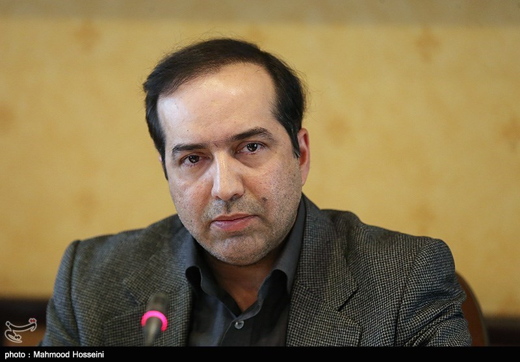
Hossein Entezami

“The communication models in the public relations offices in Iran should be based on the principle of offering information to the public in a pre-emptive manner,” said Entezami in an address to the Fourth Conference of Public Relations Offices of Iran’s Ministry of Communications and Information Technology held in Tehran on Sunday.

He referred to the law of Freedom of Information (FOI) which was passed six years ago and added, “The law is a revolutionary law in line with our constitution. This reveals the fact that the Iranian government feels responsible for providing the nation with the information they need to know about.”

Elsewhere in his address, Entezami also said based on the FOI Law, Iranian public and private sectors are required to provide their clients with all kinds of information except for classified ones.

“According to the law, the ICT ministry should be a role model for other organizations in offering information to the clients,” he noted, according to a Farsi report by Khabar Online.

Entezami went on saying Iranian government is facing a long-time cultural challenge in offering information to people and added the public sector organizations are not willing to provide people with information because “they think the provided information will undermine their authority.”

The Iranian official also stressed that the government of President Hassan Rouhani insists on implementing the FOI law.

Out of 450 administrational organizations, only 90 ones have expressed their willingness to implement the law, he noted.

“By implementing the law, the public relations offices in our country will restore their real status within the administrational organizations. This means they can establish a logical relation with their clients,” he added.

Entezami stressed that such a communication model “can remove lots of misunderstandings which have hampered the efficiency of our public organizations.”

The deputy minister stressed that eradication of administrative corruption requires taking some concrete and practical steps.

“The law calls for transparency and transparency as the first prerequisite in fight against corruption. The government managers need to provide people with the required information about their decision-making,” he said.

He called responsibility and efficiency as other main elements required to eradicate corruption and said the FOI Law helps the public relations offices to perform their duty appropriately and provide people with the needed information.

The deputy minister also said freedom of information is the basic right of the critics of the government and added the critics should be able to evaluate the government’s performance drawing on correct information.

“The administrative organizations are fully aware of the public demands and the public relations offices are obliged to provide people with the required information. So, we should not wait for people to ask for the information. We should offer them the information ourselves. I know that the implementation of the law will face some resistance,” he said.

At the end, he expressed hope that the public relations offices turn into a real centre providing people with information.

Russia Rejects US Call for ‘Fixing’ Iran Nuclear Deal

Russia Rejects US Call for 'Fixing' Iran Nuclear Deal

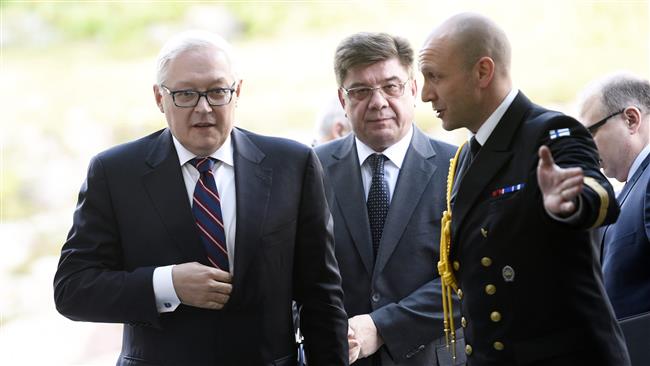
Sergei Ryabkov told Russian news agency TASS that there was an American saying that goes “If it’s not broke, don’t fix it.”

“That’s what I would like to address to the colleagues in the United States,” the Russian diplomat said.

The approach of calls for fixing the Iran deal “seems to be a wrong way to follow as the existing documents are working quite efficiently,” he said of the deal, the Joint Comprehensive Plan of Action (JCPOA).

Iran is fully compliant with the deal, while the US is not, Ryabkov said. “What is to be improved in this context is the implementation of the existing agreements by the US side,” he added.

He also noted that by fully upholding their end of the bargain, the Iranians “have passed the ball to the US side.”

The parties to the JCPOA are Iran, Russia, the US, China, France, the United Kingdom, and Germany. They struck the deal in July 2015 and then took it to the United Nations Security Council, where it was unanimously endorsed in a resolution and effectively became international law.

But the administration of US President Donald Trump, which took office a year after the deal had begun being implemented, has been crying foul. In a speech on Friday, Trump said he was “directing my administration to work closely with Congress and our allies to address the deal’s many serious flaws.”

Trump and other US officials had also in the past talked of amending certain aspects of the deal, which would technically require reopening negotiations. Iran has been clear that renegotiating is not an option.

France ‘opposed to tougher approach to Iran’

Separately, French President Emmanuel Macron said on Sunday that he was opposed to a “tougher” approach toward Iran.

Speaking to TF1 and LCI in his first live TV interview since taking office, the French president said he had told Trump not to scrap the Iran deal.

The US president had threatened on a number of occasions while campaigning for office that he would “rip up” the JCPOA.

Macron said Trump “wants to get tougher with Iran. I told him I thought this was the wrong approach because we have to look where we are now with [North] Korea.”

The French leader said he had criticized the US president’s Iran policy as a “bad method.”

He also threw his weight behind Iran’s nuclear accord and spoke of imminent plans to visit the country.

But in further remarks, he said, “What I told him (Trump) was not to tear up the deal. After that I told him, ‘Let’s have a demanding dialog, let’s continue to conduct checks, but let’s be much more demanding with Iran on its ballistic [missile] activity.’”

The Trump administration has long railed against Iran’s missile activities and regional behavior.

In his Friday speech, Trump said those issues have to be addressed. He also said he was not certifying Iranian compliance with the deal, as required under domestic US law.

EU FMs Release Statement in Support of Iran Nuclear Deal

EU FMs Release Statement in Support of Iran Nuclear Deal

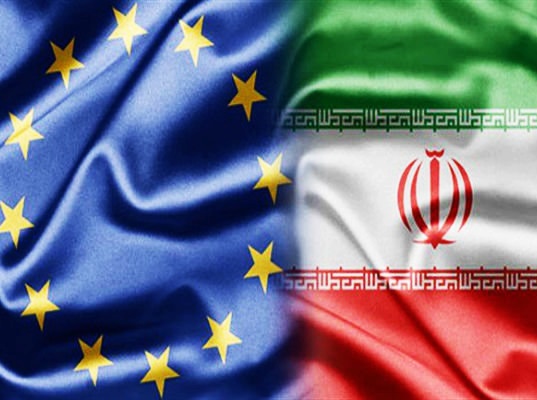
In a statement released during the EU’s Foreign Affairs Council meeting in Luxembourg on Monday, the EU foreign ministers strongly backed the nuclear deal, describing it as a key pillar of the international non-proliferation architecture.

Here is the full text of the statement:

  1. The JCPOA, the culmination of 12 years of diplomacy facilitated by the EU, unanimously endorsed by UN Security Council Resolution 2231, is a key element of the nuclear non-proliferation global architecture and crucial for the security of the region. Its successful implementation continues to ensure that Iran’s nuclear programme remains exclusively peaceful. The EU underlines that the International Atomic Energy Agency has verified 8 times that Iran is implementing all its nuclear-related commitments following a comprehensive and strict monitoring system.
  2. The EU is committed to the continued full and effective implementation of all parts of the JCPOA. The EU underlines that the lifting of nuclear related sanctions has a positive impact on trade and economic relations with Iran including benefits for the Iranian people. It strengthens cooperation and allows for continuous dialogue with Iran.
  3. The European Union considers President Trump’s decision not to certify Iran’s compliance with the Joint Comprehensive plan of action (JCPOA) as being in the context of an internal US process. The EU encourages the US to maintain its commitment to the JCPOA and to consider the implications for the security of the US, its partners and the region before taking further steps.
  4. While the EU expresses its concerns related to ballistic missiles and increasing tensions in the region, it reiterates the need to address them outside the JCPOA, in the relevant formats and fora. The EU stands ready to actively promote and support initiatives to ensure a more stable, peaceful and secure regional environment.
  5. At a time of acute nuclear threat the EU is determined to preserve the JCPOA as a key pillar of the international non-proliferation architecture.

Iran May Reconsider Implementation of Nuclear Deal: Larijani

Iran May Reconsider Implementation of Nuclear Deal: Larijani

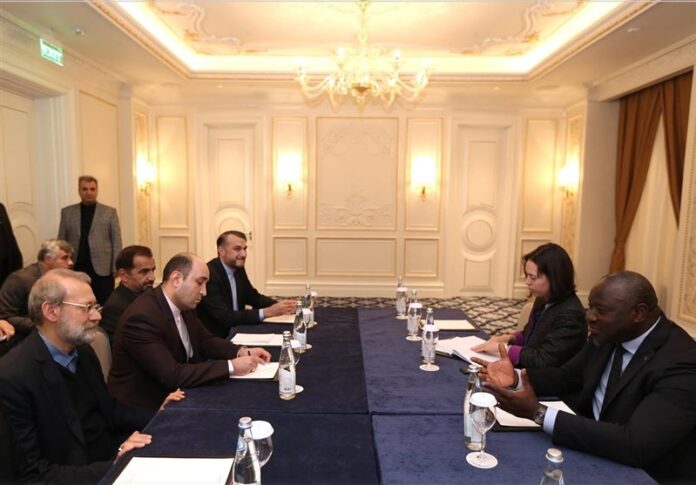
Iran has so far borne the costs of the JCPOA by honoring its commitments to the deal, but if US President Donald Trump’s “incorrect conduct” deprives Iran of the advantages of the agreement, Tehran will definitely reconsider its policy toward the nuclear accord, Ali Larijani said.

He made the comments in a meeting with Lassina Zerbo, the Executive Secretary of the Comprehensive Nuclear-Test-Ban Treaty (CTBT), held on the sidelines of the 137th assembly of the Inter-Parliamentary Union (IPU) in Russia’s St. Petersburg.

The International Atomic Energy Agency (IAEA) has eight times confirmed Iran’s compliance with the JCPOA, the nuclear agreement between Iran and the Group 5+1 (Russia, China, the US, Britain, France and Germany), Larijani underscored, saying Trump is in no position to comment about Iran’s commitment to the deal.

On Saturday, Iranian Foreign Minister Mohammad Javad Zarif said the choice of pulling out of the JCPOA will remain a viable option for Iran if Tehran feels that the other side has fallen short of its promises to remove the sanctions under the nuclear deal.

“Whenever Iran feels that the other side’s measures to lift the sanctions are not sufficient, it can make its own choice, and pulling out of the JCPOA is one of those options,” the minister warned.

Speaking from the White House on Friday, Trump said he would not recertify that Tehran is complying with the 2015 nuclear agreement.

The president is required by US law to certify every 90 days whether or not Iran is complying with the nuclear deal. He has certified the deal twice since coming to office.

Iran’s First VP to Visit Turkey on Thursday

Jahangiri

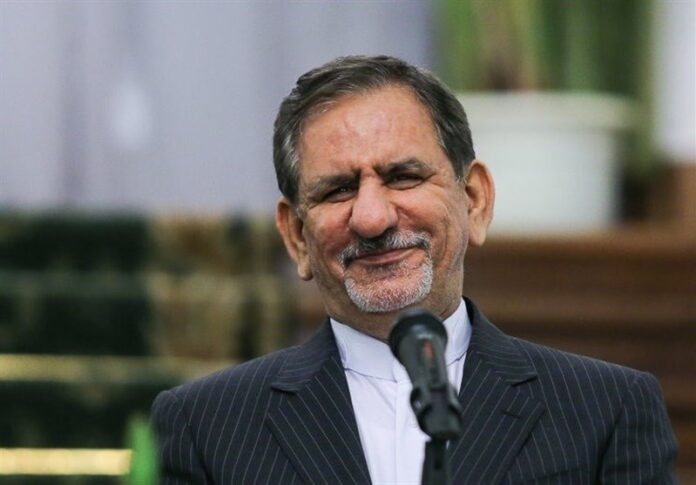
Heading a high-ranking delegation, Jahangiri is slated to leave Tehran for Ankara on Thursday to participate in the 9th Summit of the D-8 Organization for Economic Cooperation due to be held on October 20 in Istanbul.

During his two-day visit, Jahangiri will also hold talks with Turkish Prime Minister Binali Yildirim on ways to boost Tehran-Ankara relations in all fields.

Iran and Turkey have ramped up efforts to boost bilateral trade since the implementation of the Joint Comprehensive Plan of Action (JCPOA), a lasting nuclear deal between Iran and the Group 5+1 (Russia, China, the US, Britain, France and Germany).

The deal took effect in January 2016, terminating all nuclear-related sanctions on Iran.

In April last year, Iran and Turkey signed eight memorandums of understanding (MoUs) to strengthen bilateral cooperation in various areas.

The cooperation documents were signed in a ceremony in Ankara attended by the two countries’ presidents.

The documents covered a range of fields, including higher education, social security, plant maintenance services and standardization.

Iraqis Celebrate Recapture of Kirkuk from Kurds

Iraqis Celebrate Recapture of Kirkuk from Kurds

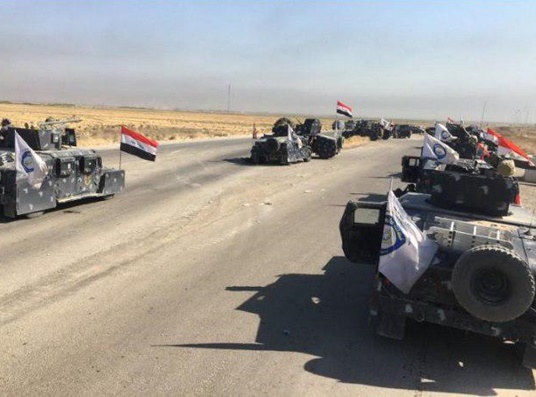
A convoy of armoured vehicles from Iraq’s elite Counter-Terrorism Force seized the provincial government headquarters in the centre of Kirkuk on Monday afternoon, residents said, less than a day after the operation began.

A dozen armoured vehicles arrived at the building and took up positions nearby alongside local police, residents said. They pulled down the Kurdish flag and left the Iraqi flag flying.

Prime Minister Haider al-Abadi ordered that the Iraqi flag be hoisted over Kirkuk and other disputed areas claimed by both the central government and the Kurds, who defied Baghdad to hold a vote for independence on September 25.

Baghdad described the advance as largely unopposed, and urged the Kurdish security forces known as Peshmerga to cooperate in keeping the peace. The Peshmerga said Baghdad would be made to pay “a heavy price” for triggering “war on the Kurdistan people”.

Kirkuk, one of the most ethnically and religiously diverse cities in Iraq, is located just outside the autonomous Kurdish zone. Kurds consider it the heart of their homeland and say it was cleansed of Kurds and settled with Arabs under Saddam to secure control of the oil that was the source of Iraq’s wealth.

Oilfields near Kirkuk, most of which were recaptured by Iraqi forces, halted production, but Baghdad said it would quickly restart it. “We’ve got confirmation from military commanders that it’s a matter of a very short time,” a senior Baghdad oil official told Reuters. “Our brave forces will regain control of all Kirkuk oilfields and then we will restart production immediately.”

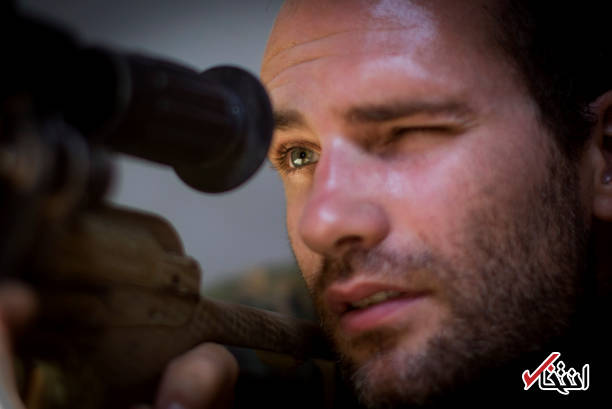
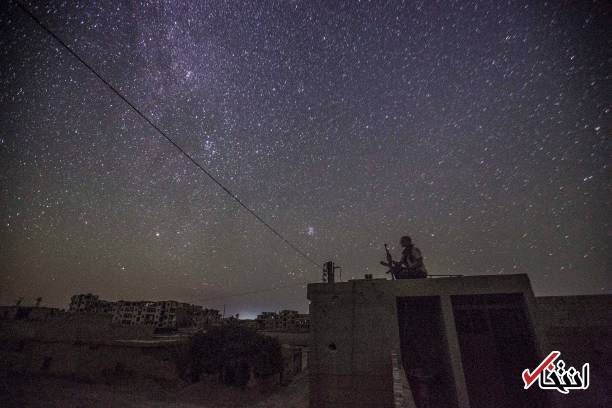
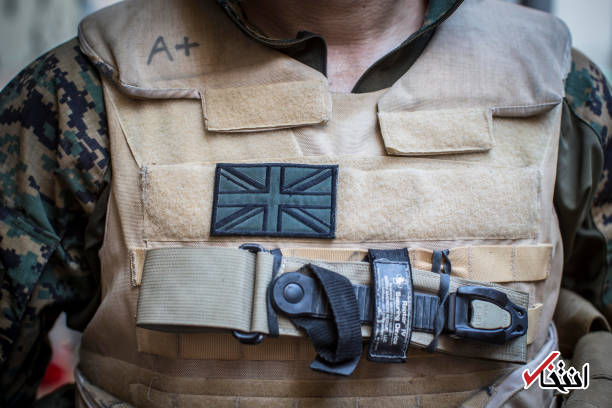
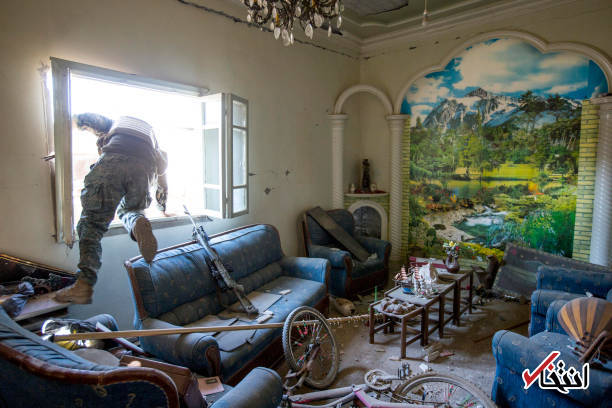
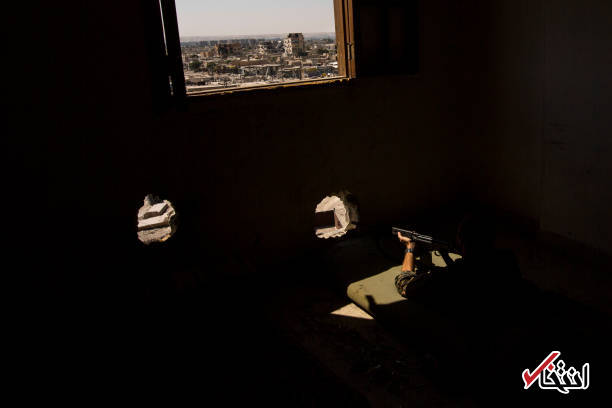
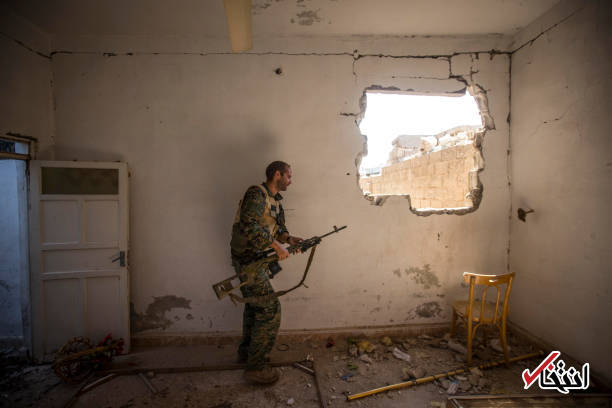
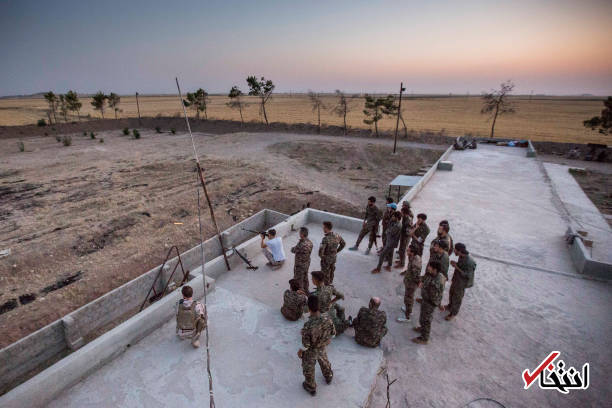
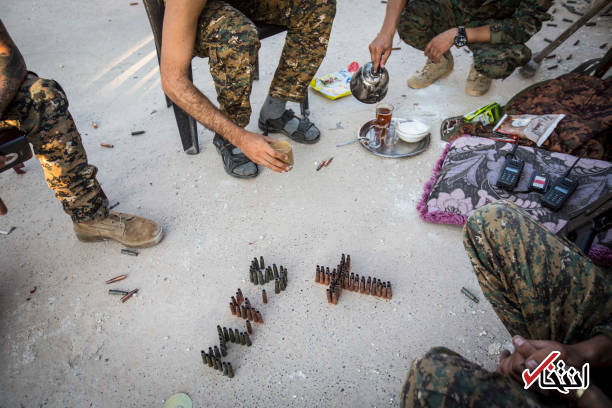
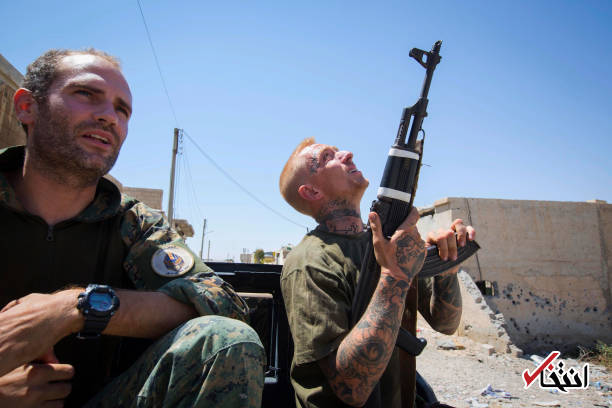
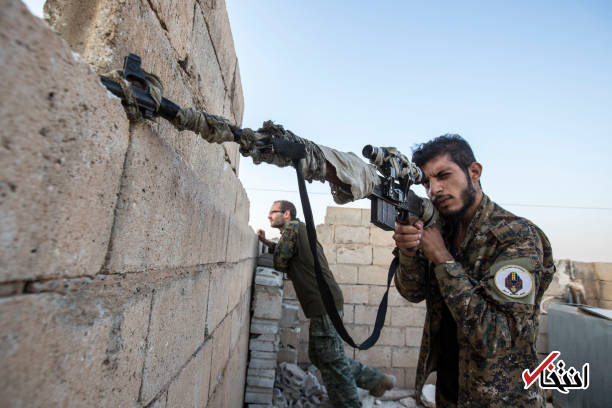
Christian Snipers in Syria, Pain in the Neck for ISIS

The Syriac Military Council is an Assyrian/Syriac military organisation in Syria which was established in 2013 with the aim of protecting the Syrian Christian population against the threats of ISIS. The organization is fighting now in the battlefront against ISIS terrorists.

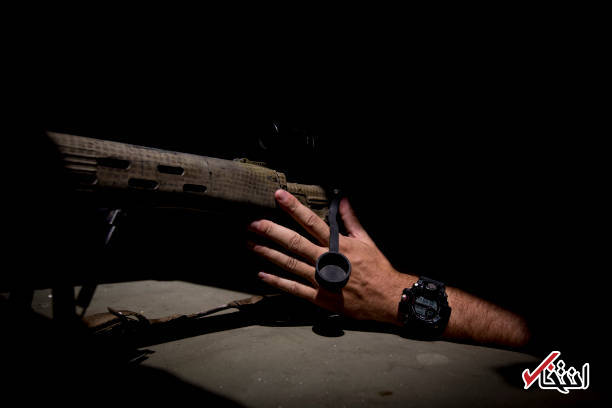
The organization has some skilled snipers who are fighting ISIS along with Syrian Kurdish fighters known as YPG to retake Raqqa from ISIS militants, according to a Farsi report by Entekhab news website.

ISIS militants massacred a large number of Syrian Christian civilians following the occupation of the Christian-populated areas of Syria in 2014. Churches and other sacred sites of the Christians in the areas were also razed to the ground by the terrorists.

YPG announced earlier that Raqqa will be completely liberated from ISIS within the next two days.

According to the Kurdish fighters, more than 100 ISIS members are besieged in the city.

Iran Hopes for Enhanced Ties with Austria under Kurz’s Leadership

Iran Hopes for Enhanced Ties with Austria under Kurz’s Leadership

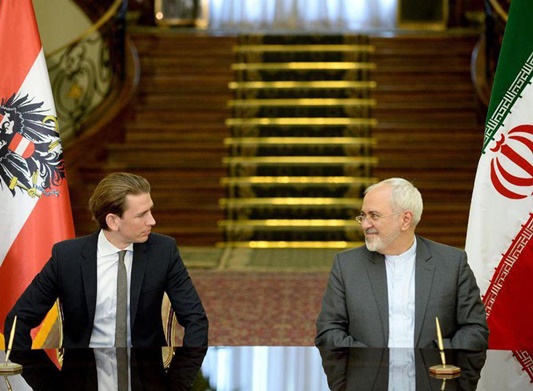
“Austria and Mr Kurz in particular, as the main host of Iran’s nuclear negotiations with the P5+1, played an important role in the finalization of the historic deal,” Foreign Ministry Spokesman Bahram Qassemi noted in a Monday statement.

Qassemi also expressed the hope that Tehran-Vienna ties would be promoted in all aspects in the new era and under his leadership.

Austria’s conservative People’s Party, led by 31-year-old Kurz, is set to win the country’s general election. Kurz is on course to become the world’s youngest national leader.

The People’s Party was set to win more than 31%. It is so far unclear whether the Social Democrats or the far-right Freedom Party will finish second.

Before the election, Kurz served as Europe’s youngest-ever foreign minister, after he was appointed in 2013 aged just 27.

Iranian, Canadian Diplomats Hold ‘Positive’ Talks in Tehran

In a statement on Monday, Foreign Ministry Spokesman Bahram Qassemi declared that a Canadian delegation, which had earlier visited Iran in May, recently travelled to Tehran and held talks with Iranian foreign ministry officials.

He said the recent visit was made as part of bilateral talks held between Iranian and Canadian foreign ministries within the past two years.

Qassemi noted that the negotiations were held with a positive approach and were aimed at exchanging views about technical and specialized issues.

He also noted that the two countries’ foreign ministers had earlier met each other on the sidelines of the UN General Assembly in New York.

Back in May, the Canadian delegation visited Tehran to hold talks with Iranian officials to facilitate the restoration of diplomatic ties, the first such visit since the previous Canadian government closed its embassy in Tehran nearly five years ago.

In September 2012, the administration of former Canadian Prime Minister, Stephen Harper, severed diplomatic contacts with the Islamic Republic, citing, among other pretexts, “continued threats from Iran to Israel”.

The Italian Embassy has been handling Canada’s interests in Iran since then.