Sunday, January 18, 2026
Home Blog Page 3832

Iran Decries US Searches of Russian Diplomatic Buildings

In a Tuesday statement, Iran’s Foreign Ministry Spokesman Bahram Qassemi denounced as ‘arbitrary’ the US government’s seizure and searches of Russian diplomatic buildings on the American soil, saying such moves run counter to international norms and regulations.

“The US government’s seizure of, or threat to use force against the diplomatic buildings of foreign countries in America is condemned, and sets a dangerous precedent.”

“It shows that from now on, no country’s diplomatic missions on US soil will have enough guarantees from the US government that they enjoy immunity,” said Qassemi.

Iran Rejects Amano’s Claim on Inspection of Military Sites

Iran Leader's Top Aide Velayati Infected with Coronavirus: Report

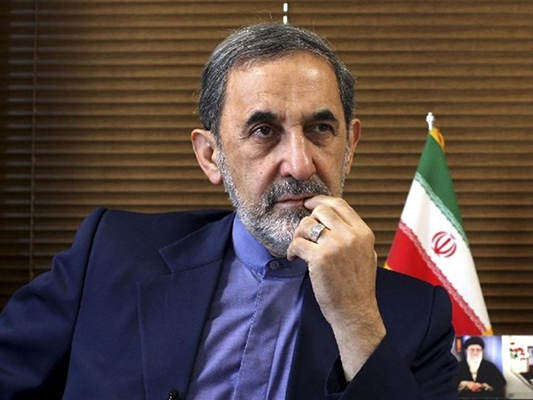
“We will never allow non-Iranian individuals to inspect our military sites at any time or any place, whether they belong to the international associations and organizations or not,” Velayati said on Tuesday.

He went on to say that foreigners are seeking to gain access to Iran’s military facilities on the pretext that the International Atomic Energy Agency has the right to do so.

Velayati’s comments came in response to the IAEA Chief Yukiya Amano’s Monday statements claiming that the IAEA, if necessary, can access Iran’s military sites, and there is no difference between military and non-military sites.

Velayati stressed that in the previous agreements with the IAEA there was no talk of having access to Iran’s military sites; otherwise, the Islamic Republic would not have agreed.

“Amano pretends that he is not informed about this and has no answers about it,” Velayati added.

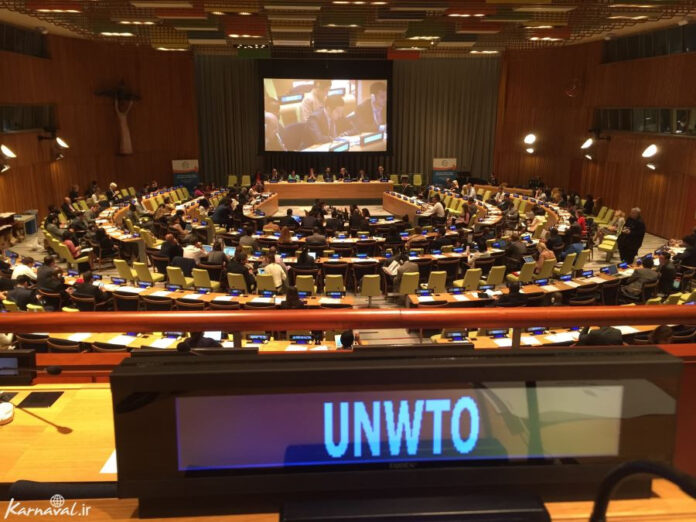
Iran’s Tourism Chief in China to Attend WTO Meeting

Iran’s Tourism Chief in China to Attend WTO Meeting

According to a Farsi report by Miras-e-Arya, Mounesan and his Tourism Deputy Mohammad Moheb Khodaee left Iran for China’s city of Chengdu on Monday, September 12.

The ICHTO chief, who is also a Vice-President, will meet with the Secretary-General of the World Tourism Organization on the first day of his three-day visit.

He will also attend the opening ceremony of the 22nd General Assembly of the World Tourism Organization on Wednesday, September 13.

Speaking at the first session of the GA, attending the tree-planting ceremony of the ministers and tourism authorities of the participating countries for the International Year of Sustainable Development, meeting with the national tourism authorities of China, and attending the Ministerial Summit on Tourism and Sustainable Development Goals are also on Mounesan’s agenda on this day.

On the last day of his visit to China, he will attend the second session of the WTO General Assembly to elect the new Secretary General. Mounesan will finally attend the meeting of five countries of the Caspian Sea including Iran, Russia, Kazakhstan, Turkmenistan and Azerbaijan.

The 22nd General Assembly of the World Tourism Organization will be held in Chengdu, Sichuan Province, China from September 11 to 16.

Chinese Drilling Worker Disappears in Southwestern Iran

A 45-year-old Chinese worker named Cheng Chang Chun has gone missing in the mountains of Masjed Soleyman since Saturday, according to a Farsi report by ILNA.

Apparently, the worker, after completing his work, decided to walk to his resting place with no colleague accompanying him. In his last telephone conversation with one his colleagues Saturday noon, he announced that he had lost his way in the mountains.

Search operations to find this Chinese worker has been underway in the mountains of Masjed Soleyman using choppers and dogs since Saturday night.

Iran’s Khuzestan Province Red Crescent Society officials say search operations to find the missing worker are underway in Tolbozan District of Masjed Soleyman County through air and ground.

IRGC Dismisses Idea of Military Intervention in Myanmar

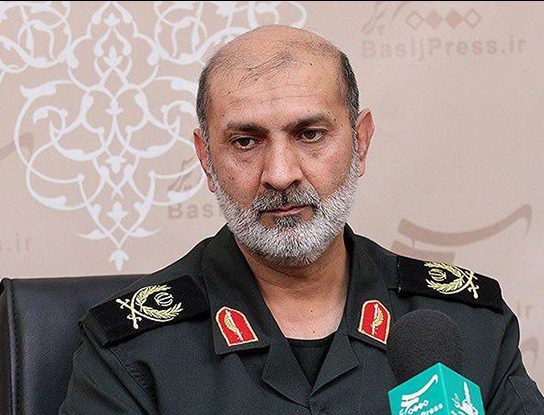
“It is a false analogy that some take the IRGC’s presence in Syria and Iraq and its confrontation with the Takfiris as a pretext to raise the question ‘why the Islamic Revolution Guards Corps has not helped the Muslims of Myanmar so far,” Brigadier General Rasoul Sanaei-Rad, the lieutenant commander of IRGC for political affairs, said.

Speaking in a Farsi interview with the Mizan News Agency, he was referring to the questions raised after an official statement by the IRGC to declare its readiness to assist the oppressed people of Myanmar.

“The advisory presence of Iran in Syria and Iraq came after the official request of the governments of these two countries.”

“We should keep in mind that the geographical conditions of Iran and Myanmar are very different from the geographic proximity of Iran to Syria and Iraq,” Sanaei-Rad added.

He further pointed out the similarities between Takfiri groups and criminals in Myanmar, saying that both of them have just chosen a religious cover.

There is no doubt that the Muslim minority in Myanmar is being oppressed by the government and a form of apartheid is being committed against them, he noted.

“However, we should pay attention to the fact that at the present time tensions should not be created between the sects of Islam and Buddhism.”

Brigadier General Sanaei-Rad also noted that Aung San Suu Kyi, who was formerly introduced as a human rights activist and peace-loving figure in the world, is today committing crimes against the Muslims in Myanmar which are very similar to those committed by ISIS Takfiris.

“It seems that at the local level, an economic mafia is involved, and at the international level, some are trying to expand post-ISIS ethnic and religious conflicts from West Asia to the east of the continent to pave the ground for the expansion of colonialism,” he added.

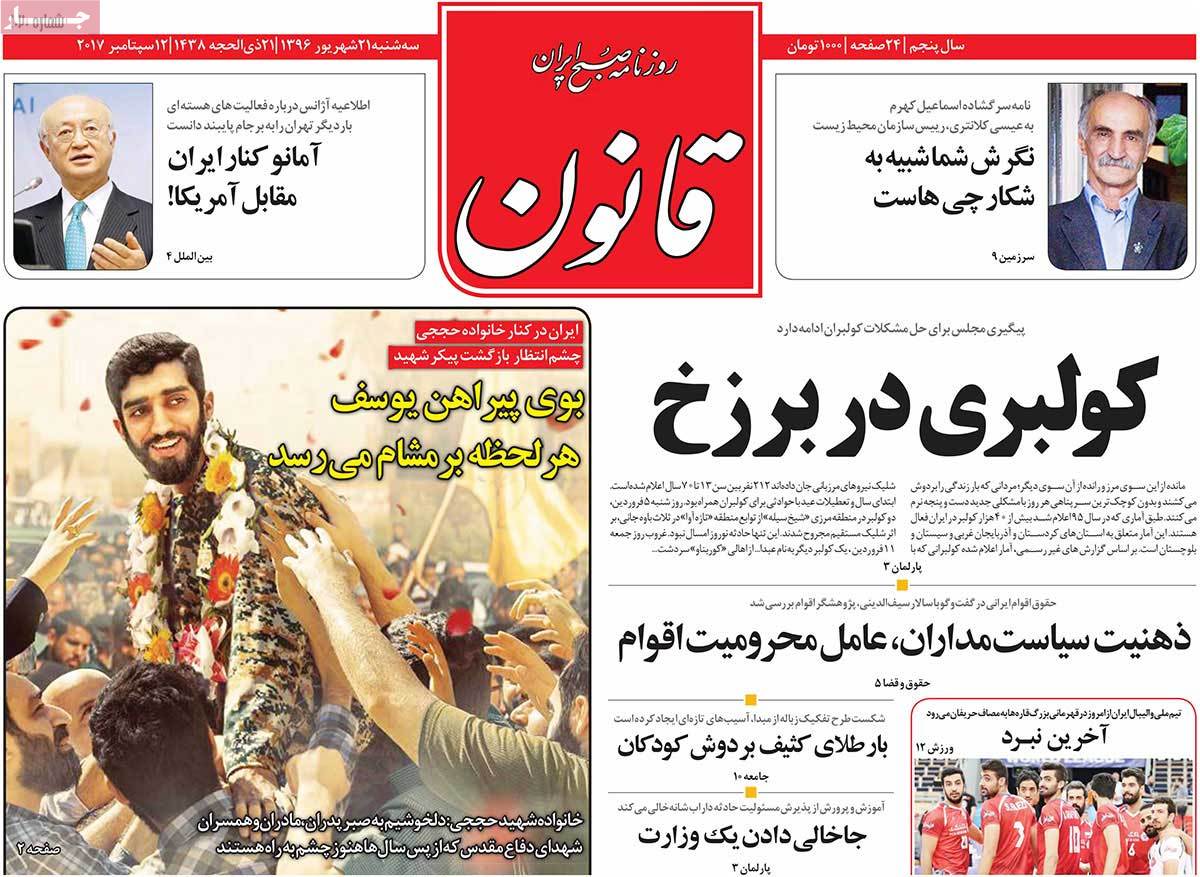
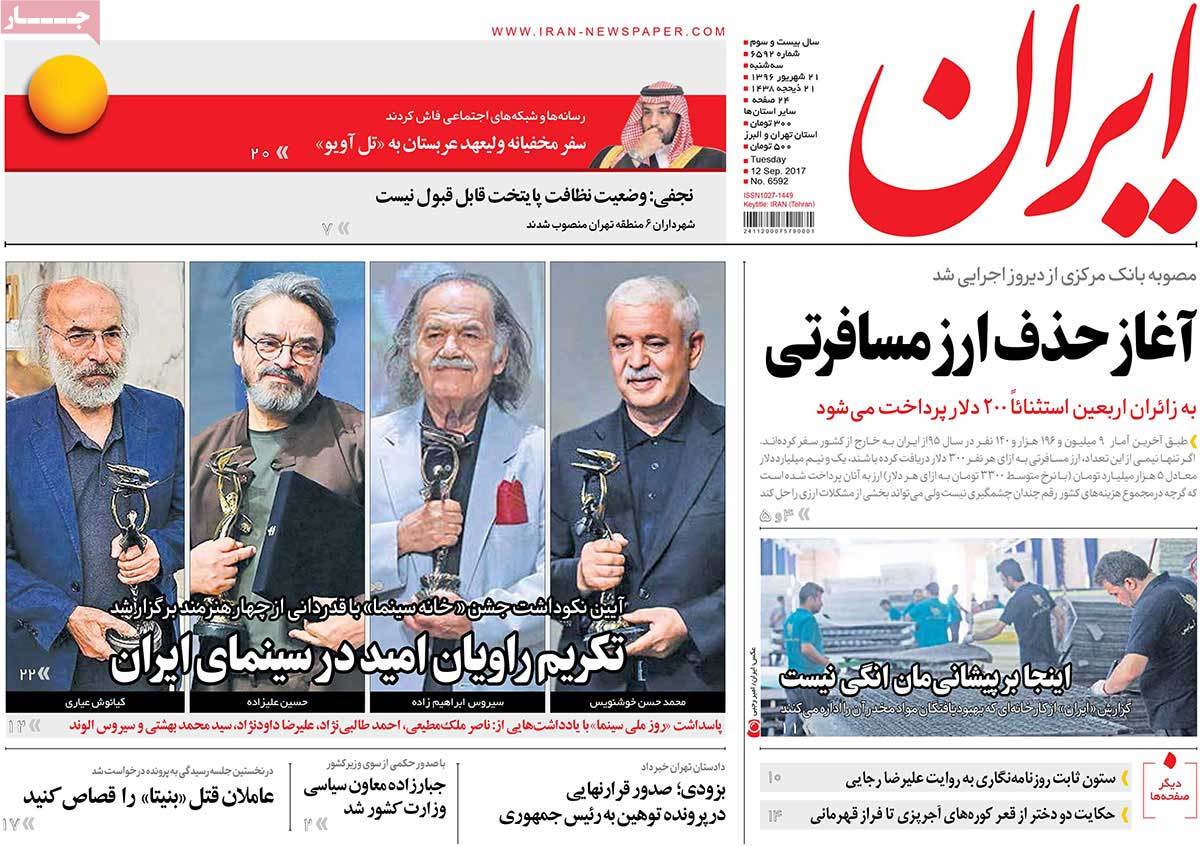
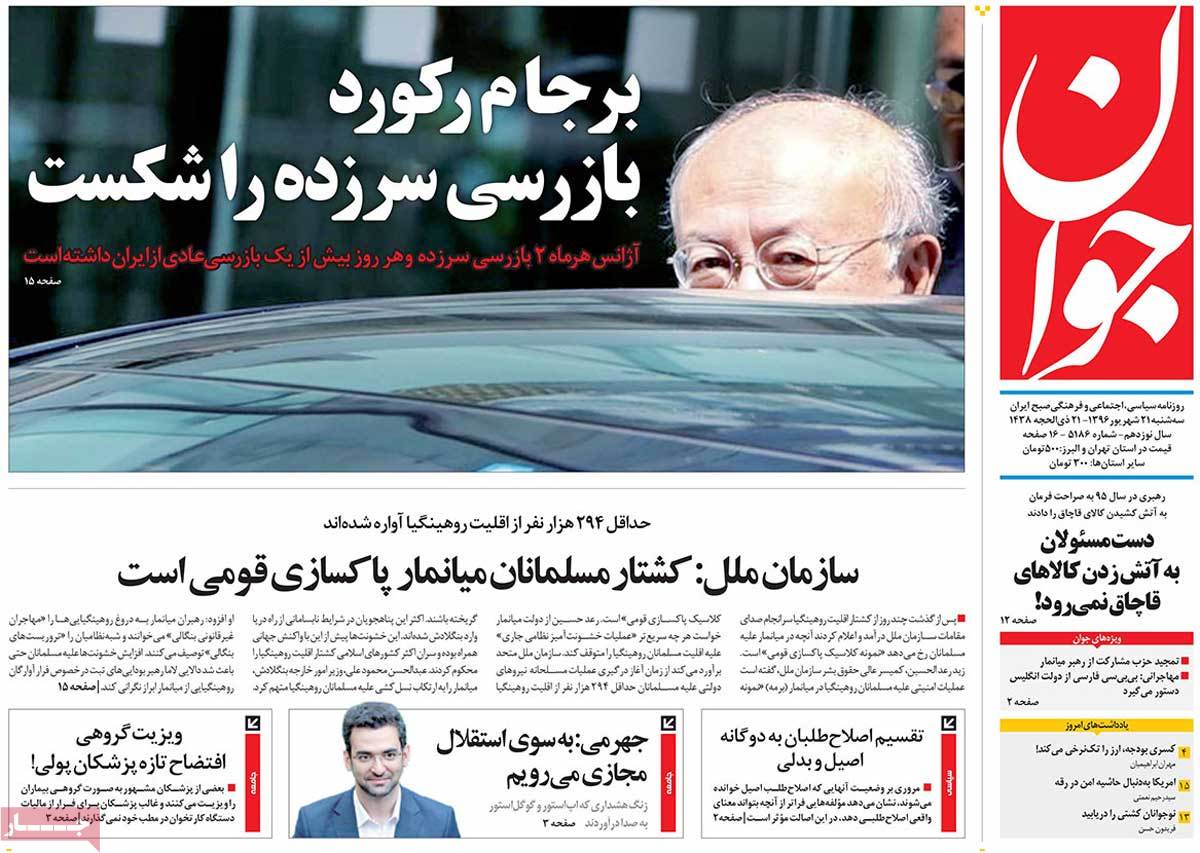
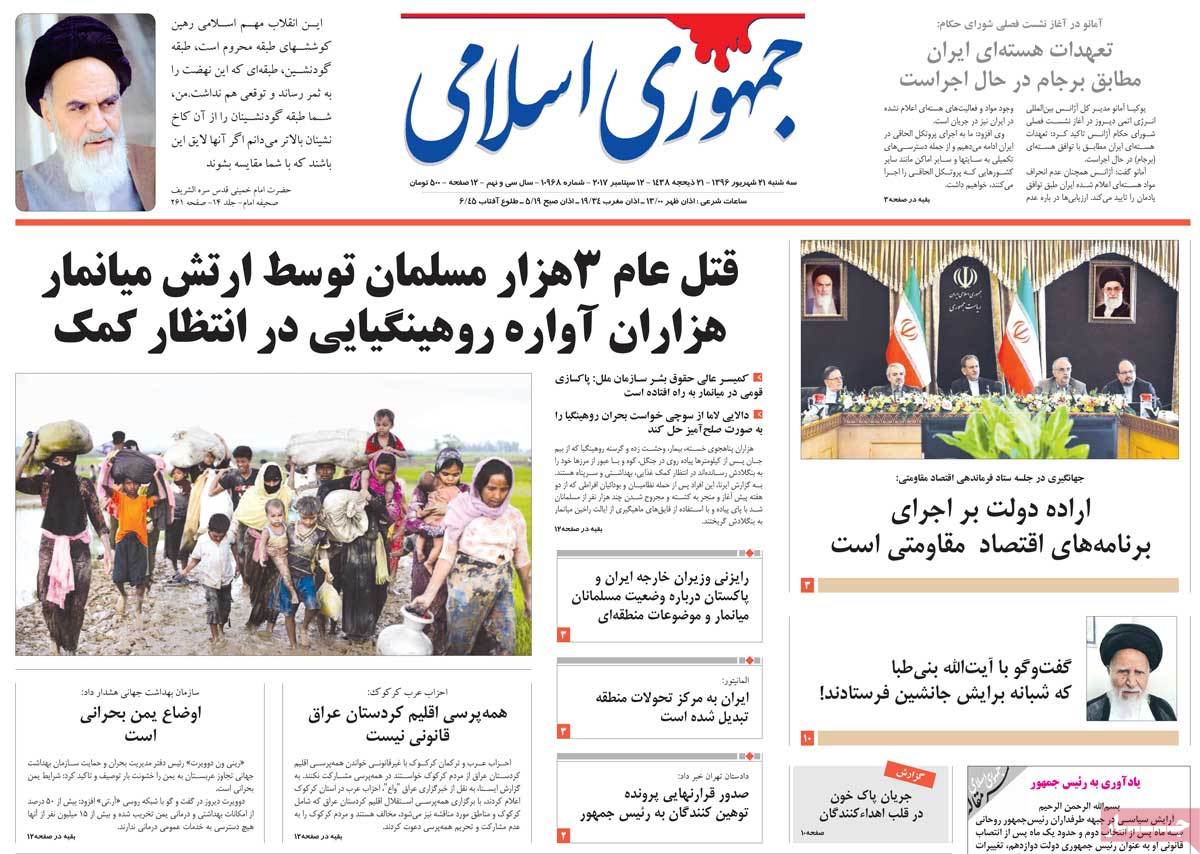
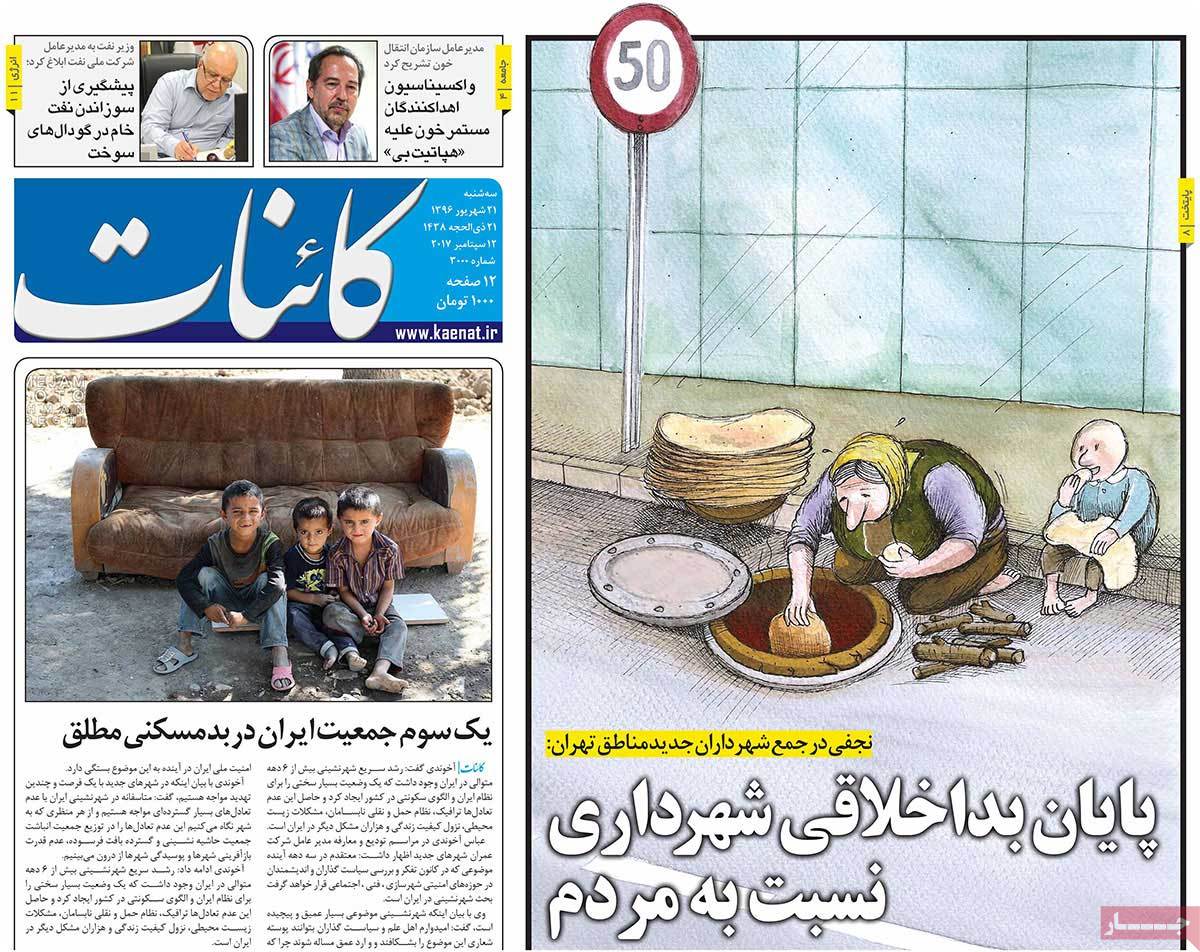
A Look at Iranian Newspaper Front Pages on September 12

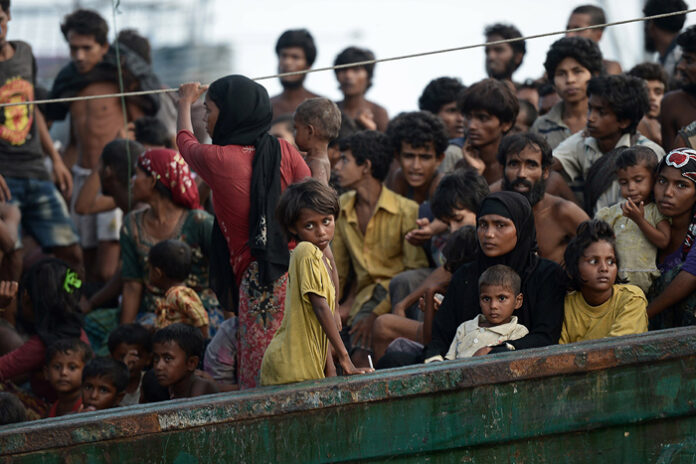
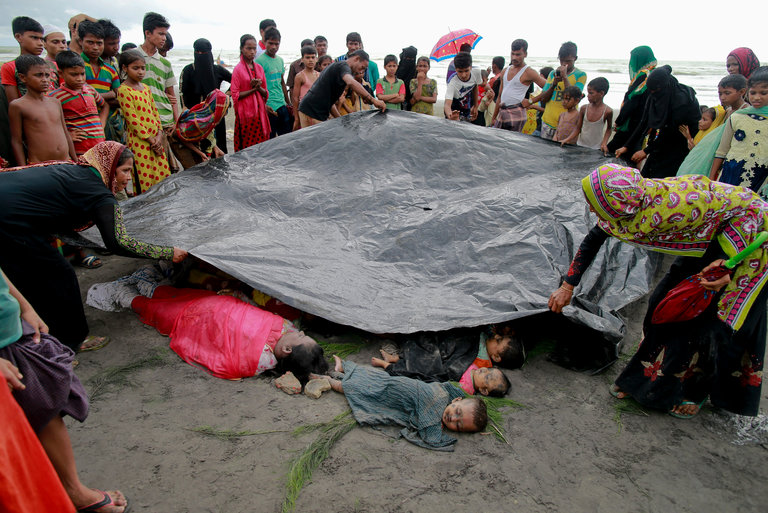
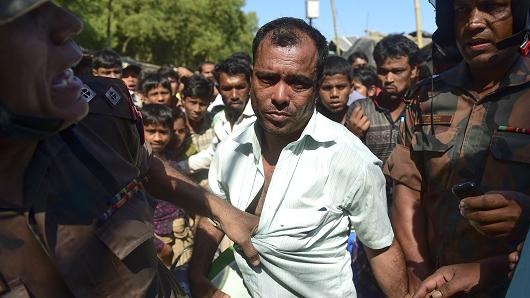
The plight of Rohingya Muslims who are being massacred by the Myanmar army remained a top story in today’s newspapers.

Another top story was a report by the International Atomic Energy Agency to the IAEA Board of Governors in which Iran’s compliance with the nuclear deal was once again confirmed. Several papers hailed the report as an example of the IAEA’s independence from the US.

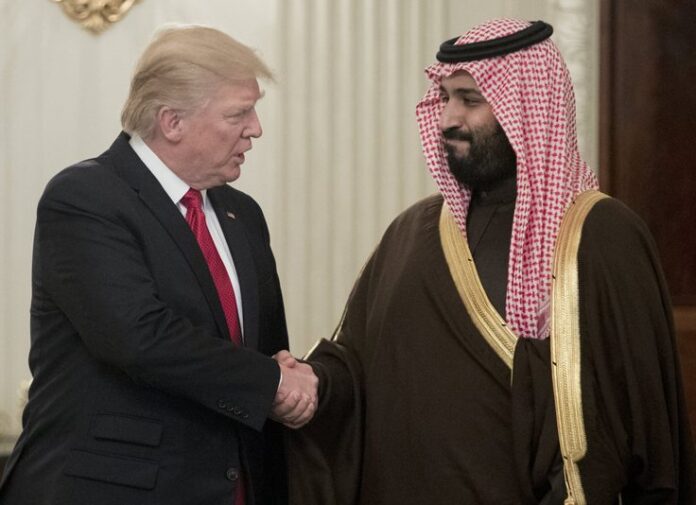
Newspapers also covered a secret visit by Saudi Crown Prince Mohammed bin Salman to Tel Aviv, which was revealed by Israeli media.

The above issues, as well as many more, are highlighted in the following headlines and top stories:


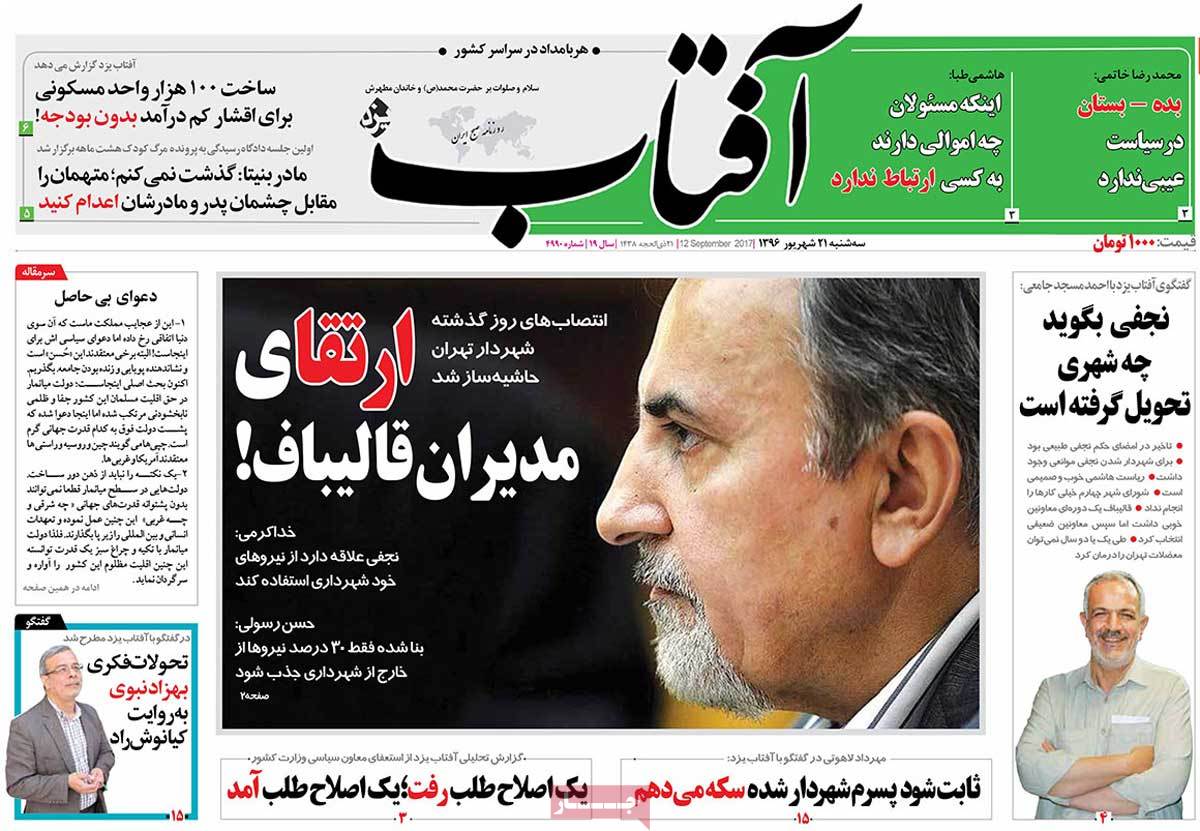
Aftab-e Yazd:

1- Construction of 100,000 Houses for Low-Income People without Budget!

2- District Mayors Appointed by Tehran Mayor Spark Controversy

  • Qalibaf’s Managers Promoted under Reformist Najafi
  • A Look at Iranian Newspaper Front Pages on September 12


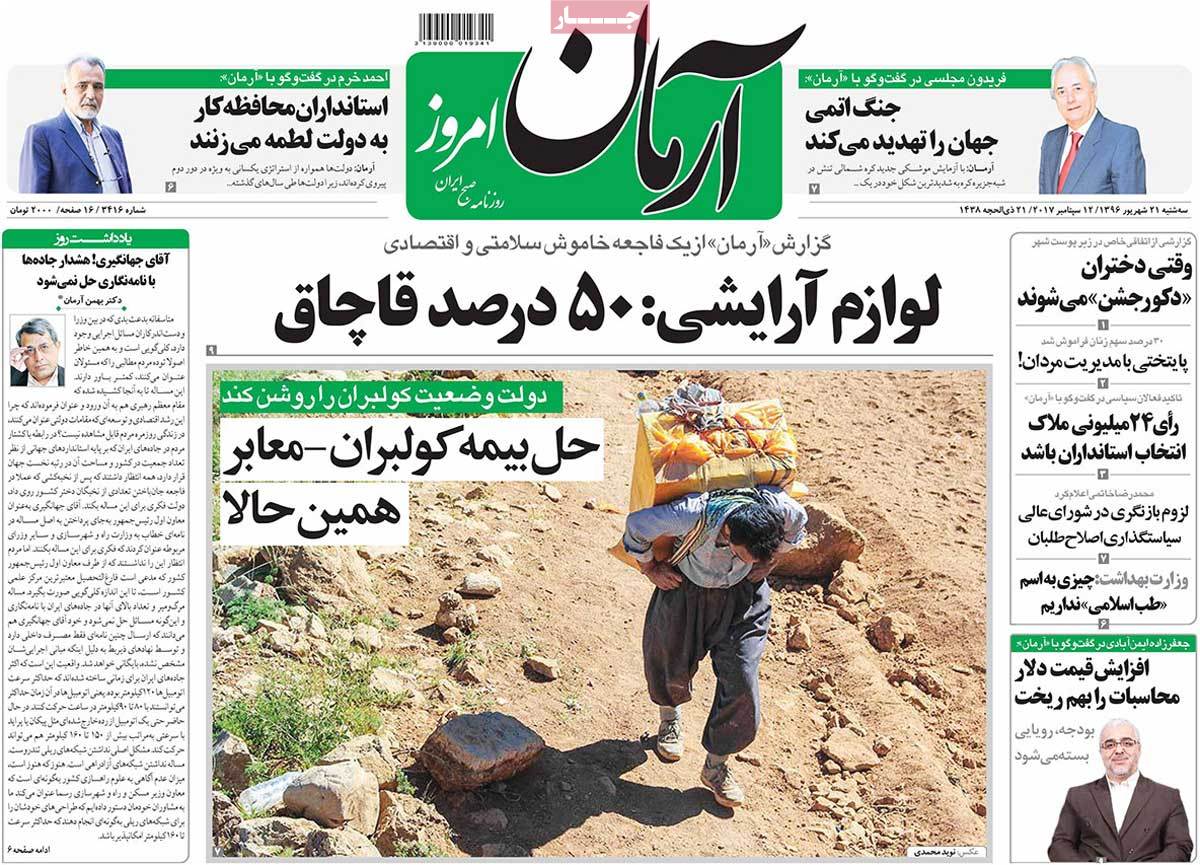
Arman-e Emrooz:

1- Nuclear War Threatening World

2- Cosmetics Account for 50% of Contraband Goods in Iran

3- Gov’t Should Make Urgent Decision about Porters of Contraband Goods in Border Areas


 A Look at Iranian Newspaper Front Pages on September 12


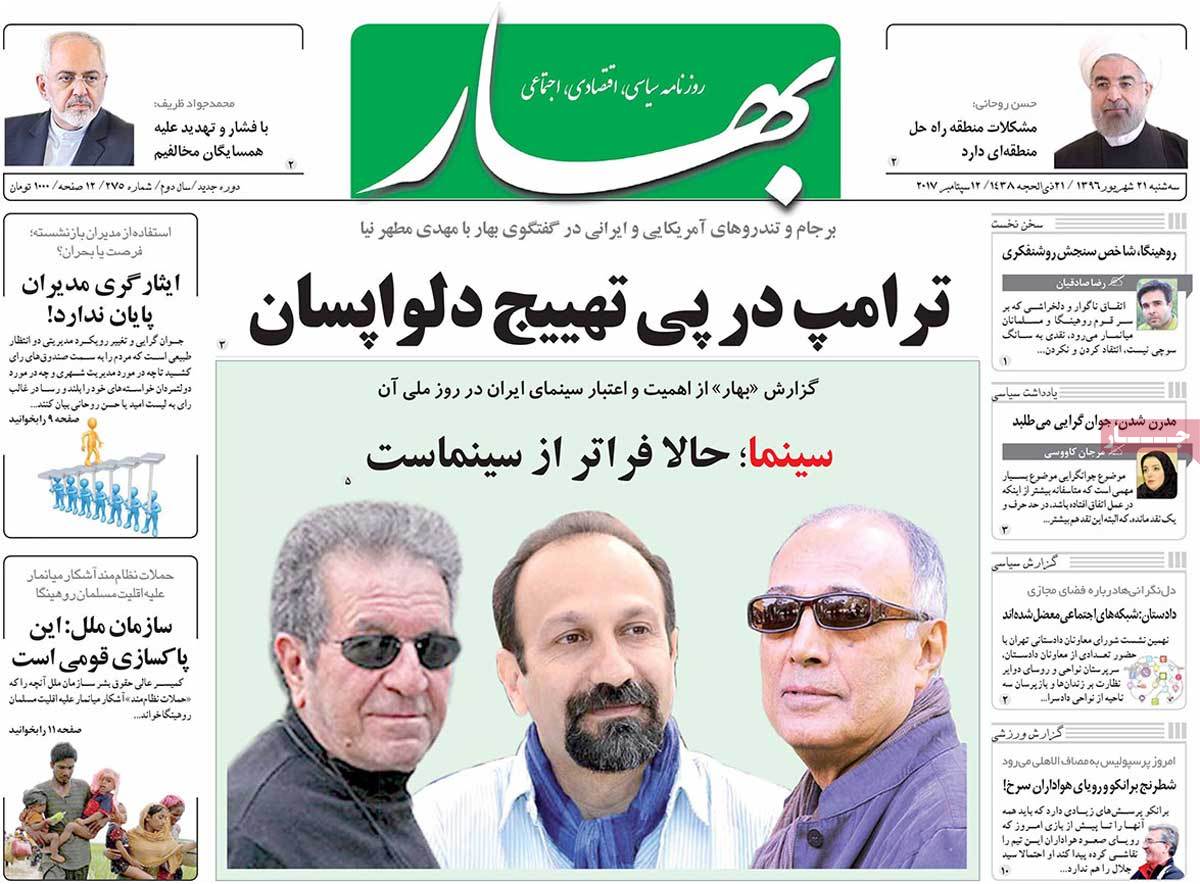
Bahar:

1- Rouhani: Regional Problems Have Regional Solutions

2- Zarif: Iran Opposed to Pressure, Threat against Neighbours

3- Cinema Is Now beyond Cinema

A Look at Iranian Newspaper Front Pages on September 12


Donya-ye Eqtesad:

1- Israeli Media Reveal Saudi Crown Prince’s Secret Visit to Tel Aviv

A Look at Iranian Newspaper Front Pages on September 12


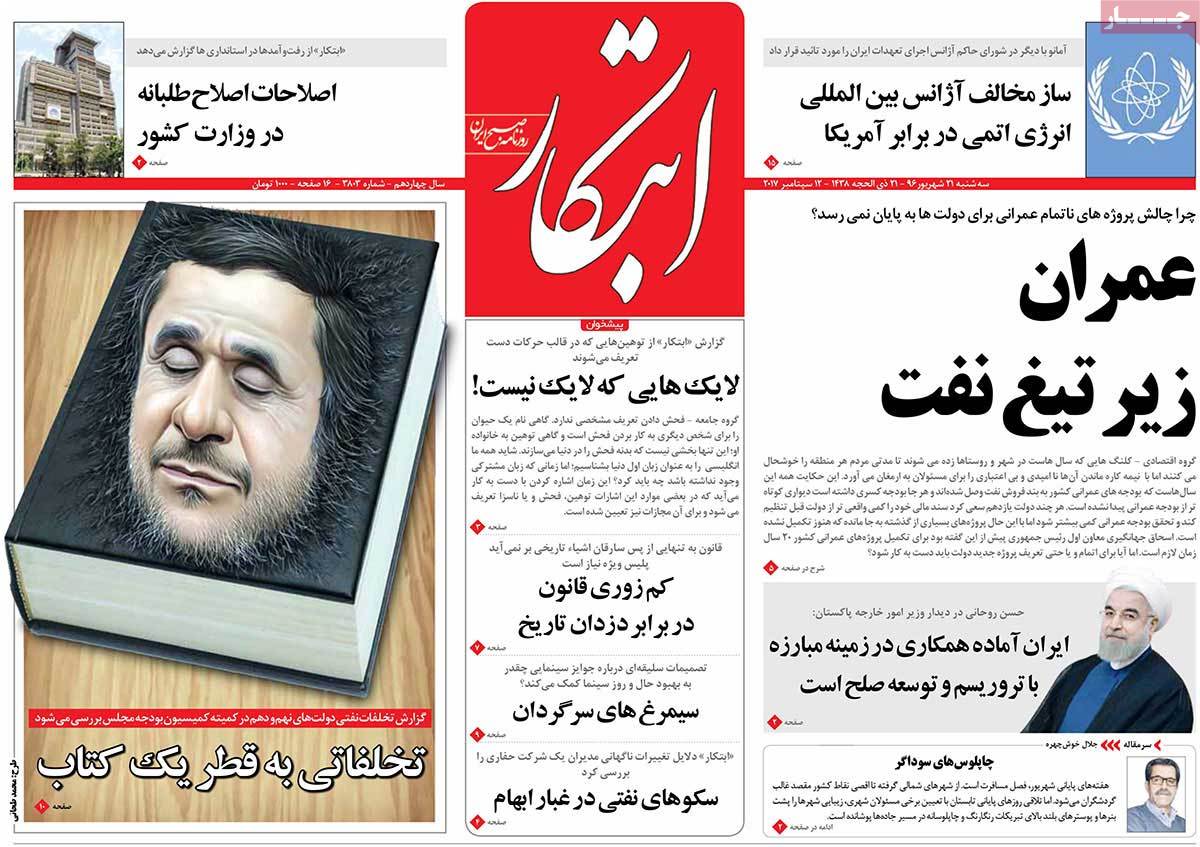
Ebtekar:

1- Rouhani: Iran Ready for Cooperation in Fight against Terror, Promotion of Peace

2- IAEA Declining to Meet US Demands

3- Governments Challenged by Unfinished Construction Projects


A Look at Iranian Newspaper Front Pages on September 12


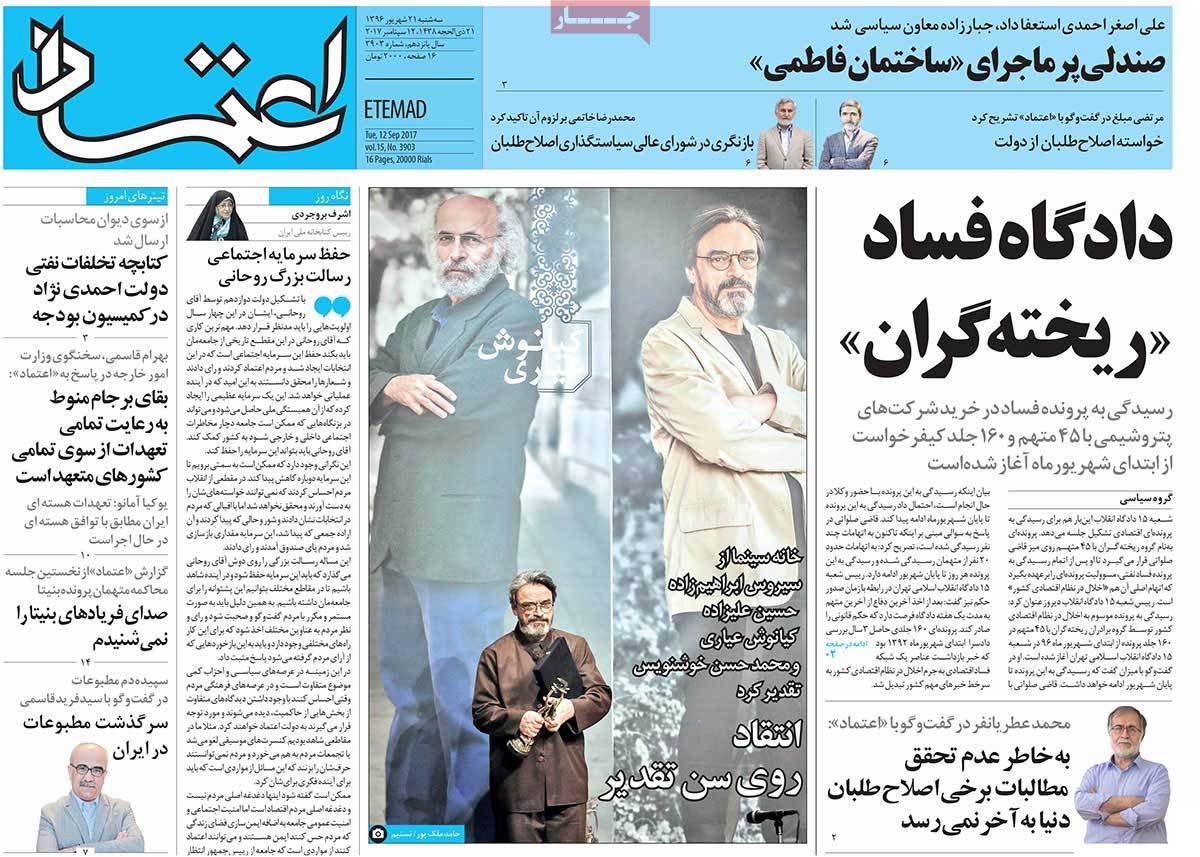
Etemad:

1- Qassemi: All Parties to Nuclear Deal Should Remain Committed


A Look at Iranian Newspaper Front Pages on September 12


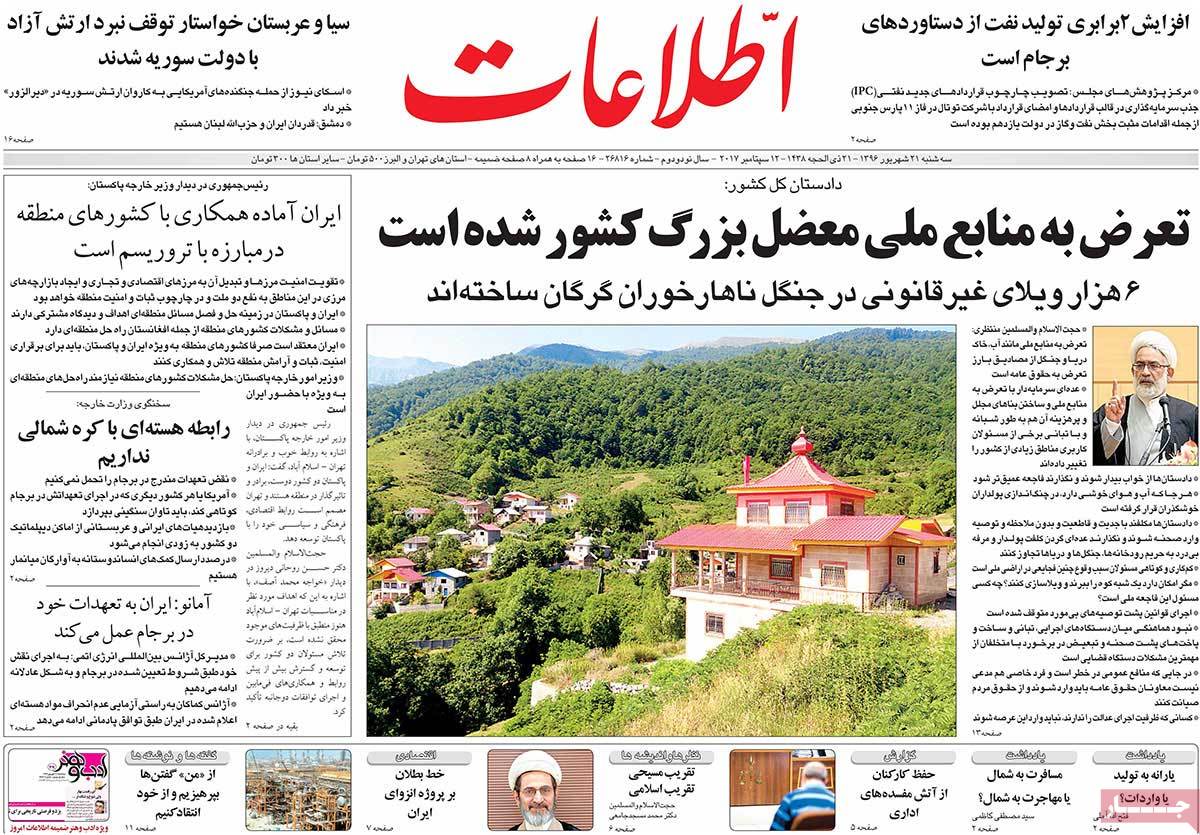
Ettela’at:

1- Prosecutor: Encroaching into National Resources Turns into Iran’s Biggest Problem

2- Rouhani: Iran Ready to Work with Regional States in Fight against Terror

3- Iran Has No Nuclear Cooperation with North Korea: Foreign Ministry

4- CIA, Saudi Arabia Urge Syrian Free Army to Stop Fighting Syrian Gov’t


A Look at Iranian Newspaper Front Pages on September 12


Ghanoon:

1- Iran Waiting for Return of Martyr Hojaji’s Body

2- Politicians’ Mentality, Main Cause of Ethnicities’ Deprivation

3- Amano Stands by Iran against US


A Look at Iranian Newspaper Front Pages on September 12


Iran:

1- Social Media Reveal Saudi Crown Prince’s Secret Visit to Tel Aviv

2- Narrators of Hope in Iran’s Cinema Praised

A Look at Iranian Newspaper Front Pages on September 12


Jahan-e San’at:

1- Instability in Iran’s Forex, Commodity Markets

2- US Lobby in IAEA Fails: Iran’s Compliance with JCPOA Confirmed

A Look at Iranian Newspaper Front Pages on September 12


Javan:

1- Iran Nuclear Deal Breaks Record of Unannounced Inspections

  • IAEA Has Inspected Iran’s Sites Once in Every 2 Months

2- UN: Mass Killing of People in Myanmar Is Ethnic Genocide

3- ICT Minister: Iran Moving towards Cyber Independence

A Look at Iranian Newspaper Front Pages on September 12


Jomhouri Eslami:

1- 3,000 Muslims Massacred by Myanmar Army

  • Thousands of Displaced Rohingyas Waiting for Help

2- Kirkuk’s Arab Parties: Kurdistan Referendum Illega

3- WHO Warns: Yemen Situation Critical

4- First VP: Government Resolved to Implement Resistance Economy Plans


A Look at Iranian Newspaper Front Pages on September 12


Kayhan:

1- 7m Families Living in Rented Houses

2- Florida Drowns

3- Head of Iraqi Kurdistan’s Parliament Strongly Opposed to Referendum

4- Transport Minister: Arrival of Post-JCPOA Airplanes Faced with 3 Challenges


A Look at Iranian Newspaper Front Pages on September 12


Kelid:

1- Iran’s Top Handicraft Official: 80,000 Jobs to Be Created in Handicrafts Sector

2- President: Member States of OIC Agree on Putting Myanmar under Pressure

3- Military Sites among Red Lines of Iran’s Security


A Look at Iranian Newspaper Front Pages on September 12


Khorasan:

1- New Details of IAEA’s Unannounced Inspections of Iran

2- 70% Import of Stationary Is Disaster


A Look at Iranian Newspaper Front Pages on September 12


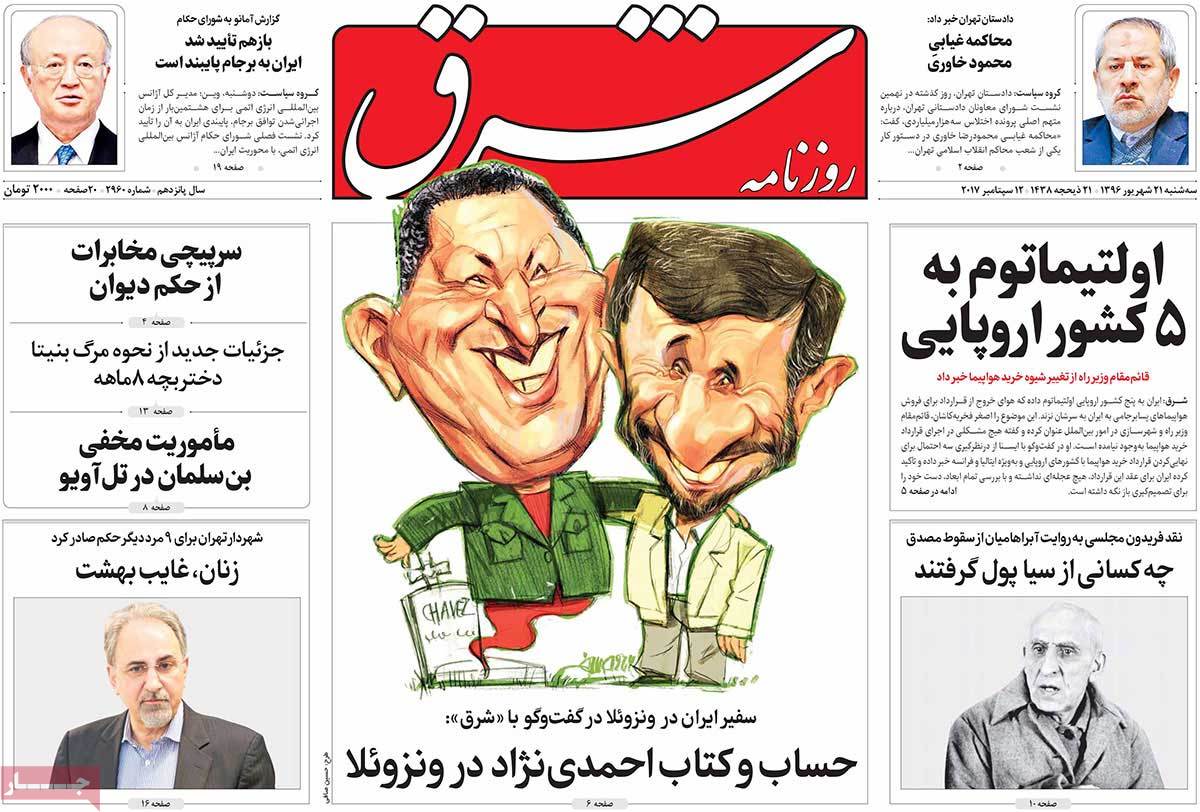
Shargh:

1- Ultimatum to Five European Countries

  • Deputy Transport Minister Declares Changes in Plane Purchase Plans

2- Amano’s Report to Board of Governors: Iran’s Compliance Once Again Confirmed

3- Prosecutor-General: Iranian Fugitive Banker to Be Tried in Absentia

A Look at Iranian Newspaper Front Pages on September 12

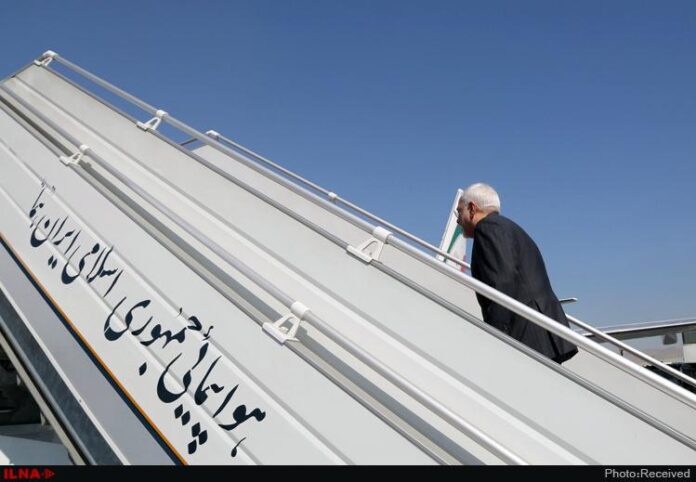
Iran FM to Visit Russia’s Sochi on Wednesday

In a Tuesday statement, Foreign Ministry Spokesman Bahram Qassemi declared that Zarif will hold talks with Russian officials during his visit to Sochi.

Iran and Russia have formed a strong alliance in recent years, with both supporting Syrian President Bashar al-Assad’s legitimate government against foreign-backed militancy.

Moreover, since coming into force in January 2016 of the Joint Comprehensive Plan of Action (JCPOA), a nuclear deal between Iran and the Group 5+1 (Russia, China, the US, Britain, France and Germany), Tehran and Moscow have ramped up efforts to boost bilateral trade.

Myanmar’s Crackdown on Rohingya Turning into Ethnic Cleansing

Myanmar’s Crackdown on Rohingya Turning into Ethnic Cleansing

Political analyst Hossein Karimzadeh has, in a Farsi article published by Iran’s official news agency IRNA, elaborated on the root causes and objectives of the crisis in Myanmar. The highlights of the article follow: 

Makeup of Myanmar’s Population

Myanmar’s 60-million-strong population is a mosaic of around 150 ethnic groups. The Burmese make up 68% of the population, Shans 9%, Karens 7%, and the rest are other ethnic groups. In terms of religion, 89% are Buddhists, 4% Christians, 4% Muslims and 1% Hindus.

Since the early 19th century and following three major wars between the people of the country and British invaders, Myanmar gradually fell under Britain’s full domination and remained an official British colony until 1948. Ever since, Myanmar has seen long-term civil wars over ethnic superiority among different ethnic groups such as Christian Kachins, Rakhine Muslims, Shans, etc. as well as conflicts between the Chinese minority living in Myanmar and the government.

Myanmar is a rich country as far as economic resources are concerned, but it is lacking in management, well-organized manpower and effective technology to utilize human resources. Myanmar is the fortieth largest and twenty-fourth most populated country in the world.

Citizenship, Nationality in Myanmar

Under the citizenship law passed in 1982, the minority Rohingya Muslims are not considered citizens of Myanmar. The law, which amounts to blatant apartheid, categorizes Myanmarese people into three groups: Full citizens, dependent citizens and localized citizens. In this respect, full citizenship belongs to only 135 ethnic groups such as Kachins, Kayahs, Karens, Chins, Burmans, Mons, Rakhines, Shans, Kamans and Zerbadees. Dependent citizens are those who cannot prove that their descendants lived in Myanmar before 1823, but can prove that their forefathers resided in the country after 1823 and applied for Myanmarese citizenship before 1948. The third group includes individuals who can prove one of their parents lived in Burma before the country’s independence from Britain in 1948.
Myanmar’s Crackdown on Rohingya Turning into Ethnic CleansingUnder Myanmar’s 1982 citizenship law, the Rohingya are not qualified for citizenship and are regarded as foreigners. They are not allowed to travel without official permission, are not employed by any state or private institution, are not allowed to possess land, and are deprived of the right to use the official education system. When getting married, they must agree, in writing, to have more than one child. The Myanmar government has also tried to force the Rohingya out of the country. Some 800,000 Rohingya Muslims have been driven from the country so far.

In 2013, the UN introduced the Rohingya as a persecuted community as Myanmar laws strip them of nationality. This comes as some historical documents indicate that the history of the Rohingya’s presence in Burma goes as far back as the eighth century.

Myanmar’s military began its direct crackdown on Rohingya Muslims in 1978. The violence intensified in 1991 and 1992, and it has been going on as systematic ethnic cleansing since 2013.

Some analysts in Myanmar believe the conflict with the Rohingya is a conscious political move by the ruling elite to impose Buddhism on them. Still, some others say non-religious reasons are behind the crackdown. For example, they say, the Rohingya were an ally of Britain during Japan’s occupation of Burma in World War II when they formed a guerrilla army to fight the Japan-installed government in Burma. Numerous acts of violence and crimes were committed during that period.

969 Movement

The nationalist 969 Movement was established through guidelines by a group of senior Buddhist monks in the early 21st century, claiming it wanted to protect Burma and the Buddhism religion and to stem the spread of Islam in the country. The group drew up a draft plan seeking to push through legislation under which Buddhist women were not allowed to marry non-Buddhist men without the permission of local authorities. One of the leaders of the movement said the plan was aimed at protecting Buddhist women from being forced to convert to Islam when they married Muslim men. The movement set the stage for ethnic conflicts, the spread of violence and growing calls for a ban on conducting trade with Muslims and buying merchandise from Muslim shopkeepers. As a result, the plan was rejected and the 969 Movement was officially outlawed by the government.

Overall Outlook

General Gatot Nurmantyo, the commander of Indonesian National Military, said some time ago that 70% of global conflicts are aimed at gaining control of energy resources, including oil. The ongoing conflicts in the Middle East, too, are aimed at securing a grip on energy reserves. These conflicts are going on in Iraq, Libya, Saudi Arabia and Syria where most of the world’s petroleum production is centered. Nevertheless, countries interested to obtain oil do not get involved in wars directly; rather, they take advantage of local people to achieve their end.
Myanmar’s Crackdown on Rohingya Turning into Ethnic CleansingThe top Indonesia general believes in 2056 when energy resources run out, a food and water crisis would emerge. So, from then on, water and food available near the equator would be targeted. Countries above the equatorial belt, with a total population of around 9.8 billion people, would target Southeast Asian nations for food. He believes Indonesia is one of the regions with huge natural resources, so a lot of countries would be eying Indonesia, which is rich in minerals and has a long coastline along with numerous food resources. The commander urged the people of his country to remain on the watch, band together and not allow the country to turn into a flashpoint of future conflicts.

Accordingly, it seems the West’s intentional disregard for the ethnic crisis in Myanmar and its efforts to blow the religious aspect of the crisis out of all proportion can be a trigger to blow up a powder keg of ethnic and religious tension in Southeast Asia. One reason to prove the West is fueling the flames of the crisis in Myanmar is that some Western countries wrote off around $6 billion in the Myanmar government’s debts as a reward after the country’s military had been killing and displacing Muslims in Myanmar for a long time.

It seems like instability, war and civil strife fueled by ethnic-religious tension and foreign backing are spilling over from the Middle East to Southeast Asia.

Qatar Crisis Escalates despite Trump’s Attempt to Intervene

Qatar Crisis Escalates despite Trump’s Attempt to Intervene

A solution to the recent Persian Gulf crisis was in sight, but soon everything was back to square one and it was revealed that the contact between Saudi and Qatari officials was only in line with Washington’s demand aimed at creating a thaw in relations between Riyadh and Doha.

This comes as Saudi-Qatari ties remain tense, with no serious arbiter to mediate between the two sides, the Persian-language Entekhab news website quoted Al-Akhbar newspaper as saying.

It seems that the Persian Gulf crisis will remain littered with surprising events and dramatic developments as it was at the outset. The tepid intervention of the American side in the crisis failed to fix any rifts between the two sides. The US has, so far, only offered verbal support to Kuwait’s intervention between Qatar and Saudi Arabia.

What has infuriated Riyadh most seems to be Qatar’s snobbish tone at the negotiating table, and this “insult” by the Qataris made the Saudis suspend any talks with Doha until Qatari officials call for negotiations in a straightforward manner and in line with the requirements of such talks.

Whatever Tamim and bin Salman said in their phone conversation was most probably in keeping with US President Donald Trump’s demand for a dialogue between the two sides. Following a meeting with the Kuwaiti emir where serious regional problems came up for discussion, Trump decided to act as a mediator between Qatar and Saudi Arabia. However, he has done nothing but ask both sides to sit down for talks.
On the heels of the failure of regional and international mediation efforts to narrow differences between the two sides, the stage is set for the growth of tension between Qatar and Saudi Arabia, especially at a time when political disputes and propaganda campaigns in the Persian Gulf have peaked. Remember that the Bahraini foreign minister, on his Twitter page, described the Kuwaiti emir a hypocrite who does not keep his promises.

Moreover, the foreign minister of the United Arab Emirates Anwar Gargash called on Doha to set aside political maneuvering and talk with Riyadh frankly while accusing Qatar of seeking to drive a wedge between Riyadh and Abu Dhabi.

“This is not a fake crisis; rather, it is the result of Qatar’s backing for extremism and conspiracy against its neighbours,” said Gargash.

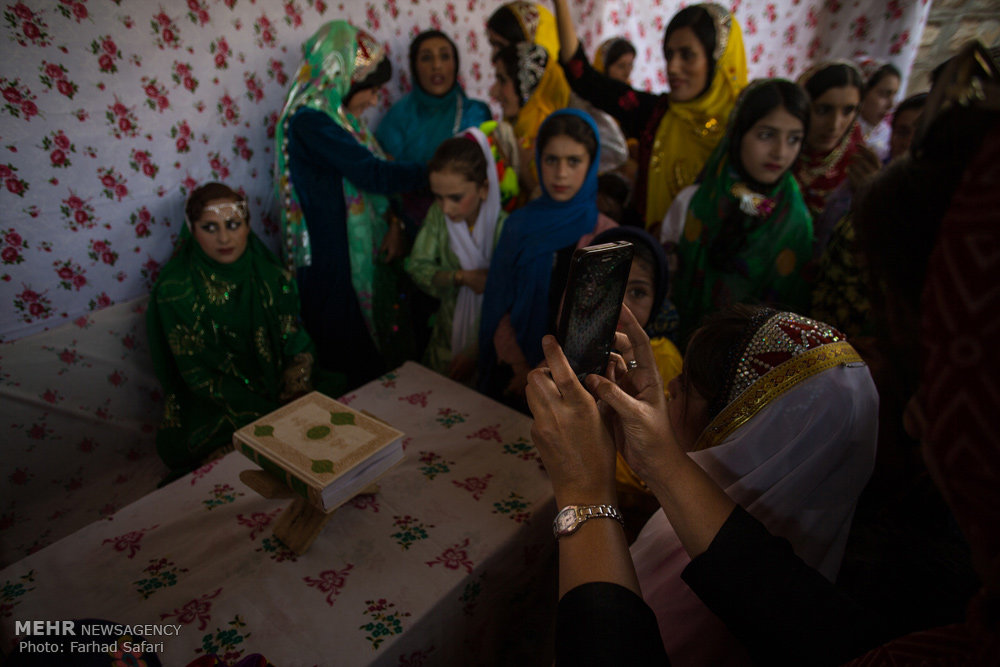
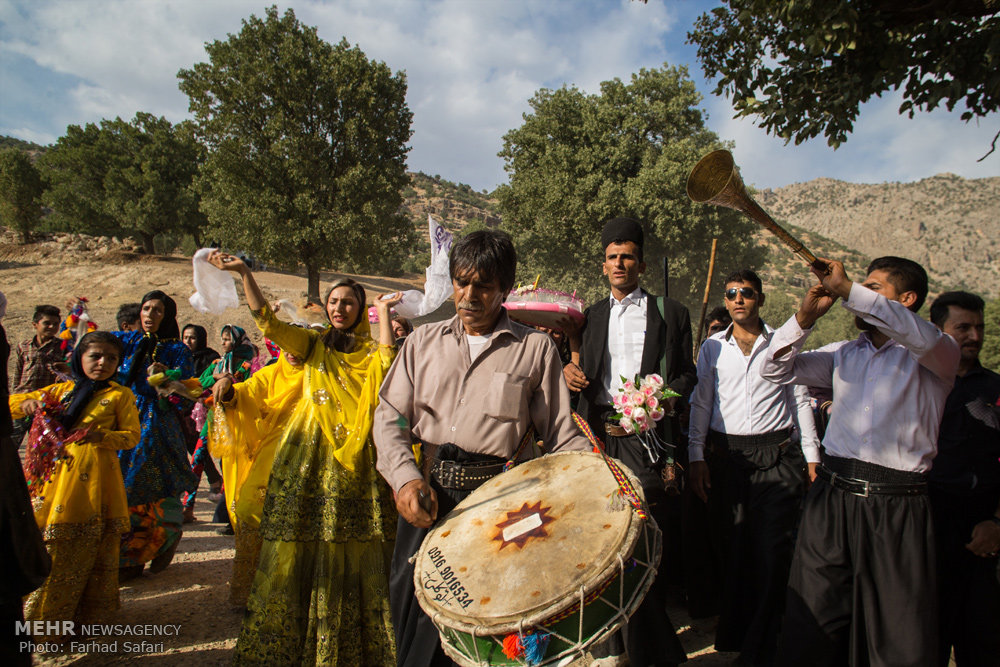
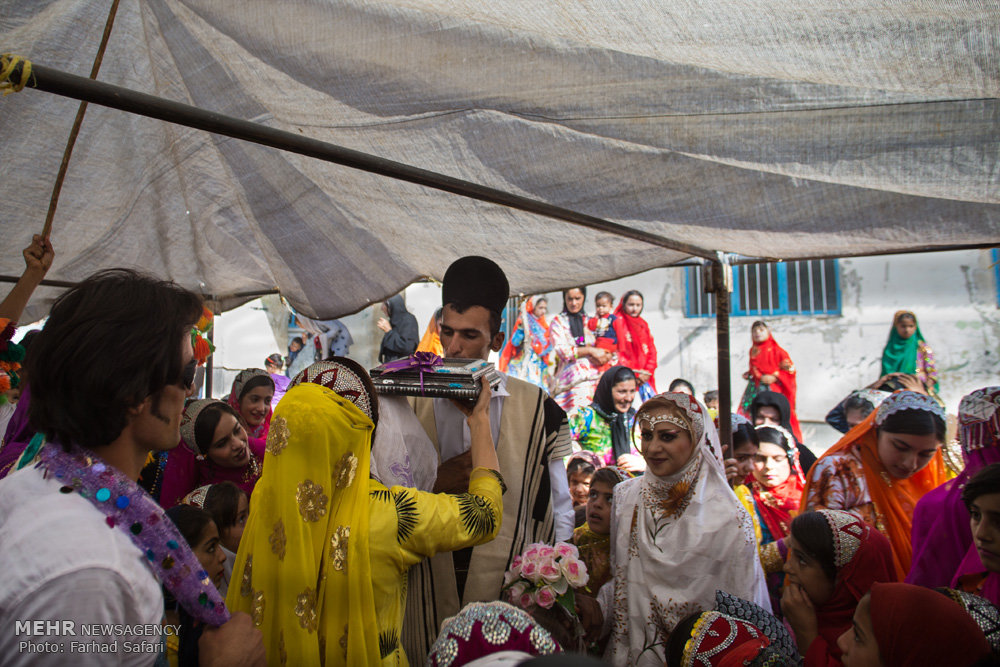
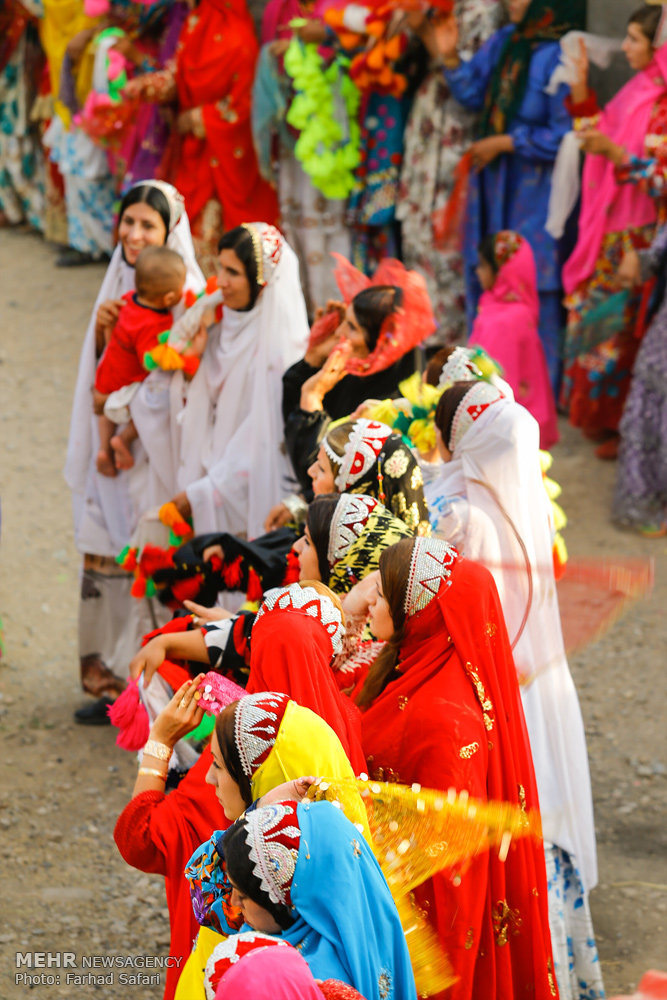
Symphony of Colours in Iran’s Local Wedding Ceremonies

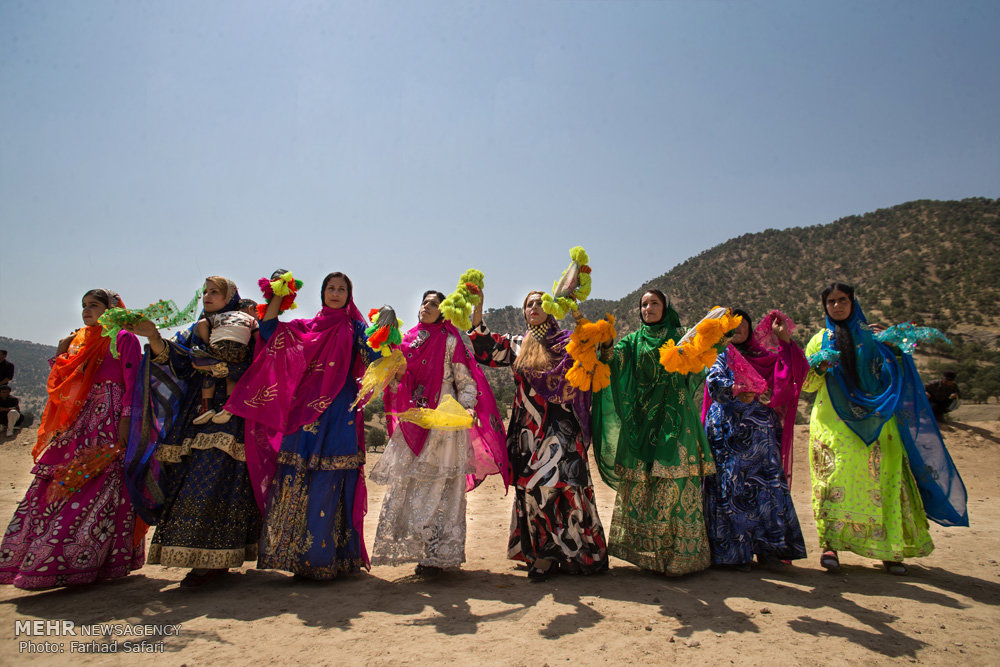
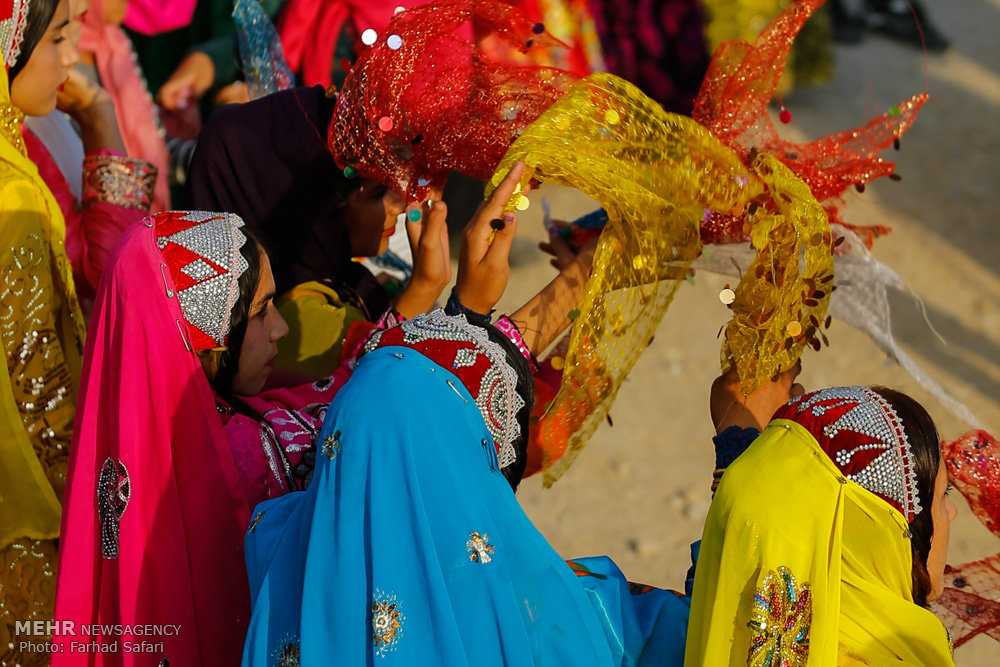
Symphony of Colours in Iran’s Local Wedding Ceremonies16

Since a long time ago, celebrations, particularly wedding ceremonies, have had a special status in the Iranian culture.

These ceremonies have roots in the Iranians’ identity and history. They indicate that Iranians people have always devoted some time to merrymaking and feasting, according to a Farsi report by the Mehr News Agency.

The outcome of the continuous holding of such celebrations and ceremonies is that Iranian people from different ethnicities have managed to keep their customs and traditions alive and hand them down to the next generations.

Wedding ceremonies have always been one of the most important and popular celebrations among Iranians since old times. Although the ways in which these ceremonies are held have undergone a great deal of transformation, wedding ceremonies are still very popular among the country’s people.

Holding wedding ceremonies has a long historical background in Iran, dating back to ancient times. Different ethnic groups in the country have their own special beautiful and attractive customs and traditions for holding the celebration.

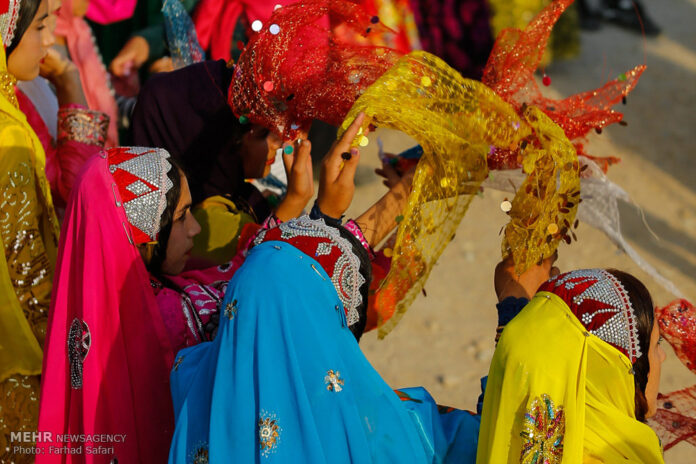
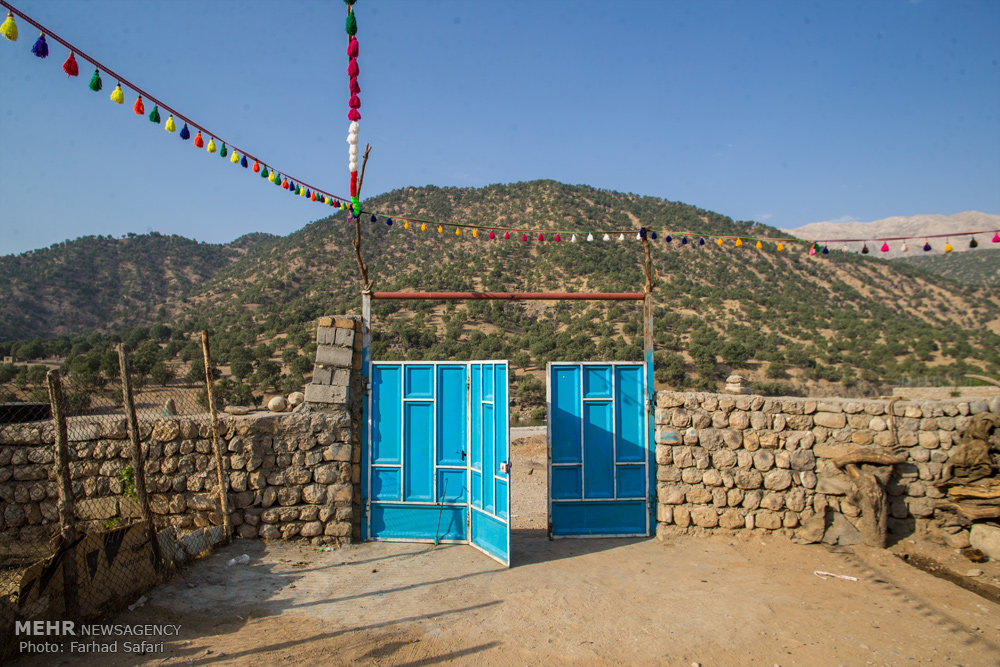
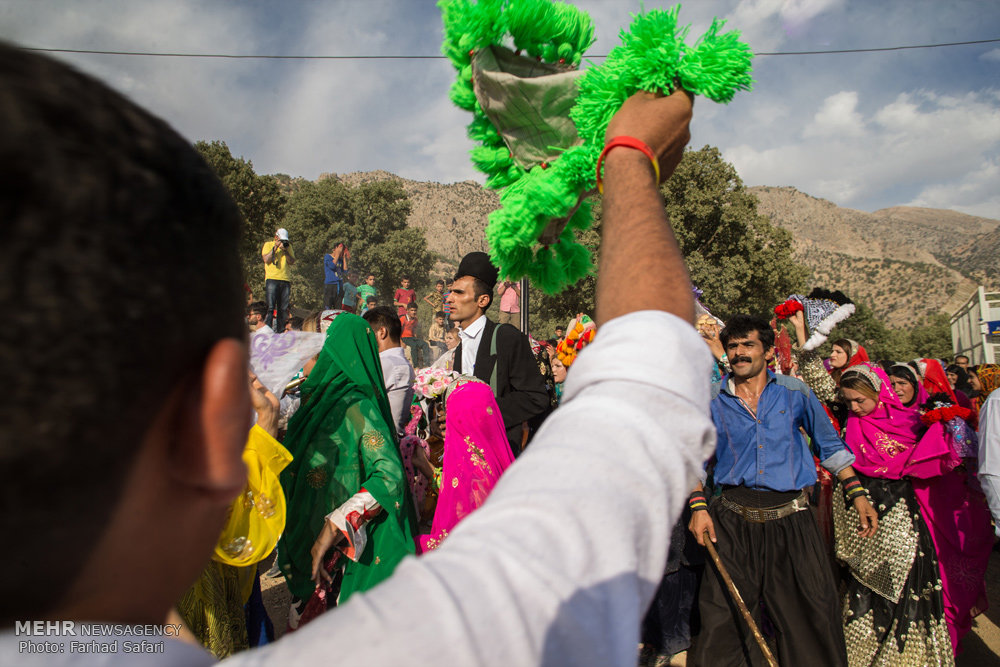
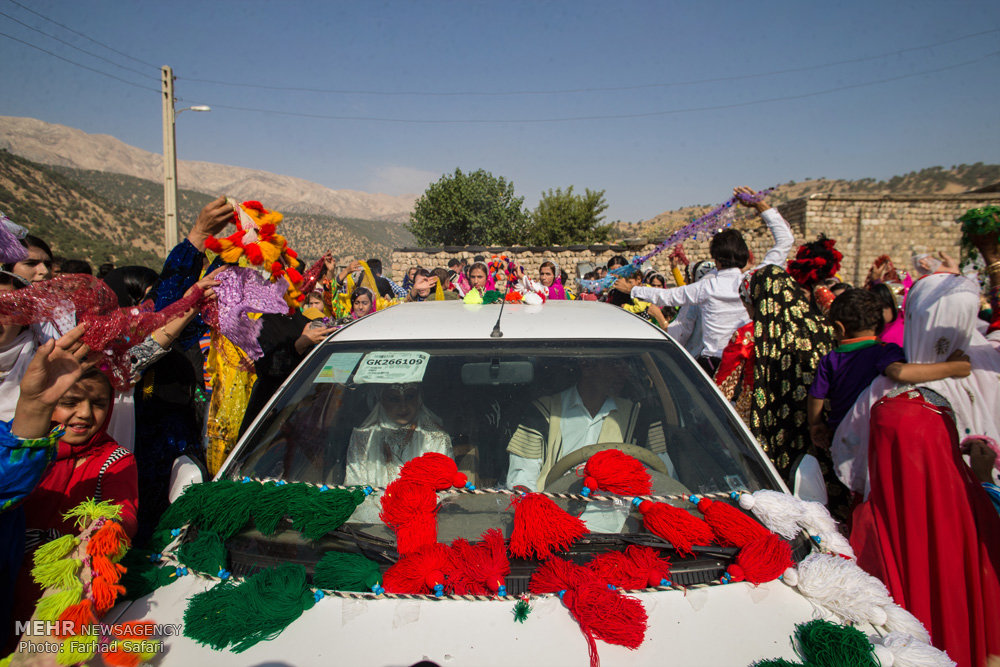
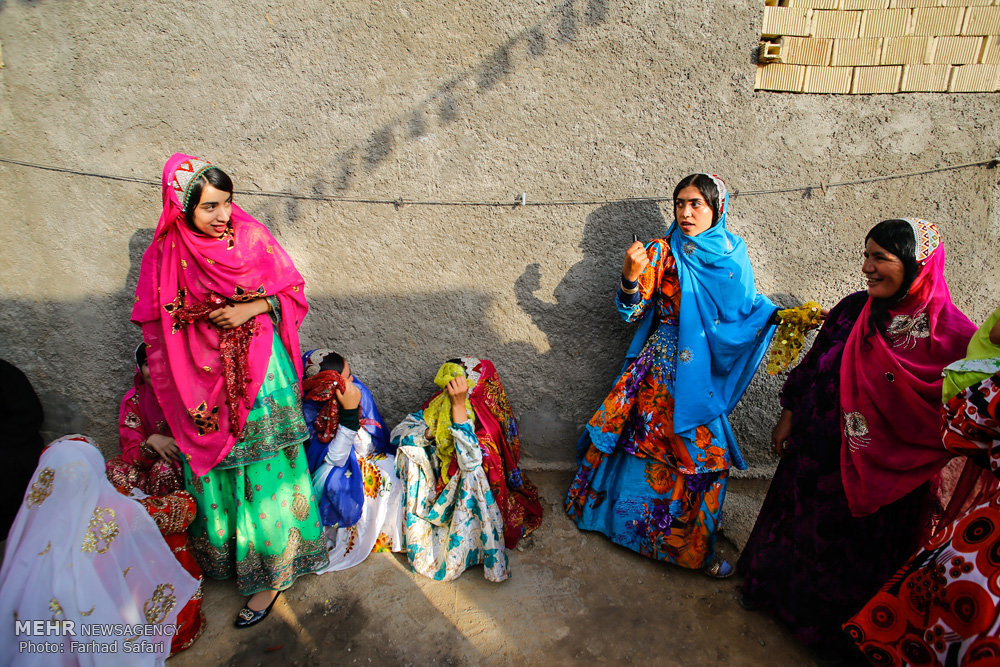
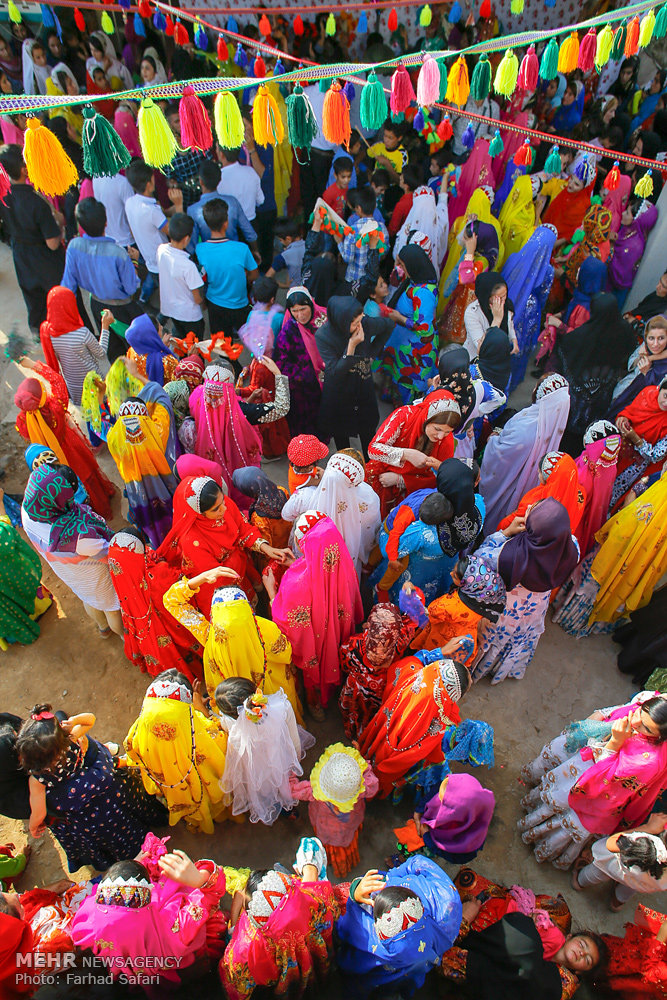
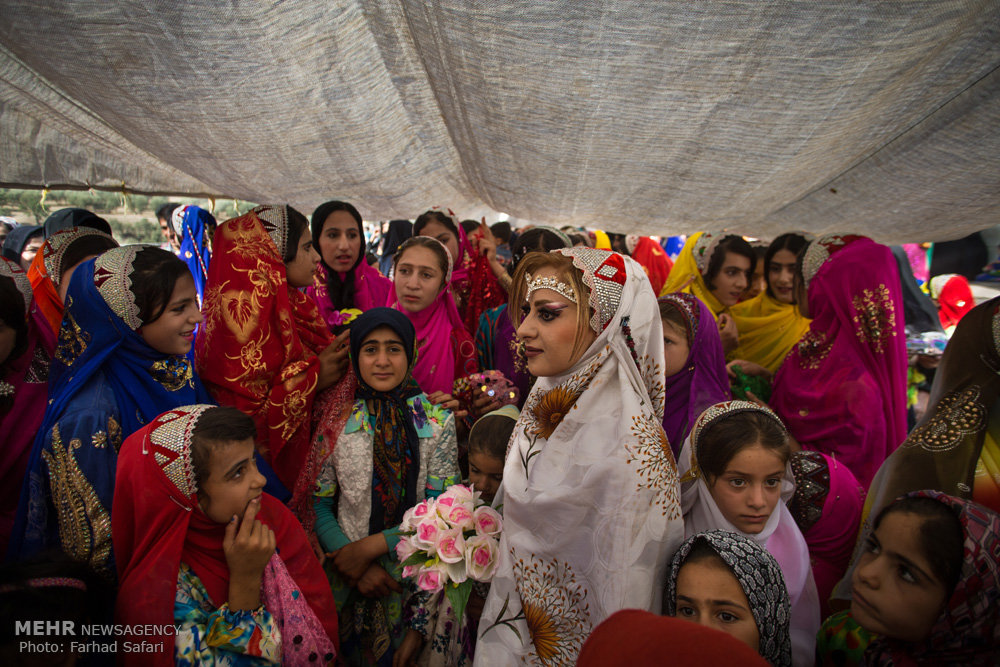
Among Iran’s different ethnic groups, Bakhtiari people, a tribe dwelling in the southwestern parts of the country, hold their wedding ceremonies in a very special and interesting way. The world of these folks is full of colours, merriment, cooperativeness, attractive sounds and playing percussion instruments such as Dohol, a double-headed drum. These folks are original people who speak their own dialect and have a rich and colourful music and culture.

Marriage is a very hallowed and important tradition to these people. All members of the tribe cooperate in holding a wedding ceremony.

The clothes they wear in their marriage ceremonies display a wide range of hues which creates a scene reminiscent of the colourful works of Jackson Pollock, the American painter and a major figure in the abstract expressionist movement.

The most interesting part of Bakhtiari people’s wedding ceremony is the group dance they perform and the songs they sing to celebrate this happy and blissful event. The songs they sing in their marriage celebrations are called ‘Dovalali’ that is made up of two parts: ‘Dova’ which means groom and ‘lali’ meaning bride.

In fact, by their group dance, these tribesmen and women display their unity and solidarity and teach their youths the correct way of respecting the elderly.