Saturday, January 17, 2026
Home Blog Page 3808

Iran Reserves Five Orbital Slots: Minister

Speaking to reporters on the sidelines of a recent ceremony marking the beginning of Word Space Week in Tehran, Azari Jahromi said the orbital slots can be reserved for two years and added each country can launch a satellite into the orbits reserved earlier.

The Iranian minister went on saying under the previous government, Iran couldn’t reserve any orbital slot due to the international sanctions imposed on the country. “But today, we have managed to reserve five orbital slots,” he said, as quoted by the Mehr News Agency.

He went on saying that Iran is already using some reserved slots for exchanging sound, image and data through fixed frequencies.

“We have no technical problem in this field. Today, efforts are underway to launch new satellites into the newly-reserved orbital slots. To this end, we are planning to establish new cooperation with our foreign partners to turn the orbital slots into international operators for launching and using satellites,” he noted.


No Need for Satellite Communications in Mountainous Regions

He further referred to the foreign satellites’ operations for offering phone services in the mountainous regions and said, “Today, only certain organizations in Iran like the Iranian Red Crescent Society and emergency services are allowed to use the satellite services,” he noted.

Azari Jahromi also said the entities’ operations are certificated by the Regulatory Organization for commercial purposes. “But since our country doesn’t need such services, offering them in the mountainous regions have no economic justification,” he said.


Iran to Develop Strategic Plan for Offering Space Services by Next 3 Months

Azari Jahromi stressed the necessity of using space technologies in people’s daily lives to save money and said, ”About one month ago, we sent our request for developing a strategic plan in this field to the Head of the Space Agency and asked him to provide us with a draft plan by the next three months.”

Elsewhere in his statements, he said the new plan is expected to highlight the profitable projects as well as the projects which are expected to end up in the interest of the daily lives of people. “Based on the plan, the ministry of information and communications technology will finance the projects properly,” he said.

In response to a question on the new edition of the country’s space development program, he said the new edition does not stand in contradiction with the 10-year space program drafted many times in the past years. “The two programs complete each other,” he said.

He called on the space elites in the country to share their insights into the field. “The Iranian scientists have managed to put together a satellite capable of remaining into the space for three years,” he said.
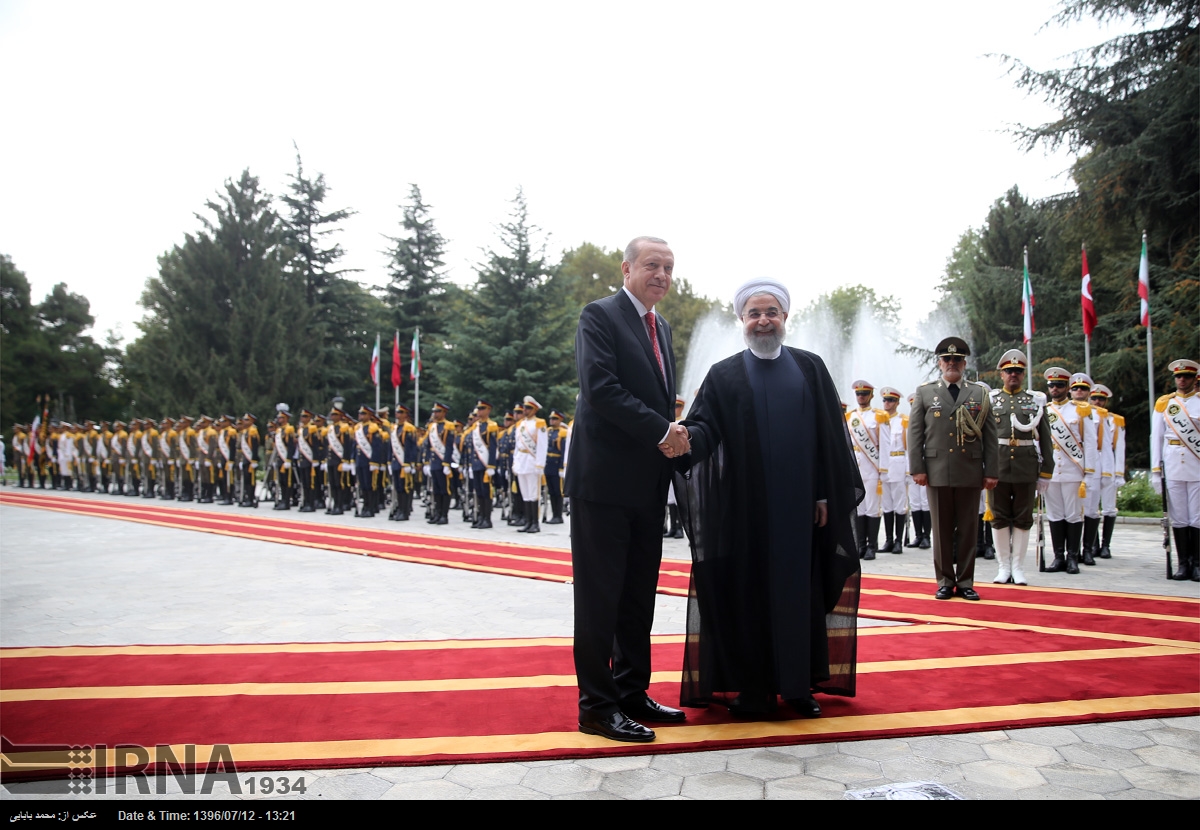
Iran, Turkey Sign 4 MoUs

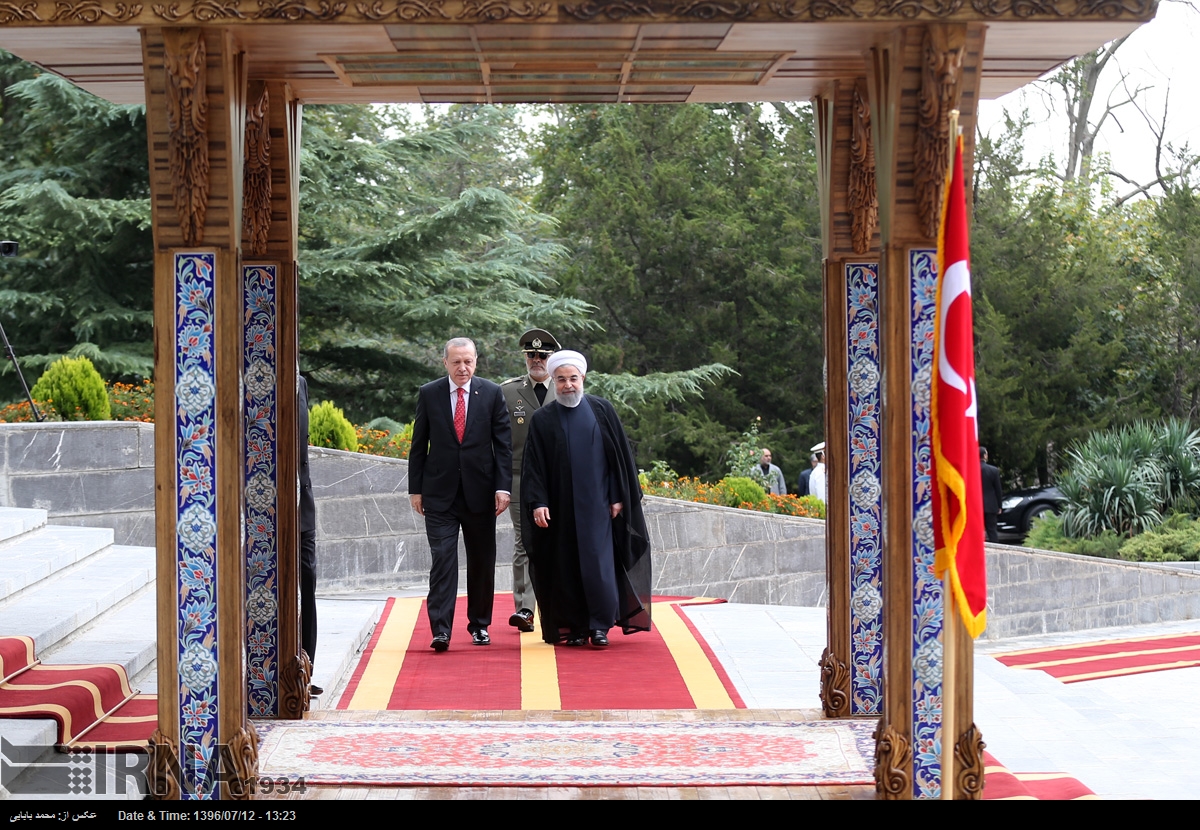
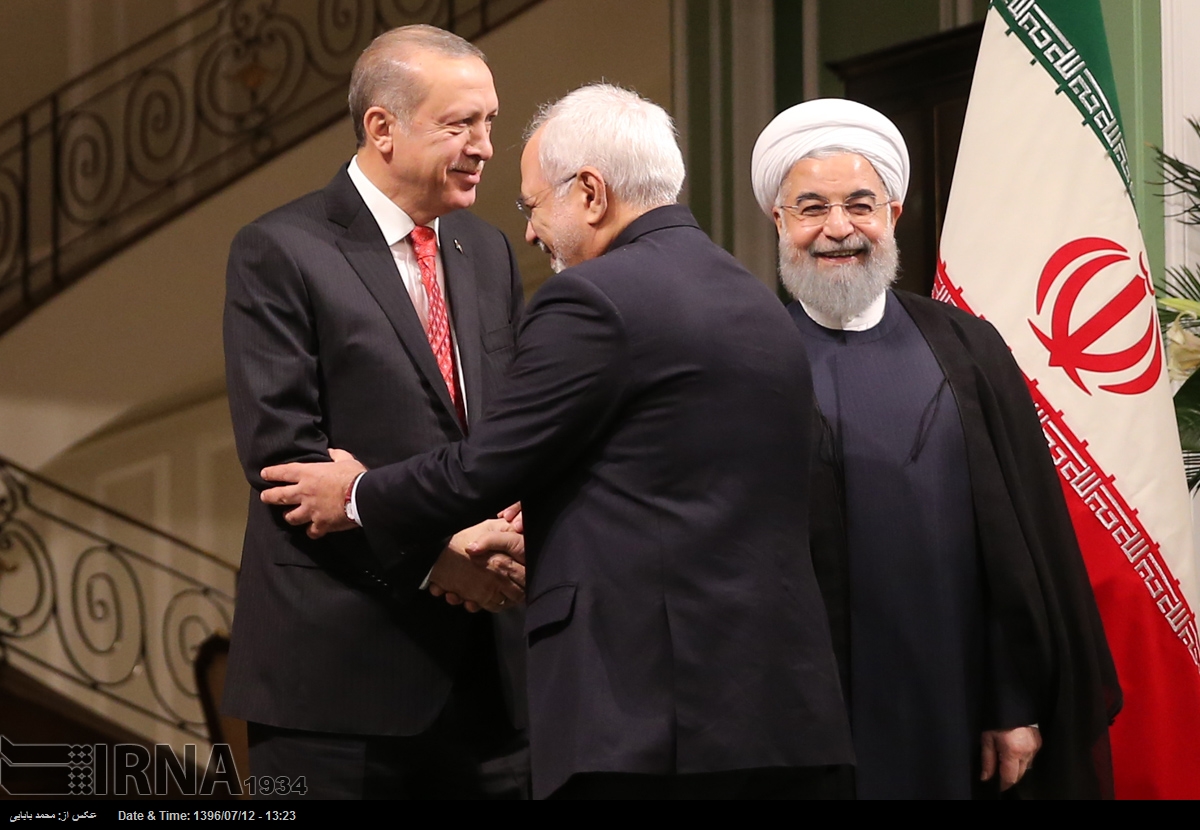
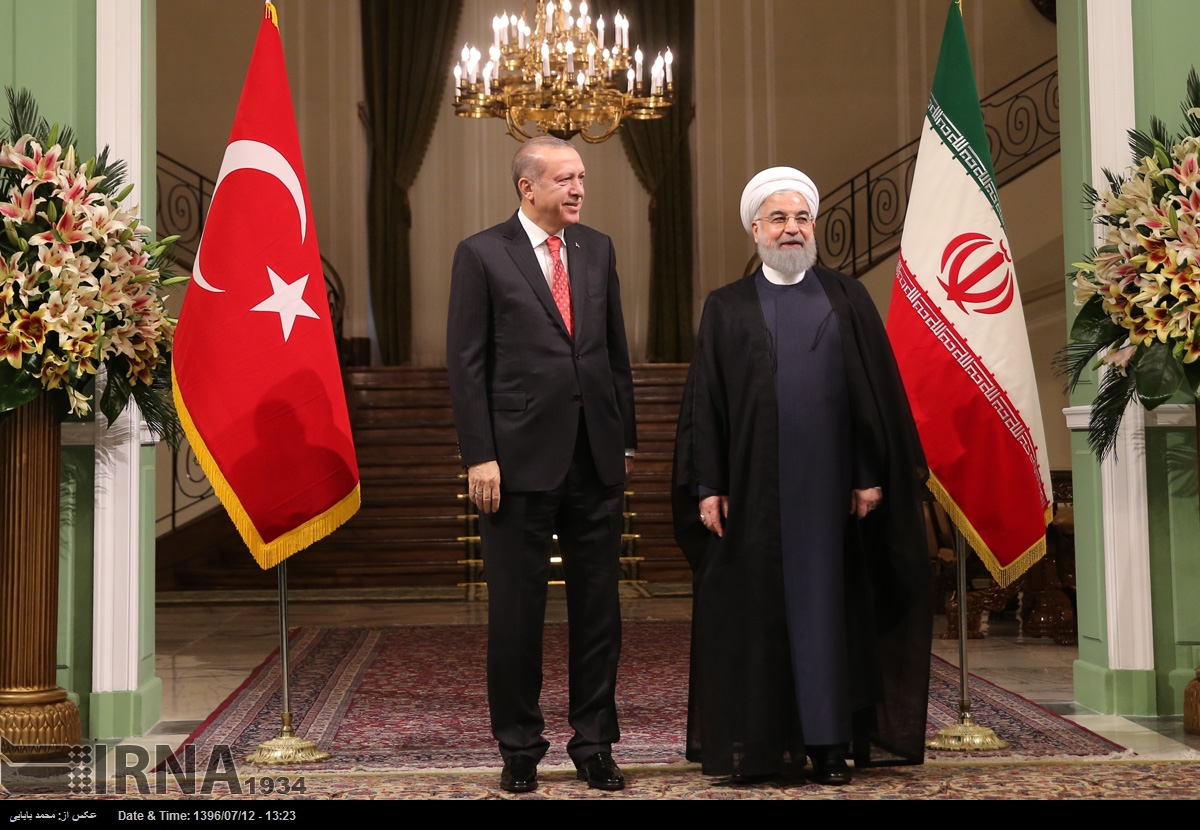
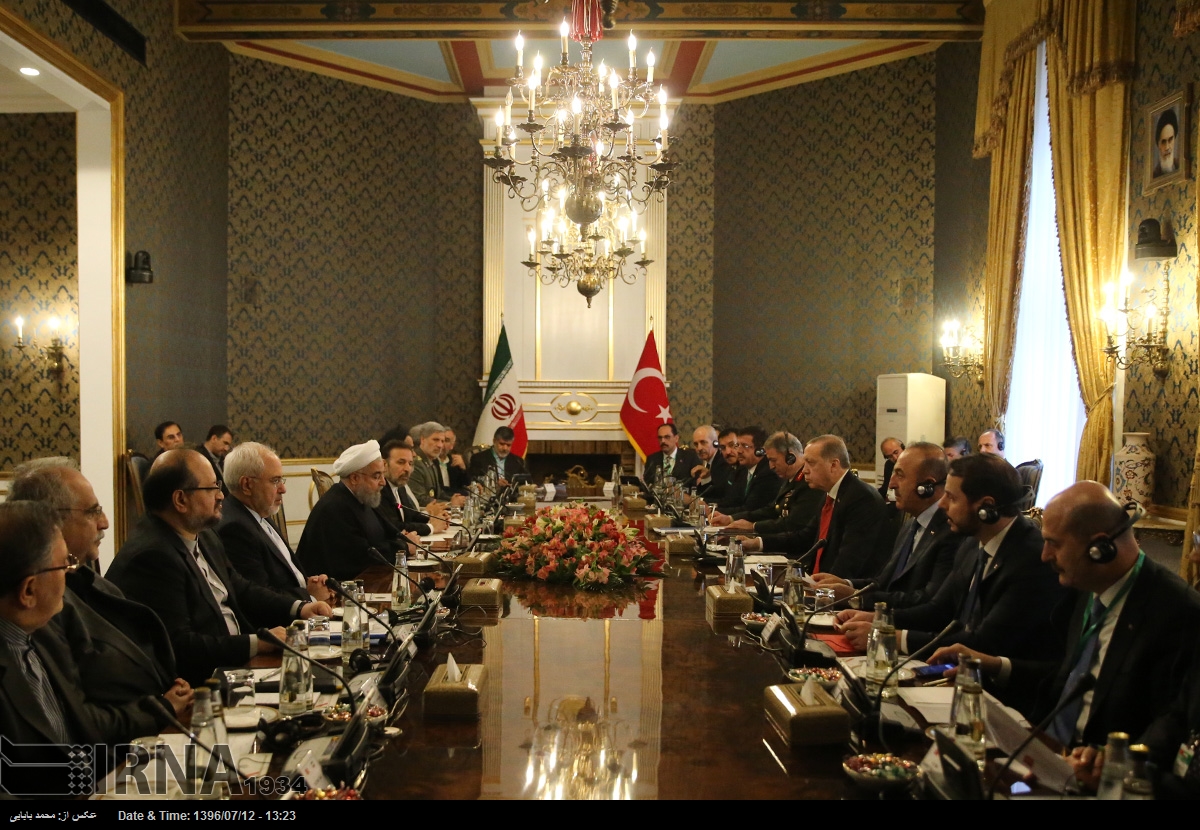
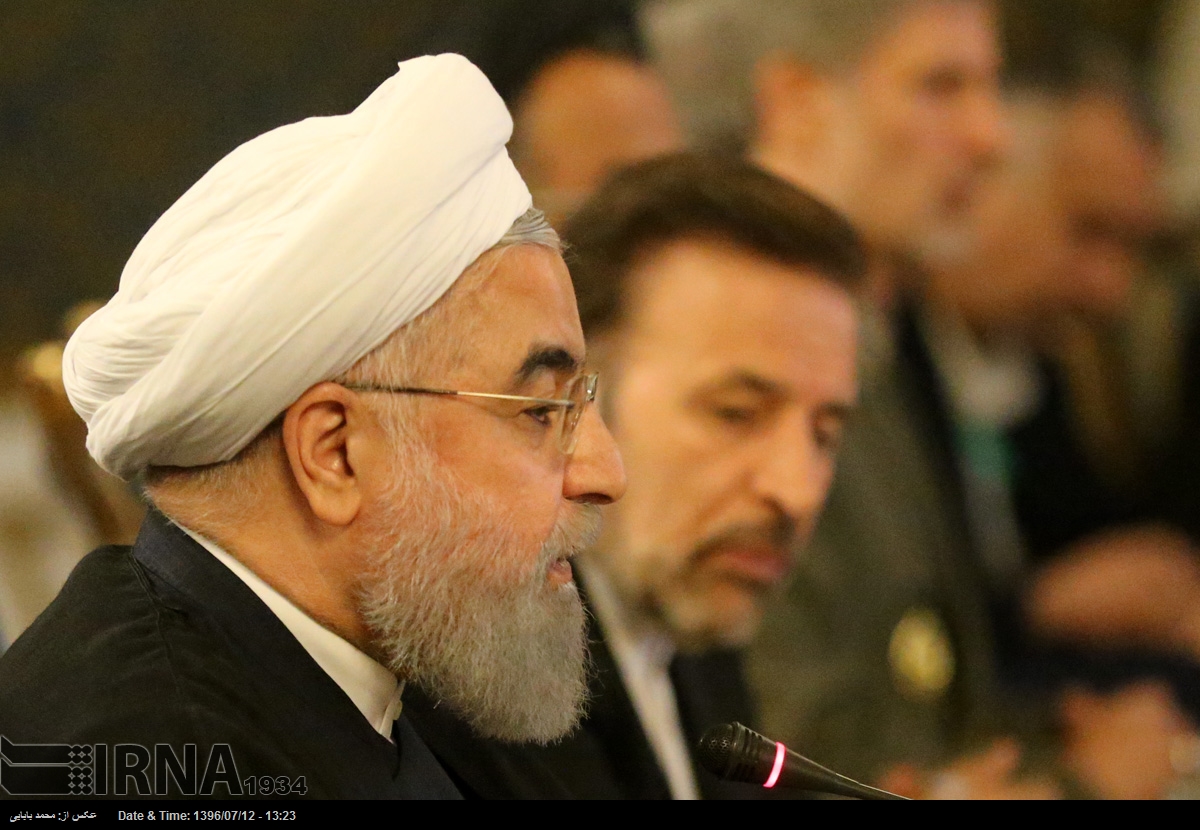
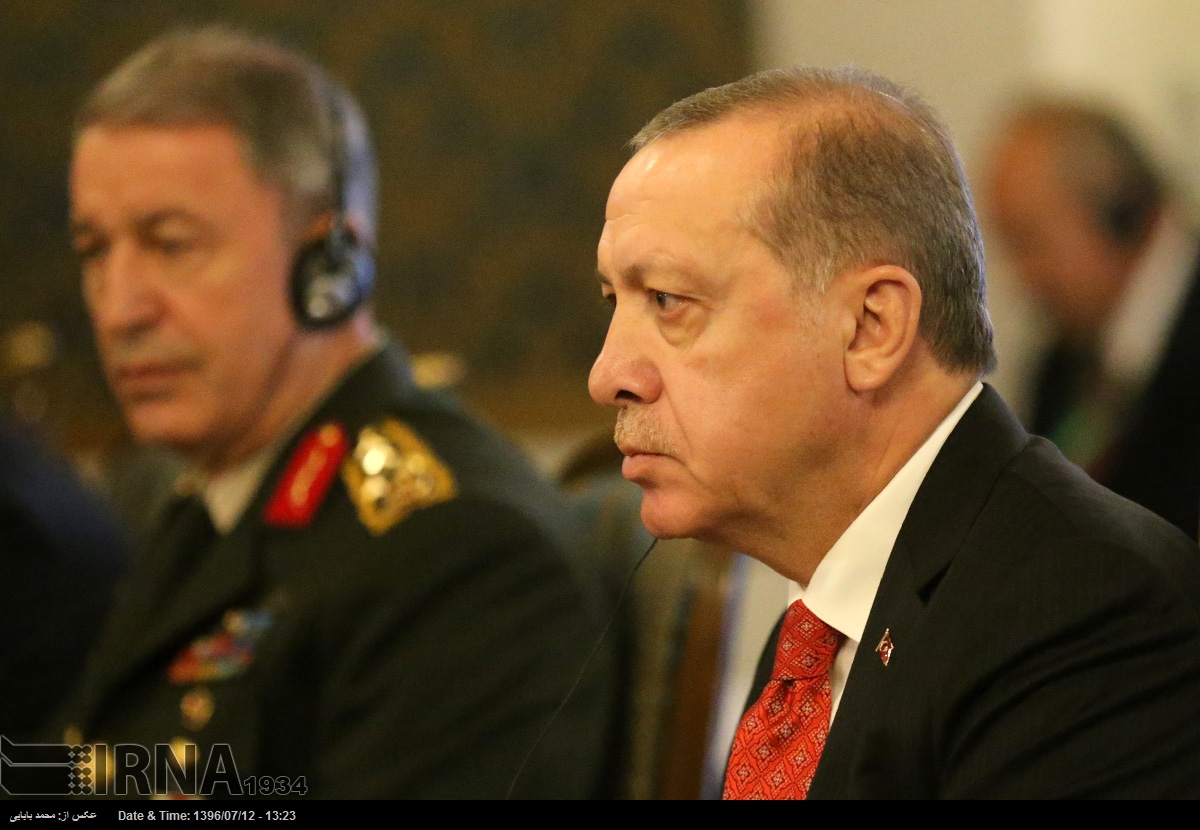
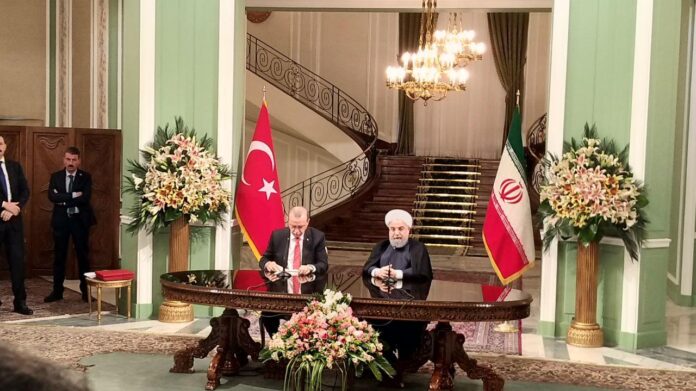
The MOUs were signed in a ceremony attended by the Iranian President, Hassan Rouhani, and his Turkish counterpart, Recep Tayyip Erdogan, a Farsi report by Tasnim News Agency said.
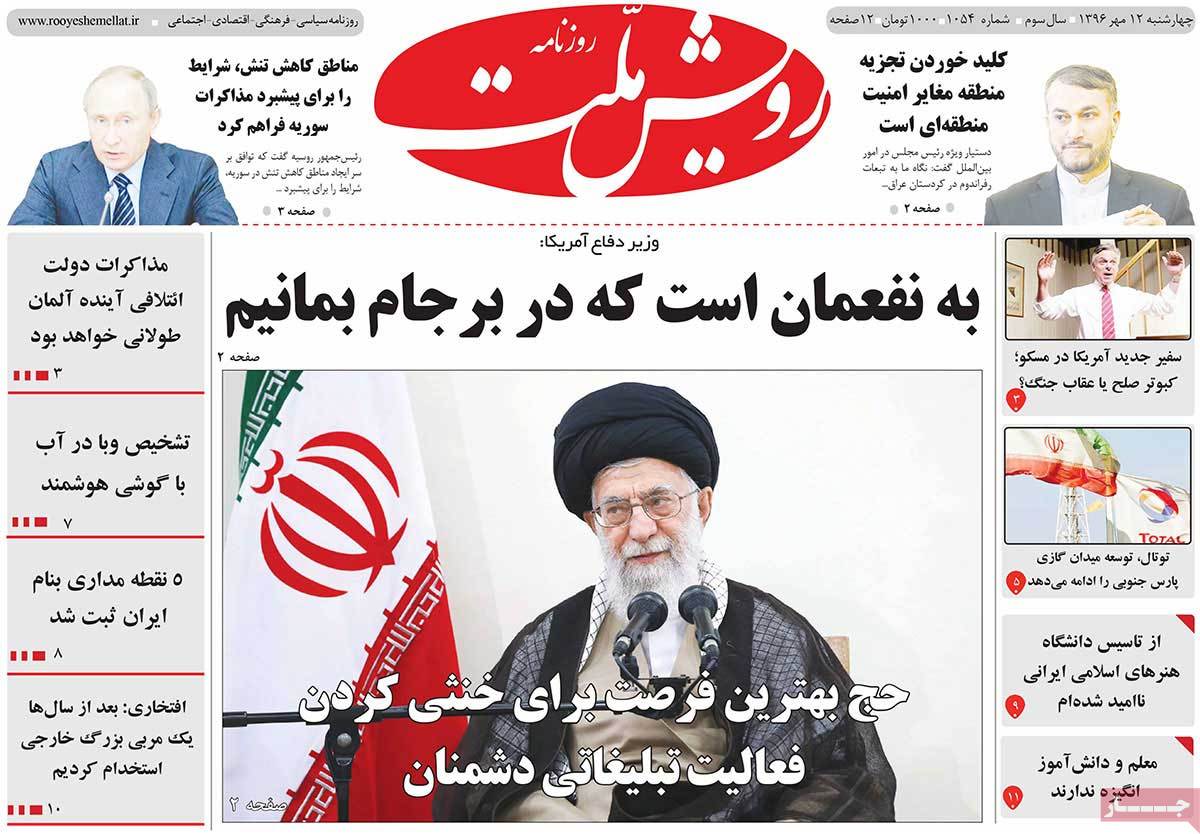
The agreements cover a wide range of areas including customs and banking relations. One of the MoUs will also pave the way for further cooperation between the Islamic Republic of Iran Broadcasting (IRIB) and Turkish Radio and Television Corporation (TRT) and the National Library and Archives Organization, Turkish Prime Minister’s Archive Office.

The ceremony was also attended by officials from Iran and Turkey.

Iran Upholds Prison Term of Its Former Nuclear Negotiator

Jail term upheld for ex-Iranian nuclear negotiator: Report

In August 2016, Gholam-Hossein Mohseni-Ejei, Iran’s Judiciary spokesman, confirmed that the unidentified negotiator had been arrested, but was released on bail within days. The individual, according to Mohseni-Ejei, was a “spy who had infiltrated the nuclear team.”

The arrest was first announced earlier that month by Tehran’s prosecutor general, who said the suspect held dual nationality.

After conducting thorough research, the case was remitted to Branch 15 of the Islamic Revolution Court, where the jail term was issued following a number of hearings. The convict, however, appealed the verdict by the court of first instance.

Tasnim News Agency reported on Wednesday that the appellate court had endorsed the conviction.

“The sentence is now final,” the agency reported, citing an informed source.

Negotiators from Iran and the P5+1 group of countries — the US, the UK, France, Russia, and China plus Germany – paved the way for the signing of a landmark nuclear deal in July 2015.

The deal, viewed as a historic win for global diplomacy, was signed despite an intense lobbying campaign by the regime of Israel.

Four Iranian nuclear scientists were assassinated between 2010 and 2012. Iran has incriminated the International Atomic Energy Agency, the UN’s nuclear watchdog, for leaking information about the four scientists to the Israeli regime which it holds responsible for the assassinations.

Iran Upholds Prison Term of Its Former Nuclear Negotiator

In 2010, Iran’s nuclear facility in Natanz was targeted by a malware dubbed Stuxnet. The malicious computer worm was meant to cause substantial damage to Iran’s nuclear program, but the cyber-attack failed as it was averted in time by Iranian experts.

Tel Aviv and Washington have been accused of orchestrating the attack.

Turkish President in Tehran for Talks with Iranian Officials

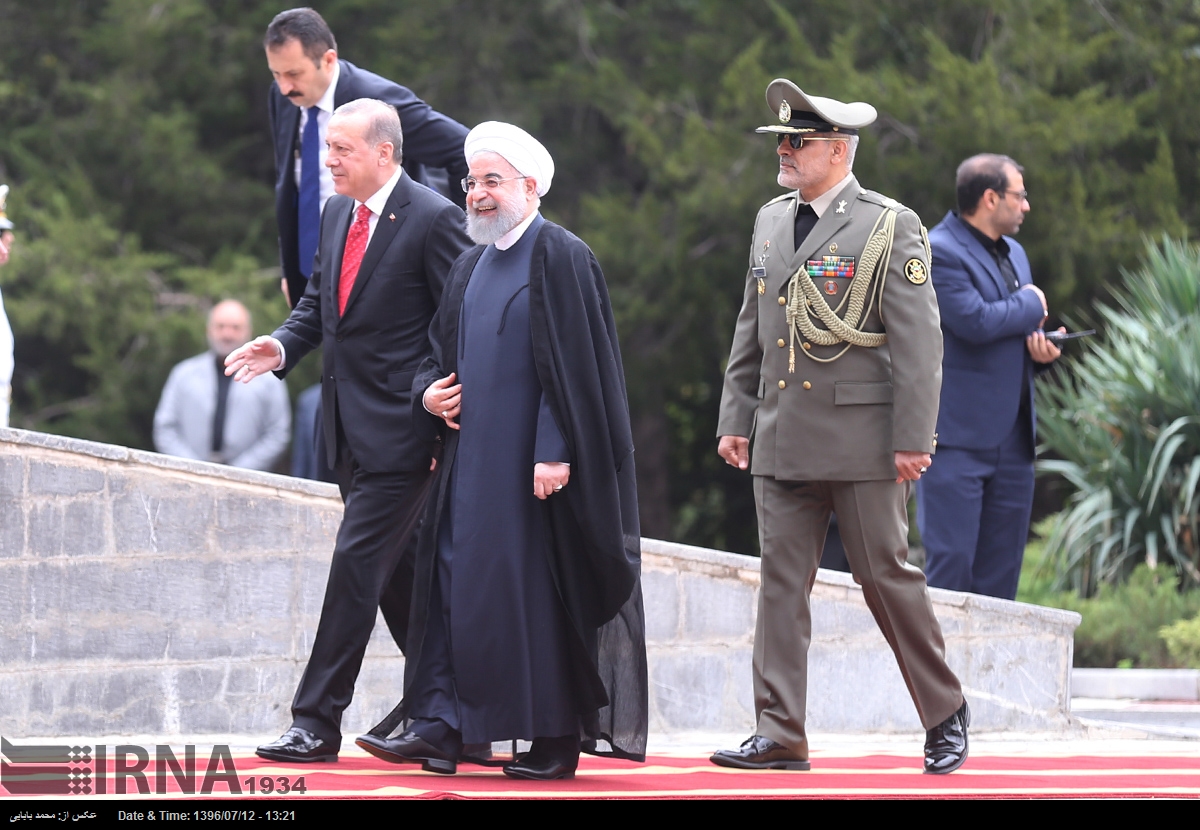
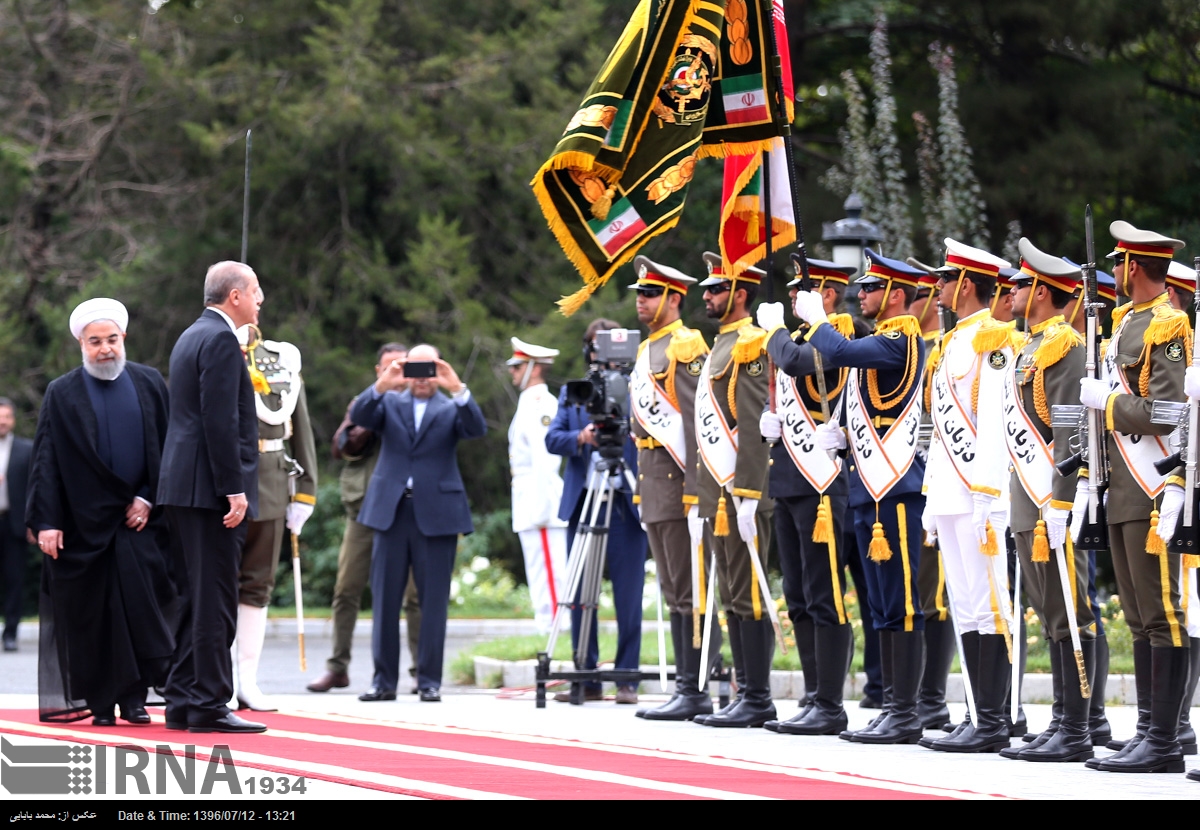
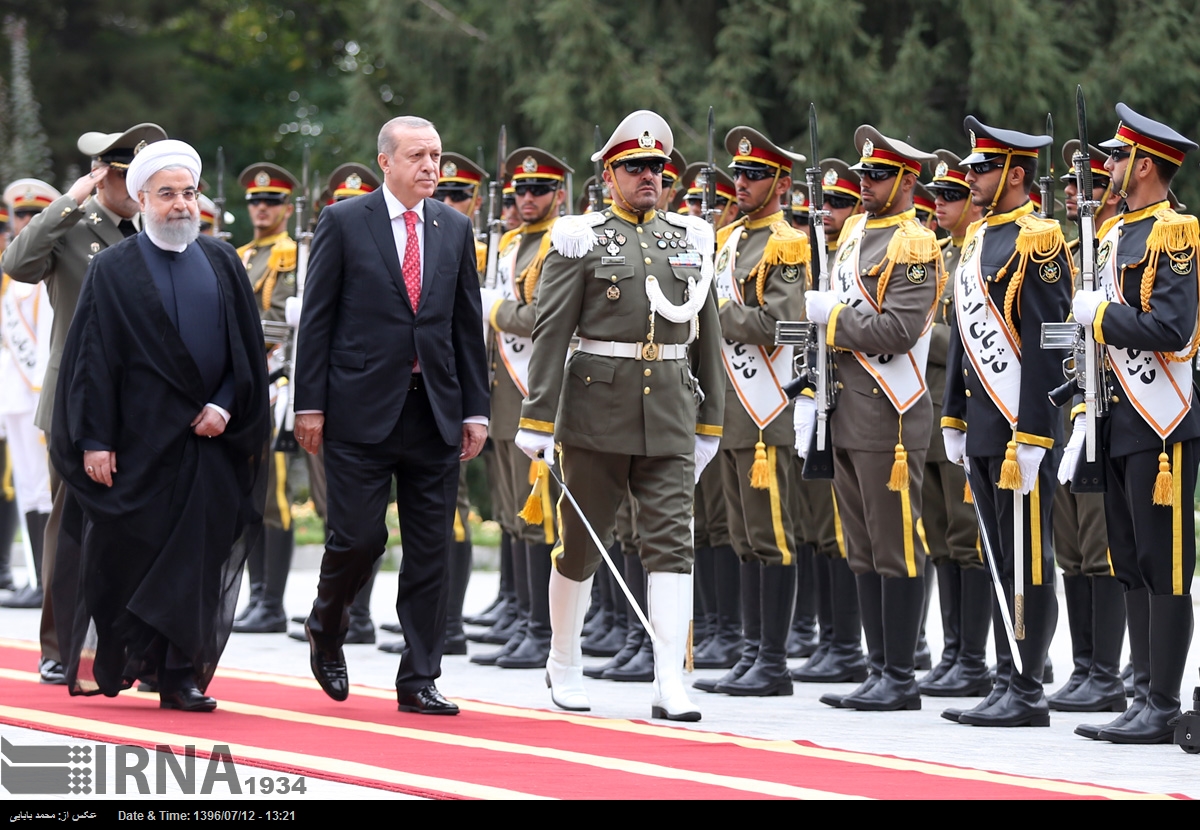
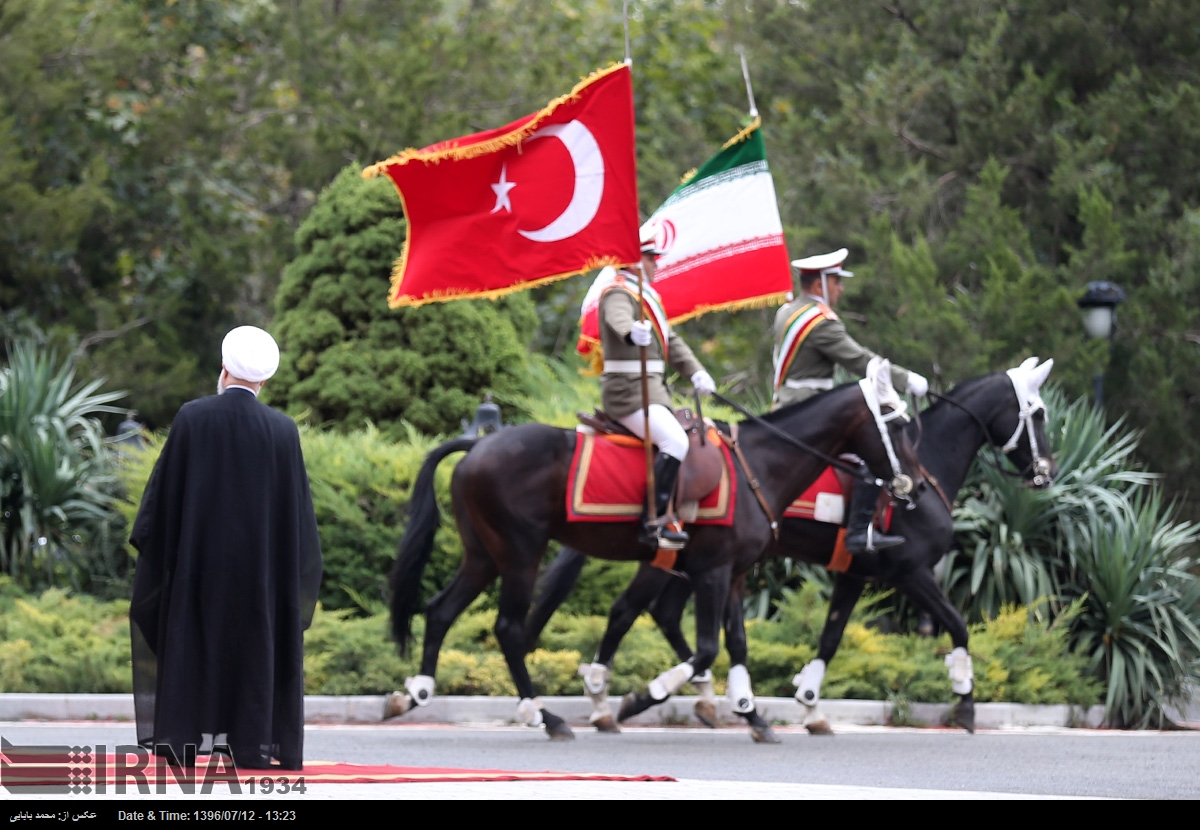
Turkish president arrives in Tehran for talks with Iranian officials

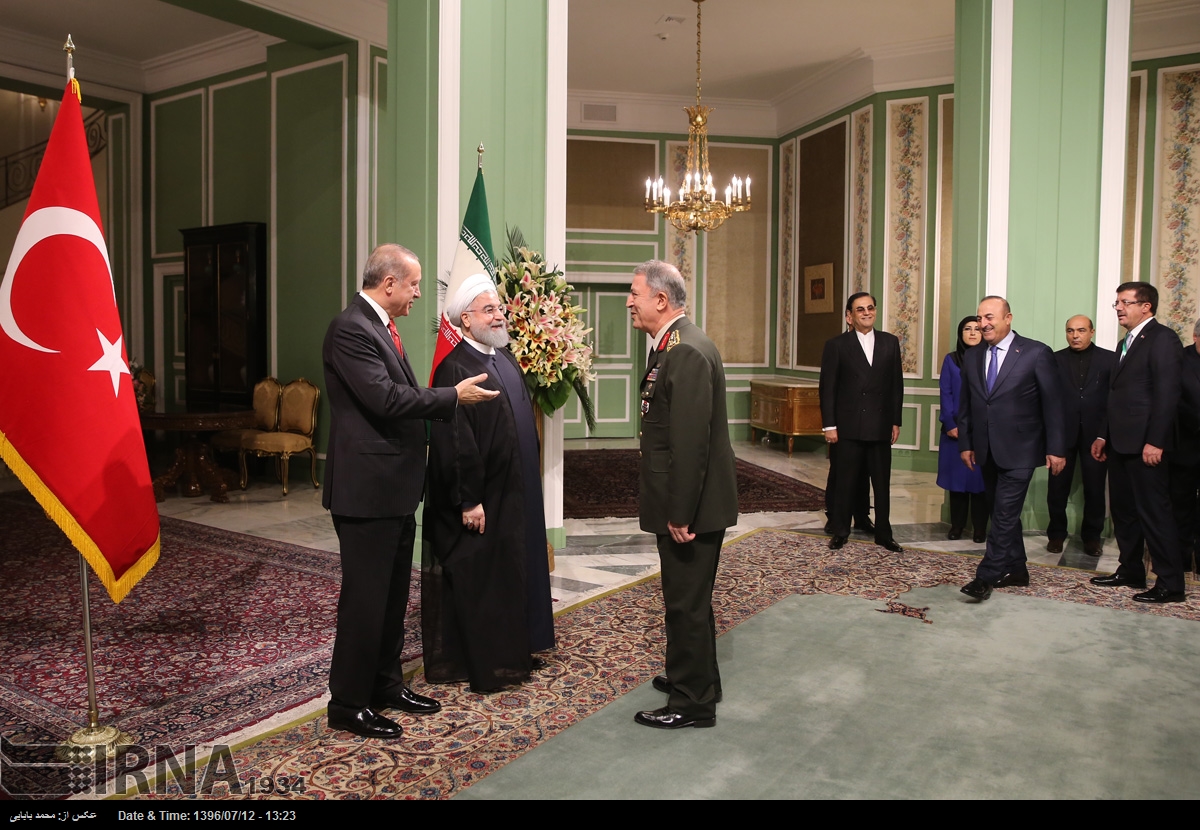
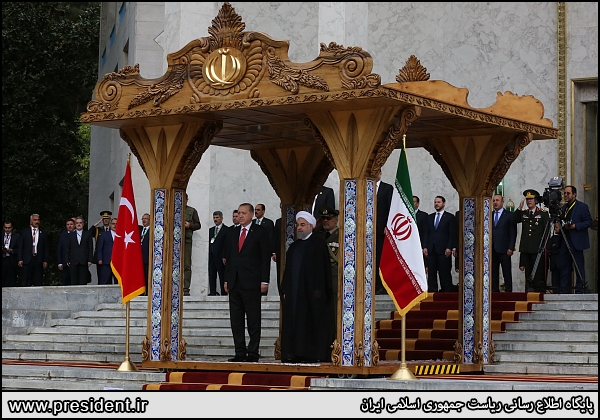
Iranian President Hassan Rouhani officially welcomed his Turkish counterpart in Tehran on Wednesday.

Erdogan is accompanied by a high-ranking delegation of four Turkish cabinet ministers of economy, energy, customs and culture as well as Turkish investors and business owners.

Apart from political issues, bilateral economic ties will top the agenda of the planned talks between the Iranian and Turkish officials.

The two neighboring countries are key economic partners and plan to enhance their annual trade volume to $30 billion.

According to the head of Iran-Turkey Commerce Chamber, Reza Karami, Iran-Turkey trade volume in the first eight months of 2017 was over $7.25 billion. During the period, Iran’s exports to Turkey amounted to $5.15 billion, while imports from the country reached $2.1 billion.

The two countries have also taken measures to forge closer military cooperation.

Just prior to Erdogan’s visit, Turkish Chief of General Staff Hulusi Akar visited Tehran, where he sat down for talks with senior Iranian officials, including President Rouhani and Iranian Defense Minister Brigadier General Amir Hatami.

Akar’s visit followed a trip by Chief of Staff of the Iranian Armed Forces Major General Mohammad Baqeri to Turkey in mid-August.

Erdogan’s visit, his second in three years, comes at a critical juncture on the regional political stage.

Both Iran and Turkey have raised concerns about a secession push by Iraq’s semi-autonomous Kurdistan region.

The Kurdistan Regional Government has come under international scrutiny for holding an independence referendum slammed by Baghdad as unconstitutional.

Iran and Turkey, along with Russia, have also been mediating a peace process between the warring sides in Syria aimed at ending the deadly crisis plaguing the Arab state.

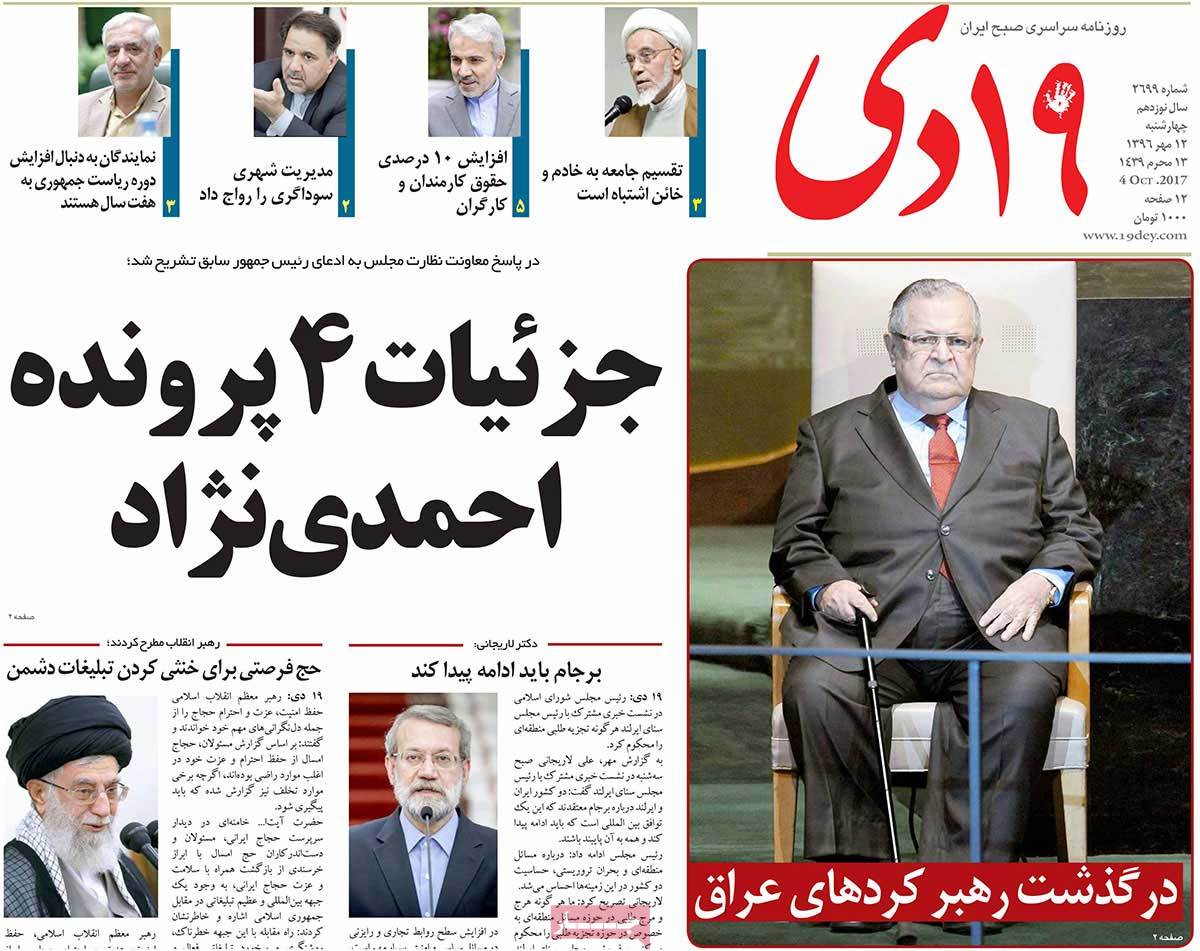
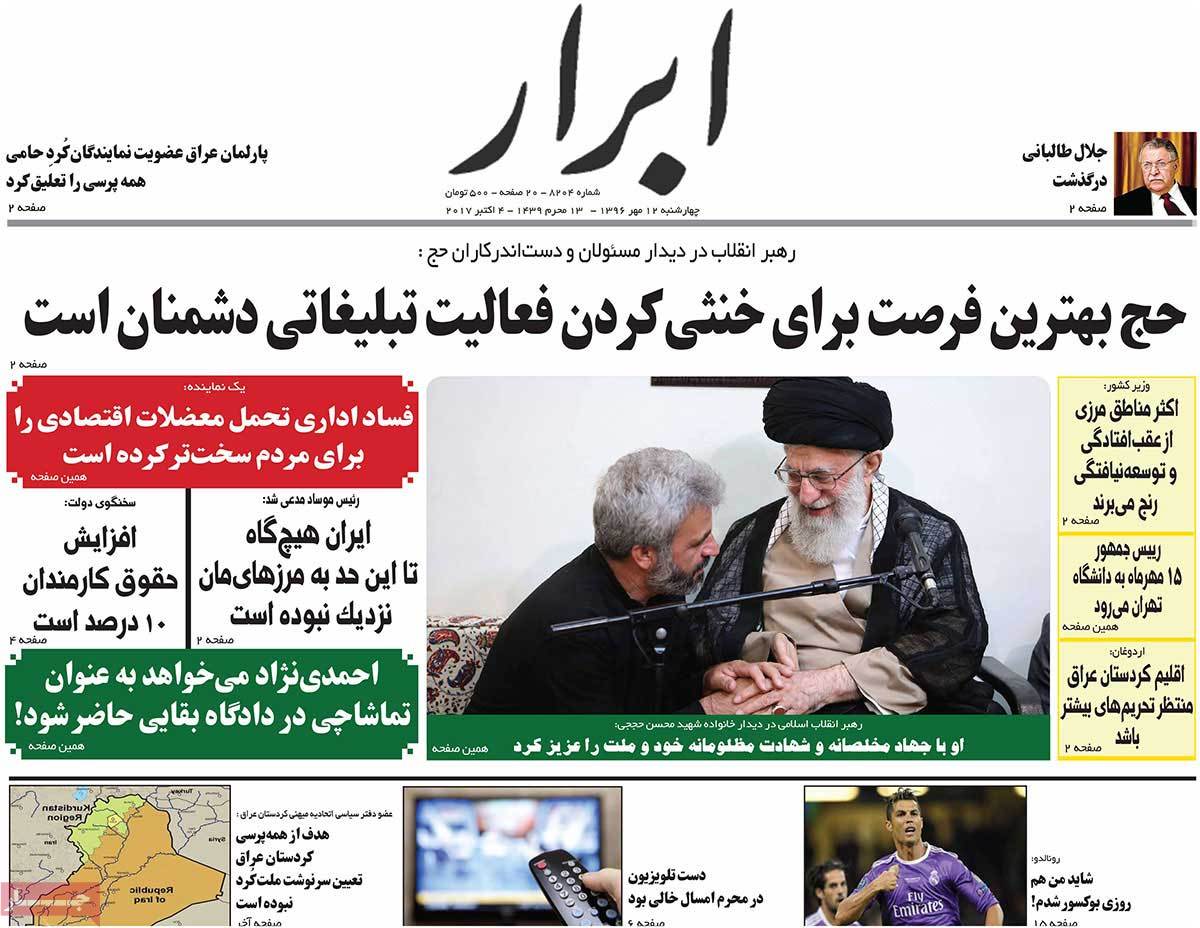
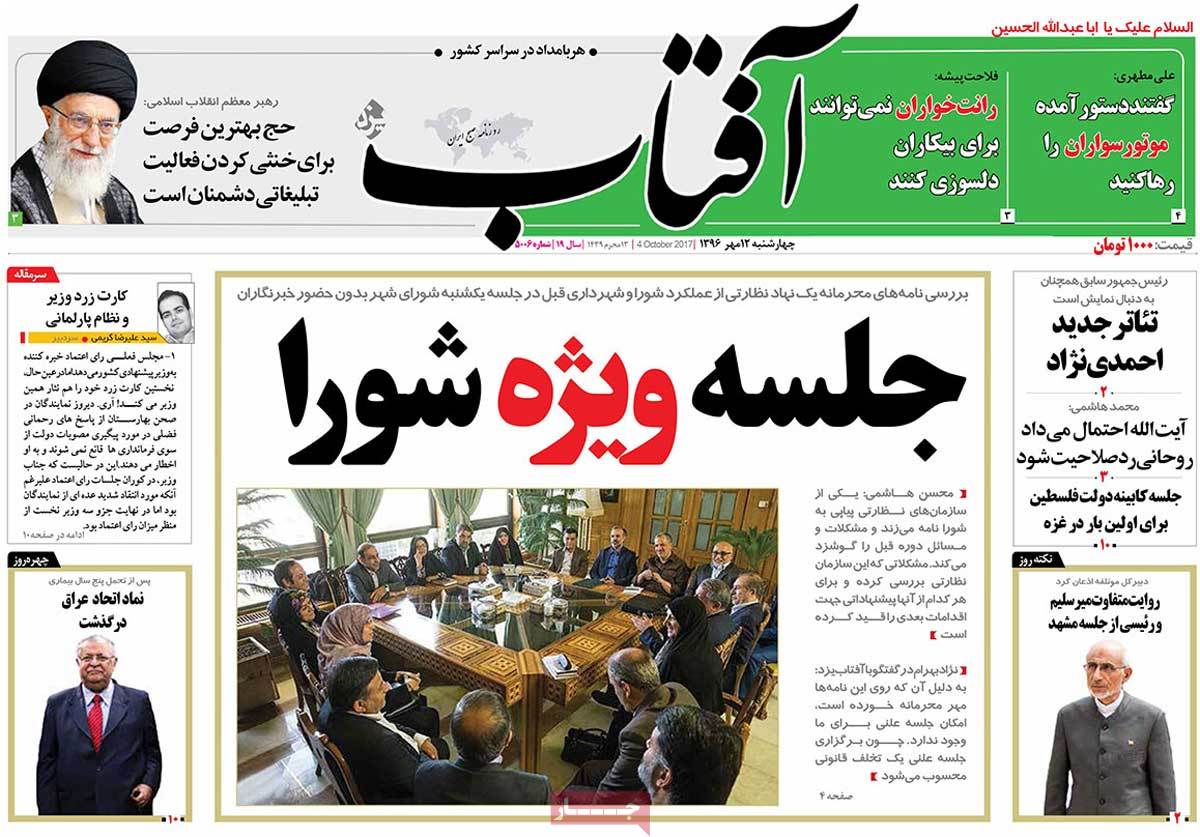
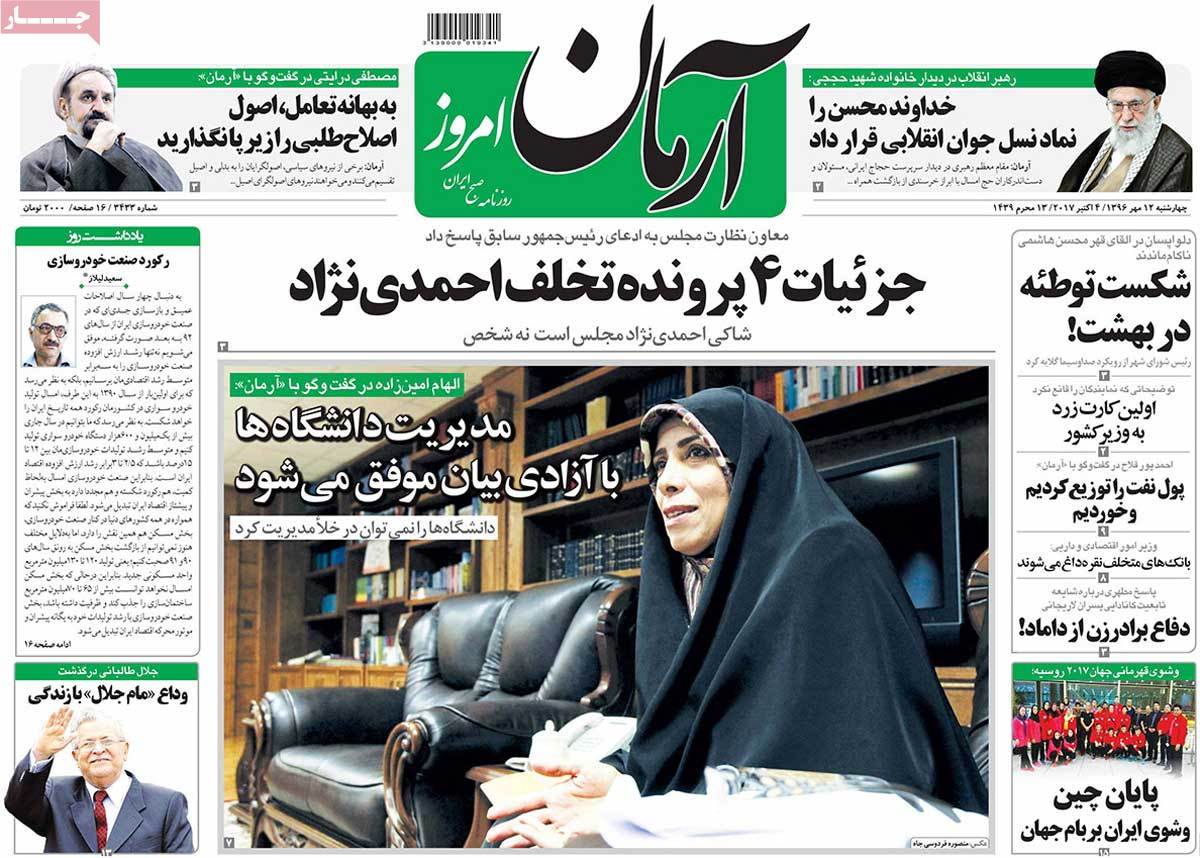
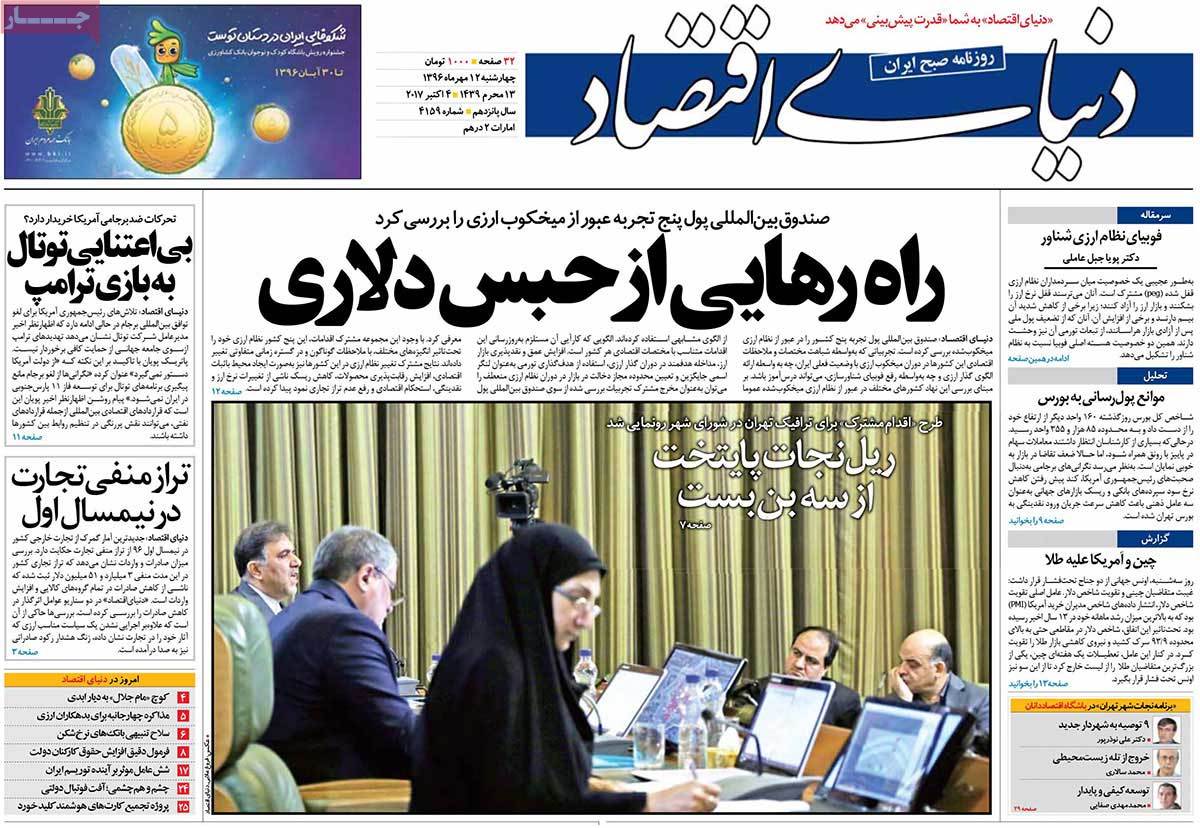
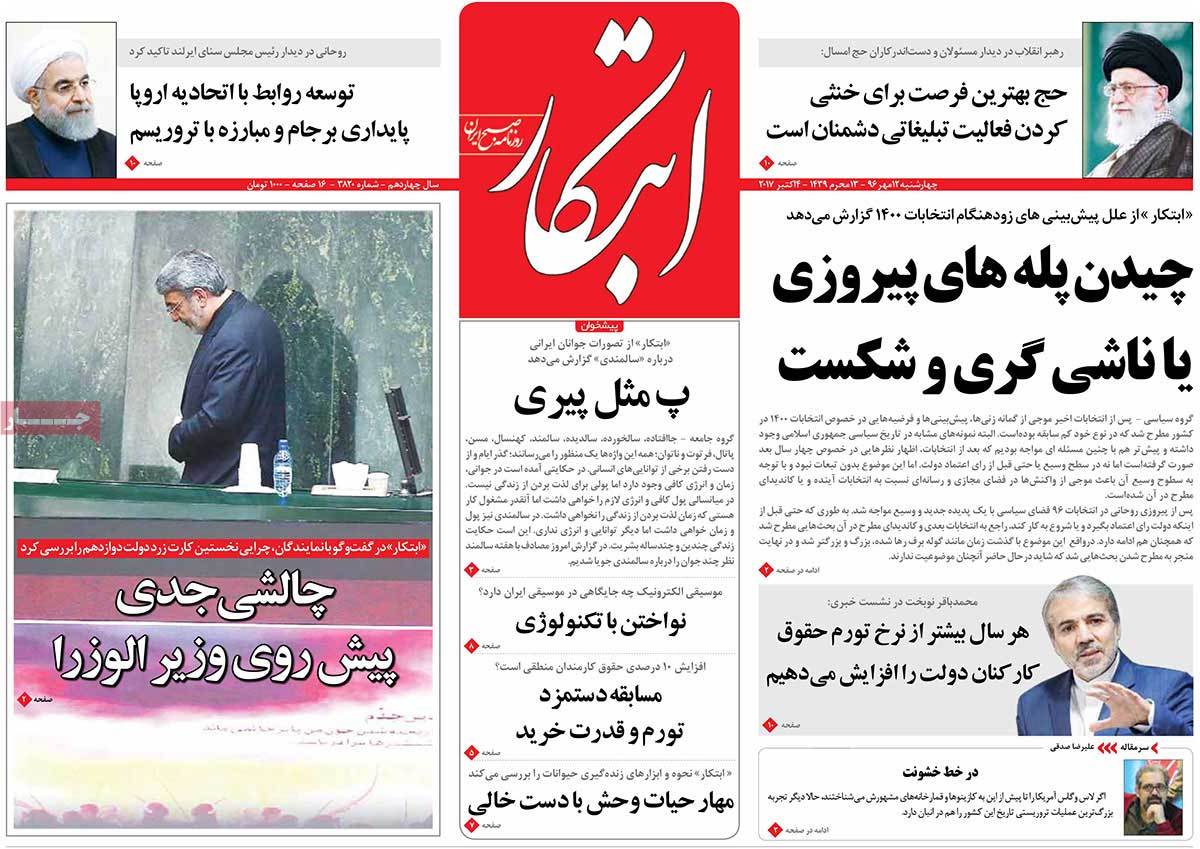
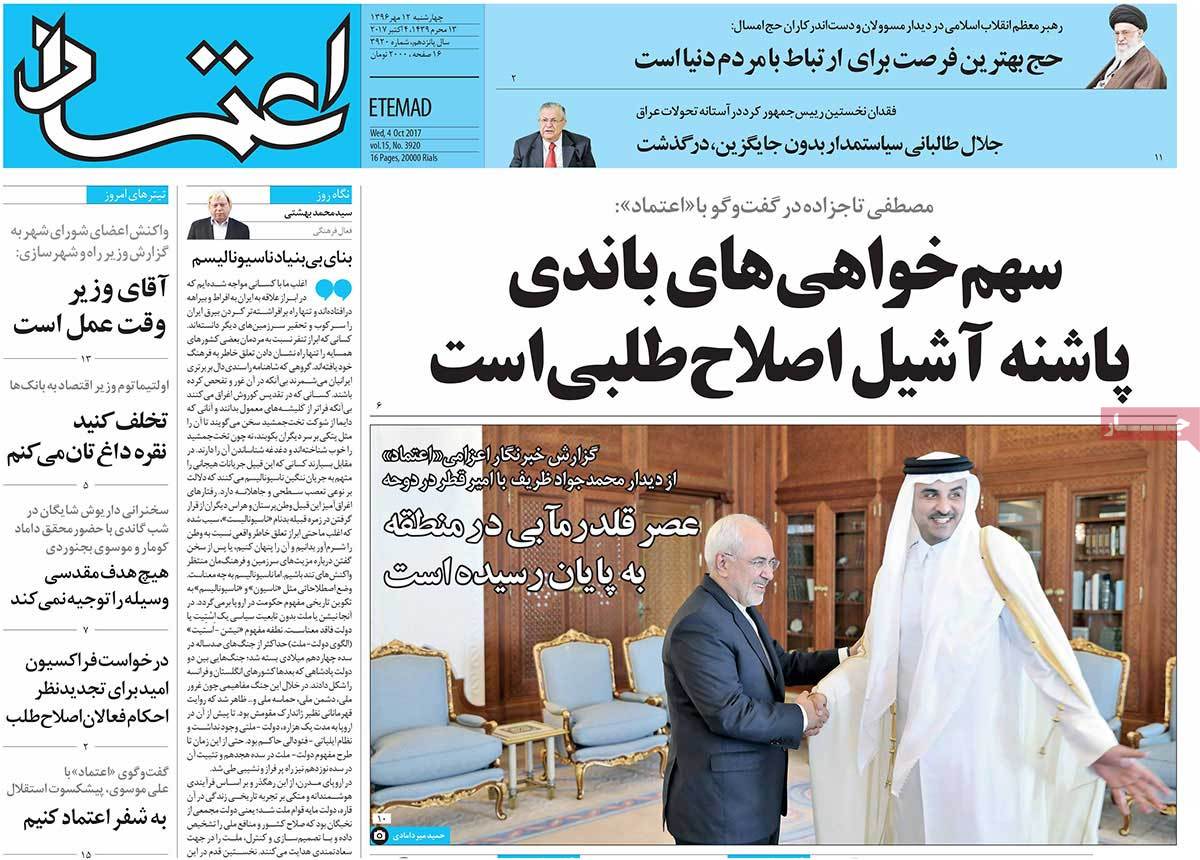
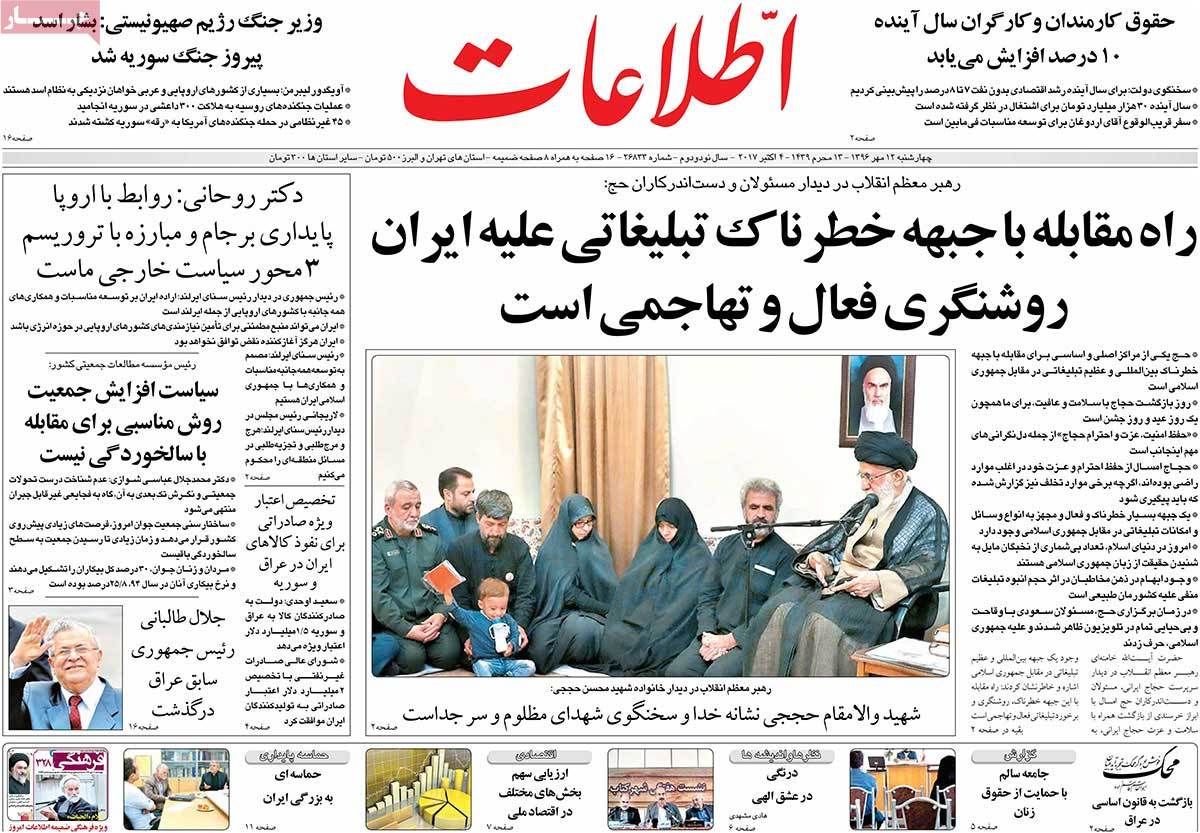
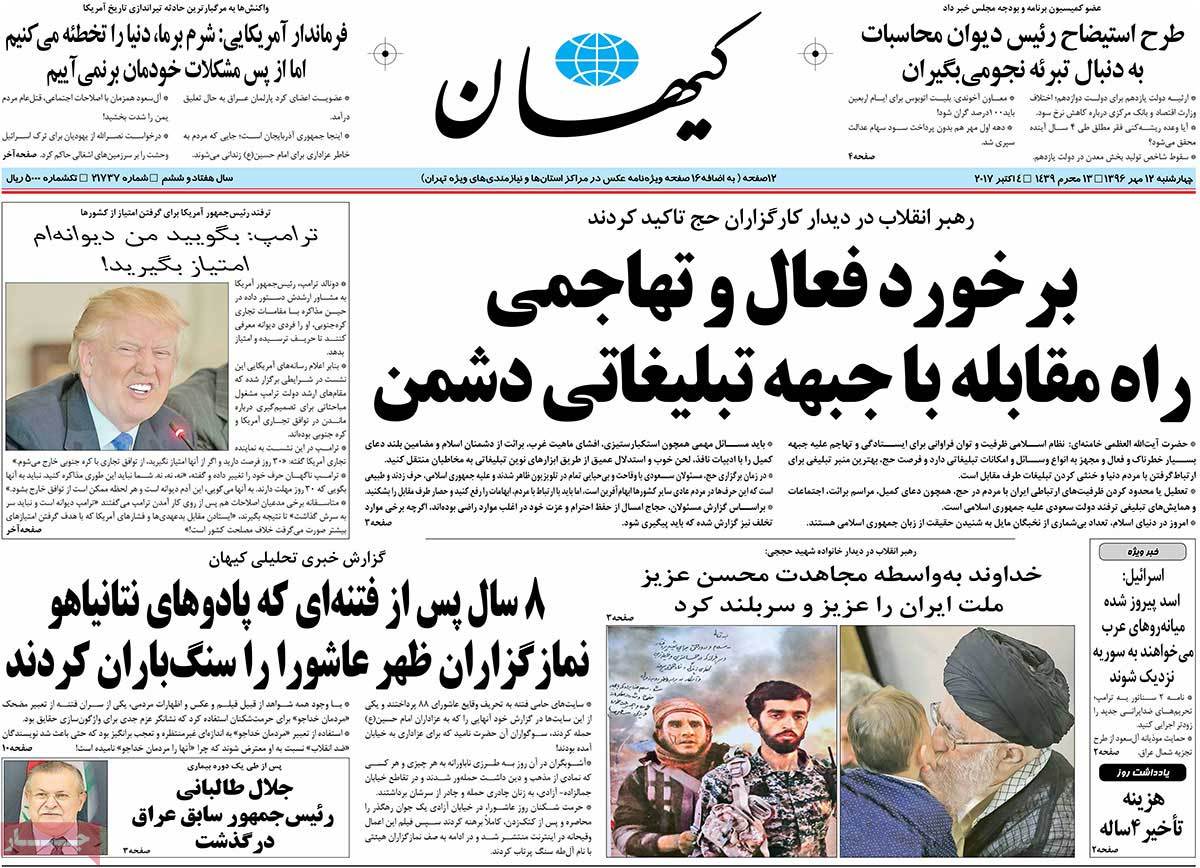
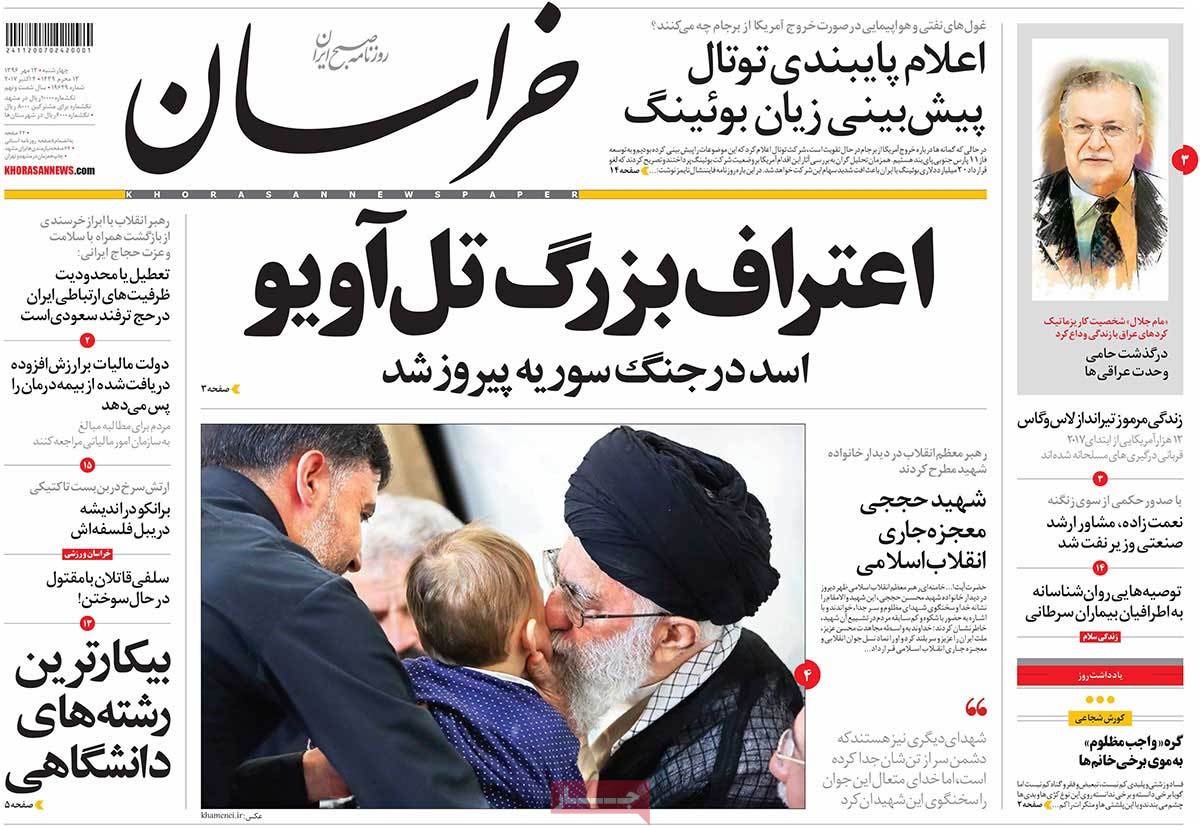
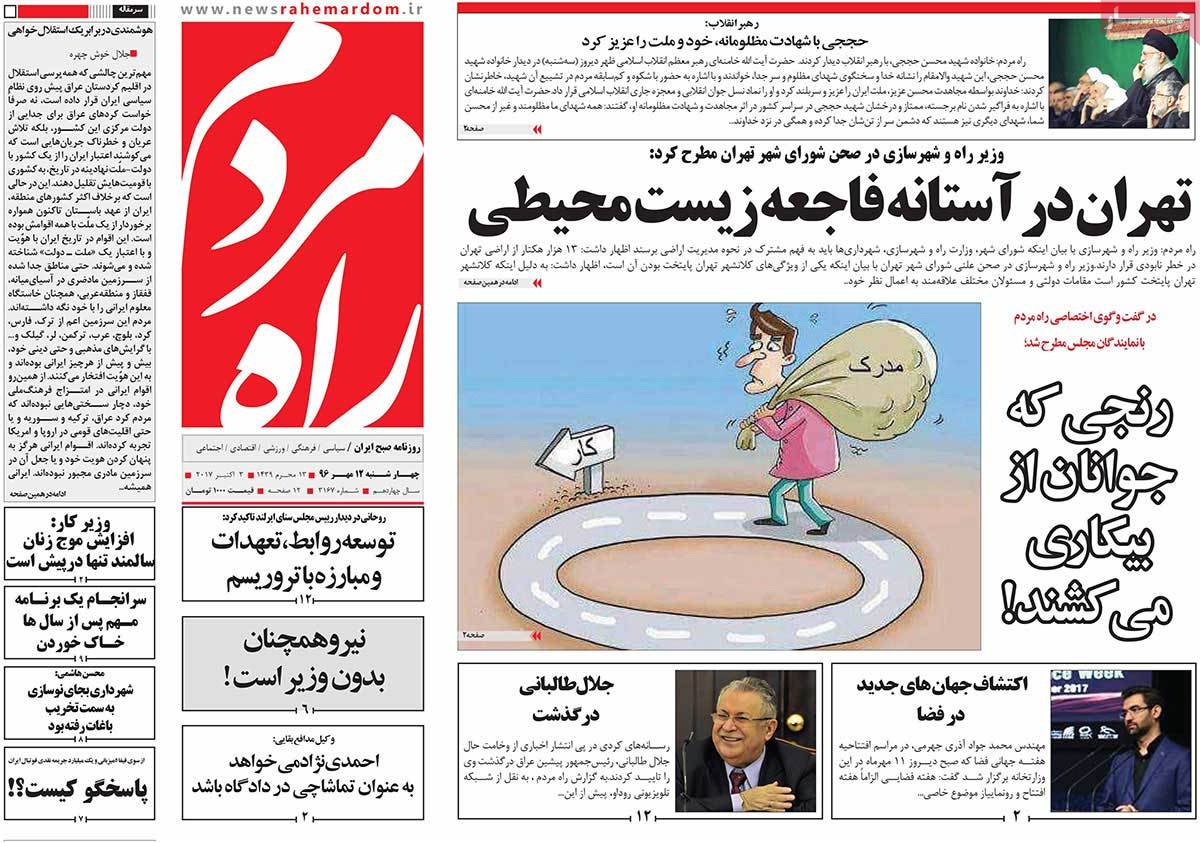
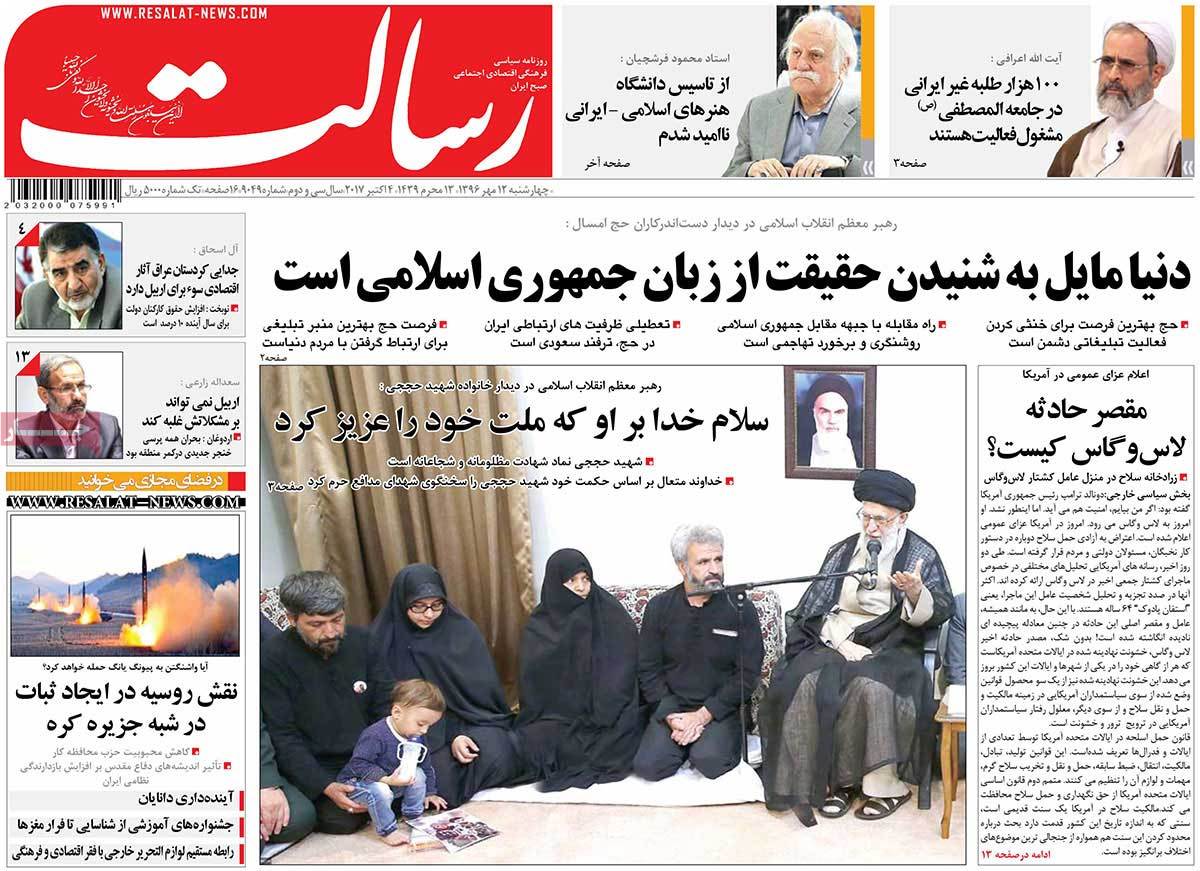
A Look at Iranian Newspaper Front Pages on October 4

The top story in today’s newspapers was the statements of Iran’s Leader Ayatollah Khamenei in a meeting with officials of the Hajj and pilgrimage organization during which he emphasized the need to take advantage of the opportunity for the Iranian people during the Hajj ceremonies to communicate with other Muslims and elaborate on the policies of the Islamic Republic. With the end of the return process of all Iranian pilgrims from Saudi Arabia, Iran’s leader was met by the head of Iranian pilgrims, and the organizers of this year’s Hajj. Ayatollah Khamenei said that there exists a very dangerous, active, and well-equipped front against Iran. The Leader of Iran said in order to confront the dangerous fronts, insightful and effective propaganda in return is needed and Hajj is one of the main centres for that.

Another top story was the death of former President of Iraq and the Kurdish politician, Jalal Talabani which was almost covered by all the morning papers on Wednesday.

The remarks by the US Secretary of Defence on the importance of Washington’s adherence to the nuclear deal with Iran and the Iranian President’s emphasis on expanding ties with the EU to boost cooperation in the framework of the Joint Comprehensive Plan of Action (JCPOA) were highlighted in today’s papers in a situation that in a matter of days Iran’s commitment to the nuclear deal has to be confirmed by the President of the United States, and it has prompted speculations on his decision to withdraw from the nuclear agreement with Iran.

The above issues, as well as many more, are highlighted in the following headlines and top stories:


19 Dey:

1- Iraqi Kurds’ Leader Dies

2- Larijani: JCPOA Must be Implemented

A Look at Iranian Newspaper Front Pages on October 4


Abrar:

1- Erdogan: Iraqi Kurdistan Region Should Wait for Sanctions

2- Iraqi Parliament Suspends Membership of Pro-Independence Kurdish Representatives


A Look at Iranian Newspaper Front Pages on October 4


Aftab-e Yazd:

1- Hajj Best Opportunity to Thwart Anti-Iran Propaganda: Ayat. Khamenei

2- Iraqi Symbol of Union Dies

A Look at Iranian Newspaper Front Pages on October 4


Arman-e Emrooz:

1- Parliament Brings Legal Action against Ahmadinejad

  • Ahmadinejad’s Plaintiff Not A Natural Person
  • Details of Ahmadinejad’s Four Cases of Law Violation


A Look at Iranian Newspaper Front Pages on October 4


Donya-e-Eghtesad:

1- Anyone Cares About Anti-JCPOA Moves?

  • Total Disregards Trump’s Games


A Look at Iranian Newspaper Front Pages on October 4


Ebtekar:

  • Rouhani Meets with Irish Senate Speaker
  • Rouhani Touches upon Ties with the EU, Implementation of JCPOA, Fight against Terror


A Look at Iranian Newspaper Front Pages on October 4


Etemad:

1- Tajzadeh: Share-seeking of Groups; Achilles Heel of Reformists

2- Economy Minister’s Ultimatum to Banks: Violate Laws, Face the Music

3- Omid Fraction of Parliament Calls for Modification of Court Verdicts for Reformists


A Look at Iranian Newspaper Front Pages on October 4


Ettela’at:

1- To Confront Dangerous Fronts, Insightful, Effective Propaganda Needed: Leader

2- Israeli Defence Minister: Bashar al-Assad Wins Syria War


A Look at Iranian Newspaper Front Pages on October 4


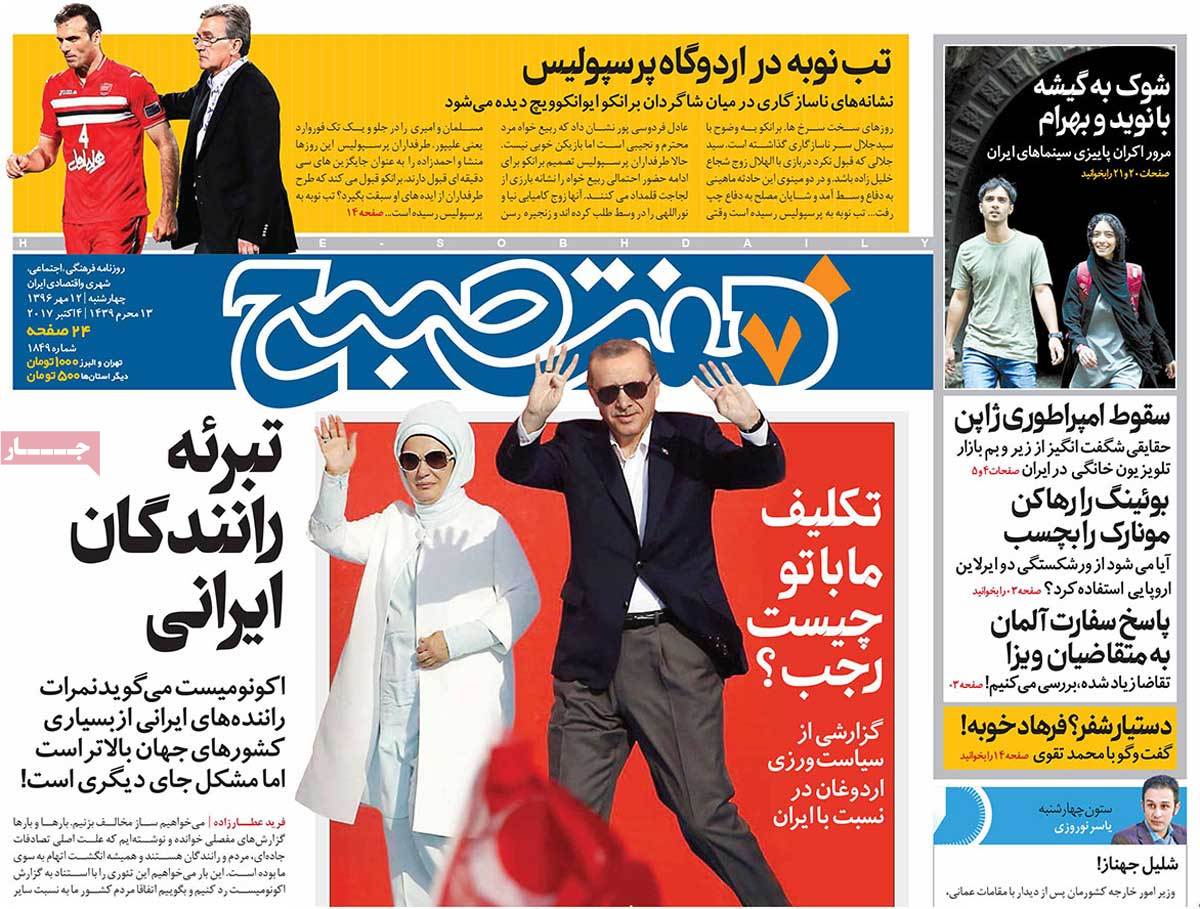
Haft-e Sobh:

  • What Should We Do with You, Receb?
  • A Report on Erdogan’s Policy toward Iran


A Look at Iranian Newspaper Front Pages on October 4


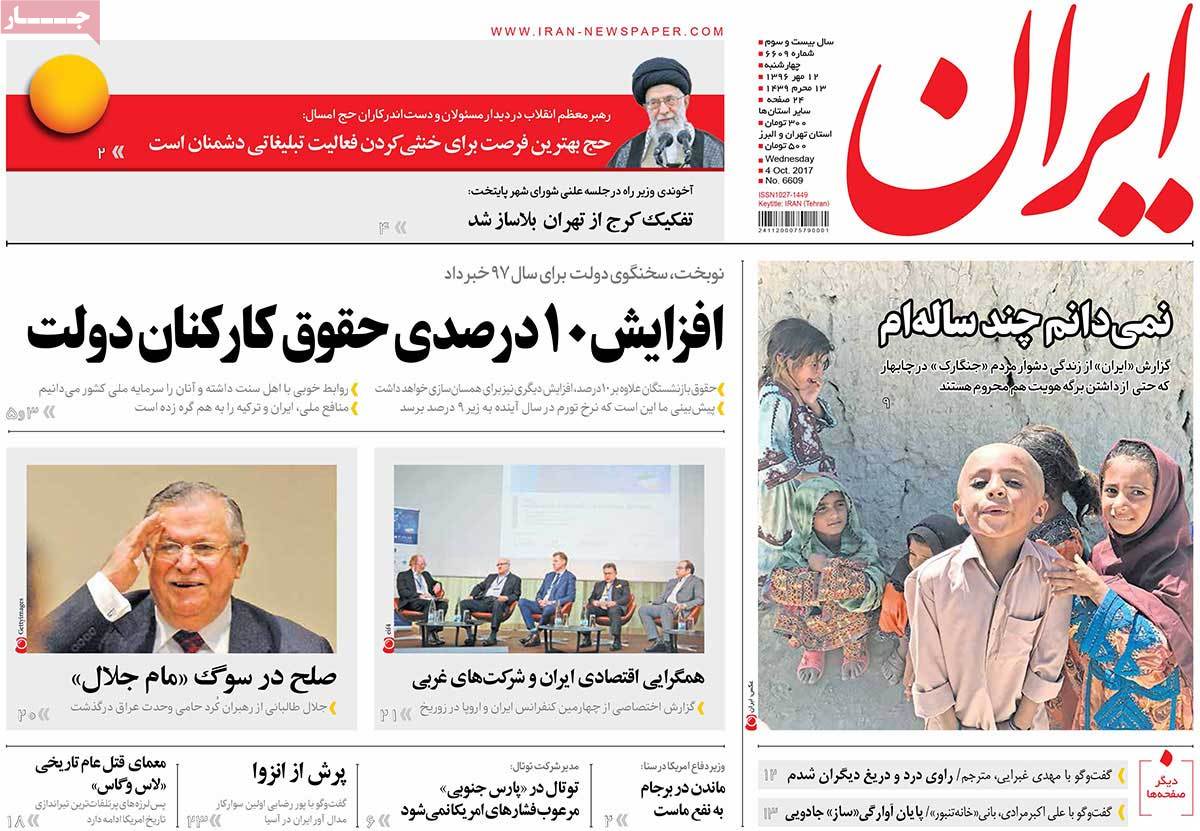
Iran:

1- Economic Convergence between Iran, Western Companies

  • Exclusive Report on 4th Europe-Iran Forum in Zurich
  • Peace-seekers Mourn Mam Jajal’s Death


A Look at Iranian Newspaper Front Pages on October 4


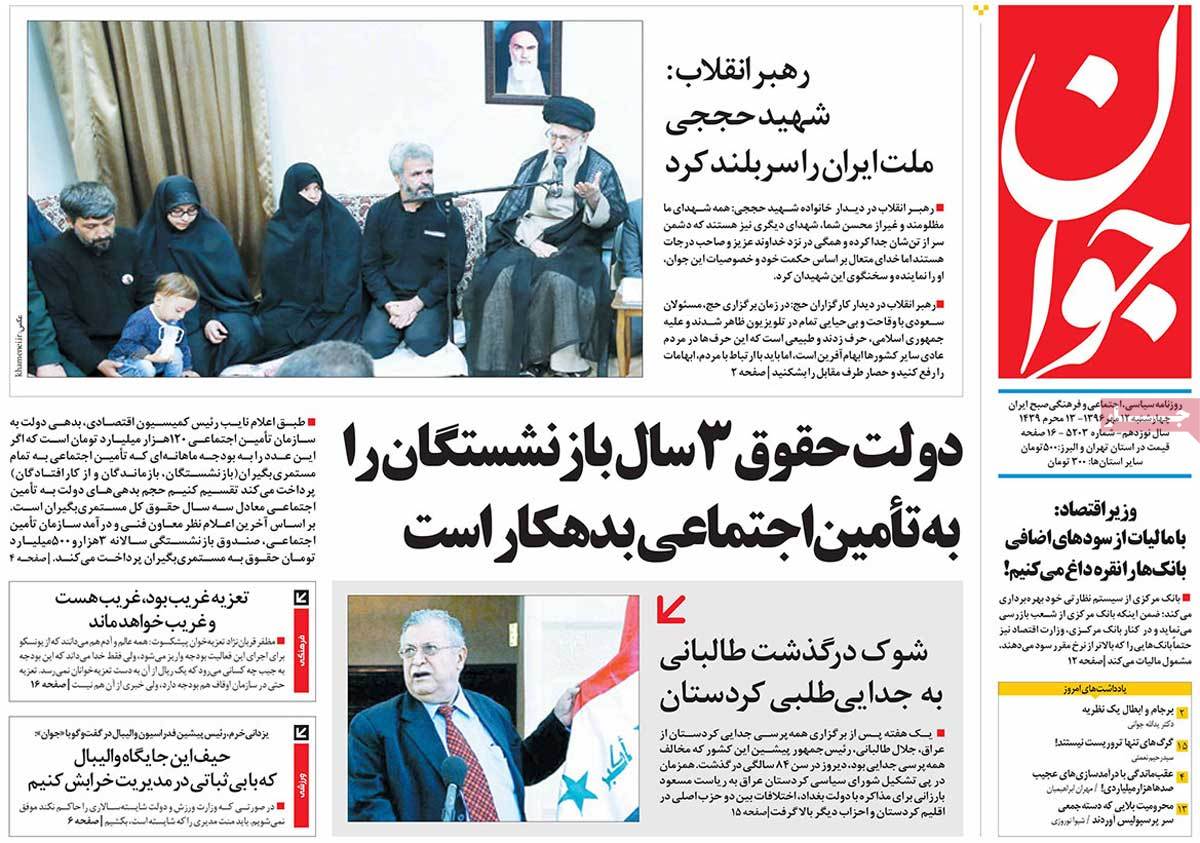
Javan:

1- Martyr Hojaji Made Nation Proud: Leader

2- Talabani’s Death Shocks Kurdish Separatists

A Look at Iranian Newspaper Front Pages on October 4


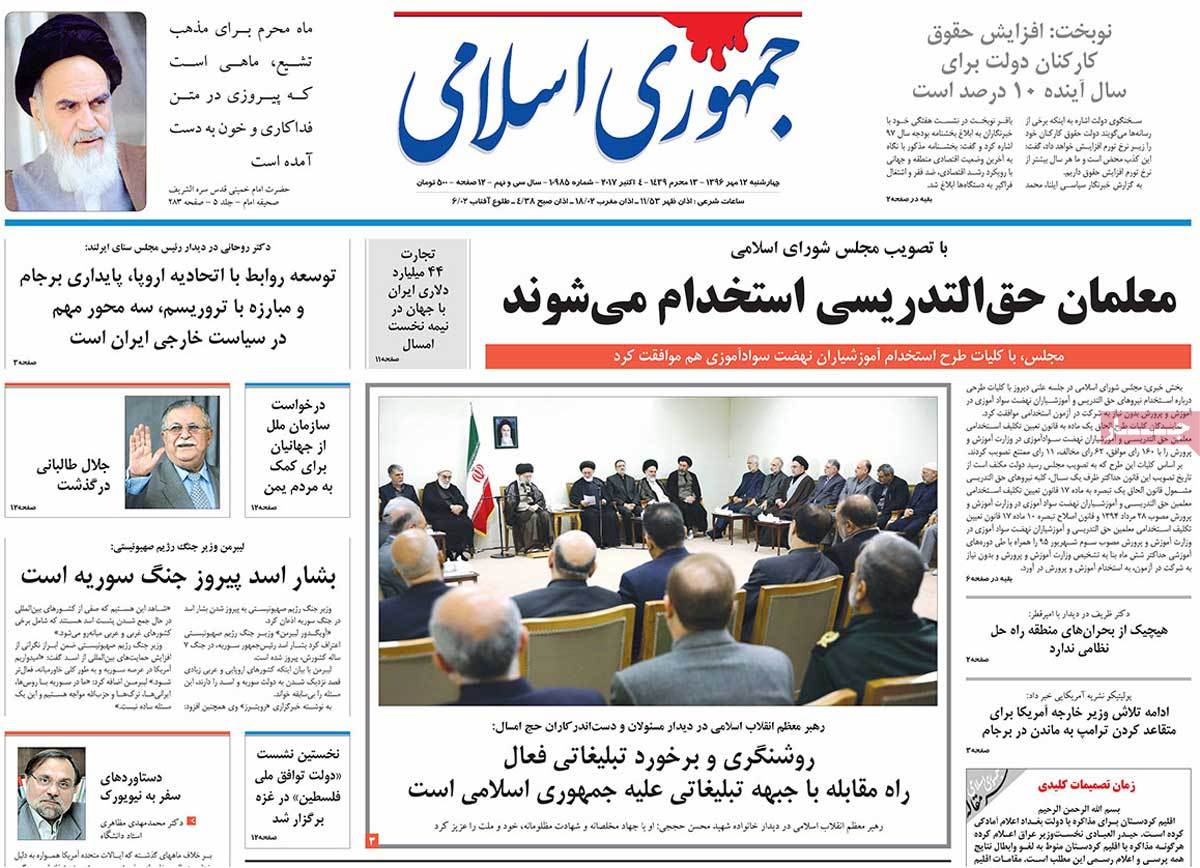
Jomhouri-e-Eslami:

1- FM Zarif Meets with Qatari Emir

  • Military Option Not Solution for Region’s Crises: Zarif


A Look at Iranian Newspaper Front Pages on October 4


Kayhan:

1- US Governor: Shame on Us as Americans

  • We Blame World, but Can’t Solve Our Own Problems

2- President’s Trick to Gain Advantage from Countries: Tell I’m Crazy, Get points!


A Look at Iranian Newspaper Front Pages on October 4


Khorasan:

1- Tel Aviv’s Confesses: Assad Winner of War in Syria

2- What Would Oil, Aviation Giants do When They leave US?

  • Total Reaffirms Commitment
  • Boeing Predicts Losses

A Look at Iranian Newspaper Front Pages on October 4


Rah-e-Mardom:

1- Roads and Urban Development Minister:  Tehran on Verge of Environmental Catastrophe

A Look at Iranian Newspaper Front Pages on October 4


Resalat:

1- World Eager to Hear Truth from Islamic Republic: Leader

A Look at Iranian Newspaper Front Pages on October 4


Rouyesh-e-Mellat:

1- US Secretary of Defence: We’d Better Not to Withdraw from Nuclear Deal


A Look at Iranian Newspaper Front Pages on October 4


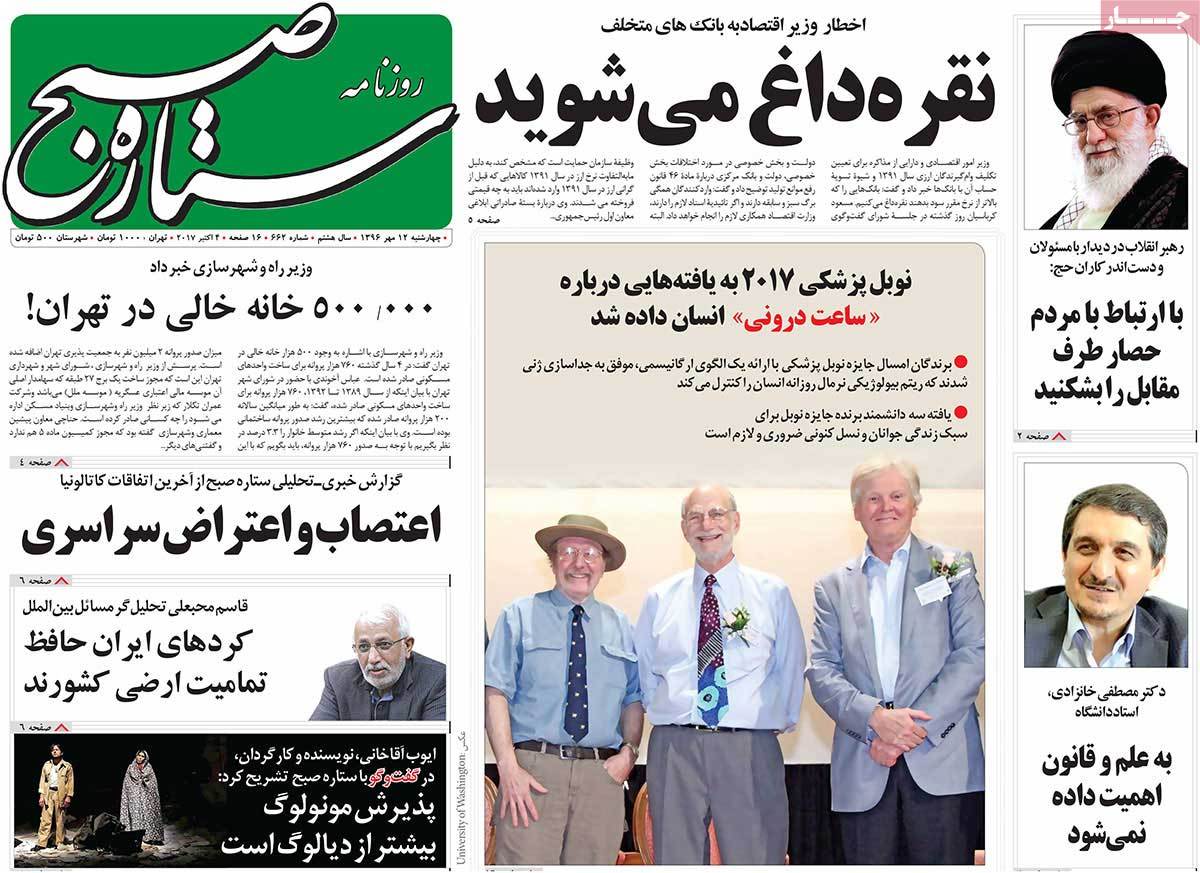
Setareh Sobh:

1- International Affairs Analyst: Iranian Kurds Protecting Territorial Integrity of Country

2- Minister of Roads, Urban Development: 500,000 Vacant Houses in Tehran!


A Look at Iranian Newspaper Front Pages on October 4


Shargh:

1- Voice of Umm Kulsum Echoes in Saudi Arabia

A Look at Iranian Newspaper Front Pages on October 4


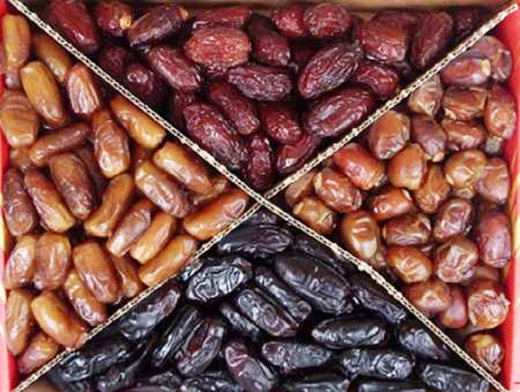
Iran Exports Dates to Nearly 50 Countries

Iranian Date

According to the figures announced by the Customs Office, Iran has exported 25,113 tonnes of fresh or dried dates worth over $31 million to nearly 50 countries.

The Khabar Online news agency said in a Farsi report that Yugoslavia, Pakistan, Japan, Georgia, Azerbaijan, Albania, Armenia, Australia, Afghanistan, United Arab Emirates, United Kingdom, Indonesia, USA, Italy, Bulgaria, Bosnia, Thailand, Turkey, Turkmenistan, Denmark, Syria, Singapore, Sweden, Serbia, Iraq, Russia, Kyrgyzstan, Kazakhstan, Canada, Lebanon, Poland, Lithuania, Malaysia, Norway, the Netherlands, India, China, Austria, Ethiopia, Armenia, Korea, Romania, Qatar, Hong Kong, and New Zealand are the countries which have recently imported dates from Iran.

During this period, over 46 thousand kilograms of saffron has also been exported to 30 countries. The export value of this product is over 59 million dollars. Japan, Germany, Spain, Australia, Afghanistan, the United States, the United Arab Emirates, Italy, Belgium, Taiwan, Singapore, Sweden, Switzerland, France, Kuwait, Hong Kong, India, Latvia, China, Korea, Denmark, Malaysia, Hungary, New Zealand, Jordan, Bahrain, Qatar, Canada, Mauritius, Greece are the customers of Iranian saffron.

Based on the figures announced, over 272 thousand kilograms of honey worth nearly 100 thousand dollars has been exported to 14 countries including China, Iraq, Afghanistan, UAE, Turkey, Oman, Kazakhstan, Kuwait, Lebanon, Malaysia, Azerbaijan, Qatar, Germany, Bahrain.

Persian Qanat Amazing but Less-Known Attraction: Italian Tourist

Persian Qanat

Viviana Guella, an Italian tourist, recently visited and was amazed by Gonabad Qanat [a type of ancient underground irrigation canal] in northeastern Iran.

Speaking in an interview with ISNA, she said, “The contradictory structure of the area has made it very beautiful, as it has a large surface covered with thorns through which a clear water is flowing.”

“The Iranian people are very kind and hospitable, and back in Italy I will tell my fellow countrymen how nice the Iranians are, especially the people of Gonabad.”

This Italian tourist, who is from the suburbs of Milan, added that the people have access to the water of this qanat without using any special technology and this is really interesting.

She said the qanats are wonderful, but are unfortunately less known to the world in spite of being registered in the UNESCO’s World Heritage sites.

The guide and interpreter of this group of tourists said, “For more than 40 years I have been working in this field, but for me the hospitality of people of Gonabad, along with the spectacular attractions of this city, were very enjoyable.”

“These tourists have travelled to Iran in the form of a cultural tour, and their main goal is to get familiar with the culture and customs,” she added.
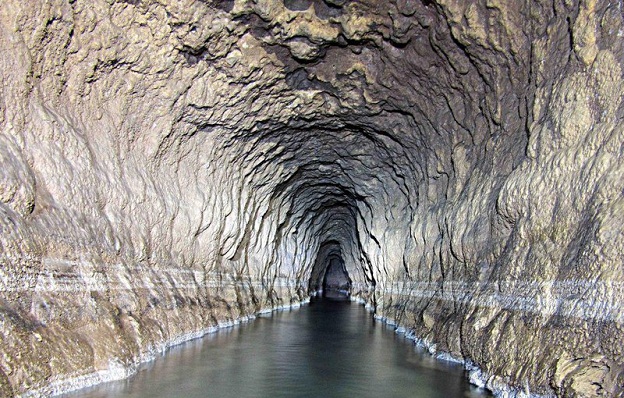
Nine Italian tourists recently travelled to Gonabad and visited the Qasabeh Qanat, Riab village, Shariat water reservoir, the handicrafts market and other attractions in the city.
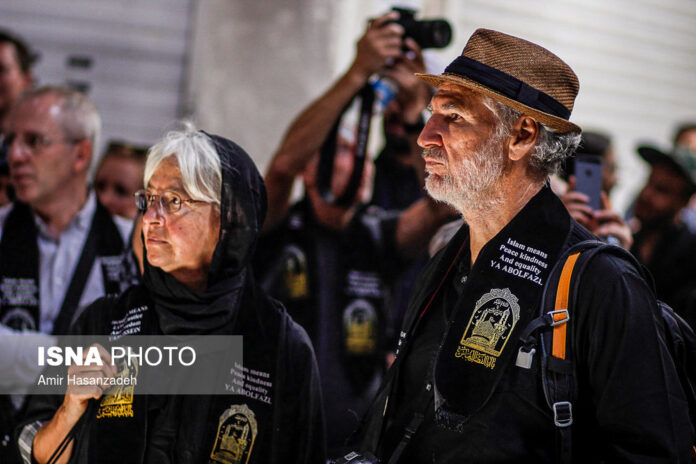
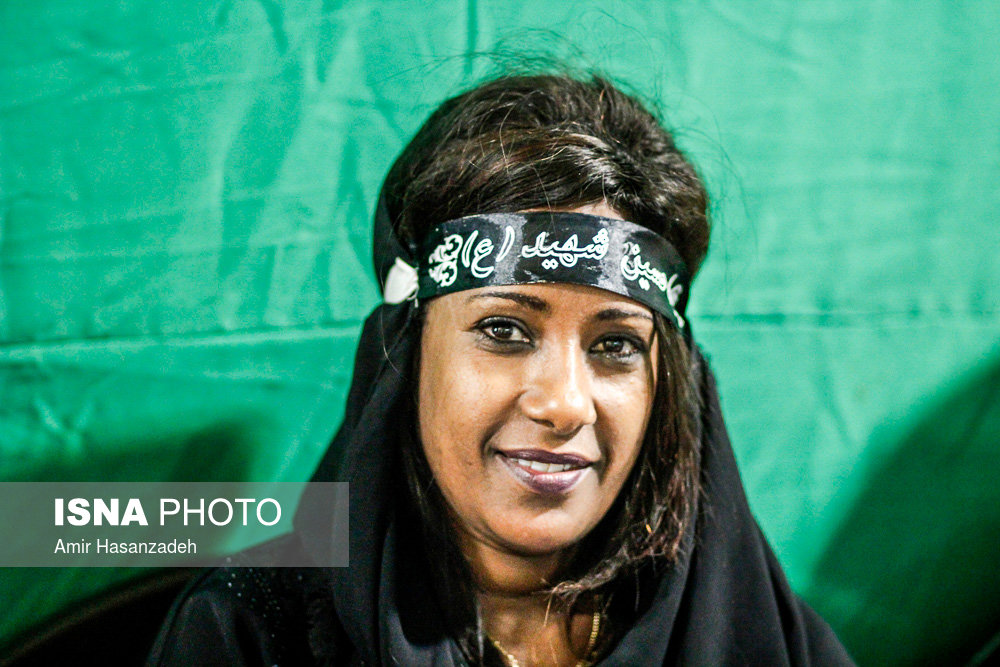
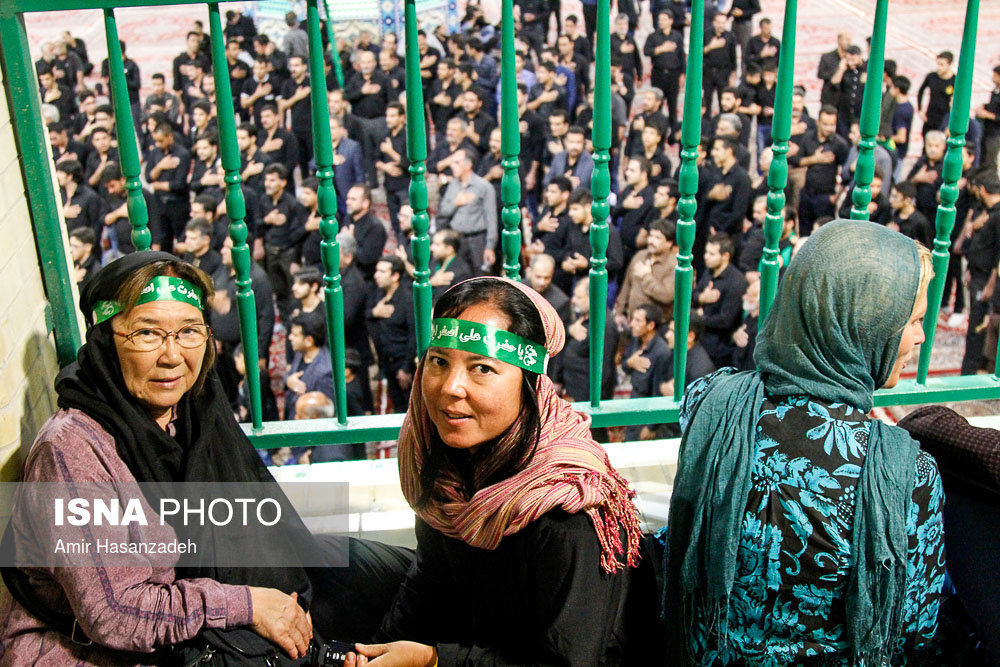
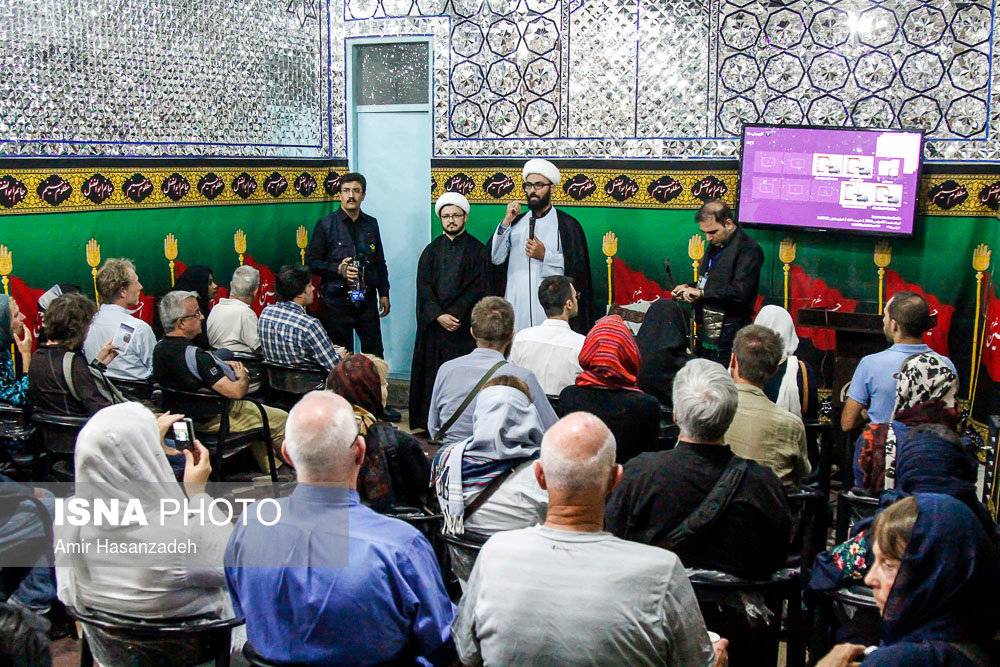
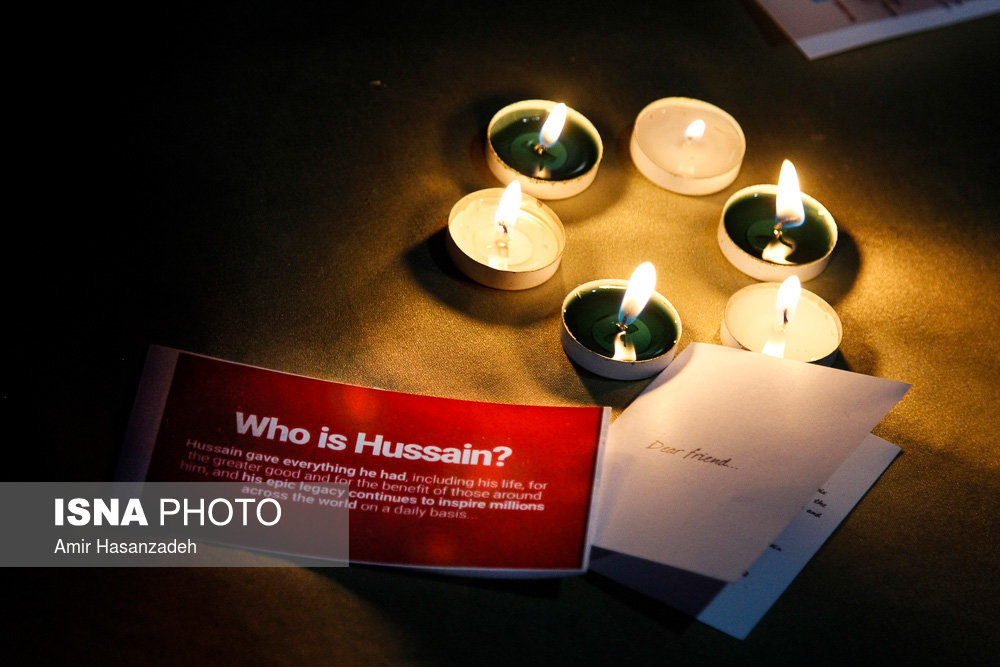
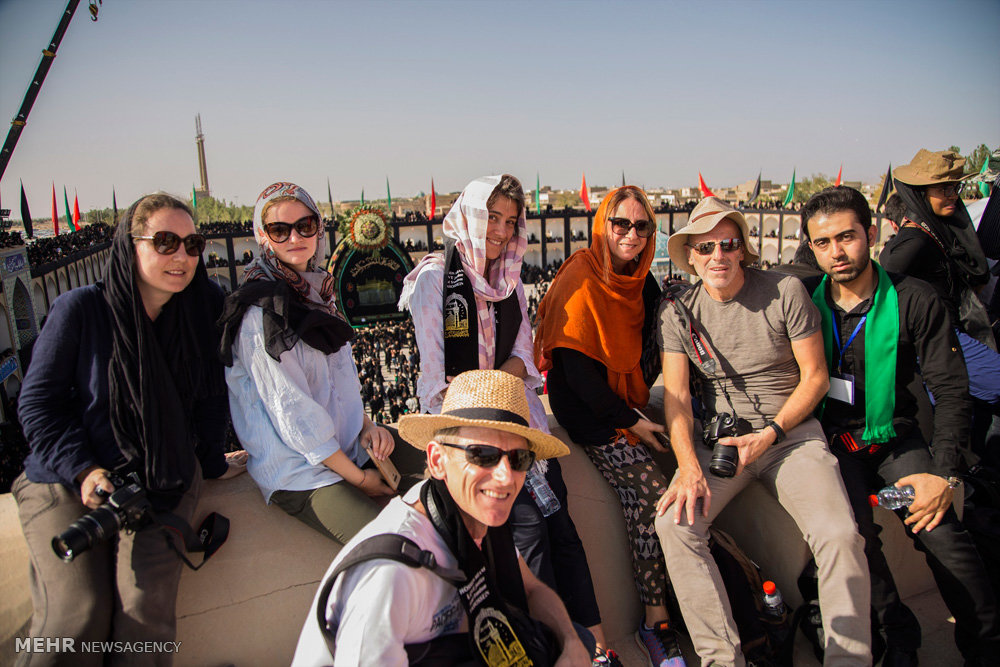
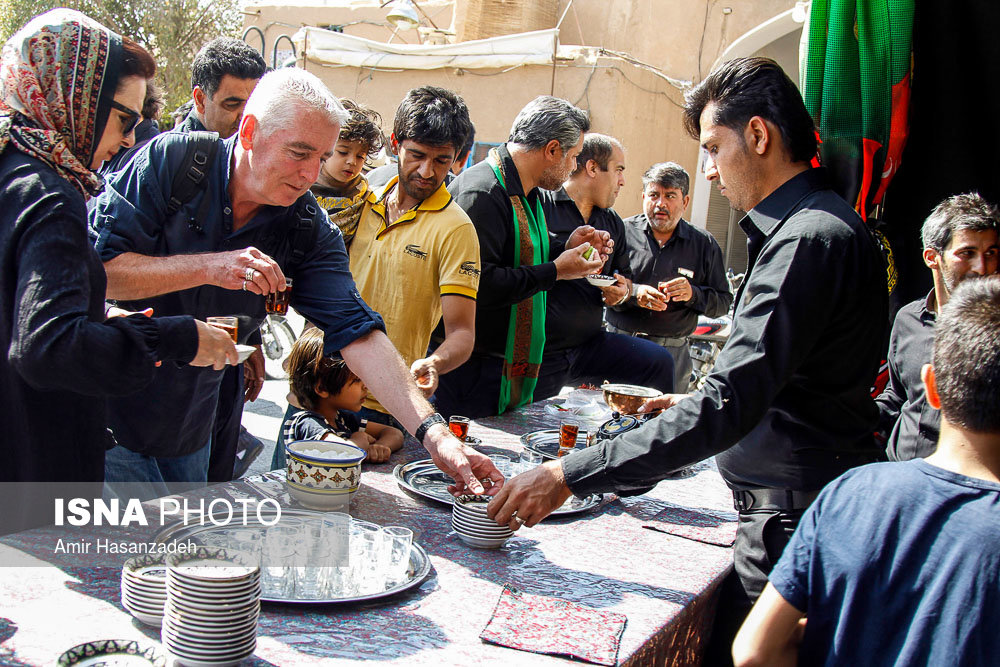
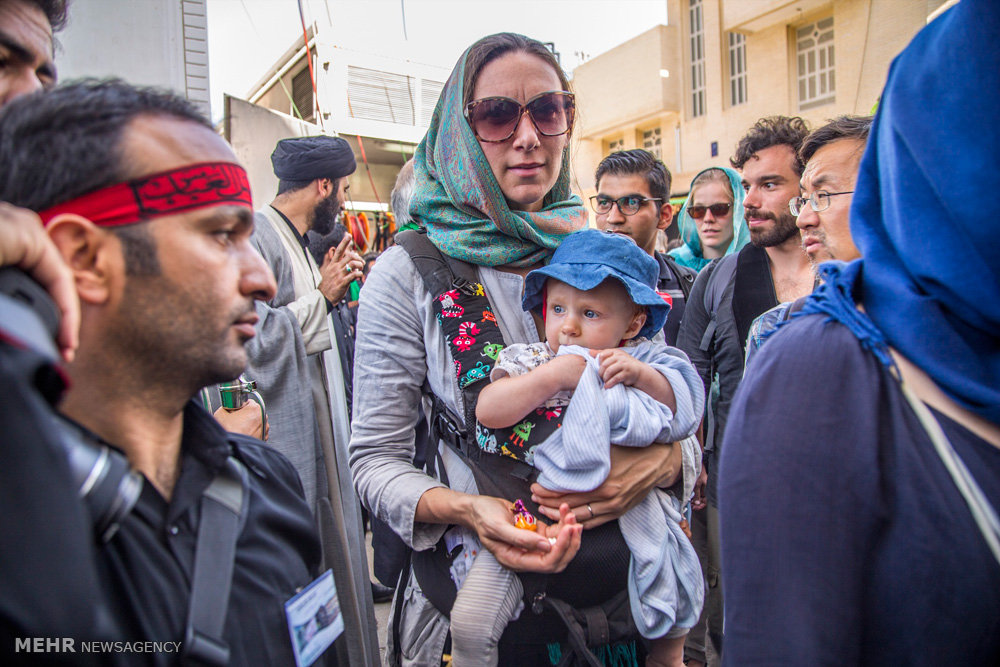
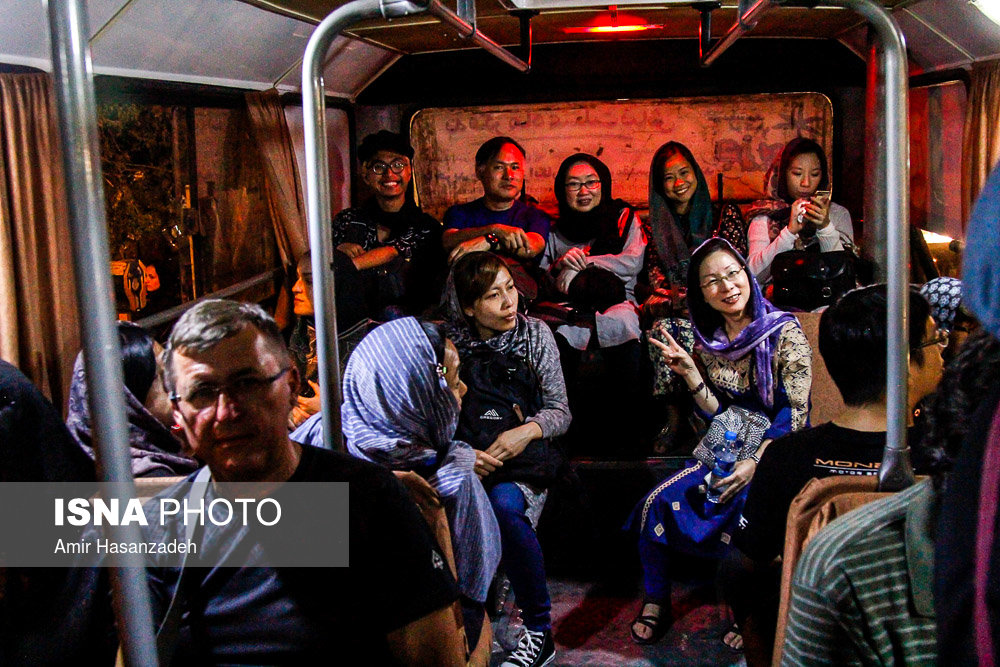
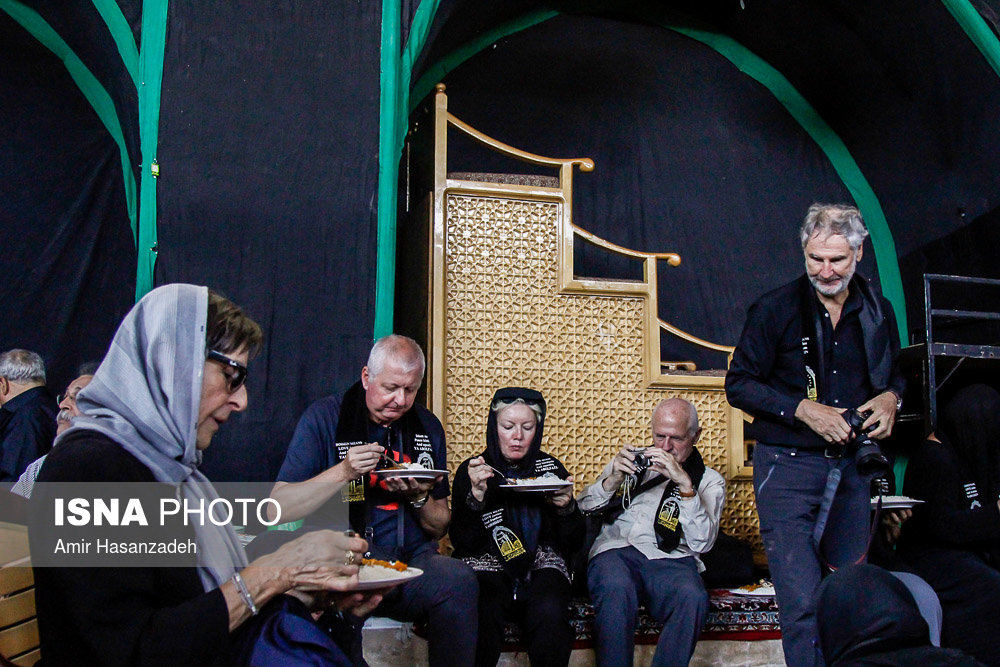
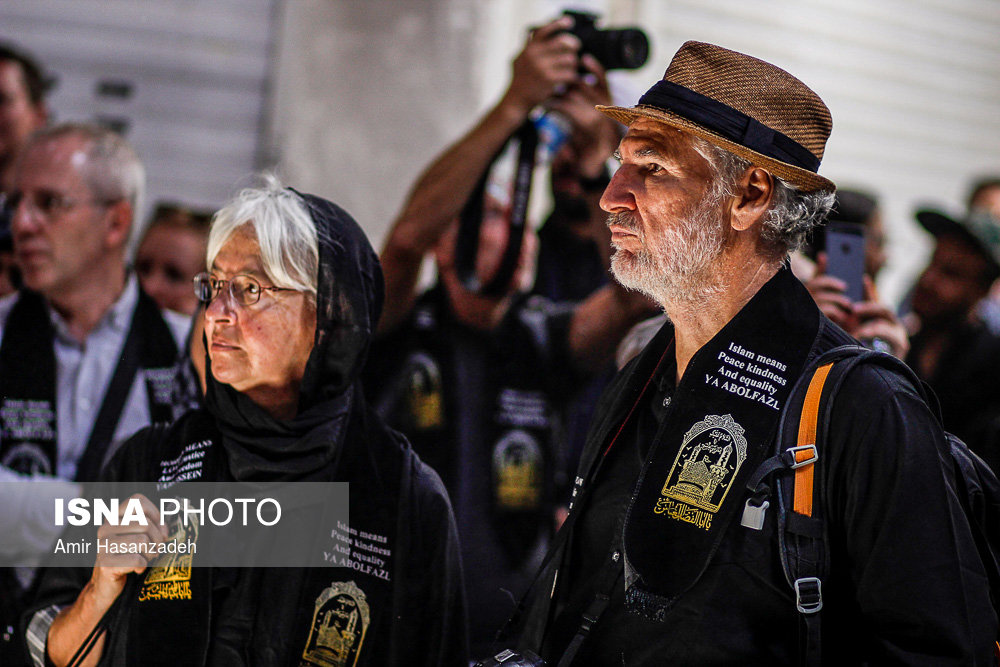
Iran Holds Special Tour of Mourning Ceremonies for Foreigners

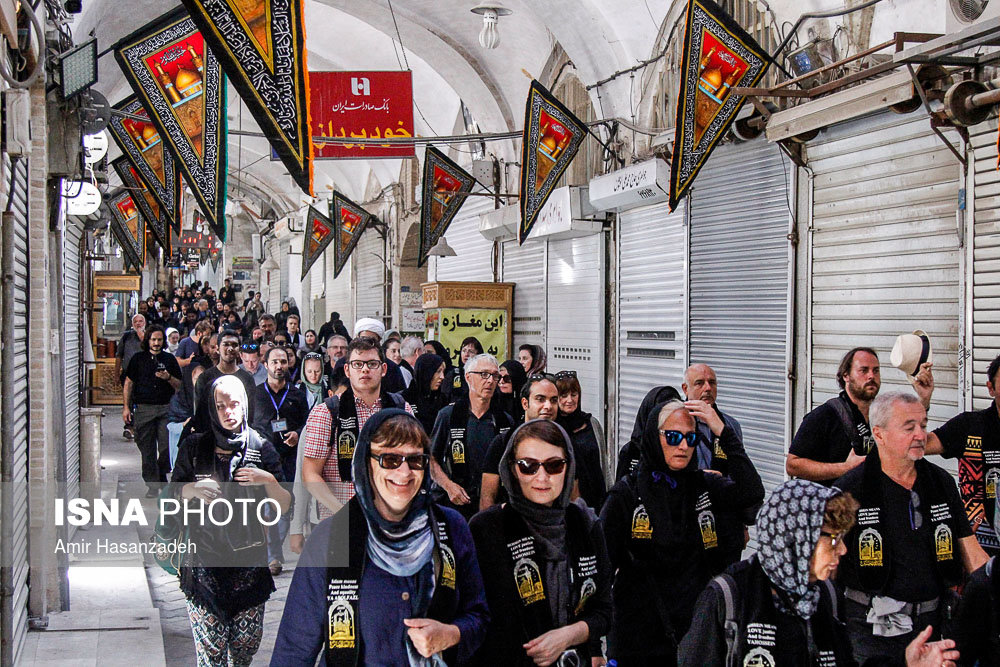
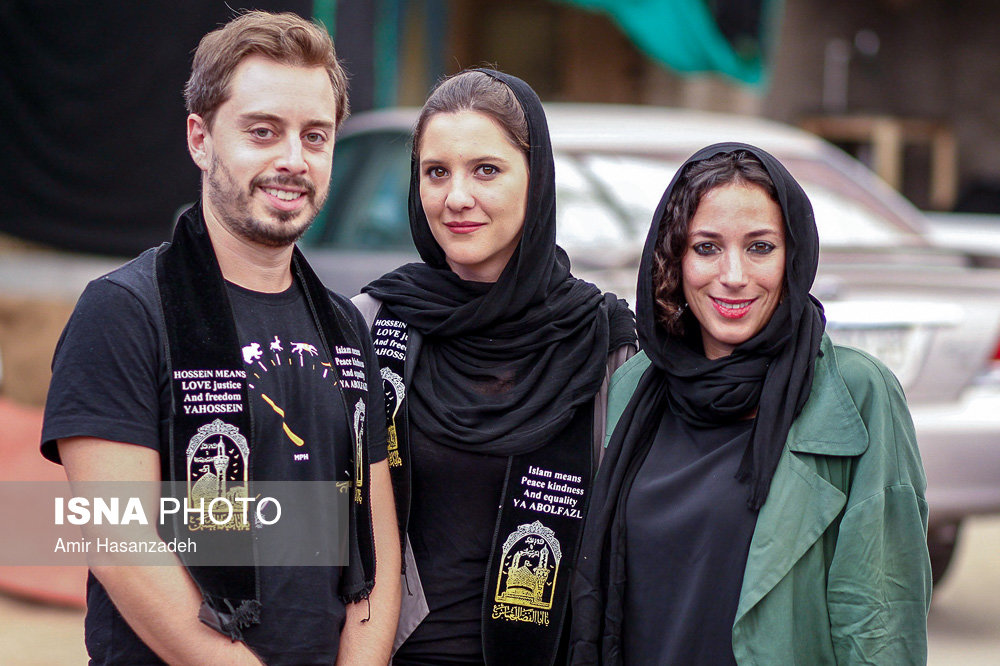
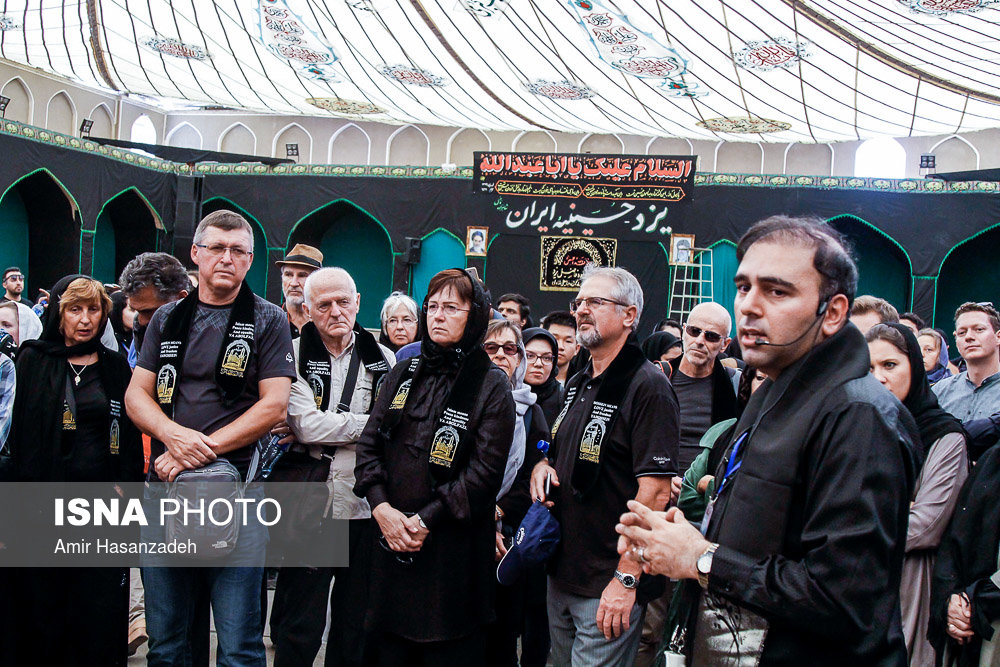
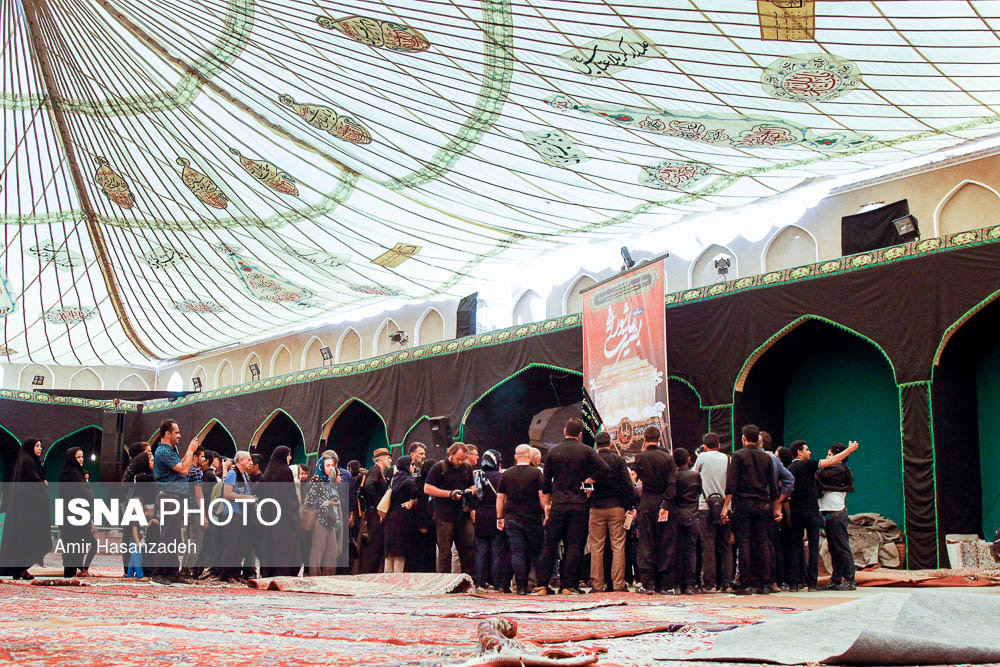
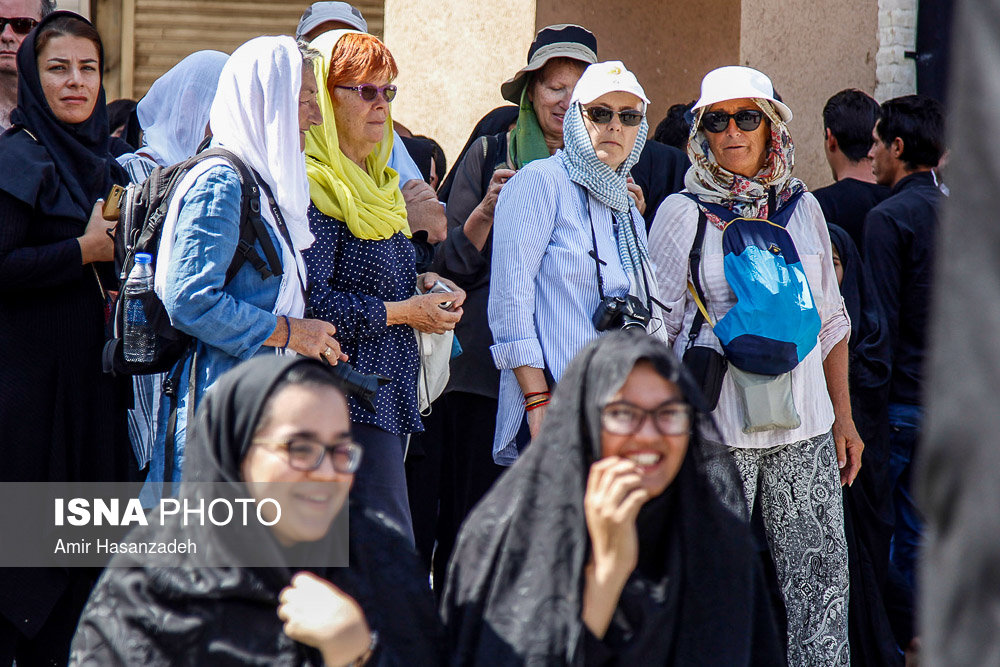
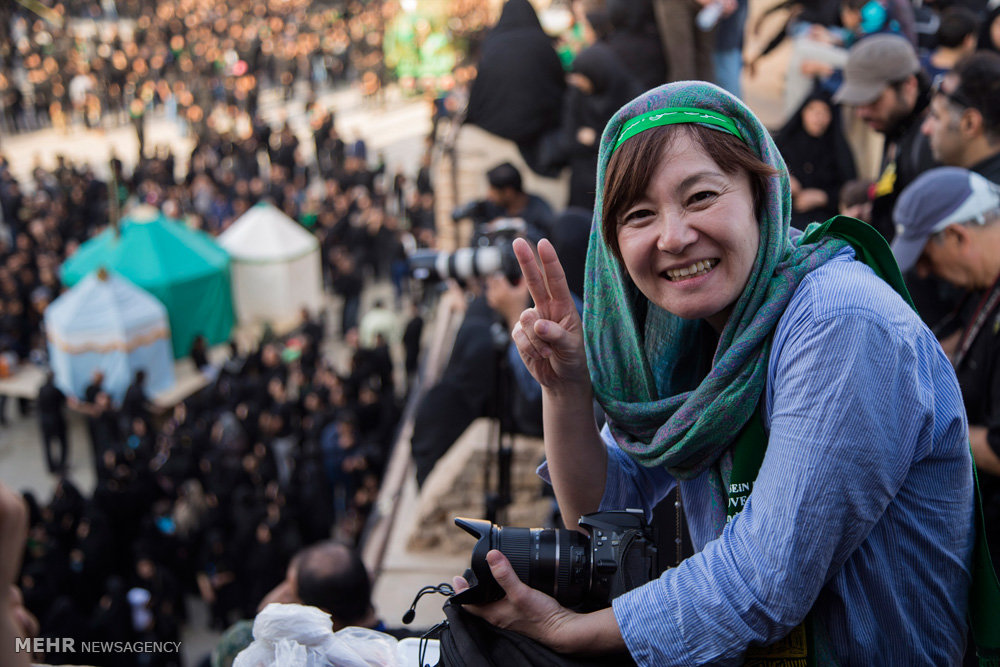
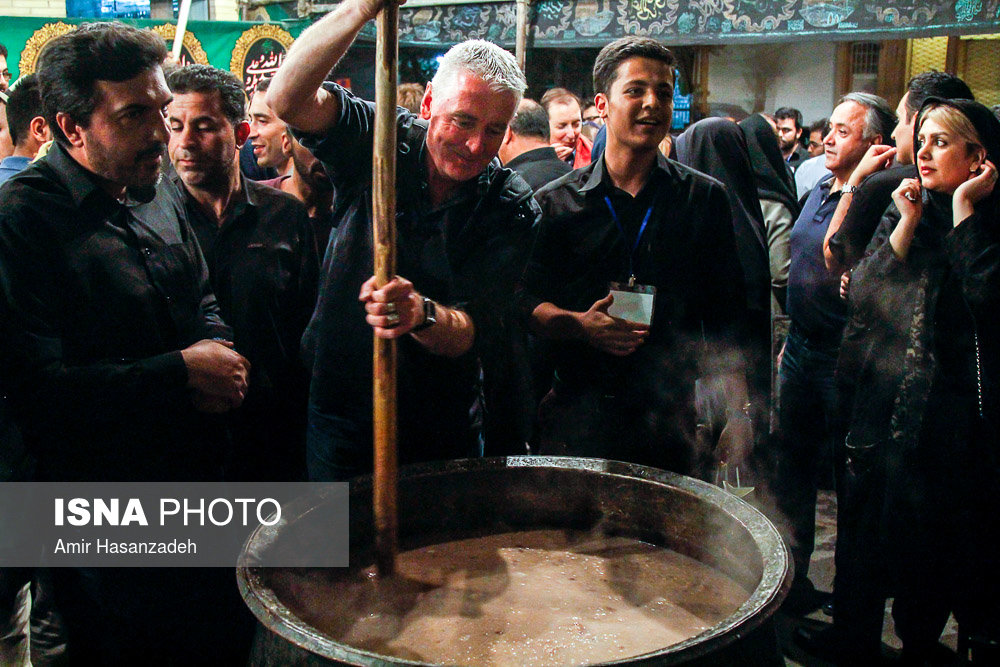
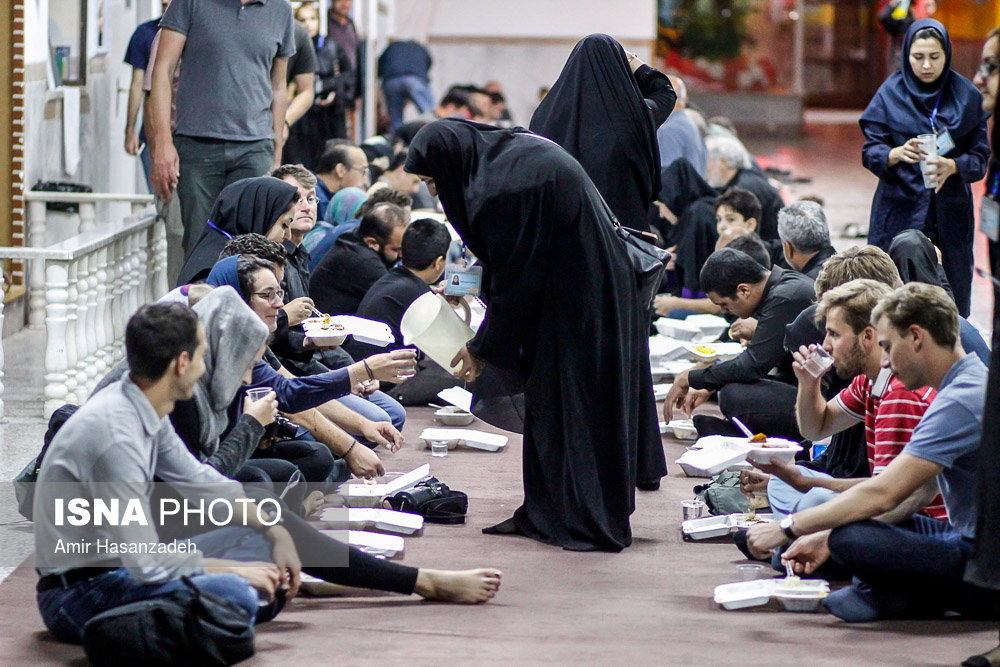
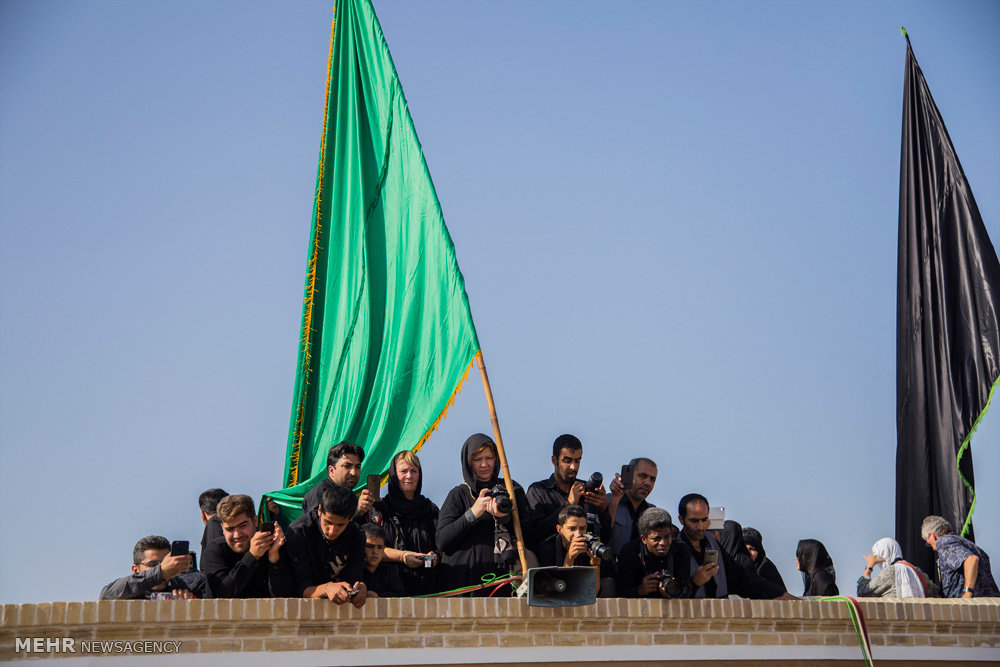
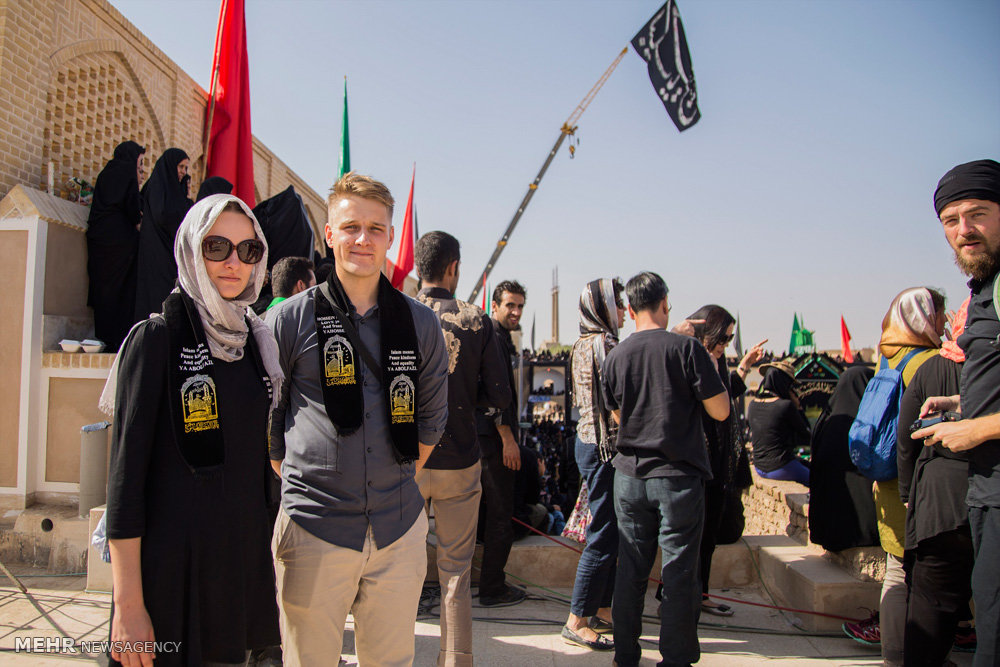
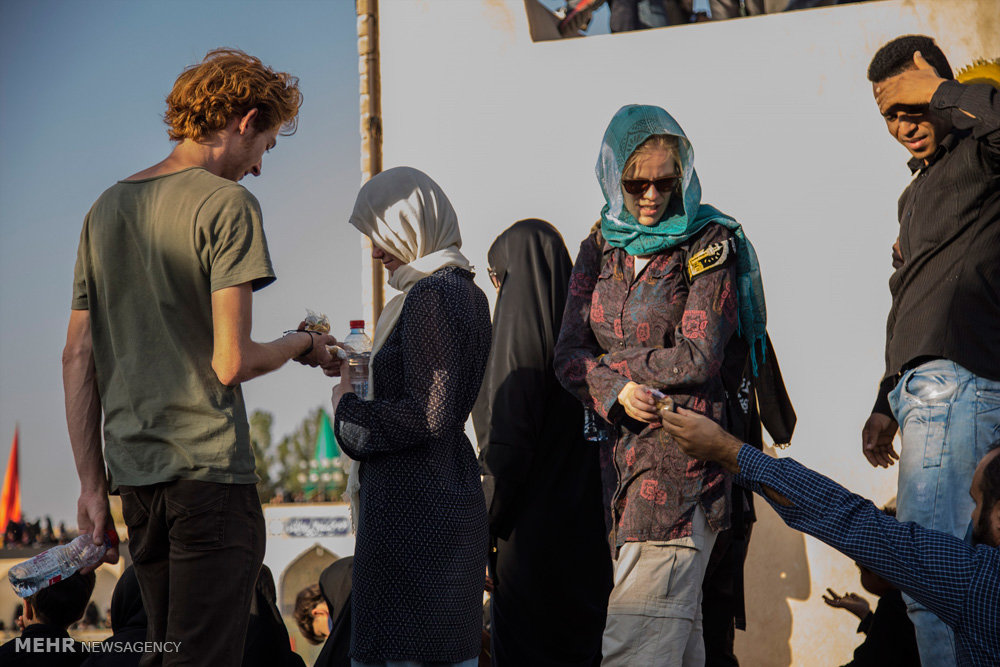
Iran Holds Special Tour of Mourning Ceremonies for Foreigners16

Described as “Iran’s museum of mourning tools” by prominent novelist Jalal Al-e Ahmad, Yazd annually hosts mourning ceremonies attended by millions of people from across the country.

This year, foreign tourists interested in these rituals were also taken to a tour of such ceremonies in Yazd from September 27 to October 2.

Here are ISNA‘s photos of the tour:

EU Begins Cooperation with Iran’s Centre for Nuclear Safety System

According to the Atomic Energy Organization of Iran (AEOI), the training course on ‘Establishing a Regulatory Framework and Assessing the Implementation of the Stress Test at a Nuclear Power Plant’ was started on October 2 in the Centre for the country’s Nuclear Safety System and will be underway for three days.

The agreement to hold these courses was reached during the negotiations to officially launch cooperation between the EU and the Centre for Nuclear Safety in July 2017. In order to implement a project to boost the technical capabilities of the country’s nuclear safety system, the two sides agreed to hold various advanced training courses in this regard.

The project is intended to assist the EU in implementing the annexes to three documents of the JCPOA which were signed in July 2015 between Iran and six countries of Britain, France, Germany, the United States, China and Russia.

The project to enhance the technical capabilities of Iran’s nuclear safety system is the first project of a special five-million-euro package for Iran, approved by the European Commission in 2016.

In a bid where Iran participated as a member of the evaluation committee, the project was delegated to a European Consortium directed by ENCO that moves along with the nuclear safety systems of Slovenia, Hungary, Czech Republic and Slovakia.

The project will take three and a half years to be carried out, and its main objective is to enhance the technical capability of Iran’s nuclear safety system in various areas, including the feasibility of establishing a nuclear safety centre.

Iran Working on Roadmap for Humanitarian Aid to Rohingya Muslims

The Tuesday meeting on Myanmar was chaired by Deputy Foreign Minister for Asia-Pacific Affairs, Ebrahim Rahimpour, who is also Iran’s accredited ambassador to the southeastern Asian country.

Along with a group of other foreign ministry officials, the latest developments in Myanmar were discussed and the participants exchanged views on how to create a roadmap for delivering the short and long-term humanitarian assistance of the Islamic Republic to Rohingya Muslims there.

During the meeting, the foreign ministry officials decided to send the third consignment of assistance to Muslims in Myanmar through the Bangladesh border by taking urgent and short-term measures.

It was also agreed to hold negotiations with the officials of the abovementioned countries and the Iranian Red Crescent Society authorities to send the first direct aid consignment to Myanmar.

Besides, the ministry officials called for further coordination to hold a summit to promote peace and friendship among the followers of religious sects there.