Saturday, January 17, 2026
Home Blog Page 3807

Iranian Artists to Perform Islamic Passion Plays in Europe

With the efforts of the Iranian cultural attaché’s office in Berlin, a group of Iranian Ta’zieh performers have travelled to Germany and Poland to put the religious play on show for people there.

Speaking in a Farsi interview with IQNA, Iran’s cultural attaché in Germany, Seyyed Ali Moujani, said, “For the first time, Ta’zieh will be performed by a group of Iranian artists from the city of Qazvin.”

He added that the Iranian cultural attaché’s office in Germany, the Hafez Institute, Iran’s House in Berlin, the Iranian Embassy in Germany, and the Iranian Consulate in Hamburg will co-operate in this programme, and the Ta’zieh group would have performances in Berlin, Hamburg and Frankfurt.

“The Ta’zieh band will be in Germany for 10 days and next to having performances for the Iranians, they are going to have performances for the audience on the sidelines the Frankfurt International Book Fair where the book ‘Maqtal Al-Hussein’ would be released.”

Moujani went on to say that having some performances in Warsaw, the capital of Poland, is among the other programs of the Iranian band, and we are coordinating it with the Iranian embassy there.

He also noted that the performances in Germany will be conducted in Farsi, but in Poland it will simultaneously be translated into Polish.

Seifollah Shokri, a traditional and religious music expert and Ta’zieh researcher, who heads the group in Germany, said, “This is the fifth year that we will be performing abroad. Germany would be our first experience in Europe.”

He also emphasized that Ta’zieh is a Shiite-Iranian art, saying that Ta’zieh is the only play of the Muslim world which exclusively belongs to Shiites and Iranians, that is, if it is performed in other countries in a basic form, they are copying from Iran.

About the goals of these performances in Germany and Poland he said “one of our most important goals is to professionally introduce this art and its features to the scientific communities around the world, especially Europe, as one of the theatre cradles.”

“From a religious point of view, 130 of the greatest Shiite scholars in the past two hundred years have been issuing positive fatwas on this art because the ceremony makes the audience familiar with the Shiite school and Imam Hussein’s (AS) cause,” he concluded.

A Look at Iranian Newspaper Front Pages on October 5

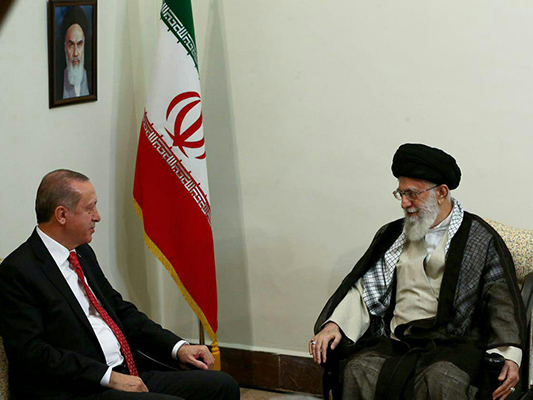
The top story in today’s newspapers was a meeting between the Leader of Iran’s Islamic Revolution Ayatollah Seyyed Ali Khamenei and Turkish President Recep Tayyip Erdogan, during which the former called for urgent action against the Iraqi Kurdistan’s secession.

Erdogan’s meeting with his Iranian counterpart Hassan Rouhani and the MoUs signed between the two countries also received great coverage.

Another top story was the reactions to allegations raised about the arrest of Iranian Judiciary Chief’s daughter on charge of espionage for Britain. Judiciary Chief Ayatollah Sadeq Amoli Larijani said the rumours are not worth answering, and Intelligence Minister Mahmoud Alavi totally rejected the allegations.

The upholding of a five-year prison term for a former member of Iran’s nuclear negotiating team was also highlighted in today’s papers. He has been convicted of espionage.

The above issues, as well as many more, are highlighted in the following headlines and top stories:


Aftab-e Yazd:

1- Two Ministers Fall Victim to Parliament’s Dissatisfaction with Gov’t

  • Labour, Interior Ministers Receive Yellow Card from Parliament

2- Judiciary Chief’s Response to Rumours [about his daughter’s arrest]: Not Worth Answering

A Look at Iranian Newspaper Front Pages on October 5


Arman-e Emrooz:

1- Iran Leader: Zionist Regime Seeks to Create New Israel in Mideast

2- Ankara’s Strategic Turn: Iran-Turkey Unity in Saadabad

3- Rouhani: We Won’t Accept Change in Regional Borders

A Look at Iranian Newspaper Front Pages on October 5


Ebtekar:

1- First VP: “E-Government” to Be Fully Realized in 4 Years

2- Iran Leader: Kurdistan Referendum Treason against Middle East

3- Reforms in Saudi Style

4- Women MPs’ Efforts to Counter ‘Child Marriage’

A Look at Iranian Newspaper Front Pages on October 5


Ettela’at:

1- Putin Warns of Establishment of ISIS Bases in Regional States

2- 180 US Congressmen Urge Trump Not to Hesitate in Certifying Iran’s JCPOA Compliance

3- Iran, Turkey Sign 4 Documents of Cooperation

4- Reuters: UN Puts Saudi Arabia in List of Child-Killing Regimes

A Look at Iranian Newspaper Front Pages on October 5


Iran:

1- Europe’s Strong Support for Iran Nuclear Deal

2- Rouhani Condoles with Iraqi Nation, Gov’t over Talabani’s Death

  • I Hope Iraqis Would Follow Talabani’s Moderation

3- World’s Commitment to Iran Nuclear Deal Important: Putin

  • Russia to Continue Supporting JCPOA

A Look at Iranian Newspaper Front Pages on October 5


Jahan-e San’at:

1- Iranian, Turkish Presidents: Secessionism Is Rejected

2- US Defence Secretary, Trump Divided over Iran Nuclear Deal

A Look at Iranian Newspaper Front Pages on October 5


Javan:

1- Scenario of Nuclear Deal’s Permanent Vegetative State

  • US Administration to Increase Pressures on Iran

2- Intelligence Minister Responds to Lies Raised against Judiciary Chief

  • Ayatollah Amoli Larijani’s Family Not Suspected of Espionage

2- Private Bank Chief Claims Iran Needs $200bn to Organize Its Banks

A Look at Iranian Newspaper Front Pages on October 5


Jomhouri Eslami:

1- Iran Signs Deal in Moscow on Caspian Sea’s Oil

2- Chomsky: US, Israel Cannot Tolerate Independent Iran

3- Iran Leader: Kurdish Referendum Was a Treason against Region

A Look at Iranian Newspaper Front Pages on October 5


Kayhan:

1- Myanmar’s Displaced People: Suu Kyi Lying, Suppression of Muslims Going on Strongly

2- New York Times: Congress Would Have Made a Fuss If a Muslim Had Killed 59 Americans

3- Economic Downturn, Contraband Have Shut Down Many of Factories

4- Member of Iran’s Nuclear Negotiating Team Condemned to 5 Years in Prison

A Look at Iranian Newspaper Front Pages on October 5


Khorasan:

1- Iran Leader Calls for Serious, Rapid Measure against Creation of New Israel

A Look at Iranian Newspaper Front Pages on October 5


Shargh:

1- Turkish President: More Serious Measures to Be Taken against Iraqi Kurdistan

2- Russia Once Again Takes Helm of GECF

3- Gov’t to Offer 20-Year Mortgages

A Look at Iranian Newspaper Front Pages on October 5


Tejarat:

1- Parliament Speaker: Securing Iran’s Interests Main Condition for JCPOA Survival

2- Saudi King Received by Putin: King Salman Trying to Correct His Foreign Policy

3- Strategic Alliance: Iran, Turkey to Increase Value of Bilateral Trade to $30bn

A Look at Iranian Newspaper Front Pages on October 5


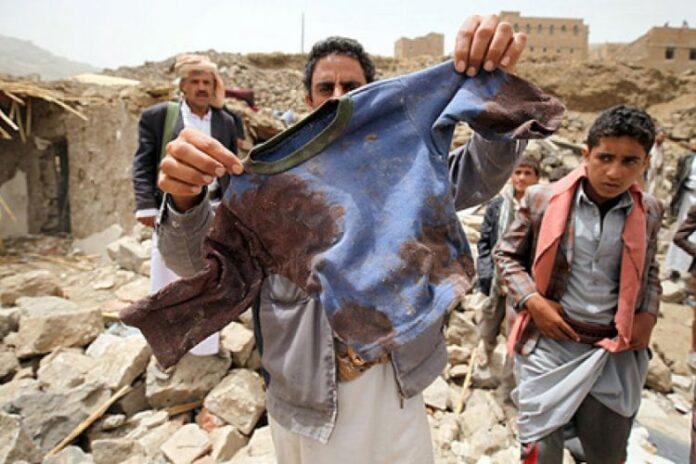
UN Puts Saudi-Led Coalition in Blacklist for Killing Yemeni Kids

UN Puts Saudi-Led Coalition in Blacklist for Killing Yemeni Kids

For the first time this year, the UN list is divided into two parts.

One lists parties that recruit, use, kill, maim, rape, sexually abuse or abduct children in armed conflict or attack schools and hospitals and have taken no action to improve the protection of children. The other lists parties “that have put in place measures … to improve the protection of children.”

The Saudi-led coalition is on the list that has taken measures.

The list was obtained Wednesday by The Associated Press.

Last year the coalition was put on the blacklist but removed by then-Secretary-General Ban Ki-moon under pressure from Saudi Arabia.

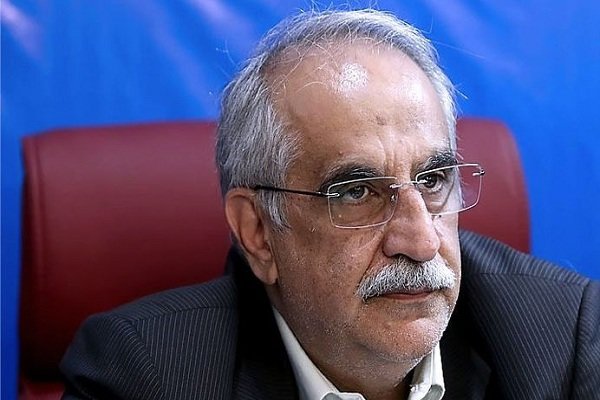
‘IMF, Int’l Banks Not Deterred by Trump’s Pressure from Working with Iran’

Massoud Karbasian

“Despite Trump’s call, we are witnessing a promotion in relations between the Iranian banks and their European and Asian counterparts,” said Iranian Economy Minister Massoud Karbasian as quoted in a report by the official website of Iran’s Chamber of Commerce.

“Before addressing Trump’s statement one should raise the question that “is Trump really viewing himself as the owner of the International Monetary Fund?”

“Does the US really think that it is still the chief of the world? Our answer and that of the world is clearly No,” he noted.

The Iranian minister went on saying all international institutes work based on a clear mechanism and “the decision making process in such institutes is led by a group instead of an individual and that’s why Trump’s statement is taken as a joke.”

“Iran’s rights in the IMF cannot be denied at the mere request of Trump because IMF has its own mechanism,” he added.

According to Karbasian, the performance of European and Asian banks reveal that they are not coerced by Trump’s statement.

Trump has ordered US executive directors at the IMF and other multilateral development banks to vote against extending loans and funds to Iran.

The move comes amid the US attempts to undermine a nuclear deal Iran and world powers, including the US, signed in 2015.

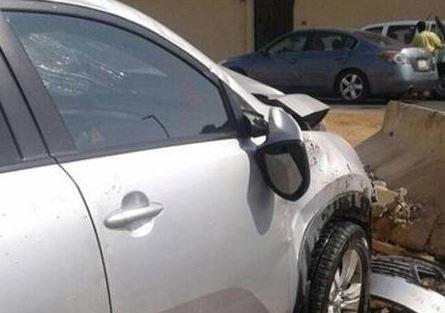
Saudi Woman Killed in Car Crash While Learning to Drive

Saudi Woman Killed in Car Crash While Learning to Drive

The woman’s husband was teaching her how to drive when she crashed the car into a concrete block, reported Al Marsad.

The impact of the crash killed the woman. Her husband was injured and taken to hospital for treatment.

The accident is the second one involving a female driver and resulting in death after Saudi’s decision to allow women to drive.

The decision was announced last week, but the royal order stipulated the formation of a ministerial committee to issue recommendations within one month.

The necessary arrangements to facilitate the move will be implemented and women will be able to drive 10 days after Eid Al Fitr next year.

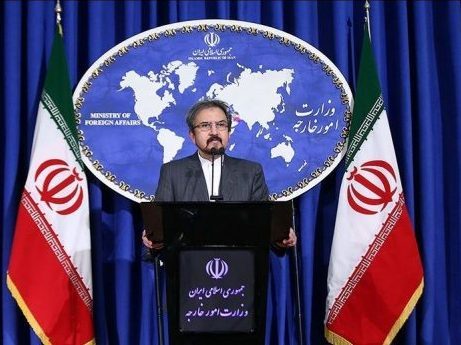
Iran Slams US “Baseless” Report on Human Trafficking

Bahram Qassemi

“We believe that the US government is seeking to distract the world’s attention from its commitments under international treaties and conventions in human trafficking by playing a blame game,” Bahram Qassemi said in a Wednesday statement.

He went on saying the Islamic Republic of Iran vehemently condemns the US government for releasing unreliable reports on human trafficking and leveling undue accusations against independent states.

The spokesperson also said as a signatory of the UN Convention against Transnational Organized Crime, the Islamic Republic of Iran has so far adopted massive executive and legal measures in fight against the nasty phenomenon of human trafficking.

“Iran’s measures have already been confirmed by the related UN-affiliated institutions and mentioned in the reports released by the UN Office on Drug and Crime,” he added.

Iran maintains that in fight against human trafficking, particularly the trafficking of children and women, one needs to address the fundamental and basic causes behind the phenomenon, particularly foreign intervention and armed clashes, he added.

“It goes without saying that the US interventionist and destabilizing policies across the globe, especially in the Western Asia and Africa, have paved the way for the emergence of transnational criminal gangs which are active in human trafficking,” he said.

Qassemi also referred to the latest request of US president from the executive managers of International Monetary Fund and multi-lateral development banks for depriving Iran of financial facilitates and said such requests reveal the US president’s ignorance of the international organizations’ legal mechanism.

“Meanwhile, requests like this amount to Washington’s stark interference in the international organizations’ affairs inflicting a blow on their legal independence,” he concluded.

Kurdistan Referendum Not to Get Anywhere: Erdogan

erdogan

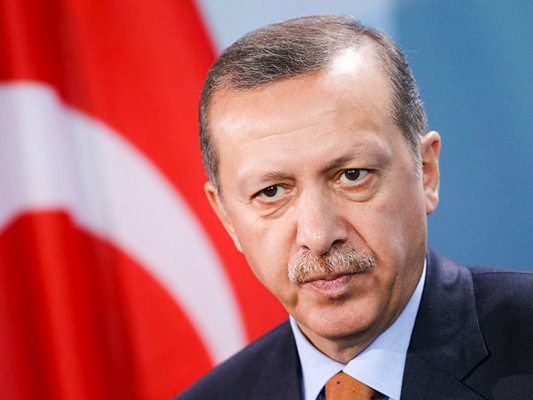
Speaking in a Wednesday press conference after meeting his Iranian counterpart Hassan Rouhani in Tehran, Erdogan stressed that the regional issues are definitely on the agenda and the issue of Iraq is at the top.

The president of Turkey noted both Tehran and Ankara have already emphasized that they will not recognize the illegal referendum held by the Kurdistan region of Iraq.

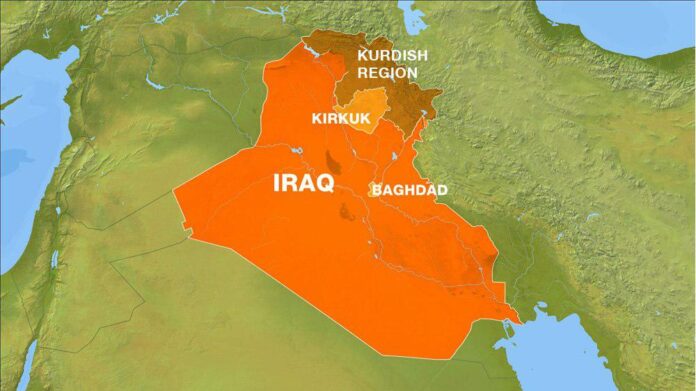
“Turkey has a 350-kilometre border with the Iraqi Kurdistan region. In the east of this region, Iran is a neighbour, Iraq’s central government is located in the south of the region, and Syria is in the west,” emphasized Erdogan.

“I cannot understand what the Iraqi Kurdistan region is doing. Currently, no one except Israel supports the region.”

“In our view, the decision taken by sitting at the table with the Mossad is in no way legitimate and acceptable,” said the Turkish president.

“I am sure that the president of the Iraqi Kurdistan region will not achieve anything by making a decision while seated at a table next to a well-known person (on his right) and another one (on his left). This only leads to his own isolation.”

“We (Iran and Turkey) have taken a firm stance, and this firm stance is clear to all; we only recognize the central government of Iraq,” added Erdogan.

Erdogan once again emphasized that the referendum on the Iraqi Kurdistan’s independence is definitely illegitimate, saying “as you know, we have taken special measures and we have implemented some of them.”

Erdogan said both Iran and the central government of Iraq and Turkey have taken measures in relation to the Iraqi Kurdistan region, and stricter measures will be taken later.


Turkey, Iran, Russia Working to Resolve Syria Crisis

About their policy on Syria, he said, “Similarly, in Syria, we have activated a trilateral mechanism. There, Iran, Russia and Turkey started the Astana Talks on Syria and took steps in this regard.”

The president of Turkey stated that “in Syria, de-escalation zones are very important for us.”

“I am confident that as a result of our joint struggles against terrorist groups, including ISIS and al-Nusra Front in Syria, we will be able to assist the oppressed people of that country,” underscored Erdogan.

“I am sure that our joint supports for all the oppressed people of the world is a duty.”

Erdogan told the press conference that respective Iranian and Turkish ministers, the armed forces of the two countries and intelligence units are taking all necessary measures in this regard in the region.


Tens of Thousands of Turkish Tourists to Visit Iran

After senior officials from Iran and Turkey signed cooperation agreements in the presence of the two country’s presidents, Erdogan said, “Today, I am here upon the invitation of my dear brother President Rouhani. First of all, I need to appreciate the Iranians’ hospitality.”

“I also congratulate President Rouhani on his victory and re-election as the president in this year’s election that was held with a huge turnout. Hereby, once again I wish success for President Rouhani, his friends and companions, and the government of Iran.”

The Turkish president also offered condolences on the 1378th anniversary of the martyrdom of Imam Hussein (AS) and his companions in the year 60 AH. Erdogan also saluted Imam Hussein (AS) and his father Imam Ali (AS).

“May God make these blessed days (of month Muharram as a chance) to strengthen the unity, brotherhood and fraternity between Muslims and the world of Islam,” he added.

The Turkish president also mentioned that next to the bilateral meeting with Rouhani, the fourth meeting of the High Council of Strategic Cooperation was held in a very good atmosphere.

“During these negotiations, we discussed all dimensions of bilateral relations, including political, military, social, and tourism fields in detail,” said Erdogan.

He noted that during this visit, the ministers of the two countries also discussed the respective issues.

“I am confident that the meeting of the High Council of Strategic Cooperation will lead to expansion of ties between Tehran and Ankara, and the process of boosting bilateral relations will continue in a positive direction.”

“Of course, earlier President Rouhani and I had agreed to increase the trade volume between Turkey and Iran to $30 billion but unfortunately, in recent years, the trade volume between the two countries remained at $10 billion.”

Erdogan underlined that during the meeting of the High Council of Strategic Cooperation the two sides advised the ministers to follow up issues in various areas including energy, tourism, transportation, and even defence industries.

“Meanwhile, we decided to work with the central banks of the two countries, ease cooperation between other banks of Iran and Turkey, and help the finance sectors to increase ties in these fields.”

Erdogan also said that the two sides would conduct trade in their own currencies to limit foreign exchange pressures.

“As President Rouhani mentioned, the central bank officials of the two countries will sign a cooperation agreement. In addition, we decided to encourage the establishment of branches of Iranian and Turkish banks in the two countries,” Turkish President underscored.

“At the same time, we stressed to further strengthen the energy relations between Tehran and Ankara, as close cooperation in energy sector between the two countries is of great importance.”

He also touched upon the significance of mutual cultural cooperation, especially in tourism field.

“I am sure that by working together and strengthening ties in tourism field, tens of thousands of our citizens will travel to Iran which is a country with a long history of civilization,” he stated.

“Of course, the number of flights of Turkish airlines to Iran has already been high which indicates the importance of Iran for Turkey.”

“We have always encouraged the Turkish tourism investors to invest in Iran and they will be encouraged more,” he went on to say.

Turkish president went on to say that the Joint Commission on Economic Cooperation will hold its meeting on October 24 and 25, expressing hope that this meeting would be beneficial for both countries.

At the end, Erdogan once again appreciated the hospitality of the Islamic Republic of Iran.

Turkish President Meets with Iran Leader

During the meeting, Ayatollah Khamenei underlined the need for increased economic cooperation between Iran and Turkey.

The Leader also described Tehran-Ankara cooperation on major issues of the Islamic world as extremely important and influential.

He emphasized the need to expand economic cooperation between the two countries, adding, “Unfortunately, despite the existence of numerous capacities, the level of economic cooperation in recent years has not made any progress, and increased efforts are needed in this regard.”

Ayatollah Khamenei expressed his gratitude for the cooperation between Iran and Turkey at the Astana talks on Syria, and referred to the improved situation in Syria as a result of such collaboration.

“The issue of Daesh and Takfiris will not end this way (without cooperation); solving this problem requires a long-term and realistic plan.”

The Leader further referred to the referendum in Iraqi Kurdistan as a betrayal to the region and a threat to its future.

Referring to the interests of the United States and the Zionist regime in organizing the referendum in the Iraqi Kurdistan, the Leader noted, “The United States and foreign powers are unreliable and seek to create a ‘new Israel’ in the region.”

Ayatollah Khamenei then pointed out the negative long-term consequences of the referendum for neighbours, emphasizing, “Iran and Turkey should take every possible step in confronting this (referendum); and, the Iraqi government must also seriously decide on it and act.”

“The US and European governments look at this issue from a completely different point of view, compared to that of Iran and Turkey. The United States wants to maintain an everlasting and disruptive agent against Iran and Turkey; therefore, Americans and Europeans, and their positions cannot be trusted in any way.”

Ayatollah Khamenei, addressing the Turkish President, stated, “As you pointed out the recent events primarily benefit the Zionist regime, and secondly benefit the US government.”

“With a long-term and strategic vision toward the recent issues, serious and rapid decisions must be taken, and the issues must be encountered by a single action.”

Erdogan, who arrived in Tehran on Wednesday morning, earlier met his Iranian counterpart Hassan Rouhani.

The two presidents also attended a ceremony where several memoranda of understanding were signed between the two neighbouring states.

Iran, Turkey Strongly Opposed to Secession of Regional States: Rouhani

In a joint press conference with his Turkish counterpart Recep Tayyip Erdogan in the Iranian capital, Tehran on Wednesday, Rouhani said the two sides held extensive talks on the regional issues including Syria and Iraqi Kurdistan.

“We denounce the foreign powers’ plot to fan the flame of ethnic and religious conflicts in the region,” Rouhani said, adding the two countries are also totally against any regional secession, a Farsi report by Tasnim New Agency said.

The Iranian president said Iran and Turkey view Iraq and Syria as unified countries and added, “Iraqi Kurdistan is among our brotherly neighbours and we don’t like to exert any pressure on the Kurds but the wrong decision made by the Iraqi Kurdish leaders must be reconsidered otherwise, Iran, Turkey and Iraq have no way but to adopt serious measures to achieve some strategic goals.”

Rouhani called the fight against terrorism one of the main joint goals of Iran and Turkey and said the two sides will fight terrorism anywhere regardless of its name.

“Terrorism can’t press ahead with its inhumane operations if the regional states stand united,” he added.

The Iranian president said the two Muslim nations of Iran and Turkey are the anchor of security in the region.

“Our relations have been developing in various political, cultural and economic fields over the past years. In our public and private meetings, I and the Turkish president adopted some significant decisions including expanding our banking relations and multiple our trades by national currencies,” he said.

Rouhani said Iran and Turkey agreed to finalize their decisions in banking relations by the coming days. “Meanwhile, we signed some agreements in customs to import and export goods via three border points as part of efforts to expand our bilateral relations. Two border points are set to become 24/7 as of Thursday and the third one is now under construction.”

“In oil and gas fields, we agreed to allow the Turkish side to extract more amounts of gas and oil. The related ministries are set to make the arrangements. Meanwhile, Iran has announced its readiness to welcome more Turkish investments in this field,” he said.

“Iran is determined to expand its trade volume with Turkey to $30b,” he said.

Iraqi Kurdistan Suffering from Internal Division

The meeting of the Political Council headed by Barzani intensified the dispute between the two rival political parties of Kurdistan’s region, Kurdistan Democratic Party headed by Barzani and Patriotic Union of Kurdistan, under the late Jalal Talebani, reported Al Hayat daily.

It is widely believed that the Council is seeking to hold negotiation with the central government in Baghdad, a Farsi report by Entekhab news website said.

Kurdish representatives of Iraq’s parliament have described the Political Council as a reminder of the Revolutionary Leadership Council under former dictator of Iraq, Saddam Hossein.

A member of the Patriotic Union of Kurdistan’s political office, Hirou Ibrhaim Mohammad, said the party denounced the recent meeting of the Political Council of Kurdistan as a big mistake.

As the second in command of the party, Ahmad said the meeting was held without any prior coordination with other political parties of the region.

In a statement, he said as things stand, the independence referendum held last week didn’t aim to provide the Kurds with a chance for self-determination because “we are still paying the price of Barzani’s adventurous policies.”

Meanwhile, officials of the opposition parties, Goran (Change) Movement and Islamic Party have condemned the recent meeting of the Political Council.

Despite their presence in the independence vote, some Kurdish political parties and groups have retreated from their earlier positions towards the vote under pressure from international as well as regional states.

Goran Movement has warned the Kurdistan parliament as well as the executive power and all Iraqi political parties against working with the Kurdistan’s Political Council.

As a member of the parliamentary fraction of Goran Movement, Hoshyar Abdullah says the Political Council resembles the dissolved Revolutionary Leadership Council under Saddam. “The Political Council is inflicting a heavy blow on the legitimate institutions in the Iraqi Kurdistan,” he added.

In a statement, he added “as one of its main goals, the Political Council is seeking to legitimize Barzani’s presidency.”

“The meeting of the Political Council is a stark challenge for all the legitimate institutions in the region. The organizers held the meeting with the aim of destroying all democratic norms in Kurdistan at the request of Barzani,” he noted.

Kurdish officials stressed they have consensus on establishing peace in the region. They are now considering the national and international plans to overcome the crisis including the plan set forth by the top Shia Cleric Ayatollah Sistani and the Iraqi politician Ayad Allawi.

Observers say by creating the Political Council, Barzani is seeking to prepare the ground for his re-election in Kurdistan’s upcoming election slated for November.

Political parties are against his re-election calling for his immediate resignation.