Saturday, December 27, 2025
Home Blog Page 3806

22nd Luxury Train in Iran with 78 Foreign Tourists on Board

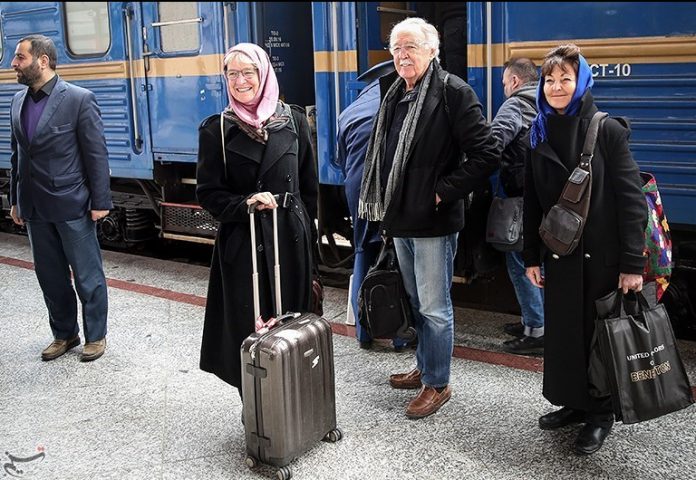
The luxury train with 78 foreign tourists from the UK, the US, Germany, Switzerland, Russia, Malaysia, Australia, the Philippines, Mexico, Hong Kong, and Norway on Friday morning arrived in Kashan amid a warm welcome by the city’s dignitaries.

According to a Farsi report by IRNA, the Golden Eagle also known as the Jewellery of Heart of Persia entered Iran a few days ago. The train includes eight Russian wagons, one Russian power generator and a luxury wagon named Ghazal with a capacity of 40 passengers dedicated to the Iranians’ Foundation.

The foreign passengers of the Eagle Golden arrived in Isfahan on Friday and were taken on a tour of the historical and cultural sites of the central city.

Travelling through the ancient land of Persia, the journey takes the passengers of the luxury train to destinations that have been off the tourist map for many years and sites that are not frequently visited by western visitors; this has made the voyage more special.

The tourists are set to spend 18 days in Iran visiting all the cultural and historical sites as well as natural attractions of the Iranian cities including Mashhad, Tehran, Isfahan, Kerman, Yazd, Shiraz, Sa’adat Shahr, Kashan, Arak, Shushtar, Shush (Susa), Veresk and Pole Sefid. The tour will come to an end on November 20 in the holy city of Mashhad. The train will leave Iran then through Sarakhs border in the northeast.

Golden Eagle Luxury Train says it is the world’s leading operator of exclusive, long-distance rail tours. It has been offering rail journeys across Europe, Asia, Africa and North America over the last 25 years, and presents a range of all-inclusive, European rail cruises aboard the Golden Eagle Danube Express, according to its website.

According to officials of Isfahan, the luxury train is the 22nd tourist train arriving in the city over the past three years.

Persian Ranks 11th among Most Popular Languages on Internet

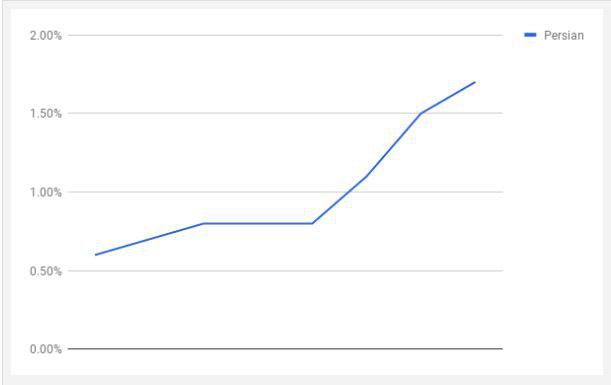
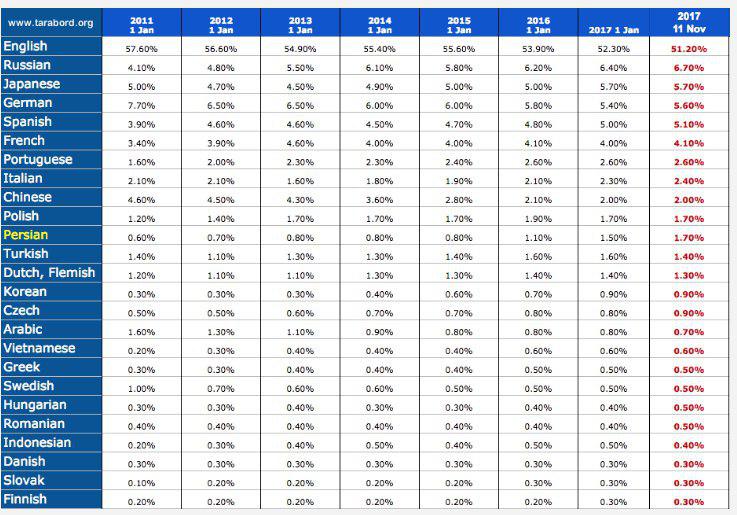
According to the latest W3Tech report in November 2017, Persian language has ranked 11th among most widely used languages of the Internet, being used by 1.7% of all the websites.

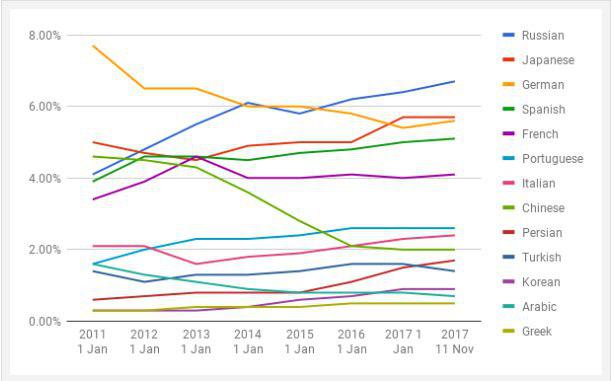
This comes as the Persian language now stands one rank higher than Turkish and 5 ranks higher than Arabic, and is the most popular language of the World Wide Web in West Asia and the Middle East, writes Tarabord website in a Farsi report.

The Persian language increased its share from 0.6% to 1.7% between 2011 and 2017.

Persian Ranks 11th among Most Popular Languages on Internet

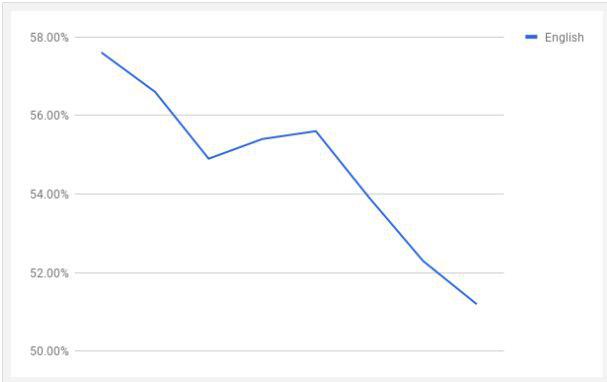
The following diagram shows how much the websites use various content languages (in percent). English is used by 51.2% of all the websites whose content language we know. However, the use of English language has decreased in comparison to 2011.

Persian Ranks 11th among Most Popular Languages on Internet


A higher share for a language on the Web is not only a sign of the livingness of that language, but also shows the development of the online technologies and the industries related to it.

According to Tarabord, Persian language without tens of millions of Internet users and a powerful community of programmers, journalists, bloggers, and thought and content producers could not achieve this success.

On the other hand, the expansion of non-English languages on the Web is a proof of the content diversity on the Internet and the efforts of different cultures to update themselves.

In this regard, the rapid growth of Persian language on the Web is a promising phenomenon that proves Iran’s capability in creating contents.

The following diagram helps us better understand the status of non-English major languages, and shows how these languages are used on the Web.

Persian Ranks 11th among Most Popular Languages on Internet


The rapid growth and expansion of the Internet access along with the strong cultural and scientific influence of Persian language as well as the country’s policy for the development of Web-based services can be considered as the most important factors in this development.

The following table shows the top 25 mostly-used languages of the web between 2011 and 2017.

Persian Ranks 11th among Most Popular Languages on Internet


In the table above, the prevalence of Turkish language has remained relatively stable since 2011, but the odd thing is a 50-percent reduction in the use of Arabic language.

Although the exact reason for this decline is not known, the reduction could be attributed to the wars that many Arab countries have experienced in recent years.

At the same time, the Russian language has developed more than any other language. The Russian language has managed to achieve an eye-catching growth in comparison with French and German.

EU Delegation’s Visit to Iran “Just for Show”: MP

Iran-EU

Iranian MP Ezatollah Yousefian Molla said the visit of the European economic delegation to Iran is aimed at launching an office in Iran, so it seems that their objective is not to provide economic or investment services.

The Islamic Republic ultimately will not agree to the establishment of an EU office in the country, he told ICANA in a Farsi interview.

“In the past, we have had the experience of economic cooperation and providing services. Japan offered good services to Iran before and after the Revolution in the field of harvesting rice, and other countries also had plans in the field of seed improvement, land productivity improvement, and environmental protection,” said this member of Iranian Parliament’s Planning and Budget Commission.

He argued that the provision of economic services by Europeans has many attractions for them.

“However, they are linking these services to establishing an office in Iran so that they can interfere in our political and human rights affairs, which we have always been opposed to.”

The legislator added that “if Europeans provide services in fields like agriculture, including flowering, planting and growing rice, then we welcome them. Of course, they can invest in these areas after providing services.”

Pointing out that some European countries, including France, have anti-Iran stances, he said, “The Europeans took a major step to establish ties with Iran after the nuclear deal, but the result of economic delegations’ visits was inking a few contracts, such as Total. However, that deal had nothing to do with their visit and Iran’s oil minister himself attracted these investments.”

The lawmaker also criticised Europeans for not investing in infrastructures, saying, “They are expected to invest in areas such as rail and road development, but instead they invest in car industry which is an early-return investment.”

“Therefore, we cannot pin our hopes on Europeans as they obey the United States and would never sour relations with Washington for the sake of Iran.”

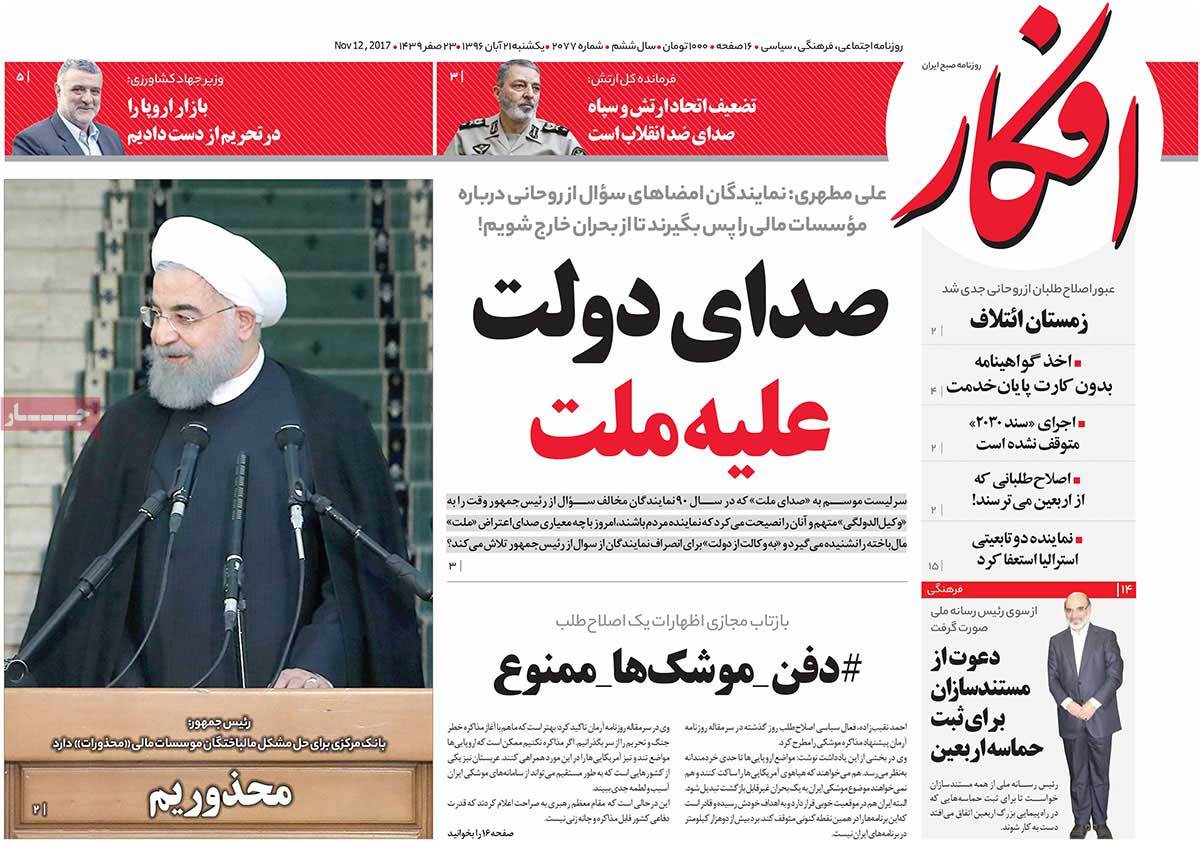
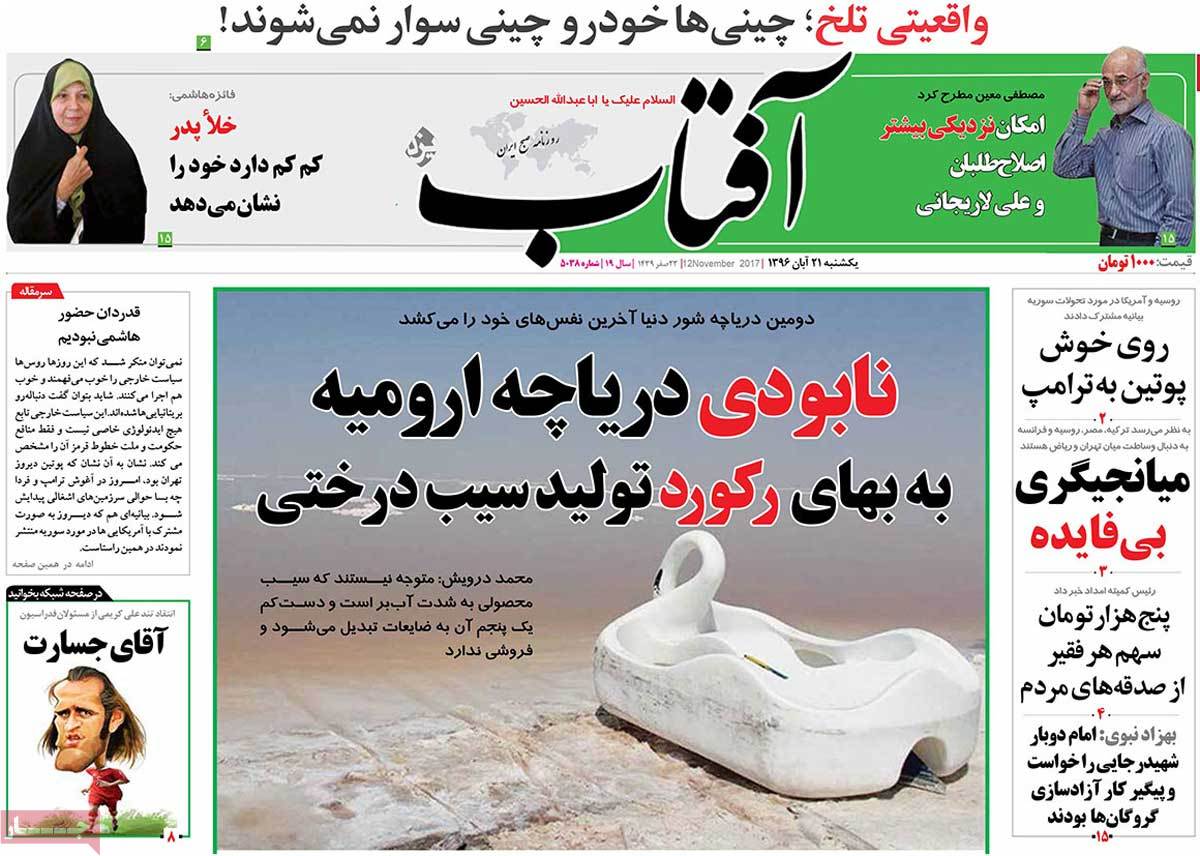
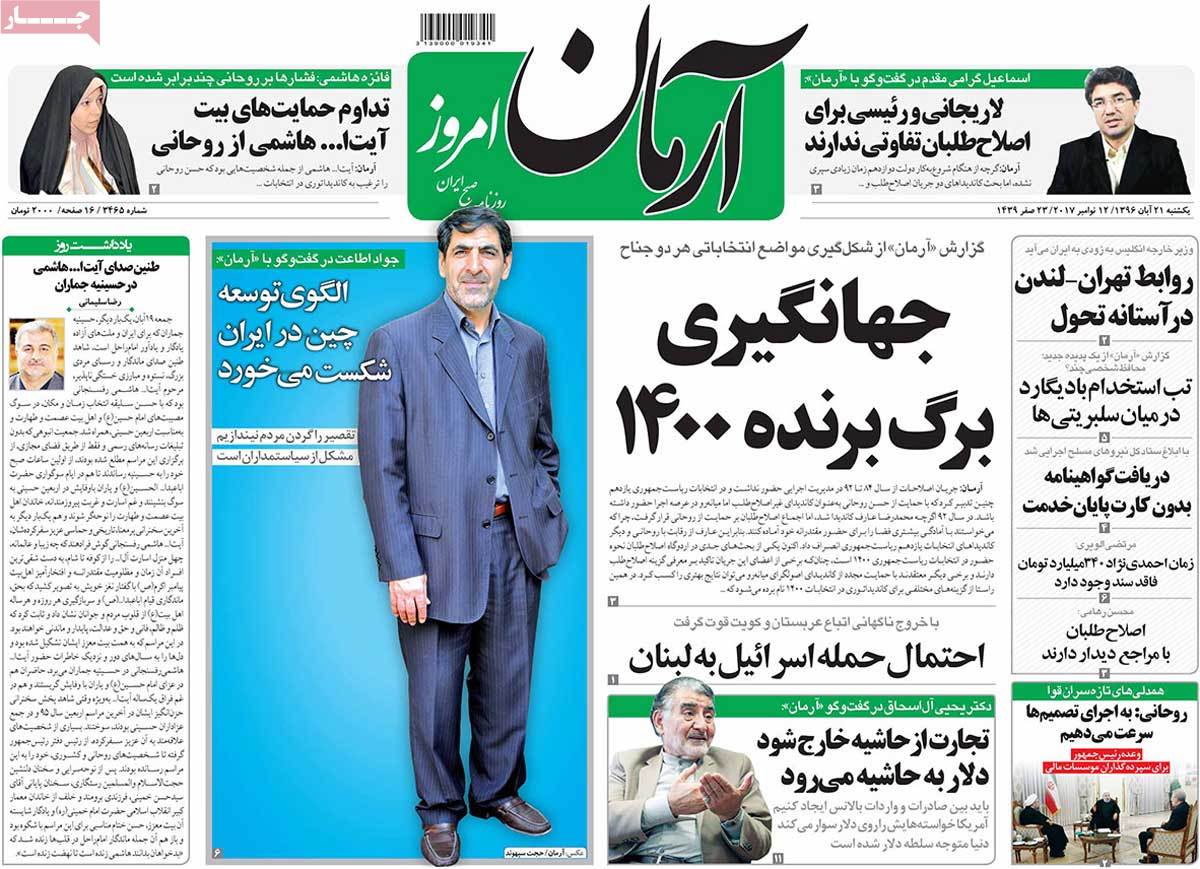
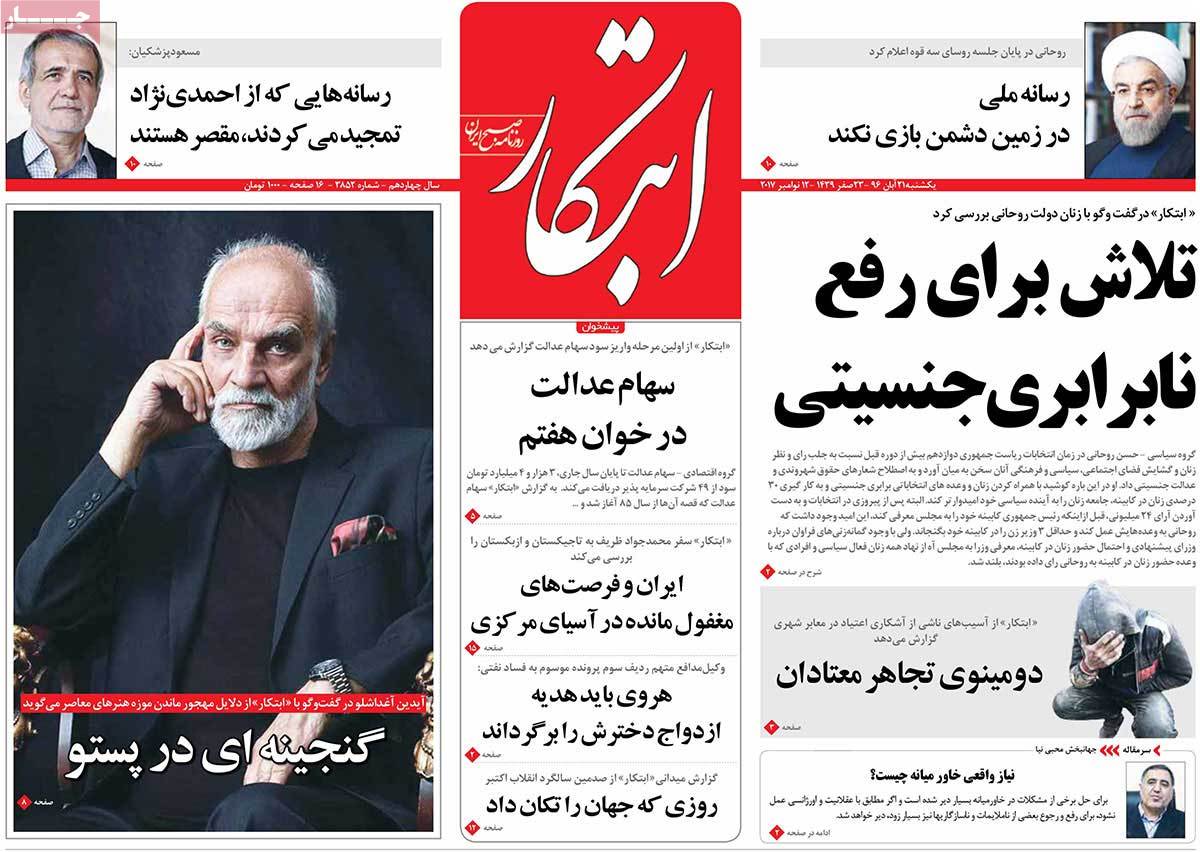
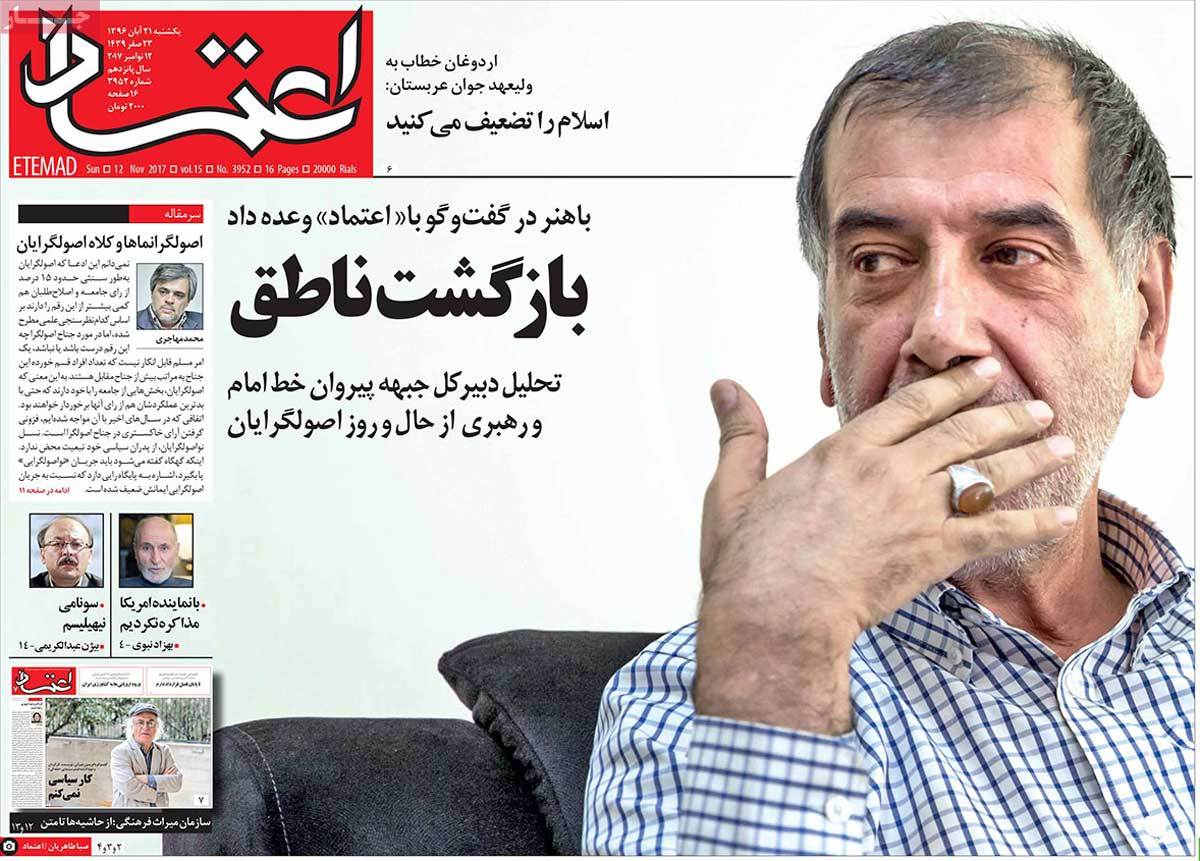
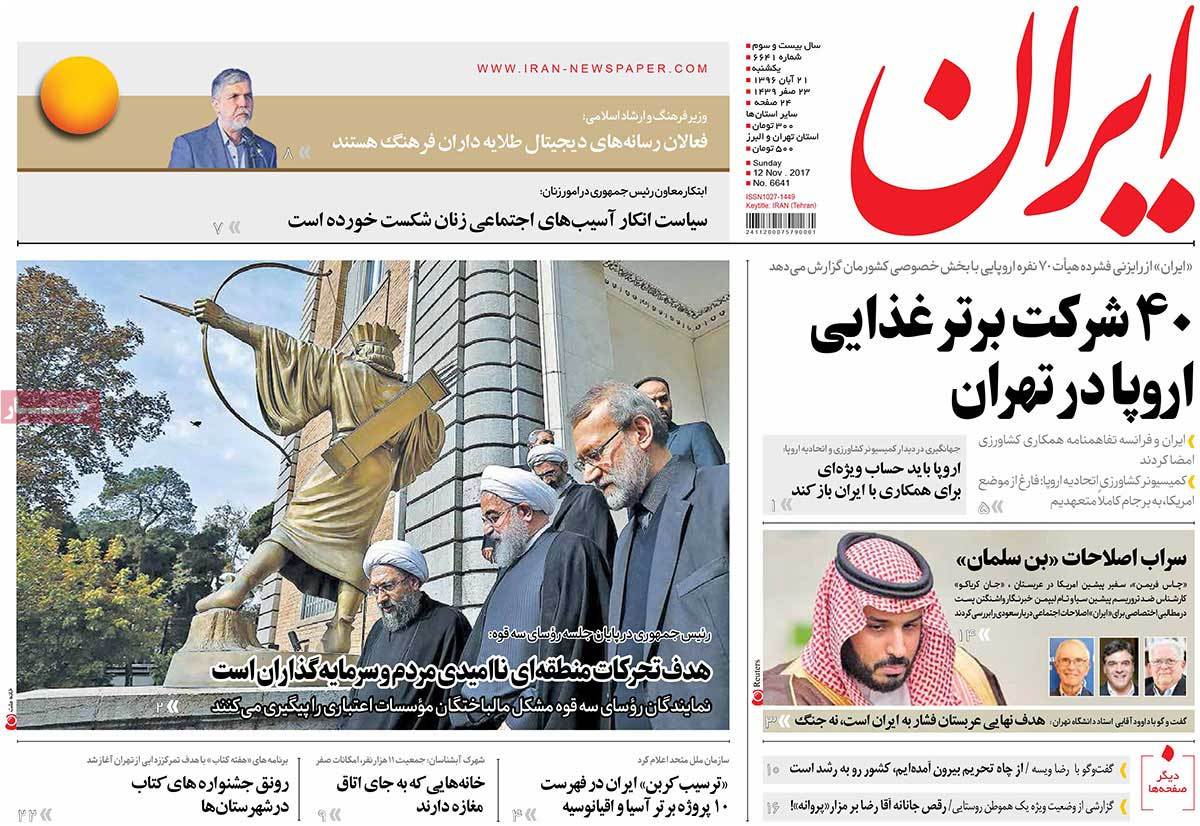
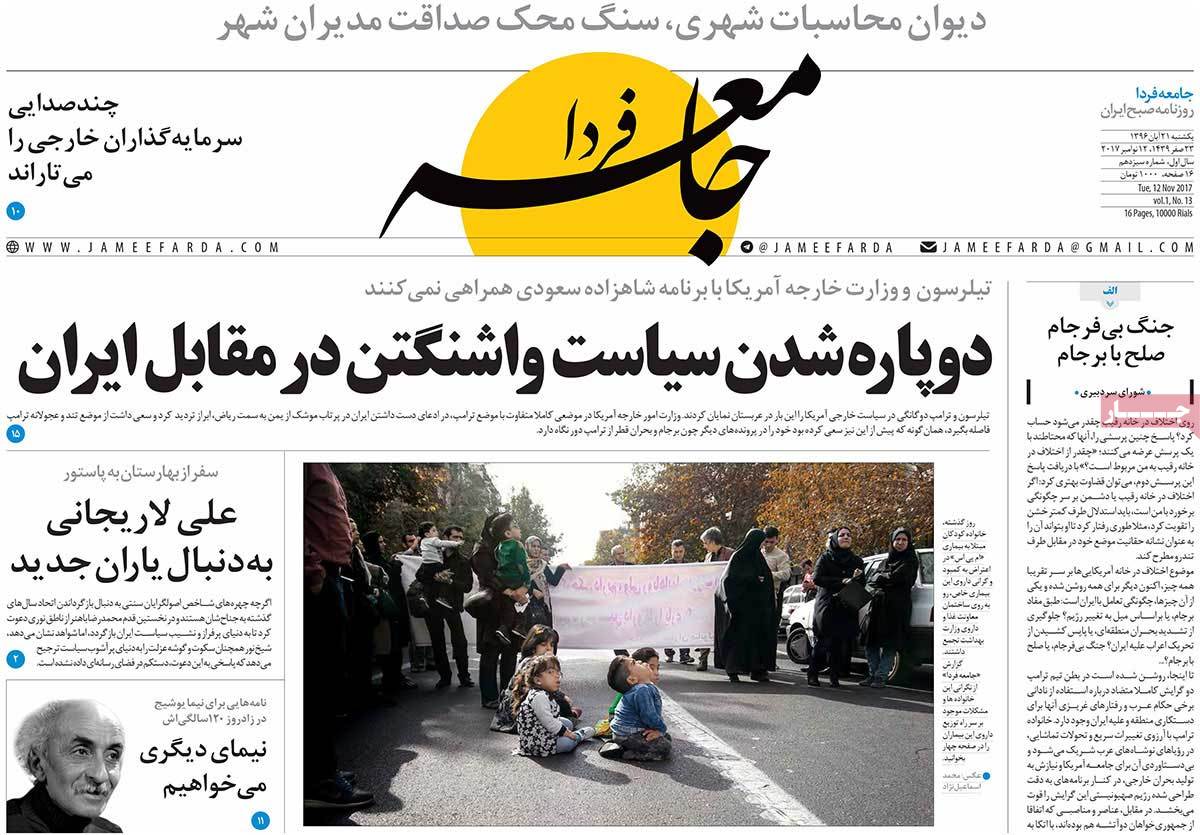
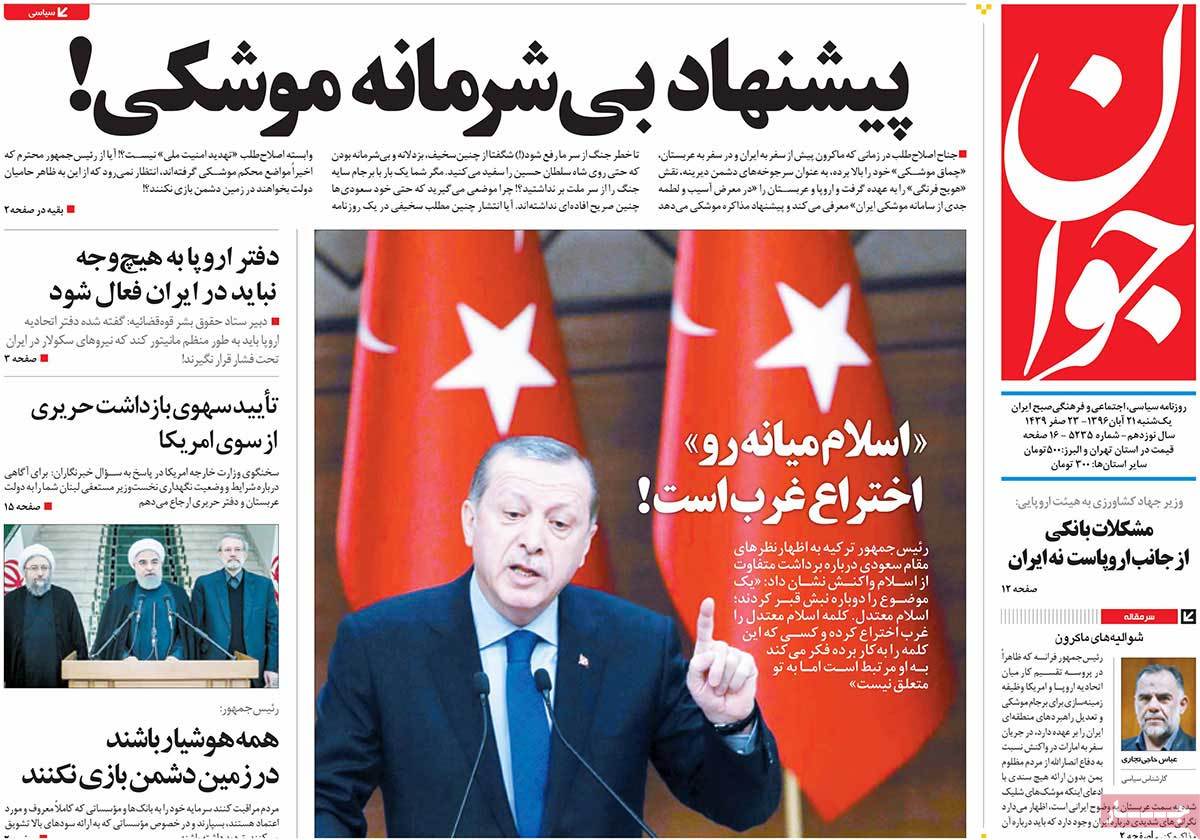
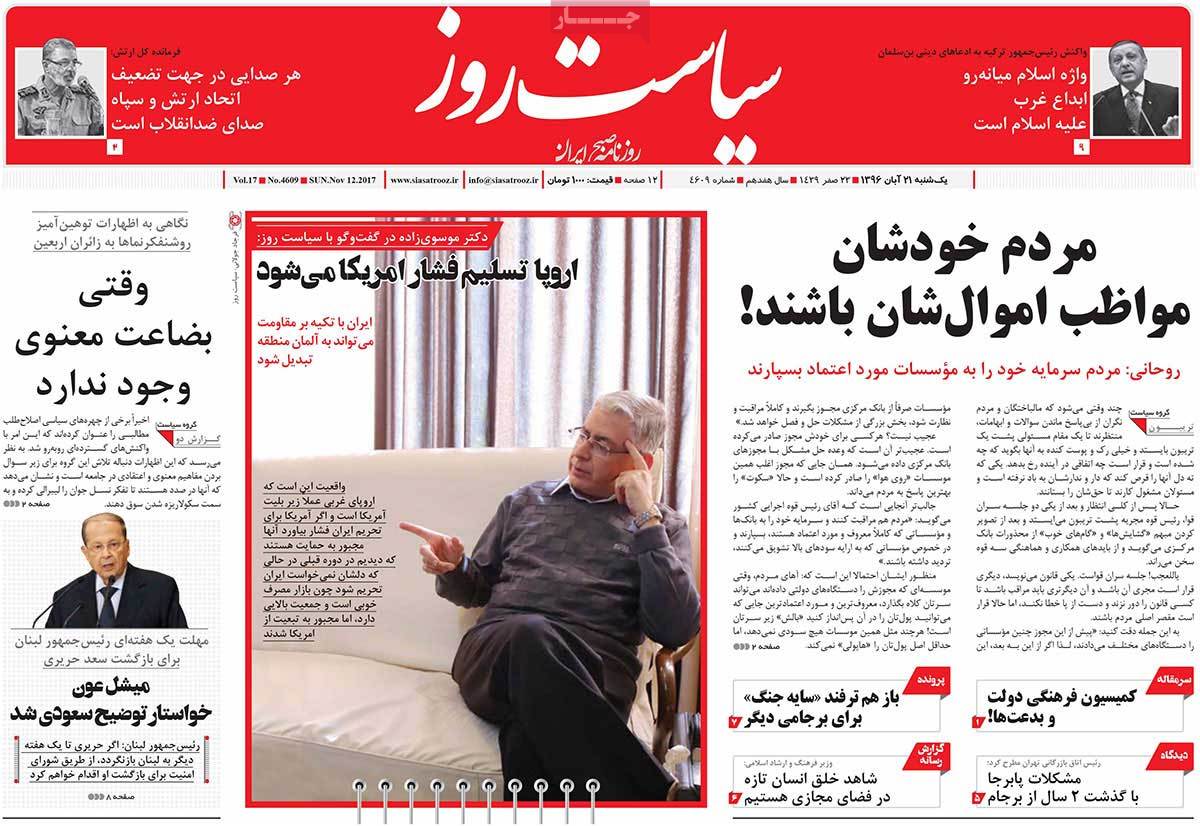
A Look at Iranian Newspaper Front Pages on November 12

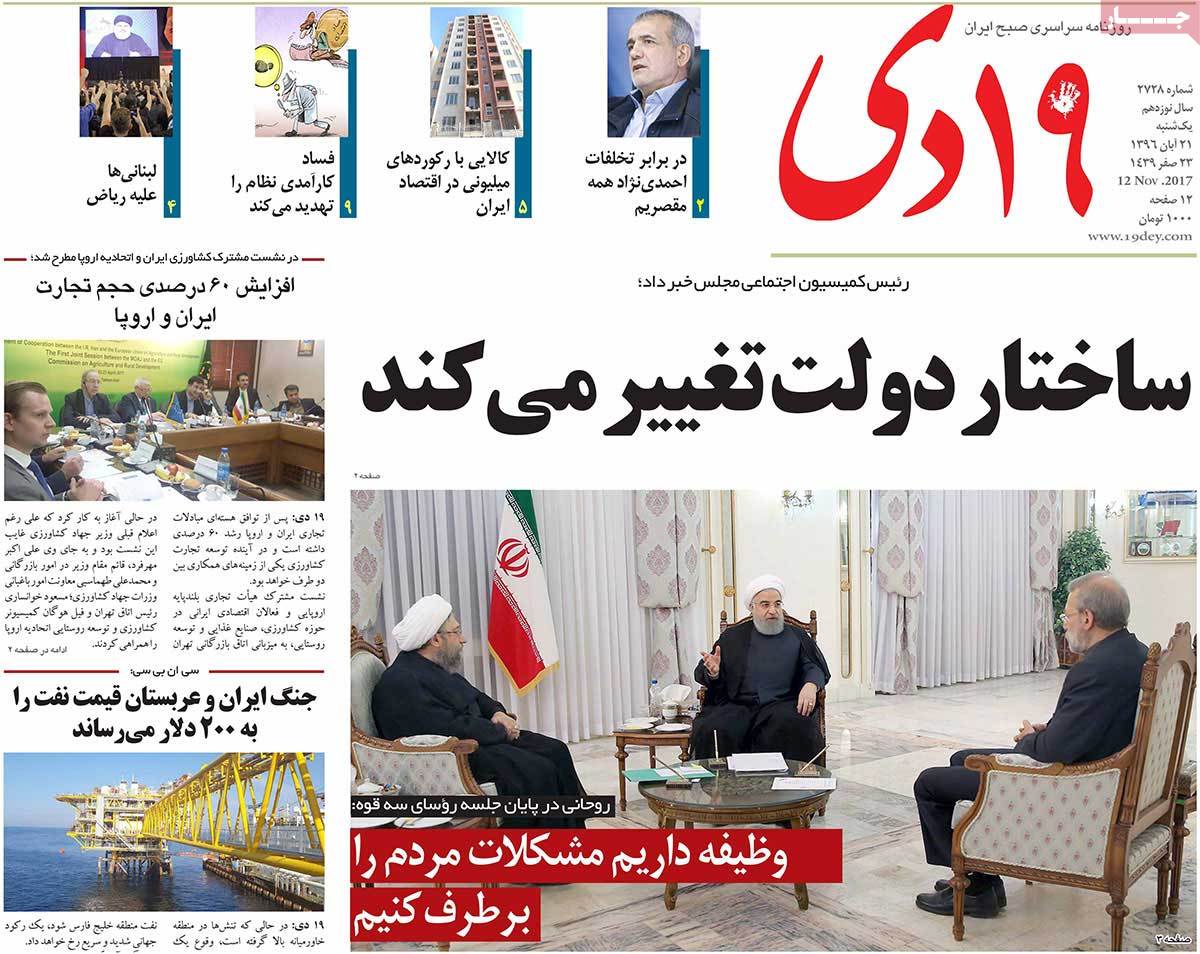
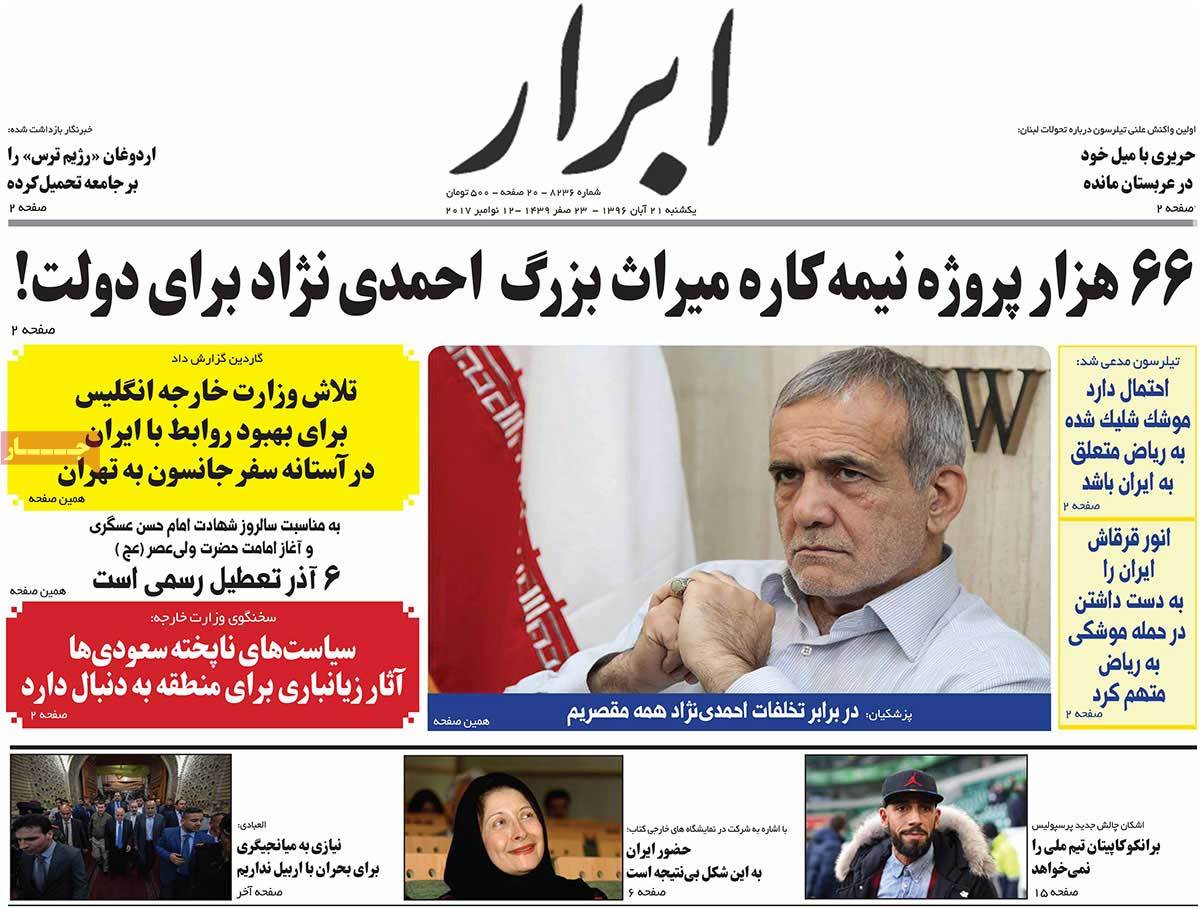
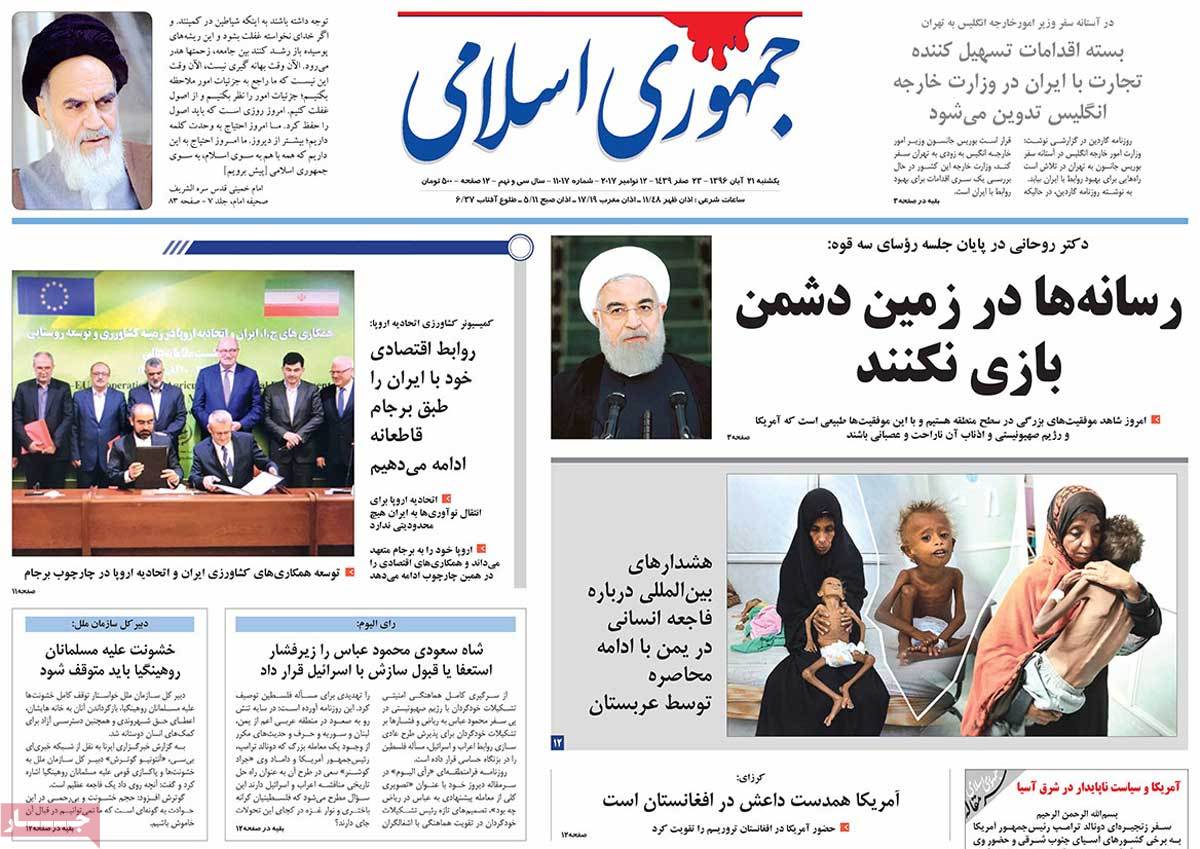
The top story in almost all Iranian newspapers today was the visit of an EU delegation headed by its agriculture commissioner. The delegation visited Iran to examine the capacities for expansion of ties, particularly in the field of agriculture as well as the opening of an office in Tehran.

The visit was widely hailed by economic newspapers, but the conservative ones voiced their strong opposition to the opening of an EU office in Tehran.

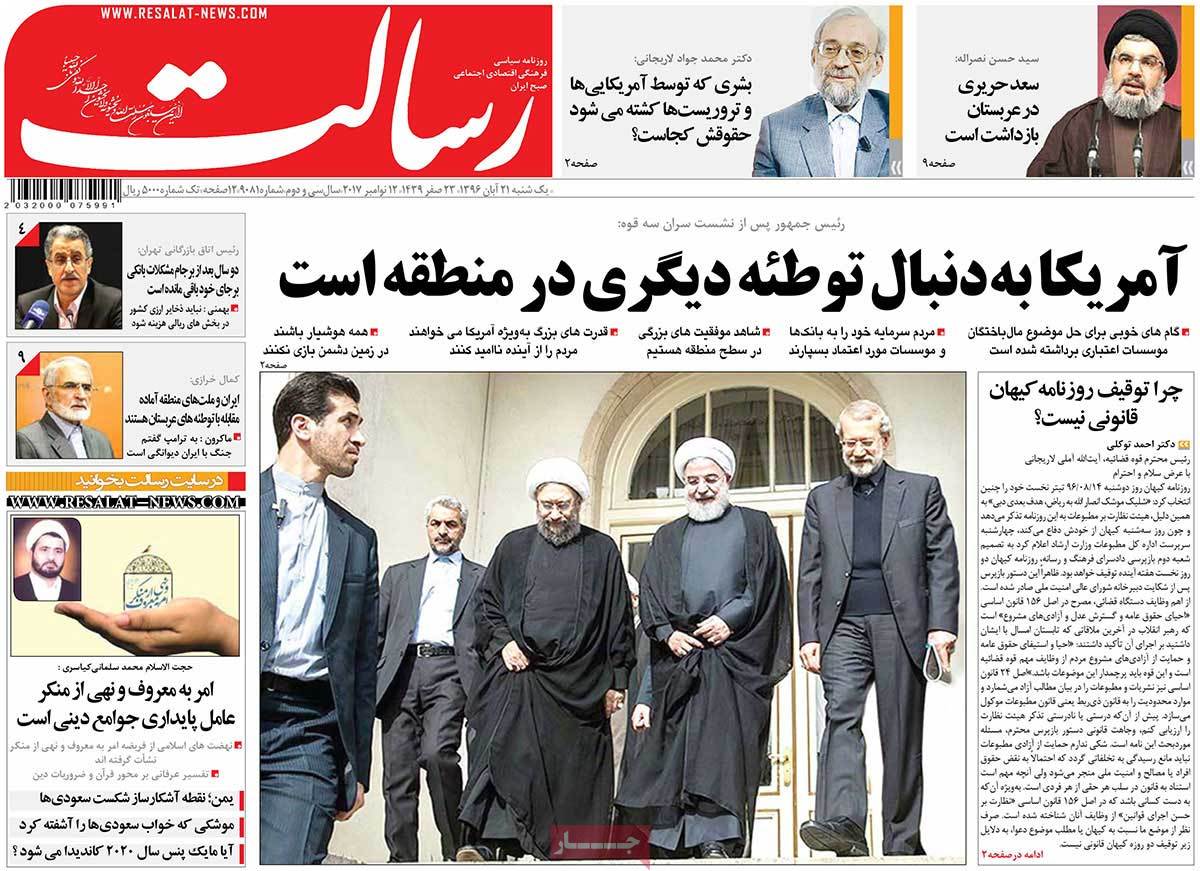
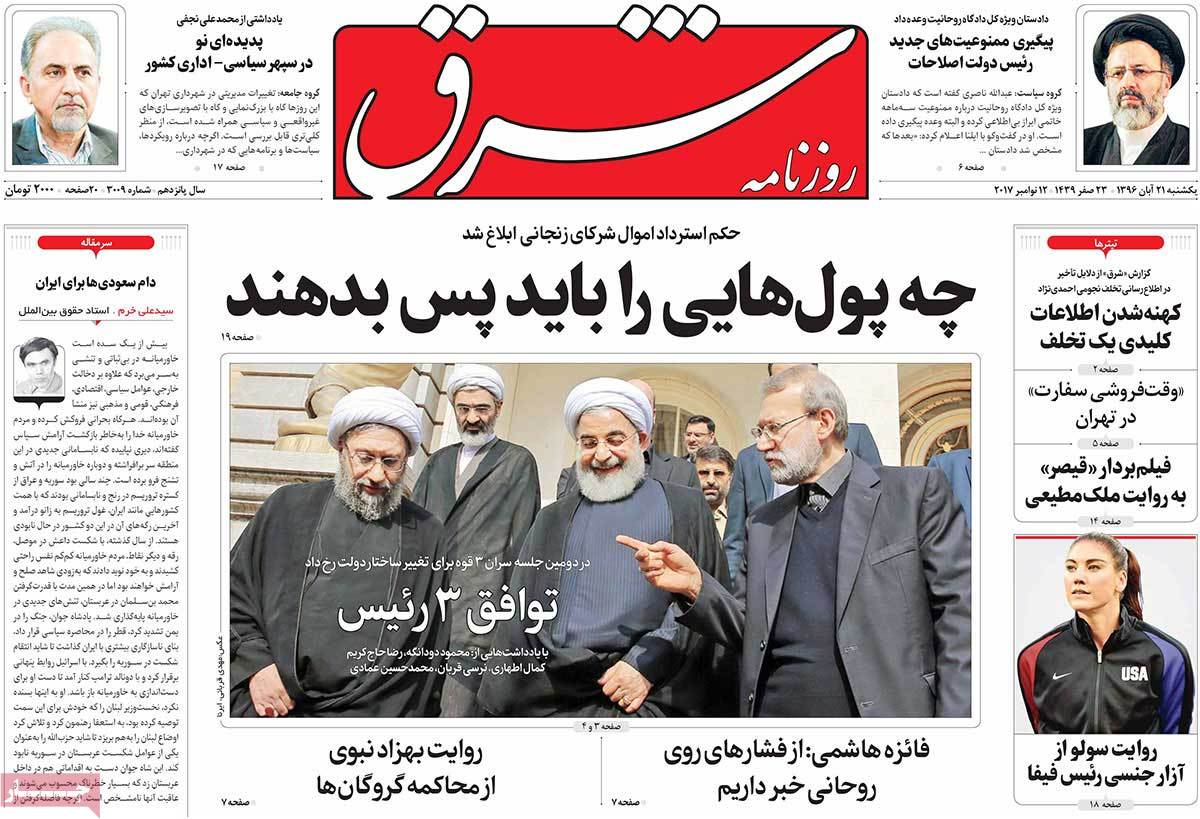
A meeting between Iranian President Hassan Rouhani, Parliament Speaker Ali Larijani, and Judiciary Chief Ayatollah Sadeq Amoli Larijani also received great coverage. The outcome of the trilateral meeting held in the Judiciary chief’s office was an agreement on changing the structure of some ministries, which was first reported by news outlets, but later denied by the government!

The above issues, as well as many more, are highlighted in the following headlines and top stories:


19 Dey:

1- Government’s Structure Will Change: MP

2- Rouhani: We’re Responsible for Resolving People’s Problems


A Look at Iranian Newspaper Front Pages on November 12


Abrar:

1- Iran Foreign Ministry: Saudis’ Half-Baked Policies to Have Dire Consequences for Mideast

2- UAE Minister of State Accuses Iran of Having Role in Missile Attack on Riyadh


A Look at Iranian Newspaper Front Pages on November 12


Afkar:

1- Army Commander: Those Undermining IRGC-Army Unity Are Counter-Revolutionaries


A Look at Iranian Newspaper Front Pages on November 12


Aftab-e Yazd:

1- Apple Production Destroying Lake Urmia

2- Reformist Politician: Reformists, Ali Larijani Can Get Closer to Each Other

3- Putin Warmly Welcomes Trump

  • Russia, US Issue Joint Statement on Syria Developments


A Look at Iranian Newspaper Front Pages on November 12


Arman-e Emrooz:

1- Israel May Attack Lebanon

  • Possibility Increased after Withdrawal of Saudi, Kuwaiti Nationals

2- Tehran-London Ties on Verge of Evolution: British Foreign Secretary to Visit Tehran


A Look at Iranian Newspaper Front Pages on November 12


Ebtekar:

1- Women in Rouhani’s Cabinet Trying to Remove Gender Inequality

2- Iran and Lost Opportunity in Central Asia

  • A Review of Zarif’s Visit to Tajikistan, Uzbekistan


A Look at Iranian Newspaper Front Pages on November 12


Etemad:

1- Erdogan to Saudi Crown Prince: You’re Undermining Islam


A Look at Iranian Newspaper Front Pages on November 12


Ettela’at:

1- First VP: Europe Should Count on Its Cooperation with Iran


A Look at Iranian Newspaper Front Pages on November 12


Iran:

1- 40 of Europe’s Top Food Companies in Tehran

2- VP for Women Affairs: Policy of Denying Women’s Social Ills Has Failed

3- Rouhani: Regional Moves Aimed at Disappointing People, Investors


A Look at Iranian Newspaper Front Pages on November 12


Jame’eh Farda:

1- Washington Split over Its Iran Policy

  • Tillerson Not in Agreement with Trump over Saudi Plans


A Look at Iranian Newspaper Front Pages on November 12


Javan:

1- Turkish President: Moderate Islam Originates in West!

2- Agriculture Minister to EU Delegation: Banking Problems Caused by Europe, Not Iran

3- EU Office Should Never Be Opened in Iran: Iran Judiciary Official


A Look at Iranian Newspaper Front Pages on November 12


Jomhouri Eslami:

1- Int’l Warnings about Humanitarian Disaster in Yemen Caused by Saudi Siege

2- Karzai: US Accomplice of ISIS in Afghanistan

3- EU Commissioner: Europe to Strongly Continue Business Ties with Iran as per JCPOA


A Look at Iranian Newspaper Front Pages on November 12


Resalat:

1- Rouhani: US Looking for another Plot in Middle East


A Look at Iranian Newspaper Front Pages on November 12


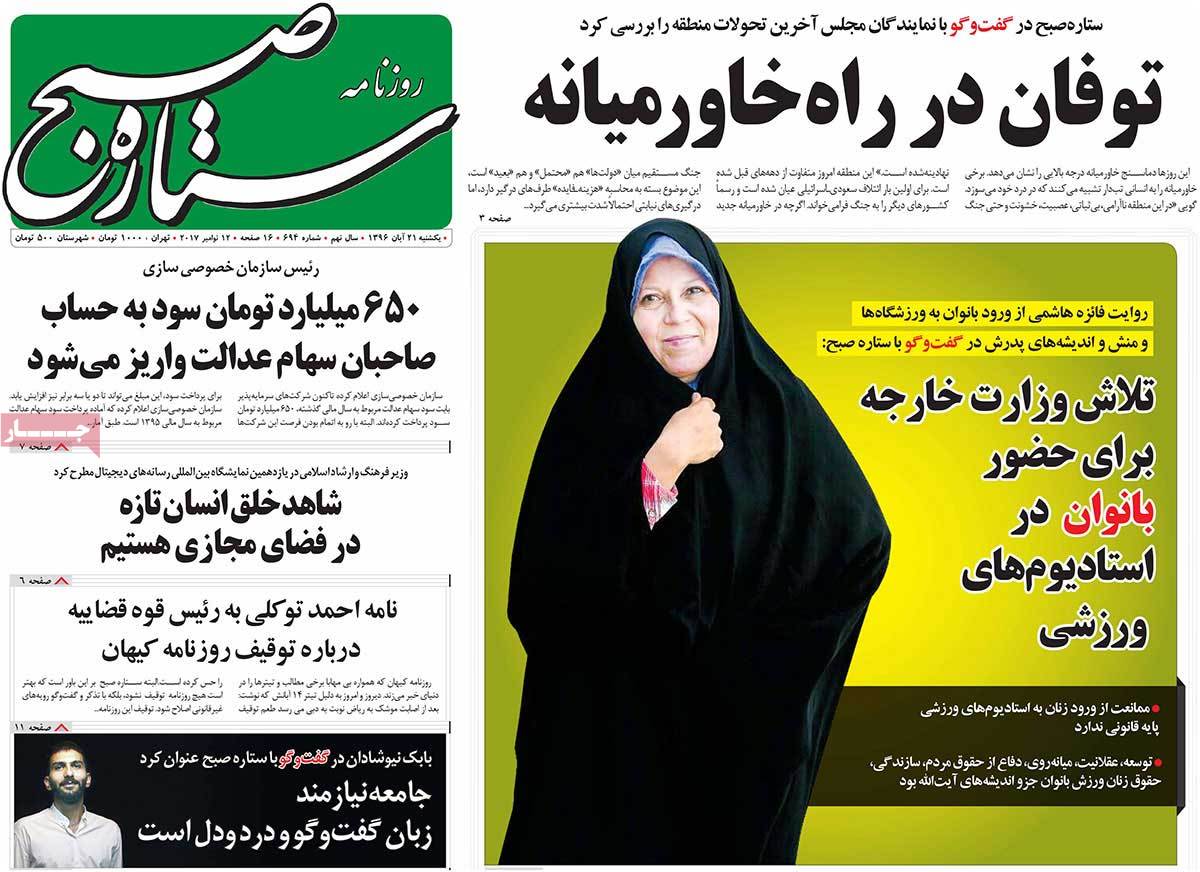
Setareh Sobh:

1- MPs Discuss Latest Regional Developments: Storm Coming in Mideast


A Look at Iranian Newspaper Front Pages on November 12


Shargh:

1- Heads of Trio Branches of Iranian Government Make a Deal

  • Larijani, Amoli, Rouhani Agree on Change in Government Structure

2- US Female Footballer Says Harassed by FIFA President

3- Saudis’ Trap for Iran


A Look at Iranian Newspaper Front Pages on November 12


Siasat-e Rooz:

1- Analyst: Europe to Give in to US Pressure


A Look at Iranian Newspaper Front Pages on November 12

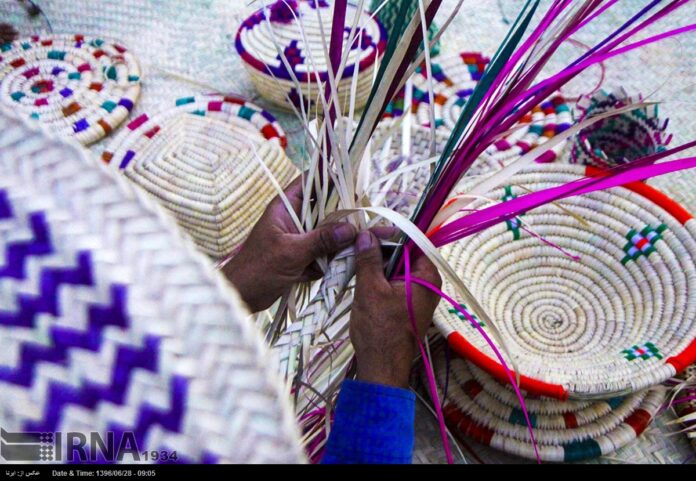
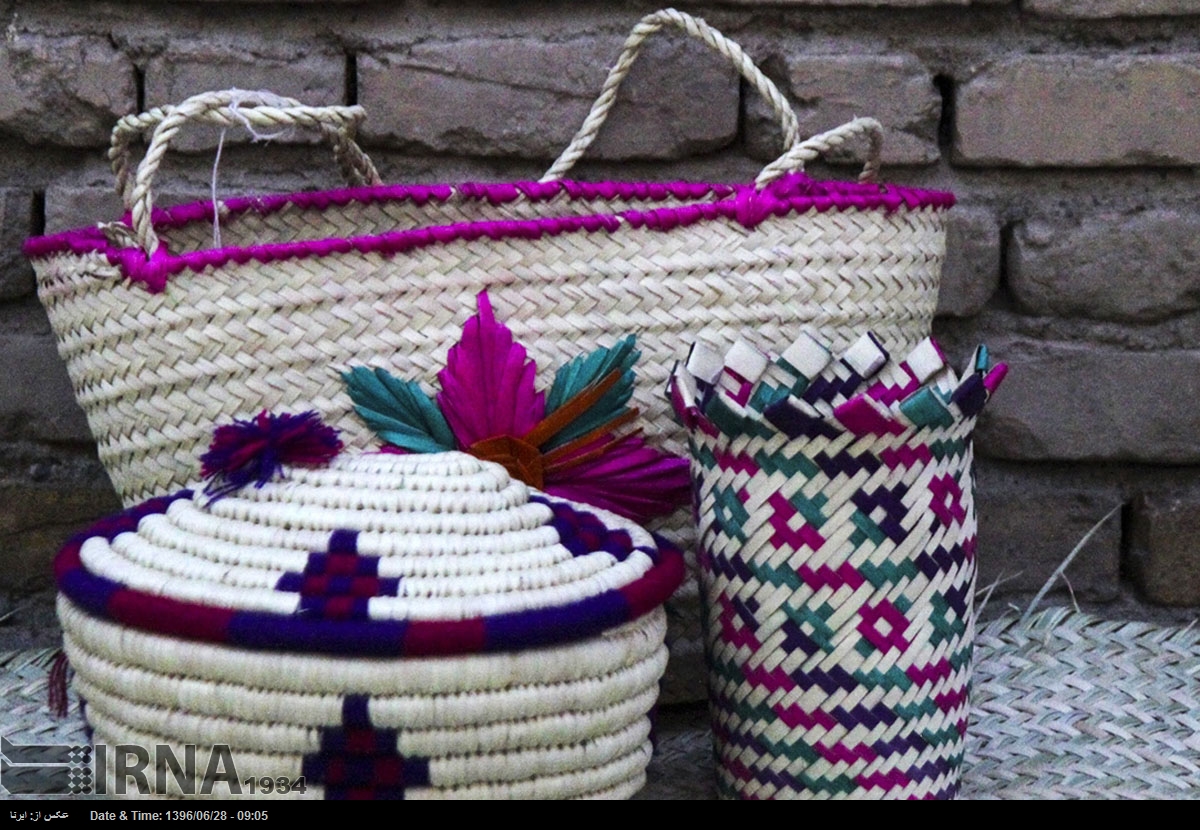
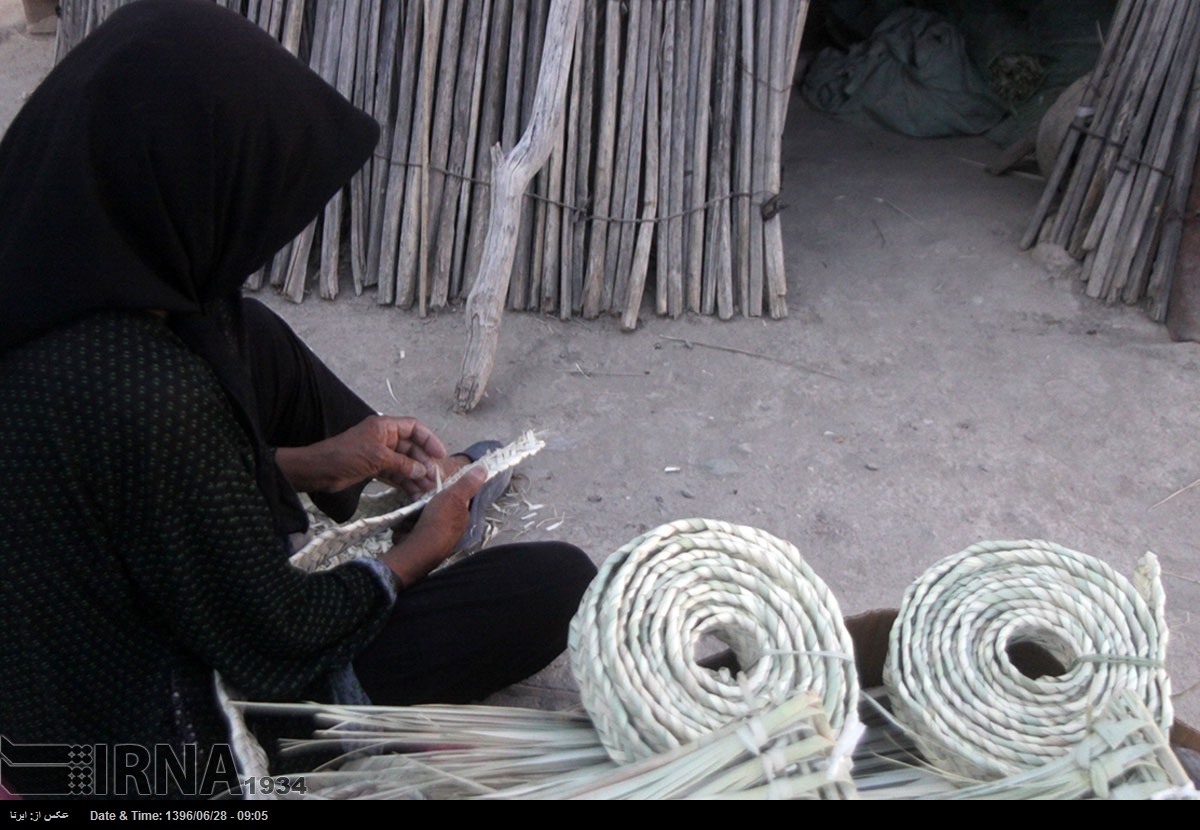
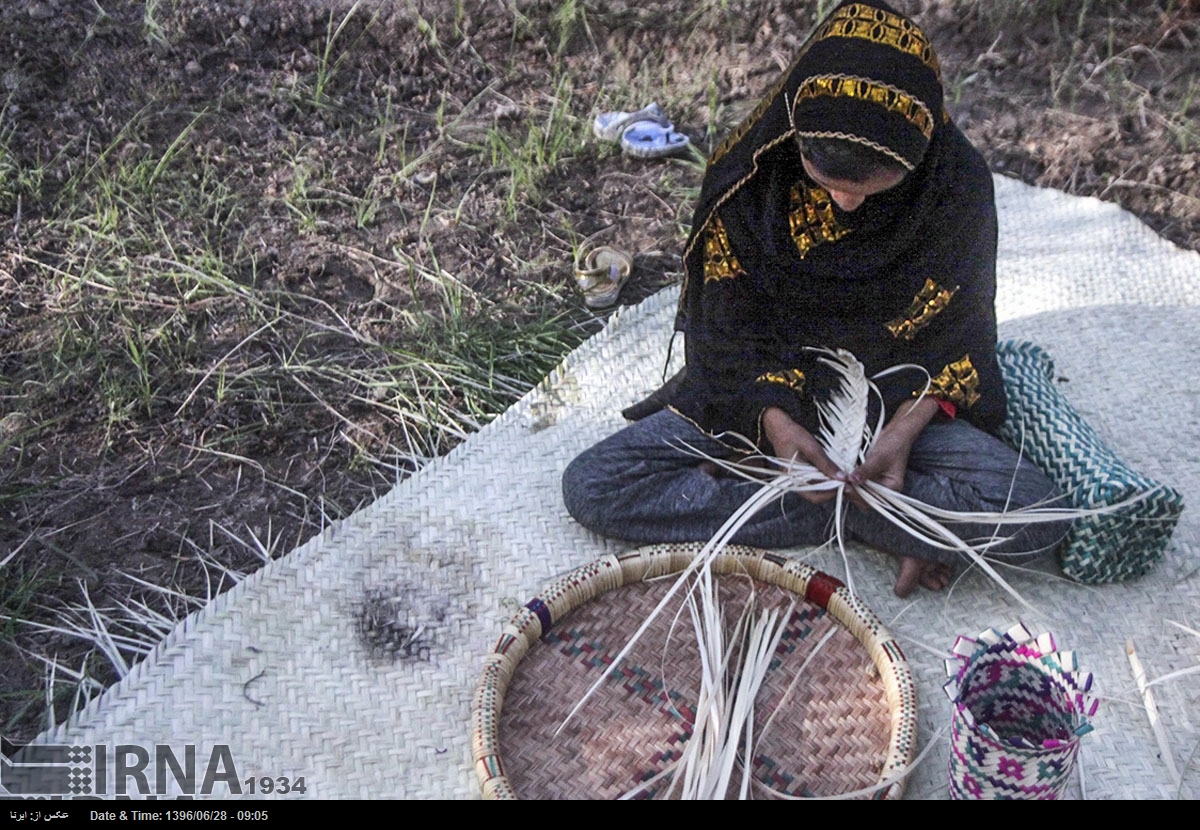
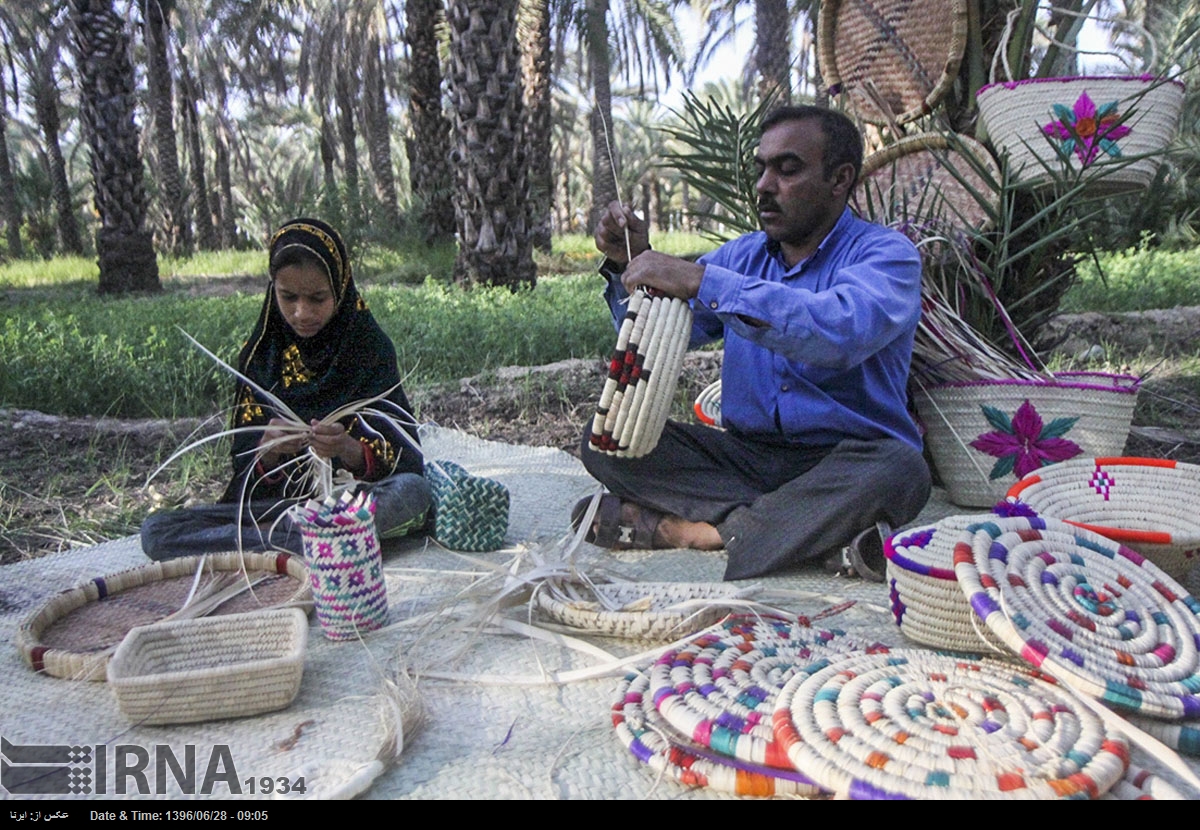
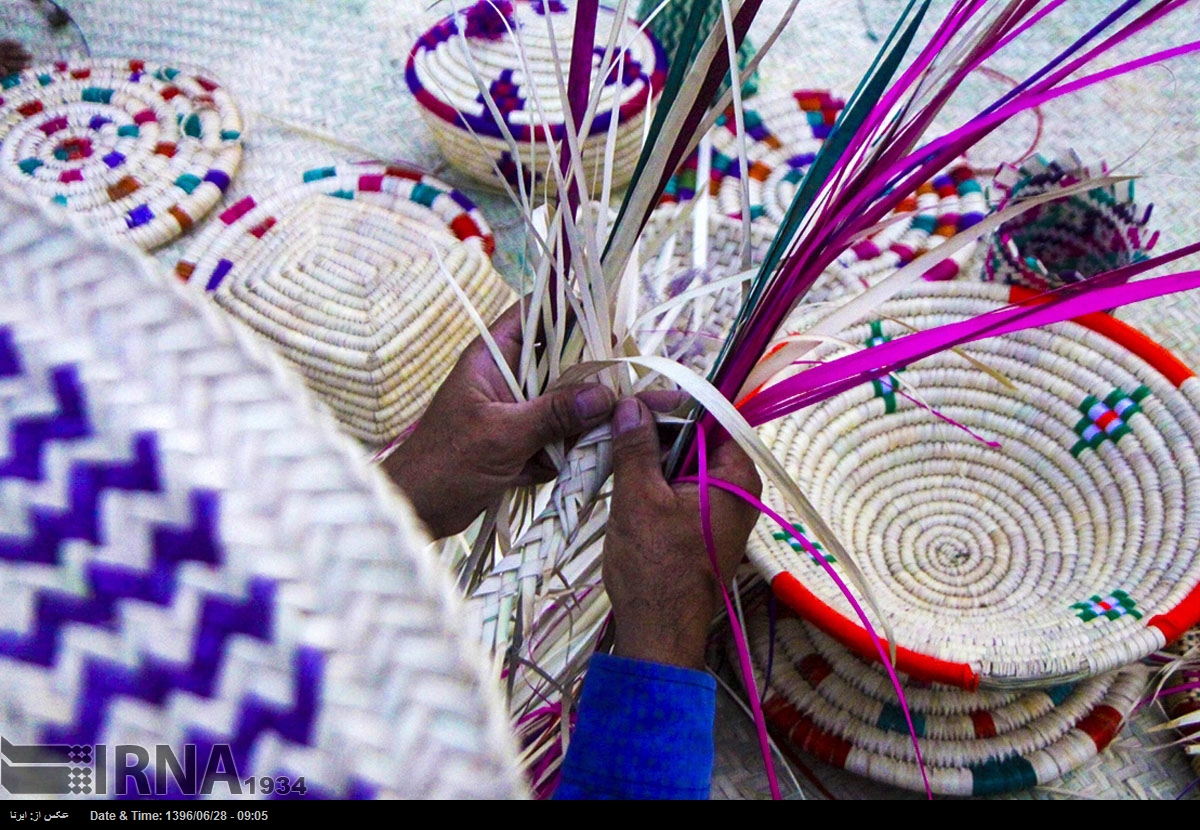
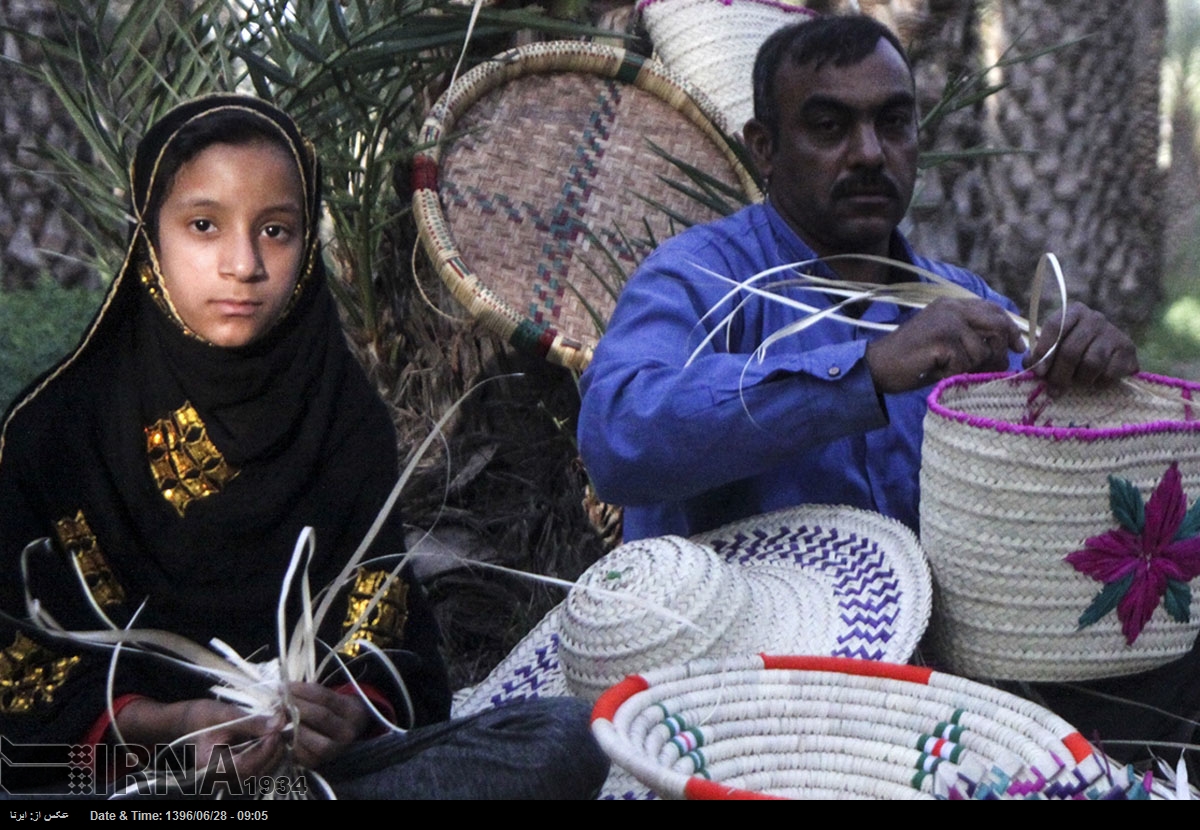
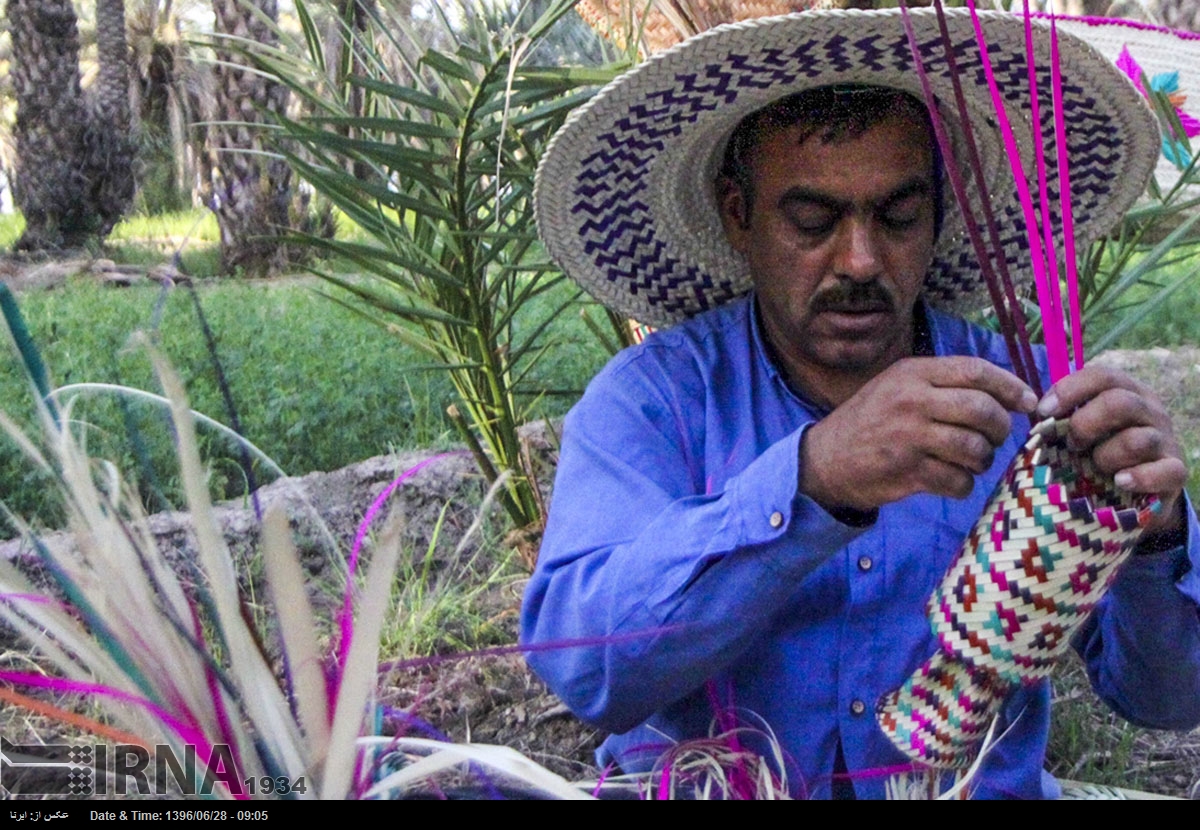
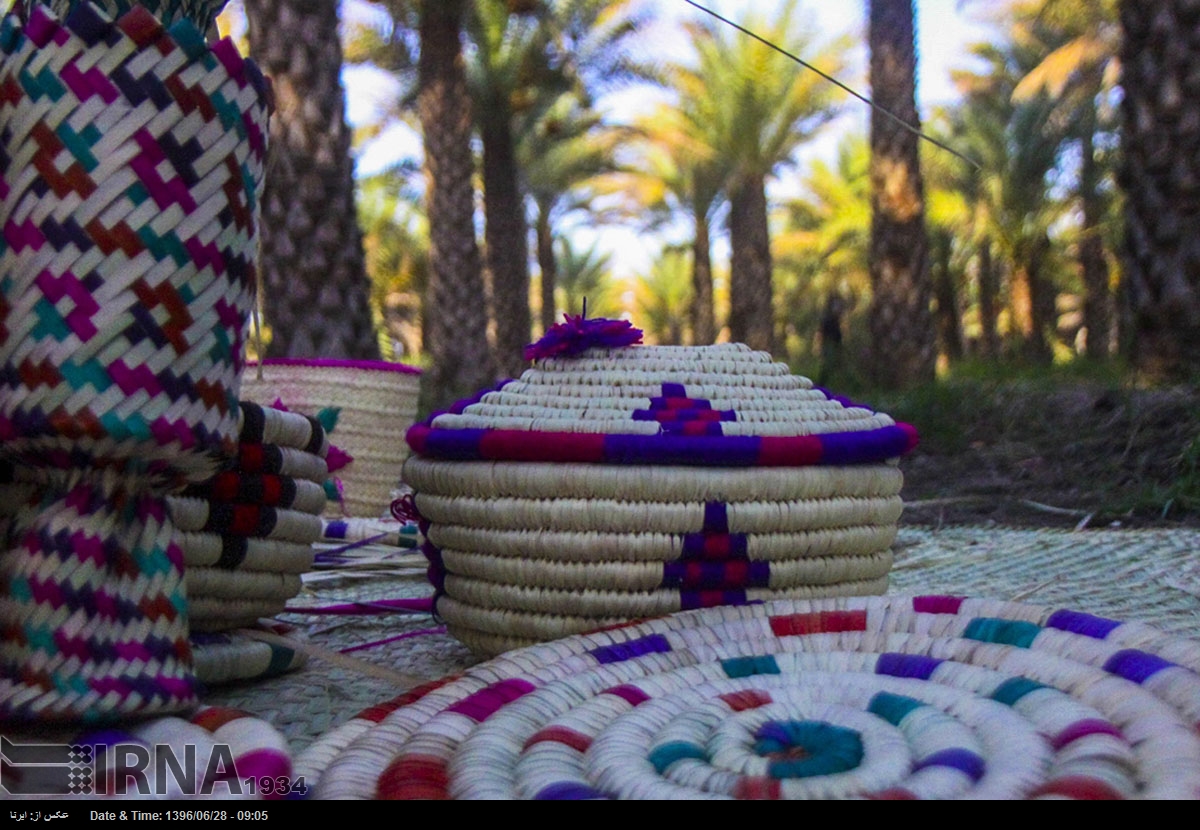
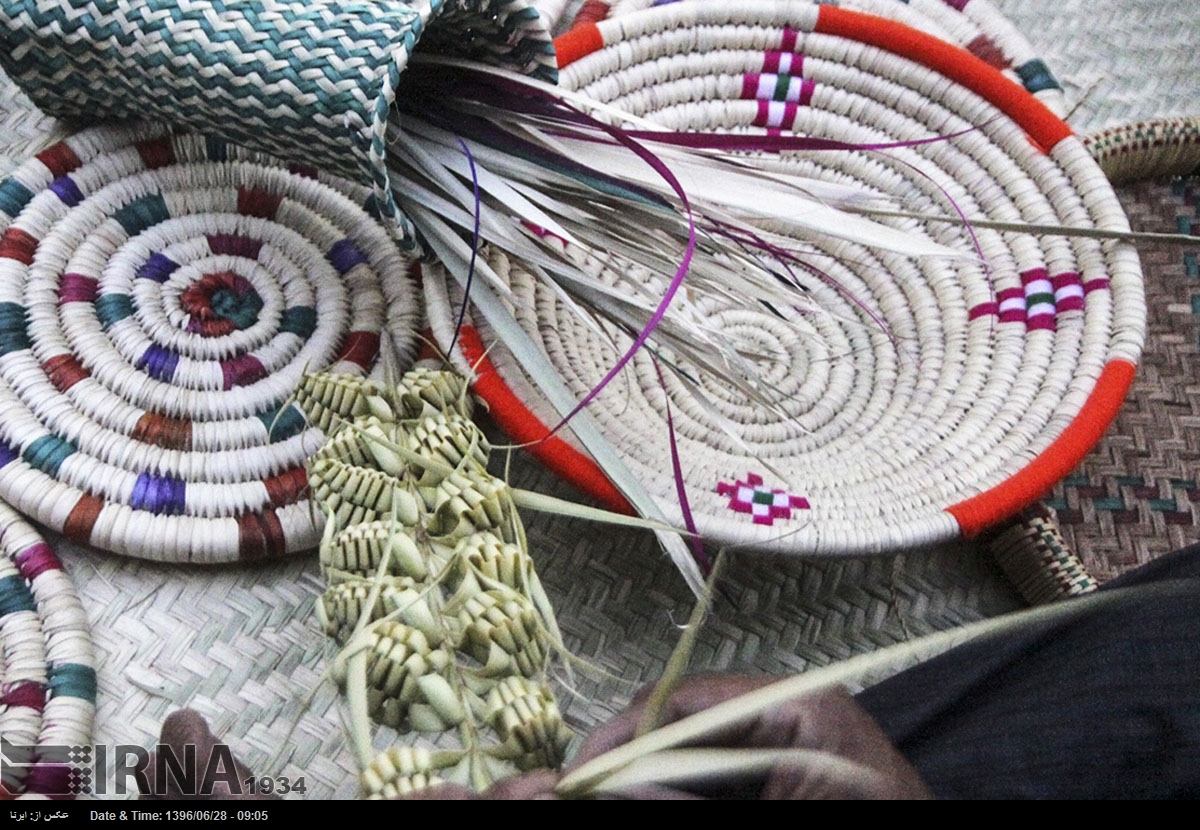
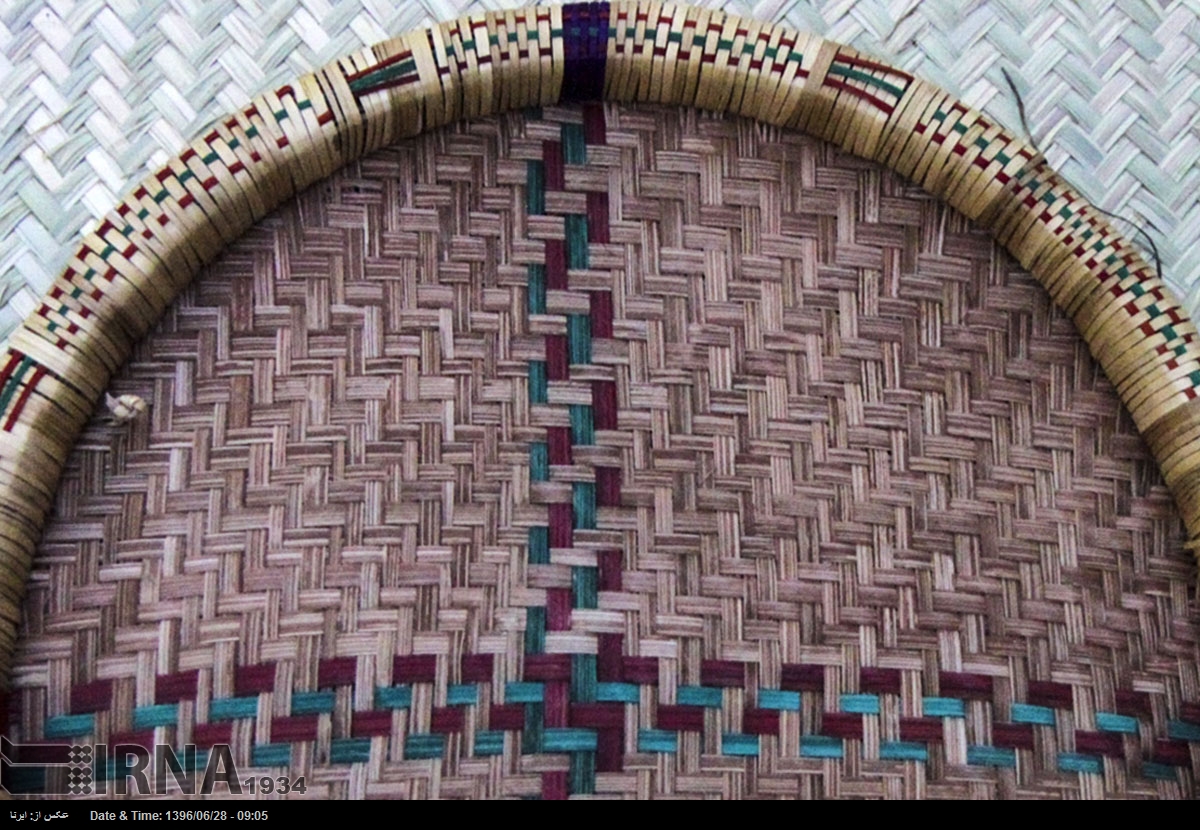
Iranian Craftsmen Turn Palm Leaves into Superb Artworks

Iranian Craftsmen Turn Palm Leaves into Superb Artworks

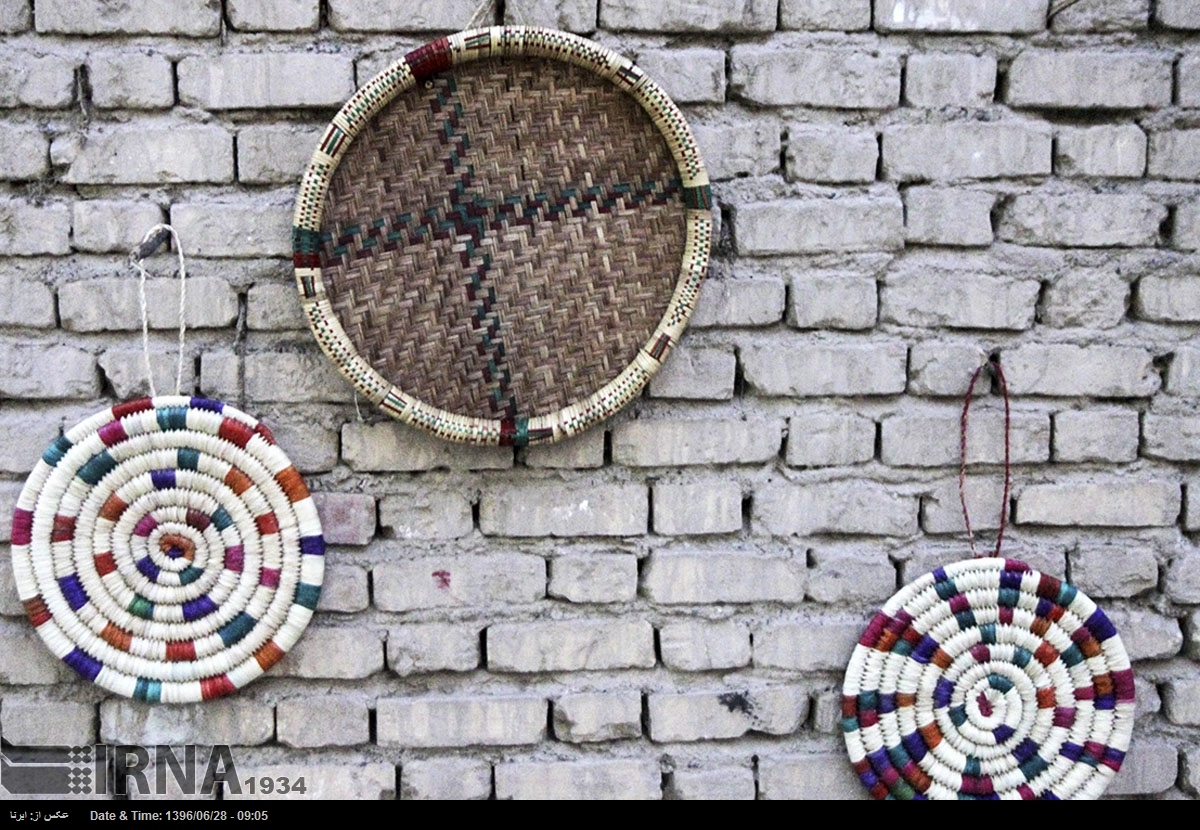
The handicrafts made with palm leaves have turned into one of the main souvenirs of Jiroft and a major source of income for the local people.

Here are IRNA’s photos of the craftsmanship:

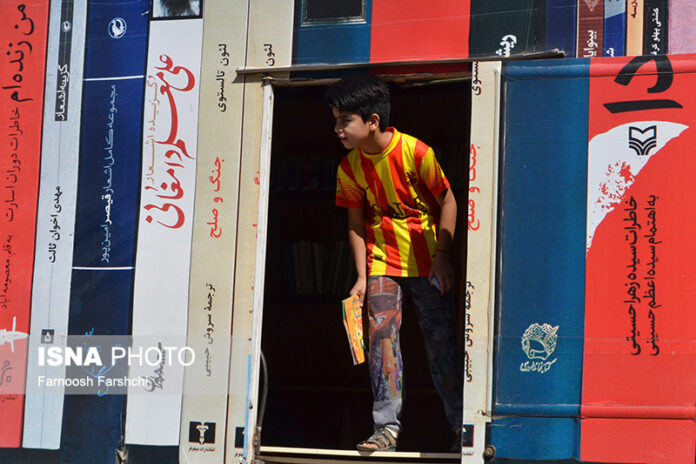
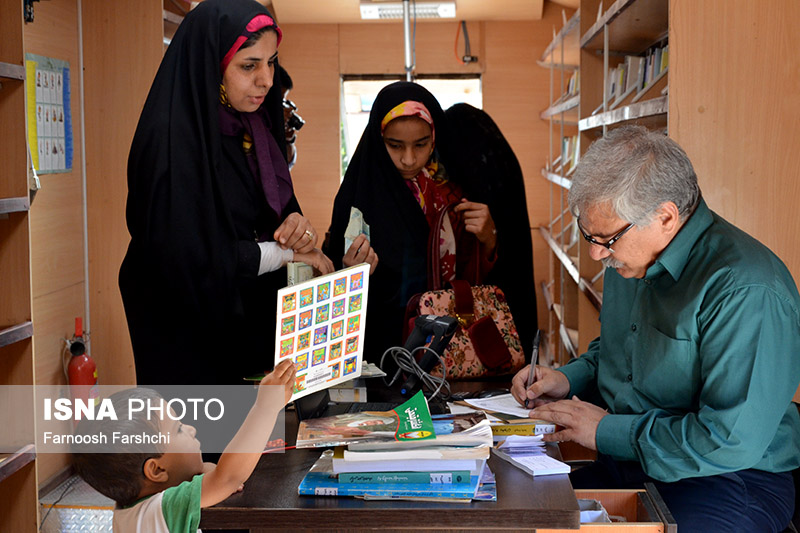
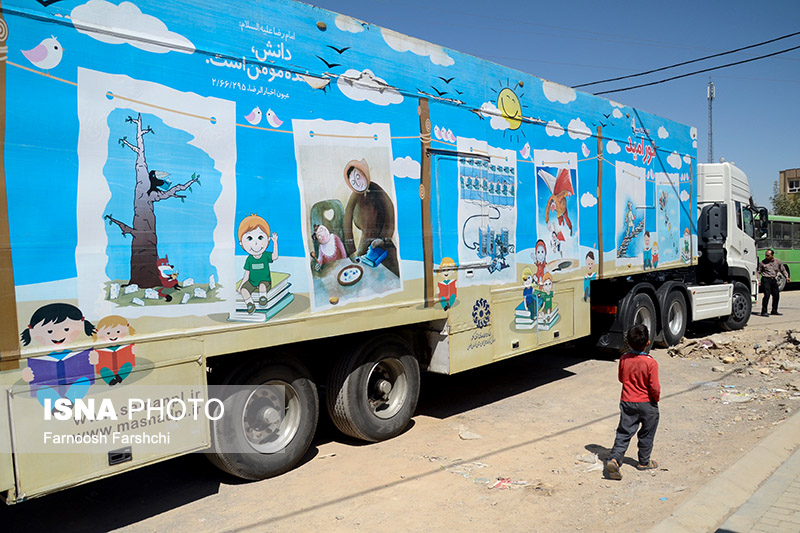
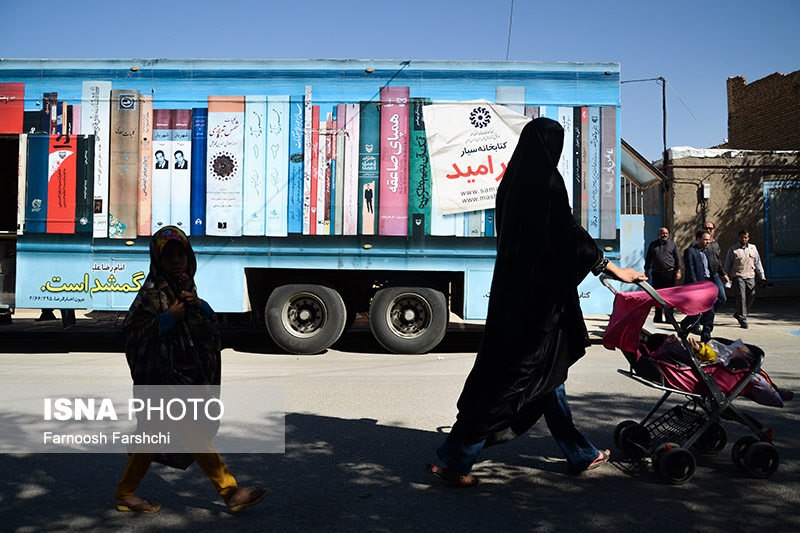
Mashhad Home to Iran’s Biggest Mobile Library

Mashhad Home to Iran’s Biggest Mobile Library

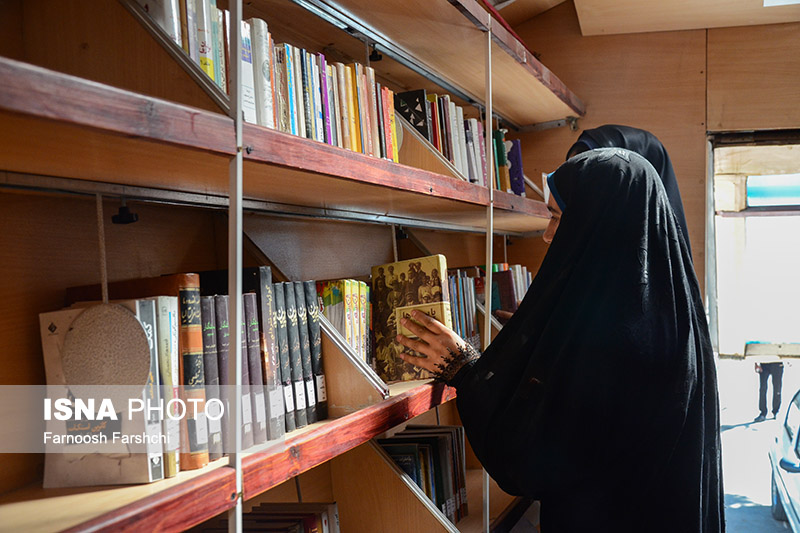
According to the head of Khorasan Razavi Province’s Public Libraries Office, the mobile library of Mashhad provides the residents of 10 villages with its books for five days a week.

Hossein Akbari, in a Saturday ceremony in Mashhad, said launching such mobile libraries is one of the ways to compensate for the shortage of library in the province.

One library should be available for every 25,000 population, but at least eight cities in the province and some districts of Mashhad do not have even a single library, he noted.

Some villages with 10,000 residents lack a single public library, Akbari regretted.

“Building a standard library is costly and time-consuming, but mobile public libraries provide various services and can serve as a good alternative,” he added, according to a Farsi report by IRNA.


Two Analyses on Recent Developments in Saudi Arabia

Political analyst Khosrow Qadiri has, in an article published by the Persian-language newspaper Donya-ye Eqtesad, weighed in on the latest developments in Saudi Arabia. The following are the highlights of the analytical piece.

The rapidly evolving developments in Saudi Arabia which have overshadowed all events in the Middle East are of special significance to Iran. As it is necessary to find the root causes of these developments to work out how we should deal with or confront them and predict future events, a hot debate is going on over what has triggered these unprecedented developments. Overall, two analyses exist when it comes to determining the origin of the developments.

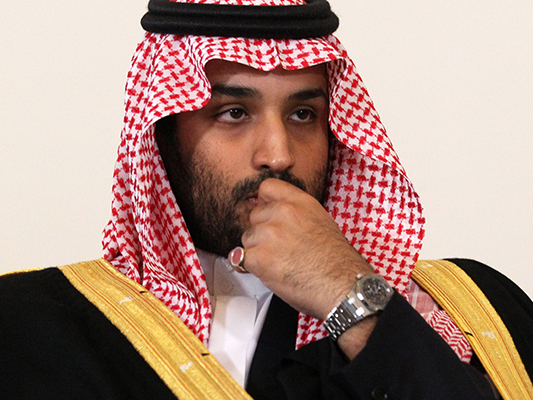
Based on the first analysis, Saudi Crown Prince Mohammed bin Salman’s ambitiousness, immaturity and haste are to blame for the developments unfolding. According to the other analysis, the events are playing out within the framework of a “master plan” whose masterminds are radical American and Israeli hawks. Both of them happen to be in power and have what it takes to implement such plans.

Under such circumstances, Iran should be prepared for both scenarios and needs to have drawn up appropriate plans to deal with either of them. One can say with certainty that Iran’s political prudence as well as military might and experience will be enough to deal with either of the two scenarios. Maybe it is too early to pass definitive judgement on which one of the two analyses on the root causes of the developments in Saudi Arabia is correct and will actually unfold. We should be a little patient and at the same time remain prudent and cautious.

Iran Denies Being Involved in Bahrain Pipeline Explosion

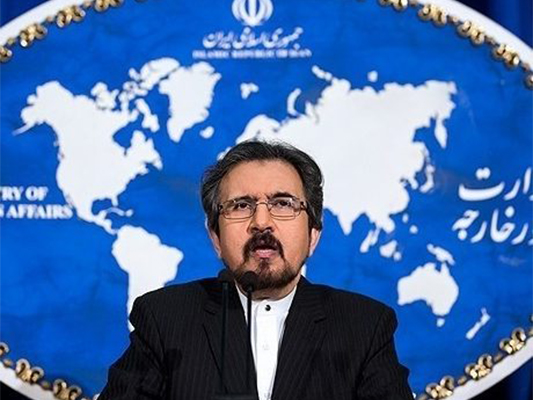
“It seems the only thing that Bahraini officials have learned to do after any incident in the island is pinning the blame on Iran,” Qassemi said in a statement on Sunday.

“They should know that the era of making such absurd and false statements and the time of playing such childish blame-games has come to an end.”

Qassemi pointed out that Iran has always stressed the Islamic Republic’s security and stability depends on the security and stability of all its neighbouring states and “we will remain committed to this principle”.

Qassemi’s statement came after Bahrain claimed an explosion which caused a fire at its main oil pipeline on Friday was caused by “terrorist” sabotage, linking the unprecedented attack to Iran, which denies any role in the Persian Gulf island kingdom’s unrest.

“Terrorist acts witnessed by the country in the recent period are carried out through direct contacts and instructions from Iran,” a statement quoted Interior Minister Sheikh Rashid bin Abdullah al-Khalifa as saying.

EU Delegation in Tehran to Discuss Expansion of Business Ties

EU Delegation in Tehran to Discuss Expansion of Business Ties

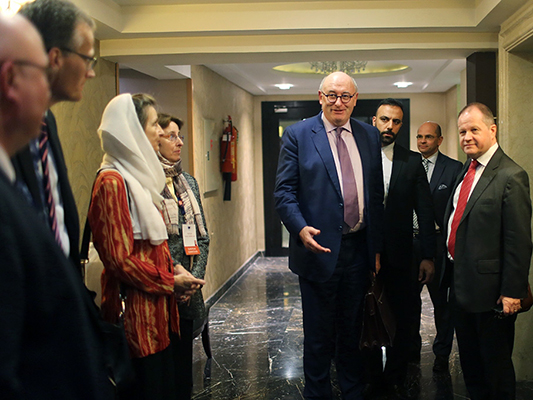
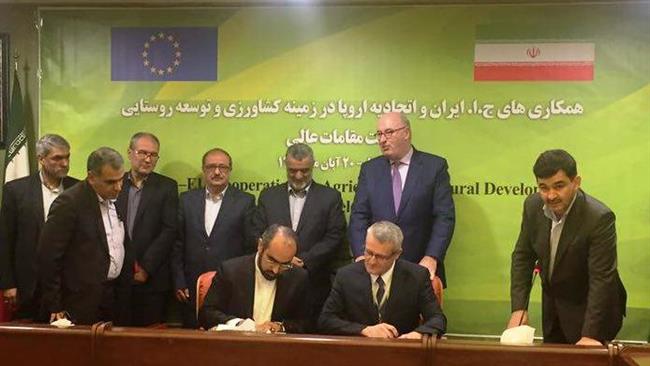
European Commissioner for Agriculture and Rural Development Phil Hogan is heading the team which also includes 25 senior political officials, Mehr news agency reported.

The group arrived in Tehran Saturday to participate at a conference of Iranian and EU entrepreneurs, especially those active in agriculture, food industry and rural development.

The visit may lead to the opening of an EU trade office in Iran if the group arrives at a positive assessment of capacities in the country. That would facilitate exports of Iranian agricultural produce to Europe given the impediments which currently exist on their way.

Because of its unique ecology and rich soil, Iran is one of the largest fruit producers in the Middle East and North Africa, where the diversity of climatic zones makes it possible to cultivate an assorted group of crops.

Fertile ground 

The Iranian plateau is believed to be the homeland to a number of fruits, vegetables and ornamental plants such as Persian walnuts, pomegranates, peaches, spinach and tulips.

According to Iranian officials, as many as 240 million people across the region savor Iran’s horticultural products, primarily pomegranates, pistachios, saffron, figs, raisins and dates.

The country is the world’s seventh largest producer of citrus fruits, including a variety of oranges, tangerines, limes and lemons.

Agricultural exports exceed $6 billion a year, where horticultural products account for half of the earnings, with livestock and poultry coming next with a share of about 25% and crops with the other 25%.

Agriculture accounts for 13% of Iran’s GDP and over 20% of its employment. The sector has traditionally been the key foundational block of the Iranian society but it began to lose much of its significance when the first oil wells were struck.

The sector has its own detractors who say the industry is using up 92% of the country’s water and draining its water tables amid inefficient agriculture and food production practices.

In recent years, Iranian taste buds are also being put to the test amid a rise in irregular imports of fruits which many believe can’t hold a candle to the local produce.

Iran is the world’s biggest exporter of pistachios which brought it more than $870 million in hard currency revenues last year. Among the agricultural products, tomato ketchup was the second biggest export item with $150 million and saffron the third with $130 million.

Russian market

The country, however, is looking to new markets and Russia features prominently among its new destinations for exports.

Iran’s exports of food products to Russia rose 35% in the first six months since March, chairman of the board of food producers cooperative Mehdi Karimi Tafreshi said on Wednesday.

“During the period, Iran’s food exports to Russia reached about $450 million, compared to $310 million last year,” he said, citing dairy products, dried and fresh fruits, vegetables, raisins, canned food and sweets among the export items.

Karimi Tafreshi said President Vladimir Putin had ordered Russian traders to source 20% of the country’s needs for food from Iran, which would translate to $30 billion in value if it materialized.

“Mr. Putin’s order to supply 20% of food from Iran has provided a special opportunity for our country’s food industry,” the Tasmin news agency quoted the official as telling reporters in Tehran.

Currently, Iran’s share in Russia’s agri-food imports of $27 billion is negligible. According to Karimi Tafreshi, the key issue is the high cost of Iranian products, which is due to the high cost of production in the country.

US threats

Russia has banned Western food imports in retaliation after the fallout and sanctions that followed the crises in Crimea, and an ongoing conflict in eastern Ukraine.

US President Donald Trump’s hardline stance on a 2015 nuclear deal with Iran has also raised questions about the prospects of the Islamic Republic’s trade with the West.

On Wednesday, Germany’s chemicals distributor Brenntag said it was holding off on doing business in Iran.

“I would say that we were more optimistic in the past than we are now (about starting operations in Iran),” Reuters quoted its finance chief Georg Mueller as saying.

Mueller said Brenntag examined the possibility of doing business in Iran after sanctions were lifted on Tehran but “international skepticism” about the country had prevented any moves.

US Seeking to Dispirit Iranian People: President Rouhani

US Seeking to Dispirit Iranian People: President Rouhani

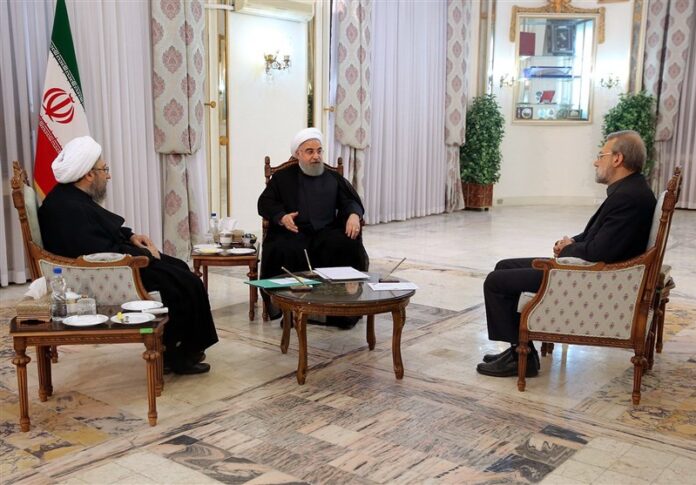
Iranian media and virtual space activists should be aware that the objective pursued by big powers, especially the US, is to demoralize the Iranian people and cast doubt on investment and activities in Iran, President Rouhani told reporters on Saturday.

He made the comments after a trilateral meeting with Parliament Speaker Ali Larijani and Judiciary Chief Ayatollah Sadeq Amoli Larijani, held in Tehran to discuss the latest domestic and international developments.
Highlighting regional countries’ success to deal with various challenges, the president said Iraq, Syria and Lebanon have been successful in defeating terrorism by reliance on their armies and with the support provided by their allies, particularly Iran.

The US, the Zionist regime of Israel and their cronies are infuriated at the failure to carry out their hostile plots in the region, such as the recent plan to trigger secessionist moves and redraw regional borders, Rouhani added.

He further called for vigilance in the face of new plots against the region.

In comments at the beginning of the new Iranian year in March, Leader of the Islamic Revolution Ayatollah Seyed Ali Khamenei said the enemies seek to exert economic pressure on Iranians to discourage the nation from supporting the Islamic administration and drive a wedge between people and the administration.

Ayatollah Khamenei also pointed to the hostile plans to attribute the economic deficiencies to the Islamic Establishment, and highlighted the “remarkable and extraordinary” services provided by the Islamic Republic.