Tuesday, December 30, 2025
Home Blog Page 380

US threatens sanctions against buyers of Iranian oil

Donald Trump
“They will not be allowed to do business with the United States of America in any way, shape, or form,” he wrote on Truth Social on Thursday.
Trump’s comments follow the postponement of the latest U.S. talks with Iran over its nuclear program, which had been due to take place in Rome on Saturday.
A senior Iranian official told Reuters a new date will be set “depending on the U.S. approach.”

Trump’s administration has targeted Tehran with a series of sanctions on entities including a China-based crude oil storage terminal and an independent refiner it has claimed of being involved in trade in oil and petrochemicals.

In February Trump restored a “maximum pressure campaign” on Iran which includes efforts to drive its oil exports to zero.

Tehran has denounced the sanctions as clear evidence of the contradictory approach of American decision-makers and their lack of goodwill and seriousness in advancing the path of diplomacy.

Secondary sanctions are those where one country seeks to punish a second country for trading with a third by barring access to its own market, a particularly powerful tool for the United States because of the size of its economy.

Analysts have said that to really crack down on Iran’s oil exports the U.S. would have to impose secondary sanctions on entities such as Chinese banks that facilitate the purchases of Iranian oil. China is the largest buyer of Iranian crude.

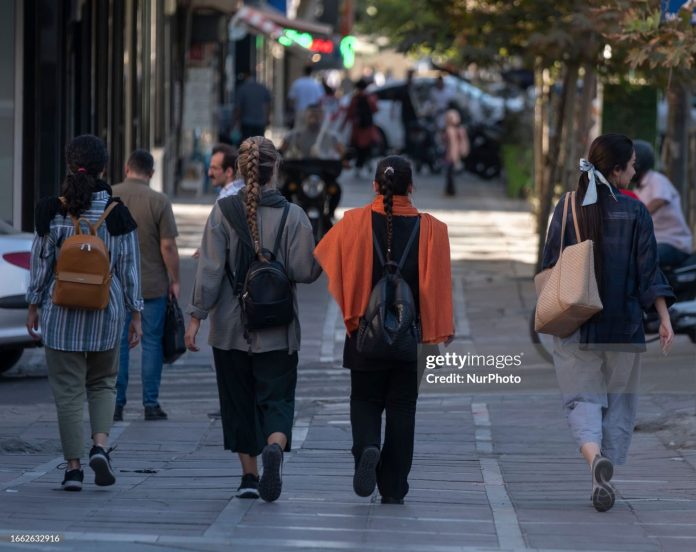
Iran President Pezeshkian’s office denies his involvement in warning text messages over Hijab

Iran Hijab

He stated that coercive methods in cultural and social matters have historically backfired in Iran.

“The experience of governance in Iran has shown that using the language of force in cultural and social arenas leads to the opposite of the intended outcome,” Tabatabaei wrote on social media.

“In the realm of education and upbringing, policing and judicial actions have never been effective”, he added.

He further criticized those attributing the controversial SMS campaign to President Pezeshkian, calling it “unethical and incorrect,” and warned against reviving failed practices under the new administration.

The remarks follow a public backlash after reports emerged that Iranian citizens received official messages warning them about violations of the country’s hijab rules.

The campaign has sparked concern among some and raised questions about the new government’s stance on social enforcement.

Iran condemns US sanctions as breach of int’l law, human rights

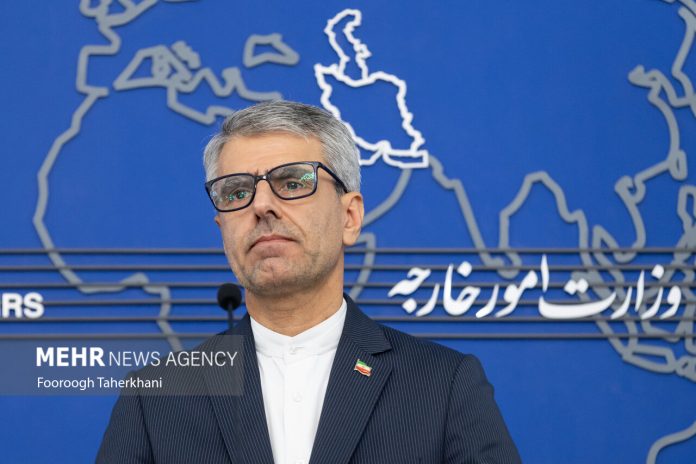
Esmael baghaei

In a statement released on Thursday, Esmaeil Baqaei denounced the US’ hostile, illegal and anti-human policies against the Iranian nation.

The fresh cruel sanctions imposed by the US against Iran violate the fundamental principles of international law, including human rights norms, he said.

“The sanctions that have been declared against the Iranian and non-Iranian individuals and companies on various pretexts during the past recent days clearly illustrated the American policy-makers’ insistence on law-breaking, violation of the rights and interests of the other nations, and also their attempt to disrupt the friendly and legal relations among the developing countries through economic terrorism,” Baqaei said.

He noted that the sanctions reflect the failed and criminal policy of maximum pressure against the Iranian nation and are another clear sign of the US decision-makers’ contradictory approach and lack of goodwill and seriousness in exercising diplomacy.

The spokesman also held the US accountable for the destructive consequences of the “paradoxical actions and provocative statements” from the American authorities regarding Iran.

Recalling the long history of American enmity towards Iranians, Baqaei said the economic sanctions and disruption to Iran’s scientific, economic and technological progress have resulted in the Iranian nation’s deep distrust of the US.

The spokesman also reaffirmed Iran’s determination to stand against the US policy of intimidation and pressure and to employ all tools to press ahead with plans for prosperity and dignity.

His comments came after the US imposed sanctions on entities it accused of being involved in the illicit trade of Iranian petroleum and petrochemicals ahead of a new round of Iran-US negotiations.

The US State Department said on Wednesday that it was imposing sanctions on seven entities based in the United Arab Emirates, Turkey and Iran that it accused of trading Iranian petroleum and petrochemical products. Two vessels were also targeted.

INOTEX 2025: Iran unveils 3 first-of-its-kind tech products

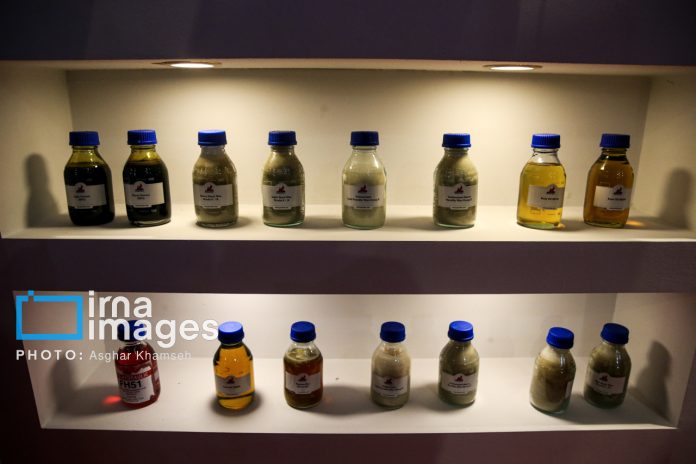
The unveiled innovations, supported under the First-Time Production Program of the Vice Presidency, include a Data Processing and Storage Server, an Intelligent Gas Turbine Performance Monitoring System, and an Industrial Electric Flange Heater.

The data server, developed by a tech company based at Sharif University’s Science and Technology Park, is designed for high-demand IT, scientific, military, and industrial applications. It is optimized for AI and IoT environments.

The TurboAPM system, created by a company specializing in gas turbine technology, offers real-time monitoring, diagnostics, and lifecycle tracking of turbines. It integrates hardware and software to serve industries such as oil, gas, petrochemicals, steel, and mining.

The electric heater, presented by a veteran Iranian thermal equipment manufacturer, features precise temperature control and high safety for hazardous industrial settings, especially in energy sectors.

INOTEX 2025 is being held from April 28 to May 1 at the International Innovation Zone, Pardis Technology Park.

Spox: Date for fourth round of Iran–U.S. talks changed

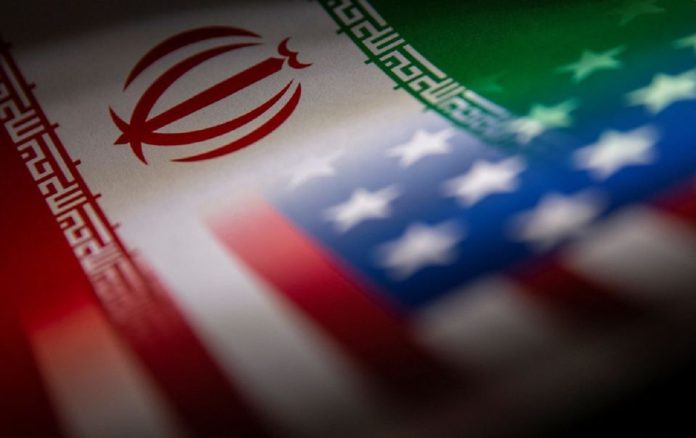
Iran US Flags

Esmail Baqaei noted that this postponement was conveyed by the Foreign Minister of Oman.

Baqaei clarified that the Omani side proposed the deferral, adding that the prospective new date will be announced in due course.

He reaffirmed the Islamic Republic of Iran’s commitment to leveraging diplomacy in pursuit of the legitimate and lawful interests of the Iranian nation—and in order to bring an end to sanctions and economic coercion that directly target the human rights and welfare of every Iranian citizen.

Baqaei further emphasized that from the outset of these talks, the Iranian delegation has approached the process with goodwill and has delineated a clear framework in line with Iran’s principled positions under international law concerning the peaceful use of nuclear energy and the lifting of unlawful sanctions.

He reiterated that Iran remains firmly resolved to engage in results-oriented negotiations with strength and determination toward a fair, reasonable, and enduring understanding.

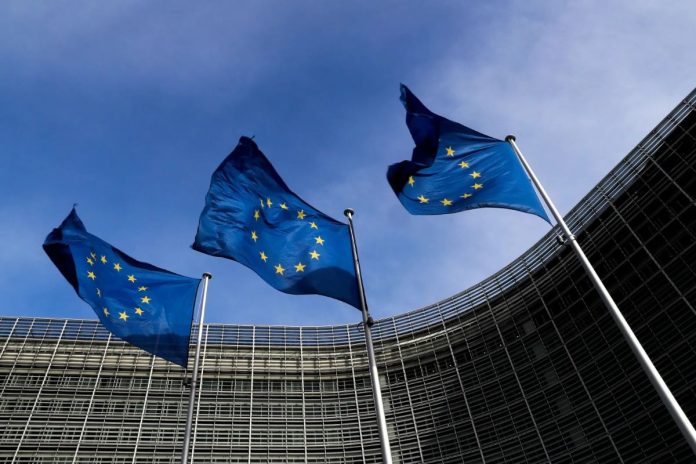
EU says will not recognize Crimea as part of Russia

The European Union

Her remarks come amid growing concern that the Trump administration is pressuring Ukraine to accept a peace deal requiring concessions and paving the way for renewed ties with Russia.

Previously, Axios reported that the peace plan suggested by U.S. President Donald Trump included de jure recognition of Russia’s control over Crimea, along with de facto recognition of its occupation of other Ukrainian territories. It also provided for lifting sanctions imposed on Russia since 2014.

“On the European side, we have said this over and over again… Crimea is Ukraine,” Kallas said, adding, “But we can’t speak for America, of course, and what they will do.”

Kallas said the EU is also drawing up a “plan B” to maintain economic sanctions on Russia in case the Trump administration pulls out of Ukraine peace negotiations and moves to restore ties with Moscow. Plan A, according to Kallas, may be threatened by Hungary, which can block the rollover of EU economic sanctions in July.

The EU’s top diplomat added the main goal is still to keep all EU countries united. She admitted some governments are quietly considering following the U.S. if it pulls back from supporting Ukraine.

“But it’s also a false hope, because if you look at Russia that is investing more than 9 per cent of its GDP on the military, they will want to use it again,” she noted.

Kallas said the EU could help Ukraine financially if the U.S. pulls back, but admitted it would be much harder to replace American military support.

She added that Europe is still trying to work with the U.S. and convince Washington that it’s also in America’s interest to make sure Russia doesn’t win the war.

Trump, who promised a quick resolution to the war early in his presidency, has yet to broker a deal as both Kyiv and Moscow resist key elements of Washington’s proposals. It has been almost two months since Ukraine accepted a U.S.-proposed 30-day ceasefire first introduced in March by American president. Moscow rejected the plan, demanding a complete halt to Western military aid to Ukraine.

Despite claiming to support de-escalation, Russia has continued offensive operations along the front lines. Meanwhile, a separate partial ceasefire covering Ukraine’s energy infrastructure, brokered during a March 18 call between Russia’s President Vladimir Putin and Trump, was also repeatedly violated.

Speaking to journalists during a visit to India on April 23, U.S. Vice President JD Vance said that unless Russia and Ukraine agree to the peace proposals, the U.S. will walk away from the talks.

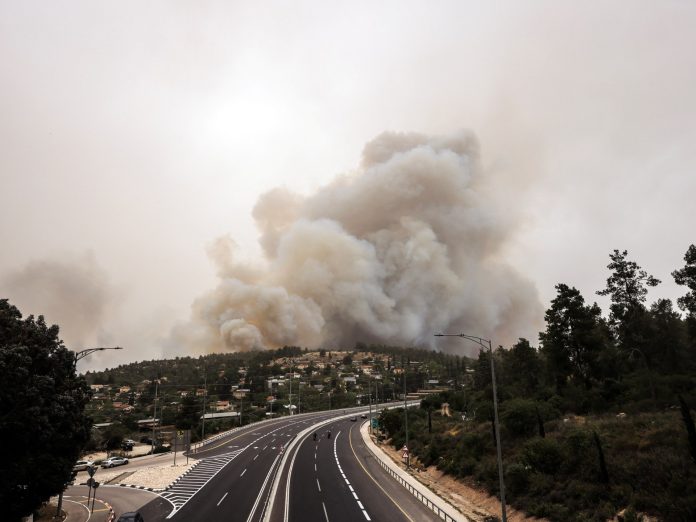
Jerusalem wildfires flare for a second day

The fires broke out on Wednesday along the main Jerusalem–Tel Aviv highway, prompting police to shut the roads and evacuate thousands of residents from nearby areas.

Israel’s firefighting service said 163 ground crews and 12 aircraft were working to contain the flames.

Rescue agency Magen David Adom announced it treated 23 people on Wednesday, mostly for smoke inhalation and burns.

Seventeen firefighters have also been injured, according to Israel’s public broadcaster Kan.
Crews worked through the night, allowing the reopening of main roads, including the Jerusalem–Tel Aviv route, police noted.

“All routes have been reopened to traffic,” according to a police statement.

Fanned by high temperatures and strong winds, the fires spread rapidly through wooded areas, prompting evacuations from at least five communities, police added.

European countries Italy and Cyprus have dispatched eight firefighting planes to Israel to support its emergency efforts, according to The Times of Israel.

The assistance comes as fires continue to burn in 11 hotspots near Jerusalem, with seven towns still under evacuation, the publication said, quoting Israel’s Fire and Rescue Service.
Israel’s Prime Minister Benjamin Netanyahu has declared a “national emergency”, warning the fires could spread into Jerusalem.

The Israeli military announced its personnel were helping in Jerusalem and other central districts.

“Overnight dozens of engineering vehicles started operating throughout the country to form lines to prevent the fire from spreading into other trees,” a military statement read on Thursday.

“The IAF (air force) continues assisting in the effort to extinguish the fires,” it added.

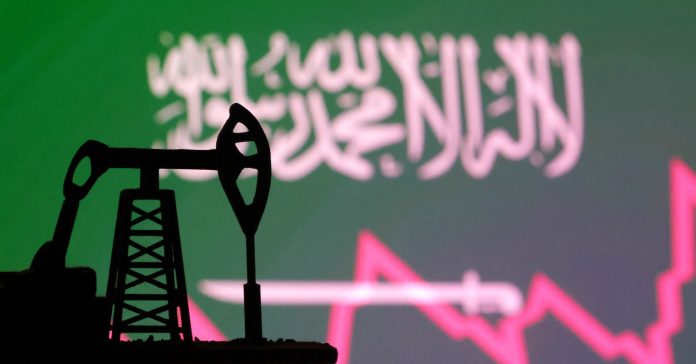
Saudi Arabia signals can live with lower oil prices: Reuters

This possible shift in Saudi policy could suggest a move toward producing more and expanding its market share, a major change after five years spent balancing the market through deep output as a leader of the OPEC+ group of oil producers.

Those cuts supported prices, in turn bolstering the oil export revenue that many oil producers rely on.

The Saudi government’s communications office did not reply to a Reuters request for comment on the matter.

Riyadh has been angered by Kazakhstan and Iraq producing above their OPEC+ targets, the sources said. The group establishes those targets to keep supply and demand balanced in oil markets.

After pushing members to adhere to those targets and to compensate for oversupply in recent months, a frustrated Riyadh is changing tack, OPEC+ sources said.

Saudi Arabia pushed for a larger-than-planned OPEC+ output hike in May, a decision that helped send oil prices below $60 a barrel to a 4-year low.

Lower prices are bad news for producers that rely on oil exports to fund their economies.
Although producers like Saudi have a very low cost of production, they need higher oil prices to pay for government spending. When oil prices fall, many large oil-producing countries come under pressure to cut their budgets.

The Saudis appear to be briefing allies and experts that they are ready to do just that.
Saudi officials in recent weeks have told allies and market participants the kingdom can live with the fall in prices by raising borrowing and cutting costs, the five sources said.

“The Saudis are ready for lower prices and may need to pull back on some major projects,” one of the sources said. All sources declined to be named due to sensitivity of the issue.

Saudi Arabia needs oil prices above $90 to balance its budget, higher than other large OPEC producers such as the United Arab Emirates, according to the International Monetary Fund (IMF).

Saudi Arabia may need to delay or cut back some projects due to the price drop, analysts have said.

OPEC+, which includes the Organization of the Petroleum Exporting Countries and allies such as Russia, may decide to speed up output hikes again in June, OPEC+ sources have said.

OPEC+ is cutting output by over 5 million barrels or 5% of global supply, to which Saudi Arabia is contributing two-fifths.

Russia, the second largest exporter in OPEC+ behind Saudi Arabia, is aware of Riyadh’s plans for faster output increases, said two of the five sources who are familiar with the Russian thinking and conversations with Riyadh.

Russia would prefer the group stick to slower output increases, the two sources said.

Saudi Arabia and Russia, the de facto leaders of OPEC+, make the biggest contributions to OPEC+ cuts.

Russia’s budget balances at about $70 a barrel and the Kremlin’s spending is on the rise due to the Russian war in Ukraine.

Russia may see a further fall in revenue as prices for its discounted, sanctioned oil could fall below $50 a barrel as a result of OPEC+ output rises, one of the two sources said.

Theories on the apparent change in Saudi strategy range from punishing OPEC+ members exceeding their quotas to a move to fight for market share after ceding ground to non-OPEC+ producers such as the United States and Guyana.

Higher output may also be a fillip to U.S. President Donald Trump, who has called for OPEC to boost output to help keep U.S. gasoline prices down.

Trump is due to visit Saudi Arabia in May and could offer Riyadh an arms package and a nuclear agreement.

OPEC+ decided to triple its planned output increase to 411,000 bpd.

That still leaves OPEC+ holding back more than 5 million bpd, curbs the group aims to unwind by the end of 2026.

“We would still call this a ‘managed’ unwind of cuts and not a fight for market share,” UBS analyst Giovanni Staunovo said.

US claims Ukraine willing to ‘de facto give up’ land to Russia

Russia Ukraine War
Dozens of evacuees have arrived in the Ukraine-controlled Sumy region.

In an interview on Wednesday, Fox News anchor Martha MacCallum asked Kellogg whether the US could accept Moscow’s demand that Ukraine renounce claims to territories it considers to be under Russian occupation.

“Partially, yes,” Kellogg replied.

“Look, the Ukrainians, Martha, have already said – they’re willing to give up the land… not de jure – forever – but de facto because the Russians actually occupied it. They’ve agreed to that,” he said. “They told me that last week.”

Kellogg added that Ukraine wants a ceasefire that would mean “you sit on the ground that you currently hold.”

The envoy said he met with Ukrainian officials in London on April 23 and that they had agreed to “22 concrete terms” presented by the US, including a 30-day comprehensive ceasefire. He urged Moscow to “pick up on” the proposal.

Russia, however, has maintained that a full ceasefire would require Ukraine to halt its mobilization campaign and stop accepting military aid from abroad. President Vladimir Putin has also demanded that Kiev withdraw from the Russian territories it still claims.

Crimea voted to secede from Ukraine and join Russia shortly after the 2014 US-backed coup in Kiev. The Donbass republics of Donetsk and Lugansk, along with the regions of Kherson and Zaporozhye, followed suit after referendums in 2022.

The agreement proposed by Washington reportedly includes US recognition of Russian sovereignty over Crimea, freezing the conflict along the current front lines, and acknowledging Moscow’s control over large parts of the four other former Ukrainian regions. The deal would also reportedly block Ukraine from joining NATO and initiate a phased removal of the sanctions on Russia.

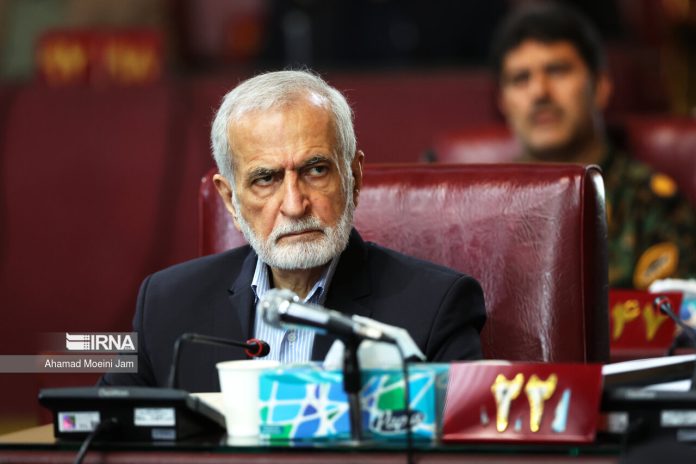
Iranian official calls for ‘serious dialogue’ with Persian Gulf states amid regional tensions

Kamal Kharazi

Speaking at a Persian Gulf studies conference in Tehran on Thursday, the former foreign minister, who currently serves as a senior advisor to the Iranian Leader, outlined Iran’s vision for regional cooperation.

Kharrazi traced tensions to the Pahlavi era’s “policeman of the Persian Gulf” policy and post-Revolution fears of Islamic revivalism.

He noted how these factors contributed to the Iran-Iraq war, where Saddam Hussein “positioned himself as an Arab representative” with foreign backing.

The diplomat highlighted late Iranian president Akbar Hashemi Rafsanjani’s 1995 meeting with Saudi King Abdullah in Islamabad as a turning point, paving the way for later OIC summits.

During President Mohammad Khatami’s tenure, Iran-Saudi oil price coordination demonstrated successful cooperation, boosting crude prices from $8 to economically viable levels, he noted.

With Israel’s “Nile-to-Euphrates ambitions” intensifying, Kharrazi stressed military deterrence now enables Iran to employ “soft power diplomacy”

He proposed “Hormuz Initiative” and “Friendship Plan” could jumpstart Persian Gulf dialogues, adding the upcoming Tehran Dialogue Forum and Iranian-Arab conferences will test regional willingness.

Kharrazi advocated blending “Islamic identity, Iranian civilization, and Shia mysticism” to reshape Iran’s global image, and urged think tanks to develop data-driven analyses ahead of multilateral meetings.