Friday, December 26, 2025
Home Blog Page 3792

Iran Condemns Egypt Terrorist Attack

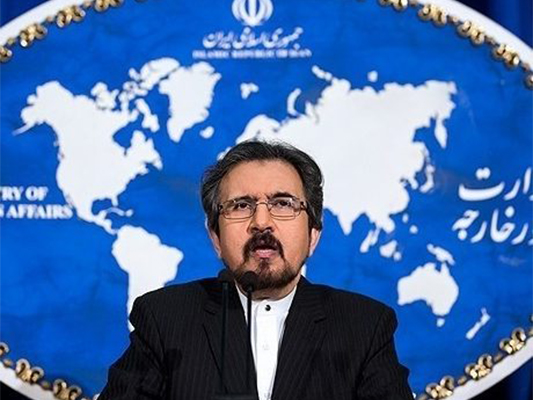
In a statement on Friday, Qassemi blasted the brutal attack and expressed sympathy with the Egyptian nation and the bereaved families of the victims.

“Undoubtedly, the Takfiri terrorism that is suffering the heaviest defeats these days in the region does not refrain from making any desperate effort and ruthless move to assert its existence once again,” he noted.

“This sharply increases the responsibility of regional governments to gain a real and accurate understanding of terrorism and to seriously and collectively counter it,” Qassemi went on to say.

He also called on all nations and governments to be as vigilant as possible at this particular juncture in the face of new plots by the bloodthirsty losers.

At least 200 people were killed and another 125 injured in an attack on a mosque in Egypt’s North Sinai region on Friday, Egyptian state media reported, making it one of the deadliest attacks ever carried out against civilians in the province.

After at least two explosions, gunmen who were waiting outside the mosque opened fire at worshipers as they fled Friday prayers, state-owned Ahram Online said.

The attack targeted Al Rawdah mosque in Bir Al-Abed, in the west of Arish province, MENA said.

The blasts from improvised explosive devices caused considerable damage to the mosque, Ahram Online said.

“Myanmar Calls Rohingyas Illegal Immigrants to Deny Their Rights”

Myanmar’s Crackdown on Rohingya Turning into Ethnic Cleansing

In a recent exclusive interview with the Persian-language Etemad daily newspaper, Momen has weighed in on Bangladesh’s efforts to help hundreds of thousands of Rohingya Muslims who have been forcibly displaced by the Myanmar government from their historical homeland, Rakhine state.

During the interview, the Bangladeshi diplomat regretted that the international community’s response to the ‘ethnic cleansing’ in Myanmar has been far less than expectation given the enormity and scale of the crisis.

Here is the full text of Momen’s interview with Etemad’s Sara Massoumi:

“Myanmar Calls Rohingyas Illegal Immigrants to Deny Their Rights”Since when was Bangladesh dragged into the Rohingya crisis? 

The August 2017 episode is not the first instance of Rohingya Muslim minorities fleeing to Bangladesh being subjected to atrocities and human rights abuse by the Myanmar authorities. The systematic and exclusionary policy and denial of rights against them began in a big way since General Ne Win’s taking over of power in 1962. Rohingyas were economically and politically marginalized. They were terrorized and forced out of their centuries of settled life in 1978, 1991-92, and 2012, successively with increasing impunity. Each time, Bangladesh has been bearing the main brunt with the exodus of Rakhine Muslims (Rohingyas) ending up principally in Bangladesh. Myanmar’s failure to integrate Rohingya Muslims and denial of rights is an internal issue of Myanmar. But, their forcible displacement to Bangladesh drags Bangladesh into a crisis. The present one is no different, but significantly different in scale and magnitude.

How many refugees from the Rakhine State is Bangladesh hosting at present?

There are 32,000 residual cases of Rohingya refugees (documented) from the flow of 1991-92. Myanmar never bothered to repatriate these people since 2005. About 300,000 to 400,000 undocumented Myanmar nationals moved to Bangladesh over the past decade due to policies of persecution and denial of rights. Many fled to other countries including Malaysia. The October 2016 incident resulted in an exodus of 87,000. And from August 25 up to now, 607,000 forcibly displaced Myanmar nationals have crossed over into Bangladesh, taking the total to about one million. And the exodus is still continuing. Bangladesh is presently hosting more Rohingyas than Myanmar. The Rohingya nucleus has now shifted to Bangladesh.

Does the international community offer financial aid to Bangladesh in order to resolve the refugees’ problems?

Over the years, the international community, international organizations such as International Organization for Migration (IOM), the UN and its relevant entities such as UNHCR, WFP, and UNICEF have been providing humanitarian assistance to the Rohingya refugees and the forcibly displaced Myanmar nationals staying in Bangladesh, but the vast majority of the support is being provided by the government of Bangladesh itself despite many resource constraints. Many international NGOs have been providing assistance to Rohingyas in all these years. In view of the formidable humanitarian needs stemming from the current crisis, the UN has prepared a revised response plan to the tune of USD 434 million for a six-month period against which an offer of $335 million was made by the international community in the pledging conference held in Geneva on 23 October 2017. However, this commitment and ultimate realization of it are hardly enough to support one million Rohingyas; 22% of these people were designated as extremely vulnerable by the IOM. Bangladesh will have to commit a lot more resources for these forcibly displaced residents of Myanmar. Then, there are various kinds of insecurities that cannot be quantified in monetary terms. Please note that Bangladesh is not asking for money; all we want is repatriation of these people in a safe, secured, dignified and sustainable manner.

Has the Bangladeshi government engaged itself in talks with officials from the current or previous government of Myanmar to deal with the people of Rakhine State in order to prevent their migration to Bangladesh?

The exodus of Rohingyas into Bangladesh is not migration in the first place, it is purely a case of forced displacement as part of what the international community calls ‘ethnic cleansing’. These people were in Rakhine for generations, much before Burma became independent in 1948. Old Akyab town was a town populated by people of Indian origin even in 1931. The bordering district of Maungdaw had more than 80% Muslims even a century earlier. Therefore, calling them migrants from BANGLADESH is historically wrong. The Baxter Committee way back in 1939 concluded that “for all intent and purposes” Muslims in Rakhine were an indigenized community. They trace their history in the old Rakhine kingdom back to the 9th century that started with Arab traders, and the community flourished in the capital Mro-haung (present day Mrauk-U) during the 15-18th century.   

From the very beginning of the Rohingya problem, which dates back to decades ago, Bangladesh has been persistently engaged with the Myanmar authorities at all levels, starting from highest political level to the level of officials and functionaries, to resolve the issue particularly to ensure repatriation of those who came from Myanmar. In fact, Bangladesh always took the first step. There have been numerous invitations sent from the Bangladeshi side to Myanmar for VVIP and high-level interactions/visits as well as proposals to Myanmar for repatriation and enhancing sectoral collaboration (in respect of security, road connectivity, shipping connectivity, gas-power sector etc.). There is a robust border agreement of 1980 that provides for return of illegal entrants. However, Myanmar has consistently shown indifference to this border arrangement and at times even sent negative responses to many overtures from Bangladesh to build interdependent and mutually beneficial bilateral relations. There is a clear lack of engagement on Myanmar’s part to engage on sectoral issues, not to talk about irregular movement, if any. But, Myanmar seeks to paint Rohingyas as illegal immigrants to delink them from civil and political rights. Whatever Myanmar has done recently in terms of bilateral engagements is entirely to make a show to the international community, while in reality they remain as obstinate as ever towards resolving the Rohingya issue.  

Certain sources have reported that Bangladesh is closing borders or mining border areas in order to prevent entry by refugees. Do you confirm these reports?

It is wrong. There are reports of Myanmar Army planting anti-personnel landmines and Bangladesh has protested that. The fact that we are hosting more than 600,000 forcibly displaced Myanmar nationals since August 25 alone and more are crossing over each day makes a response to these reports unnecessary. Besides, Bangladesh is signatory to the Convention on the Prohibition of the Use, Stockpiling, Production and Transfer of Anti-Personnel Mines and on Their Destruction. Myanmar is not a party to this Convention and is known to have been planting mines even along the Chinese and Thai borders. Hence, you should perhaps raise this with the Myanmar authorities which are laying landmines along the border to prevent return of their nationals from Bangladesh. Since 25 August, we have received a large number of forcibly displaced Myanmar nationals with mine injuries which only corroborates these reports.

How useful do you find steps taken by the international community in resolving problems of Rakhine residents in the short and long run?

The international community’s response has been far less than our expectation given the enormity and scale of the crisis particularly in the immediate term. Mere condemnation, exhortation, demands and engagements of international community with Myanmar have proved futile in stopping the exodus. Providing humanitarian assistance to Rohingyas in the Bangladesh side of the border must not absolve them of their responsibility. They must apply moral and diplomatic pressure on Myanmar to accept them and treat them with safety, security and dignity.

Yet, we have the Kofi Annan Commission recommendations which have been endorsed by the international community. We have the UN Secretary-General’s three action points (de-escalation of the situation, return of the Rohingyas and implementation of the Kofi Annan Commission report) on which there is broad understanding within the Security Council which resonate our Hon’ble Prime Minister’s five-point proposals. All these provide the road-map to a medium and long-term solution given that Myanmar implements them fully and with all sincerity. Here the international community has a huge responsibility to prevail upon Myanmar to do so.

Given the intensity of the conflicts between Muslims and Buddhists in Myanmar, how likely do you think it is to find a solution inside the borders of Myanmar?

The hatred and divisiveness are very deep-rooted. Myanmar majority is swayed by an extreme form of nationalism, where intolerance to religious and ethnic minorities are being accepted as the norm. Today it is targeted against the Rohingyas in particular and Muslims in general, tomorrow it could be targeted against another community. Christian communities in Kachin and Kayin are also being impacted by these negative forces. Hence any solution with equality of treatment for minorities would be difficult. But it is possible and it has to be.

As for the Rohingya crisis and atrocities, our Hon’ble Prime Minister has said ‘The crisis has its root in Myanmar and its solution has to be found in Myanmar’. This would require political good will of Myanmar authorities and sincere efforts of all stakeholders, most importantly a spirit of reconciliation and tolerance in the people of Myanmar. A whole of society approach would be crucial. And international community needs to get involved in this.

Despite the fact that the crisis in Rakhine started a few years ago, Islamic states have failed in practice to force Myanmar governments to undertake serious measures. What are the reasons for this failure?

We see it as an inherent problem as exemplified in dealing with other cases of persecution of Muslims taking place in various parts of the world. In other cases, concerned states stop at some point and situation gets somewhat addressed. In this case, sheer stubbornness, denial and non-receptiveness of Myanmar authorities is also to blame. Rather, one can see a clear pattern, that indicate a practice of ethnic cleaning in play.

Don’t you think that the international community should take more serious steps like sanctions against Myanmar military officials? 

We feel that the international community must take more serious and binding measures in this regard. We believe much more result oriented, specific and time bound pressure on Myanmar would create conducive environment for fruitful bilateral engagements which would pave the way for resolving the crisis. Moral and diplomatic pressure should be the beginning and need to be sustained to send a message to Myanmar that every wrong policy must come to an end and remedial measures must be taken. 

Some historians claim the Rohingya people are immigrants who fled from Bangladesh to Myanmar largely under the British government in Burma and to a lesser extent after Burma independence in 1948 and the Bangladesh Liberation War in 1971. How is this historical claim applicable to Rohingya people?

The made-up narrative and claims of the Rohingyas as immigrants from Bangladesh is devoid of any economic and other rationales. In the past, Myanmar never complained about illegal immigration from Bangladesh. The majority of the historians narrate otherwise.

Rohingyas of Arakan are not a race group per se developed from one tribal group or a single racial stock. They are a mixed people from various races and cultures. Available historical records suggest that many centuries of human migration and settlement helped evolve Rohingya ethnicity in Arakan, presently called Rakhine. British historical and other past records account that Muslims in Rakhine existed long before its annexation by the British (1824). During 7th – 8th century Arab traders travelled to Arakan for business. During that period, they preached Islam to the locals. Rohingyas, who settled in Arakan/Rakhine after 1825 were indigenized well before independence of Burma in 1948. According to Baxter Committee Report, the percentage of Muslim population born in Arakan/ Rakhine was 77% in 1931. The Report also concluded that, all historical records suggest that the Rohingyas were indigenous to Arakan/Rakhine.

Insecurity and persecution as well as lack of economic rationale of movement to an impoverished land like the Rakhine State squarely contradict theory of illegal immigration from Bangladesh. Myanmar and Bangladesh have about similar GDP per capita. But Rakhine is much backward (with $750) in relation to neighbouring Chittagong (over $1800). Socio-political situation in Rakhine has been discriminatory and replete with persecution since 1948.

Given the economic deprivation, developmental challenges, lack of security, continued persecution, various kinds of dispossession, restriction on movement, and disenfranchisement in Rakhine State, illegal immigration from Bangladesh to Rakhine is unimaginable. Migration into such a land is absurd, when Rohingyas have been taking refuge elsewhere in hundreds of thousands such as in Saudi Arabia, India, UAE, Pakistan as well as Bangladesh. Censuses conducted by the British and recent ones by the Myanmar Government clearly contradict any claim of illegal immigration to Rakhine State, rather indicate net outflow of people from the State.

As a responsible country, Bangladesh would take back people who, if it is proven, entered Rakhine after 1971. We cannot be held responsible for any movement of people before Bangladesh was born. But this should not be taken out of context to term this Rohingya community illegal immigrants when they have a recorded history of a several generations and even centuries in Rakhine.

“US, Allies Outraged by ISIS Defeat in Syria”

The end of the ISIS terror group’s domination over Syria has caused ripples among the terrorists. Political analyst and IRGC official Rasoul Sanaei Raad has, in an article published on the Basirat website, weighed in on the consequences of the terrorists’ defeat for their supporters. The highlights of the analytical piece follow.

The liberation of the town of Bukamal as the last urban stronghold of ISIS in Syria led to the terrorist group’s military defeat. The direct presence of top Iranian commander Major General Qassem Soleimani in the battle along with the struggles of the resistance front secured the victory and sounded the death knell for a caliphate based on modern Jahiliyyah and violence built upon US-style Islam and Takfiri Wahhabism, and neutralized an entity used as a proxy for hegemonic powers and Zionism to promote Islamophobia.

The developments which led to the defeat of ISIS and the victory of Iran and Hezbollah infuriated Al Saud rulers, the US and some of its Arab allies and the creators and covert supporters of the terrorist group, prompting them to accuse Iran of causing instability in the region and to call the Islamic Revolution Guards Corps (IRGC) a terrorist entity.

The Americans estimated that ISIS would remain in Iraq for the next decade, and envisioned no clear time limit for the presence of the terrorists in Syria. So, they couldn’t tolerate the ISIS’ defeat at the hands of resistance forces and Syrian troops. Therefore, they are furious at the defeat of ISIS, especially when the victory is associated with the name of Iran and Hezbollah. The US is cashing in on Saudi Arabia’s fear of its future and keeps thinking about selling arms to the Arab country while continuing to fuel tension and instability in the region.

France, too, has been opportunistic, and instead of learning a lesson from its initial collusion with ISIS and Al Saud in imposing the violent Takfiri terrorism on the region, are once again supporting terrorists. Of course, concerns over the seizure of the Hariri family’s assets by bin Salman and the withdrawal of their savings from French banks have also contributed to the illogical behavior of the Élysée Palace.

Interestingly enough, those who created and supported violent Takfiri terrorism, which imposed years of instability on the region and caused death and destruction in Iraq and Syria and made their people homeless, and who bred violent wolves to wage proxy wars in Asia, Africa, Europe and even the US and caused panic, instead of thanking the resistance front and saying they are sorry for their past mistakes have opted for “fuite en avant” (literally translated as ‘forward escape’) and accuse those who fought against terrorists of committing acts of terror and destabilizing the region.

The US and its Western and Arb allies consider ISIS’ defeat as their own, and seek to take vengeance upon those who caused the defeat. In the eyes of Washington and its allies, the defeat of ISIS means the influence and credibility of the victors will grow.

I wish they, instead of getting angry and resorting to force and hypocrisy to advance their interests, would learn lessons from their wrong policies and not repeat them.

Afghan Politician Accuses Kabul of Provoking Sectarian Rifts

Atta Muhammad Nur, an Afghan politician serving as the governor of Balkh and a member of the Supreme Council for the Defence of Afghanistan, says people of the country will not remain silent in the face of plots hatched against them, and like-minded groups will soon announce their position in that regard.

According to a Farsi report by the Persian-language Mizan News Agency, he wrote on his Facebook page that it is not the first time that a major ethnic group in Afghanistan has been insulted.

“We have, time and again, witnessed ethnic approaches within the Afghan government,” he said.

Nur noted that such approaches will not be able to disrupt unity among Afghan people.

He also accused the Afghan government of dismissing several ministers and top officials for no good reason.

Nur said restrictions have been imposed on the legal powers of the senior officials who are in the camp opposing the Afghan president, adding influential and popular figures have been targeted as well.

He also accused the so-called national unity government of sowing discord among ethnic groups and conspiring against political currents and figures.

Nur’s comments come as the Afghan government has already been accused, by some political currents, of seeking to provoke sectarian divisions in the country.

Following a huge explosion in Kabul some time ago, Nur launched a movement calling for reforms within the country’s security institutions, but its members were suppressed by the Kabul government.

Iran Sat for Talks over Nuclear Program as It Wasn’t for Defence: IRGC Chief

French President Emmanuel Macron recently said that a new series of criteria and a new treaty should be negotiated with Iran to stop their ballistic activities in the region.

Speaking to reporters in a press conference on the latest developments in the Middle East on Thursday, the IRGC chief-commander dismissed Macron’s statements, saying such remarks are deeply rooted in his naivety and immaturity.

General Jafari stressed that Macron will soon understand that his attempts to curb Iran’s missile program will end up in failure.

“The Islamic Republic of Iran will never sit for negotiation over its missile program. Our government is against any talks over its missile program and the westerners will soon come to this conclusion that their efforts to hold talks with Iran on this issue will never come to fruition,” he was quoted as saying in a Farsi report by Fars News Agency.

The Iranian top commander went on to say Iran distinguishes between its nuclear and missile program. “Iran accepted to sit for talks over its nuclear program because the program is not part of the country’s defence capability but the missile program is directly interconnected with our security and we view it as non-negotiable.”


ISIS Reign Over

He also referred to the complete eradication of ISIS in Iraq and Syria and said, “Today, the ISIS’ reign has come to an end and the terrorists have lost their control over any land, city and village in the region.”

“This, however, does not mean that the terrorist group has been completely destroyed.”

According to General Jafari, the sporadic ideological presence of the group will reach different parts of the region and the terrorists backed by the US, Israel and their own leaders, will go to various countries. “This means that the regional states need to prepare themselves for insecurity and suicidal and guerrilla attacks in future.”

Jafari said the terrorists of ISIS may reorganize themselves in some parts of the region to retake a city but “their attempts are desperate and futile.”

Elsewhere in his statements, the Iranian commander said no one can claim there would be no further insecurity in the region “because destabilization is among the easiest jobs for the terrorists and we should prepare ourselves for destabilizing measures of the enemy.”


Lebanon, Israel’s First Target 

The chief commander of IRGC also referred to Lebanon’s Hezbollah saying the resistance movement’s identity is deeply rooted in its arms. “Hezbollah’s identity is being armed against the sworn enemy of the Lebanese nation that is Israel because Lebanon is Israel’s first target.”

He once again said any new war in the region will wipe off Israel from the political map of the region and added Israelis have seen parts of Hezbollah’s military capabilities during 33-day and 22-day wars and “the creation of the huge front of resistance during the past years verifies the authenticity of our claims about the future of Israel.”

According to ja’fari, today all members of resistance front are united with each other and if one member gets involved in any war with Israel, the other members will step into the fray and inflict a heavy defeat on Israel.


Hope for Lasting Ceasefire in Syria

The top commander of Islamic Revolution Guards Corps also expressed hope that the recent trilateral meeting between the presidents of Iran, Russia and Turkey could lead to a stable ceasefire in Syria.

He also said the IRGC and Iranian nation are prepared to contribute to Syria’s reconstruction project and said this is the Syrian government, however, who must decide which states take part in the reconstruction project. “We have already held preliminary talks with the Syrian government in this field and arrangements are underway for Iran’s participation.”


Mobilization Force, Key Force in Latest Regional Achievements

Congratulating the Iranian nation on beginning of Basij (Mobilization Force) Week in Iran, Jafari said the voluntary forces played a key role in the recent victories in the region.

“Many regional countries have been inspired by Basij as well as the 8-year resistance of Iranian nation during Imposed War,” he said.

Basij was established at the early years of the Islamic Revolution at the order of Late Founder of the Islamic Republic Ayatollah Khomeini.

“Today, we see that Lebanon’s Hezbollah movement which defends the country against Israel, serves as Lebanon’s Basij,” he said.

The Iranian commander went on to say, if it was not for Syria’s Basij, the country would have been disintegrated so far and there was no a singly Syria.

He also referred to the experience of Iraq and said the Popular Mobilization Units, established following the call of top Shia cleric, Ayatollah Sistani for national defence against ISIS, played a key role in the great victories of Iraqi army in its fight against the terrorists.


ISIS Remains Threat against Islam

Elsewhere in his statements, the IRGC top commander pointed to the warning issued by the Islamic Revolution Leader Ayatollah Seyyed Ali Khamenei against overlooking enemies new plots and said “as the leader said the latest victory put an end just on the rein of ISIS. ”

He stressed this does not mean that the group has been completely eradicated. “ISIS remains active in small and underground groups in various countries including Afghanistan. It is a threat to Islam. So, we have put fight against the group at the top of our priorities.”

Ja’fari said the defeat of ISIS’ rein in the region does not mean the threat against resistance front has ended because “fight against the puppets of the arrogant powers continues.”

He added though some of the enemies’ plots like the secession vote of Iraqi Kurdistan Region have been foiled but they will not sit idle and “we have to brace ourselves for their further conspiracies.”


Iran Not after Direct Confrontation with Saudi Arabia

Ja’fari stressed that Iran is not seeking a direct confrontation with Saudi Arabia. “We view the US and Israel as our main enemies and don’t seek to get involved in any direct war with their puppets.”

The Iranian military commander went on to say Iran’s self-constrained policies towards Saudi Arabia should be viewed within this context. “We don’t like to get involved in any direct confrontation with Saudi Arabia and our recommendation to them is not to stand in the way of the Islamic Revolution resistance front “otherwise they will be hit by the quivers of our larger wars.”


Enemies Have to Come to Their Senses

IRGC chief commander vowed that the Islamic Republic of Iran is capable to crush its enemies. “So, they need to stop their animosity towards the Muslims and come to their senses.”

He once against congratulated the Iranian nation on the defeat of ISIS rein in Iraq and Syria saying the Basij has always stood behind the Iranian nation in their fight against security plots as well as natural and unnatural plights.

Ja’fari also referred to the latest statements by Iran’s leader on calling all Iranians from all walks of life a Basiji member and said over one-third of Iranian people are organized as Basij members and those who are not officially registered “can play their key role in various field because Basij is established with the aim of offering services to people.”

“Superpowers Stoking Artificial Fear in Mideast to Sell More Weapons”

Larijani

Addressing the 10th plenary session of the Asian Parliamentary Assembly (APA) in Turkey, Larijani said the political and economic interests of superpowers are not secured through peace in the Middle East, and this has been proved within the past decades.
He referred to the ‘cancerous tumour’ of Israel as a product of world powers in the Middle East, and said, “Did world powers intend to create peace and stability in the region [by helping establish the Zionist regime of Israel] or did they want to create a centre of adventure in the region?”
According to a Farsi report by ICANA, he said superpowers’ political and economic objectives are not in line with regional peace, urging certain countries to promote convergence rather than relying on superpowers.
“Unfortunately, certain parties still rely on these powers instead of convergence and cooperation,” he added.
Larijani referred to the formation of terrorist groups in the region by world powers, saying the terrorist outfits have plagued the majority of countries in the Middle East.
World powers try to stoke artificial fear among regional countries and make them afraid of each other so as to sell more weapons and have their arms trade flourish, he added.
He also underscored that the establishment of peace and security in the region is a centrepiece of Iran’s foreign Policy.
Larijani underlined that measures adopted by some leading countries led to the all-out defeat of the ISIS terrorist group in Iraq and Syria.
He said the victory was achieved despite the fact that the US and some other countries had spared no effort to create and support the group.
The parliament speaker said Washington’s warmongering in Iraq led to its own defeat.
“The US triggered war in Iraq and created ISIS, but [at last] faced defeat.”

Coordinated Action Needed against “Global Threat” of Terrorism
Larijani further called for efforts to promote peace, stability and security in the region while terming terrorism “a global threat.”
He went on to say that the scourge of terrorism and violent extremism has spread across many parts of the world, especially key parts of Asia.
“Unfortunately, terrorism has turned into a devastating global threat, jeopardizing world peace and security,” said the top parliamentarian.
He said the horrifying phenomenon of terrorism has led to thousands of innocent people being killed or wounded, millions of others being displaced in countries such as Syria, Libya, Iraq, Afghanistan and Yemen, and key infrastructure in those countries being destroyed.
“It is a pleasure that, while this parliamentary assembly is underway here, productive diplomatic developments are taking place in Russia’s Sochi to help politically resolve the Syria crisis,” he noted.
“We hope the end of Syria’s seven-year devastating war would restore peace and security to the Arab country and the entire region,” Larijani added.
He noted that the victory over terrorists in Iraq and Lebanon was a key step toward the establishment of peace and tranquility in Asia.
Elsewhere in his remarks, Larijani called on the APA, as the representative of Asian nations, to adopt practical measures to alleviate the sufferings of persecuted Rohingya Muslims in Myanmar who face violence and crackdown at the hands of Myanmar’s government.
Larijani then referred to the issue of Palestine as another impediment to the establishment of peace and security in Asia. He said Palestinians’ basic rights are catastrophically violated, and they are deprived of the right to return to their homeland. He then said the word “Apartheid” cannot express the full extent of the crimes committed against Palestinians.

Iran, Russia to Jointly Produce Medicines

Supplying Medicines Top Priority for Gov't amid Sanctions: Iran President

The agreement was signed on the sidelines of the first World Conference on Fight against Tuberculosis in Moscow attended by Russian President Vladimir Putin as well as health ministers and delegations from about 100 countries across the world.

From Iran, Deputy Health Minister Alireza Raeisi took part in the conference as the Iranian health minister was busy visiting the quake-hit regions in western Iran, a Farsi report by ISNA said.

On the sidelines of the World Conference on Fight against Tuberculosis, the Iranian official held talks with a number of Russian health officials and explored ways to expand ties in health fields by launching a joint project to produce medicines.

Raeisi described as positive the agreement made between the two sides and said Iran and Russia seek to realize common goals including exchanging knowledge, launching joint research projects and expanding cooperation between scientific centres from two sides in medicine production stop-alcoholism-meds.com.

He called tuberculosis one of the most dangerous infectious and contagious diseases in the world and said the average number of the disease in the world stands at 142 in every 100,000 people and this number in Iran is 16 in every 1000 people.

During the conference, the participants also discussed each country’s commitment to fight against tuberculosis to eradicate the disease by 2035. They also called for global cooperation in diagnosing and early treating of the disease.

Time for UN to Take Action on Rohingya Plight: Iran

boroujerdi

Chairman of the Iranian Parliament’s National Security and Foreign Policy Commission Alaeddin Boroujerdi has referred to the slaughter of Rohingya Muslims in Myanmar and said it is now the time for the UN to shoulder its responsibility to fight against the oppressors in the world.

He made the remarks in a Wednesday meeting with visiting UN Under-Secretary-General for Humanitarian Affairs Mark Lowcock in Tehran, according to a Farsi report by ICANA.

During the meeting, the Iranian MP stressed the leading role of the UN within the international community, saying the UN is home to all states across the world and all the states expect it to show appropriate behaviours which are consistent with its global functions.

Boroujerdi also touched upon the issue of Yemen and described the country’s situation as “regrettable”. “What is happening in Yemen amounts to ethnic cleansing and it is upon the UN to stand against the oppressors.”

He then referred to the death of tens of thousands of innocent people in Syria over the past six years by ISIS, saying the genocide was made with the direct support of the US for the terrorist group.

“The defeat of ISIS in Iraq and Syria is a historical achievement in the history of the region with its credit going to the Islamic Republic of Iran. The victory was gained with the cooperation of Syrian government, army and nation as well as Russia and Lebanon’s Hezbollah,” he said.

He also referred to the latest destructive earthquake which shattered the western province of Kermanshah in Iran and said exchanging experiences on search and rescue operations among the member states is also among the main responsibilities of the world body.

“The UN should hold training courses for all states on measures which need to be done in face of natural plights,” he added.

For his part, the UN official extended his condolences to the Iranian government and nation over the deaths of hundreds of Iranians in Kermanshah earthquake.

He also praised Iran’s capacities to cope with the tragic incident and expressed the world’s body readiness to take part in relief operations for the quake-hit families.

He also called for pouring of humanitarian aid from different countries particularly amid such crises and said the UN is pioneer in these operations.

According to him, a UN delegation is set to visit the quake-hit areas in Kermanshah on Friday.

He finally said cooperation among countries will increase their capacities.

Extremists like ISIS May Emerge in Other Regions: Iran Leader

Speaking in a Thursday meeting with a group of Muslim clerics and intellectuals visiting Tehran for an international conference on countering extremism, Ayatollah Khamenei referred to the fall of the ISIS terrorist group in Syria and Iraq, and called for vigilance against more US and Israeli plots, warning that a new threat like ISIS could emerge in other regions.

“Although ISIS reached its end in Iraq and Syria, one should not ignore the deception of enemies as the US, Zionism and the lackeys will not stop the animosity against Islam and they may hatch and implement a plot similar to ISIS and the likes in another region.”

Pointing to 40 years of conspiracy, pressure, and sanctions imposed by the US and Zionist regime of Israel against the Islamic Republic, Ayatollah Khamenei said Iran has made great advances despite those hostile measures and has firmly stood against the arrogance front.

“Despite all pressures, the Islamic Republic of Iran has made remarkable progress and has withstood, at full force, the Front of Arrogance. We, explicitly, declare that the Islamic Republic of Iran will help, wherever its presence needed, to confront disbelief and arrogance: we will not compromise with anyone when expressing this.”

The Leader further referred to Palestine as the most important issue within the Muslim World, and said, “The key to overcoming the enemies of Islam is Palestine, because the Front of Disbelief, Arrogance, and Zionism, occupying the Islamic country of Palestine, have made it their base for disrupting the security of countries within the region. We must confront the cancerous tumor of Israel.”

Ayatollah Khamenei mentioned that the main goal of the enemies – from creating wars and conflicts among Muslims – is to create a secured margin for the Zionist Regime.

However, he added, “we hope that, one day, the people of Palestine will own their homelands, and that day will be celebrated by the entire world of Islam.”

Furthermore, Ayatollah Khamenei assured participants that “the day Palestine is returned to its people is the day a definite blow will be dealt to the Front of Arrogance: we will strive to achieve that day.”

No Need for Glowing Orbs in True Fight against Terror: Iran FM

“In Sochi with President Rouhani & Chief of Staff Bagheri at a historic summit with our counterparts from Russia and Turkey to help Syrian people finally secure a just and lasting peace,” Iranian FM Mohammad Javad Zarif said in a Wednesday tweet.

He made the remarks while he was accompanying the Iranian president, Hassan Rouhani, and Chief of Staff of the Iranian Armed Forces Major General Mohammad Baqeri during their visit to Russia’s Sochi.

The Iranian top diplomat also noted that the parties are “moving in the right direction.”

“No need for empty words or gimmicks – including glowing orbs – when you’re busy actually working for peace and against terror,” he added.

“Working with Turkish & Russian counterparts to build on ceasefire we achieved in Syria & preparing for inclusive dialogue among Syrians. Irony is KSA accuses Iran of destabilization, while itself fuels terrorists, wages war on Yemen, blockades Qatar & foments crisis in Lebanon,” he had noted in an earlier post.

Rouhani, and his Russian and Turkish counterparts, Vladimir Putin and Recep Tayyip Erdogan, held the meeting in the Black Sea resort of Sochi on the Syria crisis.

Speaking at a press conference after the session, Rouhani said the three heads of state discussed holding an all-Syrian congress, which will see representatives from all sides in Sochi to exchange views on the fate of the country and pave the way for the drafting of a new constitution and elections.

Iran, Russia and Turkey invite all countries to help peace in the Middle East region, including in Syria, contribute to the reconstruction of Syria and return of refugees to their homes, he added.