Thursday, December 25, 2025
Home Blog Page 3779

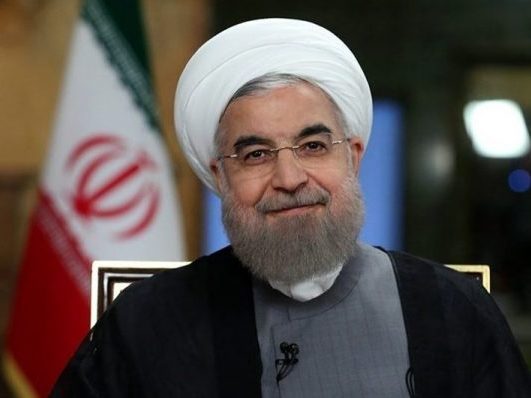
Iran President Urges Muslims to Recognize Other Religions

Iranian president

“Unity begins with believing each other, and we should recognize each other’s religions,” Rouhani said in a Sunday post in his Twitter account.

“No one can be coerced into changing his/her path,” he added.

“If someone thinks his/her faith and religion is a better one, this should be proved in practice,” Rouhani noted.

His remarks came as Iran is marking the Islamic Unity Week, a ceremony annually held between two dates of the birthday of Prophet Muhammad, one narrated by Sunnis and the other by Shiites.

Imam Khomeini was the one who proposed to call the interval between the two dates as Islamic unity week.

Earlier on Sunday, the Iranian president    said, “The people of the region have shown that there is no distance among various communities and religions.

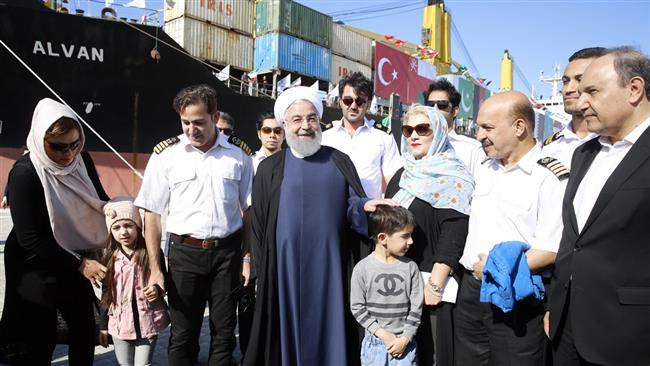
“Shiite and Sunni scholars and elites in Iran and elsewhere in the region have taken great strides in this regard,” he noted in an address to a ceremony held in Chabahar in southeastern Iran to inaugurate the first phase of Shahid Beheshti Port Development Plan.

“Some thought that our region is a region of war, conflict, and Shiite-Sunni confrontation… and the land of foreign intervention,” the president said, adding that today, however, the region has distanced itself from those issues.

What matters is that everyone should make efforts to boost solidarity and unity in this region, Rouhani stressed.

“Yemen Party Leaders in Riyadh, Cairo, Amman for Talks”

Mohammed Al-Jaber says the only way to restore peace and security in Yemen is to sideline Ansarullah Movement which has been controlling the capital Sana’a since 2014 following the ouster of former Yemeni President, Abd Rabbuh Mansur Hadi.

In an interview with Alhadath TV on the latest developments in Yemen, Al-Jaber referred to the mediatory role that Qatar is playing among the conflicting sides in Yemen to bring about peace and security in the war-torn country and said “the mediatory role is dangerous and will embroil Qatar into a crisis.”

He also directly addressed the Yemeni nation and said, “The Saudi Arabian Crown Prince Mohammad Bin Salman has announced that Saudi Arabia will not remain indifferent towards Yemenis’ fate because we view them as our own people.”

According to a Farsi report by IRIB News Agency, the ambassador also repeated the accusations levelled against Iran by the Saudi officials and claimed that Tehran has been involved in projects to inflict blow on Arab states and their affiliated entities.

Iran has repeatedly denied such accusations saying based on its main foreign policy principles, it has always been seeking to establish good-faith relations with its regional neighbours.

The Saudi diplomat further noted, “What we see in Yemen is the result of efforts made back in March 2015 when the Houthi fighters backed by Iran began their operation. Since then, the fighters have destroyed Yemen. They have attacked defenceless people as well as non-military facilities across the country.”

Without pointing to the devastating war of Saudi Arabia on Yemen which has razed to ground all civil infrastructure and historical as well as cultural sites of Yemen over the past years, the ambassador also noted Sana’a is a large and important Arab capital with deep cultural roots in history.

Reports say over 13,000 Yemenis including women and children have been killed in Saudi airstrikes since March 2015.

Al-Jaber also claimed Saudi Arabia has stood by the Yemenis in economic, political and humanitarian terms over the past years.

His comments came as the Saudi-led coalition has also imposed an all-out blockade over Yemen, despite its dire need for humanitarian assistance. The UN has described the situation in Yemen as the world’s worst humanitarian crisis.

Iran Leader Urges Constant Development of Defensive Power

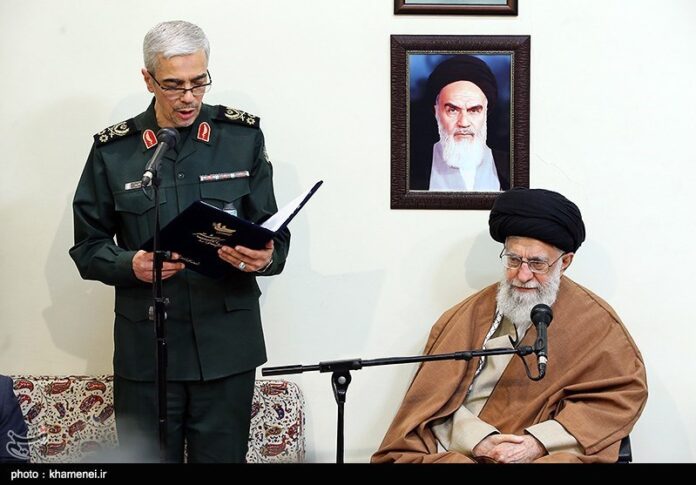
Iran Leader

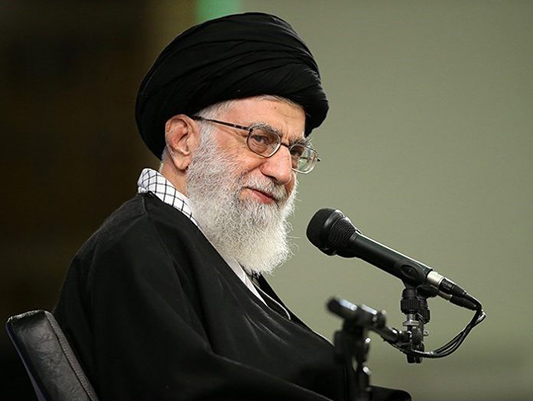
In a meeting with senior military commanders in Tehran on Sunday, Ayatollah Khamenei pointed to the enemies’ unrelenting hostility toward the Islamic Establishment and the Iranian nation, stressing the need for continuous enhancement of the capabilities of Iran’s Armed Forces.

The Armed Forces should consist of the best personnel in terms of practical and mental capabilities and resolve to be able to ensure the Iranian nation’s invulnerability to hostile measure, the Leader added.

Ayatollah Khamenei also described incessant efforts to move forward as the key to success for the military commanders serving at any unit.

Imam Khamenei has repeatedly stressed the need for strengthening the country’s military power and called on the Armed Forces to maintain a high level of preparedness.

Last week, the Leader called for the expansion of the Iranian Navy’s capabilities by making use of the country’s advances in other sectors.

The Navy should enhance its capabilities both in terms of military gear and combat power, Ayatollah Khamenei said in a meeting with the Navy’s commanders.

A Look at Iranian Newspaper Front Pages on December 3

The top story in several newspapers today was the remarks made by Iranian President Hassan Rouhani during his visit to Sistan and Baluchestan province in southeastern Iran. In his address to a large group of students in the underdeveloped province, Rouhani talked about a range of issues, from regional affairs to the development of the province and criticisms of his government.

Some papers also covered an indirect war of words between Iranian Foreign Minister Mohammad Javad Zarif and his Saudi counterpart Adel al-Jubeir in two separate days of MED-Rome conference.

The recent controversial comments by Trump’s former advisor Michael Flynn also received great coverage in Iran.

The above issues, as well as many more, are highlighted in the following headlines and top stories:


19 Dey:

1- Rouhani: We Don’t Want to Have Distance with Regional Countries

2- Intelligence Minister: Over 120 Terrorist Teams Smashed
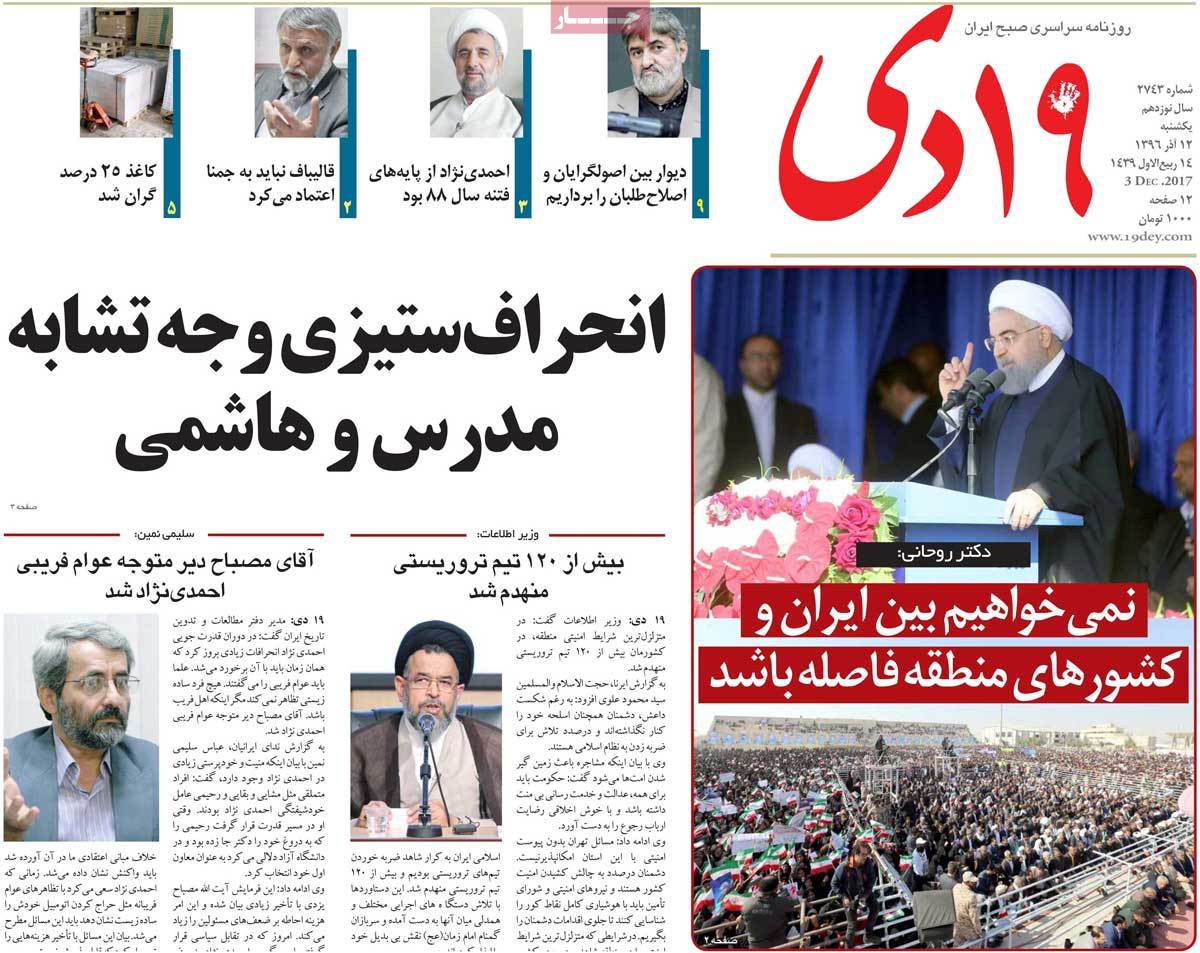
A Look at Iranian Newspaper Front Pages on December 3


Abrar:

1- Iranian Commander Rules Out any Negotiation over Missile Program

2- Erdogan: We Haven’t Given US Any Guarantee on Iran Sanctions

3- Hariri: Hezbollah Won’t Use Its Weapons inside Lebanon
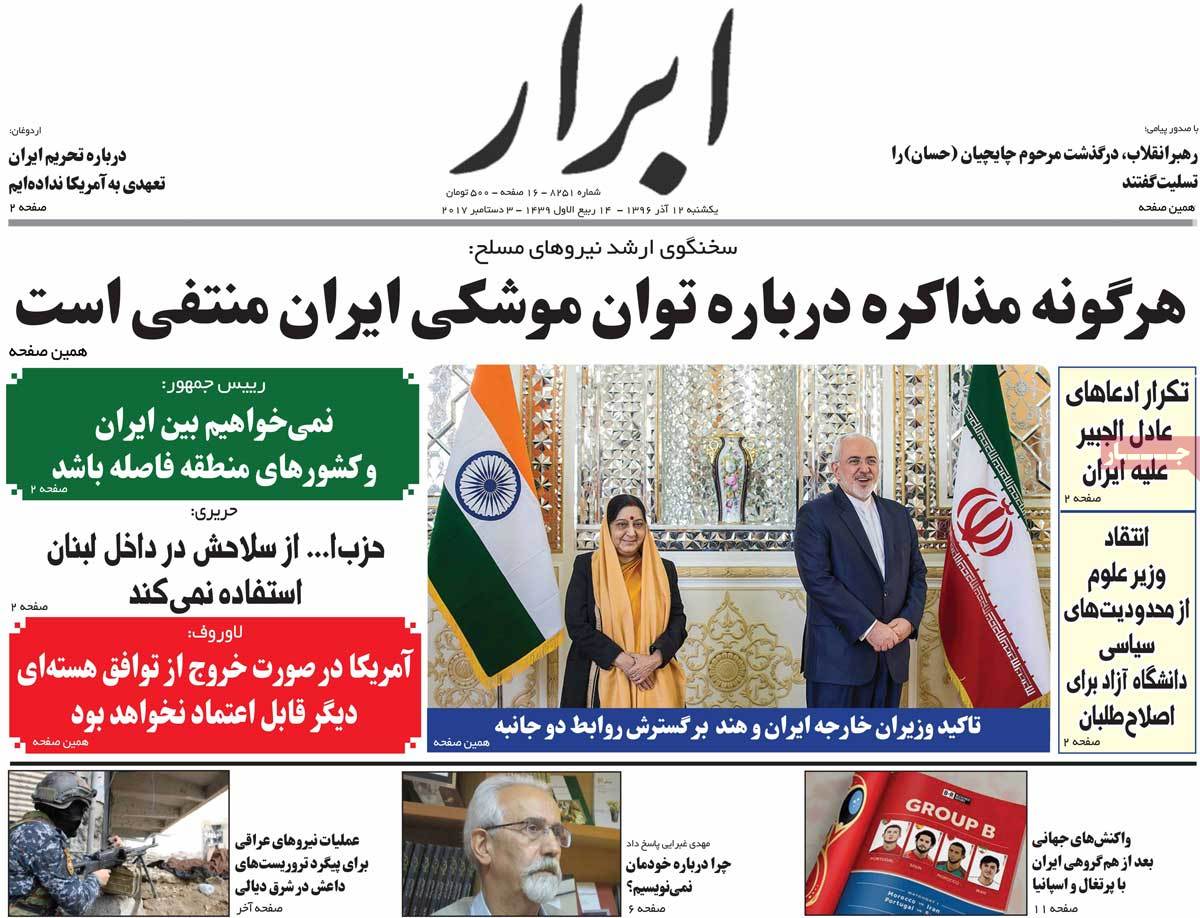
A Look at Iranian Newspaper Front Pages on December 3


Afkar:

1- Rouhani Repeats His Promises Instead of Fulfilling Them

2- Iran Will Succeed in FIFA World Cup If Iranians Believe in Themselves: Schäfer

A Look at Iranian Newspaper Front Pages on December 3


Aftab-e Yazd:

1- Figo’s Expensive Appearance in Iran State TV Sparks Controversy

2- Pope’s Emotional Apology to Rohingya Muslims

3- A Review of Iran-Russia Trade under Barter System

  • We Give Our Oil in Return for Low Quality Russian Goods
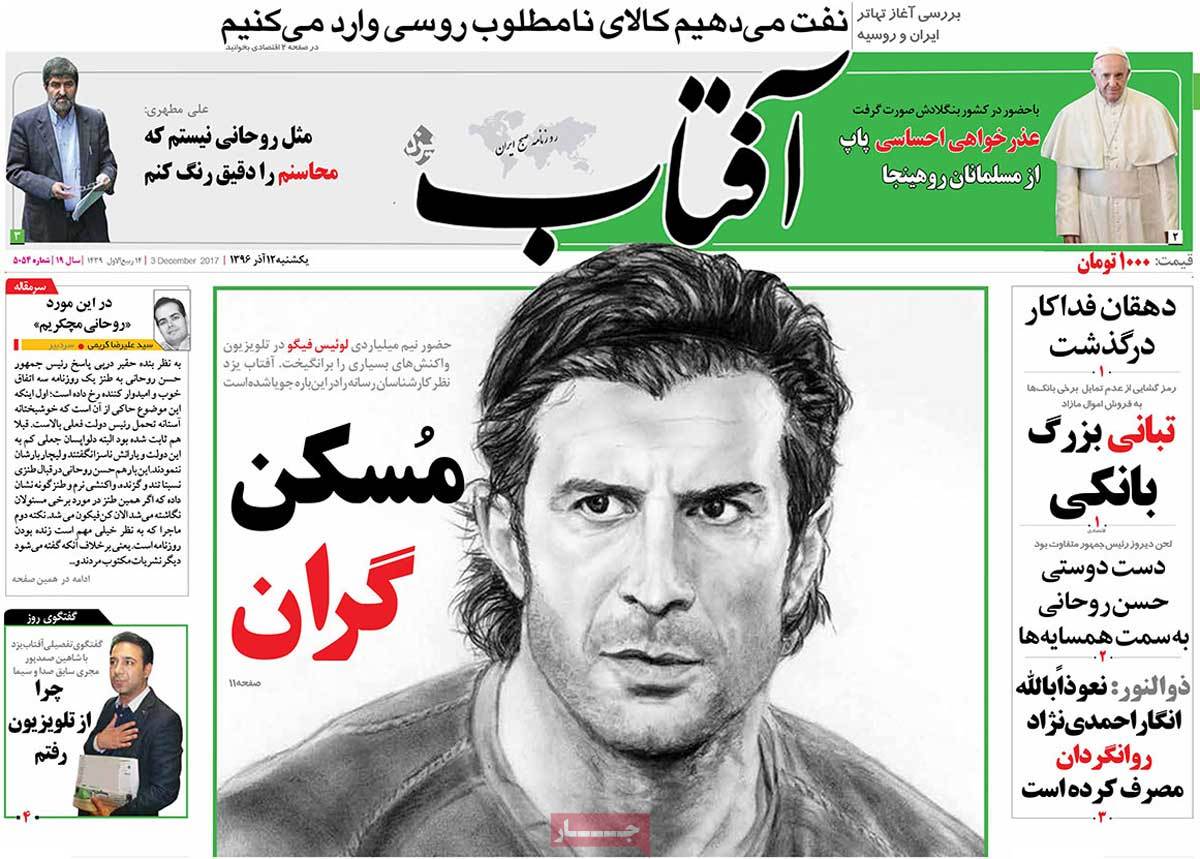
A Look at Iranian Newspaper Front Pages on December 3


Arman-e Emrooz:

1- Rouhani Asks Students to Criticize His Gov’t More

2- Warning: Iranian Carpet Becoming Chinese!
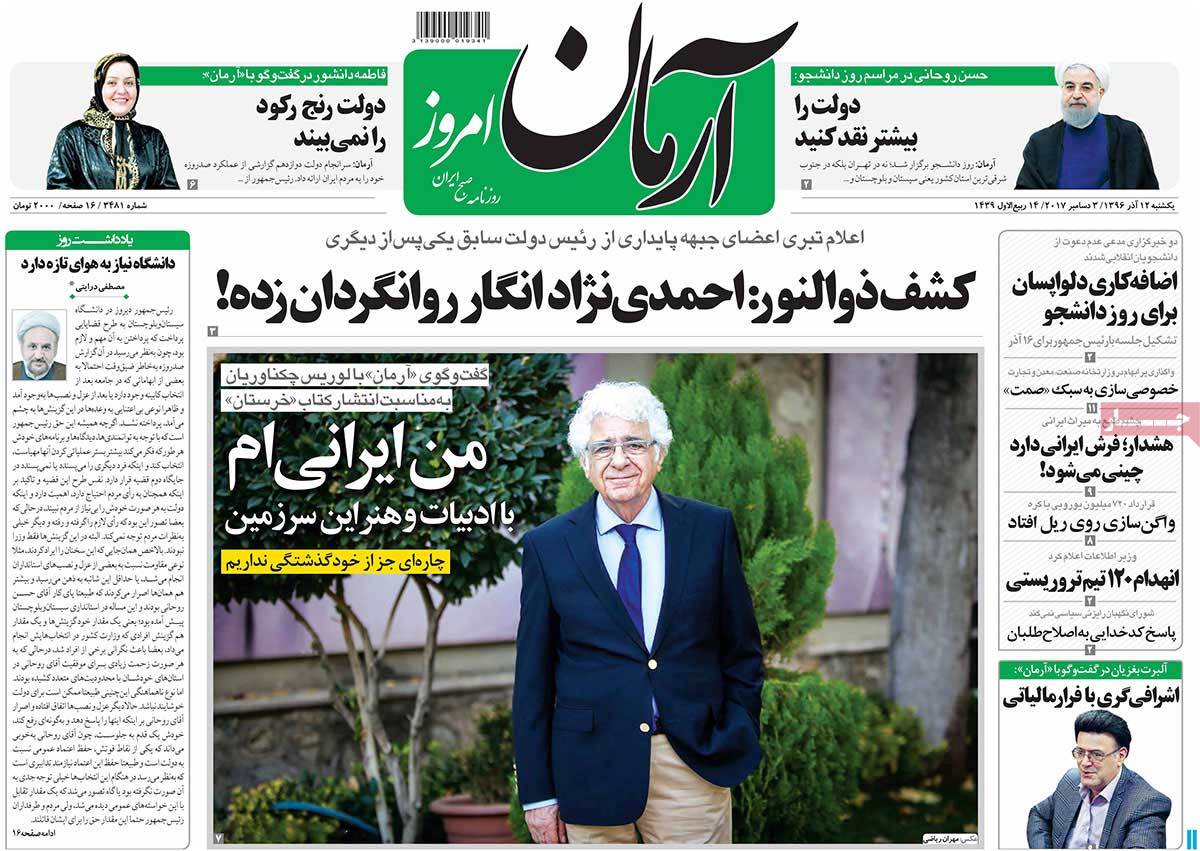
A Look at Iranian Newspaper Front Pages on December 3


Asman-e Abi:

1- Standing on the Feet You Don’t Have: International Day of Disabled Persons
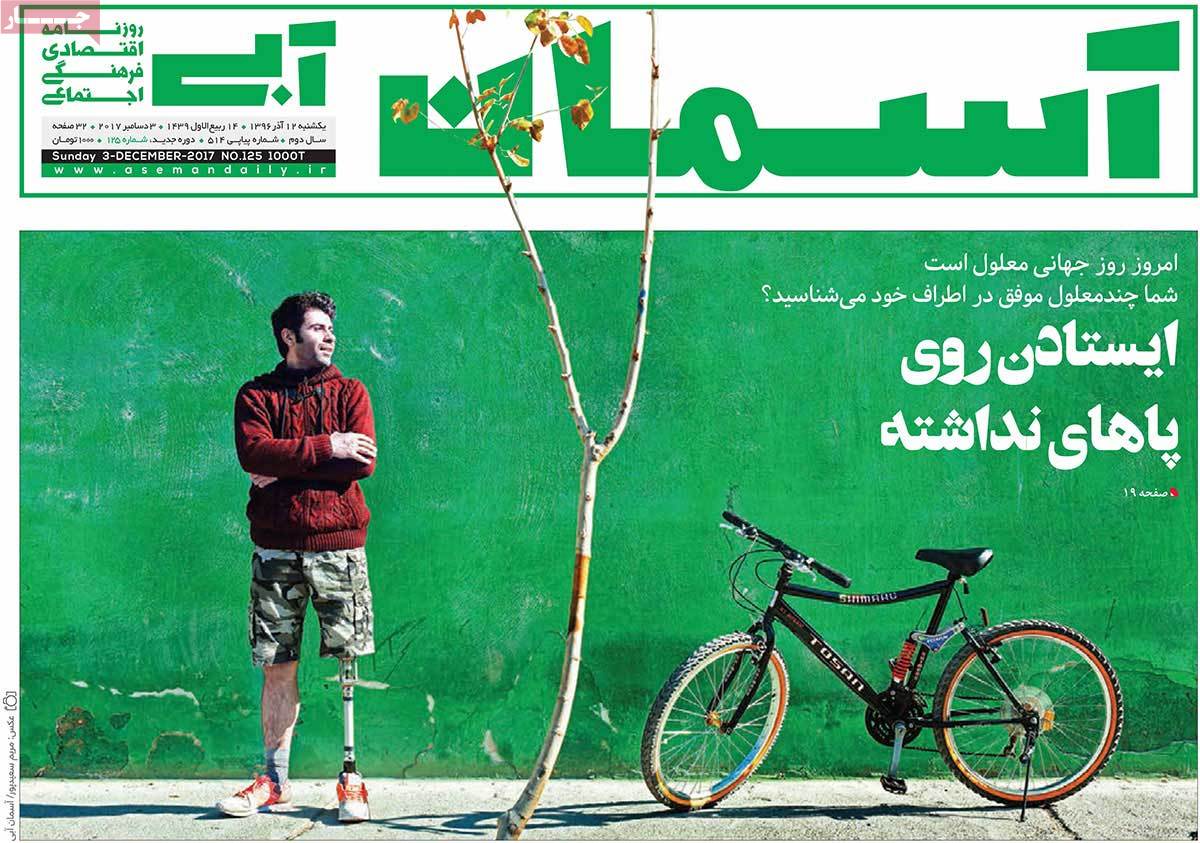
A Look at Iranian Newspaper Front Pages on December 3


Ebtekar:

1- Domino of Crisis in White House

2- Serious War of Words between Zarif, Saudi FM
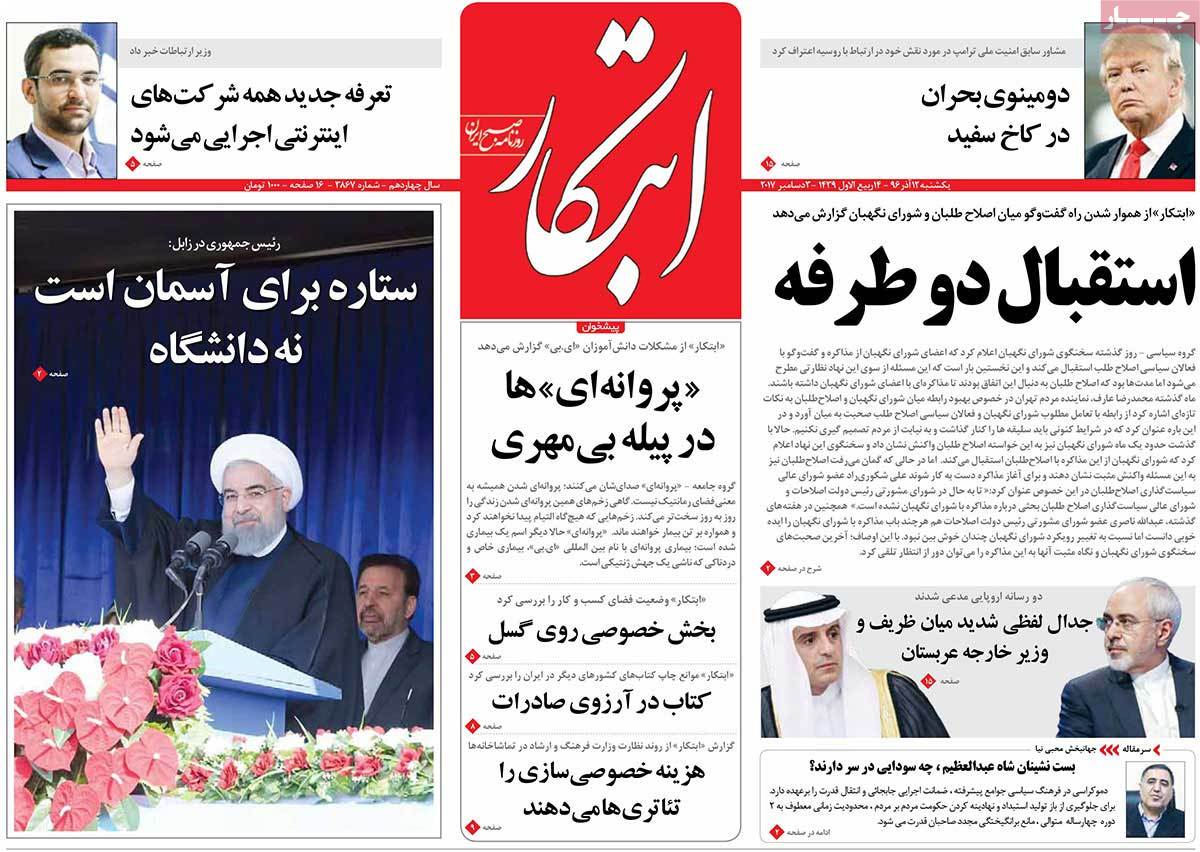
A Look at Iranian Newspaper Front Pages on December 3


Etemad:

1- Line of Unity: Officials of Sistan and Baluchestan Province Welcome Rouhani

2- Turkey Calls Reza Zarrab’s Trial Political
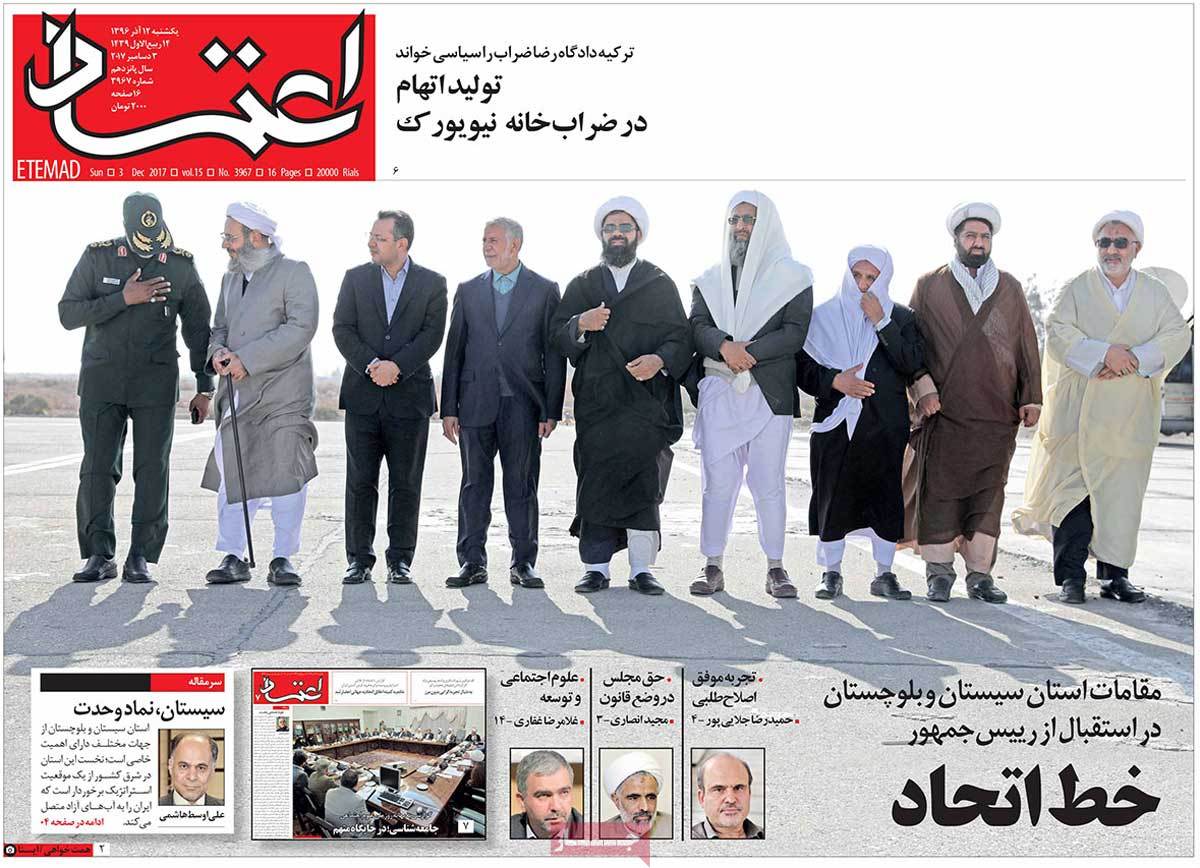
A Look at Iranian Newspaper Front Pages on December 3


Ettela’at:

1- Car Imports Possible Only If Foreign Carmakers Take Part in Domestic Production

2- Syria’s Air Defence Forces Respond to Israel’s Latest Aggression
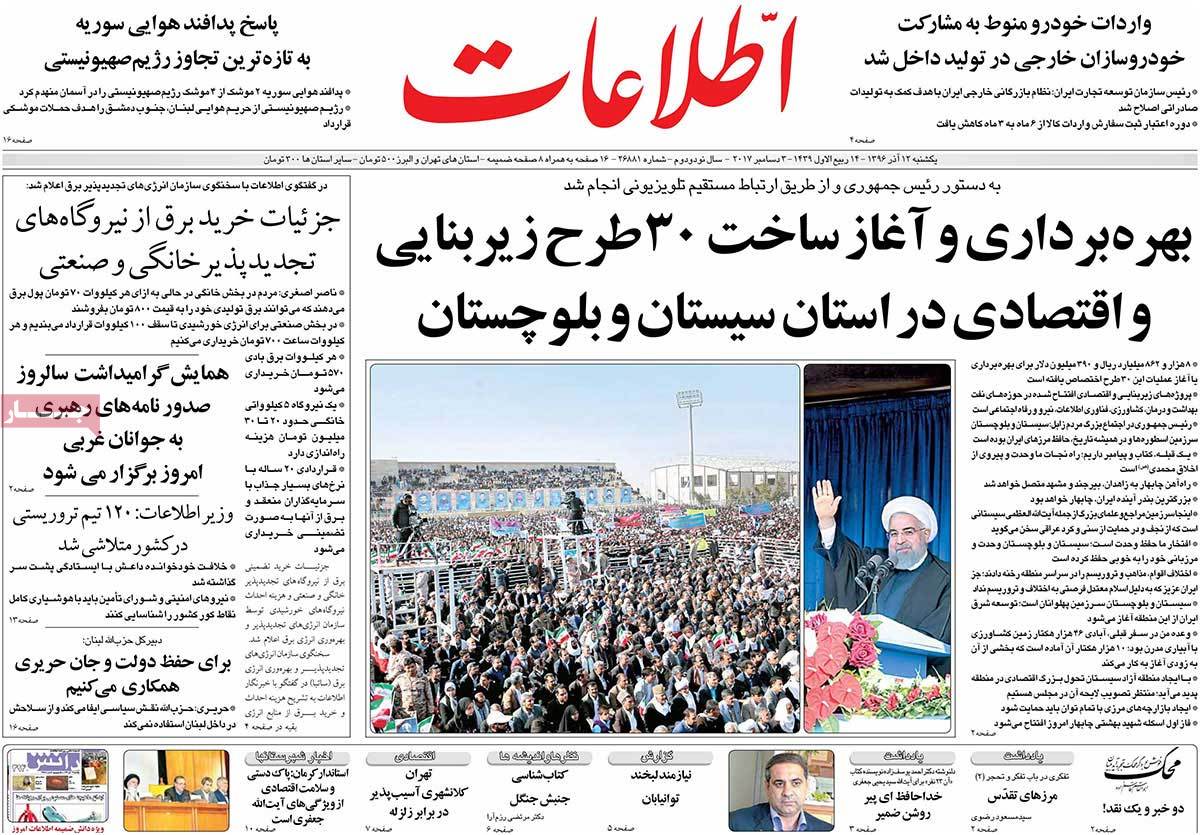
A Look at Iranian Newspaper Front Pages on December 3


Iran:

1- €720 Million Deal between Iran, South Korea to Build 450 Wagons

2- Wedding Ceremony among Ruins: A Report on a Marriage in Quake-Hit Village
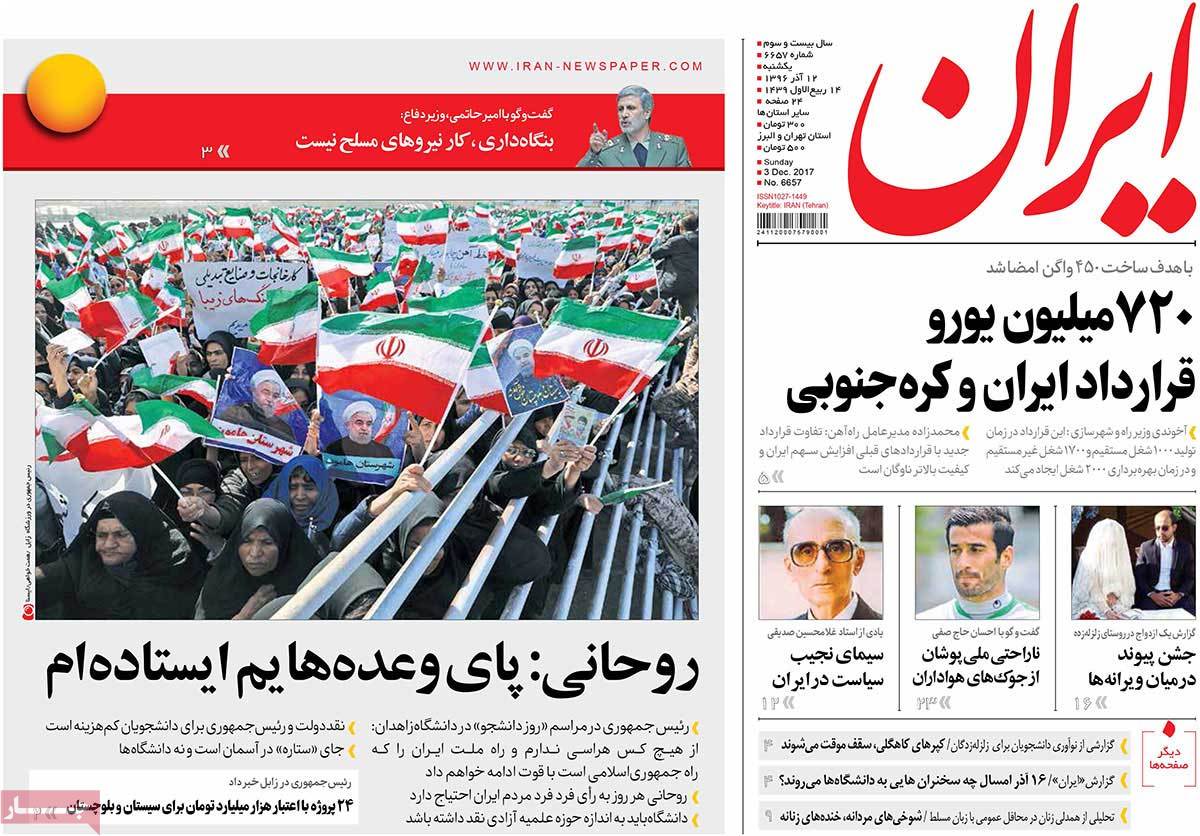
A Look at Iranian Newspaper Front Pages on December 3


Jame’eh Farda:

1- Mr Kushner’s Secret Ties

  • Trump’s Son-in-Law Had Told Flynn to Contact Foreign Governments
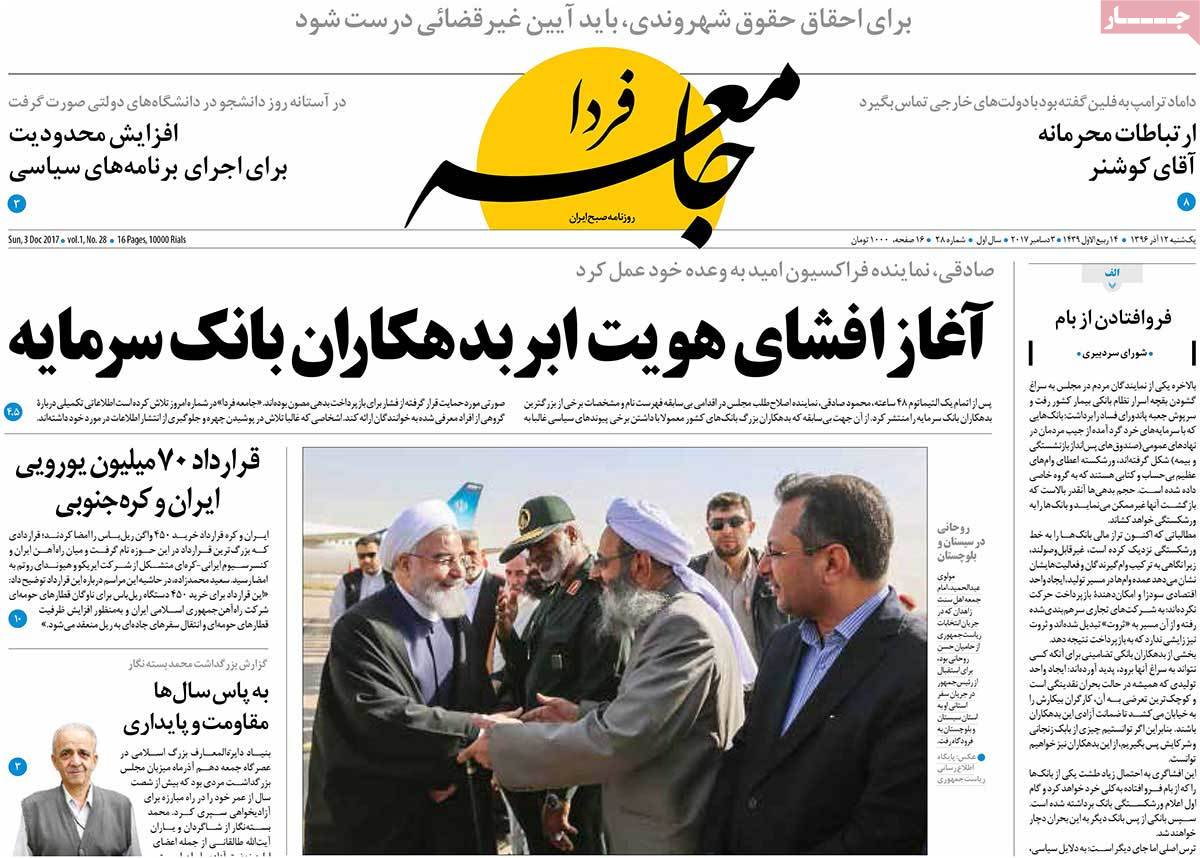
A Look at Iranian Newspaper Front Pages on December 3


Javan:

1- 18 Individuals with Huge Bank Debts Freely Working in Iran!

2- Iranian Nation’s Unity Prevents Religious Sedition

3- Washington Post: End of Trump Near
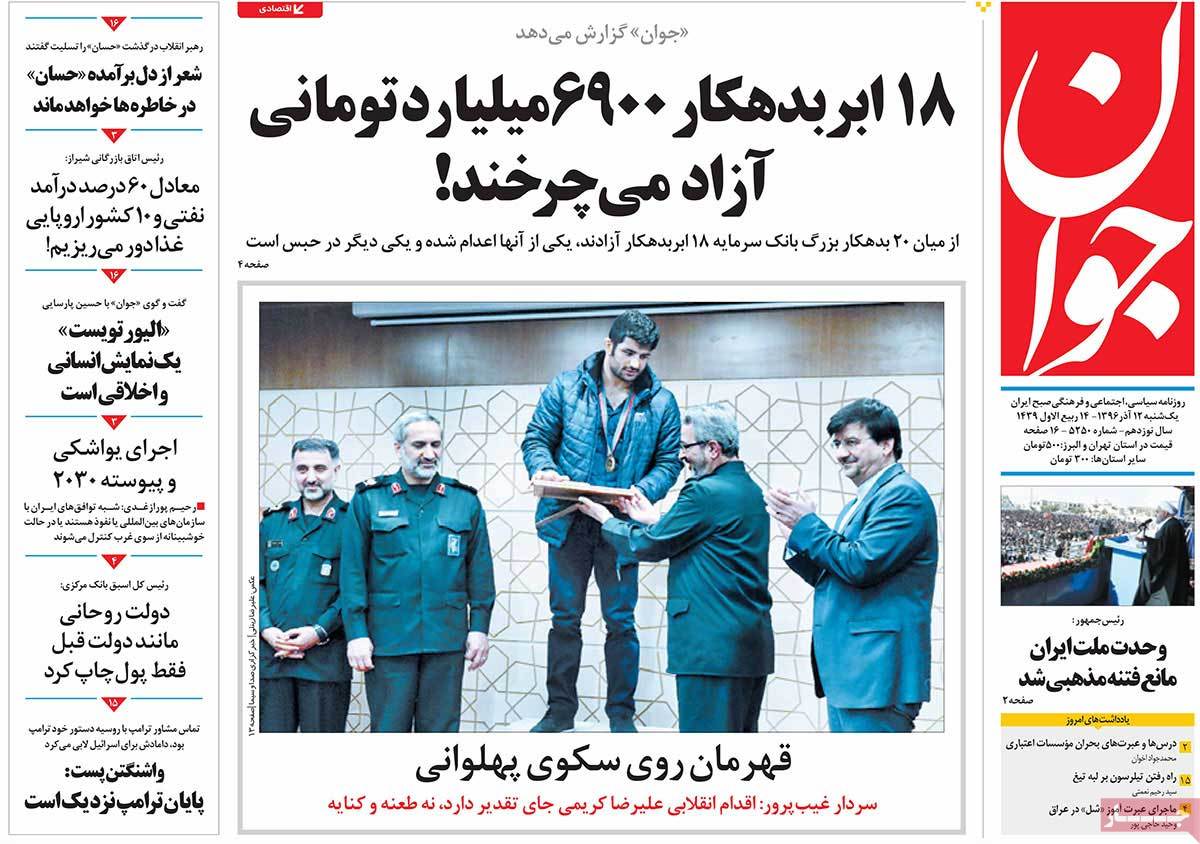
A Look at Iranian Newspaper Front Pages on December 3


Jomhouri Eslami:

1- Former US Official’s Confessions Shock White House

2- Nasrallah: Hezbollah Supports Hariri to Reinforce Lebanon Stability, Prevent Sedition
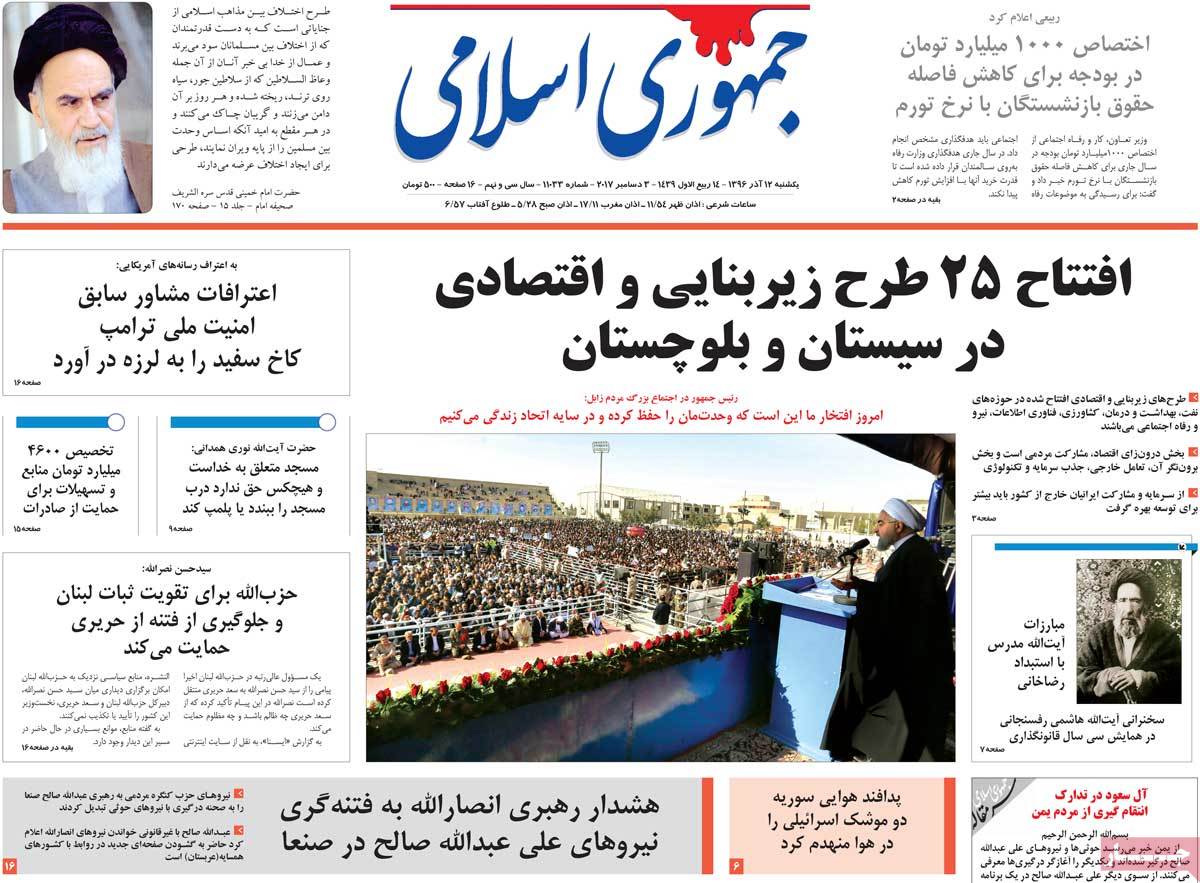
A Look at Iranian Newspaper Front Pages on December 3


Kayhan:

1- Macron’s Nonsense Remarks Result of Giving One-Way Concessions to France!

2- Haaretz Correspondent: Israel One of the Most Savage Regimes in the World

3- Rouhani to Students: Criticize the Government, It’s Easier, Less Costly!
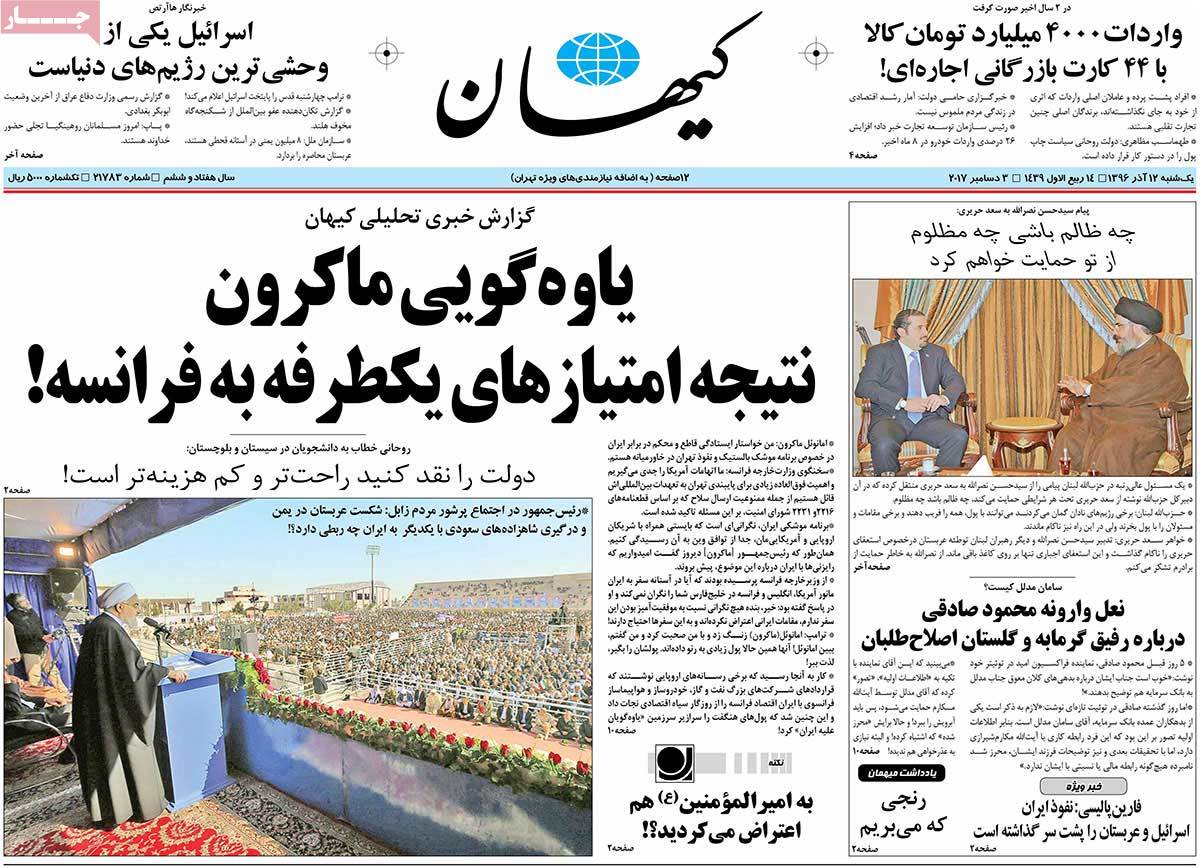
A Look at Iranian Newspaper Front Pages on December 3


Khorasan:

1- Flynn’s Earthquake in Washington
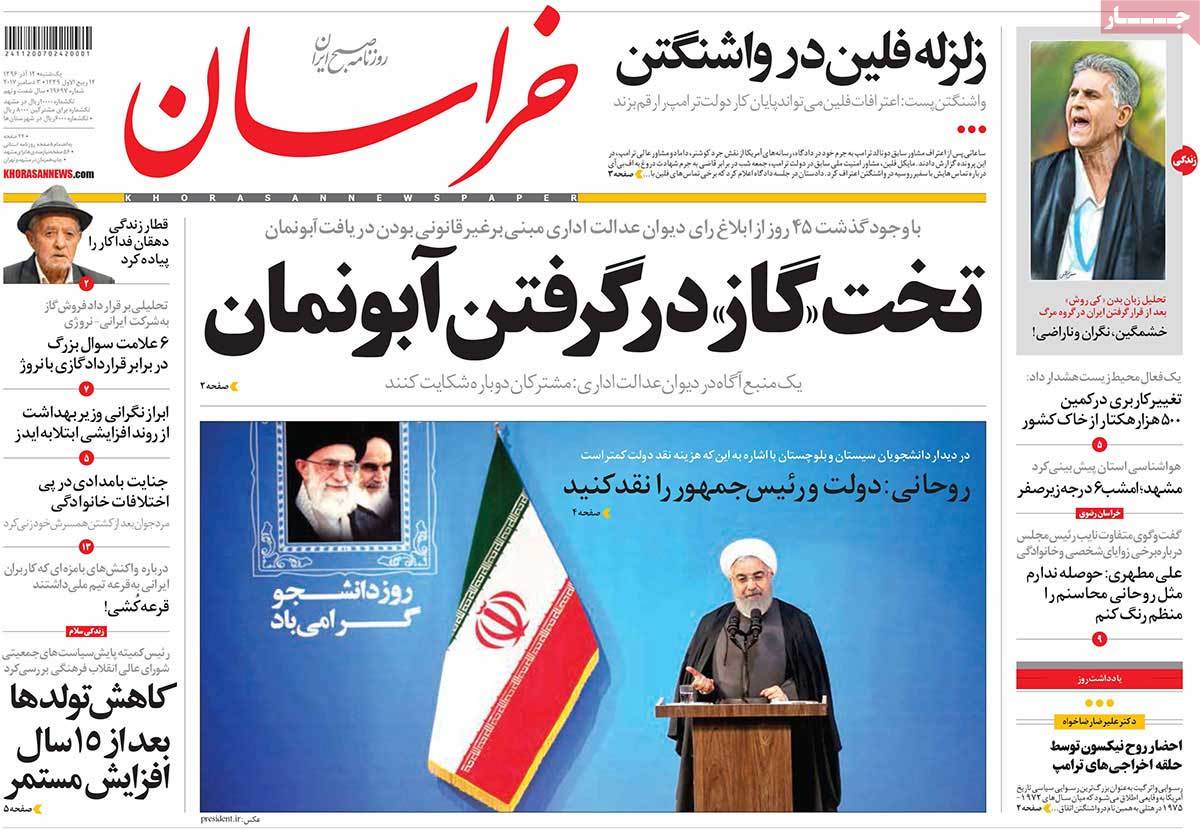
A Look at Iranian Newspaper Front Pages on December 3


Seda-ye Eslahat:

1- Rouhani: We Keep Our Promises

2- Queiroz: If You Don’t Like What I Say, Fire Me

3- Health Minister: More People Getting Affected by HIV
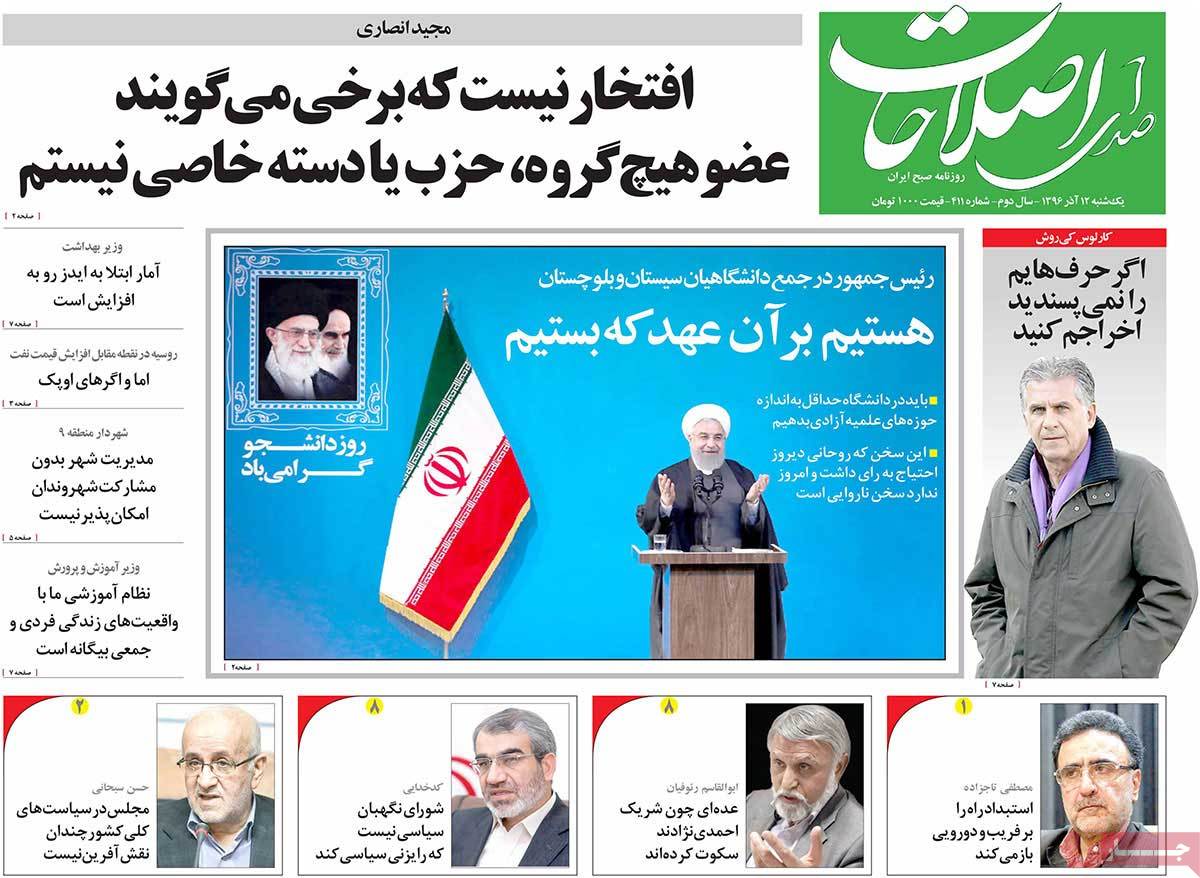
A Look at Iranian Newspaper Front Pages on December 3


Shahrvand:

1- Iranian Social Media Users Once Again Attack Pages of Other Players
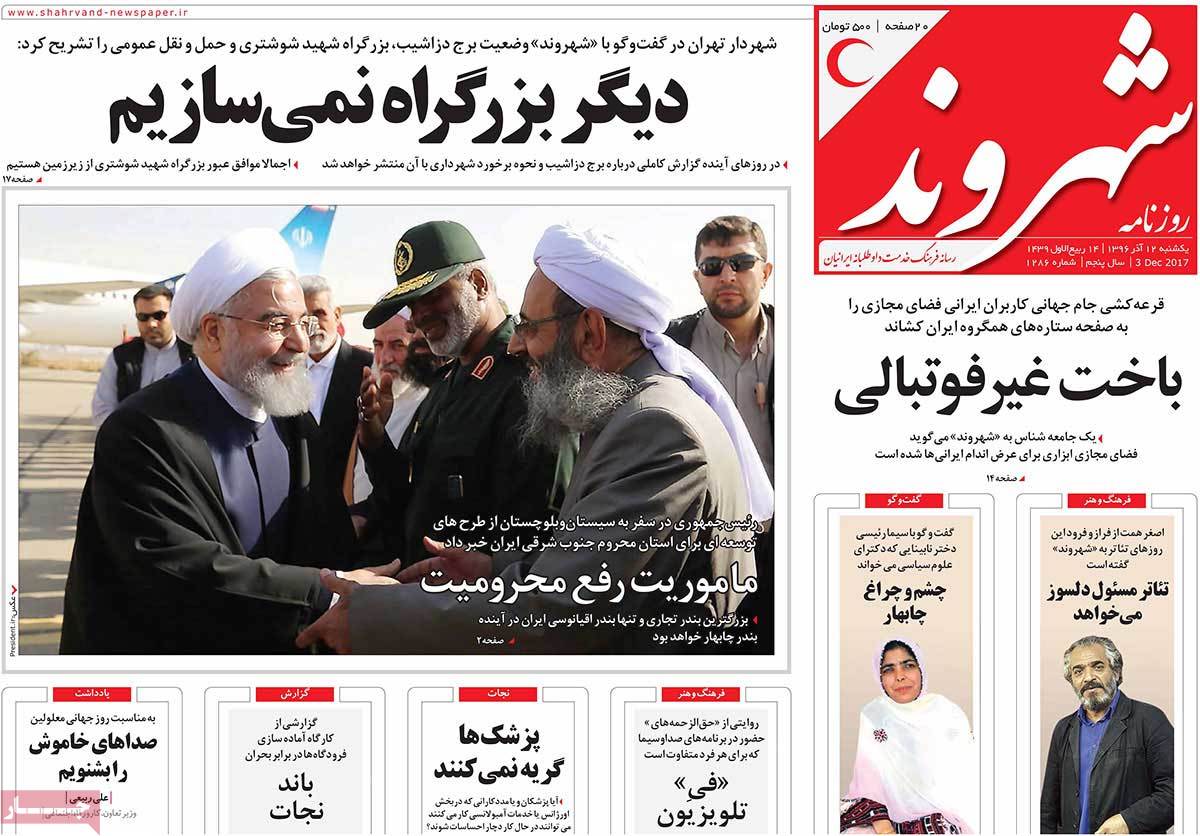
A Look at Iranian Newspaper Front Pages on December 3


Shargh:

1- Indirect Duel between Zarif, Jubeir

2- Camp Hosting Queiroz’s Cheetahs in Russia Costs $2.5 Million

3- Amir-Abdollahian: Danger of Disintegration Threatening All Regional States
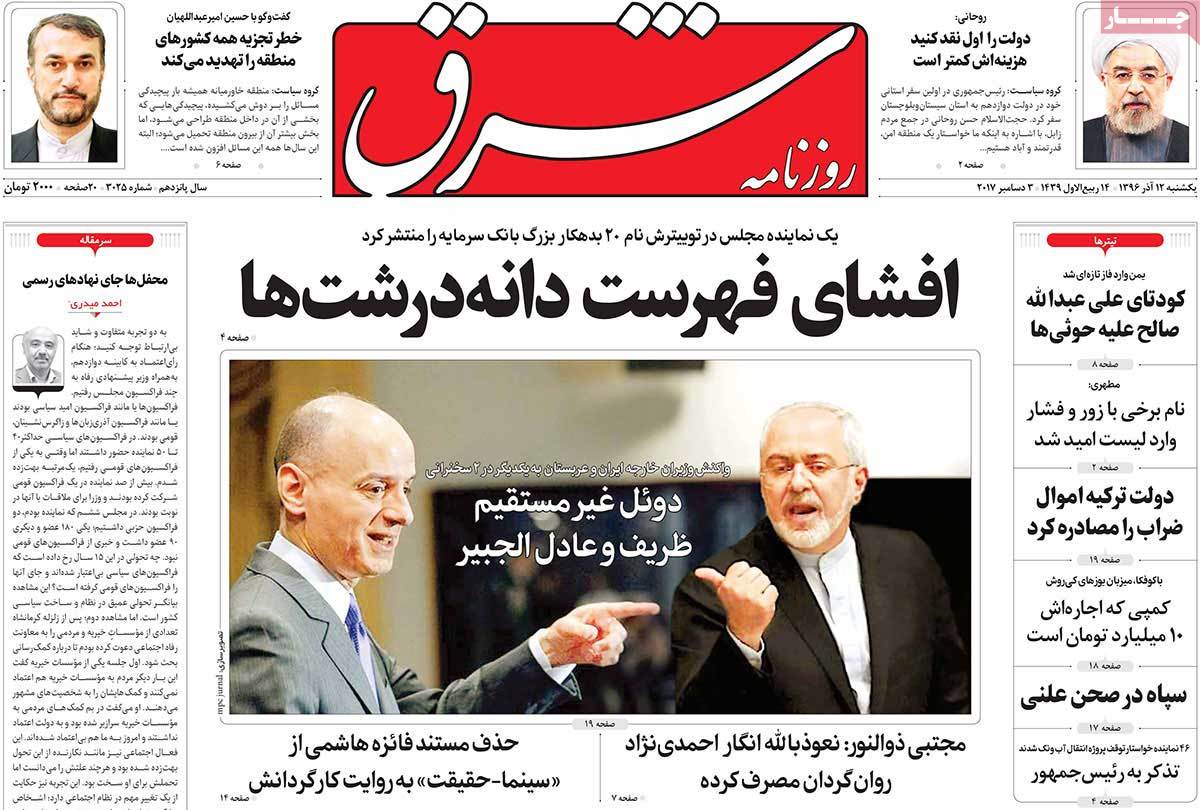
A Look at Iranian Newspaper Front Pages on December 3


Siasat-e Rooz:

1- Saudi Trap for Saleh

2- US Poised to Fully Destroy Palestine

3- Iran Leader’s Prudence Prevents Talks over Defensive Capabilities

4- Mogherini’s Illusion of Talks over Iran’s Missile Power
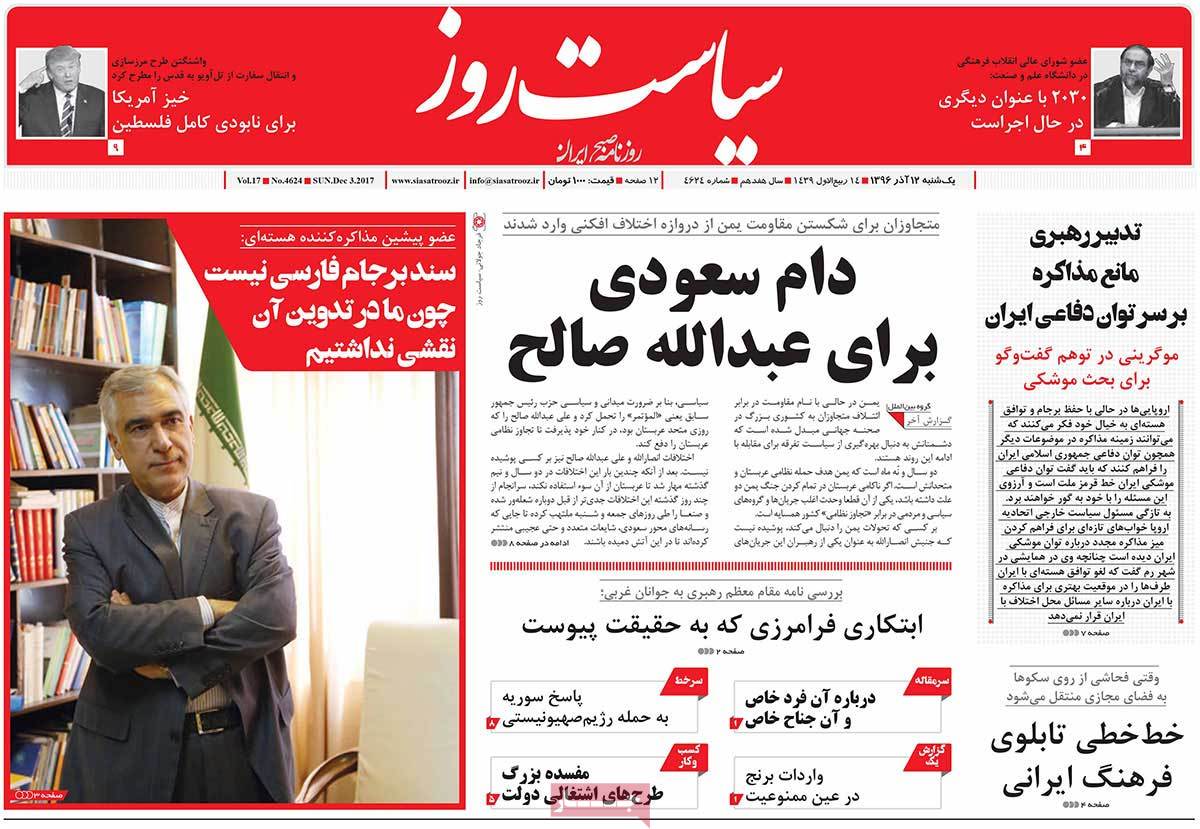
A Look at Iranian Newspaper Front Pages on December 3


Vatan-e Emrooz:

1- Aoun: Crisis in Lebanon Over

2- Israelis Supporting JCPOA

  • Israeli DM Joins Groups in US Opposed to Withdrawing from Iran Nuclear Deal
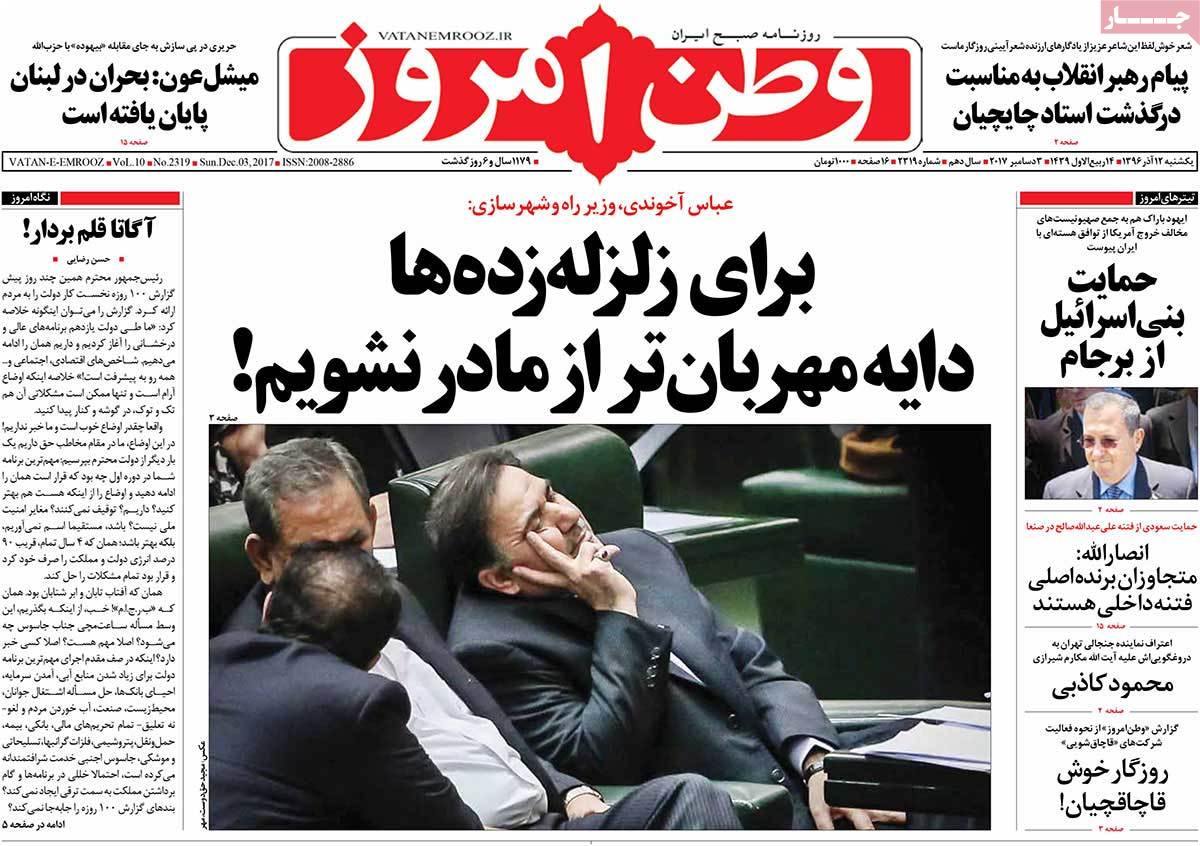
A Look at Iranian Newspaper Front Pages on December 3

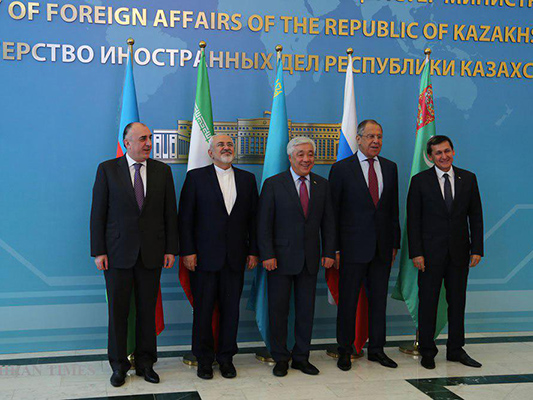
Iran FM to Attend Caspian Sea Littoral States’ Summit in Moscow

Caspian Sea

“A delegation of experts on political, legal, border issues and other related fields will accompany Zarif in this trip,” Iranian Foreign Ministry Spokesman Bahram Qassemi said.

He also noted that the meeting will discuss the draft convention on the legal status of the Caspian Sea, and ways to finalize the convention.

The participants will also prepare the agenda, and assess the documents to be signed at the Leaders’ Summit, Qassemi noted.

During the previous ministerial meeting held in the Kazakh capital of Astana in 2016, Zarif stressed that the legal regime of Caspian Sea should be developed in a way that the interests of all littoral states are met.

“A lasting legal regime should guarantee that the interests of all littoral states are met given the geopolitical changes,” Zarif noted in July 2016.

He also expressed Tehran’s support for the establishment of a permanent regional association, whose activities and list of duties would be defined after consultation among the Caspian littoral countries.

“Yemen Missile Attack on Abu Dhabi Response to UAE Divisive Plots”

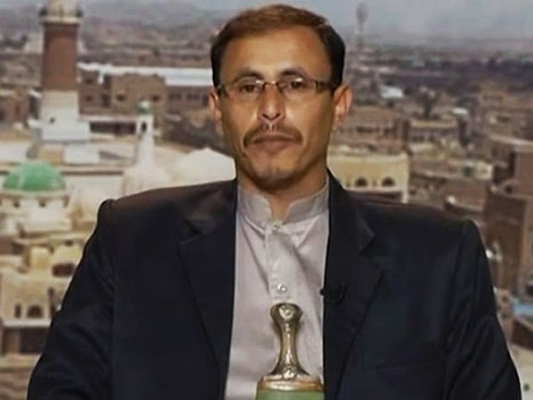
Zeifollah Al-Shami

Zeifollah Al-Shami, a member of Ansarullah’s Political Office, said the missile which the movement fired earlier on Sunday at the nuclear reactor in Abu Dhabi was a retaliatory effort against the UAE’s efforts to make division in the internal front of Yemen.

In an interview with Al Alam News Network, Al-Shami who is also a member of the High Political Council of Yemen said the Yemeni forces have missiles which are capable of targeting the enemy states’ capitals.

“The firing of the missile at Abu Dhabi reveals that enemies’ threats against Yemen have been futile,” he noted.

Al-Shami stressed with the firing of the winged cruise missile “we say that we are fully aware who are hatching conspiracy against us.”

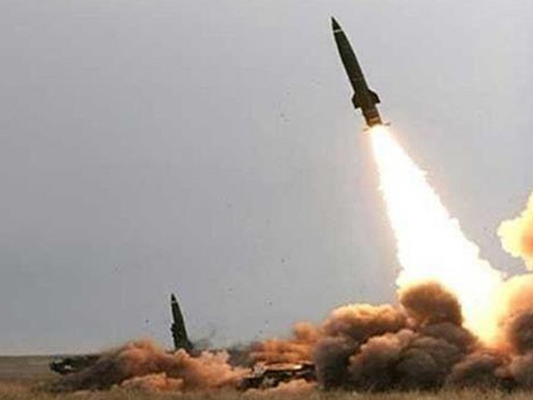
This is the first time that Yemeni forces have fired a winged cruise missile with 1,200-km range.

However, it is the second time this year that Ansarullah Movement has fired missiles toward the UAE. A few months ago they said they had “successfully” test fired a missile at Abu Dhabi.

“Iran Leader Plays Significant Role in Promoting Muslim Unity”

Iran Leader

Speaking at a Conference in Tehran on Sunday to discuss the impacts of the two letters that Ayatollah Khamenei sent to the youth in Western countries in 2015, Velayati pointed out that the Leader launched an initiative to create unity among Muslim Ummah.

“Today this has developed and will lead to annihilation of the Zionist regime,” he added, according to a Farsi report by Fars News Agency.

This senior Iranian official referred to the letter of Iran’s Leader to the youths in West saying that it was a very important matter as it is part of the efforts made by the Leader to promote Islam.

“I have witnessed his efforts for the Muslim world. He made a lot of efforts to form the parliament of Iraq and Lebanon, spent a lot of time for the unification of the Muslims in Afghanistan, and played a significant role in establishing People’s Islamic Unity Party of Afghanistan.”

Velayati further mentioned that Westerners are trying to sow the seeds of discord and want to present a negative image of Islam.

He also emphasized that the United States and the Zionists aim to maintain their presence in the region, saying that Americans must know they will suffer a defeat in Raqqa as well, and will be expelled from this city.

“As long as Islam exists, the struggle would continue, and for this, we must do our utmost theoretically and practically,” underlined Velayati.

Ayatollah Khamenei first wrote a letter to youths of Europe and North America on January 21, 2015, to elaborate on the reasons behind the West’s effort to spread Islamophobia.

Later on November 29, 2015, the Leader sent the second letter following a series of terrorist attacks in France, elaborating on the real factors behind terrorism and urged Western Youth to facilitate correct interaction with Muslims asking them to “lay the foundation for an appropriate and honorable interaction with the Muslim world based on correct knowledge and with deep insight and by taking advantage of tragic experiences (of the past)”.

Yemen’s Ansarullah Fires Cruise Missile on Abu Dhabi

yemen

According to the website of the group’s television service on Sunday, the Ansarullah missile force has launched “a winged cruise missile … towards the al-Barakah nuclear reactor in Abu Dhabi.”

Al Masirah TV later reported that the missile has “accurately” hit the target.

The website did not provide any evidence or give any further details.
The group had earlier targeted the international airport of Riyadh with a long-range ballistic missile that travelled more than 800km over the border with Saudi Arabia.

Back in early November, a spokesman for the Houthis told Al Jazeera they launched a Burkan 2-H missile towards Riyadh, a Scud-type missile with a range of more than 800km.
“The capital cities of countries that continually shell us, targeting innocent civilians, will not be spared from our missiles,” the spokesman said at the time.

Why Do Those Raised in West Behead Kids in Syria, Iraq?

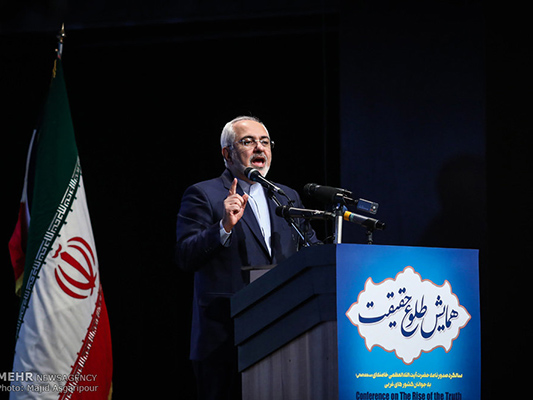
Zarif on Sunday referred to a 2015 letter by the Leader of Iran’s Islamic Revolution Ayatollah Seyyed Ali Khamenei to European and North American youths, and asked, “Why do people born and educated in the West behead children in Iraq and Syria?”

“Why do these people show so much barbarity and brutality? What explanation does the West have for raising them this way?”

The Iranian top diplomat made the remarks in a ceremony held in Tehran to mark the second anniversary of the Leader’s historic letter.

Zarif went on to say that the Leader’s letter addressed Western youths at a time when the medieval and embarrassing phenomenon of ISIS was spreading in the world.

However, he added, Islamophobia started long before the emergence of ISIS.

“Today, Islamic terrorism is among the keywords used by the US president in his speeches,” he noted.

“This is while they themselves are the creators of the threat of Islamic terrorism (ISIS), and are hiding themselves behind what they have made.”

“Now that we see English-speaking Westerners are beheading children in Iraq and Syria, for which the West should be held accountable, we need to take a different look at the Leader’s letter,” Zarif noted.

“The Leader’s letter to Western youths addresses the young generation, because the youths are the only ones who can find solutions to the current problems,” he added.

“The recent developments in the world should be viewed with a common global concern,” he said, adding that the Letter should be investigated with an exploratory view.

Iran Officially Opens Strategic Port of Chabahar

rouhani-chabahar

The first phase of Shahid Beheshti International Port in Chabahar, Sistan-Baluchestan Province, was inaugurated by President Hassan Rouhani during a ceremony also attended by officials and dignitaries from 17 countries.

President Rouhani said during the ceremony that the inauguration of the project marked a historic day for Iran – particularly for the people of Chabahar.

He emphasized that the project was specifically important given that it connected the trade corridors that pass through Iran to the ocean.

“This port is also significant from the political point of view given that it connects Iran with its eastern and northern neighbors and at a later stage to European states,” Rouhani said.

The project to develop Shahid Beheshti Port started in 2007 through an investment that officials previously said already amounted to $1 billion.

The annual cargo tonnage of Shahid Beheshti Port – Iran’s only oceanic port – has now almost tripled to reach as high as 8.5 million tonnes.

It can also accommodate 100,000-tonne ships – what officials say can help promote the country’s international trade activities.

The overall development project is planned in four phases and is expected to bring the port’s total annual cargo capacity to 82 million tonnes.

Tehran plans to use Chabahar for transhipment to Afghanistan and Central Asia.

India, Iran and Afghanistan have signed an agreement to give Indian goods, heading toward Central Asia and Afghanistan, preferential treatment and tariff reductions at Chabahar.

Chabahar provides India with an easier land-sea route to Afghanistan. The Indian government has committed $500 million to Chabahar, with an aim to join an increasingly important transport corridor to resource-rich regional countries.

Massive investment plans are already on the cards, with the government of Prime Minister Narendra Modi offering to build a sprawling artery of roads and railways which is estimated to cost $15 billion.

India has finalized a plan to build a 900km railroad from the Afghan province of Bamiyan to Chabahar Port. It has also already spent $100 million on building a 220km road in the Afghan province of Nimruz, which will be extended to Chabahar.

Once the development project is complete, Chabahar will be linked with the International North-South Transportation Corridor (INSTC), which currently stretches from the Iranian port of Bandar Abbas in the Persian Gulf to Russia, Eurasia and Europe.