Thursday, December 25, 2025
Home Blog Page 3775

Iraqi Top Shiite Cleric Blasts US Decision on Jerusalem

Ayatollah Sistan’s office issued a statement on Thursday and said Washington’s move “hurts the feelings of hundreds of millions of Arabs, Muslims.”

The statement came after US President Donald Trump defied overwhelming international opposition and said his country will recognize Jerusalem al-Quds as the “capital” of Israel, directing the State Department to prepare for moving the US embassy from Tel Aviv.

The announcement has triggered a chorus of condemnations from around the world.

“This decision is condemned and decried, it hurt the feelings of hundreds of millions of Arabs and Muslims,” it said. “But it won’t change the reality that Jerusalem is an occupied land which should return to the sovereignty of its Palestinian owners no matter how long it takes.”

The statement also called on the Muslim world “to combine its efforts” towards that goal.

The Iraqi government on Thursday slammed Trump’s announcement and called on Washington to backtrack on the move.

“The US administration has to backtrack on this decision to stop any dangerous escalation that would fuel extremism and create conditions favorable to terrorism,” a government statement said.

Iraq’s Foreign Ministry spokesman said it had summoned the US ambassador in Baghdad to hand him a memo protesting Trump’s decision.

The UN Security Council has also announced an emergency session on the US move on Friday upon a request by eight member states.

“Bin Salman’s Quest for Modernism to Improve Tehran-Riyadh Ties”

Political analyst Abdollah Ganji has, in an article published by the conservative Persian-language website Javan Online, weighed in on the process of change in Saudi Arabia. He believes bin Salman’s quest for modernism and the process he has started to secularize the government will finally lead to the amelioration of relations between Saudi Arabia and Iran. Still, Ganji believes the young prince has a challenging road ahead. The full text of the analytical piece follows.

Saudi Arabia’s 32-year-old Crown Prince Mohammad bin Salman, in an interview with New York Times, refers to a strange point and sheds light on the reasons behind Riyadh’s approaches over the past 38 years. He believes the religious essence of the Saudi government was influenced by the 1979 Islamic Revolution of Iran. He offers signs that the Saudi government was associated with non-religious behavior and symbols, including women not wearing the Islamic headscarf. Therefore, it can be said that the Al Saud dynasty has maintained its political life over the past four decades with “discretionary Islam.” Some may think that by painting an irreligious picture of Saudi Arabia’s not-too-distant-past, bin Salman is seeking to show that the Al Saud dynasty’s background has nothing to do with Muhammad ibn Abd al-Wahhab’s ideology. And by reviewing his recent moves, one can say that he is using Riyadh’s past picture as a beacon for Saudi Arabia’s future.

In other words, the Saudi heir to the throne offers an interpretation of history based on which he can set in motion the process of secularism in Saudi Arabia and bring to the fore reforms that would diminish the sensitivity of the West and the world about his position. This begs the question what alternative model the conservative religious Saudi regime is seeking. What is their new model, and how is it related to Saudi Arabia’s ecology as well as Iran’s future? A secular government, which is favoured by the West, definitely cannot be manifested within the family-democracy framework, and secularism basically cannot be the main source of power in societies today. Therefore, one can believe the Saudi regime is moving toward a secular system only when the new system is unveiled. The first condition for the alternative system is that it has to be a liberal-democrat one. Removing the Al Saud family from the power structure and accepting the rule of a nation will amount to a constitutional government.

In order to move toward the West’s green light, the young prince is facing two challenges; first, Wahhabi scholars, who are present in Mecca and Medina, not only consider themselves as the legitimate authorities to assume power in Saudi Arabia, but are under the illusion that they should assume the religious leadership of Sunni Muslims around the world. So, the monarchial nature of the clerical system in Saudi Arabia will face serious challenges. The clergy in the ruling system see that their religious rule has been eliminated, and hence they will opt for resistance to defend their past. The conflict will drag on for so long. However, Saudi Arabia’s young and educated population as well as the reactionary performance of the clergy in the ruling system indicates that bin Salman feels he will be able to break this barrier easily. The second challenge is the aristocrats in the Saudi society, who are relevant in the context of a monarchial system, but under the new model, they will be controlled by social pressure and the question “Where did you bring all that wealth” will be the order of the day as part of efforts to eliminate aristocracy.

What is prompting bin Salman to go for a non-religious system is not only the West’s pressure and its modern standards of human life. In fact, in order to counter accusations of being underdeveloped, the Al Saud rulers sent many of the youth to Western countries to continue their education. Moreover, Saudi rulers tried to show off the symbols of renovation and modernization in society.

That is why higher education, especially the Western classical humanities, was promoted, reflecting the “hidden secularism” among the middle class in Saudi Arabia. Salman seeks start the new phase through the support of this very class and under the pretext of paying attention to the middle class.

Definitely, the future of Iran-Saudi Arabia relations will become more relaxed based on the new perspective because the so-called ideology ruling the Al Saud dynasty is a hollow one and, unlike our belief, is not and an ideology at all. Rather, it is a historical move against Shiite beliefs, which will lose ground in the new atmosphere. In that case, it would be possible to preserve and revive the legacy of Islam’s civilization on the Arabian Peninsula, especially the legacy of Shiites and of other parts of Saudi Arabia, in interaction with a secular system. The beliefs of other Islamic denominations will probably be recognized, and the spread of Takfiri ideology to the Muslim world will gradually stop. Definitely, the Al Saud rulers’ non-conformity with the current “negative ideology” will pave the way for better cooperation between Iran and Saudi Arabia. Possible future hurdles to Tehran-Riyadh relations will not be ideological, but it will be their political links with the West, especially the US, that can improve relations.


Palestinians to Take Control of Israel’s Nuclear Arsenal: Iran

In reaction to the US provocative decision to recognize Jerusalem al-Quds as Israel’s capital, Brigadier General Jazayeri underlined “Israel has occupied the Palestinian territories” adding the continuation of the Palestinian resistance against this cancerous tumour of Israel reveals that the occupying regime will never feel safe.

“The Zionist regime has no way but to leave the region completely or get destroyed,” he was quoted as saying on Thursday in a Farsi report by Tasnim News Agency.

He also stressed the American nation should know this fact that the current plight in the region is deeply rooted in the policies adopted by their “wicked politicians.”

The spokesman also said the American administration and the occupying regime have regulated their regional policies based on “a wrong analysis of the region’s developments”, maintaining that the dire situation of the Middle East and the abnormal status of the Arab world would provide them with an opportunity to fulfil their long-term policies towards the Palestinian territories.”

“But like their other estimations about Iraq, Syria and Yemen, the US and the Zionist regime will end up in failure in the occupied territories,” he concluded.


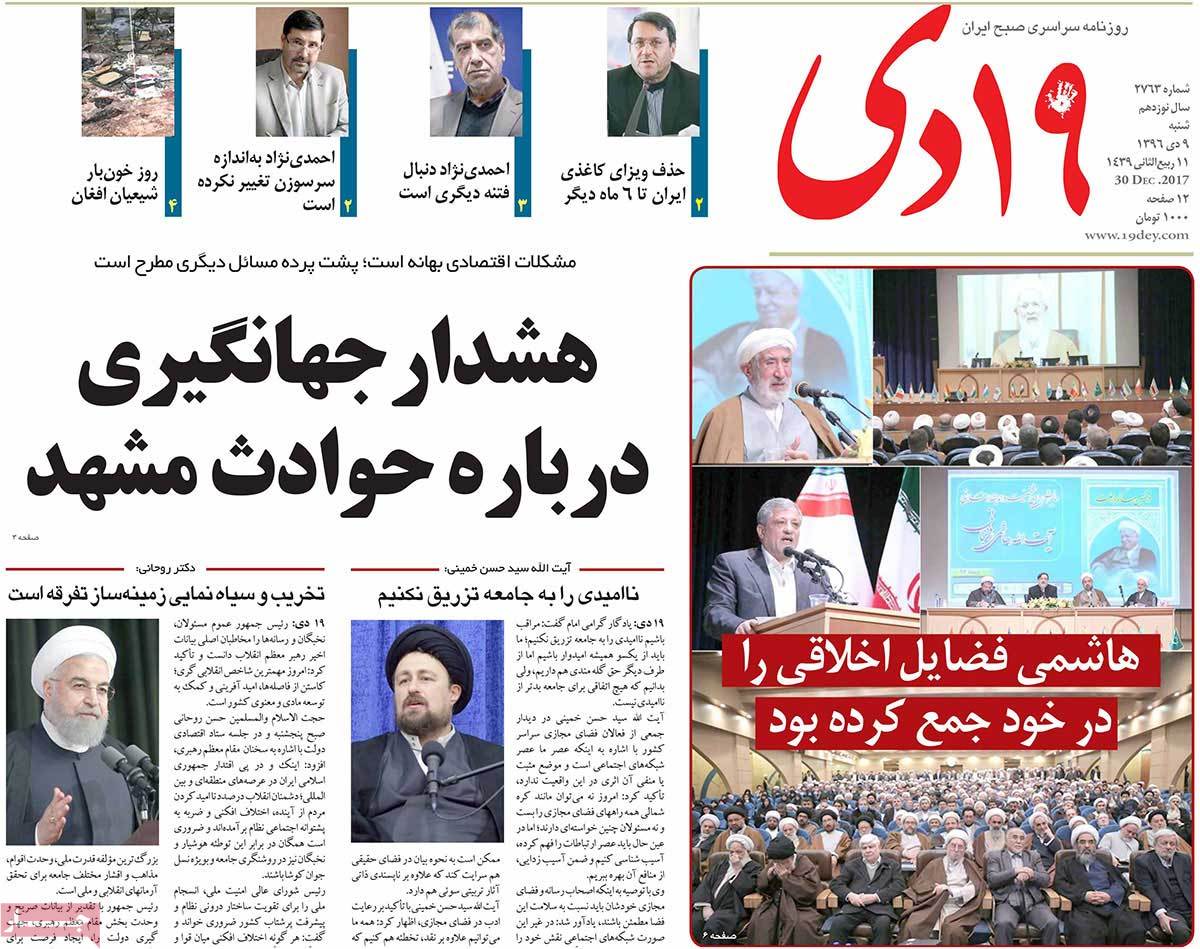
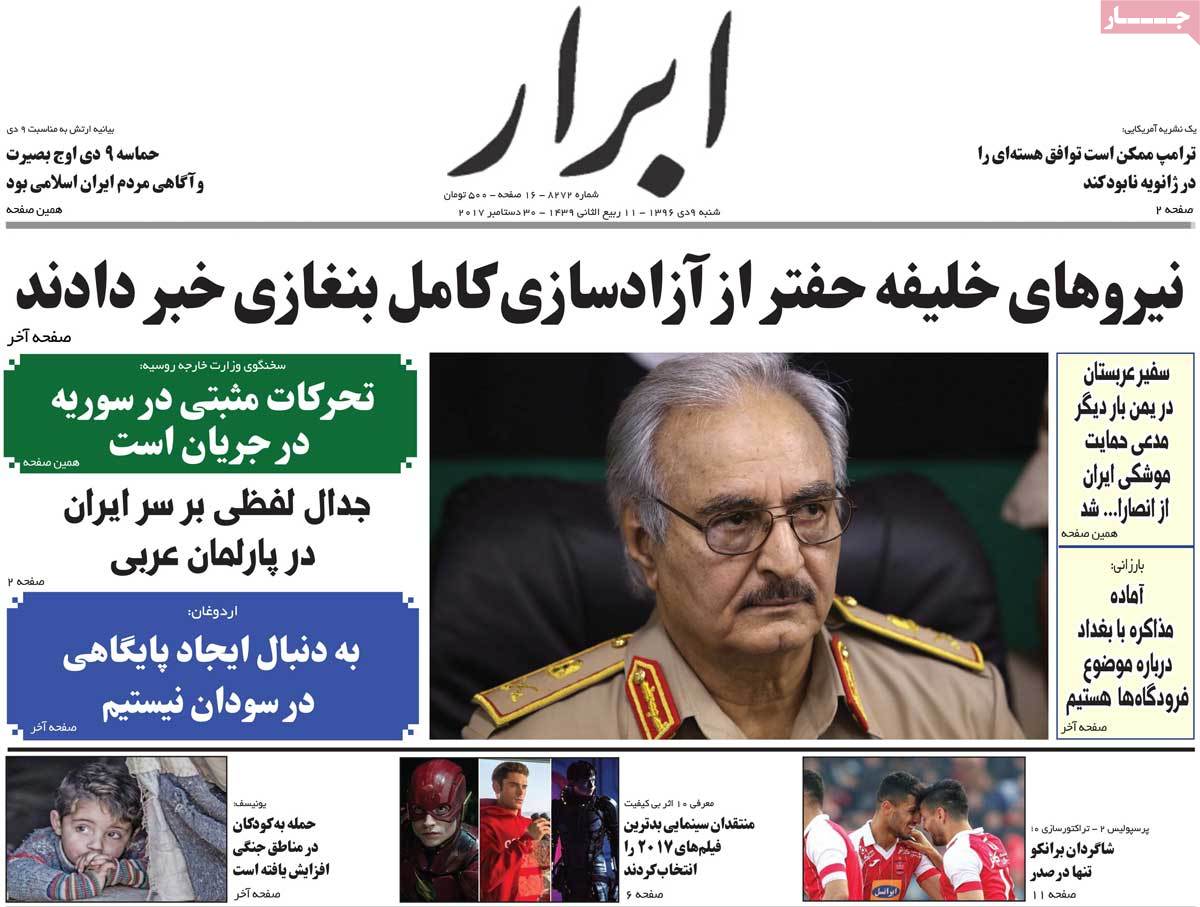
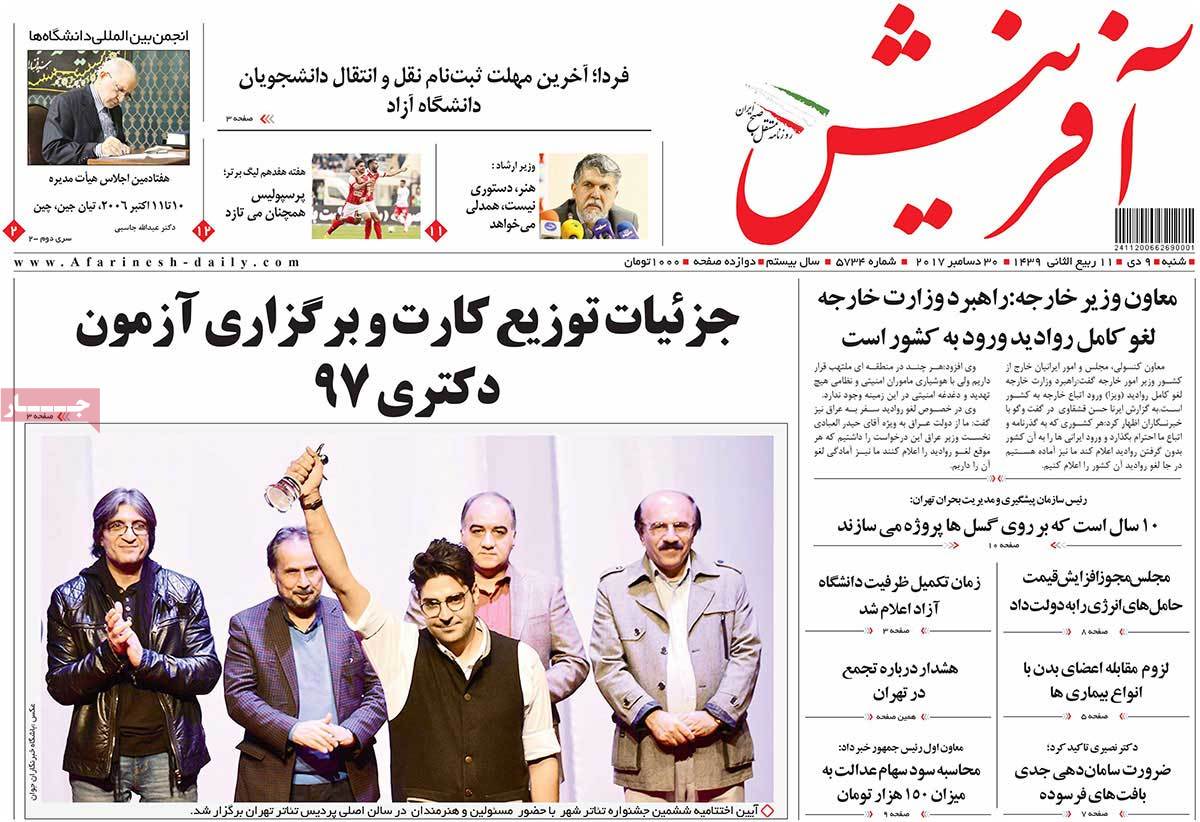
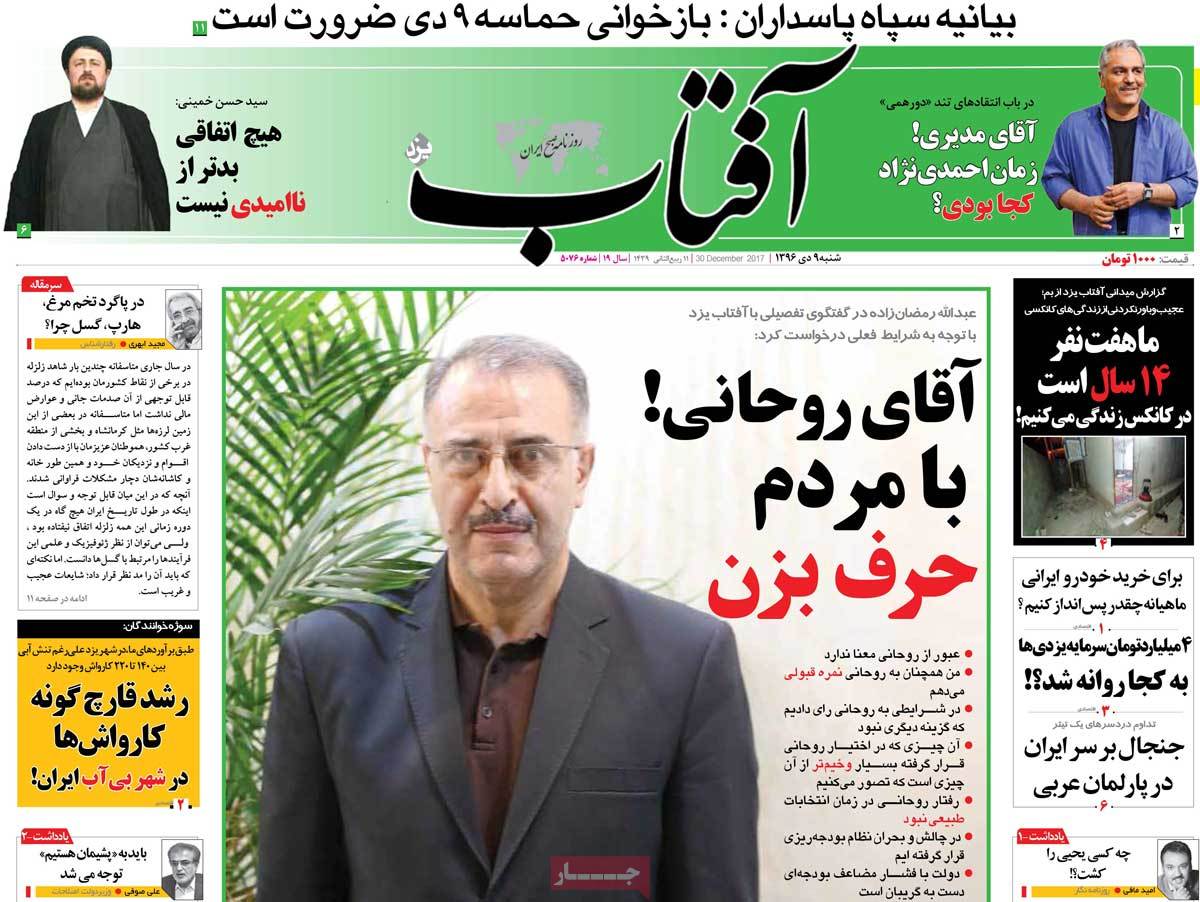
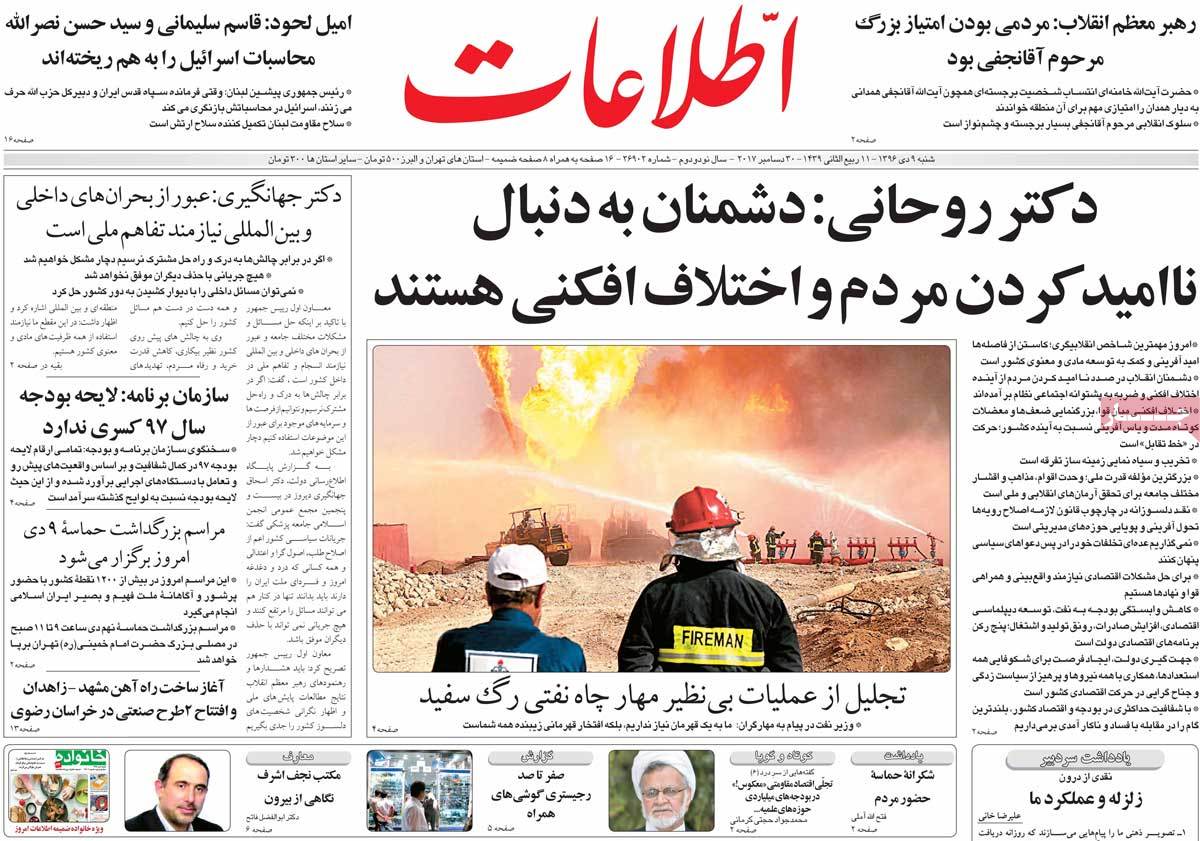
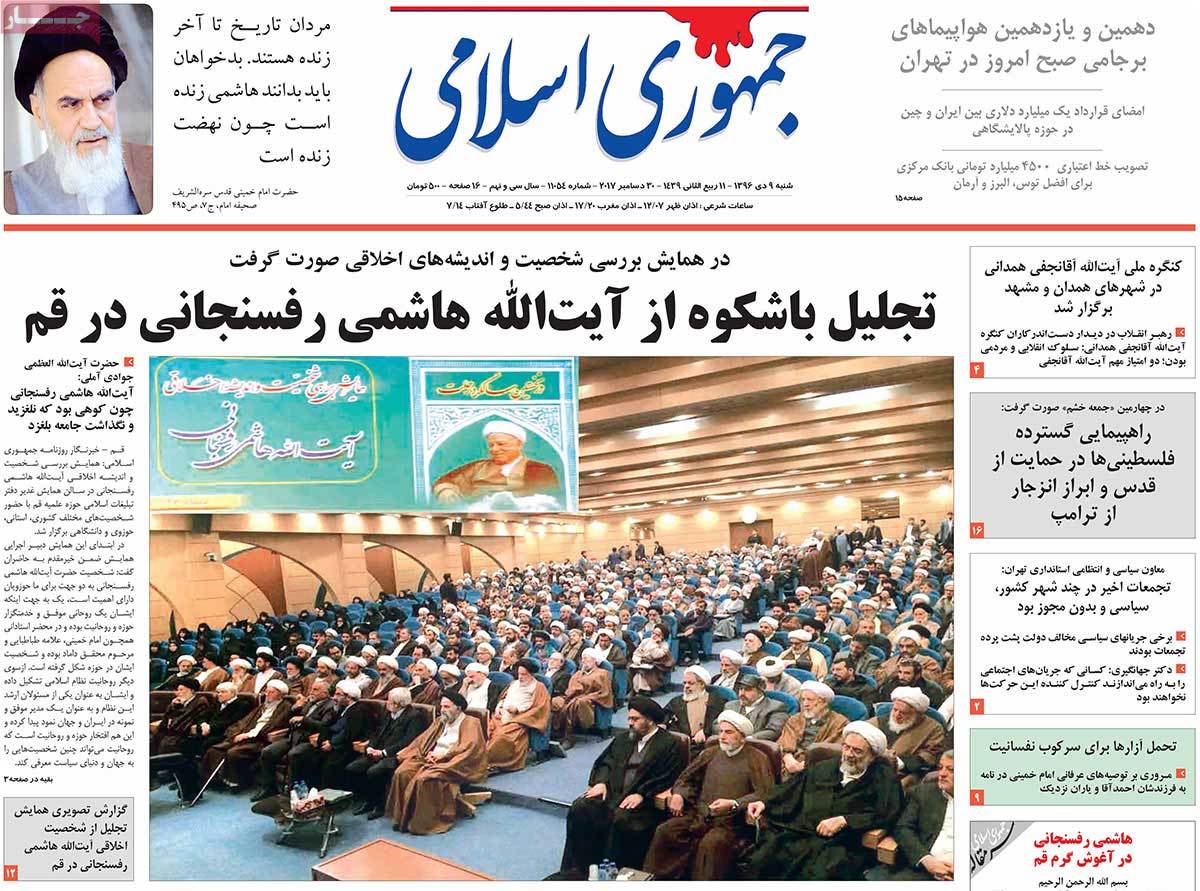
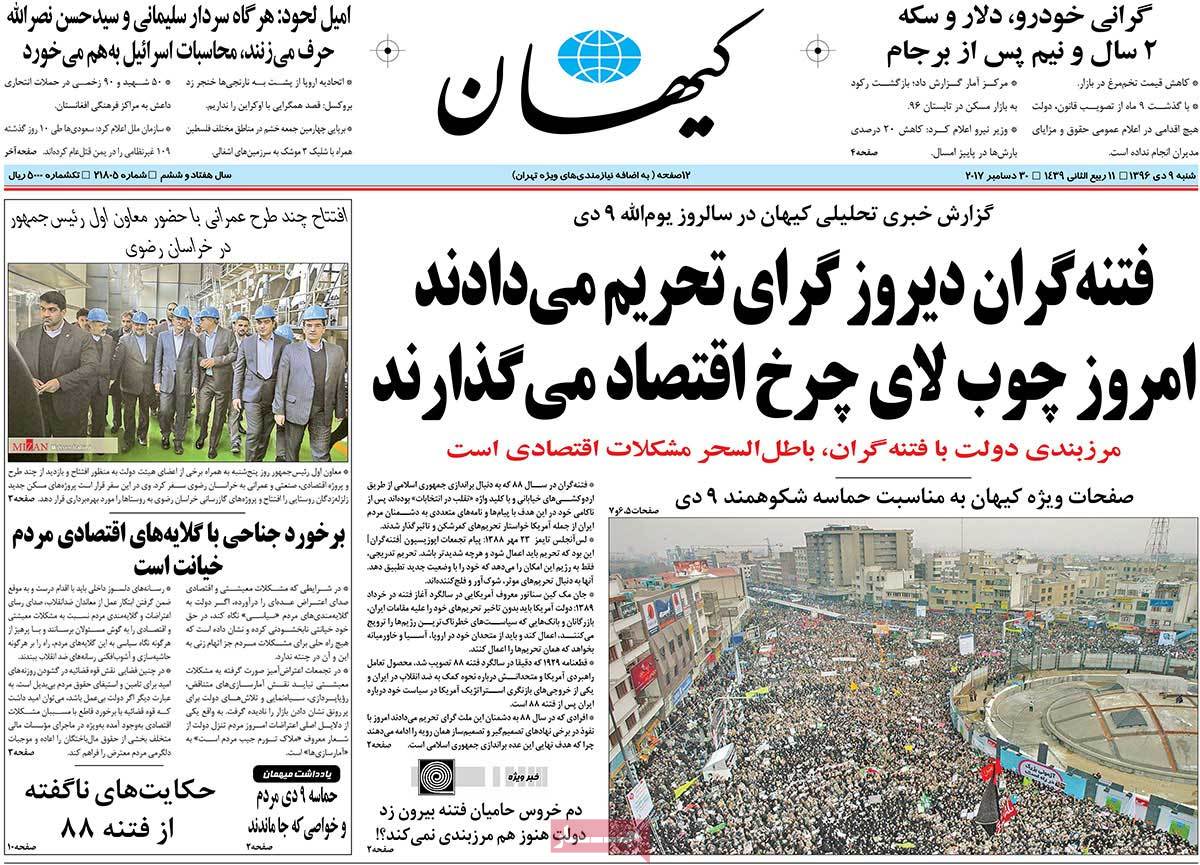
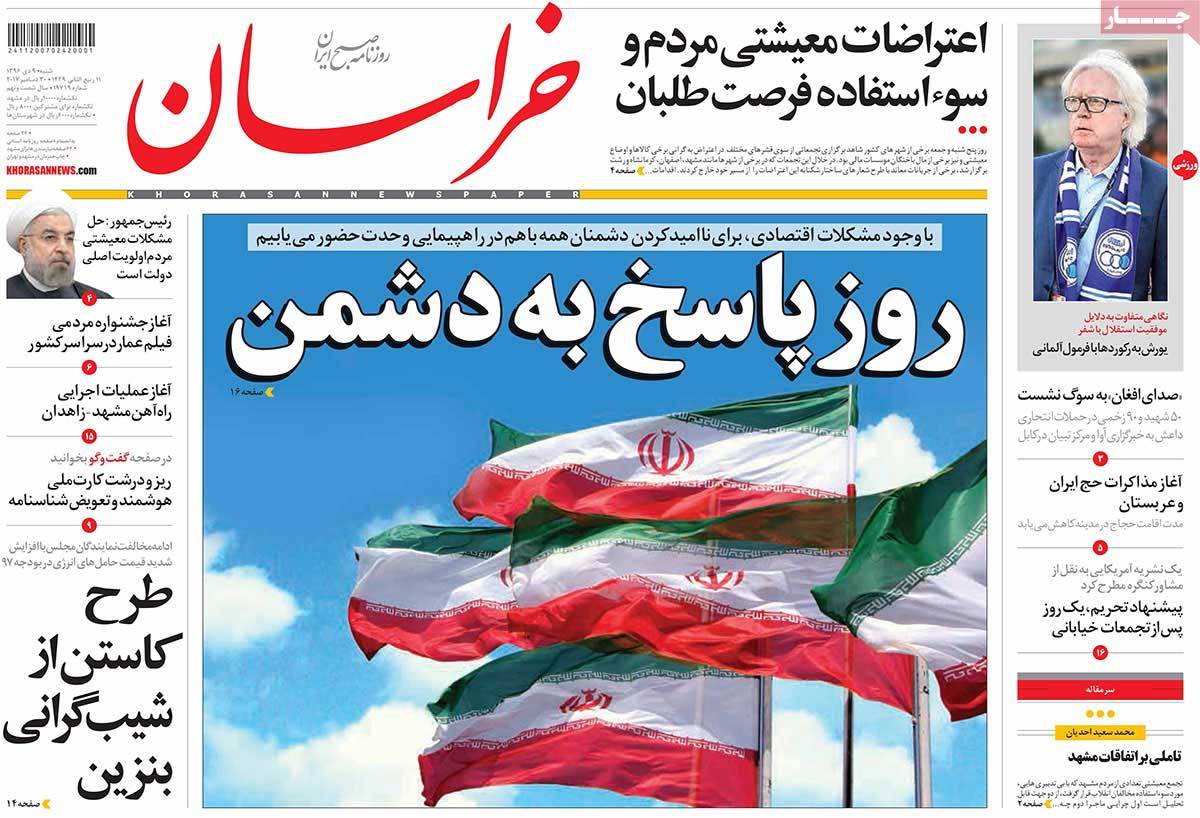
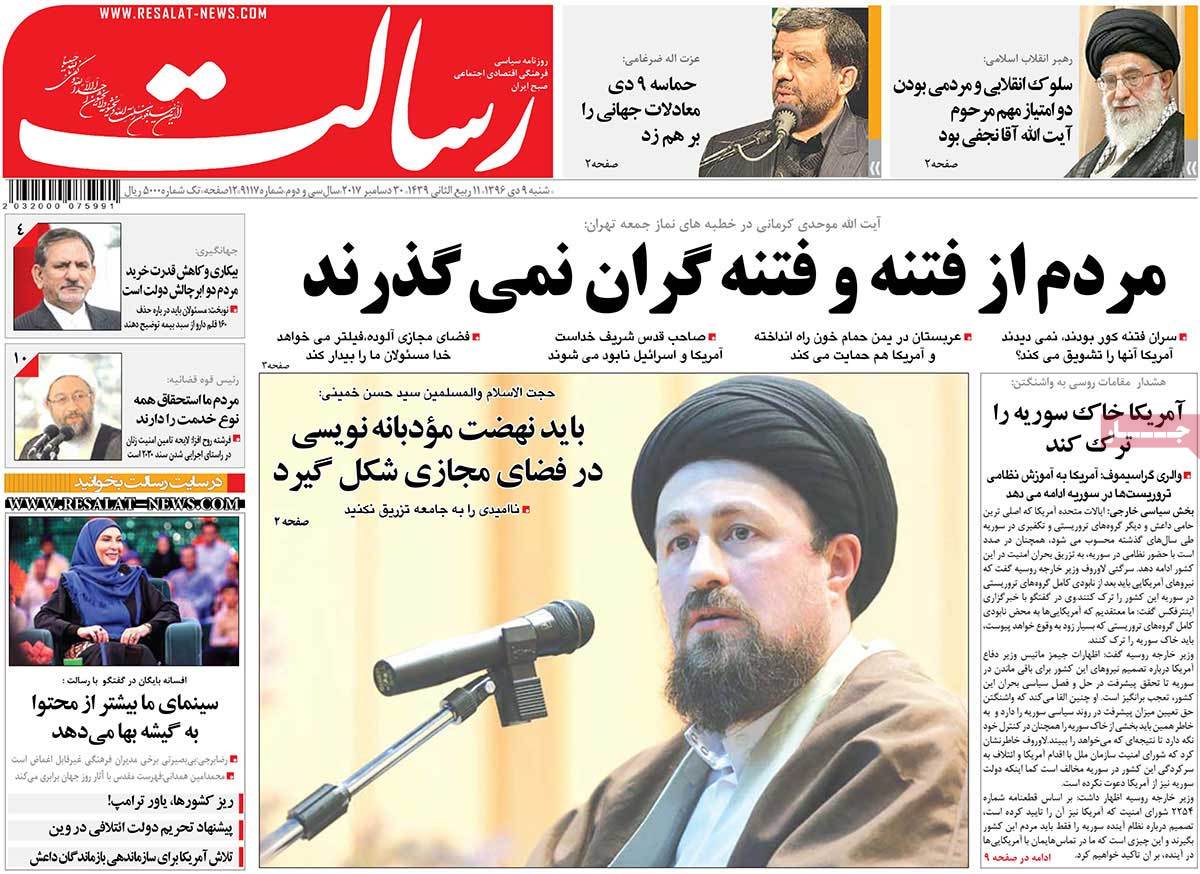
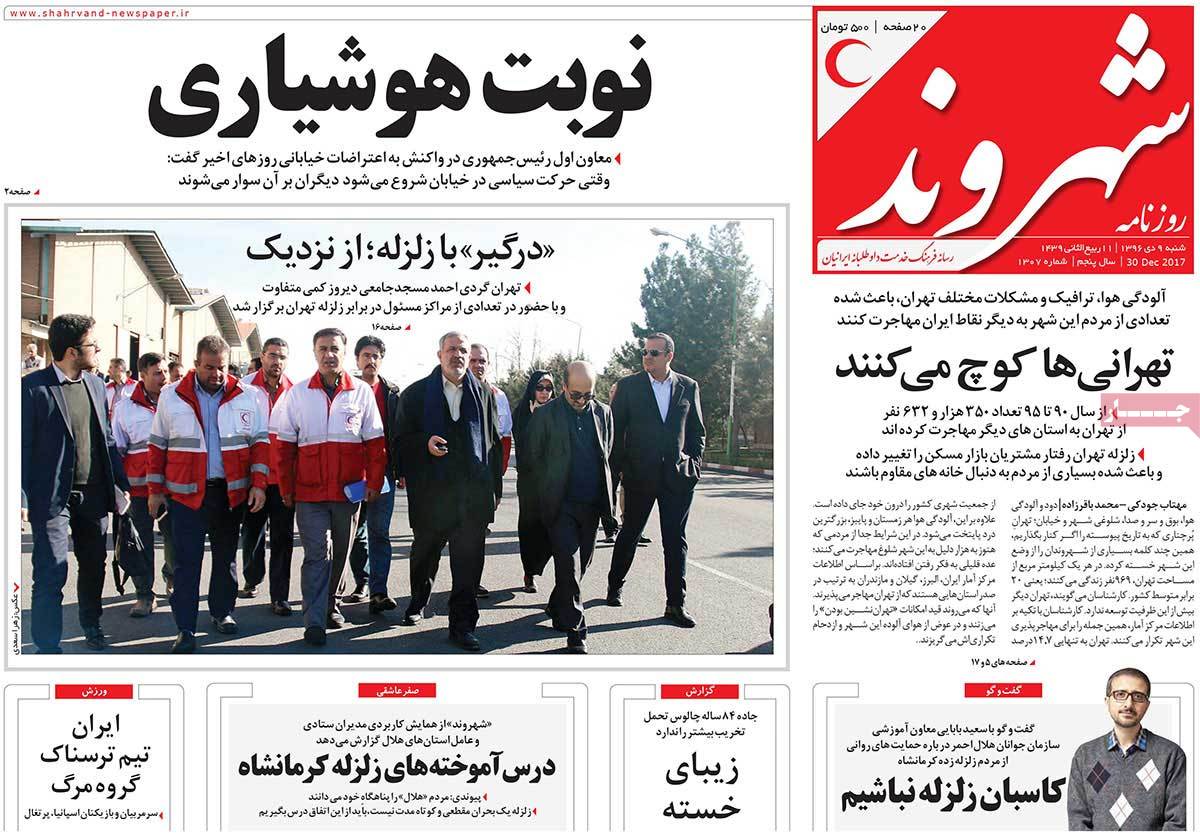
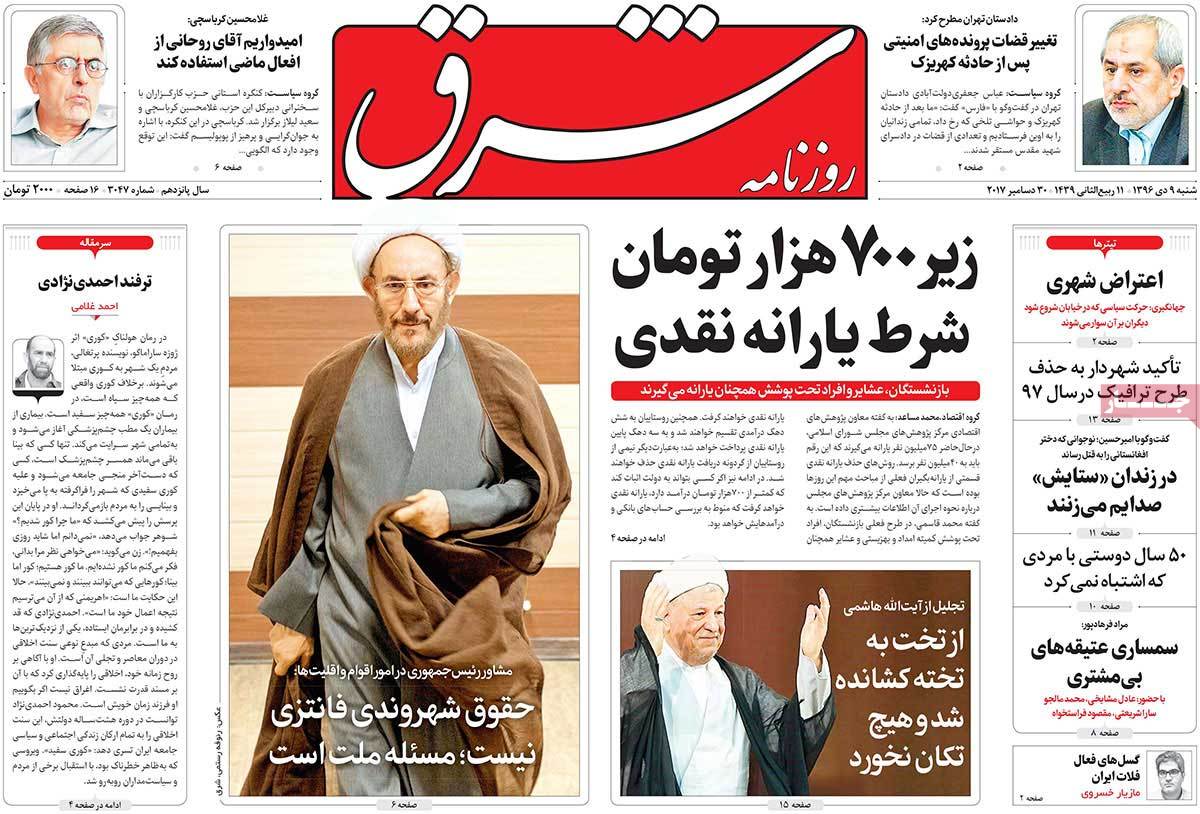
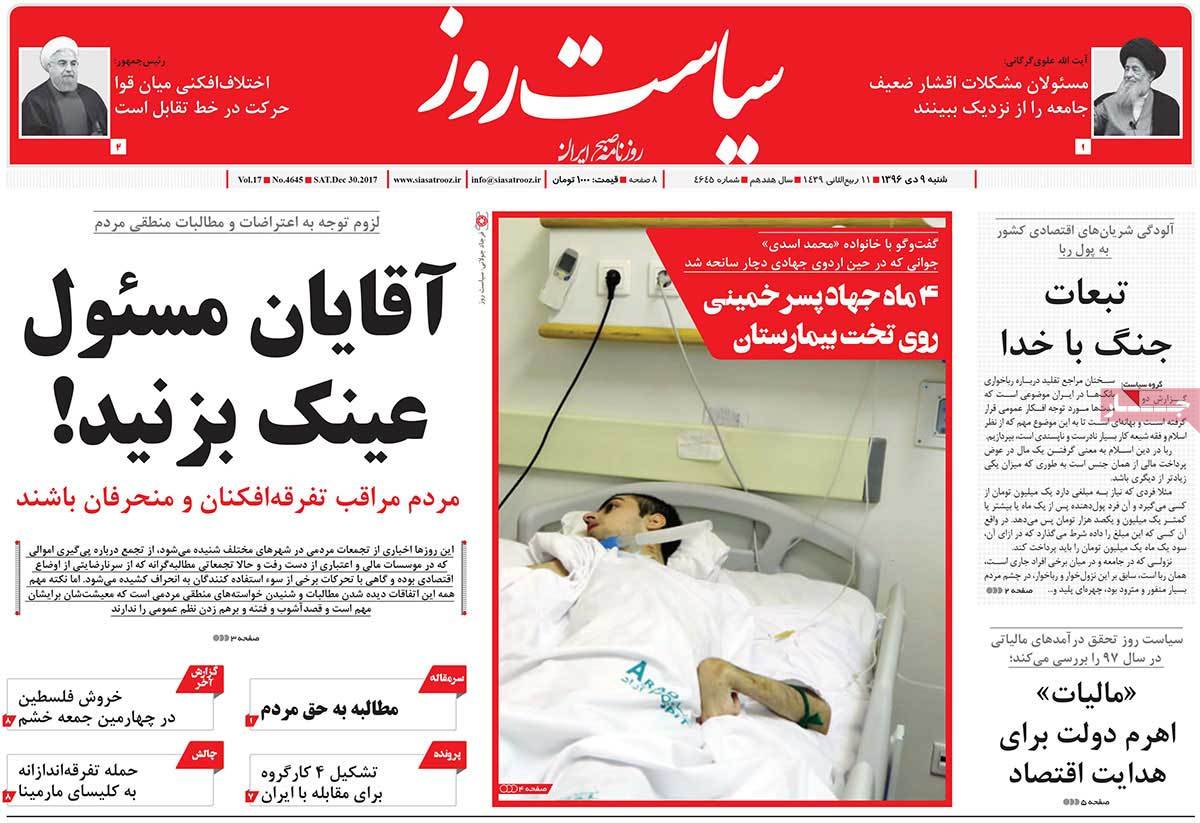
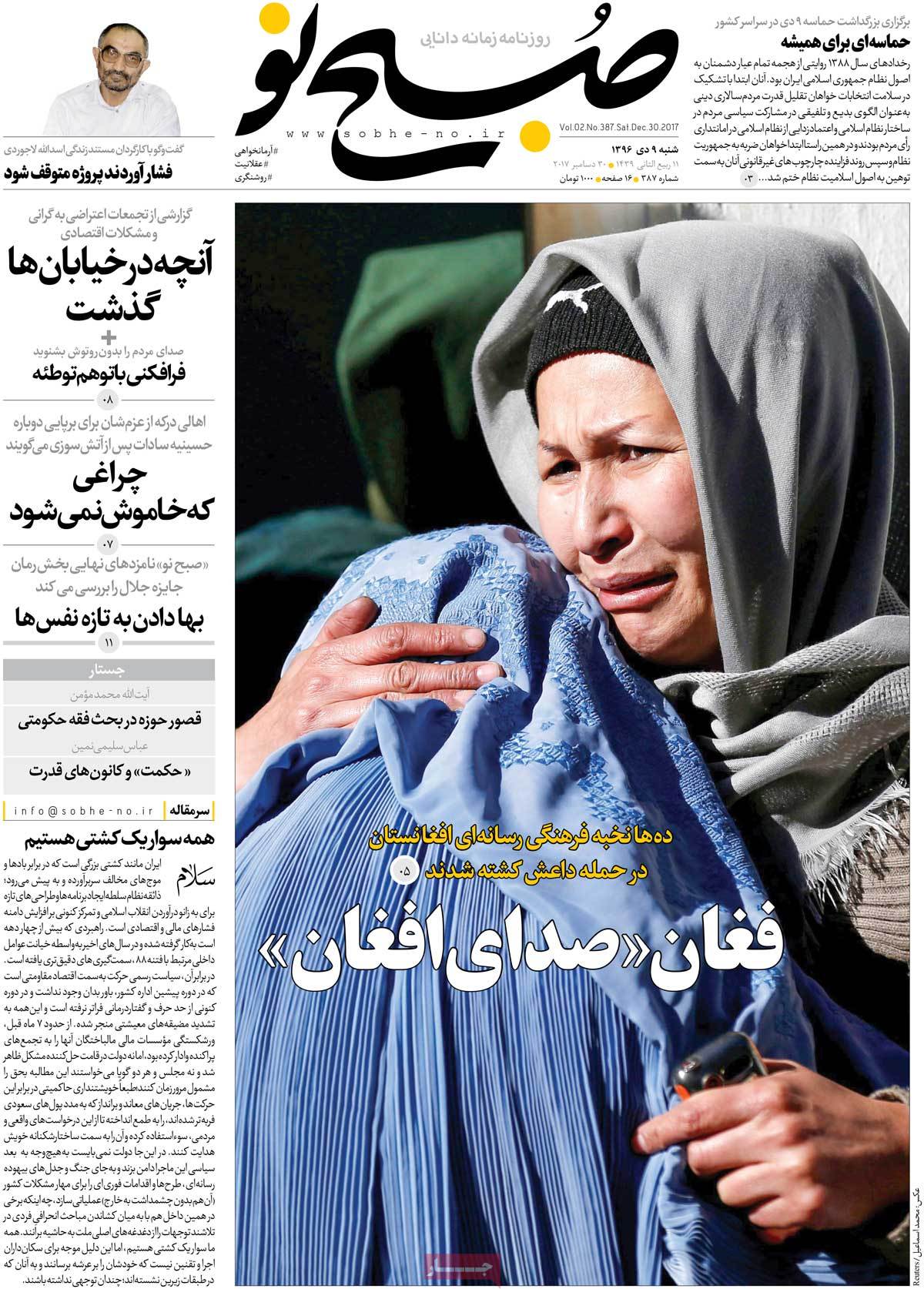
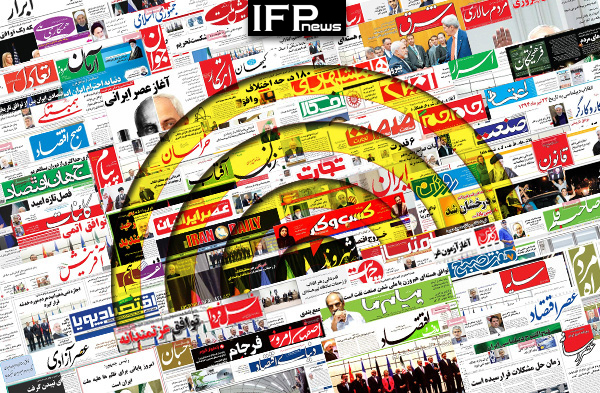
A Look at Iranian Newspaper Front Pages on December 7

The top story in all Iranian newspapers today was the remarks made by the Leader of Iran’s Islamic Revolution Ayatollah Seyyed Ali Khamenei in a Wednesday meeting with top Iranian officials, ambassadors of Muslim states, and guests of Islamic Unity Conference.

The papers widely covered the Leader’s reaction to the US president’s decision to recognize Jerusalem al-Quds as the capital of the Zionist regime and move its embassy to the city.

The National Students’ Day in Iran also received great coverage, with several papers referring to hot debates between reformists and conservatives in Iranian universities.

Another top story today was the championship of Iran’s weightlifting team which claimed the world title in the US for the first time in its history.

The above issues, as well as many more, are highlighted in the following headlines and top stories:


Aftab-e Yazd:

1- Iran Leader: Pharaoh Today Is US, Zionist Regime, Their Followers in Mideast

2- Reformist, Conservative Activists Mark National Students’ Day with Hot Speeches

3- Iran Weightlifting Team Crowned as World Champion

A Look at Iranian Newspaper Front Pages on December 7


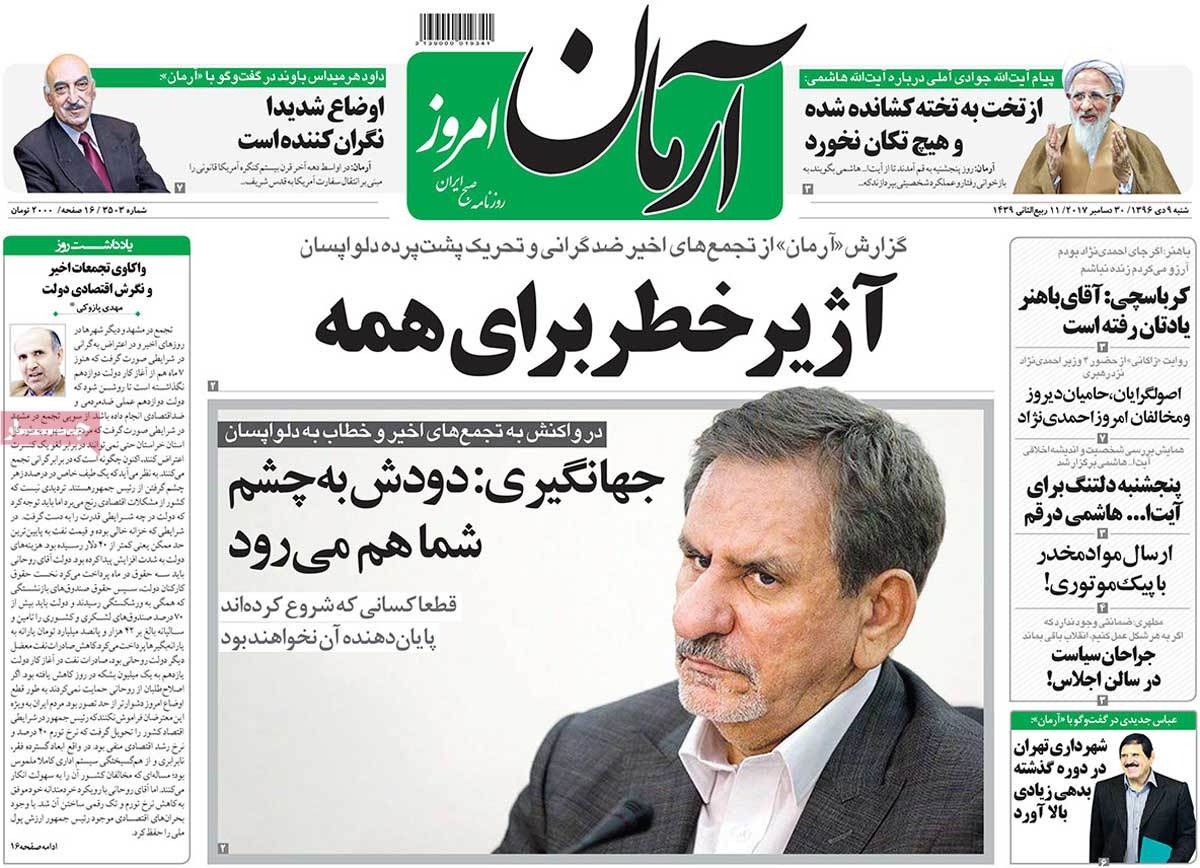
Arman-e Emrooz:

1- Iran Leader: Palestine to Be Liberated

2- Iran Claims World Weightlifting Title for First Time

3- Trump’s Trap

  • From Muslims to Pope, from Europe to Egypt, China Condemn Trump Decision on Jerusalem

A Look at Iranian Newspaper Front Pages on December 7


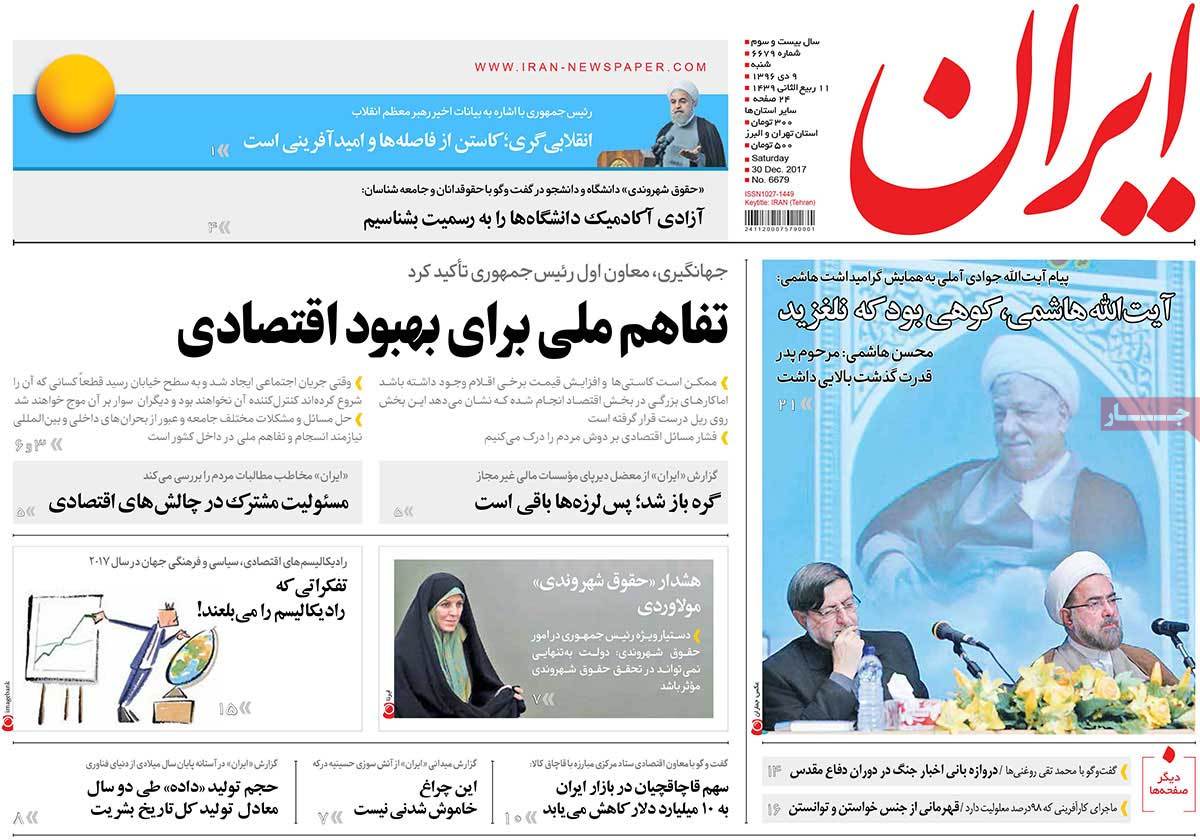
Iran:

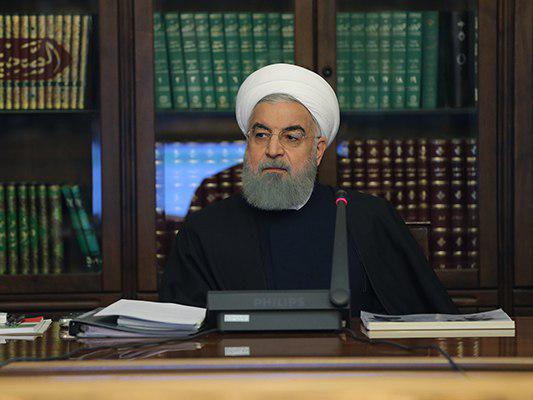
1- Iran President: Islamic Civilization Can Be Realized through Moderation

2- Political Passion in Universities on Students’ Day

3- Trump’s Dangerous Gamble

  • Europe, Muslim Leaders Outraged by Trump’s Decision to Move Embassy to Jerusalem

A Look at Iranian Newspaper Front Pages on December 7


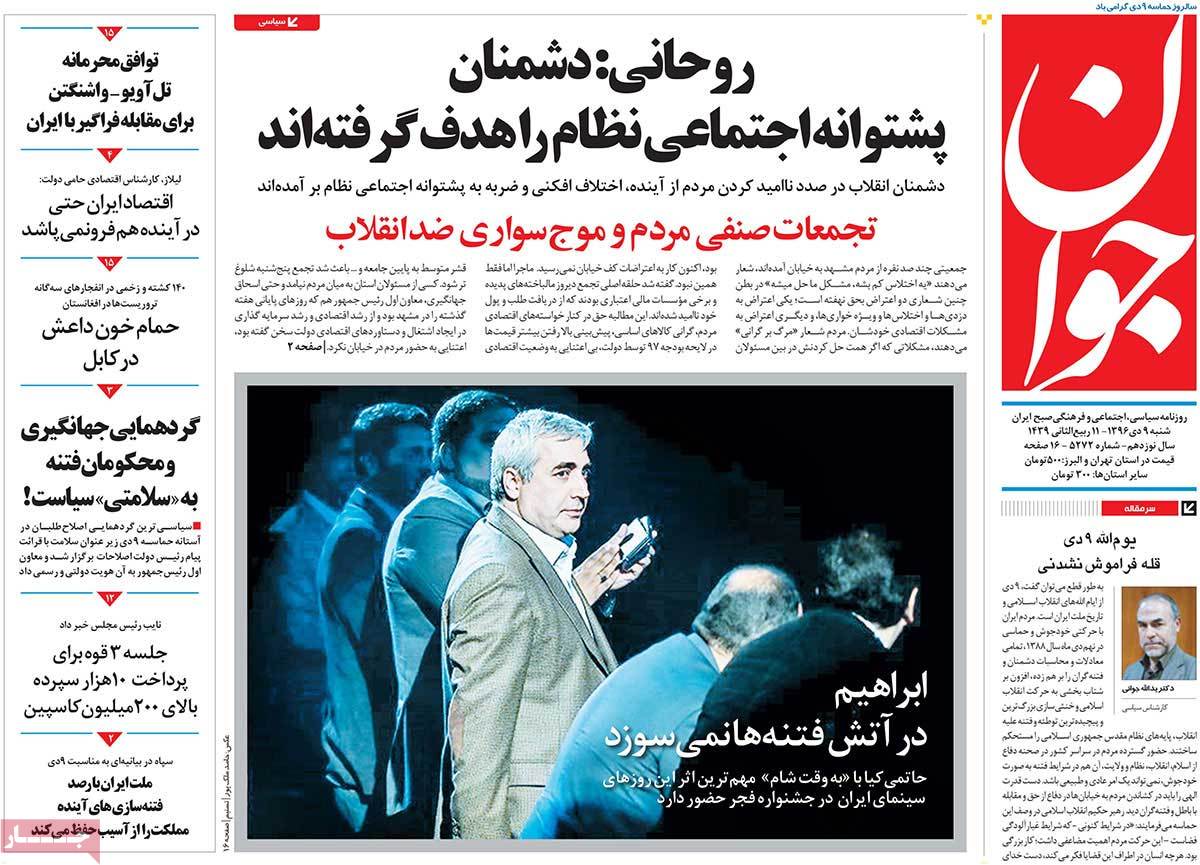
Javan:

1- Iran Leader: Muslim World to Stand against US Plot in Al-Quds

2- Iran Leader Pardons, Commutes Sentences of 1,007 Convicts

3- Chief-Commander: In Fight against Deprivation, IRGC Not Looking for Economic Benefits

4- Controlling Aftershocks of Saudis’ Plot in Yemen

A Look at Iranian Newspaper Front Pages on December 7


Kayhan:

1- Al-Quds Capital of Palestine, Don’t Play with Fire!

  • World Warns Trump

2- Iran Leader Praises Weightlifting Champions, Wrestler Who Refused to Play against Israel

3- Reactions to Saleh’s Death

  • Saudi Arabia, UAE’s Back Broken after His Death, Yemenis More United

4- Customs Office: Domestic Wheat Production Enough, No Need for Import

5- 4,150 IRGC Projects Inaugurated in Iran to End Deprivation

A Look at Iranian Newspaper Front Pages on December 7


Khorasan:

1- Millions of Yemenis Thank God for Stability Created after Saleh Sedition

2- History-Making in US Territory: Iran’s First Championship in World Weightlifting

A Look at Iranian Newspaper Front Pages on December 7


Shargh:

1- Rouhani in Phone Call with Turkish President: Al-Quds Inseparable Part of Palestine

2- Iran Foreign Ministry: Tillerson Should Get More Familiar with Consequences of US Policies

3- Deputy Head of Red Crescent Society Fired for Weak Performance in Earthquake

4- Iran Leader: Recognizing Al-Quds as Capital of Zionist Regime Shows Desperation

A Look at Iranian Newspaper Front Pages on December 7

Iranian Scientists Produce Sweets for Diabetics from Seaweeds

Delaram Nokhbeh Zare and Shahrokh Khani, two faculty members of Islamic Azad University of Bandar Abbas, in collaboration with the University’s Development Centre, succeeded in producing new sweets with a different taste for diabetic patients.

“These sweets are made from the nectar of a (sweetening) plant called Stevia and a seaweed called Spirulina,” IRNA quoted Nokhbeh Zare as saying in a Farsi report.

She also noted that Stevia is a plant native to South America that is being cultivated in various European countries these days, and has been cultivated in Northern Iran for several years.

This Iranian scientist also added that Stevia is a strong sweetening plant that can be a good alternative to refined sugars.

This plant reduces blood pressure and cures diabetes and high blood sugar, according to her.

“Spirulina is also a type of seaweed which is very high in protein,” said Nokhbeh Zare.

Mideast Countries Condemn Trump’s Decision on Jerusalem

Quds

From the Jordanian parliament came a call for people to take to the streets and protest at the US embassy in Amman, as Jordan and the Palestinians on Wednesday called for an emergency meeting of Arab foreign ministers to discuss Trump’s decision. The meeting is likely to take place on Saturday, a diplomatic source said.

Meanwhile, the UAE, Saudi Arabia, Egypt, Jordan and Turkey all warned the US president against such a move.

At a joint press conference in Ankara on Wednesday, both the Turkish president, Recep Tayyip Erdogan, and King Abdullah of Jordan spoke out against the US decision.

“Such a step would only play into the hands of terror groups,” Erdogan said ahead of the announcement, adding that “no one has the right to play with the destiny of billions of people for personal ambitions”.

King Abdullah, meanwhile, said, “Jerusalem is key to stability of the entire Middle East”, adding that Turkey and Jordan would stand “shoulder to shoulder to face challenges”.

During a recent visit to Washington, King Abdullah attempted to dissuade the Trump administration from adopting the controversial decision, saying such a move would derail peace efforts and stoke anger from both Muslims and Christians across the region.

Jordan — a key US ally and partner in the anti-ISIS coalition in Iraq and Syria — has a sizeable Palestinian population and is concerned that the US decision will ignite unrest in the Palestinian territories that could spill over into the country and boost extremism in the region.

“Trump’s decision would lead to a Palestinian uprising, which could spark domestic unrest in Jordan that has influential Palestinian circles,” Zaid Nawaiseh, a political analyst based in Amman, said ahead of Trump’s announcement on Wednesday. “Jordan is in the eye of the storm. It is already struggling with economic woes, and it is aware the peace process has reached a dead-end.”

Jordan, too, has a stake in Jerusalem al-Quds, since it serves as the custodian of Al Aqsa mosque, Islam’s third holiest site — a role stipulated in an unpopular peace treaty Jordan signed with Israel in 1994.

“The issue of Jerusalem is sensitive and controversial for the Palestinians, Arabs and the Muslims,” said Osama Al Sharif, a political columnist. “The timing is completely difficult to understand, provocative and goes right into the heart of the credibility of the US as an honest broker or mediator.”

In Israel’s northern neighbour, Lebanon, president Trump’s decision provoked demonstrations by Palestinian communities across the country.

“The decision to move the US embassy to Jerusalem clearly demonstrates the level of Arab dignity and the dignity of Muslims in the head of a superpower that no longer possesses greatness, only insolence and immorality,” said Abed Salameh, who lives in Nahr Al Bared, a Palestinian settlement in northern Lebanon.

There are more than 400,000 Palestinian refugees registered with the United Nations in Lebanon, many living in the country’s 12 official “camps”, which are in reality cities made up largely of concrete apartment blocks.

Lebanese leaders also condemned the decision on Wednesday, and more demonstrations were expected on Friday in the country.

The Hamas representative in Lebanon, Ali Baraka, met Lebanese Prime Minister Saad Hariri on Wednesday “to discuss Palestinian-Lebanese relations”.

Baraka issued a statement saying he had delivered a message to Hariri from Hamas leader Ismail Haniyeh and received assurances of Hariri’s support in rejecting the American announcement.

“We perceived Prime Minister Hariri’s keenness on Jerusalem and its Arabism, and he stressed that Lebanon refuses the Judaisation of Jerusalem and the American decision,” the statement read.

“He said that the Lebanese state will take diplomatic and political measures with the Arab and Islamic states and the international community to support the cause and the Arabism of Jerusalem and in refusal of the biased American decision.”

The US “are telling us in a direct way that they are with Israel,” Baraka told The National after the meeting. “This will create an uprising in Gaza and the West Bank. No Palestinians will accept this.”

Lebanese interior minister Nohad Machnouk meanwhile tweeted “Jerusalem is ours and we will bring back the splendour of Jerusalem”. The tweet included a clip from a song about Jerusalem by the Lebanese singer Fayrouz.

On Wednesday afternoon, ahead of the planned US announcement, there was no visible increase in the presence of Lebanese security forces around the American embassy in Beirut. The embassy itself is in a well-fortified compound on a hill outside of the city, where it was relocated after a bombing in 1983 at its location in downtown Beirut that killed 63 people.

In Egypt, Israel’s neighbour to the south, the only visible sign of protest was a lecture cancelled at the American Research Centre “due to unforeseen circumstances”. But the international security consultancy, Control Risks, released an advisory note saying demonstrations were to be anticipated in the coming days against president Trump’s expected announcement on Jerusalem, particularly near US embassies, in pubic squares and outside mosques after Friday prayers, and warned that “any such demonstrations have the potential to devolve into unrest”.

Persian Gulf Arab States Shirking Responsibility Regarding Palestine: Iran

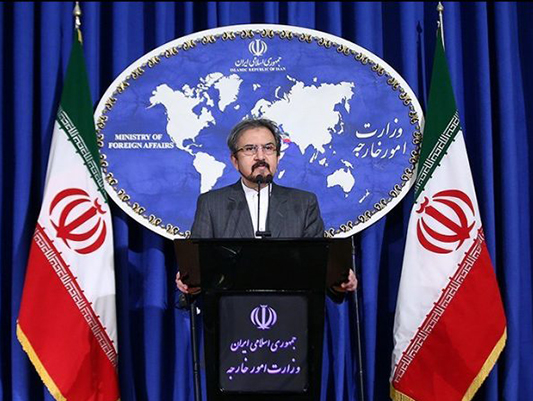
In a Wednesday statement, Foreign Ministry Spokesman Bahram Qassemi rejected the final statement issued at a summit of the [Persian] Gulf Cooperation Council (GCC) in Kuwait, calling it a clear example of a lack of proper understanding of realities and priorities in the Middle East.
“The recent statement shows the [P]GCC is ignoring the realities in the region and is turning a blind eye to the realities and priorities at this sensitive juncture, and clearly proves the inefficiency and sterility of the Council gripped by internecine divisions and unrealistic policies,” said the spokesman.
“Rather than addressing the key problems facing the Muslim world and supporting oppressed Palestinian people and discussing the provocative plan of relocating the US embassy [from Tel Aviv] to holy al-Quds, the [P]GCC has simply made worthless comments in this regard and clearly dodged its Islamic and human responsibility vis-à-vis Palestine,” the spokesman noted.
“The GCC meeting has not mentioned the crimes committed on a daily basis by Saudi Arabia and its few accomplices against innocent Yemeni people, and by iasuing this statement, the council has turned a blind eye to the killing of innocent children and women and the imposition of hunger and diseases against millions of Yemenis, and is standing by terrorists.”
“The meeting was held at a time when the disunited members of the council were at the height of their differences, and when the council, without turning to the root causes and key supporters of terrorism and the Takfiri ideology, levelled some unfounded and false accusation against the Islamic Republic of Iran, which plays a pivotal role in fighting terrorism in the region. The council is strongly advised to walk towards a profound and precise understanding of the realities in the region, and to urge its members not to opt for aggression and bullying against other members and to recognize the rights of its citizens.”
Qassemi once again stressed Iran’s entitlement, as history shows, to govern the three islands of Abu Musa, the Greater Tunb and the Lesser Tunb, and dismissed the baseless allegations in the statement regarding the three islands as blatant interference in the Islamic Republic of Iran’s sovereignty and a violation of international regulations.
“Making such baseless and false claims cannot change historical and legal realities. Rather than pursuing policies of adventurism and acquisitiveness, the [P]GCC had better adopt wise and honest approaches to settle the problems in the region,” the spokesman said.
“The Islamic Republic of Iran has always expressed its readiness for negotiations and consultations with [P]GCC members in a bid to ease tensions and working out a final solution to the problems in the region and believes that the use of force and the killing of people and turning to aliens will not help solve problems; history is littered with such bitter and unsuccessful experiences,” Qassemi concluded.

FM Zarif: Al-Quds to Remain Arab, Muslim City

In a recent tweet, Zarif noted that if half of the money spent by some regional rulers to support terrorism, extremism, sectarianism and incitement against their neighbours was spent on liberation of Palestine, today we would not witness the US’ nonsense remarks and its efforts to sanctify and consolidate “a fateful promise from those who do not own to those who do not deserve” [the Balfour Declaration].

“Like it or not, al-Quds will remain an Arab and Muslim city,” reads the tweet.


Iran Strongly Condemns US for Recognizing Al-Quds as Israel’s Capital

In a Wednesday statement issued immediately in reaction to US President Donald Trump’s statement on Jerusalem al-Quds as Israel’s capital, the foreign ministry said the decision stands in stark violation of all international resolutions.

The full text of the statements is as follows:

Jerusalem al-Quds which hosts the first Qibla of Muslims is an inseparable part of Palestine. As one of the three most sacred sites in Islam, it enjoys a highly significant status among the Muslims. It is no secret any more that the Zionist regime has put on its agenda a number of measures to impose its hegemony over Jerusalem al-Quds including forcing the main inhabitants of the city to leave the city, occupying their houses and lands, replacing Muslim population with Jewish people with the aim of changing the demography of the city, destroying sacred Islamic sites and symbols, desecrating Al-Aqsa Mosque by paving the way for extremist settlers to enter the Islamic place, imposing restrictions on Muslims for visiting the mosque and saying their Friday prayer, and violating the citizenship rights of the Palestinians living in the city.

The Islamic Republic of Iran has always emphasized that the main causes behind destabilization and insecurity in the Middle East are continued occupation of the Palestinian lands by the Israeli regime, the US’ full and all-out support for the Zionist regime, and depriving the oppressed nation of Palestine of their basic rights to establish an independent state for their own with al-Quds as its capital. With the US and its allies’ desperate efforts to impose a compromised solution, the Palestinians have failed to even fulfill their preliminary wishes stipulated in the resolutions by the United Nations Security Council as well as  the UN General Assembly. Meanwhile, the continued expansion of settlements, occupation of more Palestinian lands and desecration of religious sites by Israeli regime which are carried out with the direct support of the US amid the indifference of international organization, all in all have hampered the Palestinians’ drive to achieve their rightful and legal demands.

The imprudent and provocative decision of the US to recognize Jerusalem al-Quds as the capital of the Zionist regime not only does not at all contribute to peace and stability in the region but also reveals the nasty intentions of the US administration and further discredits the US before those who still have confidence in the neutrality of Washington in the mirage-like trend of peace talks. Meanwhile, the decision will also create outrage among Muslims and fan the flames of a new Intifada, extremist moves, violence and brutality. It goes without saying that the US and the Zionist regime are responsible for the upcoming results.

Given the fact that Jerusalem al-Quds is recognized as an occupied land by the UN resolutions, the US move is in stark violation of the international resolutions. So, the Islamic Republic of Iran strongly condemns the US decision and calls on the international community and leading states particularly the Islamic countries to step into the fray and stop the implementation of the US decision because it only serves the Zionist regime’s interests.

Meanwhile, the Islamic Republic of Iran expresses its full sympathy with the Palestinian people and once again underlines the main responsibility of the international community, particularly the UN, to put an end to the occupation of the Palestinian territories and the holy Quds and contribute to the Palestinians’ efforts to achieve their basic rights.

US Responsible for Consequences of Its Decision on Jerusalem: Iran

shamkhani

“Muslim countries unanimously condemn this conspiracy that violates the rights of the oppressed Palestinians and paves the way for the continuation of the occupation of Palestine by the Zionist regime,” said Shamkhani.

He also stressed that, given the security and political consequences of any decision on the holy city, the United States and the Zionist regime would be held accountable for the instability and insecurity caused by such unwise decisions.

Shamkhani further added that Jerusalem al-Quds is an integral part of Palestine, and any decision on the future of this land must be made by its indigenous, non-immigrant inhabitants.

“No country can decide for this Muslim state by ignoring the indisputable rights of the Palestinian people,” highlighted the Iranian senior official.

Shamkhani underlined that the provocative measures taken by Trump and his administration accelerate the collapse of the Zionist regime saying that “Jerusalem al-Quds is the capital of the Islamic State of Palestine, and the US government cannot distract the general public’s attention from its humiliating defeats in the region, particularly the defeat of the Takfiri terrorists in Syria and Iraq.

Donald Trump declared on Wednesday that the US recognises Jerusalem as the occupying regime’s capital in a move which would risk potentially violent protests.

Despite warnings from Arab, Muslim and Western allies, the US President will instruct the State Department to begin the process of moving the American embassy from Tel Aviv to the holy city.