Thursday, December 25, 2025
Home Blog Page 3774

British FM to Visit Iran on Saturday

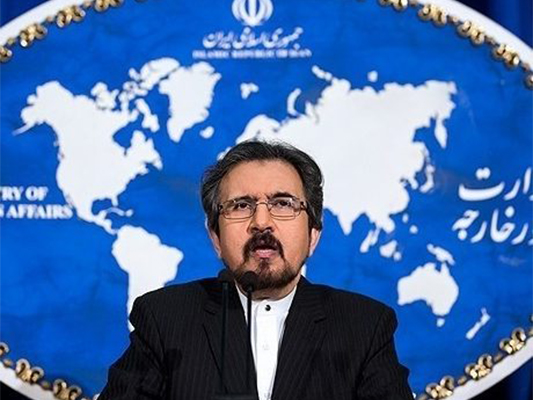
According to Iranian Foreign Ministry Spokesman Bahram Qassemi, the latest situation of bilateral ties, particularly the high-level economic cooperation between Tehran and London, will be discussed during Johnson’s visit.

The British and Iranian sides will also exchange views on the expansion of business ties, regional issues, and international developments, he added.

Israel to Face Fire of Palestinians’ Revenge: IRGC

In a statement on Thursday, the IRGC called on all Iranians to actively participate in a nation-wide rally against the US and Zionist regime to be held following Friday Prayers in Tehran.

The full text of the statement comes as follows:

The cheap and foolish move of the US president to recognize Jerusalem al-Quds as the capital of the fake and child-killing regime of Zionists amounts to a great sedition designed against the Islamic Ummah with the aim of violating the rights of Palestinians. Now the Islamic world and other freedom and truth-seeking societies are duty-bound to thwart the nasty and satanic plots of the enemies through adopting decisive and prudent stances.

It goes without saying that the filthy attempt by the US president will not only fail to translate into reality the dreams of the White House officials and the International Zionism, it will also make the anti-Zionist resistance front further determined to achieve the cause of liberating the holy Quds and set in fire the occupiers of Palestine by its burning revenge.

The IRGC invites Iranians from all walks of life to participate in large numbers in the nation-wide rallies against the US and the Zionism on Friday following noon prayers.

The Palestinian Intifada will continue in the new phase with a higher speed with the all-out support of the Islamic Ummah and the world’s anti-arrogance and freedom-seekers individuals. The intifada will unveil the scandalous face of the Great Satan’s strategies and policies in the region. With the divine blessing of the great lord, it will also put an immediate end to the criminal regime of Zionists and remove the cancerous tumor of the Zionism from the body of the Islamic world.

Trump’s Decision Insults 1 Billion Muslims, Millions of Christians: Hezbollah Chief

Speaking in a televised speech to the Lebanese nation from Beirut on Thursday, Sayyed Hassan Nasrallah referred to the US president’s decision to recognize Jerusalem al-Quds as the capital of the Zionist regime, and said, “It was the second Balfour declaration. I expect to hear voices in the Arab and Muslim world saying it was meaningless.”

He emphasized that Trump’s decision would have negative consequences for all adding that, “We must all shoulder our responsibilities in face of US president’s move because this is a very dangerous act.”

He noted that following Trump’s remarks, the Israeli regime would definitely try to expand its dominion over the greater Quds.

“With this move, the sacred places of Muslims and Christians especially al-Aqsa Mosque, will be in grave danger as the Zionists will seize this opportunity to pose a major threat to Muslims’ sanctities.”

Nasrallah also warned that remaining silent in face of Trump’s decision is very dangerous, and Washington may feel free to do whatever it wants in the Arab world.

He further called the United States a country that does not respect international resolutions and ignores international treaties.

Nasrallah went on to say that the US is openly insulting al-Aqsa Mosque, its people, and their cultural identity. He stressed that Washington’s move must be strongly condemned with mass protests and through showing solidarity with the oppressed nation of Palestine.

“It is important to emphasize that al-Quds is the eternal capital of the Palestine, and we must stand against its Judaisation.”

He said the least the Arab and Muslim states could do is to summon their ambassadors from the United States to protest at US administration’s measure.

“We call on the Muslim world to stop the wars and internal conflicts in Yemen, Libya and Syria and seek solutions to these problems,” underpinned Nasrallah.

In the end, the Hezbollah leader called on all people to take part in a huge rally against Trump’s decision, which will be held in on the southern suburbs of Beirut next Monday.

In a short speech delivered at the White House, US President Donald Trump recognized Jerusalem al-Quds as the capital of the Israeli regime on Wednesday.

His announcement drew condemnation from US allies, and a furious reaction from Palestinian leaders and the Muslim world. Within minutes of Trump’s announcement, US embassies and consulates in several countries were the scene of protests. On Thursday, heavy clashes also erupted between Palestinians and Israeli forces in several cities including Hebron al-Khalil, Jerusalem al-Quds, Gaza, and Bethlehem. Infuriated demonstrators set fire to US flag and Israeli forces used water cannon and tear gas injuring many of them.

The United Nations Security Council is likely to meet on Friday to discuss the move, after a request by eight countries on the 15-member body, including the UK, Italy and France.

Iraq Summons US Ambassador over Jerusalem Decision

Iraqi Foreign Ministry spokesperson Ahmad Mahjoub announced that the ministry has summoned the US ambassador in Baghdad, Douglas Silliman, and handed him a memo protesting the decision by Trump.

In its statement, Iraq also demanded on Thursday that the US government backtrack on a decision to recognize Jerusalem al-Quds as Israeli regime’s capital saying that “we caution against the dangerous repercussions of this decision on the stability of the region and the world.”

“The US administration has to backtrack on this decision to stop any dangerous escalation that would fuel extremism and create conditions favourable to terrorism,” reads the statement.

Dozens of Iraqis protested the decision in Baghdad vowing to return in greater numbers the following day after Friday prayers.

Trump reversed decades of US policy on Wednesday and recognized Jerusalem al-Quds as the capital of Israeli regime, imperilling Middle East peace efforts and upsetting the Arab world and Western allies alike.

“Some Arab States Seeking Alliance with Israel to Counter Iran”

The Arabic-language Rai al-Youm daily has, in an article, discussed policies adopted by the US and Saudi Arabia on Iran and their efforts to depict a negative picture of the Islamic Republic. The highlights of the article as published by the Persian-language Entekhab news website follow.

A decade on since the US invasion of Iraq, we are hearing the same drums of war today and we are seeing that this time, global media are seeking to portray Iran as “absolute evil.” The only thing which has changed compared to those times is that Arabs have established a close relationship with Israel and they try to form an alliance to counter Iran.

The Israelis’ slogan “A good Arab is a dead one” seems to have materialized now because Tel Aviv terms some Arab leaders as “good!”

These Arab governments are ignoring one point, and that is, whether or not they have differences with the Islamic Republic, Iran is a country with 2500 years of history which has rendered many services to Arabs. No matter how serious Arabs’ divisions with Iran are, they should adopt a responsible position vis-à-vis history, and not allow themselves to be mentioned in history as Washington’s pawns to launch a nuclear war against a Muslim country.

But what will happen after a possible US offensive, and what measures have been adopted to tackle that?

Should such an attack take place, Iranians will utilize all means available to them to counter the Americans. The Islamic Revolution Guards Corps (IRGC) troops have learned guerrilla war tactics at their bases inside Iran. This is while the rough terrain and hardly negotiable rocky ground in most parts of Iran would impede the progress of the enemy’s ground forces.

Some American analysts estimate the US will suffer tens of thousands of casualties and trillions of dollars in losses should it launch a war against Iran. It is right that a major part of the financial cost will be covered by the United Arab Emirates and Saudi Arabia. However, that would not stop Washington from suffering losses in other domains.

After the attack is launched, Iran would open up its fronts beyond the country’s borders. In that case, the IRGC’s arms present outside the region would be able to deal painful blows to the interests of the US and its allies in the Persian Gulf and Europe. IRGC-affiliated forces in Saudi Arabia and the United Arab Emirates can use “Qadir” submarines to launch an operation with a very high destruction power deep inside the Arabian Peninsula, and put in place sea mines to destroy Saudi naval forces.

Iran’s gunboats are another tool which can deal heavy blows to aggressors in the Strait of Hormuz. Iran’s arsenal of missiles some of which have ranges up to 2000 kilometres can raze towers in Saudi Arabia and the United Arab Emirates, namely the skyscrapers in Dubai, to the ground. Moreover, with the Strait of Hormuz getting blocked, crude prices could rise up to $500 per barrel.

Nevertheless, Israel would find itself within the range of Hezbollah’s missiles, which will rain down on Zionists should war break out. So, first a war will erupt on a smaller scale to weaken Hezbollah and the Popular Mobilization Units. Then a conflict would break out between Shiites and Sunnis, and the situation will become tough for Houthis.

Let’s be frank. The US wants a war at any price and seeks to make it happen. The US does not care what human and financial costs it would suffer if such a war breaks out. The small conflicts going on in the Middle East nowadays are but a prelude to an all-out war.

Turkish President in Greece on First Visit since 1952

In an interview with Greece’s local broadcaster Skai TV on Wednesday night, the Turkish president assured the Greek people that the era of strained relations between the two neighbors “have become history now.”

“Trust and stability are our two most important principles” in bilateral relations, Erdogan said.

He is scheduled to meet with President Prokopis Pavlopoulos and Prime Minister Alexis Tsipras on Thursday, a day before traveling to northern Greece to visit the Muslim community there.

Before landing in Athens, however, he did touch on the highly controversial issue of reviewing the 94-year-old Treaty of Lausanne.

In 1923, some five years after the conclusion of World War I and almost a year after the collapse of the Ottoman Empire, the Treaty of Lausanne was ratified between Turkey and the allied forces, including Britain, France, Italy, and Greece, in a bid to settle territorial disputes in the wake of the war, and on August 1924, it ultimately came into force, delineating the borders of Turkey and Greece.

Over the years, however, the two NATO allies have suffered strains over their sea boundaries and almost slipped into a military confrontation over an unpopulated small island in the Aegean Sea in 1996. Tensions have eased ever since, however.

“Airspace and territorial waters and the different measurements can be improved. I think during the course of time, all of the treaties need a revision, and Lausanne, in the face of the recent developments needs to be spruced up, a revision if you will,” Erdogan further said.

The Turkish president’s comments angered his Greek hosts, prompting them to express worries.

“The interview today with Erdogan raises serious worries and questions. The Greek government and the prime minister hope the visit is an opportunity to build bridges, not walls,” said Greek government spokesman Dimitris Tzanakopoulos in a statement released late Wednesday.

Tzanakopoulos added that respecting the treaty in its entirety was the only “non-negotiable cornerstone” on which all kinds of real cooperation between the two sides must be founded.

He added that Erdogan’s allusions to revisions of the accord were not in accordance with the “spirit” of what Athens sought to achieve in bilateral diplomatic relations with Turkey.

Elsewhere in his remarks, Erdogan touched on the hot issue of extraditing individuals considered by Ankara to have been involved in a failed coup against the Turkish government last year, saying Prime Minister Tsipras had promised to return them to Turkey in 15-20 days.

“Unfortunately, these [putschists] are still in Greece. We need to follow these very carefully,” Erdogan said.

Relations between Turkey and Greece were strained in May after a Greek court ruled not to extradite eight Turkish soldiers who had fled to Greece following last year’s coup attempt.

Ankara says the men — who fled to Greece in a military helicopter as the mid-July 2016 coup unfolded — had been involved in efforts to overthrow Erdogan and has repeatedly demanded their extradition.

Greek courts have so far blocked two extradition requests by Ankara, drawing an angry rebuke from Turkey and highlighting the tense relations between the countries, which also remain at odds over territorial disputes regarding the ethnically-split Cyprus

Iraqi Top Shiite Cleric Blasts US Decision on Jerusalem

Ayatollah Sistan’s office issued a statement on Thursday and said Washington’s move “hurts the feelings of hundreds of millions of Arabs, Muslims.”

The statement came after US President Donald Trump defied overwhelming international opposition and said his country will recognize Jerusalem al-Quds as the “capital” of Israel, directing the State Department to prepare for moving the US embassy from Tel Aviv.

The announcement has triggered a chorus of condemnations from around the world.

“This decision is condemned and decried, it hurt the feelings of hundreds of millions of Arabs and Muslims,” it said. “But it won’t change the reality that Jerusalem is an occupied land which should return to the sovereignty of its Palestinian owners no matter how long it takes.”

The statement also called on the Muslim world “to combine its efforts” towards that goal.

The Iraqi government on Thursday slammed Trump’s announcement and called on Washington to backtrack on the move.

“The US administration has to backtrack on this decision to stop any dangerous escalation that would fuel extremism and create conditions favorable to terrorism,” a government statement said.

Iraq’s Foreign Ministry spokesman said it had summoned the US ambassador in Baghdad to hand him a memo protesting Trump’s decision.

The UN Security Council has also announced an emergency session on the US move on Friday upon a request by eight member states.

“Bin Salman’s Quest for Modernism to Improve Tehran-Riyadh Ties”

Political analyst Abdollah Ganji has, in an article published by the conservative Persian-language website Javan Online, weighed in on the process of change in Saudi Arabia. He believes bin Salman’s quest for modernism and the process he has started to secularize the government will finally lead to the amelioration of relations between Saudi Arabia and Iran. Still, Ganji believes the young prince has a challenging road ahead. The full text of the analytical piece follows.

Saudi Arabia’s 32-year-old Crown Prince Mohammad bin Salman, in an interview with New York Times, refers to a strange point and sheds light on the reasons behind Riyadh’s approaches over the past 38 years. He believes the religious essence of the Saudi government was influenced by the 1979 Islamic Revolution of Iran. He offers signs that the Saudi government was associated with non-religious behavior and symbols, including women not wearing the Islamic headscarf. Therefore, it can be said that the Al Saud dynasty has maintained its political life over the past four decades with “discretionary Islam.” Some may think that by painting an irreligious picture of Saudi Arabia’s not-too-distant-past, bin Salman is seeking to show that the Al Saud dynasty’s background has nothing to do with Muhammad ibn Abd al-Wahhab’s ideology. And by reviewing his recent moves, one can say that he is using Riyadh’s past picture as a beacon for Saudi Arabia’s future.

In other words, the Saudi heir to the throne offers an interpretation of history based on which he can set in motion the process of secularism in Saudi Arabia and bring to the fore reforms that would diminish the sensitivity of the West and the world about his position. This begs the question what alternative model the conservative religious Saudi regime is seeking. What is their new model, and how is it related to Saudi Arabia’s ecology as well as Iran’s future? A secular government, which is favoured by the West, definitely cannot be manifested within the family-democracy framework, and secularism basically cannot be the main source of power in societies today. Therefore, one can believe the Saudi regime is moving toward a secular system only when the new system is unveiled. The first condition for the alternative system is that it has to be a liberal-democrat one. Removing the Al Saud family from the power structure and accepting the rule of a nation will amount to a constitutional government.

In order to move toward the West’s green light, the young prince is facing two challenges; first, Wahhabi scholars, who are present in Mecca and Medina, not only consider themselves as the legitimate authorities to assume power in Saudi Arabia, but are under the illusion that they should assume the religious leadership of Sunni Muslims around the world. So, the monarchial nature of the clerical system in Saudi Arabia will face serious challenges. The clergy in the ruling system see that their religious rule has been eliminated, and hence they will opt for resistance to defend their past. The conflict will drag on for so long. However, Saudi Arabia’s young and educated population as well as the reactionary performance of the clergy in the ruling system indicates that bin Salman feels he will be able to break this barrier easily. The second challenge is the aristocrats in the Saudi society, who are relevant in the context of a monarchial system, but under the new model, they will be controlled by social pressure and the question “Where did you bring all that wealth” will be the order of the day as part of efforts to eliminate aristocracy.

What is prompting bin Salman to go for a non-religious system is not only the West’s pressure and its modern standards of human life. In fact, in order to counter accusations of being underdeveloped, the Al Saud rulers sent many of the youth to Western countries to continue their education. Moreover, Saudi rulers tried to show off the symbols of renovation and modernization in society.

That is why higher education, especially the Western classical humanities, was promoted, reflecting the “hidden secularism” among the middle class in Saudi Arabia. Salman seeks start the new phase through the support of this very class and under the pretext of paying attention to the middle class.

Definitely, the future of Iran-Saudi Arabia relations will become more relaxed based on the new perspective because the so-called ideology ruling the Al Saud dynasty is a hollow one and, unlike our belief, is not and an ideology at all. Rather, it is a historical move against Shiite beliefs, which will lose ground in the new atmosphere. In that case, it would be possible to preserve and revive the legacy of Islam’s civilization on the Arabian Peninsula, especially the legacy of Shiites and of other parts of Saudi Arabia, in interaction with a secular system. The beliefs of other Islamic denominations will probably be recognized, and the spread of Takfiri ideology to the Muslim world will gradually stop. Definitely, the Al Saud rulers’ non-conformity with the current “negative ideology” will pave the way for better cooperation between Iran and Saudi Arabia. Possible future hurdles to Tehran-Riyadh relations will not be ideological, but it will be their political links with the West, especially the US, that can improve relations.


Palestinians to Take Control of Israel’s Nuclear Arsenal: Iran

In reaction to the US provocative decision to recognize Jerusalem al-Quds as Israel’s capital, Brigadier General Jazayeri underlined “Israel has occupied the Palestinian territories” adding the continuation of the Palestinian resistance against this cancerous tumour of Israel reveals that the occupying regime will never feel safe.

“The Zionist regime has no way but to leave the region completely or get destroyed,” he was quoted as saying on Thursday in a Farsi report by Tasnim News Agency.

He also stressed the American nation should know this fact that the current plight in the region is deeply rooted in the policies adopted by their “wicked politicians.”

The spokesman also said the American administration and the occupying regime have regulated their regional policies based on “a wrong analysis of the region’s developments”, maintaining that the dire situation of the Middle East and the abnormal status of the Arab world would provide them with an opportunity to fulfil their long-term policies towards the Palestinian territories.”

“But like their other estimations about Iraq, Syria and Yemen, the US and the Zionist regime will end up in failure in the occupied territories,” he concluded.


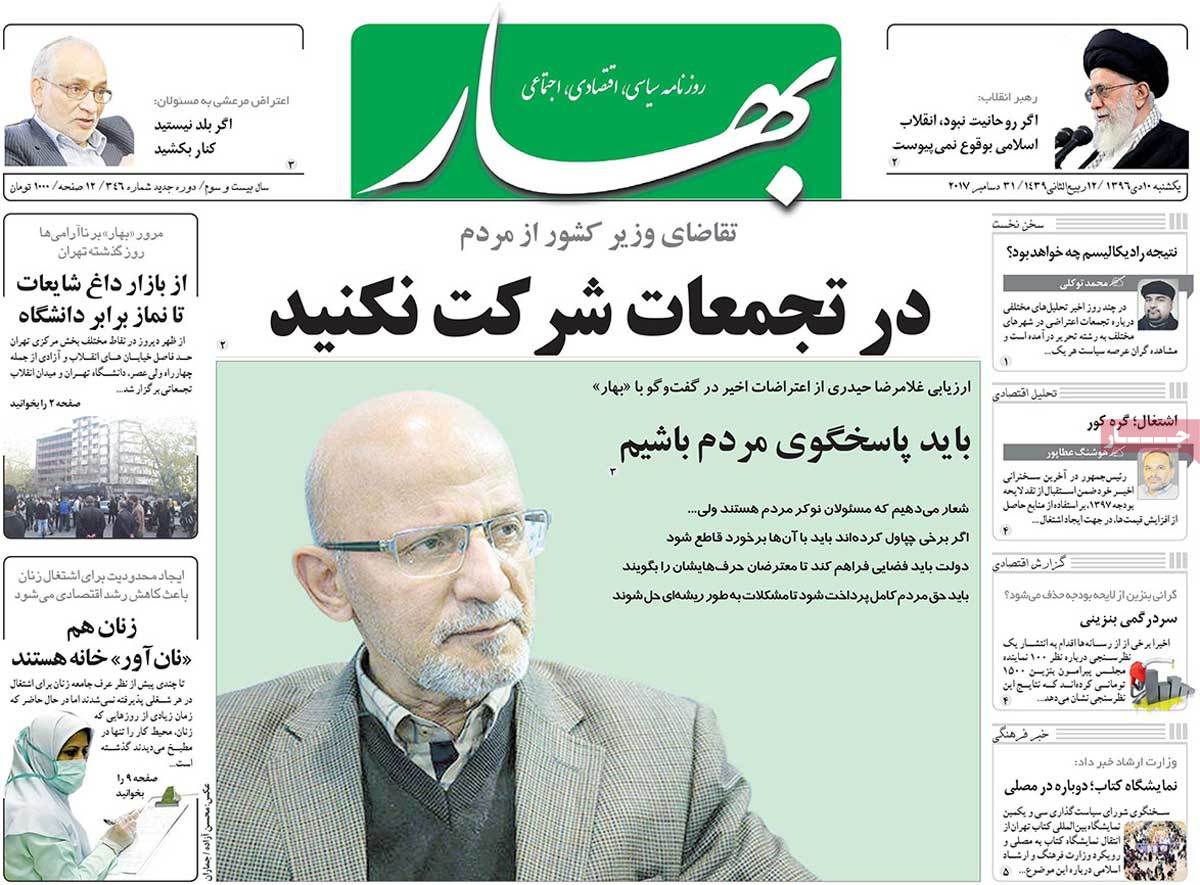
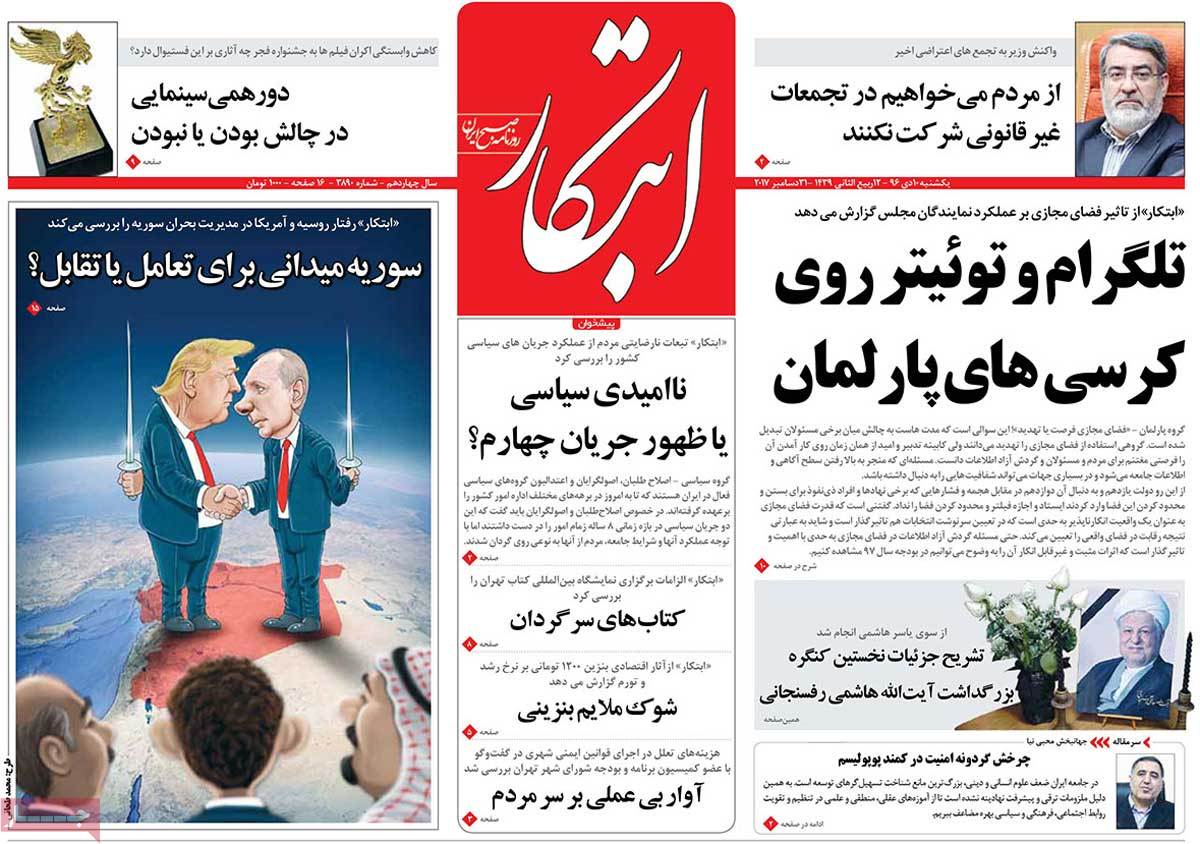
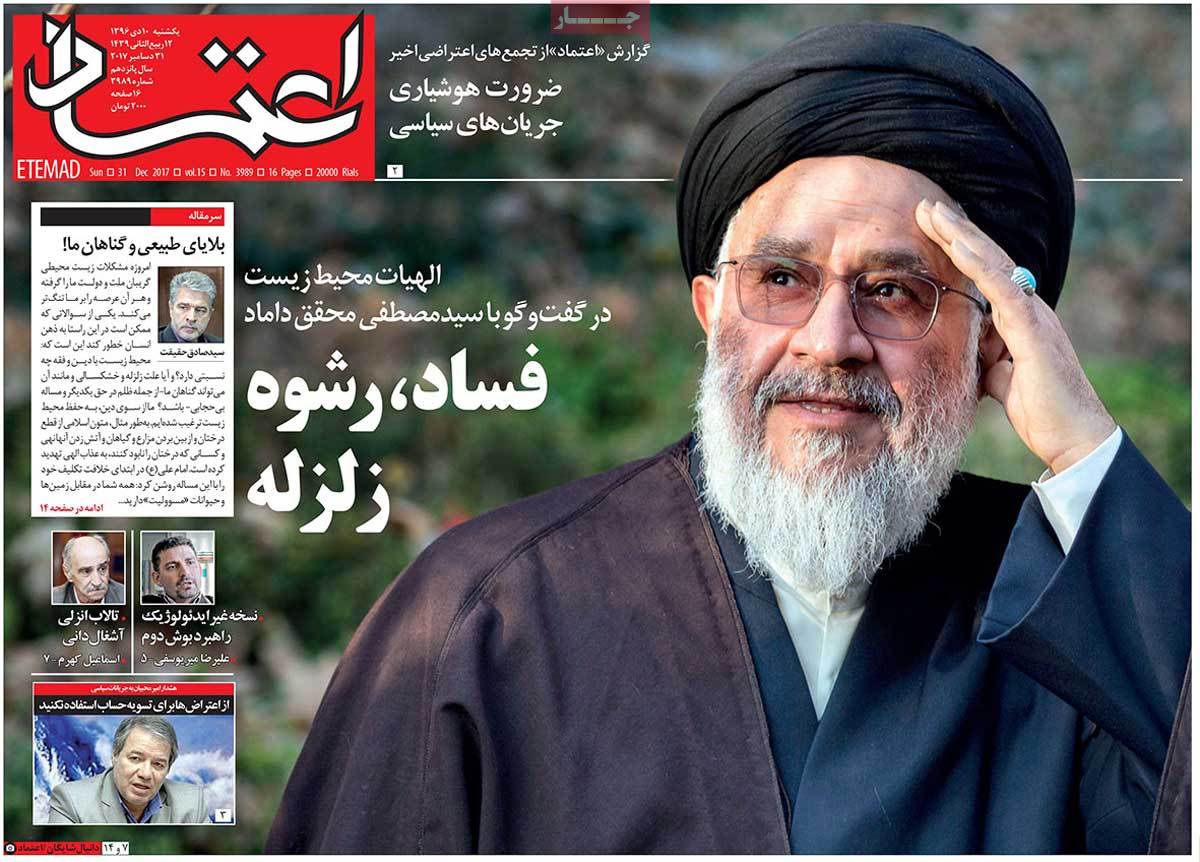
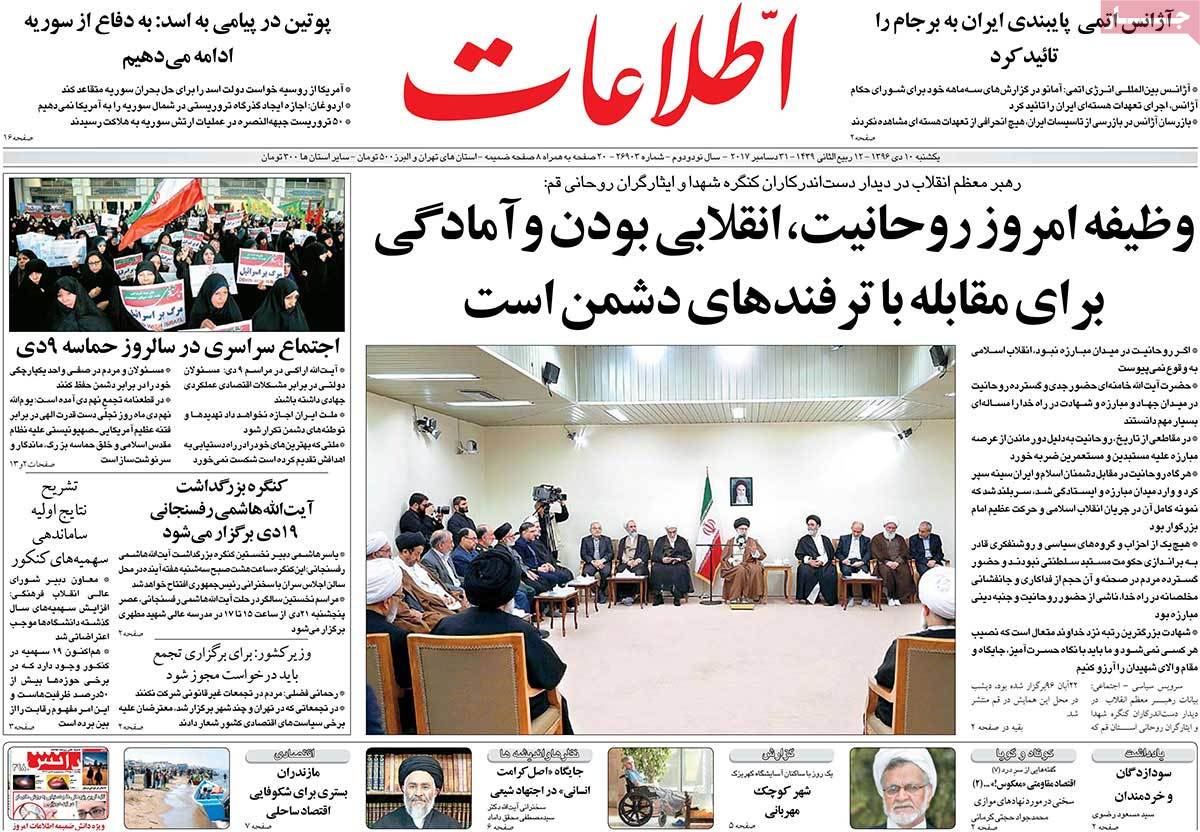
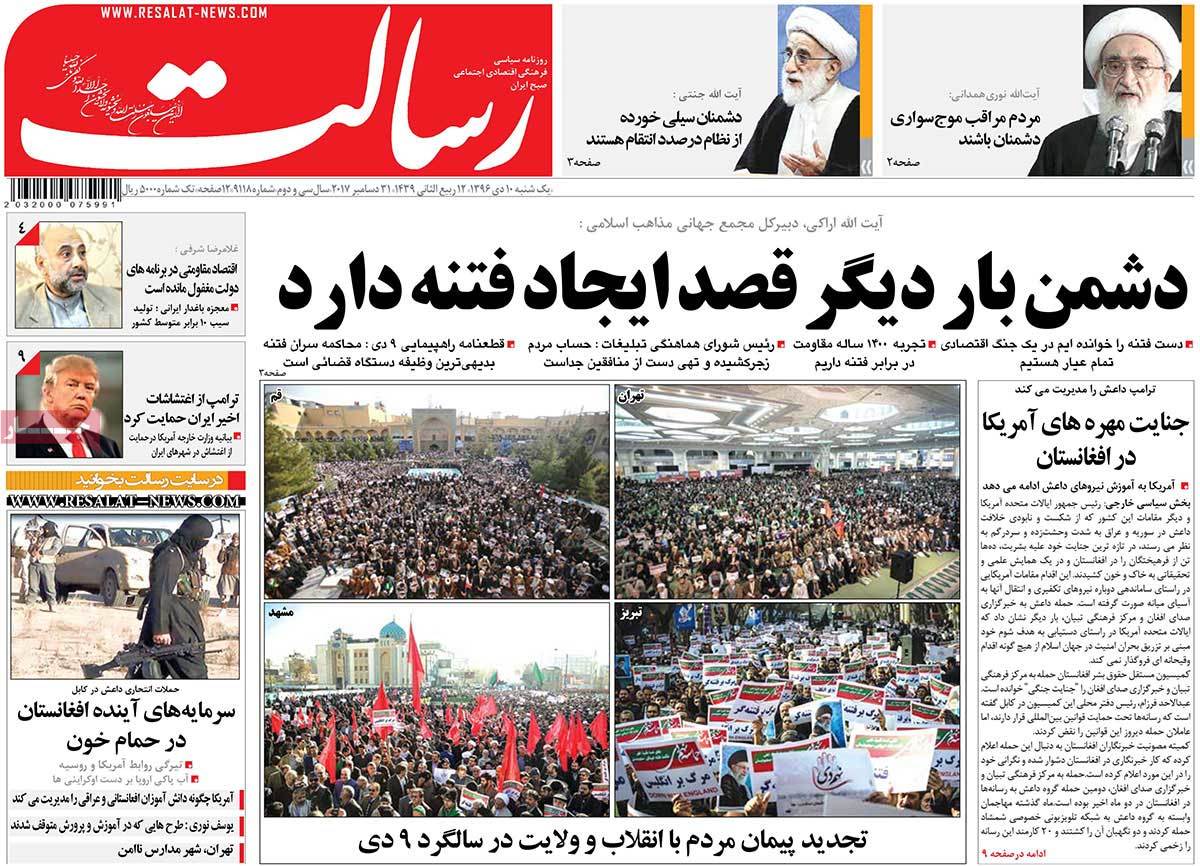
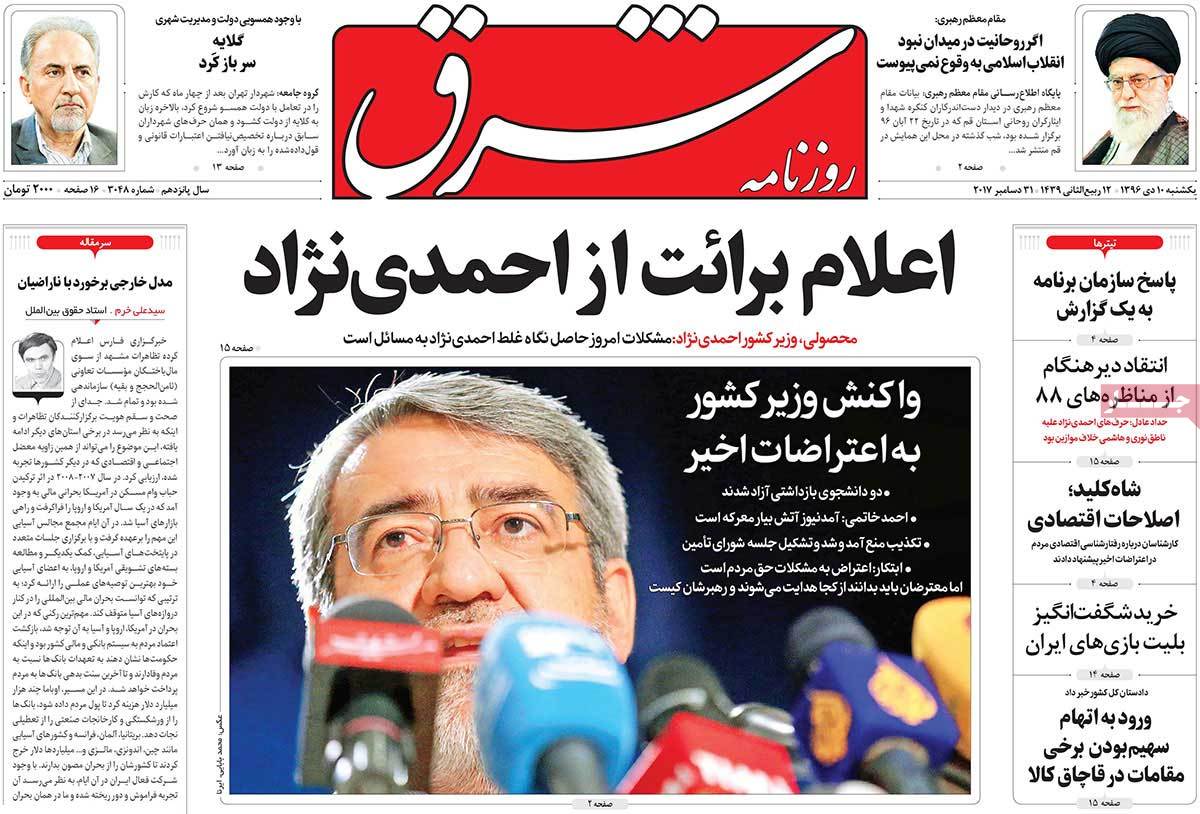
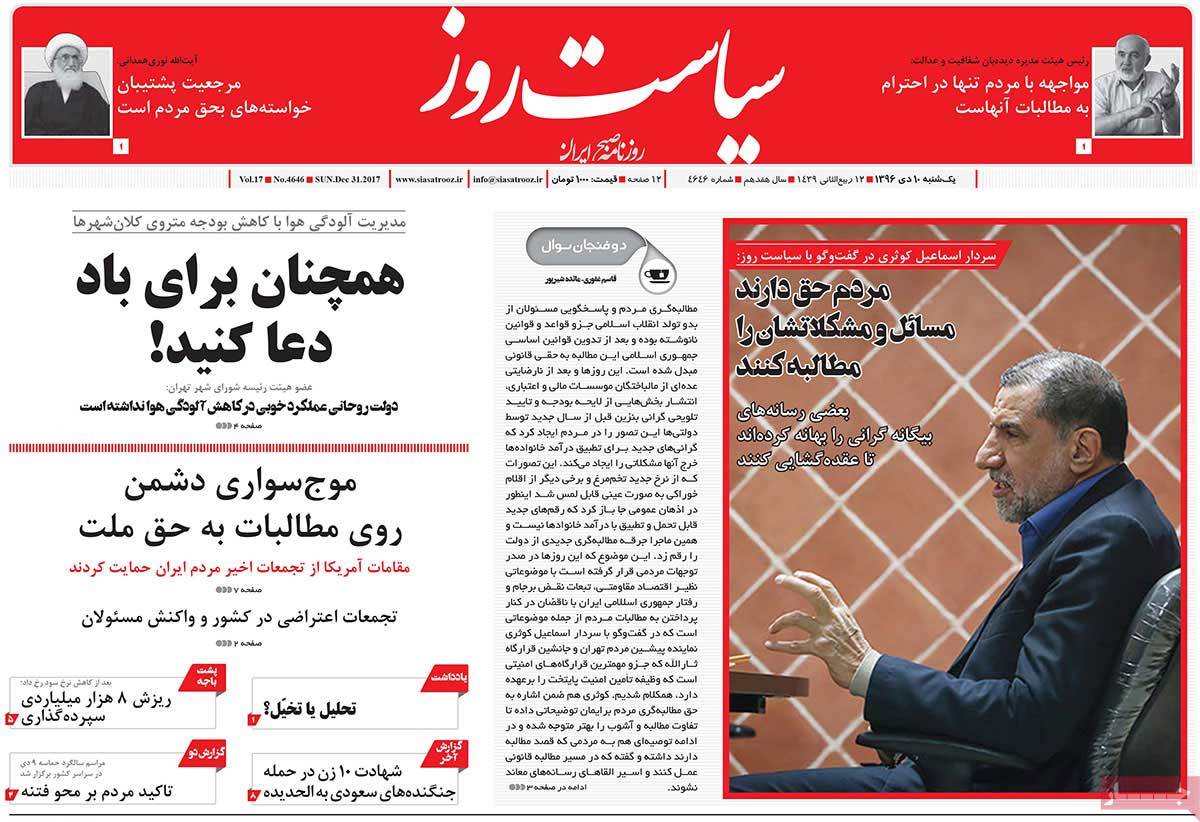
A Look at Iranian Newspaper Front Pages on December 7

The top story in all Iranian newspapers today was the remarks made by the Leader of Iran’s Islamic Revolution Ayatollah Seyyed Ali Khamenei in a Wednesday meeting with top Iranian officials, ambassadors of Muslim states, and guests of Islamic Unity Conference.

The papers widely covered the Leader’s reaction to the US president’s decision to recognize Jerusalem al-Quds as the capital of the Zionist regime and move its embassy to the city.

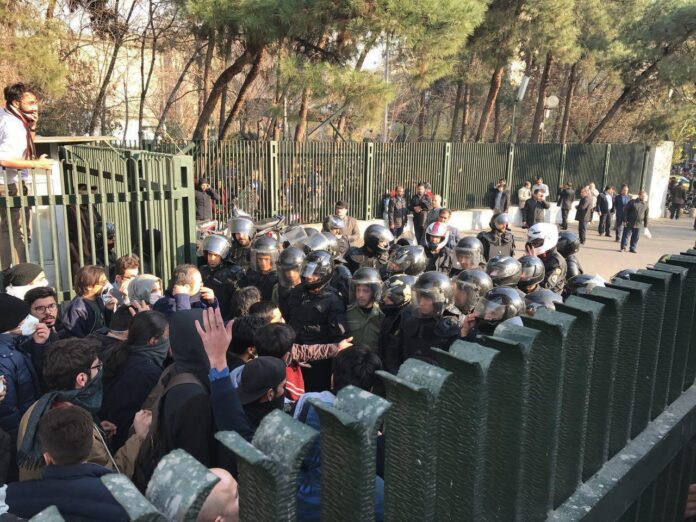
The National Students’ Day in Iran also received great coverage, with several papers referring to hot debates between reformists and conservatives in Iranian universities.

Another top story today was the championship of Iran’s weightlifting team which claimed the world title in the US for the first time in its history.

The above issues, as well as many more, are highlighted in the following headlines and top stories:


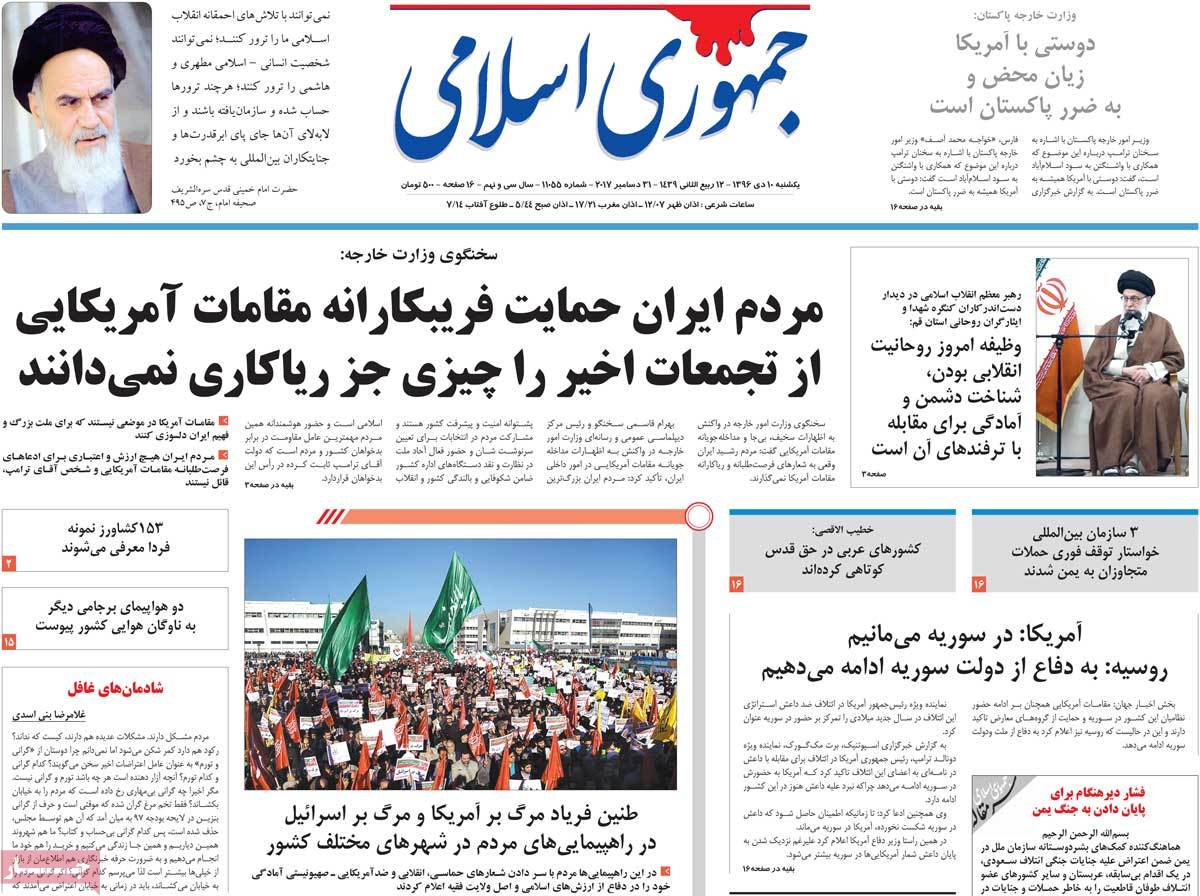
Aftab-e Yazd:

1- Iran Leader: Pharaoh Today Is US, Zionist Regime, Their Followers in Mideast

2- Reformist, Conservative Activists Mark National Students’ Day with Hot Speeches

3- Iran Weightlifting Team Crowned as World Champion

A Look at Iranian Newspaper Front Pages on December 7


Arman-e Emrooz:

1- Iran Leader: Palestine to Be Liberated

2- Iran Claims World Weightlifting Title for First Time

3- Trump’s Trap

  • From Muslims to Pope, from Europe to Egypt, China Condemn Trump Decision on Jerusalem

A Look at Iranian Newspaper Front Pages on December 7


Iran:

1- Iran President: Islamic Civilization Can Be Realized through Moderation

2- Political Passion in Universities on Students’ Day

3- Trump’s Dangerous Gamble

  • Europe, Muslim Leaders Outraged by Trump’s Decision to Move Embassy to Jerusalem

A Look at Iranian Newspaper Front Pages on December 7


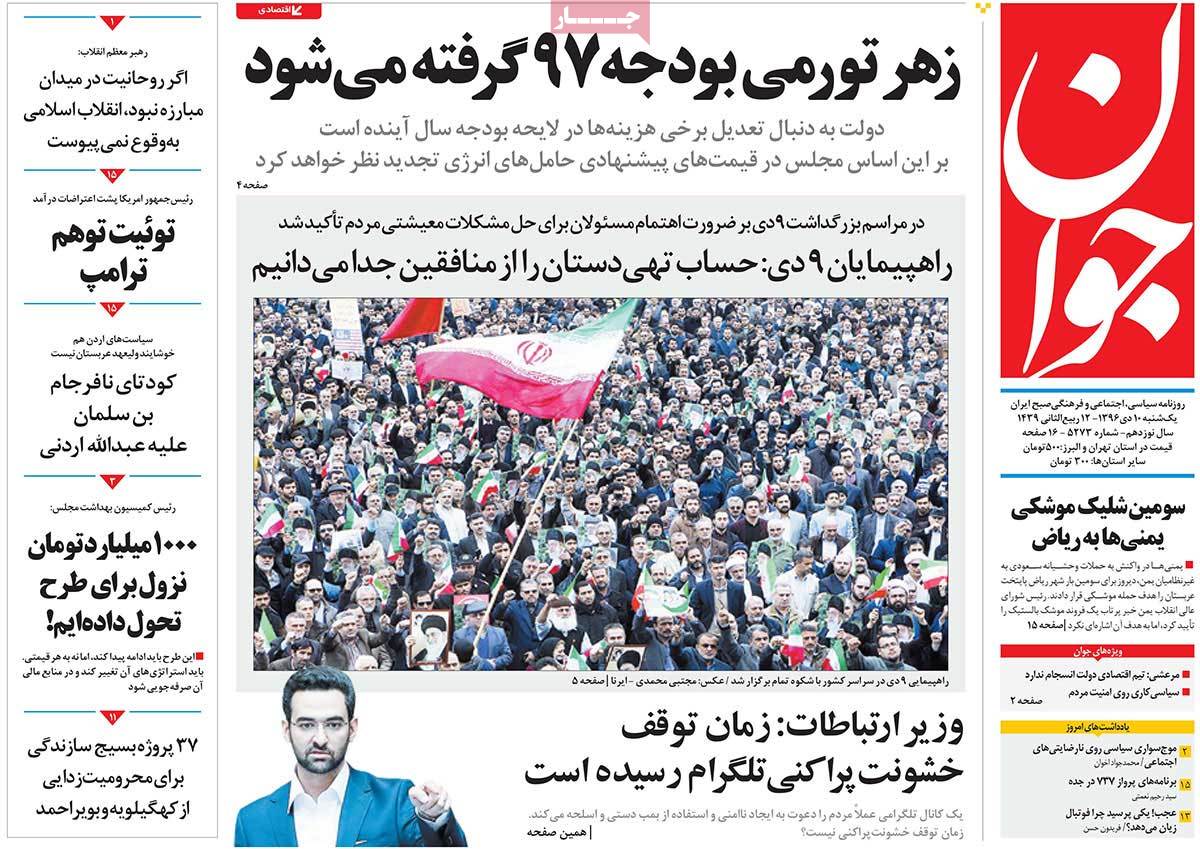
Javan:

1- Iran Leader: Muslim World to Stand against US Plot in Al-Quds

2- Iran Leader Pardons, Commutes Sentences of 1,007 Convicts

3- Chief-Commander: In Fight against Deprivation, IRGC Not Looking for Economic Benefits

4- Controlling Aftershocks of Saudis’ Plot in Yemen

A Look at Iranian Newspaper Front Pages on December 7


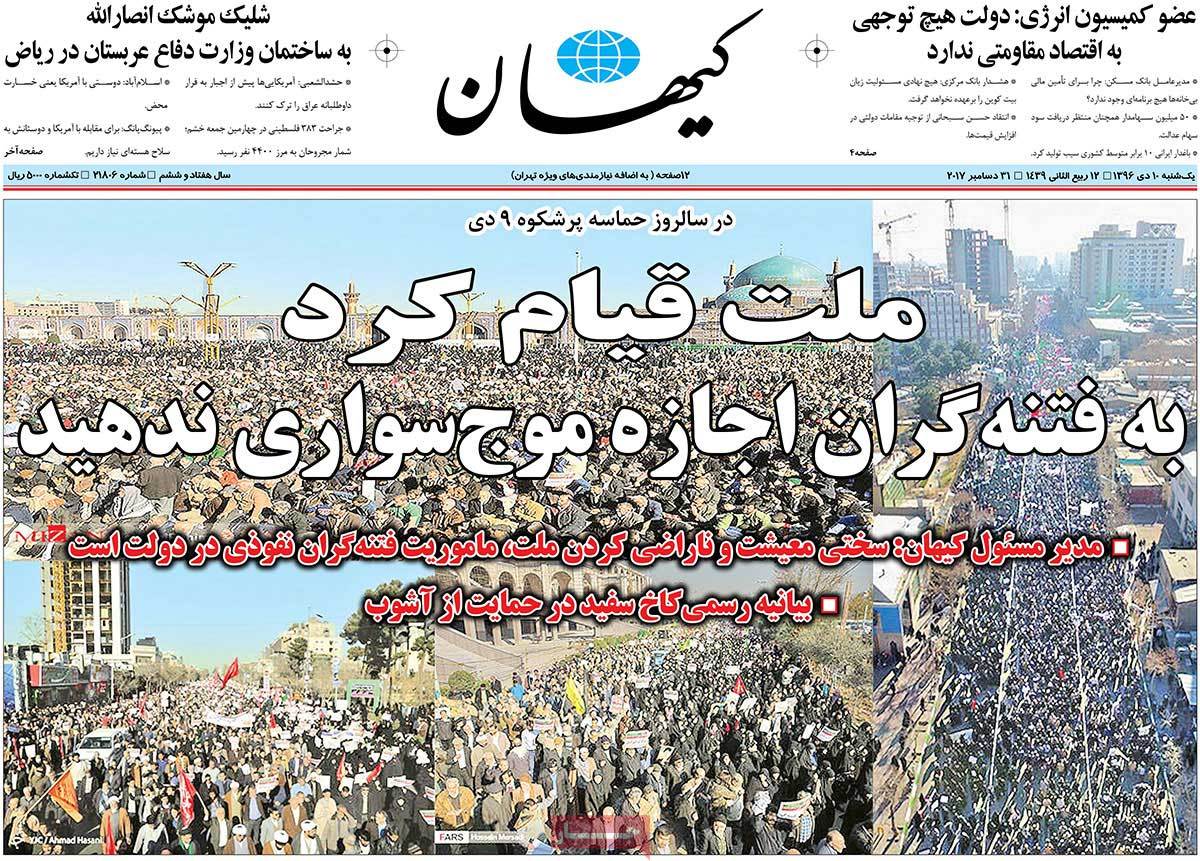
Kayhan:

1- Al-Quds Capital of Palestine, Don’t Play with Fire!

  • World Warns Trump

2- Iran Leader Praises Weightlifting Champions, Wrestler Who Refused to Play against Israel

3- Reactions to Saleh’s Death

  • Saudi Arabia, UAE’s Back Broken after His Death, Yemenis More United

4- Customs Office: Domestic Wheat Production Enough, No Need for Import

5- 4,150 IRGC Projects Inaugurated in Iran to End Deprivation

A Look at Iranian Newspaper Front Pages on December 7


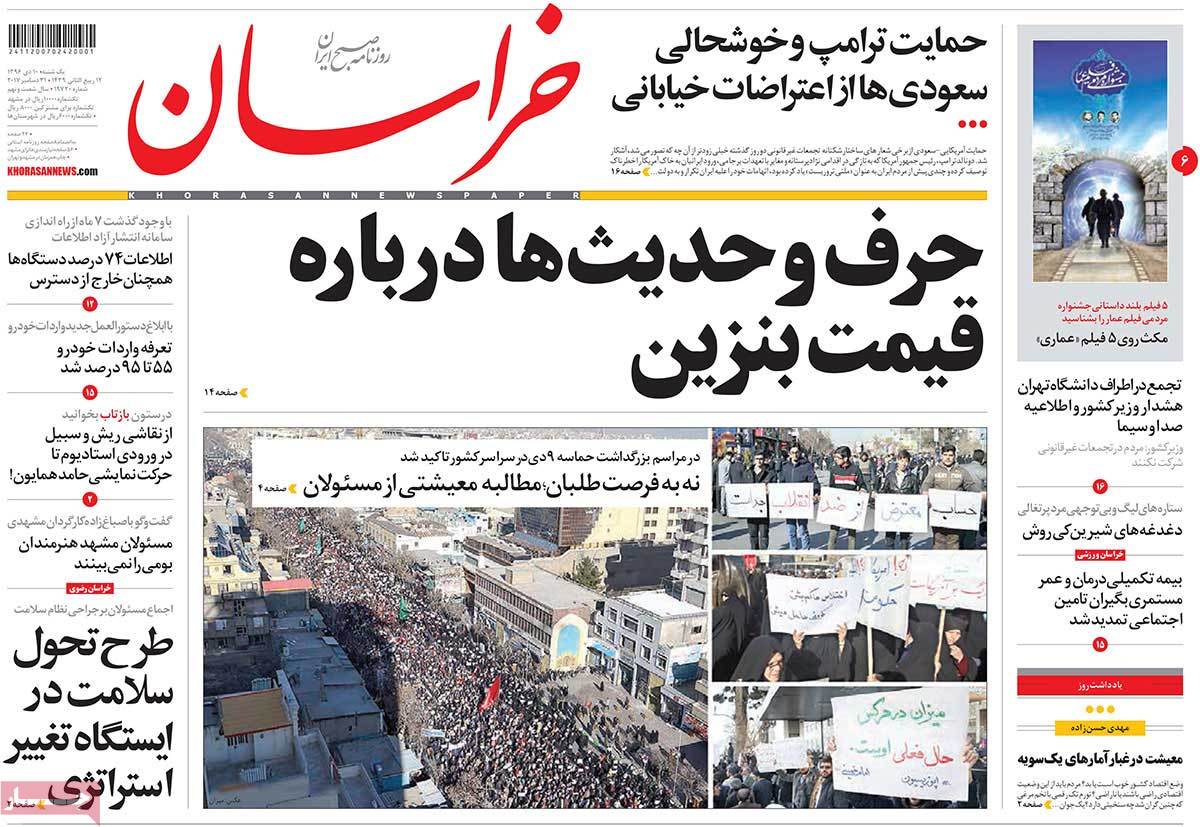
Khorasan:

1- Millions of Yemenis Thank God for Stability Created after Saleh Sedition

2- History-Making in US Territory: Iran’s First Championship in World Weightlifting

A Look at Iranian Newspaper Front Pages on December 7


Shargh:

1- Rouhani in Phone Call with Turkish President: Al-Quds Inseparable Part of Palestine

2- Iran Foreign Ministry: Tillerson Should Get More Familiar with Consequences of US Policies

3- Deputy Head of Red Crescent Society Fired for Weak Performance in Earthquake

4- Iran Leader: Recognizing Al-Quds as Capital of Zionist Regime Shows Desperation

A Look at Iranian Newspaper Front Pages on December 7