Tuesday, December 23, 2025
Home Blog Page 3714

“US in No Position to Judge Iran’s Defence Power”

Speaking in a Farsi interview with IRNA on Saturday, Qassemi stressed the legitimate and undeniable right of the Islamic Republic to defend its national interests and protect its national security.

“With the experience of the eight-year imposed war, Iran will never wait for permission from any country to protect its national security and defend the nation,” he noted.

Qassemi said based on the national and Islamic teachings and in accordance with the principles and objectives of the Iranian Constitution, Tehran has never withdrawn from its legitimate right to boost the country’s defensive capabilities, and will continue to pursue its plans, objectives, and defence strategies, especially in the field of missile capabilities.

He said the Iranian nation has gained invaluable experiences and incurred high costs over the past four decades, particularly during the eight-year war imposed by Saddam’s Ba’athist regime, the [1953] coup d’état and overt or covert military interventions of the world powers especially the US, the psychological warfare and the continuous threats of the Israeli regime’s leaders against the Iranian nation, and numerous conspiracies and plots hatched by some regional countries.

With such experiences, the Islamic Republic of Iran does not wait for permission from any country to maintain its national security and defend the country and nation, Qassemi added.

“Iran would never forget the bitter experience of being hit by missiles during the imposed war and the massacre of defenceless people,” he stated.

The Iranian spokesman underlined that the experience of the past forty years has shown that the enemies of Iran’s Revolution, Establishment and nation have done their best to weaken the Islamic Republic’s defence and security capabilities and have always sought to create an unequal military balance against the country.

“A powerful Iran is very important not only for the great Iranian nation, but also for peace, stability and security in the region.”

“Undoubtedly, Iran’s ability to foil the conspiracies of global and regional enemies will prevent them from taking any unwise action,” he added.

Referring to the missile and air strikes of the Saddam regime against the defenceless cities and residential areas of Iran during the imposed war, he said the Iranian nation will never forget the indifference, silence and satisfaction of those who are making claims today, over the war crimes committed by the Saddam regime during the attacks it launched against the Iranian cities.

“The Iranian people are well aware how the superpowers that are against Iran’s missile defence program closed their eyes on the airstrikes and the indiscriminate killing of innocent people during the imposed war by providing modern warplanes and reinforcing the Iraqi army’s missile power to become an accomplice to the crimes of this regime,” he added.

However, Qassemi noted, today they are concerned about Iran’s missile power instead of being accountable to their historical mistakes.

He underscored that those who have simply forgotten the history of the recent events in the region must be reminded that if Iran’s defence capability during the imposed war was as much as today, the innocent people would not have fallen victim to the crimes of Saddam’s regime and a dictator like him could not disturb the region’s peace and stability with his inhuman desires.

Stressing the deterrent nature of Iran’s missile program, he went on to say that the leaders of aggressive regimes, including the United States and the Zionist regime, have understood that a strong and independent Iran would never accept their domination and bullying.

“If they take any unwise action, they will receive a decisive response from Iran,” mentioned Qassemi.

Referring to Iran’s missile defence capabilities, the spokesman addressed the neighbouring countries, especially the Persian Gulf states, saying that this capability is definitely a source of security and stability, and an obstacle to those with aggressive natures.

“In the past hundreds of years, the Islamic Republic of Iran has not invaded its neighbours and other countries, and has always been tried to create peace and security in the region.”

The allegations certain countries raise against Iran through this psychological war are in line with their anti-Iran and Iranophobic policies, he noted.

Referring to the United States’ policy of commercialization of security and the new approach of the Trump administration to extract concessions from some intimidated countries, Qassemi said the US and some other countries which produce and export deadly weapons cannot send hundreds of billions of dollars worth of weapons to the region and at the same time comment on Iran’s defence power.

Iranian Artist Teaching Quake-Hit Children How to Paint

Mohammad Poorkand, 43, loved painting since he was a child. He has studied and practiced the art for years in Iran and Turkey.

Mohammad’s main job was to do painting for government buildings, but he lost everything he had – his house and painting tools – during the recent 7.3-mantidue quake that hit Kermanshah province.

However, he is still hopeful despite all the hardships, and is teaching the quake-hit children how to paint using the few colours that remained for him.

He hopes he would be able to sell the paintings created by the children and raise funds for the quake-stricken people.

Mohammad also paints the portraits of celebrities who rushed to help the people affected by the tragic earthquake which killed over 600 and wounded thousands of others.

Here are the Mizan News Agency’s photos of Mohammad and his works:

Iran’s Beauties in Photos: Tarik-Darreh Ski Resort

There are 3 chairlifts which give services to the skiers. The piste is equipped with dining halls, dorms and other facilities for almost 500 people.

Here are the Mehr News Agency’s photos of the resort:

Iran Opens New Solar Power Plant in Yazd

Iran Opens New Solar Power Plant in Yazd

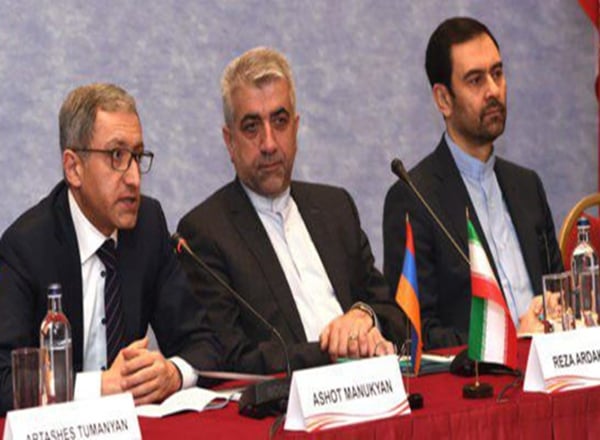
The power plant was opened in an official ceremony attended by Iran’s First Vice-President Es’haq Jahangiri and Minister of Energy Reza Ardakanian.

With a nominal capacity of 10MW, the solar power plant has been financed by the joint investments of Iran’s private sector and a German investor.

Based on the contracts signed between the parties involved, the purchase of the power produced in Yazd solar power plant will be guaranteed for 20 years by Iran’s Renewable Energy and Energy Efficiency Organization.

The project to build the solar power plant began in June 2017 with an overall investment of IRR 500 billion [about $11 million].

With the first largest gas reserves and the fourth oil reserves in the world, Iran is a global hydrocarbons giant. The Iranian policymakers, however, are very eager to develop renewable energies to increase energy security, reduce the country’s dependence on hydrocarbons, and realize its growth targets in electricity demand.

Iran’s topography is quite appropriate for renewables and that makes the fulfillment of these objectives pretty realistic and probable for the Iranian government.

Iran enjoys a great diversity in its climate and vast arid regions. The southern, northwestern and southeastern regions of Iran receive around 300 days of sun per year, and thus are uniquely suitable for solar energy production.

According to the data released by Iran’s Vice-Presidency for Science and Technology, the government has given particular priority to the country’s central regions, including Yazd, due to its climate and proximity to the national power grid.

With the recent removal of sanctions, Iranian companies now have greater access to a wider range of increasingly sophisticated solar technologies and financing to purchase and develop them. The immediate benefits will be rapid installation of technologies and, in the long-term, the country is likely to gain the ability of producing a significant amount of its solar infrastructure domestically.

“Iran Supports Any State Willing to Fight against Israel”

General Heidari said Iran supports regional states which have stood up against the terrorist groups and crises created by the US and its allies in the region.

Speaking in a Farsi interview with the Tasnim News Agency, the general dismissed the US policies in the regional as destructive and added Washington is seeking to divert attentions from its failures in the region by blaming Iran for its support for resistance groups.

“Such statements are made by the US officials to appease their own constituents. Meanwhile, the US animosity with Iran is no secret any more. Since the victory of the Islamic Revolution in 1979, the US has been threatening Iran and encouraging certain regional states to wage a war against us,” he said.

He said Iranophobia projects pursued by the US and its allies in the region have had no effect on the will of Iranians so far.

“Today, all freedom-seeking states of the world have come to realize the true face of the US and its enmity with us,” he concluded.

The remarks came after the US Treasury broadened sanctions on Friday targeting Lebanese Hezbollah’s financial network in the Middle East and Africa in a bid to crack down on revenue streams the US claims the resistance movement uses to fund its “illicit operations”.

“The administration is determined to expose and disrupt Hezbollah’s networks, including those across the Middle East and West Africa, used to fund their illicit operations,” Treasury Secretary Steven Mnuchin said in announcing the penalties under financial regulations targeting Hezbollah, Reuters reported.

Senior Trump administration officials claim that the sanctions were part of an aggressive move against Hezbollah to try to limit what they called as Iran’s growing influence in the region.

“3 Iranian Satellites to Be Put into Orbit; Another One Ready for Launch”

Satelite

Iran’s minister of communications and information technology says three domestically developed satellites are waiting their turn to be launched into orbit.

“One satellite is also ready to be launched,” said Mohammad-Javad Azari Jahromi as quoted by the Persian-language Tasnim News Agency.

He thanked students at the Sharif University of Technology for having contributed to the development of the satellites.

“This satellite, which is ready to be put into orbit, is the achievement of local elite,” he noted.

“There is good potential in the country, and we are a leading nation in the field of research in the domain of remote-sensing and telecoms satellites,” the minister further said in a ceremony on Saturday, February 3, marking National Space Technology Day.

Meanwhile, Deputy Head of the Iranian Aerospace Association Farshad Pazouki said Iran is among the top ten countries in the world in terms of space technology.

“February 3 was designated as National Space Technology Day due to the successful launch of the Omid (Hope) satellite, which took us (Iran) into the world’s space club, and this is an honour that not just any country can achieve,” he said.

Iran successfully launched into orbit its first indigenous data-processing satellite, Omid (Hope), back on February 2, 2009.

As part of a comprehensive plan to develop its space program, Iran also successfully launched its second satellite, dubbed Rassad (Observation), into the earth’s orbit in June 2011. Rassad’s mission was to take images of the earth and transmit them along with telemetry information to ground stations.

The country’s third domestically-built Navid-e Elm-o Sanat (Harbinger of Science and Industry) satellite was sent into orbit in February 2012.

In January 2013, Iran sent a monkey into space aboard an indigenous bio-capsule code-named Pishgam (Pioneer).

And later in December 2013, the country’s scientists successfully sent a monkey, called ‘Fargam’ or Auspicious, into space aboard Pajoheshan (Research) indigenous rocket and returned the live simian back to earth safely.

The Islamic Republic plans to achieve the first place in the region and a leading global position in terms of space sciences and technologies and become a regional hub in this regard.

According to the data released by Iran’s Vice-Presidency for Science and Technology, the country’s scientists have managed to improve Iran’s global ranking in aerospace research papers from 35th in 2005 to 11th in 2015.

The following table shows the country’s rank in terms of citable documents in the world:

country’s rank in terms of citable documents in the world

US Gives Prison Term to Ex-Consultant to Iran’s UN Mission

A US court in Brooklyn gave Sheikhzadeh the 3-month prison term for evading taxes by concealing his income and helping family and friends make money transfers that violated US sanctions against Iran.

According to a report by Reuters, Sheikhzadeh, an Iran-born US citizen, strongly denied accusations made by prosecutors in a court filing last year that he acted improperly by arranging contacts between a nuclear scientist and Iranian officials while Iran was negotiating a treaty with the US over its nuclear program.

Prosecutors never brought any criminal charges related to the nuclear program against Sheikhzadeh, who pleaded guilty in November 2016 only to filing false tax returns and conspiring to violate US sanctions.

Sheikhzadeh, 61, was bitterly defiant as he addressed US District Judge Pamela Chen in Brooklyn before he was sentenced, saying prosecutors had targeted him in order to pressure him to act as an informant from within the Iran mission.

Chen said she was not considering the prosecutors’ accusations about the nuclear program in imposing her sentence, which was much lower than the 46 months called for by federal guidelines.

Chen said on Friday that she did not understand the significance of the claims about various contacts between Sheikhzadeh, a nuclear scientist he knew and Iranian officials, first made in court filing in June 2017.

Sheikhzadeh testified at the hearing that he helped arrange meetings as part of his job as a consultant to the Iranian mission, which included analyzing the political situation between Iran and the United States. He said he supported Iran’s right to develop nuclear energy, though not nuclear weapons.

He admitted that he did not disclose his income from the mission, which was paid in cash, on his tax returns.

Sheikhzadeh, speaking to reporters after the hearing, called the prison sentence “very unfair.”

36th Fajr Film Festival Underway in Tehran

The 36th edition of the Fajr Film Festival started its work yesterday and will last until February 10 under the supervision of Iranian cinematographer Ebrahim Darooqezadeh.

Since 2015, the festival has been held in two separate national and international categories. The international section will be held in April.

Iranian Minister of Culture and Islamic Guidance Seyed Abbas Salehi made a speech at the ceremony.

36th Fajr Film Festival Underway in Tehran

36th Fajr Film Festival Underway in Tehran

36th Fajr Film Festival Underway in Tehran

Late Iranian filmmaker Ali Moallem was honored during the inauguration ceremony in the presence of his family.

‘Confiscation’, ‘In the Levant Time’, ‘Bomb, A Romantic’ and ‘Lottery’ were the movies that were warmly received by the audiences at the public screenings of the first day of the festival.

This edition of the Fajr Film Festival will also premiere “At Damascus Time” and “Emperor of Hell” that both recount stories on Daesh extremism.

Due to the theme running through their stories, both movies have been predicted to take center stage at the festival.

“At Damascus Time” directed by Ebrahim Hatamikia tells the story of an Iranian pilot and his son as copilot who are seized by the Daesh forces in Syria when are in the country to deliver a cargo of humanitarian relief supplies to people in a war-torn region.

Directed by Parviz Sheikhtadi, “Emperor of Hell” reveals the key role that Arab muftis played in the rise of the radicalism of Daesh.

Hatamikia has previously made “Glass Agency”, “In the Color of Purple” and several other acclaimed movies that were mostly on the 1980-1988 Iran-Iraq war and the repercussions the event had in Iranian society.

It is being held at Tehran’s iconic Milad Tower.

A Look at Iranian Newspaper Front Pages on February 3

A Look at Iranian Newspaper Front Pages on November 18

Iranian papers today covered the visit of President Hassan Rouhani to quake-hit areas of Kerman province in southeastern Iran and his meetings with the people affected by the recent earthquakes there. The president promised his government will immediately reconstruct the quake-hit areas.

The remarks by Seyyed Ali Khomeini, a grandson of the late founder of the Islamic Republic, in praise of the incumbent leader Ayatollah Seyyed Ali Khamenei, also received great coverage.

The above issues, as well as many more, are highlighted in the following headlines and top stories:


Abrar:

1- Rouhani: We Cannot Progress without People’s Vote, Opinion

2- Qatar FM: After Qatar Blockade, Iran Was Only Channel for Supply of Food, Drugs

3- Senior MEP: Maintaining JCPOA the Message Europe Must Send to Trump

A Look at Iranian Newspaper Front Pages on February 3


Afarinesh:

1- Rouhani: Gov’t to Strongly Continue Path of Iran’s Progress, Prosperity

2- Araqchi: US Failed to Take Iran to UN Security Council Once Again

A Look at Iranian Newspaper Front Pages on February 3


Aftab-e Yazd:

1- Rouhani Visits Quake-Hit People in Person: President’s Change of Approach Welcomed

2- Education Minister: Sharp Decrease in Students’ Passion for School

A Look at Iranian Newspaper Front Pages on February 3


Arman-e Emrooz:

1- Rouhani Praises Ayatollah Rafsanjani in Kerman

  • I Commemorate the Ayatollah Whenever I Open New Project

2- French Loan for Iranian Buyers: New Round of Europe’s Support for JCPOA against Trump

A Look at Iranian Newspaper Front Pages on February 3


Ettela’at:

1- Rouhani: Gov’t to Pilot Test Transfer of State Authorities to Provinces in Kerman

2- Iran Will Flourish in Future under Leadership of Ayatollah Khamenei: Roads Minister

3- Russia Warns about Organized Relocation of ISIS to Afghanistan

A Look at Iranian Newspaper Front Pages on February 3


Iran:

1- Rouhani: Quake-Hit People to Receive Permanent Accommodation in 6 Months

2- Dozens of Projects with Billions of Dollars in Investment Opened by Gov’t across Iran

A Look at Iranian Newspaper Front Pages on February 3


Javan:

1- Imam Khomeini’s Grandson Ali: Officials Must Refrain from Living Luxurious Lives

A Look at Iranian Newspaper Front Pages on February 3


Jomhouri Eslami:

1- Rouhani Opens Four Major Industrial Units in Sirjan, Kerman

2- 70% Increase in Investments in Iran during Past 11 Months

3- British Investors Keen to Make Investment in Various Iranian Economic Sectors

4- Continued Implementation of JCPOA Very Important for Asian States: Official

A Look at Iranian Newspaper Front Pages on February 3


Kayhan:

1- Iran Picked Fruit of US Attack on Middle East: Chomsky to Kayhan

2- Imam Khomeini’s Grandson Ali: No One but Ayatollah Khamenei Has Managed to Fill Imam’s Gap

A Look at Iranian Newspaper Front Pages on February 3


Resalat:

1- Rouhani: Washington Cannot Make Decision for Iranian Nation

2- Ayatollah Khatami: We Won’t Let Any State Poke Its Nose into Our Missiles

3- US Wants to Receive Ransom Money from Iran by Taking JCPOA Hostage: Diplomat

A Look at Iranian Newspaper Front Pages on February 3


Shargh:

1- After Visiting Tehran’s Evin Prison, Iranian MPs Will Visit Prisons in Other Cities

A Look at Iranian Newspaper Front Pages on February 3


Huge Warehouse in Iraq Razed to Ground in Controlled Explosion (+Video)

The building was destroyed by Hiwa Rauf Company to make way for a large-scale project in an attempt to boost tourism in the region.

The demolition of the old concrete silo was supervised by the US company ASI and Turkish EGE NITRO Company.

“We [have] already built a new steel silo outside the city of Sulaymaniyah. The location of the old silo will be a big complex project, including residential, commercial and also tourist activities inside the new project,” says Azad Ali, a director at Hiwa Rauf.