Wednesday, December 24, 2025
Home Blog Page 3679

“Macron More Interested than Iran in Keeping Trump in JCPOA”

French President Emmanuel Macron welcomes US President Donald Trump prior to a meeting at the Elysee Presidential Palace on July 13, 2017 in Paris / Photo by Thierry Chesnot, Getty Images

Political commentator Nosratollah Tajik, in a recent article published by the Persian-language Khabar Online news website, has weighed in on France’s efforts to preserve the Iran nuclear deal by appeasing the US President and putting Iran under pressure.

Amid such efforts, the question is, are we edging closer to the implementation of a second Iranophobia project pushed by the issue of ballistic missiles, human rights issues, and so on? Is Iran going to give up and sit down for talks on issues demanded by Washington and some European states while the country has not enjoyed the tangible privileges of the JCPOA in economic, political and security fields?

Tajik’s opinion piece is a short reply to the two serious and elaborate questions mentioned above. The full text of the article follows:

France’s interest in having more interaction with Iran is mostly due to economic issues, not ensuring Iran’s political and security interests, and not even Paris’ admitting Iran’s regional role and accepting that Iran is entitled to enjoy the privileges of its regional investments. So, France’s role in Trump’s illogical stances on the JCPOA emanates from the aspirations of a young president who wants to take Iran to heaven by force! His interest in keeping Trump in the JCPOA seems to be more than that of Iran. Although Iran wouldn’t like the JCPOA to fail, Trump’s withdrawal from the international treaty won’t mean the end of the world, especially when he is a person who has not completely lived up to his commitments under the agreement. Trump has not only adopted negative positions, but has caused the spectre of uncertainty to loom large over the political and economic landscapes. He has also sabotaged certain efforts on some occasions. Therefore, Trump’s withdrawal from the JCPOA would be a response to his allies, namely Saudi Arabia and the Zionist regime of Israel, and in line with fulfilment of his election pledges on the one hand, and on the other it would be part of a game to gain concessions.

The JCPOA was Iran’s new approach in international transactions, and what ensured Iran that it could trust an agreement with the West was Europe’s presence from two perspectives.

1) Europe is the Middle East’s first security circle where Iran has interests, influence and investment. Moreover, European countries have a proper understanding of the consequences of unrest in that region.

2) Iran’s age-old distrust in the US as a country which neither has a long history of foreign relations nor has a proper understanding of the potentialities of, and the situation and challenges in the Middle East.

So, the Europeans should not be left alone, and both European countries and the European Union should play their roles in ensuring stability and security in the region.

In fact, the repercussions of insecurity in the Middle East will, in the first place, bear down on Europe, not the US, and this is a path to engage with Europe.

Many analysts expected that problems would emerge between Europe and the US from the outset of Trump’s coming to power. The same analysts believed it would be unlikely that the US and Europe would reach an agreement that would be against Iran’s interests as far as the JCPOA is concerned, but expected that Washington and Europe would see eye to eye in other areas such as human rights and missile issues by imposing some restrictions and sanctions. The point is that Europe wants the JCPOA and the US together, so it has to go both ways and settle for the golden mean at the end of the day.

Unfortunately, due to the lack of transparency in the positions adopted by world powers, there is uncertainty over the extent of the US and Europe’s demands and of the maximum pressure to bring Iran to the table to renegotiate the JCPOA or discuss other issues such as Iran’s missile program. Here, Iran should become more active and get closer to Europe and countries which are willing to work with the Islamic Republic.

Iran FM Says Israeli Occupation Won’t Last Long

Zarif made the remarks via his official twitter account late on Tuesday in response to claims made by Israeli Prime Minister Benjamin Netanyahu who said Iran is responsible for “darkness descending” on the Middle East.

“Despite Netanyahu’s claims, the fact is that illegal occupation lies at the heart of most of the calamities in our region. Historically, occupying another’s land has never been sustainable. This occupation, too –and the apartheid system that perpetuates it– will not last long,” tweeted Zarif.

Earlier in the day, Netanyahu alleged that Iran is increasing its influence in the Middle East and seeks to dominate regional countries such as Syria and Yemen, Lebanon and Iraq.

“Iran is building an aggressive empire. Iran, Iraq, Syria, Lebanon, Gaza, Yemen, more to come,” he said in Washington on Tuesday while addressing the American Israel Public Affairs Committee (AIPAC).

He also claimed nuclear deal, officially known as the Joint Comprehensive Plan of Action (JCPOA), had made Tehran’s nuclear program more dangerous.

Netanyahu also hailed the US administration’s threat to withdraw from the 2015 nuclear deal, describing the agreement as a great threat to peace in the region. He claimed that Tehran is seeking to develop nuclear missiles.

Iran and the P5+1 countries – namely the US, Russia, China, France and Britain plus Germany – finalized the nuclear accord in July 2015 and started implementing it in January 2016. Under the deal, Iran undertook to apply certain limits to its nuclear program in exchange for the termination of all nuclear-related sanctions against Tehran.

Iranian Diplomat, UN Envoy Discuss Syria Peace in Geneva

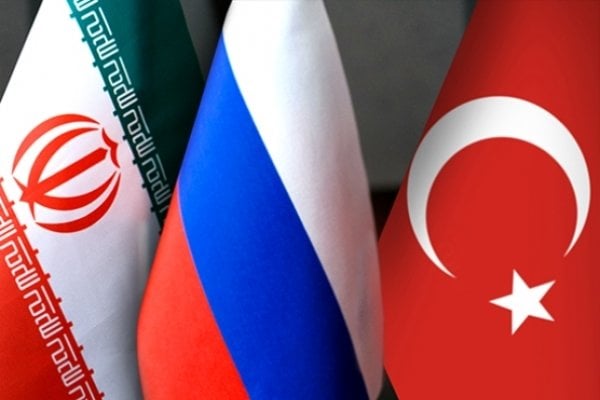
The Iranian diplomat, who arrived in the Swiss city on Monday, discussed the latest developments in Syria Peace Talks with Russia’s Sergei Vershinin and Turkey’s Sedat Önal. He also held negotiations with UN Special Envoy for Syria Staffan de Mistura.

During the bilateral, trilateral, and quadrilateral meetings, which lasted from 10 am to 6 pm on Tuesday, the parties focused on the process of restoring peace and tranquility to Syria, and exchanged views on the results of the Syrian National Dialogue Congress in Sochi as well as the forthcoming Astana Talks on Syria which is going to be held at the ministerial level between the three guarantor states.

The Iranian, Turkish, and Russian delegations and the UN special envoy for Syria further agreed that these quadrilateral talks continue to follow up on the outcome of the Astana Talks and the approvals of the Syrian National Dialogue Congress in Sochi so as to consolidate the constructive link between the Astana and Geneva negotiations.

Before his trip to Switzerland, Jaberi Ansari spent some time in Syria and held talks with high-ranking officials of the Arab country including President Bashar al-Assad.

Jaberi Ansari, who is Iran’s top negotiator at Syria Peace Talks, routinely holds talks with the envoys of Syria, Turkey, Russia, and the UN on the ways to find a resolution to the Syrian crisis. The latest round of such talks was held in Russia’s Sochi.

Iran’s Larijani Plants Olive Sapling as Sign of Peace on Arbour Day

In a ceremony to mark the Arbour Day on March 6, Larijani planted the olive sapling as a symbol of peace and solidarity with the Palestinian people.

According to a Farsi report by ICANA, ambassadors of foreign countries, including Palestine, Syria, Australia, Algeria, Libya, Greece and Armenia, attended the ceremony.

Here are the photos of the ceremony retrieved from ICANA:

Earlier in the day, Leader of Iran’s Islamic Revolution Ayatollah Khamenei and Iranian President Hassan Rouhani also planted some saplings to mark the day.

Every year, just before the Iranian New Year, millions of Iranians plant trees to mark the Natural Resources Week and hail the arrival of spring.

Iranian Lawmakers Advocate for Women’s Greater Social Participation

Women walk through Valisar Square in Tehran, Iran, Nov. 7, 2017 / File photo by Arash Khamooshi, The New York Times

The incumbent parliament has seen a surge in efforts to defend women’s role in the society, resulting from their unprecedented presence in the legislative body.

Women occupy 17 seats in this parliament, their highest number since the victory of the 1979 Islamic Revolution.

Activists hope the greater number of women in the parliament would positively affect women’s rights.

Soheila Jolodarzadeh, a veteran lawmaker affiliated to the reformist camp, says greater social participation of woman will help the society to develop faster, as they possess unique characteristics that makes them a perfect fit for some type of jobs.

“Today, more and more women have stepped outside their traditional roles to have more participation in the society,” she told the Persian-language IRNA on Monday.

Jolodarzadeh said women’s great patience and their superior skill in forming relationships with people makes them fit for various positions, particularly in the world of politics.

“Despite [considerable] opposition to the participation of woman in politics, [I believe] they are well capable of undertaking activities in this field,” she said.


More Employed Women Means Greater Health

Parvaneh Salahshouri, another parliamentarian affiliated with the reformist bloc, says greater participation of woman in the country’s workforce could enhance the levels of health and education among Iranian families.

Moreover, employed women could also bring up more successful children, as their work experience enables them to better handle family affairs and teach their children to be independent and responsible, she said.

Salahshouri, who heads the parliament’s women faction, said they have undertaken several measures to encourage women’s social participation, including proposing plans to provide female entrepreneurs with facilities for creating home jobs.

Although the gender gap in education has been bridged and women have a significant presence in schools and universities, their share in the job market is still small.

Iranian women’s participation rate in labour force is one of the lowest ones compared to many other countries.

Statistics show that participation of women in the labour market rose steadily in the 1997-2005 period, from 10% to 17%.

However, the rate declined in the 2005-2013 period, from 17% to 10%, under the two terms of Mahmoud Ahmadinejad.

But since 2013, when President Hassan Rouhani came to power, the rate has been growing.

According to a report published by the research centre of the Iranian Parliament on December 20, 2017, the participation rates of men and women labour force in the fiscal year 2016-17 were 64% and 14.9%, respectively.

39 Killed after Russian Transport Plane Crashes in Syria’s Latakia

32 Killed after Russian Transport Plane Crashes in Syria’s Latakia

The incident took place at 3 pm on Tuesday when landing, according to the Russian ministry of defence. The plane hit the ground 500 meters short of the runway.

A technical malfunction was behind the crash, the ministry said, adding that the aircraft was not attacked.

An investigation into the incident is underway, Sputnik reported

This is not the first time that an An-26 has crashed in Syria. In January 2015, an aircraft operated by the Syrian armed forces crashed while landing at the besieged Abu al-Duhur military airport in the Idlib Governorate.

An-26 is a military transport aircraft, capable of carrying up to 38 people excluding the crew, and some 5,500 kilograms in cargo.

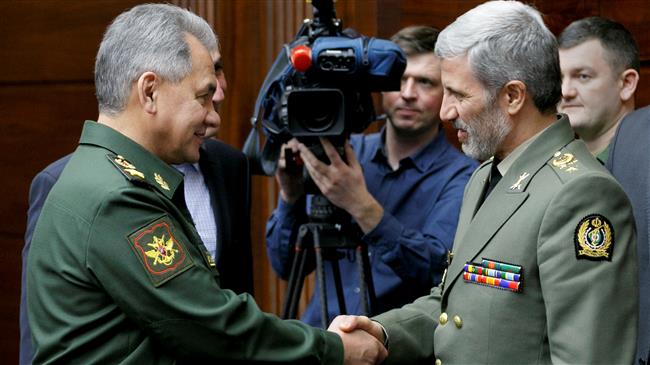
Iran, Russia Discuss Ways to Enhance Anti-Terror Cooperation

Senior Iranian lawmaker Alaeddin Boroujerdi addressing a conference in the Russian city of Saratov on March 5, 2018 / Photo retrieved from ICANA

The meeting was held between Chairman of the Iranian Parliament’s National Security and Foreign Policy Commission Alaeddin Boroujerdi and Russia’s Duma Speaker Vyacheslav Volodim on Tuesday.

Russia entered the Syria conflict in September 2015 by lending its air strength to the Syrian Army, joining Iran which was providing the anti-terror drive in Syria with advisory assistance since early months of the seven-year crisis.

Boroujerdi and Volodim also discussed the 2015 nuclear deal, whose future hangs in the balance in the wake of frequent threats by US President Donald Trump that Washington will “terminate” the two-year pact unless Iran agrees to make concessions on its nuclear, regional and missile activities.

Iran has vehemently rejected Trump’s calls for renegotiation of the pact, arguing the US threats are violations of the pact.

Russia is on the same page with Iran, stressing the need for all parties to the landmark deal to abide by their obligations.

The meeting between Iranian and Russian lawmakers was held on the sidelines of an economic conference in the port city of Saratov in southwestern Russia, which was started Monday and will end Wednesday, according to a Farsi report by IRIB News Agency.

The conference, called “Future of Regions: Development of Cooperation”, aims to allow participants to exchange views on ways of accelerating the development of regions, facilitating the establishment of trade relations among companies and businessmen, and developing solutions to economic problems of the regions.

Iran to Send Black Box of Crashed ATR Plane to France

Iran to Send Black Box of Crashed ATR Plane to France

Speaking to the Tasnim News Agency, Mohammad Reza Rezaei-Kouchi, the head of the Iranian parliament’s Civil Commission, said that since the equipment needed to open and decode the data of the flight recorder is not available in Iran, it will be sent to France by Thursday.

He added that a team from Iran’s Civil Aviation Organization (CAO) would be also dispatched to France to take part in the process of decoding the data of “the black box”.

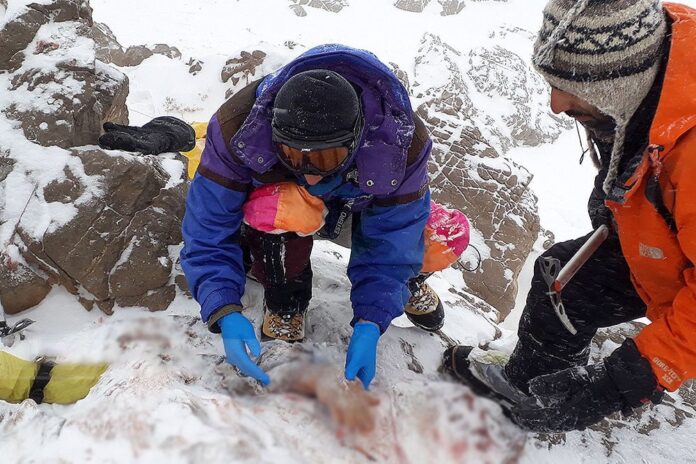
On February 18, the ATR plane, flying from capital Tehran to the southwestern city of Yasouj, crashed into near the top of Mount Pazanpir with a height of 4,300 meters.

After an intense search operation for the missing flight, choppers of the Islamic Revolution Guards Corps (IRGC) found the charred wreckage of the plane bearing the Aseman Airlines insignia on February 20.

Blizzard and strong winds in the area brought all rescue efforts to a halt for several days.

Speculations link the crash to adverse weather conditions, technical problems, or a culmination of such factors.

The doomed plane was a twin-engine turboprop used for short flight routes.

Iran Playing ‘Very Important’ Role in Iraq’s Economy: Minister

Iraqi Minister of Electricity Qasim Al Fahdawi

Al-Fahdawi made the remarks in a Tuesday meeting with Iran’s Minister of Industry, Mine and Trade Mohammad Shariatmadari in Baghdad.

During the meeting, the two sides emphasized the importance of boosting ties between the two countries, especially in the field of energy.

According to a Farsi report by IRIB News Agency, the two ministers also called for the removal of barriers in the way of energy investment.

Shariatmadari, who has traveled to Iraq to activate trade agreements, also exchanged views with Iraqi Minister of Health Adila Hamoud later in the day.

At this meeting, the two sides underlined the significance of establishing bilateral relations in the field of medicine and pharmaceuticals.

The Iraqi Minister of Health also hailed the role of the Islamic Republic in providing medicines and pharmaceuticals to Iraqis.

Shariatmadari arrived in Baghdad on Monday upon the official invitation of Iraqi Minister of Planning Salman Al-Jumaili. His visit comes as part of the regular cooperation between the two countries in various fields, especially the commercial and industrial ones.

According to Iraqi minister of planning, Shariatmadari’s visit is aimed at implementing the agreements reached before, and also discussing opportunities to increase the trade volume between the two neighbouring countries.

The volume of annual trade between Iraq and Iran is nearly $13 billion. Iranian officials in Baghdad said a couple of days ago that the Islamic Republic has exported 12 million tonnes of non-oil goods worth $5.5 billion in the past eleven months to Iraq, stressing that the amount makes up 18 percent of Iran’s total exports to foreign destinations.

Iran Playing ‘Very Important’ Role in Iraq’s Economy: Minister

French FM’s Talks in Tehran Make Headlines on March 6

A Look at Iranian Newspaper Front Pages on November 18

The top story in all papers today was the visit of French Foreign Minister Jean-Yves Le Drian to Tehran and his meetings with Iranian President Hassan Rouhani, Foreign Minister Mohammad Javad Zarif, and the Secretary of Iran’s Supreme National Security Council Ali Shamkhani.

The majority of headlines praised the decisive response given by the government to the French top diplomat. The harsh criticisms raised by Shamkhani, and the comments made by Rouhani about the dire consequences of the breakup of the Iran nuclear deal received particular attention.

Also a top story was an exhibition of Louve Museum’s items in Tehran, which was opened by Le Drian on Monday afternoon.

The above issues, as well as many more, are highlighted in the following headlines and top stories:


19 Dey:

  • Amano: Failure of JCPOA Great Loss for Verification, Multilateralism
  • Mohsen Hashemi Rafsanjani: Domestic Production Only Way to Resolve Iran Problems
  • Rouhani: Breakup of Iran Nuclear Deal to Be Matter of Regret for All Sides

French FM’s Talks in Tehran Make Headlines on March 6


Abrar:

  • Macron Calls for Iran’s Pressure on Syrian Government
  • White House Raising Accusations against Iran, Russia on Syria Crisis
  • AEOI Spokesman: We Can Return to 20% Enrichment within 48 Hours
  • ISIS News Agency’s Chief Arrested in Iraq

French FM’s Talks in Tehran Make Headlines on March 6


Afkar:

  • Iran’s Top Security Official: EU’s Policy of Giving Concessions to US Wrong
  • Egypt to Give Away Part of Sinai Lands to Saudi Arabia

French FM’s Talks in Tehran Make Headlines on March 6


Aftab-e Yazd:

  • Aref: Government’s Ties with Its Supporters Not Strong
  • Need for Diplomatic Vigilance
  • Impacts of French FM’s Visit to Tehran to Become Clear Soon

French FM’s Talks in Tehran Make Headlines on March 6


Arman-e Emrooz:

  • Iranian VP Mounesan Hosts Louvre in Tehran
  • 56 Relics from World Civilisations Transferred from Paris to Tehran
  • Waiting for a Change in Cabinet’s Economic Team

French FM’s Talks in Tehran Make Headlines on March 6


Asrar

  • Culture Minister: No Development, Progress Sustains without Culture
  • Oil Minister Vows to Try to End Gender Discrimination

French FM’s Talks in Tehran Make Headlines on March 6


Ebtekar:

  • Threat in Paris, Negotiation in Tehran
  • French FM Finally Visits Iran after Months of Delay

French FM’s Talks in Tehran Make Headlines on March 6


Etemad:

  • Meeting Former President: 70 MPs Hold Talks with Khatami in 3-Hour Meeting
  • Zarif, Rouhani, Shamkhani Warn France: Test of Paris’ Independence

French FM’s Talks in Tehran Make Headlines on March 6


Ettela’at:

  • Russia Unveils Nuclear Engines for Unlimited Missiles
  • IAEA DG: We Have Access to All Iranian Sites

 French FM’s Talks in Tehran Make Headlines on March 6


Iran:

  • President’s Chief of Staff: Rouhani’s Remarks Targeted Political Opponents, Not Fair Critics
  • MP Close to Parliament Speaker: Larijani Still Has No Plan for Presidency
  • Cairo, First Leg of Bin Salman’s Trump

French FM’s Talks in Tehran Make Headlines on March 6


Javan:

  • Tehran’s Response to Paris’ Trump-Style Illusion
  • French FM Faces Zarif’s Decisive Remarks, Shamkhani’s Military Uniform
  • Health Minister’s Late Confession
  • I Wish Social Welfare Would be Next Government’s Main Concern

French FM’s Talks in Tehran Make Headlines on March 6


Jomhouri Eslami:

  • Health Ministry: $100m Withdrawn from National Development Fund for Two New Vaccines
  • French FM: Paris Opposed to US Stanecs on Iran Nuclear Deal
  • Foregin Policy: Riyadh after Producing Nuclear Weapons

French FM’s Talks in Tehran Make Headlines on March 6


Kayhan:

  • A Report on Mission of Trump’s Dealbreaker in Tehran
  • Holding Talks with Violaters of Iran Nuclear Deal: Prudence or Passivity?
  • Rouhani’s Representatives Fail to Convince MPs Not to Summon Him
  • Assad: US-led Coalition Serves as ISIS Air Force
  • Labour Minister: Workers’ Purchasing Power Decreased
  • 2,100 Saplings Planted in Memory of Defenders of Holy Shrines

French FM’s Talks in Tehran Make Headlines on March 6


Khorasan:

  • Zarif Threatens to Stop Dialogue with Europe
  • Two Sides of Coin of Cloud Seeding
  • Cloud Seeding to Increase Percipitation by 15%

French FM’s Talks in Tehran Make Headlines on March 6


Rah-e Mardom:

  • MP: Airlines Not Allowed to Sell Tickets in High Prices

French FM’s Talks in Tehran Make Headlines on March 6


Resalat:

  • Shamkhani: Europe Passive towards US
  • Ayatollah Nouri Hamadani: Negotiation over Defence, Missile Issues Meaningless

French FM’s Talks in Tehran Make Headlines on March 6


Rooyesh-e Mellat:

  • Iran: Israel’s Policy Based on Damaging Relations among Muslim States
  • Interior Minister: 11-12 Million Dollars Worth of Contraband Goods Imported

French FM’s Talks in Tehran Make Headlines on March 6


Sayeh:

  • Zarif to Le Drian: Europe Must Play More Constructive Role in Maintaining Iran Deal

French FM’s Talks in Tehran Make Headlines on March 6


Shargh:

  • Iranian Responses to French Concerns
  • Le Drian Meets with Rouhani, Zarif, Shamkhani

French FM’s Talks in Tehran Make Headlines on March 6


Vatan-e Emrooz:

  • Iranian Admiral Blames Le Drian
  • Shamkhani Explicitly Criticizes French FM over Paris Policies on Iran
  • Europeans Respectfully Say No to EU: Rightists in Italy Win Parliamentary Votes
  • Belusconi to Rise to Power Once Again

French FM’s Talks in Tehran Make Headlines on March 6