Thursday, December 25, 2025
Home Blog Page 3677

UK, US Support for Saudis Threat to Stability of Entire Mideast: Iran

In a statement on Thursday, Qassemi condemned London’s “irresponsible” move to echo Riyadh’s anti-Iran allegations.

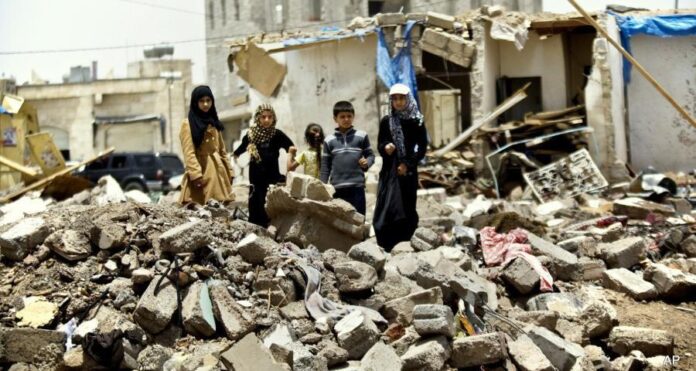
“It is ironic that British officials take such stances and make such statements against Iran in meetings with the officials of a country like Saudi Arabia, which has invaded Yemen, caused a humanitarian disaster there, and committed war crimes in the country,” he noted.

“For years, Saudi Arabia has been the main source, promoter, and sponsor of extremism, terrorism, and warmongering in the Middle East and the world,” he went on to say.

Qassemi noted that the political support and the arms provided by the UK and some other countries like the US for Saudi Arabia are threats against the security, peace, and stability of the entire region.

“Such moves by the UK (echoing Saudi Arabia’s allegations) will make the European country’s responsibility for the creation, exacerbation, and continuation of crises in Western Asia heavier, and make it more difficult, costly, and time-consuming to achieve peace and [ensure] cooperation among regional states,” Qassemi said.

“All countries in the world, including the UK, and the international community in general, are expected to put Riyadh under pressure and hold it accountable to stop its war and bloodshed in Yemen and end the export of extremist and terrorist ideologies,” he noted, adding that they should not trade global peace and security for their short-term economic gains.

Qassemi’s comments came after Saudi Foreign Minister Adel al-Jubeir said his country agreed with Britain on the need to deter Iran and stop its “support for terrorism.”

British Foreign Secretary Boris Johnson, for his part, claimed that the Islamic Republic was destabilizing the region and playing a destructive and dangerous role in Yemen.

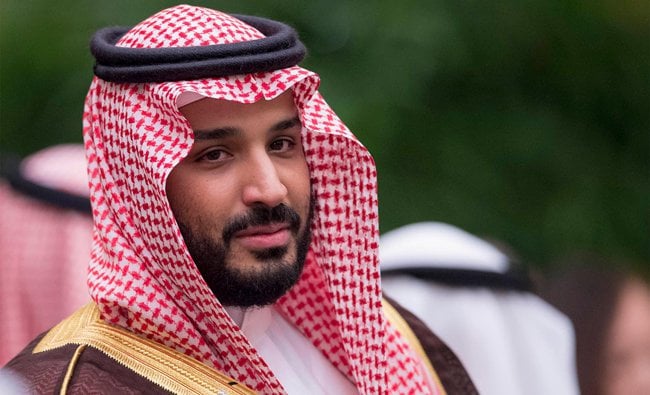
Johnson and Al-Jubeir made the comments during a joint press conference in London on Wednesday, on the sidelines of Saudi Crown Prince Mohammed bin Salman’s visit.

The visit has been strongly condemned by thousands of protesters in various parts of the UK, who held protest rallies to slam the Arab country’s war crimes in Yemen.

Iran’s Regional Presence None of US, Europe’s Business: Leader

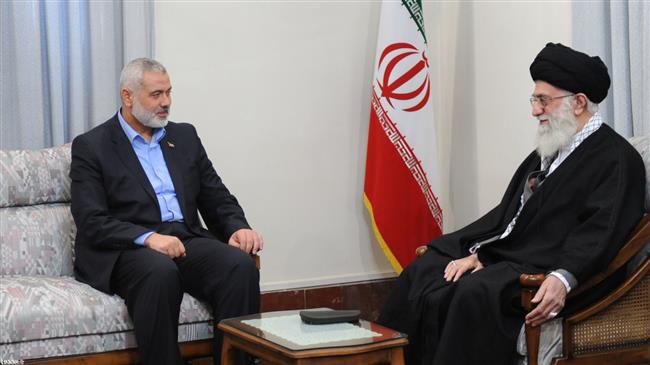
Ayatollah Seyyed Ali Khamenei

Ayatollah Seyyed Ali Khamenei said Tehran will only sit down for talks with regional governments regarding its presence in the region.

“While the United States has an evil and seditious presence everywhere, it keeps creating uncertainty over Iran’s presence in the [Middle East] region. Do we have to get permission from the US for our presence in our own region?” the Leader said in a Thursday gathering in Tehran.

“Should we hold talks with the regional governments or with you (the US) over our presence in the region?” Ayatollah Khamenei asked rhetorically.

“Whenever we want to be present in the US, then we’ll hold talks with you!”

Ayatollah Khamenei also responded to European officials expressing willingness to negotiate with Iran over its presence in the region, and stressed the same point he emphasized regarding the US.

“This issue is none of your business. Is it our region or yours? What are you doing in our region? We make arrangements with the nations in the region, we have done so, we have moved forward and we will keep moving forward,” he said.

Iran, Turkey Vow to Do Their Best to Save Syrian Lives in Eastern Ghouta

“All of us should make efforts to prevent a humanitarian catastrophe in Eastern Ghouta,” Rouhani told Erdogan on the phone on Wednesday afternoon.

“Tehran and Ankara have a heavy duty to save the people of Syria, especially those in Eastern Ghouta,” he added.

The Iranian president further called on Turkey to use its influence to prevent terrorists’ mortar attacks on Damascus from Eastern Ghouta and help to secure a safe exit route for civilians to leave the besieged district.

Erdogan, for his part, described the situation in Eastern Ghouta as a tragedy and said Iran and Turkey as two Muslim countries in the region should try their hardest to end the tragedy.

In the past few weeks, Eastern Ghouta, which is home to some 400,000 people near Damascus, has witnessed renewed violence with terrorists mounting repeated mortar attacks on the Syrian capital in the face of an imminent rout.

“France Can Restore Its Regional Role by Cooperating with Iran”

Assefi has called Iran and France two leading countries at the international arena, stressing that “France can draw on Iran’s support to restore its regional role if it contributes its share of regional responsibility.”

Speaking in a Farsi interview with Mehr News Agency, he underlined that France has already been sidelined in the region because of the US policies; however, it can restore its leading role through cooperation with Iran.

The former ambassador noted that the Europeans are interested in preserving the JCPOA to reap its economic fruits.

He referred to the coincidence of the visit of French Foreign Minister Jean-Yves Le Drian to Tehran and the visit of the Israeli prime minister to the US and said the visit was highly important for France because they need to listen to Iran’s stances towards regional issues.

“The more the European states keep their distance from the US, the more they can get closer to Iran. I think diplomatic contacts between Iran and France should be enhanced further,” Assefi went on to say.

In response to a question about the economic aspects of French foreign minister’s recent visit to Iran, Assefi said the expansion of ties between Tehran and Paris depends on the French side.

“Iran is completely ready to hold talks with other countries. One important point about the visit of French foreign minister was Iran’s strong resistance to the pressures from the outside before Le Drian’s visit. The resistance was made within the general policy of the Islamic establishment,” he added.

Assefi underlined that France always claims that it is an independent country which never follows the footsteps of the US and other powers.

“If France and other European countries remain committed to the JCPOA and make other sides stick to their commitments, they can provide a better environment for further cooperation between Iran and the Europe and in particular, France.” he added.

He further accused the French foreign minister of adopting double standard policies on its remarks about the Islamic Republic of Iran.

He said before his visit to Iran, Le Drian made contradictory remarks about Iran, but he changed his tone when talking to Iranian officials in Tehran.

“On the one hand Le Drian adopted a negative stance toward Iran but on the other hand, just hours before his visit to Iran, his ministry issued a statement and praised Iran’s  regional role,” he added.

He said during Le Drian’s talks in Iran, the two sides exchanged views on significant issues and the Iranian officials reminded him of some of his country’s crucial tasks in fight against terror as well as its support for terrorist Mujahedin-e Khalq Organization (MKO).

The former ambassador also called on Iranian officials to adopt a firm stance during their talks with French officials and said it is important that the French government comes to the conclusion that Iranian officials have a unified and certain stance.

French foreign minister arrived in Tehran on Monday for a two-day visit to hold talks with high-ranking Iranian officials on a number of bilateral and regional issues.

Iranian MP Calls for Removal of Ban on Playing against Israeli Athletes

Mostafa Kavakebian, a reformist member of the Iranian Parliament’s National Security and Foreign Policy Commission, made the remarks in reaction to the ongoing dispute in the Iranian Wrestling Federation over forcing athletes to forfeit matches against Israeli opponents. The dispute has been raging on following the abrupt resignation of the federation head Rasoul Khadem in protest against the policy.

“I’m in partial agreement with Khadem’s statements saying that we should resolve the issue once and for all,” he was quoted as saying in a Farsi interview with the Asr-e Iran website.

Iran does not recognize Israel and forbids its athletes from competing against Israelis at international sports events.

Kavakebian, however, says no sportsman in the world retreats from competing against their rivals from any country at international matches because such behaviours violate the international law.

“We should first change the attitudes of our people on playing against the individuals or teams affiliated with the Zionist regime and have them come to this realization that playing against them does not necessarily mean the recognition of Israel. Then we can simply play against them on the one hand and say ‘down with Israel’ on the other hand,” he noted.

The Iranian lawmaker said today even the Palestinian sportsmen play against their Israeli opponents and added, “Unfortunately we have made playing against Israeli rivals a taboo in our society and wrongly maintained that playing against them means recognition of the Israeli regime.”

He then referred to the problems created so far for Iran’s sports due to the policy and said the government should pay tribute to the Iranian sportsmen who sacrifice their professional career to observe the policy.

“But instead of this, we should provide an appropriate ground for our sportsmen to bring honour for Iranian nation,” the lawmaker added.

West’s Gender Equality Just A Claim: Iran’s Leader

Addressing a Thursday meeting on the eve of Women’s Day, the Leader said, “Women in the West are the manifestation of consumption, makeup, and coquetry for men, and are a tool for men’s sexual excitement.”

“The rest of the things that they (Western officials) say are just in word, and is just a façade; there is something else behind that,” the Leader said.

Ayatollah Khamenei then said many Western women officials have come forward and announced that they have been harassed.

“You have heard that a considerable number of Western women authorities announced one after the other just a few months ago that they, when young, had been abused,” he said.

Ayatollah Khamenei said the hijab in Islam is a way to protect women against deviation, adding the hijab is protection, not limitation.

The Leader then praised Iranian women for wearing the hijab.

“Today, the flag of independence, identity and culture of women is in the hands of Iranian women, and Iranian women are declaring their independence, identity and culture and exporting them to the world by wearing the hijab,” the Leader said.

He said women can play an active and influential role in social arenas, adding, “Today, our women (Iranian women) are like that.”

Among the features of Iranian women today, said Ayatollah Khamenei, are the hijab, piety and that they are not objects for men’s pleasure.

Iran Vows to Stand by Iraqi Nation in Reconstruction Era

Es’haq Jahangiri said Iran is standing next to its Sunni and Shiite Iraqi brothers, and hopefully Iraq will be reconstructed as soon as possible.

He made the comments in a meeting with the ex-speaker of the Iraqi Parliament Ayad al-Samarrai, who is currently the Secretary-General of the Iraqi Islamic Party, said a Farsi report by IRIB News Agency.

“I hope that with more unity among the Sunnis, Shias, and Kurds, a great movement will take shape in the reconstruction of Iraq, and this great nation can play its historic role in the region.”

Referring to the capacities of Iran for the development of Iraq, Jahangiri said “The Islamic Republic of Iran, in the difficult days and in the wake of victories has been next to the Iraqi government and people, said.”

“The victories of the Iraqi people against ISIS and maintaining of the country’s integrity is due to existence of great Iraqi figures, and these figures can help in the development and reconstruction of the country in the new era,” added Jahangiri.

Expressing the readiness of the Iranian private sector to invest in Iraq, he said “Indeed, the private sector’s participation will accelerate the reconstruction of this country.”

For his part, Ayad al-Samarrai appreciated the positive views of the Islamic Republic of Iran in recent years regarding the rebuilding of Iraq saying that the country has faced two major challenges: Expelling the US occupation forces and eradicating the terrorists; but the most important mission today is to attract investments to reconstruct Iraq.

“We are very pleased with Iran’s views on investing in Iraq, and we do emphasize that there are good investment opportunities in Sunni regions and we welcome the investment of Iranians in these regions.”

Earlier, Jahangiri said the Islamic Republic is prepared to provide Iraq with a line of credit (LOC) worth up to three billion dollars to pave the ground for the Iranian private sector’s active participation in the reconstruction of the Arab country.

He made the comments in his Wednesday meeting with Iraqi Prime Minister Haider al-Abadi in Baghdad.

Jahangiri stressed that Tehran and Baghdad must work to remove the barriers in mutual banking relations, which is the main obstacle in the way of closer trade ties between the two countries.

The Iranian first VP, who was in the Iraqi capital Baghdad to join an Iranian business delegation led by Minister of Industries, Mining and Trade Mohammad Shariatmadari, hailed Tehran-Baghdad relations as “strategic,” underlining that the commonalities between the two countries can pave the way for the promotion of bilateral economic ties.

Heading a high-ranking politico-economic delegation for a three-day visit to Iraq, Jahangiri said on Wednesday that the two states need a “comprehensive roadmap” for their economic cooperation.

He also called for the promotion of collaborations with Iraq in other areas, including pharmaceuticals, energy, customs, and the expansion of railway routes.

Abadi, for his part, said Iran and Iraq have strong historical ties and the two sides are seeking to consolidate them in economic, political, cultural, commercial and other fields.

The Iraqi prime minister also expressed gratitude for the Islamic Republic’s role in the country’s reconstruction and underlined that the Iranian private sector has made substantial investments in the process.

Jahangiri is also scheduled to meet Iraq’s President Fuad Masum and the parliament Speaker Salim al-Jabouri.

During his three-day visit, Jahangiri is to visit the holy shrines of Imam Hossein (AS) in Karbala, some 110 km southwest of Baghdad, and Imam Ali (AS) in Najaf, 160 km south of the capital.

The ties between Iran and Iraq are very strong as the Iraqi armed forces, backed by Iranian military advisors, fully liberated their homeland from ISIS terrorists last December.

Tackling Environmental Issues Needs Global Cooperation: Zarif

Speaking on the sidelines of a Thursday ceremony in Tehran to plant saplings as a token of peace and friendship, Zarif called the environmental issues a great challenge facing the world and said all countries in the world must join hands to tackle the problem.

“Today the main challenge of the world is the environmental issue. There are some people who would like to close their eyes on the fact that the environment is the major bond connecting the whole world together. But, in fact, all countries in the world are prone to a dire threat because of the dangers that the environment is facing,” he said.

Zarif called on all countries to establish cooperation in the environment field and added “no country in the world, even if equipped with all the required tools, can cope with the environmental issue single-handedly.”

The Iranian top diplomat also said all countries in the world are in the same boat adding “we either reach the shore or drown together.”

The Iranian foreign minister then underlined that today’s world needs to sense the atmosphere of Iranian New Year (Nowruz).

“Our today’s world should not be home to fundamental differences, violence and spread of violence and differences. Like Nowruz, the world needs to return to the nature, beauty and activity. Our world should be the world of planting saplings.”

He referred to the ongoing developments across the globe and added the world is home to some interesting developments.

“Today, each individual can play a key fundamental role in shaping the future. Once, it was widely believed that unipolar groups and countries could lead the world to peace or war at the international level and they needed to have a strong government. Meanwhile, it was imagined that to send a message to the world, we should have a media emperor; but today, following the latest progress in the media industry, we are witnessing that an individual can send his or her message to the world through cyberspace. The era of media monopoly has gone,” he said.

He pointed to the saplings planted by the diplomatic delegations attending the ceremony and said “all these saplings are highly significant for preserving the environment.”

“It is up to all of us to protect the environment and no one can claim that the individual have no share in this regard,” he said.

The Iranian foreign minister finally recited a poem by the legendary Persian Poet Hafez saying “through our commonalities we can establish a better world for our children.”

Tackling Environmental Issues Needs Global Cooperation: Zarif
Iranian Foreign Minister Mohammad Javad Zarif planting a sapling in Tehran on March 8, 2018 / Photo retrieved from ISNA

High School Girls Free Imprisoned Iranian Mother

Adeleh, a mother of two children who heads the households herself, was freed ahead of the new Iranian year (starting March 21) after enough funds were collected to settle her debts.

The woman, who bad been imprisoned over financial charges, spent four months in prison before she was released, Iran’s Blood Money Organization said, according to a Farsi report by Mizan News Agency on Wednesday.

The organization, founded in 1990, aims to help release prisoners with minor financial dues who have served their time but remain in jail because they cannot afford to pay fines.

It has so far helped the release of over 112,000 prisoners who had committed involuntary crimes, particularly in accidental death cases involving blood money.

Just last year, money donated by Iranian philanthropists was enough to free about 10,000 prisoners.

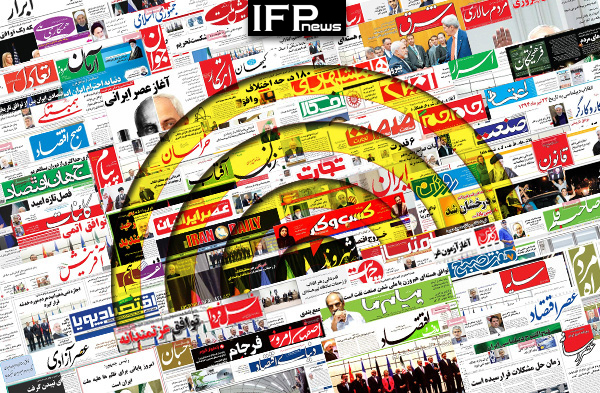
A Look at Iranian Newspaper Front Pages on March 8

A Look at Iranian Newspaper Front Pages on November 18

Almost all papers today covered the comments made by Iranian President Hassan Rouhani about Iran’s stabilizing role in the Middle East, and that the country poses no threat to other countries.

The resignation of US President Donald Trump’s economic advisor, Gary Cohn, was also a top story, particularly in economic newspapers which covered its impacts on the global markets.

The consequences of French Foreign Minister Jean-Yves Le Drian’s talks with Iranian officials also continued to receive coverage in a number of papers.

The above issues, as well as many more, are highlighted in the following headlines and top stories:


Abrar:

  • Rouhani: No One Should Be Worried about Iran’s Missiles
  • Iran-Russia Consultation over Purchase of Sukhoi-100 Planes
  • Netanyahu: Either Revise or Annul Iran Nuclear Deal

A Look at Iranian Newspaper Front Pages on March 8


Abrar-e Eqtesadi:

  • SAIPA: Iran to Turn into Biggest Non-French Hub of Citroen Production

A Look at Iranian Newspaper Front Pages on March 8


Aftab-e Yazd:

  • Triangle of Impeachment
  • Parliament Increasing Its Pressure on Gov’t
  • After Ministers of Roads, Labour, Now Agriculture Minister May Be Impeached
  • What Goals Are in Mind of Ambitious Crown Prince in US, UK Visits?

A Look at Iranian Newspaper Front Pages on March 8


Donya-ye Eqtesad:

  • Cohn Resigns as Trump’s Economic Advisor in Protest at Policies

A Look at Iranian Newspaper Front Pages on March 8


Ebtekar:

  • Queen’s Red Carpet for Prince: A Review of Bin Salman’s Controversial UK Visit
  • Rouhani: Patriarchy, Violence against Women Not Tolerated

A Look at Iranian Newspaper Front Pages on March 8


Etemad:

  • Guardian Council Gives Green-light to MPs to Revise Law of Elections
  • Turning to Euro: What Do Long Lines in Front of Exchange Facilities Mean?

A Look at Iranian Newspaper Front Pages on March 8


Ettela’at:

  • Rouhani: All Bodies, Officials Must Be Accountable to People
  • Putin: Sanctions against Iran, Russia, N. Korea Show US Incompetence
  • IRGC Aerospace Commander: We’re among Top 5 in World in Missiles, Drones

A Look at Iranian Newspaper Front Pages on March 8


Hamshahri:

  • Rouhani: We’ll Join Hands to Resolve Iran’s Problems

A Look at Iranian Newspaper Front Pages on March 8


Hemayat:

  • Tehran Prosecutor: It’s Enemy’s Plot to Politicize Issue of Hijab

A Look at Iranian Newspaper Front Pages on March 8


Iran:

  • Iranian, Turkish Presidents Agree to Use Lira, Rial in Bilateral Trade
  • Iran First VP: Iran to Stand by Iraq in Reconstruction

A Look at Iranian Newspaper Front Pages on March 8


Javan:

  • US Responds to N. Korea’s Good Faith with Sanctions
  • Pyongyang Asked for Guarantee, White House Toughened Sanctions

A Look at Iranian Newspaper Front Pages on March 8


Jomhouri Eslami:

  • Rouhani: Everyone Has Right to Criticize, but Defamation Doesn’t Mean Criticism
  • Pakistan FM: Cooperation with US Was Wrong
  • US: Syria Dissidents No Longer Capable of Overthrowing Assad’s Gov’t
  • Massive Protests in London against Saudi Crown Prince, British Gov’t

A Look at Iranian Newspaper Front Pages on March 8


Kayhan:

  • Pentagon Admits: US Pays Monthly Salaries to Terrorists in Syria
  • Despite French Government’s Hostile Moves against Iran;
  • Bloomberg: Total to Gain Great Profit from Iran

A Look at Iranian Newspaper Front Pages on March 8


Kelid:

  • Dollar Business, Second Job of Some Employees

A Look at Iranian Newspaper Front Pages on March 8


Khorasan:

  • Parliament to Impeach More and More Ministers

A Look at Iranian Newspaper Front Pages on March 8


Roozan:

  • Issue of Compulsory Hijab to Be Discussed in Parliament after Vacation: MP
  • Women’s Demands in Cyberspace
  • Arab World in Whirlpool of Iranophobia
  • A Report on New Wave of Arab Countries’ Opposition to Iran

A Look at Iranian Newspaper Front Pages on March 8


Shahrvand:

  • Rouhani: We’re on Same Boat, If You Wreck Part of It, It’ll Sink Entirely

A Look at Iranian Newspaper Front Pages on March 8


Siasat-e Rooz:

  • Outcome of Le Drian’s Visit Was “Almost Nothing” for Tehran

A Look at Iranian Newspaper Front Pages on March 8


SMT:

  • Rouhani: Iran, as a Stabilizing Country, Is No Threat to Anyone

A Look at Iranian Newspaper Front Pages on March 8


Tejarat:

  • Increased Concerns about Business War in Stock Exchange Market
  • Global Markets Fall after Cohn’s Resignation

A Look at Iranian Newspaper Front Pages on March 8


Vatan-e Emrooz:

  • Top Clerics Slam French Officials’ Impudence
  • Iran’s Former Negotiator: US Repeatedly Violating JCPOA
  • Putin Completes His Nuclear Threatening Remarks against West

A Look at Iranian Newspaper Front Pages on March 8