Thursday, December 25, 2025
Home Blog Page 3646

Iranian Zurkhaneh Sports Growing Popular in South Korea

This sport began to be practiced in South Korea when the Asian Confederation of Zurkhaneh Sports established its office in Busan, the second most populous city of the country in spring 2016.
At present, next to Iran, 24 other countries, including Lebanon, Thailand, India, Indonesia, Nepal, South Korea, Sri Lanka, China Taipei, Pakistan, Bangladesh, Syria, Tajikistan, Japan, Mongolia, Afghanistan, Iraq, Uzbekistan, China, Turkmenistan, Hong Kong, Kyrgyzstan, Malaysia, the Philippines and Singapore are members of the Asian Confederation of Zurkhaneh Sports, which shows the sport has the capacity to be included in the Asian Games.

As a turning point, Zurkhaneh sports were included in the fourth round of Islamic Solidarity Games in Baku in May 2017, a Farsi report by IRNA said.
San Sun Pyo Ali, Hong, Secretary-General of the Asian Confederation of Zurkhaneh Sports, said during his last year’s visit to Tehran that “South Korea is very pleased to work with the International Federation to develop this sport.”

Describing the sport as a very exciting and attractive one, he added that “if the trainings begin at a young age, it will have positive results. Therefore, Zurkhaneh Sports are practiced at schools and student teams have been formed across the country.”

“We are going to continue this program in other Asian countries and nations as well.”

After the establishment of the Zurkhaneh and Pahlavani Wrestling Confederation in South Korea, the country’s National Confederation also began its work in recent days.

One of the main objectives of the South Korean Confederation is to become the hub of training for the Zurkhaneh Sports and Pahlavani Wrestling in Asia.Iranian Zurkhaneh Sports Growing Popular in South Korea

DM Warns Adversaries against Testing Iran’s Power

Iran’s DM Vows Firm Response to Enemy’s Moves

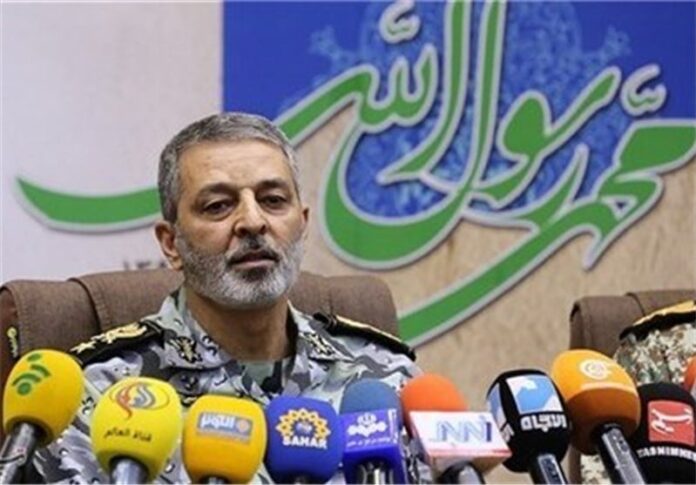
Describing Tehran as the “strong power of the region” in terms of defensive might, the defence chief said Iran is well capable of dealing with plots hatched by foreign powers.

Hatami said the adversaries are trying various ways to damage the Islamic Republic, according to a Persian-language report by Fars News Agency on Tuesday.

For example, the defence chief said, over 500 US experts are currently working to create plans to make obstacles to economic development of Iran.

Hatami’s comments came after Leader of the Islamic Revolution Ayatollah Seyyed Ali Khamenei said on Sunday that enemies of the Islamic establishment are in fear of the rising power of Iran, but are not able to do anything to curb it.

In a meeting with a group of senior commanders of the Iranian Armed Forces, the Leader mentioned power, security, dignity and having adequate capability in time of need as the main goals of the Iranian Armed Forces. Ayatollah Khamenei noted that all the activities conducted by those forces must be aimed at achieving their predetermined goals.

Iran FM Meets Brazilian President before Departing for Uruguay

Speaking in the Tuesday meeting, Zarif pointed to the current level of bilateral trade between the two states and called for efforts to deepen economic relations and achieve balance in bilateral trade.

The foreign minister said the two countries could engage in cooperation in energy, transit, agriculture and high-tech fields, adding that considering the progress of the two countries, they could be complementary to each other.

Zarif called for the removal of obstacles to closer banking relations, saying the two sides’ banks needed to establish corresponding relations.

Among other issues raised by Zarif in the meeting were using national currencies in bilateral trade, accelerating the establishment of a Brazilian credit line for Iran, engaging in oil and gas cooperation, and implementing joint projects in new fields such as nanotechnology, biotechnology and aerospace.

The foreign minister said broadening economic cooperation will be necessary to deepen relations between the two countries, adding Tehran welcomes Brasilia’s investment in Iran’s oil, gas and transit sectors.

Zarif thanked the Brazilian government for extending support to Tehran’s right to peaceful nuclear energy, calling for continued political dialogue and exchange of views between the two countries.

Temer, for his part, said Brazil is eager to expand ties with Iran and develop cooperation with the country in high-tech fields, calling for the exchange of delegations and closer contacts between the two countries.

The president said Brazil has no problem with the expansion of Iran’s peaceful nuclear activities and it supports them.

The Brazilian president said there is possibility for closer cooperation in oil and gas fields, adding that exchanging political and economic delegations between the two countries will help deepen relations between them.

After the meeting, Zarif left the Brazilian capital for Uruguay, the third leg of his four-nation tour, which earlier took him to Senegal, and will later end in Namibia.

Israeli Attack on Syria Not to Remain Unanswered: Iran Leader’s Aide

“Definitely, this crime will not remain without a response,” Ali Akbar Velayati, a senior adviser to Ayatollah Seyyed Ali Khamenei on international affairs, told IRNA and IRIB upon his arrival in the Syrian capital of Damascus on Tuesday.

He added that Iran would strongly defend Syria’s territorial integrity and national sovereignty.

Two Israeli F-15 warplanes carried out strikes from Lebanese air space on T-4 air base in Homs on Sunday that killed and wounded several people. Syrian air defense systems shot down five out of eight missiles fired.

Syria on Monday warned about the “dangerous repercussions” of Israeli assaults on its territories, stressing that the recent attack on Homs would not have been possible without massive US support.

In a letter to the United Nations secretary general and the UNSC president, Syrian Foreign Ministry said in the framework of its policies based on practicing state terror and providing constant support for armed terrorist groups as well as violating UNSC resolutions, the authorities of the Israeli regime renewed acts of aggression against Syrian territories, with Israeli F15 jets launching missiles from the Lebanese airspace on T-4 airport in Homs province.

Iran also on Monday strongly condemned the Israeli regime’s air strike, saying it was a blatant violation of international law which would strengthen terrorists.

“The Israeli regime’s aggression against Syria is a breach of this country’s national sovereignty and territorial integrity and runs counter to all international regulations and principles,” Iranian Foreign Ministry Spokesman Bahram Qassemi said.
Velayati, who is in Damascus to attend a conference on Palestine, said Iran would continue its support for the people and the government of Syria in the fight against their enemies, particularly the Israeli regime and its puppets in the Arab country.

He added that the “very important” achievements made by the Syrian army and its allies in the campaign against militants in the Eastern Ghouta have irked Syria’s enemies.

Such victories made the US and the Israeli regime hatch an “evil plot” and falsely accuse the Syrian government of conducting a chemical attack near the Syrian capital, Velayati said.
He added that like the past seven years following the outbreak of a foreign-backed crisis in Syria, enemies would not be able to obtain their vicious goals in the Arab country and across the Middle East in the future either.

Eastern Ghouta, which is home to nearly 400,000 people, fell to multiple militant groups in 2012, months after Syria plunged into crisis and has since served as a launch pad for fatal attacks against residents and infrastructure in Damascus.

Damascus, in a statement released late on Saturday, strongly rejected the allegation of using chemical munitions and said that the so-called Jaish al-Islam Takfiri terrorist group, which has dominant presence in Douma, was repeating the accusations “in order to accuse the Syrian Arab army, in a blatant attempt to hinder the Army’s advance.”

“The chemical fabrications, which did not serve the terrorists and their sponsors in Aleppo and Eastern Ghouta, will not serve them today either, as the Syrian state is determined to end terrorism in every square inch of Syrian territory,” read the statement.

An initial assessment by the United States has not determined whether a reported chemical attack in Douma was carried out by Syrian government forces, Reuters reports.

The assessment also suggested that a nerve agent was used in the suspected poison attack, but further evidence was needed to determine the type of agent, US government sources told the news agency.

Iran, Russia Discuss Trump’s Syria in Tehran

The talks were held in a meeting between Russian President Vladimir Putin’s Special Envoy for Syria Alexander Lavrentiev and Secretary of Iran’s Supreme National Security Council Ali Shamkhani during an unannounced visit to Tehran.

Washington’s threat to interfere in Syria militarily was also on the agenda of the marathon and off-the-record talks between the two authorities, a Farsi report by IRNA said.
Israel’s attack on Syria’s T-4 airbase which killed several Iranian military advisers in Syria as well as Tehran’s decisions on the incident was among the key topics of discussion.

News has circulated that Russian military forces in Syria are on high alert, and that the country has given Israel a warning. This suggests that tensions are growing between Washington and Moscow, and that players are ready to respond to any decision by US President Donald Trump regarding intervention in Syria.

Some media reports suggest that Russia has put its troops in Syria on full alert and deployed military vehicles as well as missile systems.

Reports also suggest that Russian warplanes flew at least four times over the American destroyer USS Donald Cook in the Mediterranean waters.

Iran, Brazil Sign MoUs to Expand Mutual Cooperation

In the Tuesday meeting, the two sides discussed different areas of mutual trade and economic cooperation, including energy, knowledge-based companies, agriculture and pharmaceuticals.

Also on the agenda of the talks was Tehran-Brasilia cooperation on exporting Iranian oil products to Brazil and exchanging technical teams to help Iran use Mercosur with the help of Brazil to establish organizational relations with that market.

During the meeting, Zarif also called for the creation of trade balance between the two countries through the presence of Iranian companies in Brazil. He also called for the removal of banking problems and the establishment of a banking channel to facilitate trade and economic transactions between the two nations.

The two sides also traded views on the latest developments regarding the Iran nuclear deal, regional issues, tourism as well as the establishment of shipping and air lanes.

San’ati Museum in Tehran Home to 6,000 Art Pieces

San’ati Museum in Tehran

San’ati Museum’s building has two floors; the first composed of a large hall with door opening to the south-eastern section of the museum. It is located near the Imam Khomeini Square, with two other doors: one in the building’s south-western section; and the other opening to Ferdowsi Street.

The opening doors as well as the windows of the building are decorated with horseshoes and the shafts are covered with special stucco.

Meanwhile, a number of stone plinths with a 1.5m height each have been erected around the building. The museum’s facet is covered and decorated with seven-coloured bricks.

The Museum is home to at least 6,000 pieces of paintings and stone, bronze and plaster sculptures by San’ati (born in 1916).

Here are ISNA’s photos of San’ati Museum:

FM Zarif Urges Removal of Banking Problems in Iran-Brazil Ties

Mohammad Javad Zarif made the comments on Tuesday during his official visit to the South American country along with his entourage.

Following you can find the full text of the Iranian foreign minister’s statements addressing a group of businesspeople and entrepreneurs from both countries:

In the Name of God, the Compassionate, the Merciful

Ladies and Gentlemen,

I am very pleased to be accompanied by a delegation of public and private sector economic actors from the Islamic Republic of Iran who work in the fields of banking, investment, automotive industry, pharmaceuticals and healthcare, electrical and water industries, agriculture and food industries, higher education, transportation, urban engineering, oil and petrochemicals, as well as major knowledge-based companies who have joined the businesspeople, and economic industrial actors of the Republic of Brazil at this meeting. Indeed, the holding of this conference and the participation of a number of economic actors from the two countries reflect the existence of a common political will to promote the presence, participation and greater role of the two countries’ private sectors to improve the economic and commercial relations of both sides.

Dear guests,

In Iran, we have been successful in the heavy industries sector including oil and gas refineries, cement and steel factories, mines, auto industry, and agriculture. In recent years, we have also been able to take good steps in the field of new technologies such as nanotechnology and the development of knowledge-based companies thanks to our educated and expertly-trained staff.

In the healthcare domain, the Islamic Republic has been able to achieve major success in manufacturing medical, hospital, and dentistry facilities besides production and export of recombined medications. Further development of these areas require foreign participation; therefore, we welcome the Brazilian companies to enter the Iranian market.

On behalf of myself and the Iranian colleagues here, I announce that Iran is ready to cooperate with the Brazilian companies in joint investments and implementation of projects using modern technologies.

There are also many opportunities for foreign companies in the field of construction and equipping of houses, rail, road and air transport, as well as the development of maritime ports. Given the presence of capable and experienced companies in Brazil, the country can work in these fields as well.

Respected audience,

In our view, Brazil is one of the great developing economies with many capacities. Brazil is an important supplier of food and is in possession of advanced industries such as airplanes, steel, oil and gas, ethanol, mining, and agriculture, and can be an important partner for the Islamic Republic of Iran in the Middle East. Iranian officials welcome the development of these capacities in bilateral relations as well as with the third parties.

Currently, the Islamic Republic of Iran, as Brazil’s first trade partner in the Middle East with a trade volume of $2.6b, is a good and reliable market for Brazilian companies. These companies can consolidate their presence in Iran’s market and also use Iran’s facilities to export to the 600-million-people market of Iran’s neighboring countries, including Central Asian states, the Caucasian countries, Iraq and Afghanistan.

Given the advantages of Iran for foreign investors at the current time, investment in Iran has a high relative advantage. These advantage include:

  • Low risk investment in Iran
  • Tax exemptions
  • High return of projects
  • State guarantee for foreign investment
  • Diversity of projects
  • New investment opportunities in infrastructural fields
  • The highest degree of investment guarantee in Iran which assures foreign companies to have a guaranteed investment
  • The geographical location of Iran as the intersection of the regional and international transport networks, and the bridge between East and West Asia, and the passage between Asia and Europe

Dear friends,

Increasing bilateral interactions requires the creation of an appropriate situation by the two governments with the participation of the private sector. The lack of banking relations between the two countries is one of the major obstacles in the development of mutual ties, and we expect Brazil’s government and the economic sectors to find a solution. Certainly, with regard to the capabilities of the two countries, the establishment of banking cooperation will contribute to the development of the ties. The use of local currencies in commercial transactions in the form of a currency swap and creation of a joint bank committee with the Bankers Association of the two countries is a good solution to deal with the problems and challenges in this regard.
We also welcome the impressive Brazilian government’s move to supply a $ 1.2 billion credit line for Iranian and Brazilian companies to implement projects, which is an important step in developing bilateral trade relations between the two countries. I hope the final technical negotiations over it will take place as soon as possible.
Increasing the activities of the private sector requires the attention of the two country’s political officials. Therefore, outlining a vision for collaborations, and setting a goal to increase the bilateral trade volume to an acceptable level in line with existing capacities in the near future should be on the agenda of both sides.

I am going to hold talks with the Brazilian authorities on ways to facilitate the presence and communication of Iranian and Brazilian businessmen, as well as paying particular attention to the economic cooperation between the two countries, especially in the above-mentioned areas in which the two countries have a comparative advantage.

I hope the businesspeople of the two countries will make most out of the opportunity provided by this conference and reach good agreements to promote cooperation.

Dear businesspeople and economic actors, I wish you good luck and I guarantee that all the capabilities of the Islamic Republic of Iran will be used to develop ties between the private and public sectors of the two countries.

Thanks for your attention

Iran-Turkey High Border Commission Convenes after 6 Years

The meeting was jointly presided over by Abbas Baqerpour, the Director General for International and Legal Affairs at the Iranian Foreign Ministry, and Burak Ozugergin, the Directorate General for Bilateral Political Affairs (Maritime-Aviation-Borders) at the Turkish Foreign Ministry.

It was also attended by representatives of a number of civilian and military organizations from both sides.

During the meeting, the participants exchanged views on bilateral border issues, the enforcement of border laws, relations between the two sides’ border guards, border gates affairs and water and environment issues along the borders.

They also explored ways to develop a comprehensive mechanism to effectively stop illegal border crossings, prevent human and drug trafficking across the border and fight against terrorist and criminal groups. They also agreed to expand their cooperation in the mentioned fields within the framework of border deals earlier signed between the two sides.

Following earlier talks and negotiations, they also agreed principally to update their border documents and treaties.

The meeting was held after a six-year halt and following relentless negotiations to establish close and friendly relations between Iran and Turkey in a positive environment and based on mutual understanding and cooperation. The meeting is expected to result in significant achievements in resolving border issues between Iran and Turkey.

Iran’s Great Skill in Countering Security Threats Globally Known: IRGC

Major General Mohammad Ali Jafari

General Jafari says adversaries hatched several plots against Iran last year, but they were all foiled.

“Thanks God and by virtue of endless endeavours within a revolutionary approach … we face no problems in this regard,” said the commander, while addressing a gathering of IRGC staff in Tehran on Tuesday.  

Pointing to riots in several Iranian cities in January, Jafari expressed satisfaction that Iran could stop them shortly, thanks to high political awareness among the Iranian people.  

“The enemies were seeking to exploit some economic complaints of the people [to create problems], but the nation showed vigilance and separated itself from rioters … and those who had economic complaints stood against adversaries,” Fars News Agency quoted Jafari as saying in a Farsi report.

Crowds of peaceful protestors took to the streets in several Iranian cities as of Dec. 28 to show disgruntlement at economic problems, including high prices, unemployment and corruption.

But the street gatherings later turned political and even violent, leaving 21 people dead.

Some protesters vandalized public property and launched attacks on police stations and government buildings during the wave of sporadic violence, prompting intervention by police forces.

Some officials suggested at the time the violent clashes were instigated by small groups of rioters led by foreign intelligence agencies.

Jafari said the Islamic Revolution has made valuable achievements in various fields so far and it could enter a new phase of development in the fifth decade of its existence.

The IRGC commander said despite the extensive propaganda campaign of adversaries, the young generation of believers in the Islamic revolution has stronger attachment to the revolution than the previous generation, describing it as a “miracle”.