Friday, December 26, 2025
Home Blog Page 3643

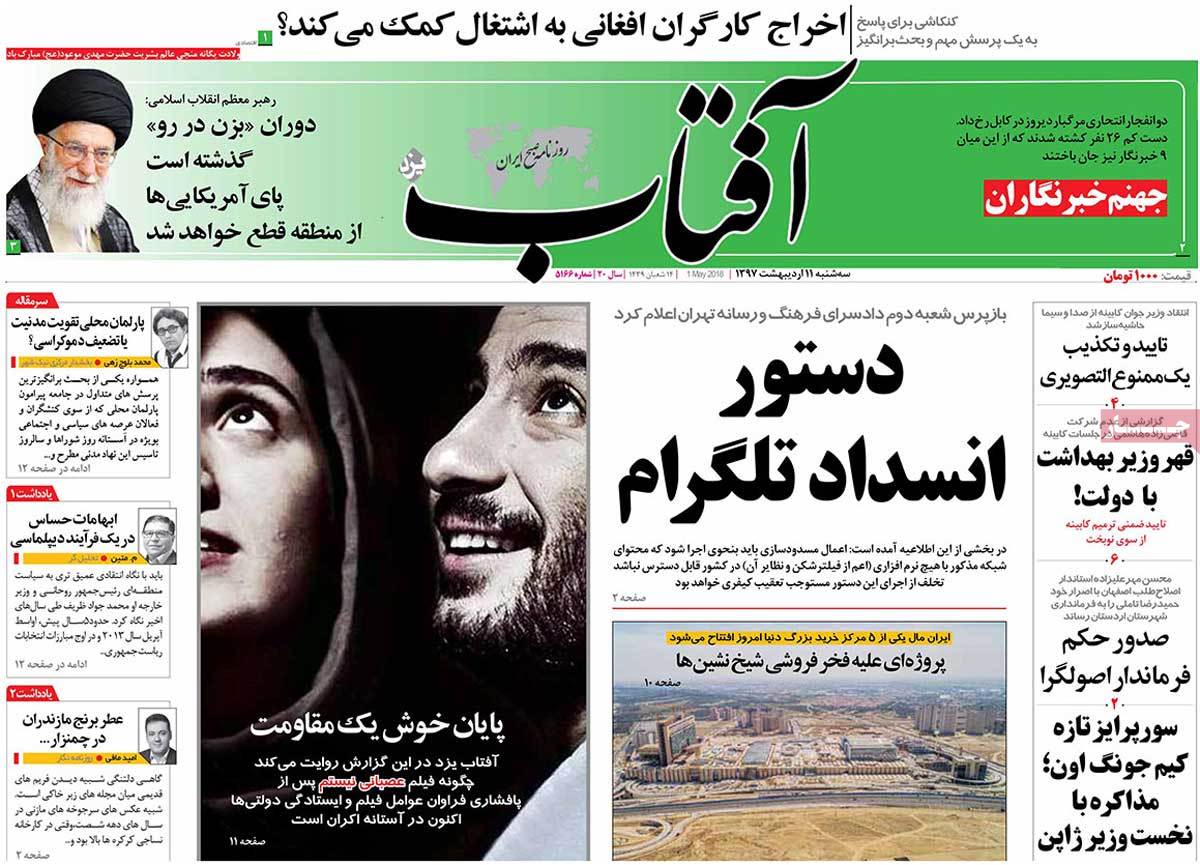
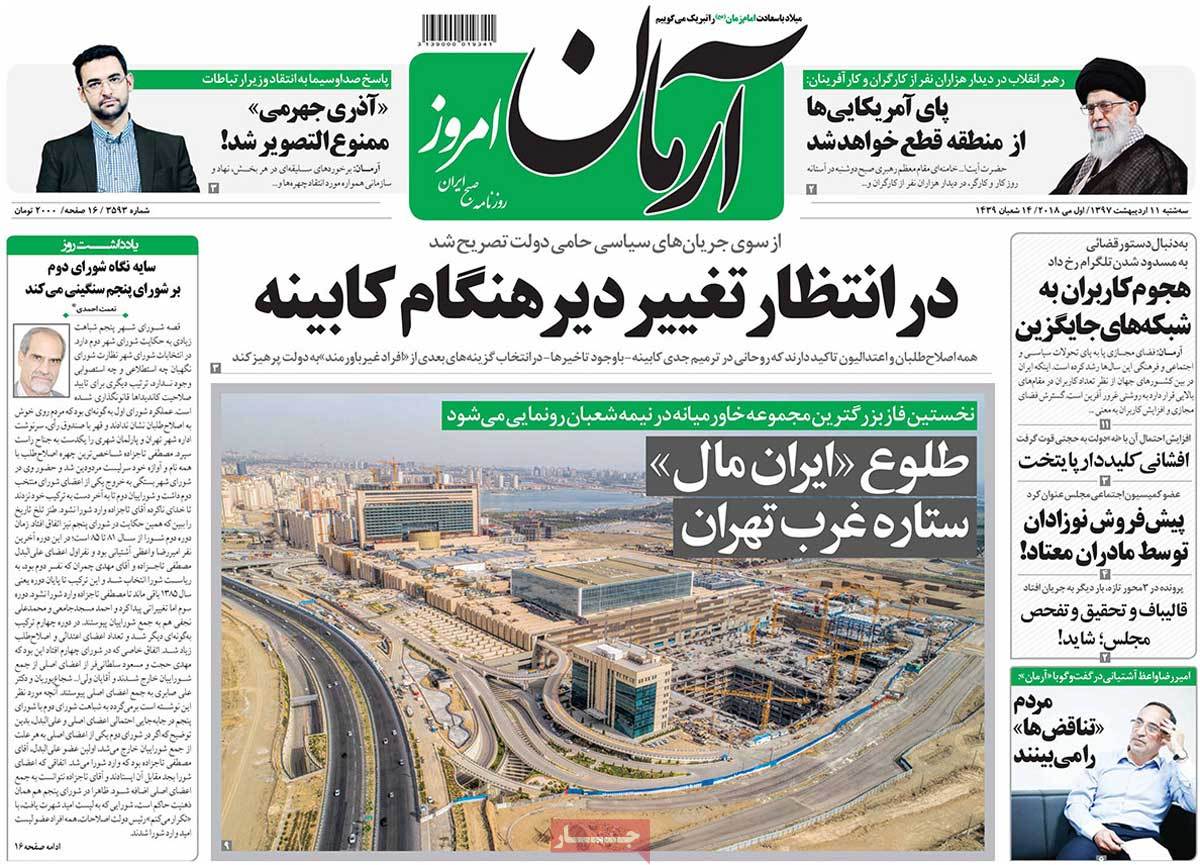
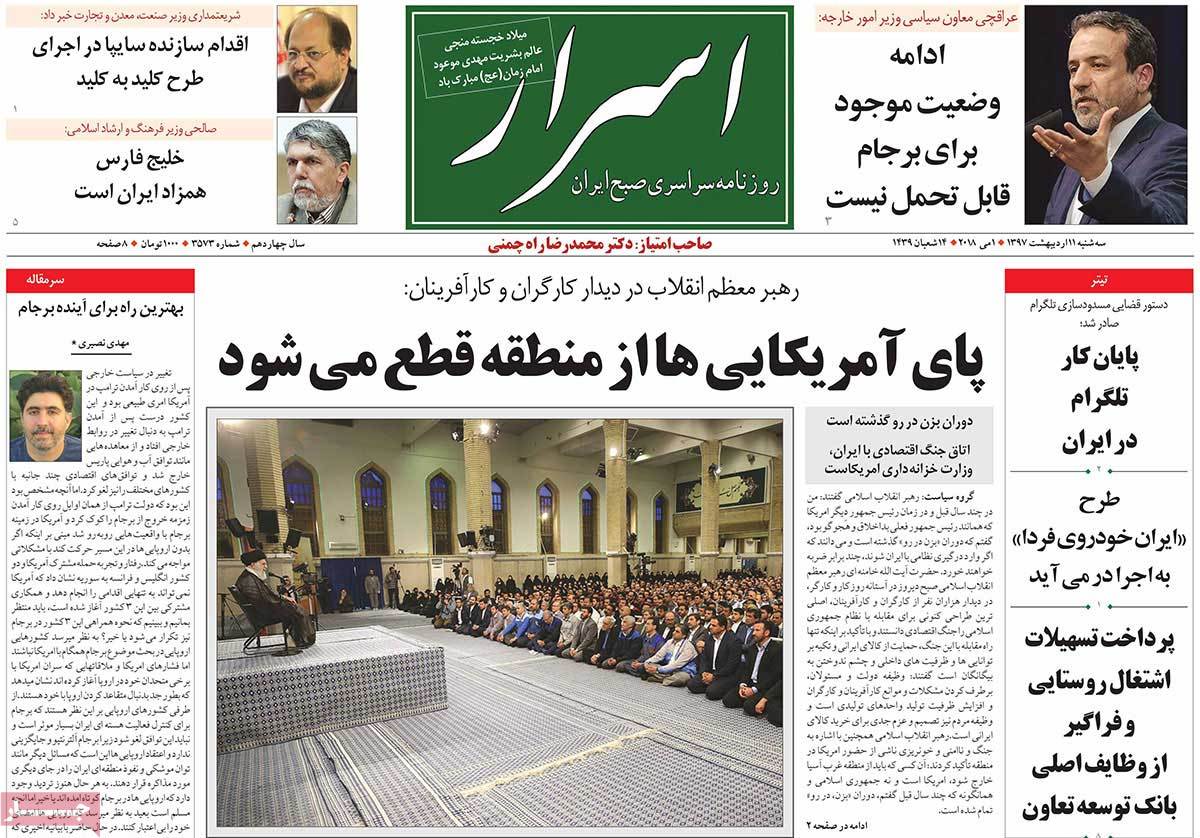
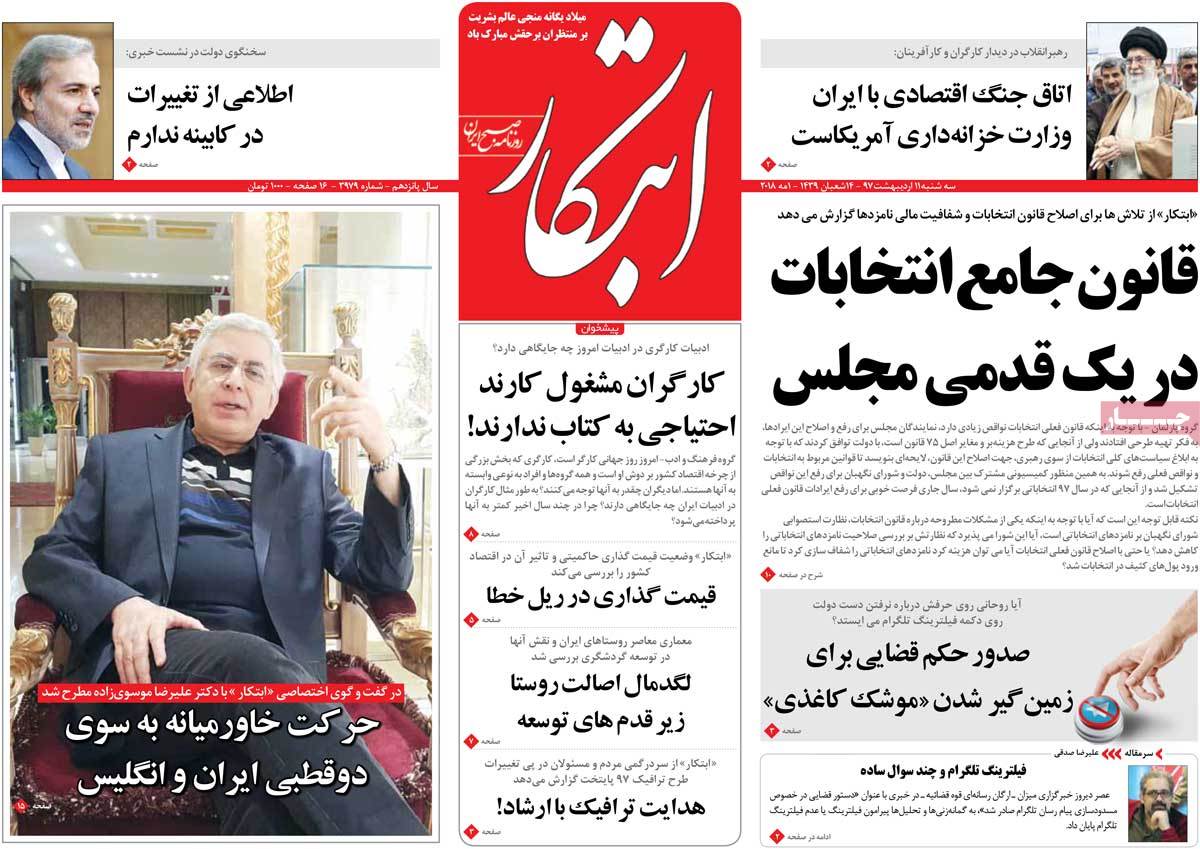
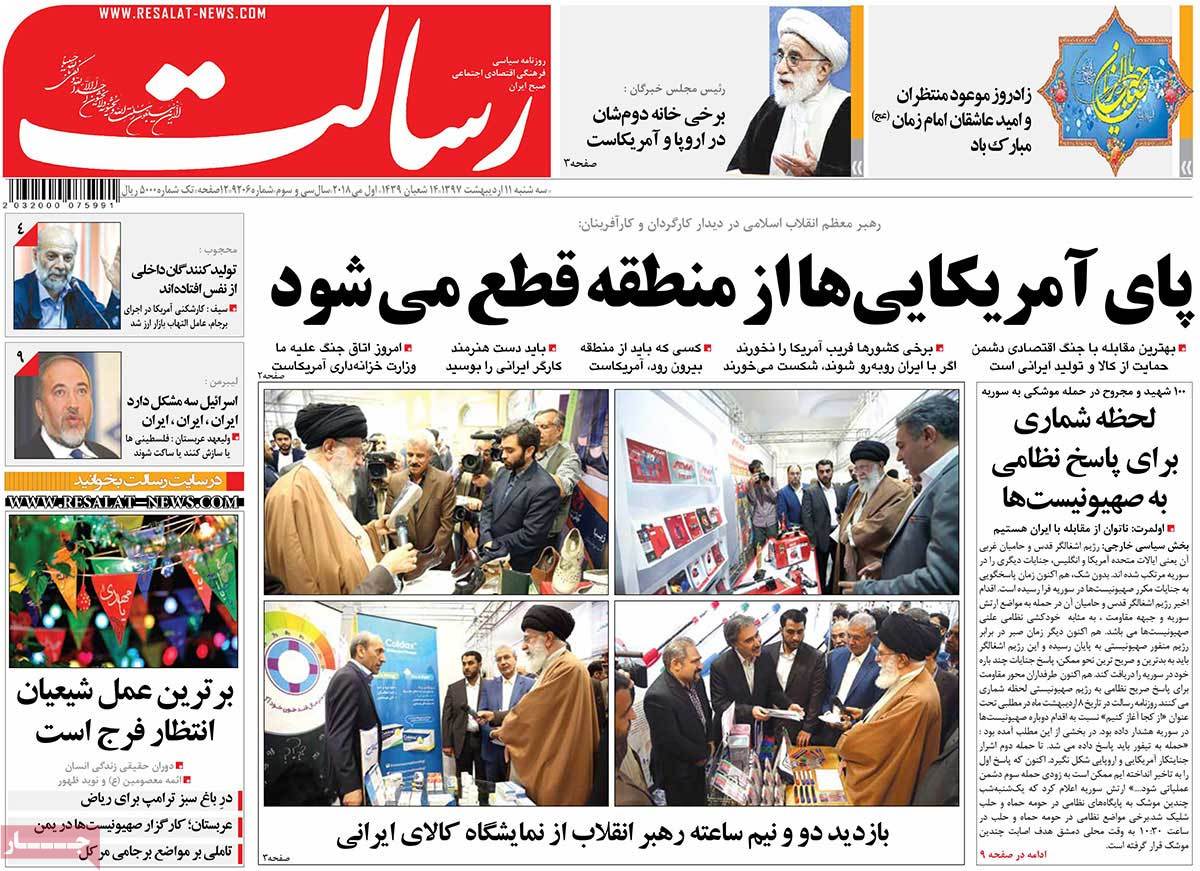
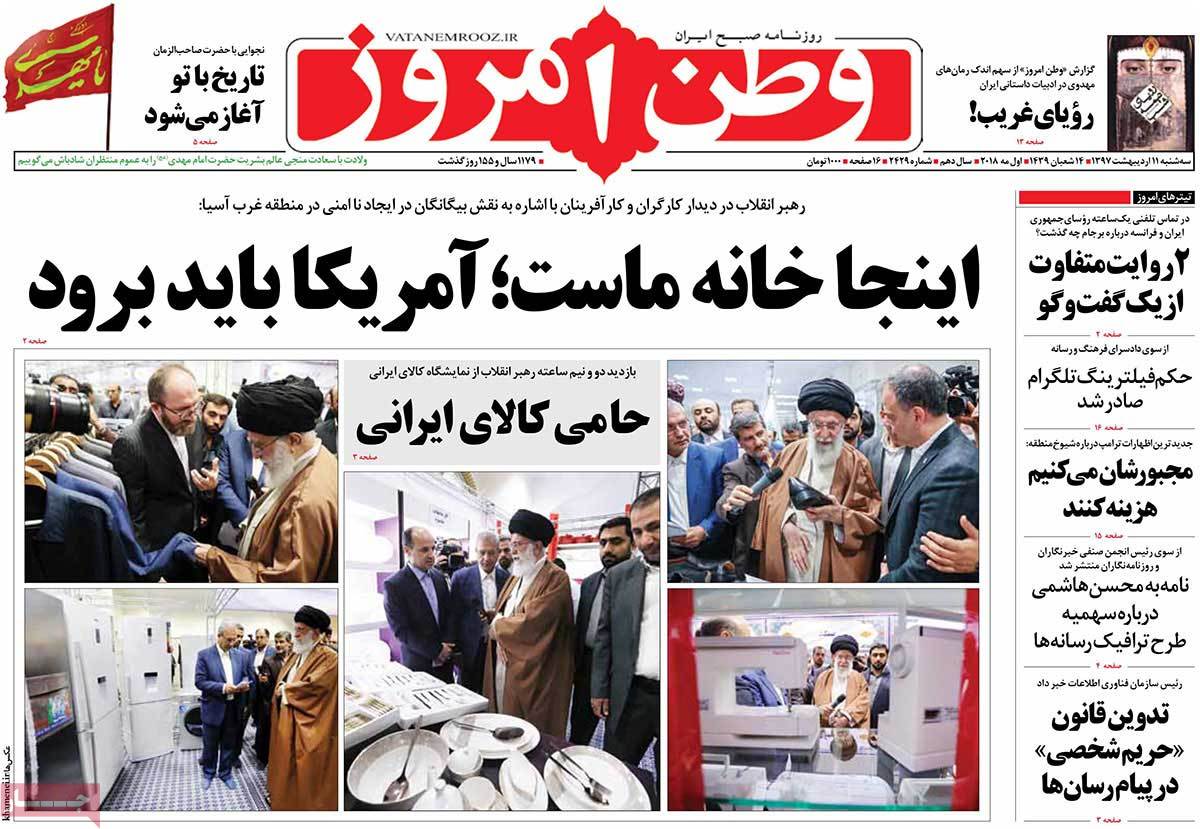
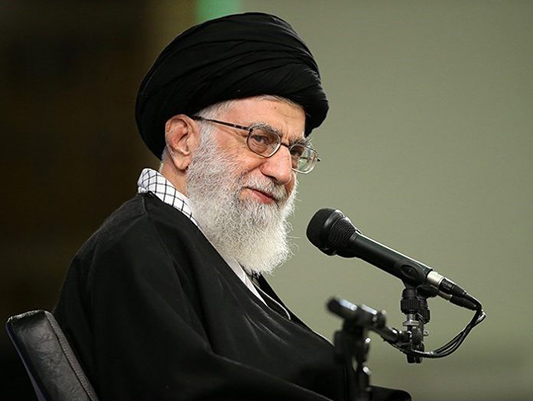
Trump, May, Macron Criminals: Iran Leader

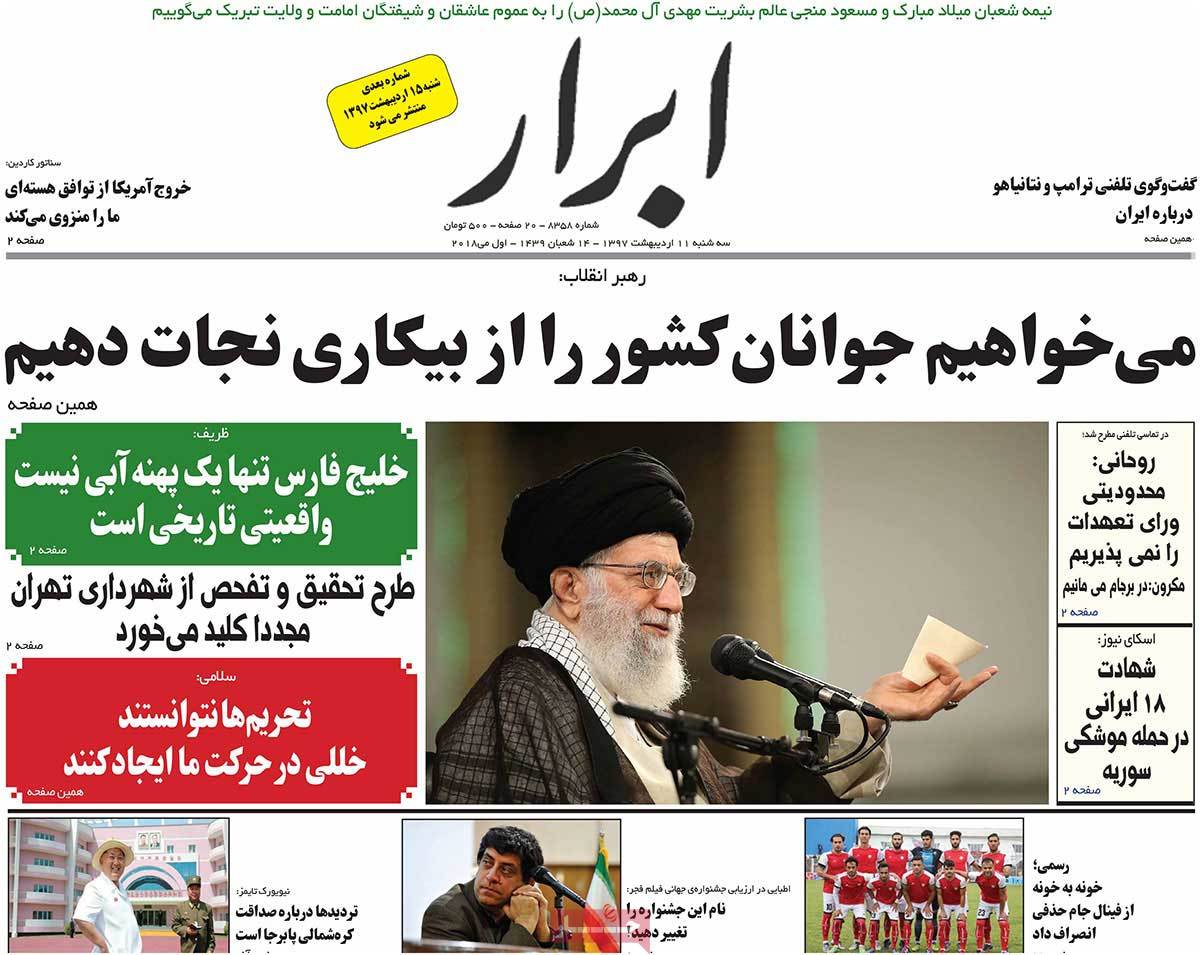
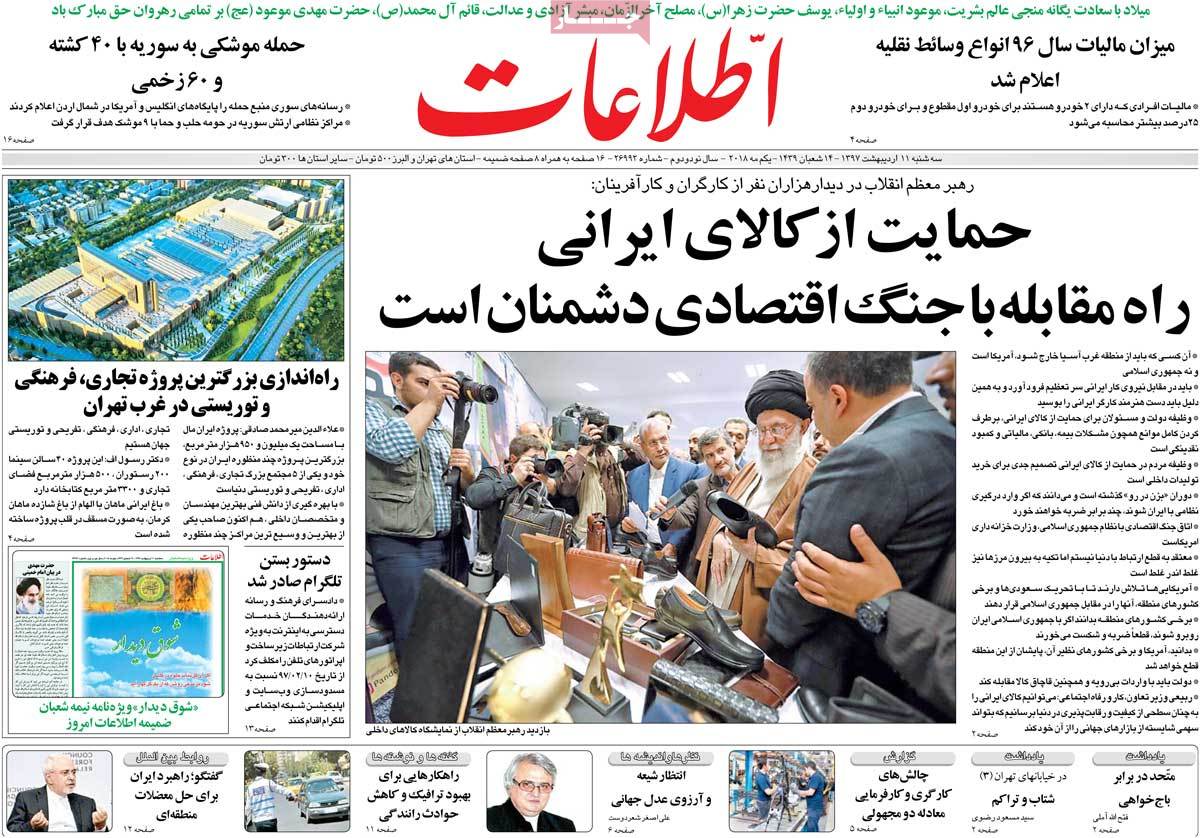
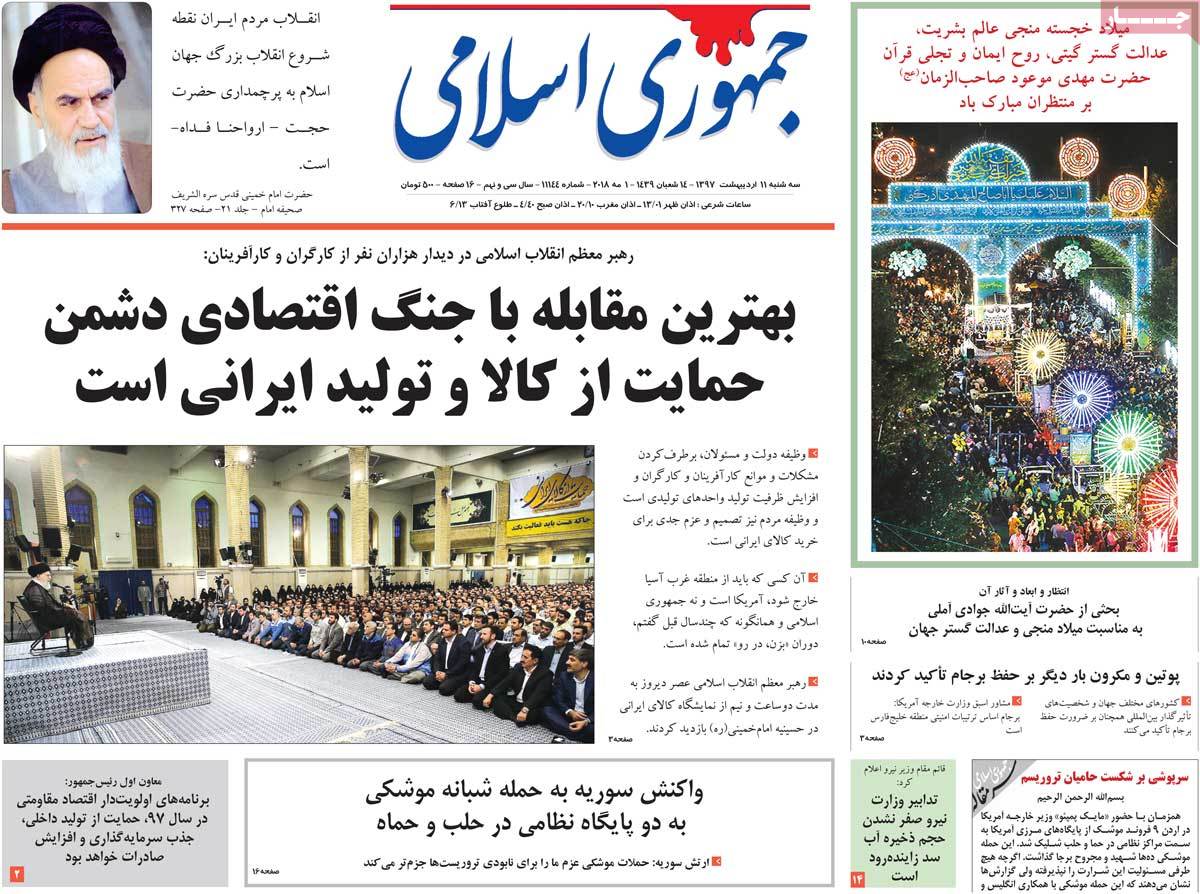
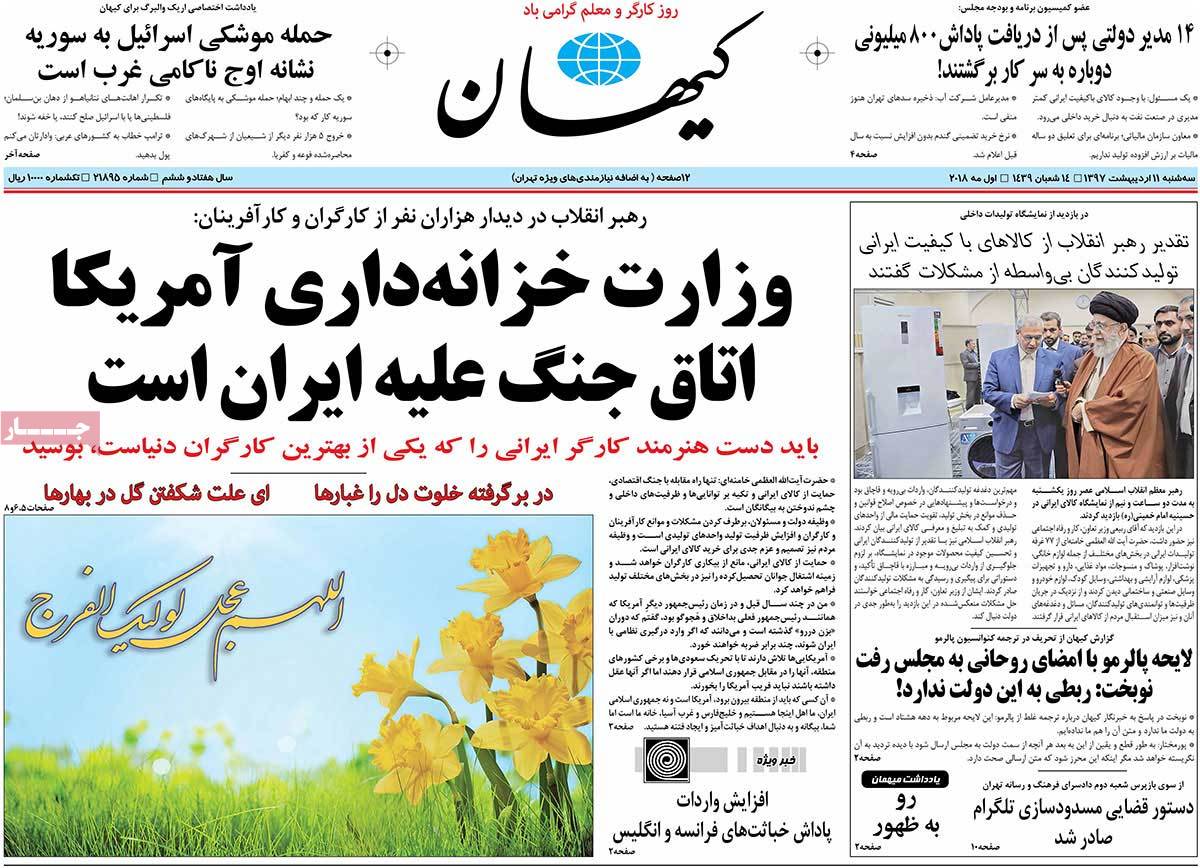
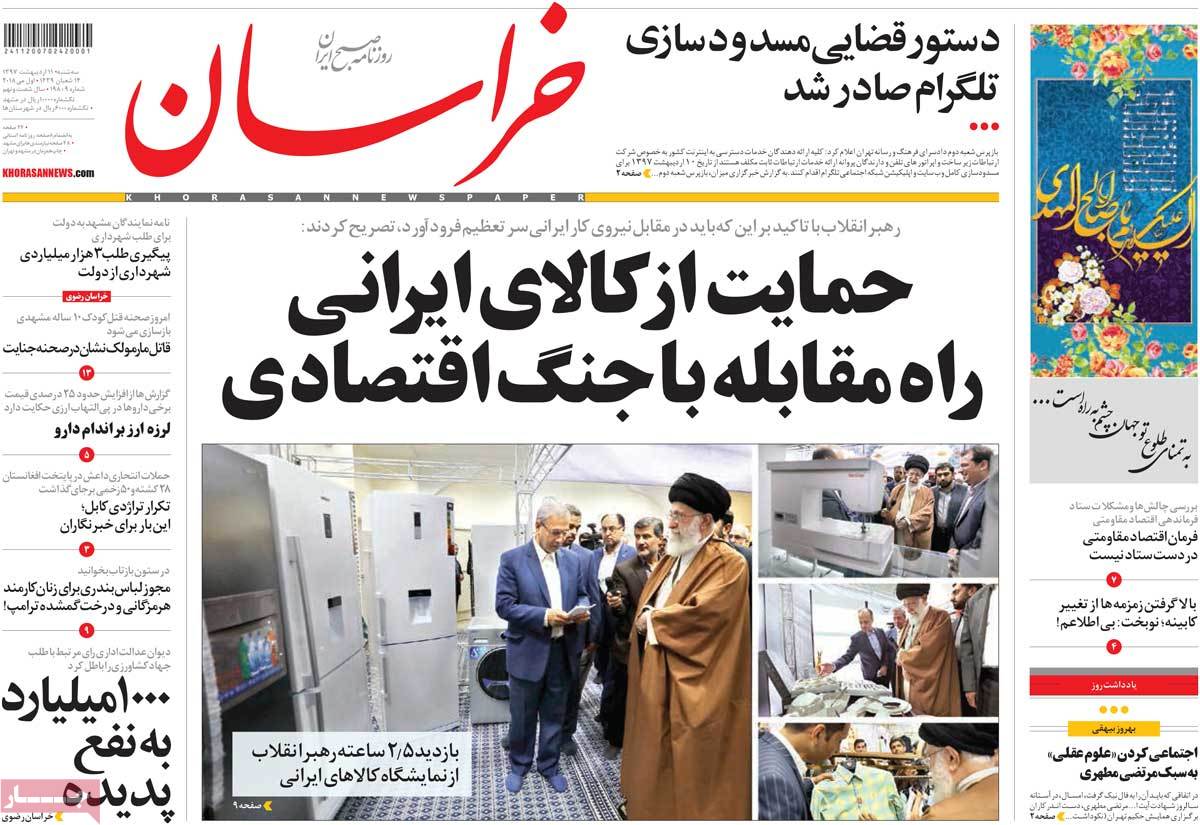
Addressing a host of Iranian officials and ambassadors of Islamic countries on Saturday, the Leader said the US and French presidents as well as the British prime minister are criminals and will not benefit from the military strikes on Syria.

Ayatollah Khamenei said they had earlier committed similar crimes in Iraq, Syria and Afghanistan, but did not benefit from their actions, either.

Ayatollah Khamenei said US President Donald Trump’s claim that his country attacked Syria to fight chemical weapons is a lie.

He said thousands of people in Iran and Iraq were killed or harmed in gas attacks by the former Iraqi regime, but the US and its allies did not turn a hair.

“They are not against chemical weapons, but get involved to achieve their dictatorial interests,” said the Leader.

He said dictators will never emerge victorious and will definitely be defeated.

Ayatollah Khamenei further noted that the United States lies when it says it has defeated the ISIS terror group.

“The people who overtly and covertly supported ISIS yesterday, are claiming today that they contributed to the fight against them (terrorists) and defeated them! This is a lie, and it’s not true. They (the US) were not involved [in the fight against ISIS] whatsoever,” said the Leader.

“In the speech that the US president made a few hours ago, he said the US managed to defeat ISIS in Syria; [it’s] a blatant and downright lie!” Ayatollah Khamenei said.

He said the US even helped save ISIS elements when they were at the mercy of Syrian army and popular forces.

“Whenever they (US authorities) deem it necessary, they intervene and help. When the key elements of ISIS were under siege, they (the Americans) stepped in and saved them,” the Leader stressed.

He said it was the US itself that created the ISIS terrorist group.

“They managed to create the wicked creatures with Saudi money and the like, and to unleash them on Iraqi and Syrian nations; however, resistance against the US and its cronies saved the two countries, and it will be like that from now on, as well,” Ayatollah Khamenei said.

The Leader then said Washington is spending huge sums of money in the Middle East, but to no avail.

“Just a few days ago, the US president said that we (Washington) spent $7 trillion in the West Asia region, or as he puts it, ‘The Middle East,’ and we got nothing; he is right, they didn’t get anything, and from now on, no matter how much the US spends, it will not get anything in the region,” Ayatollah Khamenei said.

Elsewhere in his remarks, Ayatollah Khamenei rejected the accusation of expansionism against Iran.

“The claim that the Islamic Republic of Iran is seeking expansionism is nonsense, pointless and untrue. We have no intention of expansionism, and we do not need to do so, after all,” said the leader.

Ayatollah Khamenei said monotheism means standing up to the bullying of oppressors to defend the oppressed, and that is why Iran is standing by resistance groups in West Asia.

“Our presence in Syria against US-backed terrorists is for the same reason,” said the Leader.

“We were present in the West Asia region because there was resistance against oppression,” said the Leader.

He underlined that Syrian troops managed to win over Western-backed terrorists bravely and with God’s grace.

He said the enemy is not only targeting Syria or Iraq, but aims to deal a blow to the entire Muslims community.

He urged Islamic states not to serve the interests of the US and some other Western countries involved in aggression against other countries.

Trump, May, Macron Criminals: Iran Leader

Iranian Cleric Urges Saudi Muftis to Warn Their Novice Rulers against Provocation

ayatollah mohammad emami-kashani

Tehran’s interim Friday prayers leader Ayatollah Mohammad Emami Kashani told worshippers Saudi Arabia is run by a novice and imprudent crown prince who is under the deep influence of the US and the Zionist regime.

“The evil triangle of Washington, Tel Aviv and Riyadh is committing crimes in Syria, Yemen, Palestine, Lebanon, Iraq and Africa and sponsoring terrorist groups in the region,” he was quoted as saying in a Farsi report by ISNA.

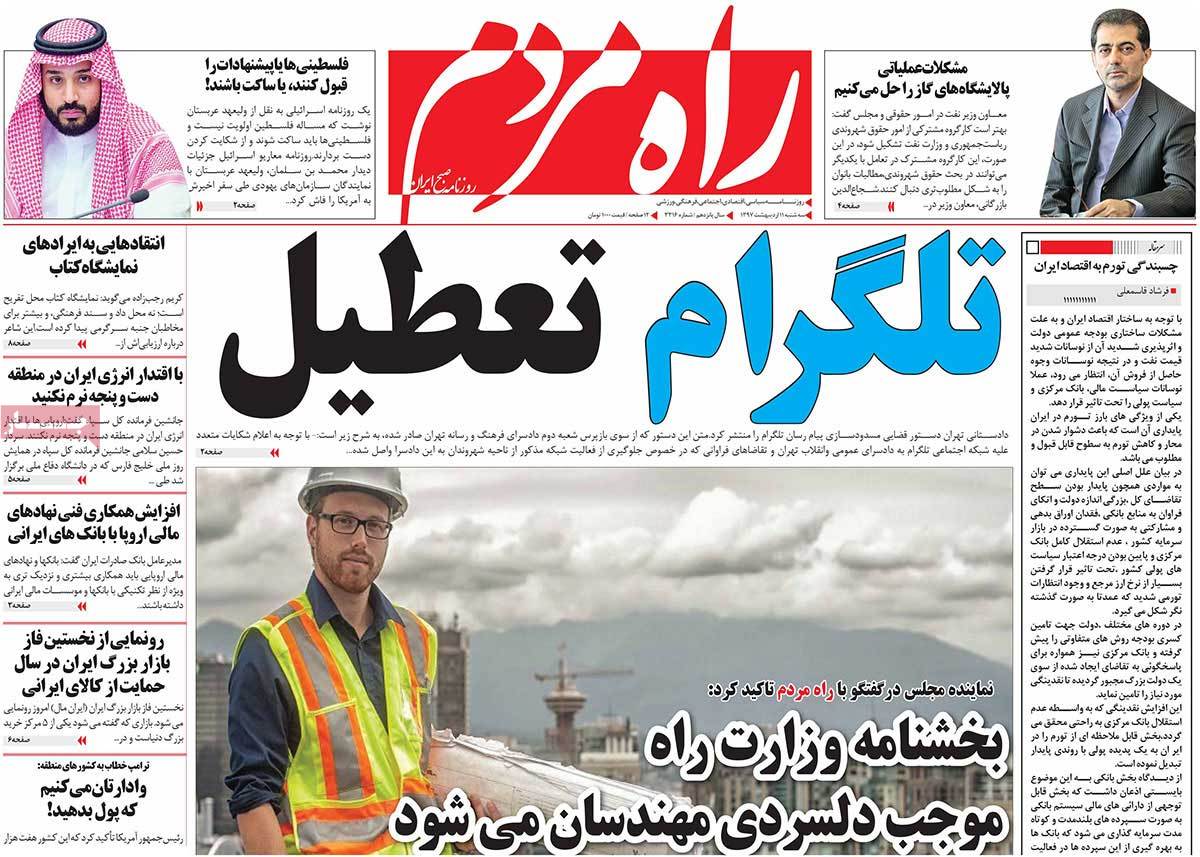
He went on to blame Saudi Crown Prince Mohammed Bin Salman for levelling baseless accusations against Iran during his latest visit to Washington.

“The crown prince claims that Iran is meddling in the internal affairs of the Muslim world under religious pretexts. I don’t find such unsubstantiated remarks by the novice Saudi crown prince unexpected at all but I’m wondering how on the earth the senior clergymen and religious scholars in Saudi Arabia can remain silent towards such provocations.”

The senior cleric then said Saudi Arabia has always been run by novice and irreligious rulers who have been influenced by the US and the Zionist regime.

“In the past, the influence was not overt but today we see that the Saudi crown prince is overtly manipulated by the outside forces in Washington and Tel Aviv,” he noted.

He then directly addressed the Saudi clergymen, urging them to step into the fray and stop the wrong policies and animosity of their country’s inexperienced rulers towards regional states.

Elaborating on the evil triangle, Ayatollah Emami Kashani said it consists of the US power, the Zionist regime’s politics and Saudi Arabian ideology and money.

“The ideology of Saudi Arabia is aimed at depleting Islam of its main contents and principles. On the other hand, they spend a hefty sum of money to achieve their nasty regional goals,” he said.

The Iranian clergyman underlined that it is up to the Muslim states to stand united against the plots by the evil triangle.

During his latest visit to the US as part of an image-building tour, the Saudi crown prince accused Iran of meddling in the affairs of Arab countries, including in Yemen where a Saudi-led military coalition has waved a war.
He then warned failure to contain Iran through international action could lead to a war in 10 to 15 years.

Iran lashed out at the Saudi crown prince warning him “not to dice with death”. Iranian Foreign Ministry Spokesman Bahram Qassemi then called on veteran Saudi officials to teach the “delusional novice” of the fate former Iraqi leader Saddam Hussein endured after he challenged the “Iranian nation’s resolve”.

Iran Condemns US-Led Strikes on Syria, Warns about Consequences

In a Saturday statement, the Iranian Foreign Ministry denounced the US-led coalition’s attacks on Syria as “a flagrant breach of international laws” and “a violation of Syria’s right to national sovereignty and territorial integrity.”

The statement said Iran decries “seeking pretexts to launch aggression against an independent country.”

Tehran reiterated that the US and its allies should be taken to task for the consequences of the recent military action both in the region and beyond.

“They have taken military action against Syria and put themselves in the position of the global judge and police while there is no substantiated evidence [that Syria used chemical weapons] and [they have taken military action] before the Organisation for the Prohibition of Chemical Weapons (OPCW) announces its final viewpoint,” read part of the statement.

Tehran also highlighted that the attacks come to compensate for the failures and defeat of terrorists in Syria.

The statement also urged international organizations and institutions to categorically condemn the attacks.

Iran said such arbitrary and unilateral moves will further undermine the pillars of peace and security in the world, bring about more instability and unrest across the globe and promote extremism and terrorism.

Iran Urges Germany to Push US towards Meeting JCPOA Commitments

In a Friday phone conversation with his German counterpart Heiko Maas, Zarif congratulated him on his appointment as German foreign minister and wished him success.

The two sides discussed bilateral issues, the Iran nuclear deal, and regional and international issues.

Stressing that all parties to the deal should fulfill their obligations, Zarif called on Europe to push the US towards living up to its commitments.

The two sides also talked about Iran’s defensive missile activities and regional affairs, stressing that these issues are unrelated to the JCPOA.

Zarif pointed to a misguided US policy to flood the region with various types of weapons and support measures against the Yemeni people and back terrorists, saying this policy is the source of instability and insecurity in the region.

The two sides also talked about the situation in Syria, stressing the need for a political solution to the conflict.

Zarif condemned any use of chemical weapons and emphasized the need for conducting impartial investigations.

The foreign minister said taking military measures on the pretext of an alleged chemical attack in Syria is condemned and they will threaten regional peace and security.

US Not to Fire More than Few Missiles at Syria: Expert

Noratollah Tajik, Iran’s former ambassador to Jordan, has downplayed US President Donald Trump’s recent threats to attack Syria, saying that he believes just a few missiles will be fired at military bases or some of the industrial centres.

Later they would declare these places as Syria’s chemical hubs, he noted in a Farsi interview with Entekhab news website.

“Some analysts are of the opinion that the attacks will be of a great range, but I think at present, the United States has no extensive operational capability,” underlined Iran’s former diplomat.

Tajik said “Trump has vowed to do something, but he can’t.”

He further noted that given the United States’ domestic problems, the country’s issues with Russia, and the ongoing investigations into Trump’s case, and, in general, the overall domestic situation in the US, the country will not launch a massive strike against Syria.

“On the other hand, Putin is different from Medvedev. During the Obama administration and Medvedev’s term, Washington received a very weak green light from the UN Security Council to destroy Libya. But at the moment, the Russians do not want to be cheated anymore, and Putin does not seem to want to come up short.”

This Iranian analyst went on to say that in general, it seems the two sides are trying to have the situation under control. He said Putin speaks in a soft tone and Trump is constantly changing his mind saying, for example, he is waiting for the Pentagon’s decision.

“In addition to domestic issues, Trump has concerns about the US forces in eastern Syria; i.e. the bases on the border between Syria and Iraq which are believed to be home to 2 to 3 thousand troops. The United States does not do anything to put these forces in danger; it does not matter whether this danger is from the resistance forces, Iran or Russia.”

Tajik also talked about Iran’s policy in the current situation in Syria saying, up to now, Tehran’s policy has been reasonable.

“This is a Syrian issue; we should not get too much involved with the United States.”

About the possibility of Iran’s engagement in a possible war, he said, in recent days, developments especially the aerial ones, have occurred around Al-Tanf and it is even said that if the Americans want to carry out a large-scale operation, they will likely take their troops out of this area.

However, he added, in general, they do not seem to do such a thing, and the situation will not get so complicated that Iran intervenes.

“Meanwhile, Iran has enough political and operational tools, both inside and outside the region, that all of which are taken into consideration by the US officials, especially the military officials,” concluded Tajik.

Iran, Turkey Sign Document on Border Cooperation

The meeting was jointly chaired by Abbas Baqerpour, the Director General for International and Legal Affairs at the Iranian Foreign Ministry, and Burak Ozugergin, the Directorate General for Bilateral Political Affairs (Maritime-Aviation-Borders) at the Turkish Foreign Ministry.

The talks were concluded after the heads of the delegations of both countries signed a document.

The document elaborates on the growing atmosphere for mutual cooperation and friendship between the two countries while appreciating the efforts by Iranian and Turkish officials to boost security along the two countries’ common border. The document also highlights the importance of adopting further measures to help decrease border incidents and fight terrorist, criminal and smuggling gangs.

The document also expounds on the executive arrangements which should be made by the High Border Commission and relevant officials to follow up on incidents along the two countries’ common borders.

The two sides also reached agreement on the executive arrangements pertaining to the identification, evaluation and updating of border documents as well as preparing a map of the borderline and new information on its location. The document also provides for the creation of a joint geodesic network on the border between the two countries.

Among other agreements stipulated in the documents were the necessity of carrying out activities related to the protection, restoration and renovation of border signs and updating the protocol on technical cooperation regarding aerial survey.

The document also elaborates on the executive arrangements on minimizing the violation of claimed borderlines by the two countries. The two sides also studied the effects of Turkey’s concrete wall on the flow of water in the river on the common border and lagoons within the framework of a sub-committee set up to review the issue. Moreover, the two sides also stressed the need to implement the provisions of the protocol on jointly using the water flowing toward Iran.

The 27th meeting of the Iran-Turkey High Border Commission was held in Ankara after a 6-year hiatus. At the end of the meeting, the two sides agreed to hold the next gathering in 2019 in Tehran.

Iran Rejects Arab Quartet Committee’s Baseless Accusations

Bahram Qassemi

In a Friday statement, Qassemi expressed regret that some regional states insist on their hostility towards Iran and continue their futile policies against the country.

“It is regrettable that some states, out of ignorance, insist on their animosity towards Iran, continue their destructive moves against the country and close their eyes to the joint enemy of the Muslim World and the commonalities among the Muslim states,” he noted.

The spokesman also slammed the anti-Iran accusations in the statement of the 8th Round of Ministerial Meeting of Arab Quartet Committee as baseless and unsubstantiated and added the offensive accusations emanate from the committee members’ delusions about Iran.

He also said the committee’s statement draws on some destructive and hostile stances built on misleading and false thoughts.

The spokesman also called the anti-Iran statement a continuation of policies that unfortunately will further undermine the entire region’s stability and peace.

He then expressed hope that the summit of the Arab League slated for the next couple of days would identify the main causes behind the regional destabilization without adopting double standards through a deep and comprehensive understanding of the reasons for the current crises.

He also hoped the Arab League leaders would move towards creating unity among the Arab and Islamic states within a realistic policy and based on an understanding of the history of the whole region.

In their final statement following their meeting in Riyadh, foreign ministers from the Arab Quartet Committee denounced what they called Iran’s continued meddling in the domestic affairs of Arab countries.

They also expressed deep concern over Iran’s “stirring of sectarianism and provision of arms to terrorist groups which threatens Arab national security and obstructs regional and international efforts to resolve outstanding issues in a peaceful way.”


Abgineh Museum; An Exhibition of Medieval Glass Works

Abgineh Museum; An Exhibition of Medieval Glass Works

Abgineh Museum is located in a historic building of the Qajar period. Opened in 1980, the museum is housed in the mansion of the former prime minister Qavam al-Saltaneh; and from 1953 to 1960 it functioned as the Egyptian Embassy, so the building itself has architectural merit.

There are two floors of displays in the Abgineh Museum that include dramatic ‘Nishapur’ slip-painted ceramics of the early medieval period, glass works from the 12th and 13th century, known as the Golden Age of glass-making in Iran, 14th-century pottery from Takht-e Soleyman and some later Safavid and Qajar ceramics.

However, most of the glass, some 260 pieces, is exhibited on the ground floor on the Glassware and Ceramic Museum.

Here you can see photos of the museum retrieved from Tehran Picture Agency:

Persian Architecture in Photos: Historical Bazaar of Qom

Persian Architecture in Photos: Bazaar of Qom

The bazaar of Qom was first built in a linear form running from the old square to the bridge of Alikhani. At the moment, however, it comprises of two sectors – the old and new ones. Each part of bazaar is a vaulted 1 km street with a domed ceiling.

Some of the monuments of the 600-year-old Qom bazaar date back to Seljuk and Ilkhanid dynasties, and are adorned with gypsum statuettes of these periods.

The old bazaar and its surrounding buildings date back to the pre-Safavid era; but the architecture, layout, and arcades of the new sector mostly belong to the Safavid and Qajar periods.

The old and new bazaars of Qom with many traditional jobs are the most important tourist attractions of the city.

Following you can find photos of the bazaar retrieved from ISNA:

OPCW Team en Route to Syria as US Mulls Missile Attack

The team will begin working in Douma just outside Damascus by Saturday to investigate the attack which happened on April 7, OPCW spokesperson Johan de Wittlaan said Thursday.

Syria, Russia and Iran say reports of the attack were fabricated by militants and the US is seizing upon it as a pretext to attack the government.

On Twitter, Trump threatened a military response, but it’s not clear when that would happen or what it would look like.

Trump said in a Cabinet meeting Monday that “major decisions” were coming on Syria within 24 to 48 hours.

On Wednesday, Trump said that missiles “will be coming” in response to the attack.

However, on Thursday he tweeted that he “never said when an attack on Syria would take place. Could be very soon or not so soon at all!”

Later on the day, Trump told reporters at the White House that he was holding meetings on Syria and expected to make decisions “fairly soon.”

Fears of confrontation between Russia, Syria’s big ally, and the West have been running high since Trump issued his threat.

Russia has warned it would fire on any US missiles targeting Syria and the units launching them.

 

US Officials Divided on Evidence

It was not clear whether Trump and US allies would wait for the results of the investigation before deciding on a possible strike.

A day after Trump vowed to take revenge for the alleged attack, US officials were seemingly divided over evidence proving the Syrian government was behind it.

US Defence Secretary Jim Mattis said on Thursday the US was still looking for “actual evidence” of the attack.

“I believe there was a chemical attack and we are looking for the actual evidence,” Mattis told ​a hearing of the House Armed Services Committee, adding that he wants inspectors in Syria “probably within the week.”

Mattis said the US did not have any personnel on the ground in Douma during the attack and that ​time is of the essence to gather evidence, New York Post quoted him as saying.

“As each day goes by — as you know, it is a non-persistent gas — so it becomes more and more difficult to confirm it,” Mattis told the lawmakers.

This is while United Nations Ambassador Nikki Haley said the United States has “enough” proof.

“We definitely have enough proof, but now we just have to be thoughtful in our action,” ​she told MSNBC.

French President Emmanuel Macron said France had proof the Syrian government carried out the attack.

“We have proof that last week … chemical weapons were used, at least with chlorine, and that they were used by the regime of Bashar al-Assad,” Macron told TF1, a French television station, without offering details of any evidence.

In London, the British Cabinet had “agreed that the Assad regime has a track record of the use of chemical weapons and it is highly likely that the regime is responsible for Saturday’s attack,” Downing Street said in a statement.


Germany, Canada Rule Out Participation

But Germany announced that it would not be part of any coordinated military action in Syria, even as Chancellor Angela Merkel stressed the importance of Western powers sending a clear, united message that using chemical weapons “is unacceptable.”

“Germany will not take part in possible military action — I want to make clear again that there are no decisions,” Merkel said after meeting with Lars Lokke Rasmussen of Denmark in Berlin.

Moreover, Canadian Prime Minister Justin Trudeau has ruled out participation of the country in military strikes against Syria.

Speaking to Radio-Canada on Wednesday, Trudeau said Canada’s military will not participate in the expected attacks by western powers against Syria.