Friday, December 26, 2025
Home Blog Page 3642

China Still Iran’s Top Business Partner

Iran’s non-oil trade with the East Asian country totaled $22.28 billion in the last Iranian year (ended March 20), indicating an increase of 16.82% compared to the year before, IRICA reported.

Iran exported 34.89 million tons of commodities worth $9.06 billion to China last year, down by 7.57% in tonnage and up by 8.31% in value year-on-year.

Apart from oil, major Iranian exports to China, in terms of value, include methanol, iron ore, ethylene glycol, liquefied propane and gas condensate.

Iran imported 4.80 million tons of Chinese goods worth $13.21 billion during the period under review, registering a rise of 7.92% and 22.91% in tonnage and value respectively YOY.

Iran mainly imported auto parts and rail parts, as well as LCD and LED display modules and parts from China.

China has pumped billions of dollars in Iranian projects since nuclear sanctions against the country were lifted in 2015, giving its firms an advantage over European firms still struggling to find banks to fund their plans.

For instance, it has been involved in Iranian rail projects, reflecting its Belt and Road initiative that aims to improve global transport and trade connectivity.

China National Machinery Industry Corp, known as Sinomach, has signed a contract to build a 5.35 billion yuan (£603.5 million) railroad in western Iran, adding to a wave of Chinese investment in the country, Reuters reported on March 21.

Sinomach will handle the engineering, procurement and construction work for the 410-km (255 mile) railroad connecting the Iranian cities of Tehran, Hamedan and Sanandaj, the company said on its website on Monday.

Earlier, two rail-related contracts were signed in Tehran on March 7.

A contract was signed between Iran’s Construction and Development of Transportation Infrastructures Company and Sinoconst China Machinery Industry Construction Group INC for the construction of Section-1 of the 446-km-long Shiraz-Bushehr Railroad that covers 250 km of the whole route.

“This was an engineering, procurement, construction and finance contract worth CNY5 billion (close to $790 million). Jahanpars Group is the Iranian contractor of the project,” Deputy for Construction and Expansion of Railroads, Ports and Airports of the Construction and Development of Transportation Infrastructures Company affiliated to the Ministry of Roads and Urban Development, Jabbar-Ali Zakeri, told Financial Tribune.

Another contract was signed on Wednesday between the Industrial Development and Renovation Organization of Iran and CRRC Nanjing Puzhen Co., a Chinese railroad rolling stock manufacturer, for the design, procurement, supply, manufacture and delivery of 450 subway wagons for the Iranian cities of Ahvaz, Shiraz and Tabriz.

“The project is worth €500 million and will be financed by the Chinese side. The contract was signed by Naqi Manafi, IDRO’s manager for financial and economic affairs, and Wang Tao, general manager of Puzhen,” said Ali Araqchi, IDRO’s director for international affairs, who negotiated the contract.

The project will take 55 months to complete.

In July 2017, China signed a contract with Iran to finance the electrification of a 926-km railroad from Tehran to the eastern city of Mashhad in Khorasan Razavi Province with a $1.5 billion loan. A letter of credit for that purpose was opened five months later.

Tehran-Mashhad Railroad is a strand of the so-called ‘New Silk Road’–a 3,200-kilometer railroad project that ultimately sees Urumqi, the capital of China’s western Xinjiang Province, linked to the Iranian capital Tehran, connecting Kazakhstan, Kyrgyzstan, Uzbekistan and Turkmenistan along the way.

From Tehran, the grand project will join Iran’s east-west network leading to Turkey and East Europe. It could also open a way to Europe via a developing rail route from southern Iranian ports to Azerbaijan and Europe.

The electrification of Tehran-Mashhad Railroad will take four years.

State-owned China Railway Engineering Corp is building a 415-km high-speed north-south rail line between Tehran and Isfahan via Qom.

Iran’s Kerman Province Home to Globally-Registered Qanats

Old Iranian Watering System

These qanats are considered as the sources of life in the province. In the city of Bam, some of these qanats come out of the desert to irrigate palm trees while the passage of time has not been able to harm them.

Three qanats of Gohar-Riz Jupar, Akbarabad and Qasemabad of Kerman province have been registered in the UNESCO’s World Heritage List, and are visited by thousands of tourists each year.

Gohar-Riz qanat is located on the slopes of Jupar Mountains, and is now considered as one of the most important qanats of the province.

This qanat is 750 years old and dates back to the Safavid era. The 3,356-metre long qanat has 129 wells and irrigates almost 330 hectares of lands in the city of Jupar.

One of the advantages of such qanats is that their water is sourced from faults.

Akbarabad and Qasemabad in the east of Kerman are also among the qanats that have huge amounts of water. They date back to the late Qajar and Pahlavi dynasties with a length of about four kilometres.

Persian Qanat
Persian Qanat Amazing but Less-Known Attraction: Italian Tourist

Qasemabad qanat’s irrigation speed is about 90 litres per second while that of Akbarabad is 60 litres per second. These two provide water for about 300 hectares of gardens in the region.

In recent excavations on the walls of Bam, qanat inscriptions from the Achaemenid era have been discovered.

Extracting underground waters through qanats is one of the wonderful inventions by mankind which has played a crucial role in Iran’s agriculture since ancient times.

Most of the historians and researchers have attributed the technology of qanat building to Iranians and consider Iran as the birthplace of qanats.

Qanat is one of a series of well-like vertical shafts, connected by gently sloping tunnels. They create a reliable supply of water for human settlements and irrigation in hot, arid and semi-arid climates.

Throughout the arid regions of Iran, agricultural and permanent settlements are supported by the ancient qanat system of tapping alluvial aquifers at the heads of valleys and conducting the water along underground tunnels by gravity, often over many kilometres.

The qanats representing this system include rest areas for workers, water reservoirs and watermills. The qanats provide exceptional testimony to cultural traditions and civilisations in desert areas with an arid climate.

What follows are photos of these qanats retrieved from various sources:

Netherlands Forerunner of Extreme Anti-Iran Moves in Europe: MP

Iranian parliamentarian Seyyed Mohammad-Javad Abtahi says unfortunately, the current ruling government in the Netherlands is strongly anti-Iran and anti-Islam.

In a Farsi interview with ICANA, he said the Netherlands has warned its citizens to remove sensitive information on their laptops and handsets during their trips to Iran.

Abtahi argued that the Netherlands has shown it is a pioneer in extreme movements in Europe, saying, “One may think France, Germany and Britain must take all anti-Iran and anti-Islam actions, but the Netherlands is the one that plays this role.”

“On the other hand, the Netherlands has no direct role in the talks and can also act as a role model for other European countries in this regard.”

“The Netherlands acts in a way to test the reactions of Iran, as well as its friends and international organizations, and in this way forces the international organizations to pass resolutions against Iran,” noted Abtahi.

This Iranian MP concluded that the Netherlands has been the dominant party among European countries to push against Iran. Moreover, the current ruling party in the Netherlands has an anti-Iran approach and its policies are dictated by the strong Zionist lobby that is active there.

Abtahi’s comments came after the Ministry of Foreign Affairs of the Netherlands sent out a letter warning Dutch travellers visiting Turkey, China, Russia and Iran that their electronic devices may be unsafe in these countries, BBC Türkçe reported on Monday.

The ministry warned that data on electronic devices, including laptop computers and smartphones, may be read and copied by third parties in these countries, and said that sensitive information should not be carried on these devices under any circumstances.

“It is painful, but the warnings on cyber espionage will also apply to our NATO ally Turkey, as well as Russia and Iran,” BBC Türkçe quoted a foreign ministry source as saying.

Plane Carrying First Group of Brazilian Tourists Lands in Iran

The passengers including 62 tourists and 14 crew members have earlier traveled to Japan, China and India before arriving in Iran and will head to Italy and Morocco after visiting Shiraz.

According to a Farsi report by Khabar Online, these tourists would spend four days in Shiraz to visit tourist attractions and cultural works of Fars Province in southern Iran.

Shiraz is the fifth most-populous city of Iran and the capital of Fars Province. Shiraz is one of the oldest cities of ancient Persia. In the 13th century, Shiraz became a leading centre of the arts and letters, due to the presence of many Persian scholars and artists. It was the capital of Persia during the Zand dynasty from 1750 until 1800. Two famous poets of Iran, Hafez and Saadi, are from Shiraz, whose tombs are on the north side of the current city boundaries.

Shiraz is known as the city of poets, literature, and flowers. It is also considered by many Iranians to be the city of gardens, due to the many gardens and fruit trees that can be seen in the city, for example Eram Garden.

Tehran Hosting Aldo Salucci’s “Underworld” Photo Exhibit

Salucci, a fond of marine sports and diving, has put on display 15 photos out of his three collections of marine photos at the 10-day exhibition in the Iranian Artists Forum.

The exhibition will be open to visitors until April 16, a Farsi report by Honar Online news agency.

Salucci uses the element of water as a source of inspiration for his artworks. He says water has always been attractive for him and he has used it in a creative way in his artworks.

The Italian photographer depicts water in his works out of its main context and pays special attention to its geometry and fluidity.

In his photos, he focuses on the most attractive and perfect forms of water. Now, through his exhibition in Tehran, he wants to lead his Iranian visitors towards a constructive and creative imagination about the world.

Salucci has been professionally involved in photography in the past five years. His exhibitions have been held mainly in Italy. Underwater exhibition is his first exhibition held outside of his country.

He takes his photos with a Sony 100 Camera widely known for its simple features. Its only advantage compared with other cameras is taking photos with high pixels. This is what matters for Sallluci: photos with high pixels let him organize other features of his photos with computer software like Photoshop.

The photos on display during Underworld exhibition have been printed with a new technical method called Chromalox in which the photos are printed on a thin iron sheet. The photos printed with this method enjoy a high resolution which attracts the viewers.

In his first collection, Salucci has put his focus on the surface of water. His photos in this exhibition remind the viewers of the sea.

The second collection, however, deals with more complicated subjects. In this collection, which is called “Flower”, Salucci goes to the sea bed and tries to reach its depth.

In the third collection named “Dystopia”, we witness only the ruins of the world. To illustrate the ruins more vividly, he has taken photos of historical ports.

“The clearest message I want to give to my viewers during the Underworld exhibition is that the deeper we go, the more self-understanding we will achieve,” he said.

Salucci then added through these photos, he wants to call on all residents of the world to play their role in saving the world and its heritage.

In response to a question why he has chosen Iran as the first foreign country to display his photos, he said, “Iran has always been attractive to me because of its rich culture and glorious civilisation.”

Salluchi went on to say that there are only a few countries like Iran which enjoy a rich culture and added “Iranians still attach great significance to art and it is part of their daily life. I liked to put them in touch with my photos because the relations they establish with my artworks are highly important for me.”

The Italian artist concluded that for his Underwater Exhibition in Tehran, he has chosen his own favourite photos out of his three collections.

Flames of Syria Strikes to Finally Engulf US, Allies: IRGC

In a statement, the IRGC said the move will only further strengthen the willpower of anti-terror resistance elements and deepen the Syrian nation’s grudge against Western-Arab criminal aggressors.

“The crime committed at dawn today (Saturday) by the United States, Britain and France, i.e., their missile strike on Syria, was a deceptive and cunning move based on the false claim that Syria had used chemical weapons in Douma. The attack is a blatant and undeniable crime which suggests their humiliation in their support for Takfiri terrorists and shows they are seeking an opportunity to save terrorists,” read part of the statement.

“The seven-year experience of all-out resistance by the Syrian nation, government, army and popular forces against the full-scale proxy war launched by the domineering powers, Zionism and Takfiri terrorists, and their glorious victory in the first phase of this relentless confrontation shows resistant Syrians backed by Damascus’ strategic allies will continue to move on this path until achieving full victory, and criminals and those launching aggression against this country as well as their regional allies will not benefit [from their actions]”

The statement stresses that the flames of such crimes will finally engulf the perpetrators of those crimes and their supporters. The statement also decried the silence of some Islamic countries vis-à-vis the crime committed by the US and its Western allies against Syria.

“Some Muslim countries which have refused to condemn, have remained tight-lipped in the face of, or in some cases, unfortunately, expressed pleasure with Takfiri terrorists’ war on the nations in the region, especially the missile attack on Syria at dawn [on Saturday], should know that they will have no answer [for their actions] before the Islamic community and history, and they will be hated by Syrian people more than before,” read the statement.

Iranian Officials Keep Condemning US-Led Military Action on Syria

Major General Mohammad Baqeri, the chief of the General Staff of the Iranian Armed Forces, condemned the attacks in a phone conversation with Syrian Defense Minister Ali Abdullah Ayoub.

The top Iranian General said the military action on Syria emanates from the aggressors and their supporters’ anger over the defeat of terrorists.

He also reassured the Syrian defence chief of Tehran’s continued support.

“The nation and the armed forces of the Islamic Republic of Iran will continue to fight alongside the Syrian people and the Syrian armed forces against the criminal terrorists,” said General Baqeri.

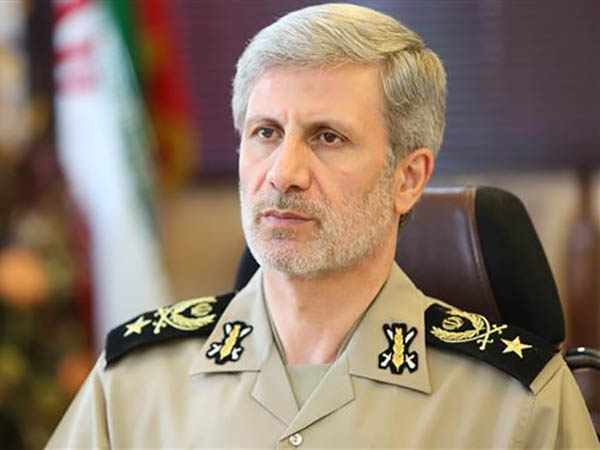
Iran’s Defence Minister Brigadier General Amir Hatami also said in a phone conversation with the Syrian defence minister that the criminal military action against Syria by the US, France and Britain was a violation of international and human laws. The Iranian defence chief reiterated Tehran’s backing for Syria.

He said terrorists’ supporters, including some Western and regional governments, commit such crimes whenever they see that their plots have failed.

Ali Akbar Velayati, an advisor to Leader of the Islamic Revolution Ayatollah Seyyed Ali Khamenei, also reacted to the US-led military action against Syria.

“At a time when UN inspectors have just arrived in Syria to look into the baseless claim by the enemies of the region and the oppressed Syrian nation that the Syrian government used chemical weapons, and they have not even begun their investigation, the move by the US, France and Britain amount to blatant encroachment upon the boundary of a legitimate government,” said Velayati.

He said such a move will beget negative consequences in the region and beyond.

“Such an unwise and criminal act against an oppressed nation and a government which has stood up to evil and terrorism is condemned,” said Velayati.

Earlier, other top Iranian officials had denounced the US-led military action on Syria.

Ayatollah Khamenei, the Leader of Iran’s Islamic Revolution, blasted the US-led coalition’s strikes on Syria as a crime, saying the American, British, and French leaders are criminals and will not benefit from the military strikes on Syria.

Ayatollah Khamenei said the three leaders had earlier committed similar crimes in Iraq, Syria and Afghanistan, but did not benefit from their actions, either.

Iranian President Hassan Rouhani said the US-led strikes on Syria are aimed at securing the West’s continued presence in the Middle East.

Without naming the US and its western allies, President Rouhani said certain states violate all international treaties by carrying out airstrikes on Syria under false pretexts.

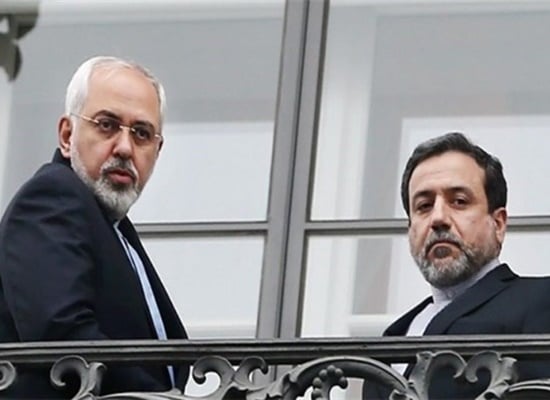
Iranian Foreign Minister Mohammad Javad Zarif also vehemently condemned the US-led airstrikes in Syria, describing them as an effort to sabotage the Syria peace process.

In a phone conversation with his Syrian counterpart Walid Muallem, Zarif described the US-led coalition’s airstrikes in Syria as “illegitimate and criminal” and praised Syrians for their resistance against the enemies.

The Iranian Foreign Ministry had also released the earliest reaction, in which it warned about the repercussions of the attacks for the region and beyond.

Syria Strikes Aimed at Hampering Peace Efforts in Syria: Iran FM

In a phone conversation with his Syrian counterpart Walid Muallem on Saturday, Zarif described the US-led coalition’s airstrikes in Syria as “illegitimate and criminal” and praised Syrians for their resistance against the enemies.

The Iranian Foreign Minister went on to say that the US unilateral military violence against Syria came ahead of a fact-finding operation by the Organisation for the Prohibition of Chemical Weapons inspectors.

“This is a stark example of the US efforts to make up excuses, hamper peace-making process and back terrorists,” he noted, saying such moves are condemned.

The remarks came after the coordinated missile attack by the US, Britain and France on Syria in the early hours of Saturday over an alleged chemical attack in the Damascus suburb last week.

US, Allies Seeking to Justify Presence in Region: Iran

rouhani

Without naming the US and its western allies, President Rouhani said certain states violate all international treaties by carrying out airstrikes on the sovereignty state of Syria under false pretexts.

“Today we are witnessing how all international principles are violated and certain states and their allies carry out airstrikes against Syria under false pretexts,” Rouhani was quoted as saying on Saturday in a Farsi report by the president’s website.

He went on to say that the airstrikes came at a time when the UN’s fact-finding mission was supposed to visit Syria to verify the US claims that Syrian government forces launnched the suspected chemical attacks on Douma.

Iran’s president raised the question why the US, the Zionist regime and their allies particularly France and Britain don’t learn from the past and added the US violations in the region have nothing but destructions and ruins.

“The US and its allies are seeking to justify their presence in the region,” he noted.

President Rouhani underlined that the West is angry at the defeat of the terrorist groups in Syria’s Eastern Ghouta by the Syrian army.

He said the Syrians have proved that they are ready to stand against the foreign powers’ violence.

“The Islamic Republic of Iran has always stood by the oppressed nations of the region and beyond and responded positively to their demands to protect the region,” he noted.


Iran to Stand by Syria

Later on Saturday, in a phone conversation with his Syrian counterpart Bashar Assad following the US-led airstrikes on Syria, Rouhani said Iran will continue to stand by Syria.

He also expressed confidence that the US-led airstrikes would not weaken the determination of the Syrian people in its war against terrorism.

For his part, Assad said the US-led attack came after the West realised it lost control and credibility in conflict.

He then added the attack increases Syria’s resolve to continue “fighting and crushing terrorism in every inch of the country.”

US Responsible for Consequences of Syria Strikes: IRGC

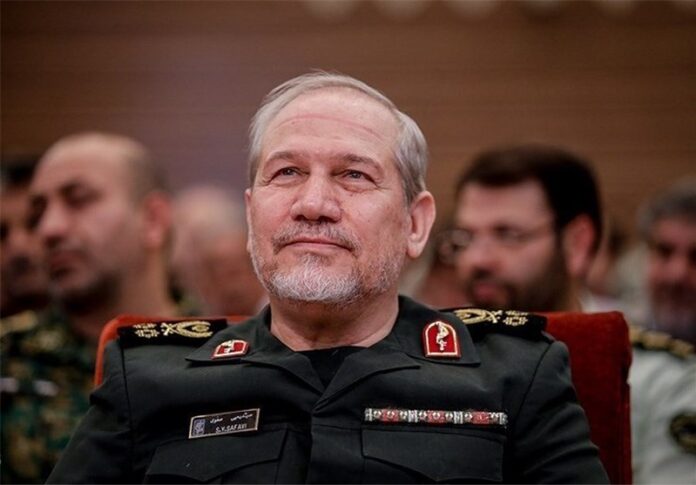
Brigadier General Yadollah Javani, Head of the Political Bureau of IRGC, said the US should wait for the fallout of its strikes on Syria.

“The move by the US and its allies- the UK and France- to carry out air strikes on Syria is illegitimate and a flagrant violation [of Syria’s sovereignty],” he was quoted as saying in a Farsi report by Fars News Agency.

He underlined that the strikes come at a time when a fact-finding mission was about to visit Syria and verify the US’ claim that Syrian army had used chemical weapons against the militants in Douma.

“Damascus had already prepared the ground for the visit of the fact-finding mission to Syria. The strikes disprove the false claim by the US about Syria’s chemical attack,” he noted.

The IRGC official went on to say that the US was seeking to use the final report of the fact-finding mission as a pretext to carry out an attack on Syria.

“The US was worried that the final report of the mission would stand in stark contradiction with its claim about Syria chemical attack, depriving it of a good pretext to attack Syria.”

The general underlined that the US-led strikes on Syria will only make the current situation in the region more complicated which will not be certainly in the interests of the US.

“The US officials should be held accountable for the regional consequences of the US-led airstrikes on Syria.”

The head of the political bureau of IRGC emphasized that such strikes will not undermine the resistance front.

“Instead, they will strengthen the front and provide it with more room to cope with the foreign powers’ interference in the internal affairs of the regional states.

He made the remarks in reaction to the coordinated missile attack by the US, Britain and France on Syria in the early hours of Saturday over an alleged chemical attack in the Damascus suburb last week.

International reactions are still pouring in following the US-led airstrikes on Syria.

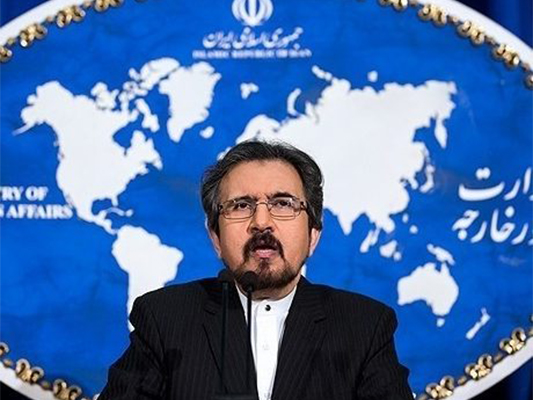
Iran vehemently condemned the attack calling it a violation of international law. Iranian Foreign Ministry Spokesman Bahram Qassemi warned in a statement against the repercussions of such an act of aggression against an independent country.

Earlier, Russia warned of the consequences of the attack. Russia’s US ambassador warned that ‘such actions will not be left without consequences.’ Meanwhile, Russian Defence Ministry announced that over 100 missiles fired at Syria, ‘significant number’ intercepted. The Ministry underlined that Russia’s air defence system was not involved in intercepting US-led missile attack.

According to the Ministry, the strikes came at a time when Syrian army was making progress in its fight against the terrorists.

A Russian lawmaker said Russia will likely call for a UN meeting on Syria.

Meanwhile, Amnesty International warned that the airstrikes should minimize harm to Syrian civilians.

The NATO Secretary General expressed the alliance’s support for the coordinated attacks. Jens Stoltenberg also called for a collective and effective international response to Syria’s alleged use of chemical weapons.

The Canadian Prime Minister has also expressed support for the airstrikes, saying Ottawa will continue to work with its international partners to further investigate the use of chemical weapons in Syria.

Turkey has welcomed the US-led airstrikes and said it was informed ahead of the strikes. A  Turkish foreign ministry source described the airstrikes against Syria as an “appropriate” response.

British defence secretary says strikes in Syria were highly successful.

Meanwhile, in a joint press conference in Paris between French Defence and Foreign Ministers, the two sides said the strikes were aimed at chemical structures of Syria. French foreign minister called the strikes “legitimate”. France presidency announced in a statement that French air strikes in Syria are over but military ready to act upon request.

Lebanon’s Hezbollah said US war against Syria, region and ‘resistance movements’ will not achieve its goals.

An Israeli cabinet minister said the US-led airstrikes on Syria is a clear signal to Iran, Syria and Hezbollah.

Earlier, the UN Chief António Guterres urges restraints after the strikes on Syria.

The Saturday strikes by the US marked the second time that President Donald Trump has authorized attacks on Syria.

He had ordered a missile strike against Shayrat Airbase in Syria’s Homs Province on April 7, 2017.

He claimed back then that the air field had been the origin of a suspected Sarin gas attack on the town of Khan Shaykhun in Syria’s Idlib Province on April 4, 2017.