Thursday, December 25, 2025
Home Blog Page 3617

If US Leaves JCPOA, There Will Be No Deal Left: Iran

Hamid Baeidinejad, who was also a member of Iran’s nuclear negotiating team during the talks that led to the 2015 nuclear deal, made the comments in an interview with CNN’s Amanpour.

“If and when the United States pulls out of the agreement, that would mean there is no deal left because one of the key signatories to the agreement has breached provisions of the agreement,” said the top diplomat.

He underlined that Iran is prepared for all possible scenarios regarding the Iran nuclear deal also known as the Joint Comprehensive Plan of Action (JCPOA).

The ambassador also elaborated on the options Iran will consider if Washington withdraws from the JCPOA.

“The first option would be to refer to the mechanism for the settlement of disputes envisaged in the JCPOA,” he said.

Nevertheless, the Iranian diplomat noted, Tehran will not necessarily use this option.

“Another option would be for us to leave the deal in reaction to the US move. This option is very real and realistic. This is the option we are making plans on, and our president has ordered different organisations and authorities in Tehran to be ready for such an event,” the Iranian ambassador to the UK added.

Spokesman for the Iranian Government Mohammad-Baqer Nobakht also weighed in on the issue on Wednesday. He said Trump, who has little political understanding, is likely to withdraw from the JCPOA.

He said a “different move” has being going on in Iran over the past five years in order to break the economic embargo.

“In order to break this economic blockade, we entered a series of economic discussions named the JCPOA. All of us have a share of this path, and no one in the government can step aside,” he said.

“Some may step aside due to some problems they have faced, but not only will I not step aside, I will keep defending the path we have chosen … to the end,” Nobakht noted.

He said Iran should prepare itself for the post-JCPOA situation.

“We have also made budgetary plans for different situations as needed,” the top official noted.

Trump has been a vociferous critic of the Iran nuclear deal which was signed between Tehran and six world powers in 2015. He has called the JCPOA the “worst deal ever” and even threatened to tear it up.

The Iranian official’s comments come ahead of a May 12 deadline for Trump to decide whether or not to extend waivers of economic sanctions on Iran.

In January, he did extend those waivers, but said the European signatories should fix “the terrible flaws” of the accord by May 12 or he will refuse to do that again.

White House principal deputy press secretary Raj Shah said Monday that Trump is “prepared to potentially withdraw” from the Iran deal if changes to the agreement are not made.

Earlier this month, Trump brought two anti-Iran hawks into his cabinet, fueling speculation that he could be preparing to withdraw the US from the deal.

Ex-CIA chief Mike Pompeo replaced Rex Tillerson as secretary of state, while John Bolton was picked as Trump’s national security adviser. Both figures have been critical of the Iran deal, which was inked under Trump’s predecessor Barack Obama, with Bolton once calling it “the worst act of appeasement in American history.”

However, a bipartisan group of over 100 US national security veterans recently called on Trump to honor the Iran nuclear deal.

In a statement, the so-called National Coalition to Prevent an Iranian Nuclear Weapon reminded Trump that findings by United Nations inspectors show that the pact is working. The experts also highlighted the importance of maintaining close ties with European allies, which all support the nuclear deal.

Tehran Hosts Street Performances on World Theatre Day

The performances were part of a week of celebrations organized by Iran Theatre Forum.

The opening ceremony consisted of a series of short artistic performances, including poetry reading, musical play and Persian style folk dance moves.

The performances will be running until May 4.

What follows are Mehr News Agency’s photos of the plays:


5.2 Magnitude Quake Injures Scores in Western Iran

Iran’s health officials say 84 people have been admitted to hospitals. One of the injured is reportedly in a critical condition.

The Wednesday morning earthquake damaged the urban and rural infrastructure of Dana County and the city of Sisakht.

The power outages and disruptions caused by the quake were resolved by the efforts of the power distribution operational groups in the cities of Sisaket, and Yasuj in Kohgiluyeh and Boyerahmad province.

Officials say assessment teams have been deployed to the quake-stricken areas of the province.

The magnitude 5.2 earthquake rattled southwestern Iran in the early hours of Wednesday, the National Earthquake Information Centre said.

It hit around 160 km northwest of the city of Shiraz at 8:38 local time at the depth of 8 kilometres.

State media footage showed cracks in the walls of buildings in Sisakht which has a population of about 10,000.

Iran is prone to near-daily earthquakes as it sits on major fault lines.

Last November, a 7.3 magnitude earthquake hit villages and towns in Iran’s western Kermanshah province along the mountainous border with Iraq, killing at least 620 people and injuring thousands of others.

In 2003 as well, a magnitude 6.6 quake flattened the historic city of Bam, killing 26,000 people.

Iran Denies Cooperation with Morocco’s Polisario Front

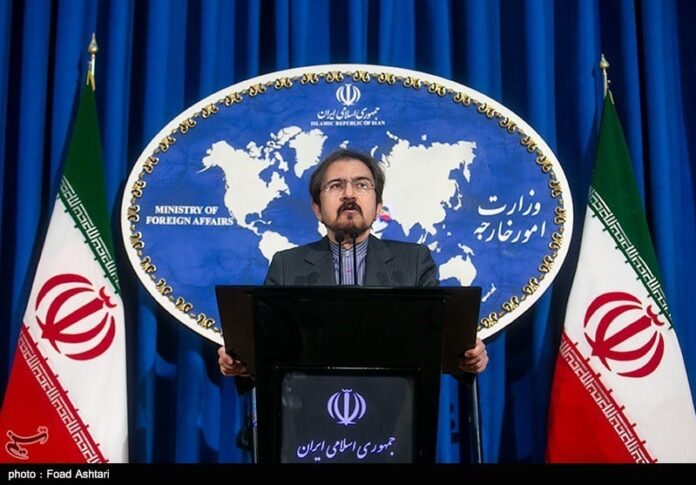
In a Wednesday statement, Bahram Qassemi dismissed as untrue and false remarks attributed to Morocco’s foreign minister that Iranian diplomats have been cooperating with Polisario Front.

“As mentioned in recent days and during contacts by the officials of both countries, and as Iranian officials dismissed the claim as utterly groundless and untrue, we do deem it necessary to emphasise, loud and clear, once again that one of the most important and fundamental principles of the Islamic Republic of Iran’s foreign policy regarding relations with other governments and countries is full respect for their right to sovereignty and security as well as non-interference in other countries’ internal affairs,” the spokesman said.

Qassemi’s reaction came in response to Moroccan Foreign Minister Nasser Bourita’s accusation that Iran and the Lebanese resistance movement, Hezbollah, are training and arming Polisario militants via the Iranian embassy in Algeria. Hezbollah has rejected any such involvement as well.

Morocco has severed diplomatic ties with Tehran over its alleged support for the Polisario Front.

The front is a Western Sahara independence movement. Morocco has claimed Western Sahara since Spain left in 1975. But Polisario fought a guerrilla war for independence for the Sahrawi people until a UN-backed ceasefire took hold in 1991.
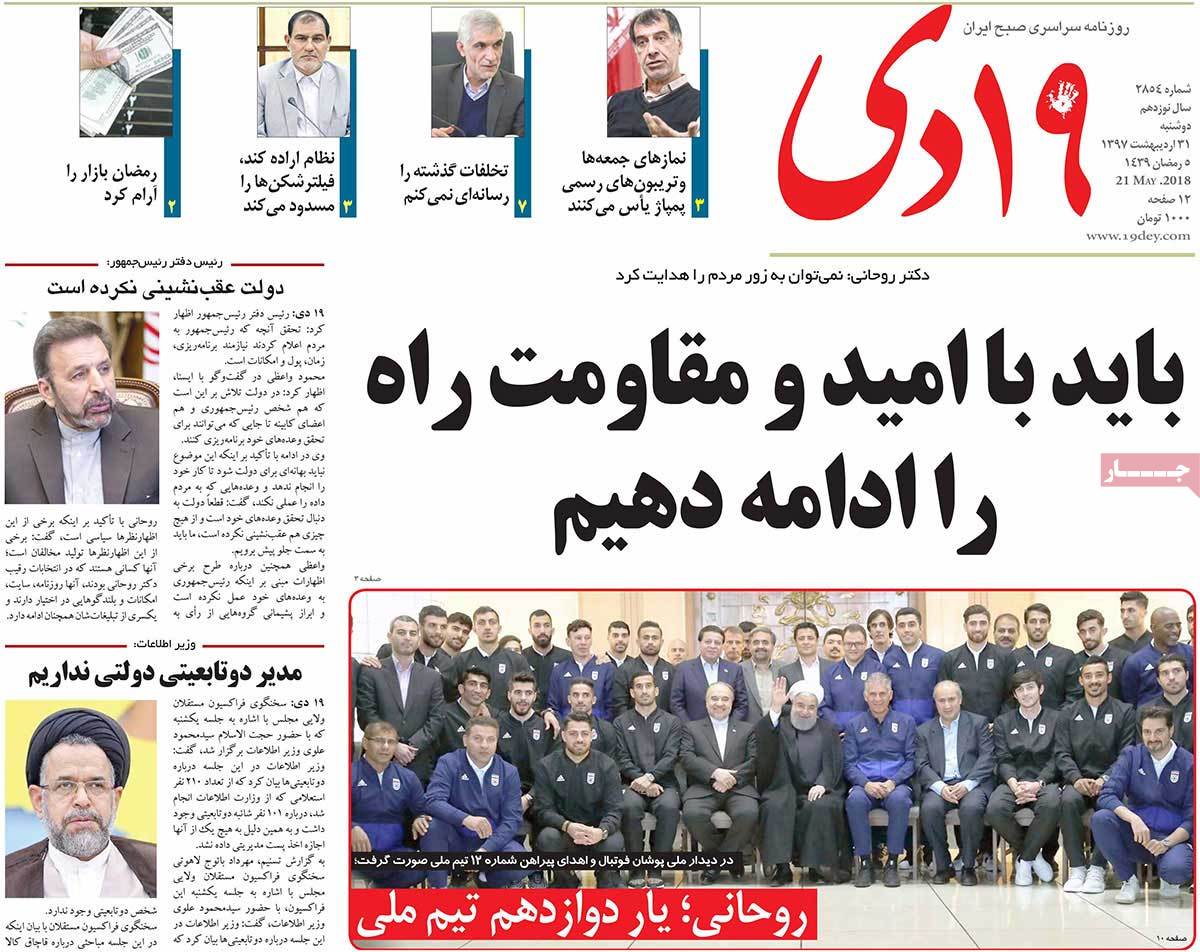
Iran Denounces France Police Attack on IRIB Crew

“From the very beginning of the incident, the Islamic Republic’s embassy in Paris has been seriously monitoring the health status of the IRIB team, and we hope that they will be recovered soon,” added Qassemi.

He also condemned the French police’s move that led to this unpleasant incident, adding that police should provide security for citizens and guarantee the professional activities of journalists and the press.

“We consider such incidents unacceptable, and expect the French authorities to cooperate with Iran’s embassy staff in dealing with the perpetrators of this incident and look into the status of the Iranian state radio and TV team.”

Two Iranian media crew covering anti-government protests in Paris were heavily injured by the Frrench police and taken to hospital on Tuesday.

Shahsavar Hosseini, the correspondent of the Iranian state radio and TV in the French capital, passed out after inhaling tear gas during demonstrations.

A cameraman of the Iranian TV crew was also wounded after being hit in the head by a rubber bullet and rushed to hospital. He is reportedly in a coma now.

The Iranian media crew were covering the demonstrations by anti-government protesters in Paris when the two were wounded as police clashed with protesters.

Jeddah Wrestling Charade: Bin Salman’s Fantasy of Defeating Iran

The Persian-language Tasnim News Agency has, in an analytical piece, weighed in on the ludicrous shows that Saudi Arabia has recently staged against Iran. The highlights of the article follow.

Around five months ago, Saudi Arabia released an animation depicting war against Iran through the eyes of Riyadh. In that imaginary and “all-out” war, all of Iran’s infrastructure is destroyed in operations commanded by Mohammed bin Salman who enters Tehran shortly. The animation was held up to ridicule by many, even Saudi citizens.

Recently, Riyadh staged a “wrestling” scenario to once again display Bin Salman’s victory in another show.

According to Saudi sources, some $10 million was paid out of Saudi people’s pockets for a five-minute performance by the wrestlers picked by bin Salman. The two Iranian wrestlers were humiliated by their Saudi counterparts after raising the flag of the Islamic Republic.

In reaction to the phony wrestling match in Jeddah, a Saudi activist wrote on Twitter that while Saudi soldiers are fighting on the southern borders, bin Salman arranges parties and shows filled with debauchery.

The activist’s reaction was in response to the Jeddah wrestling event held by the Al Saud regime. More than 60,000 spectators, including women, watched the event held at Jeddah’s al-Jawhara stadium.

Surprising enough, a few wrestlers carrying the Iranian flag went into the ring, triggering a brouhaha in Saudi Arabia and drawing the attention of activists on social media networks.

That a few wrestlers were present at the event with the Iranian flag was another targeted scenario staged by the Al Saud regime against Iran under which the wrestlers were planned to lose to Saudi wrestlers.

Some users also lashed out at Saudi Arabia for using the Iranian flag at the event, describing the show as Saudi officials’ fantasy.

Book on Persian Gulf to Be Translated into 50 Languages

Iran Says Persian Gulf Always ‘Persian’ Gulf, not ‘Washington’ Gulf

Javad Nowruzi said this is the first time in Iran’s history that a Persian book is translated into 50 languages.

“The pictorial book of Persian Gulf has been compiled following four years of in-depth research and studies,” he was quoted as saying in a Farsi report by the Persian-language Islamic Republic News Agency (IRNA).

He said so far the book has been translated into Arabic, English, Spanish, Italian, Chinese, Russian, German and French languages.

According to Nowruzi, the book only draws on foreign sources and does not use even a single Iranian source.

“The book also includes 10 documents by the United Nations in which issues of environment, soil sciences, sea sciences, and Persian Gulf species,” he noted.

He said there are 120 historical maps in the book which are unveiled for the first time.

The author also noted based on an agreement made by the Islamic Culture and Communications Organisation, the book is expected to be distributed among the national libraries of 90 countries and will be available in 185 parts of the world.

He said arrangements are being made to release the digital version of the book in the near future to provide further public access to it.

The book was unveiled on the National Day of Persian Gulf, which is a very important day for the Iranian people and is celebrated annually on 30 April. It has been marked every year since 2004, and is commemorated with various ceremonies in Iran, especially in the coastal cities of the Persian Gulf.

The Persian Gulf, located in Western Asia, is an extension of the Indian Ocean located between Iran (Persia) and the Arabian Peninsula.

The body of water has long been known as the Persian Gulf according to various historical documents; however, certain Arab countries in the past few decades have tried to distort the history and call it using fake names.

Netanyahu’s Nuclear Evidence “Ridiculous, Fabricated”: Iran

“What we saw from Netanyahu was a childish, ridiculous show we have seen in recent years,” Iranian Deputy Foreign Minister Seyyed Abbas Araqchi said, speaking to state TV on Tuesday.

The deputy foreign minister was referring to a televised address by Netanyahu Monday, in which he presented what he claimed was evidence obtained from a warehouse in Tehran suburbs that Iran had continued gathering nuclear weapons knowledge after signing the 2015 agreement with major powers.

The remarks appeared to suggest Iran could be after building nuclear weapons after the confidence-building restrictions on Tehran’s nuclear work end several years later.

The show was reminiscent of a 2012 address by Netanyahu to the United Nations, in which he unfolded a chart with a cartoon-style drawing of a nuclear bomb, claiming Iran was on the verge of building a nuclear bomb.

“Why should Iran store such important documents in an abandoned industrial warehouse?” Araqchi asked.

The deputy foreign minister said such baseless documents are like evidence presented by western intelligence services to the International Atomic Energy Agency, claiming Iran has been after building nukes in 1990s and 2000s.

The agency investigated the evidence under a dossier called possible military dimensions of Iran’s nuclear activities.

Late 2015, the agency confirmed Iran’s assertion that its nuclear program was entirely peaceful, giving the green light for the nuclear deal to take effect in January 2016.

The pact settled a 12-year dispute between Iran and western powers accusing Tehran of covertly building nukes, an allegation that has always been rejected by Tehran.


Preparing the Ground For US Pullout

Araqchi, a top member of Iran’s negotiating team who concluded the deal with major powers, said the timing of Bibi’s show suggests it could be aimed at preparing the ground for the US pulling out of the deal.

The presentation came several days before a deadline for US President Donald Trump to decide whether to remain in the deal.

Trump has threatened he will refuse to extend the temporary waivers on US sanctions, which were suspended under the nuclear pact, unless what he calls “disastrous flaws” of the nuclear deal are fixed.

The refusal of the US to keep the sanctions frozen will mean the US is no longer bound by the pact.

“These measures show how much the US, the Zionist regime and Saudi Arabia are concerned and angry over the nuclear deal and the conditions it has created for Iran,” Araqchi said.


Boy Who Cries Wolf

Iranian Foreign Minister Mohammad Javad Zarif also reacted to the show, likening Netanyahu to a boy who cries wolf.

“The boy who can’t stop crying wolf is at it again. Undeterred by cartoon fiasco at UNGA. You can only fool some of the people so many times,” tweeted Zarif on Monday.

In a separate tweet, Zarif rejected accusations by the Trump and Netanyahu concerning Tehran’s pursuit of nuclear weapons.

“Pres. Trump is jumping on a rehash of old allegations already dealt with by the IAEA to ‘nix’ the deal. How convenient. Coordinated timing of alleged intelligence revelations by the boy who cries wolf just days before May 12. But Trump’s impetuousness to celebrate blew the cover,” he tweeted.

Just minutes after Netanyahu’s speech, Trump renewed his strong criticism of the 2015 deal and gave a tacit approval to the Israeli prime minister’s rhetoric.

Saudi Arabia No Match for Iran, IRGC General Says

General Rahim Safavi

In an address to a gathering of army cadets on Tuesday, Major General Yahya Rahim Safavi said military equipment are not the only factor determining the winner of a war, citing Iran-Iraq (1980-88) war as an example.

In the eight-year war, which claimed the lives of hundreds of thousands of people, the former Iraqi dictator Saddam Hussein could not accomplish any of his missions, despite its Arab allies flooded money and weaponry to his army.

“If Saudi Arabia’s military power was great, they should have defeated Houthis in Yemen by now. This is while they have so far failed [to achieve objectives] in the three-year war in Yemen,” the Persian-language ISNA quoted him as saying.

Iran and Saudi Arabia are at odds over various conflicts in the region, notably Yemen, which has been under attack by Saudi Arabia for three years, as parts of what Saudis claim is protecting democracy in their southern neighbour.

Saudi Arabia, the world biggest importer of weapons, started a military campaign in Yemen early 2015, which claimed was aimed at restoring to power the resigned president Abd-Rabbu Mansour Hadi, but neither its expensive military machine seems capable of making success nor there are bright prospects for a political achievement.
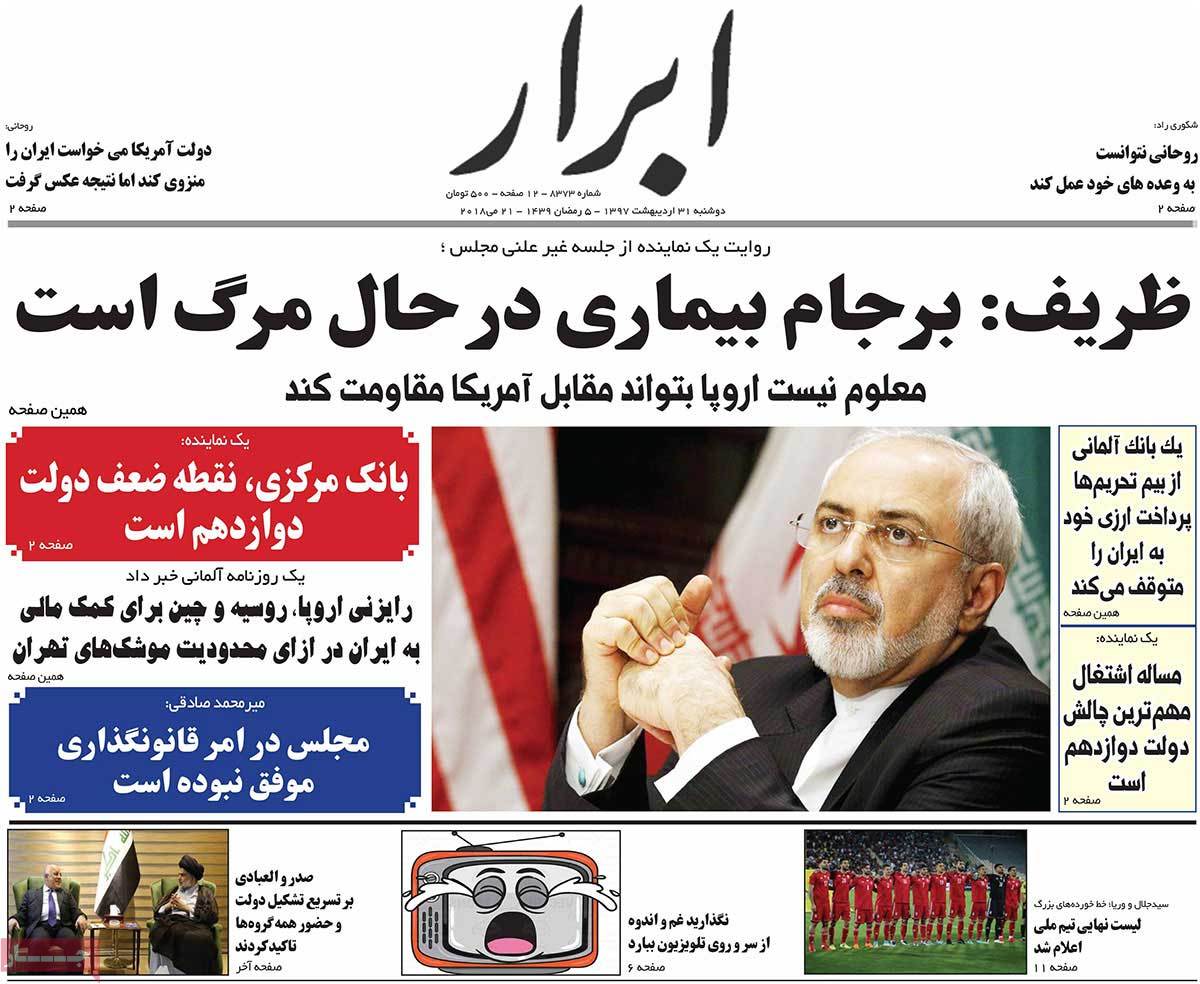
Iranian Correspondent Wounded during Paris Protests

Shahsavar Hosseini, the correspondent of the Iranian state radio and TV in the French capital, passed out after inhaling tear gas during demonstrations.
A cameraman of the Iranian TV crew was also wounded after being hit in the head by a rubber bullet and rushed to hospital. He is reportedly in a coma now.

This comes as French police are not allowing reporters to film the two wounded Iranian journalists currently under treatment in hospital.

The Iranian media crew were covering the demonstrations by anti-government protesters in Paris when the two were wounded as police clashed with protesters.