Thursday, January 1, 2026
Home Blog Page 361

British veterans detail war crimes by British forces in Afghanistan, Iraq

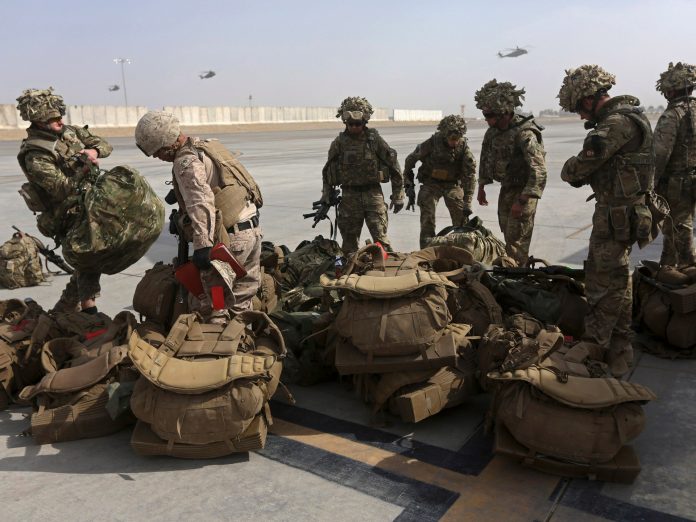
More than 30 witnesses who served with or alongside special forces soldiers broke their silence to the BBC’s Panorama programme and spoke about illegal killings and executions of detainees, including children, during the invasions of the two countries.

David Cameron – who was prime minister from June 2010 to November 2013, the period now under scrutiny by a judge-led public inquiry into special forces – was repeatedly made aware of concerns about night raids and killings raised by then-Afghan President Hamid Karzai, according to the BBC.

A spokesman for Cameron said “any suggestion that [he] colluded in covering up allegations of serious criminal wrongdoing is total nonsense”.

The special air service and the navy’s special boat service, the UK’s top special forces units, were at the centre of the testimonies.

“They handcuffed a young boy and shot him,” recalled one veteran who served with the elite soldiers in Afghanistan. ”He was clearly a child, not even close to fighting age.”

Killing of detainees “became routine”, the veteran said, adding that the soldiers would remove plastic handcuffs from executed detainees and plant weapons by their bodies to make it look like they were fighters in photographs taken from the scene.

Another veteran with the navy’s special forces regiment said some service members displayed “barbaric” and “psychopathic” behaviour as they felt untouchable by the law.

One former soldier described the killings as something that could turn “addictive” as some soldiers became “intoxicated by that feeling” in Afghanistan.

“On some operations, the troops would go into guesthouse-type buildings and kill everyone there,” he stated.

“They’d go in and shoot everyone sleeping there, on entry. It’s not justified, killing people in their sleep.”

Even wounded people who did not pose a threat to anyone were executed in breach of international law, witnesses said, speaking on condition of anonymity.

A former special forces operator said an execution of an unarmed person in Iraq was never properly investigated, adding that senior commanders were aware of the problem long before deploying to Afghanistan.

The BBC also obtained new video evidence that showed squadrons kept kill counts to compete with others.

One veteran stated a former colleague was trying to get kills on every single operation, having become “notorious” for killing dozens of people.

Another veteran added “everyone knew” about the killings in the UK special forces command with testimonies indicating officers would falsify postoperational reports to avoid scrutiny.
Trump considering attending Ukraine-Russia negotiations in Turkey

Russia Ukraine War

Trump is visiting the trumpPersian Gulf this week, making stops in Saudi Arabia, the United Arab Emirates and Qatar, for his first overseas trip since the start of his second term.

He stated he could detour to Turkey “if I thought it would be helpful.”

“I think you may have a good result out of the Thursday meeting in Turkey between Russia and Ukraine,” Trump told reporters at the White House on Monday.

“I don’t know where I’m going to be on Thursday, I’ve got so many meetings, but I was thinking about actually flying over there. There’s a possibility of it, I guess, if I think things can happen.”

Shortly after, Ukrainian President Volodymyr Zelensky said his country “would appreciate” Trump’s attendance, and stated he supported Trump’s call for direct talks between himself and Russian President Vladimir Putin.

“It is important that President Trump fully supports the meeting, and we would like him to find the opportunity to be in Turkey,” Zelensky added in his evening address.

The Ukrainian president said Sunday he was prepared to meet Putin after the Russian president proposed “direct talks” in Turkey – something not seen since the early weeks of Moscow’s full-scale invasion in 2022. Trump urged the Ukrainian president to “immediately” agree to Putin’s offer, undermining efforts to pressure Moscow to a ceasefire.

Moscow has not yet confirmed whether or not Putin or any other Russian official will attend the talks.

Last weekend, Ukraine’s major European allies had given Russia an ultimatum: agree to an unconditional 30-day ceasefire in Ukraine or face “massive” new sanctions. They insisted there could be no new talks before a ceasefire.

For months, Ukraine and its allies tried to convince the Trump administration that Putin acts in bad faith, and have said Russia’s agreeing to a ceasefire could function as a test of whether it is serious about achieving the peace the US president has long demanded.

In urging Zelensky meet Putin, Trump dropped his demand for Russia to agree to a ceasefire, marking a dramatic change in approach.

On Monday, the Kremlin announced Putin was serious about trying to find peace through talks, but the spokesperson said he could not say more, according to Reuters news agency.

Russian Foreign Minister Sergei Lavrov spoke by telephone with his Turkish counterpart Hakan Fidan about Putin’s proposed talks with Ukraine, but a brief Russian foreign ministry account gave no indication whether Putin would attend, according to Reuters.

Zelensky said Monday that Moscow had been “silent” regarding Putin’s proposal to meet.

“Ukraine always supports diplomacy. I am ready to be in Turkey. Unfortunately, the world still has not received a clear answer from Russia regarding numerous proposals for a ceasefire,” Zelensky added in his evening address.

Zelensky stated he had spoken to Turkish President Recep Tayyip Erdogan who “expressed full readiness to host the meeting.”

The Kremlin announced that Putin spoke with Erdogan on Sunday, who “fully supported” Putin’s proposal for peace talks and had offered Istanbul as a venue.

“A new window of opportunity has opened with the recent contacts. We hope that this opportunity will not be wasted,” Erdogan said Monday, following his call with Zelensky.

The Trump administration has been growing increasingly frustrated that efforts to broker a peace deal between Russia and Ukraine have so far fallen short.

Last month, US Secretary of State Marco Rubio stated that if there was no progress on Ukraine, the US would “need to move on.”

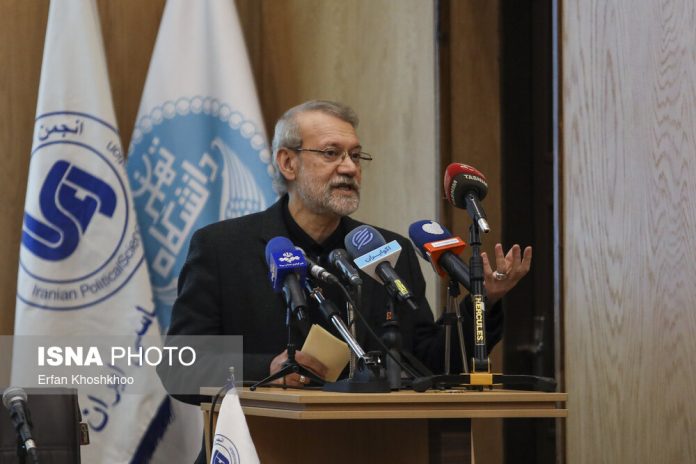
Larijani: US seeks power, not legal dialogue; Iran must strengthen itself

Ali Larijani

Speaking at an event honoring teachers and international students, he emphasized that the West does not seek dialogue but aims to pressure Iran by exploiting its economic weaknesses and diminishing its social capital.

Larijani noted that Western powers believe Iran is strategically weakened in the region and are pushing to intensify sanctions.
He admitted Iran faces economic challenges, partly due to sanctions and internal mismanagement, and called for better governance.

He asserted that Iran’s regional influence stems from local resistance movements, not from Iranian creation.
Supporting Palestine, Hezbollah in Lebanon, and resistance in Iraq and Afghanistan, he said, stems from grassroots opposition to occupation, not Iranian engineering.

Highlighting global double standards, Larijani compared the West’s approach to Iran and China, stating the issue with Iran lies in its independent stance, not ideology.

He warned that external pressure and imposed behavior will only strengthen resistance across the region.

Addressing Iran’s nuclear case, Larijani questioned why Iran, as an IAEA member, is denied its rights despite US intelligence confirming it has no nuclear weapons.

He concluded that the only effective response to coercion is internal strength and resilience, “They are not seeking legal dialogue – only power. Our only option is to grow stronger.”

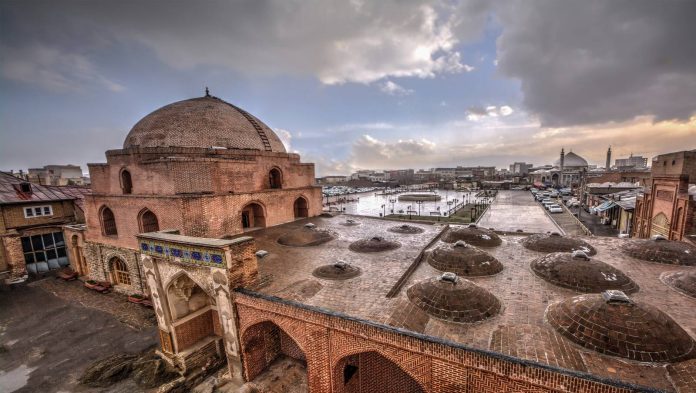
Sasanian architectural remains unearthed at Urmia’s Grand Mosque, northern Iran

According to Morteza Safari, Director General of the provincial Cultural Heritage Department, the findings were part of broader archaeological efforts at the mosque and the ancient Qalaychi Mound in Bukan.

Safari noted that the Grand Mosque, one of the oldest in the Azarbaijan region of Iran, has undergone various restorations over different cultural periods. The latest dig, conducted under the supervision of Iran’s Research Institute of Cultural Heritage, revealed layers of historical architecture, culminating in the significant discovery of Sasanian elements.

In addition to these excavations, Safari reported progress on 30 restoration projects. The region, home to approximately 1,400 archaeological mounds and 1,835 nationally registered historical sites, currently has 200 additional heritage listings under review.

Safari also announced the successful reclamation and adaptive reuse of several historic buildings previously managed by other agencies.

He emphasized the importance of public involvement in protecting cultural heritage, citing limited protective staff for the vast number of heritage sites in the province.

Trump receives royal Saudi welcome from MbS in Riyadh

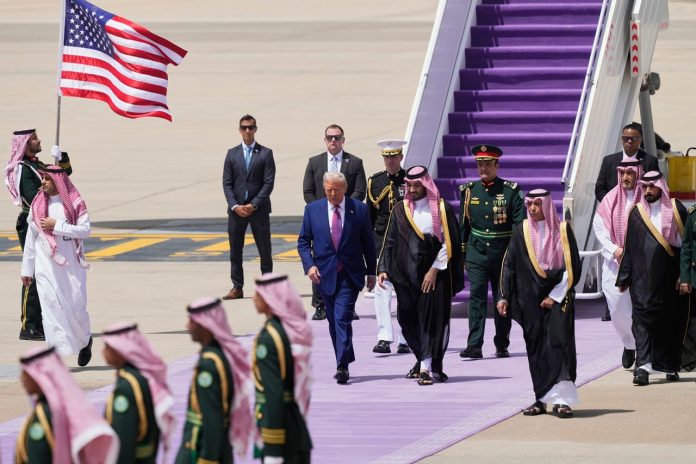
Trump has landed in Riyadh, Saudi Arabia, kicking off his first major international trip of his second term. Air Force One was wheels down at 2:49 a.m. ET (9:49 a.m. local time).

Trump and the crown prince greeted each other warmly and walked the tarmac together, also briefly speaking to top Saudi officials before entering the airport, where they were seated in plush purple chairs with gold trim underneath portraits of Saudi royal family members.

They were joined by top US officials — Secretary of State Marco Rubio, Defense Secretary Pete Hegseth, Commerce Secretary Howard Lutnick, and Energy Secretary Chris Wright — as well as Saudi officials, who each sat in purple chairs alongside.

The pomp and circumstance of the official state visit are already on display: the streets of Riyadh on the route from the airport to downtown are decorated with American and Saudi flags commemorating the official state visit. And Saudi F-15 military jets escorted Air Force One in on approach, according to a social media post from Trump deputy chief of staff Dan Scavino and reports from pool reporters traveling with the president.

Later Tuesday, Trump will attend a more formal arrival ceremony with the crown prince, an introduction of the delegations, a lunch with CEOs, bilateral meetings, and an agreement signing of the Royal Court.

He is expected to give remarks at a US-Saudi Investment Forum, and later tour Dir’iyah and At-Turaif UNESCO world heritage site before a dinner with the crown prince.

Bin Salman has emerged as a key Trump ally who has been involved in US efforts to mediate an end to Russia’s war in Ukraine. He has worked to cultivate close ties to Trump, starting in the president’s first term, and was among the first world leaders to congratulate him after his swearing-in in January.

Choosing Riyadh as the first stop on his first major international trip of his second term underscores how Trump is seeking to prioritize and empower the Arab state from its isolation following the killing of journalist Jamal Khashoggi in 2018.

Iran’s deputy FM: US contradictions complicate negotiations

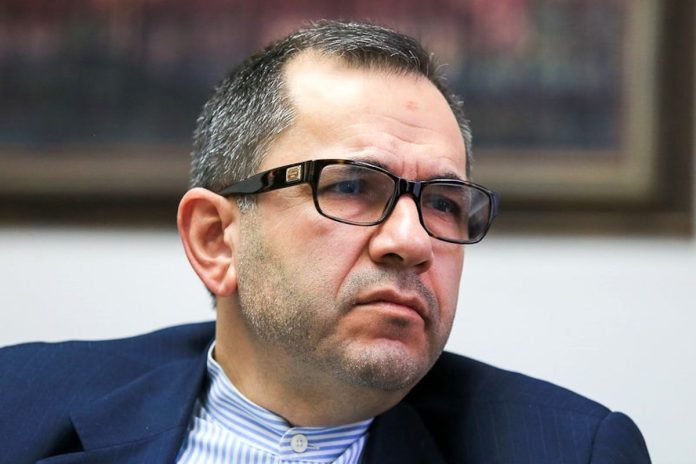
Majid Takht-e Ravanchi

Speaking on the sidelines of the Tehran International Book Fair on Monday, Takht-Ravanchi stated, “We hear conflicting remarks from American officials – one says something, another says something else. That makes the negotiations more difficult.”
He emphasized that Iran has raised the issue during talks and called for greater clarity.

Iran and the US have so far held four rounds of indirect negotiations, with both sides expressing interest in progress. Although the timing of the next round is not yet finalized, both parties have agreed in principle to continue the dialogue.

Responding to questions about potential guarantor countries, Takht-Ravanchi confirmed that no such proposal has been formally discussed.
He also said no date has been set for the Iranian foreign minister’s planned visits to three European countries, namely the UK, France and Germany.

Addressing the broader economic context, Takht-Ravanchi acknowledged Iran’s current economic hardships due to “unjust sanctions,” and underlined that diplomacy is focused on lifting them. However, he noted that domestic economic reform is equally vital and cannot rely solely on sanctions relief.

Syria’s new ruler skips Iraq summit after firestorm over invitation

Syria’s delegation to Saturday’s summit will be headed by Foreign Minister Asaad al-Shibani, state-owned Ekhbariya TV reported, without providing a reason for Sharaa’s absence. The summit is expected to focus on Gaza reconstruction and the Palestinian issue.

Sharaa’s decision highlighted Syria’s mixed results establishing ties across the region after former President Bashar al-Assad’s ouster last year. Sharaa has made rapid inroads with Sunni-majority Persian Gulf Arab states Saudi Arabia and Qatar, but has tread more carefully with others where Iran has had strong influence, like Iraq.

Sharaa fought with Al Qaeda in Iraq after the U.S-led invasion in 2003. He was imprisoned there for more than five years, then released for lack of evidence in 2011, according to a senior Iraqi security official.

He then opened Al Qaeda’s branch in Syria, breaking away in 2016 to form what became Hayat Tahrir al-Sham, the group that ousted Assad.

Iraq’s prime minister invited Sharaa last month to the summit, prompting criticism from mainly Shi’ite Muslim factions who accuse Sharaa of orchestrating attacks against Shi’ites during his years in Iraq.

At least 57 Shi’ite lawmakers in Iraq’s 329-member legislature petitioned the government to bar Sharaa from the summit, a copy of the request seen by Reuters showed. Rumours circulated that he could face an arrest warrant, but Iraqi authorities denied this.

Sunni politicians largely welcomed his participation in the summit as a step towards pulling Iraq away from Iran and towards Arab states, who have largely backed Sharaa.

“There are elements… working against Iraq’s progress to reclaim its rightful place within the Arab community,” stated Raad al-Dahlaki, head of Azm Alliance, a major Sunni bloc in Iraq’s parliament.

Analysts view Iraq as the last strong pillar in Iran’s so-called Axis of Resistance after Assad’s ouster and Israel’s degrading of Hezbollah in Lebanon and Hamas in Gaza.

Some Syrians were also concerned that Sharaa could face danger in Iraq.

For his Iraqi critics, “it’s not going to be easy for them to digest, nor for the Syrian secret service to disregard those threats,” said Mahmoud Toron, an analyst close to the Syrian government.

Kremlin: Iran-Russia relations are win-win

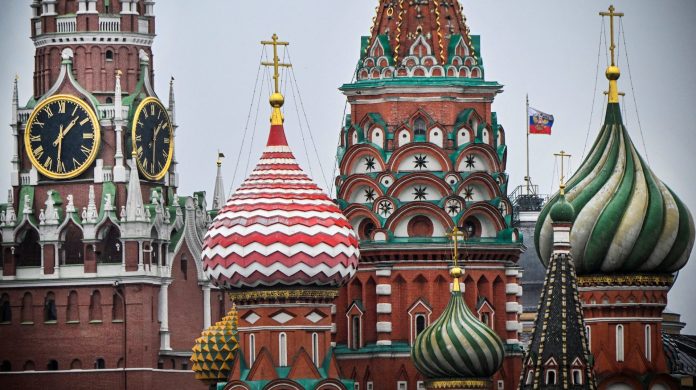
Kremlin

Speaking exclusively to IRNA, Peskov said the bilateral cooperation reflects mutual benefit, but added that current trade volume does not reflect the full potential of the two countries.

The commission, co-chaired by Iran’s Oil Minister Mohsen Paknejad and Russian Energy Minister Sergey Tsivilyov, concluded with the signing of a final agreement aimed at strengthening economic ties.

Paknejad noted key agreements in upstream oil cooperation, joint development of oil and gas fields, and acceleration of partnerships with Russian energy giant Gazprom.
He also emphasized collaboration on nuclear energy, petrochemicals, and oil product swaps.

One major highlight was the commitment to activating the International North-South Transport Corridor (INSTC), with a focus on completing I
the Rasht-Astara railway segment — a crucial link in the trade route.

Additional discussions included banking cooperation, harmonizing trade standards, expanding commercial centers, and boosting collaboration in agriculture, health, and customs.

Tsivilyov confirmed a 16.2% increase in trade volume in 2024, reaching $4.8 billion, and called Iran a “reliable partner.”

He also highlighted the strategic treaty, signed during Iranian President Massoud Pezeshkian’s visit to Moscow in January 2025, calling it a milestone in bilateral ties.

Iran, Uzbekistan can achieve prosperity through expanded relations: President Pezeshkian

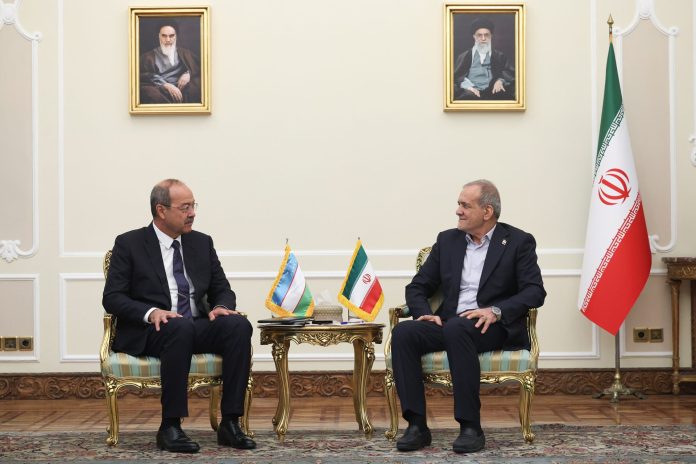
During a meeting with Uzbekistan’s Prime Minister Abdulla Aripov in Tehran on Monday, President Pezeshkian expressed his satisfaction with the strengthening relationship between the two countries.

The Iranian president stated that the governments of Iran and Uzbekistan can ensure greater welfare and tranquility for their citizens, as well as promote peace, security, and stability in the region through enhanced interactions and the exchange of experiences, capabilities, and achievements.

He noted the historical, cultural, religious, and linguistic commonalities between Iran and Uzbekistan, adding that geographical borders cannot separate the two nations.

President Pezeshkian highlighted the importance of meetings between Iranian and Uzbek officials and citizens in improving bilateral relations, suggesting that these interactions can be further intensified.

He also asked Prime Minister Aripov to convey his warm greetings to Uzbekistan’s President Shavkat Mirziyoyev, expressing hope for a meeting with his Uzbek counterpart in Tehran to discuss expediting the implementation of bilateral agreements.

In response, Prime Minister Aripov conveyed President Mirziyoyev’s best wishes to President Pezeshkian, noting that the two presidents’ follow-ups play a crucial role in achieving common goals.

He also acknowledged Iran’s significant advancements in scientific, industrial, and technological sectors, stating that he reached a consensus with Iranian authorities on increasing the volume of trade exchanges.

Iran’s vice president: Gov’t committed to unblocking internet, empowering women and youth

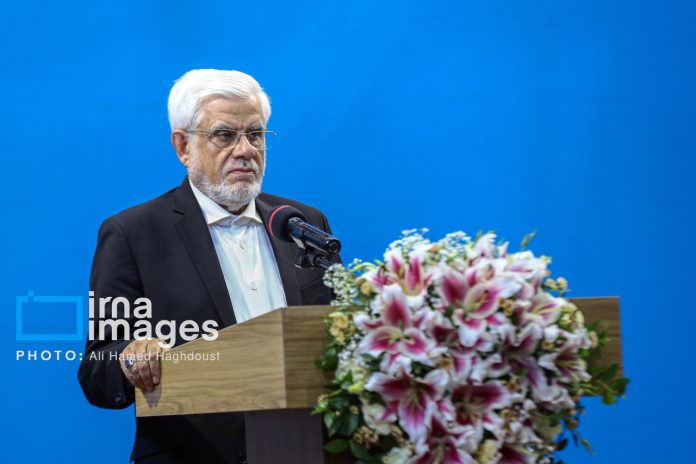
“The path toward unblocking filtered platforms is being implemented gradually and with strategic oversight,” Aref said during a gathering of political, social, and cultural leaders in East Azarbaijan Province.

Aref emphasized that President Massoud Pezeshkian’s administration is committed to fulfilling its campaign promises, stressing a results-driven approach rather than symbolic rhetoric. He added that while the government avoids “shock therapy,” it remains focused on structural reform.

Addressing social policy, Aref noted revisions are underway to the Chastity and Hijab Bill to ensure alignment with constitutional values and public dignity. He also highlighted increasing representation of women in high-level roles and said the government is addressing gaps in leadership pipelines that have hindered female participation.

The vice president further stated that members of Iran’s Sunni community and youth from diverse backgrounds are being appointed to key posts, reflecting the administration’s inclusive governance model.

Regarding power shortages, Aref acknowledged challenges but said over 7,000 megawatts have been added to the national grid in recent months.

He concluded by welcoming even critical feedback, urging constructive proposals from the public.