Thursday, January 1, 2026
Home Blog Page 359

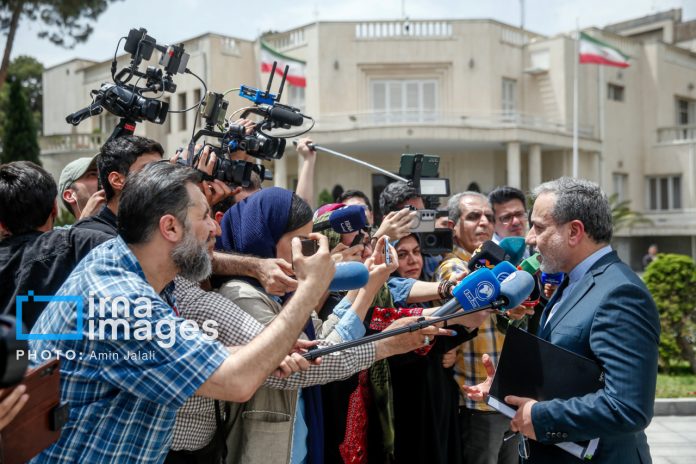
Iran says ready for negotiations with U.S. and Europe, rejects ‘deceptive’ rhetoric

Speaking after a cabinet meeting on Wednesday, Araghchi said Iran is awaiting an official announcement from Oman regarding the time and location of the fifth round of indirect talks with Washington.
He also noted that further discussions with European counterparts are planned, with deputy-level negotiations scheduled for Friday in Istanbul.

“We are very interested in reaching a regional understanding that can enhance security and mutual understanding between Iran and its neighbors – without the interference of foreign powers,” he said.

Araghchi criticized US President Donald Trump’s recent remarks, calling them “highly deceptive.”

He said Washington remains the primary cause of Iran’s economic hardships, citing decades of sanctions and military threats.

He dismissed Trump’s characterization of Iran as a regional threat, pointing instead to US support for Israel.

“The same countries speaking of regional prosperity ignore who really causes instability,” he said.

He emphasized that maximum pressure policies have already failed and warned that mischaracterizing Iran’s role in the region is “a deliberate distortion of reality.”

EU agrees on new sanctions package targeting Russian ‘shadow fleet’

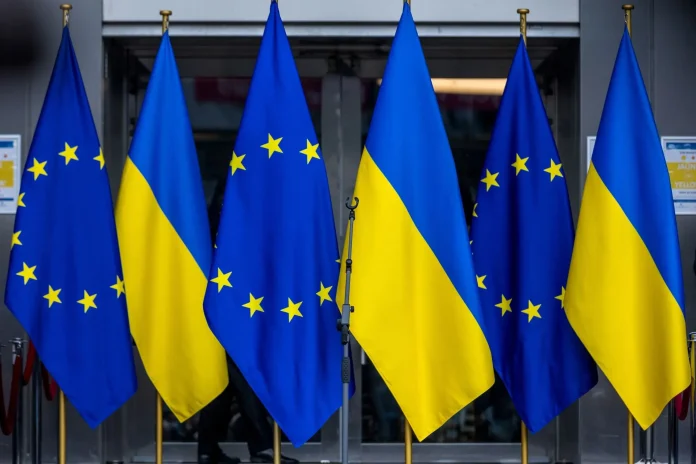
“This is a strong signal that the EU remains united behind the people of Ukraine,” European Council President Antonio Costa wrote on X.

The measures target almost 200 ships of Russia’s shadow fleet, 30 companies involved in sanctions evasion, and 75 sanctions on entities and individuals linked to the Russian military-industrial complex, a senior EU official speaking on condition of anonymity told the Kyiv Independent.

Russia has been using the shadow fleet to avoid Western sanctions and ship out its oil above the G7-imposed price cap. European countries have also linked the fleet to espionage and sabotage operations.

The new set of steps further includes measures targeting Russia’s hybrid operations, namely establishing the legal basis for countering propaganda outlets or vessels and entities involved in the sabotage of underwater cables, airports, or servers.

“So, you can see the direction we are going. In addition to ‘traditional’ sectoral and individual sanctions, we are broadening and more actively using other sanctions to hit Russia where we see the threats or where they aim to bypass the existing sanctions,” the source added.

The EU will also sanction more than 20 entities and individuals disseminating disinformation, and 20 judges and prosecutors involved in legal cases against two Russian oppositionists, Vladimir Kara-Murza and late Alexei Navalny.

Brussels is further imposing a ban on chemicals used in missile production.

“I welcome the agreement on our 17th sanctions package against Russia,” European Commission President Ursula von der Leyen said on X, adding, “This war has to end. We will keep the pressure high on the Kremlin.”

Talks on the 17th package began shortly after the EU adopted the 16th package on Feb. 24. The last package targeted the shadow fleet, financial institutions, entities involved in the Russian military-industrial complex, and more.

President Volodymyr Zelensky and the leaders of the United Kingdom, France, Germany, and Poland have pledged to impose additional sanctions against Russia if the Kremlin does not accept their proposal for an unconditional 30-day ceasefire.

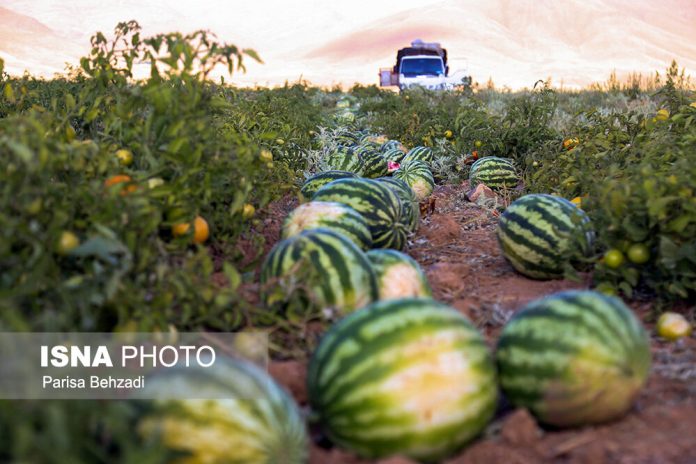
Iranian MP responds to Russian claims on watermelon safety: “A promotional stunt for Dagestan produce”

Peyman Falsafi, Deputy Chairman of the Iranian Parliament’s Agriculture Committee, said the claims – made by Russian MP Abdulkhakim Gadzhiyev – were baseless and politically motivated.

He argued that the statement served as propaganda against Iranian produce, intended to boost the profile of local Russian crops from the MP’s own constituency.

“Iran’s agricultural products, including fruits and vegetables, are regularly tested and monitored by the country’s Plant Protection Research Institute. These tests confirm that nitrate and pesticide residues remain within safe limits,” Falsafi said, citing routine scientific assessments.

He also questioned the credibility of the nitrate-detecting device used in the video shared by the Russian MP, calling for evidence-based dialogue instead of public theatrics.

Highlighting Russia’s strict import controls, Falsafi added that no agricultural products can enter the country without clearance from customs and health authorities. “If Iranian products made it to Russian markets, it means they passed all required health certifications,” he concluded.

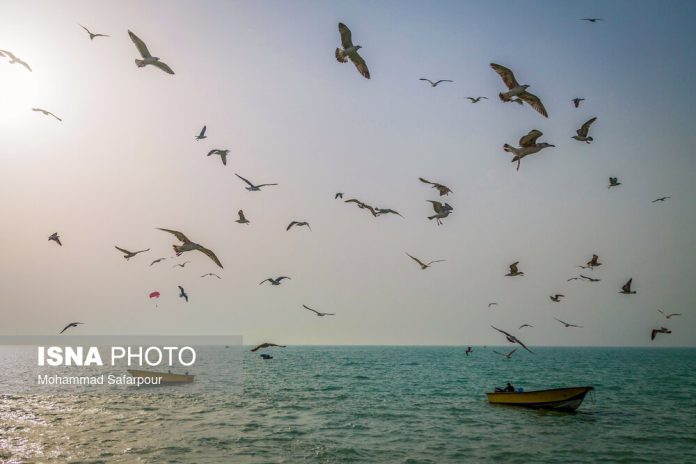
Iran to pursue legal action against Google over Persian Gulf naming dispute

Hossein Dalirian, the spokesman of the center, condemned the recent use of “fake and fabricated names” in place of “Persian Gulf” on some international platforms, including Google Maps.

He emphasized that the move has sparked strong public backlash in Iran and has even drawn criticism from some international figures, like US president Donald Trump.

Dalirian called the change a “deliberate distortion of a well-established historical and geographical fact,” stating that such actions violate international norms concerning standardized geographical names.

“The name ‘Persian Gulf’ has been used for thousands of years in historical documents, maps, and treaties,” he said, citing the recognition of the term by international bodies such as the United Nations Group of Experts on Geographical Names and UN resolution 715.

He stressed that Iran views the use of alternative names as a direct affront to its national identity and a breach of Article 19(3) of the International Covenant on Civil and Political Rights.

Dalirian added that Iran will soon hold a legal coordination meeting with top legal experts and governmental representatives to explore international avenues for legal recourse.

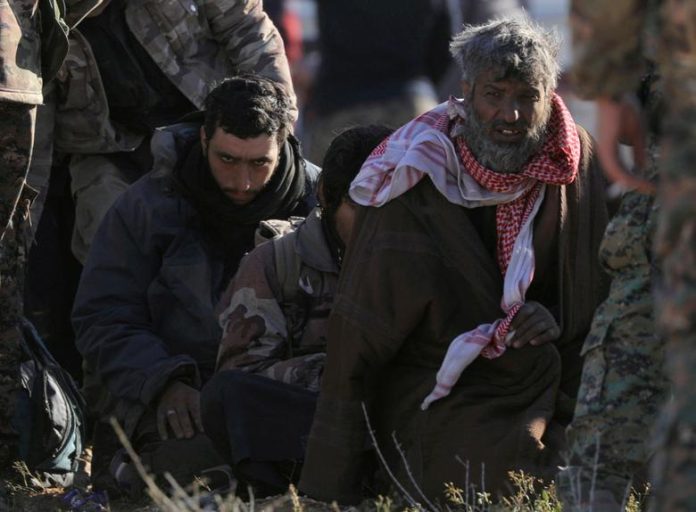
Iraq releases over 19,000 prisoners under new amnesty, including ex-Daesh members

Daesh

The move offers legal reprieves to some individuals convicted on terrorism-related charges, judicial authorities announced on Tuesday.

The law has also halted all executions, including for former Daesh members. The group once controlled nearly a third of Iraq’s territory after sweeping across the country in 2014, capturing major cities, including Mosul, Tikrit and Fallujah, before they were vanquished in 2017.

The years of their control killed thousands of people, displaced hundreds of thousands, decimated the Yazidi population and left vast areas in ruins. Many members were arrested as Iraqi forces retook Daesh-held areas.

The amnesty law, enacted in January, allows certain prisoners convicted of belonging to armed groups to seek release, a retrial or have their cases dismissed. However, those found guilty of killings linked to “extremism” are excluded from eligibility.

The legislation was strongly backed by Sunni lawmakers, many of whom have long argued that anti-terrorism laws disproportionately targeted Sunni communities in the years after Iraq’s clampdown on Daesh.

Detainees will now be permitted to request retrials if they claim their confessions were obtained through torture or coercion while in custody.

After a meeting in Baghdad chaired by Supreme Judicial Council President Faeq Zeidan, officials confirmed that 19,381 prisoners had been freed from January to April.

The total number of individuals benefitting from the law – including those sentenced in absentia, granted bail or with arrest warrants lifted – now stands at 93,597, according to a statement issued after the meeting.

The reforms come amid mounting pressure on Iraq’s penal system. Justice Minister Khalid Shwani said this month that the country’s 31 prisons held about 65,000 inmates – nearly double their intended capacity.

“When we took office, overcrowding stood at 300 percent,” he told The Associated Press news agency. “After two years of reform, we’ve reduced it to 200 percent. Our goal is to bring that down to 100 percent by next year in line with international standards.”

Thousands more people remain in the custody of Iraq’s security forces but have yet to be transferred to the Ministry of Justice due to lack of space.

Among those released under the new amnesty are individuals convicted of nonviolent crimes such as corruption, theft and drug use.

Iraq has faced international criticism for its use of the death penalty. Rights groups have condemned mass executions and opaque legal processes, including carrying out death sentences without notifying prisoners’ families or legal representatives.

Last month, Amnesty International expressed concern after at least 13 men were put to death in Nasiriya Central Prison in the southern governorate of Thi Qar following their convictions on “overly broad and vague terrorism charges”.

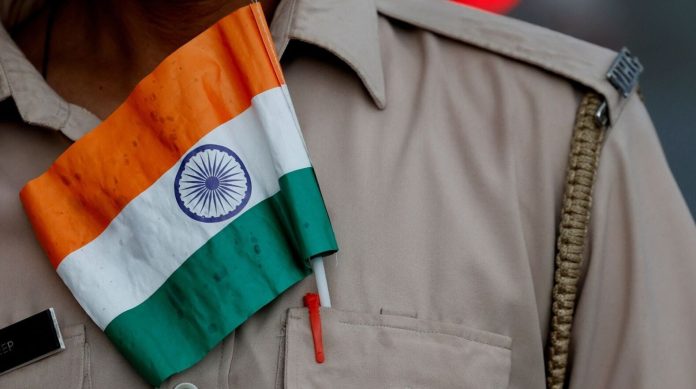
India expels Pakistan diplomat as war of words between nuclear-armed countries simmers in place of fighting

The unnamed official, stationed at Pakistan’s embassy in New Delhi, was accused by India’s Ministry of External Affairs on Tuesday of “indulging in activities not in keeping with his official status”.

The move comes after a brief but intense military confrontation last week that threatened to erupt into the fifth full-scale war between the two countries. While the truce brought a temporary halt to cross-border missile and drone strikes, sporadic skirmishes continue along the Line of Control (LoC), the de facto border in disputed Kashmir, a region claimed by both nations.

On Tuesday, Pakistan reiterated its commitment to the ceasefire but warned it would respond forcefully to any future attacks.

The statement came after Indian Prime Minister Narendra Modi warned in his first national address since the truce that India would strike “terrorist hideouts” across the border if provoked again.

The ultranationalist Hindu leader added that India “only paused” its military action against Pakistan.

Modi’s remarks were swiftly condemned by Pakistan’s Ministry of Foreign Affairs, which called them “provocative and inflammatory”.

“At a time when international efforts are being made for regional peace and stability, this statement represents a dangerous escalation,” it said.

“Pakistan remains committed to the recent ceasefire understanding and taking necessary steps towards de-escalation and regional stability,” the statement continued, adding that any future aggression would receive a response.

The conflict ignited after a deadly April 22 shooting attack in the Pahalgam area of India-administered Kashmir, where 25 Indian tourists and one Nepalese visitor were killed. India accused Pakistan’s government of links to the attacks – an accusation Islamabad strongly denied.

India launched strikes on what it called “terrorist infrastructure” in Pakistan and Pakistan-administered Kashmir.

According to Islamabad, 40 civilians and 11 Pakistani military personnel were killed in last week’s violence. India said at least 16 civilians and five Indian soldiers were killed.

The fighting marked the most severe exchange between the two countries in nearly 30 years and ended only after sustained diplomatic pressure. On Monday, India said it held a rare phone call with Pakistan’s military leaders, agreeing to uphold the ceasefire and explore ways to de-escalate the conflict.

Despite the ceasefire, sporadic violence continued on Tuesday with Indian forces reporting a gun battle in southern Kashmir’s Shopian district. The army announced three suspected fighters were killed in a “search and destroy” operation launched on intelligence input.

On Tuesday, Modi visited Adampur airbase near the border and reiterated India’s stance in a speech to air force personnel.

“We will not differentiate between the government sponsoring terrorism and the masterminds of terrorism,” he said, adding, “We will enter their dens and hit them without giving them an opportunity to survive.”

Meanwhile, both sides have taken a series of retaliatory diplomatic and economic measures.

India has suspended most visa services for Pakistani nationals, halted bilateral trade and announced its intention to unilaterally suspend the Indus Waters Treaty, a World Bank-brokered water-sharing agreement in place since 1960 that is critical for farming.

In response, Pakistan banned visas for Indians, closed its airspace to Indian aircraft and imposed a reciprocal trade embargo.

11 Russian banks now support Iranian bank cards in cross-border payment integration

Russian Bank Sber

Hamidreza Norouzi, Director of Payment Systems Oversight at the Central Bank of Iran, stated that the first phase of the Shetab-Mir card network integration was launched in September 2024.

This allowed Iranian citizens and tourists to withdraw cash and check balances at Russian ATMs using the “Kahroba” application. To date, over 2 million transactions worth more than 5 billion rubles have been processed through this system.

In a televised address, Norouzi also announced the launch of the second phase, enabling Russian “Mir” cardholders to make retail purchases in Iran using the “MirPay” app. Currently, over 163,000 point-of-sale terminals in Iran accept MirPay, with expansion underway in key tourist destinations.

He further noted that the third phase will soon be implemented, allowing Iranian cardholders to make retail and commercial purchases in Russia. These transactions will be settled using the “Mir-Business” exchange rate, updated daily, facilitating cross-border financial settlements between the two banking networks.

The integration aims to boost tourism, trade, and financial independence amid ongoing Western sanctions on both nations.

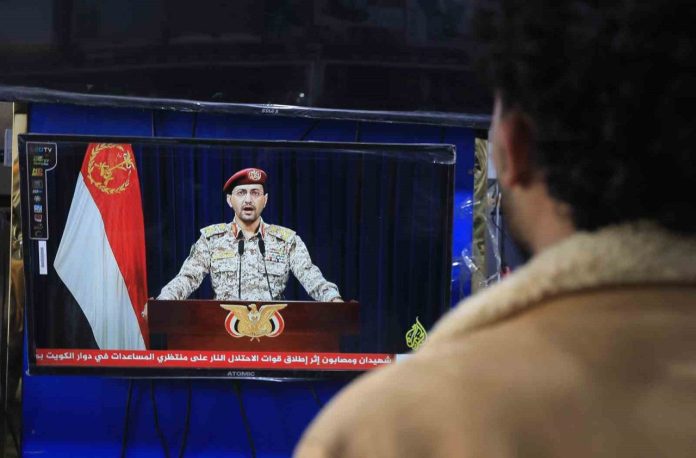
US spent $1bn bombing Yemen’s Hothis but failed to gain air superiority: NYT

Yemen Houthi

Citing Washington officials, a report on Monday stated that the Yemeni group shot down numerous American MQ Reaper drones and fired at naval ships in the Red Sea right up until the moment a truce was agreed.

Trump announced last week that in exchange for the US ceasing air strikes on Yemen, the Houthis had agreed to stop attacking vessels – though attacks on Israeli ships and territory would continue.

The Houthis had targeted what they said were Israel-linked ships in the Red Sea since November 2023, in solidarity with Palestinians under Israeli onslaught in Gaza.

In mid-March, the US president launched Operation Rough Rider, a bombing campaign on Yemen which he had hoped would force the Houthis into submission.

But what had emerged after one month of the campaign was that the Houthis had shot down several American MQ-Reaper drones and continued to fire at vessels in the Red Sea – including an American aircraft carrier.

A Houthi field commander told Middle East Eye last week that the group shot down seven MQ Reaper drones in recent weeks. He also added that two fighter jets were downed by the Yemeni group.

According to the New York Times, the two $67m F/A-18 Super Hornet jets had in fact accidentally fallen off the US’s flagship aircraft carriers into the sea. Two pilots and a flight deck crew member were wounded in the incidents.

The report stated that Houthi air defences nearly struck American F16 and F-35 fighter jets, which could have resulted in US casualties.

It added that a month into the offensive, Washington had already burned through $1bn of weapons.

The offensive was originally planned to last up to ten months, and also aimed to target Houthi leaders, in a similar strategy to Israel’s war against Hezbollah in Lebanon, the Times reported.

The US military carried out over 1,100 strikes, which it said killed hundreds of Houthi fighters.

But Yemenis told MEE earlier this month that many of the raids targeted areas with no Houthi presence, killing scores of civilians.

One strike on a migrant detention centre in Saada, northwest of the country, killed 68 African migrants and wounded dozens more.

The ceasefire came about following talks between Steve Witkoff, Washington’s Middle East envoy, and Omani officials, the Times reported.

US Central Command was subsequently sent an order on 5 May to “pause” offensive operations.

Officials stated that Trump was ready to move on from the campaign and there was a concern that drawn-out fighting could drain resources away from the Asia-Pacific region.

The offensive used so many precision munitions that there were concerns it may have implications in the event of the US needing to fend off a Chinese invasion attempt in Taiwan.

The Houthi field commander on the al-Jawf front line in northern Yemen, who identified himself only as Ali, said: “When Trump began the aerial campaign, he said he would annihilate us.”

But after over a month, he said that Trump had “learned his lesson”.

“Fighting against Yemen is not an easy adventure,” he continued, adding, “Such a loss was not envisioned in Washington.”

Trump himself appeared to acknowledge and commend the resistance put up by the Houthis.

“We hit them very hard and they had a great ability to withstand punishment,” the president told reporters last week.

“You could say there was a lot of bravery there.”

The Houthis have since continued attacking Israel, with a ballistic missile – which was intercepted by Israeli air defences – triggering air raid sirens in Tel Aviv on Friday.

“Our attacks on Israel will persist no matter what, and Gaza will remain a vital question for Yemen,” the field commander stated.

The year and a half long Red Sea campaign, which involved over 250 attacks on military and commercial ships, resulted in the biggest disruption to global trade since the Covid-19 pandemic.

Fearing bombardment, vessels travelling from Europe to Asia avoided the traditional Suez Canal route leading to the Red Sea and the Gulf of Aden.

Dust storm triggers orange alert across 13 Iranian provinces; schools and offices shut down

Dust Storm

The Iranian Meteorological Organization reported a sharp decline in horizontal visibility and a rise in pollution levels, prompting emergency measures in several provinces.

In East Azarbaijan, all schools, universities, government offices, and banks were closed on Wednesday following a decision by the province’s emergency pollution committee. Provincial capital Tabriz recorded an air quality index (AQI) of 450, categorized as “hazardous” for all groups.

In West Azarbaijan, schools in six cities, including Urmia and Mahabad, were shut down. Authorities warned vulnerable groups –children, the elderly, pregnant women, and those with respiratory or heart conditions – to avoid outdoor exposure and use N95 masks if necessary.

Kordestan, Zanjan, and Ilam provinces also suspended in-person schooling, with Ilam delaying office hours by two hours due to heavy dust influx.
Emergency services remain on high alert as visibility dropped to as low as 1,500 meters in some areas.

Officials continue to advise the public to stay indoors, keep windows closed, use air filters, avoid outdoor exercise, and hydratre to counter the health risks associated with the dust storm.

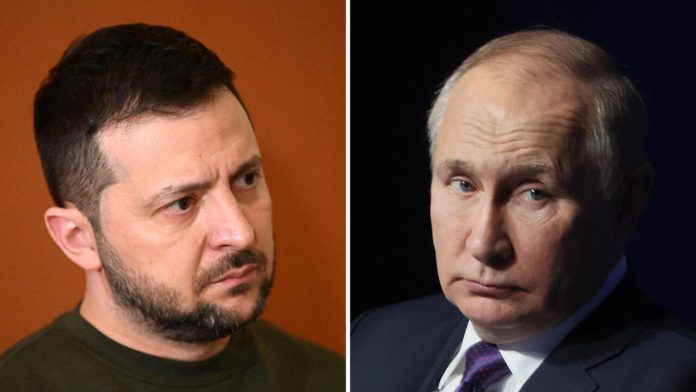
Trump should realise Putin is obstacle to peace: Zelensky

“Trump needs to believe that Putin actually lies. And we should do our part. Sensibly approach this issue, to show that it’s not us that is slowing down the process,” said Zelensky, speaking to a small group of journalists, including the Guardian, in his office at the presidential administration in Kyiv.

Zelensky stated he would travel to Turkey on Thursday whether or not Putin flew in for talks.

Zelensky added he had arranged to meet with the Turkish president, Recep Tayyip Erdoğan, in Ankara, but would be ready to fly to Istanbul at a moment’s notice if the Russian leader showed up.

“If Putin does not arrive and plays games, it is the final point that he does not want to end the war,” he stressed on Tuesday.

Previously, after Putin used an unexpected late-night Kremlin address to call for direct Russia-Ukraine negotiations in Istanbul, Zelensky responded by saying he would be waiting for Putin personally in Turkey on Thursday.

Trump, who is on a visit to Saudi Arabia, appeared to float the idea of a three-way meeting with Putin and Zelensky, saying on Monday: “I believe the two leaders are going to be there. I was thinking about flying over.”

Zelenskyy stated he was hoping Trump would indeed meet him in Turkey.

“If Trump travels, it will push Putin also to travel,” he continued, adding, “Trump can really help. It’s the situation where the US being present can give important guarantees.”

However, there is little sign that Putin is prepared to travel. Although he has not directly ruled it out, comments from the Kremlin suggest Russia will instead send a lower-level negotiating team to Istanbul.

Zelensky noted he believed that without a ceasefire agreed by the leaders, there was no point in beginning lower-level talks.

The back-and-forth diplomacy began with a visit to Kyiv by the leaders of Britain, France, Germany and Poland on Saturday, timed symbolically to come just one day after a set-piece military parade in Moscow marking 80 years since the Soviet victory in the second world war. After speaking with Trump on the phone, the four European leaders laid down an ultimatum to Putin that he should sign up to a 30-day ceasefire by Monday or face further sanctions. Putin rejected the ultimatum, instead offering the Istanbul talks without a ceasefire.

In the event that nothing is agreed during whatever meetings take place in Turkey this week, the big question is whether the Europeans can bring Trump along with them in their plans to ratchet up the pressure on Moscow. Zelensky said he hoped that new sanctions would soon be on the agenda if Thursday’s meetings came to nothing.

“I believe that President Trump is not against imposing sanctions … and I believe that there is political will in Congress to vote for these sanctions. I believe the Americans are very close to imposing these sanctions,” he continued.

He added that consultations would take place in the coming days – “if you’ll allow me, I won’t say where or when” – in which Europeans would be briefed on upcoming US sanctions plans.

President Trump said Tuesday that Secretary of State Marco Rubio will travel to Istanbul for potential Thursday talks between Zelensky and Putin.

“I’ve also been working relentlessly to end the terrible bloodshed between Russia and Ukraine and, very importantly, talks are being held in Turkey later this week, probably on Thursday, and they could produce some pretty good results,” Trump stated during remarks at a Saudi-US investment forum in Riyadh, Saudi Arabia.

Whether Trump attends or not, US envoy to Ukraine Keith Kellogg and Middle East envoy Steve Witkoff both plan to be in Istanbul for the talks, a senior administration official stated.