Thursday, December 25, 2025
Home Blog Page 3583

Iran to Host Multinational “Letter to My Child” Festival

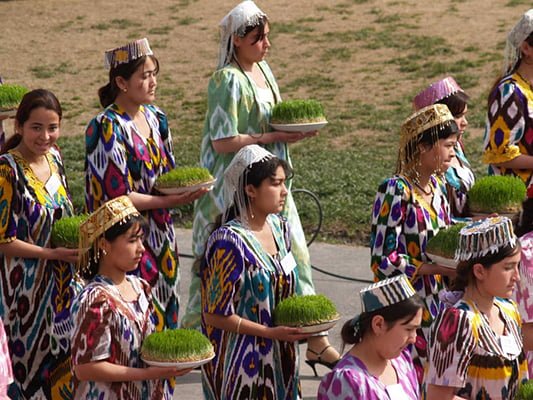
Nowruz has been inscribed as a UNESCO Intangible Cultural Heritage by Iran, Afghanistan, Azerbaijan, India, Iraq, Kazakhstan, Kyrgyzstan, Pakistan, Tajikistan, Turkey, Turkmenistan, and Uzbekistan.

The “Letter to My Child” festival is aimed at introducing contemporary famous figures and artists of these countries in the field of intangible cultural heritage.

According to a Farsi report by IRNA, the international festival is to create more cultural, social and artistic interaction between the younger generations so as to protect intangible cultural heritage of Nowruz countries and also to reduce the cultural and social distance between the young and the older generations.

Developing the cultural and scientific potentialities of these youths through making them acquainted with contemporary artists and famous figures of their countries and motivating them to respect their intangible cultural heritage are among other goals of the festival.

It is also aimed at directing the attention of the children and youth of the Nowruz countries to the less-known part of their culture.
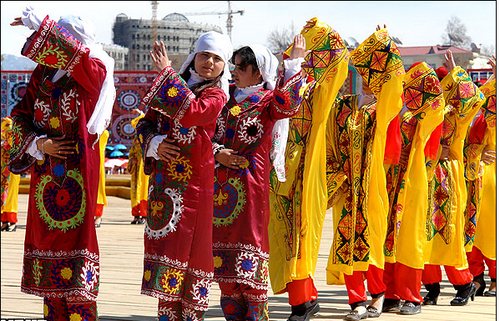
Iran to Host Multinational “Letter to My Child” FestivalSecretary of the festival, Reza Zamani, has told IRNA that in addition to historic monuments and collections of objects, cultural heritage includes customs, traditions, idioms and expressions.

Zamani added that oral traditions, arts, social practices, rituals, celebrations or the knowledge and skills necessary for the production of traditional crafts are considered as intangible cultural heritage.

“Since the intangible cultural heritage has been passed from one generation to another, and is continually being recreated by human communities and groups of people, in accordance with their surroundings and in interaction with their nature and history, we decided to call it Letter to My Child.

“In this way, we contribute to this transition and cultural interaction through interviews with celebrities, personalities, and cultural heritage professors in the vast field of Nowruz cultural heritage (including 12 countries),” underlined Zamani.

“In this festival, we will go to the place of residence and the city of the selected artists in one of the fields of oral traditions, performing arts, rituals, knowledge and practices related to the nature and the world and traditional craftsmanship from each of the 12 countries of Nowruz.”
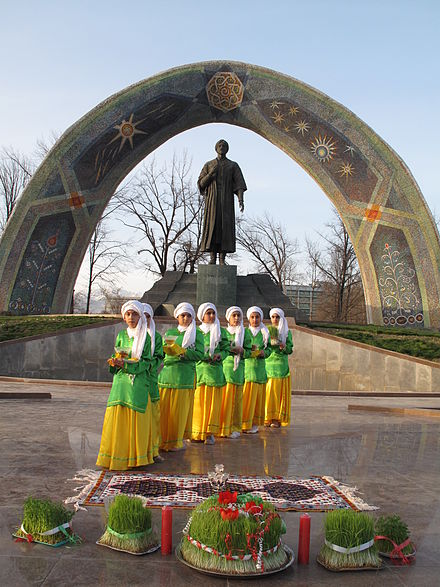
en-nowruz-tajik-2412 (10)“We would conduct interviews with them about their experiences, interests, concerns and their love and aspirations for their children and the young generation,” he added.

The researcher also noted that UNESCO’s commissions in the Nowruz countries will provide the necessary assistance in introducing contemporary artists.

“These interviews will be published in a bilingual book called Letter to My Child, and Youths and Children of Nowruz Countries. Moreover, a documentary TV series called Intangible Heritage, Yesterday, Today, Tomorrow would be produced to show the statements and geography of the living place of these artists.”

Zamani went on to say that a two-person team will take part in the festival to conduct interviews and produce the documentary in the participating countries. Five letters from each country will be published in the book and the first chapter will contain interviews with artists and selected figures of Nowruz countries.

According to him, the second chapter includes letters from the fathers and mothers of the Nowruz countries to their children in preserving the intangible cultural heritage, and the third chapter will include interviews with the figures and artists of the host country (the Islamic Republic of Iran).
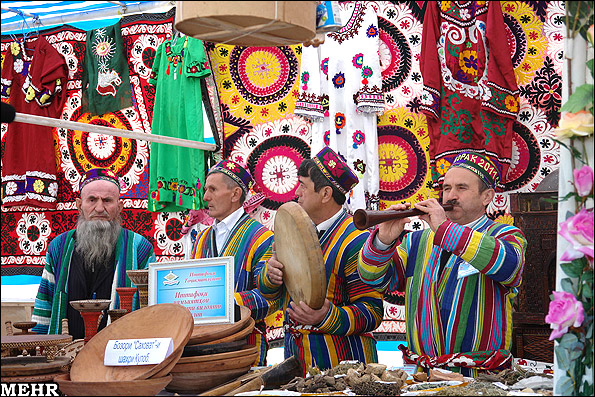
en-nowruz-tajik-2412 (12)

Without mentioning the time and details of the festival, Zamani added that the result of the five stages of the festival will be presented to the world at the final stage during a two-day ceremony in 2019 in Tehran.

Secretary General of the UNESCO’s National Commission, Sa’dollah Nasiri Qeydari, has told IRNA that the Commission decided to sponsor the event after being informed that the topics of the festival are in line with the UNESCO’s cultural goals.

“A memorandum of understanding was signed between the National Commission for UNESCO and the Cultural and Artistic Institute of the Nowruz Region Letters, in which the Commission’s various types of spiritual supports are explicitly mentioned.”

Nasiri Qeydari further noted that by publishing this book, children can see the ideas of their parents in a beautiful collection. Hence, this book conveys a significant part of the experiences of the previous generation in an honest style to the next generation, which is one of the objectives of the UNESCO Program on the Intangible Cultural Heritage.
Iran FM, Russian Academics Discuss Regional Issues in Tehran

Iran-Russian

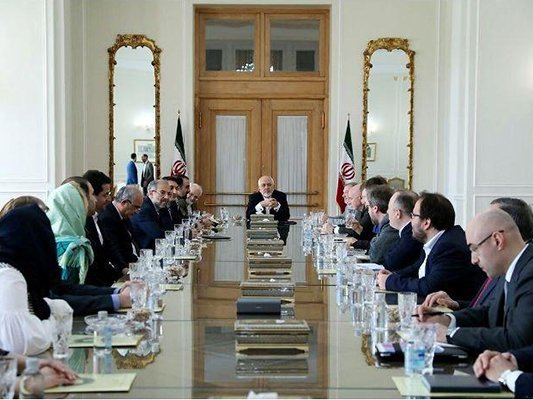
During the Sunday meeting, the two sides discussed the main regional and international developments especially the role of Iran and Russia at the international system and the future of the Iran nuclear deal, among others.

The Iranian foreign minister elaborated on his views about the situation of the current international system as well as the trends and players of today’s world and the prospects of regional and international developments.

He finally responded to the questions raised by some of the Russian academics and researchers.

Earlier in February, Zarif delivered a speech at the Valdai Discussion Club’s Middle East Conference. The annual conference was attended by prominent politicians, diplomats, scholars and public figures from more than 30 countries.

The main theme of this year’s conference was “Russia in the Middle East: Playing on All Fields.”

The conference, jointly held by the Valdai Club and the Institute of Oriental Studies of the Russian Academy of Sciences, included eight sessions dedicated to various Middle East-related issues, including Russia’s diplomatic, mediatory, and political role in the region as well as its perception by other parties.

In particular, experts discussed the post-war reconstruction of Syria, the prospects of settlement of the Palestinian-Israeli conflict and the situation in Yemen, the mechanisms of providing assistance to Libya and resolving the Kurdish issue, as well as the ways to reduce tensions in Iran’s relations with its neighbours.

The Valdai Discussion Club is a Moscow-based think tank, established in 2004. It is named after Lake Valdai, which is located close to Veliky Novgorod, where the Club’s first meeting took place.

Russian President Vladimir Putin has met with the participants of the Valdai Club’s annual meetings every year since its founding.

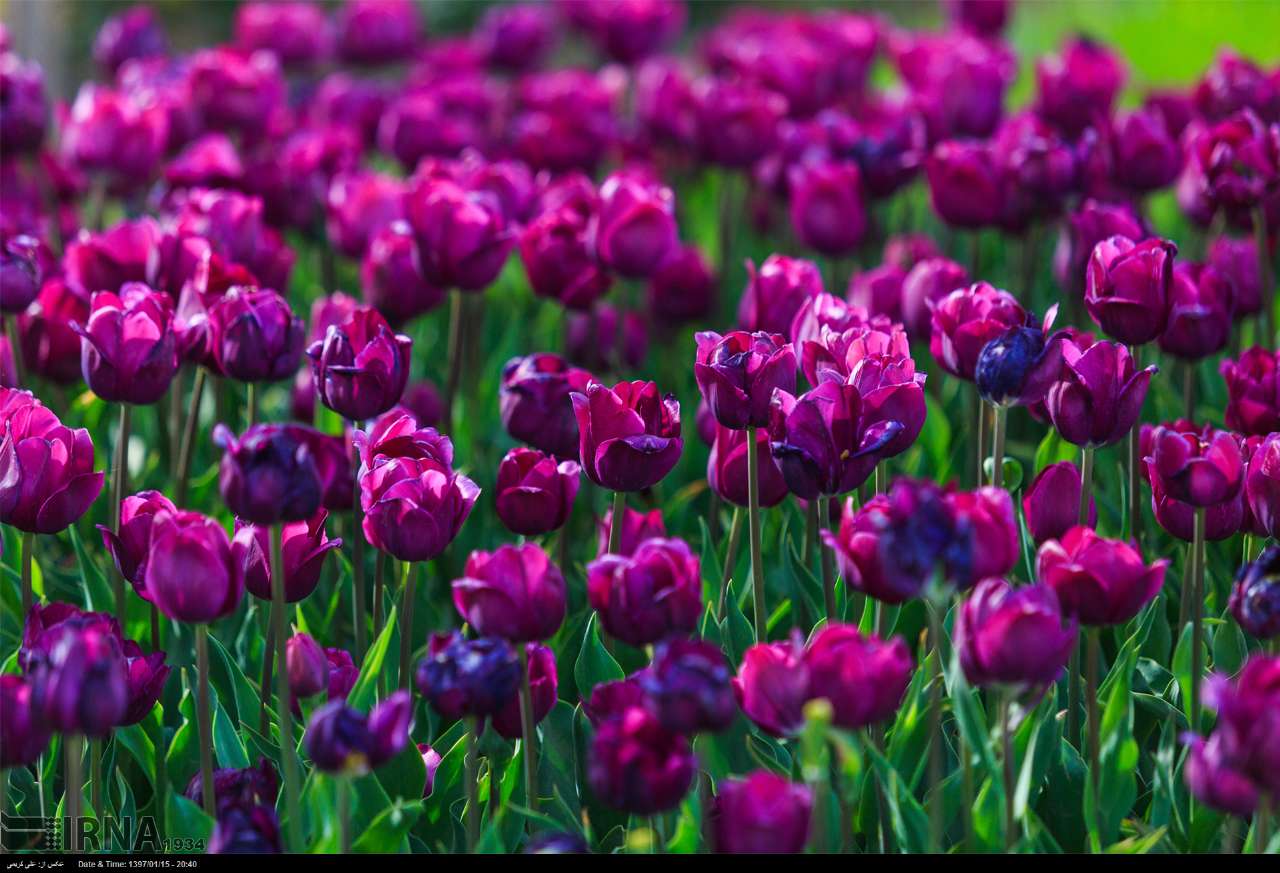
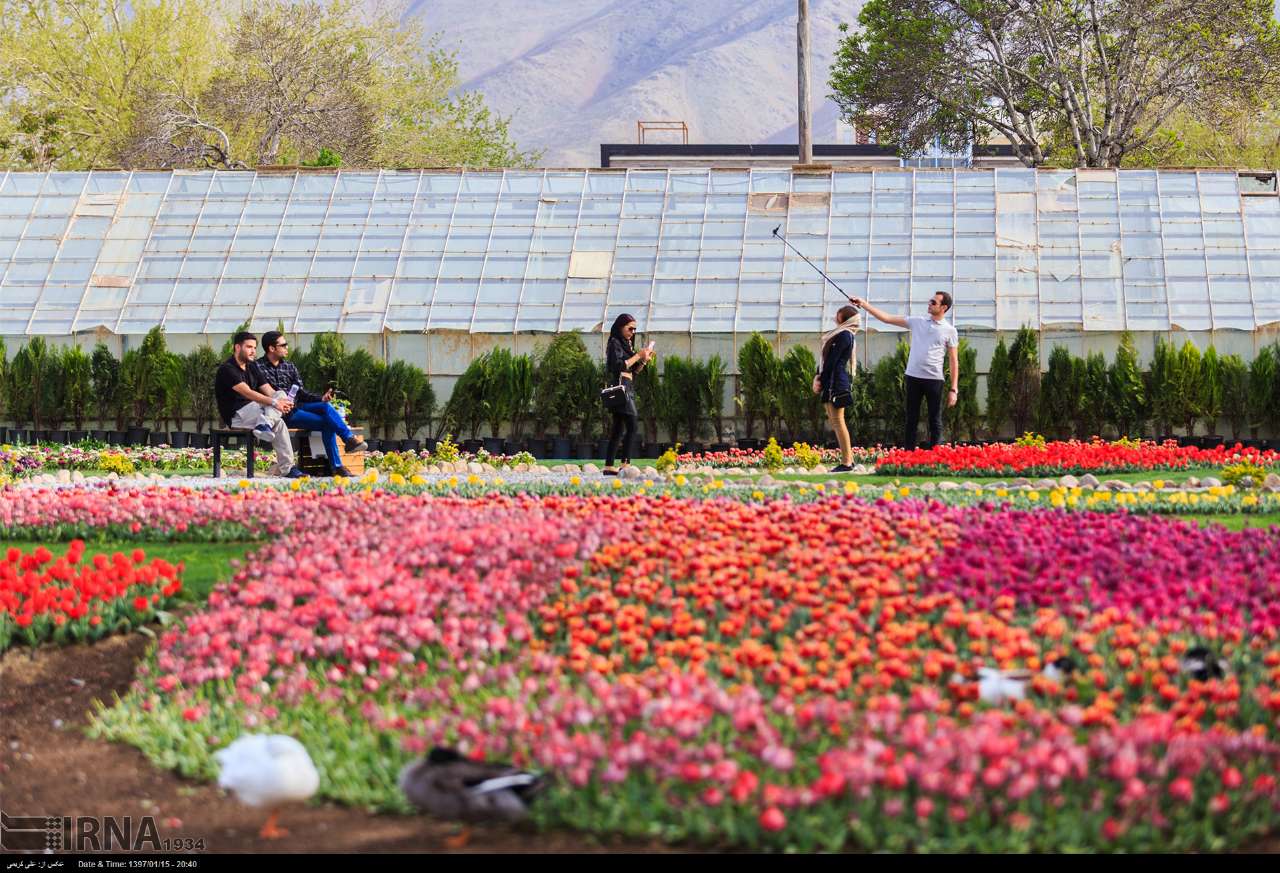
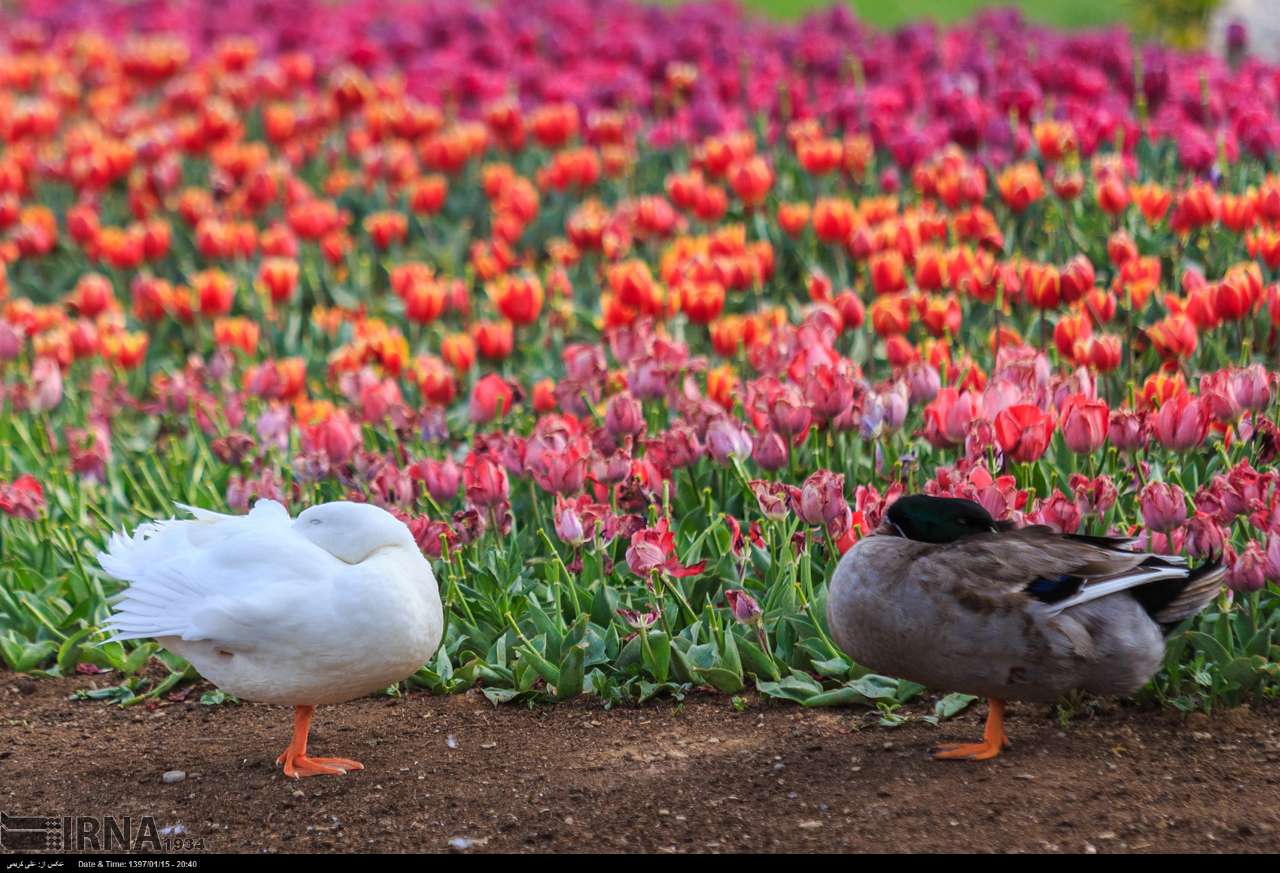
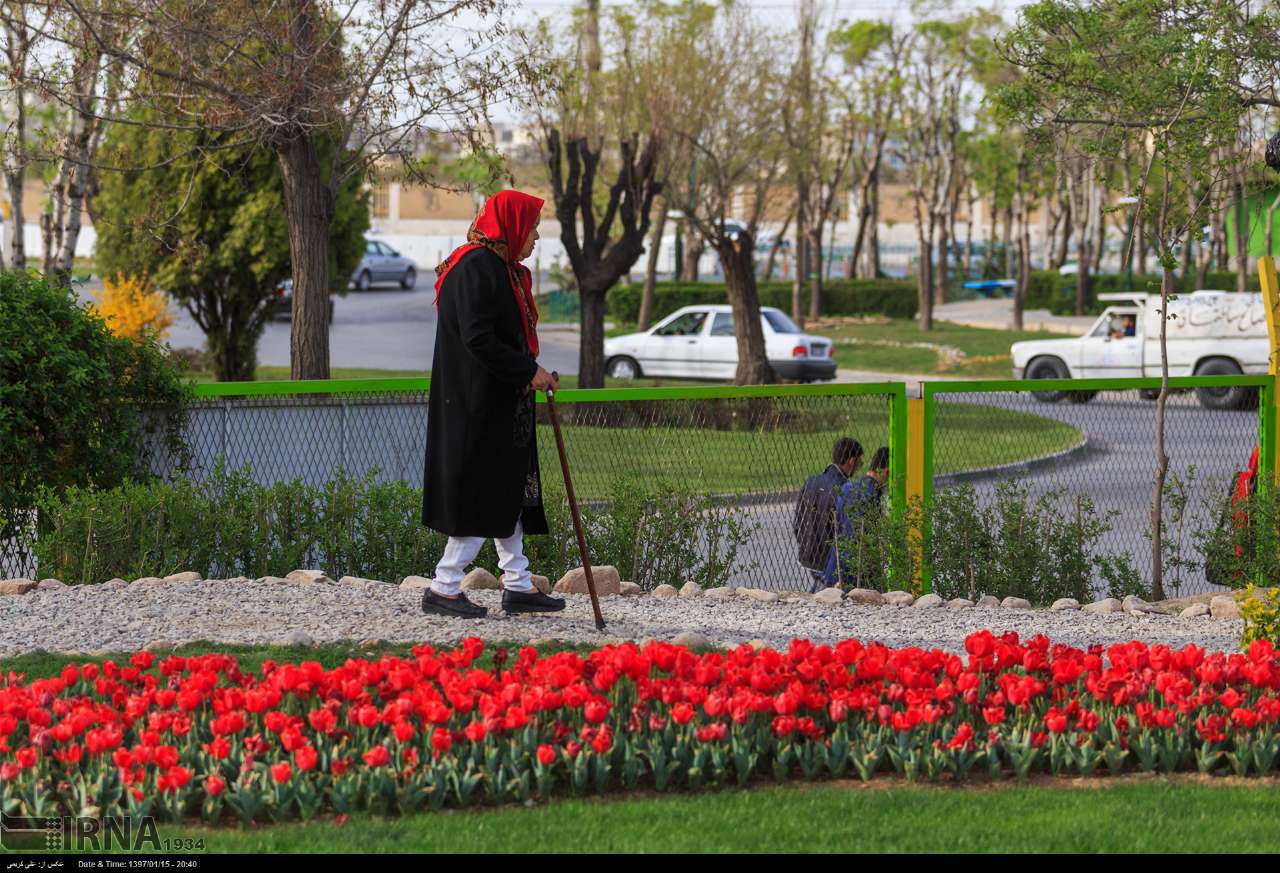
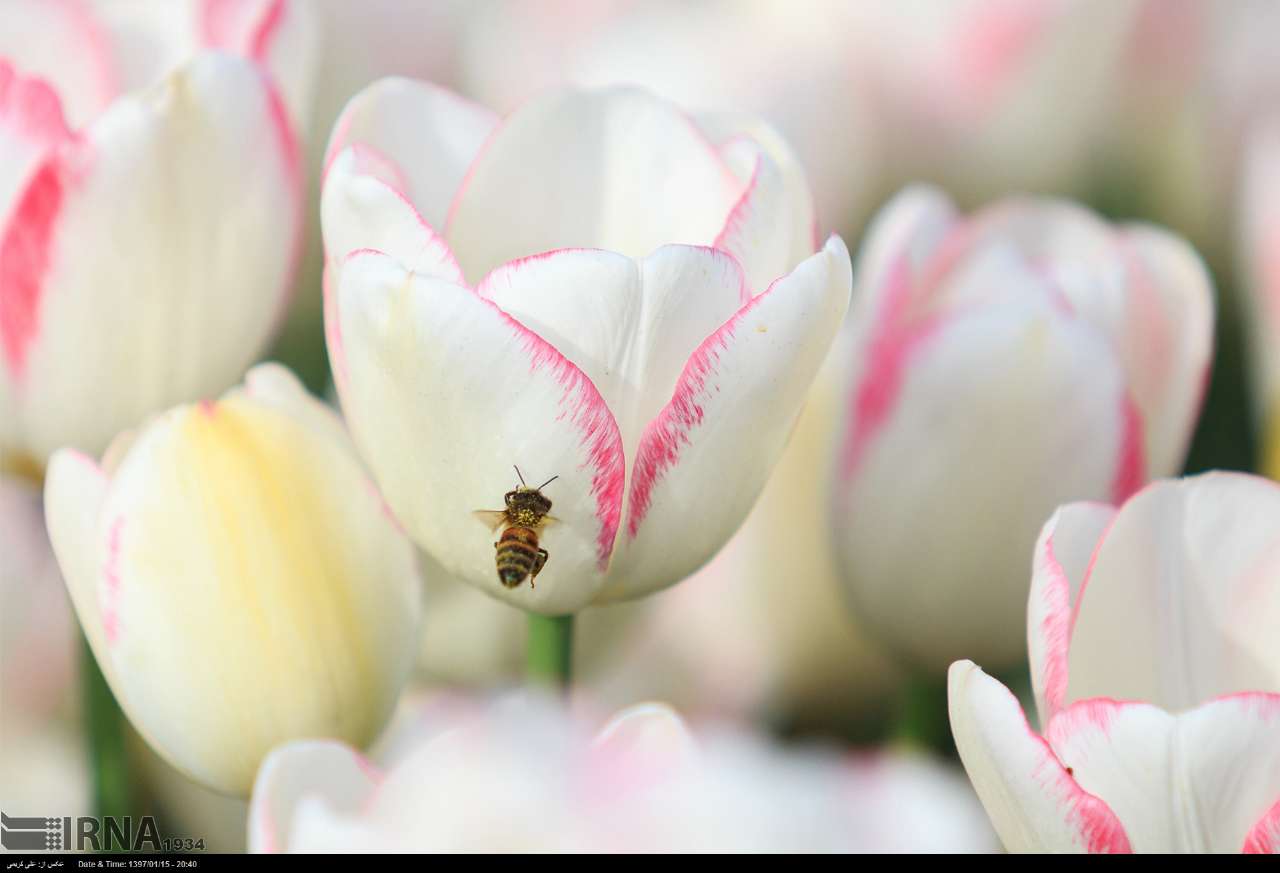
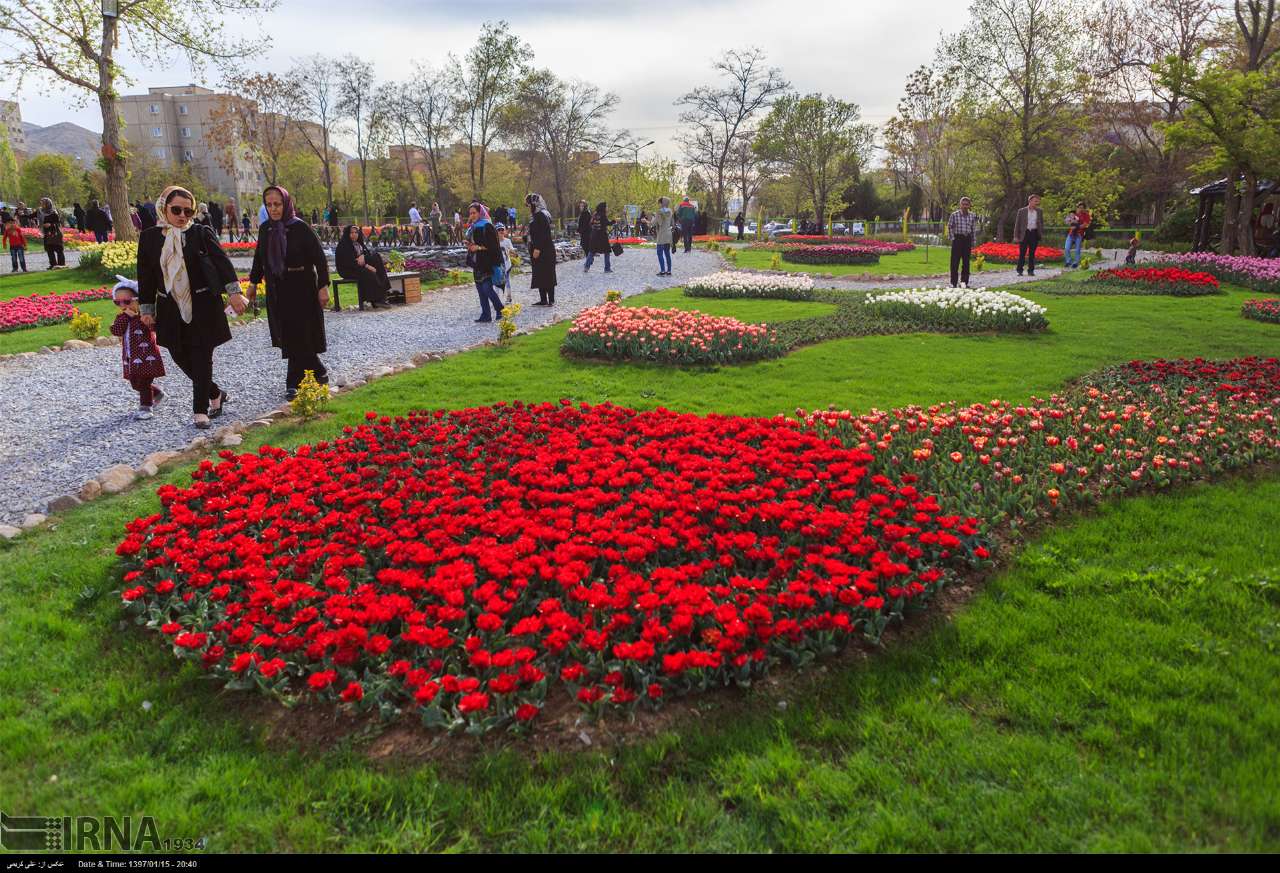
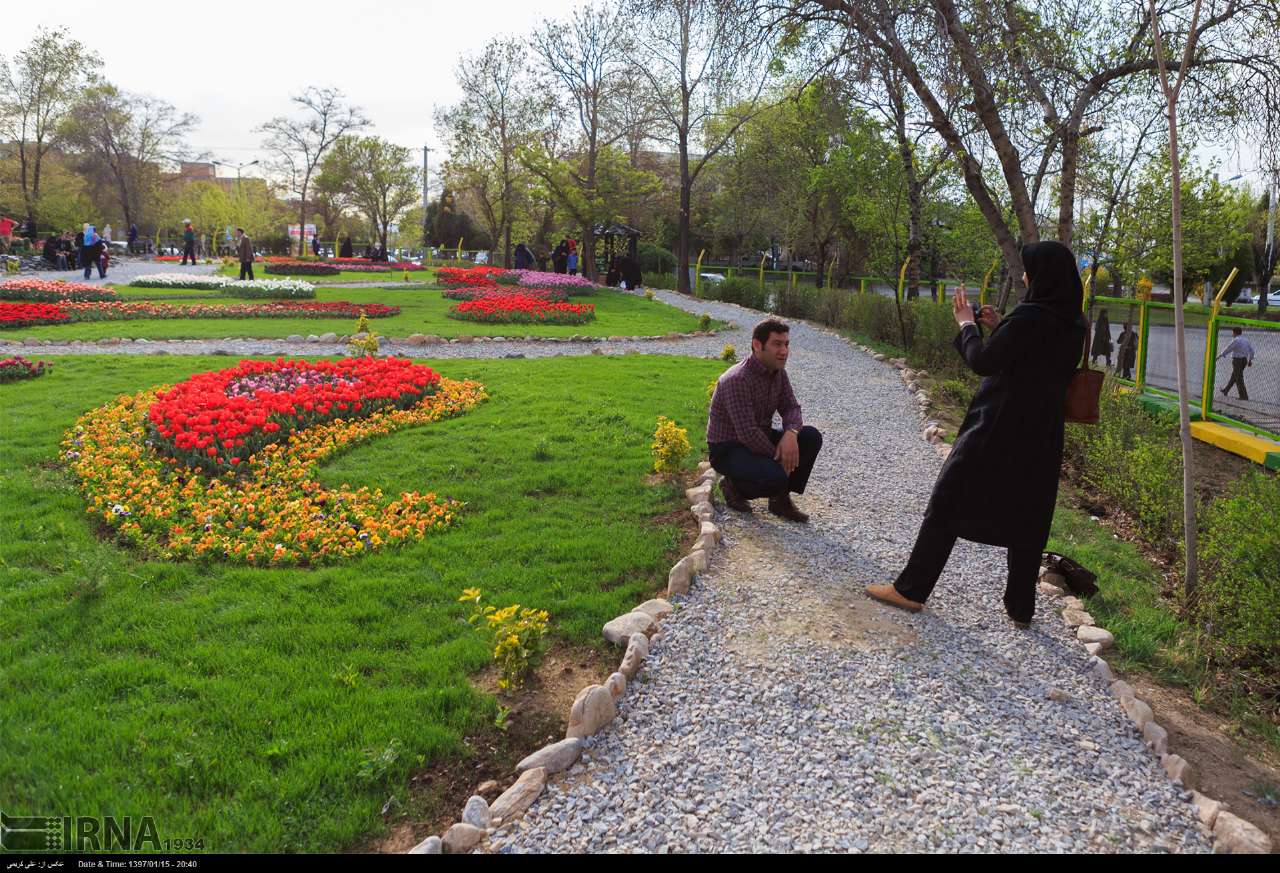
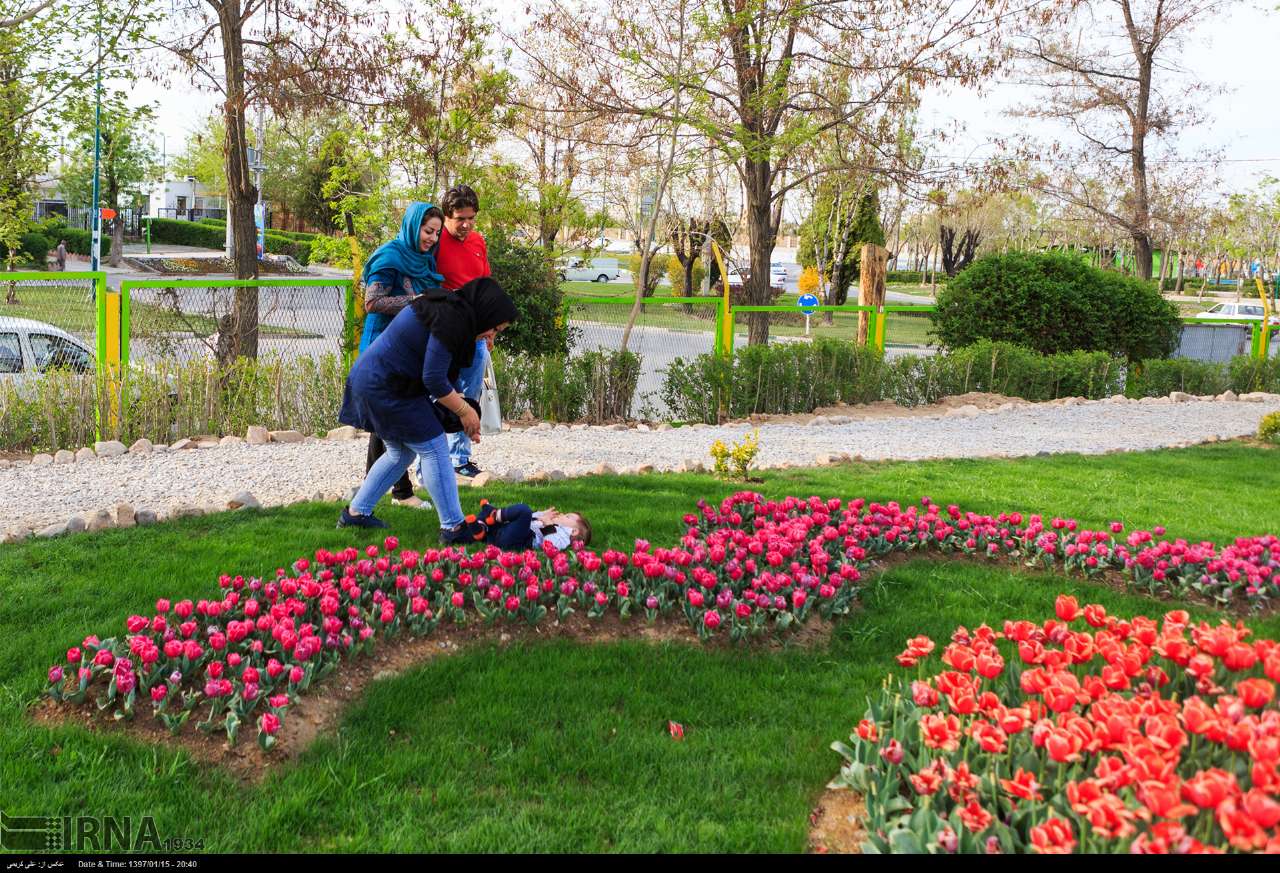
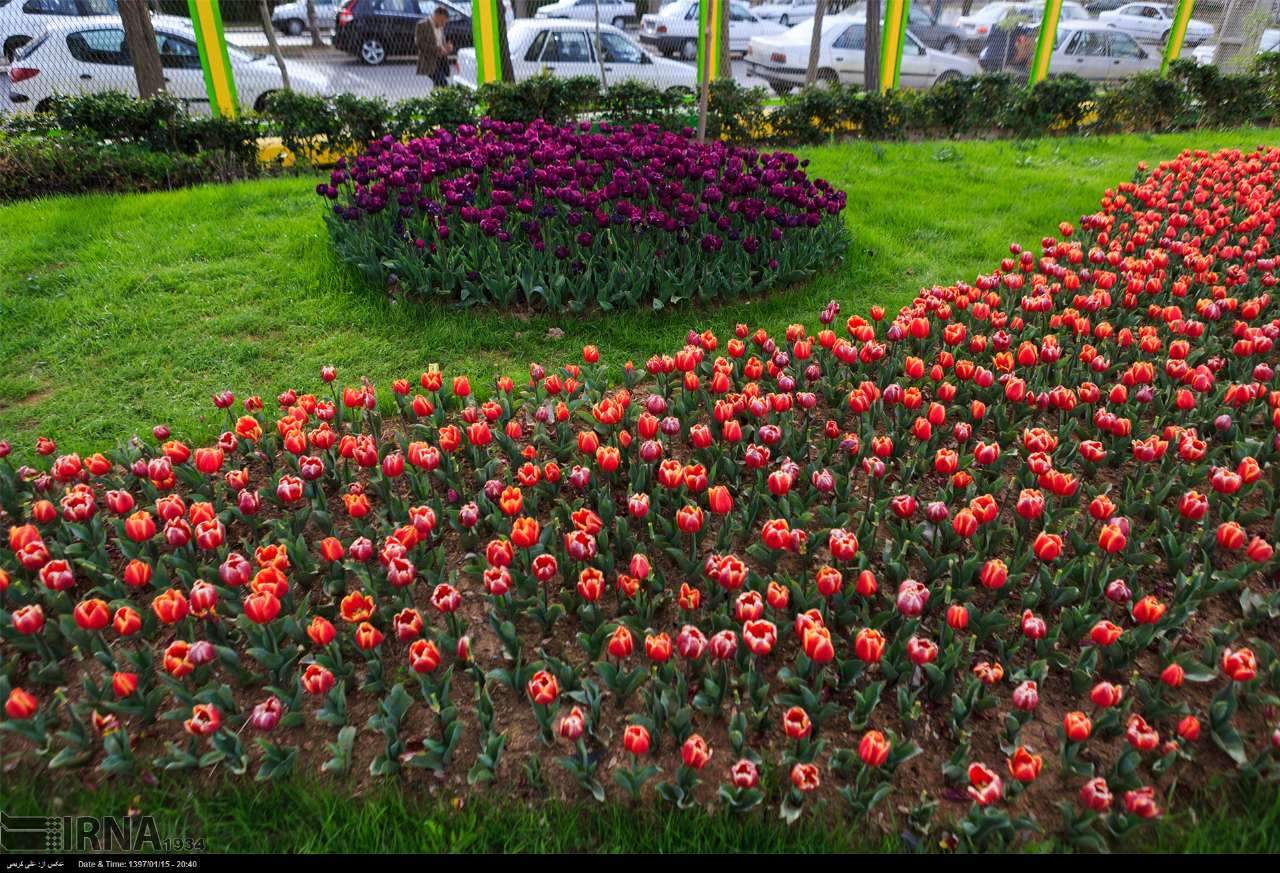
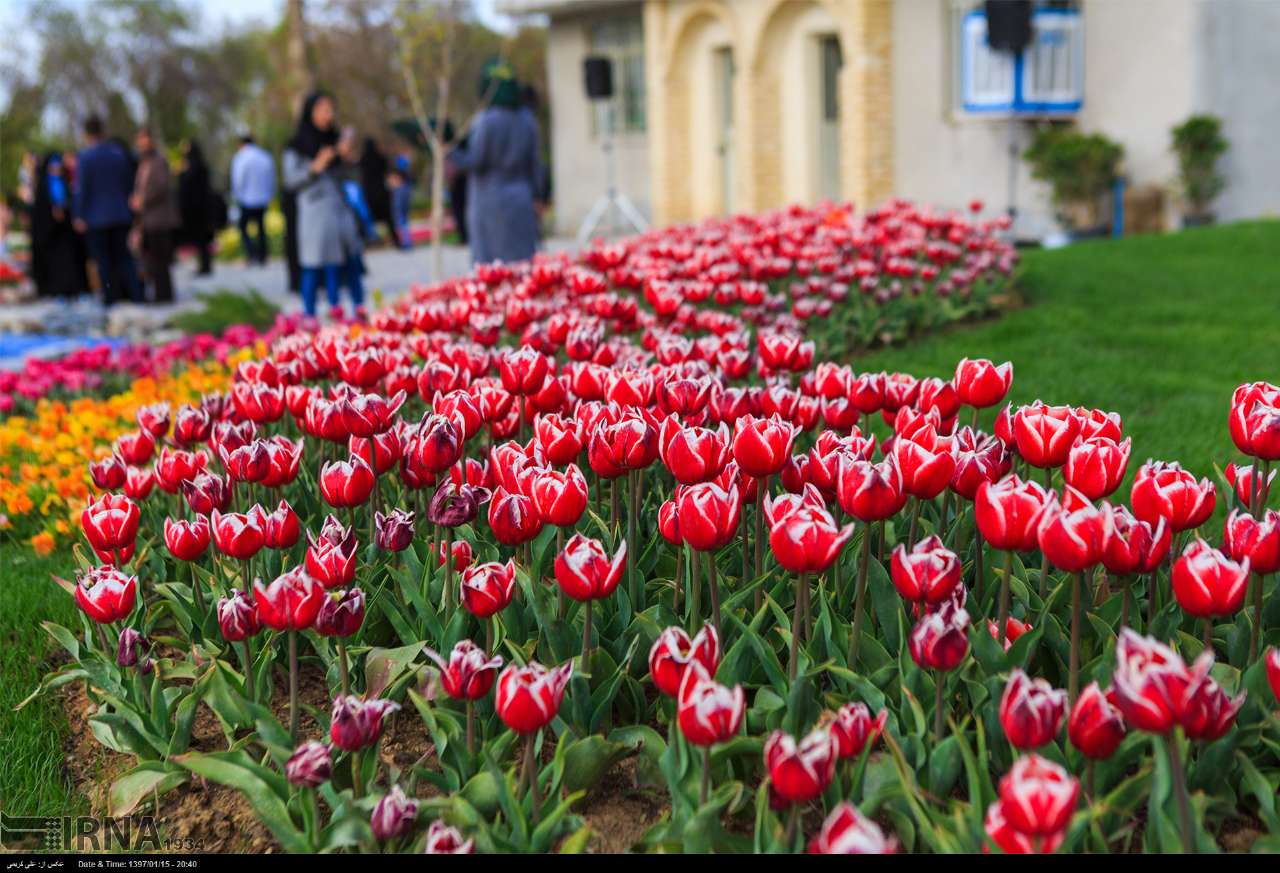
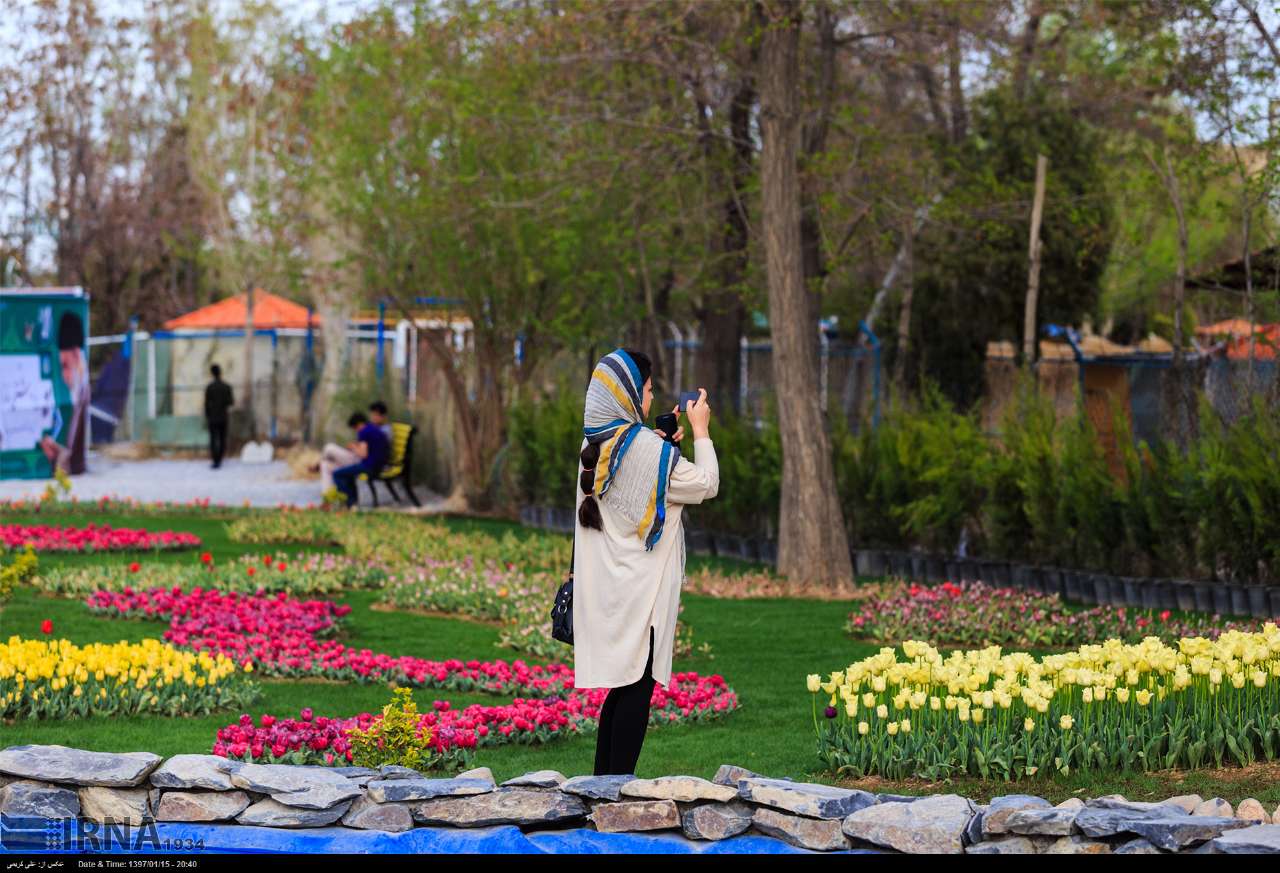
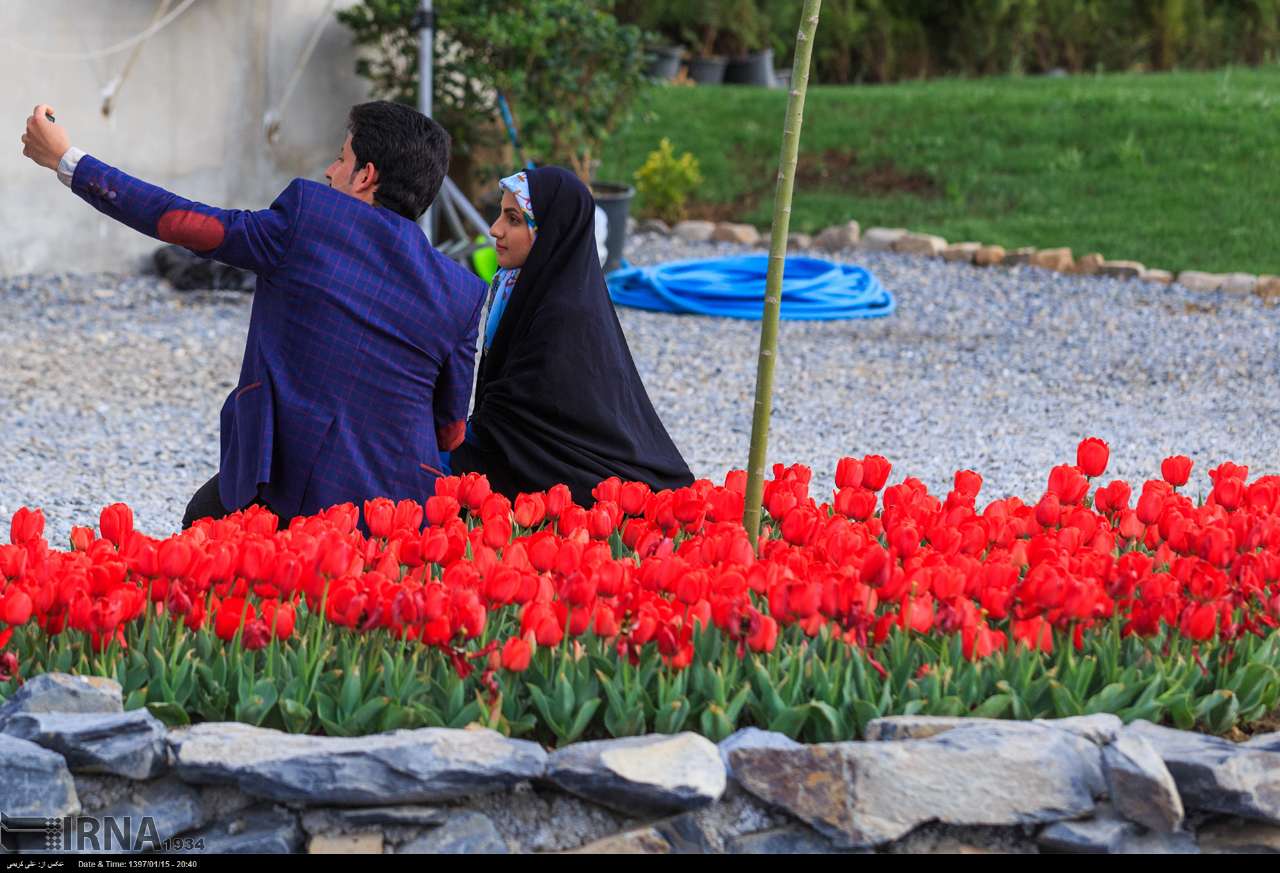
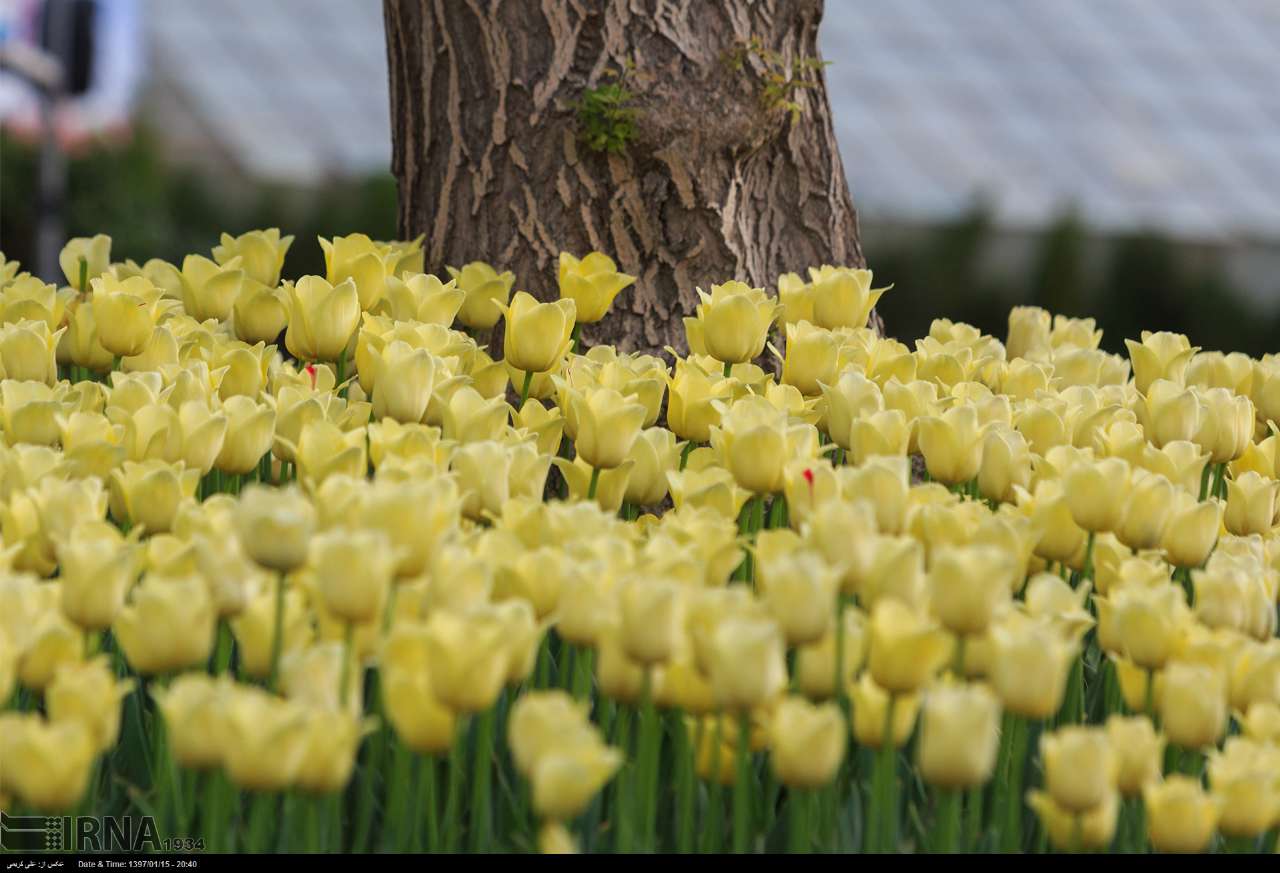
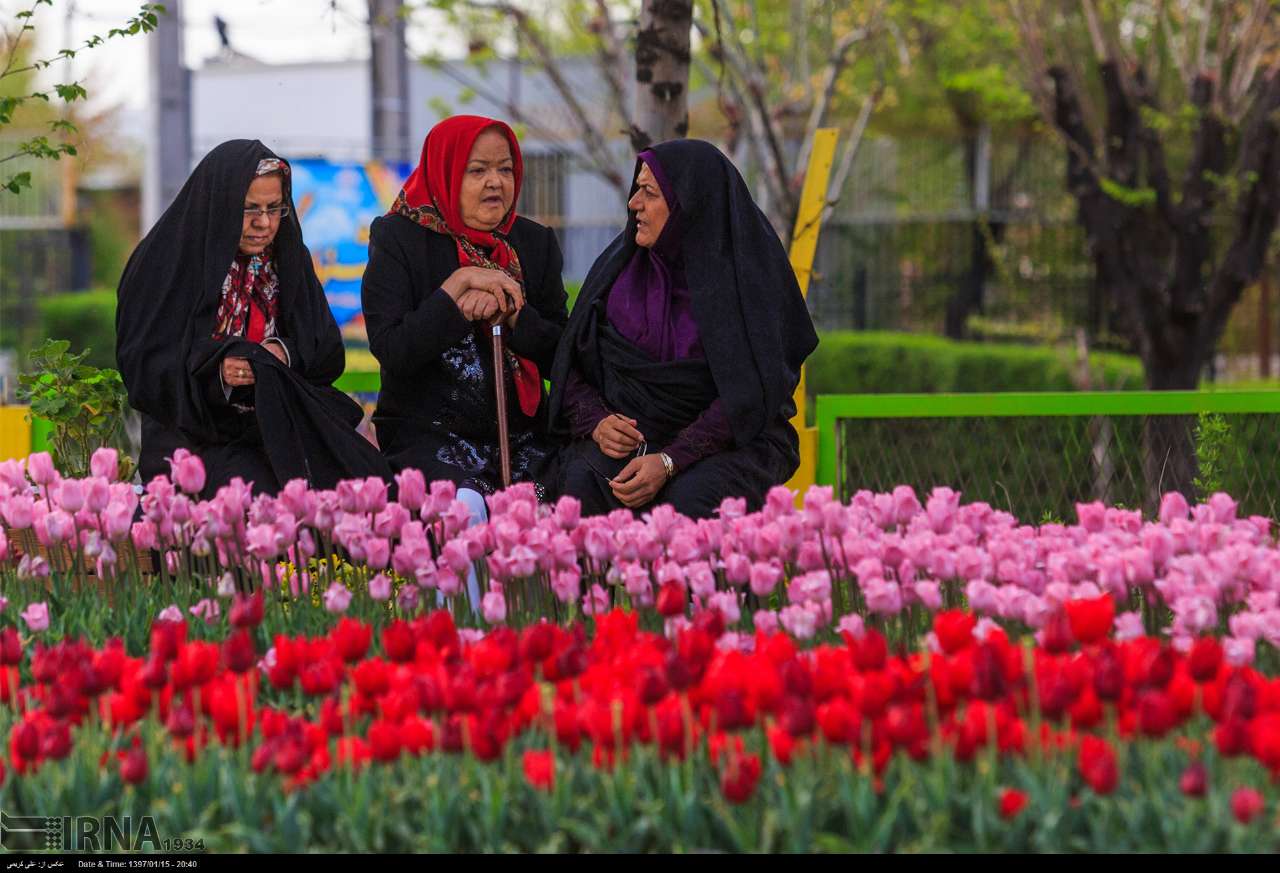
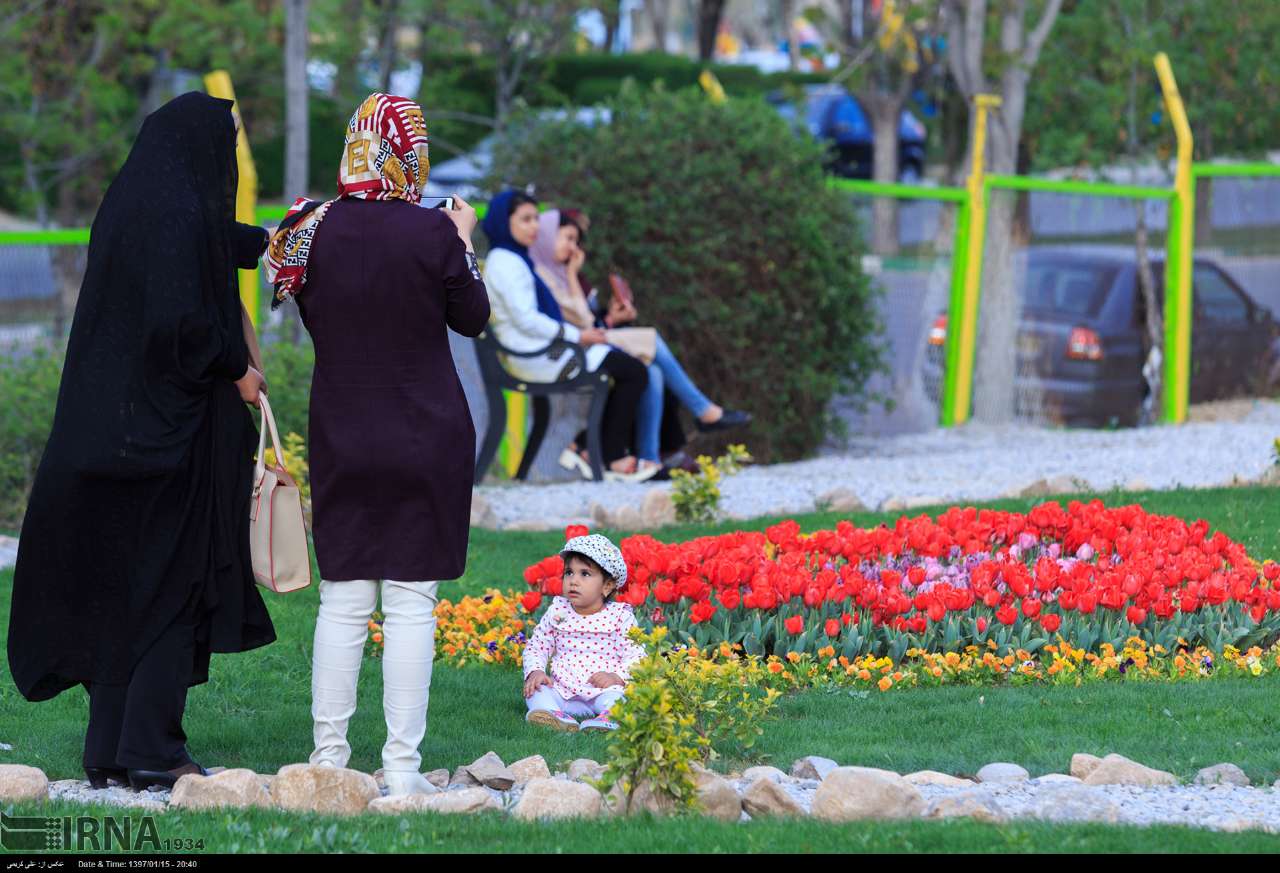
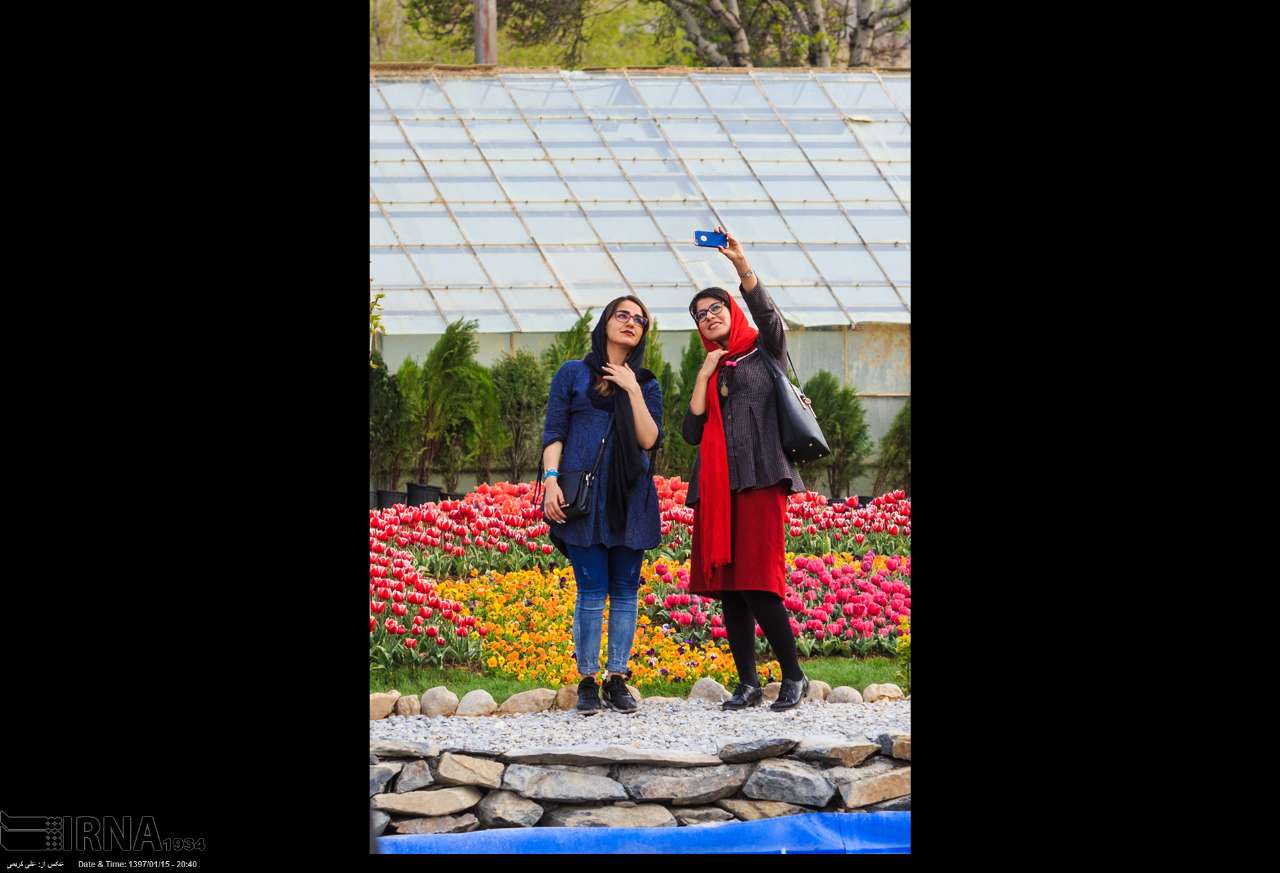
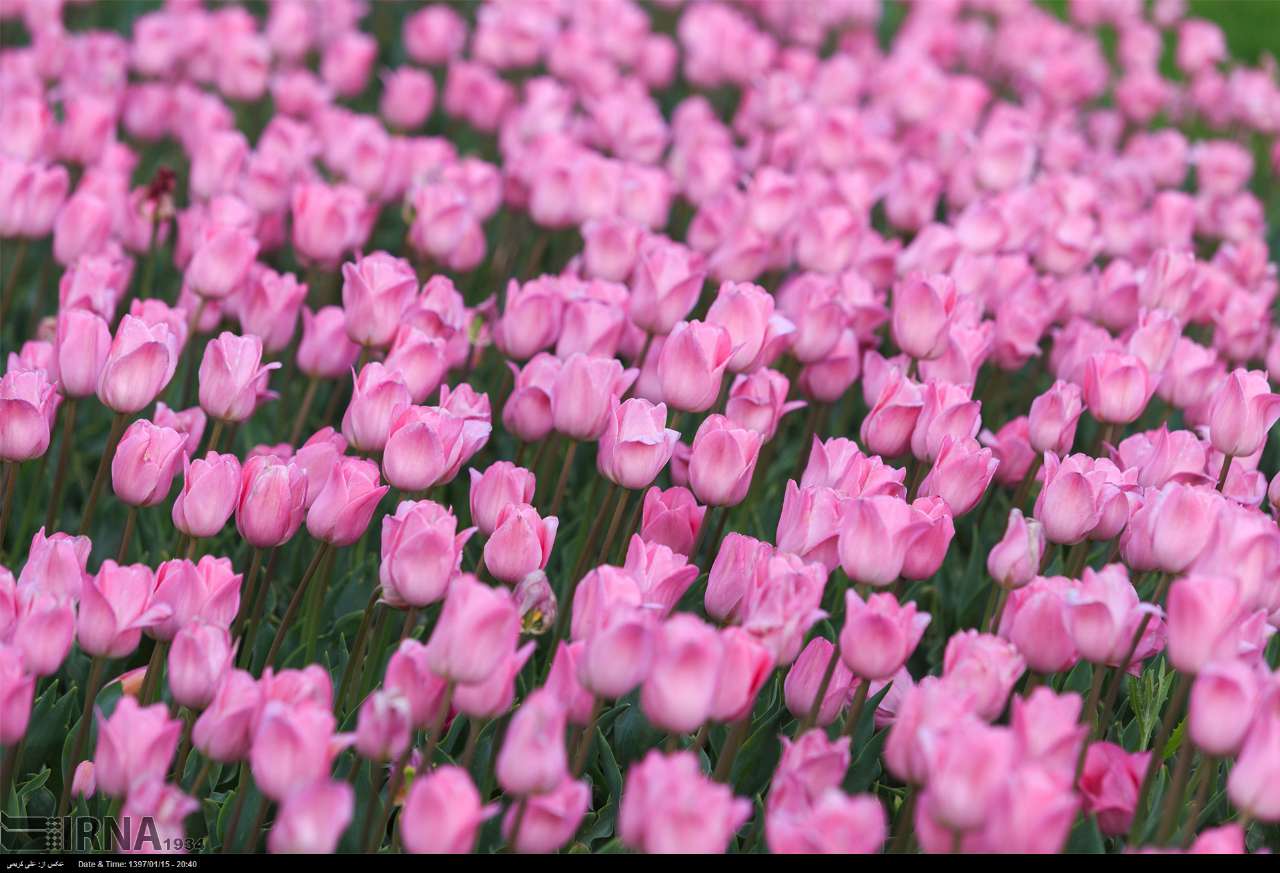
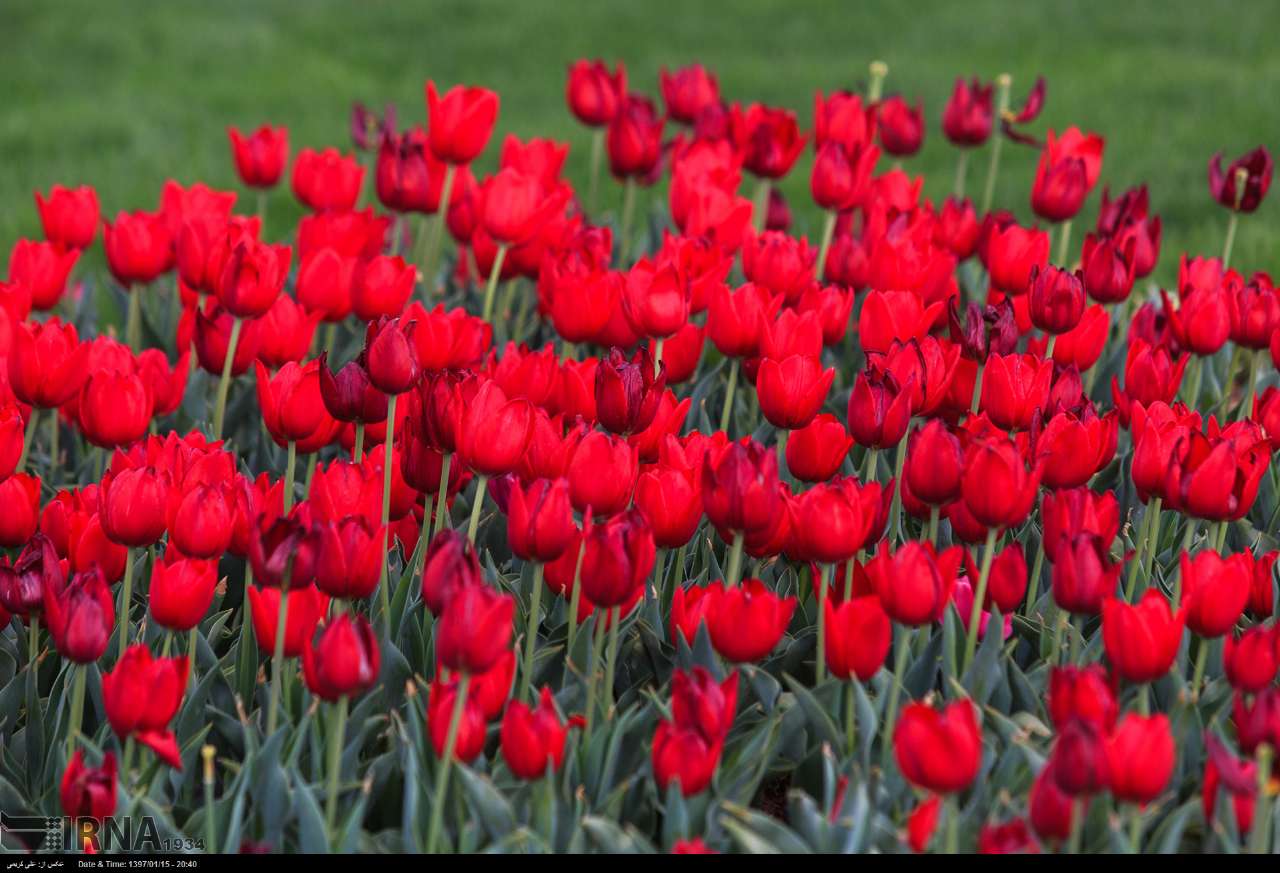
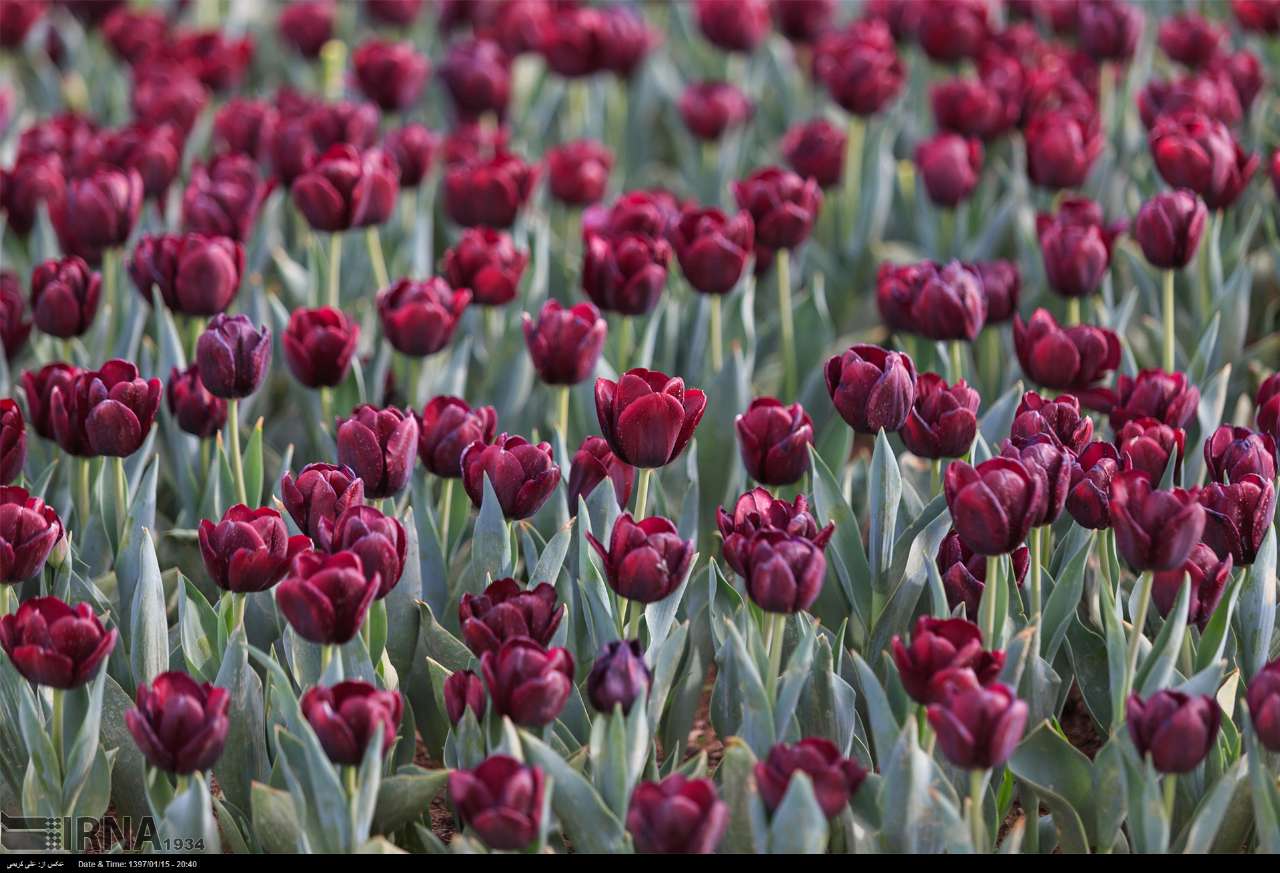
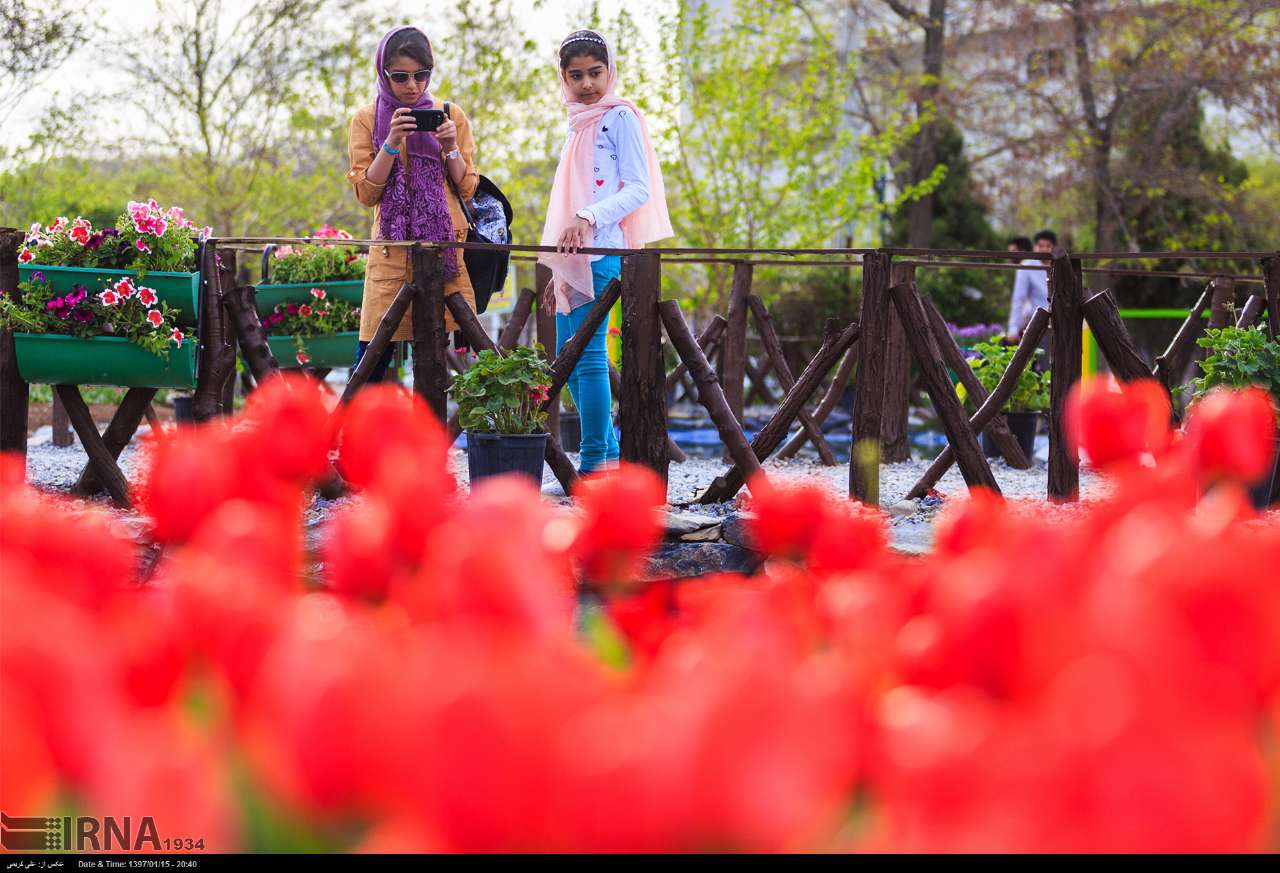
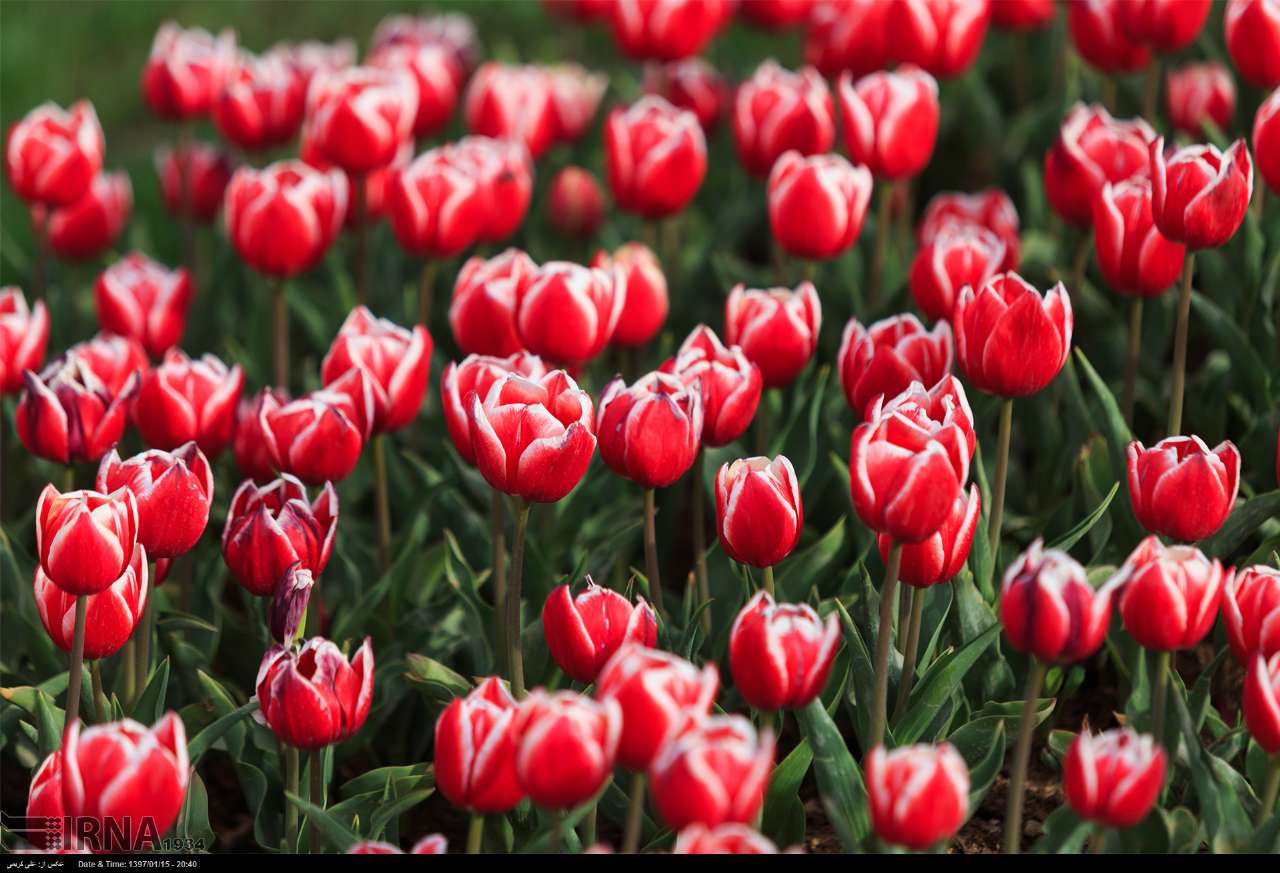
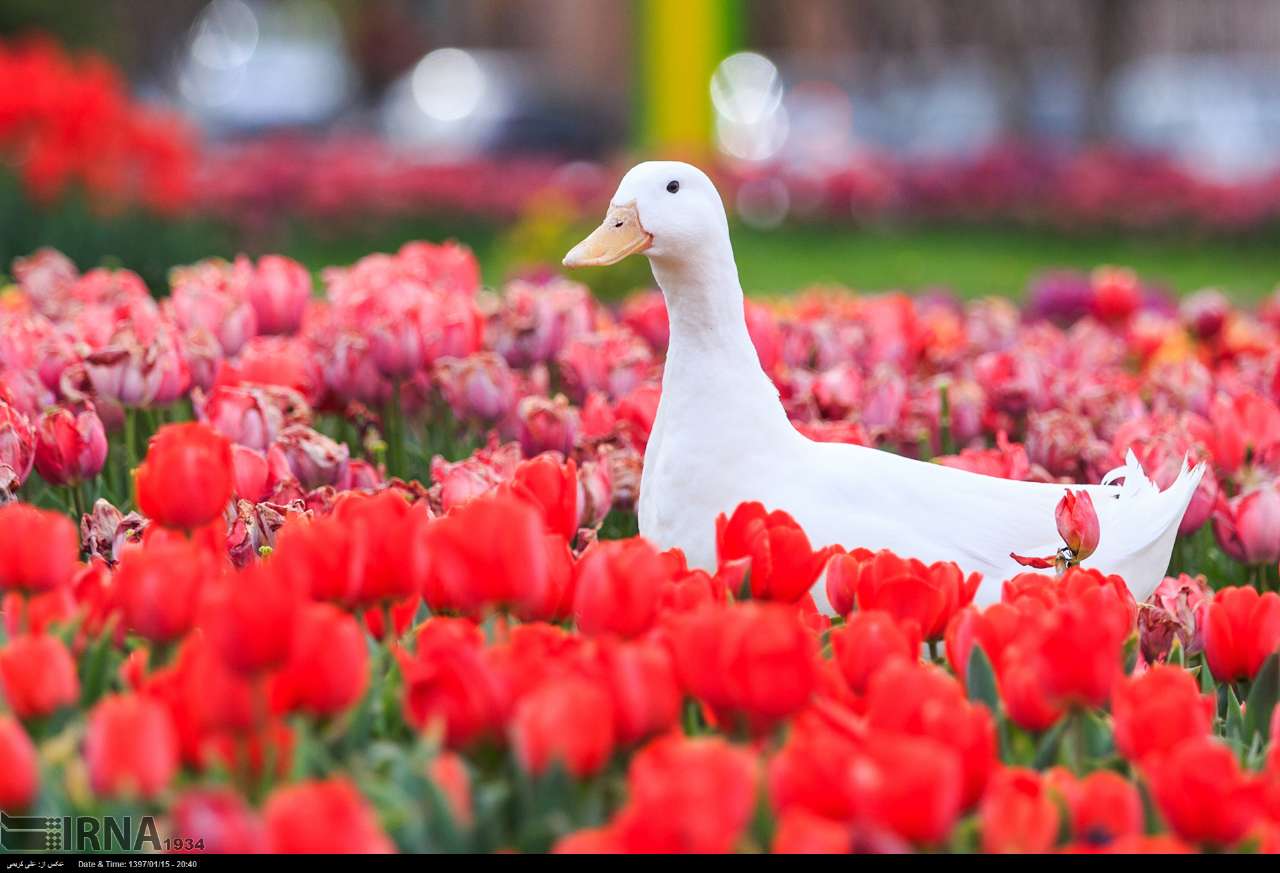
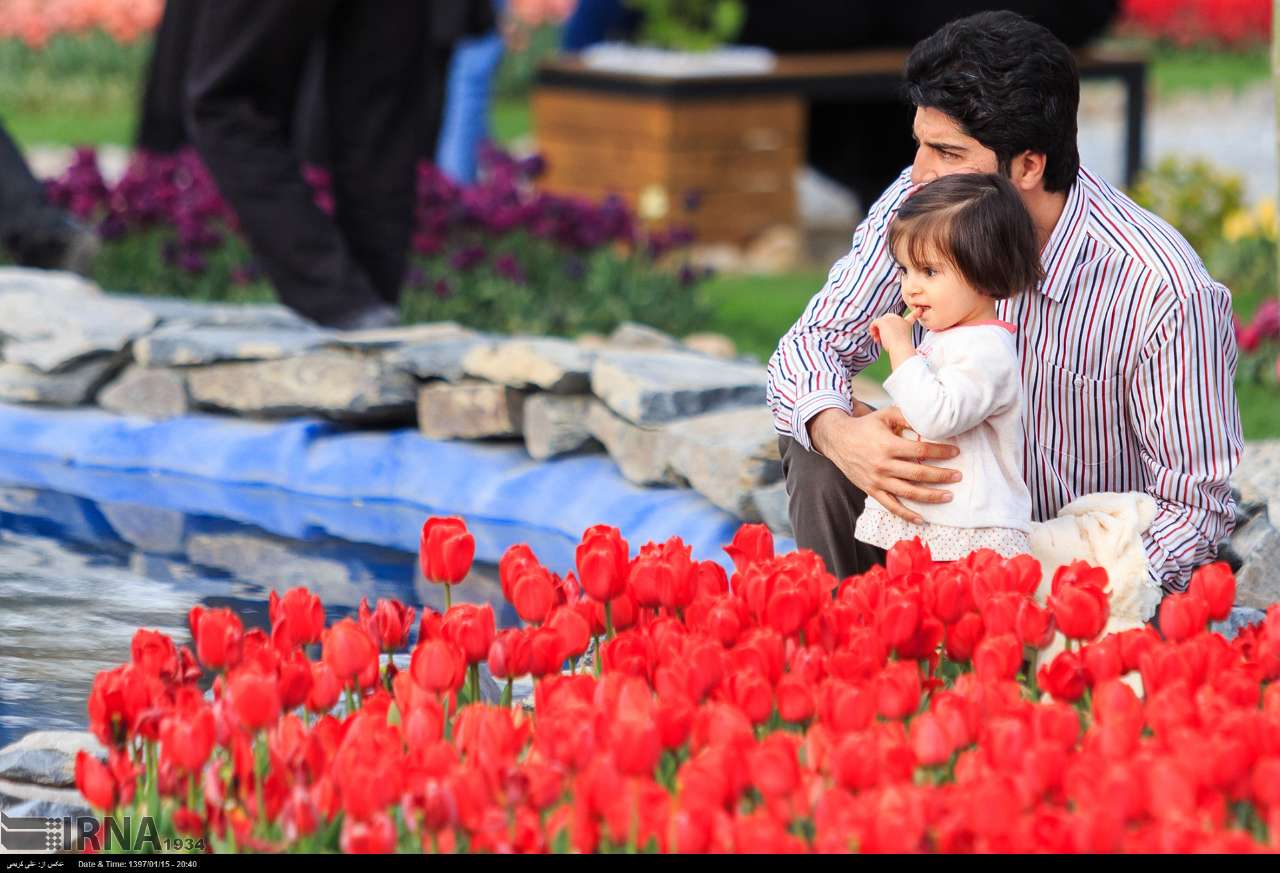
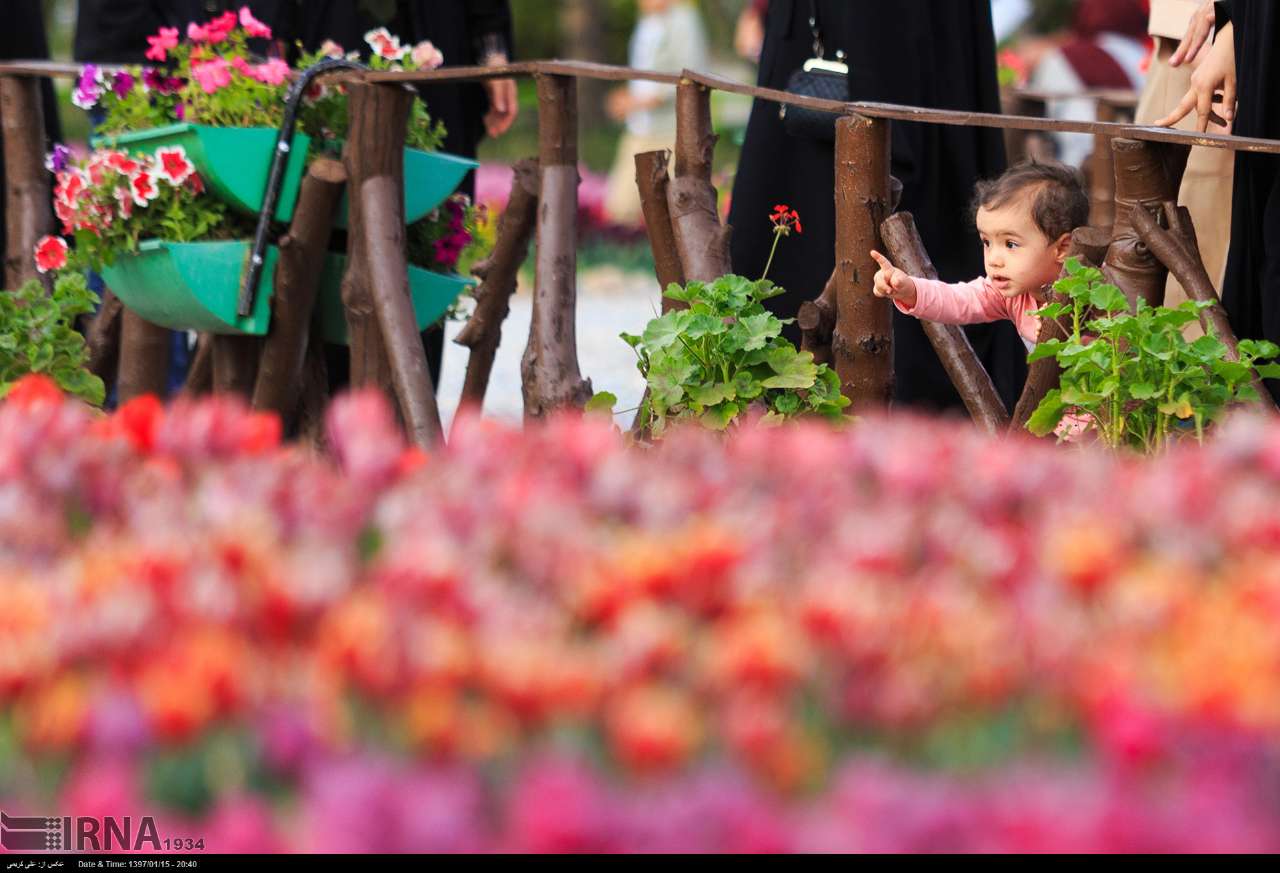
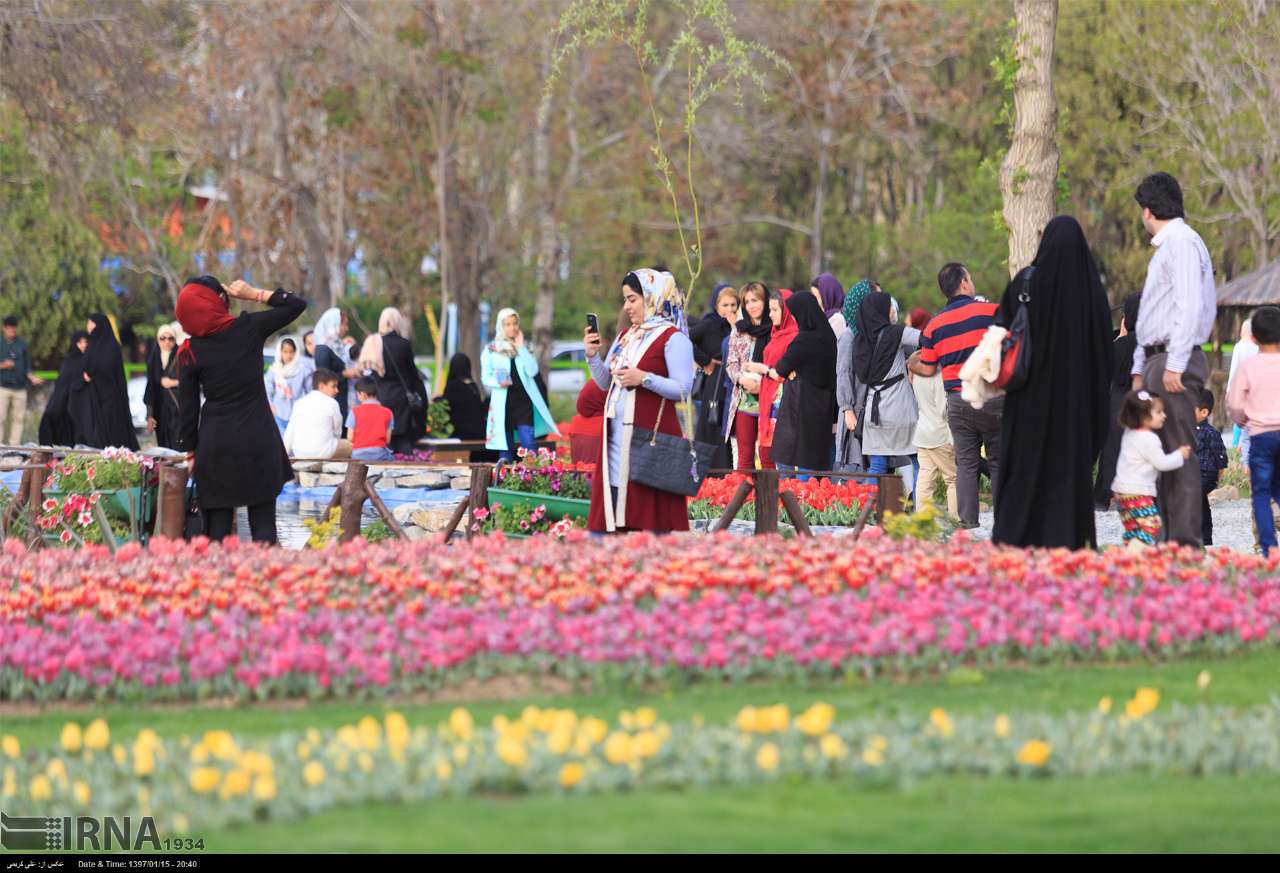
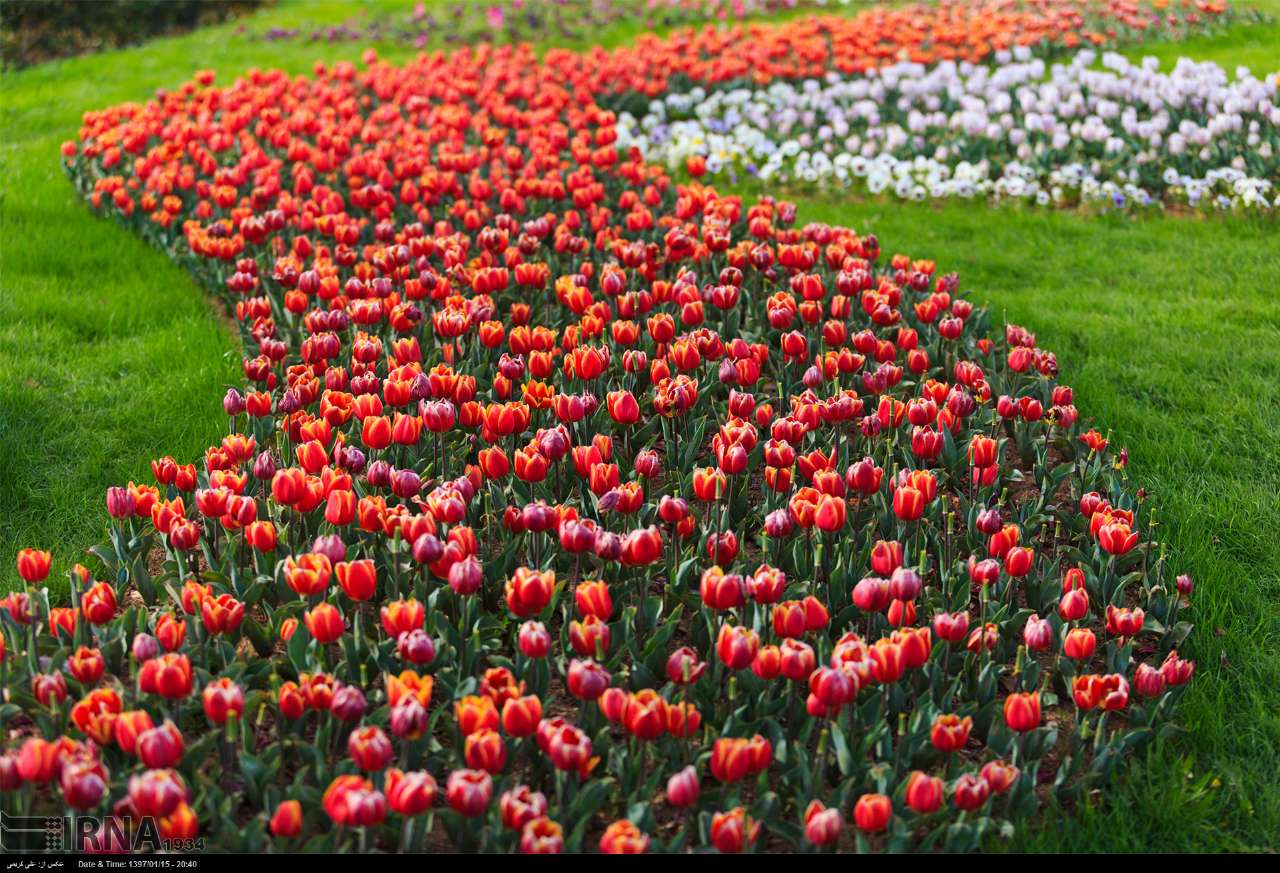
Tulips Festival Underway in Iran’s Markazi Province

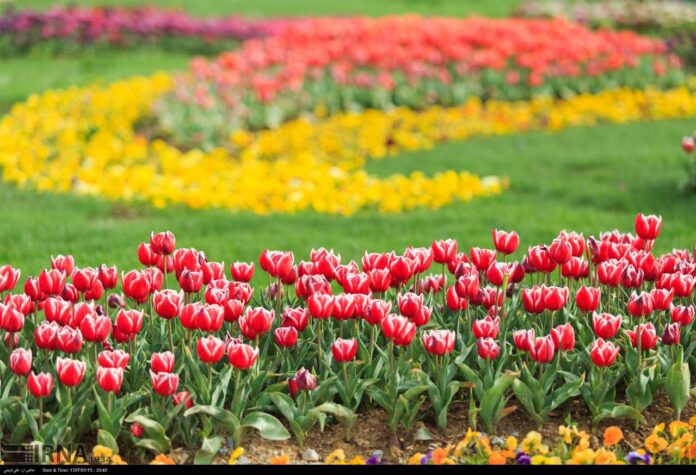
The event has been held in an area of 8,000 square metres with 21 types of tulips on show. The event would be underway until April 14 at Arak Industrial Town.

Following you can find the photos of this amazing festival retrieved from IRNA:

“Resistance Front to Have Upper Hand in Possible War with Israel”

Hossein Sheikholeslam, a former Iranian diplomat and a senior political commentator, in an interview with the Persian-language Tasnim News Agency, has weighed in on the latest developments regarding Palestine over the past year.

In his comments, the analyst described the defeat of the ISIS terrorist group as the most important event during the past year which saw the Palestine issue turn into the top priority of the Middle East region and the Muslim world. He also reviews the situation of the resistance front and the Israeli regime, which has lost its social base both at home and in the court of public opinion around the world. With that in mind, he believes the odds of a war breaking out are slim, and that the resistance front will prevail should any war erupt. He also believes the best way to tackle Trump’s relocation of the US embassy from Tel Aviv to al-Quds would be for regional nations to remain on the scene and show reaction along with governments’ diplomatic measures. The highlights of his remarks follow.


Defeat of ISIS; Palestine Becoming Top-Priority Issue Again

Everyone believes that the most important event which occurred last year was the defeat of ISIS. Religious terrorism is gone, creating an opportunity to bring the issue of Palestine to the fore. It was a great achievement for the resistance front. The American created ISIS to wage an ideological war against us, but their plot failed.


Israeli Regime’s Support Bases in Europe Falling Apart

The second point to mention is the Zionist regime of Israel’s position in Europe. Settlement construction is the pillar of Tel Aviv’s development. The Israeli regime has eliminated trade tariffs between itself and Europe. The settlements built by Israel are different from those in other parts of the world. These settlements are supposed to create hope, bring prosperity upon the Israeli regime, absorb some Zionists or adventurous people from across the world and further consolidate support for the occupation of Palestine.

The settlements need security. Therefore, the settlers are armed, so that they can quench their thirst for savagery.

Now, European people regard the settlements constructed after the 1968 as illegal. Although the commodities of these settlements are cheaper that similar products elsewhere, European people insist that the goods should come with labels that show which settlement the commodities were produced in. So, they can refuse to buy the goods produced in settlements they consider illegal.


How Will Israeli Regime Be Destroyed?

The Zionist regime of Israel will be destroyed this way: The Zionists are propagating the idea that Iran seeks to develop state-of-the-art weapons and missiles, and produce bombs accordingly, to destroy the Israeli regime. But this is not the case at all. Neither can the Israeli regime be annihilated this way, nor do we have any intention of destroying the regime this way. We wouldn’t like the Israeli regime to exist because it is an oppressive regime. It is associated with aggression and occupation. However, the regime will be destroyed if it is ostracized by the world, and it WLL be ostracized by the world. We have produced missiles and we do have missile only to deter potential attacks on us by the Israeli regime. Our weapons are defensive and aimed at deterring enemies’ aggression.


Trump Going to Extremes

Trump’s illogical and irrational support for the Israeli regime, and the way he imposes his will on others, and his violation of UN Security Council resolutions, will scuttle all the negotiations in which the US was a guarantor. His moves such as the relocation of the US embassy from Tel Aviv to al-Quds is a good opportunity to provoke the Islamic world and Muslims, prompting them to stand up to such aggression and bullying.


Oppression by Monarchial Arab Regimes in Mideast & Getting Closer to Israel

Repressive acts by monarchial Arab regimes in the region and their getting closer to Tel Aviv are beginning to assume a special meaning for regional nations. The same thing happened with the former despotic Shah of Iran and the Israeli regime. The Zionists are trying to enter the Arab world. The Arab world tells them that they may be able to enter the monarchial palaces, but can’t enter people’s homes. People in the Muslim world do not accept the Israeli regime. The axis of oppression made up of the US, hegemonic powers, the Israeli regime and Arab monarchies has turned into a problem for Europeans as well.


Defeat of Zionists in Iraq’s Kurdistan

Another thing that the Zionists wanted to make happen but failed to do so was to get Iraq disintegrated through a referendum. The Zionists want the region to be partitioned based on racial differences and ethnicity. They have an old plan for this, too. It is Bernard Lewis’ famous plan which maintains when the region is partitioned along racial and ethnic lines – and do not forget that Israel’s definition of Judaism is a racist one – such a division will justify the establishment of a Jewish country based on ethnicity. People in the region are resisting this Israeli plan, which amounts to a major failure for Tel Aviv in achieving its objectives.


Seeking to Replace Fight against Israel with Iranophobia

By exerting pressure on Iran as the main brains, backup and frontline of the resistance against global hegemony, they wanted to make Islamic nations oppose Iran rather than the Israeli regime. However, the plan failed given Trump’s policies, the issue of relocating the US embassy to al-Quds and the pressure put on the Egyptian nation.


Looking Inside Palestine

There have been several Intifadas inside Palestine each of which had a different function. Now, a new approach is unfolding in Palestine. The demonstrations being held regularly on Fridays can continue. The weekly protests can exhaust the Israeli regime.


Settling the Syria Crisis, Reinforcing Resistance Front

Another issue is Syria. The Syria crisis is moving toward a political solution. Syria has, in essence, been against the Israeli regime and in favour of Palestinians. One of the reasons behind this support is the occupation of Syria’s Golan Heights by Israel. The settlement of the Syria crisis can have a positive impact on the issue of Palestine.


Crushing Response to Israeli Regime

One of the issues in the spotlight nowadays is the Israeli regime’s excessive demands on its joint natural gas field with Lebanon. Accordingly, Sayyid Hassan Nasrallah adopted an appropriate position in that regard, showing Hezbollah will use its military capabilities to safeguard the rights of Lebanon.


Popular Nature of Resistance amid Failed Western Democracies

The structure of the resistance front is more democratic than the structures of other sides such as the monarchical Saudi regime, the Israeli regime, the US and the like, or the Palestinian Self-Rule Authority, which has aligned itself with them. The Palestinian Self-Rule Authority led by Mahmoud Abbas is not a democratic one, unlike the Palestinian resistance movement Hamas, which has remained democratic in the most difficult times.


Bullying Ideology vs. Democratic Ideology

There are two types of ideology which are standing against each other. The bullying ideology says pressure, sanctions and bullying are effective ways in dealing with those opposing you. However, the democratic ideology believes it is possible to achieve one’s goals through resistance.


Resistance Front’s Upper Hand

We have the upper hand; it is unlikely that the Zionist regime of Israel would even dream of waging a war. It may chant the slogan of war or make threats, but will not launch a war anywhere.


Israeli Regime’s Internal Situation

I believe radicals in the Israeli regime need to step aside because they have chanted a lot of extremist slogans, but not achieved much. Moreover, Netanyahu’s days are numbered, and he must go.


Compromise Plan Fails

The compromise theory and all its supporters have failed, and the Self-Rule Authority has lost its credibility among Palestinians because of the measures adopted by the Zionists and Trump. As a case in point, security cooperation has resulted in the martyrdom of Palestinians. Netanyahu’s radicalism is not compatible with the Self-Rule Authority’s weakness and humiliation. Netanyahu should change.
 

Ways of Countering Relocation of US Embassy to al-Quds

The best way is popular presence in the face of the Americans. We should provoke people to show reaction outside US embassies and institutions in Muslim countries. We should even urge Saudi officials to take a stance against this US move.
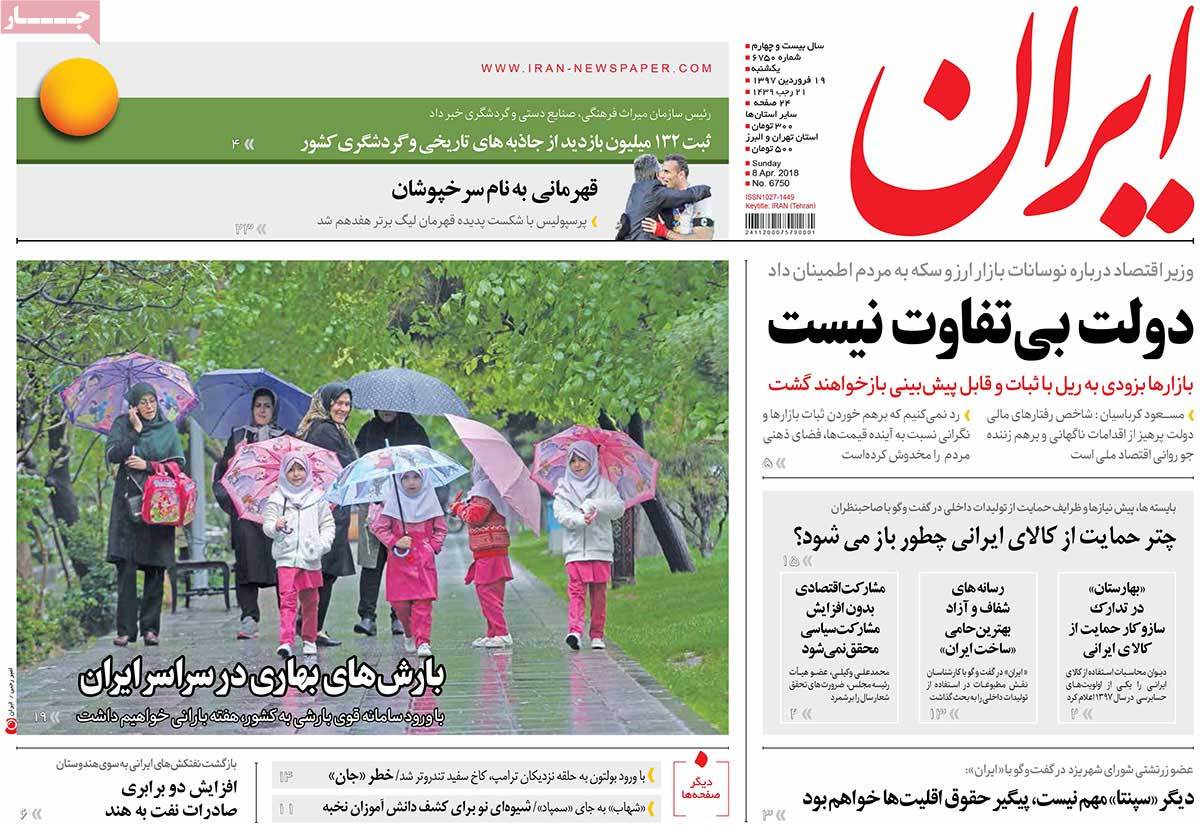
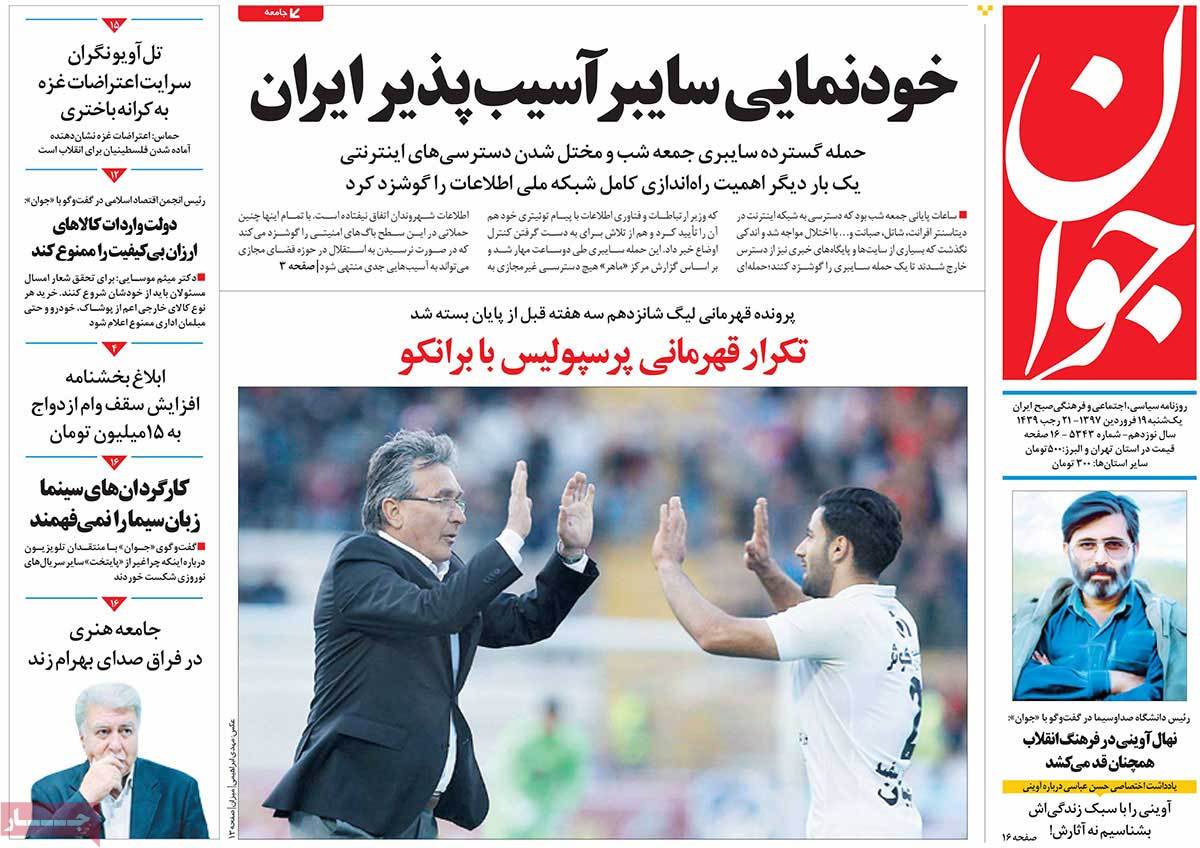
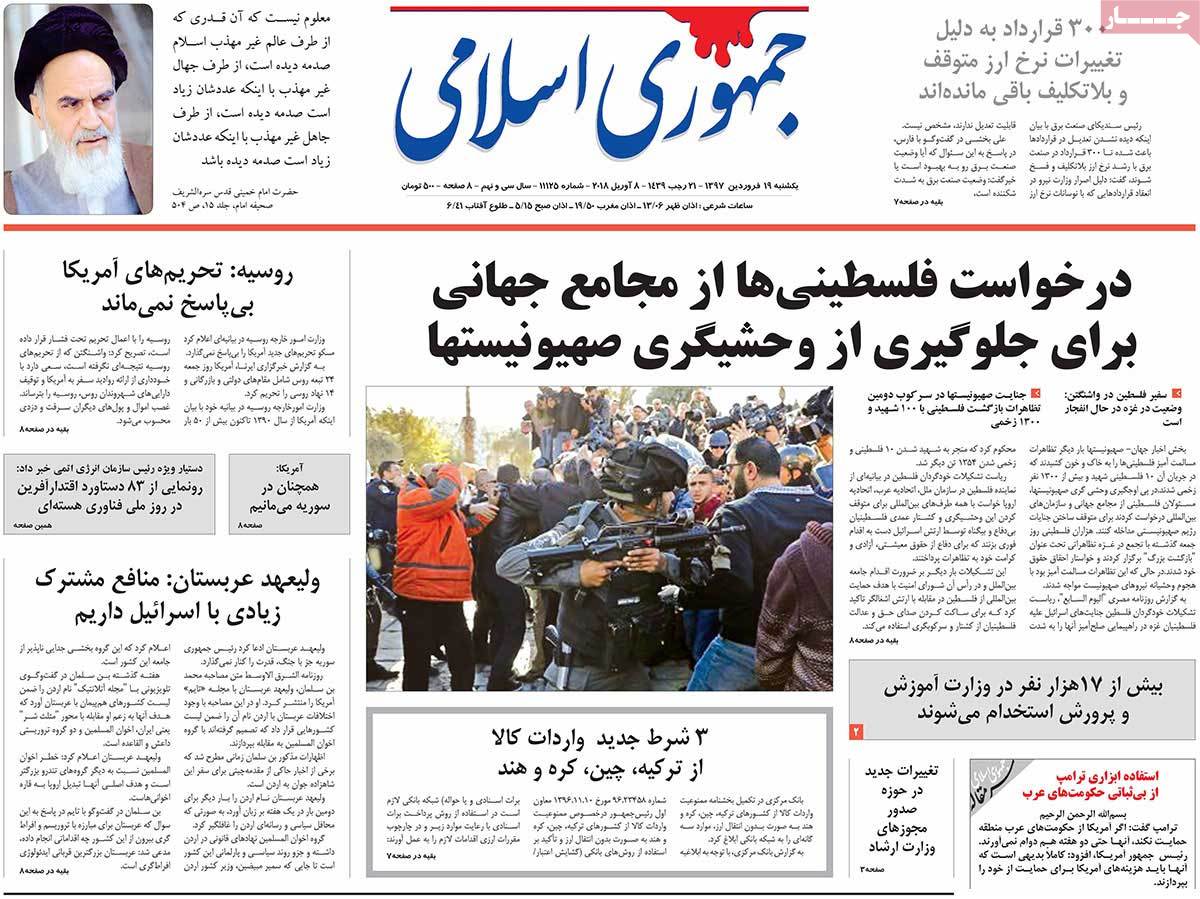
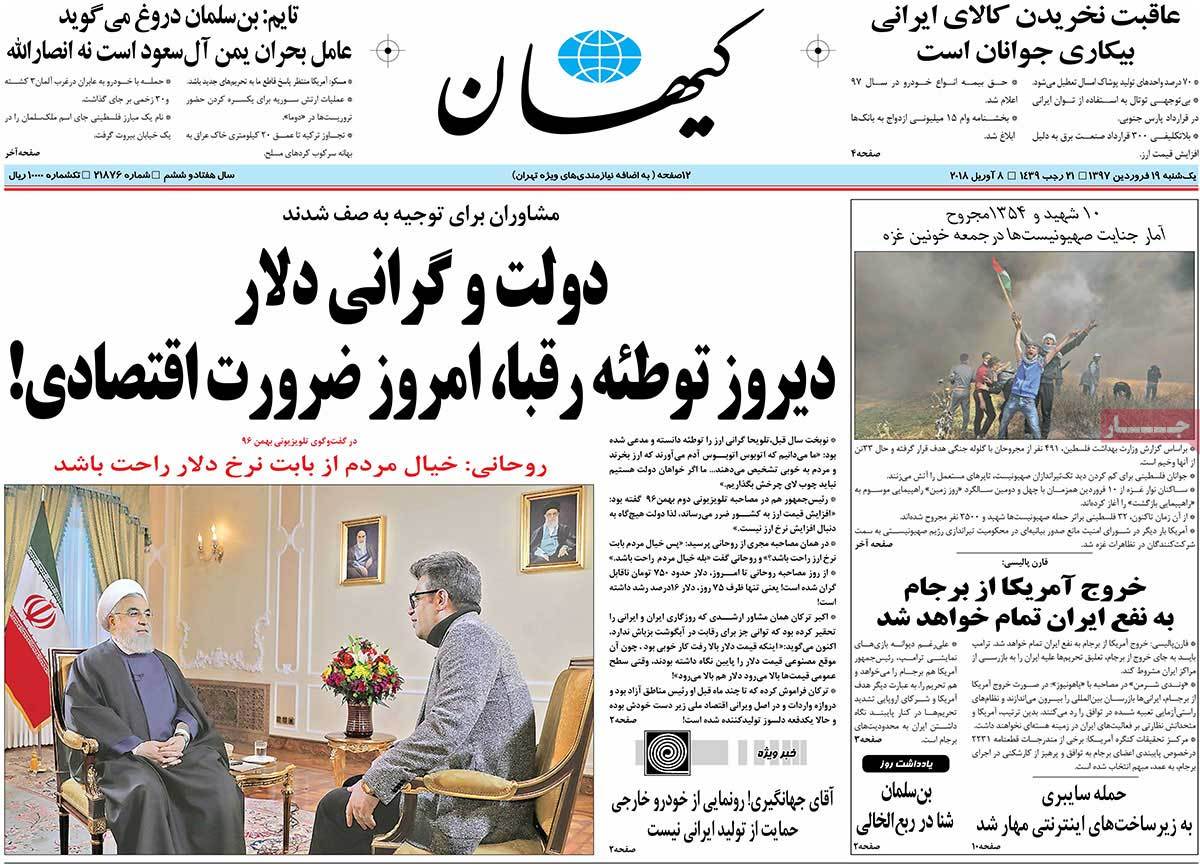
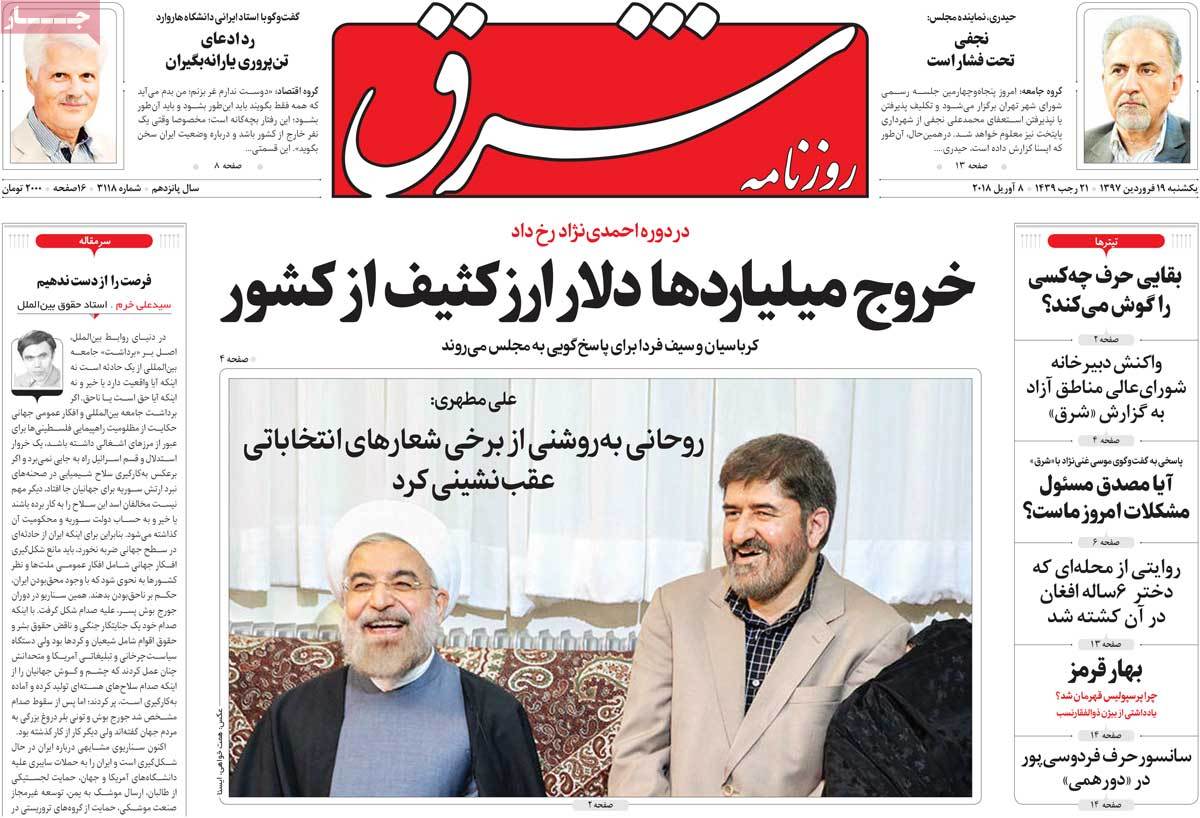
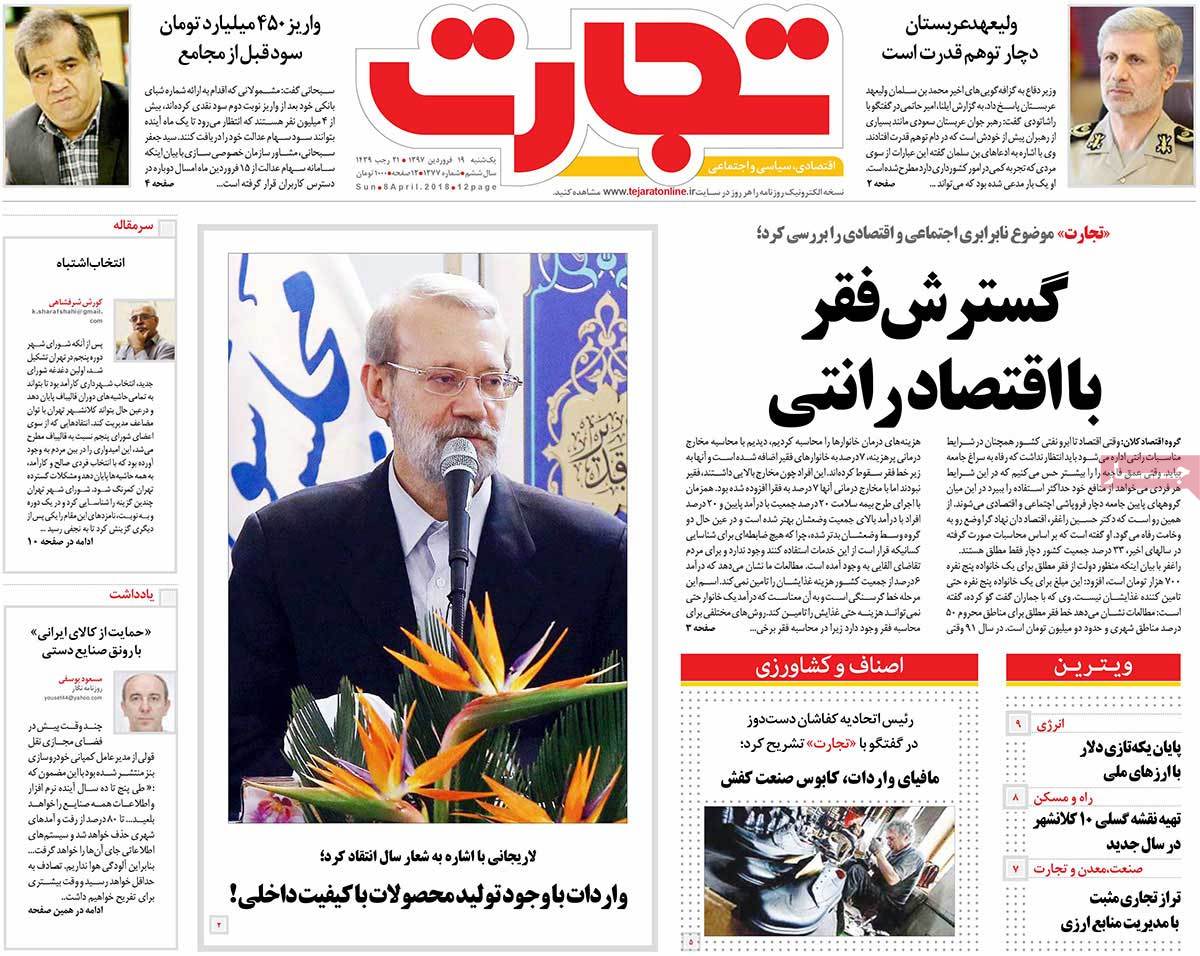
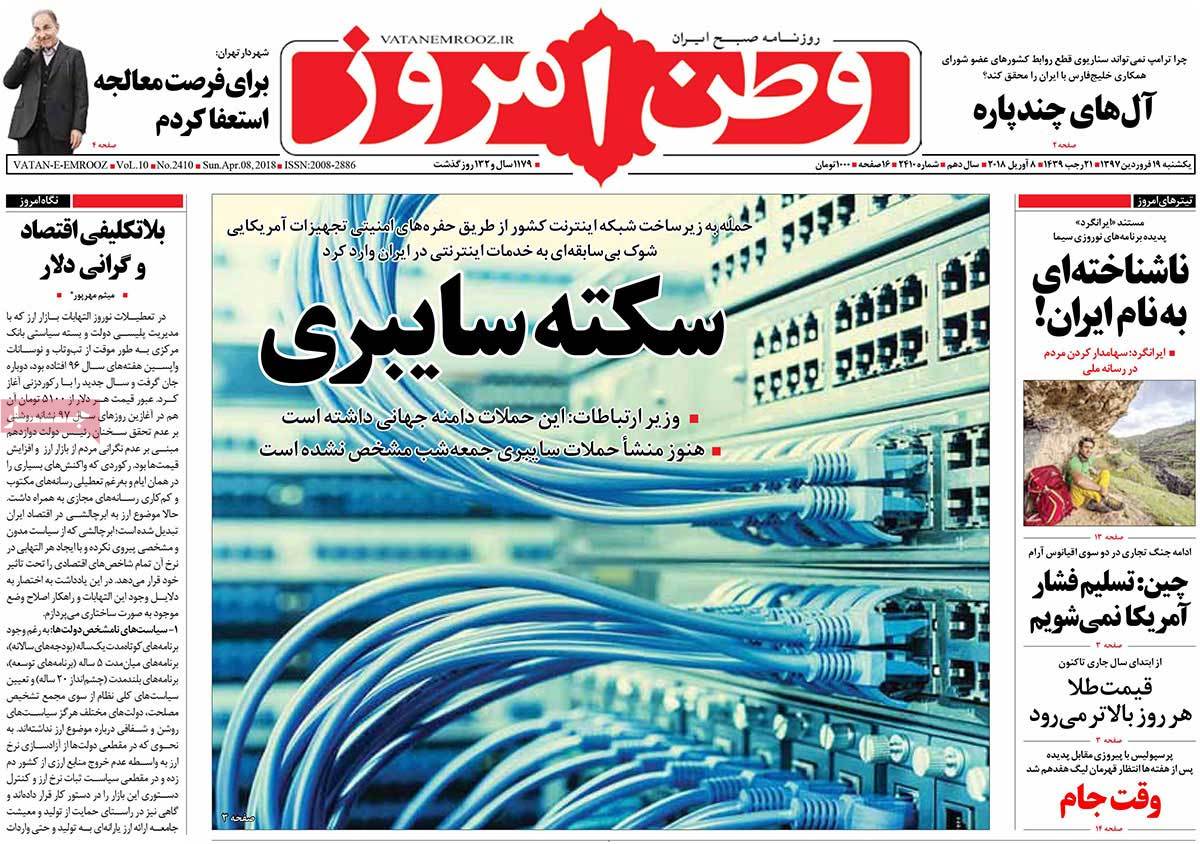
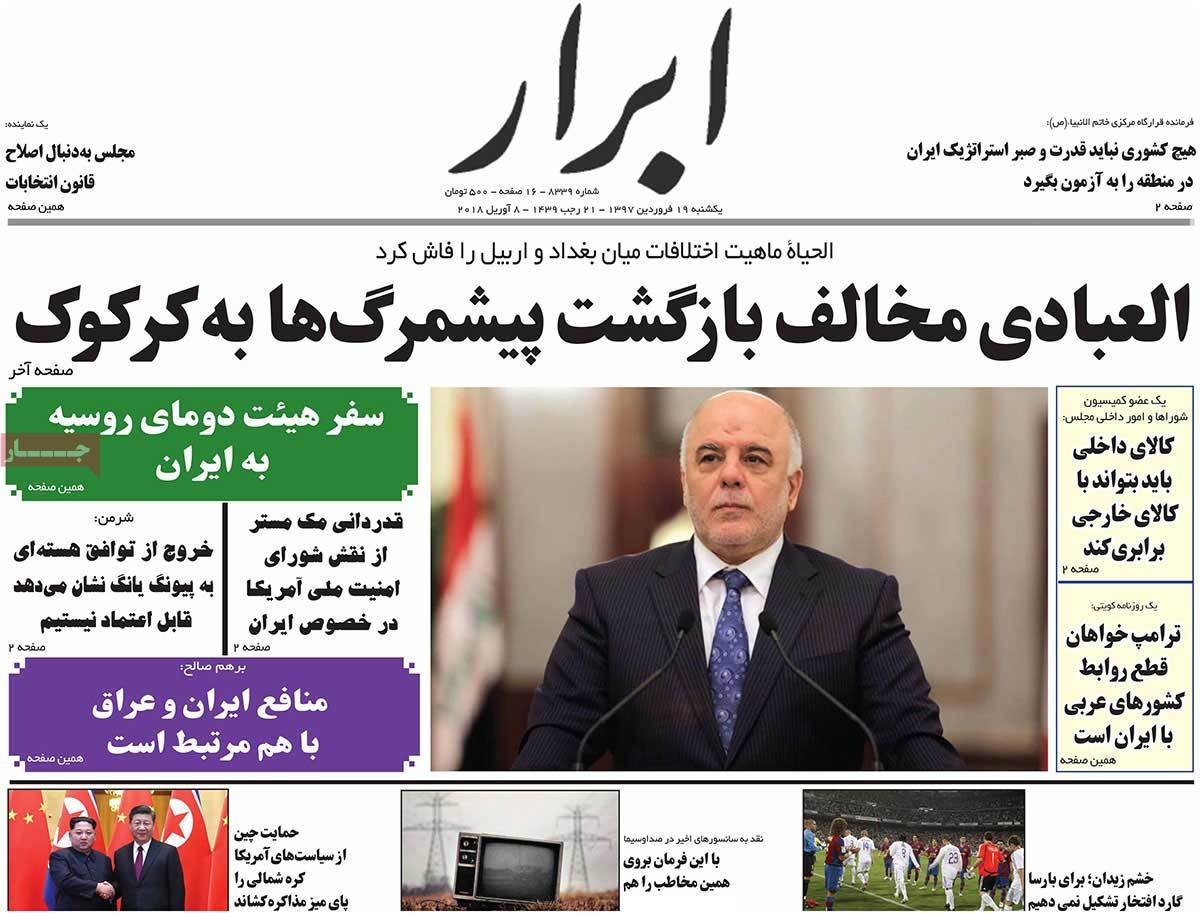
A Look at Iranian Newspaper Front Pages on April 8

A Look at Iranian Newspaper Front Pages on November 18

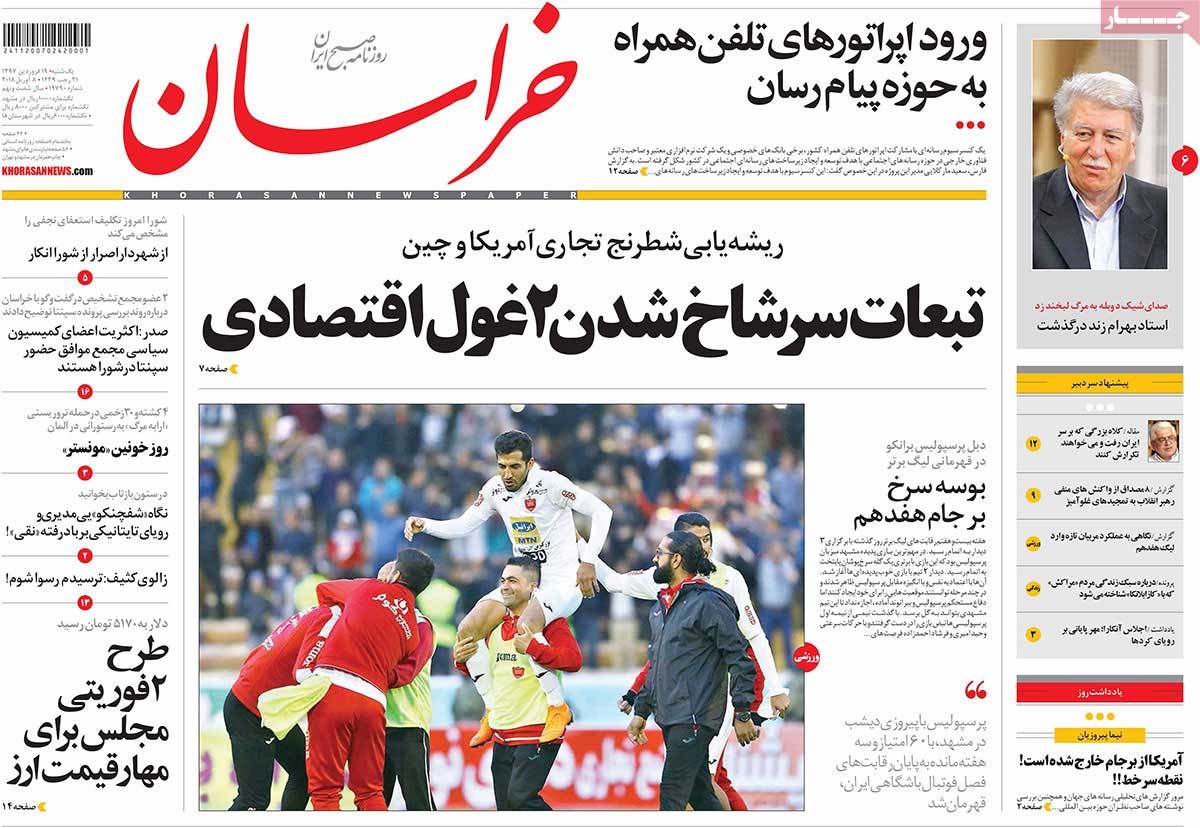
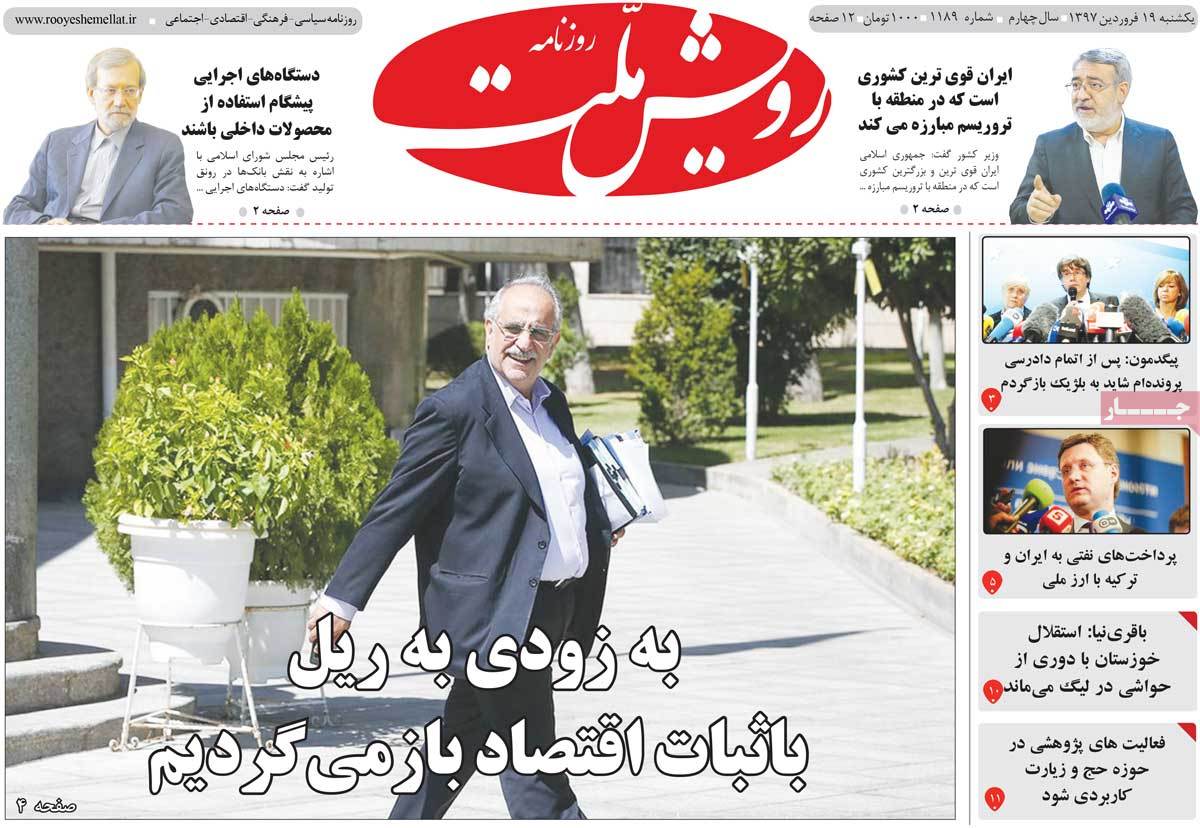
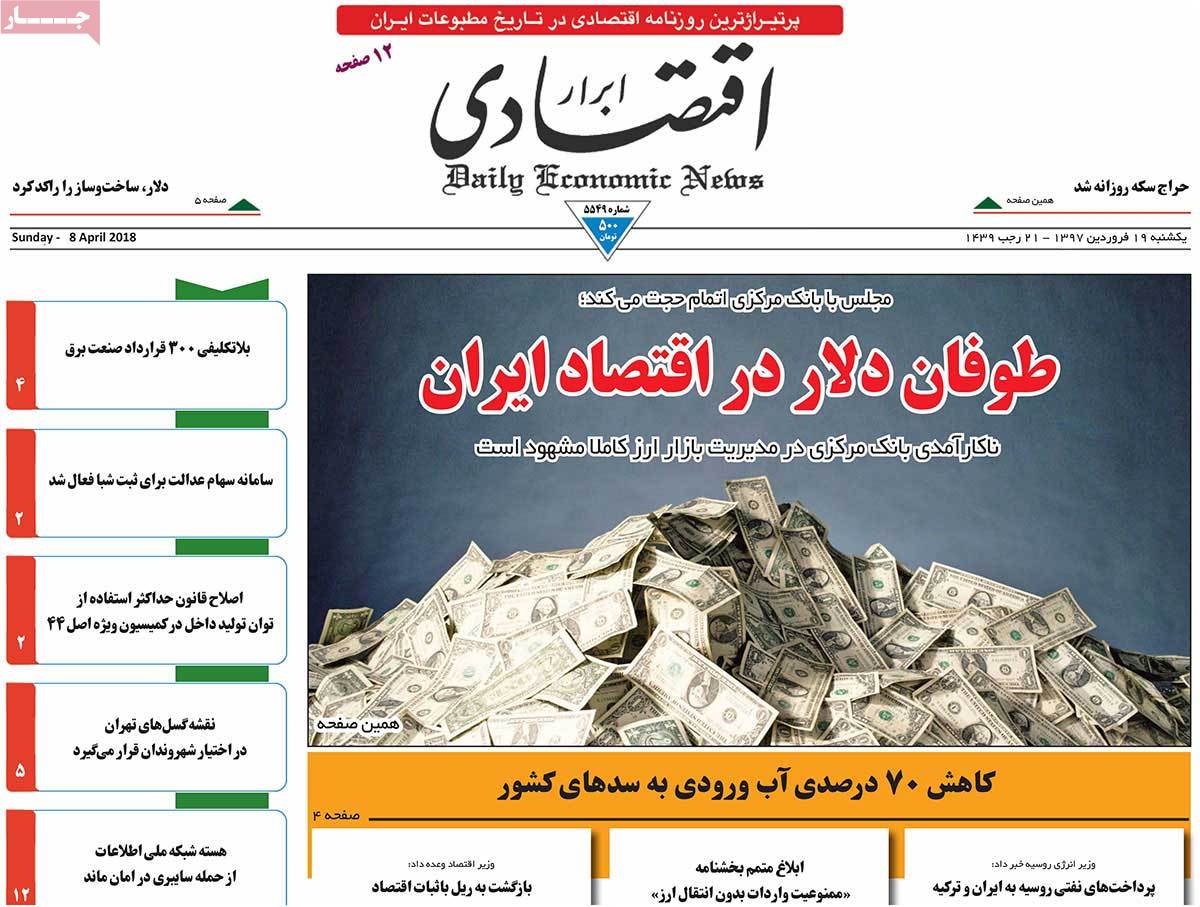
The top story in all papers today was the growing rate of US dollar and other foreign currencies in Iran, and the ongoing efforts to control it. The Parliament is going to give an ultimatum to the Central Bank while Economy Minister Massoud Karbasian has vowed to return the country’s economy to normal.
Several newspapers also highlighted the Friday night’s cyber-attacks on major Iranian databases, which were caused by a flaw in the Cisco switch.

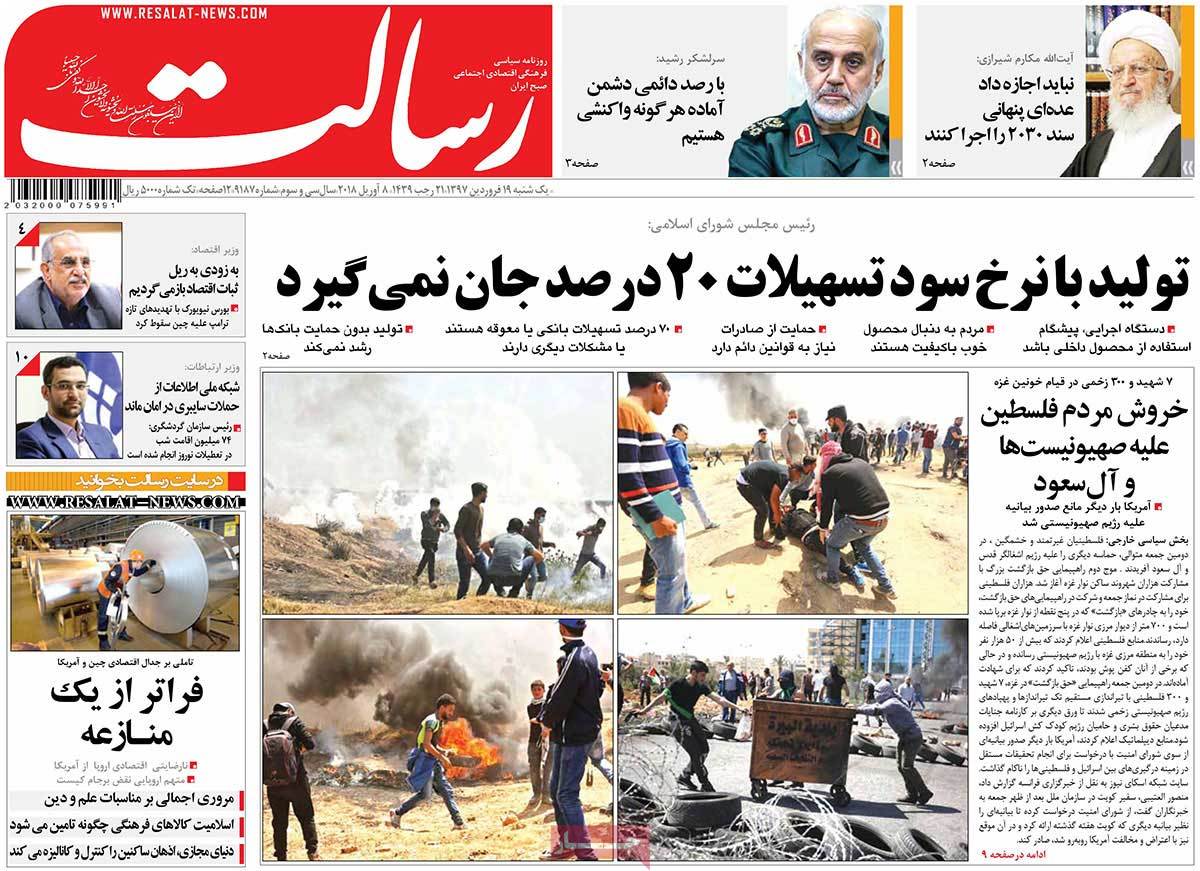
The Israeli troops’ ongoing violence against Palestinian protesters, which has so far killed dozens of people and wounded hundreds of others, also received great coverage today.

Also a top story was Persepolis FC’s second consecutive championship three weeks before the end of the Iran Pro League.

The above issues, as well as many more, are highlighted in the following headlines and top stories:


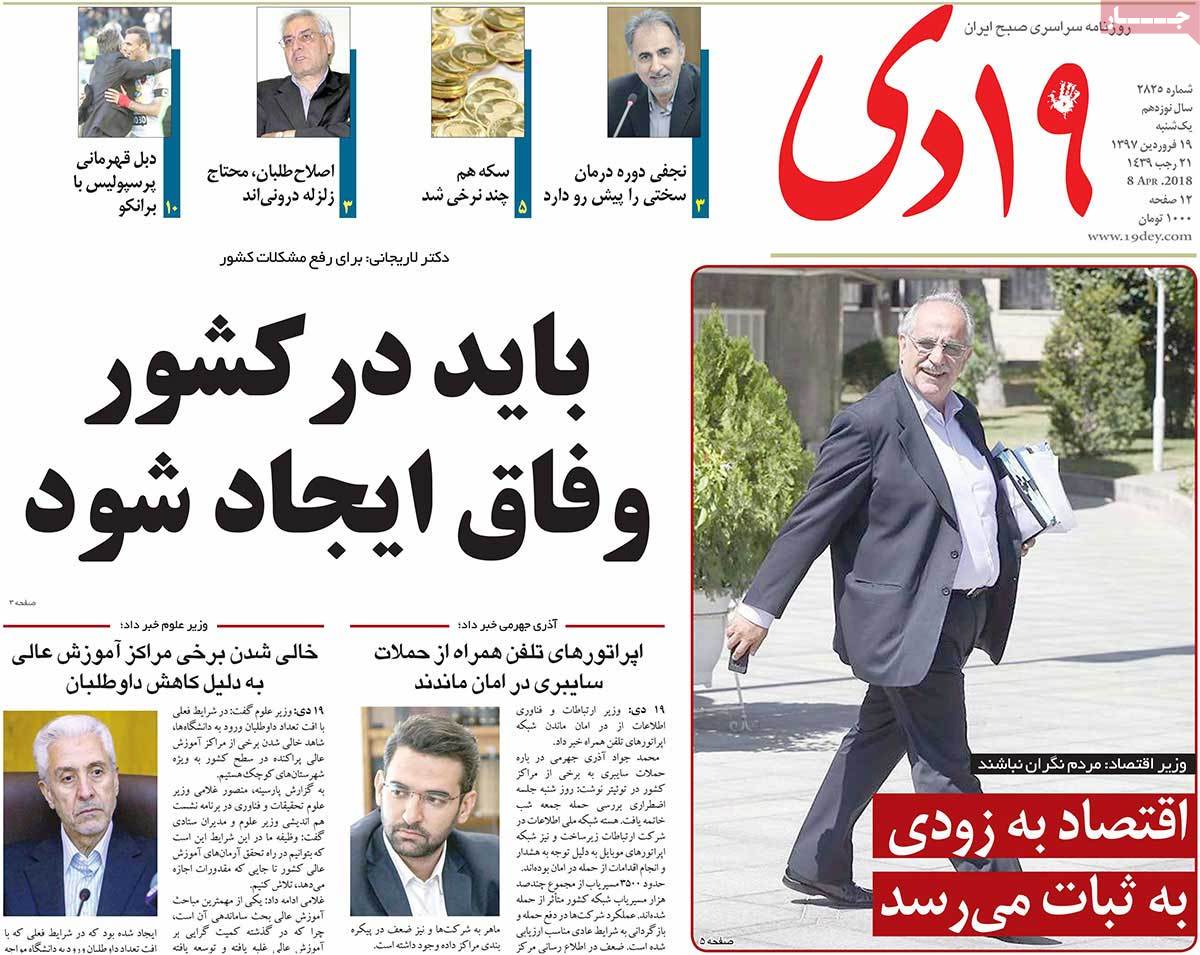
19 Dey:

  • Minister: Stability to Return to Iran’s Economy Soon

A Look at Iranian Newspaper Front Pages on April 8


Abrar:

  • Russian Parliamentary Delegation to Visit Iran
  • IRGC General: No Country Should Test Iran’s Strategic Might, Patience

A Look at Iranian Newspaper Front Pages on April 8


Abrar-e Eqtesadi:

  • US Dollar’s Storm in Iran’s Economy
  • Parliament to Give Ultimatum to Central Bank

A Look at Iranian Newspaper Front Pages on April 8


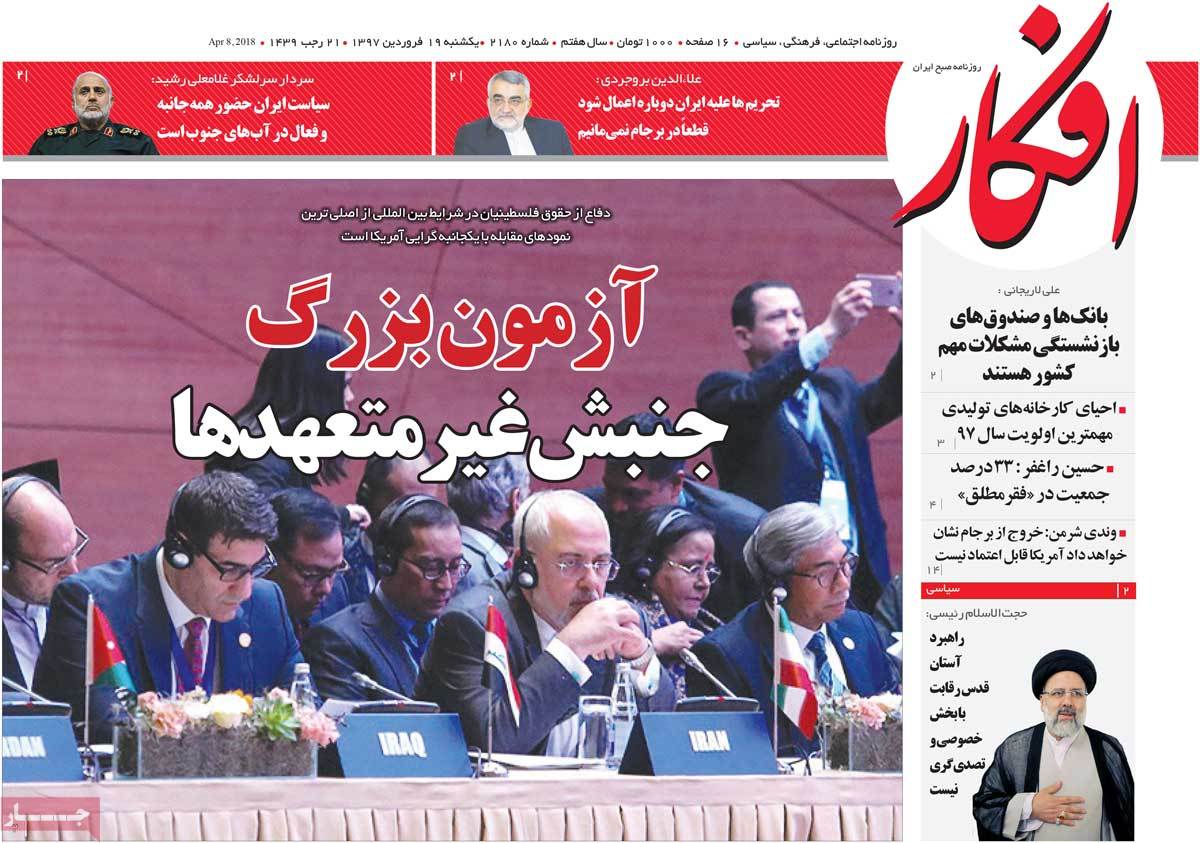
Afkar:

  • IRGC General: Iran’s Policy Based on All-Out, Active Presence in Southern Waters
  • Senior MP: Iran Will Definitely Pull Out of JCPOA If Sanctions Re-Imposed

A Look at Iranian Newspaper Front Pages on April 8


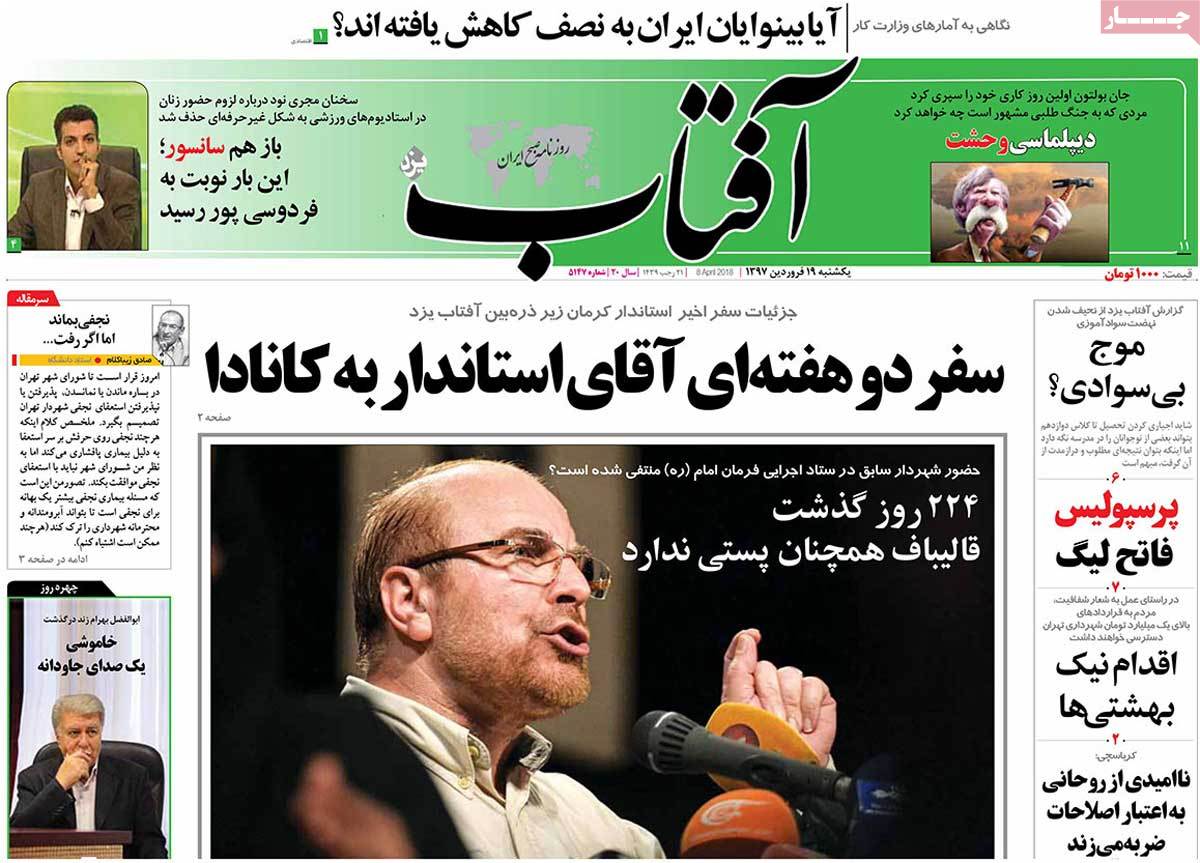
Aftab-e Yazd:

  • Wild Diplomacy: Hawkish National Security Advisor Bolton Starts Work
  • Disappointment with Rouhani to Damage Reputation of Reformism: Karbaschi
  • Persepolis FC Claims Iran Pro League Title

A Look at Iranian Newspaper Front Pages on April 8


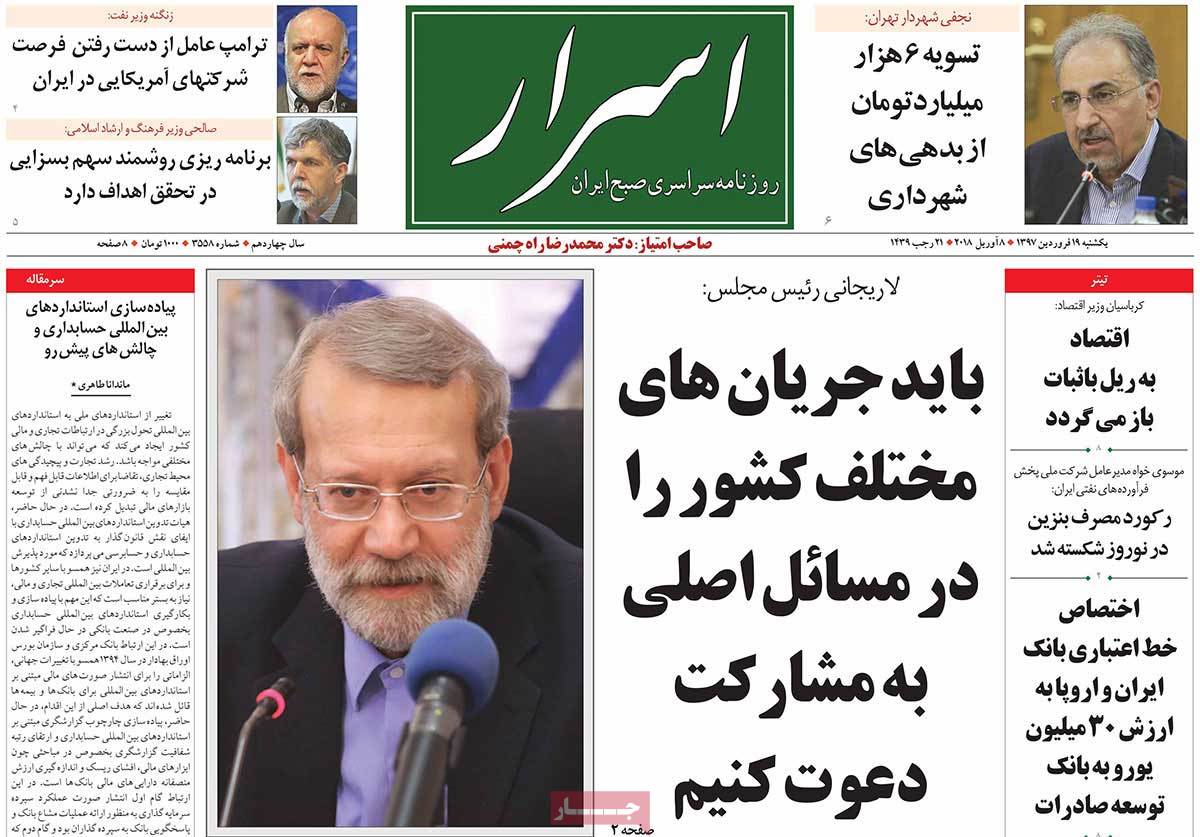
Asrar:

  • Oil Minister: Trump Has Caused Americans Firms to Lose Their Chance in Iran

A Look at Iranian Newspaper Front Pages on April 8


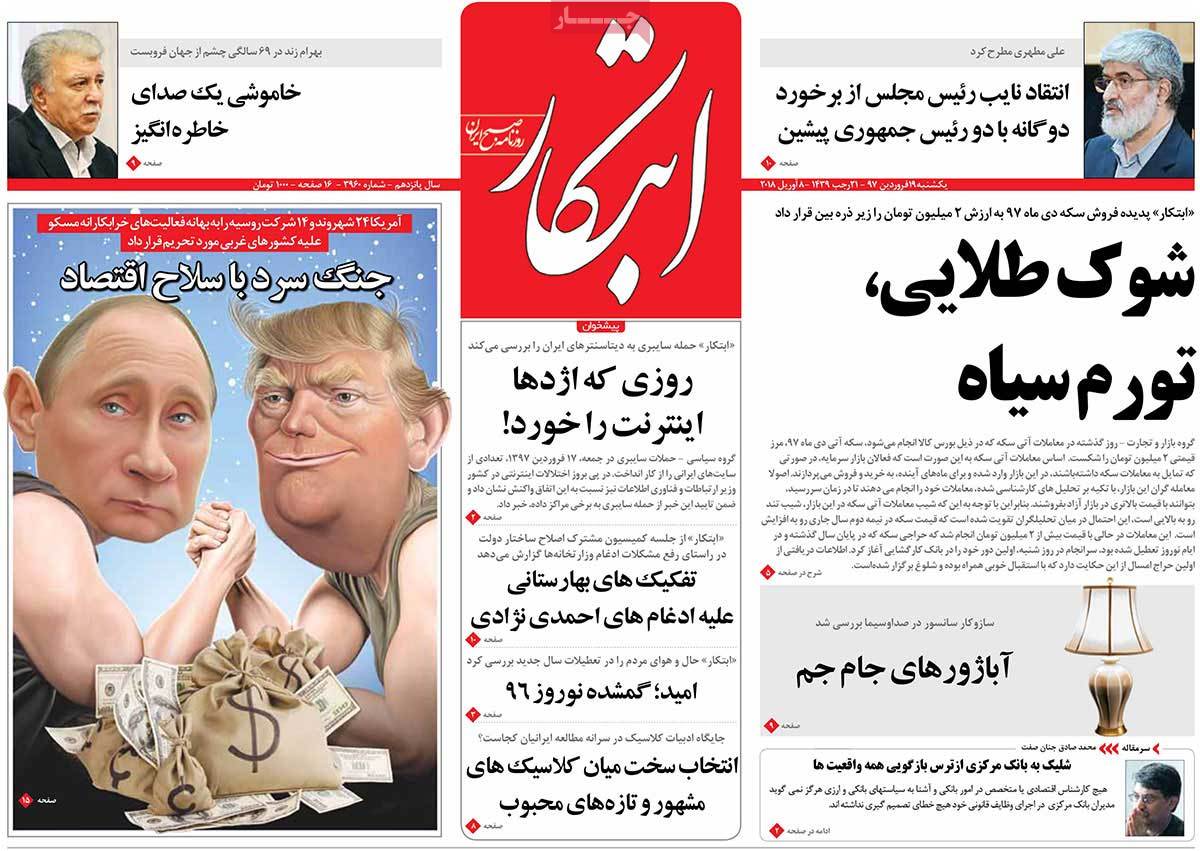
Ebtekar

  • Economy Used as Weapon in New Cold War
  • US Blacklists 24 Russian Citizens, 14 Firms for Moscow’s Sabotage

A Look at Iranian Newspaper Front Pages on April 8


Etemad:

  • People in Underdeveloped Sistan and Baluchestan Province Are Crying
  • MP Talks about Consequences of Water Crisis in Province
  • Impact of Increased Dollar Rate on People’s Livelihood

A Look at Iranian Newspaper Front Pages on April 8


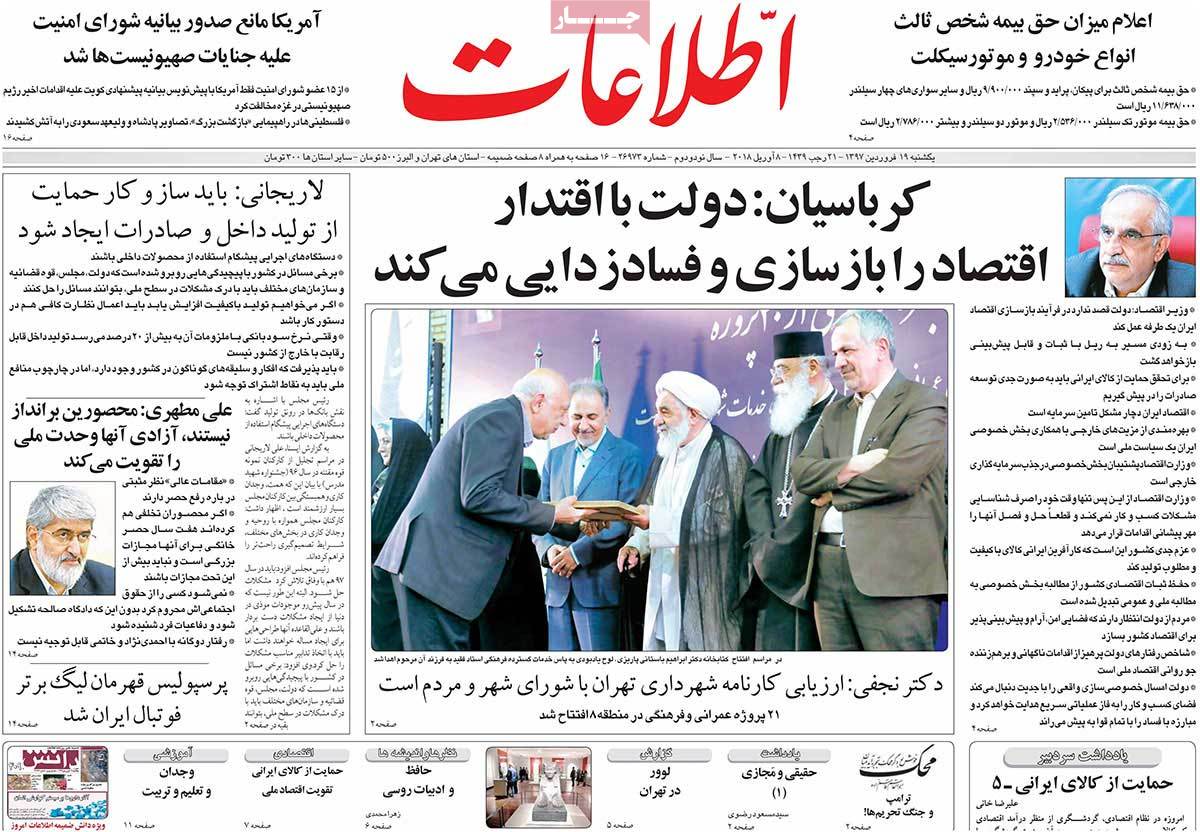
Ettela’at:

  • Economy Minister: Gov’t Will Strongly Reconstruct Economy, Fight Corruption
  • US Blocks UN Security Council Statement against Zionists’ Crimes
  • MP: Mousavi, Karroubi Not after Overthrowing Establishment
  • Lifting Their House Arrest to Reinforce National Solidarity

A Look at Iranian Newspaper Front Pages on April 8


Iran:

  • Spring Rainfall across Iran
  • Zoroastrian Councillor of Yazd: My Membership Doesn’t Matter Anymore
  • I’ll Pursue Rights of Minorities
  • Two-Fold Increase in Oil Exports to India

A Look at Iranian Newspaper Front Pages on April 8


Javan:

  • Iran’s Vulnerable Cyberspace
  • Massive Cyber-Attacks on Friday Night Highlights Need for National Network
  • Tel Aviv Worried about Spread of Gaza Protests to West Bank

A Look at Iranian Newspaper Front Pages on April 8


Jomhouri Eslami:

  • Palestinians Urge Int’l Bodies to Prevent Zionists’ Brutality
  • Russia: US Sanctions Not to Remain Unanswered
  • Saudi Crown Prince: We Have Many Common Interests with Israel

A Look at Iranian Newspaper Front Pages on April 8


Kayhan:

  • Government’s Reactions to Dollar Rate Hike
  • Yesterday Described as Rivals’ Plot, Today as Economic Necessity!

A Look at Iranian Newspaper Front Pages on April 8


Khorasan:

  • Parliament’s Double-Urgency Motion to Control Forex Rate

A Look at Iranian Newspaper Front Pages on April 8


Payam-e Zaman:

  • 33% of Iranian People in Absolute Poverty
  • IRR 40m [around $760] Is Poverty Like for People in Cities
  • Macron, Merkel to Visit US for Talks on JCPOA

A Look at Iranian Newspaper Front Pages on April 8


Resalat:

  • IRGC General: We’re Ready for Any Reaction by Constantly Observing Enemies

A Look at Iranian Newspaper Front Pages on April 8


Rooyesh-e Mellat:

  • Interior Minister: Iran Most Powerful State Fighting Terror in Mideast

A Look at Iranian Newspaper Front Pages on April 8


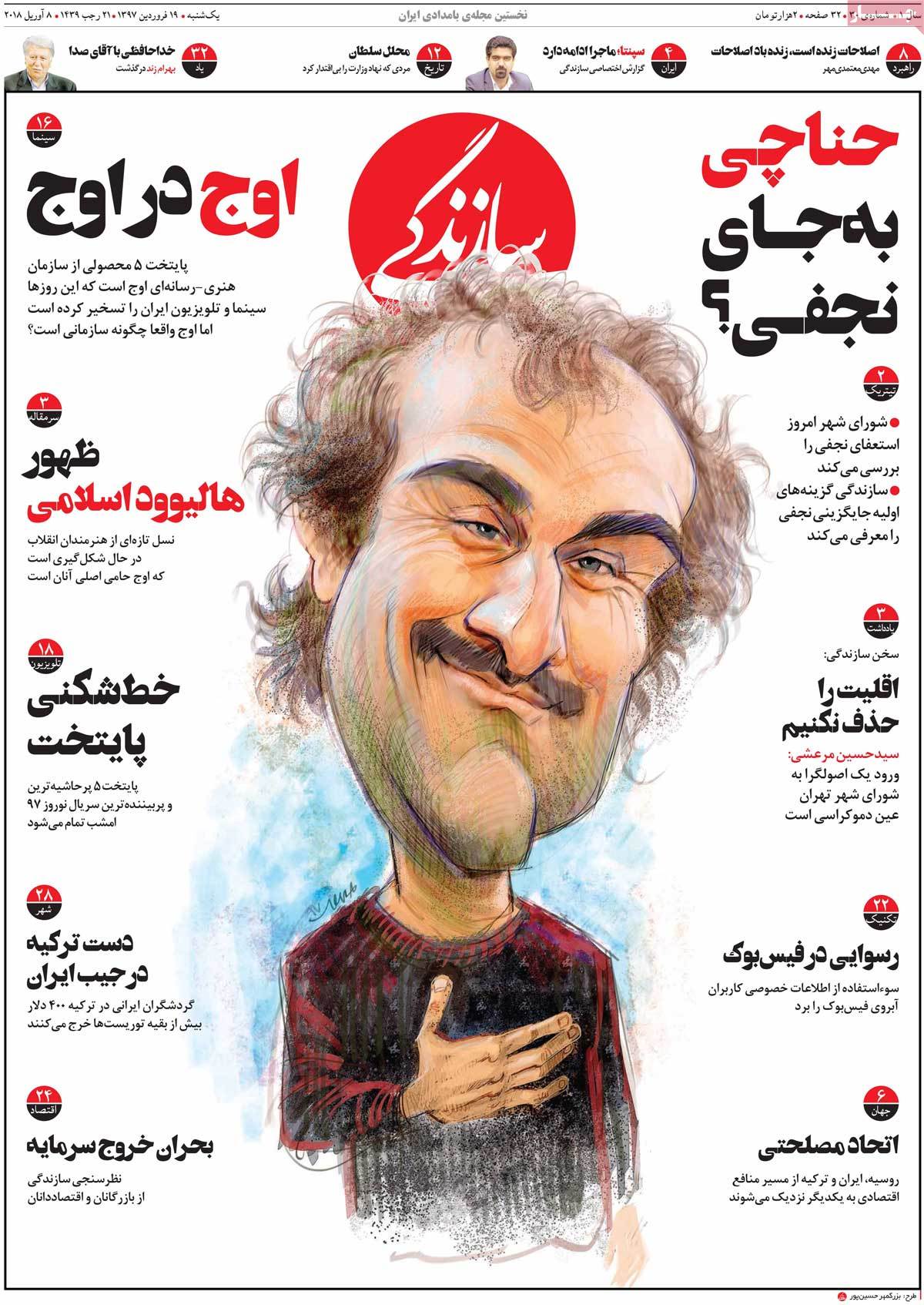
Sazandegi:

  • Turkey’s Hands in Iran’s Pockets
  • Iranian Tourists Spend $400 More than Other Tourists in Turkey

A Look at Iranian Newspaper Front Pages on April 8


Shargh:

  • Billions of Dollars of Dirty Money Taken Out of Iran in Ahmadinejad’s Era

A Look at Iranian Newspaper Front Pages on April 8


Tejarat:

  • Iran DM: Saudi Crown Prince Has Illusion of Power

A Look at Iranian Newspaper Front Pages on April 8


Vatan-e Emrooz:

  • Cyber Stroke: ICT Minister Says Attacks on Iranian Databases Had Global Scope

A Look at Iranian Newspaper Front Pages on April 8

“Iran Will Definitely Pull Out of JCPOA If Sanctions Re-Imposed”

“The most important objective of the JCPOA (the nuclear deal, officially known as the Joint Comprehensive Plan of Action), was the lifting of sanctions,” Chairman of the Iranian Parliament’s Committee on National Security and Foreign Policy Alaeddin Boroujerdi said on Saturday.

“If … sanctions are re-imposed on Iran, we definitely will not remain in the JCPOA,” he added.

The US ambassador to the United Nations, Nikki Haley, said on Thursday that Washington would probably get out of the Iran nuclear deal and re-impose sanctions on the Islamic Republic.

She accused Iran of supporting terrorism and violating the terms of the JCPOA and said Europeans were closing their eyes on this, but added that the US would not do so.

The Iranian lawmaker rejected Haley’s comments that Tehran would not pull out of the JCPOA because it intended to continue trade ties with European countries and said the US envoy should not make decisions for Iran.

In her Thursday lecture at Duke University, in Durham, North Carolina, Haley said, “The Europeans stay in the deal. Fine. They can have it. We can put our sanctions back on. Iran is not going to get out of that deal. They want the trade with the Europeans. They want to keep the $100 billion that they have. They are not going to leave, but we don’t have to be a part of it.”

Boroujerdi further emphasized that Iran made decisions based on its own national interests.

He said if sanctions were set to be re-imposed on Tehran after a possible US withdrawal from the nuclear deal, Iran’s remaining in the JCPOA would not secure the country’s objectives.

The senior legislator emphasized that Iran would maintain its ties with European countries as long as mutual interests existed.

US President Donald Trump on January 12 reluctantly agreed to waive sanctions against Iran that were lifted as part of the landmark deal, but said it would be the last time he issued such a waiver unless conditions were met.

The US president once again threatened to withdraw from the nuclear deal if some “disastrous flaws” were not fixed.

Trump said he wanted America’s European allies to use the 120-day period before sanctions relief again came up for renewal to agree to tougher measures and new conditions, otherwise Washington would pull out of the deal.

German Chancellor Angela Merkel in March warned Israeli Prime Minister Benjamin Netanyahu, a staunch opponent of the Iran deal, against serious repercussions of a US decision to pull out of the multilateral agreement, saying such a move would plunge the Middle East into war.

Merkel said the US and Israel would clash with their Western allies should Trump withdraw his country from the nuclear agreement.

Earlier in March, Iranian Foreign Minister Mohammad Javad Zarif also warned the US against the “painful mistake” of pulling out of the 2015 Iran nuclear agreement.

“Considering what has been envisaged in the JCPOA in the field of research and development and the Islamic Republic of Iran’s continued measures to develop its peaceful nuclear capability, if the US makes the mistake of exiting the JCPOA, it will definitely be a painful mistake for the Americans,” Zarif said.

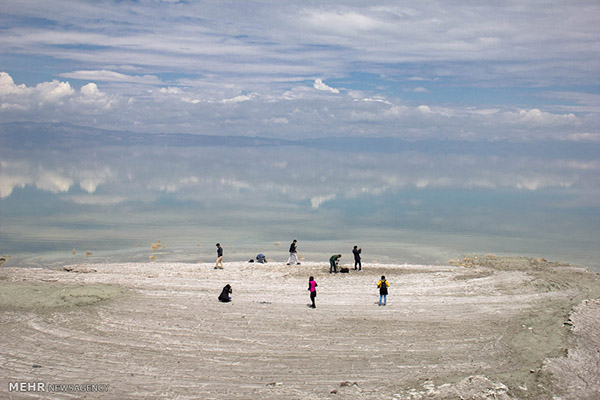
Two-Fifth of Drying Lake Urmia Filled with Water

Baqerzadeh Karimi says currently two-fifth of Lake Urmia’s surface area is covered with water, adding, however, the water level of the lake is still low.

“Fortunately, the lake is now in a relatively good condition due to the last season’s rainfall. We expect further increase of the lake’s water level following the spring’s precipitation, melting of the winter’s snow and opening of dams’ floodgates,” he was quoted as saying in a Farsi report by ISNA.

He said at present the water level of the lake stands at 1270,67 centimetres which has increased by 60 centimetres compared with its lowest level.

“Meanwhile, the water level of the lake has increased by 4 centimetres compared with the last year,” he said.

As the Head of Wetland Affairs at the Department of Environment, Baqerzadeh Karimi said with the increase of the lake’s water level, its surface area covered with water reaches 212,000 hectares which shows a relative growth compared with the last year.

“At present, over two-fifth of the lake’s surface area is covered with water but unfortunately, the water volume of the lake is only 1.84bn cubic meters. This means that the lake’s water level is still too low and this puts it in a dangerous situation ahead of the hot season of summer,” he added.

Touching on the plans to restore Lake Urmia, Baqerzadeh Karimi said “we have made good progress in a number of fields like establishing channels and tunnels for transferring water, sealing illegal wells, making reforms to irrigation systems and creating plant cover around the lake.”

He added last year, only 30 percent of the financial credit to restore the lake was provided and naturally only 30 percent of the target goals were fulfilled.

“To provide the financial credit, we need to seek resources other than the government like private sector as well as foreign investments,” he said.

He underlined that the plans to restore Lake Urmia will remain intact but the methods to implement them will undergo changes to speed up the restoration process.

Lake Urmia has been depleted drastically due to a variety of factors, including the construction of a causeway as well as several dams that have choked off water from the mountains on either side of the lake.

A report compiled by the UN Development Plan (UNDP) says human factors, particularly building numerous dams over the rivers flowing into the lake, have further complicated the fate of the largest inland body of water in Iran. However many others maintain that that illegal water wells have played a pivotal role in shrinking Lake Urmia.

Five years ago, Iranian President Hassan Rouhani and his first cabinet launched a “task force” for the revival of Lake Urmia.

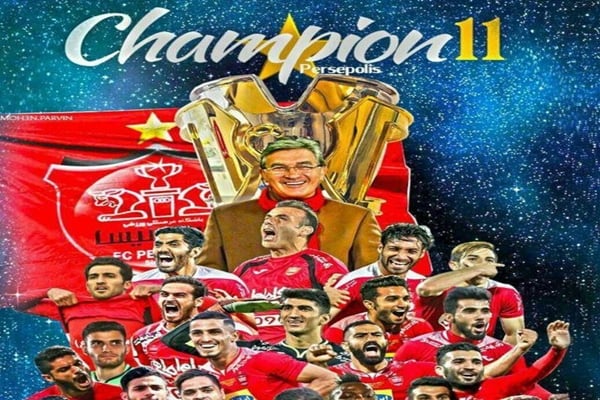
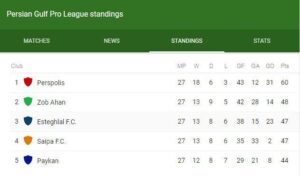
Persepolis Wins Iran Pro League Title for Second Consecutive Year

The reds on Saturday defeated Padideh FC in the north-eastern city of Mashhad 0-1 to gain enough edge over Zobahan of Isfahan and claim the title for the second consecutive year.

The match against Padideh was the third one in a row where Persepolis had the chance to win the title by securing minimum points, but the reds had lost their two previous matches to Saipa and their arch-rival Esteghlal.

Persepolis Wins Iran Pro League Title for Second Consecutive YearManager Branko Ivankovich and his men had last year ended a 9-year wait for the title, again with 3 matches to spare.

Persepolis FC was founded in 1963 and has been in the first division of Iranian football since 1968.

The Tehran giants have won a record eleven Iranian league titles, as well as five Hazfi Cups, one Super Cup and the 1990–91 Asian Cup Winners’ Cup.

Many notable players have played for the club, including former Bayern Munich players Ali Karimi, Ali Daei, Vahid Hashemian and former Hamburger SV player Mehdi Mahdavikia.

Iran Sympathizes with Canada over Deadly Bus Crash

In a Saturday night statement, Qassemi offered sympathy to the Canadian nation and the families of the 15 victims of the incident.

The Humboldt Broncos team, which has members aged between 16 and 21, were en route to a play-off game when their bus collided with a lorry on a rural road. As a result, 15 people were killed and several others injured.

The tragedy sent shock waves throughout Canada, where hockey is the dominant sport and making long bus rides to tournaments is a rite of passage for young players.

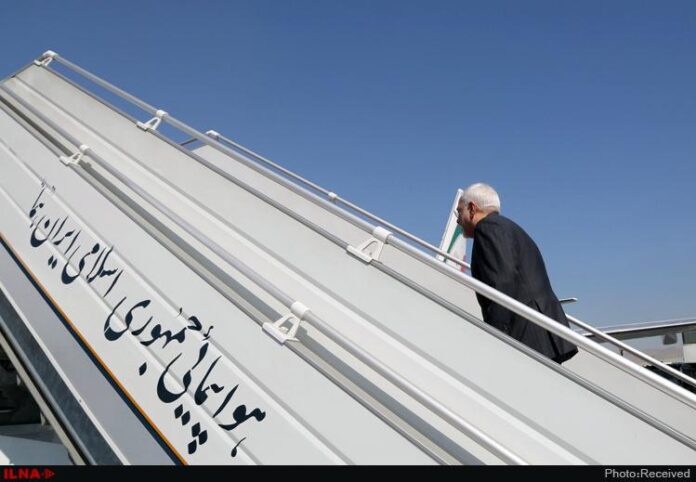
Iran FM to Start Tour of Africa, Latin America Sunday

According to Foreign Ministry Spokesman Bahram Qassemi, Zarif will travel to Senegal, Namibia, Brazil, and Uruguay to meet with political, economic and parliamentary officials of these countries.

“Zarif will also attend bilateral economic and trade conferences in each country and deliver speeches at some research institutes of these countries,” Qassemi said.

The spokesman said tens of businesspeople and entrepreneurs from the governmental and private companies active in various sectors will accompany Zarif in these trips.