Saturday, December 27, 2025
Home Blog Page 3562

Iran, Pakistan Navies to Hold Joint Drills

In a meeting with Pakistan’s Navy Commander Admiral Zafar Mahmoud on the sidelines of Indian Ocean Naval Symposium (IONS) in Tehran, Admiral Fadavi expressed satisfaction with the current level of cooperation between Iranian and Pakistani armed forces.

“The insecurity triggered by the US in the West Asia can equally affect Iran and Pakistan,” he was quoted as saying in a Farsi report by ISNA.

He referred to the US as the main source of insecurity in the region and said Tehran and Islamabad have already received heavy blows from the regional terrorism sponsored by Washington.

The Iranian commander then thanked Pakistani politicians and commanders for their prudent policies towards the US president’s ‘unconsidered remarks and stances’.

“During the eight-year war imposed on Iran by Iraq’s former dictator Saddam Hussein, the US officials adopted wicked measures against Iran which were thwarted by our navy,” he noted.

Admiral Fadavi said the US has been seeking over years to isolate IRGC in the Persian Gulf.

“About two and a half years ago, the Iranian navy seized two US boats and arrested 10 sailors in the Persian Gulf who had entered the Iranian waters. This sent a clear message to Washington that Iran can target its ships in the region if needed.”

He underlined that Iran’s power is not restricted to its missile and military capabilities and added Iranians also draw on the spiritual power of Islam to fight against the enemies.

The IRGC navy commander also called for further expansion of ties between Iran and Pakistan navies.

For his part, the Pakistan admiral warned that the enemies are seeking to sow the seeds of discord among the regional states and said Pakistan attaches great significance to Iran and its great nation.

Era of Hegemonic Influence Long Gone: Iran FM

Zarif made the remarks while addressing the Council on Foreign Relations on Monday in New York.

“In the wars of 20th and 21st centuries, there are no winners; only the degree and amount of loss will be different. In the globalized era… you cannot have security at the expense of insecurity of others,” he said, adding, “The era of hegemonic influence is long gone.”

He added that Saudi Arabia is trying to introduce Iran as a regional threat, while adding that more dialogue is needed among regional states.

“We believe, in our region we suffer from dialogue deficit. We don’t talk to each other. We talk a lot about each other, particularly when we come here. Our neighbors, particularly Saudi Arabia, wants to create an impression that we are an existential threat against them. You just saw a very expensive two week tour of the United States and that was one of the most important messages that wanted to be presented,” he added.

Zarif noted that regional countries need to break away from the paradigm of exclusion which prevails in the region.

The Iranian foreign minister added that a dialogue deficit and confidence deficit is present in region.

While stressing that the era of zero-sum games is long gone, he added that there are no winners in modern wars and that everybody loses.

He further noted that era of hegemonic influence is over and that neither Iran, nor Saudi Arabia can be hegemonic powers in region.

“We need to realize and appreciate this fact, however heart breaking it maybe, none of us can become this new hegemon,” he added.

Zarif also said that without mutual respect, there could be no dialogue between Tehran and Washington.

He added under present circumstances and with current tone of US government there are no prospects for dialogue between Tehran and Washington.

“My aim is to start a process that I can have some hope. I mean, you cannot start a process just because, I mean, stop the process, or not engage, just because of a fear of failure. But at least you need to have some hope of success, some prospect for success, in order for this process to start. And I do not believe that, under the present circumstances, with the present tone, and language and approach of the current administration in Washington, you would have much prospect,” he said.

The Iranian foreign minister also went on to defend the presence of Iranian military advisors in Syria.

“I think you need to thank us for preventing Damascus, Baghdad, and Erbil, mind you, from falling in the hands of ISIS (Daesh), because then, instead of a terrorist organization, you would have had two terrorist states,” he added.

“I’m saying categorically, let us stop the war in Syria, and Iraq… and Yemen tomorrow. And, if you see Iran not doing its best to stop that war, then you can accuse us of any moral degradation that you want,” he added.

US, Allies Not Allowed to Play Role in Syria Peace Talks: Assad

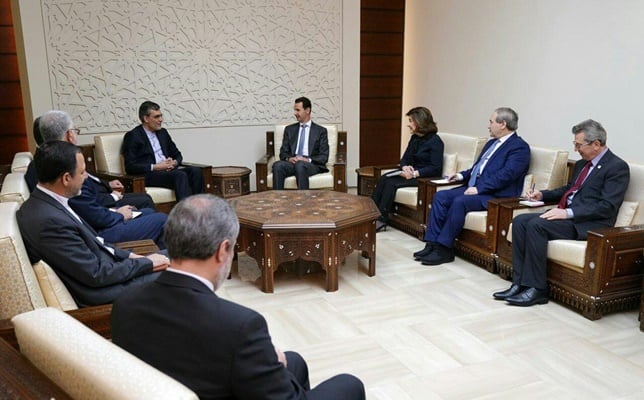
Countries which launch aggression against other nations are not eligible to contribute to the peace process in Syria, whatsoever, Assad announced on Monday.

He made the remarks in a meeting with Hossein Jaberi Ansari, a senior assistant to Iran’s foreign minister, in Damascus.

Assad also thanked Iran for its support for the Syrian government and nation in the war on terror.

The two sides further discussed the latest political developments in Syria as well as the coordination between Tehran and Damascus at this juncture.

Jaberi Ansari, who is Iran’s top negotiator in Syria peace talks, congratulated Assad on the fresh gains made by Syria and its allies in the fight against terrorists.

He condemned the recent acts of aggression on Syria by the Israeli regime and three Western countries, saying the moves suggest a spirit of aggression and their non-compliance with international regulations and a blatant violation of the provisions of the UN Charter.

Girls Selling Handicrafts Online to Help Develop Their Remote Village

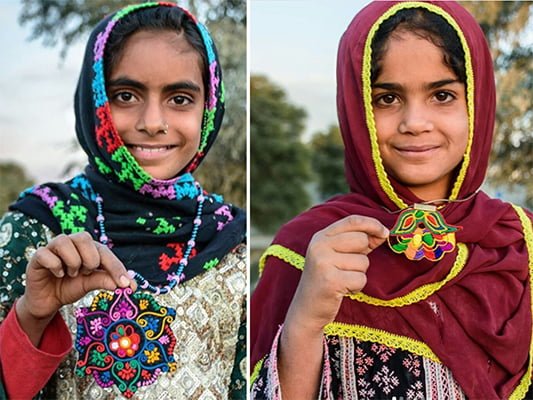
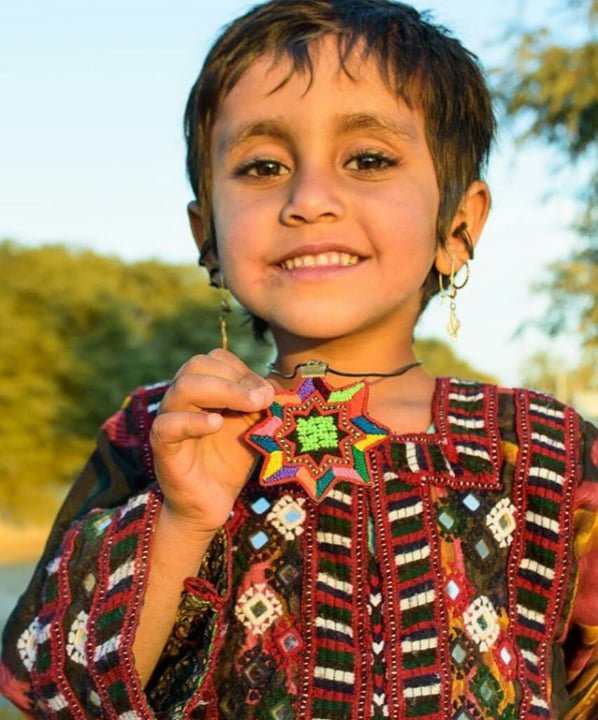
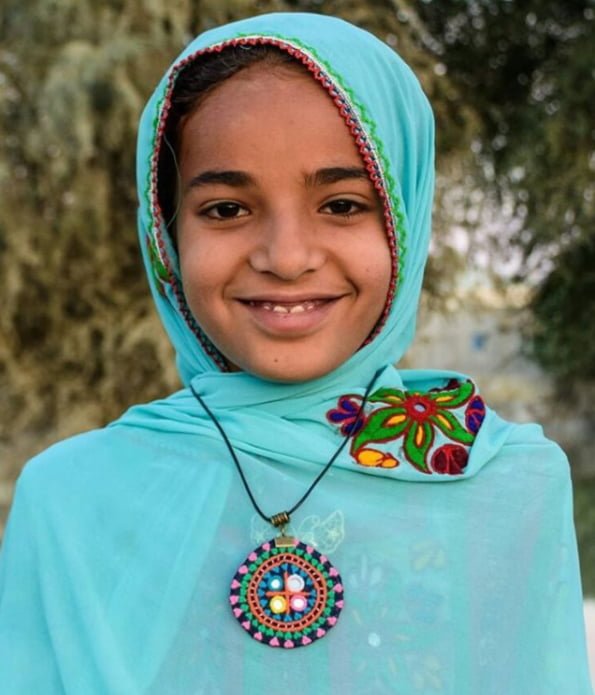
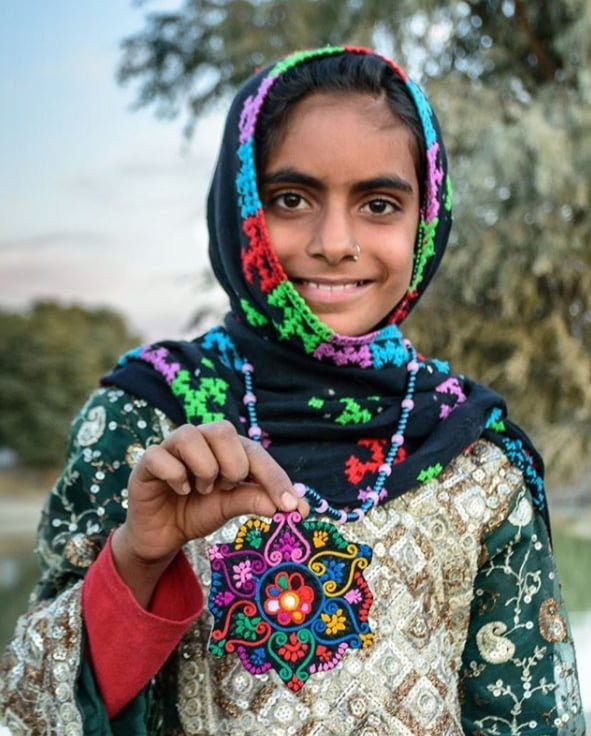
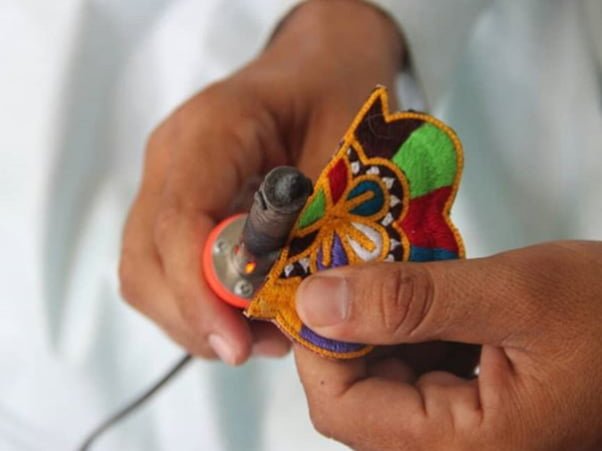
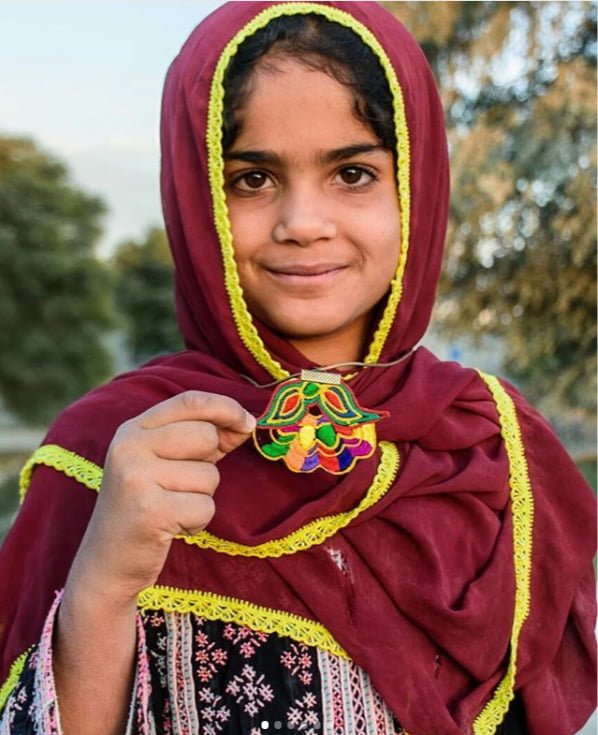
The girls from Saydbar Jedgal village in Sistan and Baluchestan province, southeastern Iran, have created an account in Instagram to put their handicrafts for sale.

The handicrafts have been warmly welcomed on the social media and the girls have managed to sell most of them, a Farsi report by ILNA said.

The girls say they spend the money they earn for improving the education as well as health sections of their village by, for instance, educating the illiterate people of the village and collecting garbage.

Through this collective project on the social media, the girls are seeking to play a role in lessening the severe deprivation in their village.

Iranian arts and crafts have been known all over the world since the very ancient times. Various eye-catching handicrafts from gorgeous Persian carpets to exquisite potteries, ceramics, metal works, etc. are the products of Iranian art and creativity.

Given the huge capacities and capabilities of Iranian artists in the production of indigenous handicrafts, there are numerous opportunities for development through foreign investment. The highly educated and creative young generation of Iran can achieve great success by finding access to global markets.

According to the data released by the Iranian Vice-Presidency for Science and Technology, skillful workforce is cheap in Iran (as compared with the international market) and the costs of running a business (such as energy costs) are rather low; therefore, the country offers a great opportunity to foreign investors to establish international interactions with Iranian artists in various fields including handicrafts, animation, computer games, design, fashion and clothing, and jewelry.

Iran, Belgium Urge All Parties to Remain Committed to JCPOA

Iranian and Belgian foreign ministers meeting in New York on April 23, 2018

During the Monday talks, the two sides exchanged views on the most important issues in bilateral relations as well as the latest regional and international developments.

Zarif and Reynders underlined the significance of expanding bilateral ties, particularly in making further investments in Iran, and urged all involved sides in the Iran nuclear deal to remain committed to their pledges under the accord.

Earlier in the day, Zarif said in a post on his official Twitter account that the European signatories to the Joint Comprehensive Plan of Action (JCPOA) should convince US President Donald Trump not to pull out of the deal, because there is no “Plan B” for it.

“It’s either all or nothing. European leaders should encourage President Trump not just to stay in the nuclear deal, but more importantly to begin implementing his part of the bargain in good faith,” he noted.

Trump is a stern critic of the nuclear deal reached between Iran and the five permanent members of the UN Security Council – the United States, France, Britain, China, Russia – plus Germany in 2015.

Under the agreement, nuclear-related sanctions put in place against Iran were lifted in exchange for curbs on Tehran’s nuclear program.

“US Attacks Have No Effect on Syria’s Political Developments”

Speaking in a Farsi interview with IRNA in Damascus on Monday, Jaberi Ansari said the US, the UK, and France are considering themselves as the decision-makers in the world, and they pursue certain political goals under the pretext of human rights or other things which are by no means acceptable to any country.

Referring to attacks on Syria, he added, “The three countries attacked Syria on the pretext of the Assad government’s use of chemical weapons. It was an instrumental and political use of the issue, and the Islamic Republic was strongly and openly opposed to it.”

Jaberi Ansari emphasised that if a chemical attack has been carried out in the Eastern Ghouta, an opportunity must be provided for international chemical weapons inspectors to investigate the case.

“The position of the Islamic Republic has been repeatedly announced and Iran, as one of the main victims of chemical weapons in contemporary times, does not accept the use of such weapons by any party and under any circumstances.”

This Iranian diplomat also pointed out that Tehran hopes the conditions would be prepared for Syria to emerge out of the crisis as soon as possible in the context of the diplomatic efforts that Iran, Russia and Turkey are making within the framework of Astana Talks.

“The Islamic Republic wants to restore calm and security to all areas of Syria by maintaining its unity, territorial integrity and national sovereignty,” said Jaberi Ansari.

Iran’s top negotiator in the international peace talks on Syria will hold talks with a number of senior Syrian officials on the latest regional and international developments in the country on Monday.

Such visits are held on a regular basis, and the reports on the latest developments and diplomatic efforts made by the Islamic Republic of Iran within the framework of the Astana Talks are given to Syrians.

Syrian President Bashar al-Assad and Jaberi Ansari had earlier discussed the horizons ahead of the Syria crisis, especially within the context of the Astana-Geneva talks, by reviewing the latest political and political developments.

Multiple places in Syria came under attack by US, British and French military forces on April 14 after President Donald Trump ordered a military strike against the country despite international warnings against further escalation of the situation.

The three countries used an alleged chemical attack in the Eastern Ghouta suburb of Damascus last week as a pretext for their military action. They blame the Syrian government for the attack, without offering any evidence.

Syria has strongly rejected any role in the suspected attack, which came just as the Syrian army was about to declare full victory against the militants operating in the region.

Russia said the chemical attack was staged by desperate militants to provoke further intervention in the conflict by the West.

IT, Telecoms Exhibition Opens on Iran’s Kish Island

The latest technological advances and products have been displayed at the event.

The exhibit features seminars, conferences, specialized workshops, computer game contests, launching startups, marketing techniques and demonstrations by startups, reports the Persian-language Iranian Students’ News Agency (ISNA).

In addition to displaying the latest technologies in the field of communications and IT, the exhibit aims to contribute to the cycle of science and technology, commercialize products, help exhibitors enter world markets in order to produce wealth and set the stage for launching Web-based businesses using state-of-the-art technologies, and lend support to startups.

Also present at the event is the Mobile Telecommunication Company of Iran (MCI), a major Iranian telecoms service provider and a sponsor of the exhibition.

For a brief review of Iran’s achievements in various fields of science and technology, check the book “Science and Technology in Iran: A Brief Review

The MCI has put on show it latest developments and achievements in different fields, including altering energy (water, electricity, natural gas) networks to be smart, smart management of the transportation system, the “smart city,” an organizational data umbrella, exclusive and shared data packages, a safe mobile phone network, and sales systems.

The exhibition will run until September 26, 2018.

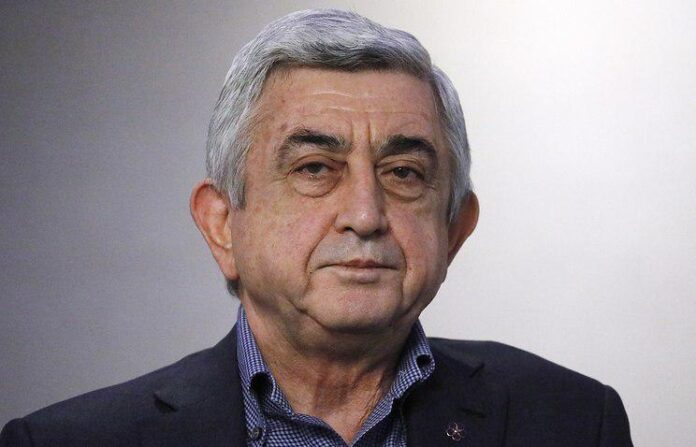
Armenian PM Resigns Six Days after Taking Office

Sargsyan’s resignation was declared in a statement released by his office on Monday, April 23.

The resignation came after negotiations between Sargsyan and opposition leader Nikol Pashinyan collapsed, leaving the country in a state of limbo, as widespread protests against the former president’s appointment as premier entered the 11th day.

The Armenian premier met with opposition leader Pashinyan for televised dialogue in the capital, Yerevan, on Sunday, but walked out a few minutes after the meeting started.

The premier said the opposition “did not learn the lesson of March 1,” referring to a protest rally after his re-election in 2008 when 10 people were killed in clashes with police.

Pashinyan said in response, “No one has dared and will dare speak to us in the language of threats. I am telling you: you have no understanding of the situation in the country. The situation is different to the one you knew 15-20 days ago.”

There is an ongoing campaign of “civil disobedience” meant to show public opposition to what is perceived as Sargsyan’s efforts to cling on to power in a new parliamentary system of government. The former military officer ruled Armenia under a presidential system for 10 years.

The peak of the protests was last Tuesday, when some 40,000 people demonstrated in the capital after the parliament elected Sargsyan as the new prime minister. Under controversial amendments to the constitution passed in 2015, governing powers will be transferred from the presidency to the premier.

Armenia’s new president, Armen Sarkissian, was sworn in on April 9 but he has much less power under the new governance system, where the presidency is largely a ceremonial position.

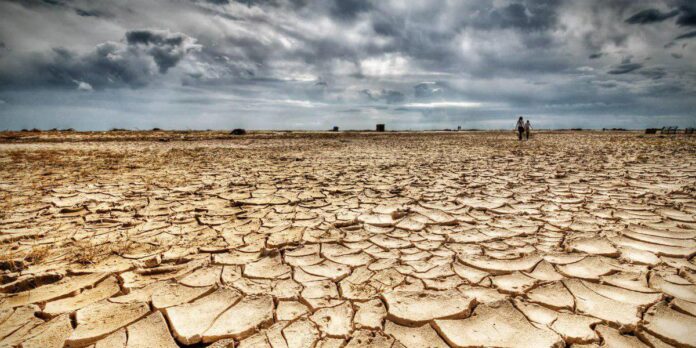
27 Provinces in Iran Spending Their Driest Year Ever

In a Farsi report, Pupils Association News Agency (PANA) has described Iran as a country with a dry or semi-dry climate where the annual average of rainfall stands at 250mm, which is one-third of that of the global average.

The annual average has decreased drastically over the past years leading to a reduction in underwater resources and drying of the wetlands and rivers across the country. All these have put Iran into a number of environmental troubles like dust storms.

The latest reports reveal that this year’s average rainfall has reduced by 51 percent compared with the same period in the previous year.

The average rainfall at the beginning of the current water year – beginning from autumn and lasting until April 15 each year – has declined to 99.8mm, which shows a 51-percent decrease compared with the similar period last year.

If we compare this year’s average with the average rainfall of the last 49 years ago, the figure hits minus 49 percent.

On the other hand, major water resources in the country including the draining basin in the eastern borders of the country from Razavi and South Khorasan to Sistan and Baluchestan provinces are going through a serious water crisis, facing a 69 percent decrease in their annual rainfall average.

Sistan and Baluchestan province with a 22mm average rainfall is ranked as the driest provinces of the region. Other provinces experiencing their driest years are Kerman, Hormozgan, Isfahan, Fars, Markazi, Bushehr and Yazd.

Though forecasts by Iran Meteorological Organization say some regions particularly the western and northwestern cities of Iran are going to experience a relatively heavy rainfall, the shadow of water crisis is still hovering over Iran’s head.

Parviz Rezazadeh, an advisor to Iran Meteorological Organization, says though the rainfall during the first two months of the new Iranian calendar year is always heavy, reaching a monthly average of 20 to 25 mm, it is unlikely to compensate the low rainfall in the autumn and winter seasons.

He underlined that if no appropriate measure is made to save water this year, Iran will definitely face a serious water shortage.

For his part, Shahrokh Fateh, Chairman of the Drought and Crisis Management Department at Iran Meteorological Organization, says at present most regions of the country are struggling with drought and this means that by the end of this year, a large swath of Iran will face water shortage at various levels in long and short terms.

“Based on the short-term Standardized Precipitation Evapotranspiration Index (SPEI), drought has already engulfed large swaths of Iran with Khuzestan, Ilam, Bushehr, Kohgiluyeh and Boyer-Ahmad, Fars, Sistan and Baluchestan, South Khorasan, Razavi Khorasan, Isfahan, Markazi and Zanjan provinces struggling with extreme drought,” he said.

Fateh added today nearly 99 percent of the whole country is facing short-term drought including a 7-percent mild drought, 31-percent average drought, 42-percent extreme drought and 19-percent worst drought.

Iran’s average water reserves stand below the normal level. So, without prudent management in areas like agriculture, industry and environment, the country will suffer serious damages in economic terms.

According to the data released by the Iranian Vice-Presidency for Science and Technology, the Iranian government has put special emphasis on the development of technologies in water treatment, drought management, soil conservation, and environment preservation, while promoting investments in these areas.

Among the country’s macro strategies in this field are providing access to new technologies for comprehensive management of watersheds and aquifers; providing access to the most advanced techniques for wastewater treatment including wastewater recycling and refining, as well as reducing the pollutants in water, soil and air; and providing access to the technologies required for conservation, restoration, development and sustainable use of water, soil and air resources.

Mummy Found in Southern Tehran May Belong to Former Shah!

During the implementation of a construction plan in the western part of the holy shrine of Abdol Azim Hassani in Shahr-e Rey, a mummified body was found in the same place as the ruined tomb of Reza Shah was located on Monday morning.

Hassan Khalil Abadi, Chairman of the Cultural Heritage Committee of Tehran City Council, has confirmed the discovery of mummified body in the shrine. He has told ISNA in a Persian interview that after the discovery of the body, it was buried again and the authorities of shrine are waiting for cultural heritage experts’ comments on the issue.

Although Khalil Abadi says the body has been reburied, local sources say it was transferred outside the shrine.

Authorities say they do not know what exactly has happened during the construction process. They say the digging process has been stopped, and it is not clear if is the country’s Security Council, National Security representatives, intelligence agents, or Basij members have ordered the halt of operations.

Reza Shah died in exile in Johannesburg in 1944. It was said that his body was brought to Iran four years later and buried in a large tomb in Shahr-e-Rey.

Sadeq Khalkhali, the religious ruler of the early revolution, in May 1980, flattened the tomb located in the shrine.

After that, Reza Shah’s body was not found and it was rumoured that his son Mohammad Reza had taken out his father’s body secretly when he left Iran in 1979.

Mummy Found in Southern Tehran May Belong to Former Shah!
A photo of the mummy found in southern Tehran (right) compared with a photo of Reza Shah Pahlavi’s dead body (left)