Friday, December 26, 2025
Home Blog Page 3559

UN’s Gary Lewis Still Caring about Iranians despite End of Mission

In a post on his Twitter account, Lewis praised the Iranian team’s members for their dramatic match against Spain and described himself as one of the ardent fans of Iran in the FIFA World Cup, which underway in Russia.

“Great game; totally enjoyable! We were unfortunate to lose. And to lose 0-1 to a team like Spain is no dishonour at all. Go Team Melli, Bring on Portugal,” he said in his tweet, according to a report by Khabar Online.

A review of the latest tweets by Lewis and his wife Elizabeth reveals that their hearts are still with Iran even after leaving the country for a new mission.

UN’s Gary Lewis Still Caring about Iranians despite End of MissionIn a tweet after Iran-Morocco World Cup match last Friday, during which Iran managed to beat its rival 1-0, Lewis said in a Persian tweet “My wife Elizabeth and I wished to be at Vali-e Asr Street in Tehran among celebrating Iranians. We can hear the honks even from Nairobi.”

Lewis’ five-year mission in Iran ended in January. In a farewell tweet he wrote, “Iran is always in my heart and I was very much impressed by great Iranian civilization in the past five years living and working there.”

He is now in Kenya’s capital city Nairobi for a new UN mission. Iranians remember him for his efforts in Iran to save Lake Urmia, interest in Iranian culture and good-faith relations with Iranian diplomats including Iran’s Foreign Minister Mohammad Javad Zarif.

Since 2013, Gary Lewis was working in Iran as the UN representative and coordinator.

Lewis was born in Bridgetown in Barbados in 1962 and has been serving at the United Nations offices in Asia, Africa, Europe, the US, and the Middle East for more than 30 years.

UN’s Gary Lewis Still Caring about Iranians despite End of MissionUN’s Gary Lewis Still Caring about Iranians despite End of Mission

Bin Salman Holds Secret Meeting with Netanyahu in Jordan: Report

The Israeli daily Maariv reported on Friday that Bin Salman was waiting for Netanyahu at the Royal Jordanian Palace during his visit to Amman on Monday.

Jacky Hugi, the political analyst of the newspaper, says, “A close friend told me about the incident, claiming that there were direct contacts between the two parties, both Saudi and Israeli, under the auspices of King Abdullah II of Jordan.”

The secret meeting was held on the sidelines of Jared Kushner’s visit to Amman. During the visit, US President Donald Trump’s son-in-law was accompanied by Jason Greenblatt, the US President’s Middle East Envoy.

Earlier, bin Salman reportedly met on Wednesday with Kushner to discuss Trump’s plan on Palestinian-Israeli peace deal, or what he calls the “deal of the century”.

The meeting took place in the Saudi capital Riyadh at the presence of Greenbelt.

Amman also played host to another meeting between King Abdullah II and US Secretary of State Mike Pompeo, during which the two sides reportedly discussed issues of mutual interest, especially the security challenges of Western Asia.

The details of Pompeo’s talks in Amman have not been released, but the issue of Iran is usually a key focus of talks between American officials and Arab states of the Middle East.

While a historic meeting between Iranian President Hassan Rouhani and King Abdullah II of Jordan in May was expected to improve relations between the two Muslim states, Amman seems to be turning into a hub of anti-Iran talks between Arab, Israeli, and American officials.

Saudi Arabia Committing War Crime in Yemen: Amnesty Int’l

More than eight million people in Yemen are at risk of starvation and aid groups fear the battle for Hudaydah, which imports most of the aid and commercial supplies shipped in to Yemen, could have widespread and fatal consequences.

The Saudi-led coalition has imposed a blockade on Yemeni ports controlled by the Yemeni army and popular committees. The blockade has played a significant role in the collapse of the health system and exacerbated suffering that Amnesty International said could “constitute a war crime”.

“Millions of lives are at risk in Yemen because food, fuel and medical supplies are being deliberately delayed on entry to the war-torn country by the Saudi-led coalition,” Amnesty International said.

In a 22-page report, the Amnesty shows how the Saudi-led coalition has imposed excessive restrictions on the entry of essential goods and aid.

“The Saudi-led coalition must end hampering the commercial imports of essential goods destined for Yemen’s Red Sea ports and allow the reopening of Sana’a airport to commercial flights. States providing the coalition with support, in particular the USA, United Kingdom and France, should pressure them to do so,” Lynn Maalouf, the Amnesty International’s Middle East Research Director, said.

“This man-made humanitarian crisis cannot be ignored any longer. The world must stop looking the other way while the life is slowly suffocated out of Yemen,” Maalouf added.

“By delaying the delivery of vital supplies such as fuel and medicine to the country, the Saudi-led coalition is abusing its powers to cruelly inflict additional hardship on the most vulnerable civilians in Yemen.”

“Blockades that cause substantial, disproportionate harm to civilians are prohibited under international law,” Maalouf stressed.

Traditional Doll Exhibition Underway in Tehran’s Azadi Tower

The dolls, some of which are said to be almost 150 years old, have been collected from local museums and institutions in Iran.

Nematollah Payan, the head of Azadi Tower, told IRIB News that the exhibition hosts over 150 dolls.

Some of the dolls put on display are registered on the list of National Intangible Cultural Heritage list, including “Dotuk” from Southern Khorasan Province, “Dahtuduk” from Qeshm Island, “Leili Bazbazak” from Khuzestan Province, Taktom” from Ardabil, “Ghurchugh” from Turkmen Sahra, and “Bibi Lak” from Iranian Zoroastrians.

The exhibition, titled “Dolls through the Ages”, was opened on March 24 and will run until late September.

What follows are IRNA’s photos of the exhibition:

Japanese PM to Visit Iran for First Time in 40 Years

The visit may take place as early as mid-July as part of the Japanese premier’s tour of the Middle East and Europe, Kyodon News reported, noting that the itinerary will be announced soon.

“If realized, it will be the first trip to Iran by a sitting Japanese prime minister since Takeo Fukuda visited the country in 1978,” the news agency said.

Abe is expected to meet with Iranian President Hassan Rouhani and ensure him of Tokyo’s continued support for the Iran nuclear deal despite US President Donald Trump’s withdrawal from the landmark multinational agreement on May 8, it said.

Abe reiterated Japan’s support for the deal in his meeting with Israeli Prime Minister Benjamin Netanyahu during a trip to the occupied Palestinian lands in May.

Netanyahu, a staunch opponent of the deal known as the JCPOA, called it a “bad agreement”, but Abe said the accord was necessary to ensure stability in the Middle East, according to Israeli media reports.

Under the 2015 deal, which was struck between Iran and world powers — the US, the UK, France, Russia, China and Germany — Tehran agreed to put limits on certain parts of its nuclear energy program in exchange for the lifting of all nuclear-related sanctions.

Trade ties

Strengthening economic ties with Iran, which sits on major oil and gas resources, is also high on the agenda of the Japanese leader’s visit.

Iran is Japan’s third-largest energy supplier after Saudi Arabia and the United Arab Emirates. The annual trade volume between the two countries stands at more than $11 billion.

The Japanese prime minister is also due to visit Egypt and Saudi Arabia, after he wraps up his tour to Belgium and France.

In Brussels, the Japanese prime minister will sign a free trade agreement between Japan and the European Union.

In July last year, Abe and EU institutional chiefs Donald Tusk and Jean-Claude Juncker unveiled a major free trade deal to create the world’s largest open economic zone, rebuking “protectionist” trade policies adopted by the US and the UK.

Tehran Hosts Largest Gathering of Iranian Yogis

Based on a proposal by Indian Prime Minister Narendra Modi, June 21 was declared as the International Yoga Day by the United Nations in 2014 with the aim of raising global awareness about the benefits of the sport.

The choice of June 21 was by no means a coincidence. The longest day of the year symbolizes light, clarity, strength, and forces of wisdom for many philosophic streams.

Yoga is practiced today in a multitude of forms and continues to gain popularity. This trend is also supported by increasing medical research on the health benefits of the discipline, as well as the fact that it complements mainstream medical treatments.

The word yoga itself is a reflection of peace, unity, as its Sanskrit meaning refers to “joining or uniting,” symbolizing the union of body and consciousness, but also peace between the individual and the outer world.

Currently there are 18,000 sports clubs across Iran with 3,000 focusing mainly on Yoga and 12,000 others focusing on Yoga and other athletic exercises.

What follows are ISNA’s photos of a ceremony held on Thursday in northern Tehran to mark the International Yoga Day:

Araqchi Says Iran May Leave JCPOA in Coming Weeks

“I cannot say that the prospect of the continuation of negotiations with Europe is clear and can lead us to achieve a joint package for saving the JCPOA,” Araqchi was quoted as saying by the Persian-language website of euronews.

Iran’s patience has come to an end and it is probable that Iran will withdraw from the JCPOA in the coming weeks, he noted.

Tehran was negotiating with the other signatories “to see if they can provide us with a package which can give Iran the benefits of sanctions lifting”, the diplomat said.

“The next step is to find guarantees for that package,” he said, adding that Iran needed specifics on how that would happen by the end of May.

“I told the conference today that the JCPOA is in the intensive care unit because it has lost its balance as a result of US withdrawal from the deal,” Araqchi said, referring to a meeting between the remaining signatories of the JCPOA in Vienna on Thursday.

On May 8, the US president pulled his country out of the JCPOA, which was achieved in Vienna in 2015 after years of negotiations among Iran and the Group 5+1 (Russia, China, the US, Britain, France and Germany).

Following the US exit, Iran and the remaining parties launched talks to save the accord.

Meanwhile, Leader of the Islamic Revolution Ayatollah Seyed Ali Khamenei has underlined that any decision to keep the JCPOA running without the US should be conditional on “practical guarantees” from the Europeans.

Iran Hails OPEC’s Decision to Stick to 2016 Agreement

Speaking to reporters in Vienna on Friday, Zanganeh said OPEC decided to stick to its earlier agreement reached back in November 2016 on oil production.

“As I said earlier, OPEC just decided to preserve its 2016 agreement. Today, we only agreed to return to 100 percent compliance with the 2016 deal,” he was quoted as saying in a report by Shana.

Zanganeh underlined that some OPEC members with oil production lower than the output agreed upon in 2016 can now increase their production.

“Today, we should wait and see how the decision is to be implemented.”

The Iranian minister refused to provide the reporters with official figures on production output of the member states and said “I don’t release the figure because only a few member states are allowed to produce further oil. The main achievement of today’s meeting was that we agreed in our meeting to return to our 100 percent compliance with the 2016 deal.”

He went on to say that the decision was made based on good-faith and constructive talks among the members states – including bilateral talks between Iran and Saudi Arabia.

The Islamic Republic regards as acceptable and reasonable the decision which is set to be implemented as of July 1, he added.
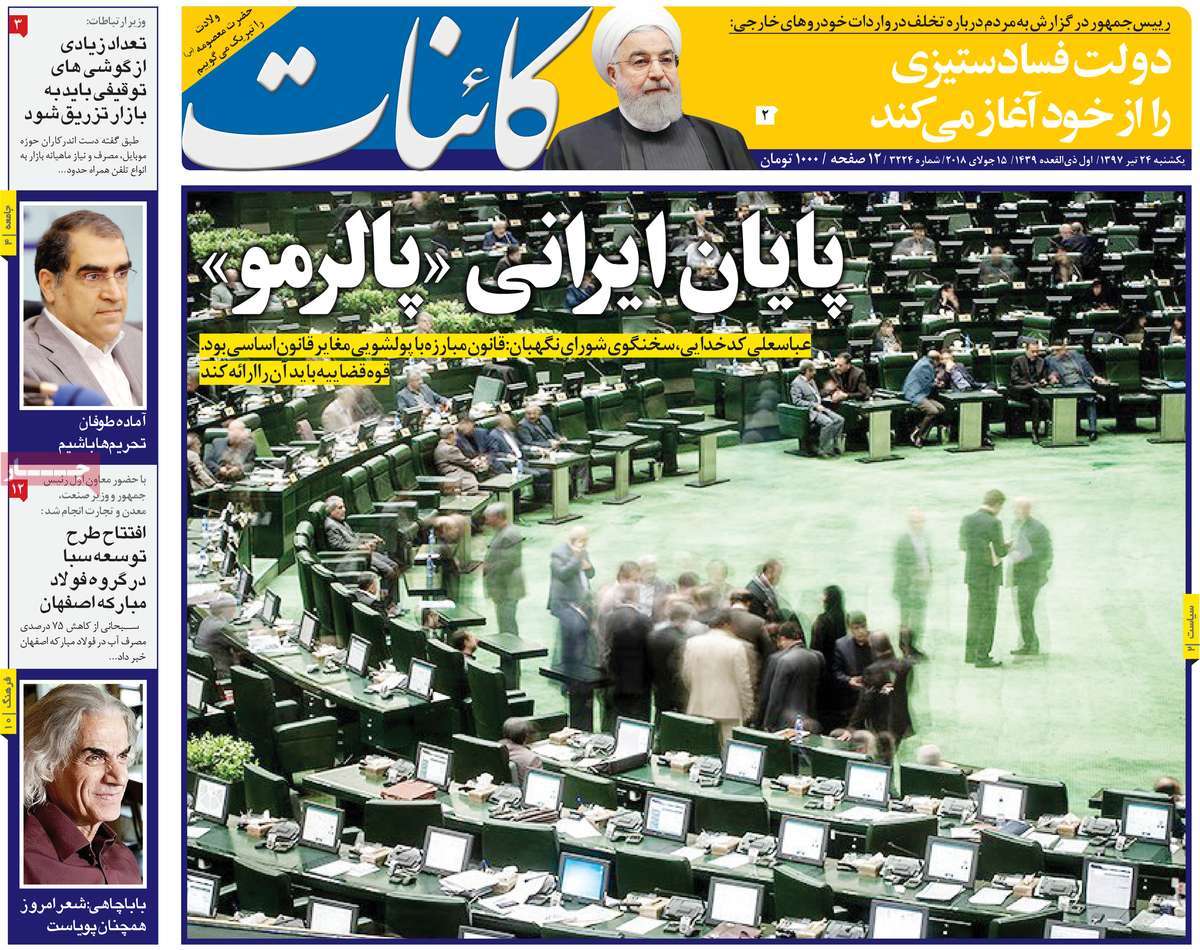
“As I expected, there were some member states which were not interested in making any anti-US statements or underlining the need for depoliticizing the oil market. I reiterated the issue earlier and predicted that certain states won’t say anything about the US policies. I knew that my words won’t be welcomed but I insisted on them before the meeting to have them registered,” he said.

OPEC and Russia decided in 2016 to cut their output to push prices up following a crash due to a global crude production glut.

Saudi Arabia has been pushing for a hike in oil output. The move put in jeopardy the fate of an 18-month-old supply-cut deal between OPEC members and allied countries credited with clearing a global oil glut and lifting crude prices. Many view the Saudi push as a bid to appease the US which is on course to re-impose sanctions on Tehran.

Since 2017, an OPEC agreement on production cuts has allowed oil prices to rise but there are fears that renewed American sanctions on Iran and a fall in output in crisis-hit Venezuela could disrupt supply.

US President Donald Trump has in recent days called for an increase in the OPEC output and a decrease in prices.

Iran Ready to Launch Joint Iranian-Syrian Bank

In a Thursday meeting with Syrian Minister of Economy and Foreign Trade Mohammad Samer al-Khalil in Tehran, Seif said “given the positive atmosphere in the wake of the Syrian government’s victories, hopefully the two countries’ banking relations will be further developed to rebuild Syria.”

Referring to the records of the talks on the establishment of a joint Iranian-Syrian bank, entitled “Alaman”, Seif noted that the process had stopped due to the conditions in Syria.

“This can be re-negotiated, and using previous studies we can quickly finalise the process and decide on this,” Asr-e Iran news website quoted Seif as saying.

“To have strong political relations, we must expand economic and banking relations. Accordingly, Iran welcomes the expansion of banking relations with the Syrian government.”

For his part, the Syrian Minister of Economy and Foreign Trade expressed satisfaction with the two countries’ banking and economic cooperation, stressing that the situation in Iran and Syria is similar in terms of cruel sanctions imposed by the world powers.

“The Syrian government has always carefully monitored Iran’s countermeasures against foreign economic threats and uses Iran’s experience to face sanctions,” underlined Samer al-Khalil.

Al-Khalil further touched upon the interest of economic officials and the Central Bank of Syria to expand bilateral banking relations with Iran.

He said at the recent meeting of the Syrian economic team, discussions were held on ways to cooperate more with Iranian banks, and as a first step a joint bank could be launched.
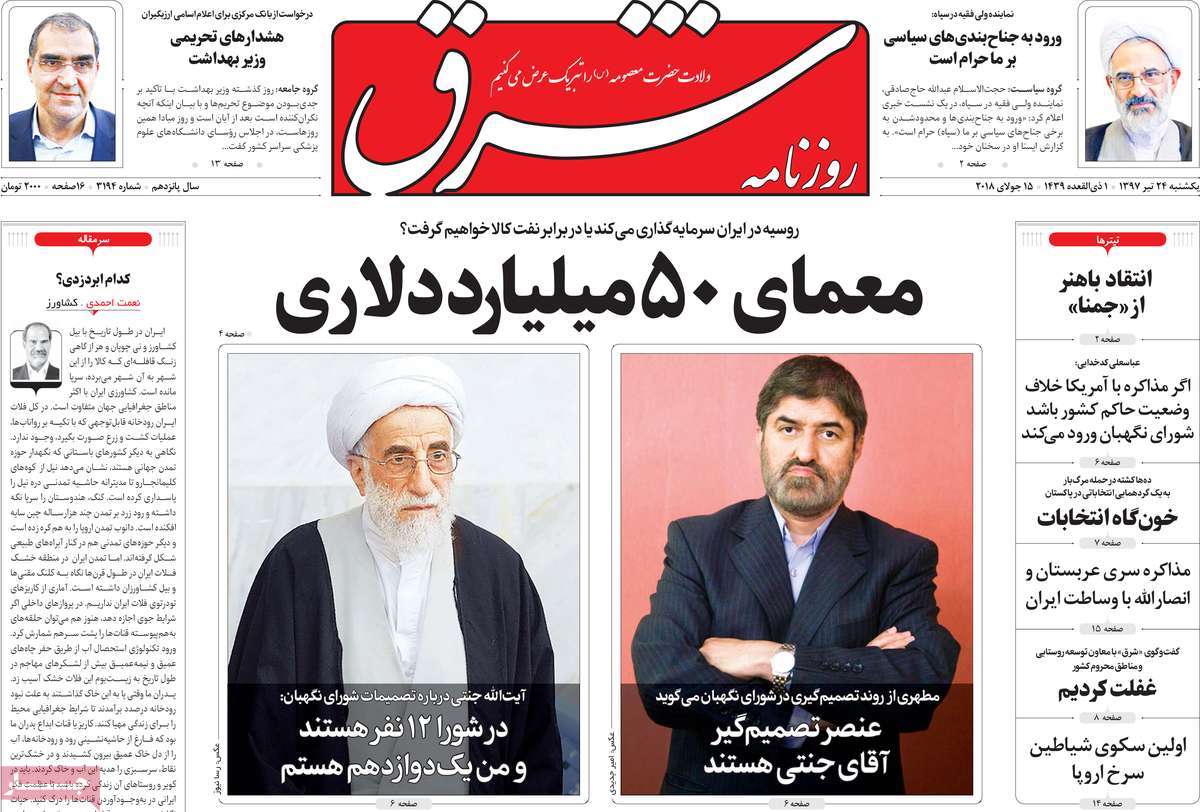
Al-Khalil also officially invited the Governor of the Central Bank of Iran to visit Syria to hold talks with Syrian officials.

“Collapse of Iran Deal to Do Irreparable Damage to World Community”

Salehi who was visiting Norway to attend the Oslo Forum made the remarks in his meeting with Norwegian Foreign Minister Ine Marie Eriksen Søreide in the European capital.

The Iranian official criticized the hasty decision by some European firms to leave Iran in the wake of the US unilateral withdrawal from the Iran nuclear deal for fear of the US sanctions.

He said the US policies are doomed to failure and the possible collapse of the JCPOA will do an irreparable damage to the international community, a report by Fars News Agency said.
Elsewhere in his remarks, the head of the AEOI said Iran’s top leadership attaches significant respect to the dignity of the Iranian nation in its foreign policy and said remaining faithful to one’s international commitments is possible only within a bilateral mechanism.
He also underlined the importance of adopting confidence-building measures in bilateral relations and said this requires the commitment of all involved parties to fulfilling their pledges on time and completely.

He expressed hope that the European sides of the deal would come to realize the sensitivity of the current situation and fulfil their pledges within the expected timeframe.

The Iranian official then thanked Norway for its support for the Iran nuclear deal and efforts to further enhance the current bilateral relations between the two countries and underlined that the Europeans should offer their political and economic support for the Iranian nation so that they can enjoy their rights under the multinational deal.

For her part, the Norwegian foreign minister elaborated on her country’s stance towards the Iran nuclear deal in the wake of the US pullout of the multi-national deal and said in line with the EU, Norway strongly calls and will do its utmost for preserving the JCPOA and providing Iran with its legal rights under the deal.

Søreide also said her country’s support for the JCPOA is very serious and added the US withdrawal from the Iran nuclear deal will have dire consequences for the stability and security of the Middle East region as well as the future of the Non-Proliferation Treaty (NPT).

She said the US move will also tarnish the image of the International Atomic Energy Organization (IAEA).

The IAEA has announced in at least 11 reports that unlike what the US claims, the Islamic Republic has remained completely faithful to its pledges under the JCPOA.

The Norwegian foreign minister finally expressed hope that the JCPOA, if preserved, would pave the way for resolving all regional disputes.