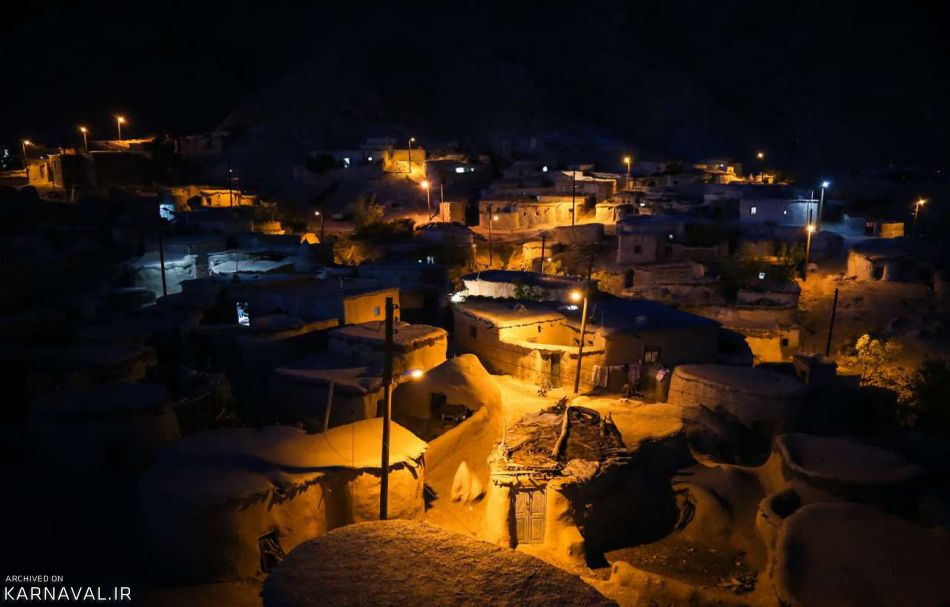
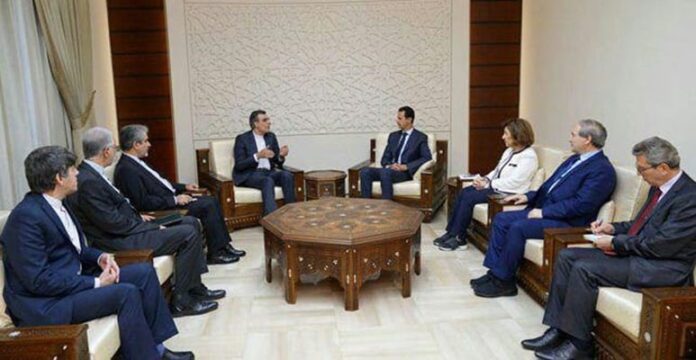
Abdolreza Rahmani Fazli says the number of Iranians drug addicts has decreased from 3.7 million under former president Mahmoud Ahmadinejad to 2.8 million now.
According to a report by Fars News Agency, efforts by the government and non-governmental organizations have also led many addicts to stop using highly dangerous drugs and return to using traditional substances such as opium, Rahmani Fazli said.
However, the minister said the significant growth of poppy cultivation in Afghanistan, which is currently estimated to produce over 10,000 tonnes of opium per year, is a big threat to the country and greater efforts are needed to fight addiction in Iran.
The minister said non-governmental organization could play a bigger role in curbing drug addiction in the country.
Due to its geographical location, which is next to Afghanistan, the world’s biggest producer of opium, Iran has been turned by smugglers into a major conduit for narcotics trade and trafficking to Europe and beyond.
Seizing around 500 tonnes of drugs annually from dealers on eastern borders, Iran plays an important part in efforts to slow the growth of drug addiction rate worldwide.
Nearly 4,000 Iranian police officers have lost their lives fighting dealers over the past decades.
World Cup fever is on again. As the drama of the world’s most-eagerly anticipated sports tournament unfolds in Russia, millions of people across the world have been glued to televisions watching the matches, celebrating victories and crying for those who failed to make it to the next round.
Iranians are no exception, as they are obsessed with football and see the brilliant performance of their national football team, Team Melli, in the world cup.
But the city of Abadan in Khuzestan province, south-western Iran, is quite different. They care about the defeats and wins of the Brazilian national team much more than they do for Iran! They often joke that Brazil is part of Abadan, and they will always remain loyal to the Seleção.
In a reportpublished earlier this week, Shahrvand daily writes that in Abadan, a city in southwestern Iran, football is a part of life, not just a hobby.
Everything stops when Brazil plays in a World Cup match, with people waiting for Brazil to win so they can go to streets and celebrate an amazing play.
Many people in the city are wearing yellow shirts; portraits of Neymar are seen on storefronts; and Brazil national flag can be seen flying on car windows.
There are also barefoot kids playing football in dusty alleys in poor neighbourhoods, trying to mimic tricks by Brazilian players they see on the television.
Brazil Is Our Love
Amir Somiri, an Abadani fan of football, says Brazilian players would be surprised to know they have such hardcore fans in Iran.
“Brazil, in Abadan, is our life, our dream, our love, everything. I love Brazil,” he said.
“Where does such a love come from,” we ask. “Abadani people find Brazilians to be like themselves,” Amir replies.
“We love them as they are warm people, just like us. They are brunette and cute, just as we are,” he said.
Amir said he holds bitter-sweet memories of watching Brazil matches in the World Cup.
Notably, he remembered the humiliation on the scale of the 7-1 defeat against Germany in 2014, which shocked the entire city.
“After the demolition, I had awful nightmares for a couple of nights. I couldn’t accept that,” he said.
Amir, who was speaking Tuesday, said he is confident this year’s cup will be different for Brazil.
Although Brazil was held 1-1 by Switzerland in their World Cup opener on Monday, Amir says Brazil is poised to win the cup.
“The result of last night game made me upset. Although we draw the match but without a doubt we will advance to the next stage as the leading team of our group,” he said,
“God willing, we will win the cup,” he said.
Brazil later managed to defeat Costa Rica 2-0 on Friday, increasing its chance to advance to the next stage.
Brazil Was Part of Abadan
The passion for Brazilian football is so great that Abadan’s main football club, Sanat Naft, has a flag and uniform similar to that of Brazil.
Inside the local stadium, fans chant “Abadan Berezilete”, literally meaning “Abadan is just like Brazil!”
Amin, another Abadani fan of football, says he is boast of supporting Brazil, as they play with passion.
“Here, people hold an extremely positive feeling towards Brazil, as they play with passion. They play for the love of the sport and for the supporters that are all around them,” he said.
He says for Abadani people, love for football has no boundaries and women and men alike love Brazil.
According to Amin, Abadani people love Brazil so much that they say the country has been part of Abadan before the earth’s continents separated millions of years ago!
“A few weeks ago, the Brazilian ambassador to Iran came to Abadan… They agreed to make Abadan the sister city of a Brazilian town. But the whole Brazilian nation are our brothers and sisters,” he said.
Brazilian ambassador to Iran visiting the city of Abadan in the south-west, where everyone is a fan of the South American football team
Sociological Factors
Mohammad Ali Alasti, a sociologist, says similarities between Abadan and Brazil may have led the Abadani people to associate the city with Brazil.
According to Alasti, poor people in underdeveloped and developing countries, including Iran and Brazil, find watching football a good way to forget about their misery and that could be a reason why both the Abadani people and Brazilians love football so much.
Abadan is an oil-refinery city hit hard by the Iraqi invasion of Iran in 1980s. The city even went under the siege of Iraqi forces, and hundreds of Iranians were martyred until the siege of the city was broken in 1981.
Abadan has not completely recovered from the war, and the effects of the war can be seen in many places of the city.
“Most of Brazilians and Abadanis live in poverty, despite the fact that their countries possess enormous wealth. They are also similar in their physical characteristics and have warm-blooded mentality. Similar living conditions and physical characteristics have caused this association,” Alasti said.
People in Maltepe, Istanbul, attending rally to support the top opposition presidential candidate Muharrem İnce
Polls opened at 08:00 (05:00 GMT) in presidential and parliamentary votes.
If Erdogan wins, he will adopt major new powers that critics say will weaken democratic rule. But he faces a major challenge from centre-left candidate Muharrem Ince of the Republican People’s Party (CHP).
Turkey remains under a state of emergency imposed in the aftermath of a failed coup in July 2016.
These elections were originally scheduled for November 2019 but were brought forward by Erdogan.
Erdogan and his main rival Muharrem Ince both held huge rallies on Saturday, their final day of campaigning – and each branded the other unfit to run Turkey.
Ince, whose fiery campaigning has revitalised Turkey’s demoralised opposition, promised to push back what he characterised as a slide into authoritarian rule under Erdogan.
“If Erdogan wins, your phones will continue to be listened to… Fear will continue to reign,” he told at least a million people gathered in Istanbul. “If Ince wins, the courts will be independent.”
Ince also said that if elected, he would lift Turkey’s state of emergency within 48 hours. Emergency rule allows the government to bypass parliament, BBCreportedon Sunday.
At his own rally, President Erdogan – who was prime minister for 11 years before becoming president in 2014 – used a violent metaphor to summarise his hoped-for result, asking supporters, “Are we going to give them an Ottoman slap [a technique for knocking someone out] tomorrow?”
He accused Ince – a former teacher and MP of 16 years – of lacking the skills to lead.
“It’s one thing to be a physics teacher, it’s another thing to run a country,” Erdogan said. “Being president needs experience.”
He told supporters he planned to push through more major infrastructure projects to boost the economy.
Never in its modern history has this crucial country felt so divided. And never has Recep Tayyip Erdogan faced such a tough election fight.
Turkey’s most powerful leader since its founding father Ataturk would become more powerful still if he wins, scrapping the post of prime minister and weakening parliament. But if he fails to reach 50% in the presidential vote, he’ll face a run-off, probably with Muharrem Ince, a fiery centre-left candidate who has electrified the campaign.
In the parliamentary poll, a united opposition is hoping to deprive Erdogan of his majority. Worshipped by his supporters, abhorred by his critics, this is President Erdogan’s judgement day. Nobody can tell which way it will go.
Two votes are being held on Sunday – one to choose Turkey’s next president, and another to pick members of parliament.
Around 60 million Turks are eligible to take part.
Six candidates are vying for the presidency, and if one of them wins more than 50% of the vote they will be elected outright.
If nobody hits that threshold, the top two will face off in a second-round vote on 8 July.
Erdogan will be hoping to win decisively, as a run-off vote could end in defeat or narrow his margin of victory.
In the parliamentary election, the president’s AK Party (AKP) will face a tough battle to keep its majority in the 600-seat assembly.
The contest pits a government-led coalition against an alliance of opposition parties.
Iranian Deputy Foreign Minister Abbas Araqchi said on Saturday that the three European signatories of the nuclear agreement, officially known as the Joint Comprehensive Plan of Action (JCPOA), and the EU had promised to offer a package of practical steps that would fulfill Iran’s demands, including on oil sales, payments for its oil and transportation.
US President Donald Trump announced on May 8 that Washington was walking away from the nuclear agreement, which was reached between Iran and the five permanent members of the UN Security Council – the United States, Britain, France, Russia and China – plus Germany in 2015.
Trump also said he would reinstate US nuclear sanctions on Iran and impose “the highest level” of economic bans on the Islamic Republic.
Under the JCPOA, Iran undertook to put limits on its nuclear program in exchange for the removal of nuclear-related sanctions imposed against Tehran.
Since the US president pulled Washington out of the historic nuclear deal, European countries have been scrambling to ensure that Iran gets enough economic benefits to persuade it to stay in the deal. The remaining parties have vowed to stay in the accord.
Head of the Atomic Energy Organization of Iran (AEOI) Ali Akbar Salehi said on Friday that the Middle East and the entire world would face a “dreadful” future if the key nuclear agreement fell apart.
“If the European Union and other countries supporting the JCPOA do not demonstrate their practical opposition to the US policies in due time, they will face a dreadful future and unprecedented insecurity in the region and the world because of the JCPOA’s collapse,” the AEOI chief said.
Araqchi further said that the nuclear accord is not in a normal state due to the US pullout from it.
Iran and the remaining signatories to the deal are seeking to keep it alive; however, Tehran would return to pre-JCPOA conditions if such efforts failed, he pointed out.
He noted that Iran had held intensive talks with the European signatories as well as China and Russia over the recent weeks at different levels.
“We have clearly announced that Iran has not made a decision yet to stay in the JCPOA or leave it, and our decision hinges on the opposite sides’ will and capabilities to fulfill our demands,” Araqchi added.
“We will make decisions based on national interests and will take the next steps on whether to remain in the JCPOA or not based on our national interests,” he said.
The Iranian negotiator emphasized that the Islamic Republic was ready for “any condition or scenario.”
In a phone call with his French counterpart, Emmanuel Macron, on June 12, Iranian President Hassan Rouhani said the Islamic Republic would quit the multilateral nuclear agreement if it did not benefit from the deal after the US pullout.
“If Iran cannot enjoy the agreement’s benefits, it will be practically impossible to stay in it,” Rouhani said.
Iranian Parliament Speaker Ali Larijani also said on June 10 that the Islamic Republic would not wait for Europe’s dateless promises, urging European countries to “explicitly and swiftly” announce their decisions about the JCPOA after the US pullout.
Larijani added that Iranian authorities were prudently following up on the nation’s demands, noting, however, that time was running out for negotiations with Europe on the nuclear deal.
Injured people lay on the ground following an explosion at a Zanu pf rally in Bulawayo, Saturday, June, 23, 2018.
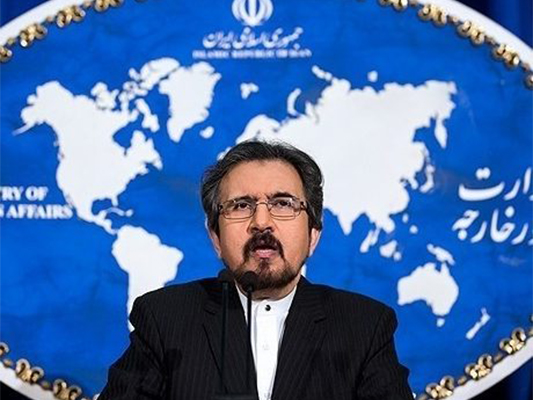
In a Sunday statement, Qassemi wished full recovery for those injured in the blast and expressed the Islamic Republic’s sympathy with their families.
He then described as unacceptable any resort to violence to press ahead with one’s political goals and expressed the hope that Zimbabwe’s parliamentary elections would be held in peace and security through unity and vigilance of all the people in the African country.
Mnangagwa survived an explosion on Saturday that rocked a stadium where he was addressing a rally.
The 75-year-old president, who was accompanied by his two deputies, was unhurt and taken to safety after the blast on Saturday. Footage from Zimbabwe’s state television showed that the explosion took place near the president as he waved to supporters leaving a number of people injured.
No group has yet taken responsibility for the blast.
Zimbabwe said in late May it would choose a new president and parliament on July 30, in the country’s first electoral test since the removal of its former leader Robert Mugabe.
Doimaj is a combination of pieces of bread, cheese, vegetables, walnut, fried onions, and turmeric. During the holy month of Ramadan, it is usually served for Iftar to break the fast.
Ingredients:
Walnut: As much as needed
Fried onions
Traditional cheese: 200 gr
Water: 1 cup
Bread: 4 lavash or dried traditional Qazvin bread
Vegetables including mint, etc.
Directions:
First, thoroughly crush the breads into a large bowl and add a cup of water (or less) to it and mix it carefully. Cut and add the cheese. Add fried chopped onions and shredded walnuts as well as vegetables to it and mix with your hands.
Leave the mixture in the kitchen for one or two hours to be easily formed by hand. After a while, squeeze the material in your hand in round or oval forms until it fits completely and does not break apart. If it breaks apart, add some water.
Notes:
Doimaj is considered a traditional Azarbaijani food usually prepared for breakfast and evening meals, and if served along with summer fruits (grapes and watermelons), it becomes tastier.
There is no mint or yogurt in its ingredients, but you can serve it with a bit of creamy yogurt and mint.
In Qazvin, Doimaj is prepared using turmeric and sautéed onions.
If you wish, add a little cucumber, hogweed, and mint.
You can also add some grated garlic or garlic powder to Doimaj.
Salehi is expected to head a high-ranking delegation during his visit to the Azeri capital of Baku and the historical city of Ganja in the coming days, Farsi said.
Speaking to reporters in Baku, Farsi said Iran’s cultural week reveals the cultural commonalities between Iran and Azerbaijan, according a report by Iran Online.
He said Iran’s National Symphonic Orchestra led by prestigious Iranian musician Fereydoun Shahbazian is set to hold a concert in Baku Philharmonic Hall during the week.
Farsi then said the Orchestra is composed of 40 young Iranians with an average age of 25, adding women make up for one-third of the Orchestra. “The well-known classical and Persian traditional signer Salar Aghili will accompany the orchestra.”
He also noted that Iranian film director, producer and screenwriter, Majid Majidi will also take part in Iran’s Cultural Week in Azerbaijan and his big-budget production “Muhammad: The Messenger of God” will be screened during the event.
A theatre group from the southern port city of Bandar Abbas, which has already staged its version of the Divine Comedy in Moscow and other European cities, will also attend the event and stage its theater.
After Baku, Iran’s cultural week will also be held in Ganja as the symbolic city of cultural commonalities between Iran and Azerbaijan.
Elsewhere in his remarks, Farsi said Iran and Azerbaijan have already launched a joint cinematic project with actors, actresses and directors from both sides in attendance. “The film is set to be shot both in Iran and Azerbaijan.”
He then referred to the historical and cultural commonalities between the two sides and added the great nations of Iran and Azerbaijan have stood by each other through hard and happy times.
Farsi described the two sides’ relations as developing and said last year, Azerbaijan held its cultural week in Tehran, Isfahan and Ardabil.
Accompanied by a professional ensemble, Clayderman held the concert at the Interior Ministry’s Grand Hall in the capital Tehran.
During the concert, the French musician surprised his Iranian fans by playing the soundtracks of a number of blockbusting movies like Titanic (by James Horner) and Cinema Paradiso (by Ennio Morricone), a report by PANA said.
As announced earlier, Clayderman also played the patriotic Persian song “Ey Iran” with Piano.
After performing each piece, he gave the sheet note of the piece to the enthusiastic audiences who stood with their hands raised to get it. Once, as a joke, he took up his chair and came towards the edge of the stage to give the notes to the standing audiences.
In an address to the audience during the concert, he said, “I’m aware that you know well some cinematic characters and actor and actress like James Band, Superman, Johnny Depp and many others but tonight I want to talk about them through these sheets.”
He then performed a number of most memorable music themes in cinema including 2001: A Space Odyssey, James Band, Mission Impossible, Edward Scissorhands, Leon, Game of Thrones and many others.
Istgah Band led by Mehdi Nowruzi accompanied Clayderman during the concert. He is set to hold his second performance on Saturday night. His concerts will continue on Sunday, Wednesday, Thursday and Friday nights.
Born in 1953, Clayderman has released numerous albums including the compositions of Paul de Senneville and Olivier Toussaint, instrumental renditions of popular music, rearrangements of movie soundtracks, ethnic music, and easy-listening arrangements of popular works of classical music.
He has recorded over 1,300 melodies and created a new romantic style through a repertoire which combines his trademark originals with classics and pop standards.
As of 2006, his record sales number stood at approximately 150 million, and has 267 gold and 70 platinum albums to his credit.
He is popular in Asia and is noted by the Guinness Book of World Records as being “the most successful pianist in the world”. Many people, particularly the younger generations, owe their interest in music to Claydermen and his music.
His concerts are organized by Royal Honar Institution.
Brigadier General Hadi Shirzad, the head of the Interpol Department of Iran’s Law Enforcement, says the country has sent five police officers to Russia in the wake of the visit of thousands of Iranians to Russia during the World Cup.
The officers dispatched to Russia take part in security missions and exchange their experiences with their Russian counterparts during the World Cup, he added.
“Our colleagues were deployed in Russia before the beginning of the World Cup and will remain in the country until the end of the global tournament,” he said in an interview with Tasnim News Agency.
According to Shirzad, the officers are fluent in English and have full command of security issues.
“In case of emergency cases like theft or facing problems with their flight tickets, all Iranian nationals visiting Russia for the World Cup can contact the officers via 0079990117857 and 007999011695 and follow up their legal and security issues with them,” he noted.
The 2018 FIFA World Cup, the 21st edition of the tournament which is currently underway in Russia, started on June 14 and will end with the final match on July 15.
Before the beginning of the tournament, FIFA’s security chief Helmut Spahn said football fans can travel to the World Cup in Russia without fear of hooliganism or terrorism. He insists the country is “very, very well” prepared.
The top story in all newspapers today was the remarks by Iranian Deputy Foreign Minister Seyyed Abbas Araqchi about the critical conditions of the Iran nuclear deal. Araqchi says the JCPOA is in the ICU and there is no positive prospect for ongoing talks with Europe.
Also a major story today was an article by Foreign Minister Mohammad Javad Zarif, in which he has responded to his American counterpart’s 12 demands from Iran.
The agreement of Organisation of Petroleum Exporting Countries (OPEC) on a one-million bpd increase in their oil outputs also received great coverage today.
The above issues, as well as many more, are highlighted in the following headlines and top stories:
19 Dey:
1- Zarif-Pompeo’s Duel in Twitter
Abrar:
1- Araqchi: Iran May Withdraw from JCPOA in Coming Week
2- Japanese PM May Visit Iran for First Time in 40 Years
Aftab-e Yazd:
1- Iran’s Win-Win Game in OPEC
2- We Need a Man like Carlos Queiroz for Our Politics, Economy
Social Media Users Comparing Team Melli’s Head Coach with That of Certain Officials
3- Pleasant Breaking of Taboos
After President Rouhani’s Direct Order, Doors of Azadi Stadium Opened to Women
4- Vahid Amiri: I May Nutmeg Ronaldo as Well!
Arman-e Emrooz:
1- OPEC Arrives at Deal in Injury Time
2- 150,000 Elites Leaving Iran Annually
Asrar:
1- Araqchi: Europe Must Make More Sacrifices to Save JCPOA
Ebtekar:
1- Oil Peace: A Report on Division among OPEC Members, Its Impacts on Energy Market
2- Europe’s First Step in Trade War against Trump: EU Sets Tariffs for Certain American Goods
Etemad:
1- Iran Leader’s Message to Team Melli: You Did a Great Job against Spain
2- Erdogan to Be Tested Again: Turkey Elections Due to Be Held Sunday
Ettela’at:
1- Iran First VP: Water Crisis, Environment Threatening Iran’s Development
2- Larijani: Parliament to Do as the Leader Says on Accession to FATF
Hamshahri:
1- Energy Minister: Water Crisis Is Always with Us
Jame Jam:
1- JCPOA in ICU: Araqchi Says Talks with Europeans Not Satisfactory
Javan:
1- Araqchi Says Nuclear Deal in Intensive Care Unit (ICU)
2- Dark Days of Human Rights in US
UN Rapporteur: Immigrants Shouldn’t Be Treated Like Criminals in US
Jomhouri Eslami:
1- OPEC Accepts Iran’s Plan to Stabilize Oil Output Quota
Kayhan:
1- Syrian Army Fighting American Troopers in Homs on the Ground
Rooyesh-e Mellat:
1- Tehran Friday Prayers Leader: Negotiation with US Not to Solve Any Problem
Shargh:
1- Zarif’s Response to Pompeo
Iran FM Writes Article to Respond to US Secretary of State’s 12 Demands from Iran
2- Ezzatollahi: We’ll Sacrifice Our Lives to Defeat Portugal
Sobh-e Now:
1- Araqchi: No Positive Prospect for Continuation of Talks with Europe
Vatan-e Emrooz:
1- Waiting for Team Melli’s Match against Portugal, and Miracle of Iran