Thursday, December 25, 2025
Home Blog Page 3538

Iran Urges Independent States to Unite against US’ Unilateralism

As the special envoy of the Iranian President, Sarmadi held talks with the Ugandan president in Kampala and exchanged views on the latest developments regarding the Iran nuclear deal and mutual relations.

During the Thursday meeting, Sarmadi delivered a letter from Iranian President Hassan Rouhani to Ugandan President Yoweri Museveni.

The Iranian deputy foreign minister elaborated on the US’ unilateral moves and the threats posed by Washington’s destructive policies against global peace and security. He then called on independent states to adopt a united stance against such illogical policies and moves.

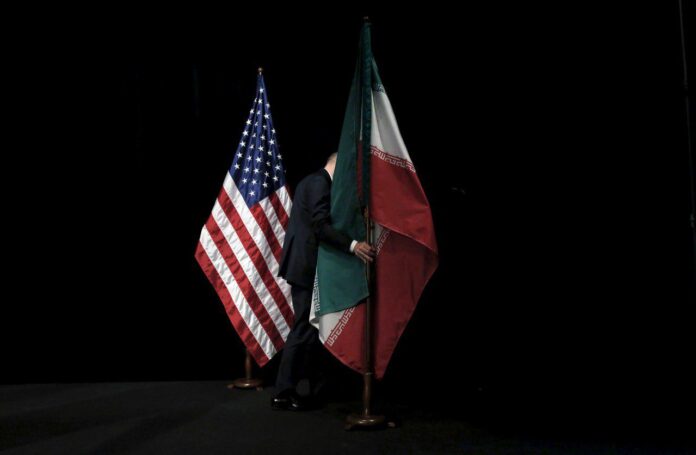
Sarmadi also described Trump’s decision to unilaterally pull out of the JCPOA as a violation of the US’ pledges under the deal and said the move stands in stark violation with the US’ international commitments.

He then expressed hope that the remaining sides of the JCPOA could provide Iran with a full and comprehensive package to practically assure the Islamic Republic that it can enjoy its share of the economic benefits under the nuclear deal.

For his part, the Ugandan president underlined that his country has always welcomed and supported the JCPOA since it was signed in 2015 by Iran and the world powers and has closely and accurately monitored the developments of the multilateral deal.

He then expressed the hope that efforts by other parties to the nuclear deal to save it after the US withdrawal would pay off.

General Museveni also described the US’ unilateral moves and policies as unacceptable and called for collective efforts by all independent states particularly the powerful ones to promote multilateralism in the world.

He also sent his regards to his Iranian counterpart and announced his country’s will to expand mutual relations with Iran in all areas.

The meeting was also attended by Ugandan Foreign Minister Sam Kutesa and the Director General of the Iranian Foreign Ministry’s East Africa Department Malek-Hossein Givzad.

Over the past weeks, Sarmadi has visited Bolivia and Venezuela as the special envoy of President Rouhani and delivered his letter over the Iran nuclear deal to the countries’ leaders.

Rouhani has also sent his special envoys to Chile, Brazil, Tunisia, Russia, Malaysia, and Indonesia to convey his message.

Yemeni Children Not as Important as Thai Kids Trapped in Cave

On 23 June 2018, twelve members of a junior football team, aged 11 to 17, and their 25-year-old assistant coach entered a cave in Thailand’s Chiang Rai Province. Shortly after, heavy rains partially flooded the cave, blocking the exit and forcing the group deeper into the cave.

Efforts to locate the group were hampered by rising water levels and strong currents, and no contact was made for more than a week. The rescue effort expanded into a massive operation amid intense worldwide media coverage and public interest. On 2 July, after advancing through narrow passages and muddy waters, British divers found the group alive on an elevated rock about 3.2 kilometres from the cave mouth. Between 8 and 10 July, all of the boys and their coach were rescued from the cave – four each day.

Over 1,000 people were involved in the rescue operation, including Thai Navy SEALs and volunteers and technical assistance teams from multiple countries. The stressful story received a great deal of attention from mainstream media across the world, and it really deserved it. However, it also once again showed the mainstream media’s double-standard policies when it comes to the lives of innocent children.

The UN verified on Tuesday the killing and maiming of 1,316 children last year alone, 51 percent of them in airstrikes by the Saudi-led coalition.  The question is what’s the difference between Yemeni children and Thai kids? They haven’t played any role in the ongoing conflict between Saudi Arabia and the Houthi militants in Yemen, but they are falling victim to Riyadh’s brutal aggression.

Yemeni kids, starving in the horrific caves of an unwanted and unequal war, need the world media and the international community to hear the sound of their last breaths.

Iran, Azerbaijan to Expand Health Ties

Tehran, Baku Move to Broaden Economic Ties

During the two-day visit to the capital city Baku, Hassan Qazizadeh Hasehmi will exchange views with Azeri officials on the two sides’ cooperation in health and medical education.

A number of Memorandums of Understanding in the health sector will be signed by the Iranian and Azeri delegations, a report by ISNA said.

During his stay, the Iranian minister will sign an agreement on establishing a specialized branch of Day Clinic in Azerbaijan. He will also make a tour of Azerbaijan’s pharmaceutical industry sector and hold talks on launching a joint medicine production line in Baku.

Expansion of Tehran-Baku cooperation to supply the pharmaceuticals Azerbaijan needs by tapping into the capacities of Iranian manufactures, exporting drugs to Azerbaijan and holding talks over the production of vaccines for hepatitis, tuberculosis and other diseases are also top on the agenda of his visit.

Hasehmi is also expected to sit for talks with Azeri officials on holding short-term courses to train Azeri nurses in ICUT, PICU and NICU, accepting Azeri students in the Iranian medical centres and offering educational scholarship to them.

He will also hold talks with Azeri President as well as health minister, labour and social welfare minister and economic minister.

FIFA to Sue Saudi Channel for Illegally Broadcasting World Cup

FIFA last month warned that it was exploring all options to stop the infringement of its rights over beoutQ’s airing of the opening games of the football tournament taking place in Russia.

“FIFA has observed that the pirate entity named ‘beoutQ’ continues to use illegally the 2018 FIFA World Cup™ broadcast signal,” the governing body said in a statement.

“Accordingly FIFA has engaged counsel to take legal action in Saudi Arabia and is working alongside other sports rights owners that have also been affected to protect its interest.”

BeoutQ could not be reached for comment. It is unclear who owns or operates the channel.

Qatar-based beIN Sports holds the rights to broadcast the 2018 World Cup in the Middle East and North Africa. It is blocked in Saudi Arabia under a trade and diplomatic boycott imposed on Qatar a year ago.

“FIFA urges the authorities of Saudi Arabia and of the different countries where these illegal activities have been observed to support us in the fight against piracy,” the statement said.

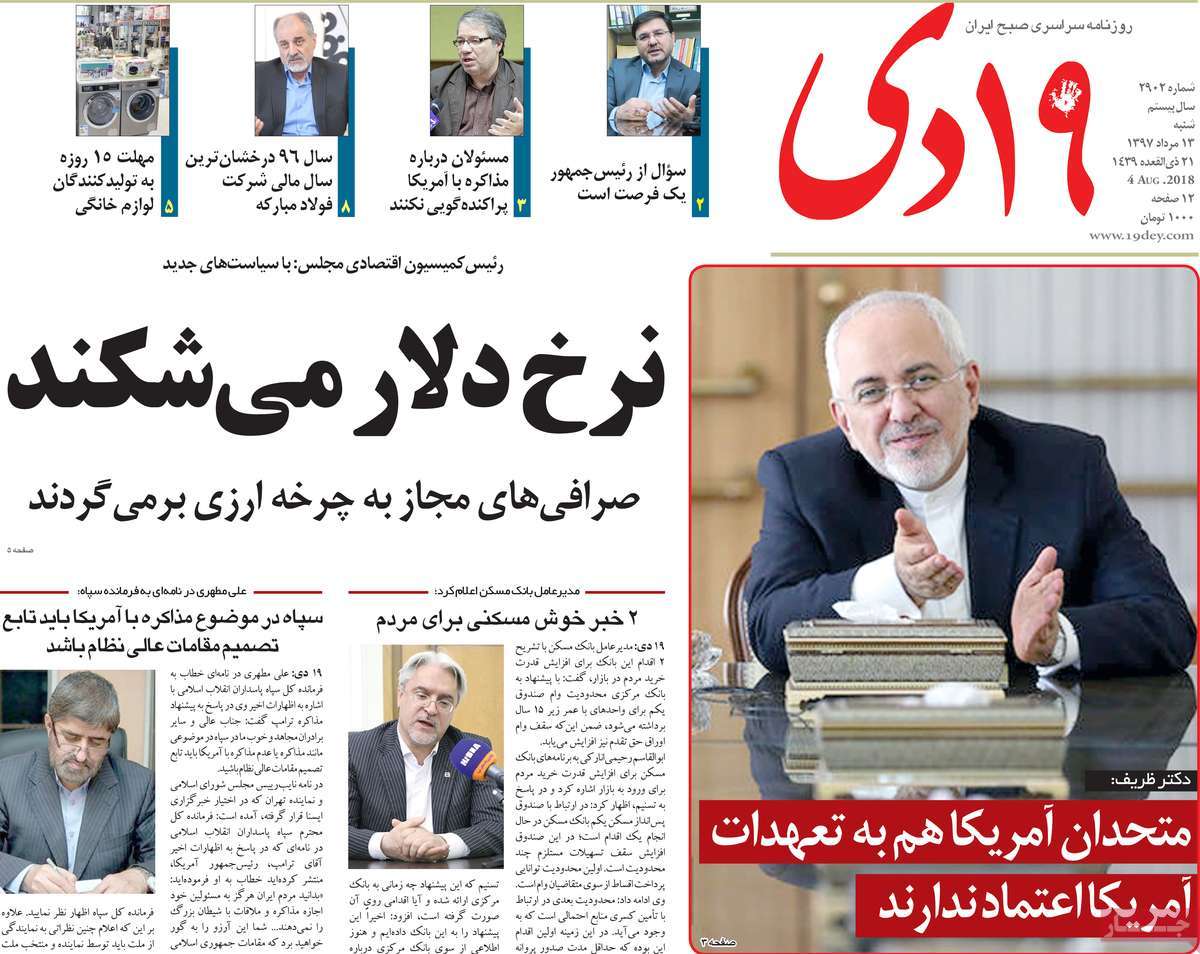
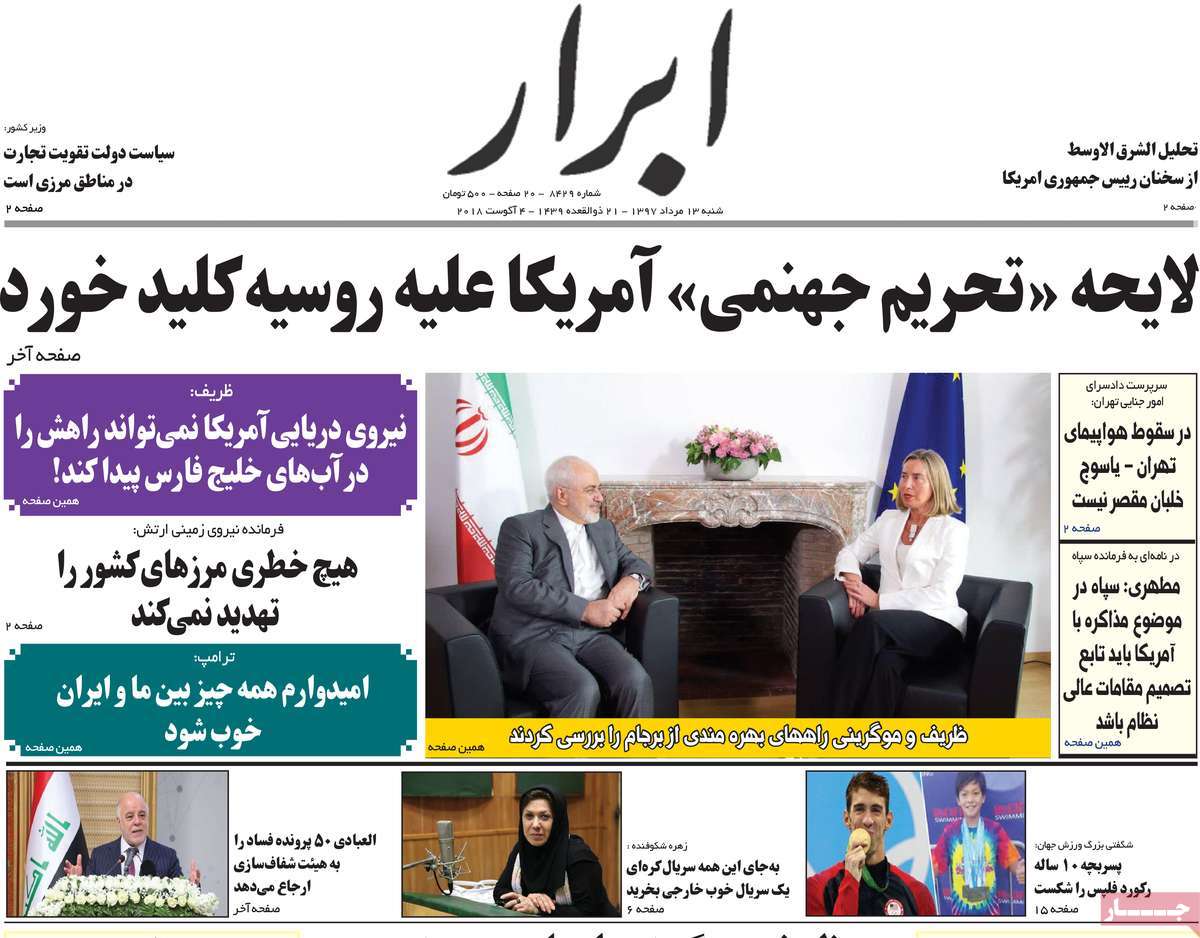
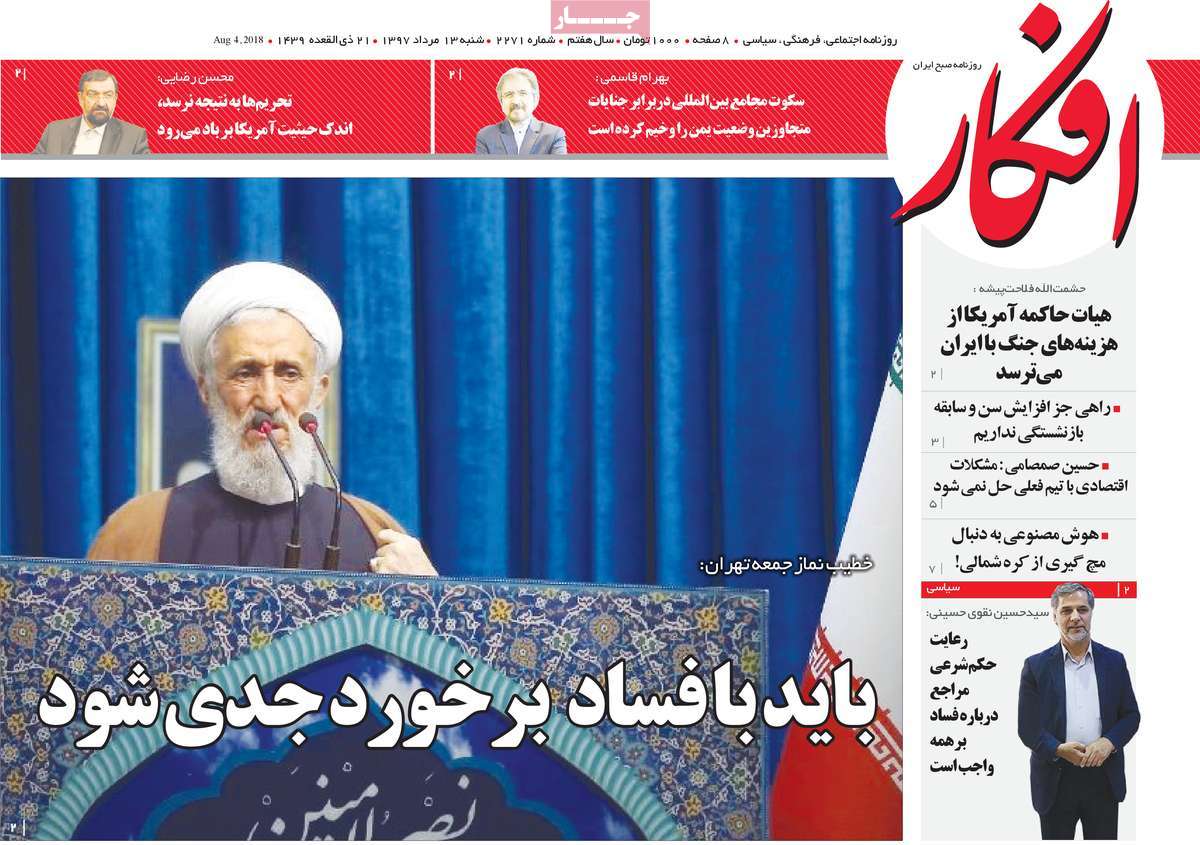
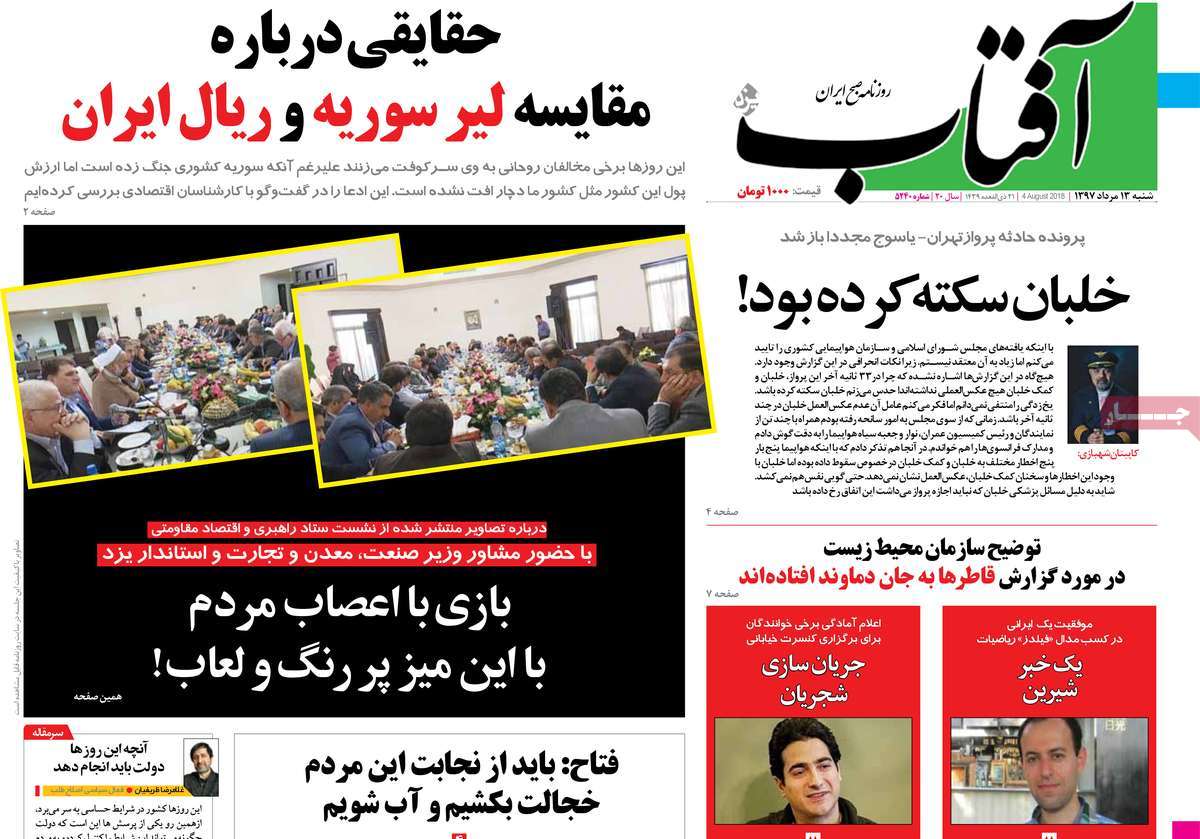
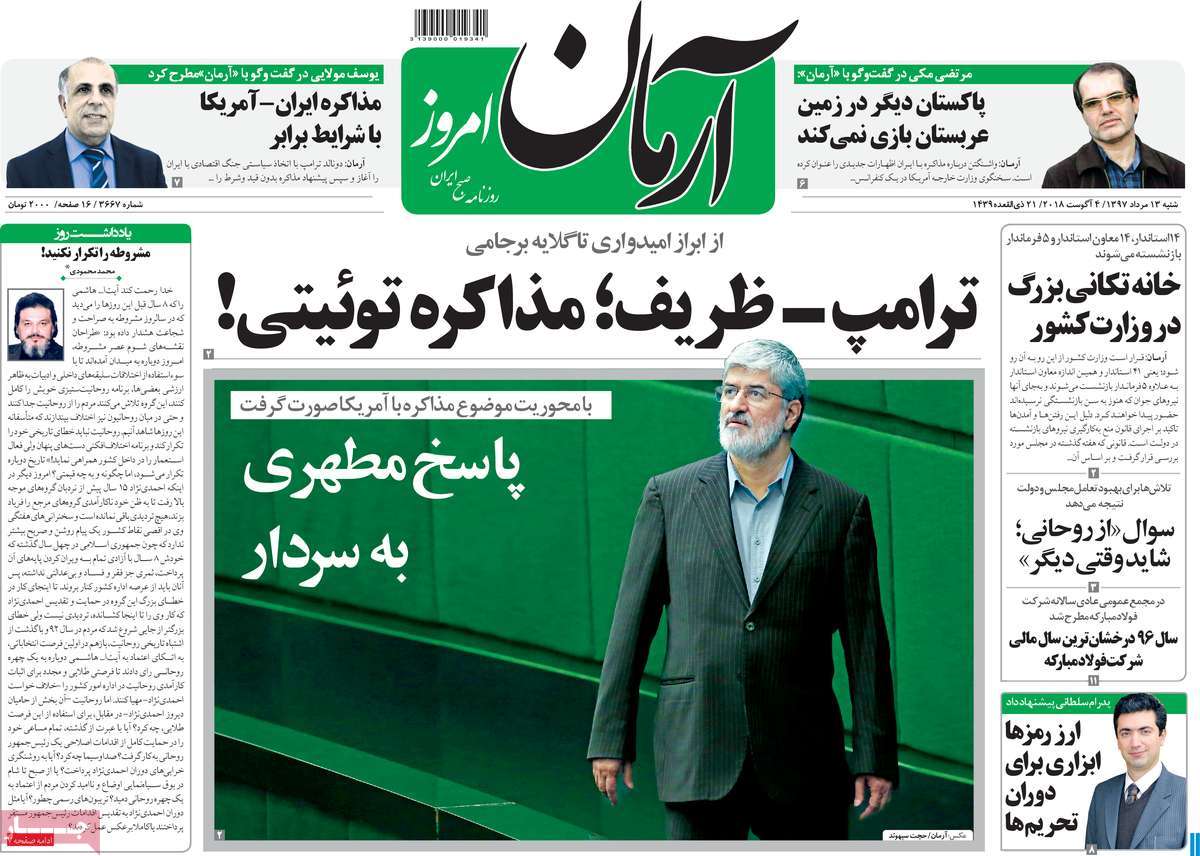
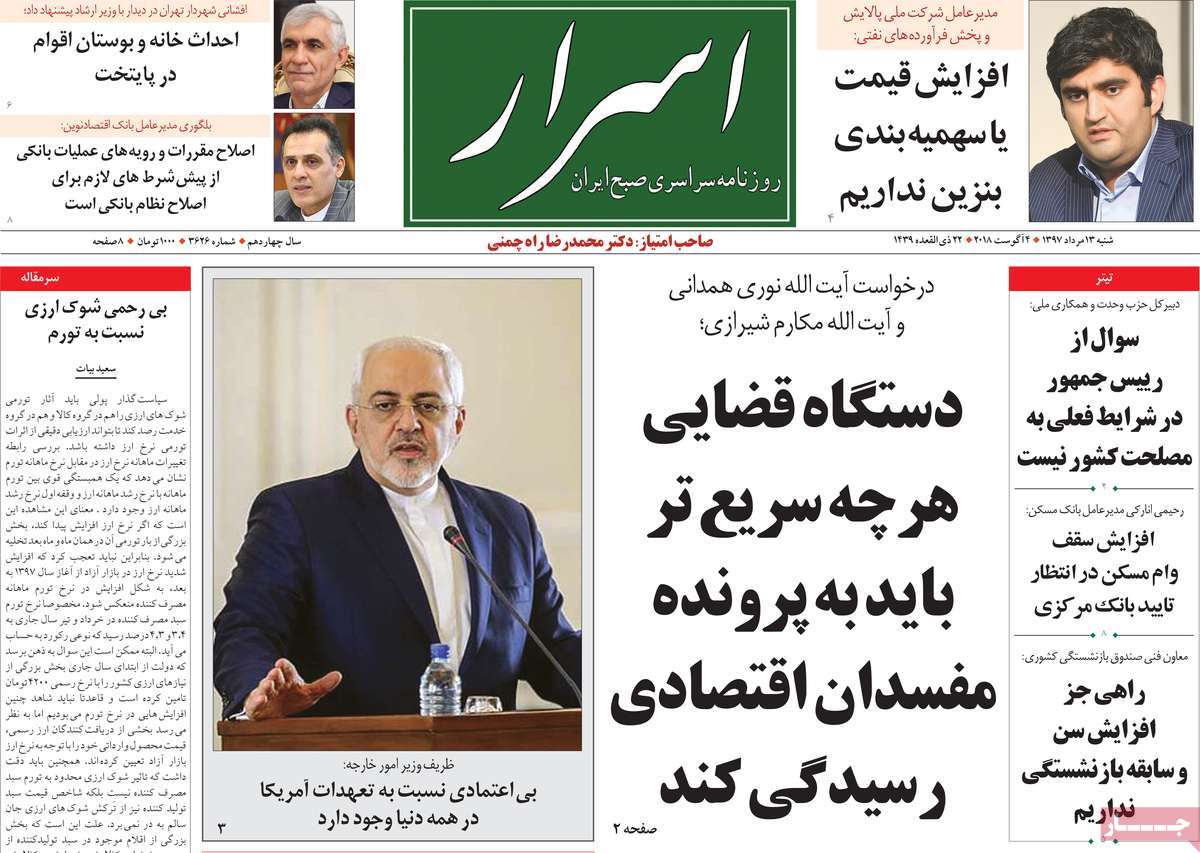
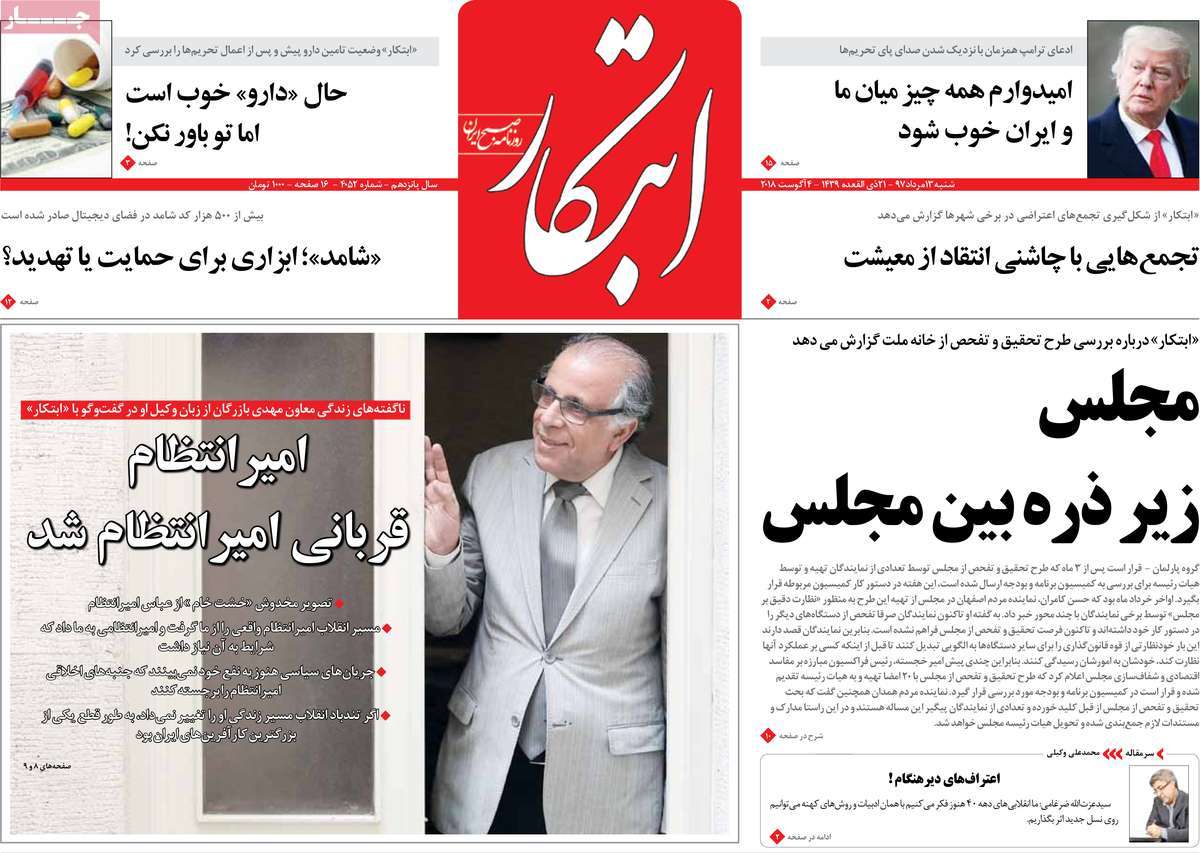
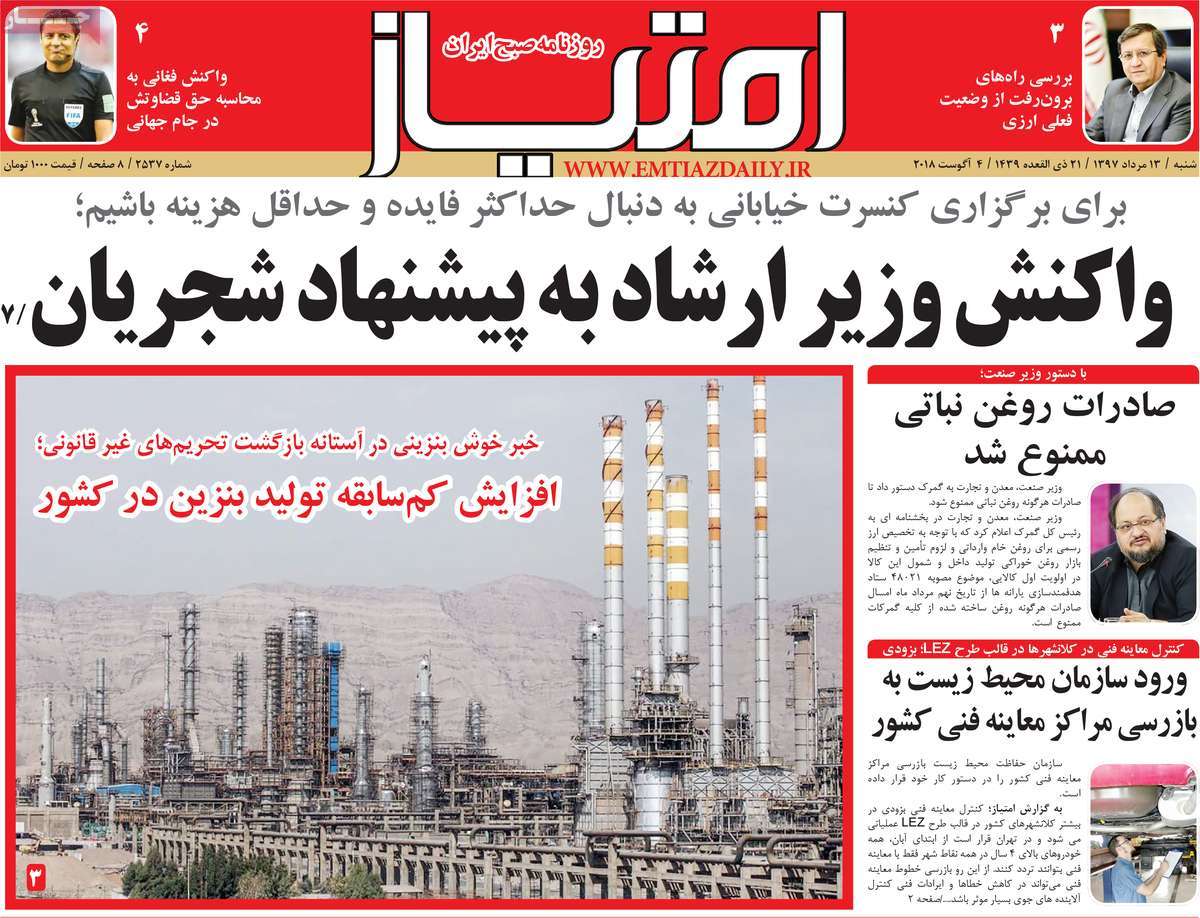
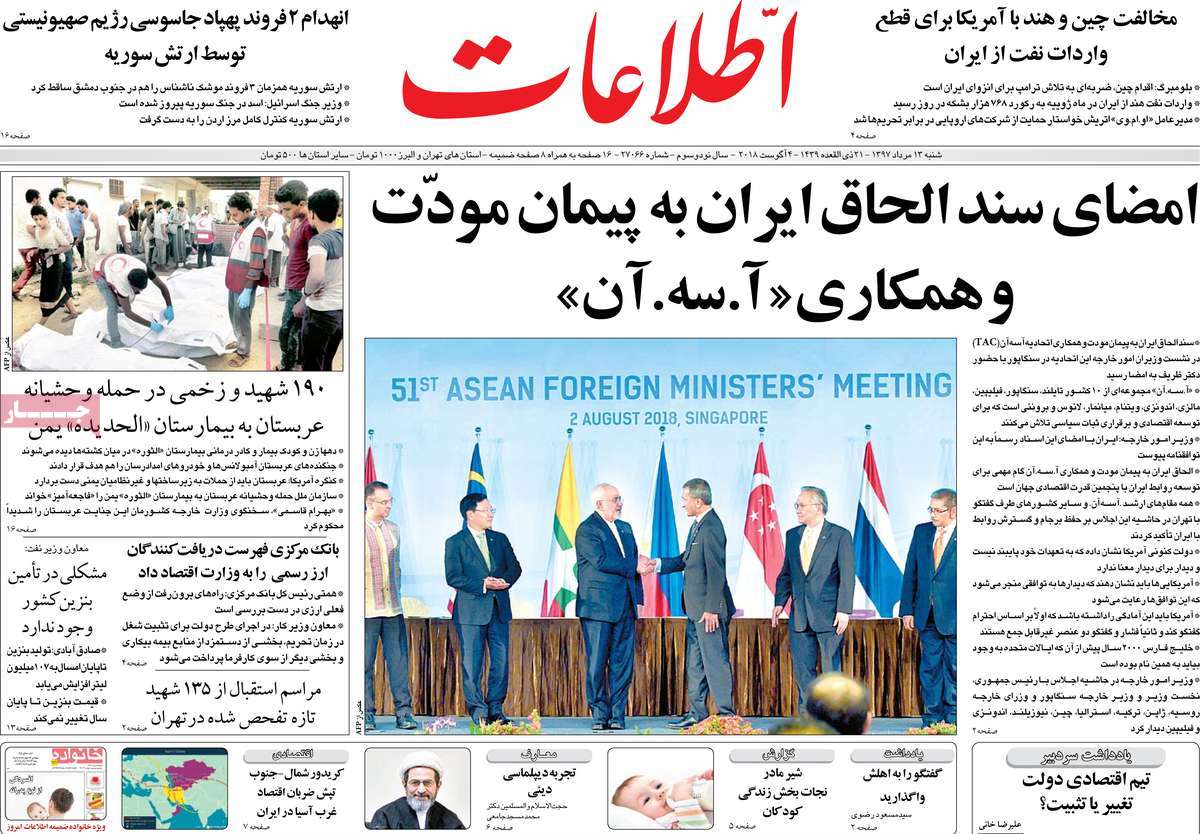
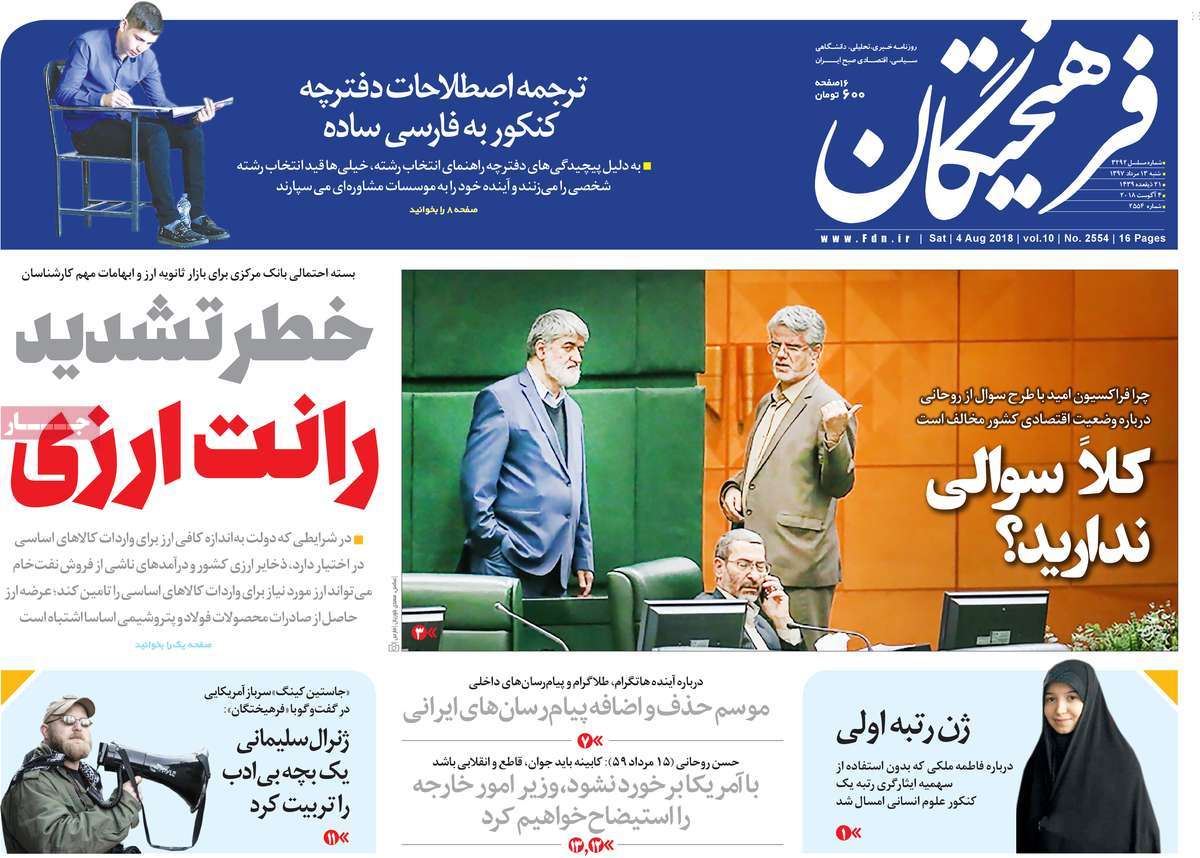
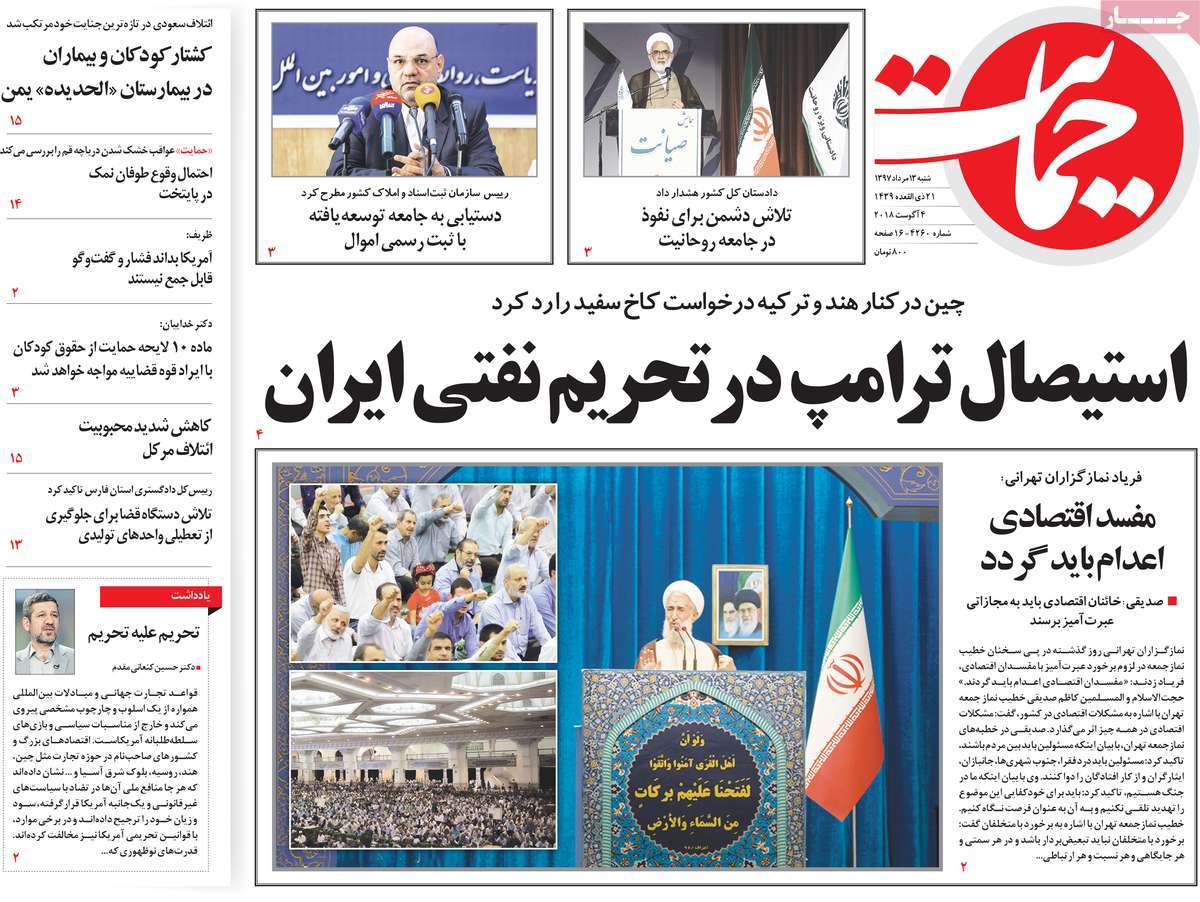
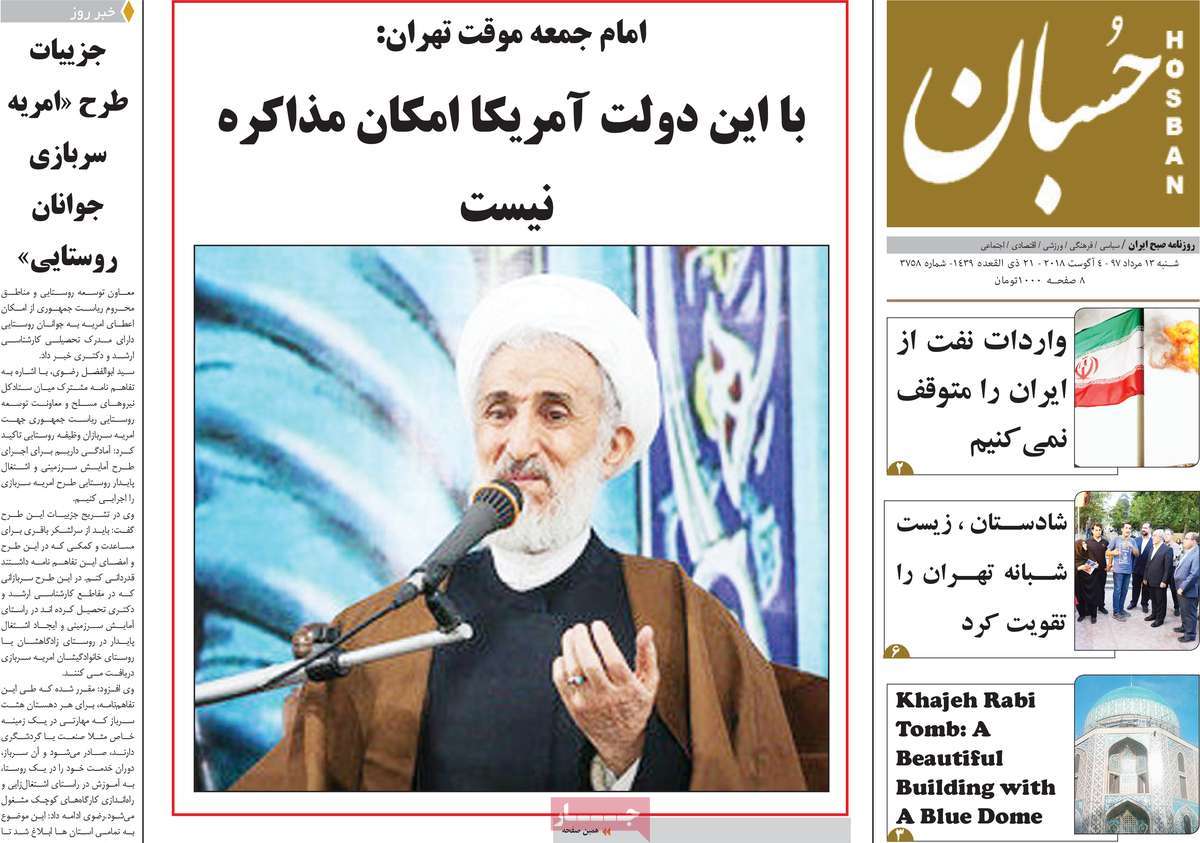
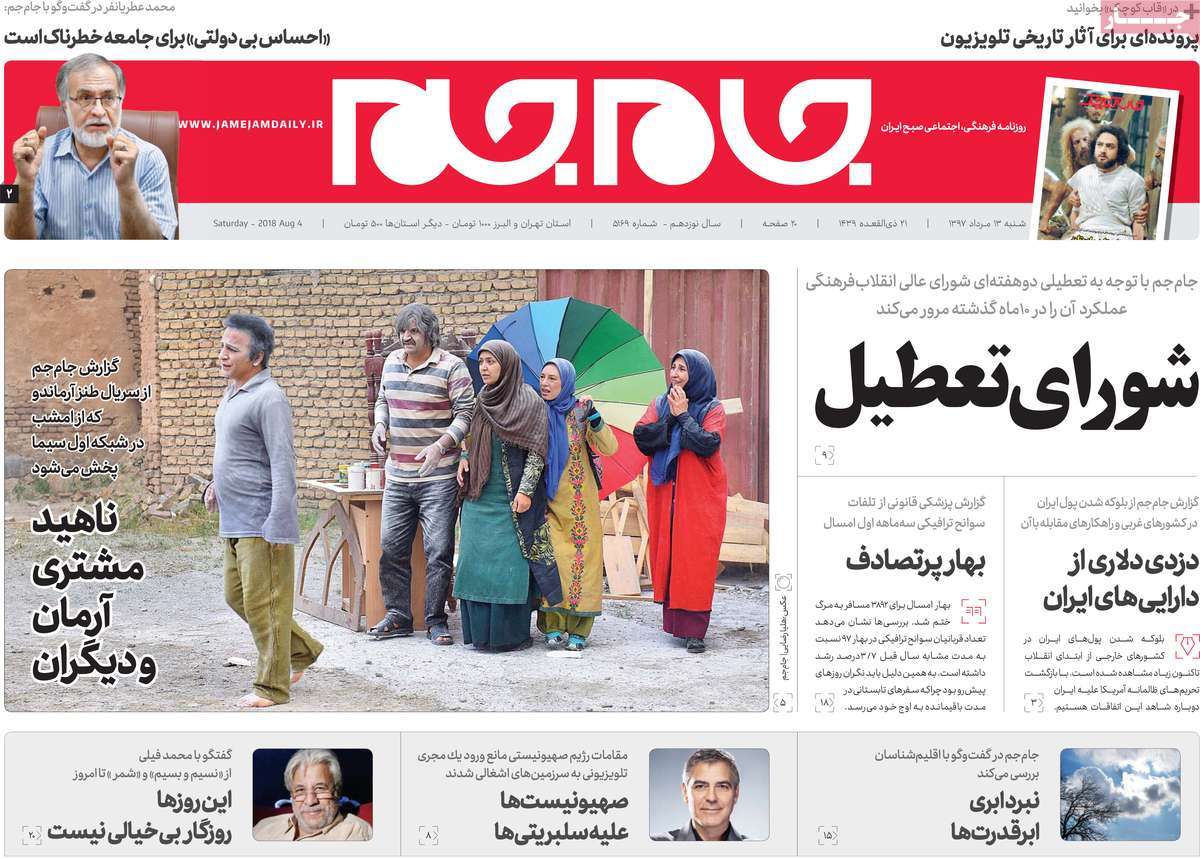
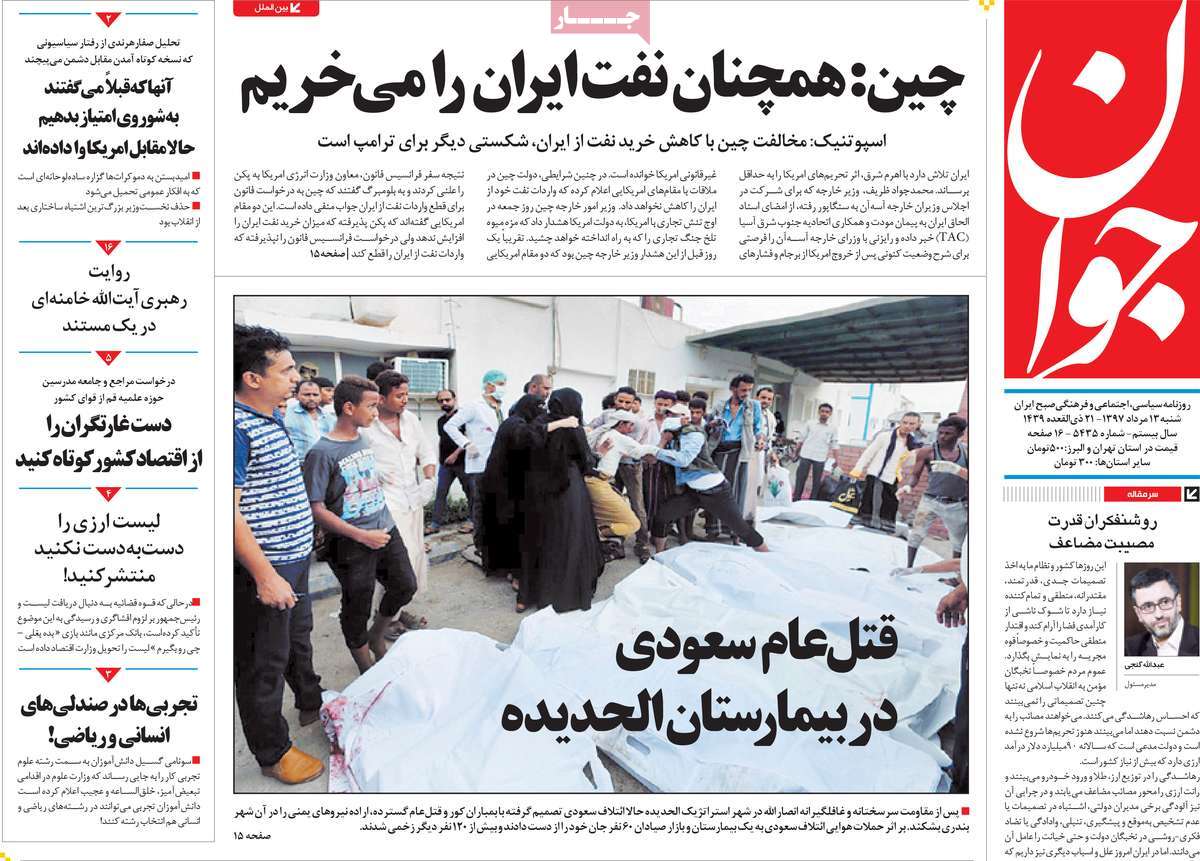
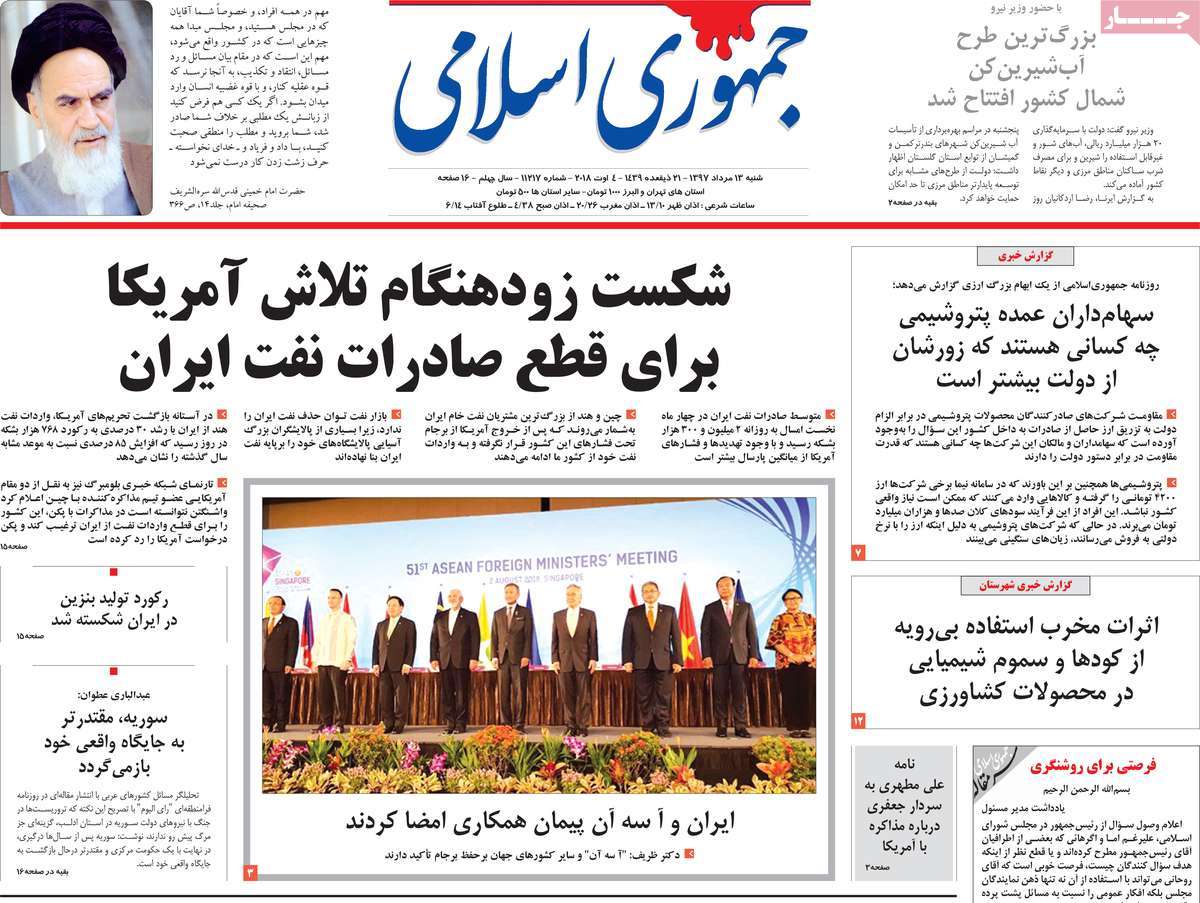
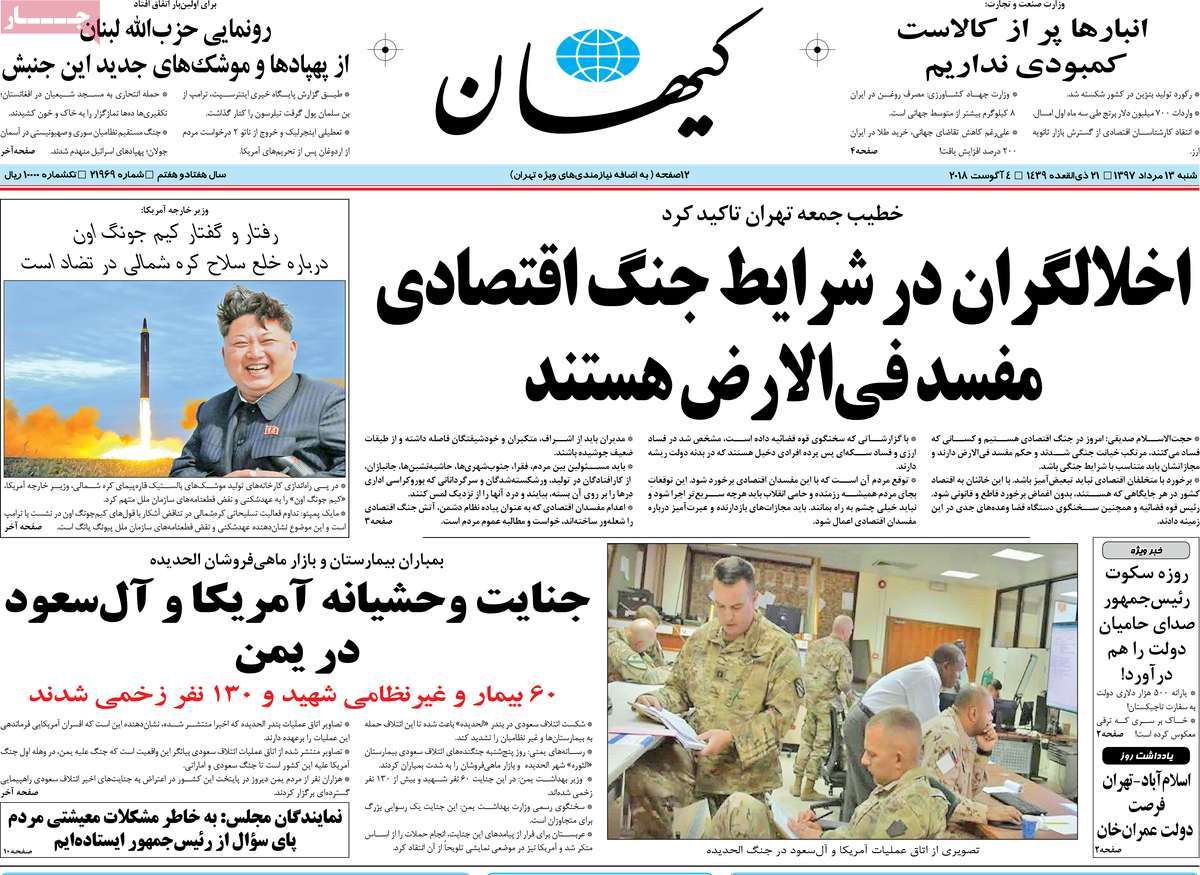
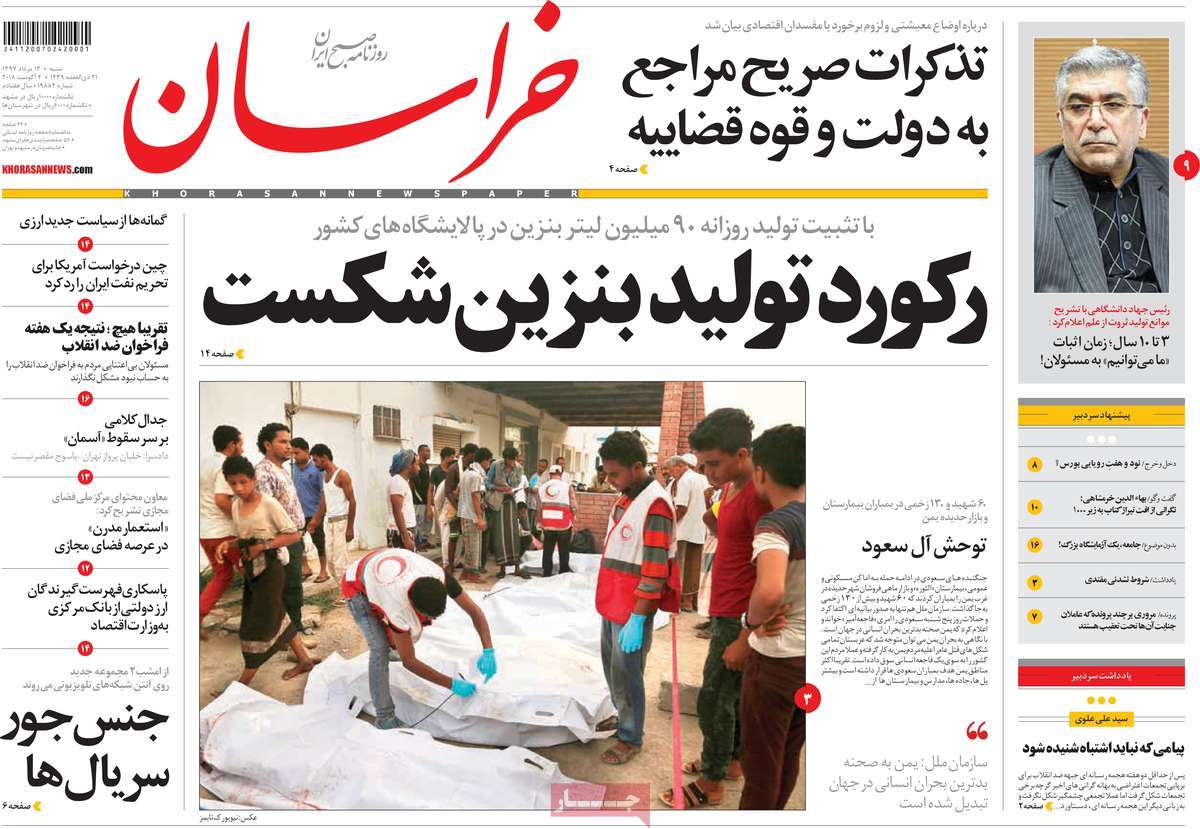
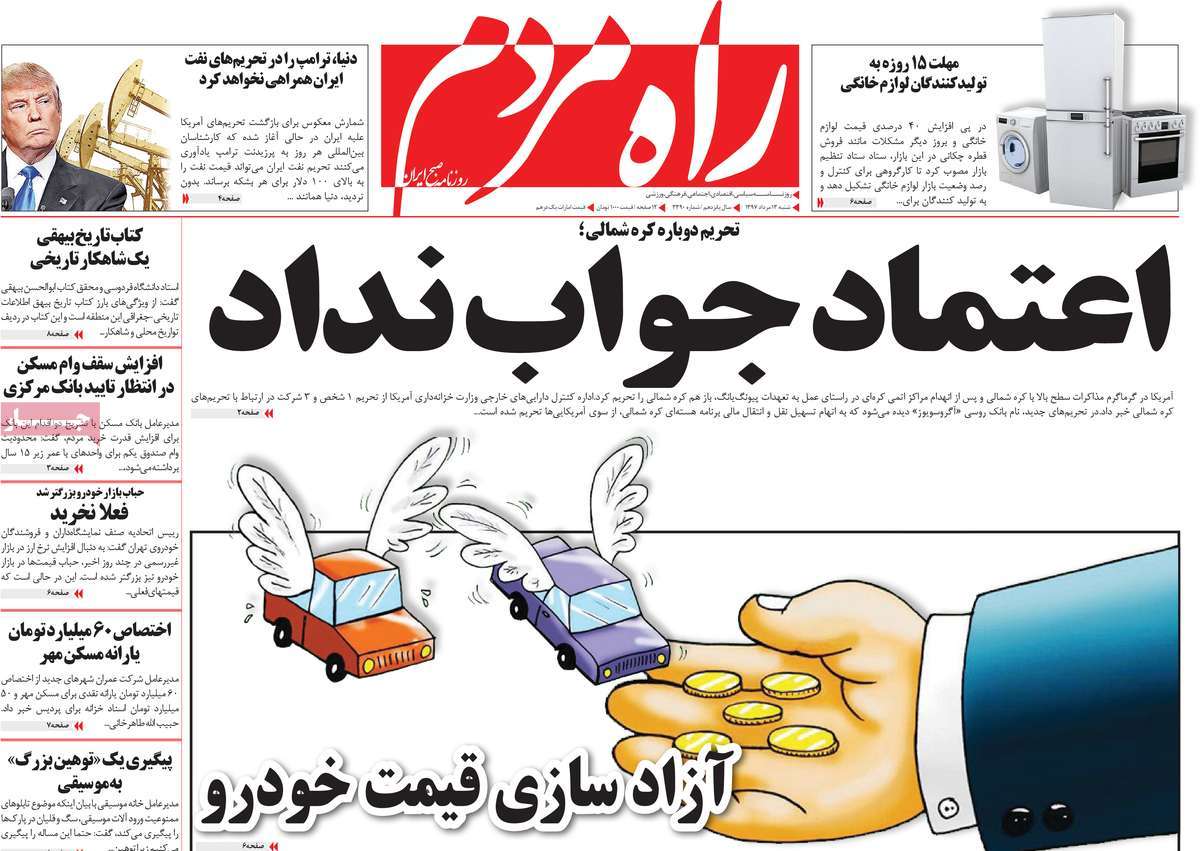
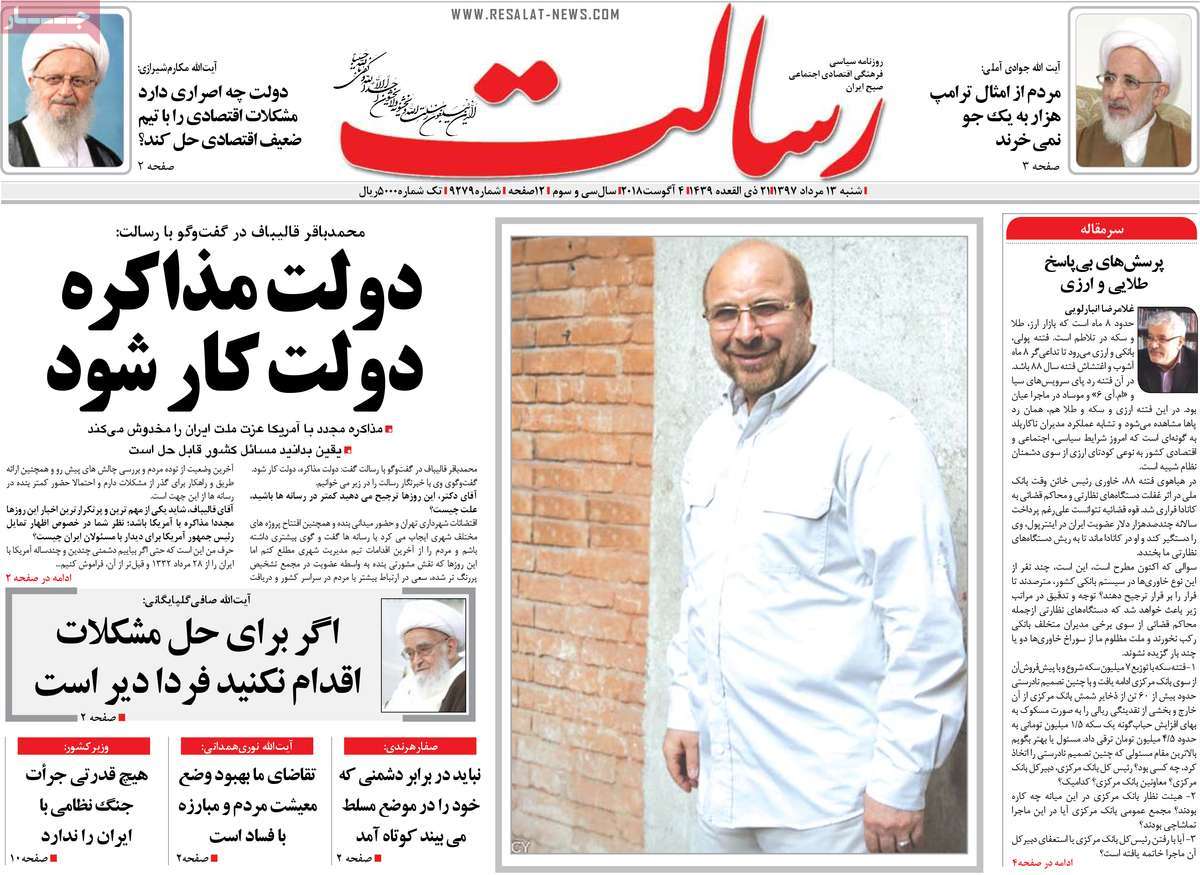
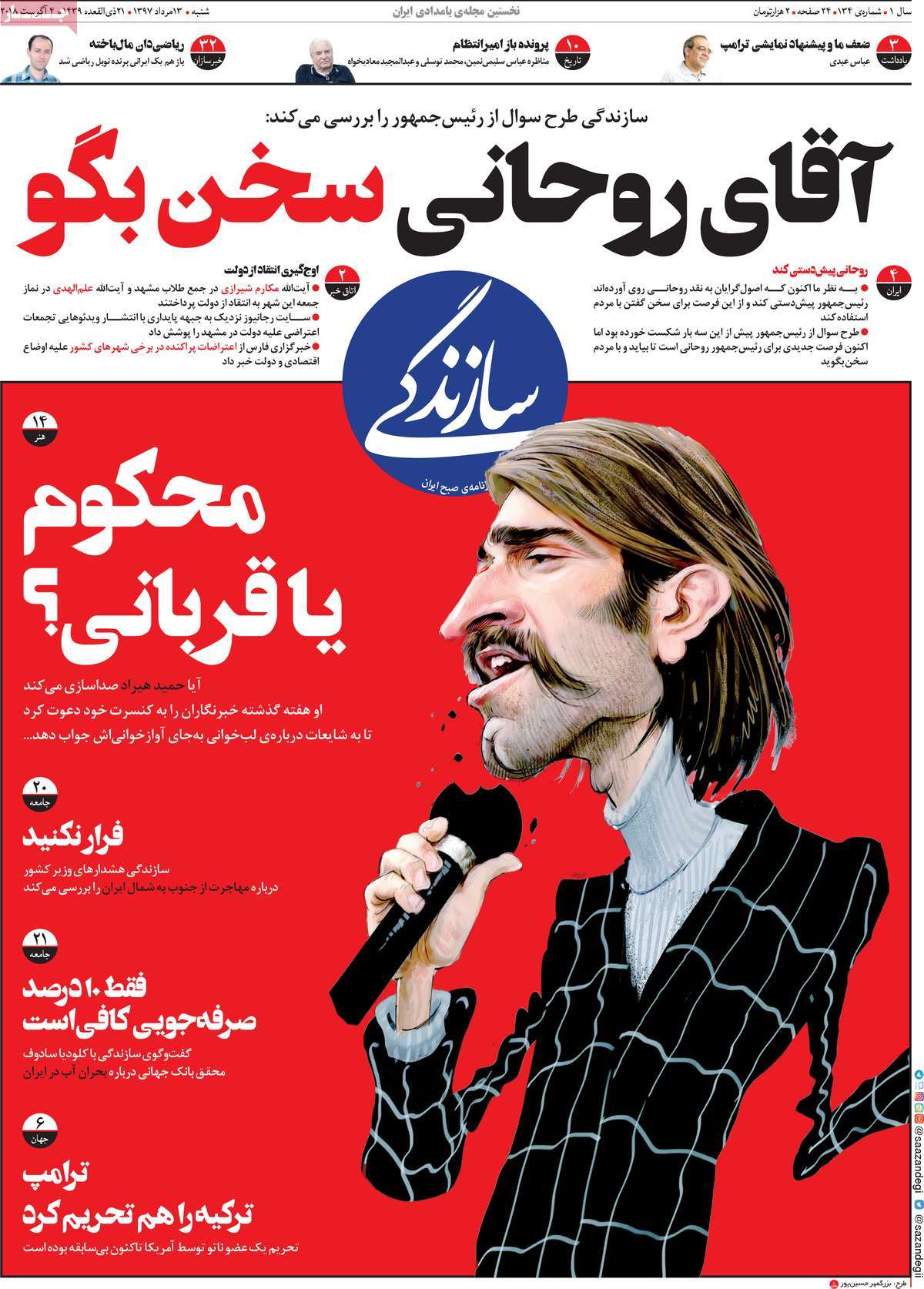
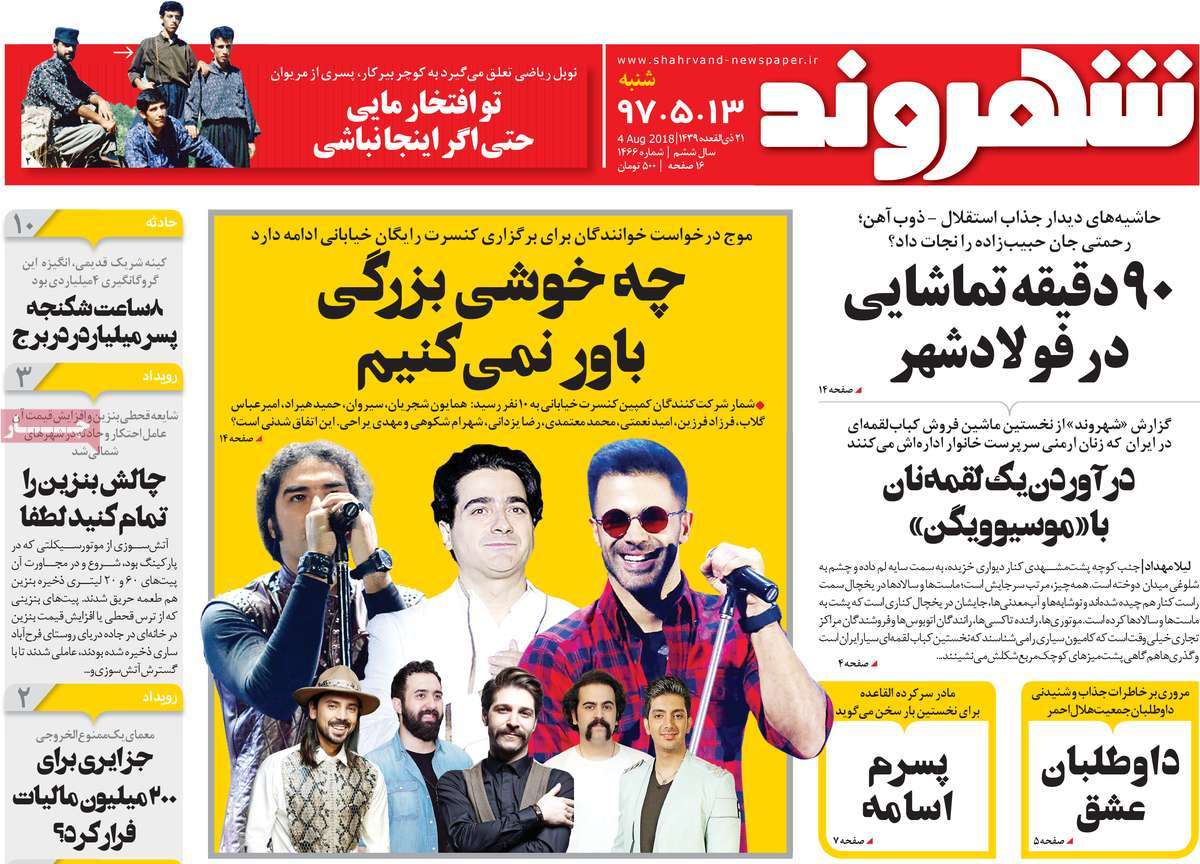
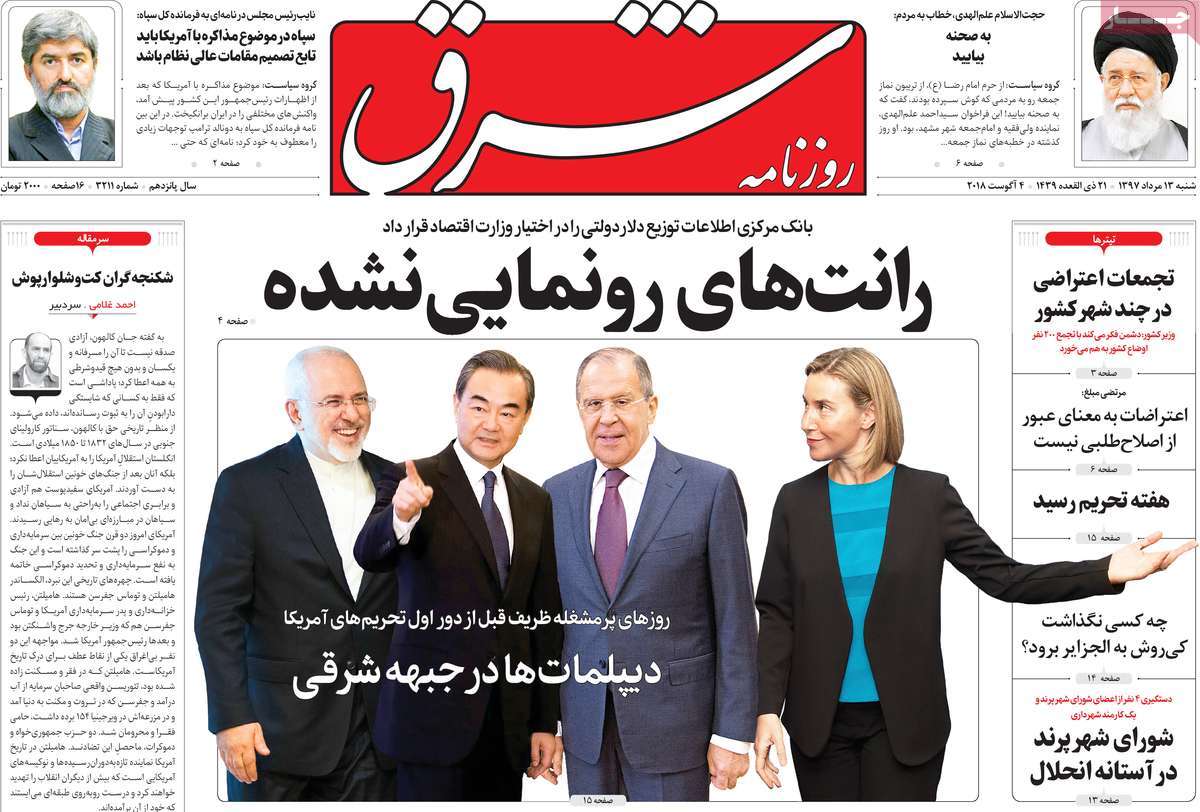
A Look at Iranian Newspaper Front Pages on July 12

A Look at Iranian Newspaper Front Pages on November 19

Newspapers today widely covered the visit of Iranian special envoy Ali Akbar Velayati to Moscow, where he was supposed to meet with Russian President Vladimir Putin to convey messages from Iran’s Leader Ayatollah Seyyed Ali Khamenei and President Hassan Rouhani.

The rift between the US and Europe, particularly the impact of US President Donald Trump’s recent stances on the NATO summit, also received great coverage.

Also a top story was the widespread criticisms of the Islamic Republic of Iran Broadcasting (IRIB) for airing confessions of a teenage girl named ‘Maedeh Hojabri’ who had been arrested for posting clips of her dances on her Instagram account.

The above issues, as well as many more, are highlighted in the following headlines and top stories:


Abrar:

1- Hariri: No One in Lebanon Can Remove Other Parties

2- Russia DM: Iran Playing Key Role in Syria Stability

3- American Lobby Groups Trying to Increase Pressure on Iran in Regional Visit

4- Pompeo Calls on Arab Countries to Counter Iran in Meeting with Abu Dhabi EmirA Look at Iranian Newspaper Front Pages on July 12


Afkar:

1- If Saudi Arabia Thinks Iran Is Its Enemy, It’d Better Directly Fight It

2- Rift among Oil Coalition against Iran

3- Velayati Says His Strategic Mission in Russia Not Affected by Netanyahu’s VisitA Look at Iranian Newspaper Front Pages on July 12


Aftab-e Yazd:

1- Trump Blackmailing NATO

2- Doomed Tanker: At Least 11 People Killed after Fuel Tanker Hit Bus in Sanandaj

A Look at Iranian Newspaper Front Pages on July 12


Amin:

1- Conspiracy against Iran in Secret Anti-Tehran Meeting Held in Riyadh

2- Russia Knows Iran’s Red Lines

3- Speculations about Big Deal between Putin, TrumpA Look at Iranian Newspaper Front Pages on July 12


Arman-e Emrooz:

1- Lawsuits Filed against State TV [after Airing Confessions of Teenage Dancer]

2- Iran Mourning Sanandaj Accident: 11 Killed, 9 Wounded in Tragic Crash

3- Government Must Start Reshuffling Cabinet

A Look at Iranian Newspaper Front Pages on July 12


Ebtekar:

1- It’s Time for Trump to Play with Card of NATO

2- People Dying in Roads of Death

3- Aref: Corruption in Iran No Longer EmbarrassingA Look at Iranian Newspaper Front Pages on July 12


Etemad:

1- Another Attack on Allies in NATO

2- IRIB’s Move [to Air Confessions of Teenage Dancer] Was Totally Imprudent: MPA Look at Iranian Newspaper Front Pages on July 12


Ettela’at:

1- Iranian Population to Reach 100 Million in Three Decades

2- US Congress Strongly Protests against Saudi Crimes in Yemen

3- Bodies of 60 Iranians Martyred in 1980 Iraq War RepatriatedA Look at Iranian Newspaper Front Pages on July 12


Hosban:

1- Velayati: No One Cares about Netanyahu’s Groundless Remarks

2- Health Ministry: Rising Dollar Rates Create Opportunity for Promotion of Medical TourismA Look at Iranian Newspaper Front Pages on July 12


Iran:

1- Missions of Rouhani’s Special Envoys

  • Members of Cabinet Delivering President’s Messages to Other World Leaders

2- US Dollar Rate Goes Down in Iran MarketA Look at Iranian Newspaper Front Pages on July 12


Javan:

1- Tehran’s Considerations Regarding Putin-Trump Meeting

A Look at Iranian Newspaper Front Pages on July 12


Jomhouri Eslami:

1- Europeans Know US No Longer Reliable: CNN

2- Oil Prices Down after US Backs Off from Stopping Iran’s Oil ExportsA Look at Iranian Newspaper Front Pages on July 12


Ka’enat:

1- Pompeo against General Qassem SoleimaniA Look at Iranian Newspaper Front Pages on July 12


Kayhan:

1- Iran Defies US, Europe by Sending Special Envoy to Moscow, Beijing

  • Iran to Change Direction of It Economic Relations

2- Former CIA Official: US Pressures on Iranian People to BackfireA Look at Iranian Newspaper Front Pages on July 12


Khorasan:

1- New Security Coalition in the East

  • Moscow Says Iran, Russia, China, Pakistan to Hold Meeting on Fight against ISIS

A Look at Iranian Newspaper Front Pages on July 12


Payam-e Ma:

1- IRIB Managers to Be Summoned to Parliament [for Airing Teenage Dancer’s Confessions]

A Look at Iranian Newspaper Front Pages on July 12


Sazandegi:

1- Price of Whistle-Blowing

  • ICT Minister: Issue of Teenage Dancer Raised by Those Whose Interests Threatened after Forex Transparency

A Look at Iranian Newspaper Front Pages on July 12


Shargh:

1- Gap in the Front Line: NATO Meeting Overshadowed by Trump-EU Tension

A Look at Iranian Newspaper Front Pages on July 12

Putin Receives Messages from Iran’s Leader, President

Ali Akbar Velayati conveyed the Leader’s verbal message during a meeting with Putin in Novo-Ogaryovo, an estate in the Odintsovsky District of Moscow Oblast, and the suburban residence of the Russian president.

In the Thursday meeting, Velayati also conveyed to Putin a written message from President Rouhani.

The details of the messages have not been revealed, but the conservative daily Javan had earlier implied the message would contain Tehran’s “considerations” regarding an upcoming meeting between Putin and US President Donald Trump in Helsinki. Kayhan, another conservative paper, had also referred to economic ties as a key topic of the message.

Speaking after the meeting, Velayati said Putin has expressed Moscow’s preparedness to boost its oil trade with Iran to $50 billion.

The Iranian envoy also noted that a major Russian oil company has signed an agreement with Iran worth of $4 billion which will soon be implemented. Gazprom & Rosneft are in talks for a $10 billion agreement, he added.

Putin Receives Messages from Iran’s Leader, PresidentPrior to the meeting, Velayati told reporters that Tehran and Moscow enjoy strategic relations.

“In recent years, this relationship as well as bilateral and regional ties have been on the rise,” he said.

He then touched upon cooperation between the resistance front and Iran and Moscow.

“The cooperation in the [Middle East] region by the resistance front led by Iran and Russia to fight terrorism and its sponsors in Syria and other regional countries is a good example of cooperation between Tehran and Moscow. Only a strategic and long-term cooperation can justify such [good] cooperation,” said Velayati.

“In the international domain, too, the assistance offered to Iran by Russia at the UN and the cooperation that the two sides had over the JCPOA are other examples of strategic cooperation between the two countries,” said Velayati.

He said Tehran-Russia cooperation in political, economic, nuclear and security fields also suggests a long-term plan between the two sides.

The advisor to the Leader further criticized the policies adopted by US President Donald Trump.

“The current situation is very sensitive and the world is affected by the hegemony of the US president, who is turning a blind eye to international regulations. So, such cooperation is all the more necessary, and the reason that I have the honour of conveying the messages of the Supreme Leader and Mr President is this very sensitive situation at the moment.

He expressed hope talks with Putin and other Russia officials would go as expected, and that his trip will serve as a turning point in the strategic relations between the two countries.

“Even Democrats’ Win in Congress Won’t Settle US Issues with Iran”

Amir-Ali Abolfat’h, an expert on the US issues, has, in an article published by the Islamic Republic News Agency (IRNA), weighed in on the repercussions of the policies adopted by the Trump administration in relation to Iran.

The analyst said there is no denying that the United States is the biggest economic heavyweight in the world.

“We should accept this bitter reality in the international system – [it is bitter] because we are discontented with it, and we do not have the power to change it, either – like it or not, the United States is the biggest economic power in the world,” said the analyst.

“This country has very high trade figures, so much so that it ranks first or second among exporters, and first, second and third among importers of commodities in the world,” he noted.

Abolfat’h then underlined that the greenback is a strong tool in the hands of the White House.

“After all, the US has a tool called ‘the dollar’ which, as the International Monetary Fund (IMF) says, comprises 65% of the fund’s reserves, and most businessmen and companies around the world have to directly or indirectly use the financial system regulated by the dollar or by American banks,” he said.

“Therefore, if this country (the US) decides to slap sanctions on another country, lawfully or unlawfully, no country or even no economic bloc comprised of a number of countries can withstand this pressure,” he said.
The analyst was asked whether certain countries would ask the United States to exempt them from imposing sanctions on Iran. In response, he said, “If [you see that] the Europeans put pressure on the US in the 1990s and secured some exemptions against Cuba and applied them to Iran later on, it was because there was a government in power in the US which believed in globalization, the opening up of borders, formation of large coalitions and winning the support of its allies due to business, and which did nothing to dismay its allies,” he said.
“But now, a government has come to power in the United States which is extremely nationalistic and against globalization, and advocates the policy of protectionism, and this administration not only does not agree to offer exemptions on Iran, but also has entered the largest trade war in history in its trade relations [with other countries],” he said.

“When the US slaps tariffs on Chinese or Korean goods, one cannot expect it (Washington) to offer exemptions in order to ensure the interests of Chinese or Korean firms. The US would offer exemptions when it wants to keep the interests of its allies from being harmed,” he said.

The analyst noted that the Koreans and Chinese have problem selling their commodities on the US market today, which means Washington is highly unlikely to offer any exemptions to them.

He underlined that the world is facing a trade war between economic giants today.

“Every step that Trump takes is not only aimed at making Iran change its behaviour, but also aims to harm the economic situation of Europe, China, South Korea and Japan. Under such circumstances, Europe will do something if it can to secure exemptions for its commodities,” he said.

He said the United States will not become concerned when a refinery in South Korea or Japan is damaged.

“Today, there is a row going on over some 30 to 40 million dollars in tariffs imposed by China and the US, and Iran’s oil sales are not much of a concern here. It’s not that these countries are not making any efforts, but the point is that their voices are not heard in Washington because gone is the era of Clinton when the US paid attention to globalization,’ he said.

The analyst was asked whether or not the trade war between the United States and economic heavyweights would create some breathing room for Iran. In response, he said, “such measures could result in breathing room for countries other than Iran, but our problem is that conducting any deals with our financial system is liable to heavy fines,” he said.

“In recent years, there were banks which would make between $200 million to $300 million from their transactions with Iran. These banks paid 6-7 billion dollars in fines. And it was they themselves who agreed to pay the fines in order to ward off heavier penalties as the fines could even reach $20 billion,” he noted.
He underscored that Washington’s decision to sever Iran’s sources of income will be problematic for the country.

“Unfortunately, the United States’ steely resolve to cut off Iran’s financial resources will create serious problems for us because it is not only the oil sales issue; [US moves] will also disrupt oil transfer. Although the National Iranian Tanker Company has the largest network, we should also take into account the issues of insurance, offering services and permission to unload at ports as well. Few ports will risk permitting that,” he said.

“Given that Iran is has a special situation, it will not benefit from the trade war between the United States and its partners, and if the sanctions are re-imposed, these offenses and [the fear of] being cut off from the US financial network will convince others not to risk entering the Iranian market,” said the analyst.
He also touched upon the future of Russia and China’s transactions with Iran.

Currently, everything is shrouded in secrecy. Officials have announced that they have adopted measures. But as for China, general rules apply. The Chinese would not compromise their 700-billion-dollar trade for conducting trade with us. Of course, we have peace of mind as far as governments are concerned as they support us in official statements; however, it is the companies and the private sector that should operate in Iran, but they don’t,” he said.

He noted that North Korea is more beneficial to China than Iran is, saying, “China finally succumbed to the sanctions on North Korea. As for Iran, which does not fall within China’s security domain, it would be unlikely that Beijing would do something for Iran that they didn’t for North Korea.”
He then referred to the forthcoming US Congress elections.

“Estimates show the Democrats are more likely to win in the House of Representatives than in the Senate, and the Democrats will most probably be in control of the House after November; but we shouldn’t forget that if both chambers of Congress come under the Democrats’ control, although it may increase the president’s internal problems and make him turn his attention to local issues, there is not difference between the position of Trump and the Democrats except on the Iran nuclear deal.”

“Even if Clinton had won the election, the JCPOA would have most probably been preserved, but the same pressures would increase [on Iran] over the missile issue as well as regional issues because in the eyes of the US, the regional issues related to Iran are not partisan issues to make us happy; so, we would definitely have the same problems with the Democrats [even if Democratic nominee Hillary Clinton had won the presidential election].”

“In fact, as long as issues are not settled at the macro-level, meetings between governments will not be very effective as it has been the case over the past forty years. So, pinning our hopes on the possibility of the Democrats winning the election will not solve our problems,” he said.

Iran Preparing for Armenians’ Largest Annual Gathering

Certain governmental organizations and officials are involved in making the preparations for the largest annual gathering of Armenians across the world known as Badarak.
“The Cultural Heritage, Handicrafts and Tourism Organization of Iran along with other related organizations are involved in the preparations,” said the CEO of the ICHTO’s Department in West Azarbaijan province, Jalil Jabbari.

According to a report by IRNA, thousands of Armenians from Iran and other nations including Armenia, Syria, Lebanon, the Netherlands, France, Austria, Germany and Canada are to take part in the three-day event, slated on July 14.

“Creating tourism infrastructures in the region, establishing certain places for entertaining the tourists and erecting booths for promoting local handicrafts are among the measures that the ICHTO is adopting for the annual event,” he noted.

For his part, Karim Hassanzadeh, the Governor of Chaldoran, said Islam is the religion of peace and makes no discrimination against other religious minorities. “Badarak reveals the fact that Iranian ethnic and religious groups coexist peacefully.”

He expressed hope that this year’s event could be held peacefully without any serious problem. “Creating some mobile medical centers, deploying police forces to the region for providing the tourists with security are among the main measures adopted by the office of the governor of Chaldoran so far.”

Meanwhile, Sherlly Avidian, Head of Iran’s Historical Church Affairs Department, said with arrangements made by the related organizations, the department is to hold a photo exhibition during the annual event on the West Azarbaijan’s natural beauties.

Badarak ceremony is held to mark the martyrdom anniversary of Saint Thaddeus — one of the apostles of Jesus Christ (Peace Be upon Him).

During the ceremony, the worshippers perform religious practices, including sacrificing sheep, lighting candles, baptism of infants, etc.

Each year, Qara Kelisa honours the memory of St. Thaddeus and his faithful followers.

Scores of Armenians, Assyrians and Catholics from Iran and other countries attend the annual event as part of their pilgrimage on the Day.

The ceremony is known as one of the largest religious ceremonies held by Armenians.

Qara Kelisa, also known as the St. Thaddeus Church, is one of the oldest and most notable surviving Christian monuments of Iran that has great significance for the country’s Armenian Orthodox community.

Armenians believe that Qara Kelisa is the world’s first church constructed in 68 CE by one of the apostles of Jesus, St. Thaddeus. According to Armenians, he had travelled to Armenia, the then part of the Persian Empire, to preach the teachings of Jesus Christ.

Thousands of Armenians Hold Religious Ceremony in Iran’s St. Thaddeus Church

Iran President Send Messages to Malaysian, Indonesian Leaders

President Hassan Rouhani (R) receiving Indonesian counterpart Joko Widodo in Tehran in December 2016

Ebtekar, who arrived in Jakarta on Tuesday for a one-day visit, delivered a letter by President Rouhani to his Indonesian counterpart and held talks with a number of high-ranking officials in the country on the latest developments in the JCPOA talks. She had earlier visited Kuala Lumpur to deliver Rouhani’s message to Malaysian Prime Minister Mahathir Mohamad.

In a Wednesday meeting with Indonesian Foreign Minister Retno Marsudi in Jakarta, Ebtekar said as the largest Muslim country and a leading member of the Non-Aligned Movement, Indonesia can contribute significantly to the global peace and stability.

“The Iran nuclear deal is not merely a cooperation agreement signed between the Islamic Republic and a number of western states. It is an international document signed in line with efforts to preserve peace and stability in the world,” she was quoted as saying in a report by the Vice-President’s official website.

Iran President Send Messages to Malaysian, Indonesian Leaders
Vice-President Massoumeh Ebtekar Meeting with Retno Marsudi, the foreign minister of Indnesia, in Jakarta on July 11, 2018

Ebtekar went on to say that the JCPOA should not be endangered by the unilateral withdrawal of one side of the deal.

For her part, the Indonesian foreign minister underlined the importance of international mechanisms to preserve the Iran nuclear deal and said as one of the main supporters of the JCPOA, Indonesia has always called for resorting to diplomacy to resolve international disputes.

Marsudi urged all parties involved in the international treaty to remain committed to their pledges and contribute to the global peace and stability.

She then referred to the latest agreements made during Vienna talks between Iran and the three European states and said Indonesia has always been seeking practical measures to preserve the Iran nuclear deal so that the parties could enjoy their benefits under the deal.

During the talks, the participants also exchanged views on mutual cooperation in various economic, banking and oil fields as well as joint investments.

Ebtekar’s visits came as President Rouhani had earlier sent special envoys to a number of Latin American countries (Chile, Bolivia, Venezuela, and Brazil), Northern Africa (Tunisia), and Russia to convey his message to those countries’ leaders.

Iran President Send Messages to Malaysian, Indonesian Leaders
VP for Women and Family Affairs Massoumeh Ebtekar meeting with Malaysian Prime Minister Mahathir Mohamad in Kuala Lumpur

Deported by Germany, Afghan Asylum-Seeker Commits Suicide

According to the Afghan authorities, it was a suicide,” a German Interior Ministry official told a news conference on Wednesday, adding, “We received confirmation from the Afghan authorities today morning that one of passengers on the repatriation flight was found dead in accommodation in Kabul.”

The death comes amid rising tensions within the German government about how the country should deal with refugees. German Interior Minister Horst Seehofer has been pressing Chancellor Angela Merkel to change her refugee policy although Merkel insists such a change should come within a united European Union agenda.

Seehofer had welcomed the deportation of Afghan refugees last week, saying on Tuesday that the 69 Afghans had left on his 69th birthday.

Merkel allowed more than a million refugees into Germany since she ordered borders open in early 2015. Now, she faces a growing challenge of protecting her shaky coalition government in the face of criticism from both allies and foes about her refugee policy.

To mitigate those concerns, Merkel has tried over the past years to reach agreements with other countries for the relocation and deportation of refugees. Among them was one such agreement with Kabul which went into effect in December 2016.

The deportation of the 69 Afghans on July 4 was the largest collective deportation of failed Afghan asylum seekers yet. Authorities had mostly deported Afghans with criminal records. Berlin also halted the deportations in May 2017, when a truck bombing in front of the German Embassy in Kabul killed more than 90 people and injured some 400 others.

Some 51 of those deported last week were from Bavaria, the state where Seehofer’s conservative CSU party rules. Sources within the regional government have indicated that Germany’s federal government has recently approved unlimited deportations to Afghanistan. Seehofer, however, said last week’s deportations were not ordered by him.

Afghan authorities have reportedly criticized Germany for sending such a large group which exceeded the 50 per flight cap agreed before.

Rights groups have censured the deportations, saying refugees are being returned to Afghanistan amid a deteriorating security situation in the country as Taliban and other militant groups have intensified attacks on civilians.