Wednesday, December 31, 2025
Home Blog Page 3507

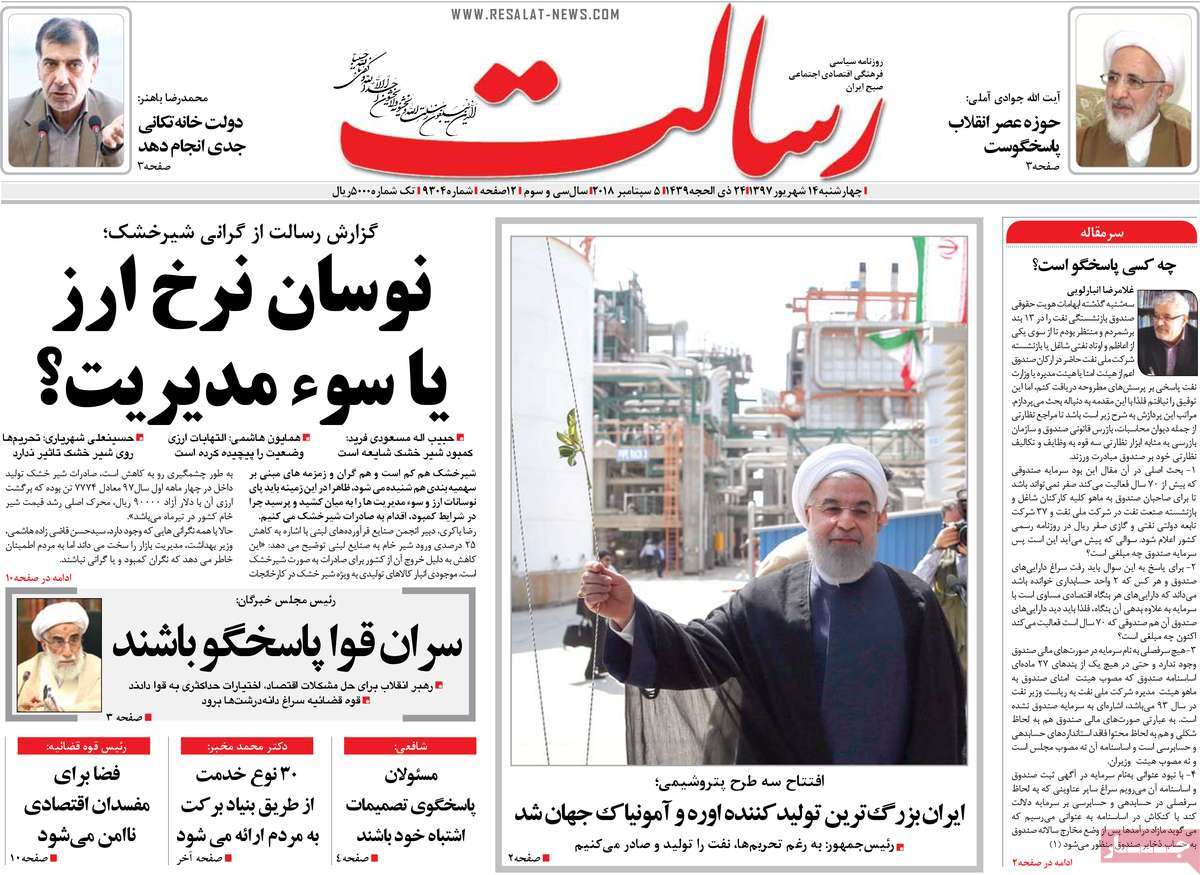
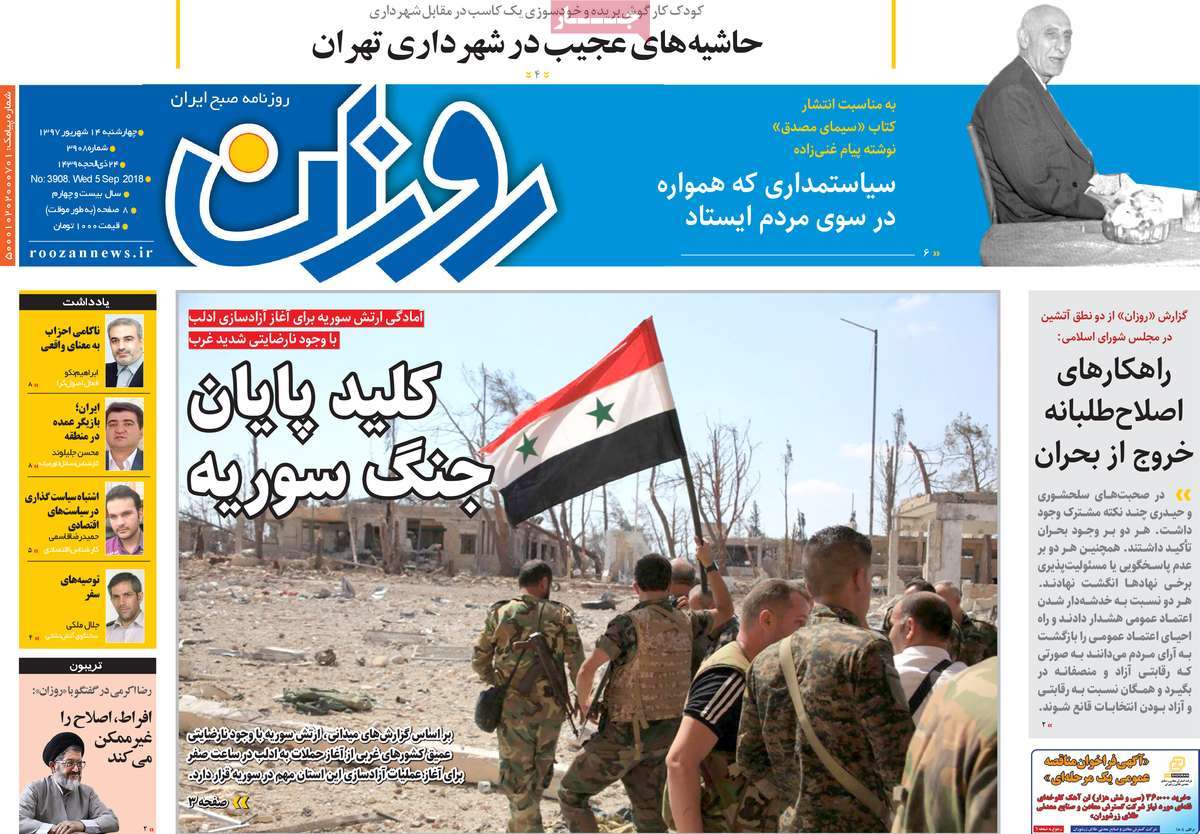
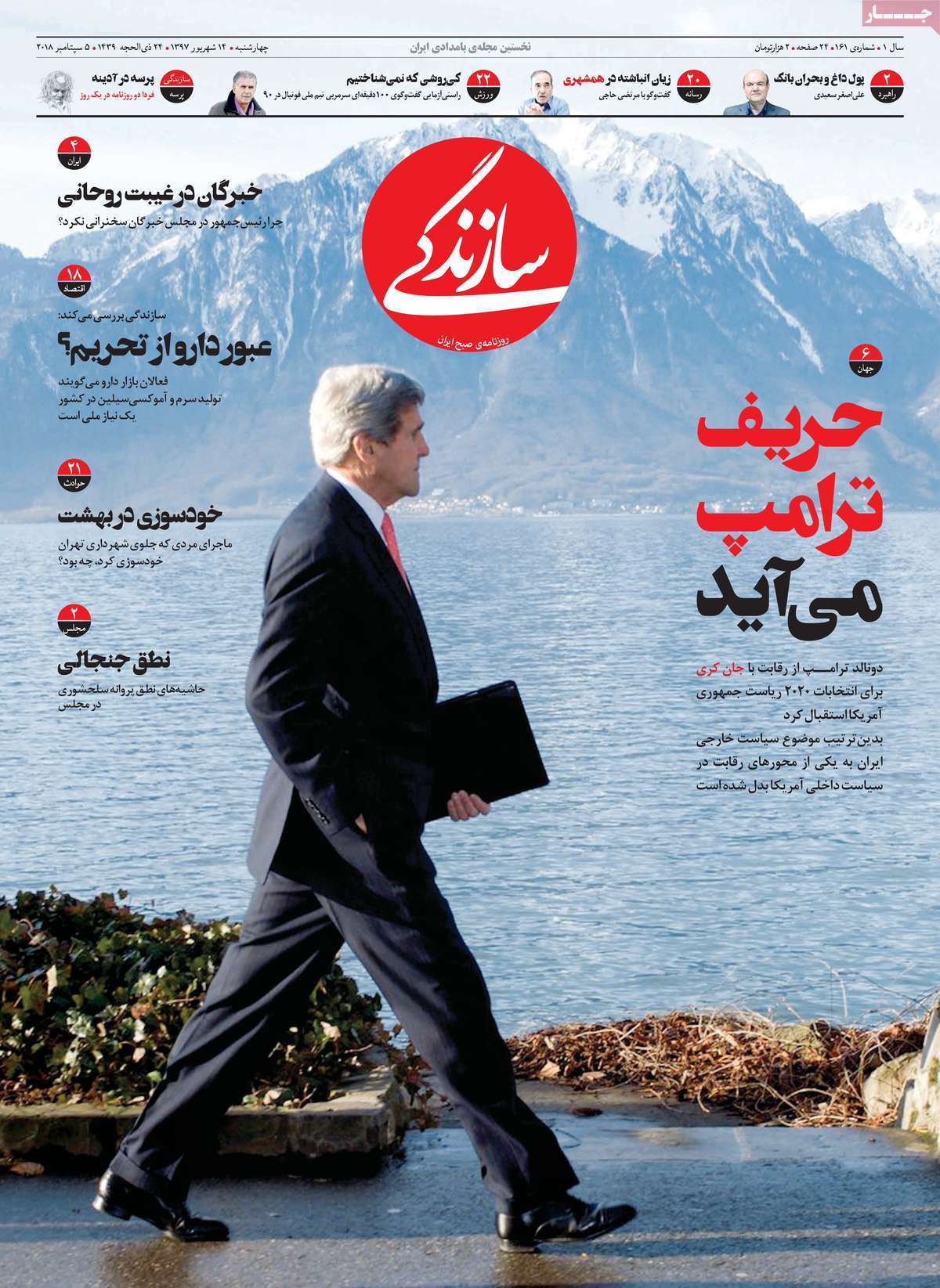
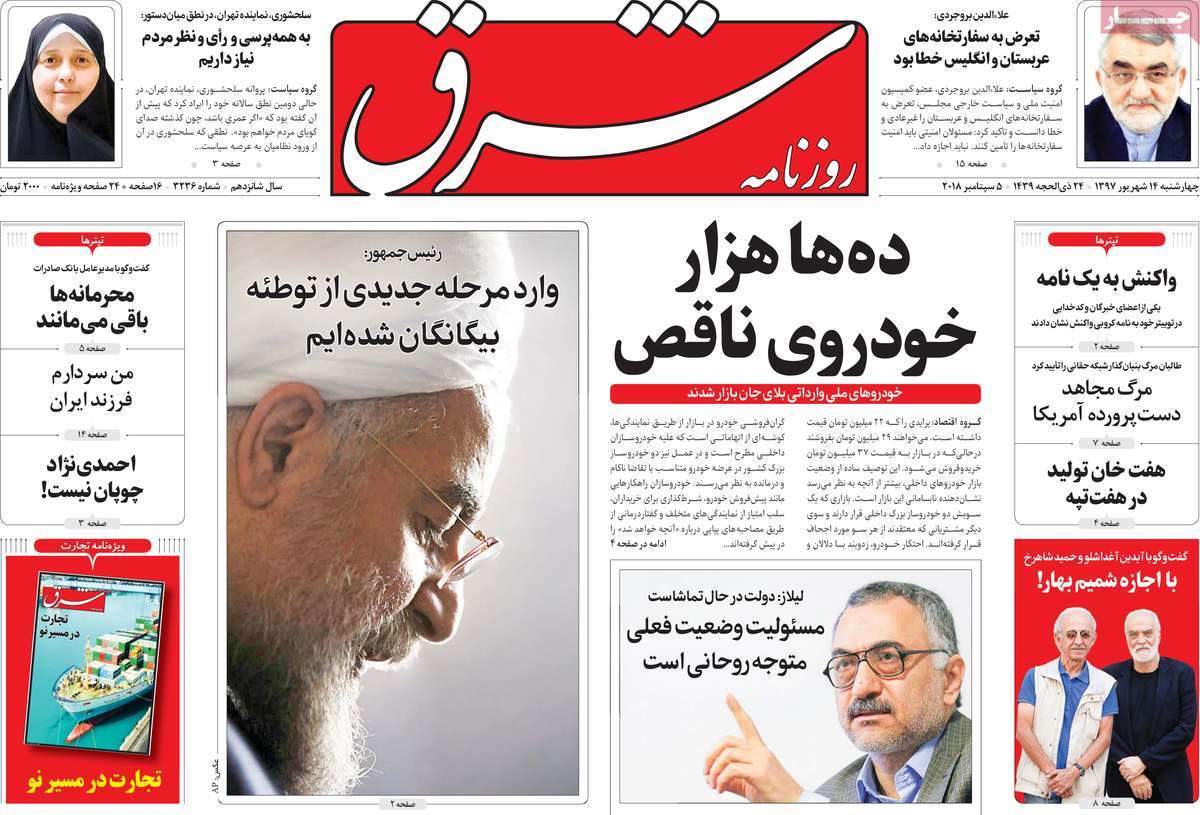
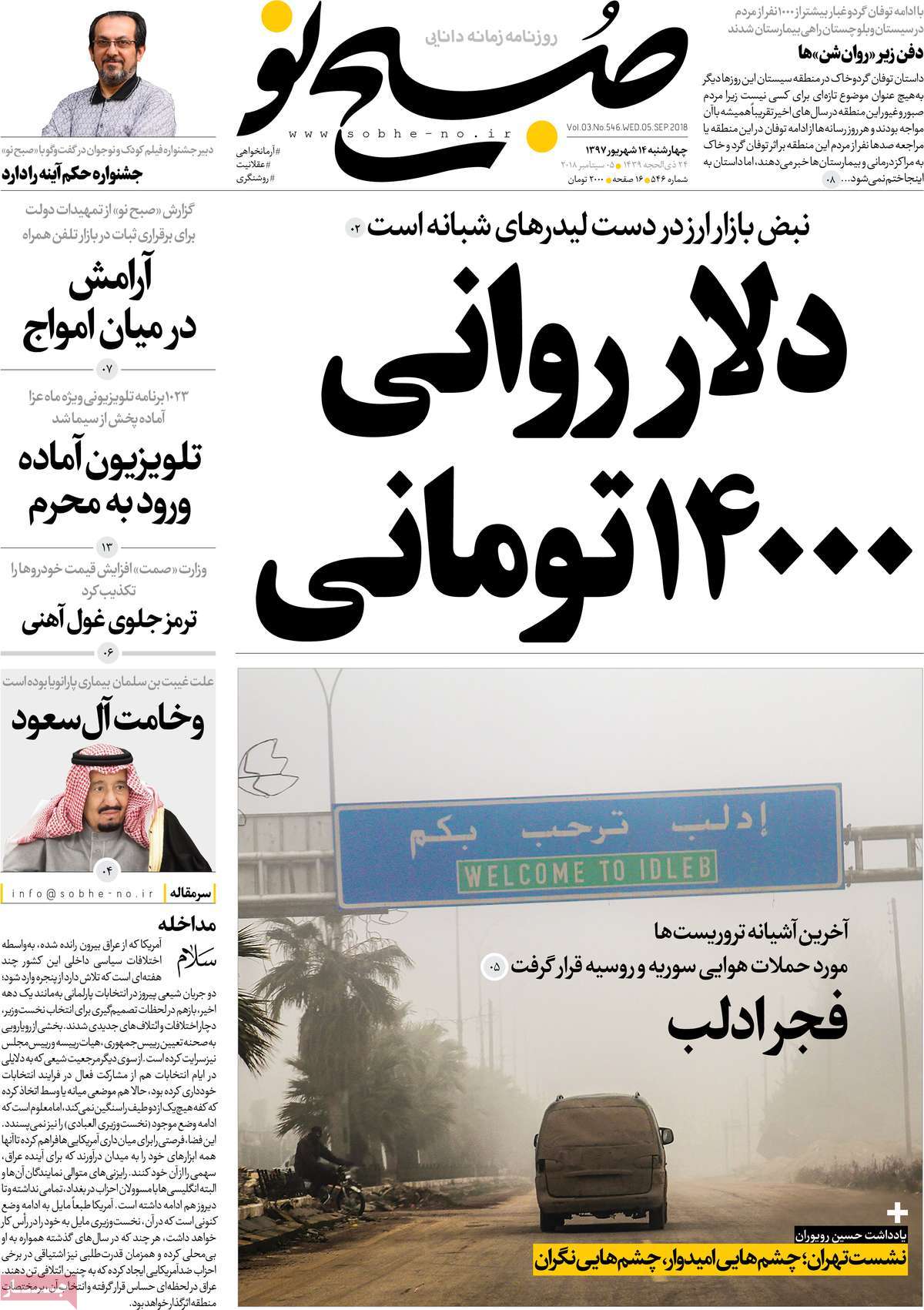
A Look at Iranian Newspaper Front Pages on August 21

A Look at Iranian Newspaper Front Pages on November 19

Almost all papers today covered a letter by the Leader of Iran’s Islamic Revolution Ayatollah Seyyed Ali Khamenei to this year’s Hajj pilgrims, in which the Leader called on all Muslims to unite against the enemies of Islam, particularly the US which wants to pit Muslims against each other.

Also a top story was a recent controversial anti-government protest gathering held in the holy city of Qom, during which threatening placards were held. In one of those controversial placards, it was written that Rouhani would ultimately die just like former president Akbar Hashemi Rafsanjani in a swimming pool if he insists on negotiating with the US.

The gathering and the placards were widely condemned by top religious authorities in Qom, who even criticized the IRGC for letting its commanders attend and address the protest gathering.

Remarks made by Iranian Foreign Minister Mohammad Javad Zarif in a recent interview with CNN also received great coverage.

The above issues, as well as many more, are highlighted in the following headlines and top stories:


Abrar:

1- Oil Minister: Total Officially Left Iran!

2- Zarif: Americans Must Wake Up and Smell the Coffee

3- Iraqi President: Some US Sanctions on Iran Binding for Iraq

A Look at Iranian Newspaper Front Pages on August 21


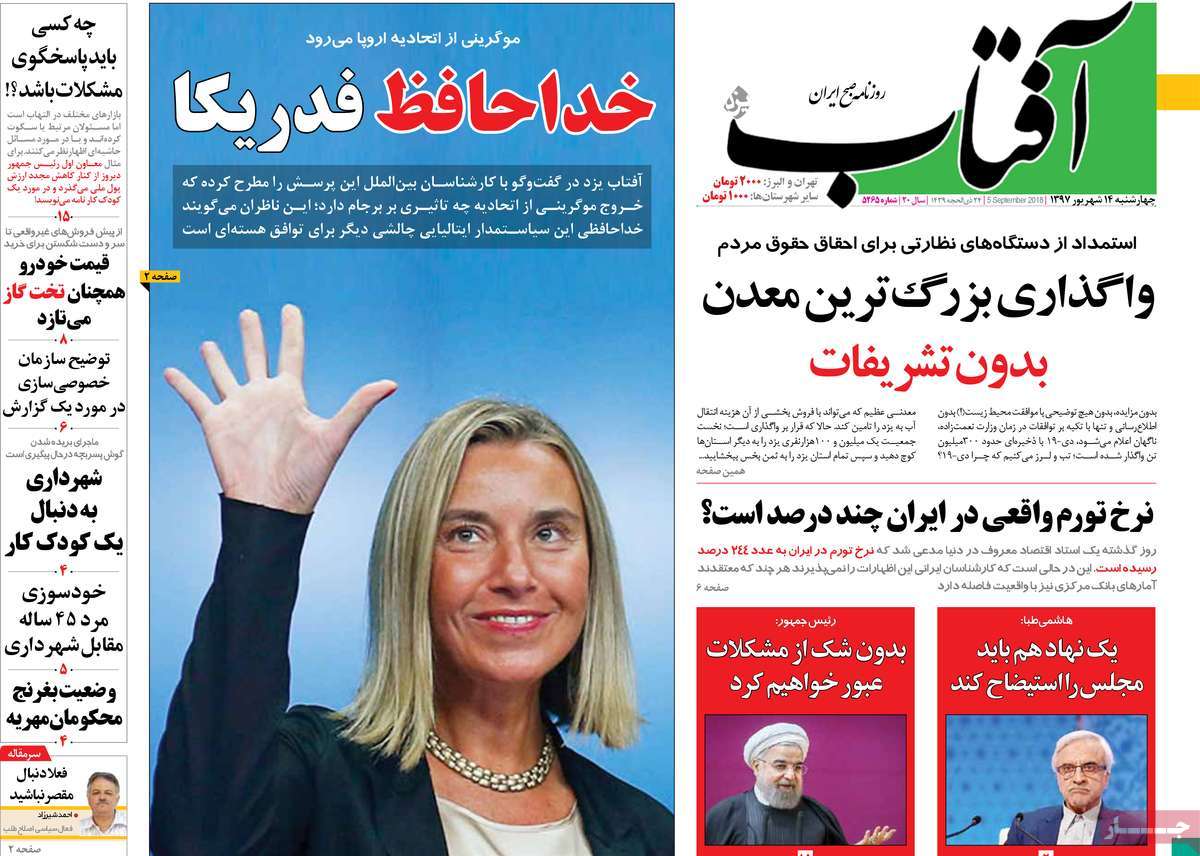
Aftab-e Yazd:

1- IRGC Condemns Anti-Government Gathering in Qom

2- MPs Working on Plan to Reduce Number of Husbands Jailed for Failure to Pay Mahr

A Look at Iranian Newspaper Front Pages on August 21


Arman-e Emrooz:

1- Unanimous Condemnation of Qom Disaster

  • New Aspects of Qom Gathering Where Rouhani Was Threatened to Death

2- Analyst: Corruption in Forex, Gold Coin Markets Started in Ahmadinejad’s Tenure

A Look at Iranian Newspaper Front Pages on August 21


Ebtekar:

1- No One Claims Responsibility for Strange Placards Held in Qom Protest Gathering

2- Iran Leader to Hajj Pilgrims: US Policy Is Warmongering, Having Muslims Kill Each Other

A Look at Iranian Newspaper Front Pages on August 21


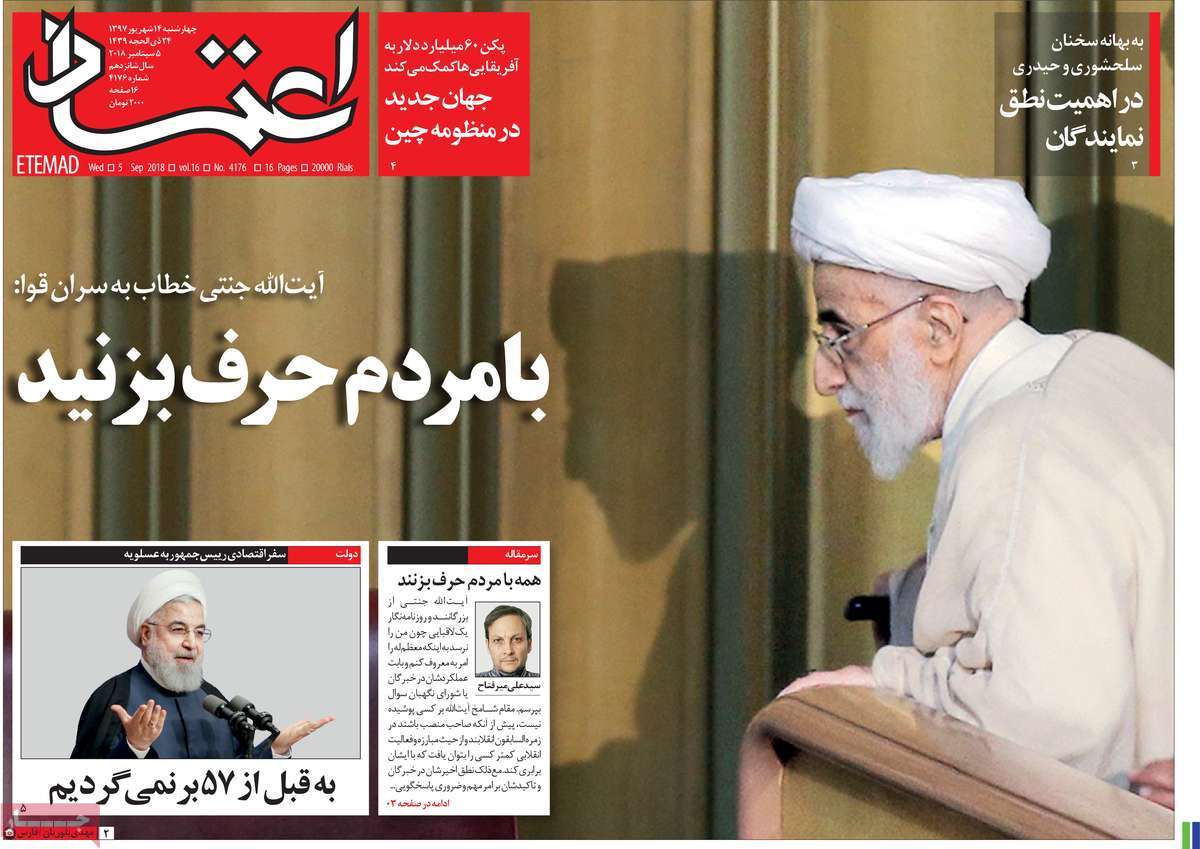
Etemad:

1- Where Are Hardliners Linked to?

  • Top Clerics Call for Prosecution of Those behind Qom Gathering

2- Zarif: US Not Learning Lesson from Its Failures

3- Judiciary Chief: 120 People Detained for Economic Corruption

A Look at Iranian Newspaper Front Pages on August 21


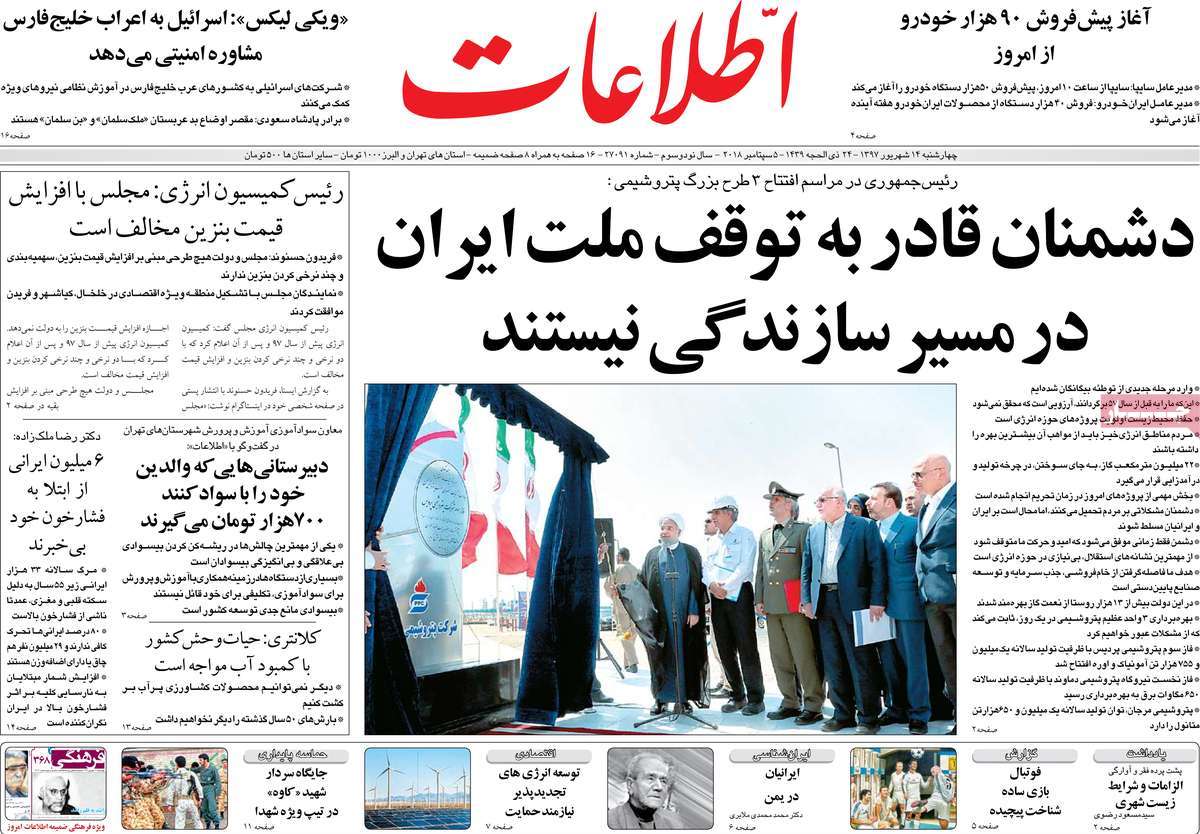
Ettela’at:

1- Iran Leader: Hajj Calls on All Muslims to Unite against Enemies

2- Zarif: Implementation of JCPOA Meaningless If Sanctions Not Lifted

A Look at Iranian Newspaper Front Pages on August 21


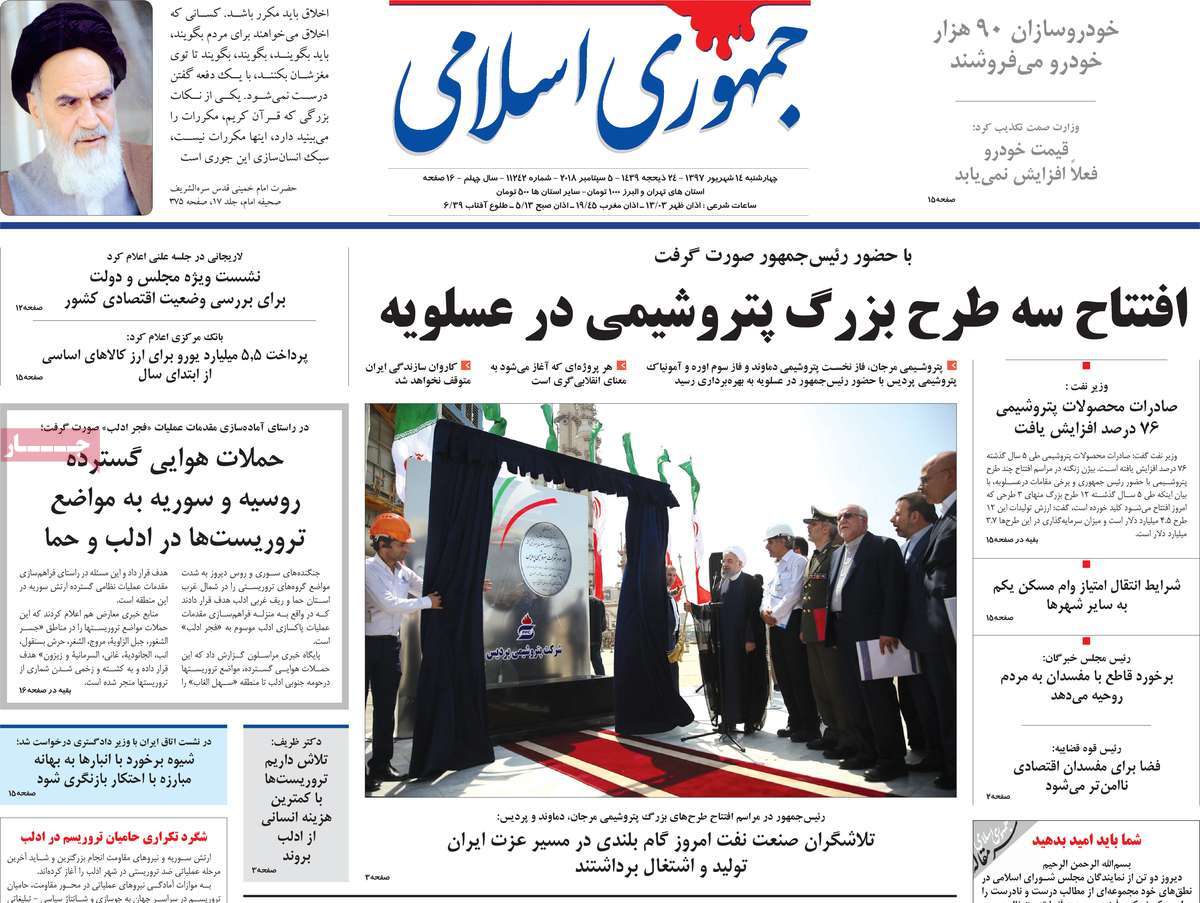
Iran:

1- Betrayal, Main Reason for Divorce in Wealthy Regions

  • A Sad Account of Decreased Number of Marriage, Increased Divorce Rates in Tehran

A Look at Iranian Newspaper Front Pages on August 21


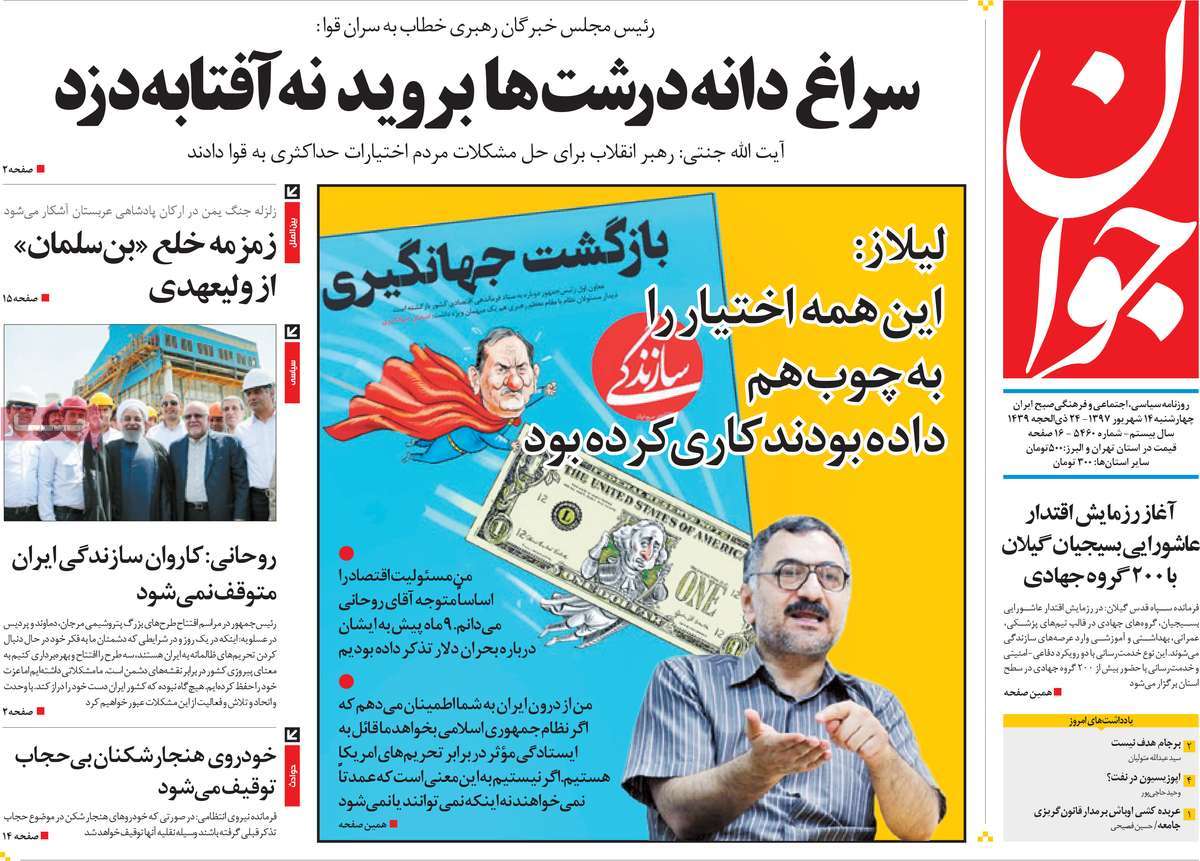
Javan:

1- Zarif: I’m Sorry, I Was Wrong about US

2- Trump Worried about Elimination of Israel through Demographic Changes

  • If Israel, Palestine Have One Government, Next Israeli PM Would Be ‘Muhammad’!

A Look at Iranian Newspaper Front Pages on August 21


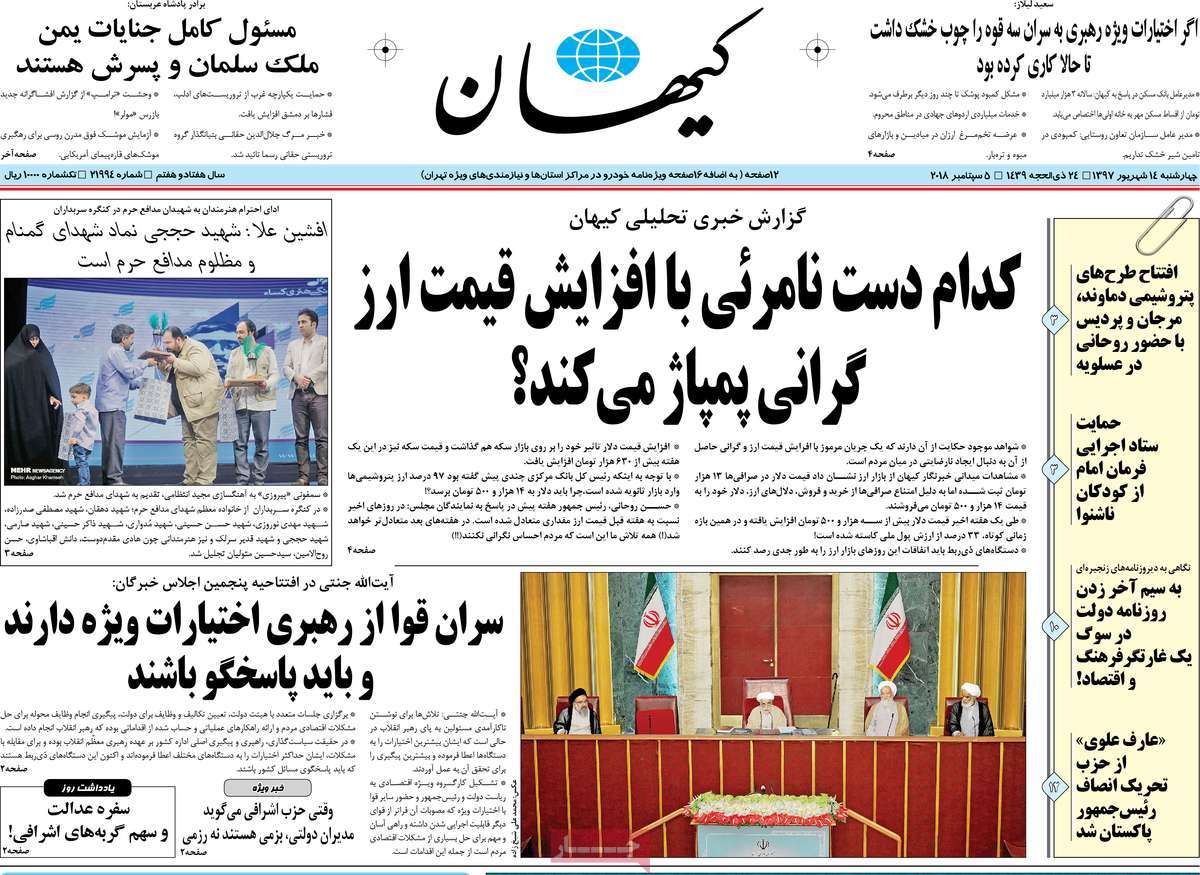
Kayhan:

1- Turkish People Set Fire on US-Made Cell Phones

2- Here’s London’s Long Queues for Receiving Free Food

  • Independent’s Report on Poverty in UK

A Look at Iranian Newspaper Front Pages on August 21


Sazandegi:

1- Top Clerics Protest at Disaster in Qom’s Feyziyeh School

  • Ayatollah Makarem Shirazi: What Happened in Protest Gathering Was a Disaster
  • IRGC: We Feel Duty-Bound to Help Respected Gov’t Resolve Economic Woes

A Look at Iranian Newspaper Front Pages on August 21


Shahrvand:

1- Iranian Genius Wrestler Yazdani Once Again Wins Gold Medal

A Look at Iranian Newspaper Front Pages on August 21


Shargh:

1- Mayor Calls on Elites to Help Run the City

2- Ayatollah Makarem Shirazi: Protest Gathering in Qom Was Insult to Seminary

3- IRGC Denies Any Involvement in Organizing Qom Gathering

A Look at Iranian Newspaper Front Pages on August 21


Tejarat:

1- 80% Increase in Iran’s Carpet Exports to US

A Look at Iranian Newspaper Front Pages on August 21

Iran’s Defence Might Aimed at Maintaining Regional Peace: Rouhani

Iranian President Hassan Rouhani standing by Kowsar fighter jet, the first fighter aircraft produced by Iranian engineers, August 21, 2018

Speaking in Tehran on Tuesday on the occasion of National Day of Defence Industries, President Rouhani said Iran’s history demonstrates Iranian people form a peace-loving nation that lends a helping hand to others when necessary.

Iran could have followed opportunist policies regarding its northern neighbours following the breakup of the Soviet Union, he noted.

“If we were aggressors, we could have seized the chance when the Soviet Union collapsed and their borders became unstable. But we didn’t do that and instead, we offered help to the newly-created countries,” he said.

“We were among the first countries which recognized our [northern] neighbours, so we are the nation of compromise and interaction. We are the nation of cooperation and assisting others,” his official website quoted him as saying.

Pointing to Iran’s role in the anti-terror fight in the region, Rouhani said the country paid a heavy cost for rooting out terrorists in the region, even though it was not directly threatened by terrorists operating in Iraq and Syria.

Rouhani made the remarks in a ceremony during which the country’s first homegrown fighter jet, named Kowsar, was unveiled.

Iran’s Defence Might Aimed at Maintaining Regional Peace: Rouhani

Iranphobic Propaganda

Rouhani said Iran’s adversaries have for years been spreading Iranophobic propaganda that Tehran’s military power and its missiles are a threat to the region’s calm and tranquility.

The president said this is while Iran uses its military might to deter enemies from attacking the country and to promote peace in the region.

“Our readiness is not for war, our readiness is for creating and protecting sustainable peace,” he said.

The president said Iran’s negligence in boosting military deterrence is equal to showing a green light for aggression to its adversaries.


US Highly Unreliable

The president said Iran’s circumstances necessitate increased efforts for strengthening its military power.

Rouhani said US President Donald Trump has put the US at loggerhead with not only Iran, but even its allies such as the EU and Canada.

“In this sensitive juncture, our defence power is of utmost importance … as we have enemies who do not respect any principle,” he said.

The president said the US is waging a full-scale economic war against the Islamic Republic, and the only reason why it is not attacking Iran is the high costs associated with such an invasion.

“This is not about the US being concerned about people’s lives; it’s about Iran’s power. [The US] is aware of the results and costs of this [invasion],” he said.

Iran’s Defence Might Aimed at Maintaining Regional Peace: Rouhani
Iran Unveils Its First Homegrown Fighter Jet

Gov’t Gives Guarantee Iran’s Share of Caspian Sea Not Reduced

What follows are seven questions and answers released by the foreign ministry in order to clear up the ambiguities regarding the Convention:

1- What is the significance of signing the Convention on the legal status of the Caspian Sea in general?

Negotiations on this convention were in progress since one and a half years ago, and we needed to develop a new convention for the Caspian Sea Legal Regime. There were some issues on which the littoral states of the Caspian Sea could not reach an agreement over the past 21 years; however, two years ago, the foreign ministers of the five littoral states decided to separate the resolved issues from unresolved ones. So, the legislators of the countries examined issues that were agreed upon, and the Convention on the legal status of the Caspian Sea was signed on this basis.

For all member states, the Convention on the legal status of the Caspian Sea is a great achievement. We believe the northern region of Iran should be stable and secure. Therefore, the signing of the convention is a very important matter. The most significant achievement of this convention is that we designated the Caspian Sea as a “lake” and adopted it unanimously. One of the consequences of considering it a “Sea” was that non-littoral states could have a right to be present there. However, under the convention, they do not have such a right. We used other lakes in the world as a model for drafting the convention, but these models could not be implemented unless the five countries agreed on them. The convention is also based on the topographies of the Caspian Sea.

2- Were the recent talks in Kazakhstan about each country’s share of the Caspian Sea?

As previously stated, we did not discuss such an issue. It should be emphasised that the negotiations on the Convention, which was signed last Sunday in Kazakhstan, did not address the shares of countries from the seabed and sub-seabed. Of course, talks are underway in this regard, and countries have not yet reached a final agreement on the issue.

3- Over the past few days, rumours have been heard in the social media about the events at the Aktau Summit, as well as disputes over the shares of countries. What do you think about this?

It must be asserted that the signing of the convention is an auspicious event and [public debate regarding the convention] shows public opinion is sensitive to territorial issues, and that the foreign ministry is also in need of public support. We always knew that geopolitical issues would involve public opinion. Looking into the dimensions of the Caspian Sea Legal Regime is a matter of time, and for this reason, after every single summit held in the past years, we have published the documents and declarations. We guarantee that there was not even the slightest retreat or restriction on Iran’s share. The only thing that happened was that we removed two conventions from the Convention on the legal status of the Caspian Sea, and after 21 years, implemented the rest of the issues which were positive and enforceable, and the presidents of the five Caspian Sea countries signed them. Just general principles are stated in this Convention and other controversial details have been postponed to be approved in future agreements. Of course, other issues in all aquatic areas, such as water surface, the seabed and sub-seabed, will be examined separately. The Convention grants jurisdiction over 15 miles of territorial waters to each country, but the baseline and form of the 15 miles depends on the five-party agreement that will be drafted in the future. At the same time, to determine the baseline of Iran, it has been emphasised that the inappropriate geographic form of the Iranian coast, which is naturally so, should be taken into consideration in determining the borders. Also, the study of energy resources in the Caspian region, which we call them the seabed or sub-seabed of these regions, will be the subject of the future talks, given the economic and legal requirements.

4- Does the determination of 15 miles of territorial waters affect the countries’ shares?

Determining the baselines of the Caspian Sea must definitely be five-sided. However, this is usually done unilaterally in the discussion of the rights of the seas. There is also an exception to the Convention that the states whose coasts are inappropriate in form must not sustain losses. This article has been added to the Convention at Iran’s insistence.

5- What happens if there would be no agreement in the future regarding the seabed or sub-seabed? What would happen to other agreements already reached?

If the baselines and the way they are marked are not specified, then the parts of the convention which were agreed upon and signed by the five states will be inevitably suspended. According to the existing legislation, Iran will protect its proclaimed 20% share until the baselines are specified. During this period, Iran will not allow any country to explore and exploit energy resources [in this area]. In this 20-percent region, we do not have ownership rights, but just governing rights.

6- In accordance with the treaties concluded in 1921 and 1940, which institution or organisation is considered as the dispute settlement body? How did you match the negative implications of the two treaties with the Convention?

We passed this issue first to bilateral and multilateral negotiations. All specialised issues will be examined and resolved separately, and there is no problem regarding this. We did our best to include all the positive points of the 1921 and 1940 treaties in this Convention. It should be noted that on the basis of the two above-mentioned treaties, Russia was allowed to interfere in Iran if it is threatened. Of course, during the Pahlavi era, despite the fact that the treaties had been signed, Iran objected to this paragraph in a formal letter, and a letter of protest was sent again after the Islamic Revolution. Neither in these two treaties, nor in any other document between Iran and the former Soviet Union or Iran and Russia, have we not discussed the percentage of shares and division of the Caspian Sea. All the speculations raised in some media are misconceptions about these treaties. We emphasise that there was no limitation of the borders in these two treaties. In these treaties, there was no implicit or explicit talk of percentages.

7- How is the Convention going to be ratified in the Islamic Republic of Iran and other littoral states of the Caspian Sea?

In the Islamic Republic of Iran, since the beginning of talks on the Caspian Sea, this matter was followed up by the Supreme National Security Council, and the negotiating teams proceeded on this basis and obtained the necessary permissions. In addition, the signed convention, like all agreements, must be approved by the parliaments of the five countries and will be followed by legal procedures.

US Will Desperately Grant Waivers on Iran Oil Bans: Analyst

Hosseini says if the US avoids granting the waivers, the oil price will jump drastically, paving the way for the collapse of lots of interconnected economies.

In an interview with IRNA, Hosseini referred to the ongoing talks between Iranian oil clients and the US over sanction waivers and said the US will be finally forced to grant the waivers.

To decrease the US’ chance to impose sanction on the Islamic Republic, he said, “we should unite the world’s economies together.”

“Only through this connection, the US may withdraw its decision to impose sanctions on us because it would be afraid of inflicting a blow on the world economy and subsequently hampering its own economy.”

Hosseini then called for further investment in the oil industry and said today Saudi Arabia has invested heavily in the area to have the upper hand when it comes to oil policy.

He referred to the US president’s claim about cutting Iran’s oil exports to zero and said demands for oil increases across the world by two million barrels each year.

The former deputy oil minister rejected as baseless Saudi Arabia’s claim that it will increase its capacity to produce the extra two million barrels of oil per day, saying it’s not possible to do that.

“Saudi Arabia lacks such a capacity. It may temporarily produce extra 200 to 300 thousand barrels of oil but it can’t continue to do so for a long time. Even Russia can’t increase its oil production capacity to make up for the possible cutting of Iran’s oil exports,” he said.

Hosseini underlined that today it is impossible to cut a country’s oil exports to zero and added there are demands for the Iranian oil and no one can replace it in the market.

“In the short term, the enemies may succeed in cutting Iran’s oil exports to zero but in the long term it is impossible,” he noted.

Hosseini said the enemies may decide to fill the market with their strategic oil resxerves to convince the Iranian oil customers to quit.

He added from a pessimistic viewpoint, they can, at most, return us to the previous sanctions era and cut our oil exports to between 1 and 1.2 million barrels per day.

“Based on the latest UN report, the world population will hit 9 to 10 billion by 2050. In fact, the world population will double from 1950 to 2050 and this is one of the parameters which increase energy consumption,” he said.

The analyst then cited economic growth as the second parameter which leads to increasing demands for oil and said economic growth and energy consumption are directly interconnected.

He then referred to the improved standards of life in the world as the third reason behind the growing demand for oil and added environmental issues as well as advanced technologies also play a role in the current trend in the oil industry.

Iran Unveils Its First Homegrown Fighter Jet

Iran Unveils Its First Homegrown Fighter Jet

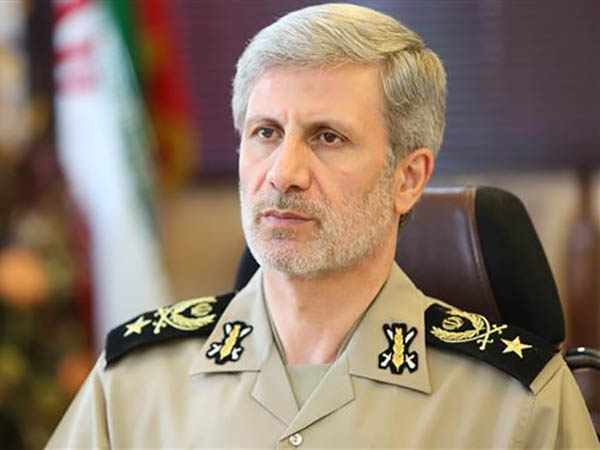
The aircraft conducted its first public display flight during Tuesday’s ceremony in the presence of President Hassan Rouhani, Defense Minister Brigadier General Amir Hatami and other senior military officials.

President Rouhani sat in the cockpit to order the flight.

Tasnim news agency reported that the fourth-generation Iranian fighter jet is equipped with “advanced avionics and fire control systems” and can be used for short aerial support missions.

It also uses digital military data networks, multi-purpose digital monitors, ballistic calculation computers and smart mobile mapping systems.

The jet has an advanced radar system, enabling it to detect enemy targets. It is also equipped with a head-up display or HUD, which promotes precision targeting.

The plane can be manufactured in both single- and double-cockpit types, the latter of which can be used for advanced pilot training missions in addition to its combat capability, according to Fars news agency.

The new defense achievement was unveiled on the eve of Iran’s National Defense Industry Day.

Over the past years, Iran has made major breakthroughs in its defense sector and attained self-sufficiency in producing military equipment and hardware despite sanctions and economic pressures on the country.

The Islamic Republic maintains that its military power is solely for defensive purposes and does not pose any threat to other nations.

Iran Chamber of Commerce Says Tehran Must Join FATF

Foreign Ministry Condemns FATF’s Blacklisting of Iran

In a statement unanimously approved by its members, the Chamber of Commerce has warned that refusing to join the FATF may lead to significant decrease in financial transactions with Iran.

Therefore, the statement added, the Iran Chamber of Commerce, Industries, Mines and Agriculture (ICCIMA) wants the country to join the FATF.

“Failure to follow the recommendations of this working group and, as a result, the FATF’s approach towards a non-cooperating country, can put that state in financial isolation,” reads part of this statement.

Iran was first listed in 2009 as the countries that FATF expressed concern about. Since then, Iran has been introduced as a country posing threats in the years 2013-2016.

The FATF has given Tehran until October to adopt the reforms or face penalties that could make investors even more unwilling to do business in Iran.

The government has already proposed bills that, if approved, can help the country get out of the FATF’s blacklist. However, the Parliament, the Guardian Council, and the Expediency Council are still working on the bills amid concerns they might be unconstitutional and harmful to the country’s national interests.

Scorpion Poison Trade: An Emerging Lucrative Business

These days, profiteers are bearing down on scorpions and hunting them for financial gain.

When we go to the desert, in addition to heat, thirst, possibility of sinking in quicksand and hidden holes, we should watch out for creatures such as snakes and scorpions because some of them are venomous.

Scorpions are nocturnal animals that stay motionless in a corner by day and leave their shelters by night and go hunting. When they feel danger, they run, and when there is no way to run, they sting to defend themselves, and their sting is very poisonous.

Scorpions mostly live in hot deserts. The most dangerous species of scorpions live in hot areas in Iran. They hide under rock and in holes, waiting for their prey.

The scorpions living in Iran are among the most dangerous and deadly types of scorpion in the world because they have stings in their tails.

The Iranian yellow scorpion is one of the most dangerous types of scorpions in the world, though its sting is not deadly. This type of scorpion lives in the provinces of Kerman, Yazd, Isfahan, Markazai, Qazvin, Semnan, Kermanshah, Bushehr and deserts around the Tehran.

The fat-tailed scorpion is one of the most dangerous types of Iranian scorpion. It has a violent appearance and lives in slots between rocks and in the middle of plants. It can climb any surface, but glass. It kills rats and lizards and feeds on the liquid in their bodies. If stung by this type of scorpion, humans come down with nervous disruption and their hearts are affected.

Given the climatic conditions, scorpions in Khuzestan province are deadlier. It would be interesting to know that if a scorpion is taken to this province from other areas, its poison will become several times stronger and deadlier because of the climate.

The most expensive liquid in the world is the scorpion’s poison. According to a report by the Young Journalists Club (YJC), each gramme of dried scorpion poison costs IRR 800,000,000 (around $7,000). And that is why trade in scorpion poison is booming day by day as it is a lucrative business. This is one of the emerging jobs with a very good income, encouraging more and more people to get involved in this business.

The scorpion poison contains protein and is used to treat many diseases such as rheumatism, inflammation of the colon, multiple sclerosis and cancer abroad. Farming scorpions is very lucrative.

Experts and university professors have made a lot of efforts to hold training courses in order to promote this emerging business.

There are 60 types of scorpions in Iran, four type of which have deadly poisons. Given the importance of the issue, training courses have been held across the nation, teaching around 50 thousand students about how to identify, hunt, farm and extract poison from scorpions. It is noteworthy that such moves in recent years have prompted many people to attend these classes. After finishing the course, they begin to hunt scorpions illegally in order to make a profit.

“Some companies are using experts and university professors to hold classes on how to farm scorpions in order to make huge profits,” says Alireza Naderi, an expert on invertebrate animals.

“These companies sell the scorpions they collect illegally at different prices, and they catch scorpions and sell the scorpions’ poison to make more profit,” he says.

“Farming scorpions in Iran is a very tough job because not much experience is available in that regard,” he says.

He notes that there should be restrictions on farming species such as snakes and scorpions because “if any individual wants to collect thousands of scorpions and snakes and use their poison, the population of this animal will be put in danger.”

“Given that these creatures are in danger of extinction, the Iranian Department of the Environment is seriously working to prevent the activities of profiteers in order stop illegal activities and prevent the extinction of this species which is useful in treating many diseases,” he says.

France’s Total Officially Withdraws from Iran’s South Pars Gas Project

Zanganeh was quoted by media as saying that Total had informed Iran’s Ministry of Petroleum “over two months ago” that it would leave Iran, adding that its contract to develop Phase 11 of Iran’s South Pars energy hub had been thus terminated.

He further emphasized that the proceedings to replace the French company in Phase 11 were underway.

In July 2017, the NIOC awarded the project to a consortium comprising Total (50.1 percent), China’s CNPC (30 percent) and Iran’s Petropars (19.9 percent) through a contract worth around $4 billion.

However, when the US announced that it would restore sanctions against Iran, the French major said it would withdraw from Phase 11 to avoid American punitive measures.

This triggered speculations that CNPC would assume Total’s share in the project to be the consortium leader with a total share of around 80 percent.

Total had signed up to develop the same project back in 2009 but was forced to abandon its projects in Iran in 2012 when France joined a US-led campaign to put sanctions, including an oil embargo, against the country.

The objective of the development of Phase 11 was to produce a daily of above 56 million cubic meters (around 2 billion cubic feet) of natural gas into Iran’s domestic grid from 2021.

In early August, US President Donald Trump signed an executive order which made the sanctions against Iran effective.

The sanctions would in the first wave prevent Iran’s access to the US dollar among other restrictions. The second wave that would hit in November would ban investments in Iran’s oil and gas projects.

Works by Renowned Iranian Artist on Show at Irish Museum

A collection of sculptures, paintings, jewellery and mirror works by Farmanfarmaian have been put on show at this event, which is co-organized by the Sharjah Art Foundation and the IMMA.

Monir Shahroudy Farmanfarmaian, with six decades of experience, is one of the most famous contemporary Iranian artists, the IMMA’s official website wrote.

Works by Renowned Iranian Artist on Show at Irish Museum
Inside the First Iranian Museum Dedicated to a Female Artist

The “Sunset, Sunrise” exhibition represents the life between two cultures, throughout the history of the East and West, and examines the mystery of nature, the universe, and human’s position in it.

The name “Sunset, Sunrise” is a reminiscent of the sky that separates both the East and the West and connects them.

As one of the great female pioneers, Farmanfarmaian can be categorised alongside twentieth-century figures such as Etel Adnan, Carol Rama and Hilma af Klint, all of whom are known for their vital contributions to the development of contemporary art.

The exhibition will run through November 26 at the Irish Museum.

Iranian Firm Using Nanotechnology in Paint, Coating Industry

The R&D section of the Rangin Nano Nahal company has managed to bring nanotechnology to the paint and coating industry, inventing several types of electrostatic powder coatings that have solved long-running problems in the industry.

Mehdi Rahmani, the CEO, says his company has more than nine patented products in Iran.

“Among the company’s products are anti-bacterial electrostatic powder coatings, which are used for coating medical equipment, washing equipment, household appliances, etc.” he noted.

“Covering the surface of the equipment with this coating will destroy up to 99 percent of microbial contamination and bacteria and fungi,” he went on to say.

Nanotechnology Exhibition to Bring World’s Leading Firms to Tehran

Rahmani says another kind of coatings is anti-corrosion electrostatic powder coatings, which protect metal equipment exposed to humid environments.

“This kind of coating is made of special nano-particles that boost resistance of metal surfaces against corrosion,” the CEO said.

He further noted that this coating is a must for things that are exposed to water and humidity, including doors, windows, kitchen appliances, metal furniture, lampposts and automobile parts.

Iranian Firm Using Nanotechnology in Paint, Coating Industry

“This coating also increases the durability of structures more than five times,” he added.

Another type of coating is the night-shining one, which is made of photoluminescence particles that can absorb light in the day and create luminance at night, he noted.

“This type of nanostructured electrostatic powder coatings is used in household appliances, motor vehicles, guard rails, etc.” Rahmani explained.

The last kind of coating is the rust converter coating, which is used for protecting roasted iron, he noted.

For a brief review of Iran’s achievements in various fields of science and technology, check the book “Science and Technology in Iran: A Brief Review

According to Rahmani, this water-based liquid coating is good for rainy places, particularly for covering roofs of homes and other surfaces exposed to rain.

“It’s easy to use, really cheap and highly effective,” he added.
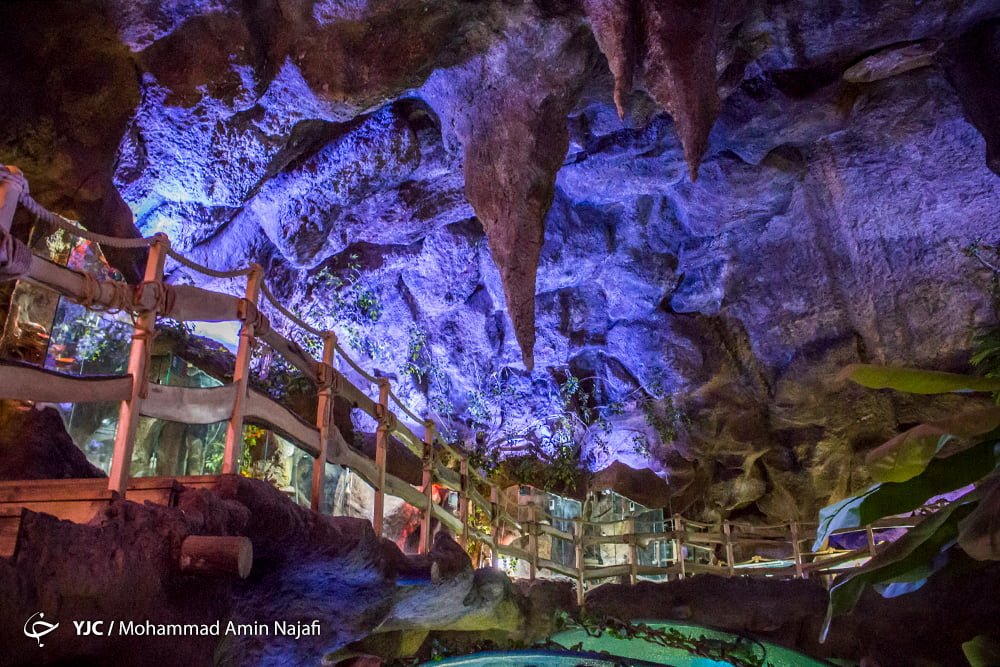
The Rangin Nano Nahal company is among the leading knowledge-based firms which will participate in this year’s Tehran Nanotechnology Exhibition, also known as Iran Nano 2018.
The 11th edition of the exhibition will be held from October 13 to 16, 2018, in the Iranian capital, putting on display the world’s latest achievements in the field of nanotechnology.