Tuesday, April 14, 2026
Home Blog Page 3476

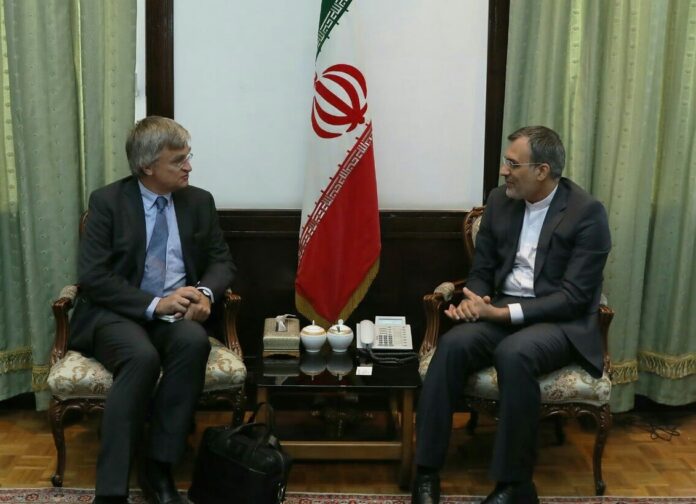
Iran, Sweden Discuss Yemen Crisis in Tehran

In their Sunday meeting in Tehran, Jaberi Ansari and Peter Semneby exchanged views on the latest developments in Yemen.

They also talked about Iran-Sweden cooperation in order to help put an end to the Yemen crisis and the human catastrophe in the country.

The Swedish ambassador to Tehran was also present at the meeting.

Yemen is in the grip of a humanitarian disaster with millions facing starvation and disease after years of war on the country waged by Saudi Arabia and its allies.

The Saudi-led war in Yemen started in March 2015 as an attempt to crush the Houthi Ansarollah movement in the region and reinstall former president Abd Rabbuh Mansur Hadi. The conflict has created a dire humanitarian situation in the country.

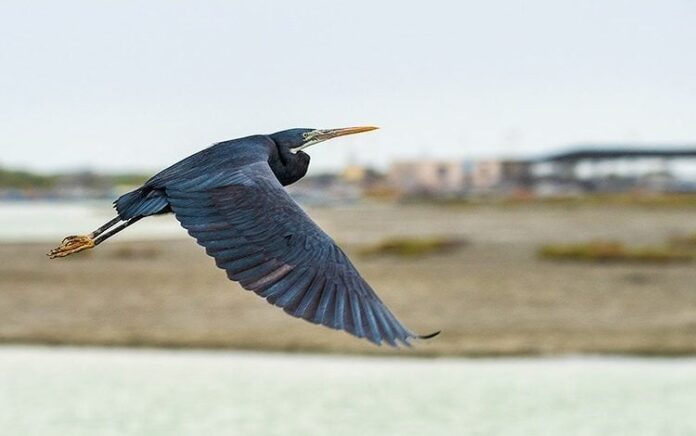
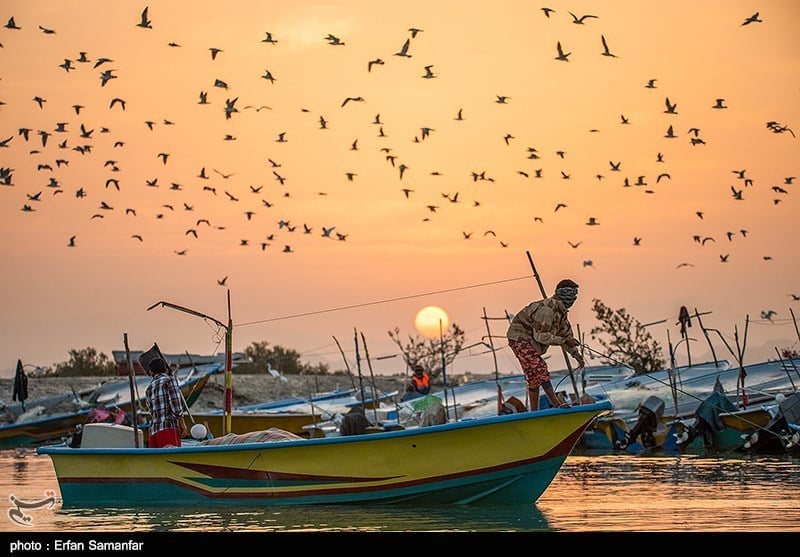
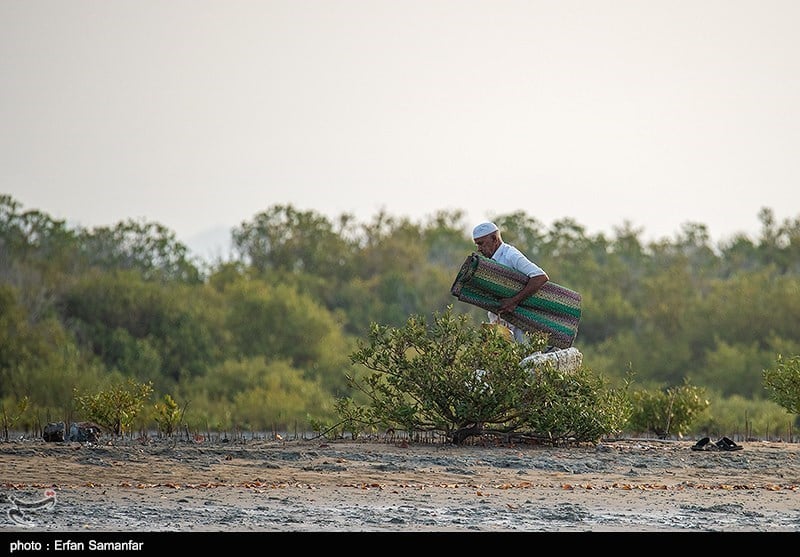
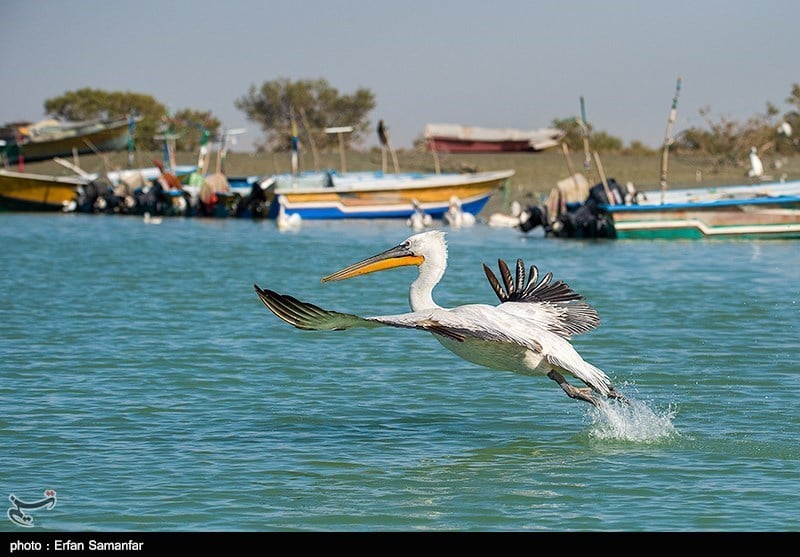
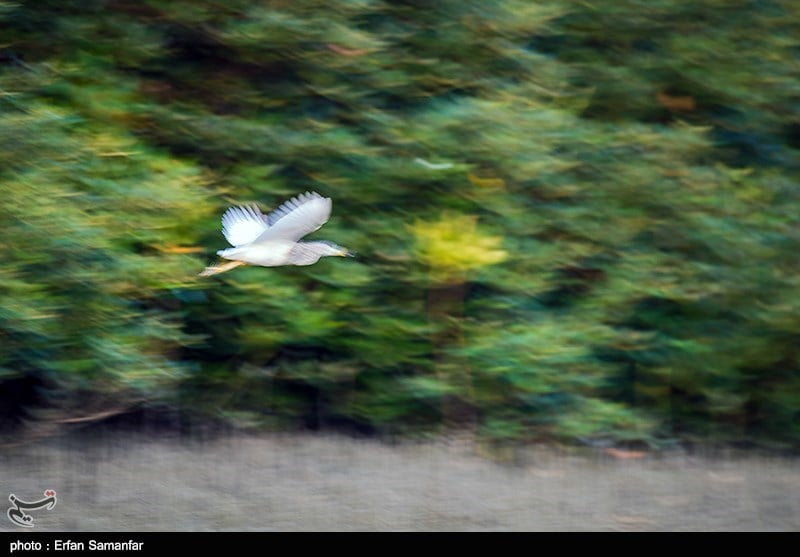
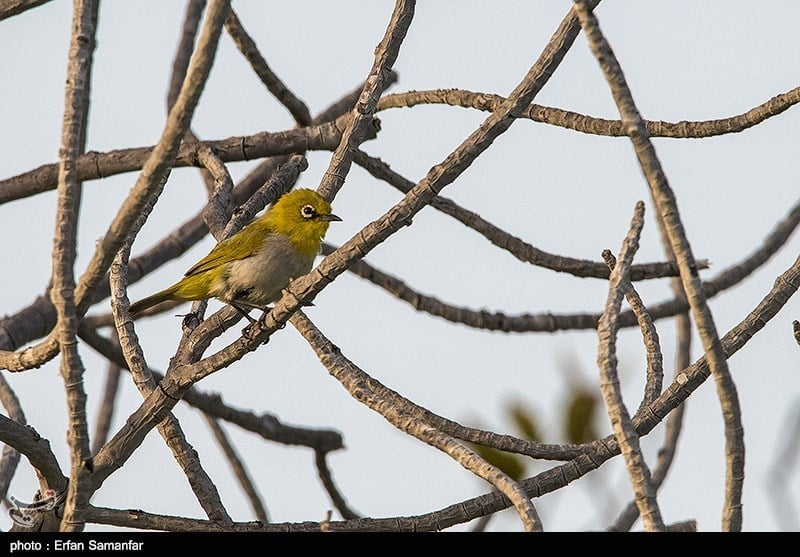
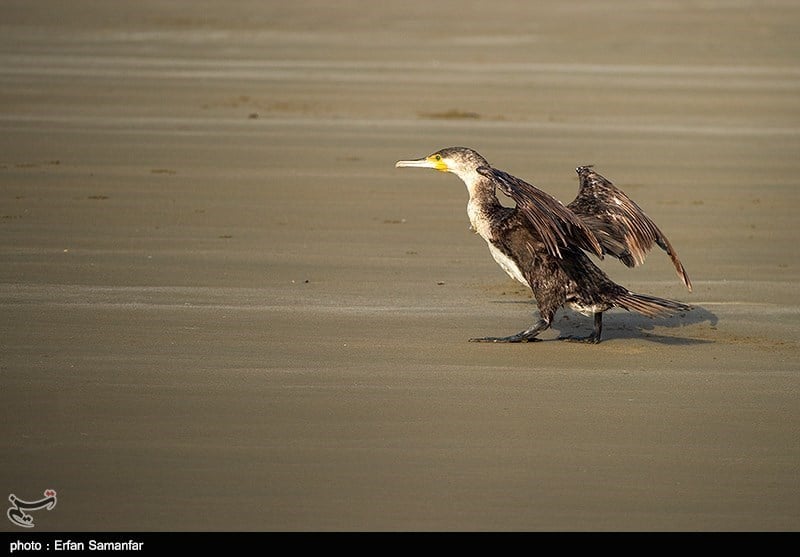
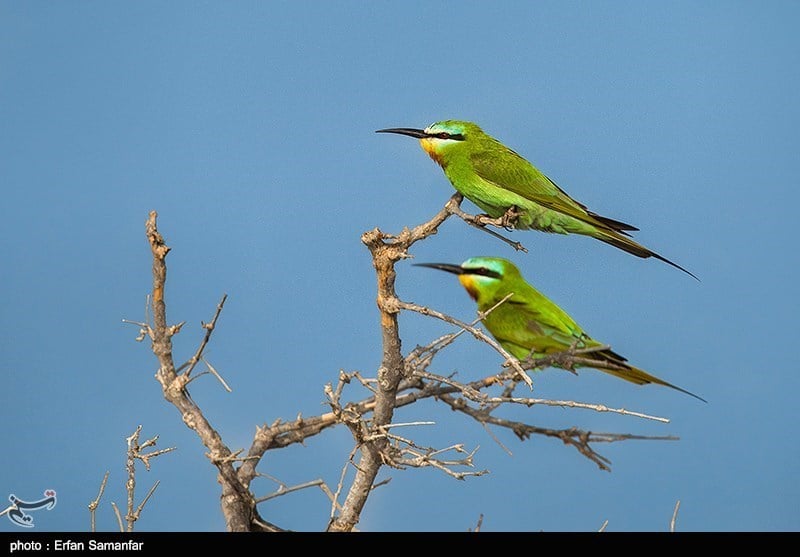
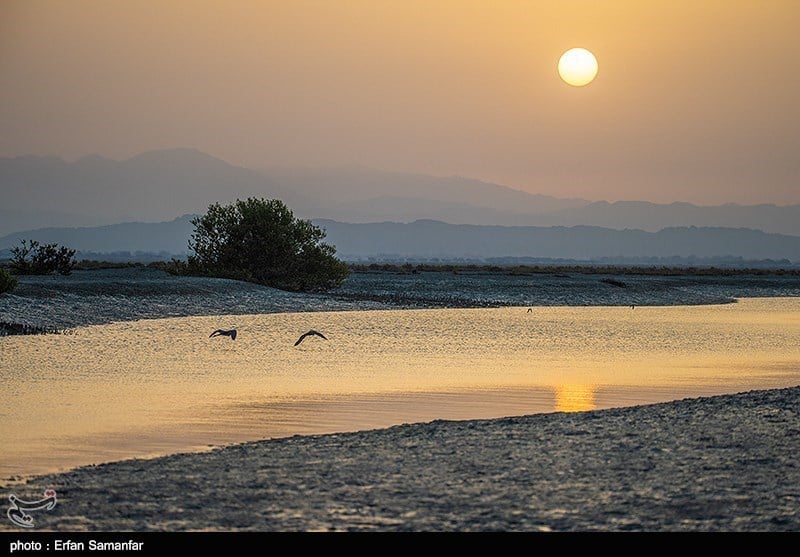
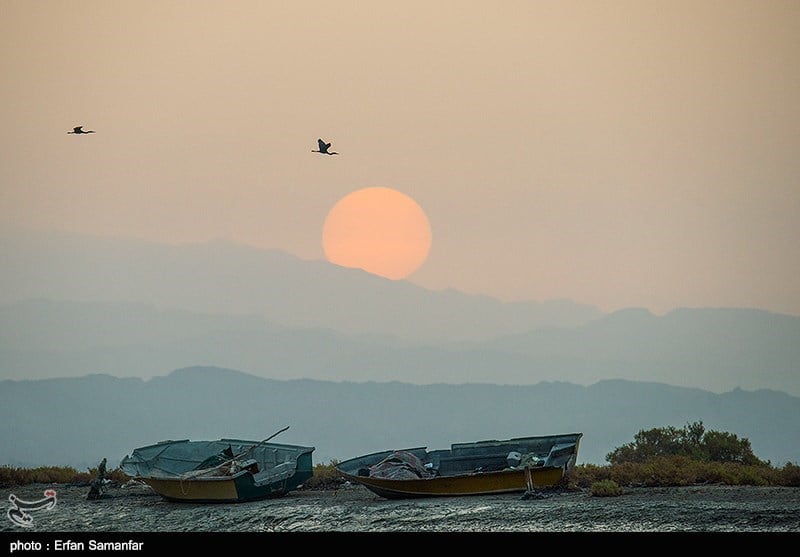
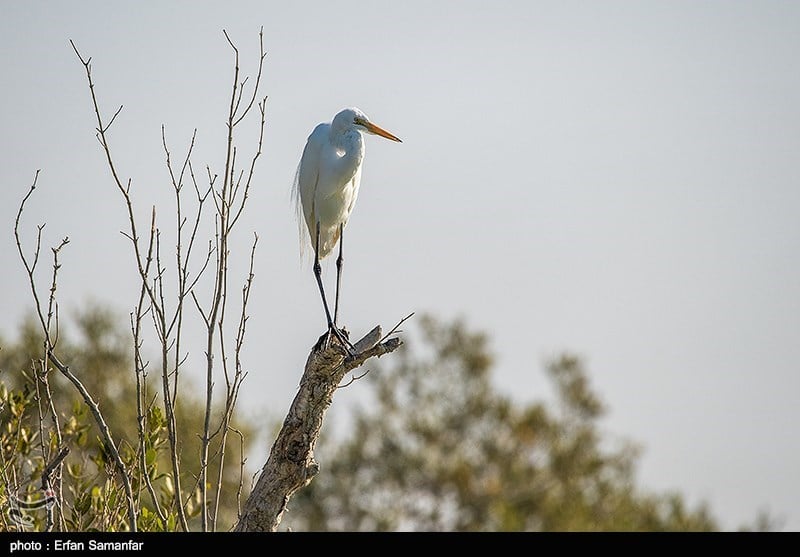
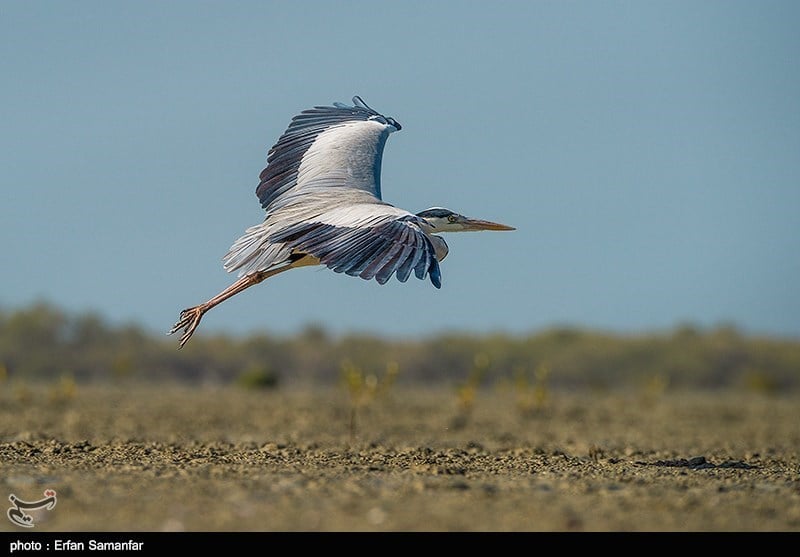
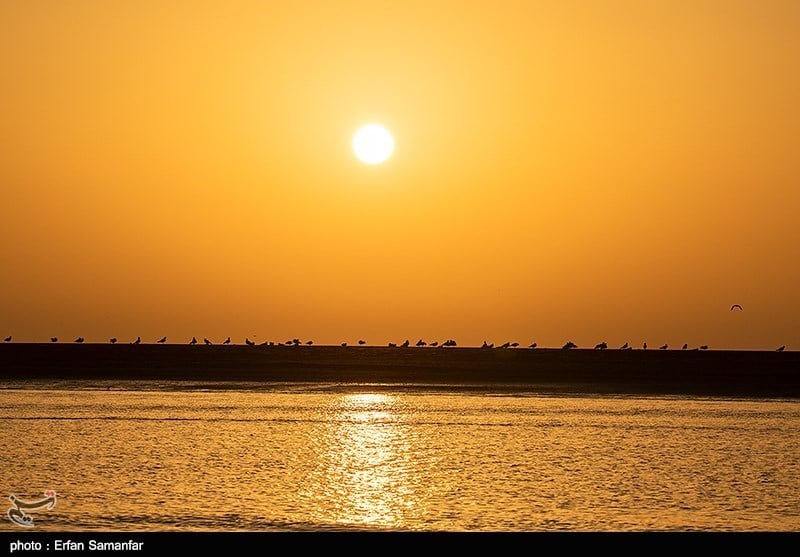
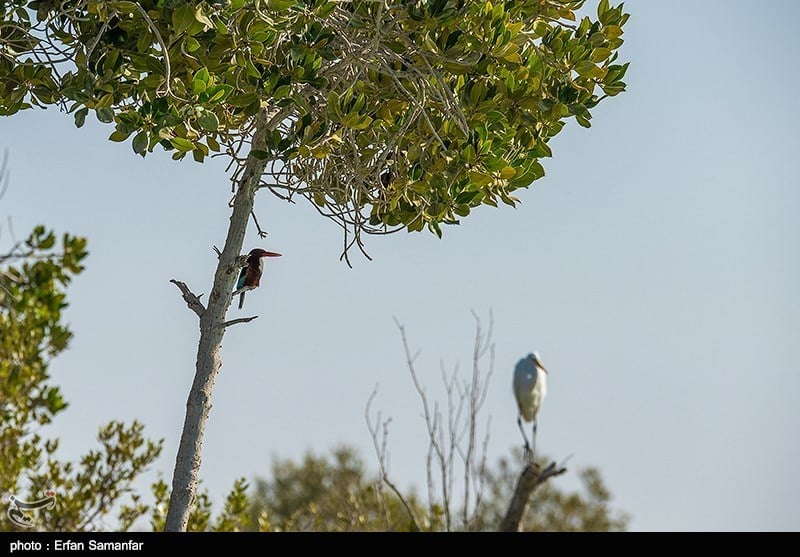
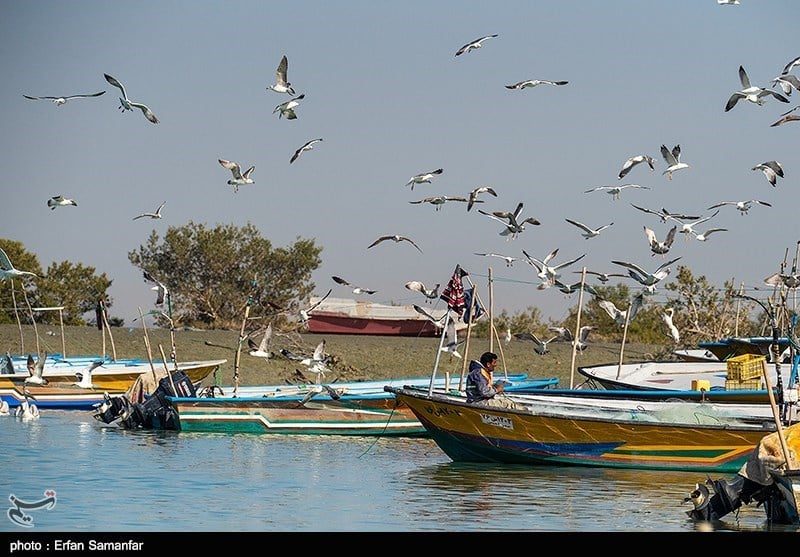
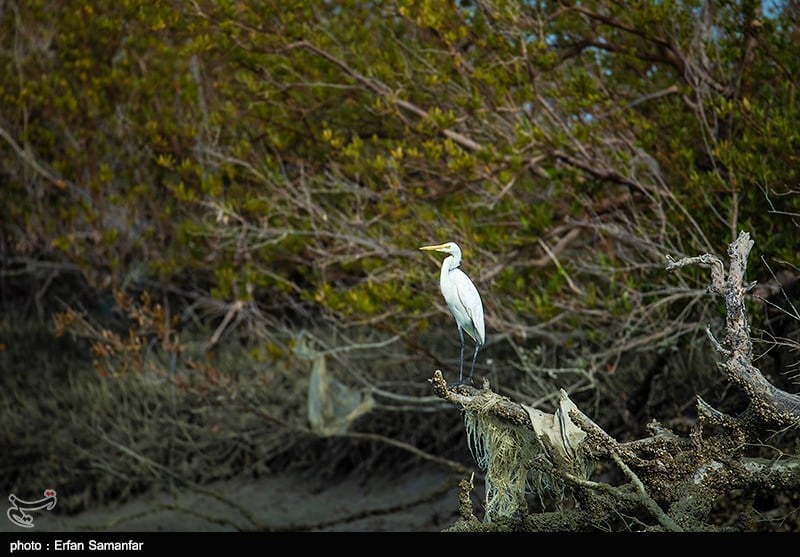
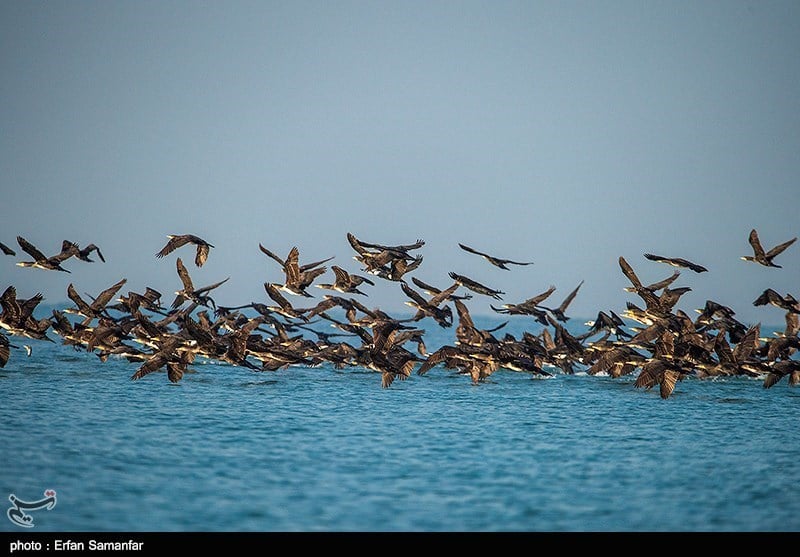
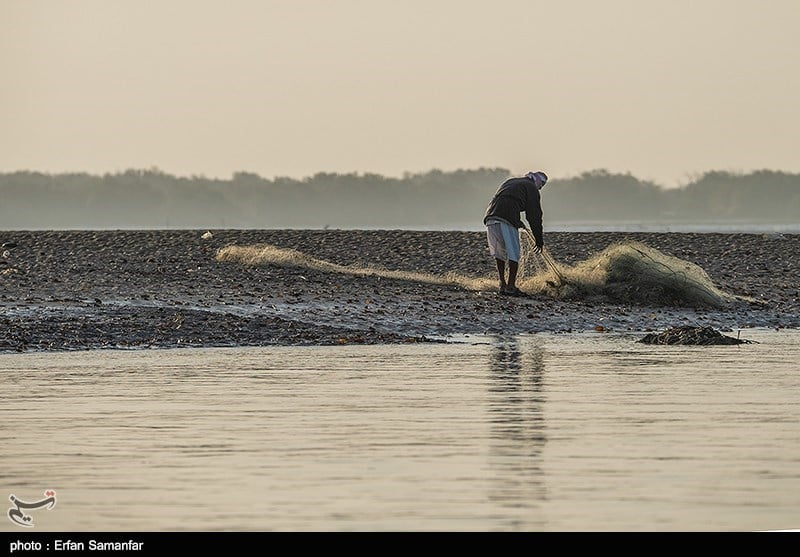
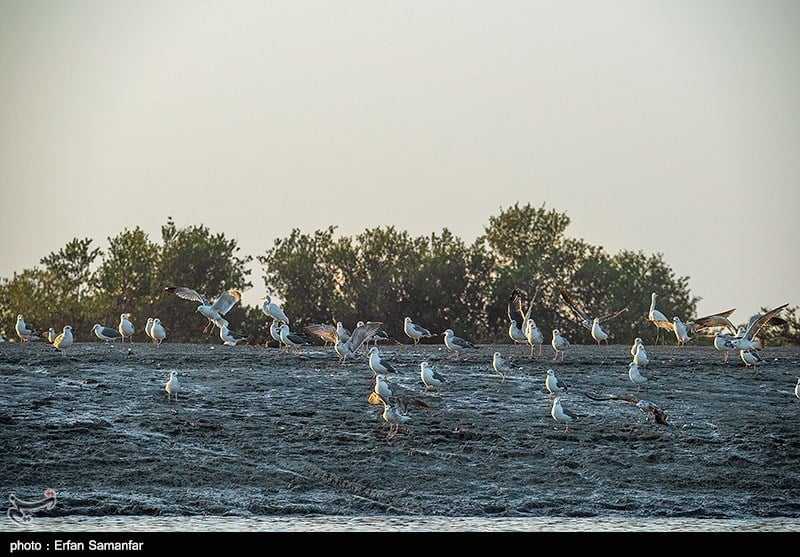
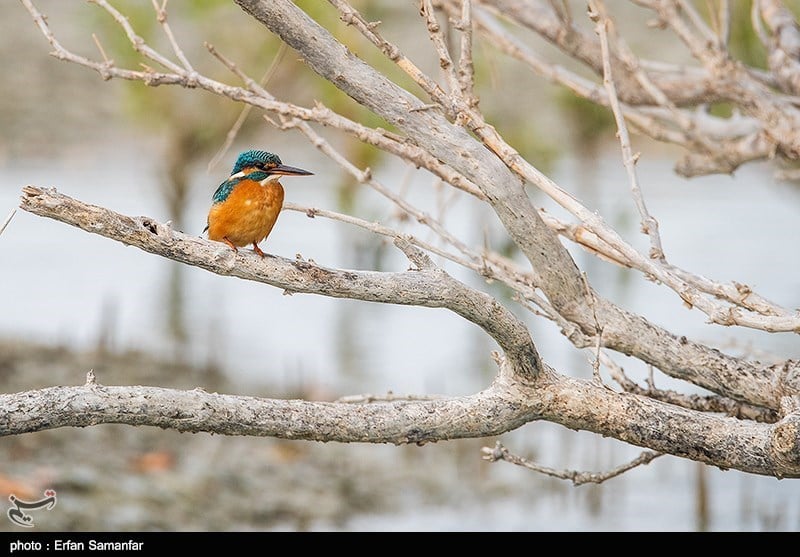
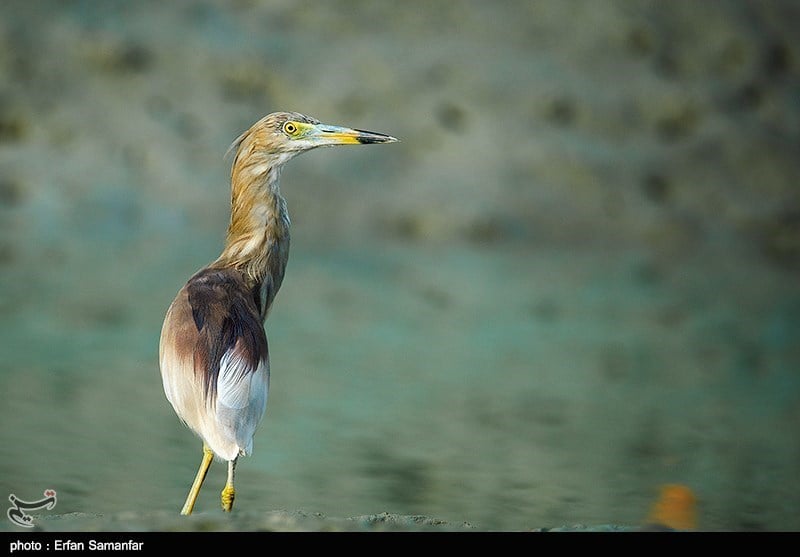
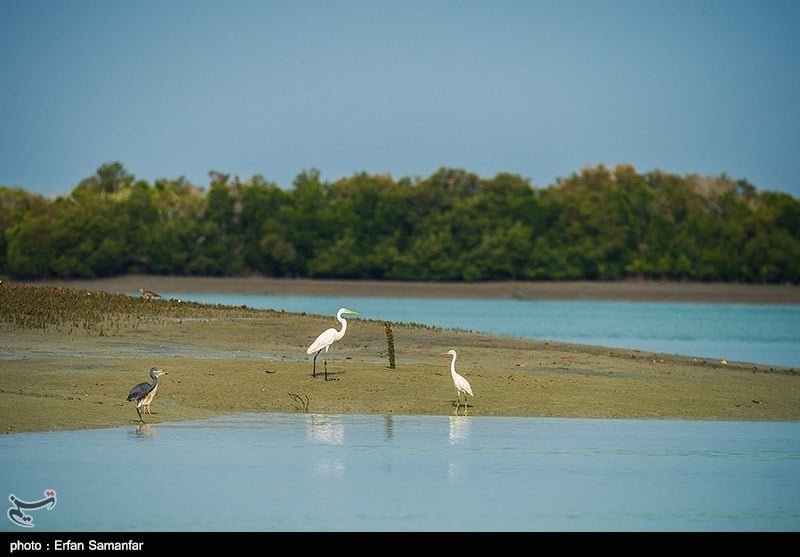
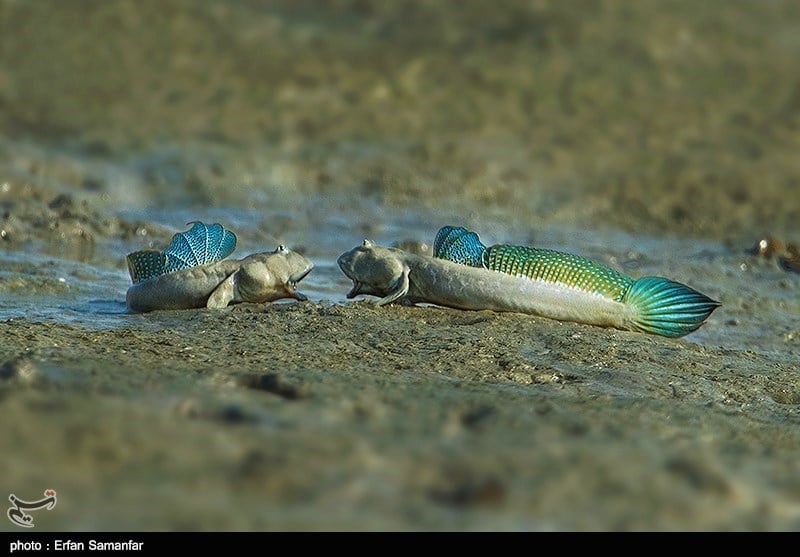
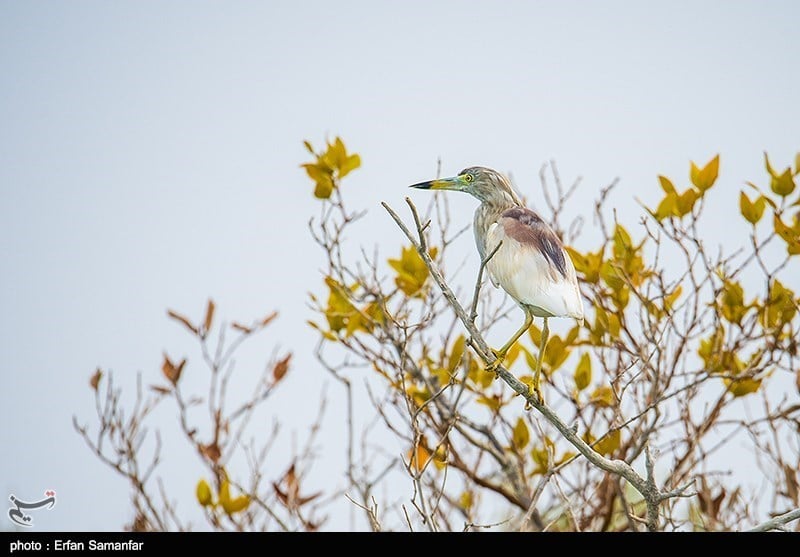
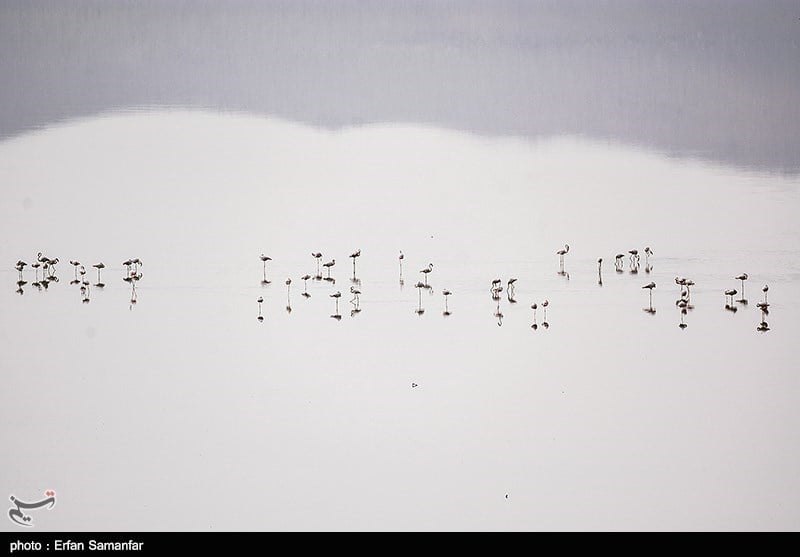
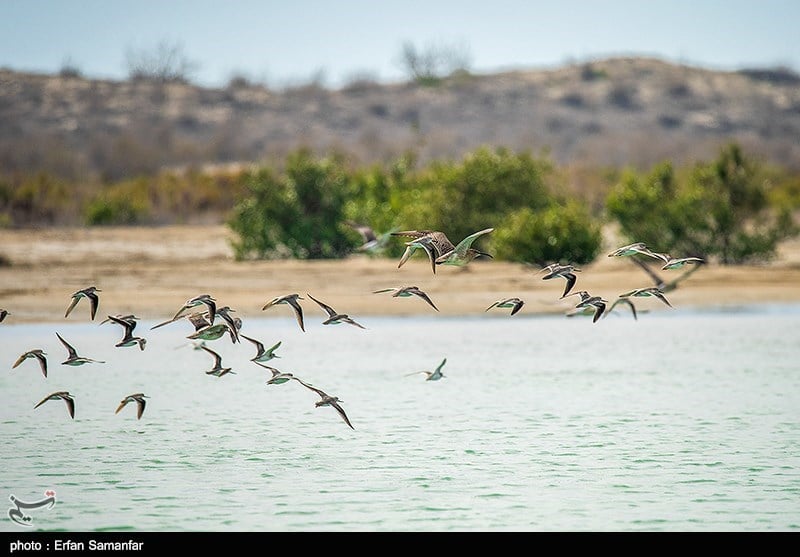
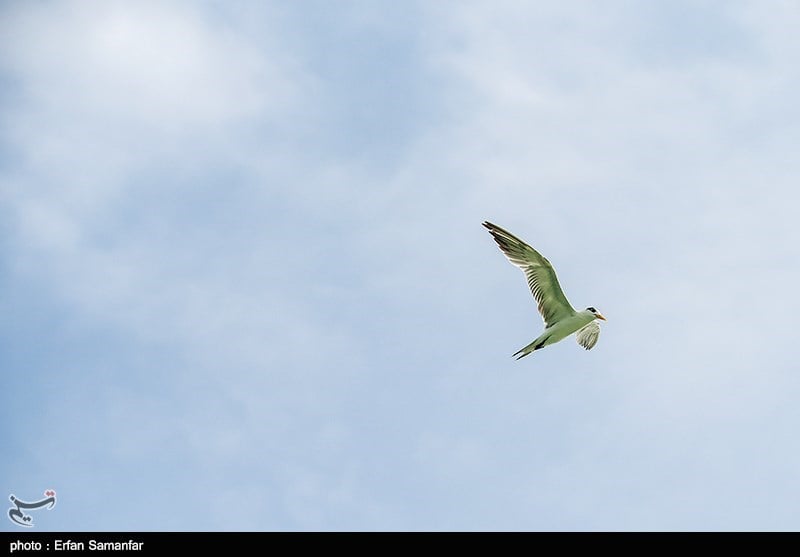
Iran’s Beauties in Photos: Sirik Lagoon

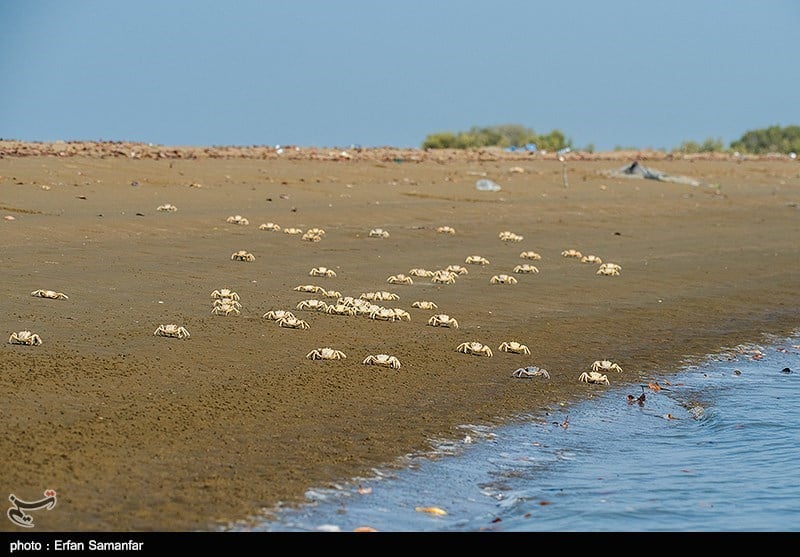
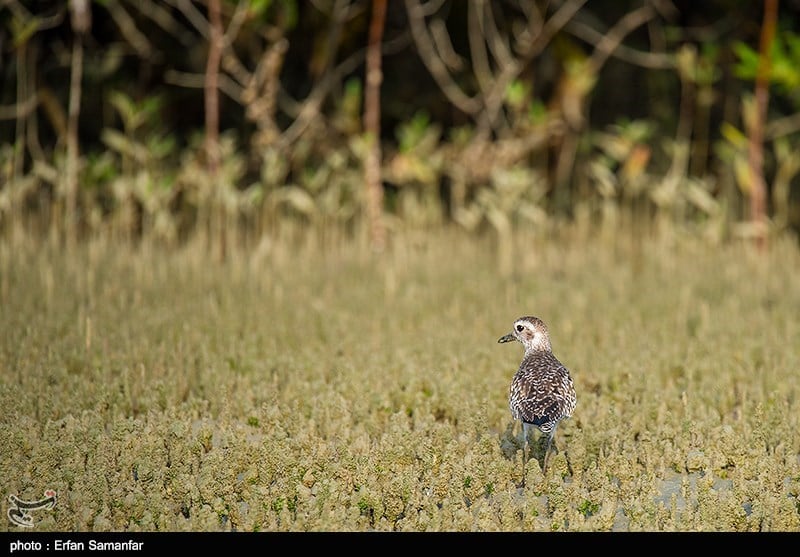
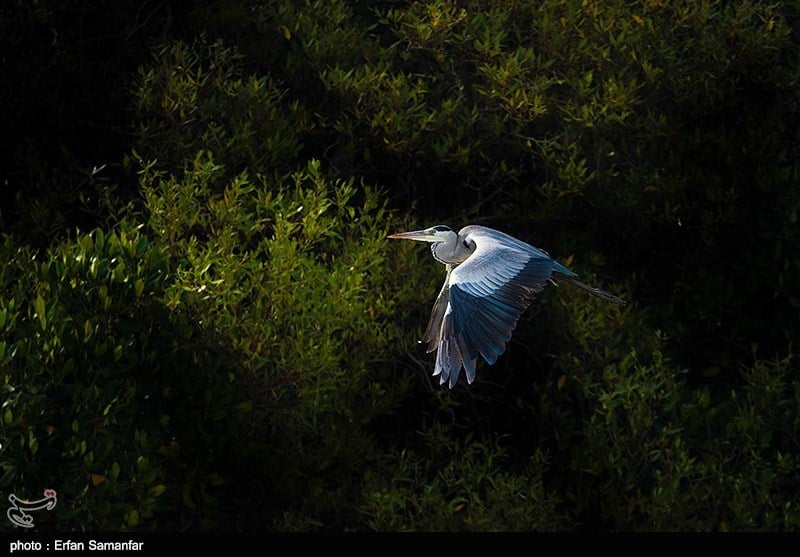
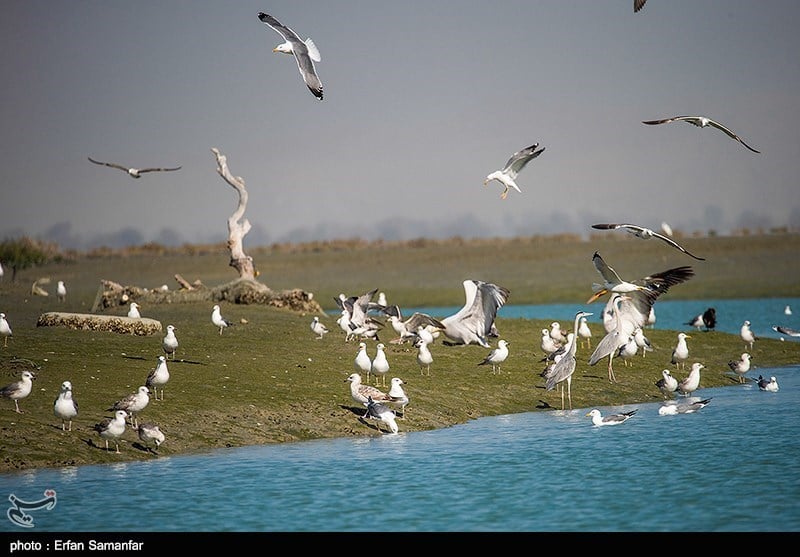
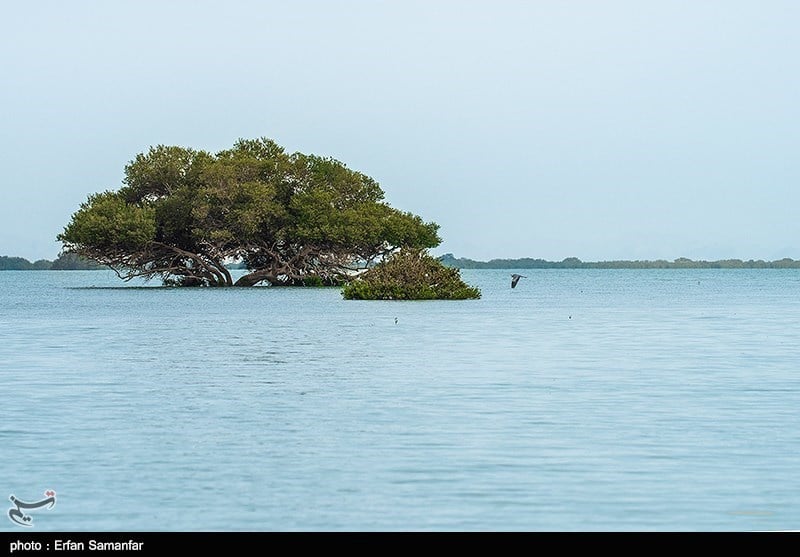
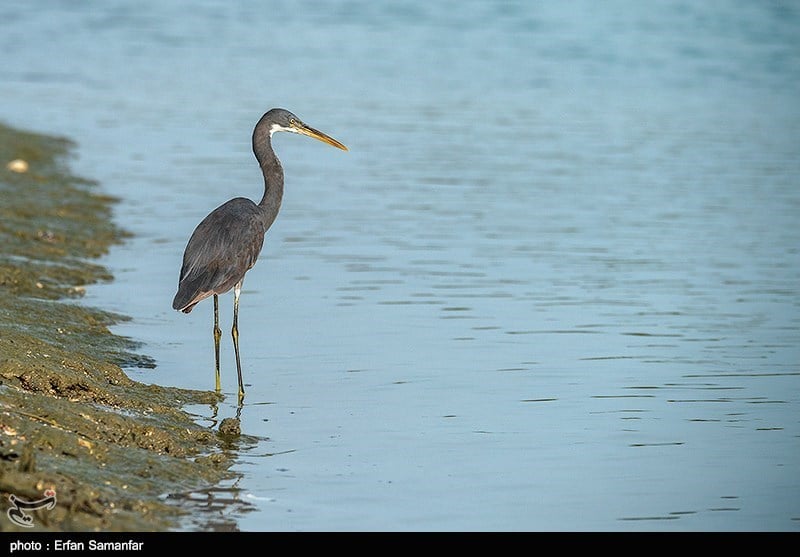
The lagoon is home to a unique mangrove forest with an area of over 500 hectares. It has a great potential to attract domestic and foreign tourists.

The two grey and red species of mangrove that grow up in this wetland appear and disappear with the ebb and flow of the sea. As a result, the lagoon is a breeding ground for aquatic species as well as marine birds.

What you see here are Tasnim News Agency’s photos of Sirik Lagoon:

Girls with Intellectual Disability Thrilled to Meet Famous TV Host

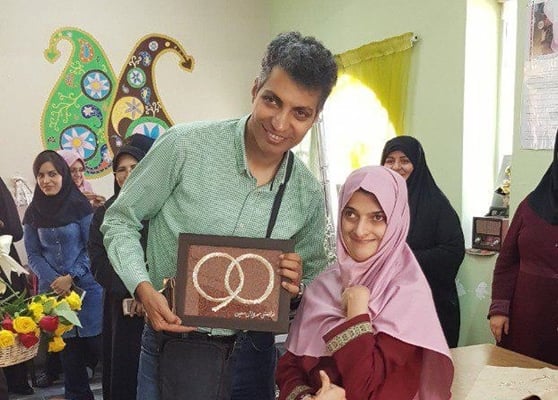
On the first day of the new school year, Adel Ferdowsipour surprised a group of girls with intellectual disability, but got shocked at the girls’ intense love for football when meeting them.

Despite their mental retardation, the girls are learning different skills at the institute as a ray of hope for their families.

On the first day of the school year, the girls hosted Ferdowsipour, the most famous football commentator as well as the host of the most popular football program in Iran, Navad (90), aired on national TV weekly.

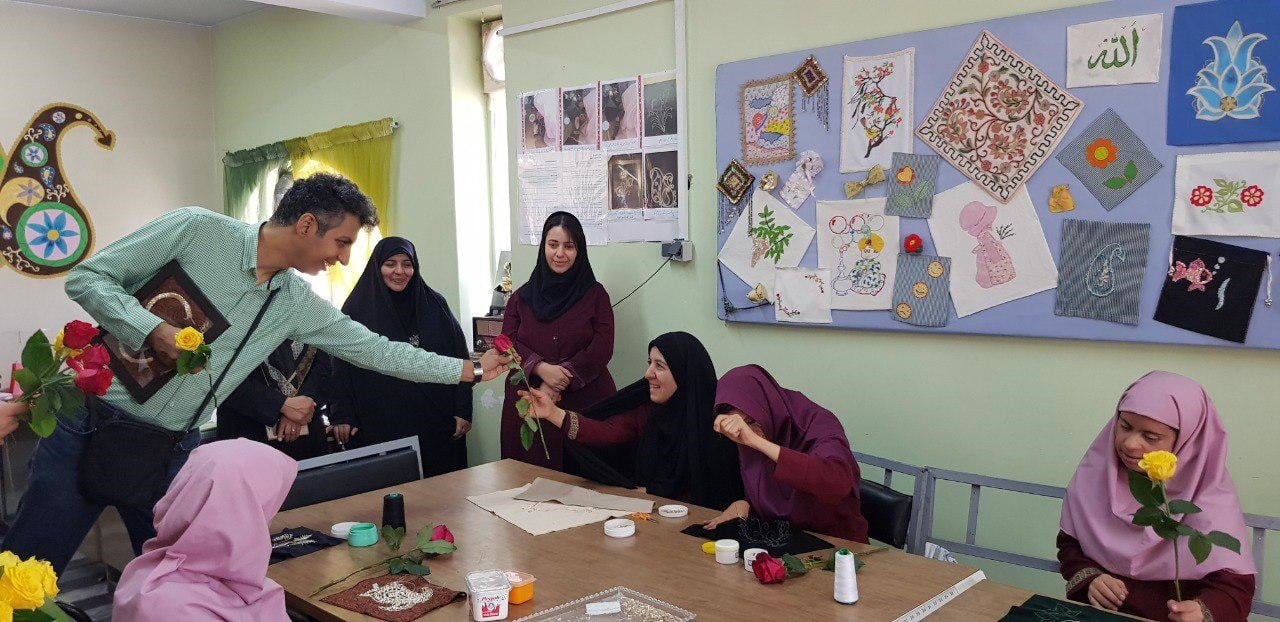
He saw for himself the activities of the girls in different classes, from sewing to leatherwork to painting. He also listened to what their teachers and instructors had to say.

The girls recited poems to him, gave him the needlework logo of the Navad program as a gift, and took group photos with him.

Girls with Intellectual Disability Thrilled to Meet Famous TV Host

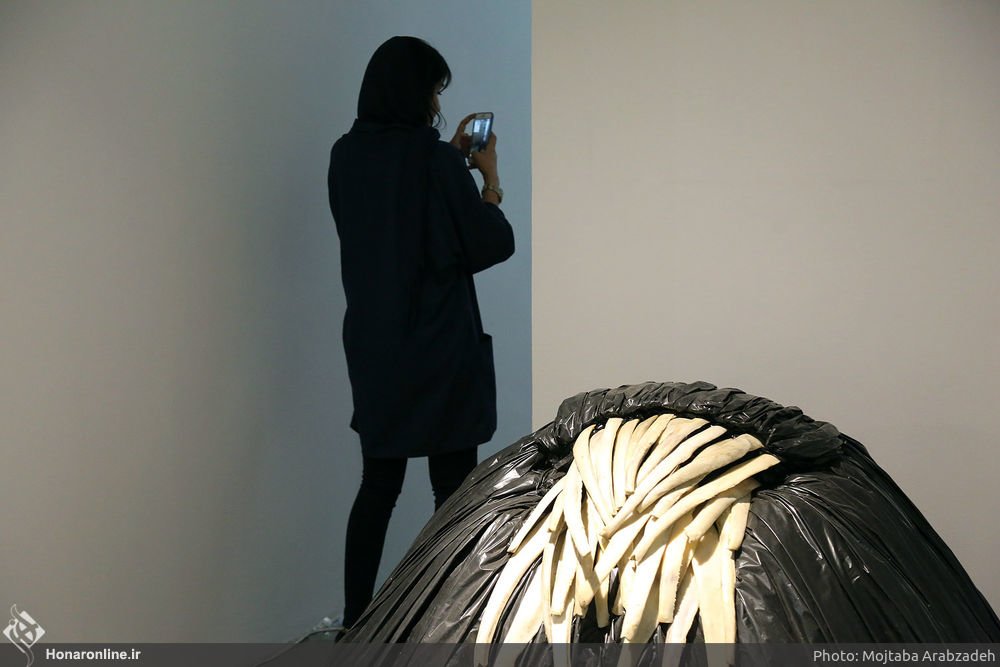
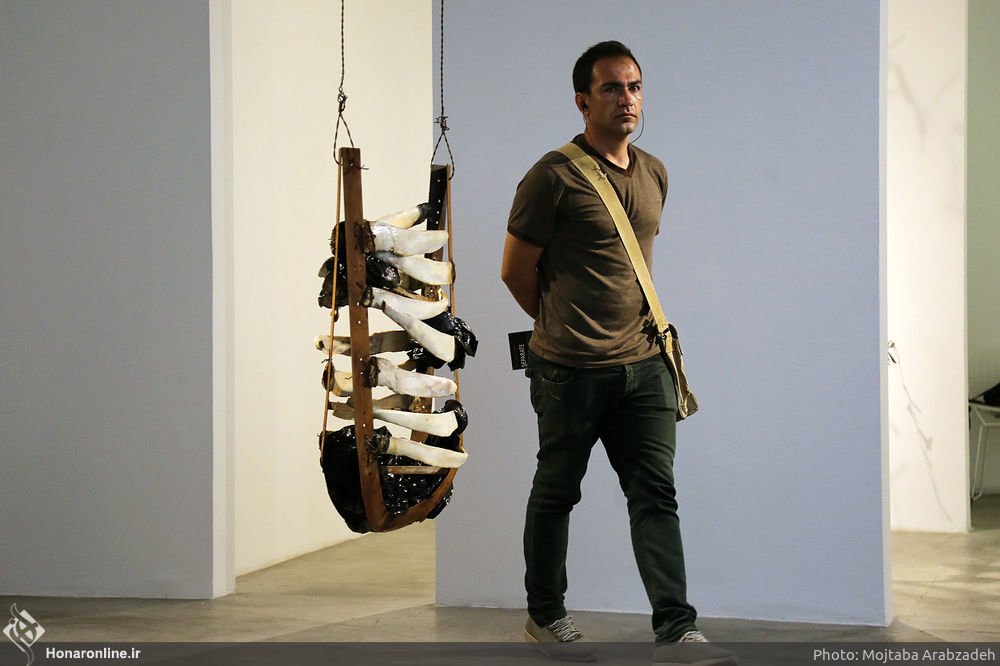
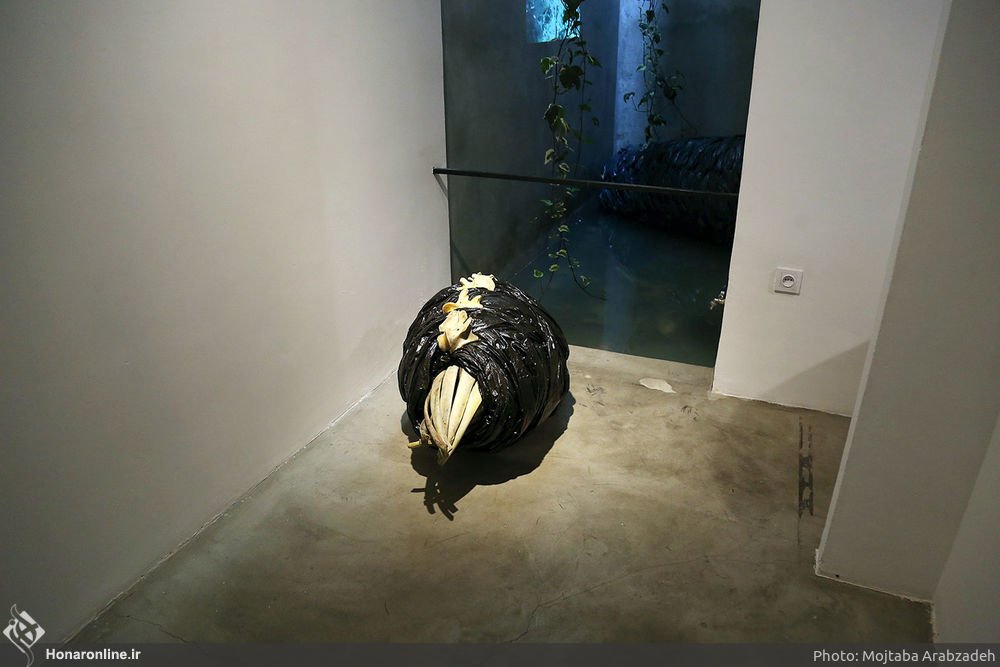
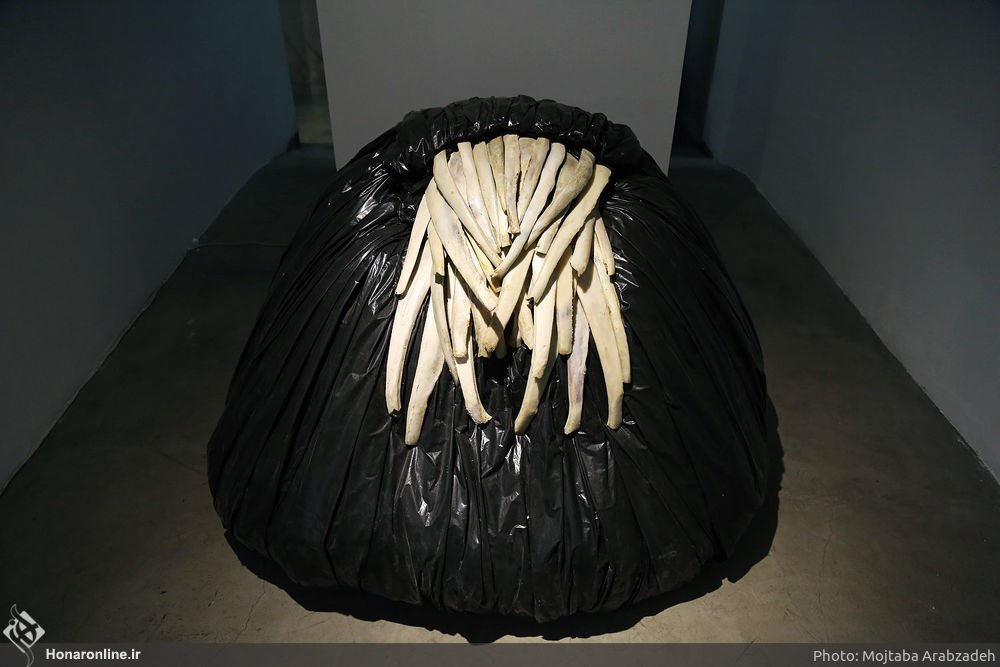
Iranian Artist Uses Plastic Bags to Give Environmental Warning

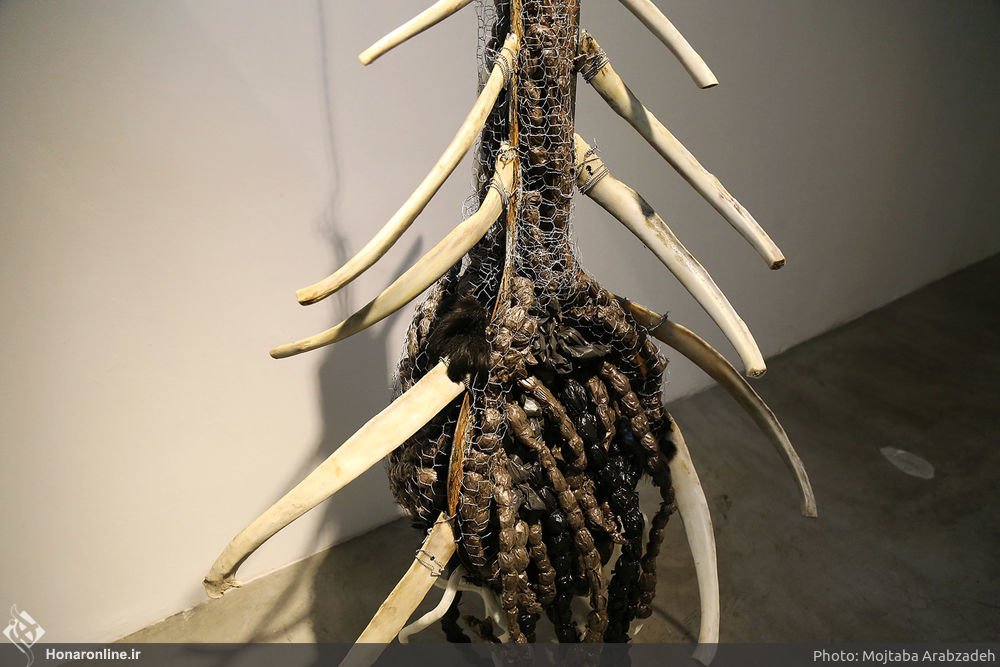
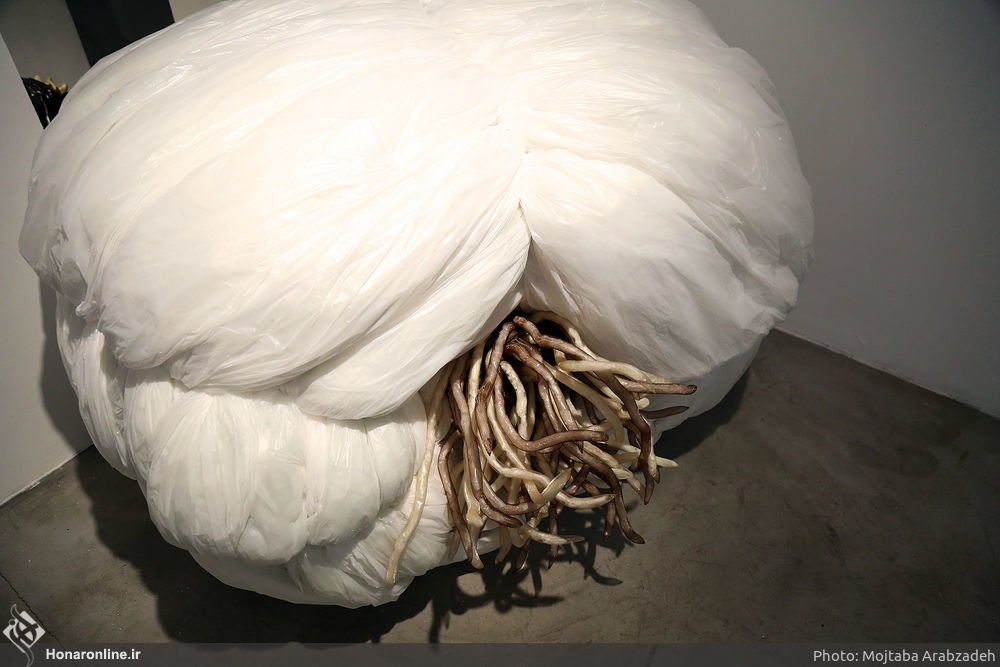
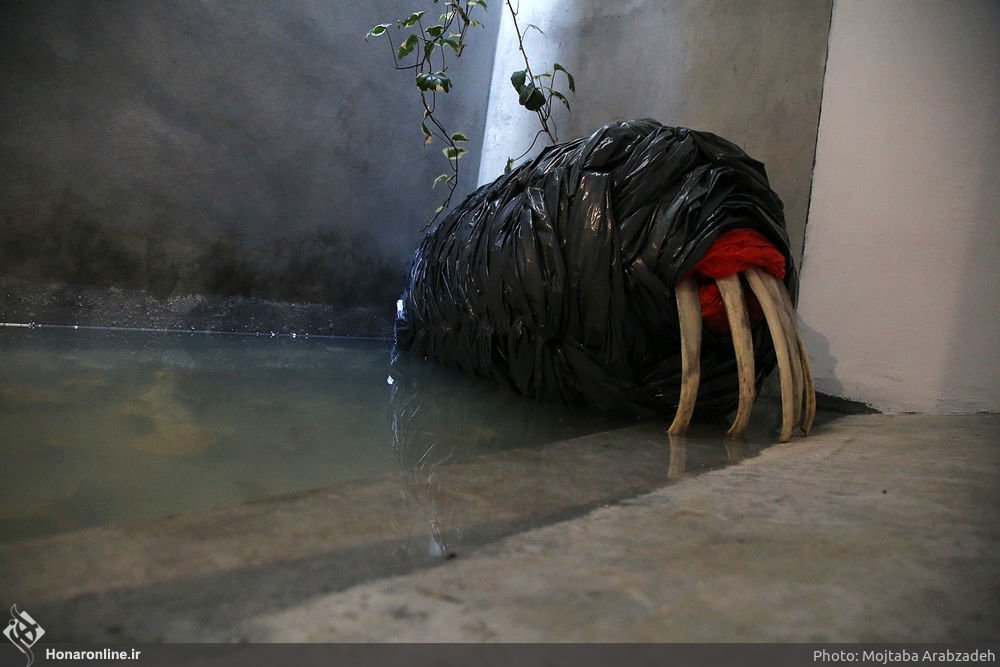
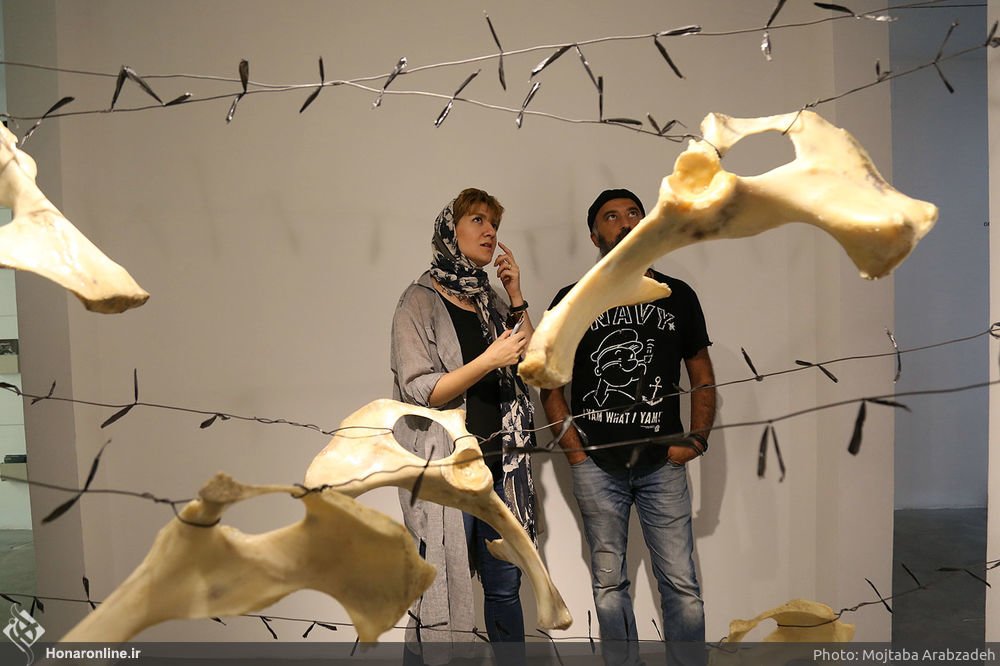
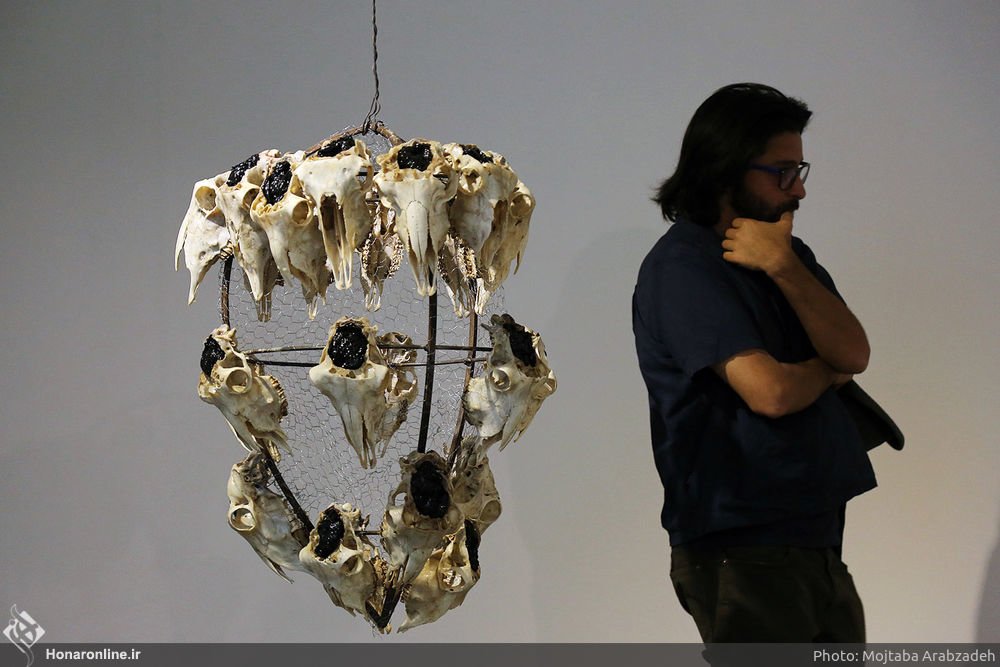
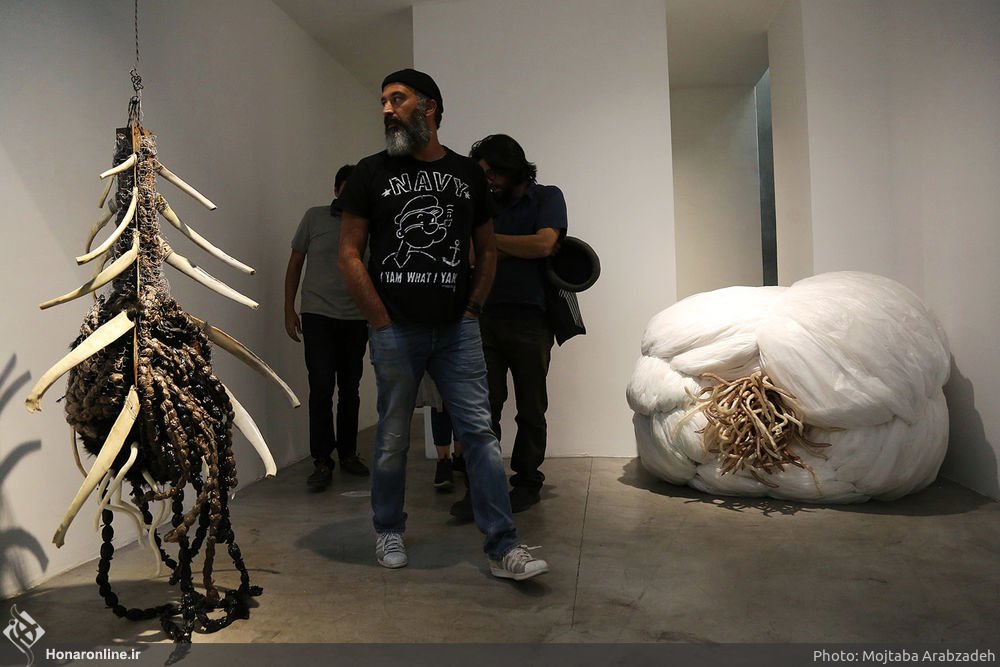
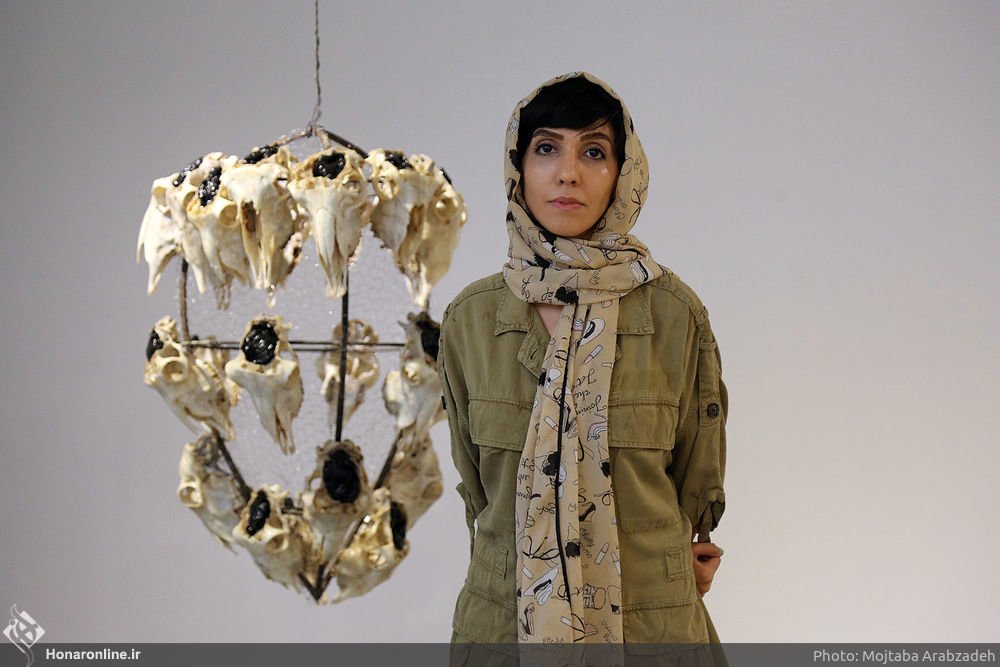
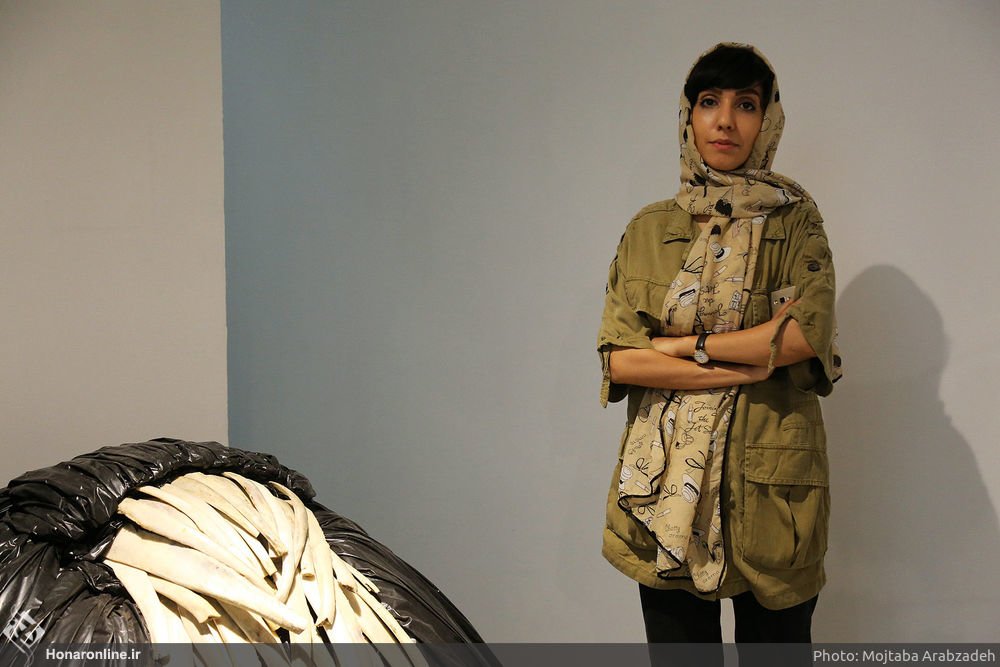
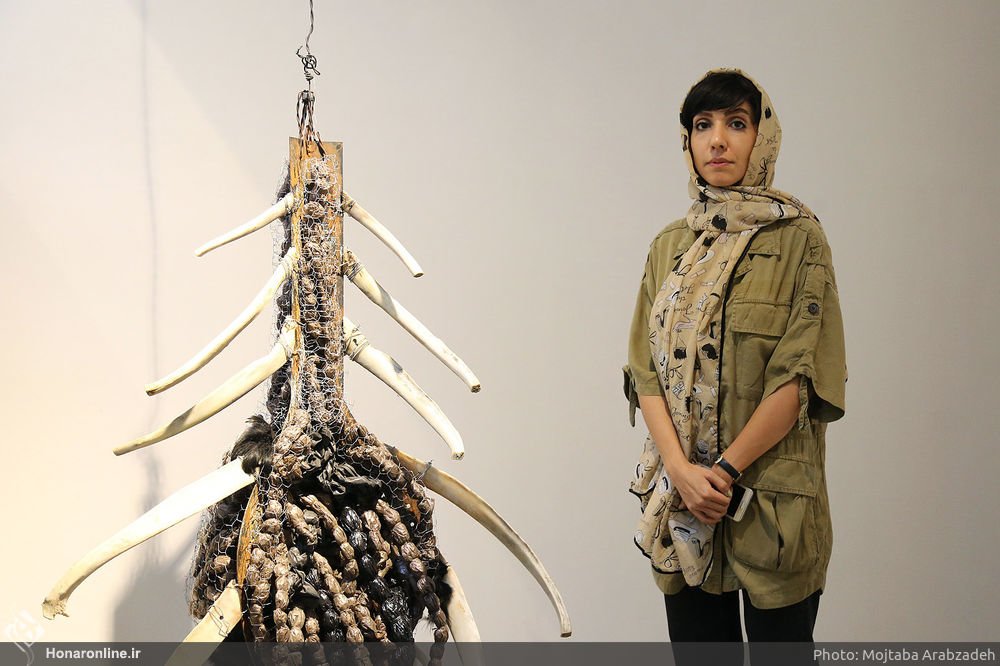
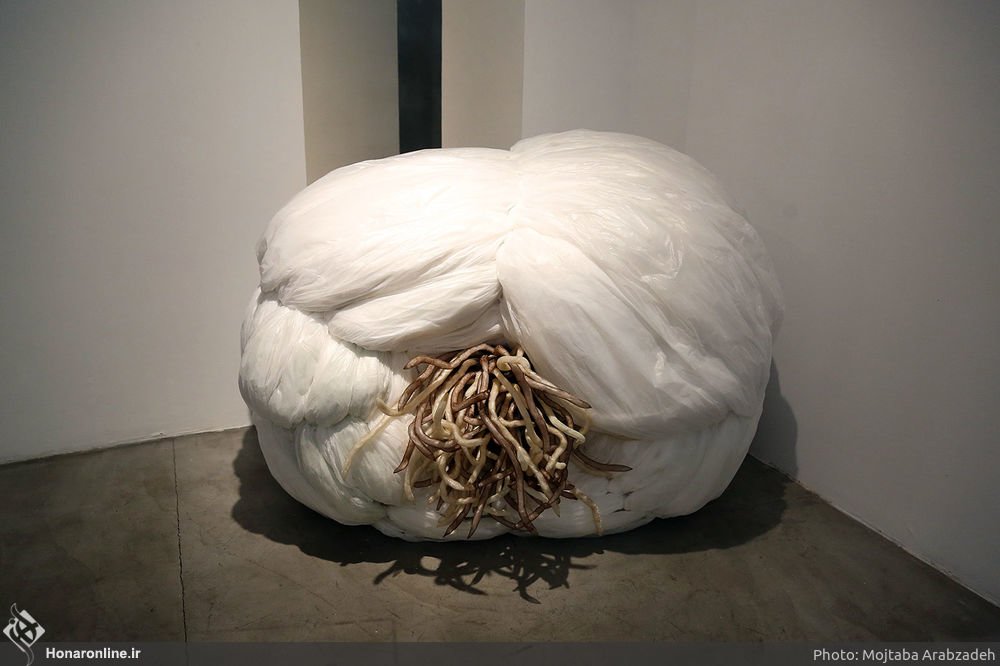
In her exhibition, Noushin Sharifat used plastic bags to create special shapes showing some dead animals that are either buried in the bags or carrying them in their bodies.

Titled “Indifference”, the exhibition was recently held in Tehran’s Sayeh Gallery with the aim of sending this clear message to the visitors that with the current excessive use of plastic bags, nothing but death is awaiting the animals around us.

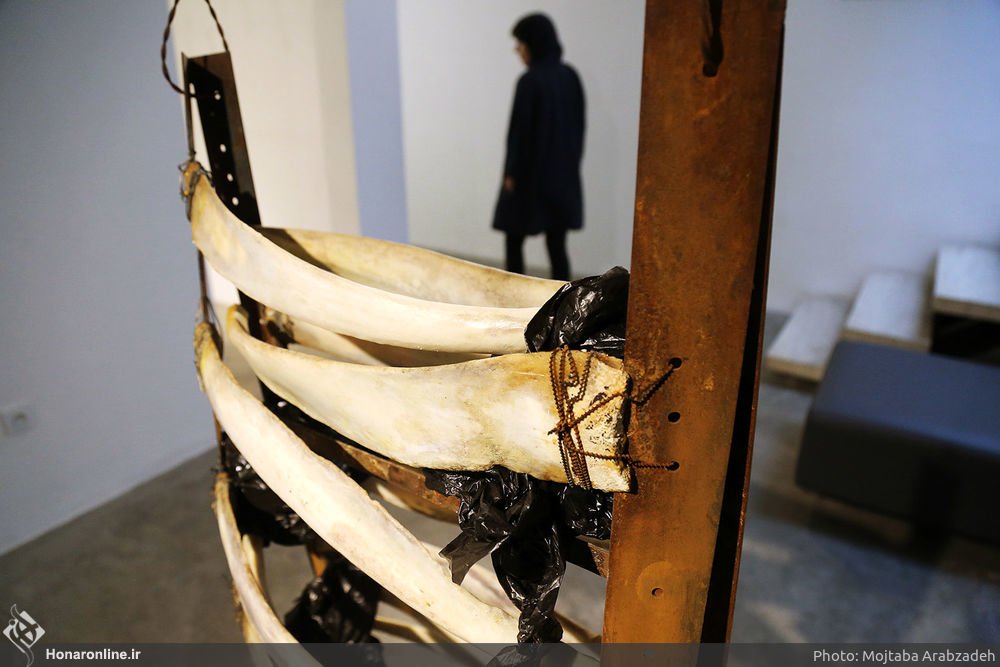
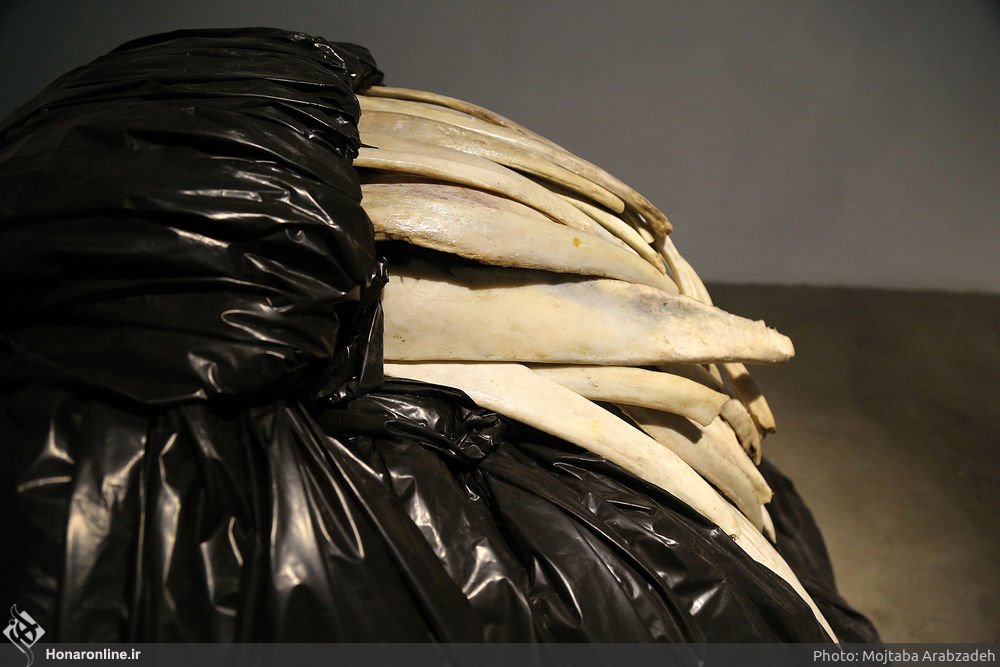
Black and white plastic bags mainly used in our daily lives are the sole material used in the exhibition. Sharifat’s artistic pieces have been arranged in a special way to raise awareness about the death of animals around us by our excessive use of plastic bags.

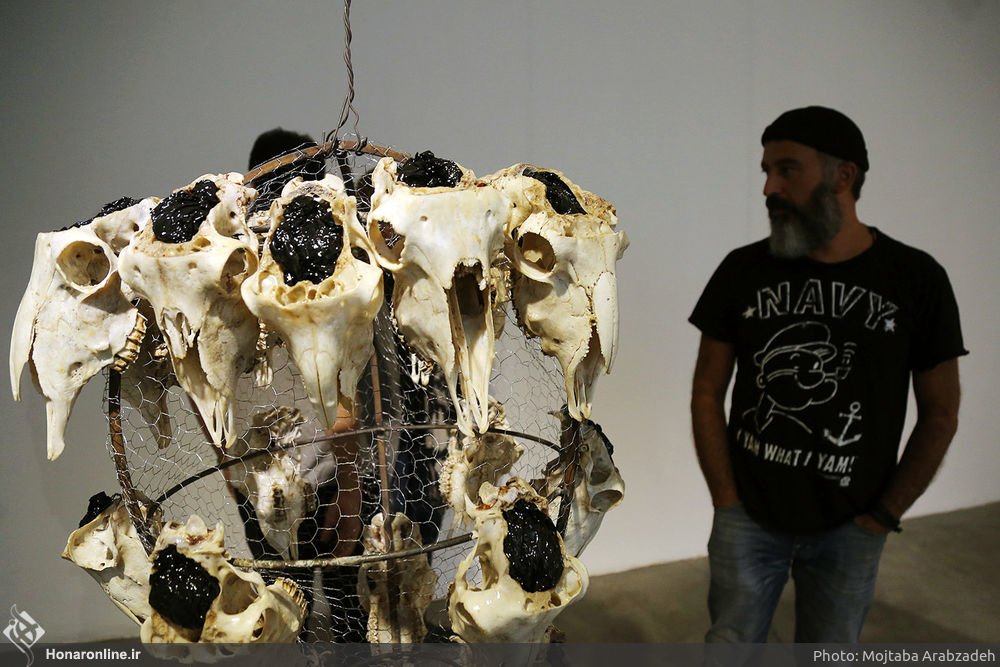
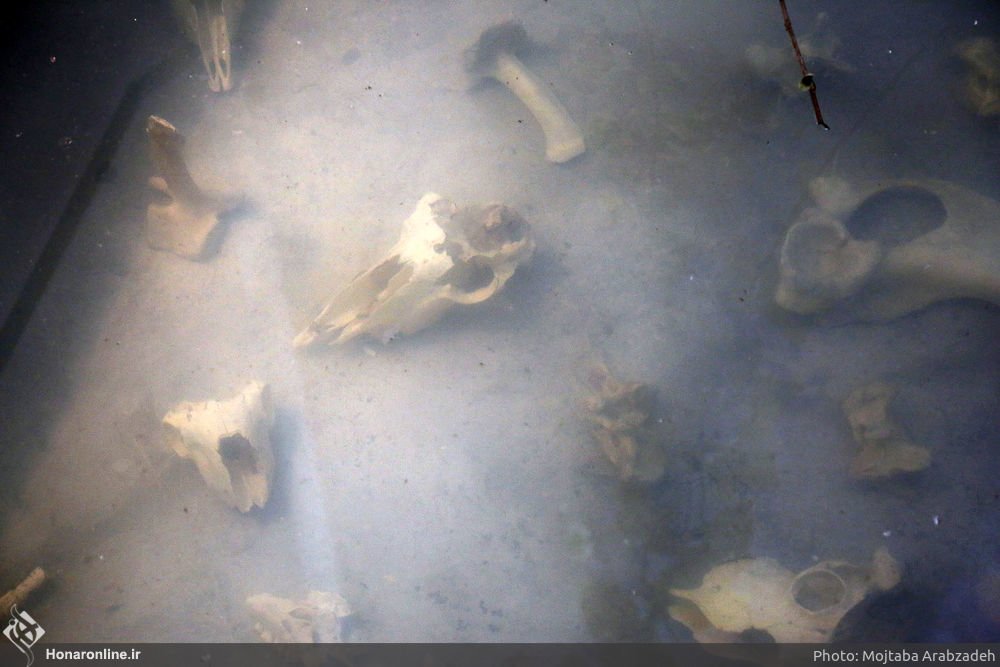
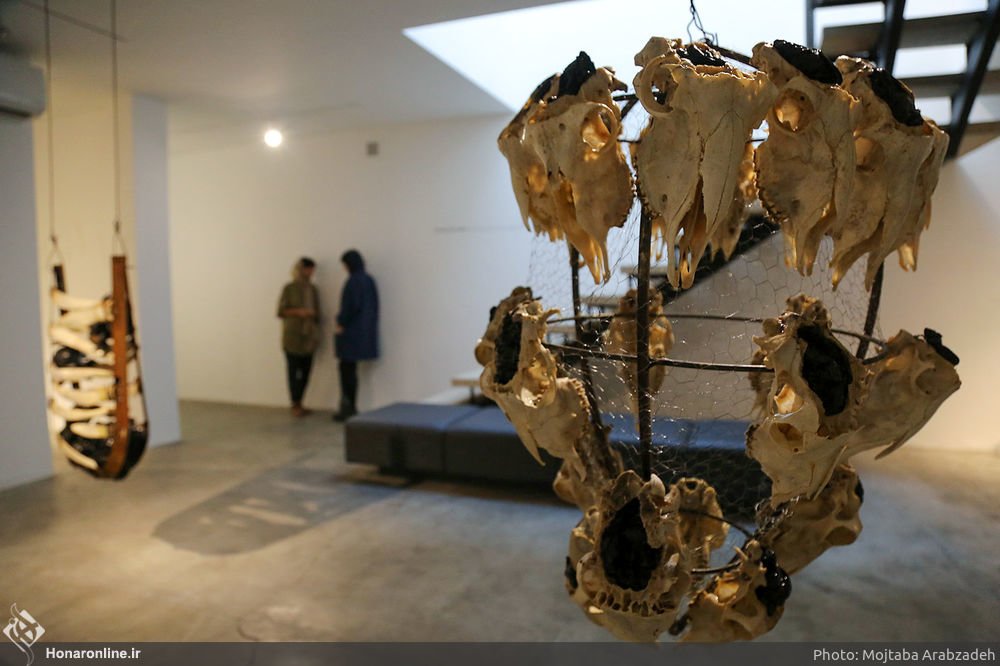
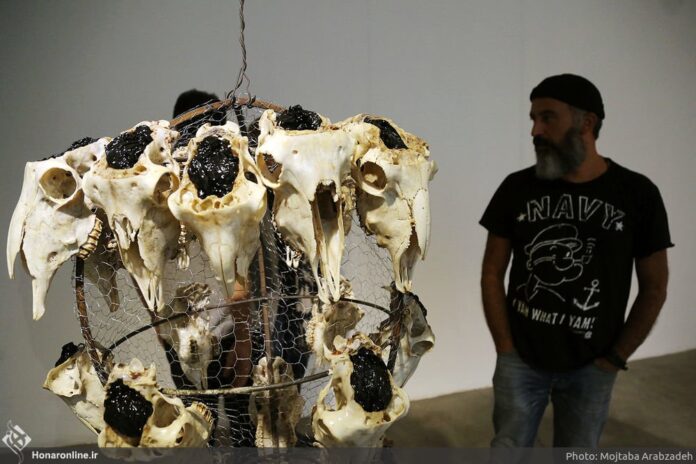
The arrangement of the skeletons of the animals in the bags creates some strange shapes turning the exhibition into a shocking one for some visitors.

Use of real skeleton instead of artificial and hand-made shapes encourages the visitors to look for a logical connection among various parts and concepts of each piece.

A general view of the exhibition warns the visitors that they are facing an environmental issue. The damages inflicted on the environment and human’s negative impacts on the nature and the wild life were the main focus of the exhibition.

The plastic bags used excessively by human beings are highly visible in the creation of each piece. The bags left in the nature or thrown into the seas by the people pave the way for the deaths of many animals.

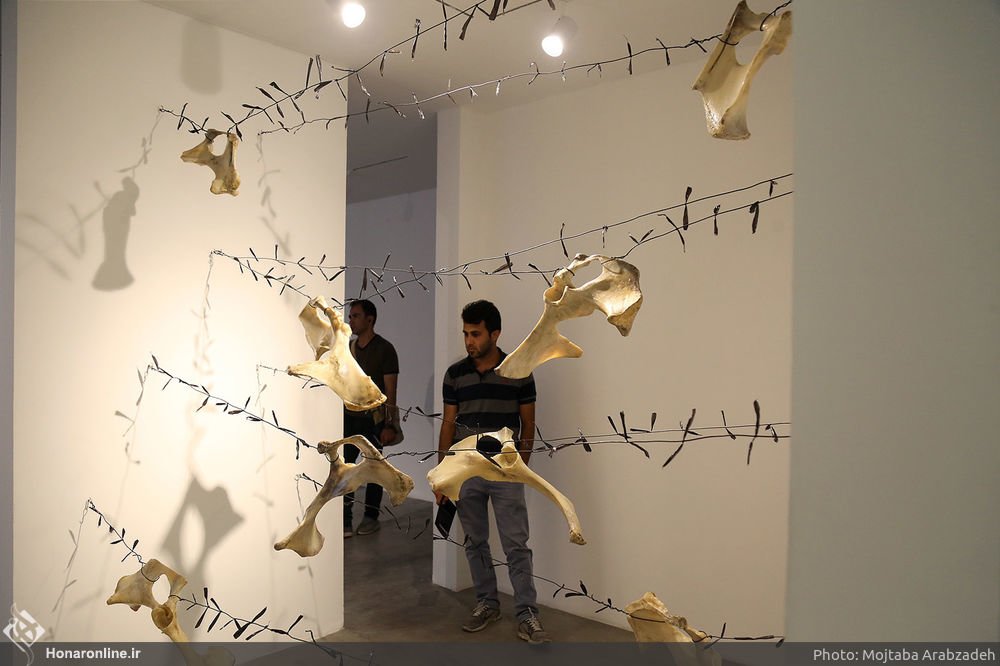
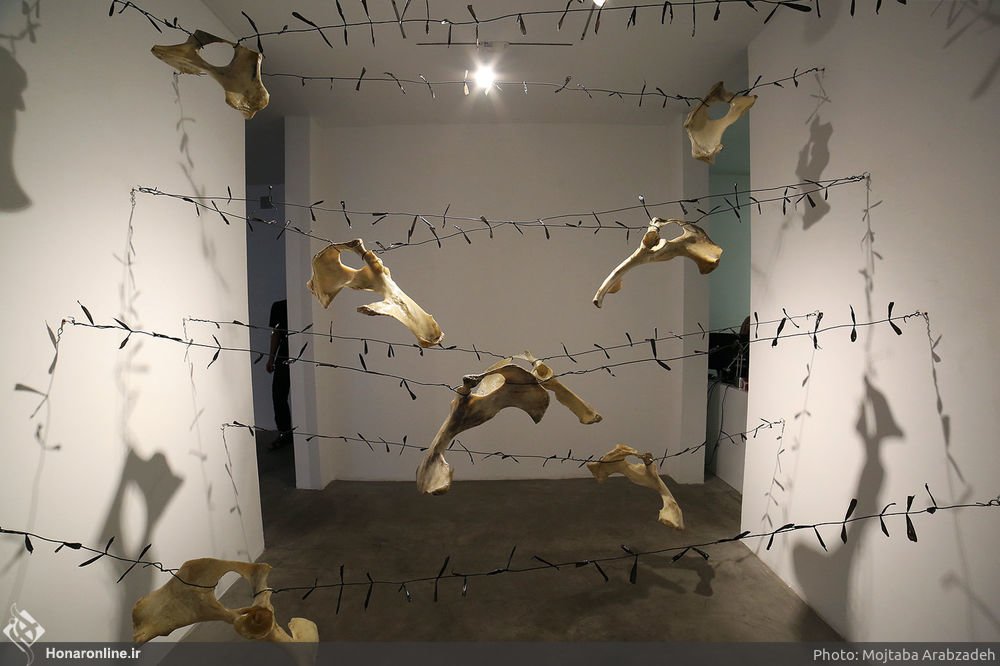
Sharifat has also used some animal sculls on a piece of barbed wire pointing to the human’s dominance over the nature, limitation of animals’ freedom and restriction of their life-space.

The exhibition was wrapped up on September 26.

What follows are photos of the exhibition, retrieved from

A Look at Iranian Newspaper Front Pages on October 7

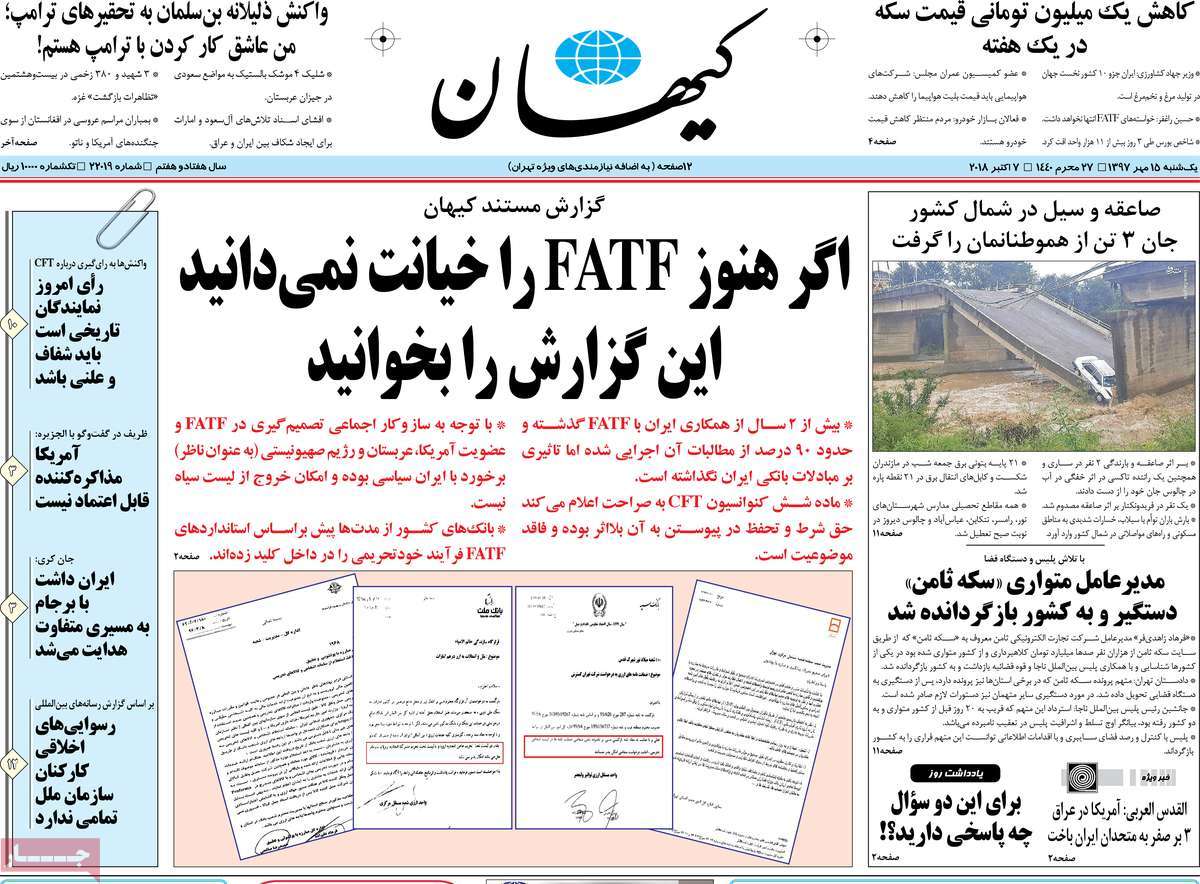
A Look at Iranian Newspaper Front Pages on November 19

All papers today covered the Parliament’s Sunday session to discuss a bill proposed by the administration of President Hassan Rouhani to adopt the Combating the Financing of Terrorism (CFT).

Ratifying the bill is necessary for getting the country out of the Financial Action Task Force (FATF)’s blacklist; however, conservatives are strongly opposed to the efforts, arguing they would undermine the country’s security and economy.

Also a top story was the heavy rainfall and floods in northern Iran, which have so far killed seven people and wounded many more, and destroying many houses and bridges.

Remarks by Saudi Crown Prince Mohammed bin Salman, in an interview with Bloomberg, about his country’s ties with Iran and the US also received great coverage.

The above issues, as well as many more, are highlighted in the following headlines and top stories:


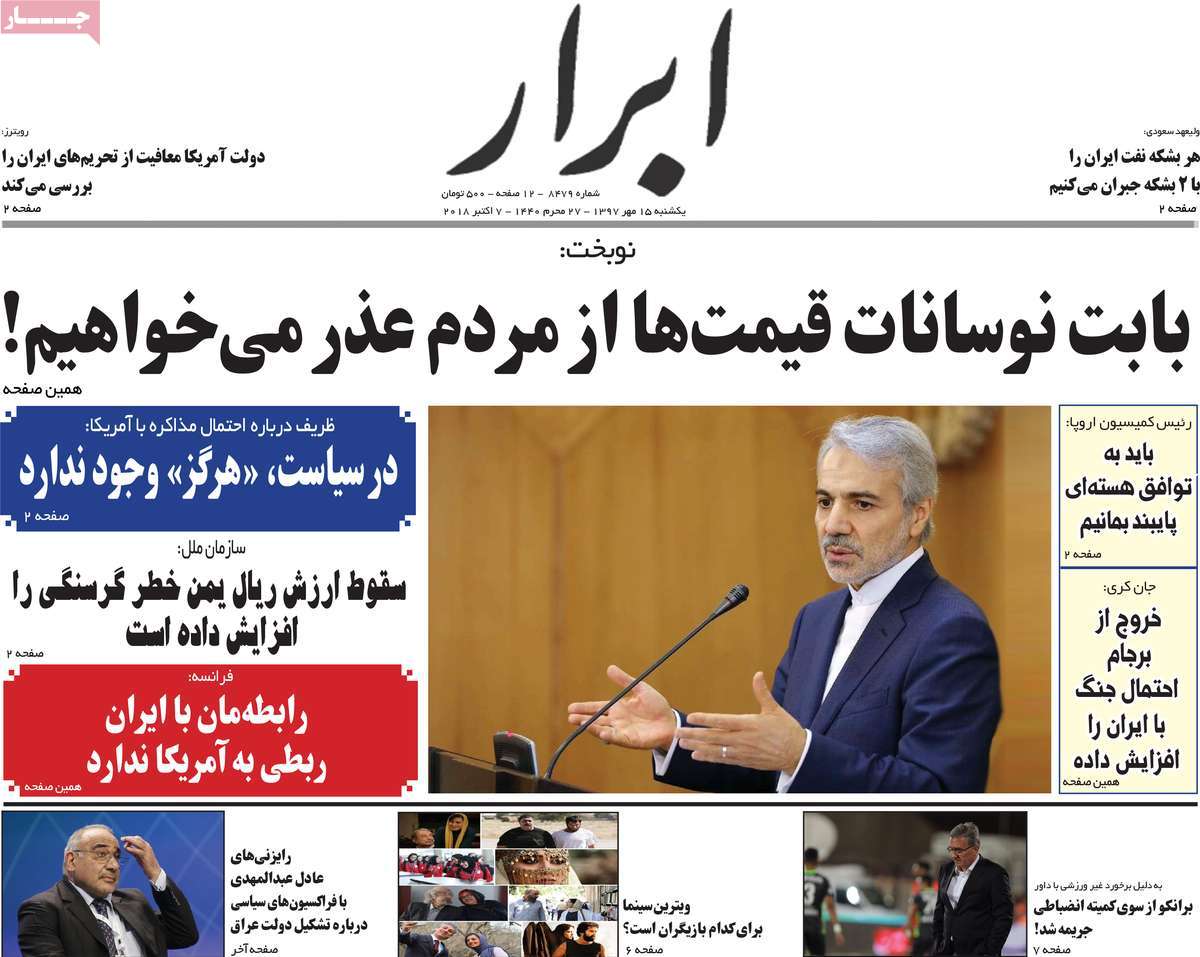
Abrar:

1- Saudi Crown Prince: We’ll Sell Two Barrels for Each Iranian Barrel to Compensate for Deficit

2- France: Our Ties with Iran Have Nothing to Do with US

3- Zarif on Talks with US: Never Say ‘Never’ in Politics
A Look at Iranian Newspaper Front Pages on October 7


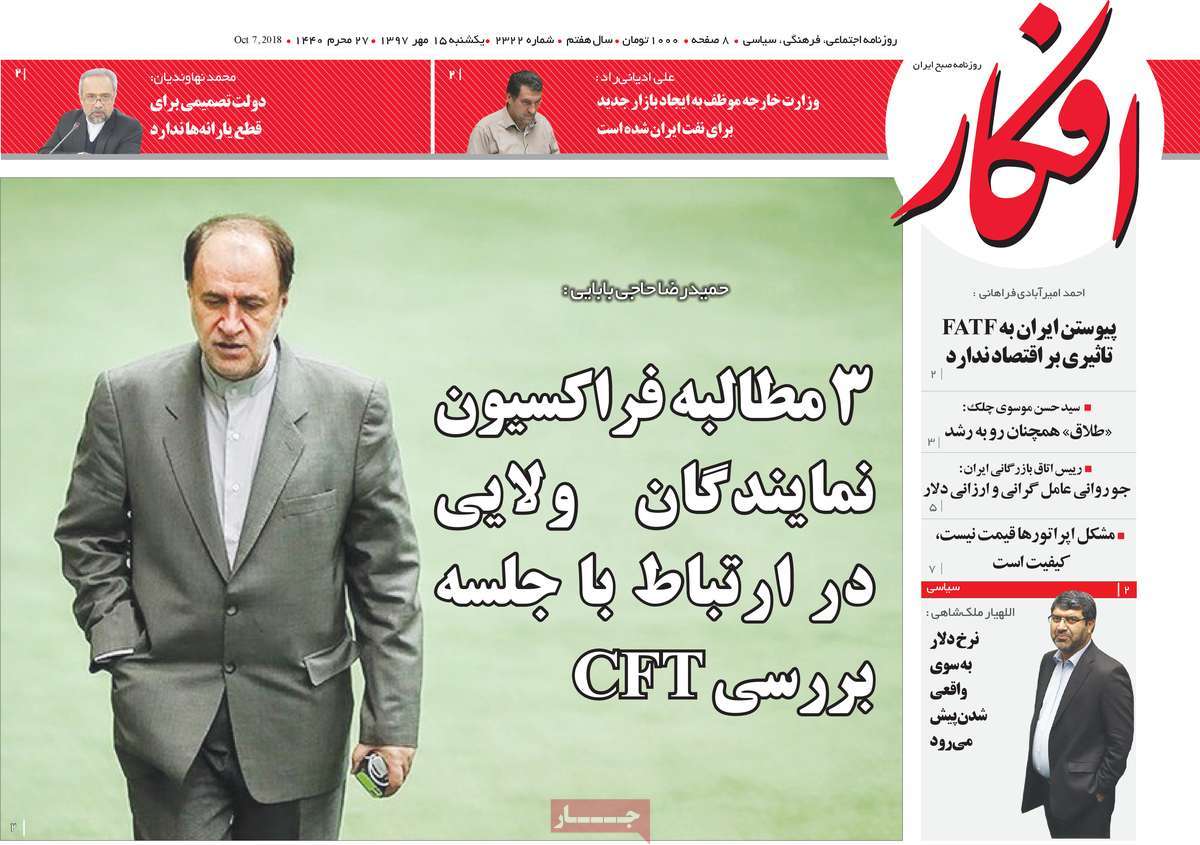
Afkar:

1- Iran’s Adoption of FATF Standards Not to Impact Economy: MP

2- Conservative Lawmakers Have Three Demands Regarding CFT
A Look at Iranian Newspaper Front Pages on October 7


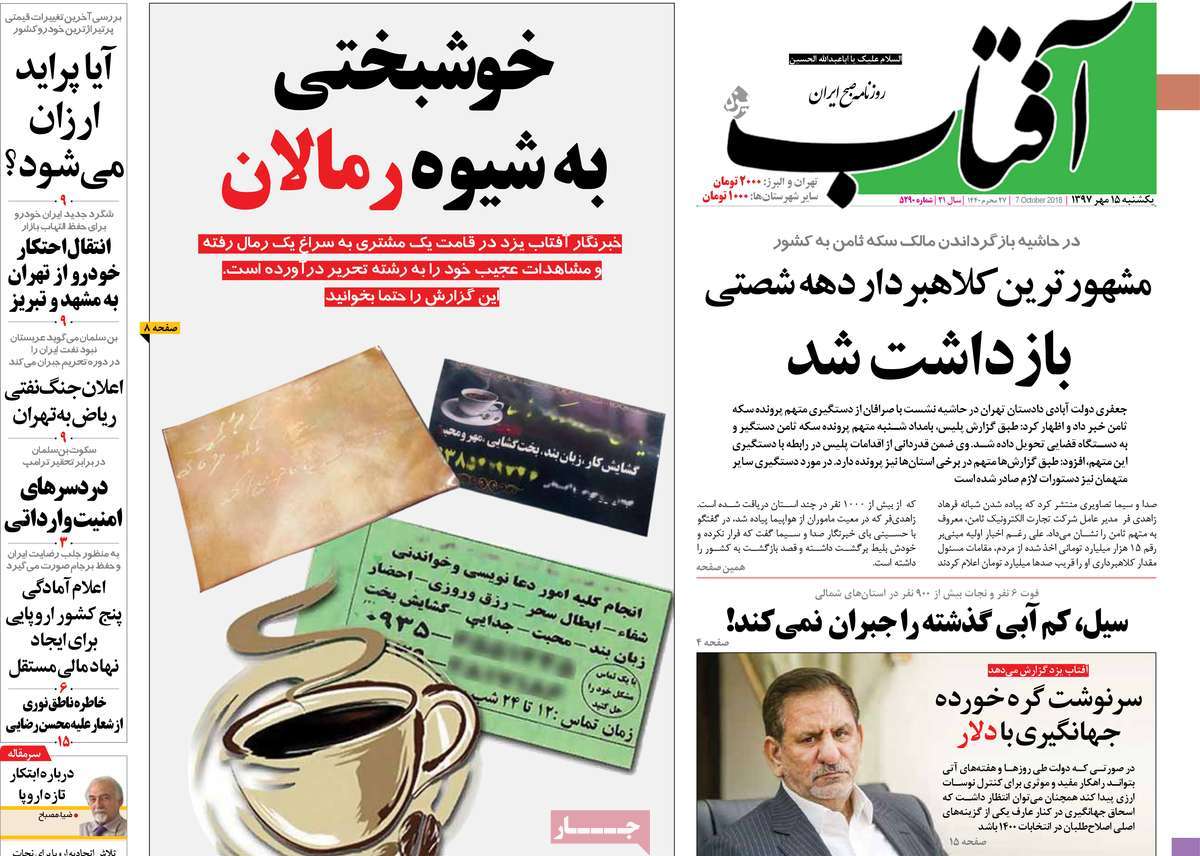
Aftab-e Yazd:

1- Floods Won’t Compensate for Water Shortage

  • Six Killed, 900 Rescued in Northern Provinces

2- Riyadh Declares Oil War against Tehran

  • Bin Salman Says Saudi Arabia Will Compensate for Lack of Iran’s Oil
A Look at Iranian Newspaper Front Pages on October 7


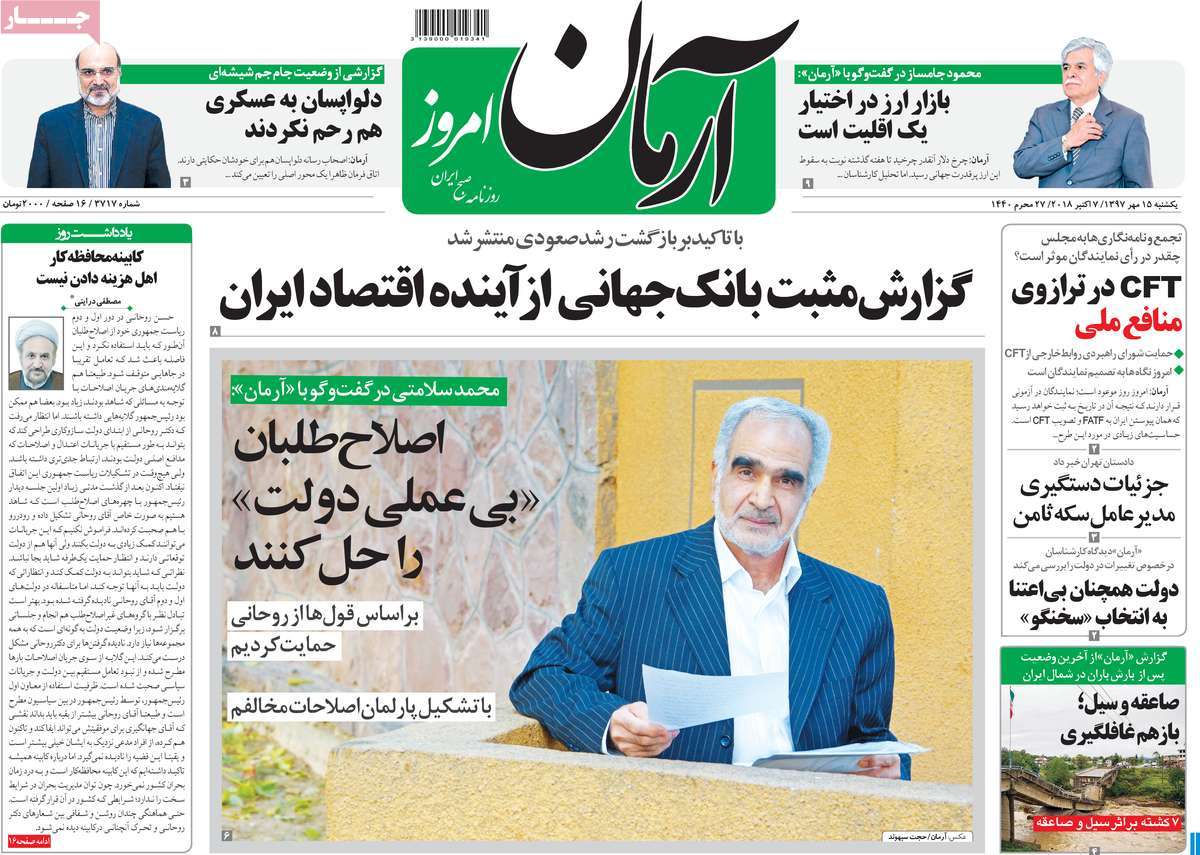
Arman-e Emrooz:

1- World Bank Releases Positive Report on Future of Iran’s Economy

2- CFT to Be Measured against National Interests

  • How Much Protests, Letters to Parliament Will Affect MPs’ Vote?
A Look at Iranian Newspaper Front Pages on October 7


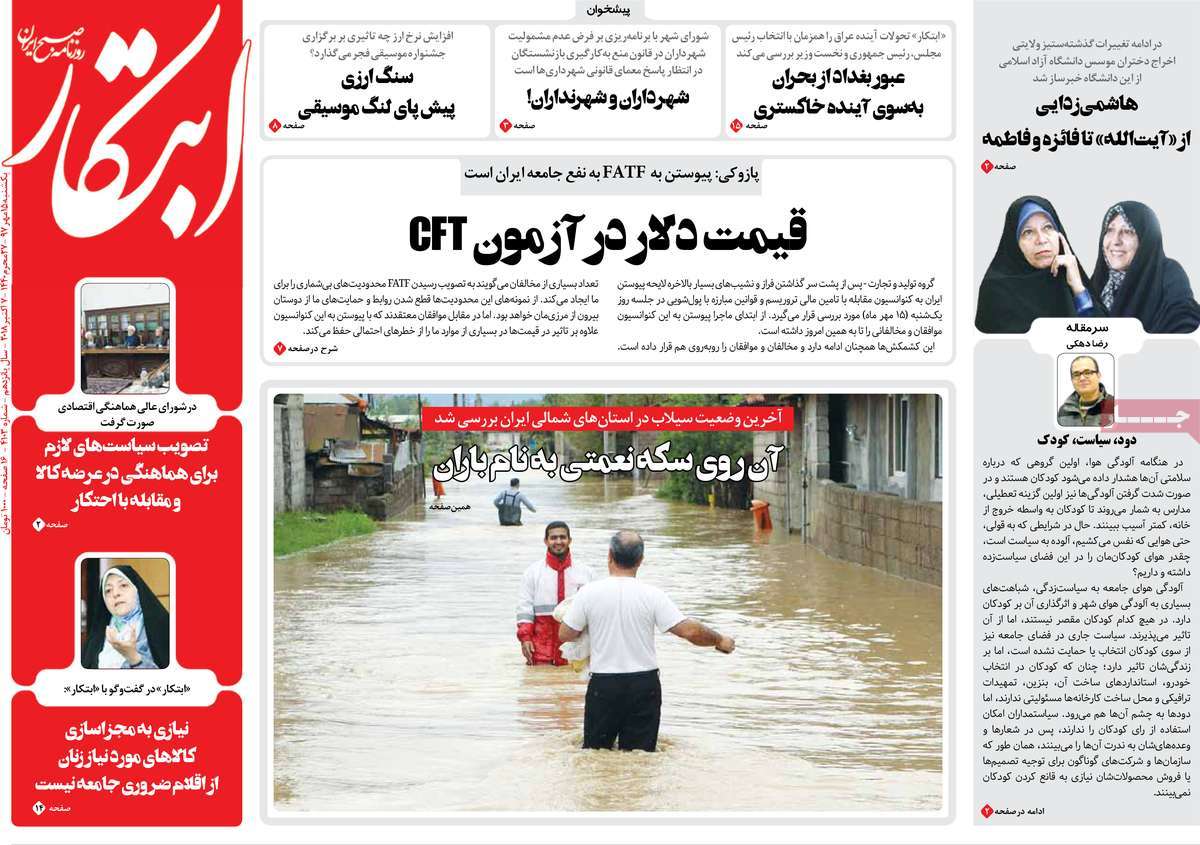
Ebtekar:

1- Other Side of a Coin Called ‘Rainfall’: Flood Hits Northern Iran

2- Dollar Rates to Change after Parliament’s Session on CFT Bill
A Look at Iranian Newspaper Front Pages on October 7


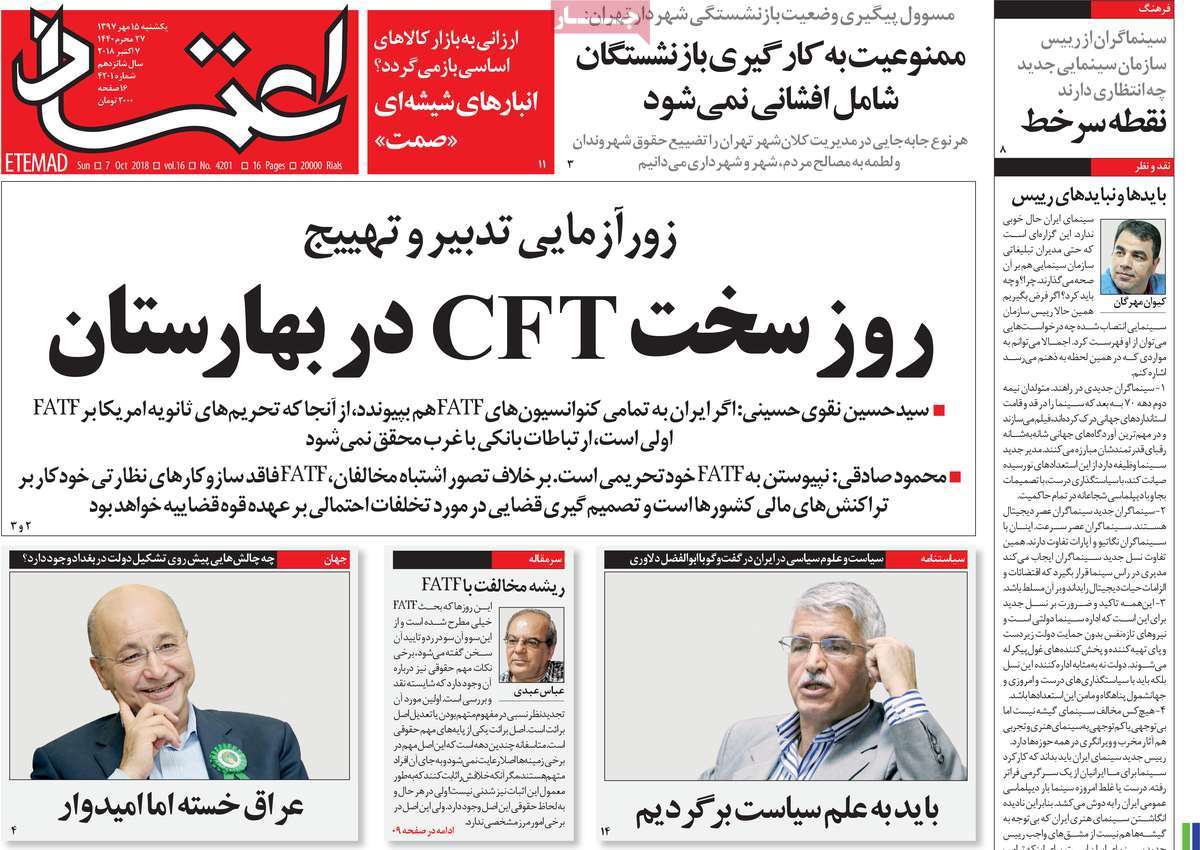
Etemad:

1- Hard Day of CFT in Parliament

2- Roots of Opposition to FATF [Editorial]

3- Iraq Tired or Hopeful
 

A Look at Iranian Newspaper Front Pages on October 7


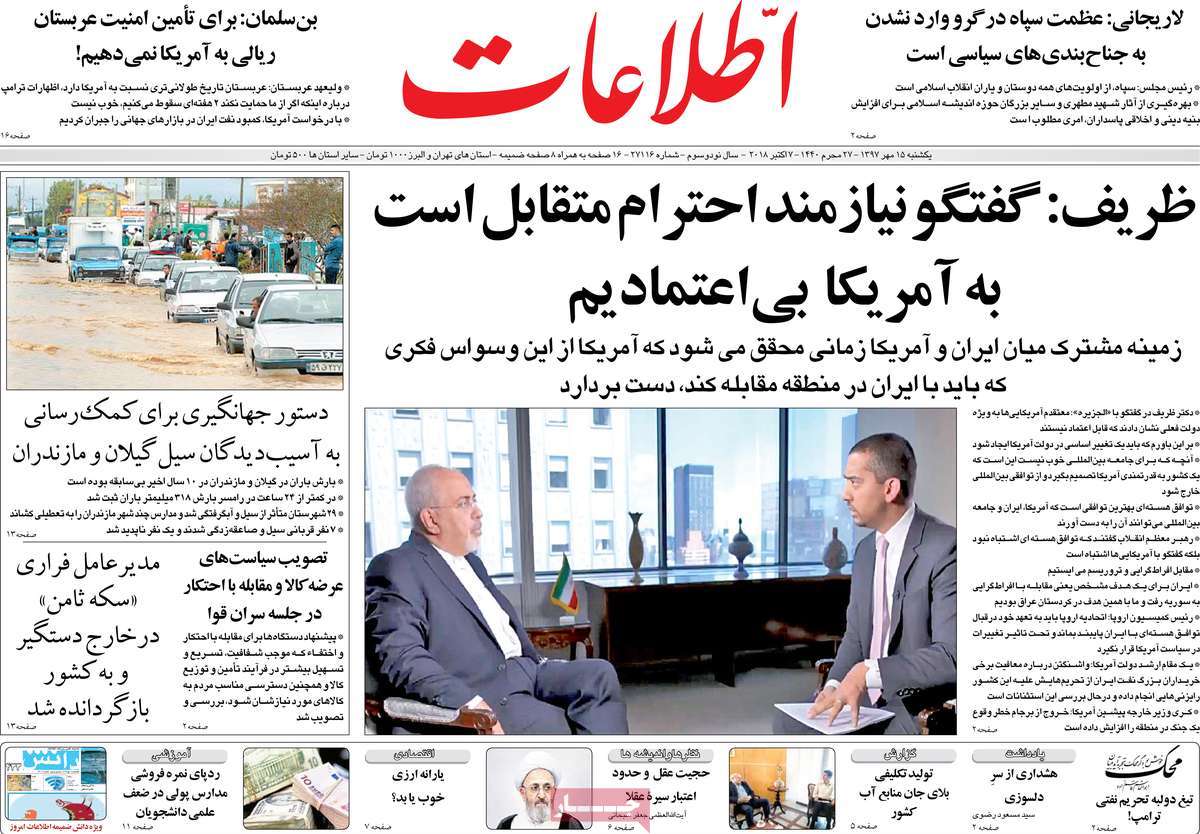
Ettela’at:

1- Zarif to Al Jazeera: Dialogue Needs Mutual Trust, We Don’t Trust US

2- Bin Salman: We Won’t Pay Anything to US for Saudi Arabia’s Security
A Look at Iranian Newspaper Front Pages on October 7


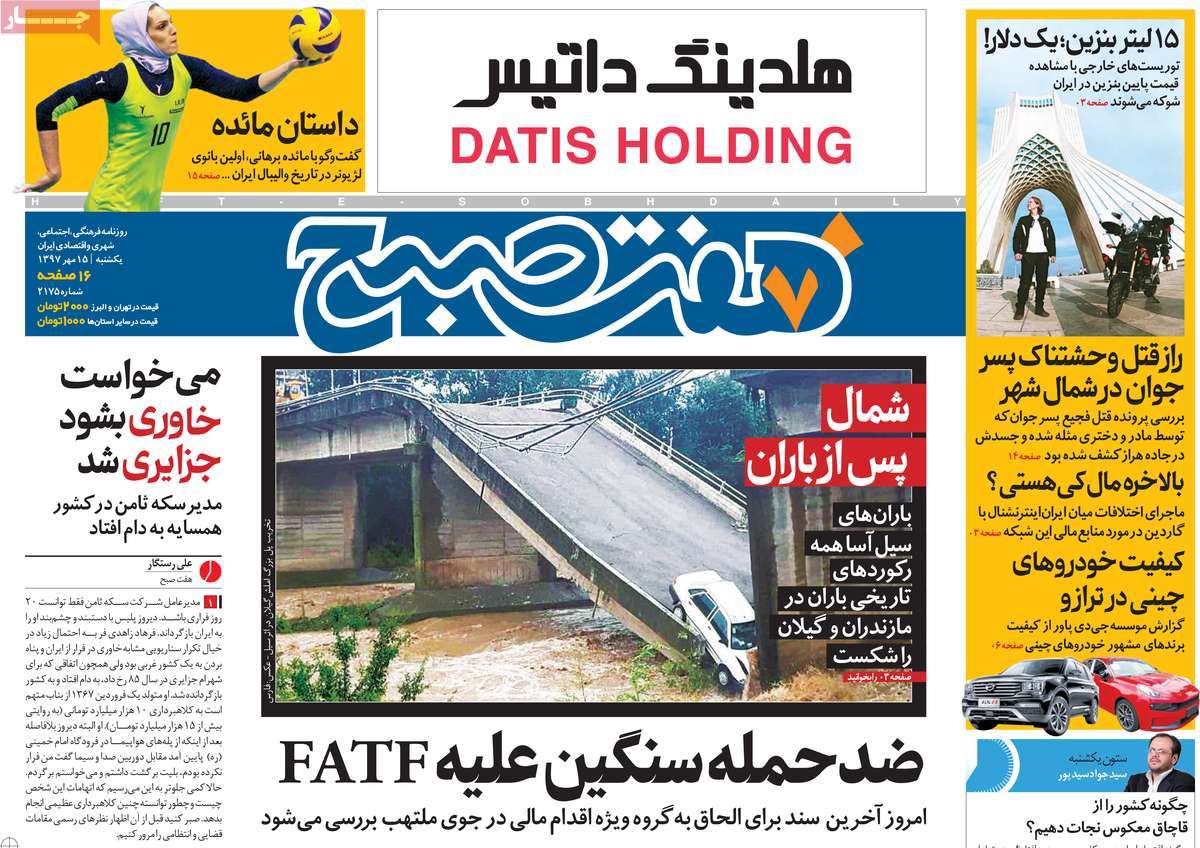
Haft-e Sobh:

1- Heavy Rainfall Breaks All Records in History of Gilan, Mazandaran

2- Strong Counterattack against FATF: Tension High as Parliament Discusses CFT Bill
 

A Look at Iranian Newspaper Front Pages on October 7


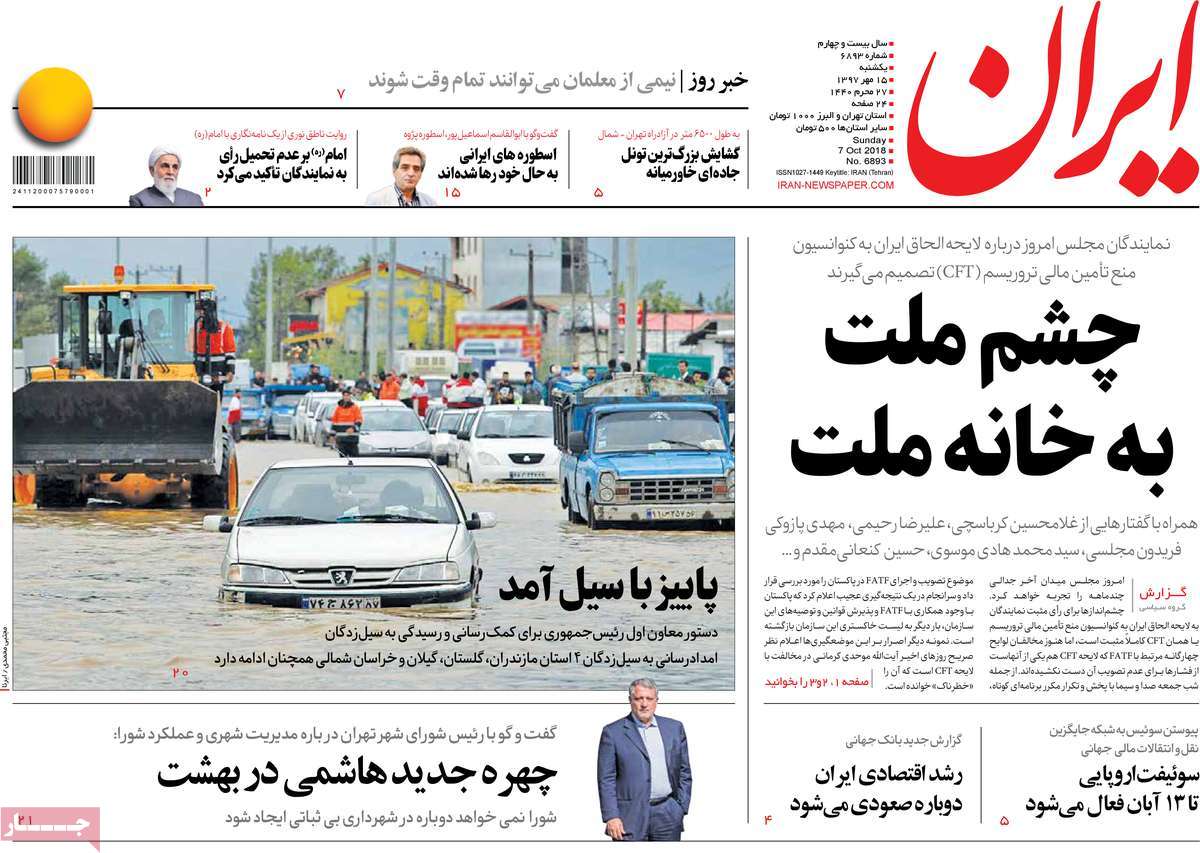
Iran:

1- People Waiting for Lawmakers’ Decision on CFT Accession

2- Autumn Comes with FloodA Look at Iranian Newspaper Front Pages on October 7


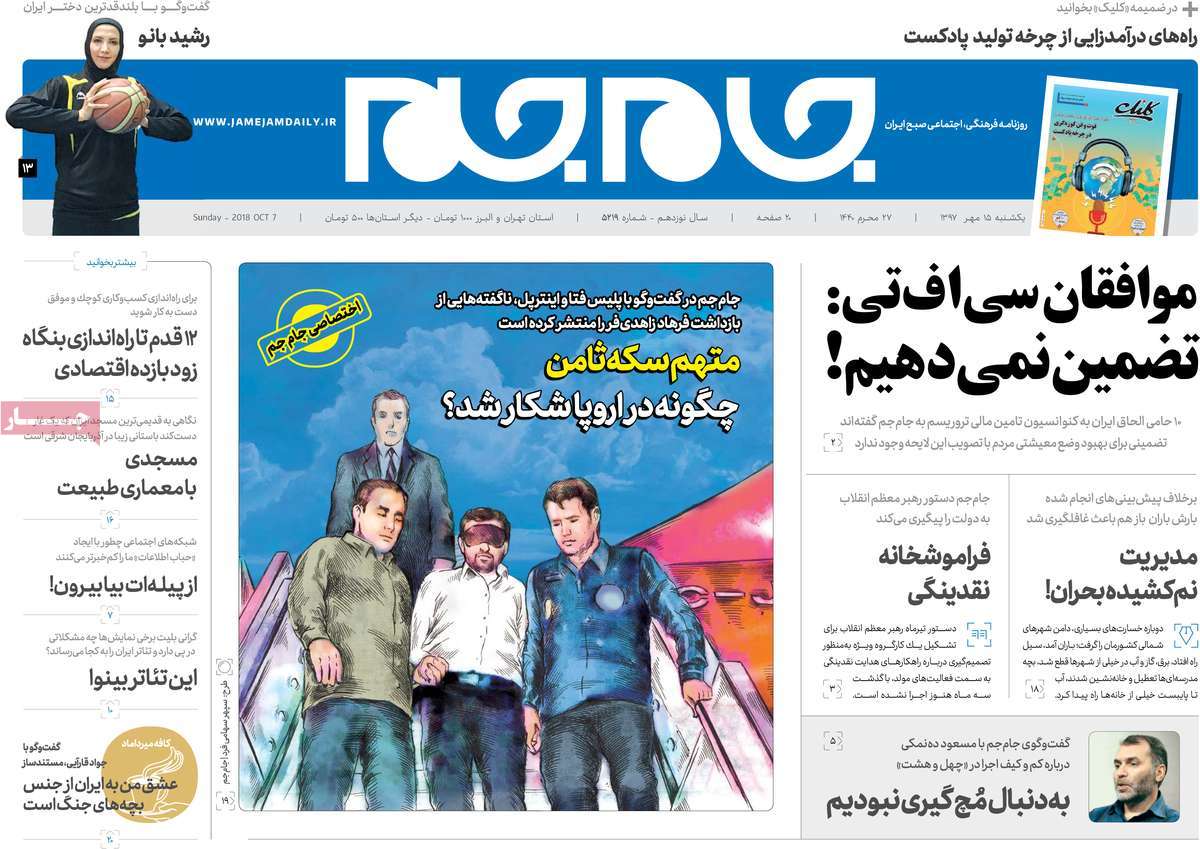
Jame Jam:

1- Proponents of CFT: We Don’t Give Any Guarantee!
A Look at Iranian Newspaper Front Pages on October 7


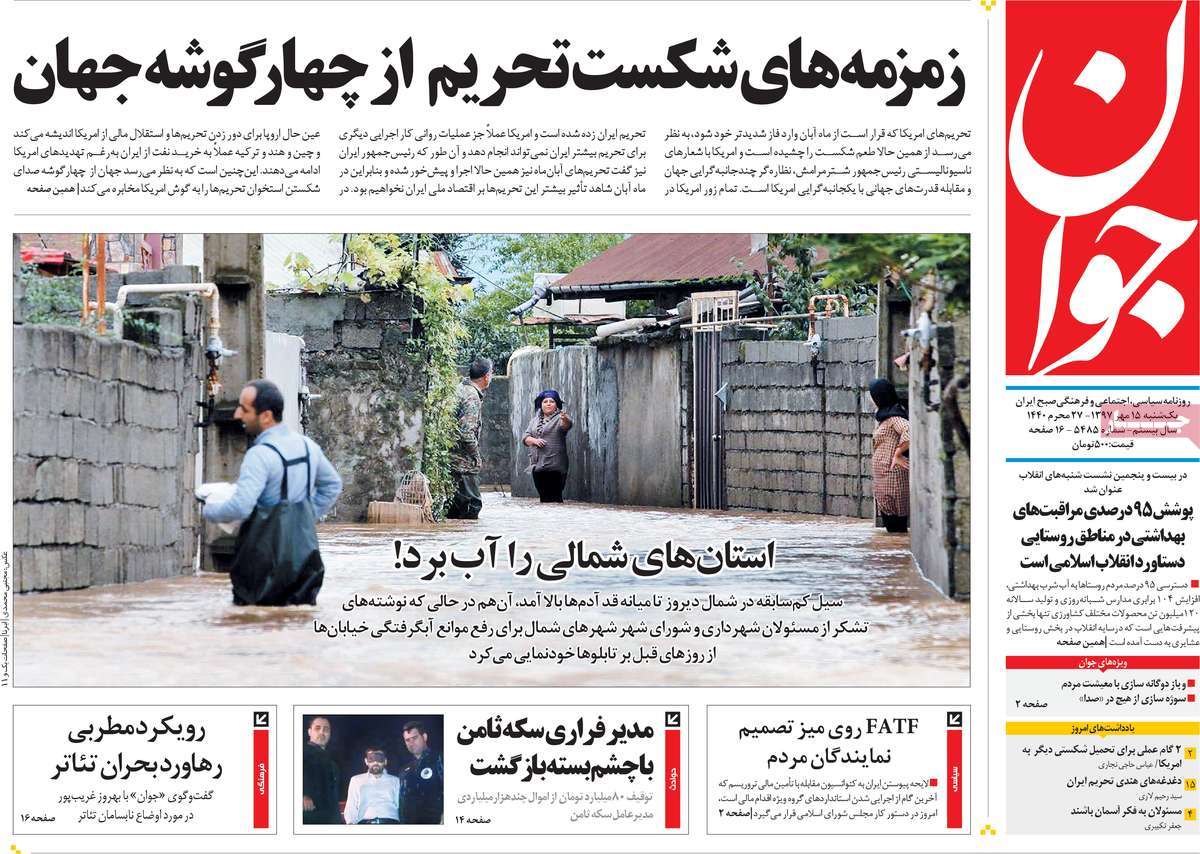
Javan:

1- Reports Show Sanctions Failing across the World

2- Northern Provinces Flooded after Heavy Rainfall

3- FATF on the Table: MPs to Make Final Decision
A Look at Iranian Newspaper Front Pages on October 7


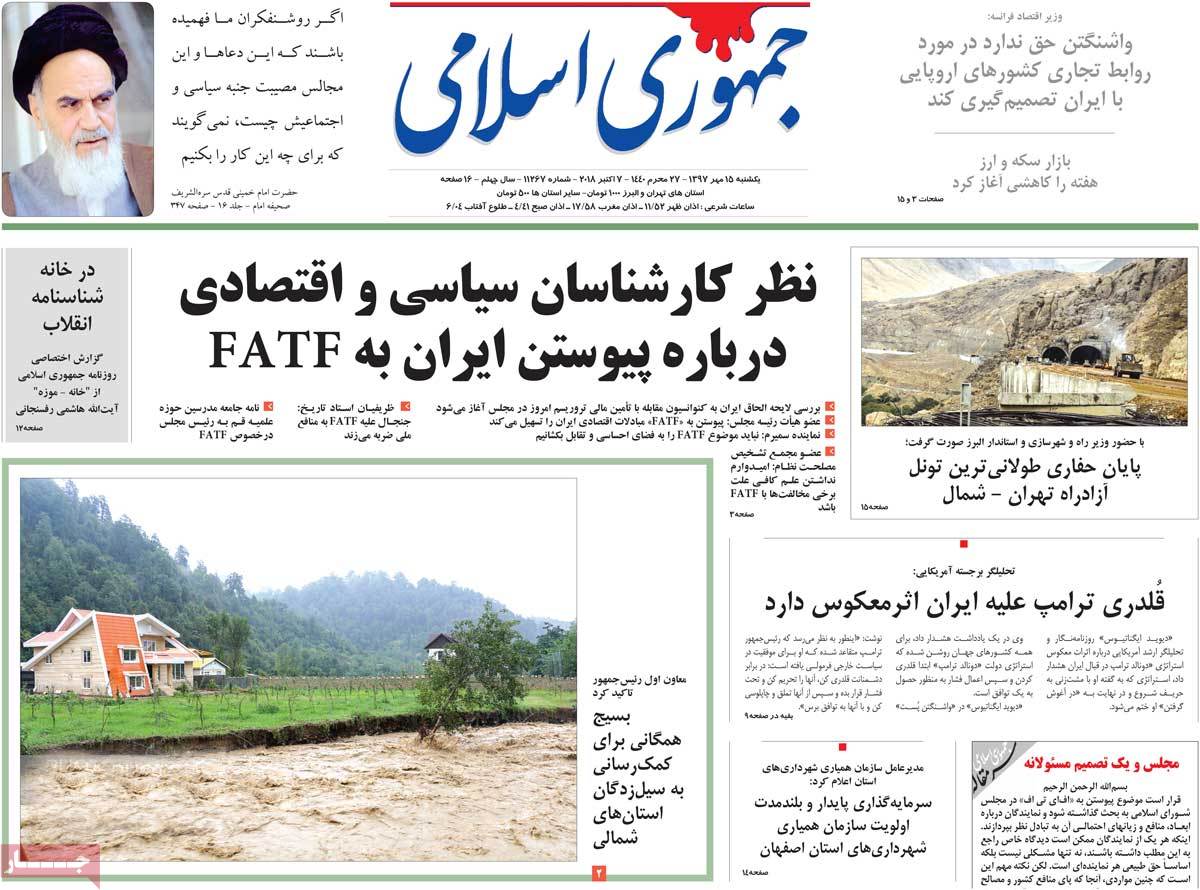
Jomhouri Eslami:

1- France: Washington Has Not Right to Make Decision about EU’s Ties with Iran

2- American Analyst: Trump’s Bullying towards Iran Will Backfire

3- Rouhani’s First VP Calls for Immediate Efforts to Help Flood-Hit People in Northern Iran
A Look at Iranian Newspaper Front Pages on October 7


Kayhan:

1- Read This Report If You Still Don’t Consider FATF a Treason

2- Huge Decrease in Gold Coin Prices in One Week

3- Bin Salman’s Submissive Response to Trump’s Humiliating Comments

  • I Love Working with Trump!

A Look at Iranian Newspaper Front Pages on October 7


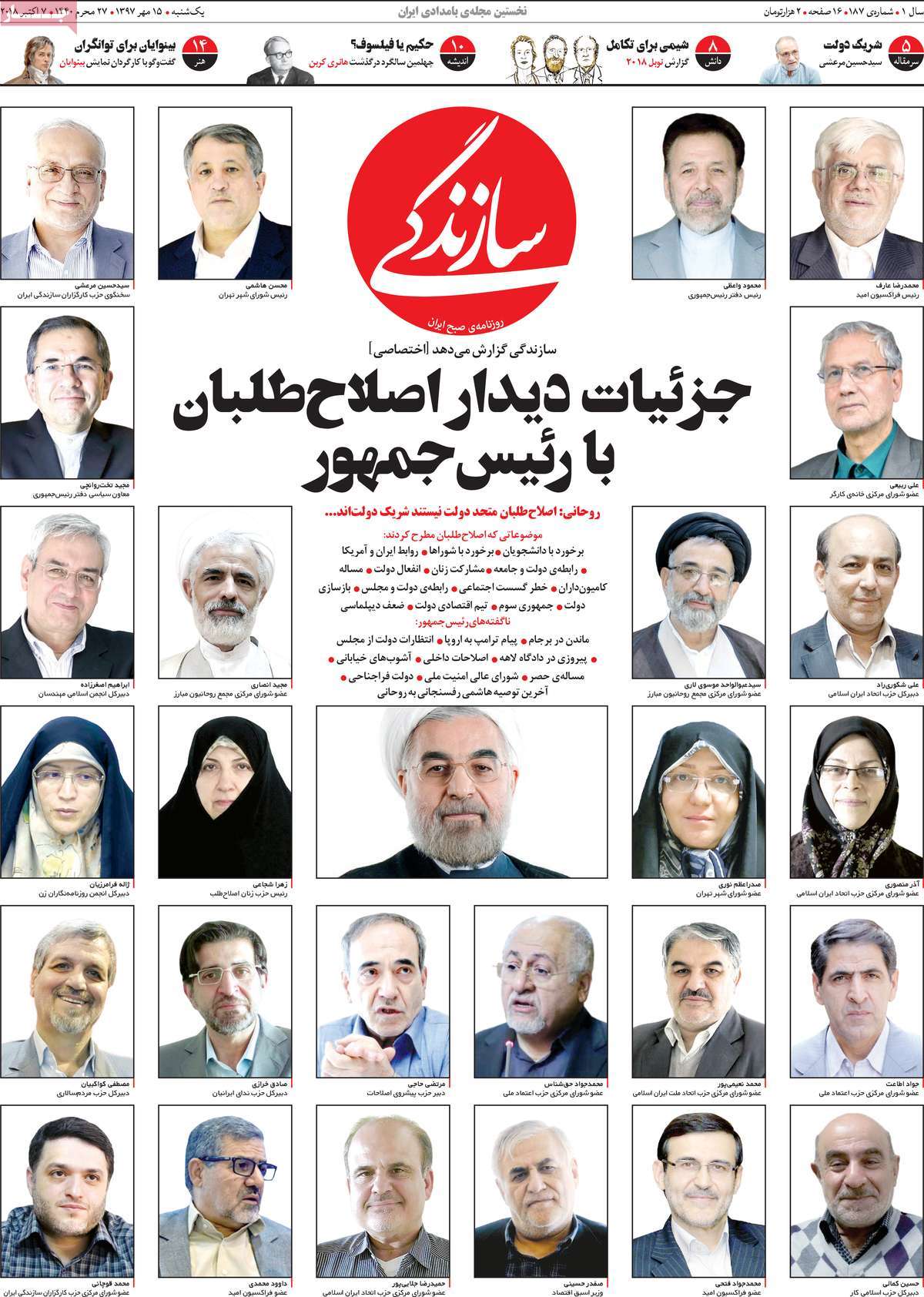
Sazandegi:

1- Rouhani: Reformists Not Allies of Government, They’re Our Partners
A Look at Iranian Newspaper Front Pages on October 7


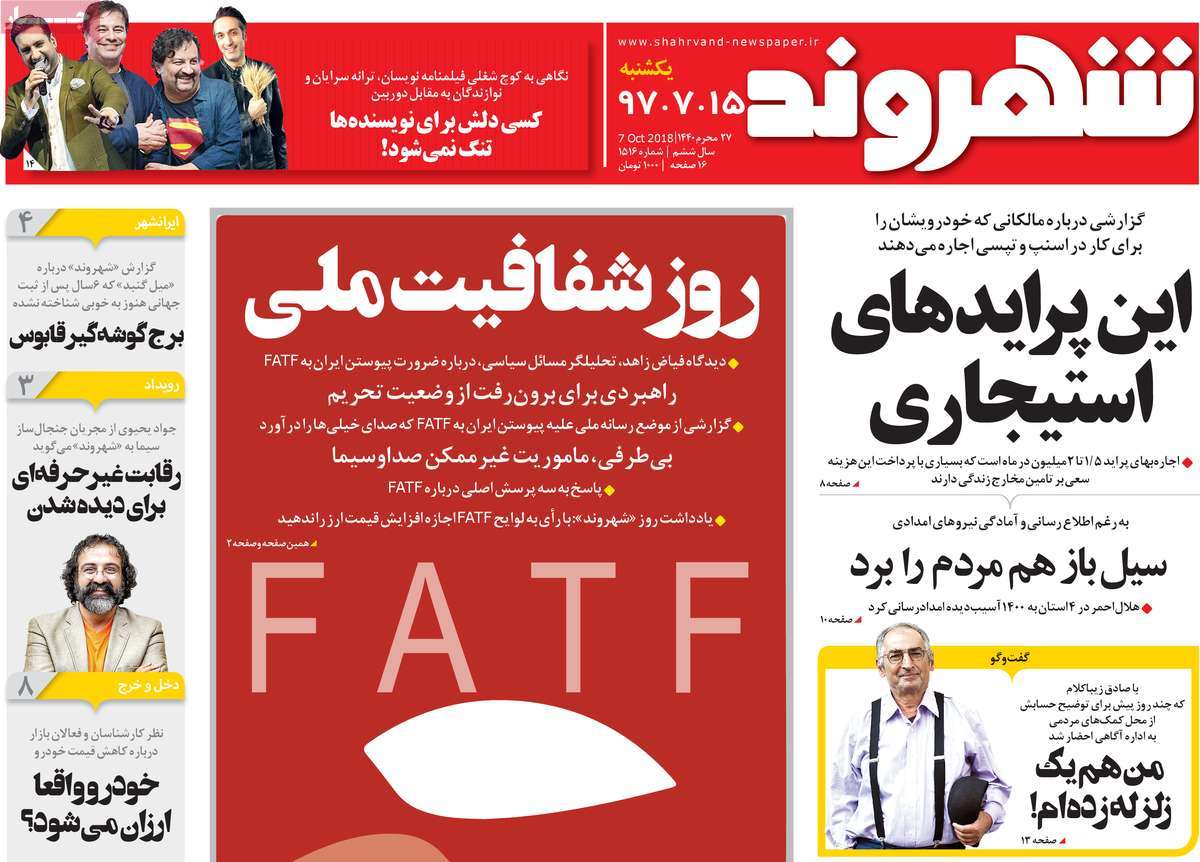
Shahrvand:

1- Day of National Transparency

  • Political Analyst Explains Why It’s Necessary to Join FATF
  • Vote for FATF to Keep Forex Rates from Rising [Editorial]
A Look at Iranian Newspaper Front Pages on October 7


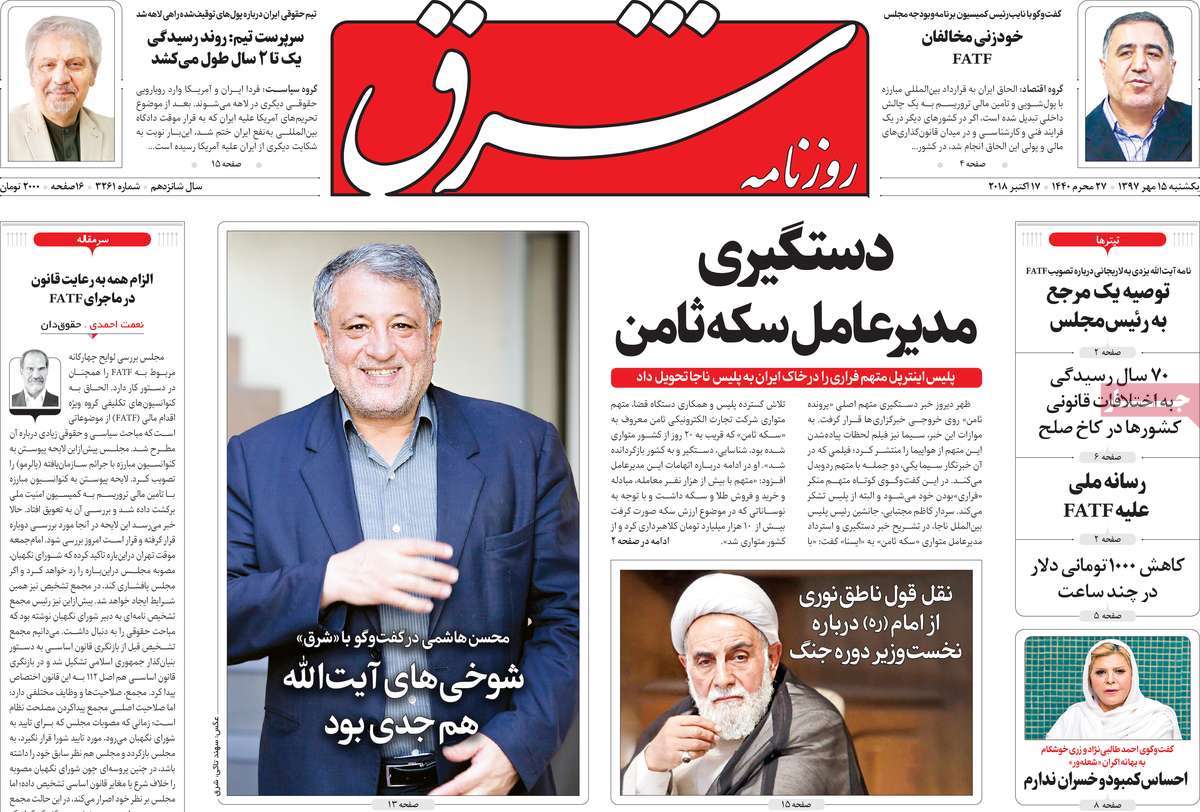
Shargh:

1- Opponents of FATF Harming Themselves

2- Iran’s State TV against FATF

3- Everyone Obliged to Observe the Law on FATF [Editorial]
A Look at Iranian Newspaper Front Pages on October 7


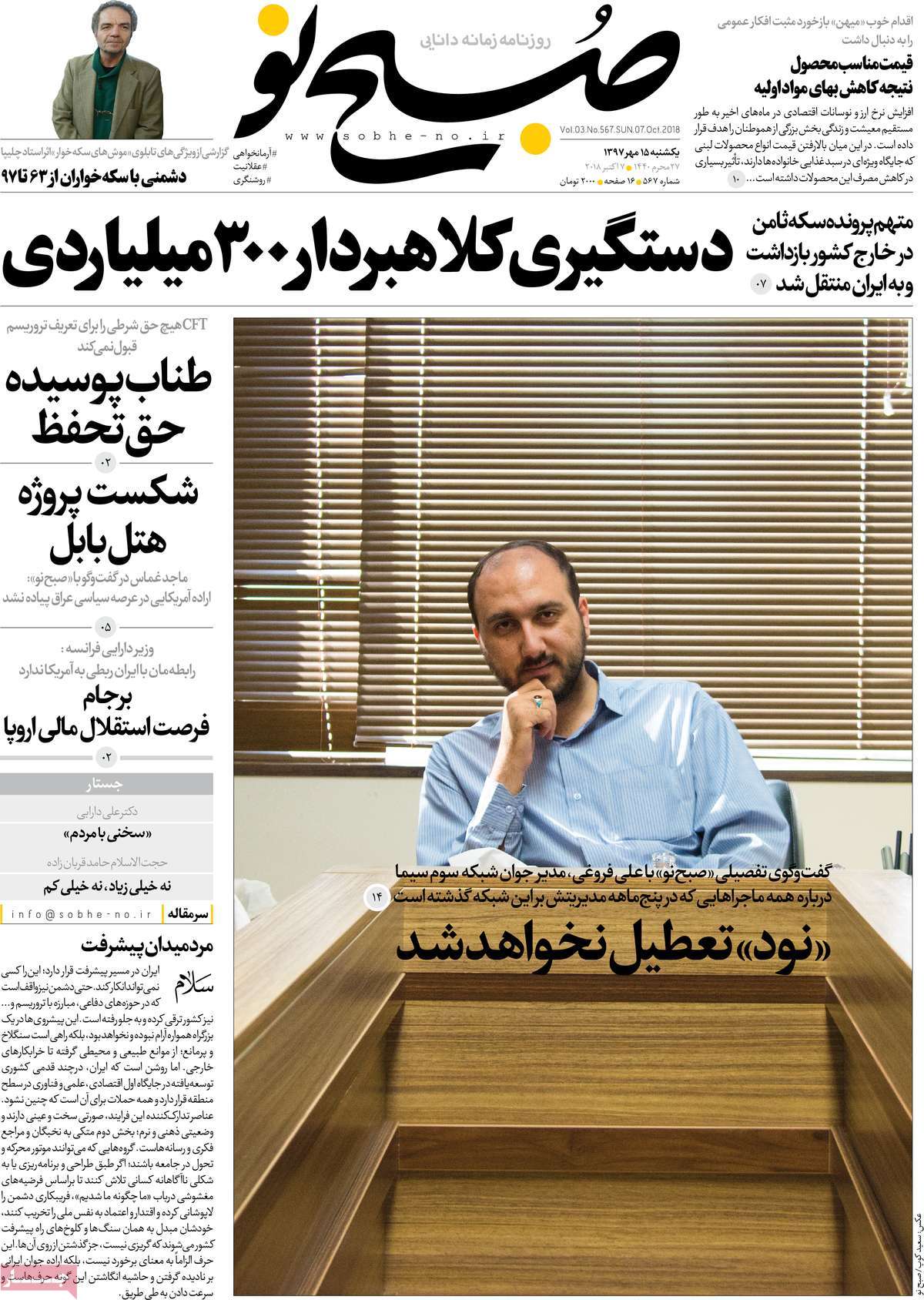
Sobh-e Now:

1- Deceitful Article of ‘Reservation’: CFT Not to Accept Any Reservation on Definition of Terrorism

A Look at Iranian Newspaper Front Pages on October 7

Parliament Approves Iran’s CFT Accession

Foreign Ministry Condemns FATF’s Blacklisting of Iran

The legislation authorizing Iran to join the convention on Combating the Financing of Terrorism (CFT) was passed with 143 votes in favour, 120 against and 5 abstentions.
The MPs authorized the government of President Hassan Rouhani to join the CFT under certain conditions.

Before the bill was put to the vote, Iranian Foreign Minister Mohammad Javad Zarif spoke in support of it.

“I guarantee that if this bill is not ratified, the US will find an important pretext to increase our problems,” said Zarif.

He said lawmakers are to make a “historic decision,” adding, “Today, Parliament will decide based on national interests.”

Back in June, 2018, members of the Iranian parliament discussed the CFT accession bill, which is one of the four bills proposed by the government on Iran’s adopting the standards of the Financial Action Task Force (FTAF), but shelved it for two months.

The Parliament earlier approved a bill on the country’s accession to the United Nations Convention against Transnational Organized Crime, also known as Palermo Convention, but the bill was rejected by the Guardian Council. Then the Parliament insisted on its decision, and the case was referred to the Expediency Council to make the final decision.

The same thing happened to an amendment to the anti-money laundering law of the Islamic Republic, which was proposed by the government, approved by the Parliament, but rejected by the Guardian Council. This one also needs the Expediency Council’s approval.

Meanwhile, the fourth bill, which was an amendment to the country’s law against financing terrorism, was approved by the Parliament and the Guardian Council, and signed into law by President Rouhani.

Iran Expresses Regret over DR Congo Oil Tanker Collision

In his Sunday statement, Qassemi offered sympathy to the nation and government of the DR Congo and the bereaved families of the victims.

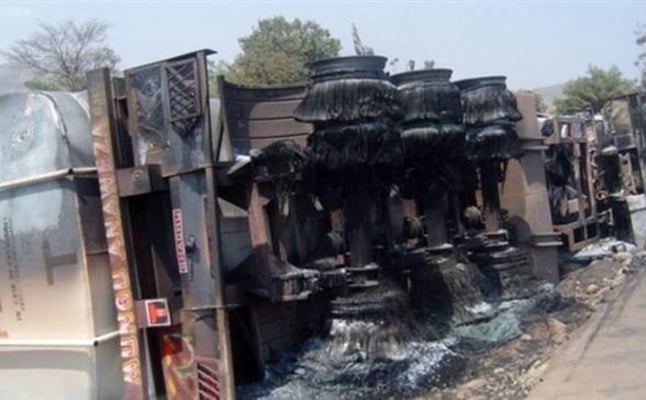
At least 50 people died after an oil tanker collided with a car on a major road in the west of the Democratic Republic of Congo.

The incident occurred near the city of Kisantu, between the capital Kinshasa and the port of Matadi.

One hundred people suffered second-degree burns, Atou Matabuana, the governor of Kongo Central region said.

“The flames spread rapidly engulfing nearby houses,” the UN’s Okapi radio reported.

Roads in the central African nation have often been neglected after years of war.

In 2010, 220 people were killed when an overturned oil tanker exploded and set fire to parts of a village in the country.

Saudi Dissident Killed in KSA Consulate in Istanbul: Police

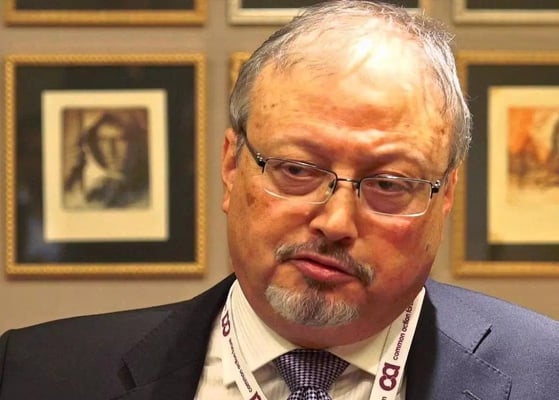
Turkish authorities believe that prominent Saudi journalist Khashoggi, who disappeared four days ago after entering Saudi Arabia’s consulate in Istanbul, has been killed.

“The initial assessment of the Turkish police is that Mr Khashoggi has been killed at the consulate of Saudi Arabia in Istanbul. We believe that the murder was premeditated and the body was subsequently moved out of the consulate,” a Turkish official told Reuters news agency on Saturday.

A Saudi source at the consulate denied that Khashoggi had been killed at the mission and said in a statement that the accusations were baseless, Reuters reported.

The suspected assassination of the leading critic of the Saudi regime came four days after he entered the kingdom’s consulate in Istanbul on Tuesday.

Earlier on Saturday, sources told Al Jazeera that a delegation of 15 Saudi officials arrived in Turkey the day Khashoggi, 59, disappeared.

“The Saudi officials flew into Istanbul on two different flights on Tuesday,” sources said, adding that it was not clear if the Saudi delegation consisted of security or diplomatic officials.

The revelations came as Turkey widened its investigation into the disappearance of the dissident Saudi journalist after Saudi Arabia failed to back its claim that he left the consulate on Tuesday.

Turkey’s ruling party also said it will “uncover” the details surrounding Khashoggi’s vanishing, adding that the country’s sensitivity on the issue was at the “highest level”.

“The condition of the lost journalist, details on him and who is responsible for this will be uncovered,” AK Party spokesman Omer Celik told reporters at a party summit chaired by Turkish President Recep Tayyip Erdogan.

“Iran, Interesting Destination for Australian Tourists”

Hamish Leslie made the remarks on the sidelines of Iran-Australia joint film week, marking the 50th anniversary of the establishment of diplomatic relations between the two countries.

The Australian official told ISNA that his country’s positions on Iran are positive and unchanging.

Leslie added that Australia keeps recommending its citizens and tourists visit Iran, and that Canberra is not going to be strict when it comes to issuing visas to Iranian nationals.

The official had no exact figures on the number of Australians who have travelled to Iran, but said a wave of Australian tourists began visiting Iran following the conclusion of the Iran nuclear deal (known as the Joint Comprehensive Plan of Action, or the JCPOA). He said there were people who always wanted to visit Iran, but did not have enough information. According to the official, many of them visited Iran, and are now making arrangements for their second visit. He also reiterated that Canberra has always supported the Iran nuclear deal.

In her recent speech at the UN, Australian Foreign Minister Marise Payne also said her country believes the JCPOA is one of the best nuclear nonproliferation treaties in the world, expressing hope all countries would back the agreement.

During his two-year mission in Iran, Leslie has visited most parts of the country, including Golestan, Lorestan and Khuzestan provinces. He has also travelled to Khorramabad recently and seen for himself the so-called “mud-rubbing” ritual observed in Muharram. He has also accompanied his in-laws during their trip to the holy city of Mashhad. He says he loves ecotourism and has had good experiences about it while visiting Alamut, Izeh and Mashhad. He loves the traditional Iranian food Mirzaqassemi (the food is made with barbecued aubergines). He also describes as an “extraordinary experience” eating mushroom kebab in Lorestan, and says travelling by train to Andimeshk was fabulous. He says the Australians who have travelled to Iran are pleased as they say Iran was more exciting than what they thought.
He said films are the most important and effective tool whereby nations can get to know one another.

He also touched upon the Australian film and culture week held recently in Tehran.

The official says Australian people are being influenced by international media and have, in their minds, portrayed a picture of Iran based on the reports of the same very media. So, he says, whatever positive news, especially about mutual cultural relations, is spread will definitely help more and more people get a better understanding of Iran and be encouraged to visit the country.

According to the official, Iranian historical films can be attractive to Australians because it would be interesting for the people of a young country such as Australia to get to know a country which used to be ruled under an empire thousands of years ago, has had civilization, and has taken shape during different historical eras. Leslie says the Australians who have travelled to Iran are keen to visit historical cities such as Isfahan as well as ancient monuments like Persepolis. Therefore, he says, history and movies can help Australian people get a better understanding of Iran.

The Australia-Tehran Film Week was kicked off on October 6 and will be open to visitors until October 9 at the Iranian House of Artists. Six films will be screened at the event.

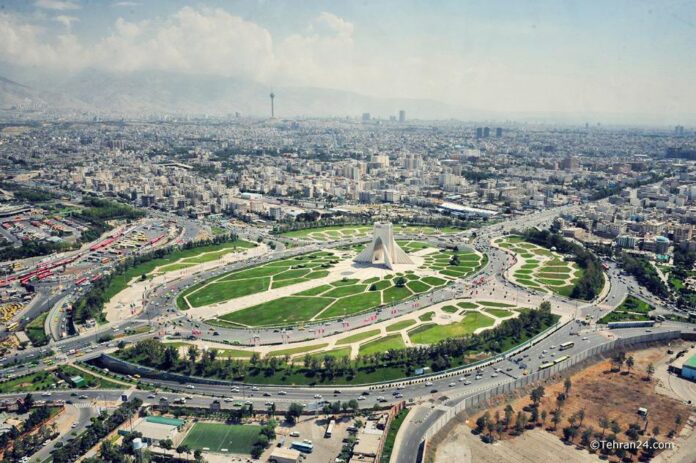
Citizens of Capital Mark Tehran Day on October 6

It’s been two years that the citizens of the Iranian capital are marking the Tehran Day based on 2016 a decision by members of the City Council.

Life in Tehran dates back to the Neolithic era or the New Stone Age. Archaeological excavations in the city have led to the unveiling of several 7,000-year-old skeletons and many other stone tools.

Back in the seventh lunar century, when the prosperous city of Rey was razed by Mongols to the ground, its residents moved to Tehran, transferred their knowhow and trade to the new city and began to construct new homes there. This led to a significant growth and progress in Tehran.

During the Safavid dynasty, Tehran became even more important after it turned into a leading hunting ground for the Safavid kings.

But the main progress of Tehran began under the Qajar dynasty after it was chosen as the capital city of Iran. After a short while, Tehran turned into one of the leading cosmopolitans of the world and the third most-populated city of the Middle East.

In an address to the 91st session of the Tehran City Council held on October 2, Ahmad Masjed Jamei, a member of Council, said Tehran was announced as the capital of Tehran in 1796 but its official title was Dar al-Khalafeh, the centre of Caliphate in the Islamic World.

“After the Constitutional Revolution in Iran on October 6, 1907, the lawmakers made a change to the country’s Constitution, officially turning Tehran into the capital city of Iran,” he noted.

Elaborating on the events organized to mark Tehran Day, he said all museums affiliated with the Cultural Heritage, Handicrafts and Tourism Organization of Iran and Tehran municipality are free during the day.
“During the day, cinema tickets are also sold at half prices and a media campaign has already been launched with the hashtags #Tehran_Day and #Tehran_for_Iranians,” he noted.

For his part, Head of the Tourism Centre of Tehran Municipality, Mehdi Seif, took the podium and elaborated on the week-long cultural events organized to mark Tehran Day in at least11 historical and cultural centres of the city.
“A series of cultural events are set to be held in Music, Water, Graphic, Carpet and Miniature, Dr. Moeen and Gashr museums during the Tehran Week to raise public awareness of the historical identity of Tehran,” he noted.

Seif underlined that Tughrul Tower, Bab Homayoun, City Theatre and Azadi Tower are among other parts of the city which are hosting cultural events during the Tehran Week.

The cultural events include screening movies about Tehran as well as reciting Shahnameh (Book of Kings by Ferdowsi) and serving coffees given the coincidence of Tehran Day with the International Day of Coffee.

Meanwhile, the organizers will hold some related competitions and games on tourist sites in Iran with the aim of promoting the city’s tourist capacities and making its residents particularly the children more familiar with its long history.