Tuesday, April 14, 2026
Home Blog Page 3477

Iranian VP Calls for Enhanced Ties with African States

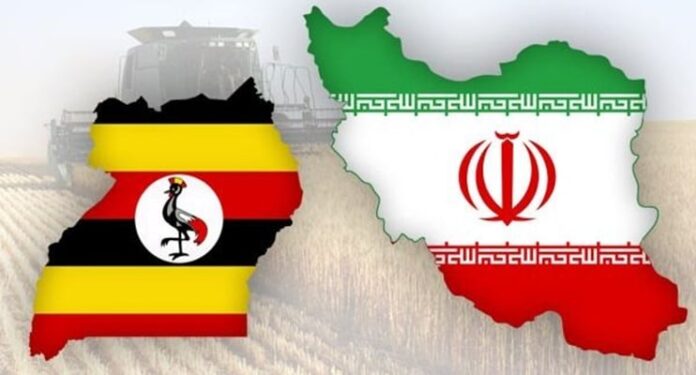
Speaking in a recent meeting with Ugandan President Yoweri Museveni in Kampala, Sattari said the development of cooperation between the two countries in the field of science and technology is very important.

Sattari, who was heading a high-ranking delegation on a regional trip to Uganda, conveyed the greeting of Iranian President Hassan Rouhani to Museveni.

He further highlighted the ability of knowledge-based companies in Iran saying that the Islamic Republic is known in the world for its oil and gas resources, but everyone should know that Iran has experts in various scientific fields that can be a basis for scientific development of the country.

“Iran is also known as the fourth country in the world in terms of training engineers, and we are trying to use this great potential to develop our country’s science and technology.”

During the trip, Sattari is being accompanied by representatives of the Ministry of Health and Medical Education, Ministry of Science, Ministry of Foreign Affairs, Export Development Bank of Iran as well as heads of 70 knowledge-based companies that are active in exports to the East African market.

For a brief review of Iran’s achievements in various fields of science and technology, check the book “Science and Technology in Iran: A Brief Review

The Iranian vice president referred to the entourage and said “70 Iranian knowledge-based companies have accompanied us in this visit, and we hope these meetings and talks open up a new chapter in the mutual scientific and technological cooperation.”

Referring to Iran’s economic diversification in the Middle East, he said, “Iran has large corporations in various fields of science such as biotechnology, nanotechnology, information technology and communications, etc. We have produced a lot of technological products in these fields.”

Sattari further underscored that the Islamic Republic is ready to transfer its experience in the field of technology to Ugandan companies.

For his part, Uganda’s President Museveni welcomed the issues discussed and the idea of developing cooperation between the two countries, noting that Iran is an influential country in the region that continues its significant activities despite sanctions.

Meanwhile, Sattari held a meeting with Minister of Science, Technology and Innovation of Uganda, ‎Elioda Tumwesigye‎. In this meeting he referred to various achievements of Iranian experts in different fields, underlining that to achieve sustainable economy, technology ecosystem should be created in the countries.

“We are trying to get rid of an oil-dependent economy in Iran, and in the past years we have achieved many successes with the efforts of Iranian experts,” he added.

Iran Condemns PKK Terrorist Attack in Turkey’s Batman

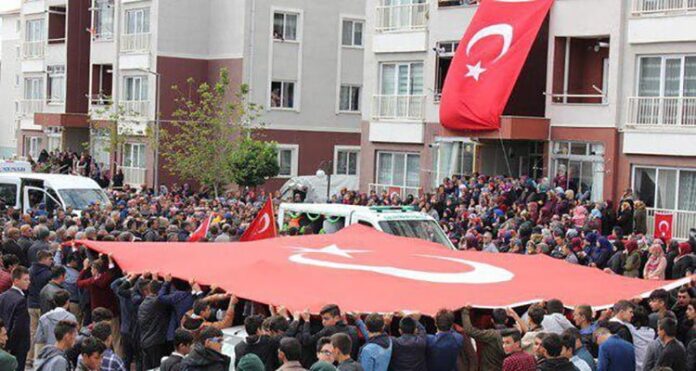
A large number of Turkish people gathered in northern Amasya province on Octobeber 6, 2018, for the funeral ceremony of an officer killed by the PKK attack in southeastern Batman province. / Photo by Daily Sabah

In his Saturday message, Qassemi also offered sympathy to the Turkish nation and government, and the bereaved families of the victims.

Eight Turkish soldiers were killed and two others wounded Thursday in a PKK terrorist attack in Batman, according to local sources.

The terrorists detonated an improvised explosive as an armoured military vehicle passed by.

In its more than 30-year terror campaign against Turkey, the PKK terrorist organization has been responsible for the deaths of some 40,000 people, including women and children.

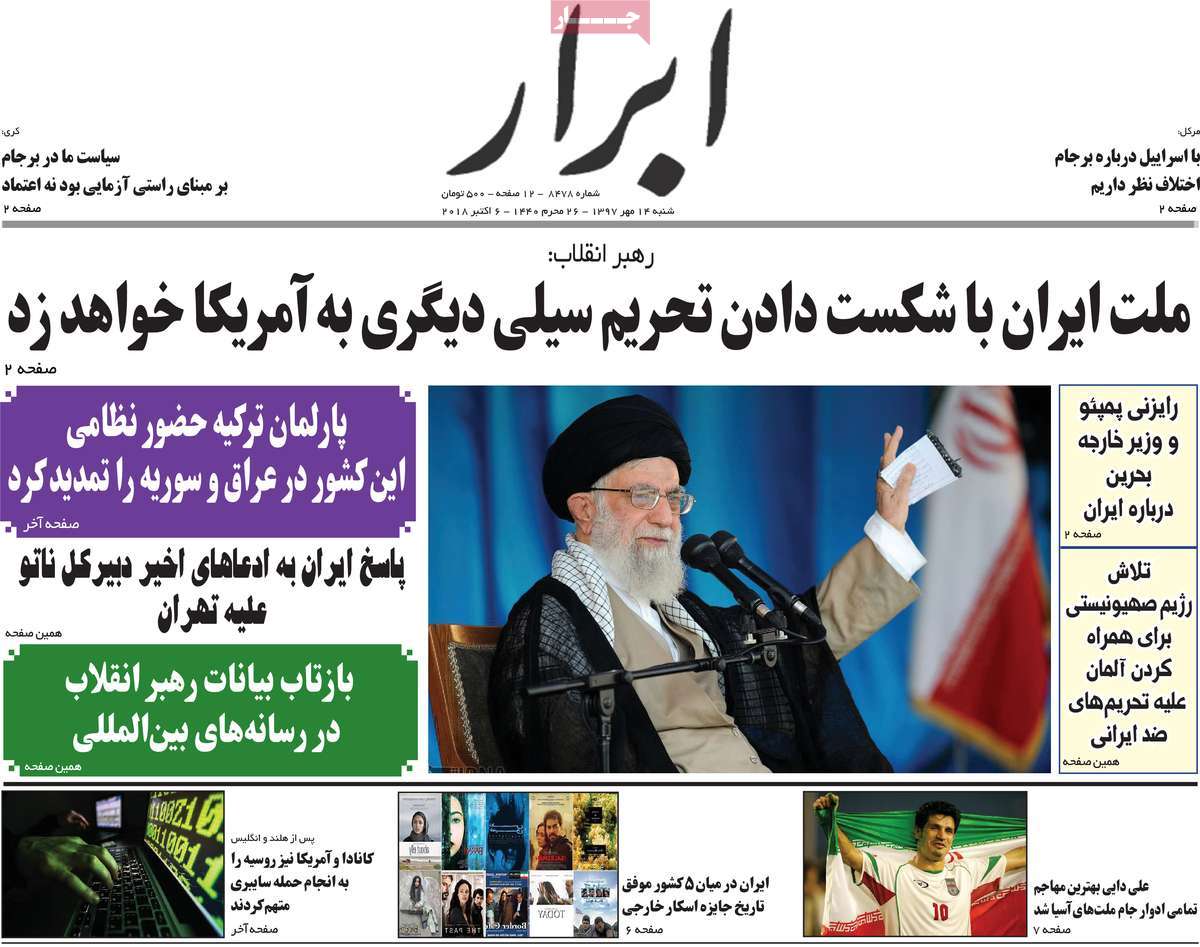
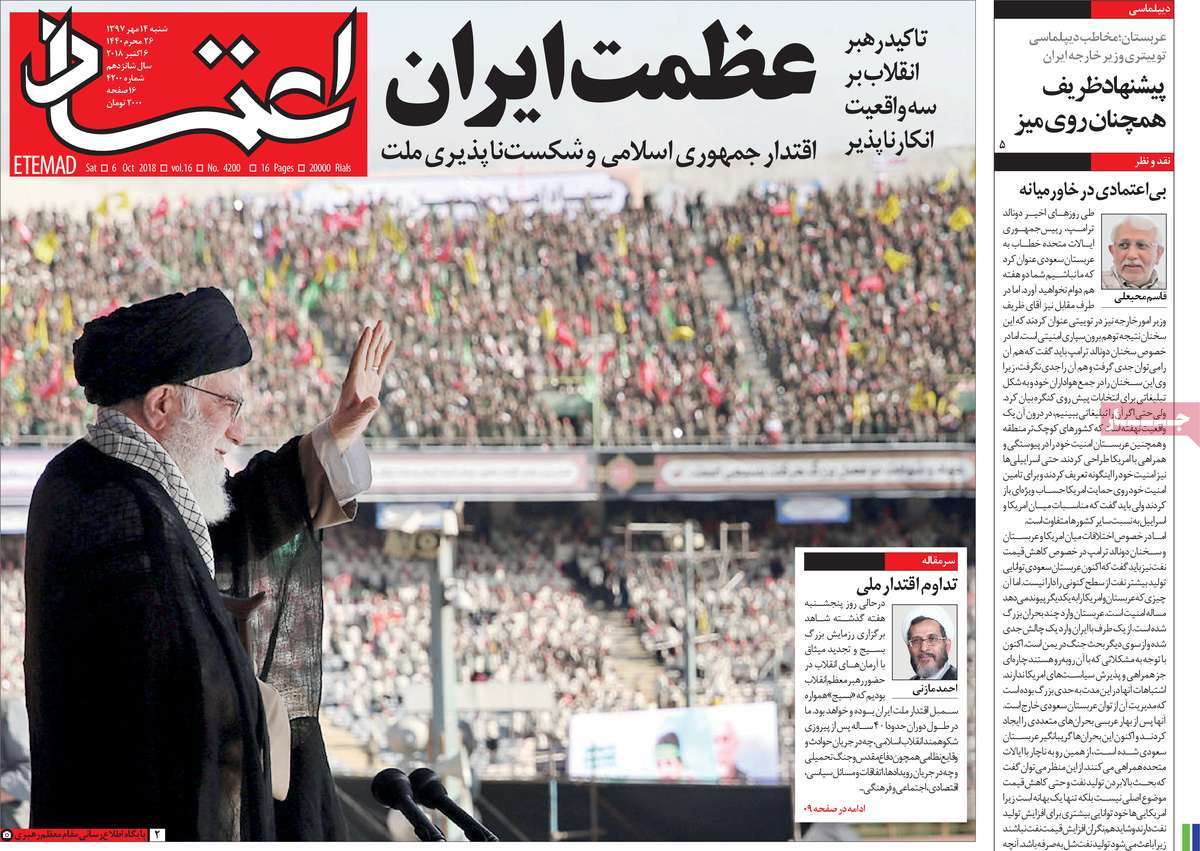
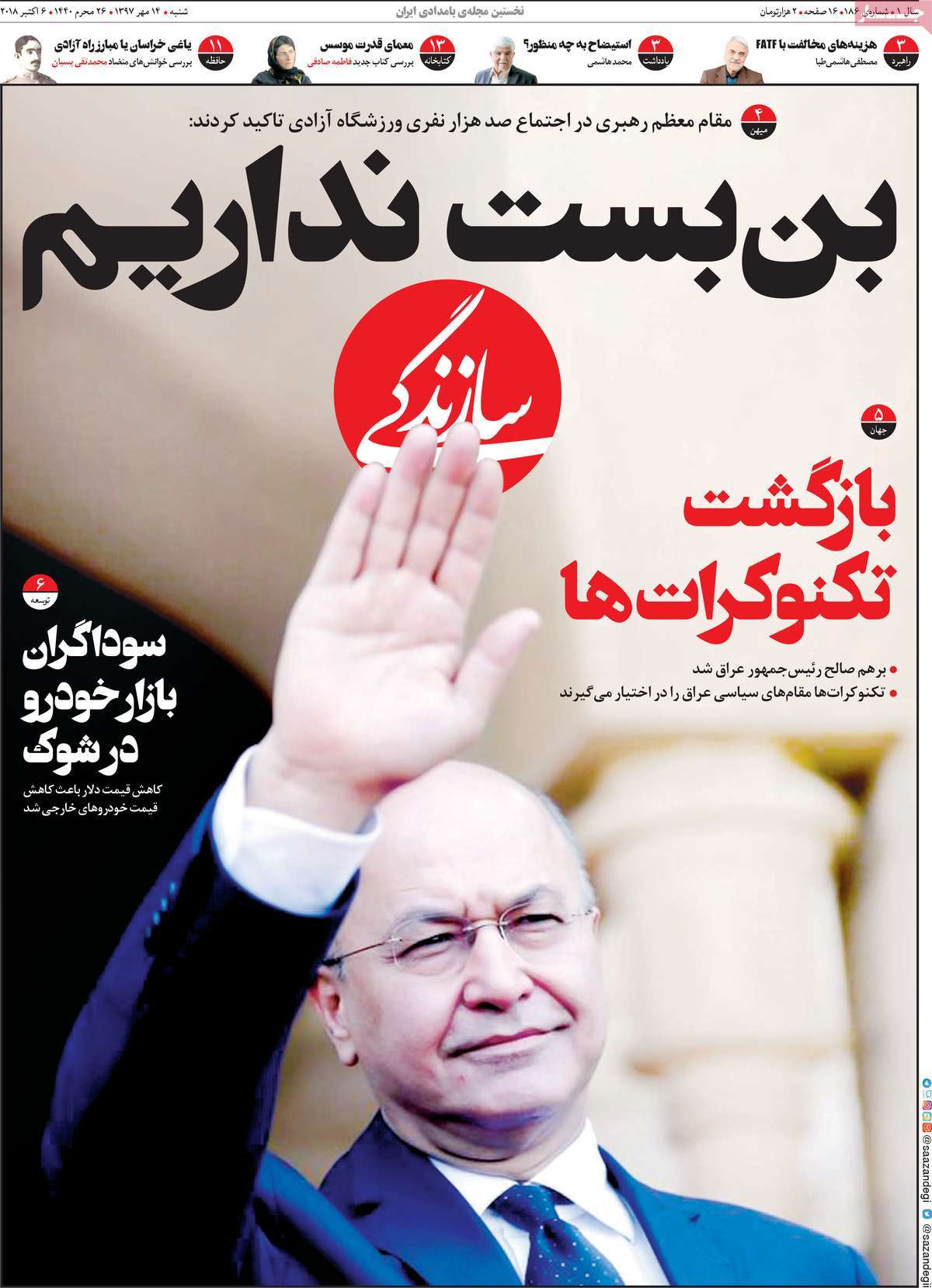
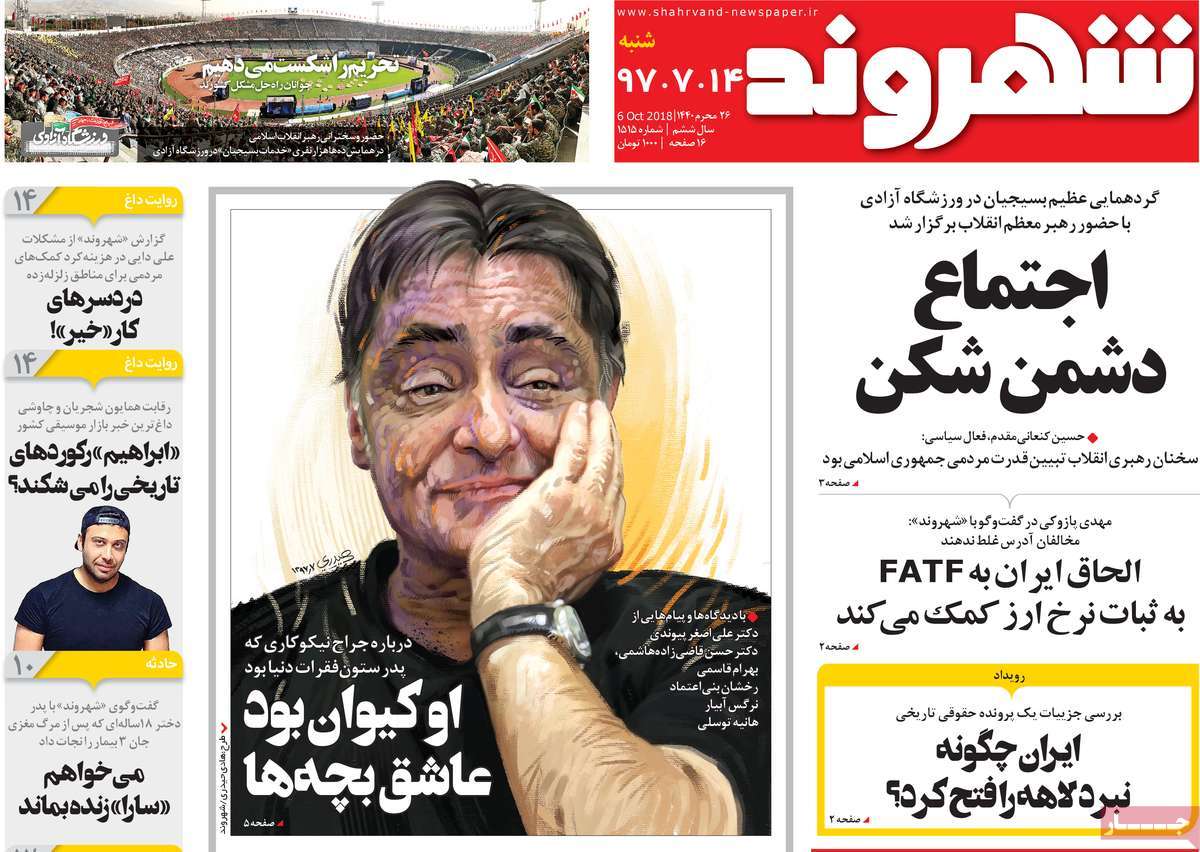
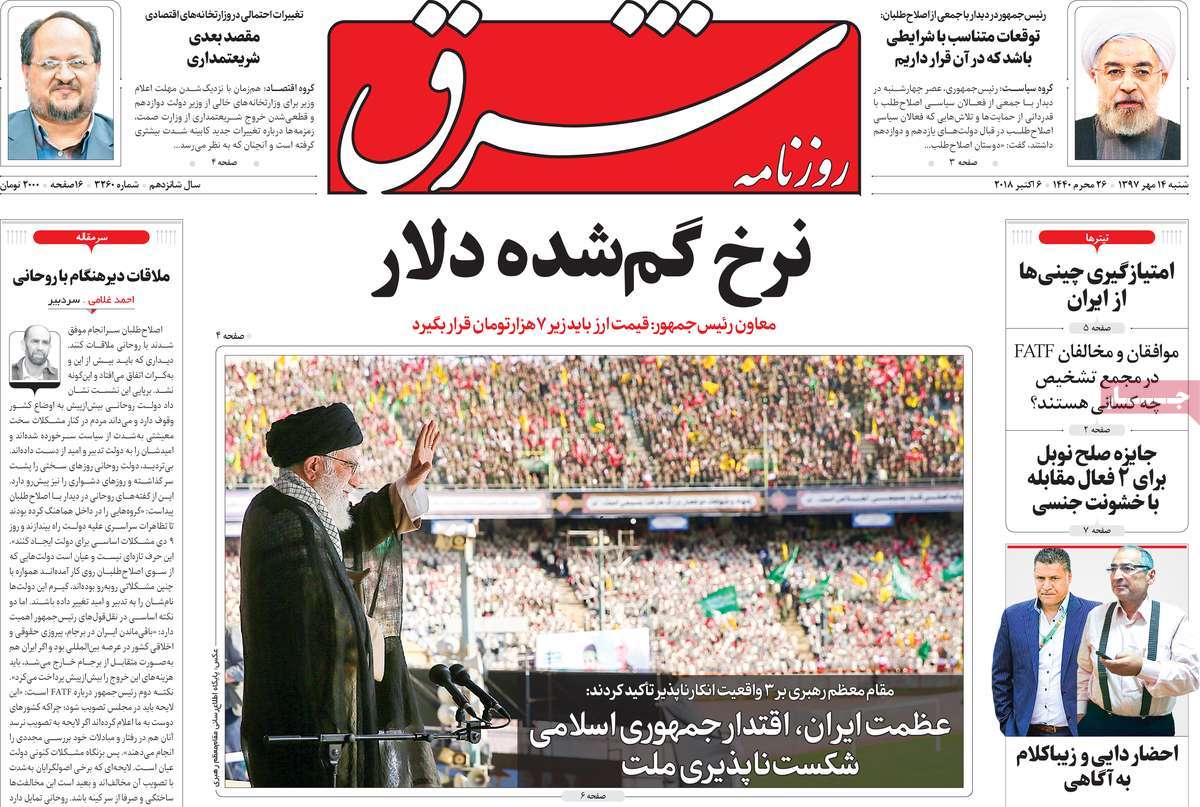
A Look at Iranian Newspaper Front Pages on October 6

A Look at Iranian Newspaper Front Pages on November 19

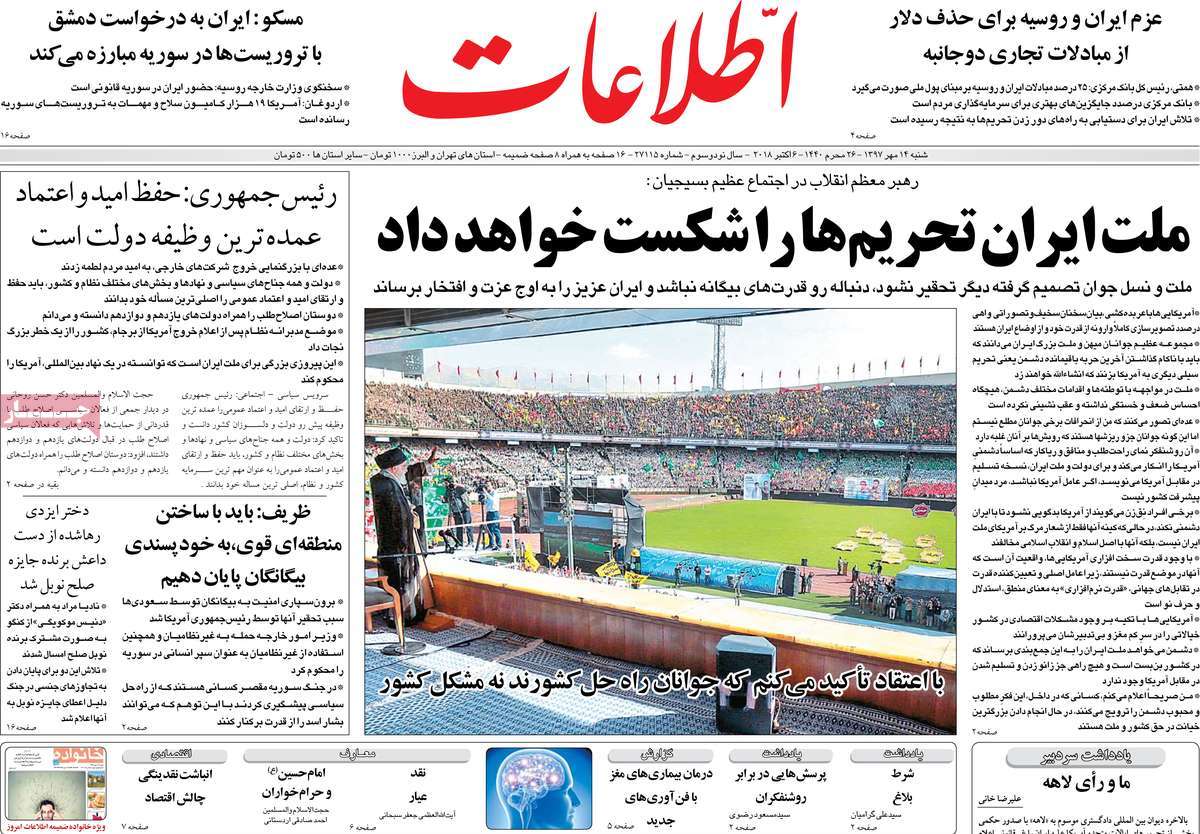
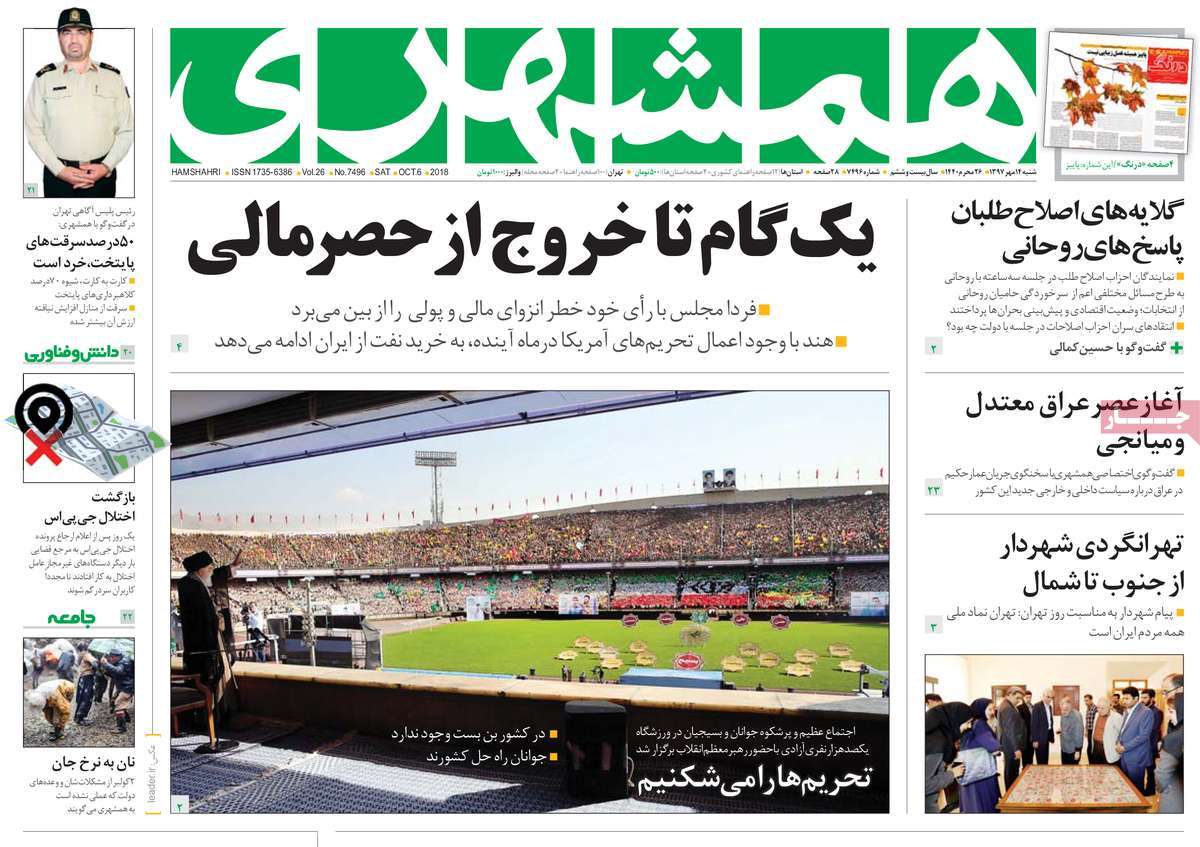
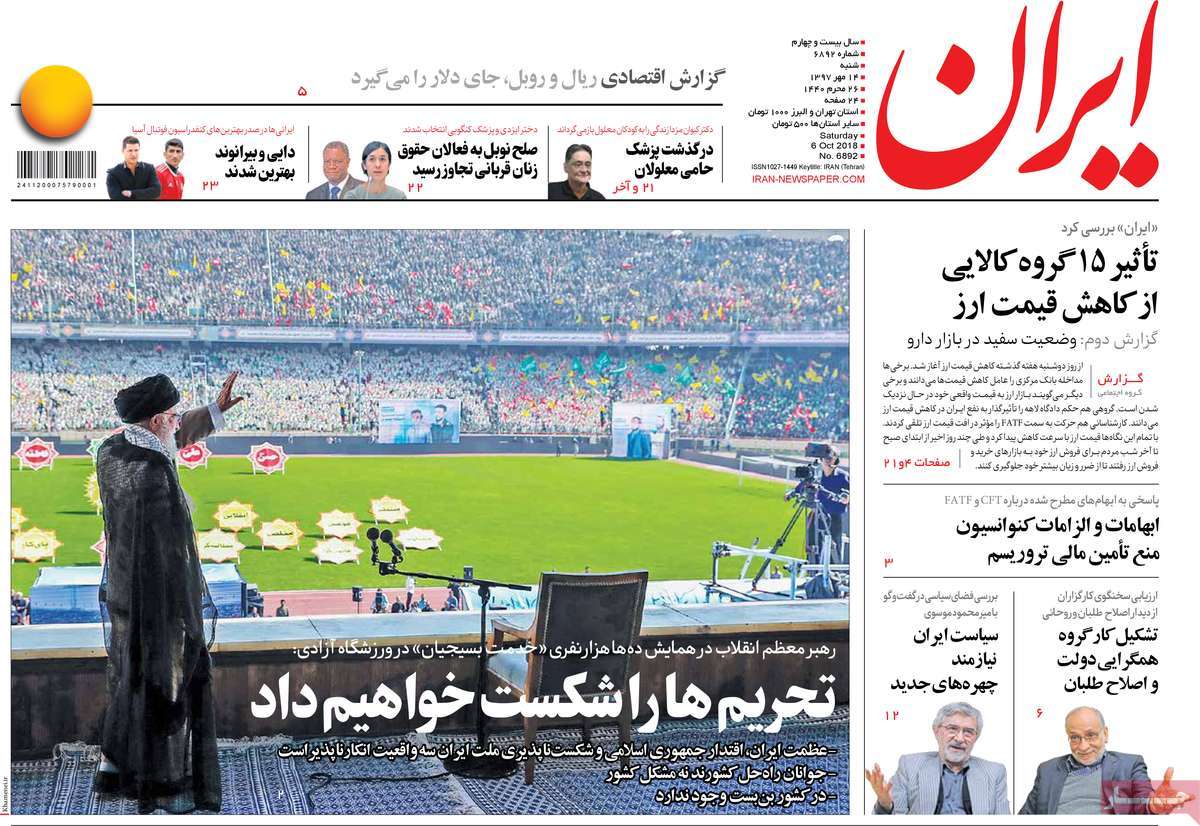
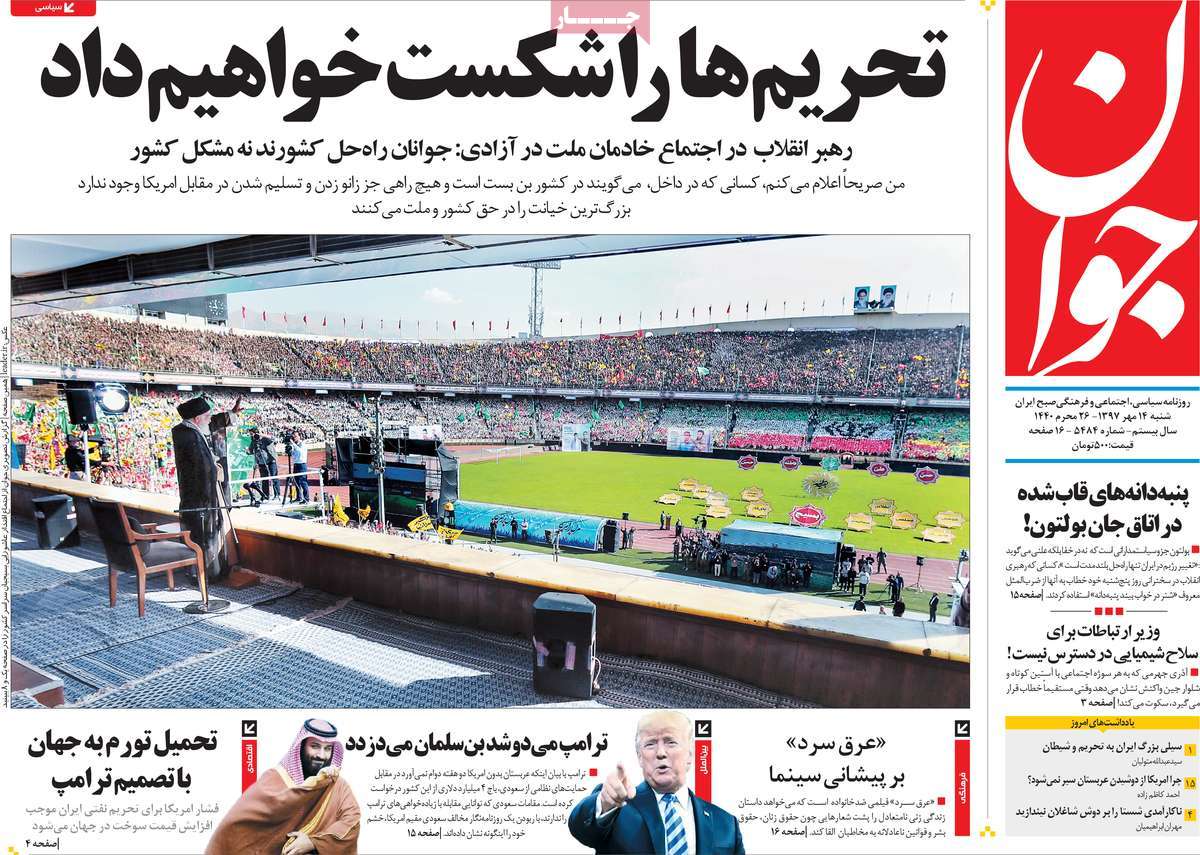
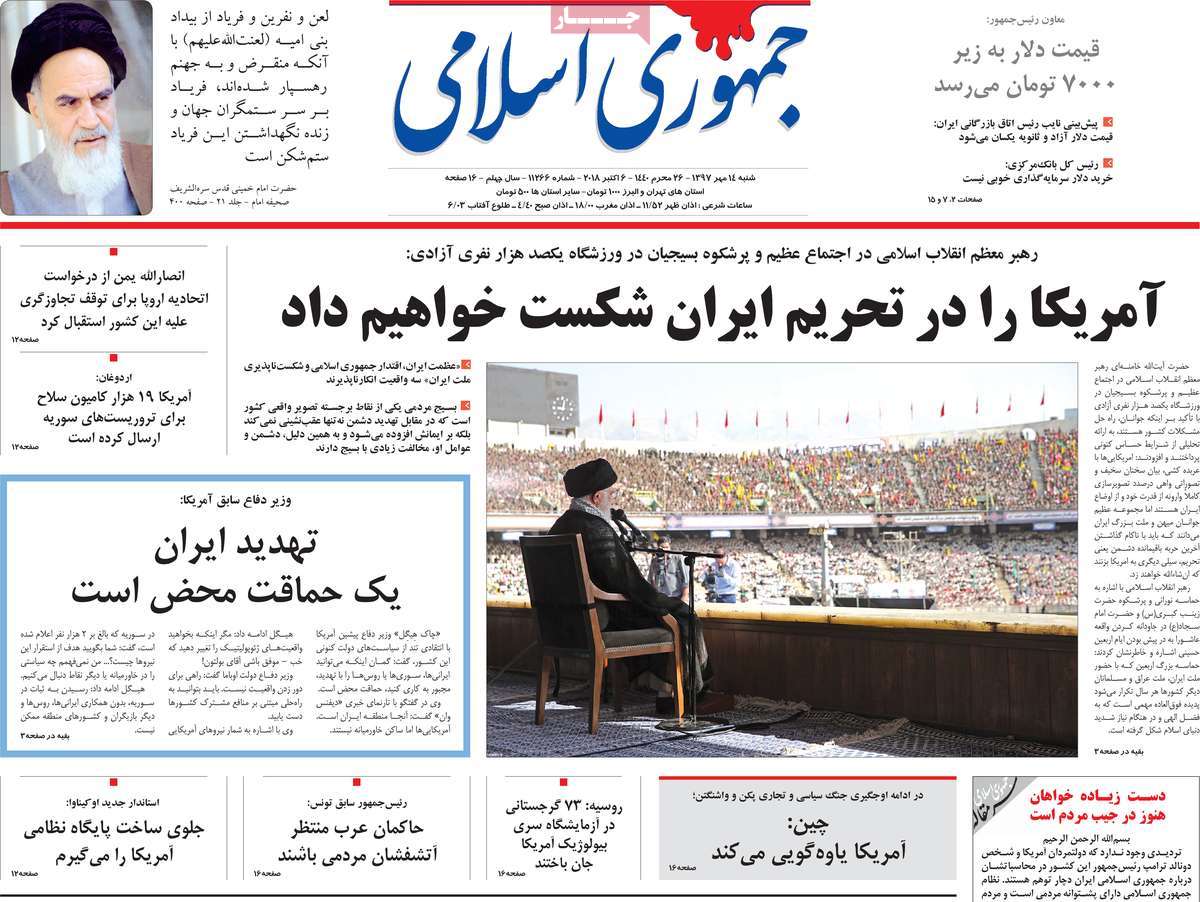
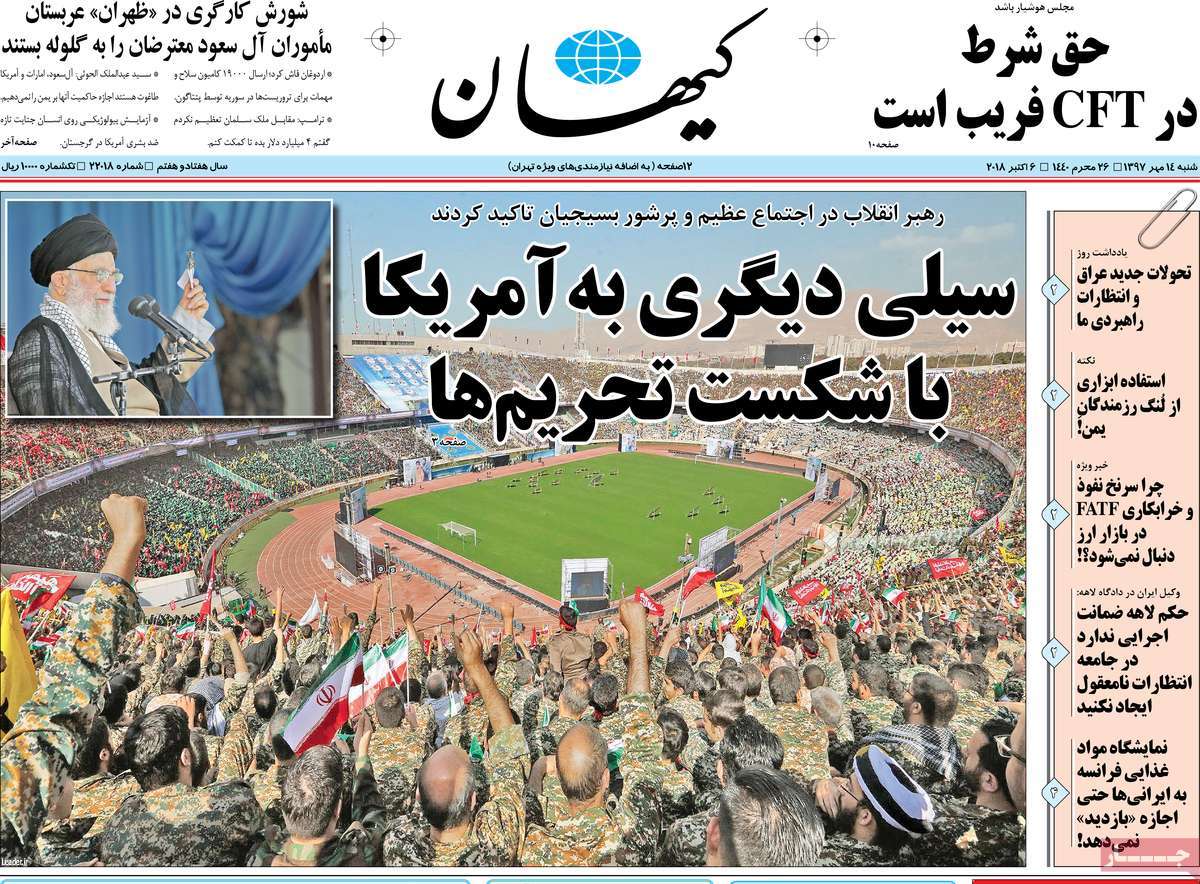
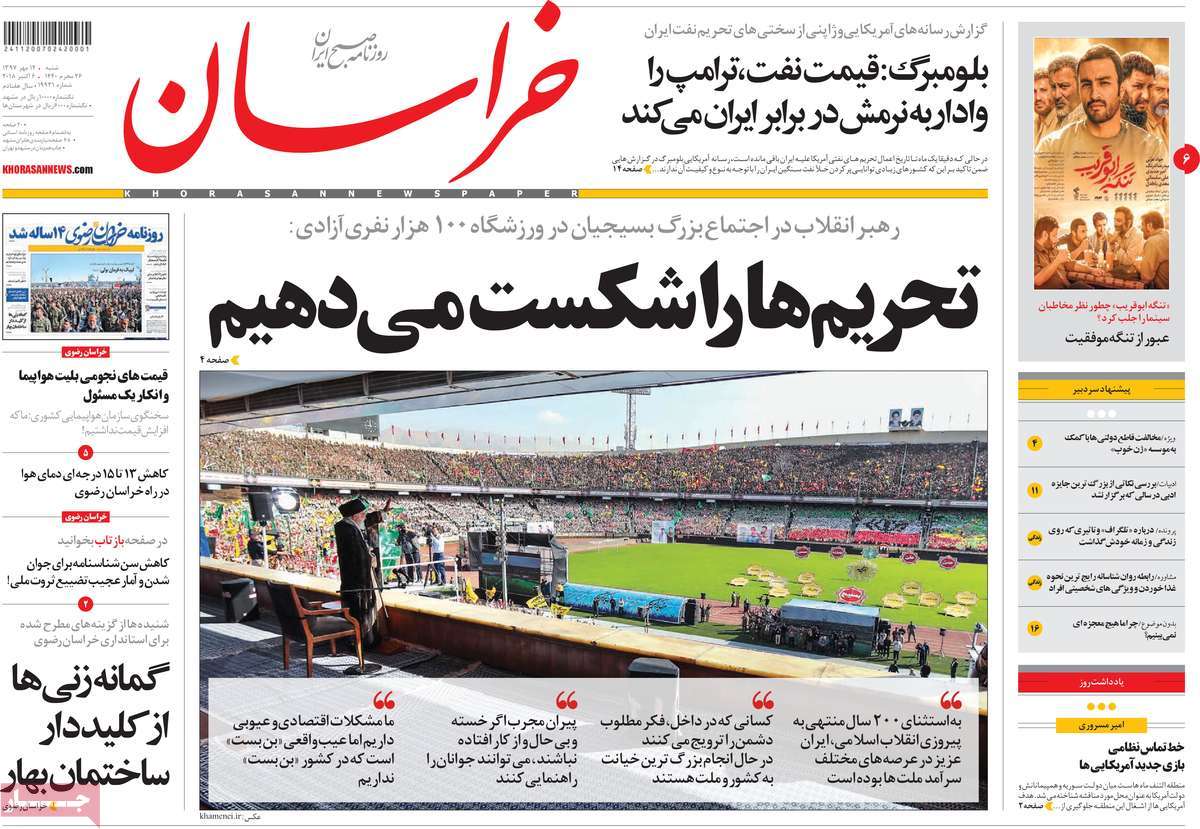
Iranian papers today widely covered the remarks made by Ayatollah Seyyed Ali Khamenei, the Leader of Iran’s Islamic Revolution, in a gathering of 100,000 Basij forces in Tehran’s Azadi stadium.

Also a top story as the Parliament’s Sunday session to vote for or against a bill on the Combating the Financing of Terrorism (CFT), which is one of the four bills proposed by the government to take the country out of the blacklist of the Financial Action Task Force (FATF).

Comments by Foreign Minister Mohammad Javad Zarif in an interview with Al Jazeera also received great coverage.

The above issues, as well as many more, are highlighted in the following headlines and top stories:


Abrar:

1- Kerry: Our Policy in JCPOA Based on Verification, Not Trust

2- Turkish Parliament Extends Presence of Turkey’s Military in Iraq, Syria

3- Israel Trying to Win Germany’s Support for Anti-Iran Sanctions

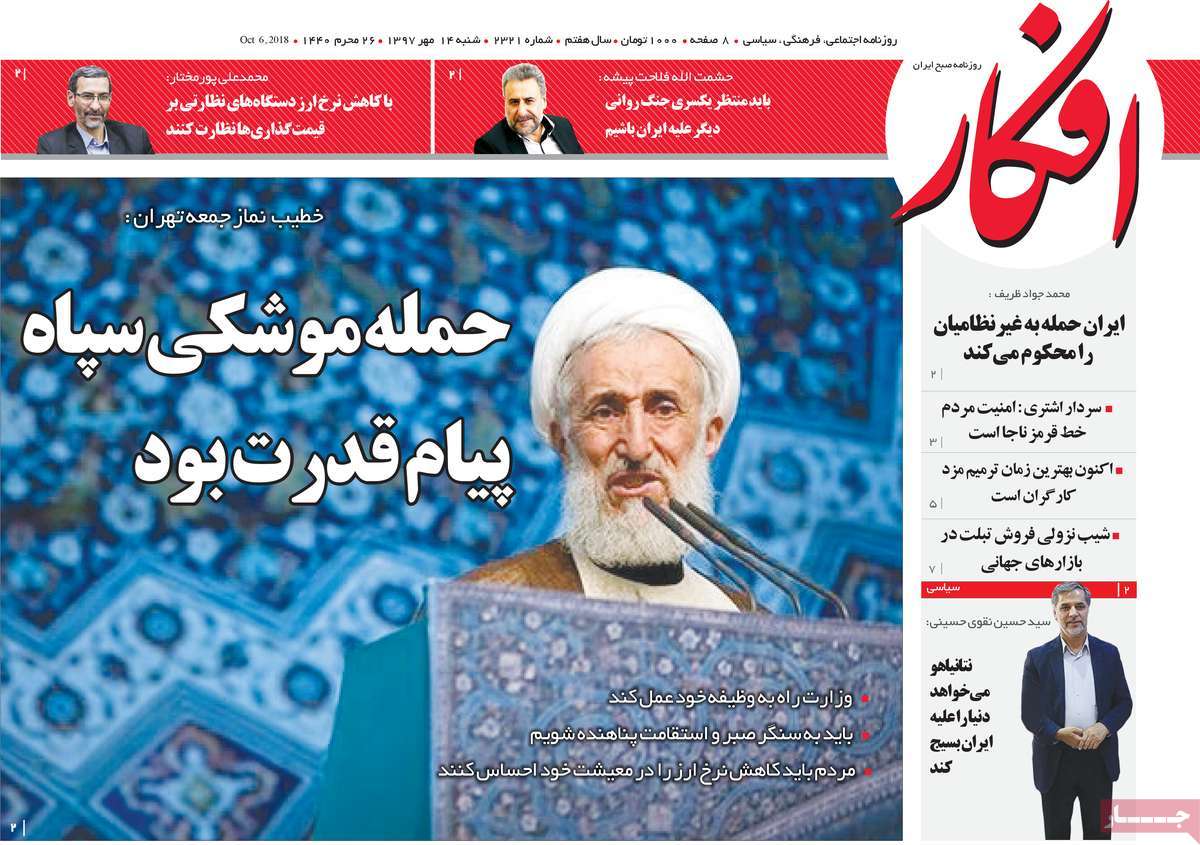
A Look at Iranian Newspaper Front Pages on October 6


Afkar:

1- Zarif: Iran Condemns Attack on Civilians

2- Netanyahu Wants to Mobilize the World against Iran: MP

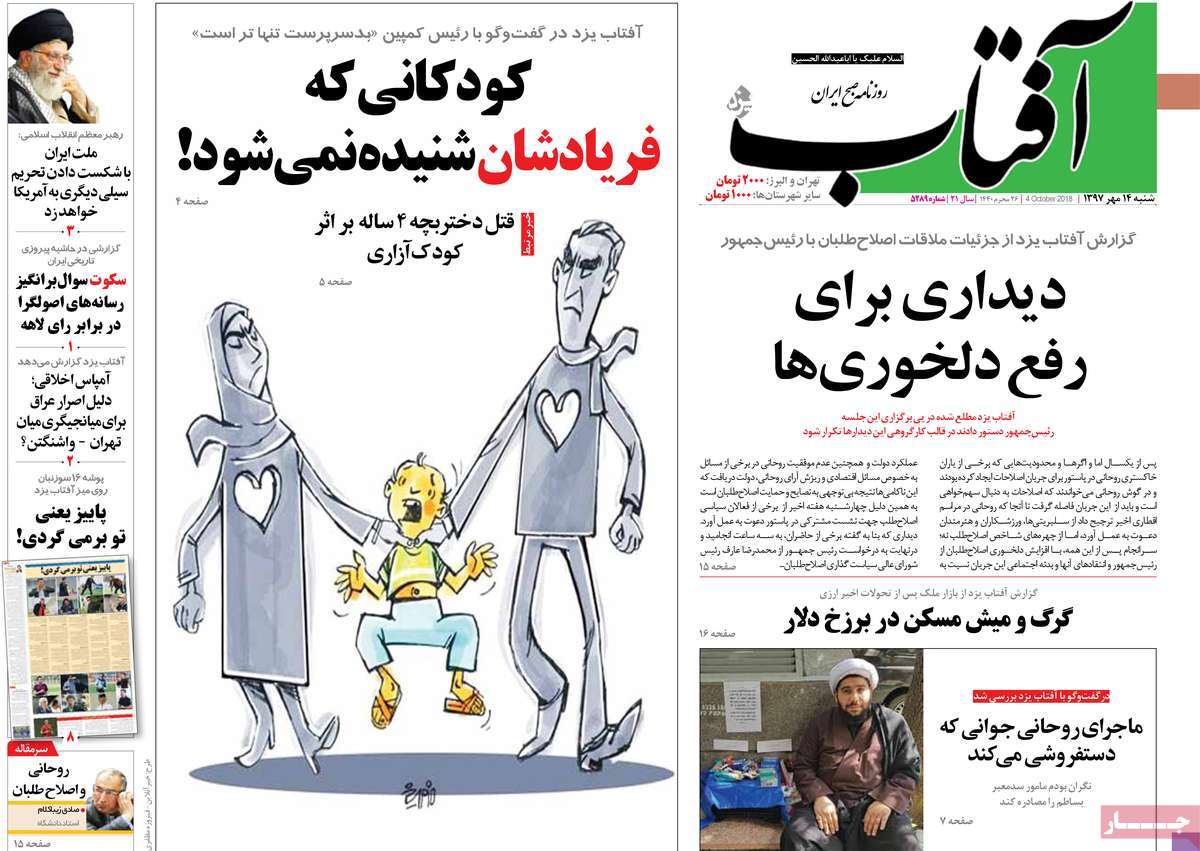
A Look at Iranian Newspaper Front Pages on October 6


Aftab-e Yazd:

1- Iran Leader: Iranian Nation to Give US another Slap by Defeating Sanctions

2- Conservatives’ Questionable Silence over ICJ’s Anti-US Ruling

3- A Meeting to Get Back on Speaking Terms: Rouhani Meets Reformist Figures

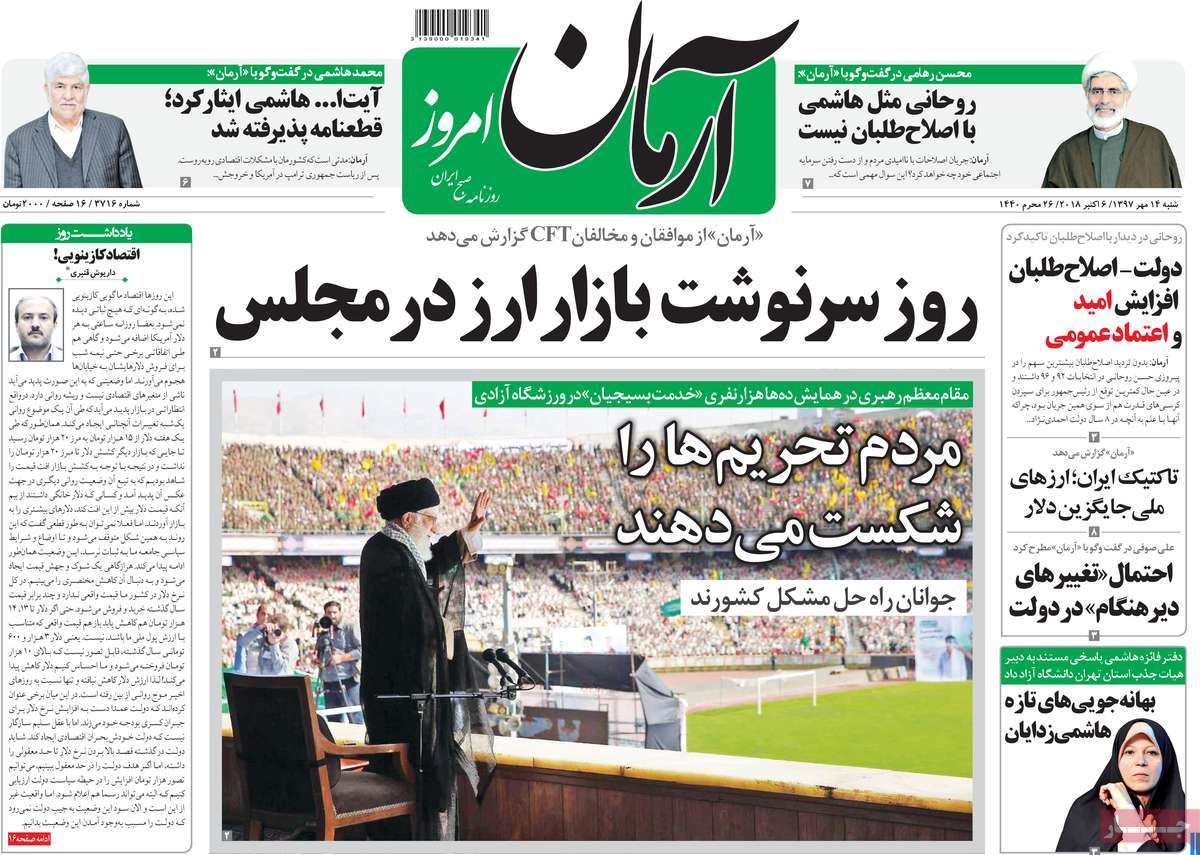
A Look at Iranian Newspaper Front Pages on October 6


Arman-e Emrooz:

1- Iran Leader: People to Defeat US Sanctions

2- Iran’s Tactic: National Currencies to Replace US Dollar

A Look at Iranian Newspaper Front Pages on October 6


Etemad:

1- Iran Leader Underlines Three Undeniable Facts

  • Iran’s Greatness, Islamic Republic’s Might, Nation’s Invincibility

2- Continued National Might [Editorial]

A Look at Iranian Newspaper Front Pages on October 6


Ettela’at:

1- Iran Leader: Nation, Youths Have Decided Not to Be Humiliated Again

  • Don’t Follow Foreign Powers, Bring Dignity, Honour for Iranian Nation

2- Iran, Russia Resolved to Ditch US Dollar in Bilateral Trade

3- Moscow: Iran Fighting Terrorists in Syria at Damascus’ Request

4- Zarif: We Must End US Conceit by Building Strong Region

A Look at Iranian Newspaper Front Pages on October 6


Hamshahri:

1- One Step from Getting Out of FATF’s Blacklist

  • Parliament on Sunday Will Vote against Financial, Monetary Isolation

2- Iraq Starts to Become Moderate, Mediator Country

A Look at Iranian Newspaper Front Pages on October 6


Iran:

1- Government, Reformists Establish Working Group for Further Convergence

A Look at Iranian Newspaper Front Pages on October 6


Javan:

1- Trump Imposes Inflation on the World with His Decision

2- Iran Leader: Young People Are Solution, Not Problem

A Look at Iranian Newspaper Front Pages on October 6


Jomhouri Eslami:

1- Iran Leader: We’ll Defeat US in Its Anti-Iran Sanctions

2- Former US Defence Secretary: Threatening Iran Sheer Folly

A Look at Iranian Newspaper Front Pages on October 6


Kayhan:

1- Iran Leader: We’ll Overcome Sanctions to Give US another Slap in the Face

2- Parliament Must Remain Vigilant: “Reservation” in CFT Is a Deceit

3- Rise of Workers in Saudi Arabia’s Dhahran: Al Saud Forces Open Fire on Protesters

A Look at Iranian Newspaper Front Pages on October 6


Khorasan:

1- Bloomberg: Oil Price to Force Trump to Back Off from His Iran Policy

A Look at Iranian Newspaper Front Pages on October 6


Sazandegi:

1- Return of Technocrats: Barham Salih Elected as Iraqi President

2- Car Dealers Shocked: Decreased Dollar Rates Reduce Price of Foreign Cars

A Look at Iranian Newspaper Front Pages on October 6


Shahrvand:

1- Iran’s Adoption of FATF Standards to Help Stabilise Forex Rates

2- How Iran Won The Hague Battle against US? Details of Historic Legal Case

A Look at Iranian Newspaper Front Pages on October 6


Shargh:

1- Missing Rate of US Dollar

  • Rouhani’s Deputy Says Dollar Rate Must Be below IRR 70,000

2- Nobel Peace Prize Awarded to Two Activists Working against Sexual Violence

A Look at Iranian Newspaper Front Pages on October 6

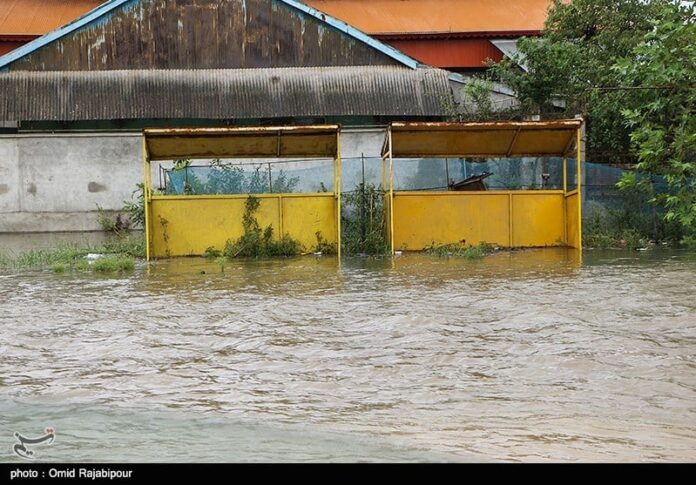
4 Dead after Heavy Floods Hit Northern Iran

Over the past 12 hours, the northern provinces of Mazandaran and Gilan were hit by heavy raining and the people in northwestern Ardabil province are witnessing the first snowfall.

One person reported to have been killed by lightning strike in Sari and a taxi driver died in Chaloos after mistakenly went into the floods and drowned under the water and 2 other people died in the floods in Mazandaran.

Authorities said that heavy rainfall caused floodings in the residential areas in different parts of Mazandaran province and some houses were damaged in cities of Amol and Babol. Other news also indicated that electricity has been cut in central and eastern regions of Mazandaran province.

Cellphone communication networks were also interrupted in some parts of Ramsar in northern Iran and telephone lines are disconnected in most parts of city.

The Old Road; A Thrilling Drama on Violence against Women

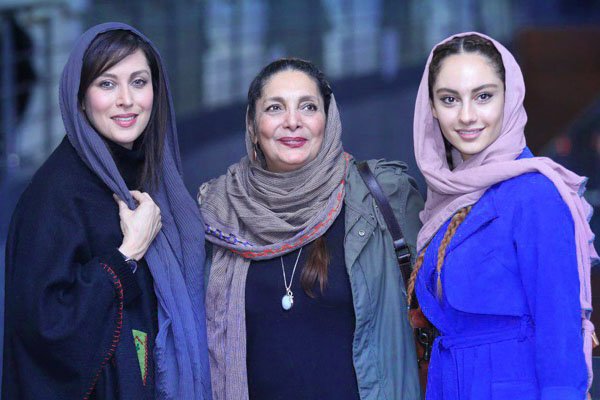
Iranian actresses Mahtab Keramani (left) and Tarlan Parvaneh (right) along with Manijeh Hekmat, the director of the film "The Old Road" (2018)

Hekmat, who has won numerous awards in Iran and other countries, has made her latest feature film about fighting violence against women, which is her main social concern.

“The Old Road” is Hekmat’s fourth feature film after being a decade away from filmmaking. In recent years, she has been working as a producer and distributor, but last year she participated in the Fajr Film Festival with “The Old Road” as the latest film as a director.

Iranian actress Mahtab Keramati, who has been a UNICEF National Ambassador in Iran since 2006, plays the main role of the film as a victim of violence. Karamati, who has a history of engagement in humanitarian activities, education of children, and awareness raising about AIDS, is the smart choice of Hekmat to play the role of a victim of violence against women in this film. The Old Road, featuring Keramati and Atila Pesyani, has been screened as of September 30 in Iranian cinemas.

In her previous works, Hekmat addressed the social problems of women in the community and family. For example, her “Women’s Prison” in 2000 won many awards.

Violence against women is one of the most important social problems and a clear instance of human rights violation. Many victims of such violence do not want to disclose it for a variety of reasons. Showing examples of such violence and making the society aware of them can be the first step to contain the social ill. Meanwhile, the media can play an effective role in informing the public.

Saudi Royal Families Outraged by Trump’s Recent Insults: Analyst

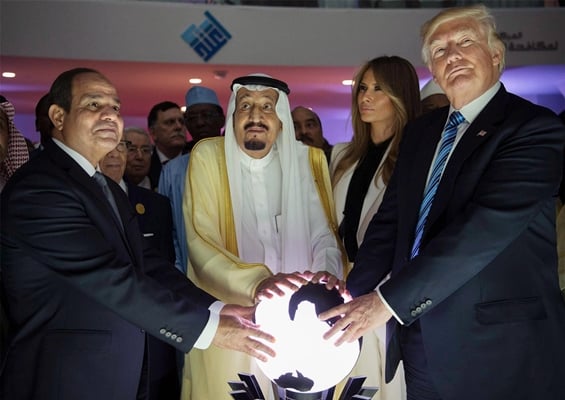
US President Donald Trump, Melania Trump, King Salman bin Abdulaziz al-Saud of Saudi Arabia and Egyptian President Abdel Fattah al-Sisi open the World Center for Countering Extremist Thought in Riyadh, Saudi Arabia on May 21, 2017. (Photo by EPA)

Fereydoun Majlesi, a senior expert on US affairs, said Trump’s recent statements about Saudi Arabia were too insulting and this has divided Saudi royal families over the future of their country’s relations with the US.

“We should take this point in mind that the opposition forces in Saudi Arabia who are against the Crown Prince Mohammed bin Salman will not remain silent forever. On the other hand, it goes without saying that if Saudi Arabia has not yet hit back at Trump, it does not mean that it is not angry with Washington,” Majlesi said in an interview with ILNA.

He added there are many small and large royal families in Saudi Arabia who are in touch with not only the US but the European states.

“The policy of Saudi crown prince to get too close to the US president and adopt a more convergent approach towards the US policies in the region will definitely have some horrible consequences for the royal families in Saudi Arabia,” he noted.

He referred to Trump’s remarks that Saudi King Salman could not survive more than two weeks without the US support, and said such insults are not new at all and once again unveil this reality that the US president is not a reliable politician.

“No politician in such a sensitive position as the presidency of the US makes such starkly provocative remarks and insults against the top leader of a foreign country but regardless of this issue, Trump’s remarks raises this question that will Saudi Arabia really collapse after two weeks if the US cuts its support for the country?” he said.

Majlesi said the Saudis will face no serious problem if the US withholds its support for them. “To put it in another way, the Saudis, unlike what the US thinks, will not fall into serous troubles.”

The political analyst said if the US withdraws it support, the Saudis will gradually decrease the intensity of their war in Yemen, try to tone down their aggressive remarks about some of their enemies and adopt a defensive policy towards the whole world.

“In domestic policy, they will resort to their rich oil fields to feed ordinary people of Saudi Arabia to prevent a grass roots opposition movement. With such policies, the Saudis can overcome their domestic crises for a medium term. Most of Trump’s remarks are aimed at fulfilling his own domestic political goals but his new remarks are mainly economically motivated.”

In response to a question on whether or not Saudi Arabia will get closer to the European states as a result of the Trump’s insults, he said as far as the crown prince is in charge, there would be no change in Saudi Arabia’s policy towards the US.

“Today, the Saudi crown prince is paying a heavy price for his ties with Trump because the opposition inside the country including leading princes and security officials are angry with his policies and may hatch a plot against him any time. So, we should wait and see for how long the crown prince is ready to pay the price for his ties with the US administration,” he noted.

Majlesi pointed out that part of Trump’s criticism of Saudi Arabia is originated in his oil policy which will gain momentum in the coming months.

“Trump maintains that Saudi Arabia should increase its oil production to make up for the 20% share of Iran after November sanctions are imposed. On the other hand, Trump administration maintains that Arab and Islamic countries should not take full control of oil exports and imports and wants to change the current trend in this area,” he concluded.

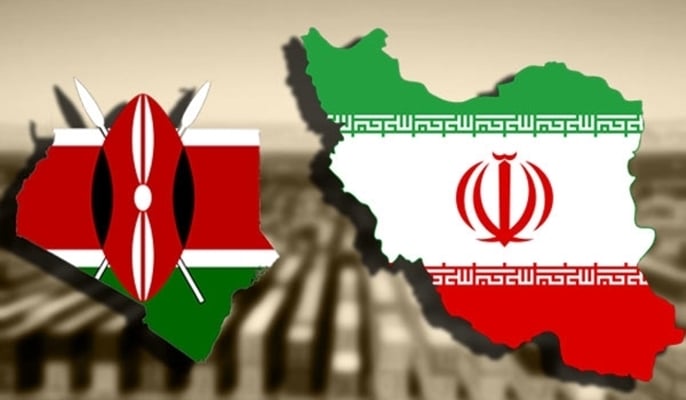
Iran Ready to Export Technology Products, Services to Kenya

Sorena Sattari made the remarks in a meeting with the head of the Kenyan Investment Authority during his recent trip to the Kenyan capital of Nairobi.

During the talks, Sattari touched upon the need to create favourable conditions for the exchange and export of technology products and services between companies and financial institutions of the two countries.

He underlined the necessity of creating a line of credit for banks and providing the opportunity for Iran and Kenya’s technology companies to interact with each other in order to exchange products and services

According to the Iranian government’s official website (Dolat.ir), Sattari said it is important to provide the context for cooperation and interaction between companies and financial institutions on both sides to exchange products, services, technologies and experiences.

For his part, the managing director of the Kenyan Investment Authority said, “We are ready to carry out scientific and technological projects in the fields of ICT, pharmaceuticals, and medicine.”

For a brief review of Iran’s achievements in various fields of science and technology, check the book “Science and Technology in Iran: A Brief Review

Referring to Kenya’s geographic location and climate, Moses Ikiara stressed the need for not using chemicals saying that Kenya is interested in using clean technologies.

During his stay, Sattari also held a meeting with Kenyan Secretary for Industry, Trade and Cooperatives Hon Peter Munya.

The Kenyan official said the Islamic Republic has good industry and technology capabilities, and Nairobi will pave the way for importing these technologies.

On the sidelines of this meeting, Iran’s products and services in the fields of medicine, engineering, oil products, information technology and agriculture were also introduced.

Iran Advises Netanyahu to Learn Swimming in Mediterranean

Brigadier General Hossein Salami said in a Friday speech that the Zionist regime does not have any elements of a state and government, and it is not at the level of being a threat for Iran because the Lebanese resistance movement Hezbollah is enough to destroy it.

“In the course of a hard struggle, we have defeated our enemies for decades. One cannot find a clash in history in which the global hegemony with the United States as the lynchpin and the greatest economic power, been so defeated by a nation like Iran,” said the Iranian commander.

“The great nation of Iran defeated the Shah as a US agent in the region and the world, and that was one of the greatest defeats of the United States against the Islamic Republic. After that, the youths of this country were engaged in the most unequal and longest 20th-century war to defeat the largest global coalition in eight years.”

Elsewhere in his remarks, he noted that never the US has been as weak as today. He further mentioned that all the costs in the Middle East did not achieve the smallest success for the United States. “Why isn’t Iraq under their control and why have their dreams in Syria vanished into thin air?”

Salami said the United States failed to provide the Zionist regime with security and save Saudi Arabia from the deadlock; it also failed to isolate Iran and unite its allies against the Islamic Republic.

“Turkey, Pakistan and China have distanced themselves from the United States in the political and economic arena. Washington has not even managed to maintain its unity with the EU and has started the Cold War with Syria,” continued the Iranian general.

Moreover, he said that the US does not learn lessons from its successive failures throughout the history. “If the United States continues its policies, then, according to the Leader of Islamic Revolution Ayatollah Seyyed Ali Khamenei, we will soon inflict another major defeat on the United States,” he warned.

He underscored that the enemies must know the fact that Iran’s influence in the Muslim world is not the same as that of the US. “Our military presence in Syria is limited and advisory. Iran’s influence in the Muslim world is spiritual and religious, and the Muslim world is gradually recovering its magnificence,” concluded Salami.

Tehran Vehemently Condemns Israeli Official’s Insult to Iranians

In response to a question asked by Al-Alam News Network reporter about the shameful insolence and disgraceful rudeness of the president of the illegitimate regime of Israel against the Iranian nation, the Ministry’s Spokesman Bahram Qassemi said Tehran warns the fascist leaders of the Zionist regime over such insults.

The mean, rude, and evil Zionist leaders, who used to pretend they separate the people of Iran from the country’s democratically-elected government as part of their deception, sham, hypocrisy and propagandist policies, have now lost control of their words, and with a bitter tone and boldness have shamelessly insulted the Iranian people openly to reveal their anti-Iran demonic nature, the Iranian spokesperson added.

He went on to say that the Israelis also showed how they are opposed to the existence of Iran and Iranians and how they are burning in an implacable and endless hatred.

“More disrespectfully, the leaders of the regime, whose brutality, aggression, meanness, deception, and cunning are no secret to anyone, call the ancient, brave and cultured nation of Iran, who saved the Jewish people, with such words claiming that the Iranians must be starved and not fed.”

He further noted that the great and cultured people of Iran respect the status and the rights of the followers of the religion of Prophet Moses (PBUH).

Iranians believe the Jewish people are different from these fascist, aggressive and unbridled minority who are ruling the occupied territories, pointed out Qassemi.

“We warn these self-centered racists, who are deprived of wisdom and politeness, about the consequences of making such indecent and thoughtless remarks against the Iranian nation,” he added.

Israeli President Rivlin on Thursday said “the Iranian beast must be starved and not fed. This is the only way to guarantee the stability of the world.”

In a meeting with German Chancellor Angela Merkel in the disputed city of Jerusalem al-Quds, Rivlin also added that “from our point of view, now is the time to join the effective sanctions on Iran and not to circumvent them.”

During the seventh round of Israeli-German intergovernmental consultations, Rivlin tried to convince Merkel to stop doing business with the Islamic Republic and circumvent economic restrictions put in place by US President Donald Trump.

“Iran Should Take Advantage of ICJ’s Verdict against US”

The ICJ ruling orders Washington to allow for the exports of agricultural produce as well as airplane spare parts and equipment to Iran. The court verdict also obliges the US not to obstruct the issuance of permits on financial exchanges and the transfer of money pertinent to the above-mentioned products. Moreover, the ICJ injunction obliges both sides to refrain from taking any action that might intensify conflict between the two countries until a final ruling is issued. In practice, it means the US must not impose oil sanctions as well as other planned bans for the coming month. The ICJ ruling is legally and politically valuable, and will strengthen Iran’s moral position. However, the verdict, or injunction as you may call it, will become more valuable for Iran only when the Islamic Republic can take advantage of it on the diplomatic front.

I believe at this juncture, the best way to capitalize on the verdict is that Iran – possibly with the backing of the European Union – should set the implementation of the ICJ ruling as the “minimum required precondition” for negotiations with Washington. In other words, Iran can demand that the implementation of the ruling be the least sine qua non for proving the US government’s abidance by international law and accepting Washington’s “legal competence” to enter into fresh talks and, hence, put the US on the defensive.

Such a move, i.e. setting the implementation of the ICJ ruling as the minimum required prerequisite for talks, will have several advantages for Iran.

1. In the best-case scenario, setting such a precondition – which basically has a legal nature and is based on the verdict of the most important international judicial authority, will give Trump and the United States’ political apparatus a chance for a decent retreat. If this decent retreat happens, it will create many diplomatic and political opportunities for Iran.

2. Even Washington’s rejection of the precondition will have numerous benefits for Iran. Failure to implement the precondition, which amounts to a lack of respect for the ruling of the most important international judicial body, will make the public opinion and Western governments more determined in backing Iran. In fact, since Iran’s precondition is a legal one and emanates from the UN Charter, it will be difficult and costly for the US to reject it. Moreover, it will be very easy for world governments and Western politicians to support it.

3. This precondition gives pro-diplomacy and pro-multilateralism currents in the US the chance to resist the Trump administration’s policy of unilateralism and bellicosity with a new argument, and even use different statutory levers against it. As a case in point, if the Democrats gain control of Parliament in November, pro-JCPOA Democrats will, by presenting motions and issuing resolutions, get the chance to push the Trump administration toward implementing the ICJ ruling, i.e. Iran’s precondition, or at least trigger a raucous legal/media battle against it. They could even resort to courts inside the United States to make the Trump administration implement the new law. Furthermore, civil activists inside the US, universities, prominent figures, veteran politicians and NGOs can also resort to the ruling – especially with a focus on the court order to refrain from fuelling tensions and paying attention to the humanitarian aspects – to pressure the US government and the ideological circle of its foreign policy in order to make it settle its dispute with Iran peacefully. The EU and the United States traditional allies will also be able to hold consultations with Washington – with an eye on the ICJ order – to ease tension with Iran.

4. Iran’s precondition, i.e. the execution of the ICJ order, will indubitably face the 12 preconditions set by US Secretary of State Mike Pompeo, which have no legal and logical basis, and, hence, will give more strength and legitimacy to Iran’s position. In fact, the more legal Iran’s position appears, the less illogical and unfounded the Trump administration’s position will seem. The association of the court verdict with Iran’s precondition is an opportunity to further expose the difference in the nature of the foreign policies of the two governments.

5. The association of the court ruling with Iran’s precondition will not only create numerous promotional opportunities on the diplomatic front, but also bring about good chances when it comes to the utilization of other international mechanisms. Accordingly, some observers’ focusing on the axiom that the execution of the ICJ ruling cannot be guaranteed, or that no mechanism would make the US respect the injunction, suggests a one-dimensional and incomplete look at international relations. If fact, if the court ruling were not important for Washington, and noncompliance with the ruling wouldn’t be costly for the US, the US government would never bother to appear in court and defend itself. Put it simply, it is necessary that Iran act in such a way that this important international document does not lose its significance.
In fact, it is required that Iran’s diplomacy apparatus be careful not to allow this ruling to have a fate like that of other long-forgotten verdicts such as the famous and important ICJ ruling about Israel’s so-call separation wall in 2004, of which, unfortunately, no proper diplomatic, political and even advertising advantage was taken. In other words, it is necessary that all political factions and currents in Iran give the country’s diplomatic apparatus, which has pulled off such a great victory for Iran, a chance to utilize the ruling from now on, as well.