Wednesday, December 31, 2025
Home Blog Page 3459

Entire World Must Stand against US’ Aggressive Behaviour: Iran

Trump
AFP's photo of US President Donald Trump

Larijnai made the remarks in a Monday meeting with his Russian counterpart Vyacheslav Volodin on the sidelines of the Third Annual Meeting of Parliament Speakers of the Eurasian countries in Antalya, Turkey.

The Iranian lawmaker added that “major changes have been taking place at a global level in recent times, most notably the aggressive and brutal behaviour of the United States in bothering all countries, and that requires the full cooperation of all states.”

Referring to the need for bilateral and multilateral action to counteract such kind of behaviour, he underlined that countries can follow up on their issues through joint measures.

Referring to the Russian President Vladimir Putin’s emphasis on maintaining peace, Larijani said Iran “continued to negotiate with the European parties at the same time, but there are still some problems that have not yet been solved.”

He appreciated bilateral cooperation between Tehran and Moscow after the US’ unilateral withdrawal from the Iran nuclear deal, noting that mutual banking and energy cooperation between the two countries has been developing and some of the earlier agreements are being implemented.

Entire World Must Stand against US’ Aggressive Behaviour: Iran
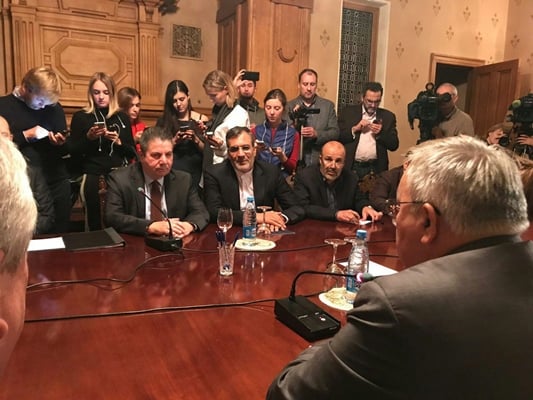
Iranian Parliament Speaker Ali Larijani meeting his Russian counterpart in the Turkish city of Antalya on October 8, 2018. / Photo by IRNA

“The proposal to hold a summit on security and counter-terrorism hosted by Iran remains in place; invitations have been sent to the Eurasian states, and we are waiting for a response to plan its timing,” Larijani went on to say.

In turn, Volodin called Iran an important country for bilateral cooperation with Russia and emphasised the expansion of bilateral ties, especially in parliamentary affairs.

Referring to the holding of the first meeting of Eurasian parliament speakers at the proposal of the Russian Federation, he highlighted that the cooperation of the Eurasian parliaments is being strengthened and will be reinforced by holding the meeting in the Turkish city of Antalya.

Larijani arrived in Antalya to attend the third meeting of Eurasian parliament speakers on Monday evening, and was welcomed by the Deputy Speaker of the Grand National Assembly of Turkey.

The third meeting of Eurasian parliament speakers is underway in Antalya for three days, with the presence of parliamentary speakers and representatives from 40 Asian and European states.

Three Iranian lawmakers are accompanying Larijani in this visit.

Iran Calls for More Economic Ties between Eurasian States

Iranian Parliament Speaker Ali Larijani speaking to reporters upon arrival in the Turkish city of Antalya on October 8, 2018. / Photo by IRIB News Agency

Larijani told IRIB News Agency upon his arrival in Antalya that the meeting is an emerging phenomenon for the development of parliamentary cooperation, proposed by South Korea and Russia a few years ago.

“Now, after holding two meetings in Seoul and Moscow, the number of members attending the Antalya meeting has reached 40.”

Larijani also noted that close commercial ties and development of parliamentary cooperation are among other goals of the meeting.

Parliamentary collaboration on financial and monetary conventions and environmental issues is one of the topics that will be further explored at the Eurasian inter-parliamentary meeting.

The Iranian parliament speaker on Monday met with Vyacheslav Volodin, the speaker of the State Duma of the Federal Assembly of the Russian Federation.

Larijani will later hold meetings with Speaker of the Grand National Assembly of Turkey Binali Yildirim and a number of other foreign counterparts.

The conference will start on Tuesday in Antalya with the presence of the parliament speakers of Asian and European countries, and will continue for three days.

Iran, Uzbekistan Discuss Enhanced Relations

Iranian Foreign Minister Mohammad Javad Zarif meeting Vladimir Norov, the head of Uzbekistan’s Institute for Strategic and Regional Studies, on Oct. 8, 2018. / Photo by mfa.ir

During the Monday meeting, Norov and Zarif conferred on bilateral and regional issues. The two sides emphasised the strengthening of relations between Iran and Uzbekistan in political, economic, cultural, transit and tourism fields.

Fight against ISIS and other terrorist groups was one of the issues that the two diplomats talked about.

Zarif congratulated Norov on being elected as the new Secretary General of the Shanghai Cooperation Organization.

For his part, the Uzbek diplomat expressed hope that cooperation between Iran and the SCO would expand during his term in office.

Iranian Child Named Youngest Artisan of Asia-Pacific

Arvin, the third generation of a Kalash-weaving family, along ith World Crafts Council experts / Photo taken in April 2018

Khospi was picked by the World Crafts Council as the youngest artisan of the two continents in the domain of handicrafts.

“This artist was born on May 9, 2009 in Marivan, and is now making Kalash (a type of local hand-made shoe) alongside his father and grandfather, and although he is only 9 years old, he is one of the good artists in this profession” said Faryad Haddadian, the head of the Cultural Heritage, Handicrafts and Tourism Department of Marivan.

According to Haddadian, three generations of Arvin’s family have been running a Kalash-making workshop in Marivan and are working together with more than 4,500 other Kalash-weavers.

“Last autumn, the city of Marivan was chosen as the world’s city of Kalash-weaving, and the art of making Kalash was registered as a handicraft of Kurdistan on the World Crafts Council’s list of global works,” said the official.

Iranian Child Named Youngest Artisan of Asia-PacificIn addition to Marivan, Kalash-weaving is popular in other cities such as Sanandaj, Divandareh, Sarvabad, Kamyaran and Saghez. However, Marivan is regarded as the hub of producing this type of shoe because it has the most number of artists making Kalash.

Dating back 2000 years, Kalash is made of natural materials such as thread and leather, and is mostly used in hot seasons as it is cool and light.

Kalash is the only footwear which has a line of symmetry, which means there is no “left” or “right” for it. In order to maintain its form, one has to exchange Kalash between the right and left foot every now and then.

Hiking while wearing Kalash suits the form and morphology of feet. Its sole is curved outside, which fits the sole of the foot and prevents fatigue.

Moreover, it does not pollute the environment while being used because its materials are completely natural and, when discarded and thrown onto earth, decomposes into is natural elements in a year’s time. This comes as other shoes take years to disintegrate and decompose.

The materials needed to make Kalash include fabric, thread and leather.

Iran, Japan Discuss Resolution of Environmental Woes

Iranian, Japanese Diplomats Discuss Bilateral Ties, COVID-19 Fight

In a Monday meeting headed by Iran, the ideas and solutions of Iranian scholars and scientific community about resolving the environmental problems were welcomed by the participants.

Speaking to IRIB News Agency after the meeting, the Iranian science minister said sudden rains and dust particles coming to Iran from outside the borders as well as strategies for controlling them were discussed during the meeting.

For a brief review of Iran’s achievements in various fields of science and technology, check the book “Science and Technology in Iran: A Brief Review

He further expressed Tehran’s preparedness to expand its scientific and academic cooperation with Tokyo, saying that Iran has always been ready to work with Japan’s universities and organisations and centres of science and research.

However, he noted, Japan’s scientific communication is not in English and this has prevented Iranian and Japanese scholars from taking such cooperation seriously.

Traditionally, communication with the US, Europe and the West has been more frequent, and there are plans to increase scientific exchanges with countries such as Japan, he added.

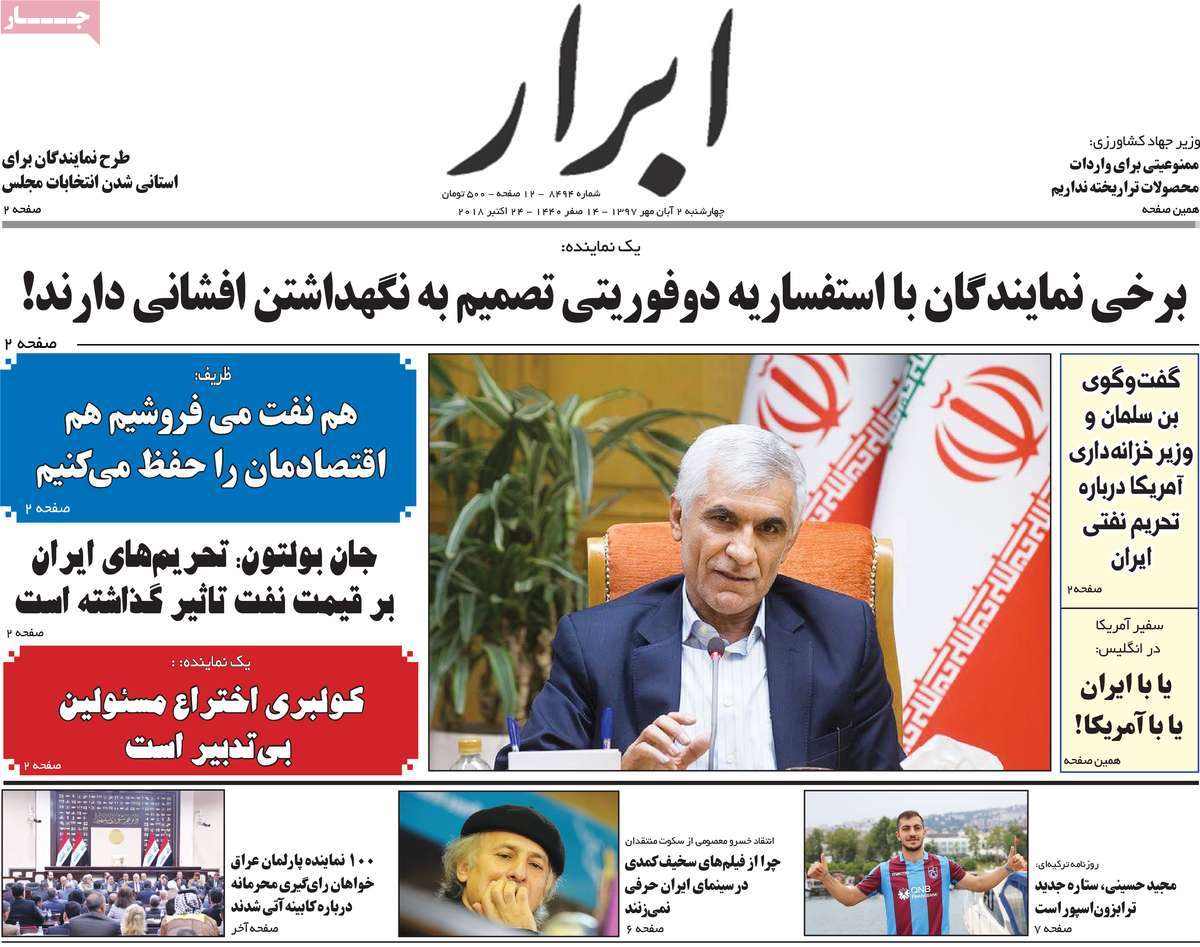
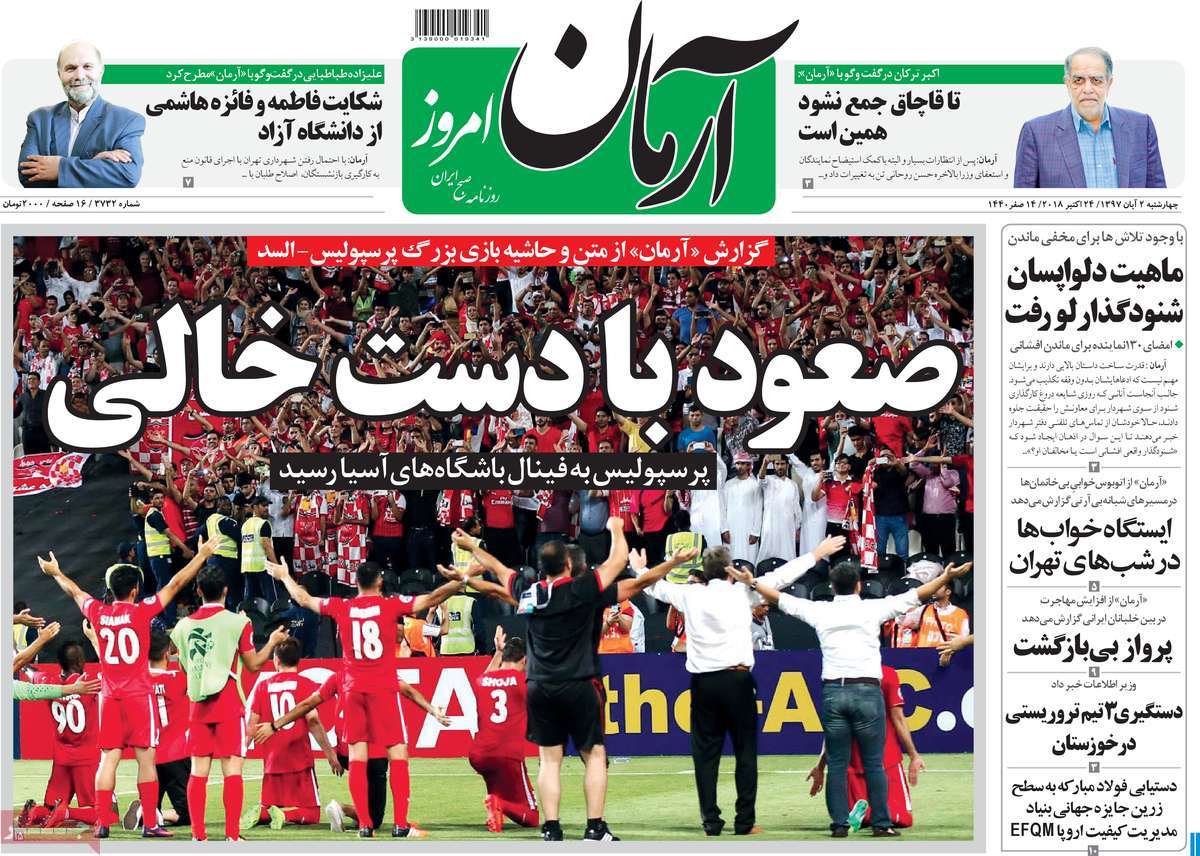
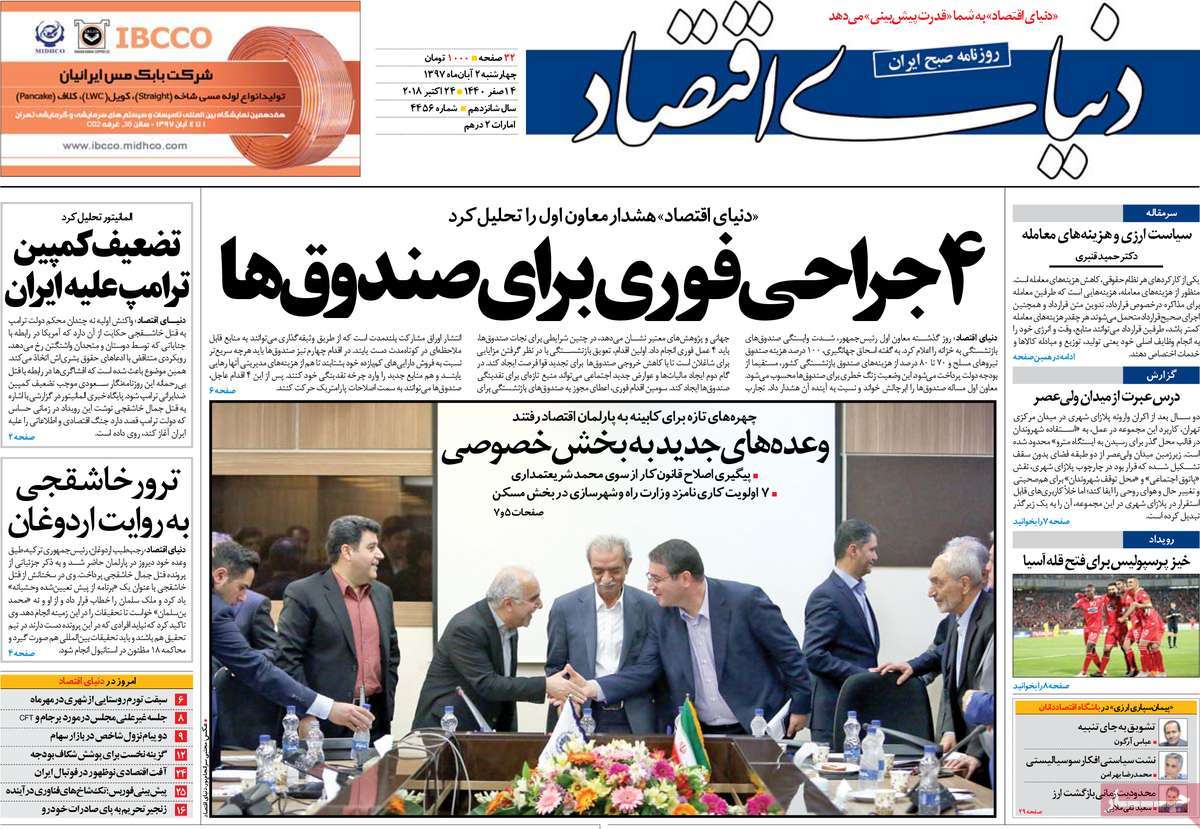
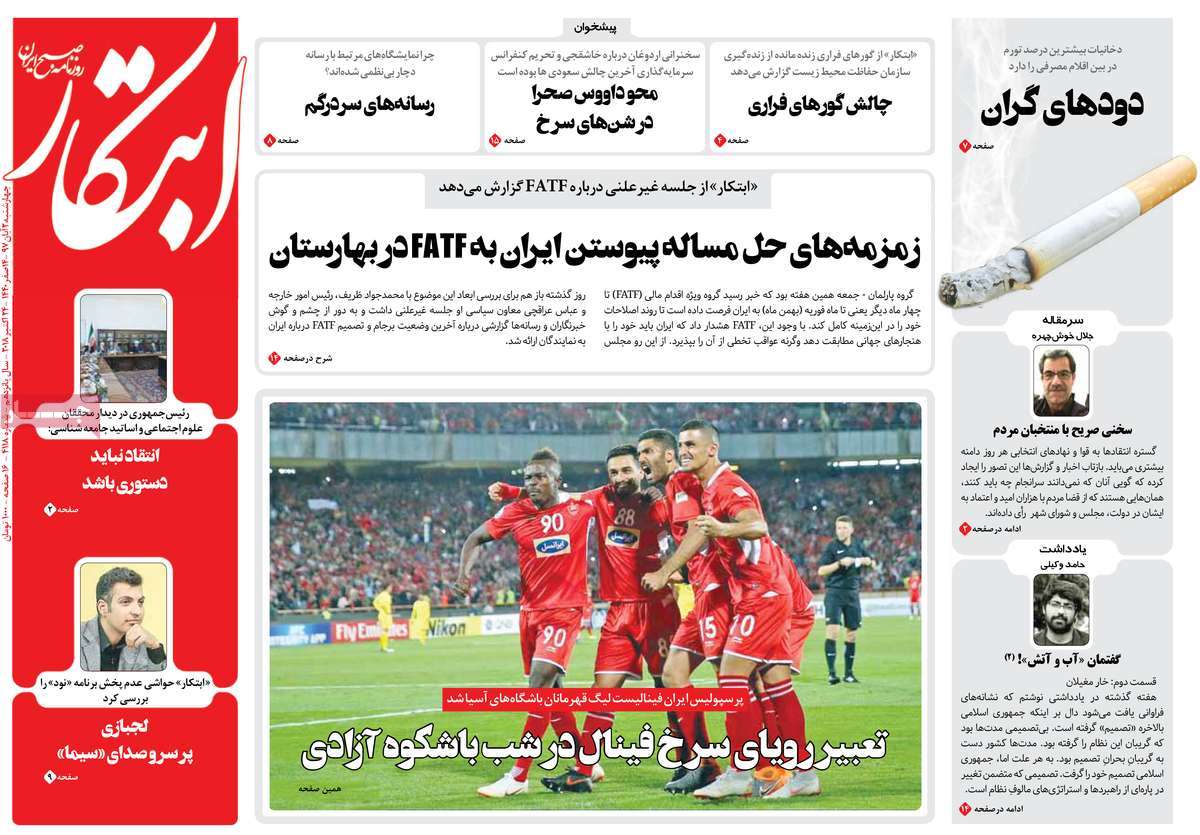
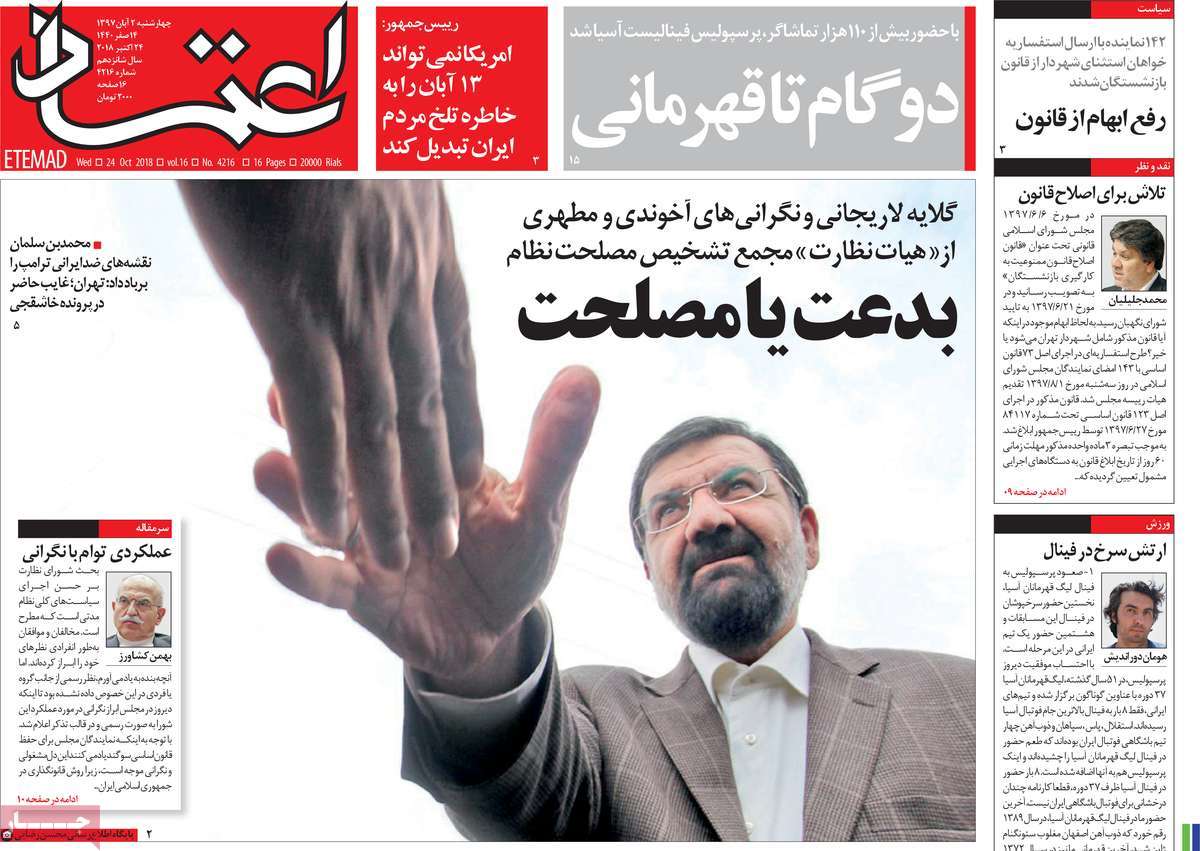
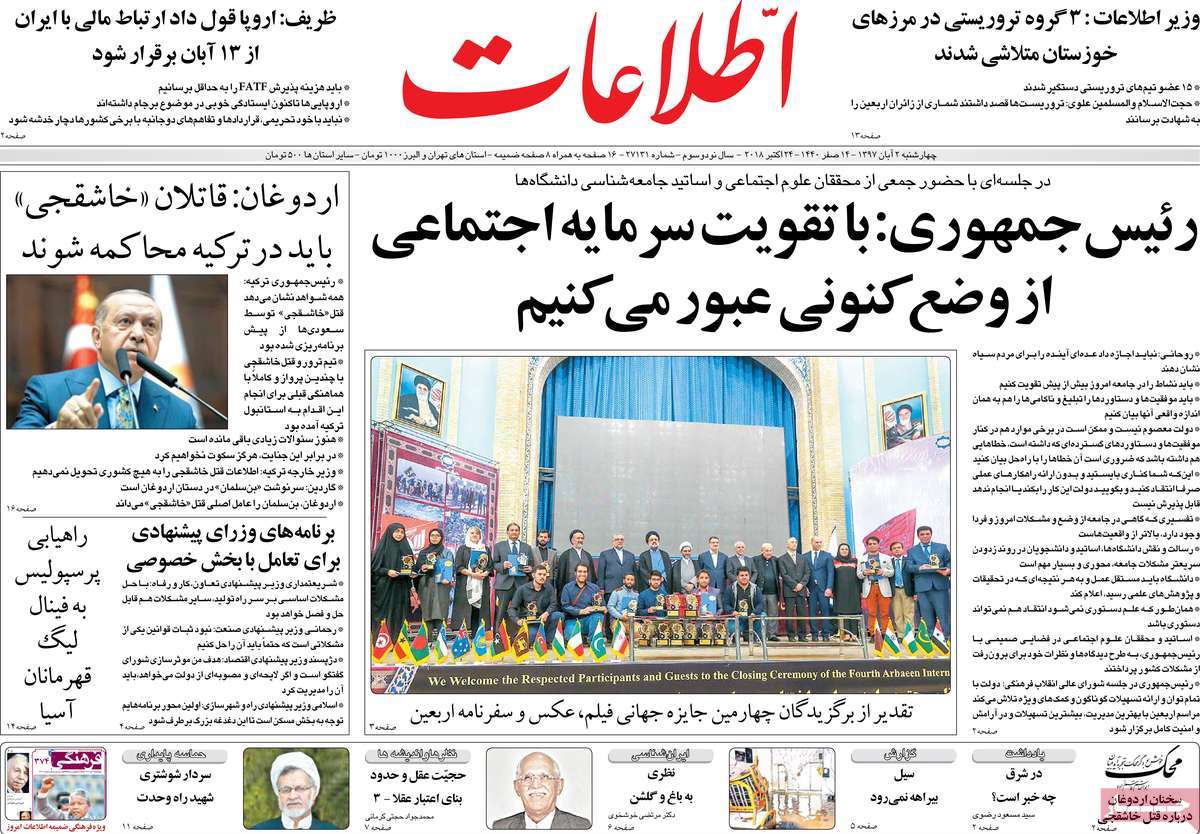
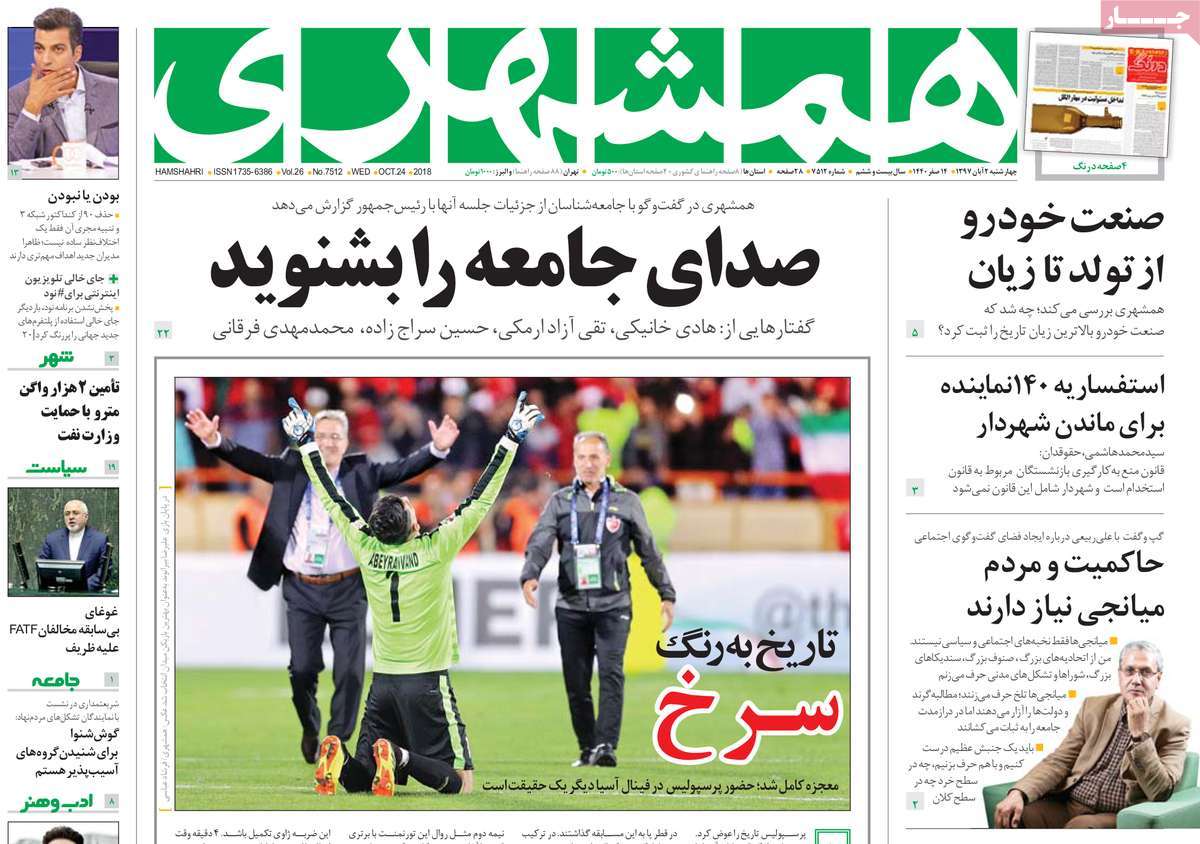
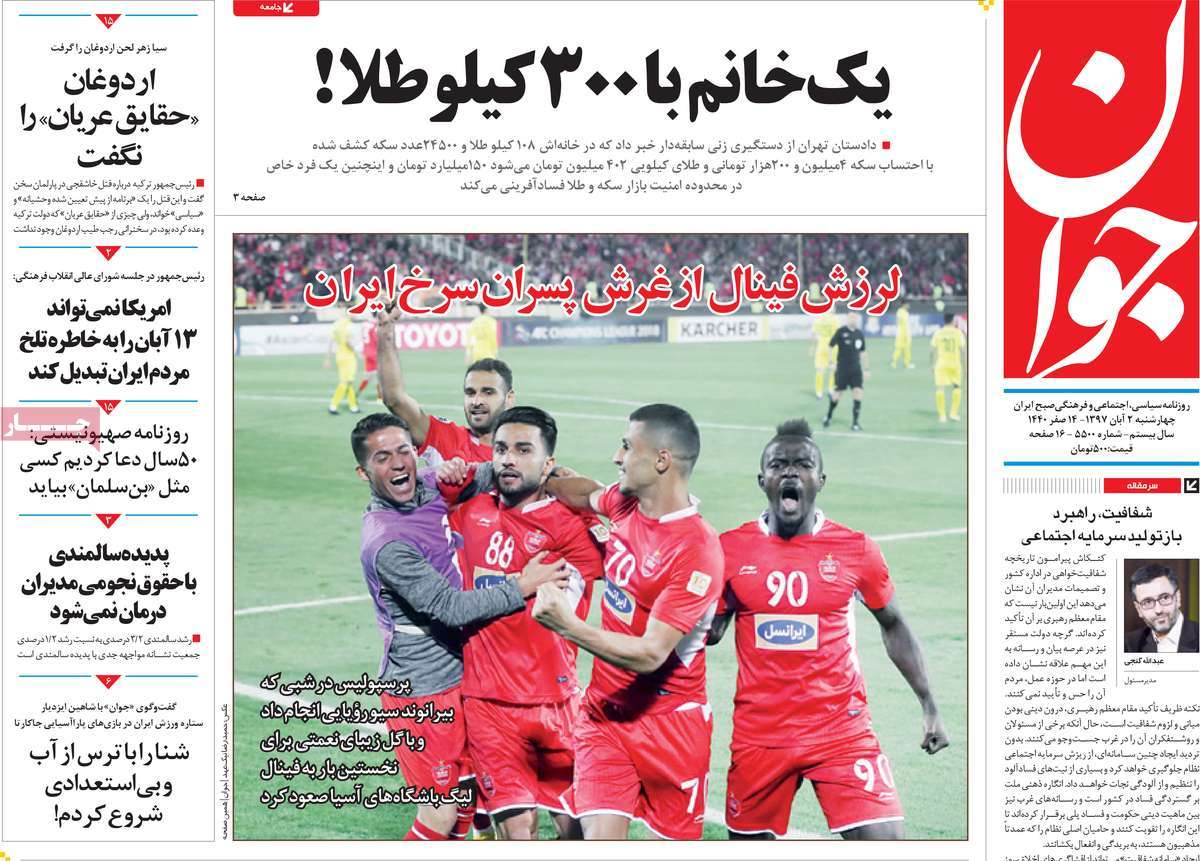
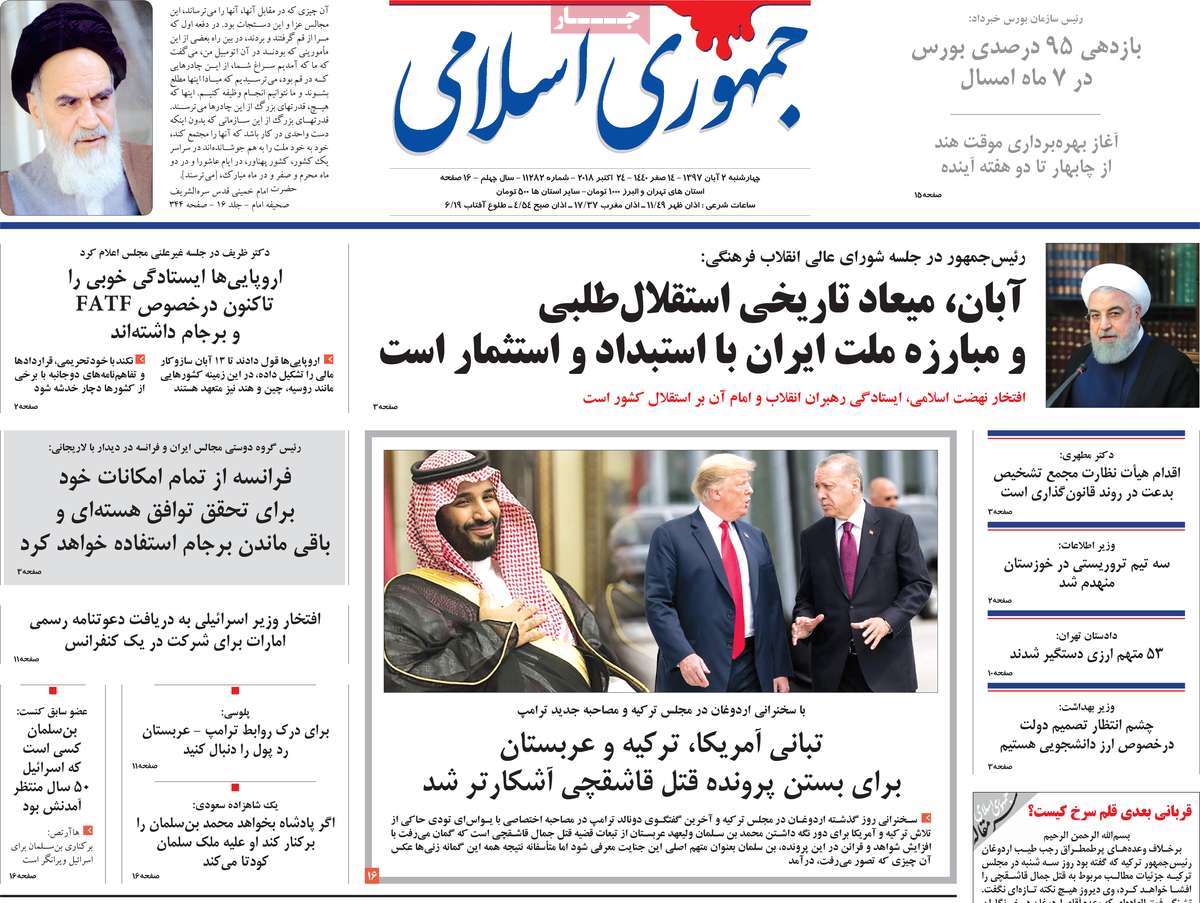
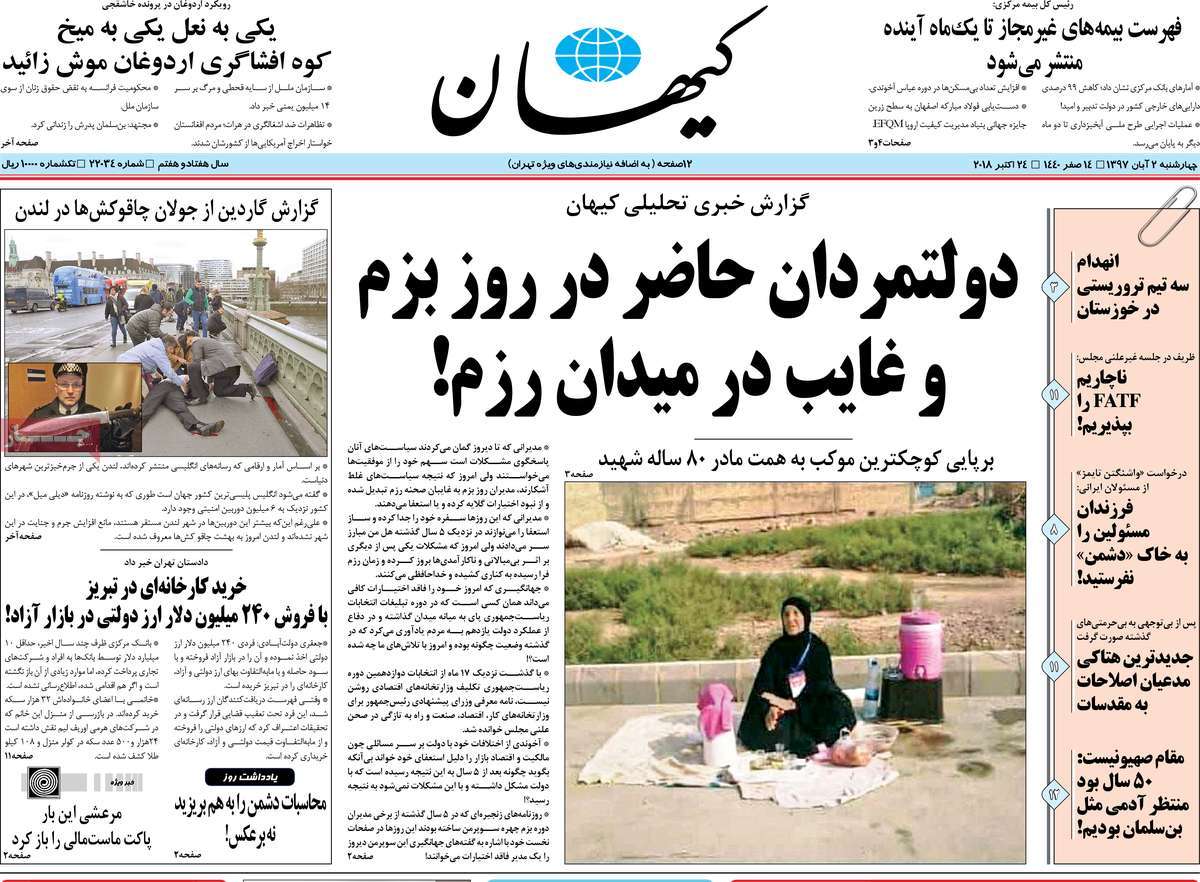
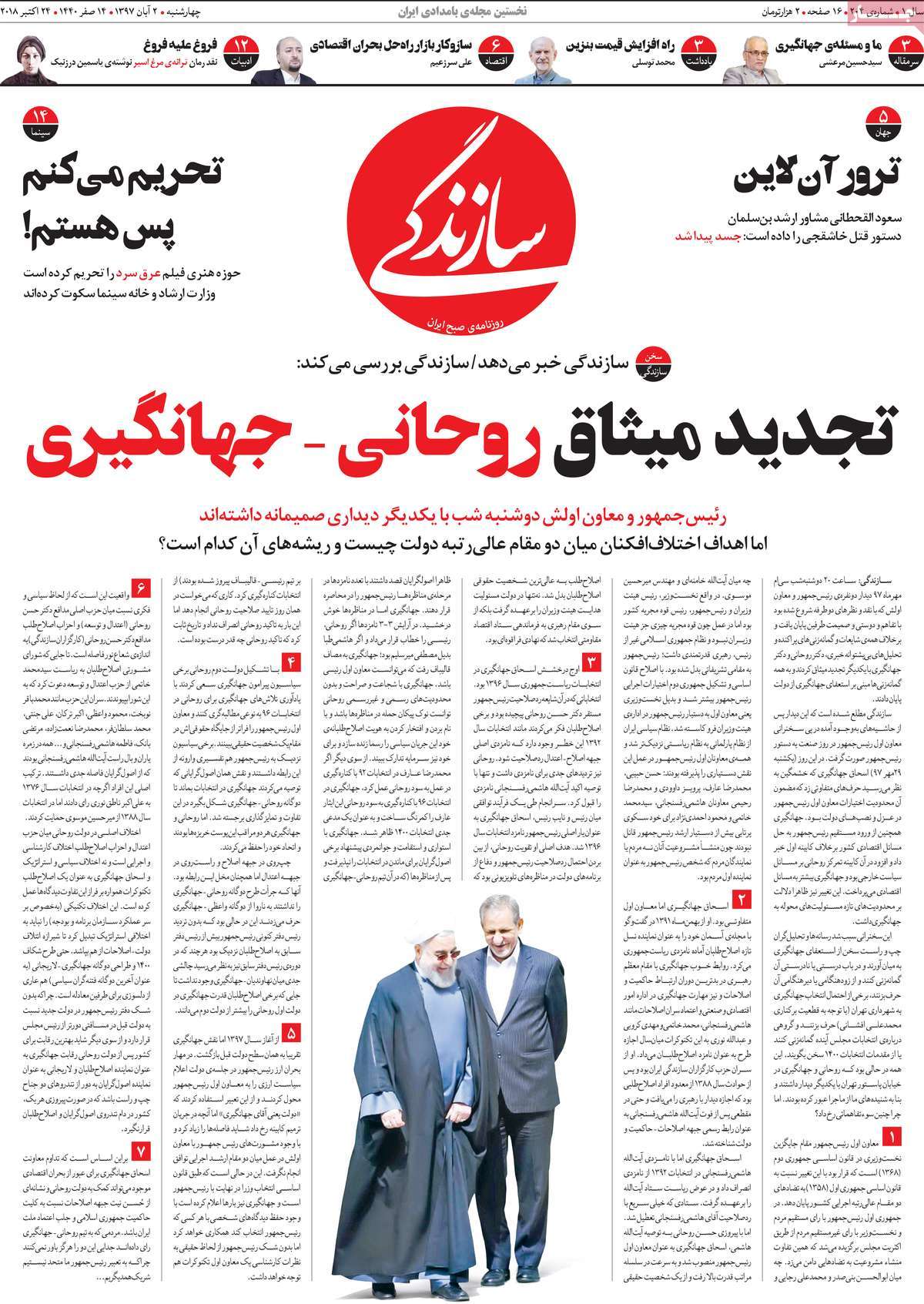
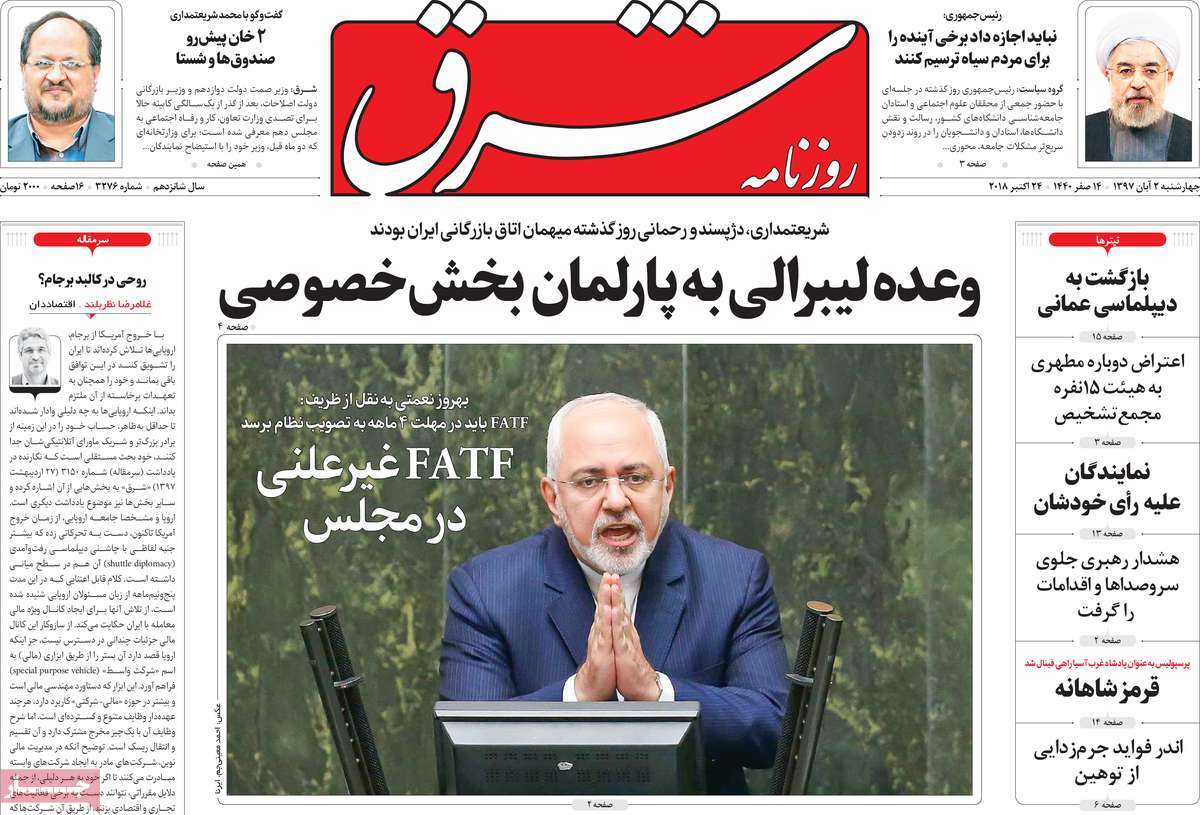
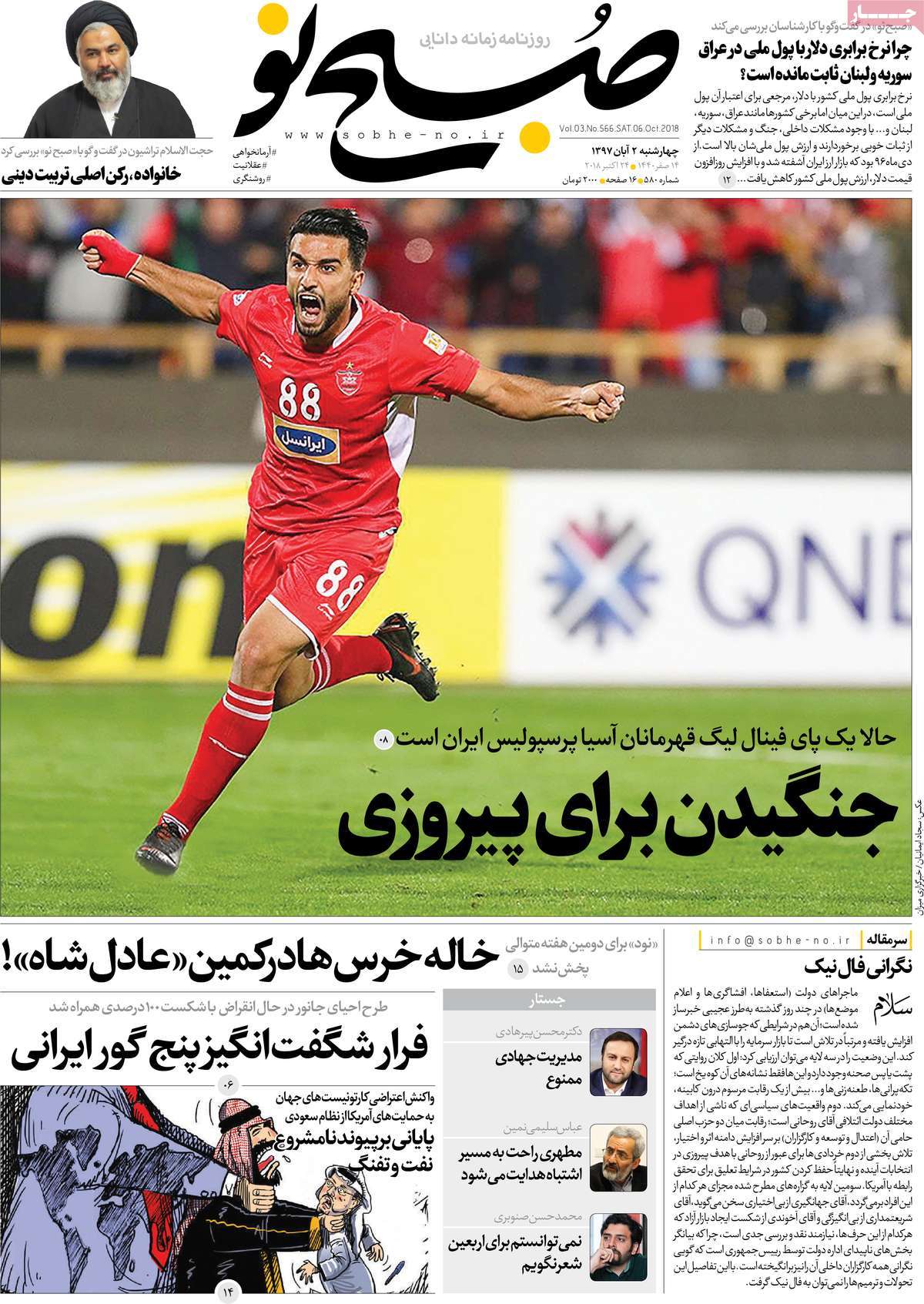
A Look at Iranian Newspaper Front Pages on October 8

A Look at Iranian Newspaper Front Pages on November 19

All papers today covered the Iranian Parliament’s “historic” decision to pass a bill on the country’s accession to Combating the Financing of Terrorism (CFT) despite fierce opposition by conservatives.

A top story was the impact of the Parliament’s decision, which still needs to be ratified by the Guardian Council to be signed into law, on the Forex, gold coin, and stock exchange markets.

The reports of the alegged murder of Saudi journalist Jamal Khashoggi in the Saudi Arabian consulate in Istanbul also received great coverage

The above issues, as well as many more, are highlighted in the following headlines and top stories:


Abrar:

1- Conservative MP: Today Was Dark Day of Parliament

  • FATF Accession, Disgraceful Treaty Approved like Turkmenchay

2- Zarif Strongly Supports JCPOA, Underlines Need for Joining CFT

A Look at Iranian Newspaper Front Pages on October 8


Aftab-e Yazd:

1- Controversial Victory: CFT Approved despite All Controversies Created by Hardliners

2- European SWIFT to Become Operational before November 4

A Look at Iranian Newspaper Front Pages on October 8


Arman-e Emrooz:

1- World Welcomes Parliament’s Vote

  • Euronews: CFT Accession Very Vital for Europe, Asian Partners of Iran

2- CFT Ratification Paves Way for Banking Ties with EU’s SWIFT

A Look at Iranian Newspaper Front Pages on October 8


Ebtekar:

1- Blood of Khashoggi in Saudi Consulate

2- Parliament Makes Its Decision on CFT despite Threatening Messages, Protest Gatherings

A Look at Iranian Newspaper Front Pages on October 8


Etemad:

1- Reforms in Bin Salman’s Style

  • Media Reports Say Saudi Journalist Slain, Mutilated in Saudi Consulate in Istanbul

2- Transparent as Approval of CFT

3- Saudi Stupidity [Editorial]

A Look at Iranian Newspaper Front Pages on October 8


Ettela’at:

1- Iran’s Accession to Combating the Financing of Terrorism (CFT)

2- Achaemenid Relic, Returned to Iran from US, Unveiled in National Museum of Iran

A Look at Iranian Newspaper Front Pages on October 8


Haft-e Sobh:

1- FATF Advances to Final Stage

2- Great Crime in Istanbul

A Look at Iranian Newspaper Front Pages on October 8


Hamshahri:

1- Vote for Breaking Financial Siege: Parliament’s Historic Decision

2- Rainbow Dream: A Report on International Children’s Day

  • A Critique of Tehran’s Five-Year Plans for Turning into Child-Friendly City
  • World War against Children: Different Aspects of Child Abuse in Iran, World

A Look at Iranian Newspaper Front Pages on October 8


Iran:

1- Vote for Financial Transparency

2- CFT’s Shock to Forex Market

A Look at Iranian Newspaper Front Pages on October 8


Javan:

1- Butcher of Journalists

  • Reuters: Turkish Police Says Saudi Journalist Killed, Mutilated in Saudi Consulate

2- FATF Approved by Parliament Even Though Gov’t Didn’t Give Any Guarantee

A Look at Iranian Newspaper Front Pages on October 8


Jomhouri Eslami:

1- US, Saudi Arabia, Zionist Regime Fail

  • Parliament Votes for Iran’s Accession to CFT

2- Intelligence Ministry: Biggest Haul of Smuggled Heroin Seized in NW Iran

A Look at Iranian Newspaper Front Pages on October 8


Kayhan:

1- Vote in Darkness: Why Are CFT Proponents Afraid of Disclosing Their Names?

2- Trump’s Corrupt Nominee Receives Vote of Confidence despite Protests

3- Bin Salman’s Critic Mutilated in Istanbul Consulate

A Look at Iranian Newspaper Front Pages on October 8


Quds:

1- CFT Law Passed in Parliament Thanks to Secret Votes

2- Zarif Clearly Declared There’s No Guarantee Problem Are Solved with FATF Adoption

A Look at Iranian Newspaper Front Pages on October 8


Sazandegi:

1- First Peaceful Night: Dollar Rate in Unofficial Market Down to IRR 119,000

2- Day of Larijani: How Did Parliament Speaker Foil 7 Scenarios of CFT Opponents

A Look at Iranian Newspaper Front Pages on October 8


Setareh Sobh:

1- Parliament Votes for What People Wanted

2- ICJ’s Provisional Order to Decrease Iran-West Tension: Analyst

3- FATF’s Impact: Balance in Forex, Gold Coin, Stock Exchange Markets

A Look at Iranian Newspaper Front Pages on October 8


Shargh:

1- FATF to Be Discussed by Guardian Council

A Look at Iranian Newspaper Front Pages on October 8


Iran Releases English, Arabic Versions of Law on Free Access to Information

The news was announced by the Secretariat of the Commission for Dissemination of and Free Access to Information Hossein Entezami, who is also a special assistant to the Iranian culture minister.

“Given the long history of this law in many countries around the world and the attention paid to it by international institutions, it is necessary that we pay due regard to the effective dimensions of this law on the international stage,” said Entezami.

Iran Releases English, Arabic Versions of Law on Free Access to Information
Hossein Entezami

“In many societies, including European countries, good plans have been implemented with regards to free access to information over the past 100 years, and today, the law on free access to information exists in more than 100 countries,” he added.

“Accordingly, and in order for international institutions, authorities, those interested and researchers working in this field to get more familiar with the way of implementation of this law in our country, in the first step, a plan was put on the agenda to translate the text of the law and its executive bylaw into English an Arabic,” the official noted.

He said free access to information is regarded as one of the processes of democracy and helps contribute to transparency as well as the elimination of corruption, adding the Islamic Republic of Iran is a system with religious democracy, and, hence, pays due regard to this issue.

“Entitlement to free access to information is a clear example of civil rights,” he said.

The official urged the government, institutions and different organizations to work together closely to help enforce the law as soon as possible.

It is noteworthy that English and Arabic translations of the Executive Bylaw of Article 8 of the abovementioned law have been released.

The Law on Dissemination of and Free Access to Information was approved by Parliament in 2008.

The English translation of the Law on Dissemination of and Free Access to Information can be accessed via this link, and the Bylaw on Implementation of Article 8 of the Law on Dissemination of and Free Access to Information through this link.

Unique Photos Snapped of Persian Leopards

Three Persian leopards in a protected area in Iran's Semnan province / Photo by Mehdi Chalani

Abasali Damangir, the General Director of Semnan Environmental Protection Department, says “the environmental photographer managed to snap the pictures of the leopards while he was wandering around the protected area.”

The Persian leopards, which have been put on the red list of endangered species in the world, are being held in a protected area in Mehdishahr town of Semnan province, he added.

According to Damangir, due to the efforts made by Chalani, some unique pictures have been taken of the endangered species in Semnan.

He went on to say that the photos show that the animals are in good shape thanks to an increase in the population of certain species which the leopards live on.

Unique Photos Snapped of Persian Leopards
A Persian leopard in a protected area in Iran’s Semnan province / Photo by Mehdi Chalani

“Another main feature in the pictures is the tranquil moves of the leopards in the presence of the fosterers and the photographer,” he noted.

According to the Iranian officials, the leopards in the photos are idling away in the protected area without any fear or anxiety in the presence of the photographer and the foresters and this shows the high security of the protected area provided for the leopards.

The official also said filming Persian leopards is highly difficult due to the unexpected moves of the animals as well as the low density of the protected area.

According to the latest report by the International Union for Conservation of Nature (IUCN) in 2008, the Persian leopard has been put on the red list of endangered species in the world.

Asiatic cheetah, Persian leopard and Asian zebra are among the main endangered species in the world which are held in the protected area in Semnan.

Unique Photos Snapped of Persian Leopards
A Persian leopard in a protected area in Iran’s Semnan province / Photo by Mehdi Chalani

Researchers Use Marine Animals’ Waste for Wound Treatment

Researchers Use Marine Animals’ Waste for Wound Treatment

There are many constituents in the biological cycle of organisms that can be used to treat humans. With the advent of scientific approaches in the world, researchers have increasingly recognized the importance of using natural resources in scientific tests.

An Iranian knowledge-based company called Chitotech, managed by a female researcher, Dr Soheila Salahshour Kordestani, has managed to produce powerful healing agents to treat various wounds. It has carried out the job by doing research on marine animals’ waste.

These agents in biological or bioactive dressings are effective in treating various types of wounds, especially diabetic ones and bed sores.

For a brief review of Iran’s achievements in various fields of science and technology, check the book “Science and Technology in Iran: A Brief Review

Another achievement of this company is non-alcohol-based disinfectants that are manufactured with nanotechnology. The main element in these products is silver. Since ancient times, silver has been used by human for its antimicrobial properties.

With a record of 5 international patents and 22 national patents, the company now competes with European and American companies in making these products.

Currently, the company’s products are exported to the countries of Southeast Asia, the Arab states of the region and Turkey, and with the lifting of sanctions, exports to European and American countries are expected to resume.

Chitotech is one of the leading companies at the 2018 International Nano Exhibition that will be held on October 13-16 in Tehran. In this exhibition, many companies from Iran and various countries will introduce their latest findings in the field of Nano-sciences.

Dr Salahshour hopes that in the future, by relying on modern technologies, the country would not be dependent on the oil industry anymore and be equipped with other technologies.

Iran Nano 2018 - Nanotechnology Exhibition

ICJ Holds First Hearing on Iran’s New Lawsuit against US

Day one of hearing sessions has opened at the ICJ’s Peace Palace to examine Iran’s suit against the illegal confiscation, in the US, of around $2 billion in assets of the Central Bank of Iran as well as Washington’s subsequent breach of a bilateral friendship agreement known as the Treaty of Amity.

The open hearing sessions are planned to take four days.

As announced by the ICJ, the United Nations’ judicial arm, in Press Communique No.28/2018 dated June 22, 2018, open hearing sessions in Iran’s lawsuit against the US seizure of Tehran’s assets will be held from October 8-12, 2018.

During the first day of the hearing, the US delegation will present its defence. The session is slated to be held in the morning (11:30-14:30) and in the afternoon (16:30-18:30).

The ICJ is a UN body established to settle international disputes. Although the court’s verdicts are binding and cannot be appealed, the ICJ has not the power to enforce the rulings, and certain countries such as the US have, in rare cases, disregarded the ICJ’s verdicts.

On June 15, 2016, Iran lodged a lawsuit with the ICJ on the US government’s breach of the Treaty of Amity, Economic Relations, And Consular Rights between the United States of America and Iran.

“The United States arguing that Iran is a supporter of terrorism (an argument that Iran categorically denies) has adopted a number of executive and law-making measures which practically affect the interests and assets of Iran and Iranian institutions, namely the Central Bank of Iran, and which run counter to the Treaty of Amity and [which are executed] through judicial proceedings against Iran,” reads part of the lawsuit.

Clause 2 of Article 21 of the Treaty of Amity, Economic Relations, And Consular Rights between the United States of America and Iran reads:

“Any dispute between the High Contracting Parties as to the interpretation or application of the present Treaty, not satisfactorily adjusted by diplomacy, shall be submitted to the International

Court of Justice, unless the High Contracting Parties agree to settlement by some other pacific means.”

Clause 2 of Article 23 of the law also says:

“Either High Contracting Party may, by giving one year’s written notice to the other High Contracting Party, terminate the present Treaty at the end of the initial ten-year period or at

any time thereafter.”

In a victory for Tehran against Washington, the ICJ ordered the United States to halt the unilateral sanctions it recently re-imposed on “humanitarian” supplies to Iran.

The court announced its ruling on October 3, 2018 regarding the July lawsuit brought by Tehran against Washington’s decision to re-impose unilateral sanctions following the US exit from the 2015 nuclear deal.

Iran’s lawsuit argued that the sanctions violate the terms of the 1955 Treaty of Amity between Iran and the US. It also called on the court to order Washington to immediately suspend the measures.

The ICJ unanimously ruled that the US must ensure that the re-imposed sanctions do not impact humanitarian aid or civil aviation safety.

According to the verdict, which was read out by Judge Abdulqawi Ahmed Yusuf, Washington “shall remove by means of its choosing any impediments arising from the measures announced on May 8 to the free exportation to Iran of medicines and medical devices, food and agricultural commodities” as well as airplane parts.

The court further said that sanctions on goods “required for humanitarian needs… may have a serious detrimental impact on the health and lives of individuals on the territory of Iran.”

US sanctions on aircraft spare parts also had the “potential to endanger civil aviation safety in Iran and the lives of its users,” it added.