Wednesday, December 31, 2025
Home Blog Page 3458

In Pictures: Modern Tehran vs Old Tehran

It’s been a couple of years that, based on a decision by Tehran’s City Council, the day October 6 is marked and celebrated as the Tehran Day, and the beginning of the Tehran Week.

Many experts believe it was a major and unforgivable mistake to select Tehran as the capital of Iran. However, the day Agha Mohammad Khan chose this small village as a base for the establishment of the Qajar government in 1796, he made the right decision because the military-geographic position of Tehran was very important.

Meanwhile, there is no doubt that Fat’h-Ali Shah Qajar was the first designer of modern Tehran. At his order, a famous marble throne was built. Under him, the royal citadel was constructed. He gave the shape of a capital to Tehran by building a mosque called the Shah Mosque in the grand bazaar, the Marvi and Sadr Madrasas, the entrance of the grand bazaar, the gate of the Shah Abdol Azim Shrine in Rey, and several public buildings in Tehran.

Several travelogues have also been published in this era by tourists and western merchants visiting the country. One of the most famous ones of these travelogues was written by Eugene Flandin, which is decorated with paintings and drawings from various regions of Iran.

Flanden, a French painter and orientalist, accompanied by another French architect and painter Pascal Coste, traveled to Iran in 1838. During the trip, he wrote his observations on the situation of Iran, the international policies of the Qajars and monuments of Iran in a book entitled “Travel to Iran” in several volumes. The book was published in Paris in 1851.

Eugene’s unique works in historical and artistic fields have made him famous. He has drawn paintings and unique designs of the architectural works of Iran and the Middle East.

What follows are some of Eugene Flanden’s drawings and their modern equivalents, as selected by IFP:

Iranian Woman Elected as Member of Int’l Motorcycle Federation

Iranian Woman Elected as Member of Int’l Motorcycle Federation

Neda Motallebi became a member of the commission with the majority vote of the board of directors of the International Motorcycle Federation.

The board of directors held the votes last week in Switzerland, during which Motallebi was elected unanimously as a member of the women’s commission of the federation, the IMF’s Public Relations Department said.

Her membership in the women’s commission of the International Motorcycle Federation will officially begin as of January 2019 for the next four years.

She used to be the deputy manager of Iranian women’s Judo Federation. She is now serving as an advisor to the head of Iran’s Motorcycle and Automobile Federation.

Iran Says Global Problems Result of US Unilateralism

Addressing the third inter-parliamentary meeting of the parliament speakers of Eurasian countries in Antalya, Turkey, Larijani said the United States and the Israeli regime are disrupting global security.

He added that the unilateral actions of powers such as the United States in dealing with international issues have creatd widespread challenges and problems for the international community.

Iran Says Global Problems Result of US Unilateralism
Iranian Parliament Speaker Ali Larijani attending the third meeting of the parliament speakers of Eurasian countriees in Antalya, Turkey, on October 9, 2018. / Photo by IRIB News

Larijani referred to Washington’s illegal withdrawal from the Iran nuclear deal, its illegitimate decision to announce Jerusalem al-Quds as the capital of a fake, aggressive, and occupying regime, and its withdrawal from the Paris Agreement as the examples of this unilateralism.

“Such highly selfish views are associated with Nazi literature, and derived from a strategic illusion that results in instability, global insecurity, and the spread of chaos.”

He also stressed that today, Palestinians are in a difficult situation because of the United States’ irresponsible behaviour and the criminal acts of the Zionist regime.

“The US in an inhuman way intends to deprive the oppressed Palestinians of living in their homeland, and this behaviour will lead to the development of conflicts in the region,” he added.

The Iranian Parliament Speaker further called for signing of trade agreements among members to eliminate tariffs and develop free trade by the Eurasian parliaments saying this is an effective operational measure to stand up against American economic unilateralism.

“The United States is pursuing another destructive action in the region to extort regional states by creating fake panics. Unfortunately, this action is accompanied by humiliating literature in some countries of the region, and sometimes Washington speaks of a new security strategy in the region, which is just aimed at extorting the states,” underlined Larijani.

He then announced Tehran’s preparedness to join hands with other countries in achieving the goals of multilateral cooperation and to help establish sustainable security in the Eurasian region.

Iranian Photographer Turns Broken Camera into Smartwatch

Alireza Rostami, an Iranian photographer, has created an antique watch that takes pictures using pieces from a broken camera.

The creative photographer has built a “vintage smartwatch” that takes real photos. The 33-year-old man calls the device “Gadget Shutter”, saying it can be operated manually or using a built-in timer, the Daily Mail reported.

By taking the camera apart, Rostami worked on designs that would allow him to reuse the mechanism of the shutter. In this way he managed to create a watch-shaped device, which he mounted on a leather strap.

For a brief review of Iran’s achievements in various fields of science and technology, check the book “Science and Technology in Iran: A Brief Review

The watch has a variety of features such as the ability to connect to a flash using a wire, the ability to change the background to change the zoom, and the possibility of changing the shutter speed.

The recorded images are the coin-sized ones that depict the photographer’s furniture, home and garden.

Following you can find Daily Mail’s photos of the device:

Iran Develops Smart Tree to Reduce Air Pollution

The air-cleaning apparatus functions like an artificial tree. It is capable of removing pollutants from the air in indoor places such as homes, offices and hospitals. In later stages, researchers are to design, develop and used similar devices to purify air in open-air environments such as highways, roads, streets, smart townships, etc.

In the current plan, pollutants are spotted using smart methods and are removed from the air using special filters. Several filters are used in this system, considerably obviating the need to replace filters. All you have to do is to wash the filters to remove dirt and soot.

The system is turned on automatically based on the pollutant levels in the air, cleans the air and is turned off.

The most important advantage of the apparatus is its high capability in absorbing air pollutants. The device can reduce CO2 levels by up to 90%, suspended particles by up to 99% and other pollutants by around 80%.

For a brief review of Iran’s achievements in various fields of science and technology, check the book “Science and Technology in Iran: A Brief Review

Another feature of the apparatus is that it is economical. It has been made at a cost of IRR 100,000,000 and is able to reduce more pollutant levels than that by similar devices made in other countries.

When it comes to mass production, the smart air-cleaning apparatus is expected to have an end cost half of what originally predicted.

The device can show the level of pollutants on cell phones online, and can show the air quality index (AQI) in three colours: green, yellow and red. The apparatus can also show the status of the air pollution.

The whole process of production of the device took place using solar panels. The remaining power saved is used for lighting.

“Iran Exporting Nanotechnology Products to 40 Countries”

Speaking in a news briefing ahead of the 11th edition of Iran Nano Exhibition, Sarkar said Iran is exporting its nano-products to 40 countries.

“We should seek other countries with huge populations such as India and Brazil, which can be good markets for us,” said Sarkar, who is the secretary of the Nanotechnology Development Commission of the Science and Technology Department of the Iranian Presidential Office.

He said Iran has offices in other countries, including Turkey and Indonesia, and seeks to open an office in Iraq as well.

“At the moment, we have 4 offices and representative agencies and have been able to sell nanotechnology and even get projects from China to implement them using nanotechnology. We have also established good relations with Malaysia in this regard,” said the official.

He also touched upon startups working in the field of nanotechnology.

“This year, around 40 companies which have developed their first research works in the domain of nanotechnology are present at this exhibition to present their technology and absorb [sponsors for] investment,” the official underlined.

He also referred to the role of nanotechnology is tackling challenges in the industry sector.

“In the domain of industry, challenges and problems facing industries should turn into projects which can be handled through nanotechnology. Also, the quality of products will increase by using this technology. Moreover, upgrading quality will increase competition among producers,” he noted.

The official said numerous plans have been set in motion in the field of nanotechnology to be able to sign contracts with other countries.

He said Iran is also interested to draw on other countries’ experience in the domain of nanotechnology.

For a brief review of Iran’s achievements in various fields of science and technology, check the book “Science and Technology in Iran: A Brief Review

“Our country is very much interested to absorb nanotechnology. Around two weeks ago, we held a nanotechnology course for more than 2,000 Omani students. Also in Oman, we are inaugurating a nano-city with the support of the officials of that country, which would like Iranian nanotechnology researchers to launch the city,” he said.

The official noted that efforts are being made to establish postgraduate programs in the field of nanotechnology in other countries with the cooperation of Iranian professors, and that “consultations have been made in that regard.”

He also touched upon small industries with regards to nanotechnology.

“Many industrialists have good cooperation with the nanotechnology sector, and even in some cases, despite sanctions and a lack of imported raw materials, they seek to produce the same product using nanotechnology inside the country,” he said.

He also urged the private sector to get more involved in nanotechnology projects.

“Iran Exporting Nanotechnology Products to 40 Countries”

Iran’s Guardian Council Won’t Be Intimidated by CFT Opponents

Ayatollah Ahmad Jannati (center) and Abbasali Kadkhodaei (left) on the sidelines of a Guardian Council meeting in Tehran. / Photo by ISNA

“The Guardian Council won’t yield to pressures and will announce its opinion within the framework of the Constitution and Sharia [Islamic law],” Abbasali Kadkhodaei told IRNA on Monday.

On Sunday, Iran’s parliament approved a bill to allow the government to join the Combating the Financing of Terrorism (CFT) convention, with 143 votes in its favour, 120 against and five abstentions.

The legislation needs to be ratified by the Guardian Council before being signed into law.

The parliament approved the bill amid harsh criticisms of conservative opponents.

On Sunday, hundreds of people hold a protest gathering outside the parliament, saying approving this bill would amount to betraying the values of the revolution and is against guidelines of the Leader of Islamic Revolution Ayatollah Seyyed Ali Khamenei.

Lawmakers had in recent weeks received dozens of threatening messages from unknown sources warning them against voting for the bill.

Tayyebeh Siavoshi, a Tehran lawmaker, tweeted on Monday that she had received threatening messages that opponents will bombard the parliament if the bill is approved.

Khalil Movahedi Mohassel, a religious figure based in Mashhad who has claimed responsibility for the messages, told Dideban Iran news website that they will move to warn the Guardian Council about dangers the Financial Action Task Force (FATF) poses to Iran.

The CFT bill is one of the four bills proposed by the Hassan Rouhani administration to get Iran out of the blacklist of the global anti-money laundering body, the FATF.

Iran entered into talks with the G7-created FATF to join the body following the January 2016 implementation of the JCPOA.

The FATF has requested Iran to implement necessary reforms until late October.

Neither Saudis, nor Others Can Replace Iran’s Oil: Minister

Zanganeh

“It seems that such remarks [by Saudi crown prince] have been made under [US President Donald] Trump’s pressure,” Zangeneh said on Monday.

Saudi Crown Prince Mohammed bin Salman told Bloomberg in an interview on Friday that his country had met its promise to the United States to make up for Iranian oil supplies lost through US sanctions re-imposed after Washington’s withdrawal from a 2015 nuclear deal between Tehran and the P5+1 group of countries.

“Actually the request that America made to Saudi Arabia and other OPEC countries is to be sure that if there is any loss of supply from Iran, that we will supply that. And that happened. Because recently, Iran reduced their exports by 700,000 barrels a day, if I’m not mistaken. And Saudi Arabia and OPEC and non-OPEC countries, they’ve produced 1.5 million barrels a day. So we export as much as 2 barrels for any barrel that disappeared from Iran recently,” he said.

In reaction to bin Salman’s claims, the Iranian minister of petroleum said “neither Saudi Arabia nor any other [oil] producer” have such a production capacity.

“The market and the increase of prices are the best evidence that the market faces a shortage and it is worried about a severe shortage of oil supply,” Zangeneh added.

“What Saudi Arabia had been supplying the market with, were not from [its] spare capacity but from tapping its oil stocks,” he pointed out.

Trump announced in May that Washington was pulling out of the nuclear agreement, officially known as the Joint Comprehensive Plan of Action (JCPOA), which lifted nuclear-related sanctions against Tehran in exchange for restrictions on Tehran’s nuclear program. The deal had been signed between Iran and the five permanent members of the UN Security Council — the United States, Britain, France, Russia and China — plus Germany in 2015.

A first round of American sanctions took effect in August, targeting Iran’s access to the US dollar, metals trading, coal, industrial software, and auto sector. A second round, forthcoming on November 4, will be targeting Iran’s oil sales and its Central Bank.

The Trump administration is pushing on all buyers of Iranian oil to cut imports to zero. But Iran, OPEC’s third-largest producer, has repeatedly announced that its oil exports cannot be reduced to zero because of high demand levels in the market.

Iran has blamed Trump for oil price hikes, but the US president has pointed the finger at OPEC and called on the oil-producing body to boost output.

Zangeneh further said any country that makes claims about supplying the market with more oil to replace lost Iranian exports had no “determining impact” on the market, but would lead to short-term psychological outcomes.

These claims aim to satisfy the US and express support for Washington’s sanctions against Iran, he added.

Iran has warned that if it were not able to export its crude oil through the Strait of Hormuz, no other country would be able to do so, threatening to block the strategic strait.

In an interview with Russia’s Sputnik news agency, Iran’s Deputy Foreign Minister Abbas Araqchi warned of the “serious effects” of the upcoming US sanctions against Iran on oil prices and the entire Middle East.

“Obviously, all countries in the Persian Gulf region want to sell their oil, and the world is in need of this region’s oil and other energy resources,” the top Iranian diplomat said.

He emphasized that any arrangement for the sale of oil in the region “should be inclusive” and added, “If you exclude one country [and] make sure that one country’s oil sale comes to zero, as President Trump wants, that would create problems for the whole region. This is an obvious fact.”

A US government official said on Friday that the Trump administration is actively considering waivers on sanctions it will re-impose next month for countries that are reducing their imports of Iranian oil.

The official, who spoke on the condition of anonymity, said the administration was “in the midst of an internal process” of considering exceptions called SRE waivers, or significant reduction exemptions.

IRGC Chief Says Israelis Trying to Create Insecurity in Iran

“The Zionist regime’s support for monarchists and Munafiqeen (MKO members) against the Islamic Republic of Iran is aimed at creating insecurity in the country,” the IRGC commander said at a military conference on Monday.

He also slammed the media and information war on Iran as part of the enemy’s soft war strategy for harming the Islamic Republic and demoralizing the Iranian nation.

The commander then hailed the high level of security and calm in Iran despite all hostile plans, giving an assurance that the country has no defense or security problem.

On the foreign sanctions on Iran, Major General Jafari said such extensive sanctions could crush any country, but the Islamic Republic is withstanding them with power and dignity.

Last month, Leader of the Islamic Revolution Ayatollah Seyed Ali Khamenei deplored the “evil” policy of the global arrogance to create insecurity and instability in the Middle East, praising Iran’s resistance against such a policy.

The Leader stated that Iran’s powerful resistance has thwarted the US goals in the region, adding “The world political and intelligent analysts are astonished and acknowledge the fact that Iran, by relying on God and counting on national power, has defeated the world powers in the region.”

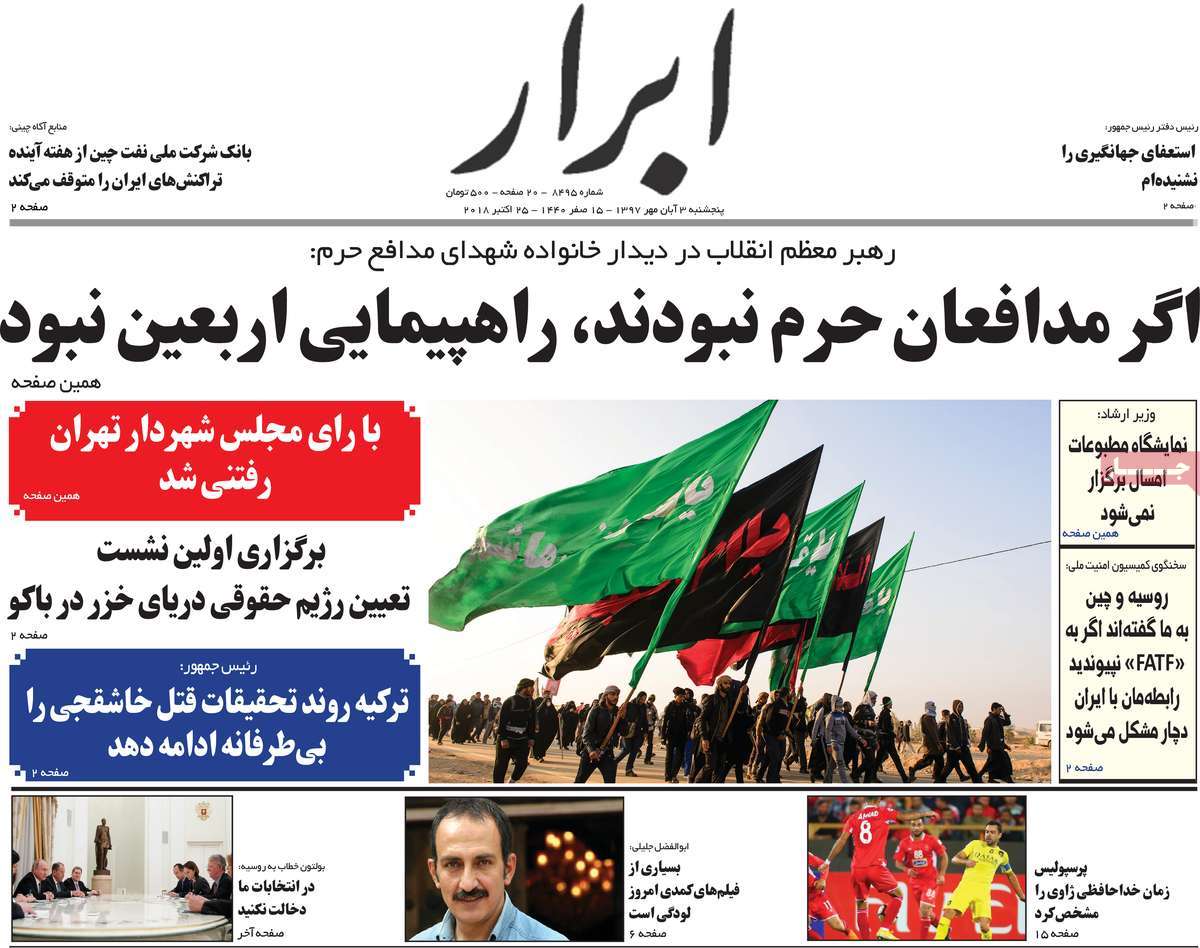
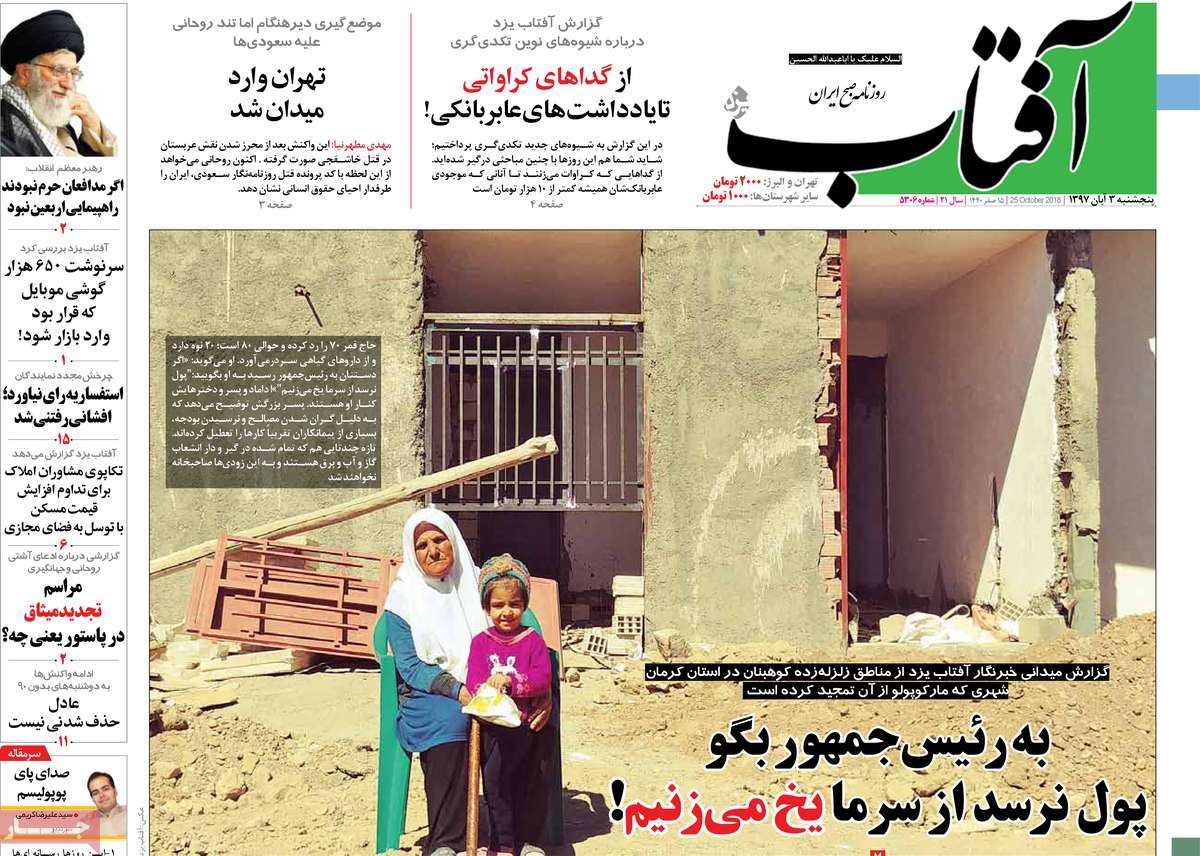
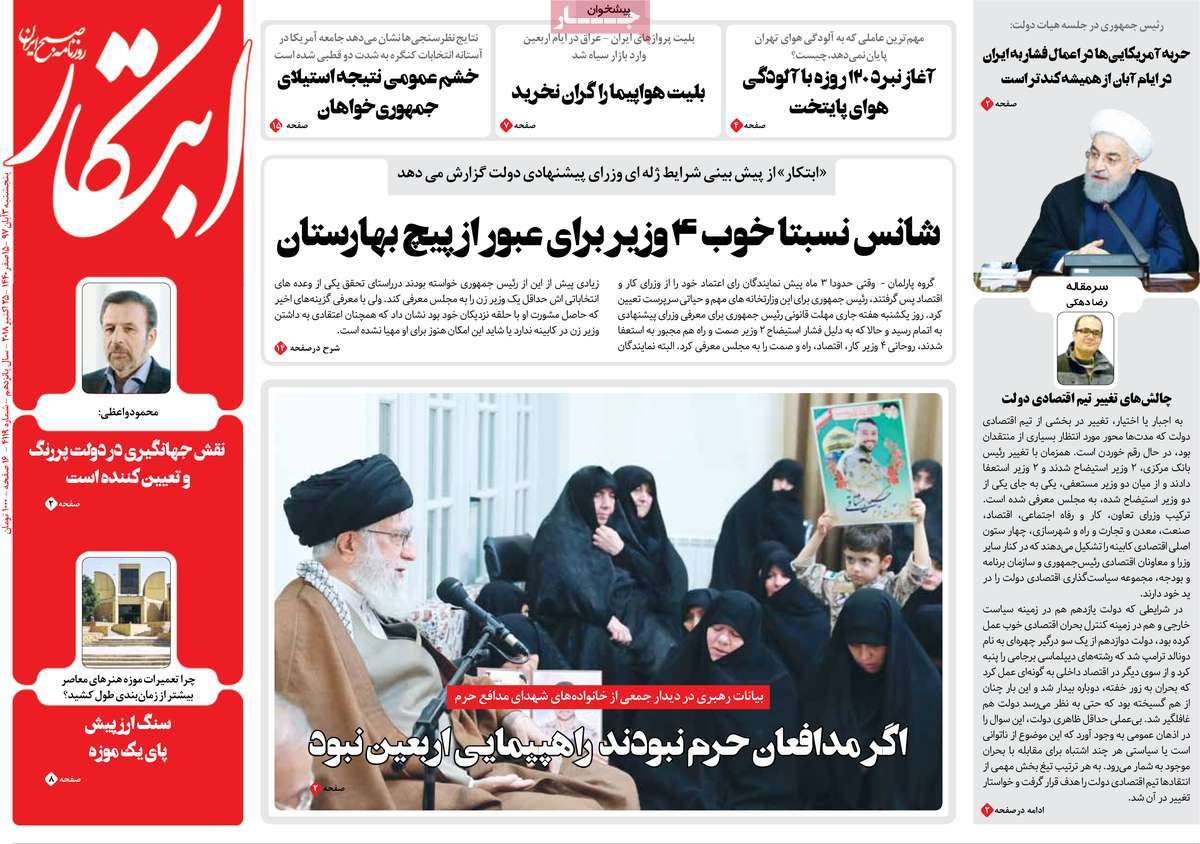
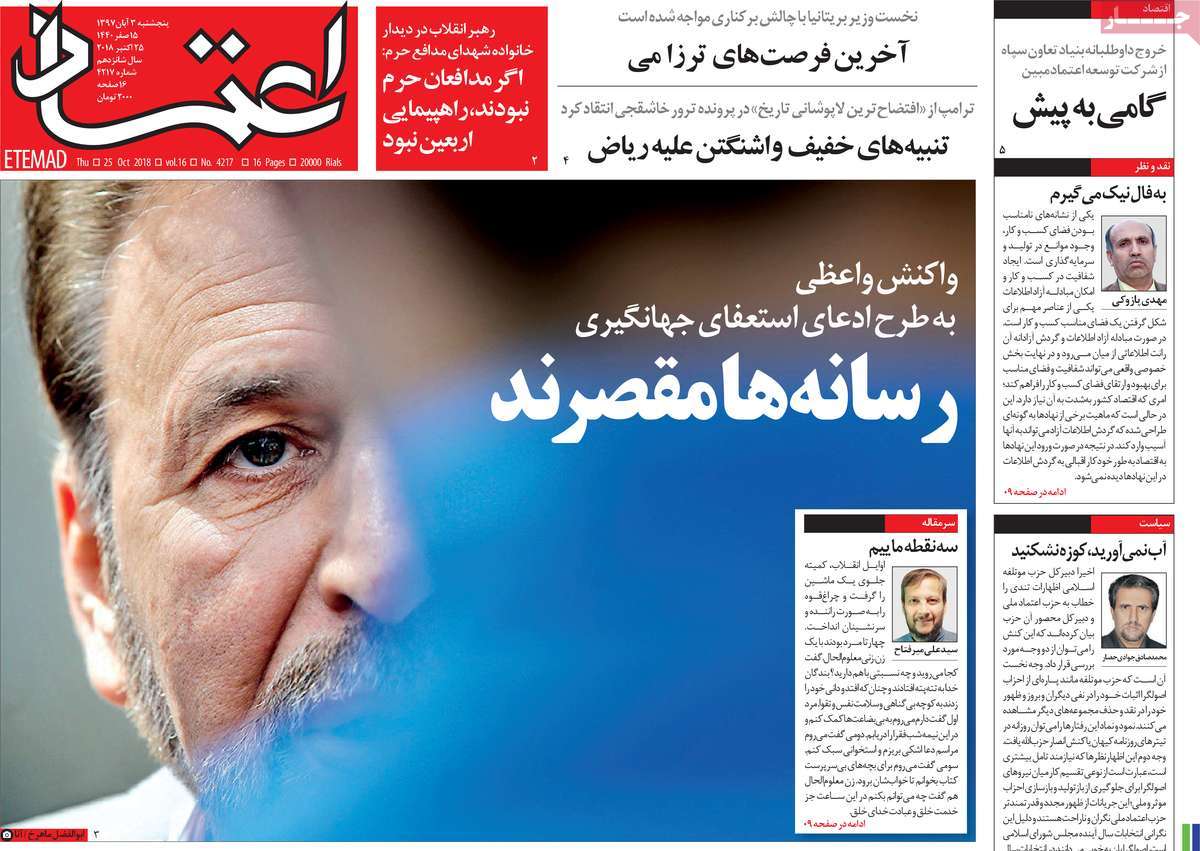
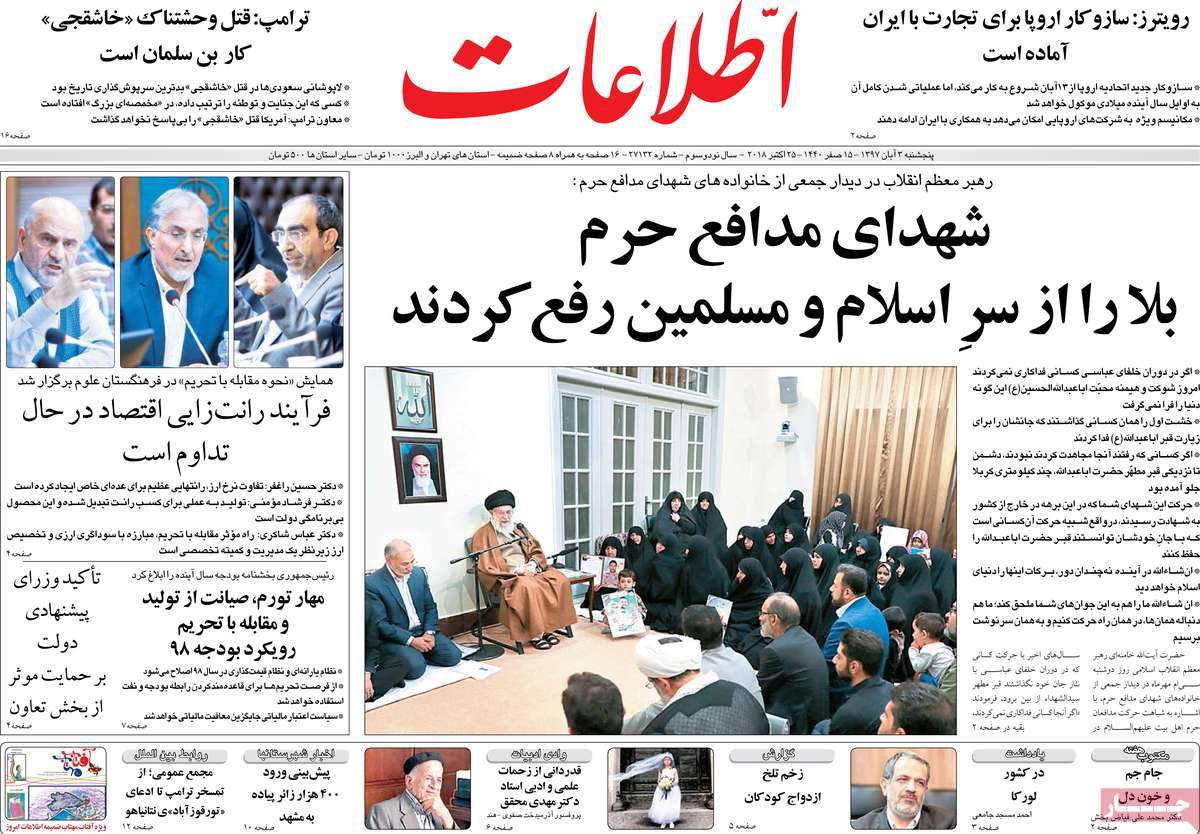
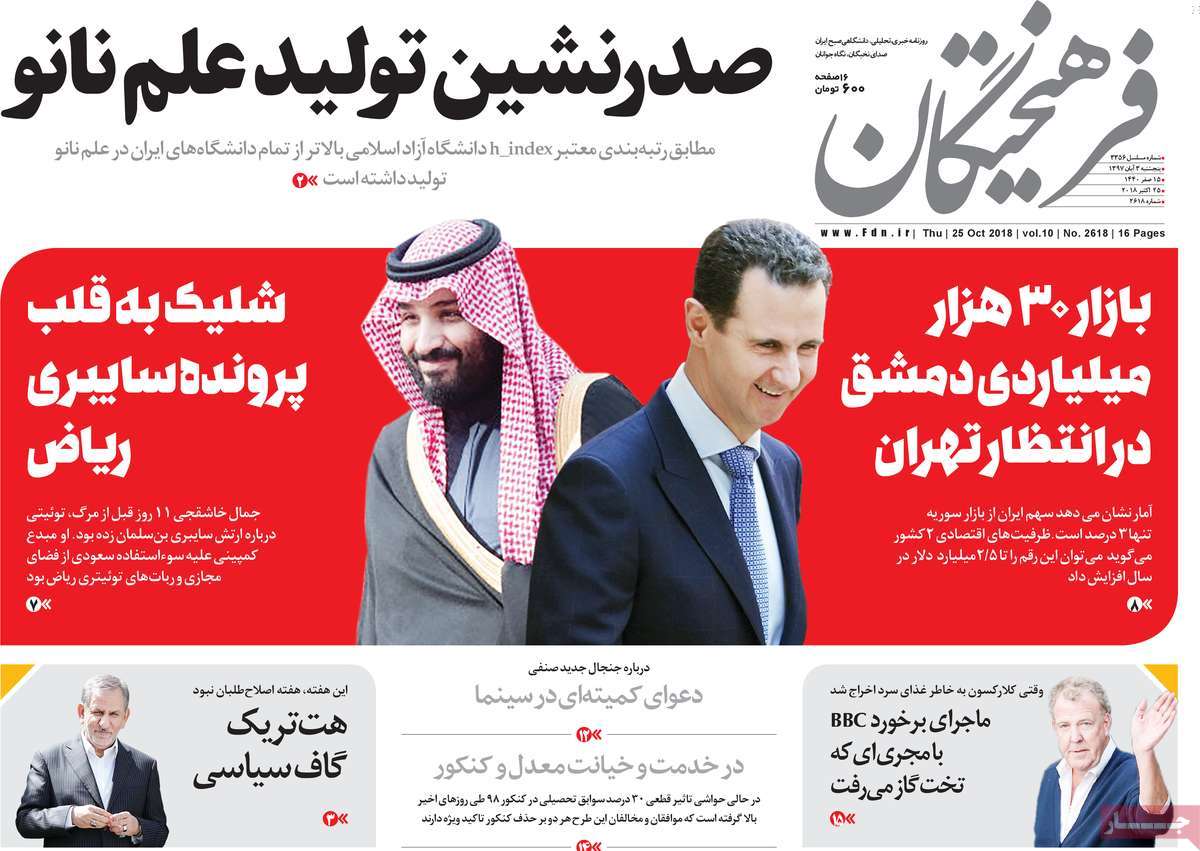
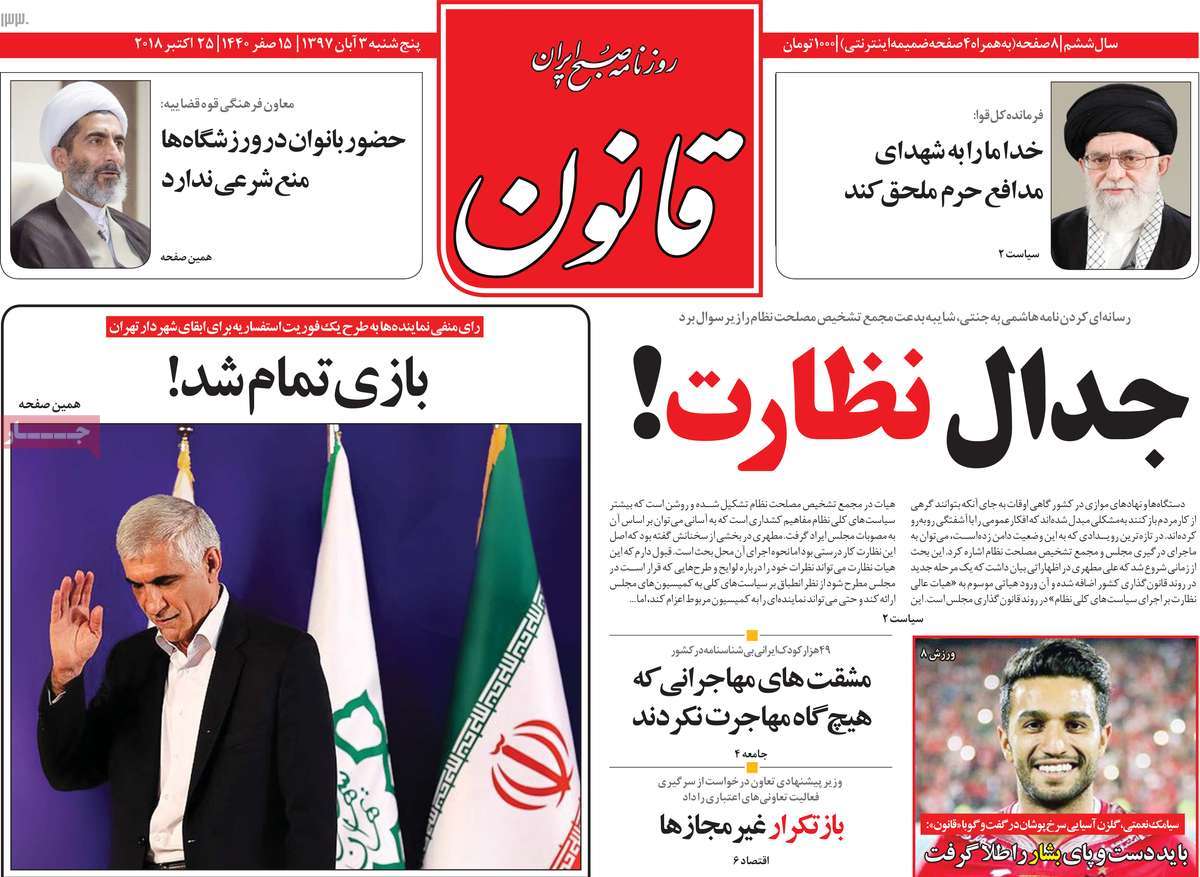
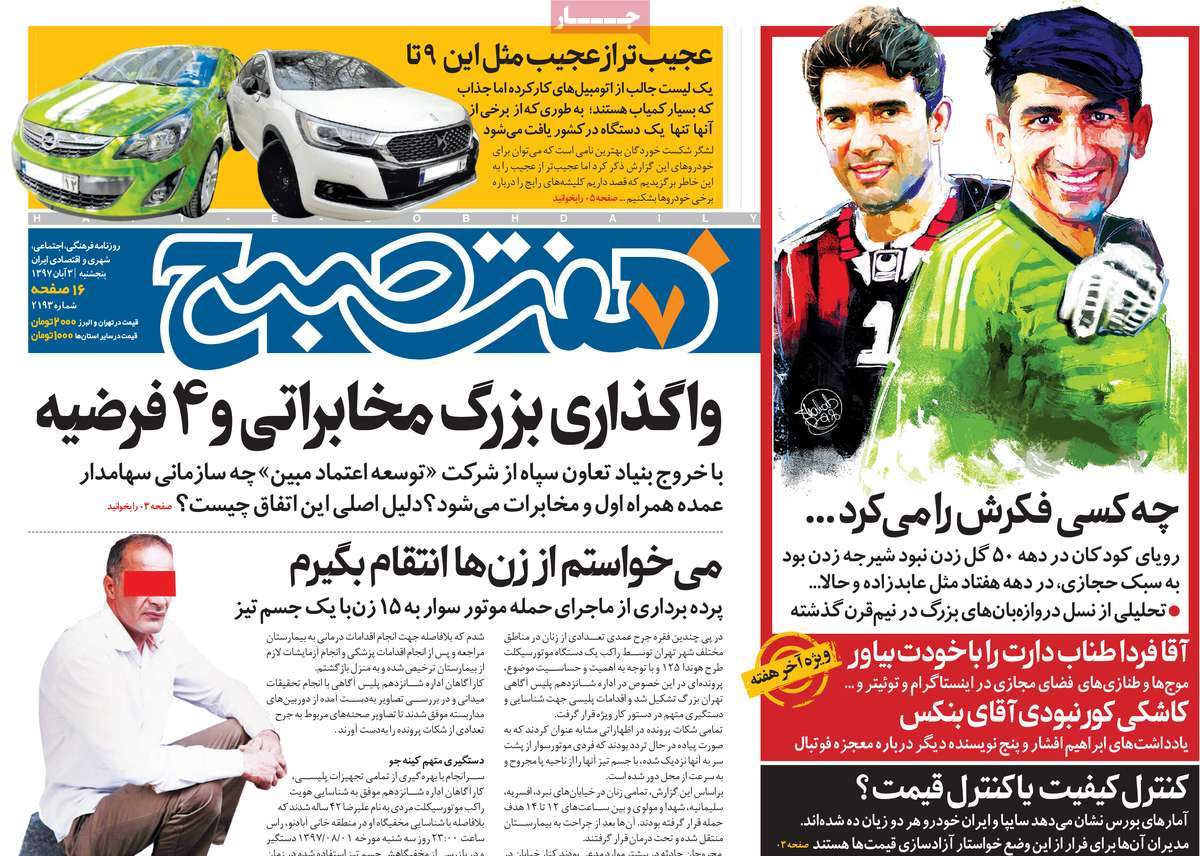
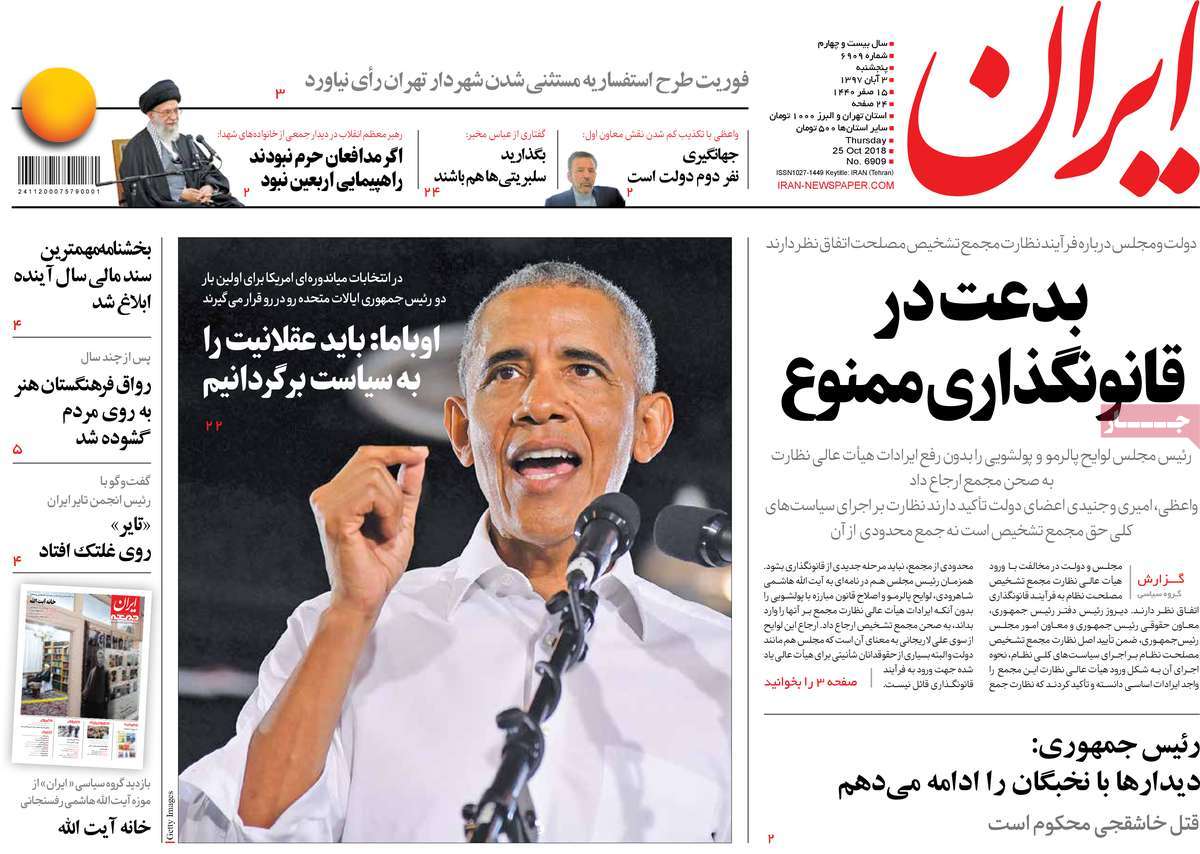
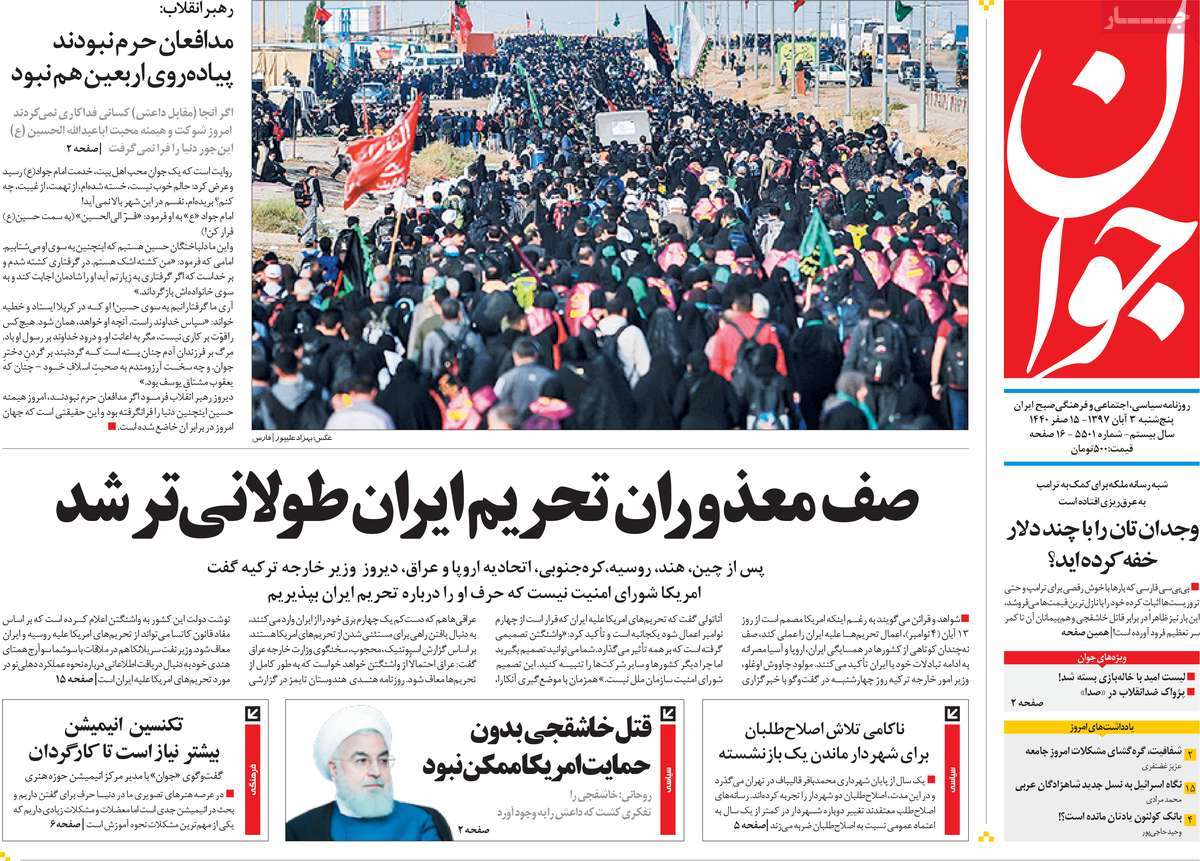
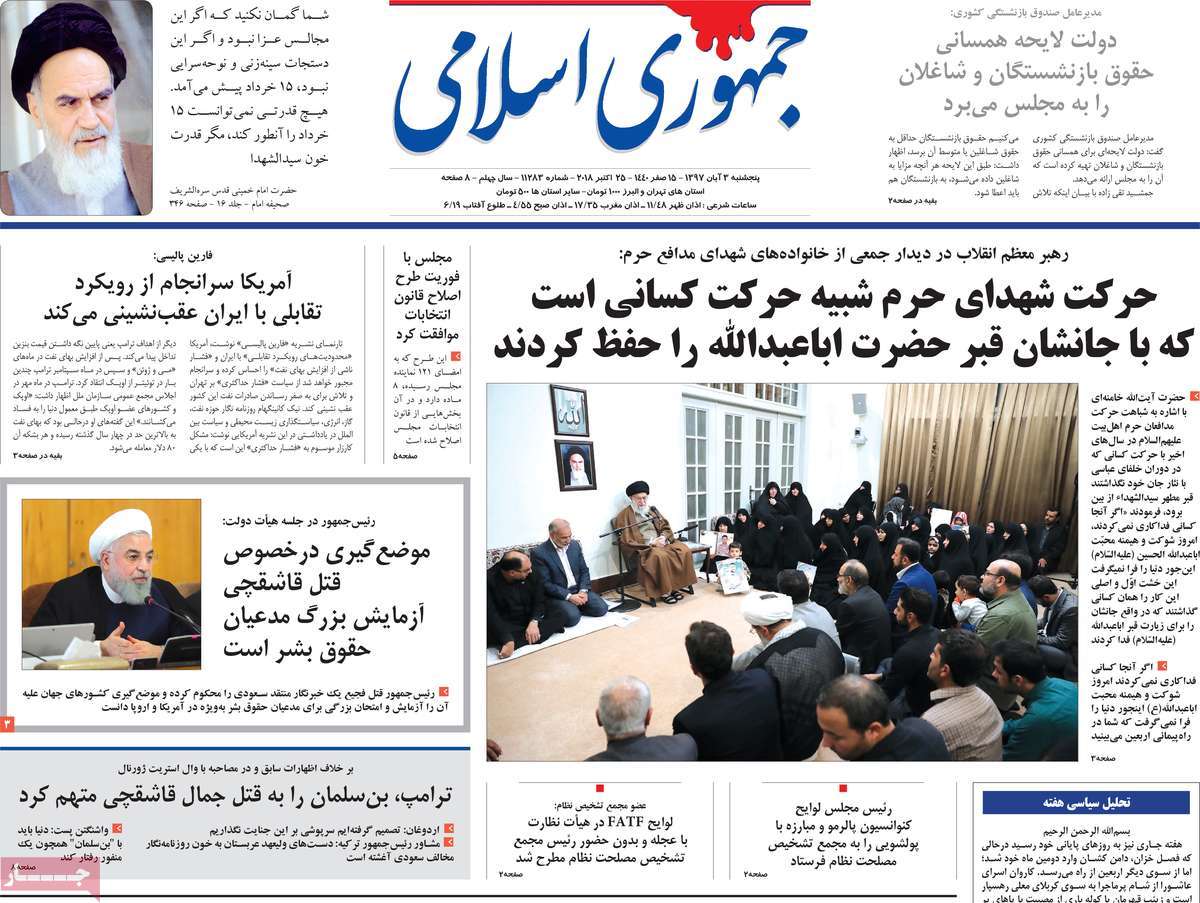
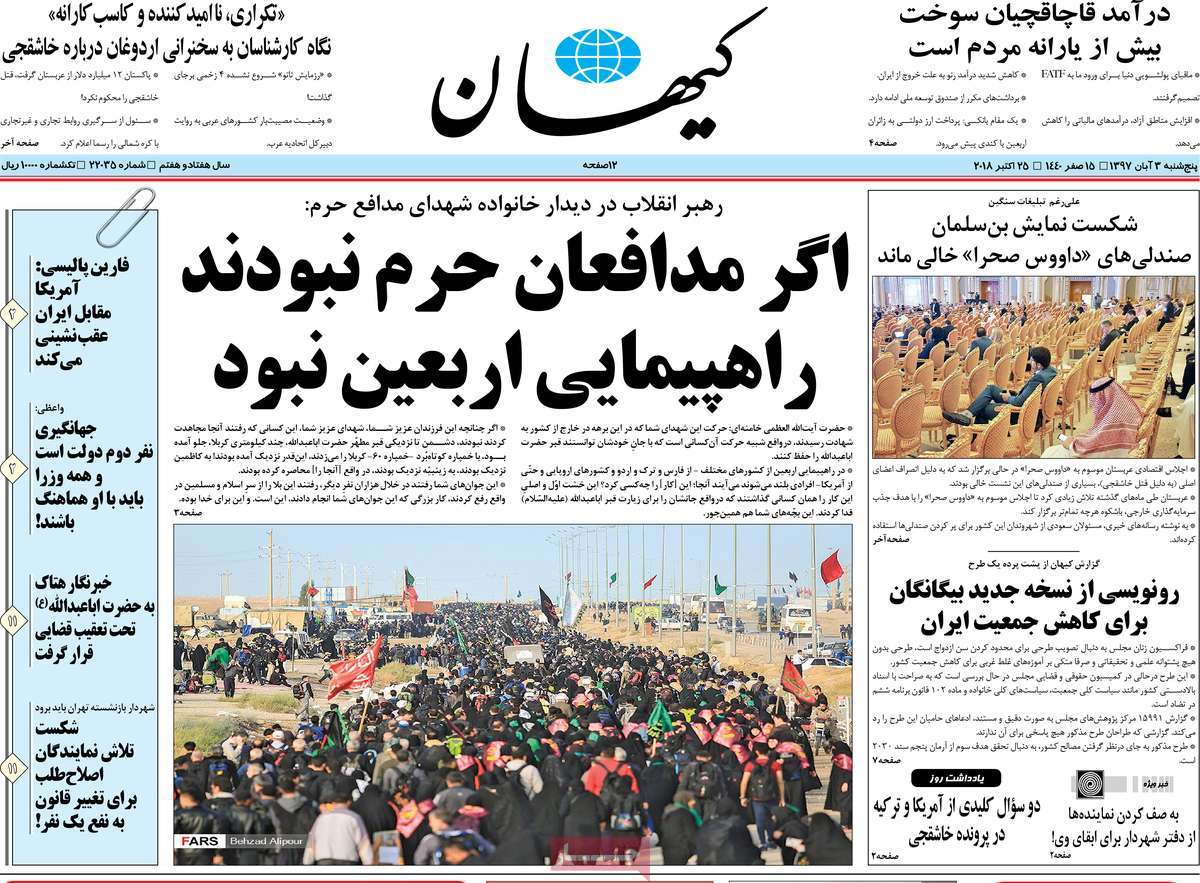
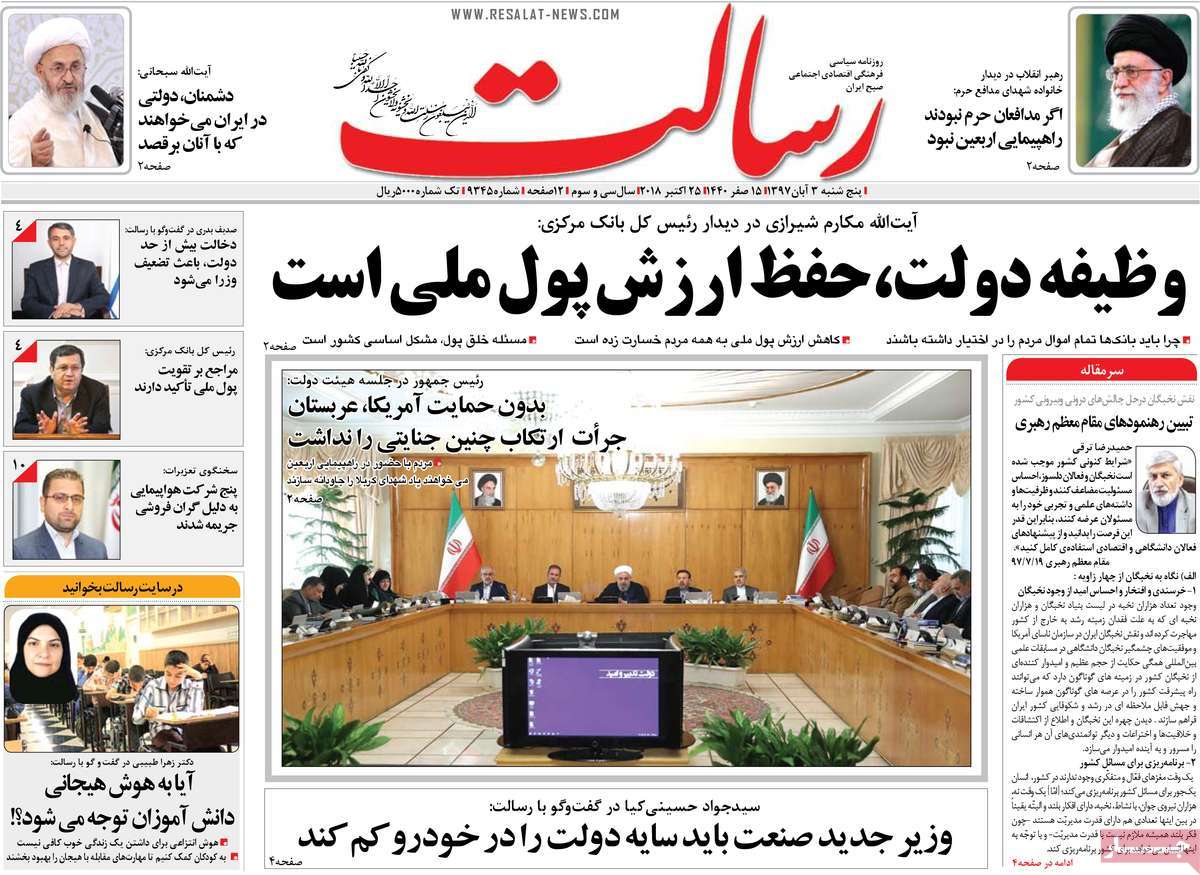
A Look at Iranian Newspaper Front Pages on October 9

A Look at Iranian Newspaper Front Pages on November 19

Iranian papers today continued to cover reactions to the Iranian Parliament’s ratification of a bill on the country’s accession to the Combating the Financing of Terrorism (CFT).

Also a top story was the alleged murder of Saudi journalist Jamal Khashoggi in the Saudi consulate in Istanbul, which has sparked a great controversy over the past few days.

The above issues, as well as many more, are highlighted in the following headlines and top stories:


Aftab-e Yazd:

1- Ahmadinejad, Jalili First Passed Bills on FATF; Why Are They Silent Now?

2- Aren’t Cell Phone Prices Going to Stop Increasing?

A Look at Iranian Newspaper Front Pages on October 9


Arman-e Emrooz:

1- Train of Cabinet Reshuffle Arrives in New Station: 4 New Picks to Be Introduced

2- 12 Ways to Get Rid of Forex Problems

3- Iran Can Overcome Sanctions by Passing FATF: MP

A Look at Iranian Newspaper Front Pages on October 9


Etemad:

1- Fight Still Goes on: Post-CFT Strategy of Critics, Supporters of FATF

2- Voices of Invisible Kids Not Heard: On National Children’s Week

A Look at Iranian Newspaper Front Pages on October 9


Ettela’at:

1- Independent Countries Must Stop US’ Radical Behaviours: Larijani

2- 50% of Iran’s Higher Education Centres Lack Enough Standards: Science Minister

3- There’ll Be No Shortage of Medicine: Iran First VP

4- 19 Governor-Generals, Governors to Be Sacked for Being Retired

5- World Asks for Saudi Arabia’s Explanation over Jamal Khashoggi’s Case

A Look at Iranian Newspaper Front Pages on October 9


Haft-e Sobh:

1- FATF Continues to Spark Controversy

2- Mystery of Broken Bridges: Why Numerous Bridges Broke in Recent Floods in Northern Iran?

A Look at Iranian Newspaper Front Pages on October 9


Iran:

1- Breeze of Cabinet Reshuffle

2- Two-Way Road of Iran-EU Trade

3- We Haven’t Closed Doors for Negotiation with US: Zarif to BBC

A Look at Iranian Newspaper Front Pages on October 9


Javan:

1- India to Buy Iran’s Oil in November, When US Sanctions Will Be Re-imposed

2- Humiliation of US in a Meeting Full of Tension

A Look at Iranian Newspaper Front Pages on October 9


Jomhouri Eslami:

1- Experts, Markets Welcome Iran’s Accession to CFT

2- Larijani Calls on World Countries to Cooperate against US’ Hostile Behaviours

3- No Producer, Even Saudi Arabia, Can Replace Iran in Oil Market

A Look at Iranian Newspaper Front Pages on October 9


Kayhan:

1- What’s Your Next Pretext after JCPOA and FATF?

* They Kept Saying All Problems Will Be Resolved with JCPOA

2- Saudi Prince Calls for Civil Disobedience

A Look at Iranian Newspaper Front Pages on October 9


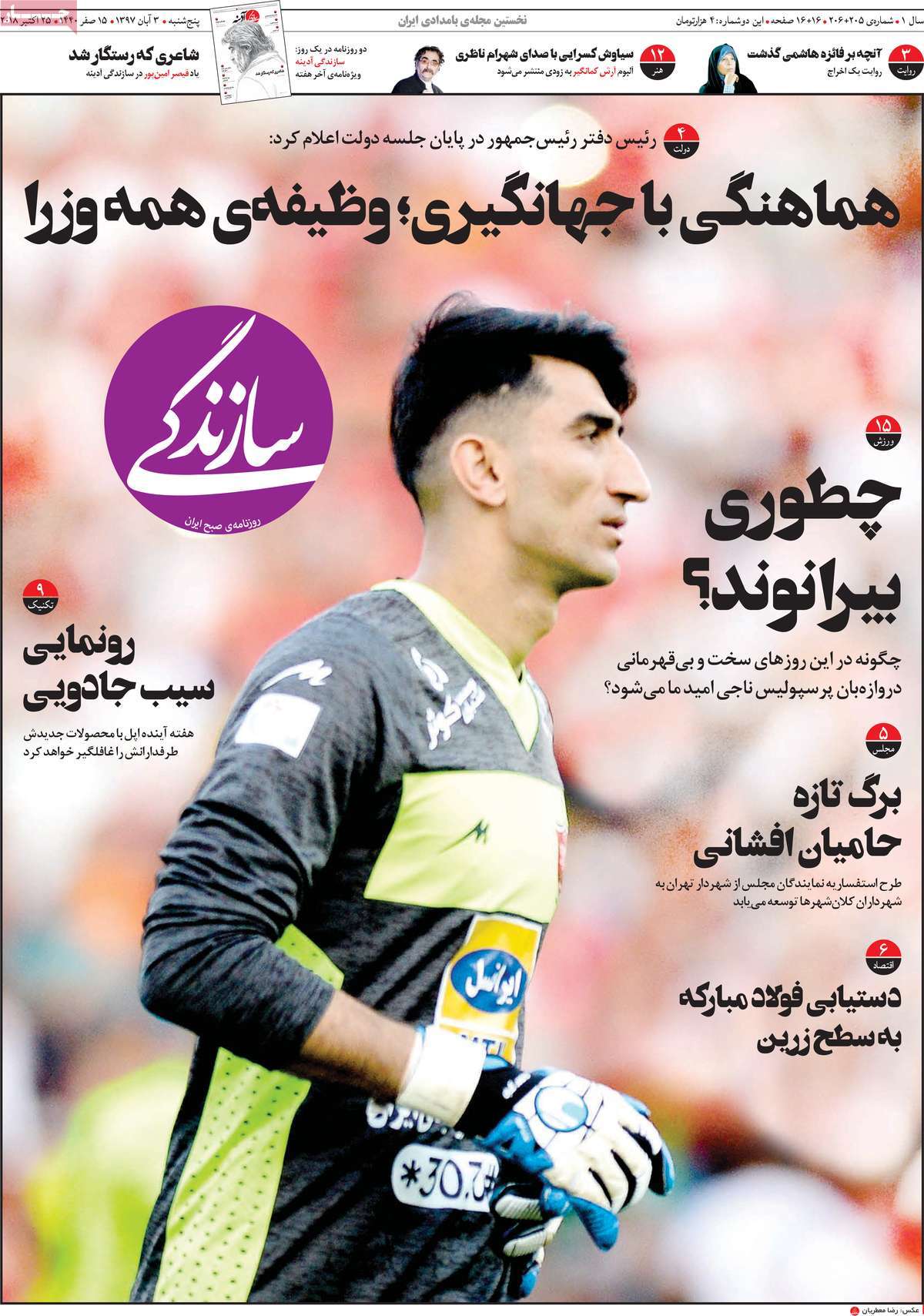
Sazandegi:

1- Restricting Social Assets

* Ali Daei, Zibakalam’s Bank Accounts Closed after They Raised Money for Quake-Hit People

2- Jamal Khashoggi’s Death Turns into Biggest Diplomatic Crisis in S Arabia

A Look at Iranian Newspaper Front Pages on October 9


Shargh:

1- Threatening Messages to MPs on FATF Coming from Mashhad

2- Zarif on Rouhani’s Possible Meeting with Trump: Nothing Impossible

3- What Will Guardian Council, Expediency Council Do with FATF?

4- Rouhani to Introduce 4 Ministerial Picks Today

A Look at Iranian Newspaper Front Pages on October 9


Vatan-e Emrooz:

1- Bin Butcher: New Aspects of Saudi Crime in Istanbul

A Look at Iranian Newspaper Front Pages on October 9