Tuesday, December 23, 2025
Home Blog Page 3255

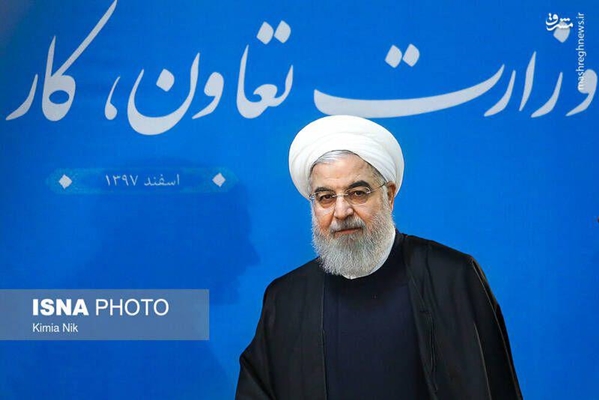
Rouhani Says 3.4m Jobs Created in 5 Years, but More Needed

Hassan Rouhani - President of the Islamic Republic of Iran

In a Monday meeting with the Ministry of Cooperative, Labour and Social Welfare’s officials in Tehran, Rouhani called unemployment the main cause of social problems adding that it is a national responsibility to create jobs.

He further mentioned that his government plans to reduce unemployment rate through boosting knowledge-based companies.

Noting that the employment rate in the government has increased, he added that the country still is far from the number needed.

“At the moment, 300,000 jobs have been created in the field of knowledge-based economy and it will increase to at least 100,000 jobs each year.”

The president emphasised the necessity of increasing non-oil exports according to the current state of the country, mentioning that one of the most important moves in this administration took place in the ministry of agriculture.

“According to the agriculture minister production of aquaculture this year compared with pre-revolution era has increased 40 times, and fish farming in the sea is also a huge, new and valuable move,” he went on to say.

Elsewhere in his remarks President Rouhani highlighted the necessity of appointing youths in different sectors maintaining that the youths are energetic and active and can work without fear.
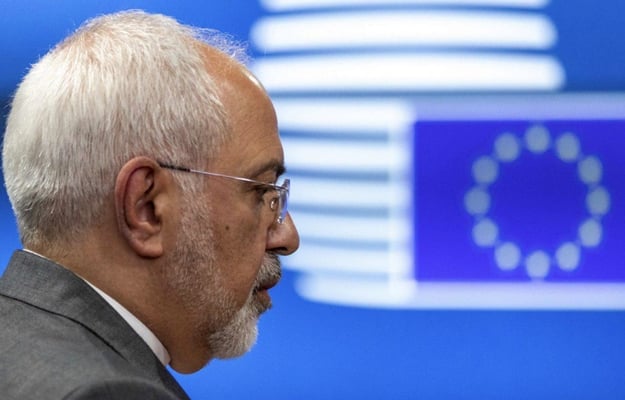
Zarif Resigns as Iran’s Foreign Minister

Iranian Foreign Minister Javad Zarif arrives for a meeting of the foreign ministers from Britain, France and Germany and EU foreign policy chief Federica Mogherini, at the Europa building in Brussels, May 15, 2018 / Photo by AP

Zarif in a post in his Instagram account thanked the Iranian nation for 67 months of support, and said he is unable to continue serving as the country’s foreign minister.

Two foreign ministry officials confirmed to the Iran Front Page that Zarif has officially resigned.

It is not yet clear why he has offered his resignation and whether it would be accepted by President Hassan Rouhani.

Iran Proud of Backing Syria, Ayatollah Khamenei Tells Assad

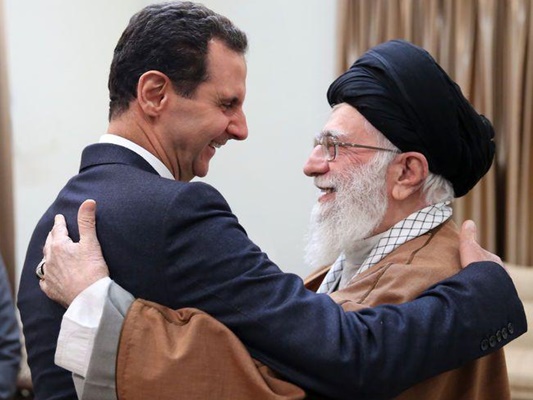
In a meeting with Syrian President Bashar al-Assad in Tehran on Monday, Ayatollah Khamenei underlined that the Islamic Republic views support for Syrian government and nation as support for resistance front and prides itself heartily on its support.

The leader then said the Islamic Republic has stood behind the Syrian government and nation since the beginning of the crisis in the country and added through resistance of its people and government, the Arab country managed to stand against a big alliance led by the US and its regional allies.

“The US is outraged by the victory of the resistance front and is seeking to hatch new plots against it. The US’ plan to create a buffer zone in Syria is part of the dangerous plots which should be rejected and foiled resolutely,” he said.

Ayatollah Khamenei also said the enemies have mistaken Syria for certain Arab states and added unlike those states, Syria defied the US and its domination.

He then addressed Syrian President directly saying “through your brace resistance against the enemies, you have turned into a champion for the Arab world and emboldened regional resistance.”

The Iranian leader also stressed that like previous years, the Islamic Republic will stand behind the Syrian nation.

For his part, the Syrian president thanked the Islamic Republic for its unconditional support over the past years and said the war in Syria resembled the eight-year war imposed on Iran by Iraq.

He also congratulated the leader and nation of Iran on the victory of the resistance front against the enemies in Syria.

Assad referred to the US and its regional ally’s efforts to create divisions among regional ethnic groups and religions and added the efforts have fired back and today, all ethnic groups in Syria have established close relations with each other and the government.

Iran to Close Strait of Hormuz If Its Oil Exports Stopped: IRGC

Speaking to the Arabic-language Al-Alam News Network, Rear Admiral Tangsiri highlighted his forces’ preparedness to protect the country’s interests and said, “We have already said that as long as our oil is exported from the Strait of Hormuz and there is no obstacle to the departure and arrival of our ships, this (the closure of the strait) will not happen and it is not logical that we want to do this.”

But anybody with a bit of common sense would not agree that Iran, as the guardian of the Strait of Hormuz who have full control over it, should not be able to export its oil but “a trans-regional alien” should come and export oil from the waterway, the commander added.

“As long as we use the Strait of Hormuz and export our oil and there is no obstacle ahead of us, this strait is open…,” Rear Admiral Tangsiri went on to say.

The remark came after Secretary of Iran’s Supreme National Security Council (SNSC) Ali Shamkhani recently said, “Although the Islamic Republic of Iran’s military capabilities and extensive capacities have been proved to professional observers and there is no need to mention and repeat it, a cut in the export of oil would not be necessarily tantamount to a blockage of Strait of Hormuz.”

“There are multiple methods to make that (blockage of Hormuz Strait) happen, and we hope we would not have to use them,” the top official told the Tasnim News Agency.

In comments in January, Iranian President Hassan Rouhani said there are several approaches available for Iran to sell its oil despite the US sanctions.

“We proudly get around the US sanctions,” the president had noted.

The US government imposed a new round of sanctions on Iran in November 2018.

In May last year, the US president pulled his country out of the Joint Comprehensive Plan of Action (JCPOA), the nuclear deal that was achieved in Vienna in 2015 after years of negotiations among Iran and the Group 5+1 (Russia, China, the US, Britain, France and Germany).

The US had announced plans to drive Iran’s oil exports down to zero, but backed off from its policy and granted waivers to at least 8 countries that import Iranian oil.

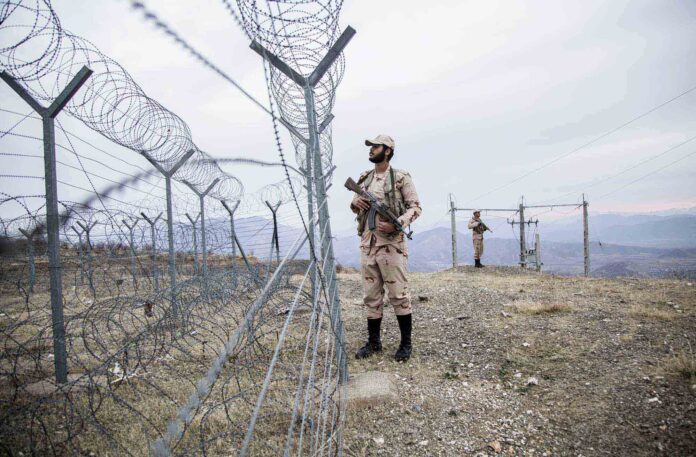
Iran Says Welcomes Pakistan’s Bid to Fence Shared Border

That was announced by Chairman of Iran’s National Security and Foreign Policy Commission Heshmatollah Falahatpisheh in a talk with Fars News Agency on Monday, following a meeting between the parliamentary panel and the interior minister on the same day.

“The interior minister and members of the commission stressed that Pakistan is not capable of building walls to block the border, but Iran seriously supports creating walls at the border with Pakistan,” he said.

The Pakistani government announced Saturday it plans to fence 950 km of the border linking Pakistan’s Balochistan province with Iran’s Sistan and Baluchestan province.

The announcement came in response to Iran’s serious protest against Pakistan’s laxity in protecting its border with Iran after a terrorist attack by a Pakistan-based group left 27 IRGC personnel dead.

Tehran to Host Worldwide Nowruz Festival

The program, which will be held at Milad Tower, focuses on the cultural significance of Nowruz as a regional factor in building empathy among nations.

The festival will be jointly organised by Iran’s Cultural Heritage, Handicrafts and Tourism Organisation (ICHTO) and Iranian National Commission for UNESCO, Mehr News Agency reports.

On the sidelines of the opening ceremony, an exhibition of Nowruz photos and calligraphy will be held and a number of professors will deliver speeches on the significance of the traditional custom.

Nowruz which literally means “new day” is the name of the Persian New Year’s day.

Despite its Iranian origins, Nowruz has been celebrated by diverse communities. It has been celebrated for over 3,000 years in Western Asia, Central Asia, the Caucasus, the Black Sea Basin, and the Balkans. It is a secular holiday for most celebrants that is enjoyed by people of several different faiths.

It marks the first day of the first month of the Iranian calendar. It usually falls on March 21 or the previous or following day, depending on where it is observed.

CODEPINK Members Meet with Iran FM in Tehran

CODEPINK Members Meet with Iran FM in Tehran

During the friendly meeting, FM Zarif elaborated on the concepts of “independence” as a clear principle of Iran’s foreign policy and the country’s “endogenous security” which is based on its people.

He also outlined the Islamic Republic’s stances and views regarding the most important regional and international issues, the issue of human rights, and that of Palestine.

Zarif also responded to the questions raised by the participants.

Code Pink: Women for Peace (often stylized as CODEPINK) is an internationally active NGO that describes itself as a “grassroots peace and social justice movement working to end US-funded wars and occupations, to challenge militarism globally and to redirect our resources into healthcare, education, green jobs and other life-affirming activities.”

In addition to its focus on anti-war issues, it has taken action on issues such as drones (including protests, trips to meet with drone victims in Pakistan and Yemen, bringing them to the US), Guantanamo Bay prison (including a delegation that included former prisoners and yearly protests at the White House), Palestinian statehood (including its involvement in the BDS movement to protest Ahava, SodaStream, ReMax, and AirBnB), the Iran nuclear deal, Saudi Arabia (including protests to end US alliance with Saudi Arabia, its airstrikes on Yemen, and its executions of its political dissidents), and Women Cross DMZ.

The organization characterizes itself as women-initiated. It has regional offices in Los Angeles, California and Washington, D.C., and many more chapters in the US as well as several in other countries.

With members wearing the group’s signature pink colour, Code Pink has conducted marches, protests, and high-visibility actions in order to promote its goals. Although women initiated and lead the group, Code Pink encourages people of all genders to participate in its activities.

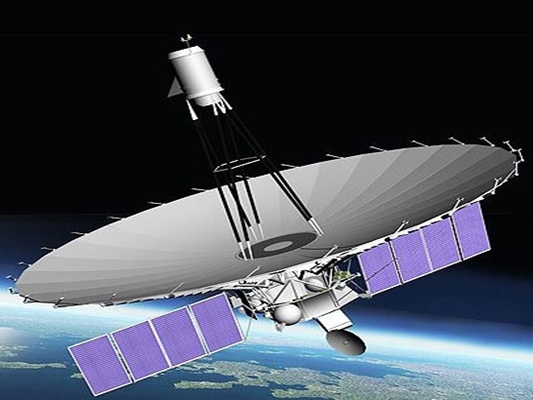
Iran Launches Its First Radio Telescope into Space

The minister said that the project is in line with the policy of making space technology more applicable.

During a Monday ceremony to inaugurate an EMC lab in Tehran, Azari Jahromi noted that the ten-year plan for the space sector has been completed and now a new plan should be devised, dolat.ir reported.

“For example, monitoring rice and poppy cultivation in the country used to be carried out through this space technology, and now we have localized this technology technically and scientifically.”

He also commented on the construction and launching of satellites as another mission of the Ministry saying that ‘Message’ and ‘Friendship’ satellites could not be put in the orbit, but this is part of the space knowledge experience that the country needs.

Azari Jahromi further announced that a telecommunications satellite called Nahid 1 will be launched in June adding that its construction process began in the second administration of Mahmoud Ahmadinejad and ended in President Hassan Rouhani’s second administration.

“Nahid 1 is currently being delivered to the Ministry of Defence and is scheduled to be put 250 kilometres into orbit,” underlined Azari Jahromi.

According to the ICT minister, another satellite called Victory of Science and Industry would be placed 500 kilometres into the orbit next year as well, while the construction process of “Pars 1” will be finished.

“Based on these experiences, we will build “Pars 2” and “Nahid 2”, and work on “Geo” satellite in the future,” stressed the Iranian minister.

Yazd Selected as Book Capital of Iran

The title was given to the city during a ceremony attended by First Vice President Es’haq Jahangiri and Culture Minister Seyyed Abbas Salehi.

During the ceremony, the people of Yazd were awarded with plaques of appreciation of the Interior and Culture ministries as well as the UNESCO’s appreciation plaque.

An appropriate amount of money was also allocated for the establishment, renovation and equipping of bookstores and distribution centres.

According to IRNA, the selection and introduction of the “Book Capital of Iran” is one of the four programs promoting the culture of book reading which is held by the Ministry of Culture and Islamic Guidance in collaboration with the United Nations Educational, Scientific and Cultural Organization (UNESCO) and Iran’s interior ministry.

Previously, the cities of Ahvaz, Nishapur, Bushehr and Kashan had managed to get this title.

This event introduced the culture and civilization of the people of Iran more evidently to the world.

According to Culture Minister Salehi, the city of Yazd is a symbol of the Iranian culture, art and architecture, and is the portfolio of a cultural panel.

Director General of Culture and Islamic Guidance Department of Yazd province says the city has created 1,833 reading clubs to win the second rank after Isfahan. However, in terms of the number of people, it is the country’s first city in creating these reading clubs.

With 111 public libraries, Yazd ranks first in the country. In the public libraries of the province there are over 2 million books with 108,000 members.

Yazd has a population of 138,000 people, 85% of whom live in cities and others in rural areas and villages.

Yazd, as the second historical city of the world, is also known as the city of wind-catchers, bicycles, sweets, adobe, Qanats, and sunshine.

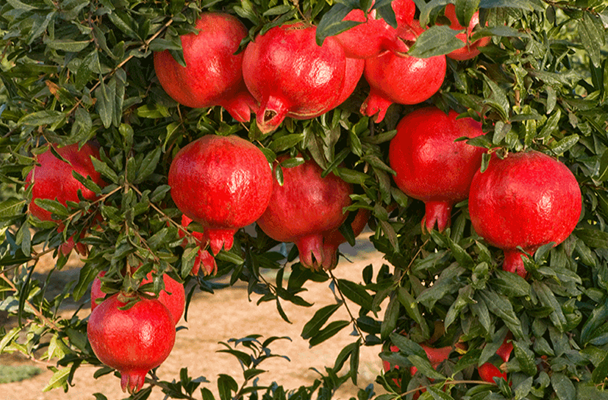
Iranian Scientists Produce Edible Colours Using Pomegranate Peel

Most conventional edible colours are produced synthetically and chemically in the food and medicine industry. Although the use of these compounds is approved at a level that is acceptable, these chemical compounds may be hazardous to the consumer in the long run.

Colours have been used in food and medicine industry for many years and today about 10 authorized chemical compounds are widely used in the food and medicine industry.

Although the use of these compounds is approved internationally, many countries are reducing and changing these compounds to minimise the harmful effects.

For a brief review of Iran’s achievements in various fields of science and technology, check the book “Science and Technology in Iran: A Brief Review

Therefore, Iranian scientists have succeeded in producing a product from pomegranate peel to stabilise food colorants. These edible colours can be used in the food industry, cosmetics industry, and animal and poultry feed.

Achieving one or more natural colourant with good colour and stability without side effects will be cost effective because the use of natural colourants will increase the general health of the community and reduce the cost of treatment.