Tuesday, December 23, 2025
Home Blog Page 3248

Europe Must Take Practical Measures to Implement INSTEX: Iran

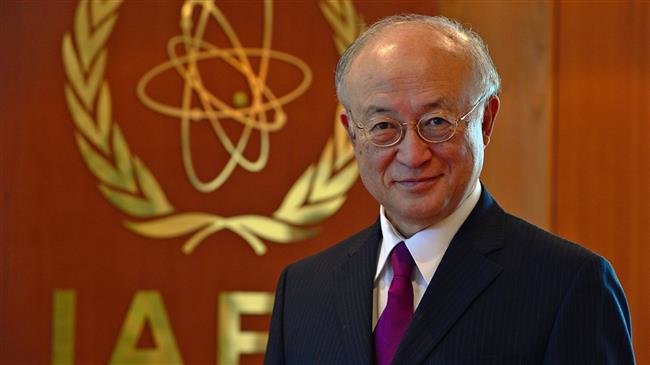
Araqchi on Monday held a meeting with Philipp Ackermann, Director‑General of Germany’s Foreign Ministry, who is responsible for political relations with 110 states in the Near and Middle East, Africa and Latin America.

In the meeting in Tehran, Araqchi criticized the lengthy process of finalization of INSTEX (Instrument in Support of Trade Exchanges), the payment channel that France, Germany and Britain have proposed to continue trade with Tehran and bypass the US embargoes.

Araqchi said creation of INSTEX was only part of the commitments that the EU3 has undertaken under the JCPOA, stressing, “The European side is expected to make more serious efforts for (the achievement of) practical and tangible results of the JCPOA and for the immediate implementation of INSTEX.”

The Iranian diplomat underlined that “political will alone” would not suffice for saving the JCPOA, urging Europe to “take practical measures and pay the price” to salvage the nuclear deal.

Araqchi further deplored Germany’s decision to halt flights by Iranian carrier Mahan Air to its airports, calling on Berlin to review its decision.

For his part, Ackermann hailed the JCPOA as a successful result of diplomacy, decried the US move to withdraw from the nuclear deal, and reaffirmed his country’s determination to support it.

He also said that German companies have become more interested in working with Iran after formation of the INSTEX, stressing that Berlin prioritizes efforts to implement the payment channel.

INSTEX is planned to be based in Paris and be managed by a German banking expert. Britain will head the supervisory board.

The European countries are reportedly going to use the channel initially only to sell food, medicine and medical devices in Iran.

In May 2018, the US president pulled his country out of the JCPOA, the nuclear deal that was achieved in Vienna in 2015 after years of negotiations among Iran and the Group 5+1 (Russia, China, the US, Britain, France and Germany).

Following the US exit, Iran and the remaining parties launched talks to save the accord.

Be Sure to Learn about Trading System Properly

Most of the time of the career, there will be losing trades coming out of your account. That is not a demising factor of the trading business. The traders will be able to make some good performance happen with the right system in place.

That will need you to make good planning. In this article, we are going to talk about the proper way to improve your trading performance. What better way can there be without learning different things?

If you can learn about some more advanced trading methods, there will be a good performance from time to time. The trades will have good signals for them with more advanced level market analysis.

Then the right placement of the stop-losses and take-profits will be there for all of the trades. All other work will be done correctly for the trades. In this article, we are going to talk about the right way to improve trading performance with learning.

Use the demo trading account for learning

For the right learning process, traders will have to manage the right practice with the real system. There is one but the only difference in it is that the money involved in that if fake. Actually, it is very helpful for traders. Because the money is fake, the traders do not have to worry about losing money from their account. For any kind of need, the traders can take more from the brokers. So, you will have to make a good demo trading account. And while setting the account, the traders will also be able to set more things like leverage for margin trading. This way, you will be able to learn more advanced things for the trading business. Even when you will have to improvise parts of the trading performance, it will come in handy.

Focus on price action trading strategy

The professional traders in the United Kingdom always prefer to trade the market in a higher time frame. Most importantly they always chose premium brokers like Saxo for CFD trading. Being a new trader, you should never rely on an indicator based trading system. Try to master price action trading strategy as it always gives you the unique opportunity to make a profit in the long run. Moreover, you can easily place a big trade, with managed risk and earn a significant amount of profit.

The right control of the trades will need to be learned

Proper control of the trades means, good executions of the trades. There is no surety of the signals being right for the trades. You cannot be sure about any. So, loses can be any time into the trading business. It is more especially where the volatility is unstable like the Forex trading business. So, the traders will have to place their trades in the most controlled way possible. It will help the traders to minimize the losses. That is not so hard with some good planning. If you have a demo account, the performance and learning in this region would be much better. Think about a decent risk to profit margin for the setting of the stop-losses and take-profits. Even before that, traders will have to think properly about good position sizing. That will be done with the proper selection of the profit targets.

You will have to think about proper money management

This point should be on the top of all others. The traders in Forex will have to control their investment. This work must be done with a good level of concentration. This will also reduce the possibility of losing the trades. So, you will have to learn about it in the demo trading process.

FATF Accession Key to Surviving US Sanctions: Iran

FATF’s Blacklisting of Iran; Threat or Opportunity?

In an interview with Hamshahri daily, Gharibi said amid the growing US pressure, Iran must seek to keep open some small windows for cooperation with its partners.

“As a pioneering country in fight against terrorism, we can’t cut our ties with the outside world and violate its global norms. Diplomacy requires its own procedures and mechanisms,” he was quoted as saying.

Gharibi underlined that no country can remain reluctant to the international standards and added today 204 states and international organizations have already approved the FATF standards.

“Each country has its own reservations. We can meet our national interests within the accepted international norms. We should not tie the issue of the FATF to the US violation of the Iran nuclear deal,” he said.

The Iranian diplomat also said Iran won’t give any concessions to any country within the FATF and expressed hope that the related decision-making bodies could make the best decisions regarding the FATF.

Elsewhere, he said the Europeans have never raised the issue of FATF as a precondition for keeping their trade ties with the Islamic Republic despite the US pressure.

Gharibi warned of enemies’ plots to inflict further blow on Iran and said approval of the FATF provides Iran with a chance to resist further against the pressure exerted on the country.

“The FATF includes some recommendations which all states are required to observe. We are seeking to observe them with the goal of removing our current restrictions. Today, countries like China, Russia and India have all joined the global anti-money laundering body despite their sensitive security concerns,” he noted.

The remarks came after Iran’s Expediency Council postponed making decision on Iran’s FATF accession to the next Persian year (starting 21 March).

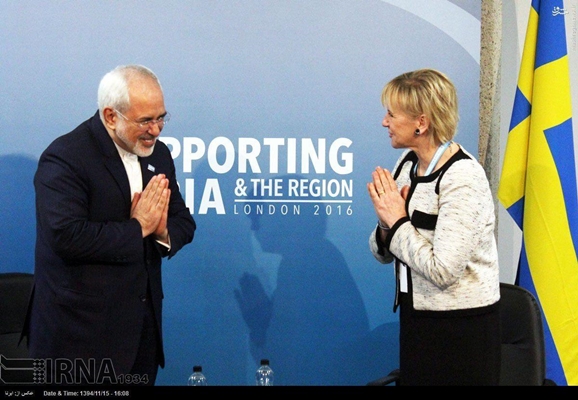
Iranian, Swedish FMs Discuss Bilateral Ties

Iranian, Swedish FMs Discuss Bilateral Ties

During the Monday talks, the two top diplomats conferred on the latest developments in bilateral ties as well as consular and humanitarian issues.

Iran and Sweden signed a memorandum of understanding (MoU) in June 2016 to convene periodic political consultations.

In May 2018, diplomats from the two sides held the third round of periodic political consultations in Tehran, discussing bilateral, regional and international issues.

In February 2017, Swedish Prime Minister Stefan Lofven paid a visit to Tehran.

The two countries signed five memorandums of understanding (MoUs) during that trip to deepen bilateral relations and boost cooperation in various fields.

Iranian Yoghurt Drink Internationally Registered by Codex

The commission registered the Iranian product in its list of international standards with the code cxs332R-2018.

The achievement not only promotes the global status of the Iranian product in the world but also gives the country a new national honour, said Seyyed Amir Mohammad Mortazavian, a nutrition professor who has followed up the registration of doogh by Codex for more than 11 years.

Doogh has been produced in Iran traditionally for thousands of years. It derives from two Persian words: Dou meaning milk in Old Persian and dokhtar or daughter which refers to girls who used to milk cows in the ancient Iran.

In the new era, doogh has been produced in Iran industrially for nearly 80 years. It is a cold savoury yogurt-based beverage that is mixed with salt.

It is served chilled and often as an accompaniment to grilled meat or rice, especially during summer. It is made by mixing yoghurt with chilled or iced water and is sometimes carbonated and seasoned with mint.

The Codex Alimentarius, or “Food Code” is a collection of standards, guidelines and codes of practice adopted by the Codex Alimentarius Commission. Consumers can trust the safety and quality of the food products they buy and importers can trust that the food they ordered will be in accordance with their specifications.

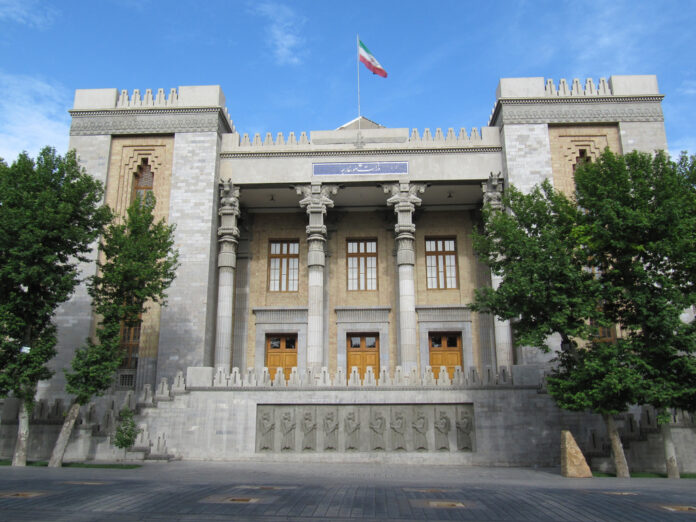
Netherlands Summons Ambassador to Tehran

Dutch Foreign Minister Stef Blok

The country’s Foreign Minister Stef Blok wrote in a statement Monday that on February 20 in response to the expulsion of two Iranian diplomats from the Netherlands, Iran declared two Dutch diplomats as persona non grata and ordered them to leave Tehran.

In response to this move, the Netherlands first summoned the Iranian ambassador, describing the act as “unacceptable” and “having negative consequences” for bilateral relations.

However, the two Dutch diplomats left Tehran on Sunday. In response to this move, the Netherlands has decided to summon its ambassador to Tehran.

On January 8, 2019, the Netherlands’ foreign and interior ministers wrote a letter to the parliament accusing Iran of murdering Mohammad Reza Samadi Kolahi.

The Dutch foreign ministry had earlier in June expelled the two Iranian diplomats.

Kolahi was the agent behind the blast at the central building of the Islamic Republic of Iran Party on June 28, 1981. In that explosion, more than 70 senior officials of the Islamic Republic of Iran were killed.

Dutch court records show that Kolahi was killed by members of a criminal gang in 2015.

Claims of Iran’s involvement in the incident come as the Dutch prosecutor explicitly stated in the course of the trial that there was no evidence of Iran’s complicity in the murder.

Iran Expels Two Dutch Diplomats as Reciprocal Action


Iran Expels Two Dutch Diplomats as Reciprocal Action

Iran Condemns Bahrain’s Plan to Normalize Relations with Israel

“The two diplomats at the Dutch embassy in Tehran were recognized as persona non grata within the framework of a reciprocal action and were asked to leave our country’s soil on March 3 and 4,” said the spokesman Monday.

“Following the baseless accusations levelled against two Iranian diplomats by the Dutch government and their expulsion from that country, relevant officials put reciprocal action on their agenda, and after comprehensive reviews at the Supreme National Security Council, finally it was decided that two of Dutch diplomats be expelled from Tehran,” he noted.

Qassemi expressed regret that the Dutch government did not rethink its decision despite the fact that the prosecutor general, foreign and interior ministers of the Netherlands admitted that the Iranian diplomats had not been involved in the events which took place in the European country.

“The Islamic Republic of Iran expects Dutch authorities to have a proper understanding of the sensitive regional and international situation and not act in line with the desires of the opponents and ill-wishers of relations between the two countries,” he said.

“The Islamic Republic of Iran does not want tensions in its relations with European countries, but will respond in kind to any move against its national interests in due time and in line with protecting the country’s interests,” he said.

How to Unblock Websites without Browser Extensions

They call it “an abundance of caution.” The site might itself put geographic restrictions on who can view it.

Sometimes blocking gets in the way of important research. Sometimes it frustrates people in the USA who want to see the latest Doctor Who videos. Either way, there are techniques for getting around the restrictions. Accessing a site in a different way may circumvent blocking. Using a proxy for Web access is another approach. When it’s available, using a VPN such as Surfshark is a secure way to beat restrictions.

When options are restricted

Getting around blocking is more difficult when using someone else’s computer. An office computer may not let the user install software without an administrator’s help. The browser may be set up so that users can’t install their own extensions. It does make sense that these limitations exist; if careless users could download and run whatever they liked, computers would get infected with malware all the time.

Installing browser extensions just makes some users uncomfortable. There’s some inherent risk in having lots of extensions. Even legitimate, well-maintained ones can have security holes, and ones from less scrupulous publishers could spy on users. Failure to keep them updated could open up problems.

Fortunately, it isn’t necessary to install any software to regain access to blocked sites. The approaches may require some compromises, but one approach or another will work in most cases.

Accessing a site indirectly

A useful trick is to access a site through another site. This isn’t convenient for navigating among links, but it’s effective for viewing a single page.

One variant is to use a site that offers an image or PDF of any page. Sites like Web2PDFConvert.com and PDFCrowd.com not only lets you get a PDF file, as their names imply, but can also convert a page to a variety of image formats. Since the page request comes from the website and not the client computer, it might not be blocked.

Another approach is to use a translator, such as Google Translate or Microsoft Bing Translator. A user can give these sites a URL and have it translated into another familiar language. If the aim is to access foreign sites and understand what they’re saying, this kills two birds with one stone.

Access by IP address

The main downside of indirect access is that it doesn’t bring up an actual, fully usable version of the page. Other techniques can do better.

Every page on the Web has an IP address. The URL is simply a user-friendly way to get to it. A domain name service (DNS) translates domain names into URLs. Blocking is more often by domain name than by the underlying address. It’s best to use an unblocked computer to get it. A “ping” tool will return the IP address information for any site. Desktop or command line tools are available with all operating systems. Online tools, such as IPAddressGuide, provide the additional advantage of bypassing local blocking.

There are limitations to this approach, too. A server may host several domains, in which case it needs the actual domain name to resolve a request. SSL certificates are tied to domains, not IP addresses, so accessing an HTTPS site may require ignoring some warning messages. The technique will work some of the time but not always.

Access by proxy

Using a Web proxy will work more reliably than any of the preceding methods. It requires some setup, but unless the browser settings on a computer are locked down, it should be doable. A proxy is simply a service that relays requests so that they don’t appear to originate from the user’s computer.

Most browsers have settings that let the user send all requests through a proxy. The user has to specify the proxy with a domain or IP address, as well as the protocol it uses. The proxy could itself be blocked, of course. The best results come from picking one in a geographic location that is less likely to encounter blocking.

All traffic goes through the proxy, so picking one which is reliable is important. An untrustworthy one could collect personal information on its users or alter content as it passes through. Some proxies are reliable but painfully slow, simply because so many people use them.

Access by VPN

A virtual private network (VPN) is superficially similar to a proxy but offers far better security. With a VPN, all traffic is encrypted between the user’s machine and the exit point on the Internet. The local service provider can see all traffic going to and from a proxy, but a VPN hides all that information.

Setting up a VPN is more complicated than setting up a proxy. Sometimes it’s necessary to install client software. However, all major operating systems include some level of built-in support. If one of the supported protocols works, there’s no need to install any software. It may be necessary to install a certificate for access to the service. Having an administrative account is likely to be required.

Here is a brief summary of built-in VPN support on popular operating systems:

  • Windows 10 makes it easy to set up a VPN client. The software understands several tunneling protocols.
  • On MacOS, the Network settings under System Preferences include support for Mac VPN access. It can use a VPN settings file or manual entry.
  • The settings in iOS include VPN client configuration. Users with an iPhone or iPad can set it up without much trouble.
  • The VPN options built into Android are somewhat limited. It doesn’t support the latest protocols without an additional app. It will work with many networks, but security could be an issue.
  • On Linux, the options depend heavily on the distribution in use. Most distributions include some form of built-in VPN support.

Imagination overcomes limits

Even when downloading applications or browser extensions isn’t an option, there are many ways to try to access blocked sites. No one of them will work in every situation. With some imaginative experimentation, it’s possible to get around most limitations.

IAEA Once Again Confirms Iran’s Compliace with Nuclear Deal

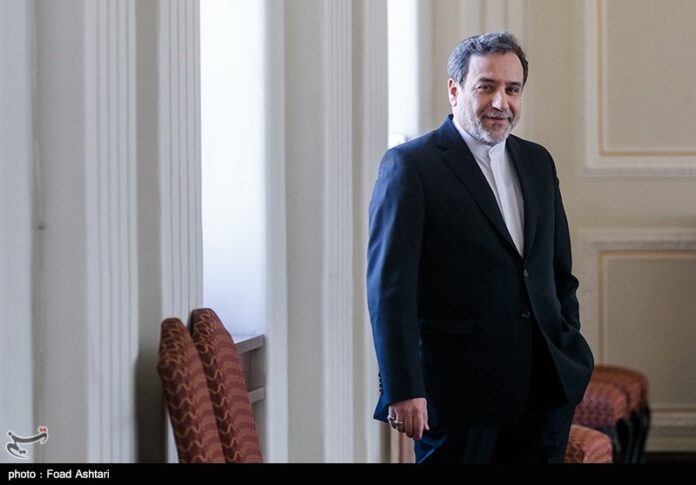
“Iran is implementing its nuclear-related commitments under the Joint Comprehensive Plan of Action,” the IAEA Director General Yukiya Amano said in his  introductory statement  to the IAEA’s Board of Governors in Vienna on Monday.

“It is essential that Iran continues to fully implement those commitments,” he added.

The IAEA chief noted that his report on verification and monitoring in Iran in light of United Nations Security Council Resolution 2231 (2015) covers relevant activities of the IAEA in the country in the last few months.

US President Donald Trump withdrew Washington in May from the landmark Iran nuclear agreement, reached between Iran and the P5+1 group of countries in 2015, and decided to re-impose unilateral sanctions against Tehran.

Under the deal, Iran undertook to put limits on its nuclear program in exchange for the removal of nuclear-related sanctions.

Amano further said in his statement that the IAEA would continue to verify the “non-diversion of nuclear material” declared by Iran under its Safeguards Agreement.

“Evaluations regarding the absence of undeclared nuclear material and activities in Iran continue,” he noted.

Amano also said the IAEA carefully examines all safeguards-relevant information about implementing verification activities in Iran, but emphasized that this analysis “normally takes time, and takes action when appropriate.”

“The agency undertakes analysis and takes action in an impartial, independent and objective manner, within the existing safeguards framework and in line with established safeguards practice,” he added.

In a quarterly report on Friday, the IAEA said Iran continues to observe the restrictions on its nuclear activities under the deal it signed with global powers.

Iran remained within caps on the level to which it can enrich uranium and its stock of enriched uranium in accordance with the JCPOA, the report by the UN nuclear agency said, even as the US re-imposed sanctions against Tehran.

Trump’s administration announced re-imposition of the “toughest” sanctions ever against Iran’s banking and energy sectors with the aim of cutting off the country’s oil sales and crucial exports.

Despite Washington’s withdrawal, Iran has not left the deal yet, but stressed that the remaining signatories to the agreement have to work to offset the negative impacts of the US pullout for Iran if they want Tehran to remain in it.

‘Tempted by Petrodollars, EU Taking Saudi Out of Terror Financing List’

Qassemi made the comments on Sunday in reaction to reports that the European Union is going to take Saudi Arabia out of the terror financing list.

“I do not know exactly how many EU member states are treading this path, but I know that some of them have started this process and have followed this path to save the Saudi government from this historic predicament,” he noted.

“Of course, Saudi Arabia’s petrodollars are tempting some of the European circles and centres that are working as lobby groups for Saudi Arabia. They are doing their best to save the face of Saudi Arabia which is accused of extremism and promotion of Takfiri terrorism in the region,” Qassemi noted.

“Past charges against Saudi Arabia and also the recent murder of a writer had a very bad effect on the world, public opinion, and the people, especially the elites and the media community.”

“The world’s public opinion was moving towards taking a more decisive approach towards this kind of non-wise behaviour that exists in Saudi Arabia. However, it seems that some European countries are trying to change the situation for whatever reason,” he added.

“At the end of the day, history is a good judge and time will tell that it is impossible to ignore the facts that are available everywhere in the world with any means or enticement. Today’s world is the world of communications and burst of information, and all news can be transmitted very quickly; therefore, many issues will not remain uncovered as before.”