Tuesday, December 23, 2025
Home Blog Page 3246

Iran President, Iraq Speaker Hold Friendly Meeting in Tehran

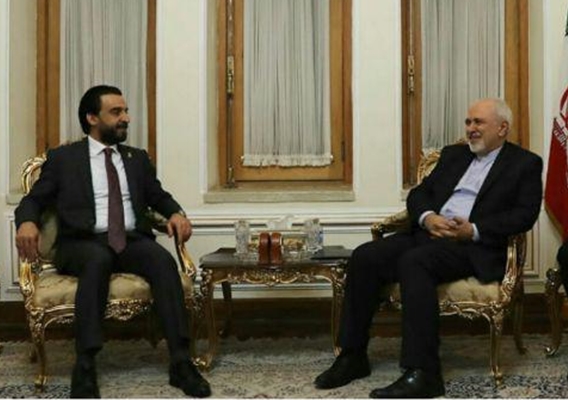
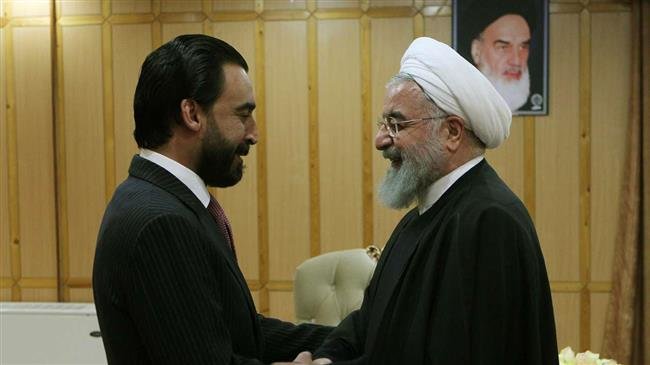
On Wednesday evening, Iranian President Hassan Rouhani received Iraqi Parliament Speaker Mohamed al-Halbousi on the sidelines of a visit to the northern Iranian Province of Gilan.

The two officials reaffirmed the resolve of their nations to further enhance cordial bilateral relations as well as cooperation in the battle against terrorism.

President Rouhani emphasized the significance of stability in neighboring Iraq, saying peace and security in both countries are intertwined.

He congratulated the Iraqi nation for defeating the “dangerous” Daesh terrorists and subsequently holding successful elections, stressing that the Islamic Republic “is ready to broaden bilateral cooperation in the areas of economy and infrastructure.”

The Iraqi speaker, in turn, stressed the need for stronger ties with its eastern neighbor, censuring the US’s campaign of economic pressure and sanctions against Iran.

Halbousi also thanked Iran for standing by the Iraqi nation in its fight against terrorism. On the back of Iran’s military advisory support, Iraqi armed forces managed to liberate their home country from Daesh, the world’s most notorious terror outfit, in late 2017.

He said Iraq believes closer cooperation with Iran strengthens regional stability.

Earlier in the day, Halbousi sat down for talks with Iranian Foreign Minister Mohammad Javad Zarif in Tehran over issues of bilateral importance, among them President Rouhani’s upcoming official visit to Iraq.

The Iraqi parliament speaker also met with Iran’s top security official for talks on defense relations.

During that meeting, Ali Shamkhani, the secretary of Iran’s Supreme National Security Council, warned that the American military presence is posing security threats to the troubled region.

Referring to the futility of Washington’s military intervention in Iraq under the banner of fighting Daesh, Shamkhani said “experience showed the US is not only not ready to protect nations and governments against terrorists in times of crisis, but even employs all its logistical and intelligence resources to manage terrorism and use it as a tool” in the service of its own goals.

Halbousi, for his part, highlighted Iran’s significant role in establishing peace and security in the region, saying his country could not have defeated the terrorists without Iran’s help.
Iran President Opens Major Railway Line North of Iran

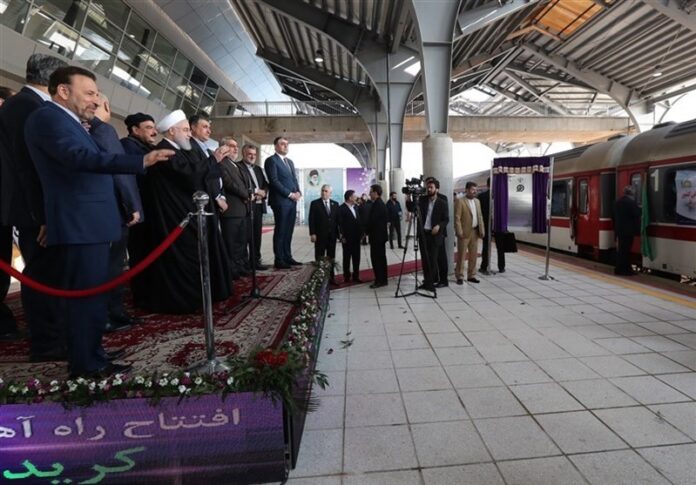
Accompanied by a delegation of ministers, the Iranian president opened Qazvin-Rasht railroad line at a ceremony in Rasht, capital of the northern province of Gilan.

The new track is a major section of a railroad line dubbed the ‘Green Corridor’, which connects the Caspian Sea to the Persian Gulf.

The railroad line, stretching 164 kilometers, would help save 20 million liters of fuel every year and provides employment for 1,865 people.

Qazvin-Rasht railroad line will be also extended to the port city of Anzali and further to the city of Astara in Iran and a border city with the same name in the Republic of Azerbaijan.

Iran has accelerated efforts in recent years to complete the sections of the international North-South Transport Corridor (NSTC) that pass through its territory.

The NSTC concept was formalized by India, Iran and Russia in 2000.

The long corridor connects India to Russia through Iran’s southeastern port city of Chabahar.

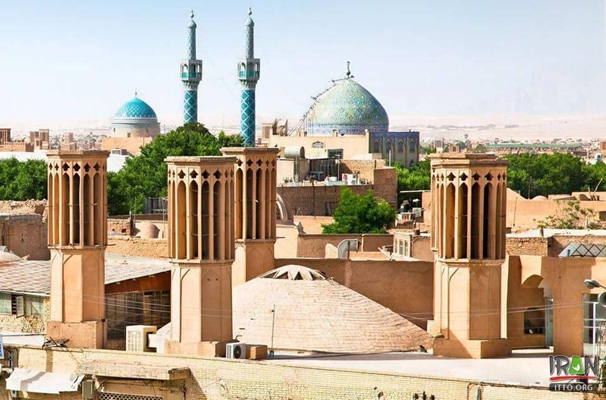
Yazd Commits Itself to Promoting Adobe Structures

As part of this commitment, an international workshop was recently held in Yazd to introduce adobe architecture as a solution to the environmental challenges. This was the first time that Iran was hosting such a workshop.

The event was also attended by advisor to the General Manger of the International Centre for the Study of the Preservation and Restoration of Cultural Property known as ICCROM.

Mariana Corea, the chief of ICOMOS International Scientific Committees also was among the participants.

Representatives from 30 countries including the Philippines, Afghanistan, Lebanon, Kuwait, Jordan, Portugal, Algeria, Germany and Iran took part in the workshop.

In recent years, Iran has faced environmental problems in the building industry, and the solution that Yazd has set forth is adobe architecture.

The workshop was held to introduce the adobe architecture and sustainable structures and to examine its maintenance challenges.

Seyyed Mostafa Fatemi, Director of the Cultural Heritage Department of the province, in an interview with ISNA pointed to the importance of holding the first international workshop on adobe architecture saying that one of the most important features of the workshop was the presence of some of the most prominent international experts in the field of architecture which led to the transfer of experiences.

“Due to the rich background and the sustainable adobe architecture of Iran, our country is committed to and responsible for transferring its experiences in the field,” he went on to say.

Mohsen Abbasi Harofteh, the head of Cultural Heritage Base of Historical City of Yazd, says Iran and its government have given the UNESCO a commitment to continue constructing structures through adobe architecture.

“If we do not fulfil our obligations, we would be held accountable by international institutions. In other words, we cannot be benefited by the registration of our sites, but not be committed regarding its costs.”

Abbasi Harofteh also called adobe architecture one of the most enduring and environment-friendly architectures noting that a key challenge in the world today, which is serious in Iran, is the environmental issues of producing construction debris and the energy wasted for the construction industry.

However, adobe architecture is one of the alternatives to save environment, he concluded.

Iran FM, Iraq’s Parliament Speaker Discuss Bilateral Ties

During the Wednesday meeting, the two sides described mutual relations between Iran and Iraq as strategic, and exchanged views on regional issues, ways to expand and strengthen bilateral ties and the upcoming significant visit of Iranian President Hassan Rouhani to Iraq.

Rouhani is set to start his first-ever official visit to Iraq as the Iranian president as of March 10.

Earlier, Zarif, his deputy Abbas Araqchi and head of Iran’s Central Bank Abdolnasser Hemmati made separate trips to the Arab country to prepare the grounds for the visit.

Last November, Iraqi president Barham Saleh had visited Iran.

Iran Condemns ‘Inhumane’ Terror Attack in Afghanistan

In a Wednesday statement, Qassemi condemned the “inhumane move” and expressed sympathy with the government and nation of Afghanistan, particularly the families of the victims of the attack.

“Carrying out terrorist attacks against innocent people is the most inhumane method followed by terrorist groups to achieve their illegitimate political goals and privileges,” Qassemi said.

“We are sure that the nation of Afghanistan will stand behind their government and continue its move, in a more determined way than ever, to strengthen stability and security in the country,” he said.

Qassemi underlined that the Afghans have the backing of the Iranian government and nation in their efforts.

Earlier in the day, bomb explosions followed by a militant attack rocked Afghanistan’s Jalalabad, killing at least 16 people and wounding nine others.

Local officials say two bombers blew themselves up outside the office of a private construction firm near the city’s airport.

Then, three other militants stormed the company and opened fire on employees. Security forces rushed to the scene and gunned down the attackers. There’s no claim of responsibility for the assault. But Taliban militants and ISIS terrorists are both active in the region.

Chinese President’s Letter Submitted to Top Iran Officials

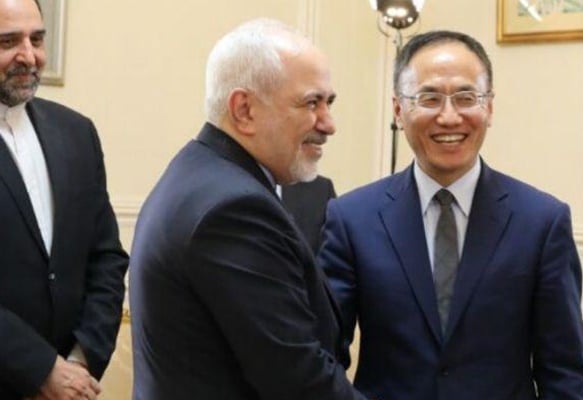
During the meeting, the Iranian foreign minister said relations between Iran and China are long-standing, important, friendly and comprehensive. He also called for development and deepening of these ties.

Referring to the diversity and abundance of capacities and capabilities of the two countries, FM Zarif emphasised that the Islamic Republic is resolved to expand its bilateral ties with China.

The Chinese official, in turn, submitted separate letters of the President of China to the Leader and the President of the Islamic Republic of Iran. He further described the visit of Iran’s Parliament Speaker to China as important and successful.

Stressing the importance and expansion of strategic ties between Iran and China, Xiaodong added that the Chinese president has touched upon the preserving and strengthening of relations with Iran and has issued necessary directives to all state sectors in China.

President Rouhani Says Iran Will Never Give in to US Pressures

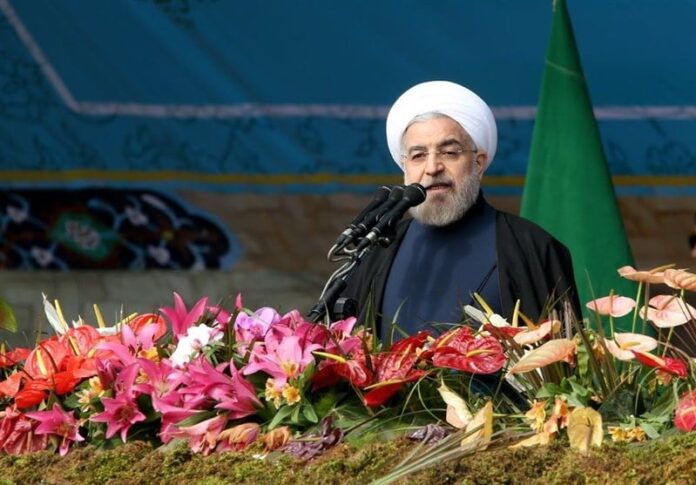
In an address to people in the northern city of Lahijan on Wednesday, Rouhani highlighted the delicate situation that Iran is now facing, saying the great Iranian nation has gained major victories in the “great historical test” over the past year.

Iran is in a “psychological and economic war” situation, the president said, adding that surrendering to the enemy in the current stage would wipe off all democratic achievements of the past decades.

The US wants to force Iran to return to 40 years ago, Rouhani deplored, saying, “But we say that our path is (one of) independence and democracy. (These are not things one) can compromise on.”

Rouhani said the adversaries were seeking to defeat the Iranian nation in the current Iranian year –which ends in two weeks-, but the great nation resisted pressures in all difficult stages.

“The enemy (the US) did not have any success in its plots against Iran at the Warsaw conference,” the president said, stressing that Iranians have emerged victorious despite all plots, acts of sabotage and sanctions by the adversaries.

In comments in December 2018, Leader of the Islamic Revolution Ayatollah Seyed Ali Khamenei highlighted the Iranian nation’s resolve in standing against the US plots over the past decades, saying Washington has been trying to regain control of Iran like the pre-Revolution era and create the same situation that it has established in certain weak regional countries who have been derided as cows milked by the US.

Pointing to the uncovered plots that Americans have hatched over the past two years to harm Iran, such as imposing sanctions and assisting Iran’s foes, the Leader said the US objective was to create bipolarity and division in Iran through sanctions and anti-security measures.

In May 2018, the US president pulled his country out of the Joint Comprehensive Plan of Action (JCPOA), the nuclear deal that was achieved in Vienna in 2015 after years of negotiations among Iran and the Group 5+1 (Russia, China, the US, Britain, France and Germany).

The US had announced plans to drive Iran’s oil exports down to zero, but backed off from its policy and granted waivers to at least 8 countries that import Iranian oil.

Public Wi-Fi Isn’t Safe: Learn How to Keep Your Data Safe

Additionally, public Wi-Fi prevents people from having to use expense data while on mobile devices.

The only downside to public Wi-Fi is the fact that it is incredibly unsafe to those who use it.

The amount of digital attacks that happen over public Wi-Fi are staggering and have people desperately looking for the best VPN service.

Don’t worry! We are here to discuss the ins and outs of public Wi-Fi and how you can protect yourself from cyber-attacks.


Why Public Wi-Fi is Unsafe

Public Wi-Fi is so appealing because it is easy to access, free, convenient, and necessary to a lot of people. Unfortunately, these exact perks are the reason so many cyber-criminals use public Wi-Fi as a means of attack.

When you access a public Wi-Fi connection your data goes out, unencrypted, for anyone with savvy enough eyes to see. Once a cyber-criminal has decided to target users of a particular Wifi connection there are all sorts of havoc they can wreak.

Hackers can create spoof hotspots to confuse users and trick them into connecting to a fake wireless connection being observed by criminals. Additionally, some hackers use the unencrypted connection to plant malware on users which can result in leaked data in the form of private information, passwords, and much more.

There are dozens of ways that cyber-criminals can use public connections to intercept your data and information, but there are just as many ways to protect yourself from these attacks ever taking place.


How Can You Protect your Data?

Being aware of all the dangers of public Wi-Fi might make you want to never use it again, but we are going to show you some tricks to maintaining your digital anonymity while accessing a public network.


Turn Off Sharing

One way to protect yourself is to turn off sharing on all of your devices. This will help prevent your device from sharing personal or private information into nefarious hands.


Use Encrypted Websites Only

Another method is to only use websites that begin with HTTPS, which denotes an encrypted website where your logged information is secure from prying eyes. These types of websites can sometimes be identified through the use of a small lock prefixing the URL.


Use a Virtual Private Network

The last and most effective method is to use a virtual private network or VPN. VPNs offer military grade encryption, true anonymity through spoofed IP addresses, and a totally secure tunnel through which you can safely use any internet – even public.

VPNs are great for protecting yourself from cyber-attacks but also have many more perks. The level of amenities with your VPN will be dependent on whether you want to pay or use a free service.

Even a free service, so long as they are reputable, is capable of providing the security and anonymity needed to protect yourself while using public Wi-Fi.


Conclusion

Public Wi-Fi can be a fantastic thing. It is great to be able to check your bank account when you see that great piece of furniture is on sale. To have the option to facetime a friend before you decide on which outfit to buy. To quickly be able to pull up the address of the next place on your agenda.

With a little effort and the help of a virtual private network, there is no reason to let cyber-criminals deter you from taking advantage of a time and money saving option.

Yes, there are people out there who are waiting for others to use free Wi-Fi connections so they can access their data, but simply giving in to the fear of these criminals lets them win.

Instead, you can take the power back and revel in your privacy and security.

Iraqi Diplomat in Tehran ahead of Iran President’s Iraq Visit

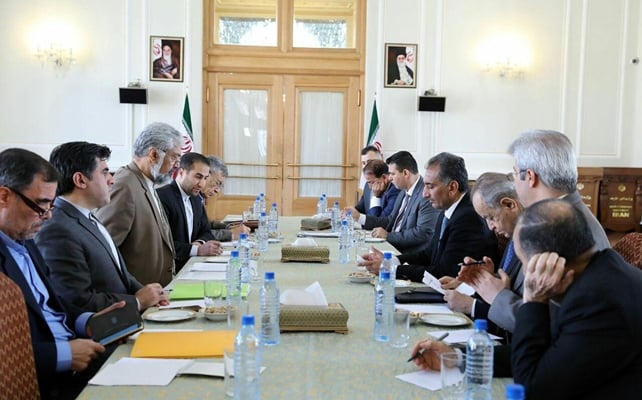
During the Wednesday meeting, the two sides reviewed various issues of bilateral relations and emphasised the importance of the Iranian president’s visit to Baghdad as a historic opportunity to deepen and broaden relations.

At the meeting, the Iraqi official invited his counterpart to visit Baghdad, announcing that there is no limitation in ties between the two countries and nations of Iran and Iraq in all fields, especially security and defence issues, and energy.

He also vowed that the Islamic Republic of Iran will play a key role in the Arab country’s reconstruction.

Khairallah and Sarmadi also exchanged views on border issues between the two countries in Arvand Rud, with the Iranian side touching upon the need for precise and complete implementation of the provisions of the 1975 Algiers Agreement.

As of March 10, Rouhani will start his first-ever official visit to Iraq as the Iranian president.

Earlier, Iranian Foreign Minister Mohammad Javad Zarif, his deputy Abbas Araqchi and head of Iran’s Central Bank Abdolnasser Hemmati had made separate trips to the Arab country to prepare the grounds for the visit.

Last November, Iraqi president Barham Saleh had visited Iran.

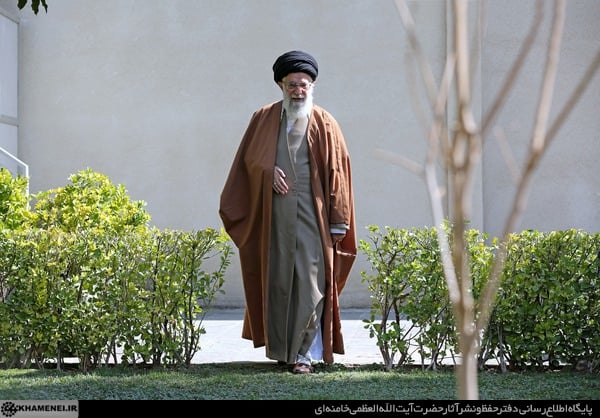
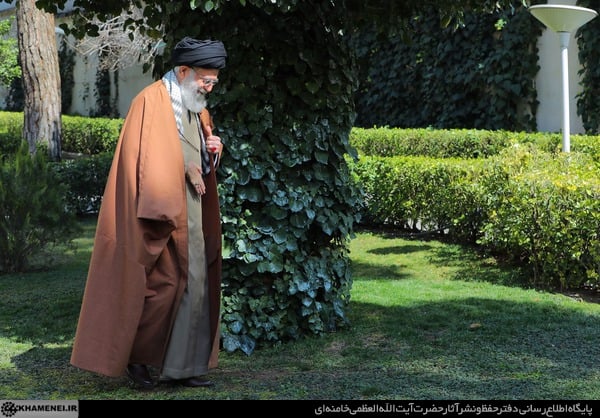
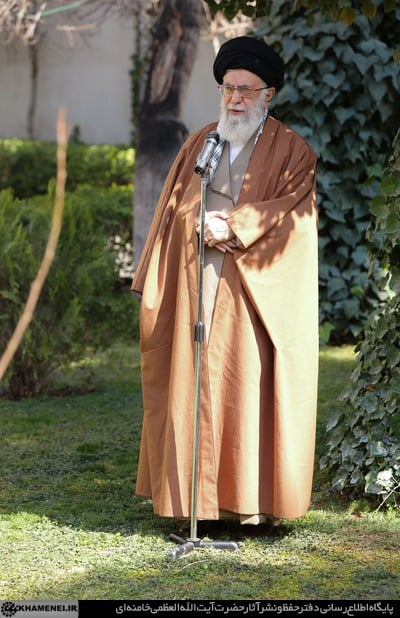
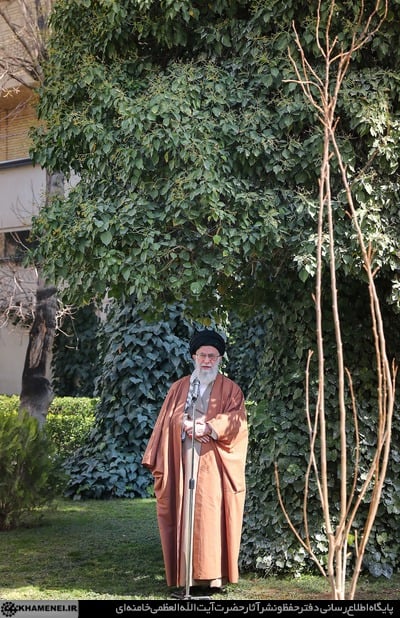
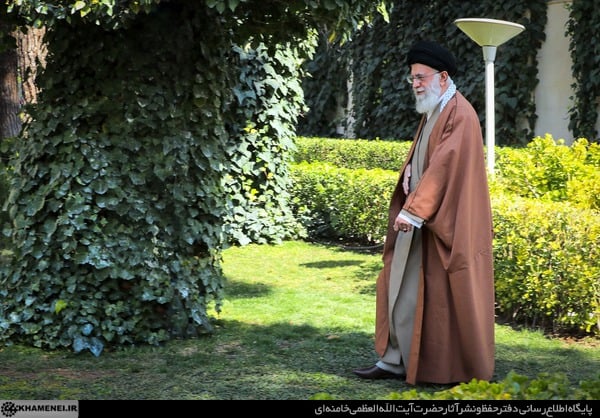
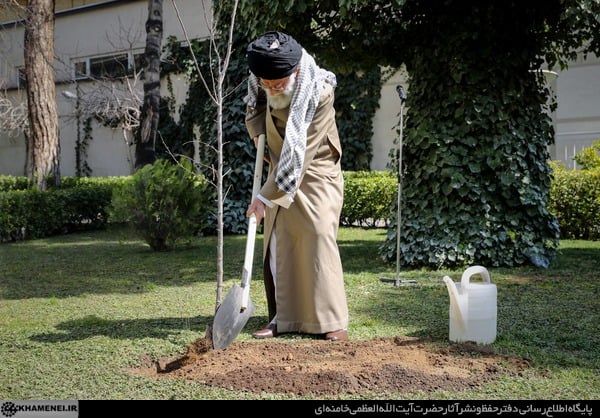
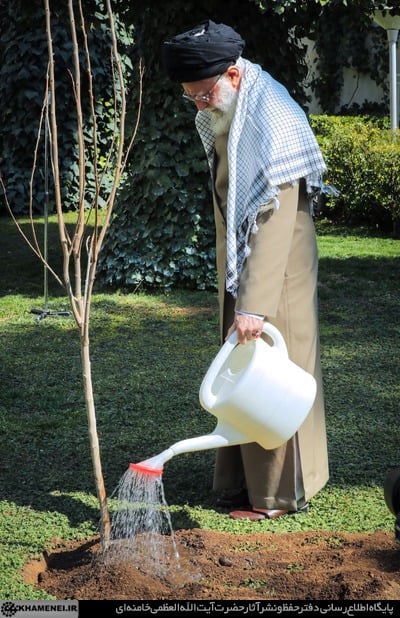
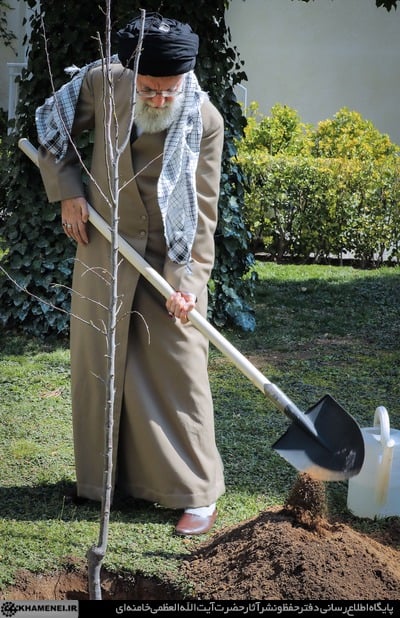
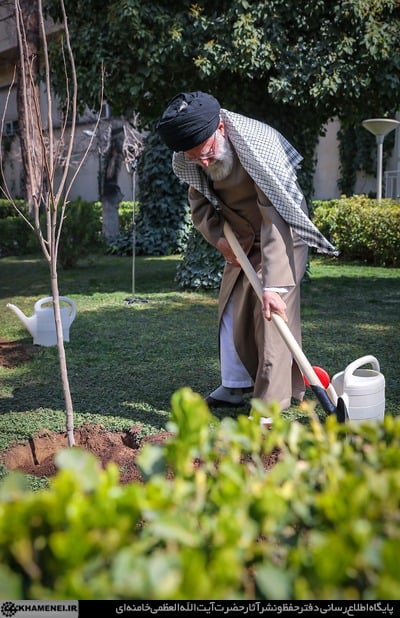
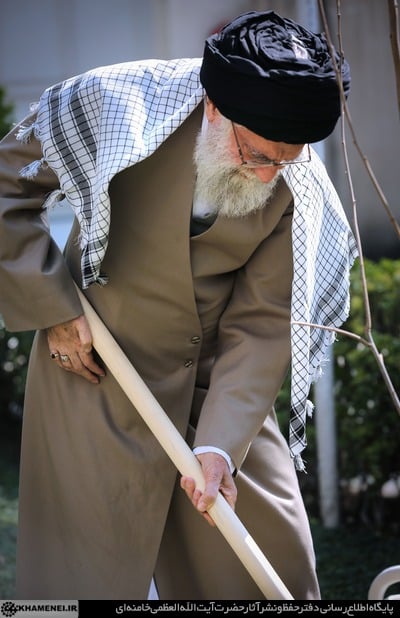
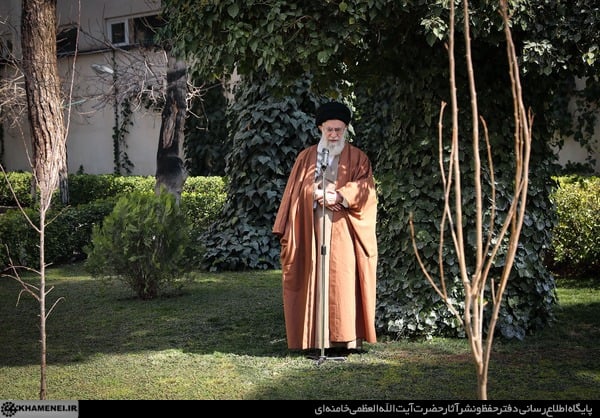
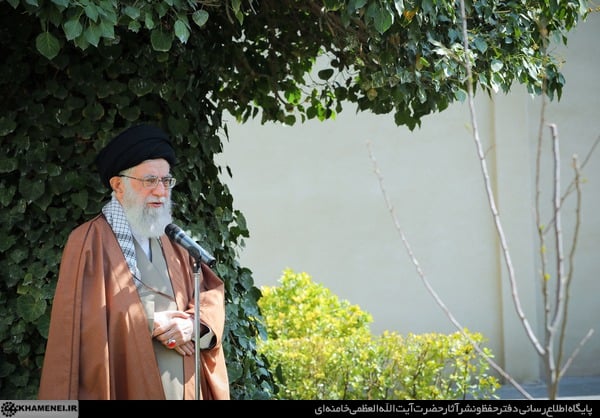
Iran Leader Plants Two Fruit Trees on National Arbour Day

After planting the saplings on Wednesday, the Leader referred to the national arbour day as a herald of spring and reminds people of the significance of vegetation.

Stressing the need to protect plants and warning against the damages caused by disregard for Iran’s forests and grasslands, Ayatollah Khamenei said the issue of trees and protection of vegetation must reach its real position in the public culture.

The Leader also hailed tree plantation as a symbolic move highlighting the significance of trees and natural environment.

Deploring damages to trees in some bosky locations in order to construct buildings, Ayatollah Khamenei underscored, “The organizations in charge must seriously stand against such measures and not permit them.”

The Leader also warned against planting harmful species of saplings in certain parts of the country for the purpose of combating desertification, calling on the relevant organizations to prevent such harmful approaches and to push for the protection of woodlands.

Ayatollah Khamenei further urged the judicial bodies to do their utmost to prevent any harm to forests.

Back in November 2015, in a letter to heads of the executive, legislative, and judicial branches of the Iranian government, Ayatollah Khamenei had outlined 15 environmental policies developed in consultation with the Expediency Council in line with implementing the first paragraph of Article 110 of the Islamic Republic of Iran’s Constitution.

Development of an integrated national environmental system and the necessity for comprehensive, coordinated and systematic management of the country’s vital resources (including water, soil, air, and biodiversity) are among the most important policies underlined in the letter.

The general policies call for criminalization of destruction of the country’s environment and punishment for polluters and destroyers of the environment.

Management of climate change and countering environmental threats including desertification, dust pollution, drought, and bacterial and radioactive transmission factors as well as the study and management of emerging environmental phenomena are also among the key points in the general policies.