Monday, December 22, 2025
Home Blog Page 3197

Iran to Transfer Know-How of Processing Artemia Cysts to Kazakhstan

According to Urmia University officials, the Artemia Research Institute of the university has committed itself to transferring the technical know-how of the production of high-quality cysts to Kazakhstan.

The dean of the University of Urmia Rahim Hobb-e Naqi referred to the contract as an example of cooperation between the countries of the region stating that both sides will benefit from it, ISNA reported On the sidelines of a ceremony in the city of Nur-Sultan, the ambassador of the Islamic Republic of Iran to Kazakhstan announced that the launch of the Artemia Cyst Production line in Kazakhstan is the beginning of extensive collaborations in the field of fisheries between the two states Kazakhstan has many saltwater lakes and rich sources of Artemia.

Till now, the central Asian country was selling this basic aquaculture raw material at a low price.

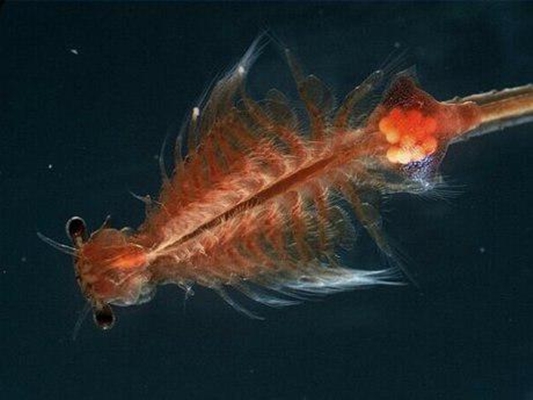
Artemia cysts are Brine Shrimp eggs with an excellent hatching rate. Artemia Cysts are well-known as the ideal live food for the first stages of larval shrimps. It is important to feed Artemia as soon as possible after hatching to take full advantage of the stored reserves.

For a brief review of Iran’s achievements in various fields of science and technology, check the book “Science and Technology in Iran: A Brief Review – 2019

Artemia populations are found worldwide in inland saltwater lakes, but not in oceans.

Artemia are able to avoid cohabiting with most types of predators, such as fish, by their ability to live in waters of very high salinity.

The ability of the Artemia to produce dormant eggs, known as cysts, has led to extensive use of Artemia in aquaculture. The cysts may be stored for extended periods and hatched on demand to provide a suitable form of live feed for larval fish and crustaceans.
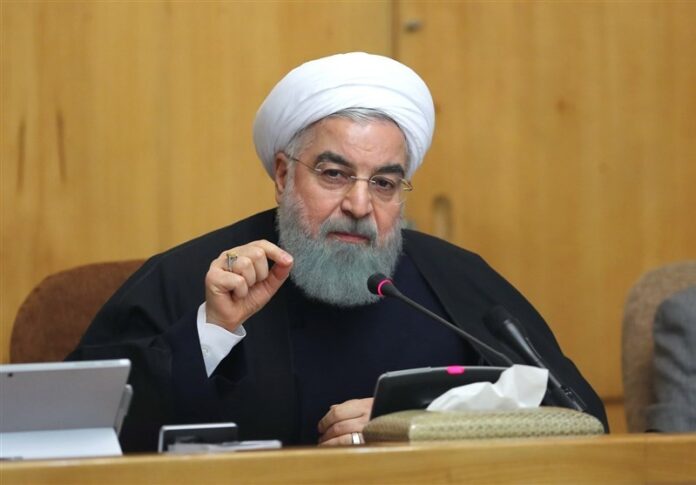
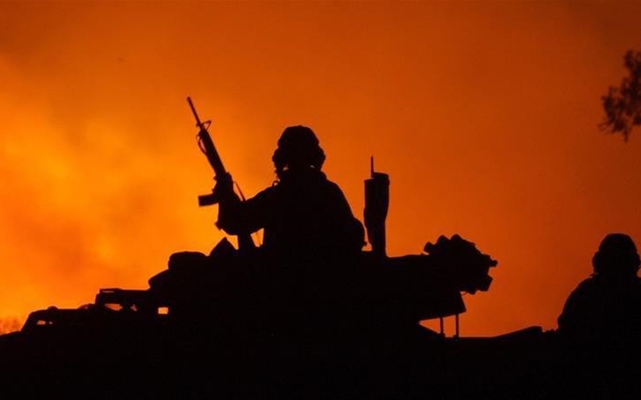
Iran’s Nuclear Decision ‘Minimum Reaction’ to US Violations: Rouhani

rouhani

Hassan Rouhani told a Cabinet meeting that the other party to the deal has not kept its side of the bargain; so, no one can object to Iran or reproach the country for the action it has taken.

He said if Iran’s demands are not met, it will take new actions as announced before after the 60-day period.

“However, if they deliver on their commitments, Iran will reverse all the actions it has taken during the first 60-day or possibly the second 60-day period,” he noted.

The Iranian president said Washington seeks to isolate Iran and once again promote Iranophobia.

Hassan underlined that Washington wants not to pay any price by breaching agreements and committing violations.

“Despite these efforts, the US is paying a very high price today for its violations, and except a couple of small countries that approve of the US, there is no official or country that would not confirm Iran’s patience, self-possession and good behaviour,” said the president.

“Everybody believes that Iran has strategic patience and logic and reasoning, and that Iran’s actions are in line with international regulations, and the country’s recent move to scale back its commitments is in conformity with the Iran nuclear deal and its Notes 26 and 36,” he said.

President Rouhani noted the “spirit” of the Iran nuclear deal known as the Joint Comprehensive Plan of Action (JCPOA) has, unfortunately, been harmed by some of the other signatories to the deal.

He said the spirit of the JCPOA was that Iran be able to establish proper trade and economic relations with the world.

“Moreover, the key point of the JCPOA is the supervision of the International Atomic Energy Agency (IAEA) and proving that Iran’s nuclear activities are peaceful.

“Iran has fully made good on its obligations. The IAEA monitors our performance and we act in accordance with the Safeguards Agreement regulations, and on a voluntary basis, and even in line with the provisions of the Additional Protocol,” said Rouhani.

“I other words, we have fully protected the spirit of the JCPOA, but the basis and spirit of the JCPOA have been seriously hurt by the other signatories,” he added.

Elsewhere in his remarks, President Rouhani said the actions adopted by the United States against the Iranian nation are not simply sanctions, but they amount to “a crime against humanity.”

He described Washington’s moves as “economic terrorism,” saying the US should be answerable to the world public opinion, Iranian people and history.

War Will Not Break Out Between US, Iran: Top Security Official

Ali Shamkhani said a war will not break out between Iran and the US because there is no reason for a war.

“Accusing other countries has become a common practice in the United States and they are trying to exert pressure on other countries through this [strategy],” Shamkhani said in an interview in Russia.

The Iranian top security official underlined that Washington has launched an economic war to target the Iranian nation.

“Today, we are witnessing that Washington has launched an economic war against the Iranian nation. They thought that with such actions the Iranian people would be brought to their knees, but we saw the Iranian people stood against them,” he said on the sidelines of a security conference in Moscow.

Tensions between the Washington and Tehran have heightened more after the US announced plans to deploy 1,000 more troops to the Middle East.

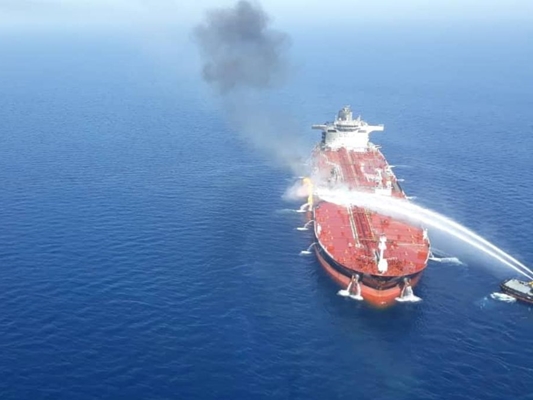
Recently, the US blamed Iran for attacks on two oil tankers in the Sea of Oman, but Iran denies any involvement. Many have questioned the US accusations including Japan who owned one of the two attacked ships.

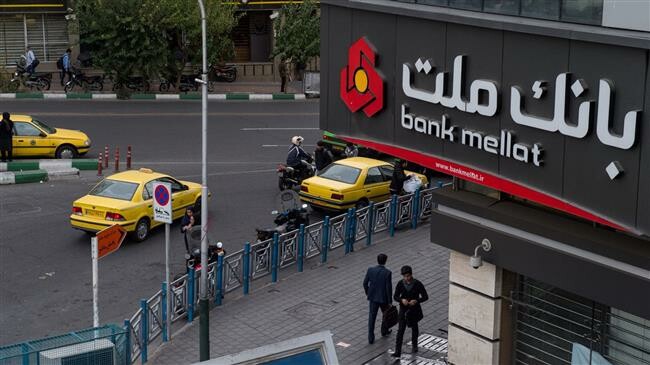
UK to Pay $1.6bn in Damages to Iran’s Bank Mellat

The UK and Bank Mellat settled the London lawsuit for an undisclosed sum, a spokesman for law firm Zaiwalla & Co., which represented the Iranian side, said in a statement.

The undisclosed settlement to Bank Mellat came on the eve of what was expected to be a five-week trial.

In 2009, the UK Treasury imposed sanctions on Bank Mellat after it claimed that the bank was financing firms involved in Iran’s nuclear program. But later in 2013, the UK’s Supreme Court ruled that the sanctions were unlawful and that the government’s response was irrational and disproportionate.

Bank Mellat argued that the UK’s actions “substantially damaged the bank’s reputation” and led to the loss of profits, customers and access to international banking services.

The bank says the UK government also lobbied other international authorities to impose financial restrictions, leading to “copycat” sanctions being introduced by the United Nations, the European Union and others.

Several high-profile UK government figures are expected to appear before the court, including Alistair Darling who was the chancellor of the exchequer at the time of the freeze.

The sanctions were imposed by the Labour government under former prime minister Gordon Brown, claiming Bank Mellat engaged in conduct that supported and facilitated Iran’s nuclear and ballistic missile programs.

The sanctions – part of the 28-member European Council’s freeze of the funds of Iranian financial entities from 2010 – were however lifted in 2016 when an international nuclear deal with Iran came into effect.

Iran DM Rejects US Video of Oil Tankers as ‘Undocumented’

Brigadier General Amir Hatami said Iran rejects outright the accusation levelled against the country on the basis of the footage.

“Following the oil tankers incident, the [Iranian] Armed Forces and the Ports Organization were among the first troops to approach the oil tankers to help, and they saved 23 people on the first oil tanker,” the defence chief said.

“When our forces went to the second oil tanker to help, its crew members said another vessel had already come to their aid, which means the Americans had, before us, gone to the area where they claim the video had been recorded,” he said.

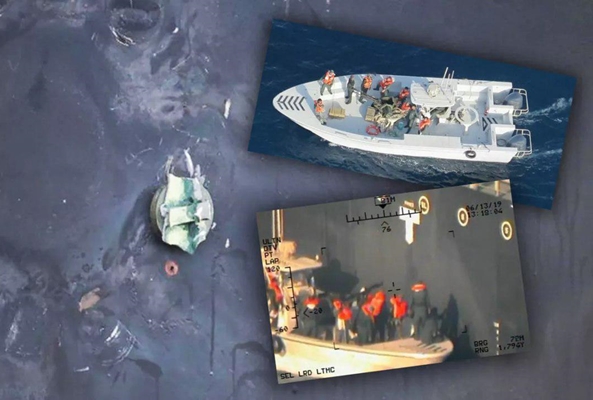
Last Thursday, the US Central Command (CENTCOM) released the video purportedly showing “Iranian sailors” removing a mine from the Japanese-owned Kokura Courageous’ hull.

In the video released, a small boat is shown coming up to the side of the Japanese-owned tanker. An individual stands up on the bow of the boat and can be seen removing an object from the tanker’s hull. The US claims that the object is likely an unexploded mine.

“At 4:10 p.m. local time an IRGC Gashti Class patrol boat approached the M/T Kokuka Courageous and was observed and recorded removing the unexploded limpet mine from the M/T Kokuka Courageous,” the CENTCOM said in a statement.

The claim, however, was soon rejected by the Japanese ship’s operator, whose president said on Friday its sailors on board the Kokuka Courageous saw “flying objects” just before the attack, suggesting the tanker wasn’t damaged by mines.

European governments — except for Britain — also refused to accept the US’ narrative that Tehran was to blame for the “suspicious” attacks.

They are reluctant to accept the White House’s claims at face value, and do not want to provide Washington with any pretext for war.

German Foreign Minister Heiko Maas said on Friday the video is not sufficient to prove the US claim that Iran was behind the attacks.

“The video is not enough. We can understand what is being shown, sure, but to make a final assessment, this is not enough for me,” Maas, who was in Iran earlier this week on an official two-day visit, told reporters in Oslo.

Iran Says Not to Extend 60-Day Deadline for Europe

Behrouz Kamalvandi

Back on May 8, Iran announced its decision to scale down its commitments under the 2015 nuclear deal in reaction to the US violation of its obligations and Europe’s failure to compensate for the US’ 2018 withdrawal from the accord. Tehran gave Europe a two-month deadline to fulfil its commitments, otherwise it will take “further measures”.

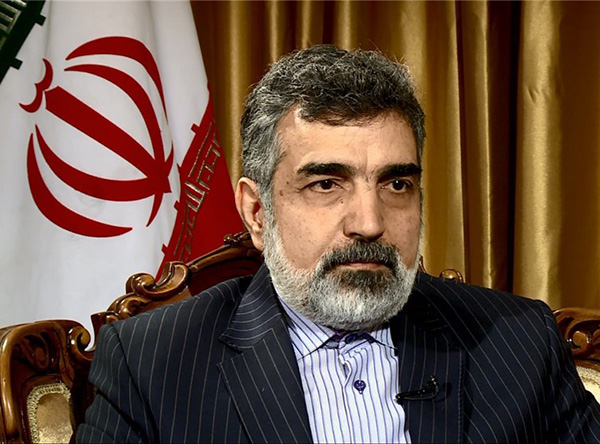
AEOI Spokesman Behrouz Kamalvandi said on Wednesday the Islamic Republic has completed the second phase of the scaling down process exactly as planned and the remaining measures will be taken accordingly.

Kamalvandi underlined all parties should fulfil their promises under the agreement and Tehran cannot abide by its obligations if the other parties to the JCPOA refuse to take practical measures.

“Our message is clear, and in practice the meaning of their behaviour is that they do not want to abide by their obligations, or do not have the ability to.”

“In that case, we will act in accordance with the orders of our Leader and parliament laws,” he stated in an interview with ICANA, warning Europe that its 60-day deadline will not be extended on July 8.

On May 17, Iran announced that its stockpile of low-enriched uranium will surpass 300 kg in 10 days. Based on the JCPOA, Iran was not allowed to have more than 300 kilograms of uranium stockpile and also more than 130 tonnes of heavy water.

Tehran has cited articles 26 and 36 of the JCPOA that allow it to take such action if one of the signatories withdraws from the deal at any point of time.

This comes in the wake of US unilateral withdrawal from the accord last year.

Iran Ranks 6th in Nanotechnology Worldwide: Minister

Nanotechnology

Mansour Gholami said Iran also ranks eighth in the field of bio-technology.

In a meeting with Grand Ayatollah Nasser Makarem Shirazi in the holy city of Qom, Gholami also noted that Iran has achieved the total science rank of 16 in the world.

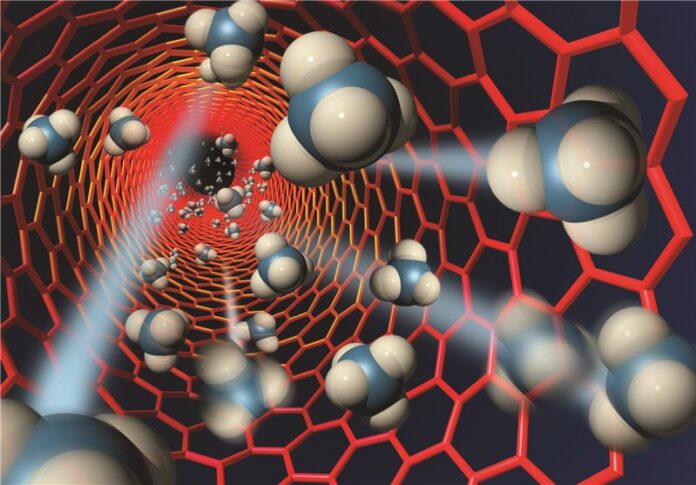
Nanoscience and nanotechnology are the study and application of extremely small things and can be used across all the other science fields, such as chemistry, biology, physics, materials science, and engineering.

For a brief review of Iran’s achievements in various fields of science and technology, check the book “Science and Technology in Iran: A Brief Review – 2019

Nano-technology is hailed as having the potential to increase the efficiency of energy consumption, help clean the environment, and solve major health problems.

It is said to be able to massively increase manufacturing production at significantly reduced costs. Nano-tech advocates claim that products of nanotechnology will be smaller, cheaper, lighter yet more functional and require less energy and fewer raw materials to manufacture.

Selling Oil Today More Difficult than in Wartime: Iran

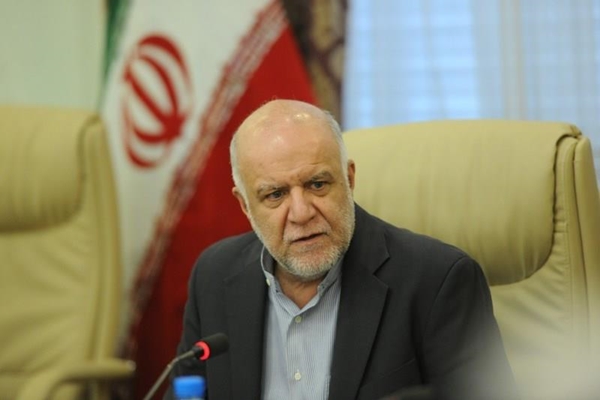
Zanganeh said at that time the only problem was that Saddam Hussein was targeting the country’s facilities, but Tehran could receive its money.

However, he added, at the moment the process is hard and the Islamic Republic cannot export oil under the name of Iran.

“The United States has not spared any effort against the Iranian nation,” underlined the Iranian minister.

“The situation is very difficult, but as there’s no smoke, fire and blood it does not feel like war. Despite this, we are working hard to overcome these difficulties,” maintained Zanganeh.

He further mentioned that if the domestic problems are solved, foreign and international issues can be resolved as well.

According to many, the US sanctions against the Islamic Republic are brutal.

While the bans have failed to advance the US goal of changing “Iran’s behaviour”, they have provoked growing tensions with Washington’s trading partners across the world and inflicted terrible pain on the ordinary people of Iran.

Tehran, Kabul Underline Joint Fight against Terror

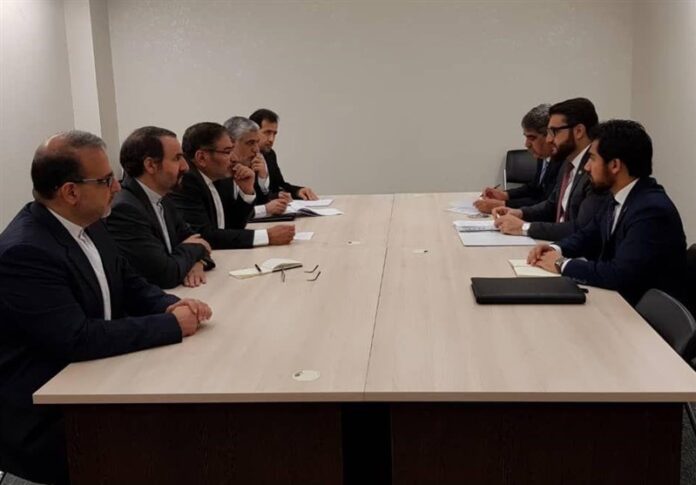
Secretary of Iran’s Supreme National Security Council Ali Shamkhani and Hamdullah Mohib, the National Security Advisor to Afghanistan’s president, met in the Russian city of Ufa on Wednesday.

The meeting was held on the sidelines of the 10th International Meeting of High Representatives for Security Issues in Ufa, the capital of the Republic of Bashkortostan.

Shamkhani and Mohib both emphasized the necessity for closer coordination and consultations between the Kabul government and the neighbors of Afghanistan in order to counter terrorism and contribute to the process of national reconciliation in Afghanistan.

They also stressed the need for contacts and communication between the region’s influential countries and the Afghan opposition groups in coordination with the government of Afghanistan.

The two officials also discussed plans to strengthen the Afghan military forces for establishing sustainable security in all parts of Afghanistan.

Heading a delegation, Shamkhani has attend the summit of security officials in Ufa at the invitation of his Russian counterpart Nikolai Patrushev.

The senior Iranian official delivered a speech to the forum on Tuesday.

Delegations from around 120 world nations have taken part in gathering. The forum has been held regularly by the Russian Security Council in one of the cities of Russia each year.

The meetings have been previously held in the cities of Yekaterinburg, St. Petersburg, Vladivostok, Kazan, Ulan-Ude, Grozny, the Tver region, and twice in Sochi. Last year’s conference in Sochi was attended by delegates from 118 countries and three delegations from the UN bodies.

IRGC Chief Rejects US’ ‘Lies’ about Oil Tanker Attacks

He said the Americans are not able to make the right decisions politically, and this is the reason for their failure.

“They were supposed to create a submissive political system in Iraq, but what did they accomplish?” he said in a Wednesday interview with the Young Journalists’ Club (YJC).

“Today, they have to come to Iraq at night. Why do they come to the Middle East only at nights? We see the demolition of US politics in West Asia. They are worried and wandering and cannot protect the Zionist regime.”

Two tankers were attacked at the Oman Sea last week. One of them was heading to Taiwan from Qatar and the second was going to Singapore from Saudi Arabia.

Washington has accused Iran of blowing holes in the vessels with mines, but Iran has denied the allegations.