Monday, December 22, 2025
Home Blog Page 3187

New US Sanctions Show US Is Desperate: Iran

Iran Says What IAEA Wants to Access “Not A Site”

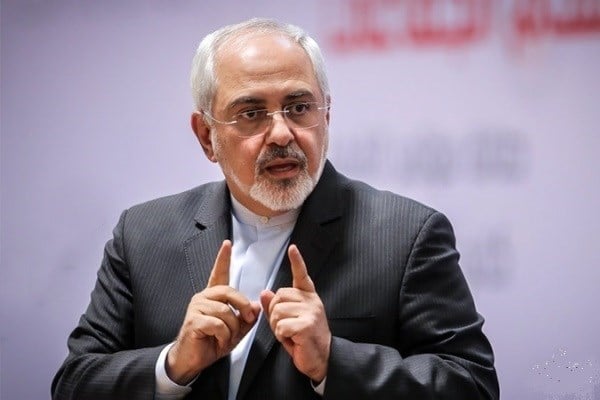
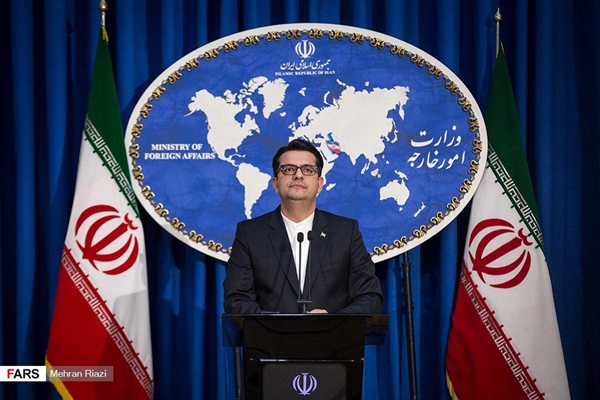
In an interview with Islamic Republic of Iran Broadcasting (IRIB) on Thursday, Mousavi underlined that the newly imposed sanctions on Iran will bear no fruit for the US, adding the sanctions will undermine the international principles.

He then called the Iran nuclear deal a multilateral achievement and said the US unilateral withdrawal and the European’s passiveness have endangered the survival of the deal, he said.

Mousavi stressed that the Islamic Republic will never sit for new round of talks over the nuclear issue and Iran will never negotiate over its basic rights with others.

The spokesman then referred to the recent US-sponsored conference in Bahrain’s capital to unveil what is called “The Deal of Century” to resolve the long-time Israeli-Palestinian crisis and said the Zionist regime and the West have sought to sideline the issue of Palestine over the past and “this time, they are planning to pay money to convince Palestinians to give up their rights but like their previous attempts, this plan will end up in failure.”

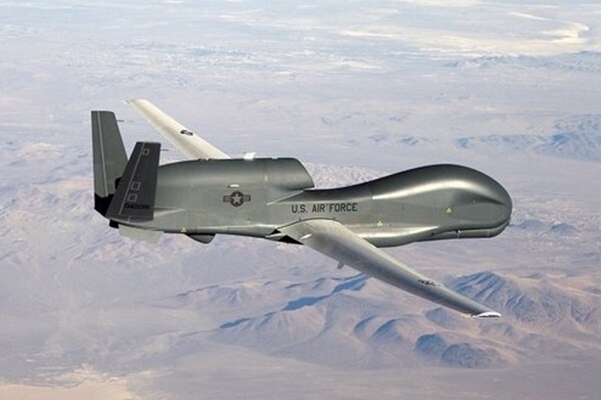
He also pointed to Iran’s recent shoot-down of a American spy drone after it violated its airspace and said the Islamic Republic of Iran showed its military strength by downing an intruding drone.

Mousavi accused the US of adopting a double standard when it comes to terrorism and said Washington’s allies in the region are mostly sponsors of terrorist groups in the region.
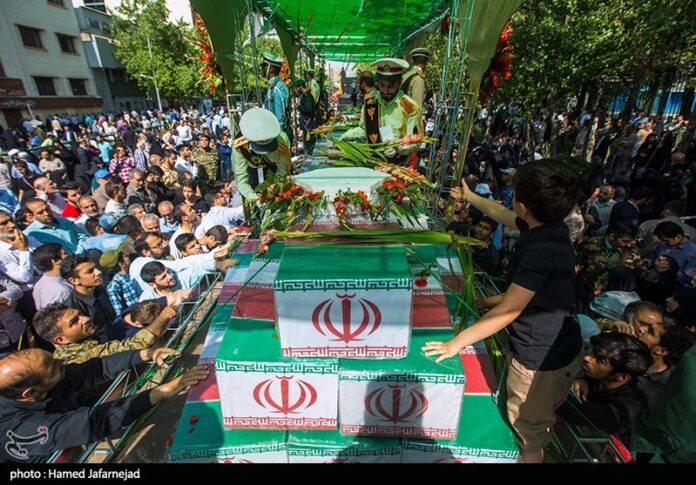
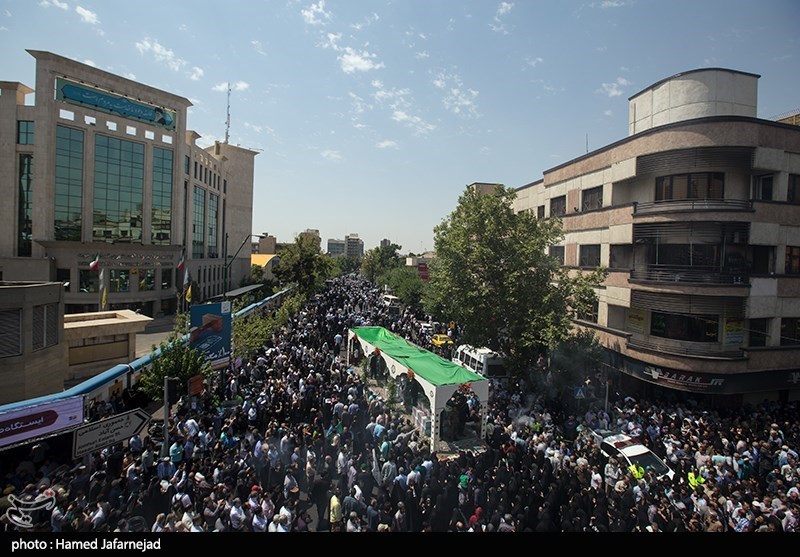
 

Mass Funeral of War Martyrs Held in Tehran

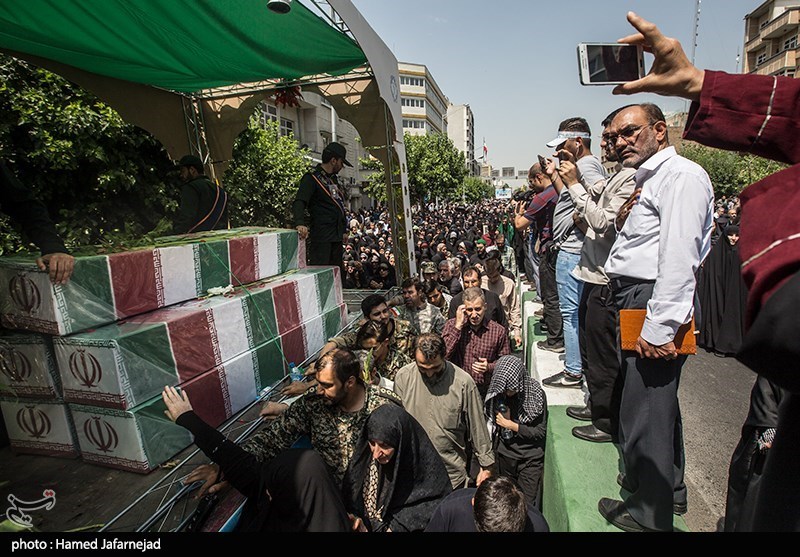
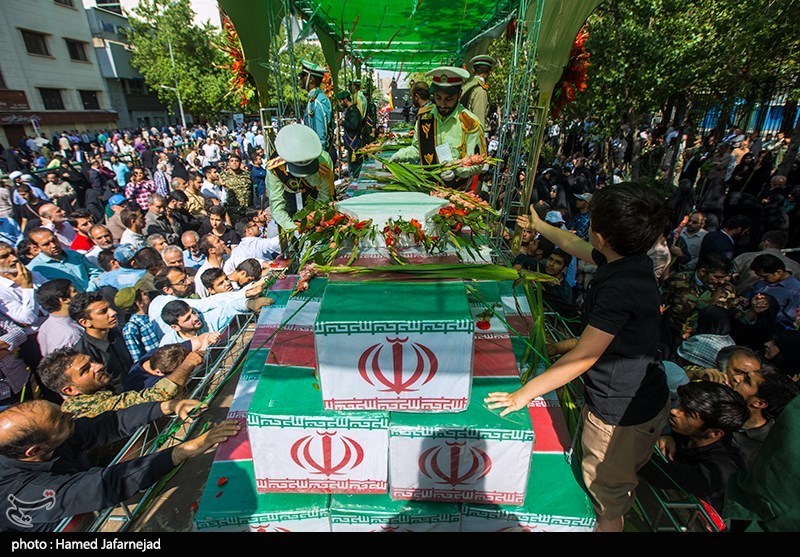
People of different social strata attended the funeral, signifying the Iranian people’s high esteem for martyrs.

From the 150 martyrs, as many as 30 are identified and will be buried in their hometown provinces of Esfahan, Bushehr, Khuzestan, Khorasan Razavi, Semnan, Fars, Qazvin, Gilan, Yazd, and Tehran.

The bodies have been retrieved by the missing in action (MIA) search committee of Iran’s Armed Forces General Staff.

Iraq, under former dictator Saddam Hussein, invaded Iran on September 22, 1980, imposing an eight-year war on the Islamic Republic.

Iran Runs Out of Strategic Patience: Araqchi

Araqchi who is in Vienna to attend the JCPOA joint commission said the remaining signatories have not yet compensated Iran for the losses it sustained after the US unilateral withdrawal from the nuclear deal.

“Over the past year, Iran has exercised strategic patience and provided the remaining signatories to the JCPOA particularly the European sides with enough time and ample diplomatic chance to fulfil their commitments under the accord but it never achieved an appropriate result,” he noted.

The Iranian diplomat added the strategic patience of Iran is getting over and Iran will never put up any more with the other sides’ reluctance to fulfil their commitments under the deal.

“We can’t abide by the deal in the current situation in which we live up to our commitments while the other sides refrain from keeping their pledges,” he concluded.

The EU has vowed to design a special financial mechanism also known as the Instrument in Support of Trade Exchanges (INSTEX) to keep its economic ties with Iran normal after the US withdrawal from the JCPOA. But, one year on, the mechanism has not yet become operational and it’s not clear whether or not the mechanism could meet Iran’s expectations.

Iran has given the European Union a two-month deadline saying it will begin scaling down its commitments under the nuclear accord after the period, which started on May 8.


Iraqis Storm Bahrain Embassy to Protest Manama Confab

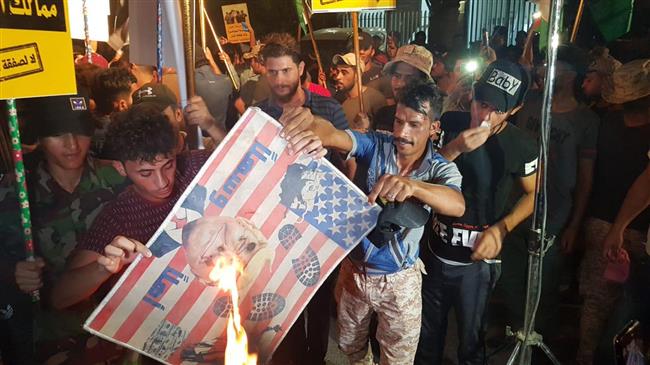
Videos posted on social media on Thursday showed dozens of people with Palestinian flags marching outside the Bahraini diplomatic mission while some of them tried to climb to the roof of an outbuilding.

Some reports also stated that the protesters had pulled down Bahrain’s flag at the embassy.

“We took down the Bahraini flag to send a clear message to all those who participated in the Bahrain conference that we strongly reject normalizing relations with the Zionist occupiers and will never abandon our support of Palestinians,” said a protester. “We are ready to fight for this.”

An Iraqi official speaking on condition of anonymity told the media that the protesters stayed in the garden of the embassy complex and did not enter the offices inside the compound.

According to the official, Iraqi security forces tried to disperse the protest by opening fire in the air until reinforcements arrived to secure the Bahrain embassy, which is located in Baghdad’s western neighborhood of Mansour.

Bahrain recalls ambassador from Iraq

Following the protests, Bahrain recalled its ambassador to Iraq for consultations.

“The Ministry of Foreign Affairs of the Kingdom of Bahrain condemns the attack on the Embassy of the Kingdom of Bahrain to the Republic of Iraq by the demonstrators (which) led to sabotage in the embassy building,” the Bahraini foreign ministry said in a statement on its website.

The protests indicate the growing outrage in the Muslim world against Bahrain’s decision to host the Manama Workshop, an event that seeks to bring “peace” back to Palestine and Israeli-occupied territories through a deal masterminded by the Trump administration, in particular Jared Kushner, the US President’s son-in-law.

The so-called “Peace to Prosperity” workshop opened in the Bahraini capital Manama on June 25 and ran through June 26 and sought to garner support for a $50 billion investment plan in Palestine.

The US plan has been met with disdain from Palestinians and the international community because early leaks suggest that it would ultimately seek to take away Palestinian people’s right to statehood.

The Palestinian leadership boycotted the meeting, leading critics to question the credibility of the event.

Earlier on Thursday, Bahrain had called for“peace” and “better” relations with Israel.

Bahraini Foreign Minister Khalid bin Ahmed Al Khalifah said while his country — alongside Egypt — were the only two Arab countries to officially recognize Israel, “we know our brothers in the region do believe in it” as well.

Besides Bahrain and Egypt, Israel is believed to have secretly developed close ties with Saudi Arabia and the United Arab Emirates.

Iran Has Every Right to Reduce JCPOA Commitments, Zarif Tells EU

In the letter, whose news was first reported by the E’temad daily newspaper on Thursday, the Iranian foreign minister has stressed that Tehran would not be influenced by political pressures and threats.

The letter came after a message of warning by the foreign ministers of France, Germany, and the UK, who warned Iran against reducing its commitments under the Joint Comprehensive Plan of Action (JCPOA).

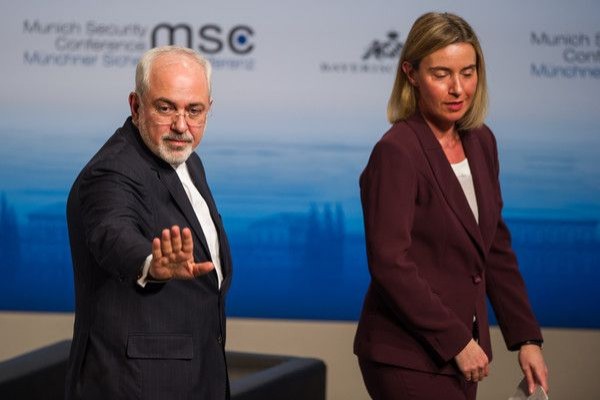
He told Mogherini that the E3 ministers’ move to write that letter was in violation of the accord.

In his letter, Zarif referred to numerous cases of violation of the JCPOA by Europe, and argued that Tehran reserves the right to reduce all or some of its commitments as per the multilateral deal based on its Article 26 and 36.

He further stressed that the Islamic Republic is totally serious in using its rights under the deal, including the right to stop implementing its obligations, and the only way to save the JCPOA is that the other parties to the deal implement their commitments.

After waiting for one full year, Iran partially pulled out of the Iran Nuclear Deal on May 8th to voice its discontent of EU’s disregard for the US sanctions on Tehran.

The JCPOA or the 2015 Joint Comprehensive Plan of Action was signed between Iran and the P5+1, that’s the UN Security Council permanent members plus Germany. It was to limit Iran’s nuclear programme in return for lifting UN and US nuclear-related sanctions off that country. Iran fulfilled all of its commitments under the deal; however, the US government ditched the deal as soon as Trump came to power. The EU kept giving promises to compensate for the US sanctions but only in words as far as the US sanctioned Iran’s oil sales.

‘Cosmetic Surgery More Widespread among Uncultured Women’

The research has shown that in order to prevent pathological cosmetic surgeries, cultural assets of a society must be increased.

The beauty industry generally promotes the idea that women without cosmetic services are not perfect. This develops a concept that women’s appearance is not naturally attractive.

Dr Hoda Halajzadeh, an associate professor of sociology at the University of Gilan, along with her colleagues has conducted a research study on women who performed cosmetic surgery. They also studied the women who did not perform cosmetic surgery in terms of cultural assets.

In this research, 383 women over 15 were studied in the city of Rasht in northern Iran. 191 of them had undergone cosmetic surgeries, and 192 had not.

To collect data for this research, a questionnaire was developed on the age, level of education of the person and her parents, and the occupation of the head of household as well as information about their skills, abilities and habits.

After the data collection, they were analysed through statistical methods. The findings showed that those who had surgery were older than the others. Among women who had surgery, married ones were more.

In terms of economic and social affairs, the two groups did not differ, and the income levels of the two groups did not vary significantly. However, the people with no surgeries enjoyed more cultural assets.

Those who had no surgery scored more points in exercising and foreign languages. It was also found that the cultural facilities available to these two groups were somewhat different.

The use of personal libraries, painting boards, and casual studies was far more in those who had no surgeries. The women who had more access to satellite programs and the cyberspace had undergone operations to increase their sexual assets.

According to researchers, satellite TV programs were a factor in encouraging them for cosmetic surgery. These programs, while accelerating education and obtaining information, at the same time destroy cultural assets such as innovation and creativity. They limit the scope of competitions to issues that are imposed through the media. One of these issues is cosmetic surgery.

“It is necessary to pay attention to the promotion of cultural assets in programs designed to moderate the tendency and behaviour of the patients toward cosmetic surgeries,” say the researchers.

The results of this research have been published in a recent issue of the Journal of Applied Sociology.

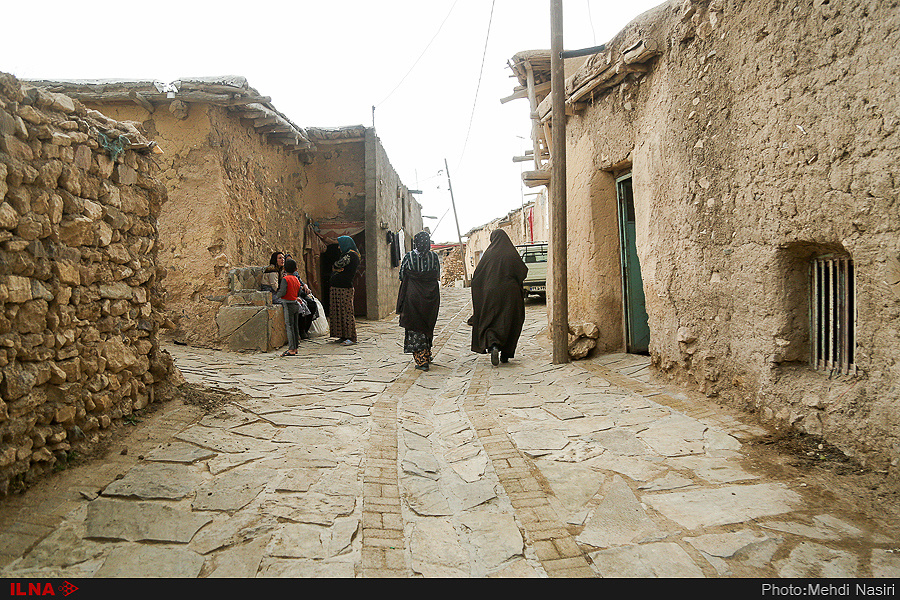
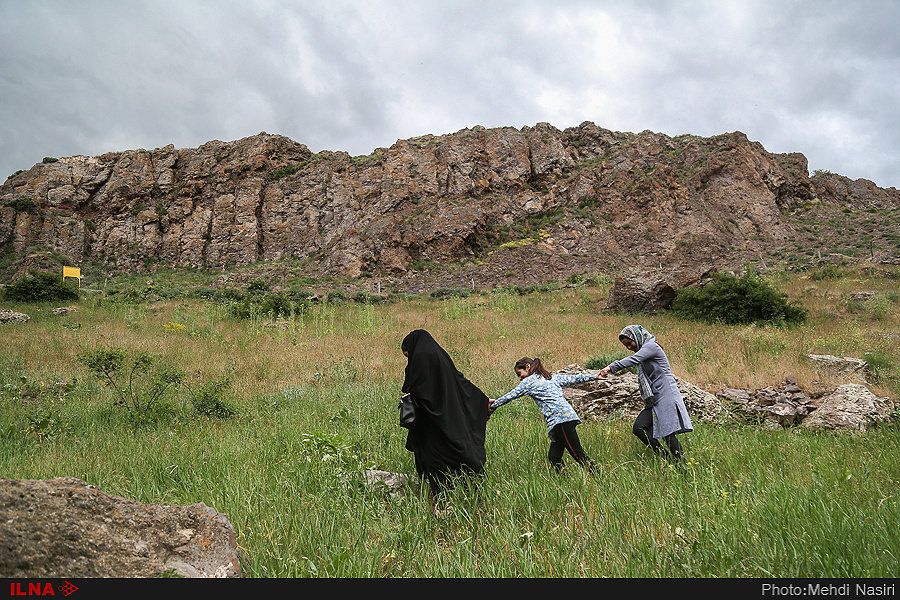
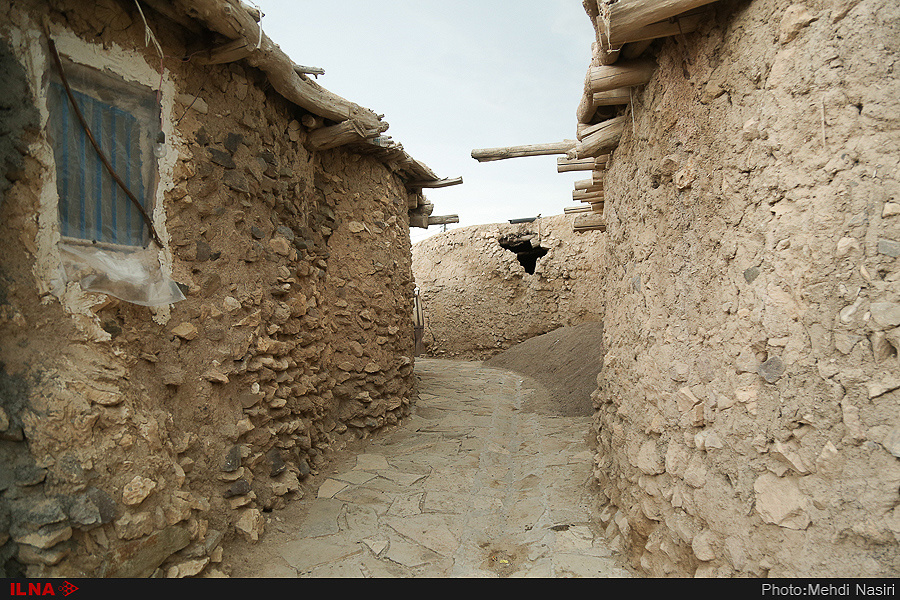
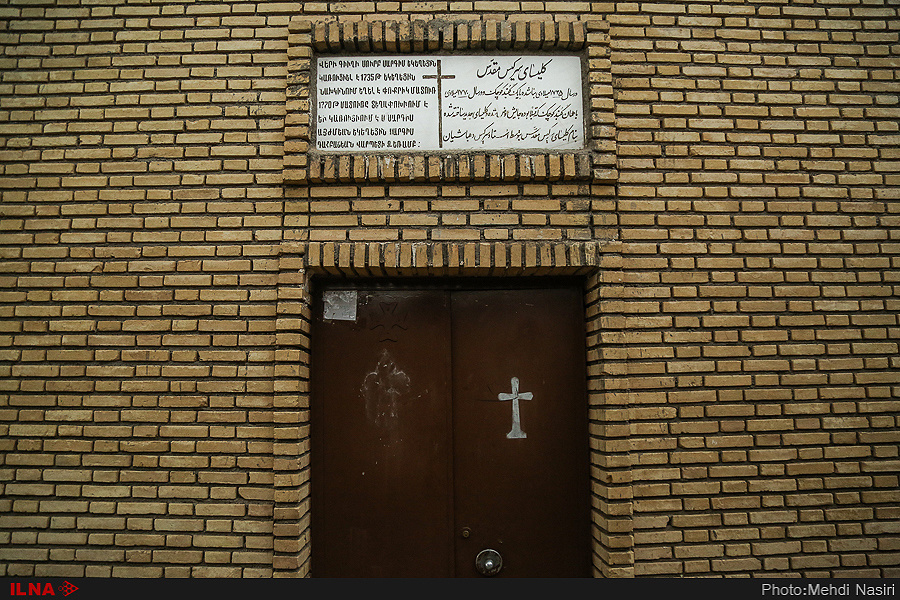
Iran’s Beauties in Photos: Ancient Village of Chenaghchi

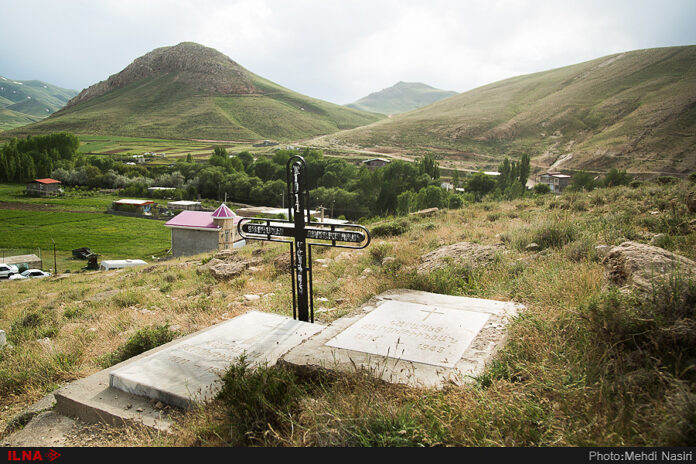
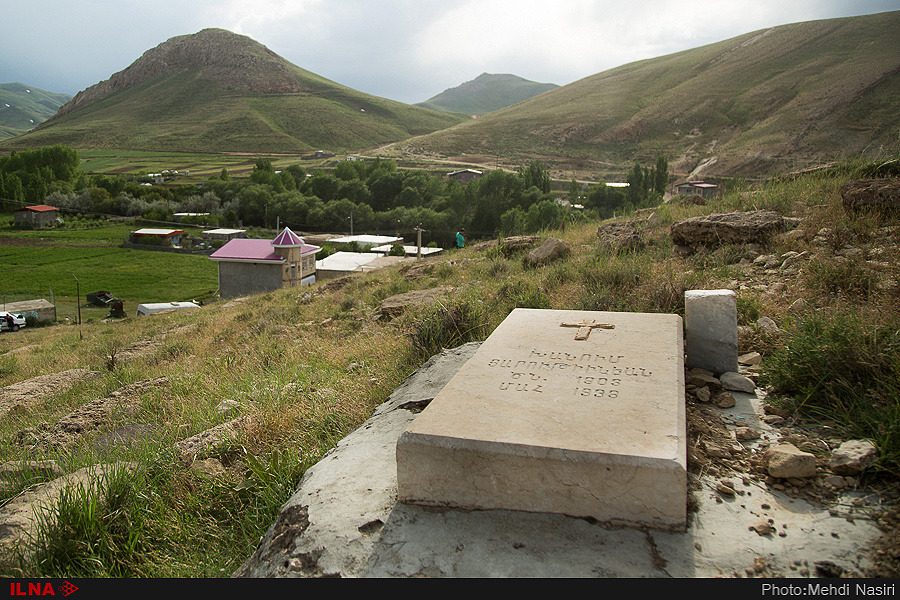
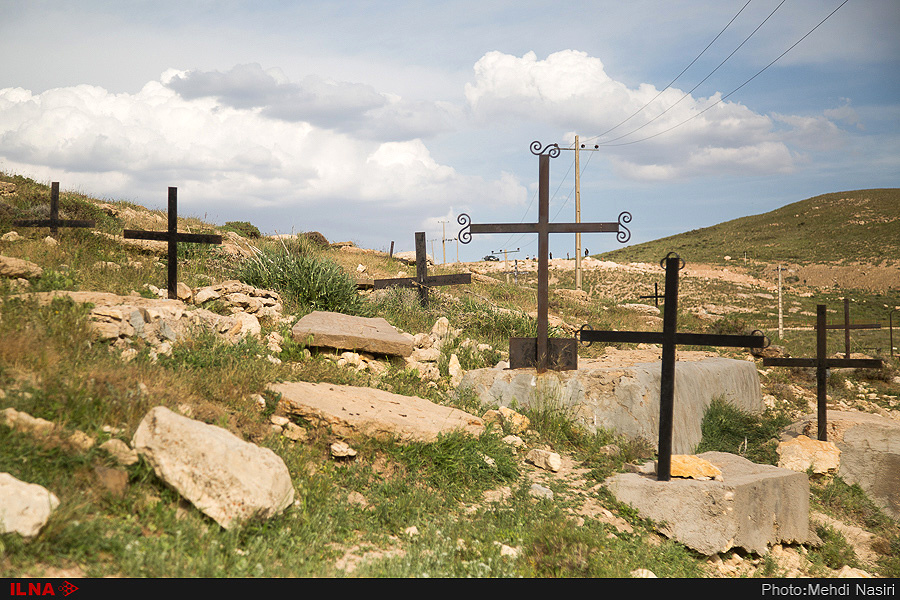
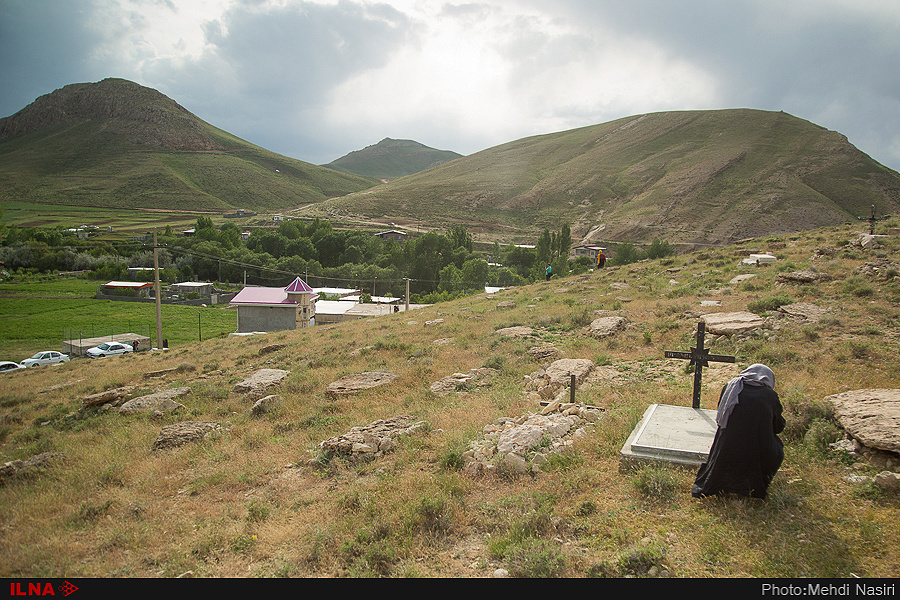
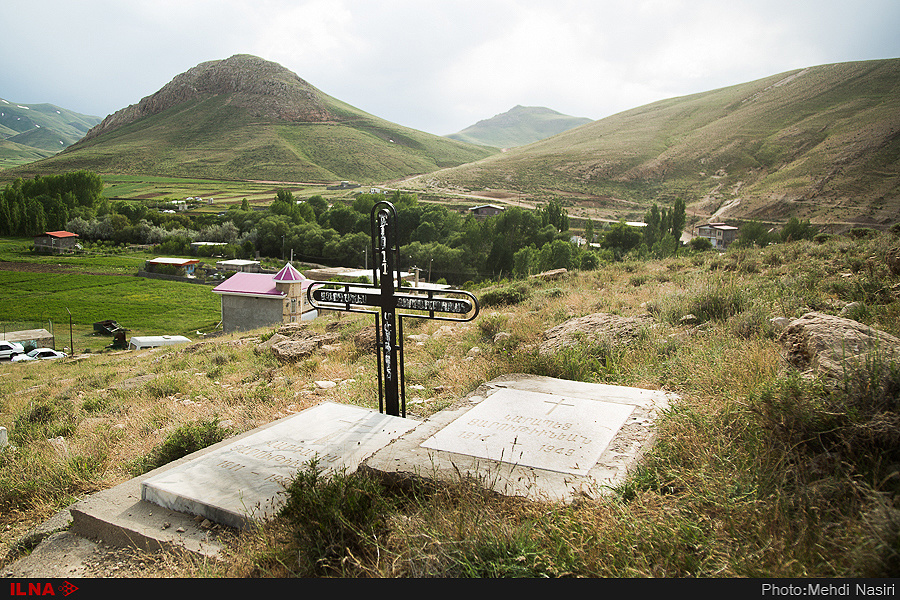
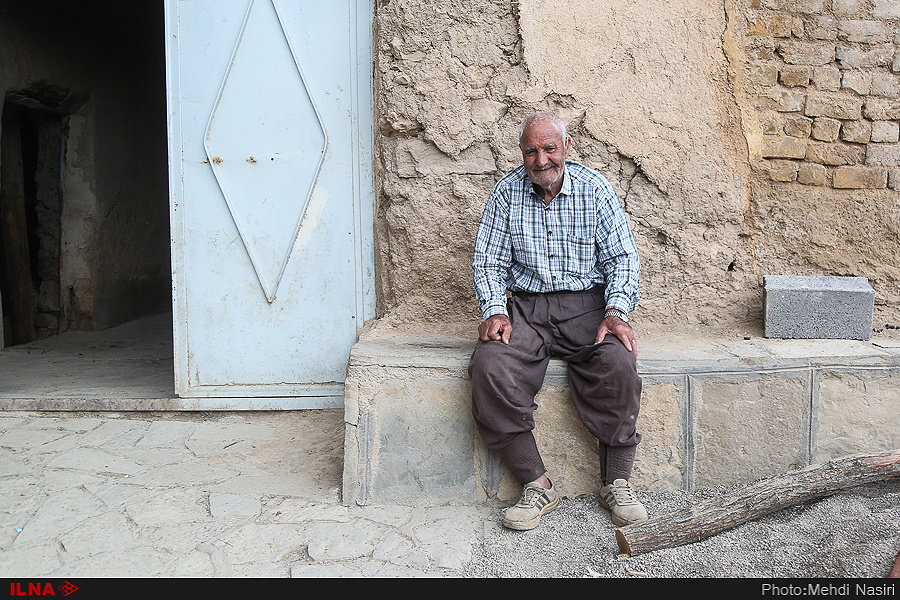
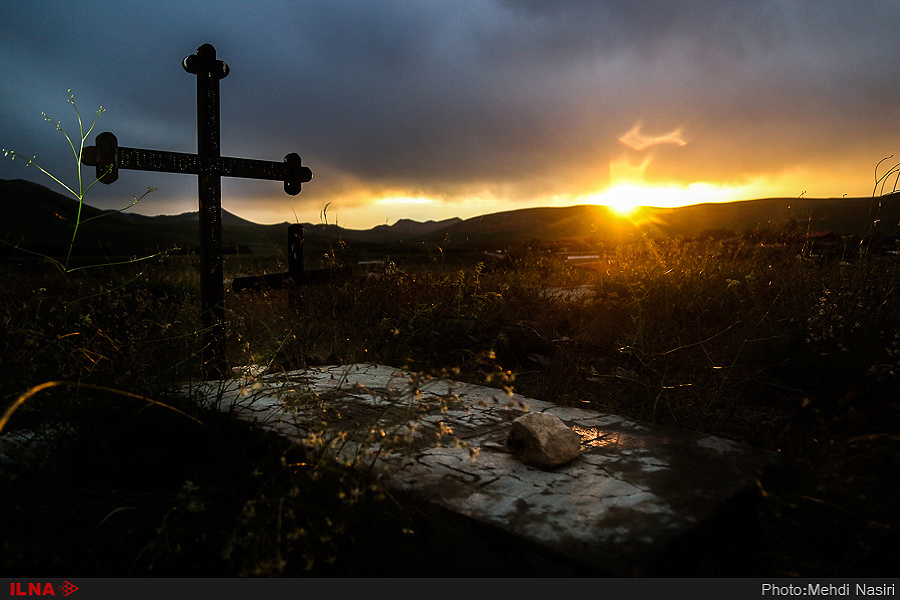
The village is home to various ethnicities including Armenians, Turks and Persians who live together peacefully. The languages of the three ethnicities also prevail in the village. Though the majority of population is Shiite Muslims, there is also an Orthodox Christian community living there.

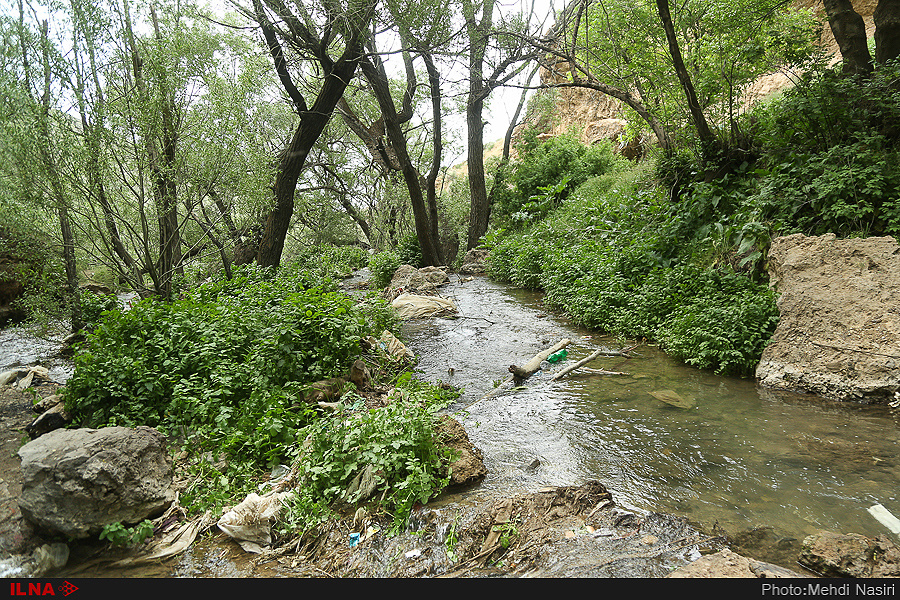
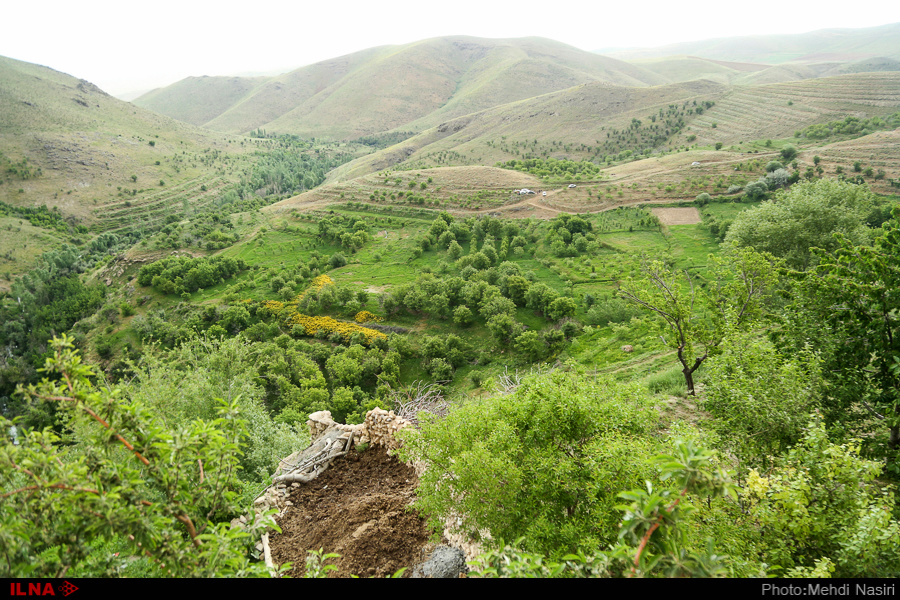
Among the most significant and beautiful tourist attractions of the village one can refer to the walnut trees scattered on the hills around the village which create scenic views particularly during the spring and summer seasons.

The promenades established near the hills surrounding the village also give a unique experience to any tourist.

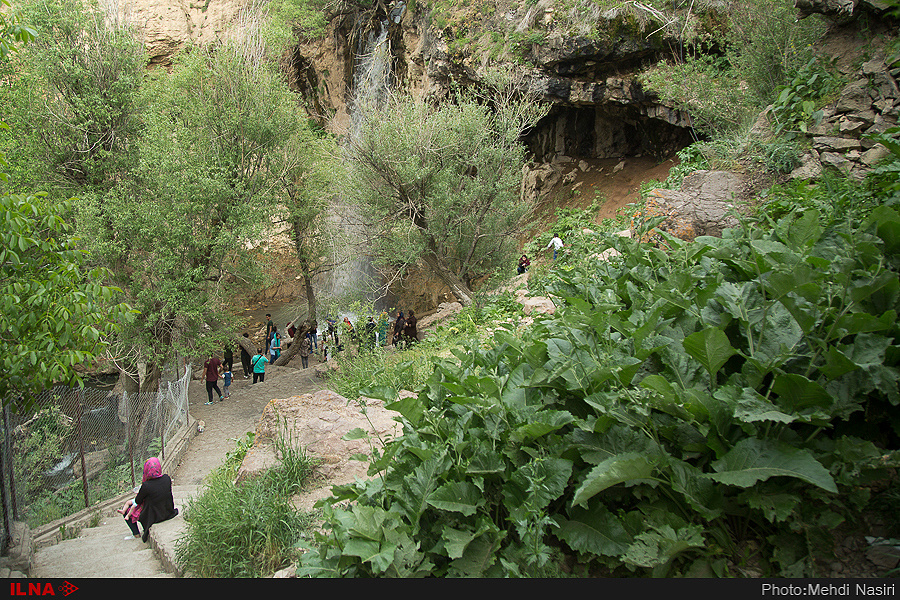
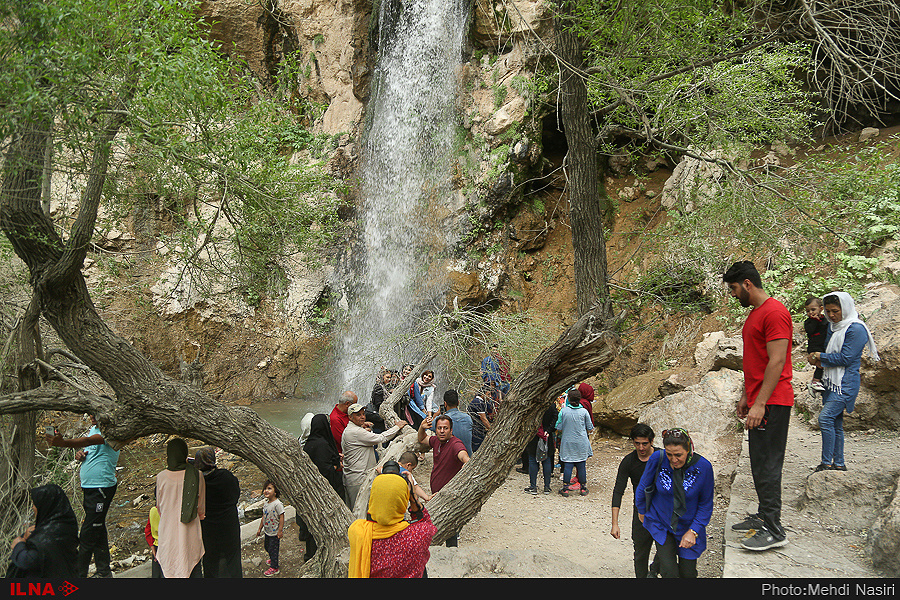
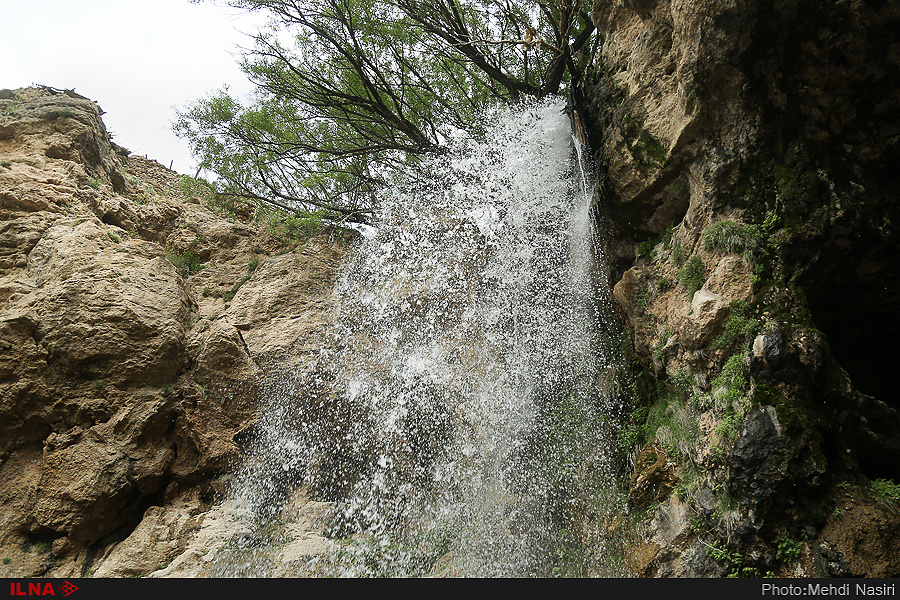
Other attractions of this village include the Chenaghchi Falls which attracts many tourists to this area annually.

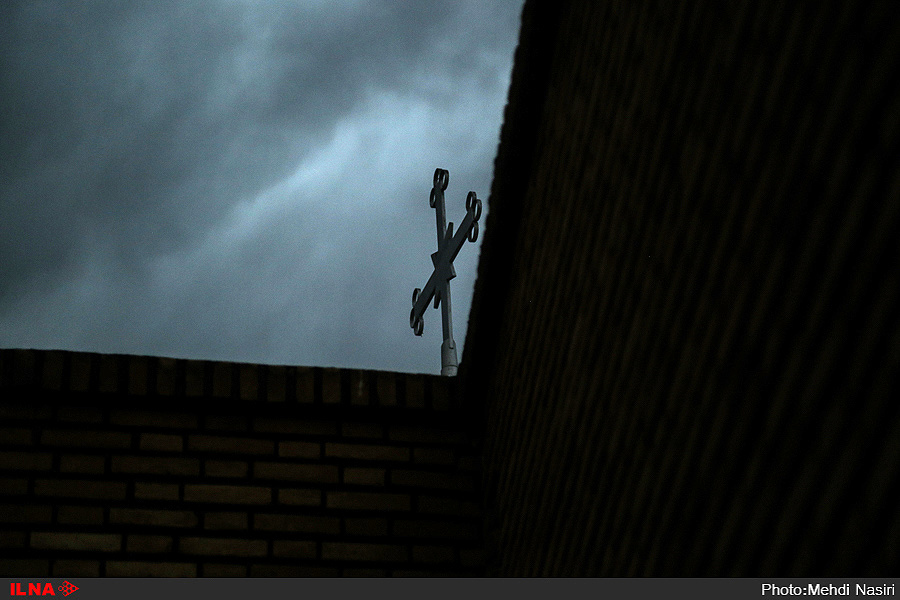
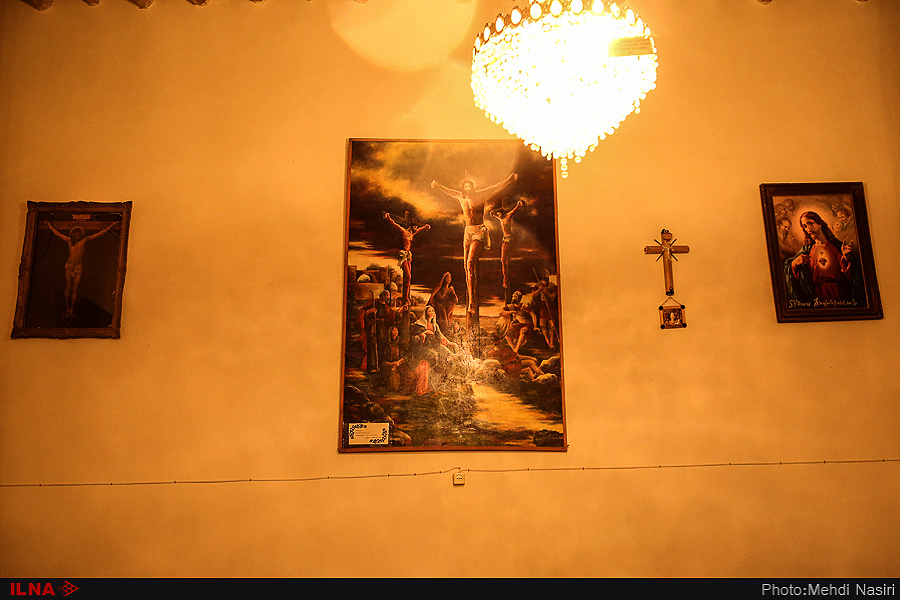
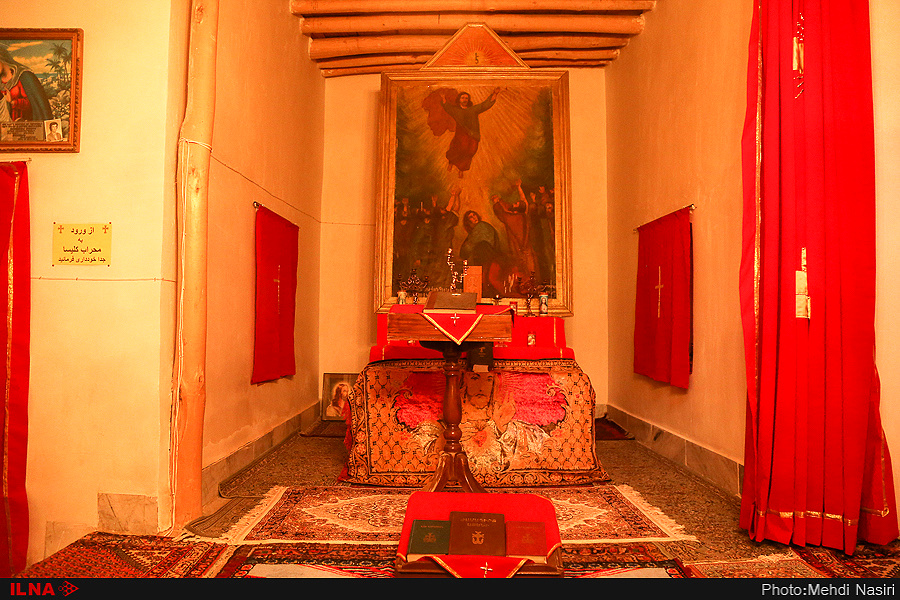
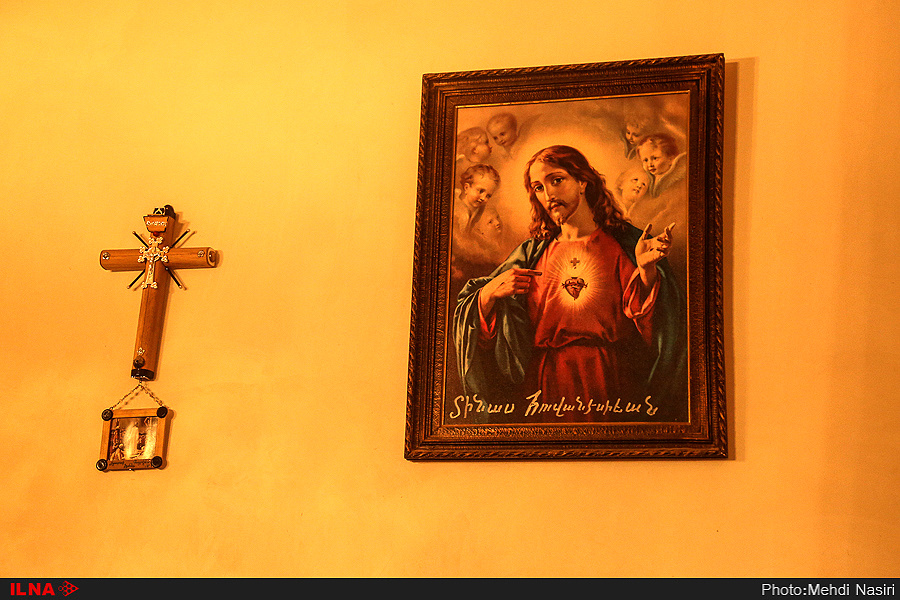
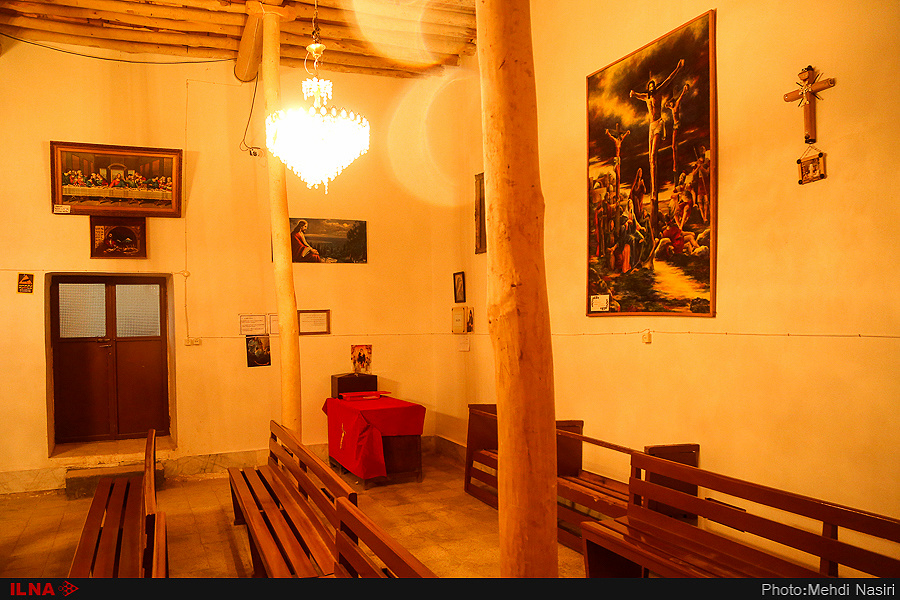
The most significant site in the village is the 400-year-old Saint Sarkis Church. In the interior of the church, the level of the altar is significantly higher than the floor in proportion to the roofed area. On the interior walls of the church, the symbols and representations of the followers of Jesus Christ have been painted.

The village of Chenaghchi Oliya is located in a mountainous area with dense residential structures. The houses of the village have been set up close to each other with thick walls and only one storey each. Thatch and wood used to be among the main materials used in the construction of the village’s houses. But, today the main materials in reconstruction of the houses are cement, brick, wood, steel and plaster.

The village also hosts the annual rituals of the Christians of the region.

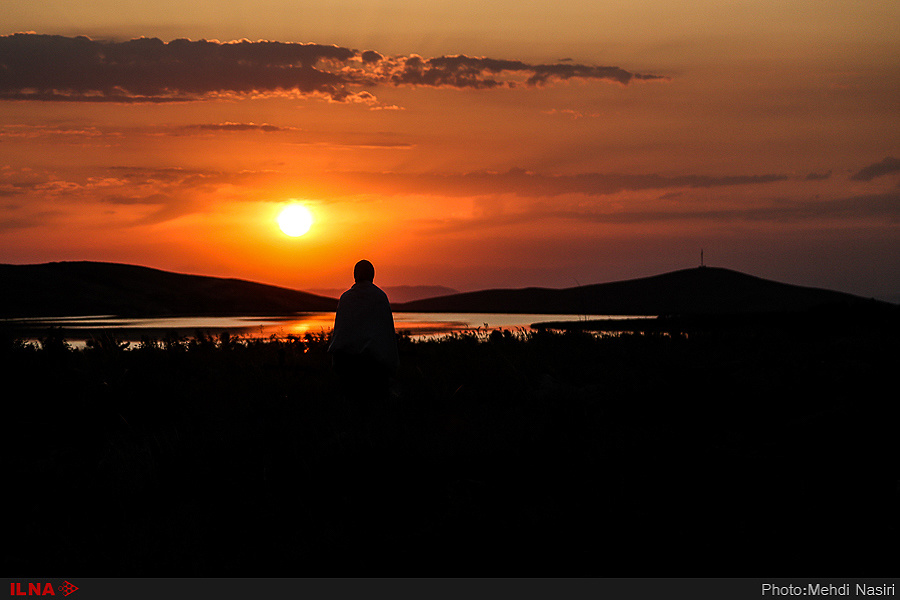
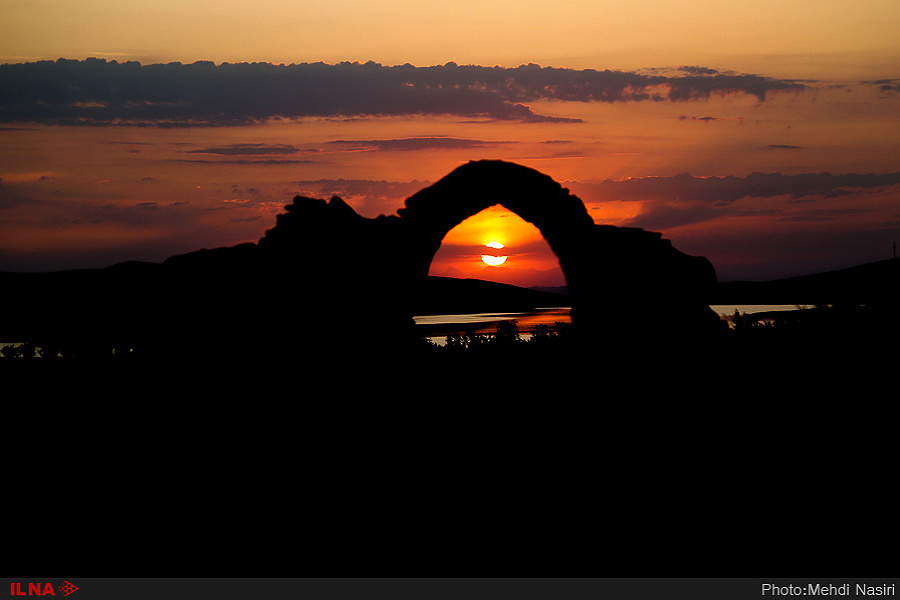
What follows are ILNA’s photos of the village:

A Look at Iranian Newspaper Front Pages on June 27

A Look at Iranian Newspaper Front Pages on November 19

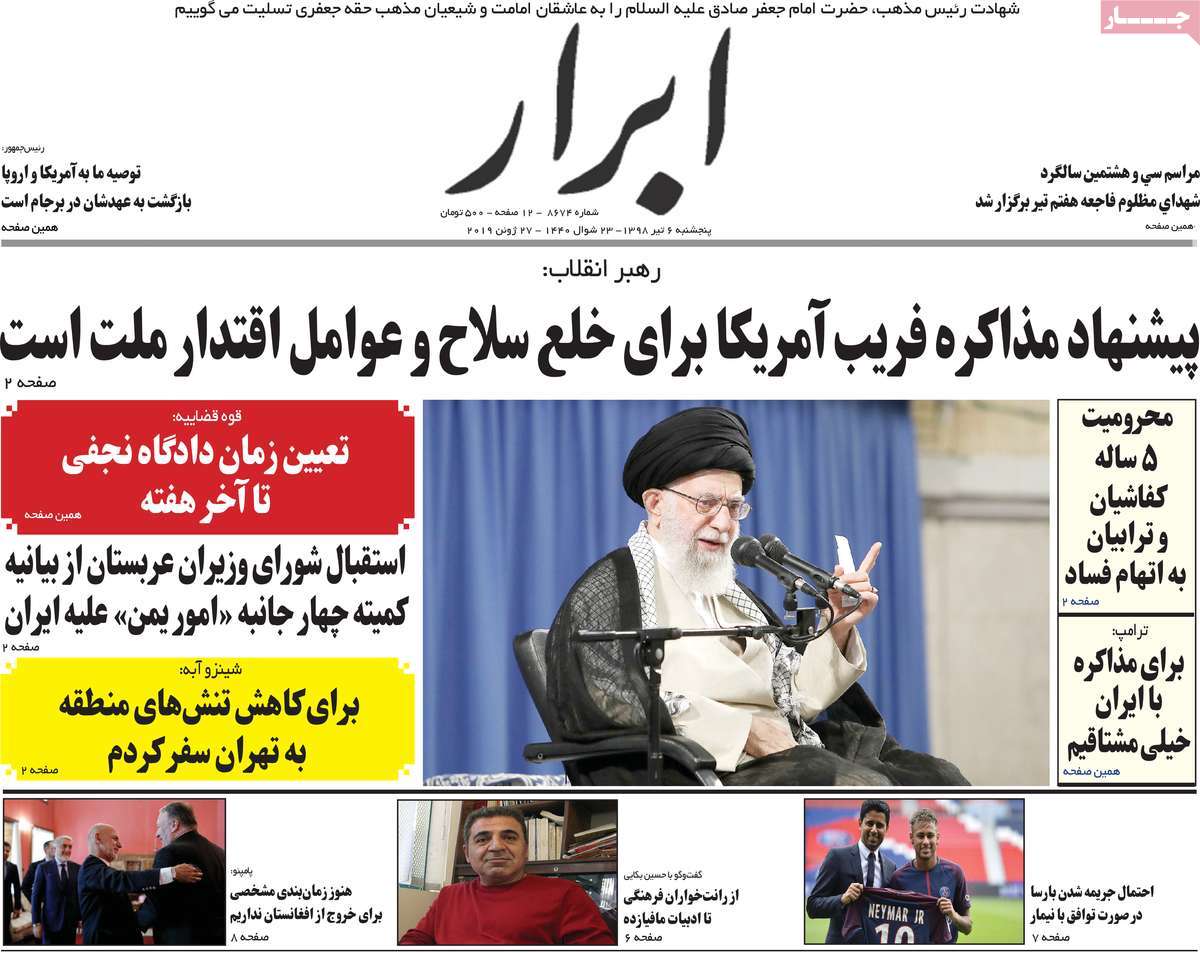
Abrar:

1- Rouhani: We Advise US, Europe to Return to Their JCPOA Commitments

2- Iran Leader: US’ Offer of Talks ‘Deceit to Disarm Iran’

3- Abe: I Visited Tehran to Ease Regional Tensions

4- Pompeo: We Still Have No Timeline for Withdrawal from Afghanistan

A Look at Iranian Newspaper Front Pages on June 27


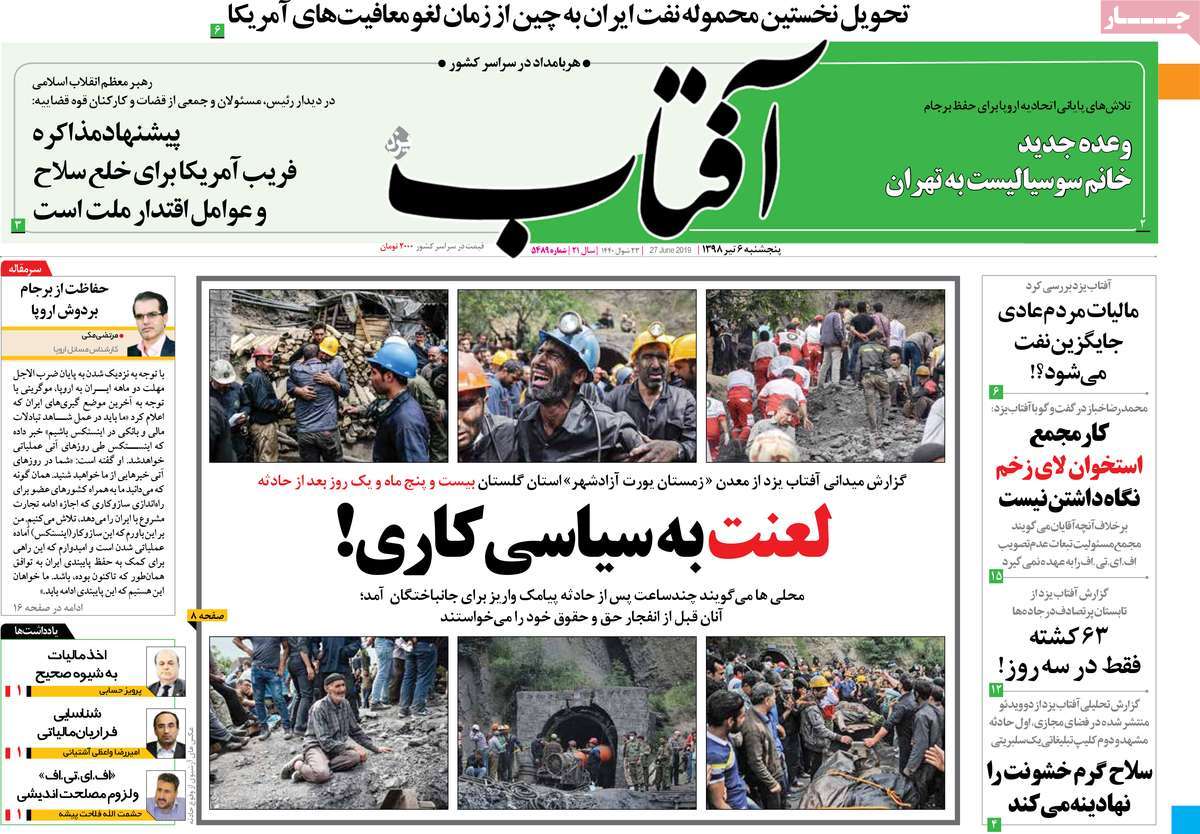
Aftab-e Yazd:

1- Ms Socialist’s New Promise to Tehran: EU’s Last Efforts to Save JCPOA

2- First Iranian Crude Oil Shipment Since End of US Waivers Delivered to China

3- Iran Leader Dismisses US Offer of Talks as ‘Deceit’

A Look at Iranian Newspaper Front Pages on June 27


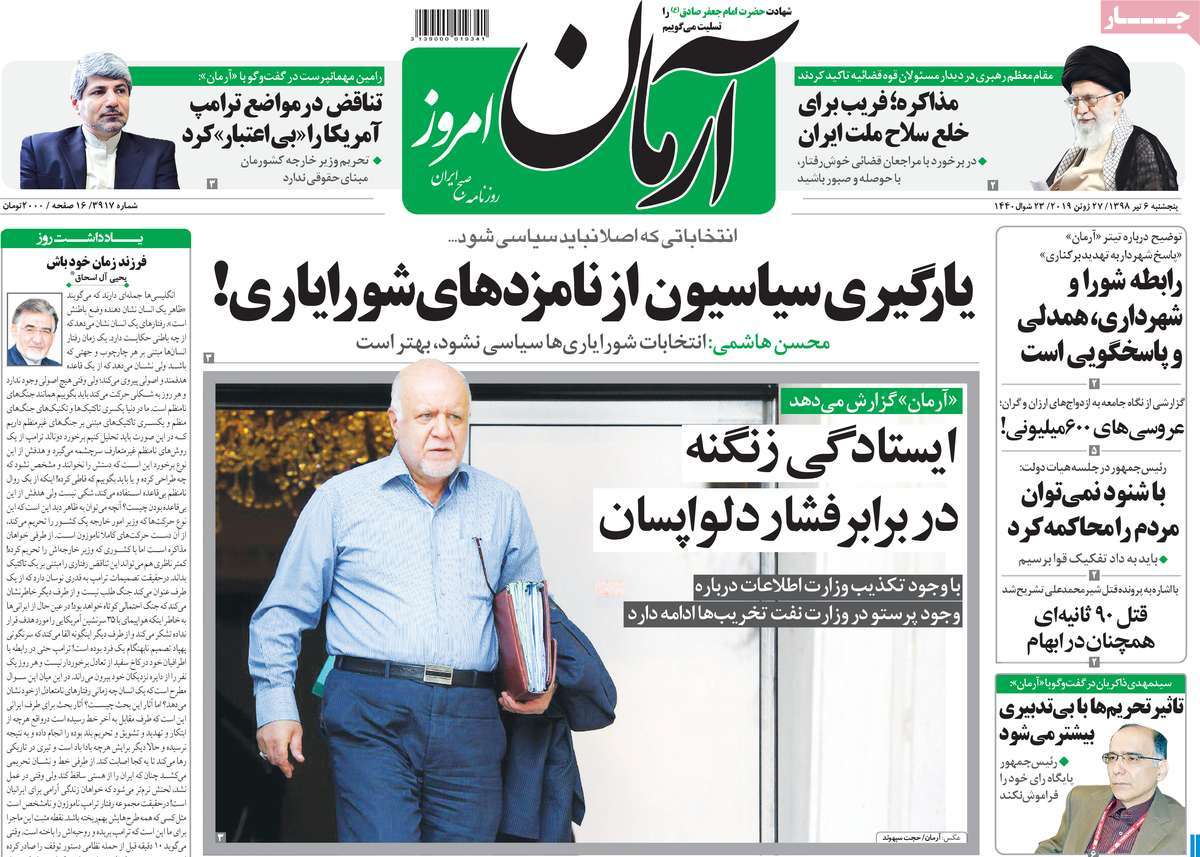
Arman-e Emrooz:

1- Deceitful Talks to Disarm Iranian Nation

2- Contradictions in Trump’s Stances Discredited US

A Look at Iranian Newspaper Front Pages on June 27


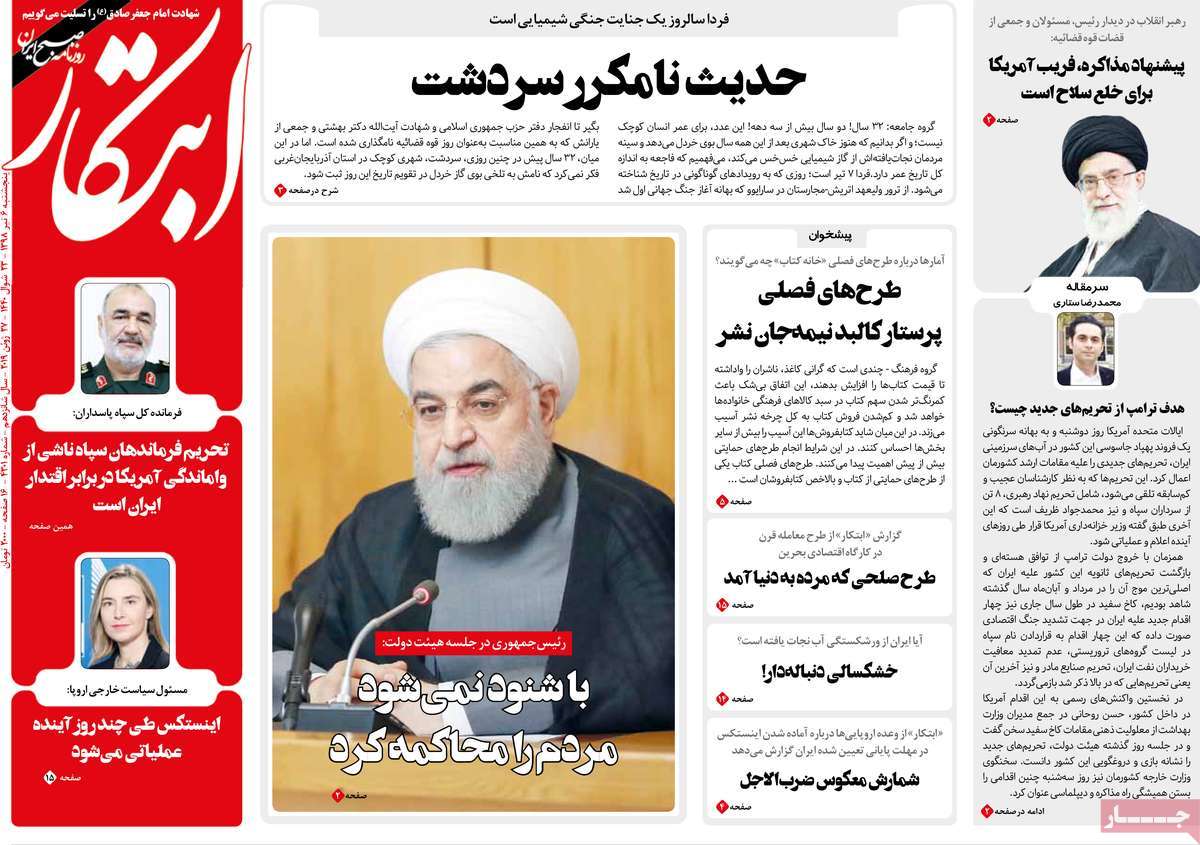
Ebtekar:

1- IRGC Chief: Sanctions against IRGC Generals Show US Frustration in Face of Iran’s Might

2- INSTEX to Become Operational Within a Few Days

3- Peace Plan Which Was Born Dead: A Report on Deal of Century at Bahrain Economic Workshop

A Look at Iranian Newspaper Front Pages on June 27


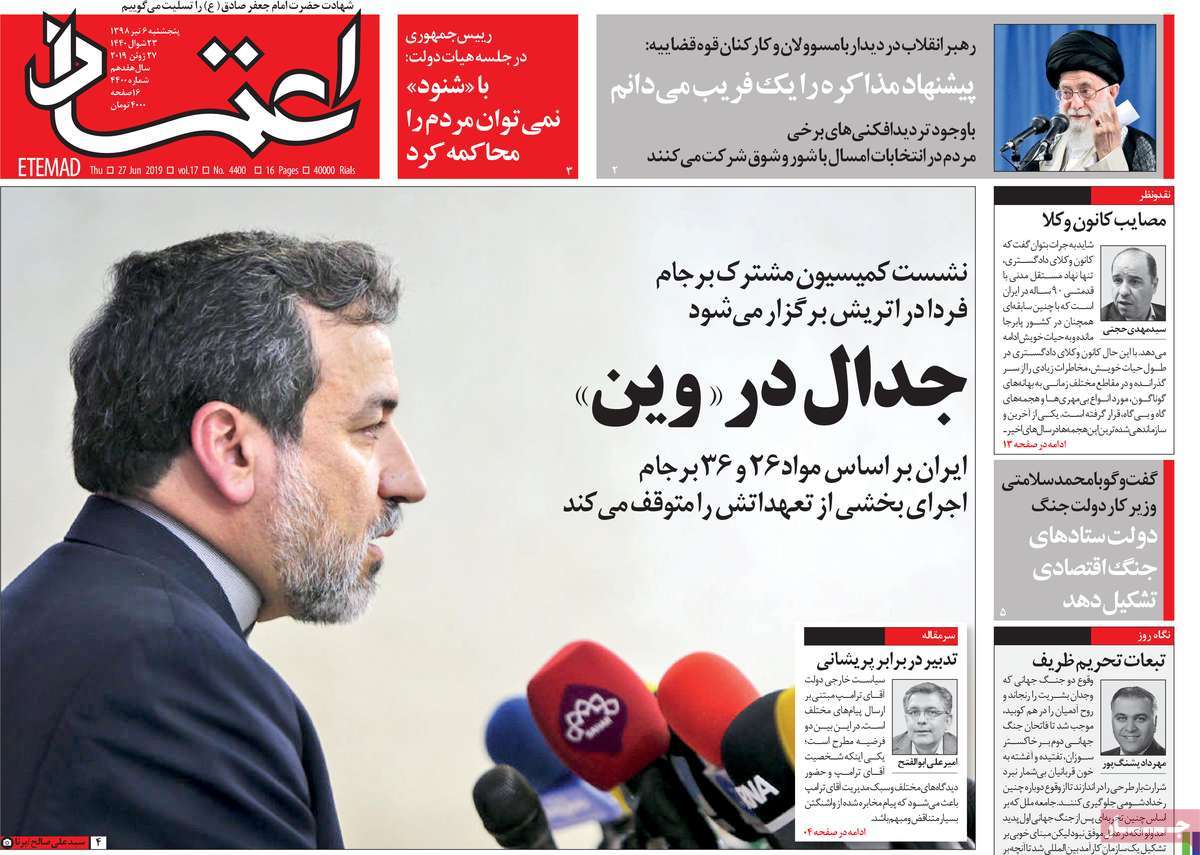
Etemad:

1- I Believe US Offer of Talks Is a Deceit: Leader

2- Clash in Vienna: Iran to Stop Some of Its JCPOA Commitments Based on Deal’s Articles 26 and 36

A Look at Iranian Newspaper Front Pages on June 27


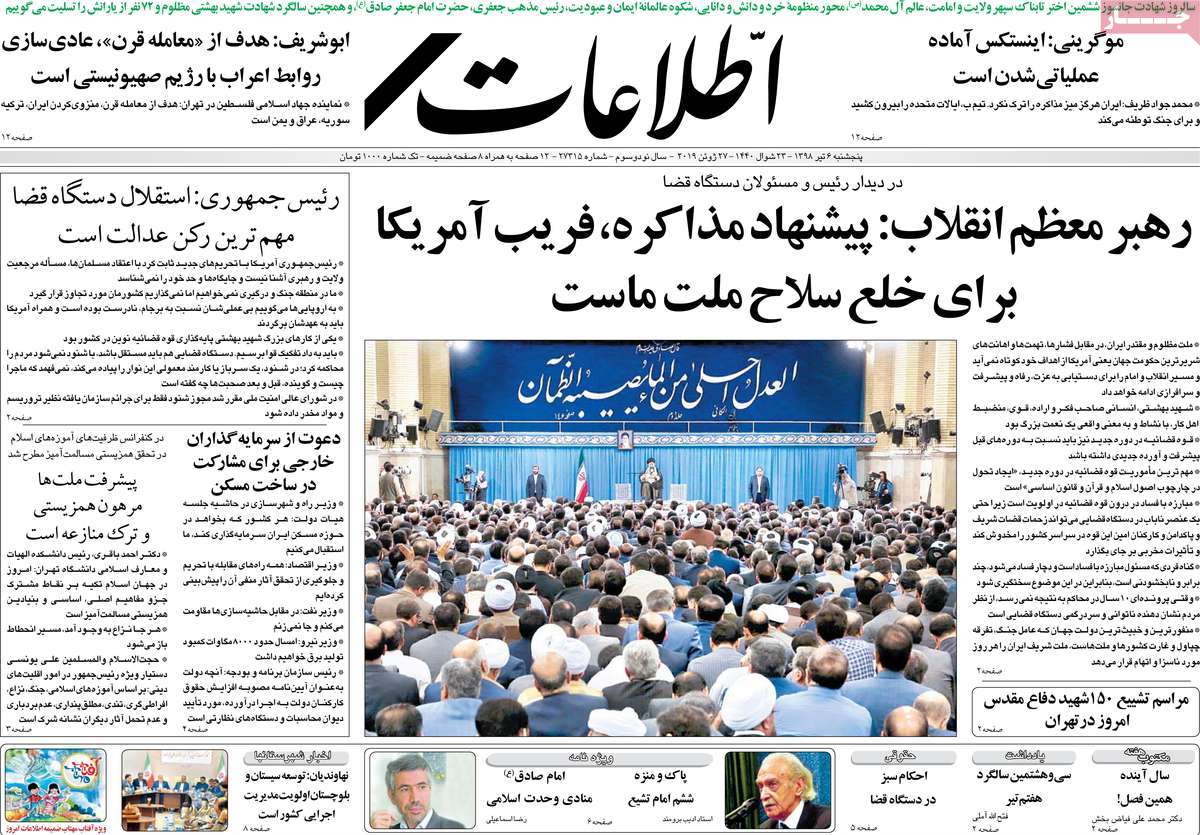
Ettela’at:

1- Mogherini: INSTEX Ready to Be Operationalized

2- Zarif: Iran Never Left Negotiating Table

3- Abu Sharif: Deal of Century Aimed at Normalizing Arabs’ Ties with Israel

A Look at Iranian Newspaper Front Pages on June 27


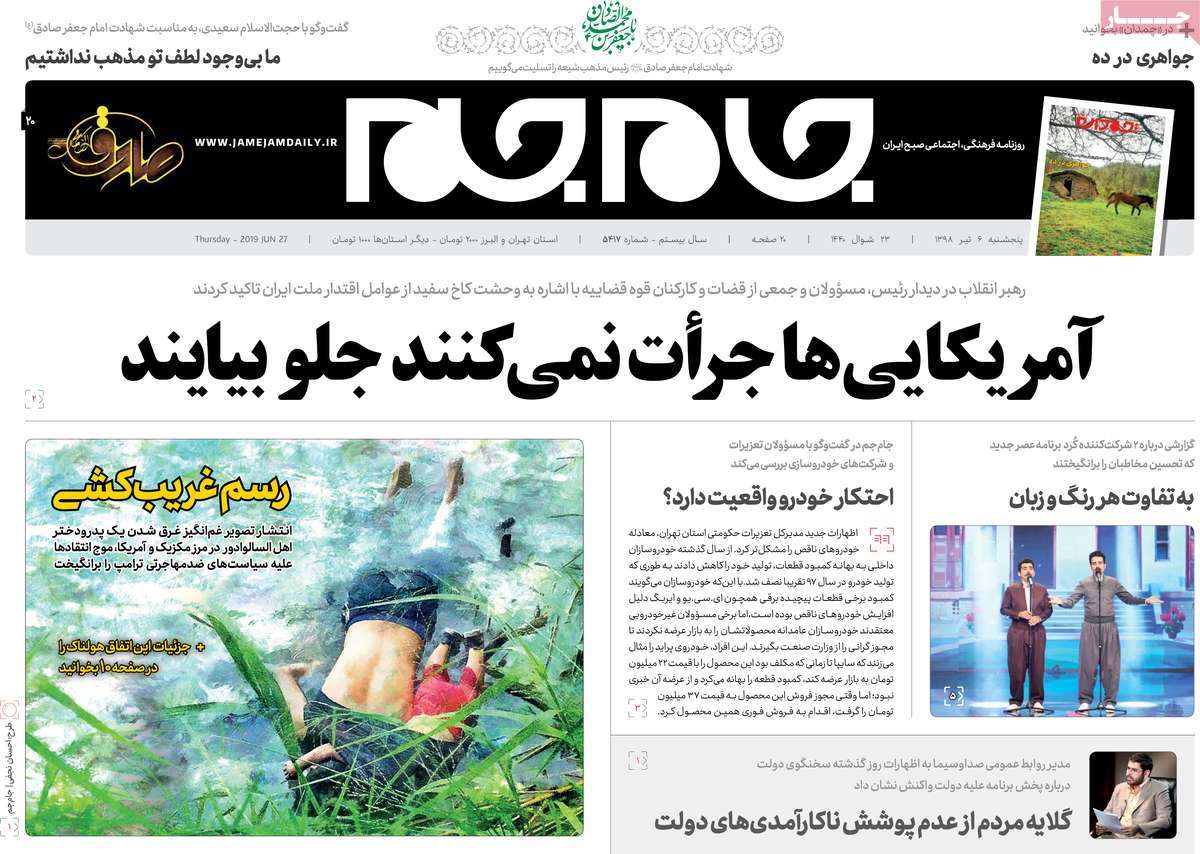
Jame Jam:

1- Americans Don’t Dare to Come Close: Iran Leader

A Look at Iranian Newspaper Front Pages on June 27


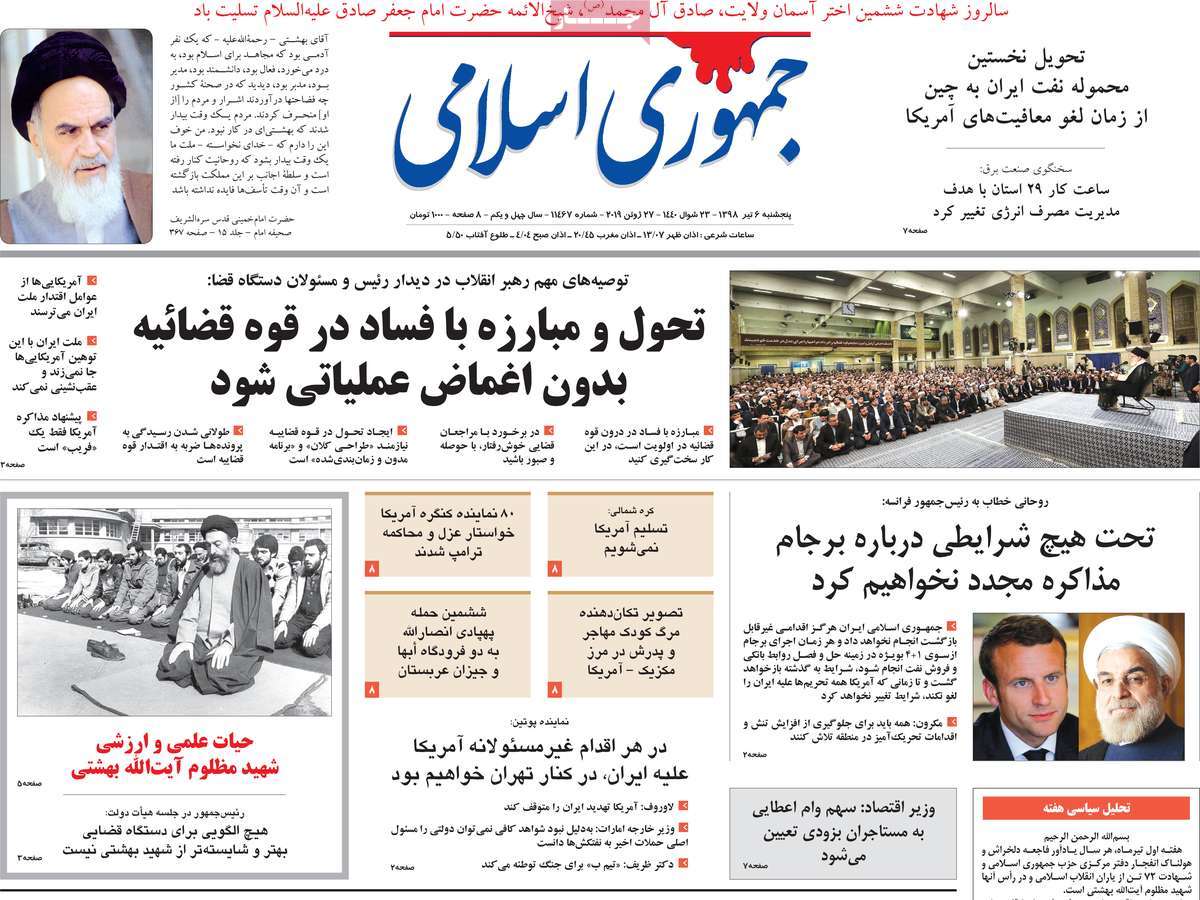
Jomhouri Eslami:

1- Iran’s First Crude Shipment Since End of US Waivers Delivered to China

2- Iraq: We’ll Stand by Iran in Any Irresponsible Move by US

3- Rouhani to Macron: We Won’t Renegotiate JCPOA under Any Circumstances

A Look at Iranian Newspaper Front Pages on June 27


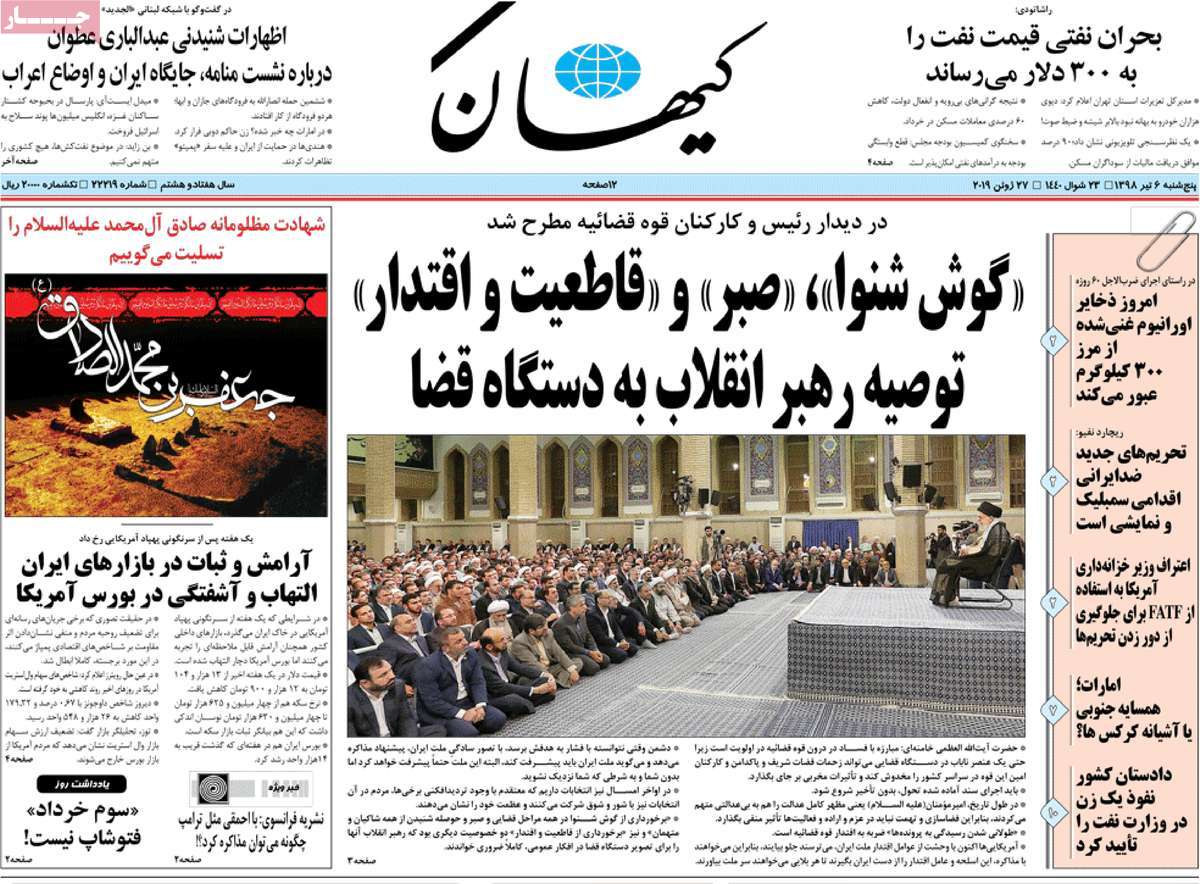
Kayhan:

1- RT: Oil Crisis to Increase Oil Prices to $300

2- Atwan’s Must-Read Remarks about Manama Confab, Iran’s Position, Arabs’ Situation

3- Richard Nephew: New Anti-Iran Sanctions Symbolic, for Show

4- Iran’s Enriched Uranium Stockpiles to Exceed 300kg Today

A Look at Iranian Newspaper Front Pages on June 27


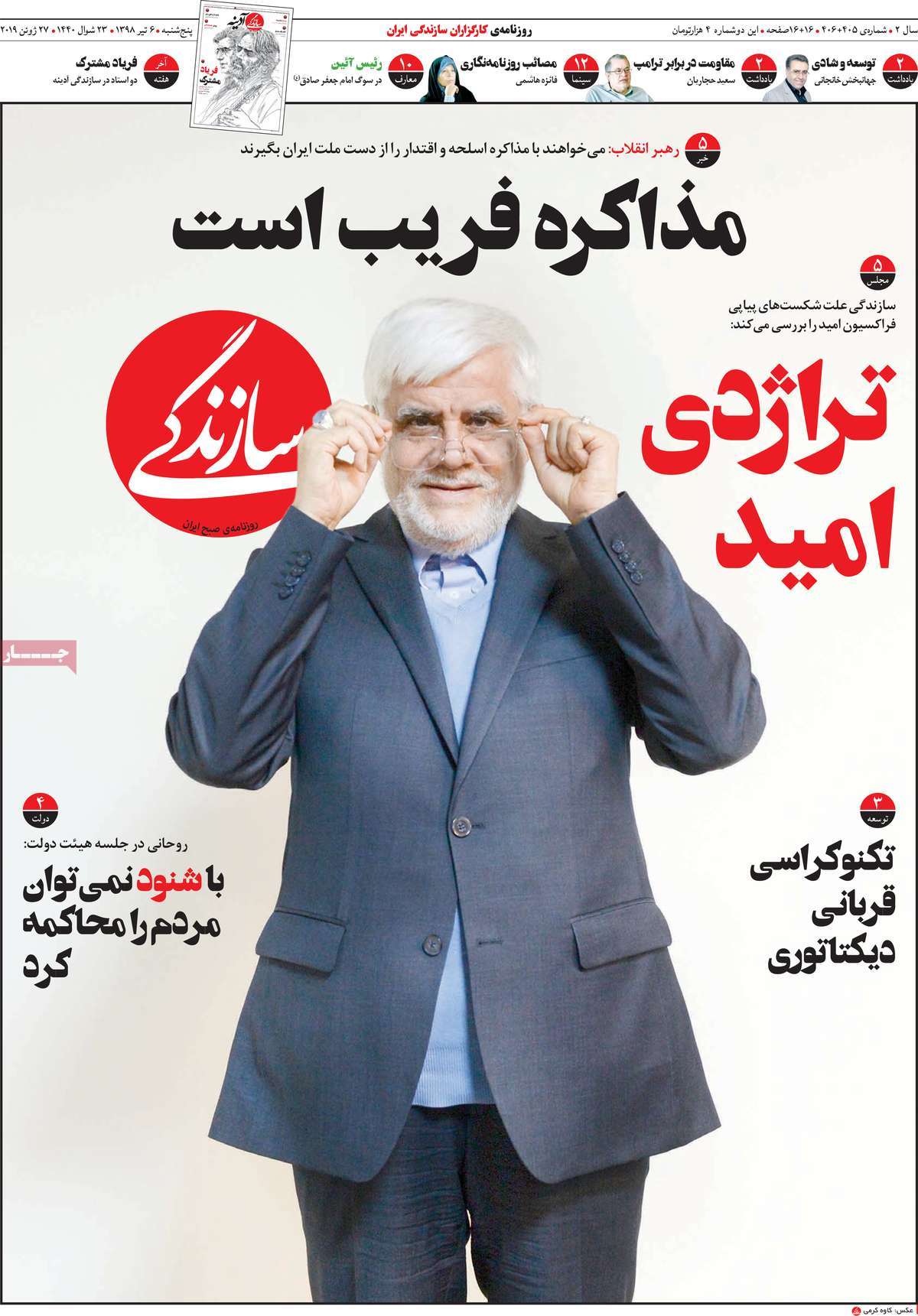
Sazandegi:

1- Iran Leader: They Want to Strip Iran of Its Weapons through Negotiation

A Look at Iranian Newspaper Front Pages on June 27


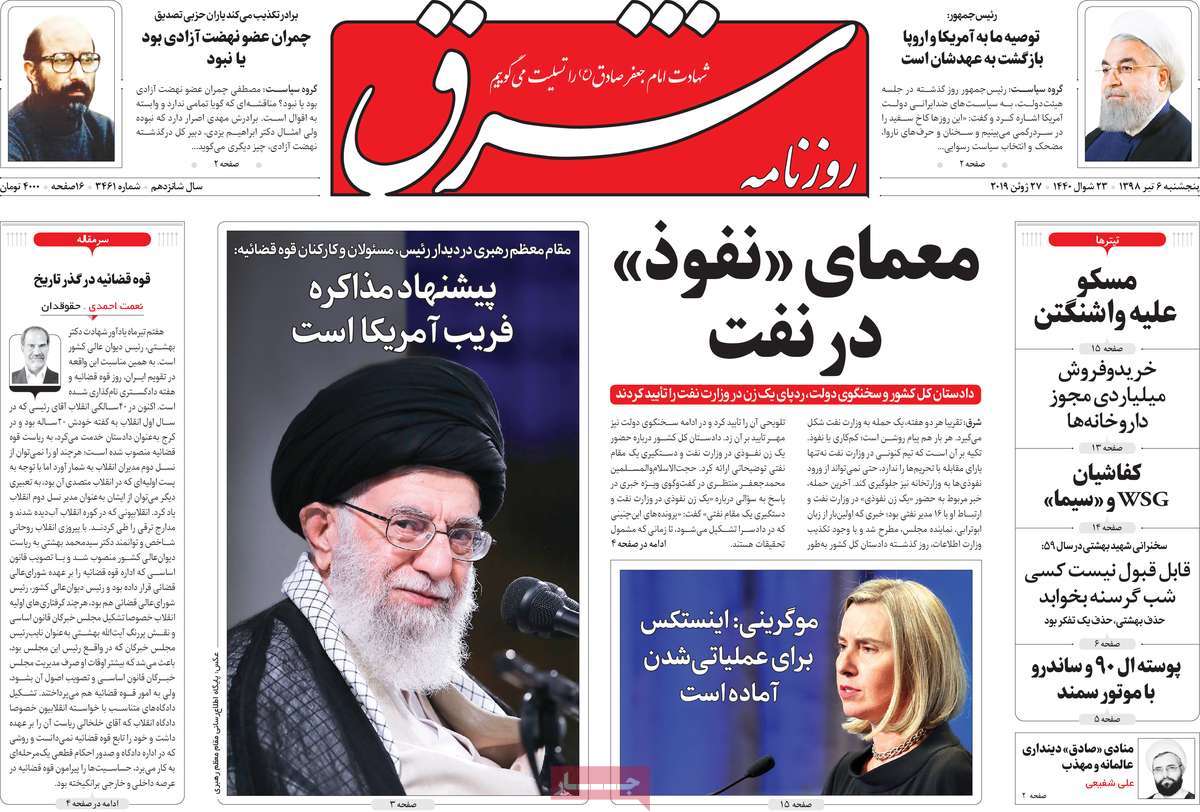
Shargh:

1- Moscow against Washington

2- Rouhani: We Recommend US and Europe Return to Their Commitments

3- Mogherini: INSTEX Ready to Be Implemented

A Look at Iranian Newspaper Front Pages on June 27

US in No Position to Obliterate Iran: FM Zarif

Iran Blasts Europe’s ‘Disastrous’ Subservience to US

Speaking in an exclusive interview with CNN, Zarif said that US actions have been “confrontational” and “provocative” but that Iran is not seeking war.

“I think President Trump should remember that we don’t live in the 18th century. There is a United Nations charter, and threat of wars is illegal,” Zarif said.

Amid escalating tensions between the Trump administration and Tehran, the US President warned Tuesday that any subsequent attack Iran might carry out on “anything American” would be met with “great and overwhelming force.”

“In some areas, overwhelming will mean obliteration,” the President tweeted.

The ramped-up rhetoric comes after US officials blamed Iran for conducting attacks against two tankers in the vital Sea of Oman this month. Iran has denied responsibility for the ship attacks.

The US President himself accused Iran of being behind the provocation, threatening airstrikes on Iran last week — but calling them off just minutes before they were to begin.

Zarif said the US administration was “trying to undermine the Iranian government” and “walked into it based on a wrong analysis.”

Trump has received “wrong information, wrong analysis, and now President Trump finds himself in a situation where he believes that he needs to get out.”

Speaking to CNN, the foreign minister also referred to the anti-Iran sanctions as “an additional insult by the United States against the entire Iranian nation.”

IRGC Expert: US Spy Drone Brought Down by Single Shot

Speaking at a televised interview on Wednesday, Major Mohammad Ali Khodabakhsh, an expert of air defence operations at the Islamic Revolution Guards Corps, disclosed further information about the advanced US spy drone that was shot down by the IRGC Aerospace Force in Iran’s southern skies last week.

He said the highly sophisticated MQ-4C Triton that had taken off from Al Dhafra Air Base in the United Arab Emirates was annihilated by Iran’s air defence missile system ‘Khordad-3rd’ at an altitude of 50,000 feet.

The officer noted that the homegrown system launched only one missile to shoot down the intruding aircraft, unlike the other air defence systems that have a margin of error and may hit the target with two or three launches, such as the American Patriot missile system.

The officer added that Khordad-3rd anti-air system can take action against targets at an altitude of 90,000 feet and within a range of 100 kilometers.

The doomed drone was not flying alone when it violated the Iranian airspace, Major Khodabakhsh added, saying a P-8 military aircraft with 38 people on board and an MQ-9 unmanned aircraft were in company with the intruding drone at a short distance, but at a lower altitude.

The military expert finally said shooting down of the MQ-4C Triton spy drone that is at the cutting edge of technology gave the US a message that its F-35 or F-22 fighter jets will suffer the same fate if they ever enter the Iranian airspace.

In a statement after bringing down the US drone on June 20, the IRGC said the pilotless plane had switched off all of its communication systems after take-off and flew towards the port city of Chabahar via the Strait of Hormuz in maximum stealth.

The costly military plane was shot down by the IRGC when it violated the Iranian airspace near the Strait of Hormuz and began to spy on Iran and collect information during return to the Emirati airbase.