Monday, December 22, 2025
Home Blog Page 3186

Iran to Press Ahead with Reduced Commitment to JCPOA: Source

nuclear

An informed source has told Iran’s Khorassan daily that the results of the Friday meeting of the JCPOA joint commission in Austria’s capital were far distant from Iran’s legitimate rights under the nuclear deal and have failed to fulfill its demands.

“The Islamic Republic of Iran’s definite decision is to continue with its measures to reduce its JCPOA commitments, and in this approach, it will soon bypass the 300-kilogram limit on enriched uranium stockpile for the first step,” the source added.

The informed source also made it clear that Iran will be ready to reverse its decision about a reduction in the JCPOA commitments, which are enshrined in the deal’s Articles 26 and 36, as soon as the European parties ensure Tehran’s oil and banking interests under the agreement.

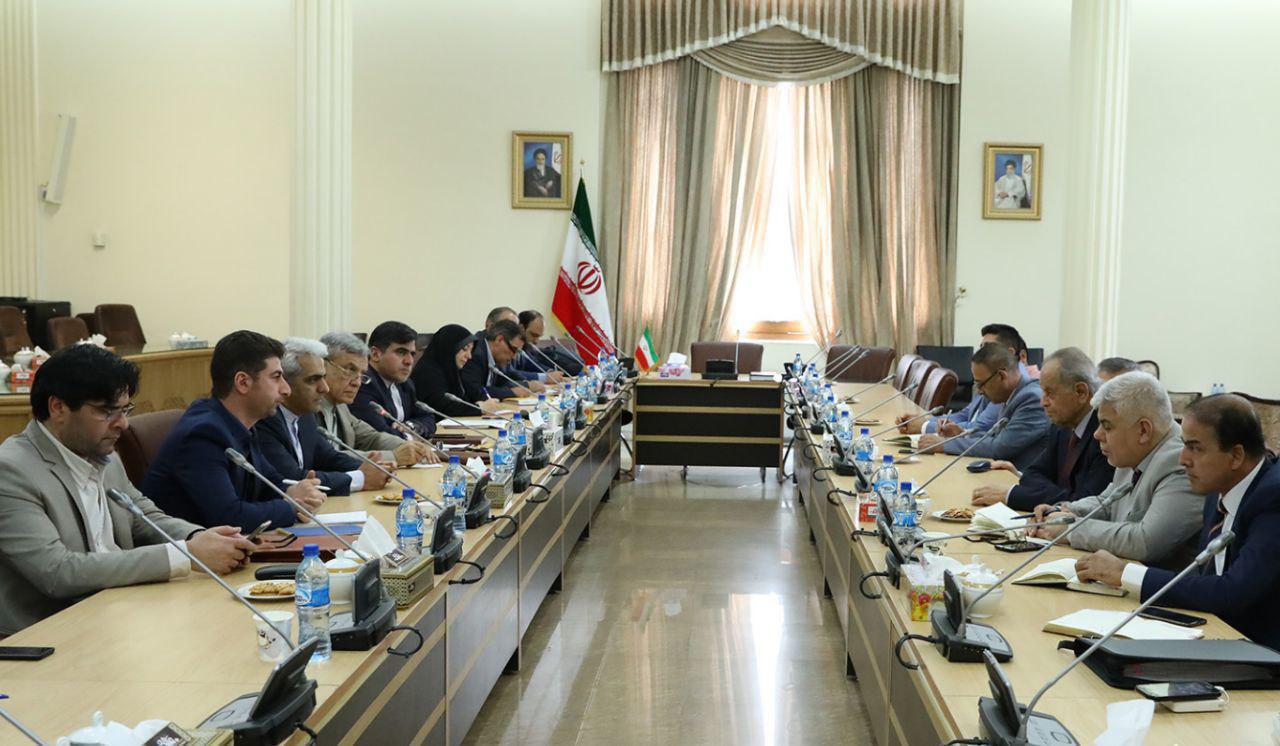
The comments came after negotiators from Iran and the Group 4+1 (Russia, China, Britain, France and Germany) convened in Vienna on Friday to discuss the ways to save the Joint Comprehensive Plan of Action.

Iranian Deputy Foreign Minister for Political Affairs Seyyed Abbas Araghchi has said some progress was made at the meeting, but it was “still not enough” to keep the nuclear deal alive.

In early May, Iran suspended limits on its production of enriched uranium and heavy water, moves that did not technically violate the deal but signaled that its patience was wearing thin. Iran also gave Europe a 60-day deadline, which will be over on July 8, threatening that it will take further measures if Europe fails to compensate for the US’ 2018 withdrawal from JCPOA.

Army Chief Says No Sign of War Despite Iran’s Vigilance

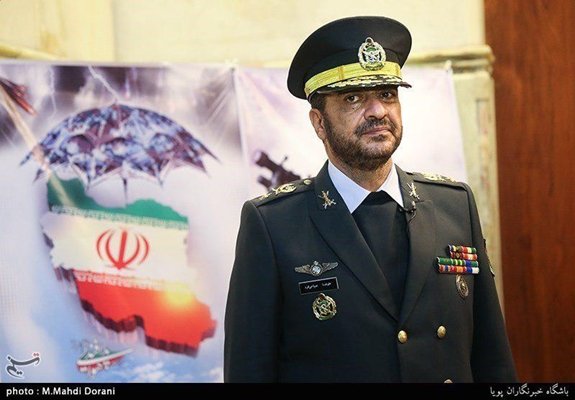
General Abdul-Rahim Mousavi

In comments on Saturday, Major General Abdolrahim Mousavi said Iran’s intelligence activities suggest that there is no possibility of a war.

“We are on the alert like the night of attack and the enemy is being closely monitored, but our intelligence monitoring does not show a war,” he added.

The commander also noted that Iran’s great “deterrence power” has frustrated the enemies.

Major General Mousavi finally rejected US President Donald Trump’s anti-Iran rhetoric, saying, “Let’s leave Trump doing his own usual maneuvers.”

In comments in May, Foreign Minister of Iran Mohammad Javad Zarif expressed confidence that no war would break out in the Middle East amid rising tensions between Iran and the United States.

“As Leader of the Islamic Revolution has also announced, we are certain that no war will break out because neither we want a war, nor has anyone the idea or illusion that it can confront Iran in the region,” Zarif had announced.

“However, it is necessary for the people of the United States to realize the dangerous moves inside the country,” he added.

Iran Is Safe, Beautiful: Marc Wilmots

Marc Wilmots in Iran

In an interview with a Belgian TV channel, Wilmots underlined that during his stay in Iran over the past weeks, he has not faced any instance of insecurity.

He described Iran’s conditions as good and added when the Football Federation of the Islamic Republic offered him the leadership of Iran’s Team Melli, he found out that the Iranians have a long-term plan.

“My journey to Asia after years of coaching in Europe was a new experience. I made a tour of Iran’s sports facilities which gave me an extraordinary experience,” he said.

The Belgian coach described Iran as a safe and beautiful country and said unlike what is rumoured worldwide, there is no war or insecurity in Iran. “I’ve never ever experienced a slight trace of insecurity in Iran.”

Based on a contract, Wilmots is set to lead the Iranian team for the next three years. The 50-year-old coach has so far led several national football teams across the world. He is going to lead the Iranian team during the Qatar 2022 World Cup.

Reports say his deal is signed for a fee of $1.2 million a year.

‘INSTEX Implemented Too Late, Can’t Secure Iran’s Interests’

Mohammad Ebrahim Rezaee, a member of the Iranian Parliament’s National Security and Foreign Policy Commission, says unfortunately the Instrument in Support of Trade Exchanges (INSTEX) has become operational too late after months of delays by the European sides.

“At present, the INSTEX can’t serve as a mechanism to bypass the US sanctions by the Europeans and the mechanism can’t meet Iran’s interests under the Iran nuclear deal,” he said in an interview with Tasnim.

He also called on the government not to pin all its hopes and goals on the Iran nuclear deal and added the INSTEX fails to provide Iran with an opportunity to access its oil revenues and facilitate the Europeans’ participation in projects inside Iran.

The lawmaker underlined that the Europeans can’t be trusted when it comes to the implementation of the INSTEX. “The mechanism doesn’t meet Iran’s interests in all areas and the Europeans have been seeking to kill time by making hollow promises.”

“The Europeans have not yet given a full guarantee to Iran on bypassing the US sanctions. Establishing a special financial mechanism between Iran and Europe is not hard at all but the main problem is that the US hampers efforts in this area,” he said.

Rezaee expressed doubt about the future of the INSTEX and said Iran’s diplomatic apparatus should receive enough guarantees from the Europeans before implementation of the financial mechanism.

“We should not pin our hopes on the Europeans.

They always make hollow promises and there is no will on their side to implement the financial mechanism,” he concluded.

Earlier, the European Union announced that its INSTEX mechanism to facilitate trade with Iran has become operational.

“France, Germany, and the UK informed participants that INSTEX had been made operational and available to all EU member states, and that the first transactions are being processed,” said an EU statement.

INSTEX is a payment system that will allow companies to trade with Iran despite harsh US sanctions. It is meant to function as a diplomatic shield allowing the exchange of goods without requiring direct transfers of money between Iran and EU companies.

Gwadar Bay; Unique Attraction on Iran-Pakistan Border

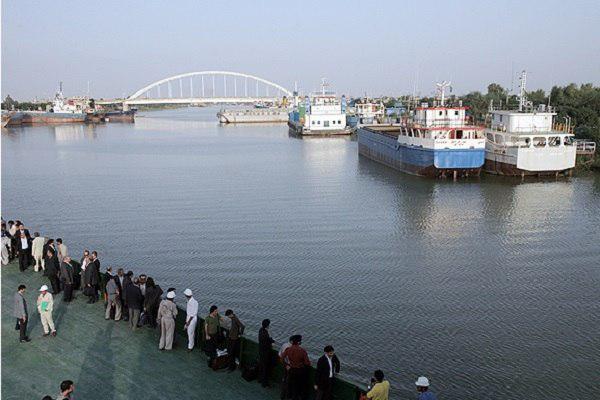
Gwadar Bay is one of the most beautiful regions of Iran’s southeast and attracts every tourist interested in the wildlife.

The unique dance of dolphins among the ocean’s waves creates eye-catching scenic views with lasting memories for the tourists and those interested in the wild nature of the seas.

Trade in Gwadar dates back to a very long time ago. In the past, tradesmen passed through the bay to go to India and Africa. Gwadar used to be among the main hubs for shrimp farming and exporting. Today the business has slowed down but it is still alive in the region.

Gwadar village near the bay has a population of 160,000, most of whom living on fishing and mat weaving.

In autumn, Gwadar houses a large number of migrant birds from about 40 various species. They arrive in the bay in various 100-member groups.

In addition to its wildlife, Gwadar enjoys a more attractive part: Avicenna Marina Forests. Upon arriving in Gwadar, some boats are waiting to take you to the forests to closely see the dolphins dancing between the waves.

The Martian or Miniature mountains are among the unique tourist attractions of Chabahar stretching from Kacho to Gwadar along the sea. The mountains are not beautiful for the snowy peaks or green nature but because of their special shapes and figures. They resemble the mountains on the Mars or the Moon. The sediment of the mountains as well as their erosion over time have led to creation of specific beautiful grooves.

Iran Says Last-Ditch Talks to Save JCPOA Below Expectations

Iranian Deputy Foreign Minister Seyyed Abbas Araqchi

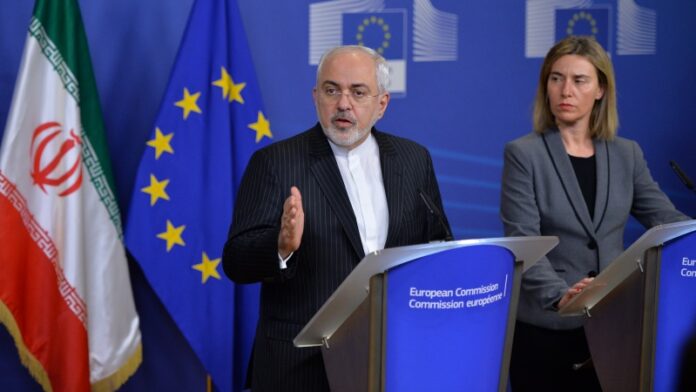
“It was a step forward, but it is still not enough and not meeting Iran’s expectations,” said Iranian Deputy Foreign Minister for Political Affairs Seyyed Abbas Araghchi, after a meeting of the Joint Commission of the Joint Comprehensive Plan of Action (JCPOA) on Friday.

“I don’t think the progress made today will be enough to stop our process – but the decision will be made in Tehran.”

In early May, Iran suspended limits on its production of enriched uranium and heavy water, moves that did not technically violate the deal but signaled that its patience was wearing thin. Iran also gave Europe a 60-day deadline, which will be over on July 8, threatening that it will take further measures if Europe fails to compensate for the US’ 2018 withdrawal from JCPOA.

“The decision to reduce our commitments has already been made in Iran and we continue on that process unless our expectations are met,” Araqchi told reporters.

But he also said a ministerial-level meeting would be held soon, probably giving Europe a further chance to save the deal from imminent collapse.

During the Friday talks, the three European powers – France, Germany and the UK – tried to assuage Iranian doubts that Europe was sticking to its side of the 2015 bargain by pressing ahead with the long-planned mechanism to facilitate trade between Iran and Europe without being hit by US sanctions.

The lead EU negotiator, Helga Schmid, hailed the discussions as constructive and said the first transactions had been completed through the mechanism, known as Instex.

The EU was also due to supply a modest €3m (£2.7m) credit line to kickstart the mechanism as a signal of good intent.

Araghchi said, “For INSTEX to be useful for Iran, Europeans need to buy oil or consider credit lines for this mechanism, otherwise INSTEX is not like they or us expect.”

The EU has always said INSTEX will be confined to easing trade in humanitarian goods, such as food and medicine – a form of trading the White House says is not subject to its sanctions regime.

EU Says Iran Trade Channel, INSTEX, Now Operational

The statement, released after a meeting in Vienna on Friday, states that France, Germany and the United Kingdom informed participants that INSTEX had been made operational and available to all EU Member States and that the first transactions are being processed.

What follows is the full text of the statement:

A meeting of the Joint Commission of the Joint Comprehensive Plan of Action (JCPOA) took place in Vienna on 28 June 2019 to take stock and discuss the latest developments under both sanctions-lifting and implementation of nuclear-related commitments. Under the terms of the JCPOA, the Joint Commission is responsible for overseeing the implementation of the agreement.

The Joint Commission was chaired, on behalf of the EU High Representative Federica Mogherini, by EEAS Secretary General Helga Schmid and was attended by the E3+2 (China, France, Germany, Russia, United Kingdom) and Iran at the level of Political Directors/ Deputy Foreign Ministers.

JCPOA remains a key element of the global nuclear non-proliferation architecture, endorsed unanimously by UN Security Council Resolution 2231. Furthermore, in light of the recent tensions, its preservation continues to be essential for the regional stability and security.

In view of recent concerning statements and developments, participants recalled the key importance of continued full and effective implementation of the agreement by all sides. At the same time, participants recalled that the lifting of sanctions is an essential part of the agreement and reviewed their respective commitments in this regard. They also took stock of respective efforts aimed at mitigating the negative impact of US withdrawal and re-imposed US sanctions, actions for which they have repeatedly expressed deep regret.

France, Germany and the United Kingdom informed participants that INSTEX had been made operational and available to all EU Member States and that the first transactions are being processed.

Ongoing complementary cooperation with the Iranian corresponding entity (STFI), which has already been established, will speed up. They confirmed that some EU Member States were in the process of joining INSTEX as shareholders, the special purpose vehicle aimed at facilitating legitimate business with Iran. They are also working to open INSTEX to economic operators from third countries.

Participants noted good progress, among others, on the modernisation of the Arak research reactor, and the stable isotope production project as part of the conversion of the Fordow facility, as foreseen in the JCPOA. They underscored the importance of the projects in terms of nuclear non-proliferation. On Arak, participants particularly welcomed progress made by co-chairs China and the United Kingdom, including the signature of the contract between China and Iran on transient analysis. The Joint Commission reaffirmed its firm commitment to fully support these nuclear projects, including the timely completion of the modernisation of the Arak Research Reactor and the supply of necessary equipment. Participants were briefed on the ongoing progress of projects in the area of civil nuclear cooperation under Annex III of the JCPOA.

Participants underlined the key role played by the IAEA, the only impartial body in charge of the monitoring of the implementation by Iran of its nuclear-related commitments under the JCPOA and UN Security Council Resolution 2231 in order to verify the exclusive peaceful nature of the Iranian nuclear programme.

As part of the ongoing work on sanctions and nuclear issues, the Joint Commission tasked experts to look into practical solutions in particular for the export of low enriched uranium (LEU) and heavy water under appropriate arrangements. In parallel, they will also continue to intensify efforts as regards sanctions lifting by convening specialised and focused experts discussions in line with the commitments under paragraph 8 of the Joint Statement of the Joint Commission meeting at the ministerial level on 6 July 2018, aimed at providing practical solutions in order to maintain the normalisation of trade and economic relations with Iran.

Under the terms of the JCPOA, the Joint Commission remains the relevant forum for dialogue to address all issues of concern.

Participants agreed to keep JCPOA implementation under close review and it was decided to convene the Joint Commission at ministerial level in the near future.

Iran Condemns Twin Terrorist Attacks on Tunis

Police officers at the site of a suicide attack in the Tunisian capital on June 28, 2019 / Photo by AFP

In his Friday statement, Mousavi also offered sympathy to the families of the victims, and underlined Tehran’s full support for the Tunisian government and nation in fight against terrorism.  

He also pointed to the illness of Tunisian President Beji Caid Essebsi, and wished him health.

Tehran hopes that the Tunisian nation and government will firmly tread on the path of democracy as always, and be able to hold their upcoming presidential and parliamentary elections successfully and gloriously, he added.

Tunisia’s 92-year-old president was rushed to a military hospital after suffering a “severe health crisis” on Thursday, shortly after two suicide attacks struck the capital Tunis.

President Essebsi was “taken seriously ill and transferred to the military hospital in Tunis,” the Tunisian presidency said in a post on Facebook Thursday.

The announcement came as police were securing the site of two suicide bombings that targeted security forces in Tunis, killing at least one person and injuring several others.

All of those wounded in the explosions were in stable condition Thursday evening, the director of Charles Nicolle Hospital told state-run TAP news agency.

ISIS claimed responsibility for the attacks, but did not offer any evidence, in a statement published by the group’s affiliated media wing, Amaq news agency.

US Sanctions Hamper Chemical Victims’ Access to Medicine: Iran

The call was made by Iranian Foreign Minister Mohammad Javad Zarif in a message on the anniversary of the 1987 chemical attack on the Iranian city of Sardasht.

The message was read out by Foreign Ministry Spokesman Seyyed Abbas Mousavi during a Friday ceremony held on the same occasion.

What follows is the full text of the message:


Message of Dr Mohammad Javad Zarif

Foreign Minister of the Islamic Republic of Iran

On Anniversary of Chemical Attack against City of Sardasht

June 28, 2019

In the Name of God

The chemical attacks of Iraq’s Ba’athist regime against the Iranian military and civilians, especially the defenceless people of the city of Sardasht in the course of the war imposed on Iran in the 1980s – which was met with the disgusting silence of the international community including the UN Security Council – will be remembered as a dark stain on the modern history. The chemical bombardment of Sardasht is definitely one of the bitterest memories of the eight-year war in the minds of Iranian people, and June 28, 1987, is a reminiscent of one of the most tragic days in the history of the Sacred Defence. The stigma of the attack will always be with the perpetrators and supporters of the crime.

On the occasion of June 28, which has been named as “Day of Fight against Chemical and Biological Weapons” in the Iranian calendar, I feel duty-bound to commemorate the dear Iranians who were martyred in chemical attacks and offer my deep sympathy to the respected families of the martyrs and survivors of this heartbreaking incident. I ask Almighty God to give health to those injured in chemical attacks, and give divine rewards to them and their patient families.

Given the legal, religious, and ethical rules that ban Weapons of Mass Destruction, the Islamic Republic of Iran underlines its principled policy of condemning the use of chemical weapons, no matter when, where and under what circumstances they are utilized. The Islamic Republic believes the total elimination of chemical weapons stockpiles remaining in the hands of the US – the only possessor of such weapons in the world – and the universality of the Chemical Weapons Convention (CWC) are major steps to achieve a world free of weapons of mass destruction. Therefore, Iran insists on the necessity for the full, balanced, and non-discriminatory implementation of the contents of the Chemical Weapons Convention.

It is a source of regret that the US administration’s addiction to the use of inhumane means of sanctions and economic terrorism has created numerous problems for our country’s victims of chemical attacks in accessing the medicine and medical equipment they need. The US administration’s move runs counter to the principles of international humanitarian law, the spirit of the Chemical Weapons Convention and the US commitments under the Convention, and the principles of international law. We hope that the Organization for the Prohibition of Chemical Weapons (OPCW) will manage to find an immediate solution to remove the abovementioned obstacles to the supply of the medicine and medical equipment needed by Iranian victims of chemical attacks. Interestingly, authorities in the US – as the only possessor of undestroyed chemical weapons stockpiles – raise baseless and deceitful issues in an attempt to hypocritically cover up the country’s non-compliance with its commitments under the Chemical Weapons Convention.

The international community and member states of the Chemical Weapons Convention’s pretense of ignorance and negligence over such policies of the US is as regrettable as their silence towards the barbaric attack of the US-backed Ba’athist dictator against the defenceless people of Sardasht 31 years ago. Moreover, the fact that the criminals behind the chemical attack and their accomplices and sponsors have yet to be punished and held legally and ethically accountable has prepared the grounds for the repetition of similar disasters in the Middle East by extremist groups.

The Foreign Ministry, with full seriousness, will do whatever necessary to pursue the rights of the Iranian victims of chemical weapons through legal and international channels until achieving the desired result. In October 2018, my colleagues at the Iranian Foreign Ministry organized an international course on the medical aspects of assistance and protection against chemical weapons in collaboration with the Technical Secretariat of the Organization for the Prohibition of Chemical Weapons in Tehran. The course, attended by specialists from other countries, displayed the progress and unique experiences of Iranian doctors in treating those wounded by chemical weapons. During the course, the foreign participants were taken on a tour of Tehran’s Baghiyyatollah al-Azam Hospital to get familiar with part of the innocence and pains of the chemically-injured patients receiving treatment at that medical centre. Also in coordination with the Iranian Foundation of Martyrs and Veterans Affairs, non-governmental associations of Iranian victims of chemical attacks managed to participate in the Twenty-Third Session of the Conference of the CWC States Parties as well as the Fourth CWC Review Conference, where they carried the message of the innocence and fortitude of the patient people of Sardasht to the world. The Foreign Ministry also welcomes the dispatch of a delegation of chemically-injured war veterans from Tehran Peace Museum to a ceremony slated for August in Japan on the anniversary of Hiroshima bombing. I hope the people of the world would get familiar with the depth of Sardasht tragedy and the use of chemical bombs against the innocent people of Iran just as they have been made well aware of the Hiroshima disaster and the use of atomic bomb against the people of Japan.

I hope the world will get rid of the inauspicious spectre of weapons of mass destruction and enjoy the virtues and peaceful services of science, and that the dove of peace would replace the ominous owl of war.

Let’s hope we will achieve a world free of weapons of mass destruction and the human kind will be saved by the ultimate peacemaker Imam Mahdi (PBUH).

Joy of Staying at Pipe Hotel near World’s Largest Gas Field

The village, named Shirino, is widely known for hosting petrochemical industry staff and huge oil extraction facilities.

However, it has turned into a tourist village developed by Iran’s Petrochemical industry with the main aim of offering tourist and recreational services to visitors. The project is still developing.

Joy of Staying at Pipe Hotel near World’s Largest Gas Field
Iran Home to Several Strange but Attractive Hotels

One of the main attractions of the village is its pipe hotel, which are innovatively built with GRP industrial pipes. The pipes used to be piled up as industrial wastes but today they are being used as the main material in the establishment of the hotel in Shirino village.

Today, tourists can take some rest inside the buildings made of these pipes and enjoy the facilities of a seaside hotel located on the shores of Persian Gulf.

The flow and ebb of the Persian Gulf creates scenic views for the tourists resting in the buildings. Some metres away from the buildings, there are some tree huts in which the tourists can drink tea and order delicious dishes. They can also take advantage of the water facilities and plages.

There are also hotel rooms similar to igloos, the houses where Eskimos live. The buildings have been set up in an innovative way.

A more interesting part of the recreational complex is the floating wood houses. These houses enjoy all the facilities of a luxury hotel.