Sunday, December 28, 2025
Home Blog Page 3134

Iran Says US Weapons Turning Mideast into Powder Keg

Addressing a UN Security Council meeting on Middle East peace and security challenges in New York on Tuesday, Majid Takht Ravanchi slammed the deployment of more than 70,000 US troops into the region as a main reason behind the insecurity and instability in the Middle East.
The US has an active military presence in all Persian Gulf states except in Iran, the envoy noted, adding, “The number of foreign military installations in the Middle East has jumped from four in 1991 to 41 in 2018. Nearly all of them belong to the US, which marks the highest concentration of military sites in the world.”

Takht Ravanchi further referred to the unilateral withdrawal of the US from the 2015 Iran nuclear deal as another source of instability in the Middle East.

He said the unbridled flow of American weaponry into this region has “turned it into a powder keg.”

“The sole beneficiary of weapons stockpiling in the region is the defense industry of the exporting countries. We should not ignore the US ‘divide and rule’ mechanism, which seeks to sow seeds of permanent discord among regional states. The Iranophobia remarks by American officials are meant to accomplish such an objective,” the Iranian envoy added, Mehr news agency reported.

“They have leveled unfounded accusations against Iran in order to justify their regional policies, and prevent the country from performing its role in the region,” he deplored.

“While we are not seeking confrontation, we cannot and will not remain indifferent to the violation of our sovereignty. Therefore, in order to secure our borders and interests, we will vigorously exercise our inherent right to self-defense,” the ambassador underlined.

Takht Ravanchi also said that Tehran will continue to ensure the security of maritime navigation in the Middle East, particularly in the Strait of Hormuz, adding that the US’ attempts to set up a military coalition in the Persian Gulf to counter what it calls the “Iran threat” will fail.

Zeroing Out Iran’s Oil Exports to Threaten Safety of Int’l Waterways: Rouhani

“World powers know that in the case that oil is completely sanctioned and Iran’s oil exports are brought down to zero, international waterways can’t have the same security as before,” Rouhani said on Wednesday.

He made the remarks in a meeting with Ayatollah Seyyed Ali Khamenei, the Leader of Iran’s Islamic Revolution.

“So unilateral pressure against Iran can’t be to their advantage and won’t guarantee their security in the region and the world,” Rouhani added.


Iran Can Stop Reducing JCPOA Commitments If Talks Successful

He further pointed to Iran’s move to reduce its JCPOA commitments, saying, “We have chosen the right path in reducing our commitments, and we have reiterated that there is a limit to our patience.”

Rouhani noted that if the 4+1 negotiations are successful, it can change the circumstances. “If the negotiations are unsuccessful, we will continue this path.”

He also noted that if all organs and branches stand together and support each other, we will overcome the sanctions with a faster pace, and bring the United States to its knees.

Washington has been tightening the screws on Tehran’s main source of income, aiming to cut Iran’s oil sales to zero, after President Donald Trump re-imposed sanctions on the Islamic Republic in November.

The US withdrew last year from an international nuclear deal signed with Tehran in 2015. It is ratcheting up sanctions in efforts to return Iran to negotiating table for a new deal to curb the country’s missile capabilities and its anti-Israeli role in the region.

Lately, the US has raised the ante by ordering military reinforcements, including a strike group, B-52 bombers and Patriot missiles, to the Middle East to confront unspecified Iranian threats.

Earlier this month, Iran’s Parliament speaker Ali Larijani said the United States has had no success in its “maximum pressure” campaign against Tehran even as American sanctions have impacted the Iranian economy.

“The Americans have not achieved any success against Iran. They wanted to bring oil sales down to zero but they did not succeed,” Larijani told a parliament session in Tehran on August 6.

“Through economic pressures, they want to have Iran stuck in internal problems. They have ratcheted up pressure on people to stir economic discontent,” he said.

China and other countries are receiving oil shipments from a larger number of Iranian tankers than was previously known, The New York Times reported early August.

At least 12 Iranian tankers have loaded and delivered oil across Asia and the Mediterranean since May 2, the paper said.

At least six of those ships unloaded their cargo at ports in China, while other ships have sailed to the Mediterranean through the Suez Canal, it added.

Iran Leader Urges India to Adopt ‘Fair’ Policy on Kashmir

“We have very good relations with the Indian government, but the Indian government is expected to adopt a fair policy towards the decent people of Kashmir,” Ayatollah Khamenei said on Wednesday.

He made the remarks in a meeting with President Hassan Rouhani and members of his cabinet in Tehran.

The Leader also urged that the Muslim people of Kashmir are not bullied anymore.

He further referred to the United Kingdom’s mischief as the root cause of the current situation in Jammu and Kashmir region and the dispute between India and Pakistan over the issue.

When leaving the Indian Subcontinent, the Leader said, “the Britons intentionally left this wound in this region so that the conflict would continue in Kashmir.”

Tensions in Jammu and Kashmir region have escalated after India scrapped the special status of its portion of Kashmir on August 5. New Delhi claimed that the decision was necessary for Kashmir’s economic development and to stop “terrorism.”

Pakistan, which disputes Kashmir with India, then expelled the Indian ambassador, halted bilateral trade, and suspended cross-border transport services.

Kashmir is divided between India, which rules the populous Kashmir Valley and the Hindu-dominated region around Jammu city, and Pakistan, which controls a piece of territory in the west.

India and Pakistan have fought three wars over the territory.

Lawmakers to Discuss Removing Four Zeros from Iranian Currency

The plan, proposed by the Central Bank of Iran, had been ratified during a cabinet session on July 31.

The government spokesman had earlier noted that the bill would be proposed to the Parliament as a double-urgent motion.

Iranian people currently discuss their monetary transactions in both rials and informally but more commonly in tomans. A toman is worth 10 rials.

If passed by the parliament and approved by the Guardian Council, Iran’s Central Bank would in effect devalue the rial and rename it as toman.

The bank would have two years to create the new toman currency, returning a currency name that has not been officially used since the 1930s.

Once created, a toman will be worth 100 “parseh”, a new currency to be created for the first time.

Proposals to remove four zeros from the currency have been floated since 2008, but the idea has gained strength as the rial lost more than 60 percent of its value in 2018 despite a recent recovery in defiance of US sanctions.

Rial weakness disrupted Iran’s foreign trade last year and helped boost annual inflation fourfold to nearly 40 percent in November.

The policies of the Central Bank of Iran in the past few months have helped the currency regain almost 30 percent of its lost value.

On Wednesday, the rial traded 116,500 to $1. At the time of the 2015 nuclear deal, the rial traded 32,000 to the dollar.

Zarif Warns US against Any ‘Miscalculation’ in Persian Gulf

Zarif made the remarks to NBC News’ Lester Holt on August 17 in an interview in Tehran, whose complete footage was published by the network on Tuesday.

“If countries from outside this region want to come to this region to disturb our security, to create military alliances against Iran, to create coalitions expecting Iran not to benefit from the fact that it is the coastal state here, then they are making a very serious miscalculation,” he said.

The United States has announced plans to form the coalition to supposedly protect shipping in the Strait of Hormuz following a series of mysterious attacks on oil tankers in the strait and the Sea of Oman.

Washington has accused Iran of having a hand in those attacks, a claim Tehran has strongly rejected. Tehran has warned that such sabotage operations may be part of a general ploy to target Iran amid increasing regional tensions.

The US has asked its allies to join the coalition, a call which has not been warmly received over fears that such a mission could lead to tensions with Iran.

Asked “What is Iran’s breaking point?” under the US’s ongoing pressure, Zarif asserted, “Iran will never break.” He cited the country’s record in defeating several aggressors, noting, “We have taught good lessons to those who have invaded us.”

The top diplomat said Iran has been part of the region for 7,000 years, adding, “It is the United States that is uninvited” here.

“I do not think that the United States or any other foreign military presence in this region has ever brought security for anybody,” he stated.

“It is a tiny body of water, which is extremely overcrowded, and the last time that we had such a crowd of naval vessels in this region, we had the downing of a civilian airliner,” Zarif said in reference to a 1988 incident when a US missile cruiser shot a Dubai-headed Iranian passenger plane killing all the 290 people on board, including 66 children.

Zarif also blamed the emergence of the Takfiri Daesh terror group on Washington’s interventionist actions in the region.

The foreign minister also expressed alarm that some were actively trying to trap US President Donald Trump into a situation, where he “would not have any option” other than escalation.

Real source of ‘malign activity’

It is the US and its allied states, which have been the source of the region’s troubles, Zarif said, commenting on Washington’s accusation that Tehran backs regional “malign activity.”

“If you look at our region…who’s the source of instability? Who has supported terrorism? Who supported [former Iraqi dictator] Saddam Hussein, when he invaded Iran? Who supported the Taliban, when they took over in Afghanistan in the 1990s?” he asked.

“Who imprisoned the prime minister of another country, [that is] Lebanon?” Zarif said, referring to Saudi Arabia’s detention of Sa’ad Hariri in 2017.

“Who is bombing Yemen? Who are fighting between themselves in southern Yemen, in Aden? Who is fighting in Libya? Who is fighting in Sudan? Who supported ISIS (Daesh) in Syria?” Zarif asked, still referring to Saudi Arabia, the United Arab Emirates, and their regional proxies.

“The answer to all these questions would not be Iran. The answer would be US allies,” he stated.

The Iranian foreign minister further said, “Today, you would have malign actors like Daesh ruling over a lot of territories” had it not been for Tehran’s support for groups like Hezbollah— which have been fighting Takfiri terrorism across the region, but are accused by Washington of “malign” activity.

Tanker drama

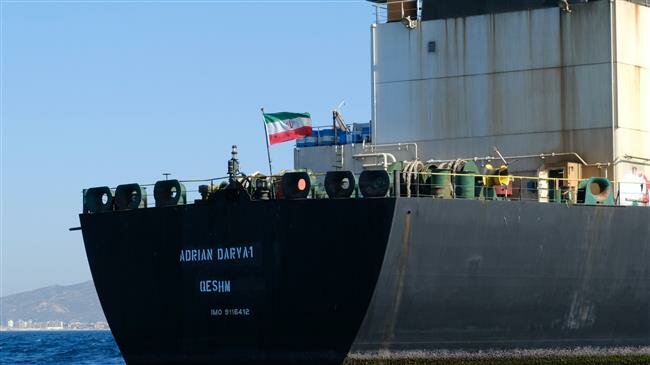
Zarif also rejected any “linkage” between Iran’s detention of a UK-flagged tanker in the Strait of Hormuz in late July, and Britain’s seizure of an Iranian-operated supertanker in Gibraltar earlier last month.

British forces captured the now-freed vessel on July 4, with London alleging that it was carrying crude to Syria in violation of the European Union’s unilateral sanctions on the Arab country. This is while the British vessel was seized by Iranian forces after it collided with an Iranian fishing boat and ignored its recurrent distress calls.

Zarif repeated Iran’s assertion that the Iranian-run ship was not destined for Syria.

However, he said, “We don’t recognize any restrictions, and we will continue to do our trade with anybody we like.”

Highest Number of Female Executives in Iran’s Most Underdeveloped Region

Sediqeh Yarmohammad-Zahi, a 29-year-old woman working as a local councillor in Sistan and Baluchestan

Sistan and Baluchestan has the largest number of people deprived from education. According to education officials, the largest population of these deprived people are girls who are denied access to education due to early marriage and cultural issues.

However, a great number of women in this underprivileged province have managed to gain top government positions, which means a new attitude and a great step forward.

According to a decree by President Hassan Rouhani, the executive bodies of the country are obliged to allocate 30% of the managerial posts of the relevant bodies to women as part of the country’s Sixth Development Plan.

Sistan and Baluchestan was the province with the first female governor and deputy governor, who took the positions during Rouhani’s term.

Other women in the province are also working as deputy governor, director general, deputy director general, university president, director general’s advisor, governor’s advisor, mayor, etc.

Since the beginning of the Rouhani administration, i.e. from 2015 until now, 237 women have held senior managerial posts in various ranks, including governor, director general, adviser and mayor in this province.

According to Iran’s Vice President for Women and Family Affairs, in President Rouhani’s second term, Sistan and Baluchestan with 20 senior and middle managers has the highest number of female managers among Iranian provinces.

As the government started to put more trust in women, the traditional and religious people of the province also changed their views and embraced the new approach to women in managerial positions.

Homeyra Rigi was the first Baloch woman to hold the post of governor in Qasr-e-qand, south of Sistan and Baluchestan since 2007. The successful experience of using a Sunni woman as the governor showed that women can play a greater role.

Rigi was later appointed the third female ambassador in Iran’s history and the first female Sunni ambassador.

Before that, Marzieh Afkham and Parvin Farshchi had been chosen as the first female Iranian ambassadors to Malaysia and Finland, respectively.

Despite some oppositions, Homeyra Rigi was finally appointed as Iran’s ambassador to Brunei upon the suggestion of the foreign minister and with the agreement of the president.

Iran Says Not to Return to Nuclear Talks with Trump’s Pressures

In an interview with NBC News, Shamkhani, who rarely speaks to the Western press, said that there were people in Iran who felt that signing the 2015 nuclear pact, known as the JCPOA, was a mistake.

Asked if he was one of those people, Shamkhani said, “Yes. … I’m just following the viewpoints of my nation, the people of Iran.”

In the interview with “NBC Nightly News” from Tehran on Monday, Shamkhani painted the US as the aggressor and prime source of tension in the region and warned the US to “act with wisdom.”

He said the Trump administration’s “maximum pressure” campaign against Iran would not bring Iran to heel or bring it back to the nuclear negotiating table.

“The sanctions campaign is not for negotiation, it’s for making us surrender,” said Shamkhani. “As long as this approach is taken by the United States, Iran will never ever seek negotiations.”

“We had a case of successful negotiations with the JCPOA. How come the United States departed from it?”

Shamkhani said the Iranian public has long dealt with international sanctions and proof of the failure of Trump administration policy was obvious in the mood on the street.

“Just walk the streets of Tehran and see how energetic our people are and you will realize that (what the US has) been trying to achieve has not materialized.”

According to Shamkhani, Iran is a stabilizing force, whose “martyrs” sacrificed their lives and defeated terrorist groups like al Qaeda and Daesh (ISIS or ISIL). He emphasized Iran’s role as a guarantor of security in the region.

He denied Iran is seeking nuclear weapons, since he said they are forbidden under Islam and have not provided security to those who have them, like Israel. He also denied that he had a “military wish” for Israel’s destruction, saying the Palestinian people would decide Israel’s fate.

“I believe that the one that is seeking the destruction of Israel is the country that does not see the realities on the ground,” said Shamkhani, taking a swipe at the Trump team’s Israel policies and Trump adviser Jared Kushner’s Middle East peace initiative. “They declare al Quds, or Jerusalem, as the capital of Israel. They pursue the ‘Deal of the Century’ project.”

To the Iranians, said Shamkhani, Trump seems to want the same things as all his predecessors as US president, which is to diminish Iran’s influence.

But Trump, said Shamkhani, managed to forfeit the “achievement ” of “neutralizing Iranian nuclear technology” by gutting the JCPOA.

Iran, said Shamkhani, is not basing its decisions on US policy on who is president, or on the possibility that Trump will not serve a second term. But he said that he thinks Trump’s “maximum pressure” campaign is failing because the US public and Western allies are “questioning” his leadership.

Trump’s recent decision not to attack Iran after the downing of a US drone, said Shamkhani, was driven by a “calculation of cost and benefits.”

Should the US and Iran become engaged in an open military conflict, Shamkhani said that Iran has “multiple instruments at hand, including the proxy war,” but he did not specify who those proxies might be. Iran is a long-time supporter of Hezbollah, Hamas and Yemen’s Houthi movement.

Both the US and its regional allies would be in “a terrible situation” in the event of war, said Shamkhani.

“There is no doubt that the already tarnished image of the United States will be even further destroyed in the region and the whole world. Why do they basically threaten to launch a war against us?” he added.

Iranian Oil Tanker Runs into Technical Problem in Red Sea

The HELM oil tanker ran into technical problems at 6:30 a.m. on Tuesday, August 20, 2019, (Tehran time), 75 miles north of the Yanbu port.

“The staff on the oil tanker are working to solve the problem, and the vessel is a stable condition in terms of safety,” said Akbar Jabal-Ameli, the NITC technical director.

“Fortunately, the personnel on the ship are safe,” he added.

He said all the necessary arrangements are being made to remove the technical fault.

“The staff on the ship are in a state of full preparedness and working to solve the problem,” he noted.

Art Garden Opens in Tehran with Vast Artificial Lake

The lake and garden, measuring 25,000 and 5,000 square kilometres respectively, are regarded as the largest art project in Tehran.

The garden has been designed to create an atmosphere to present arts such as music, visual arts, poetry and literature, with the focus being on the Central Mansion and establishment of a close bond between the artist and the audience and the promotion of the society’s artistic understanding of Iranian art.

This garden aims to help people experience the Iranian art and culture while being inspired by the Iranian architecture pattern.

The garden grounds include a lake, four buildings and a porch. Two buildings named “The House of Poetry and Literature” and “The House of Pattern” opened in phase one of the project in 2012-2013. The lake and the garden area are inaugurated in phase two.

The garden also contains amphitheatres for conferences and specialized meetings, conference halls, outdoor amphitheatres, coffee shops, restaurants and galleries where works of art by renowned artists and students can be displayed. Part of the premises are already operations, and the remaining parts will be put into service after the Central Mansion and the House of Music are completed. The two building are slated to enter service in mid-2020.

Programs are also underway to host international artists at the complex.

The following are pictures of the garden courtesy of Mehr News Agency.

500,000 Foreign Students Going to School in Iran

Rezvan Hakimzadeh, a deputy minister for Primary Education, made the remarks in a ceremony to inaugurate a preschool centre for Afghan children in the south-eastern Iranian city of Mehmanshahr, Rafsanjan.

“I give this day the name of educational justice and children’s right because the Iranian and foreign newcomers are gathered here in a beautiful day of equality and brotherhood, compliant with Islamic ideas,” she said.

“Despite the cruel sanctions imposed on our country, we share what we have with our guests,” she added. “We in the International Department of Education have made it possible for about half a million foreign students to go to school in Iran with a main focus on pre-schoolers.”

“Iran has made it possible for foreign nationals to acquire science and knowledge without any international assistance,” Hakimzadeh noted, highlighting the Iranian Leader’s emphasises on the need for equality of educational opportunities for children from other countries, Afghan nationals living in Iran in particular, with the natives.

“About 10,000 teachers are required in the country’s educational system to educate 500,000 foreign students,” she said.

Hakimzadeh said the international organizations and the Afghan government need to pay more attention to this issue.

“All the Afghan officials I have met during recent years stated that Iran has created this precious opportunity for Afghan children without any propaganda or claims,” she added, declaring her discontent over the media silence.

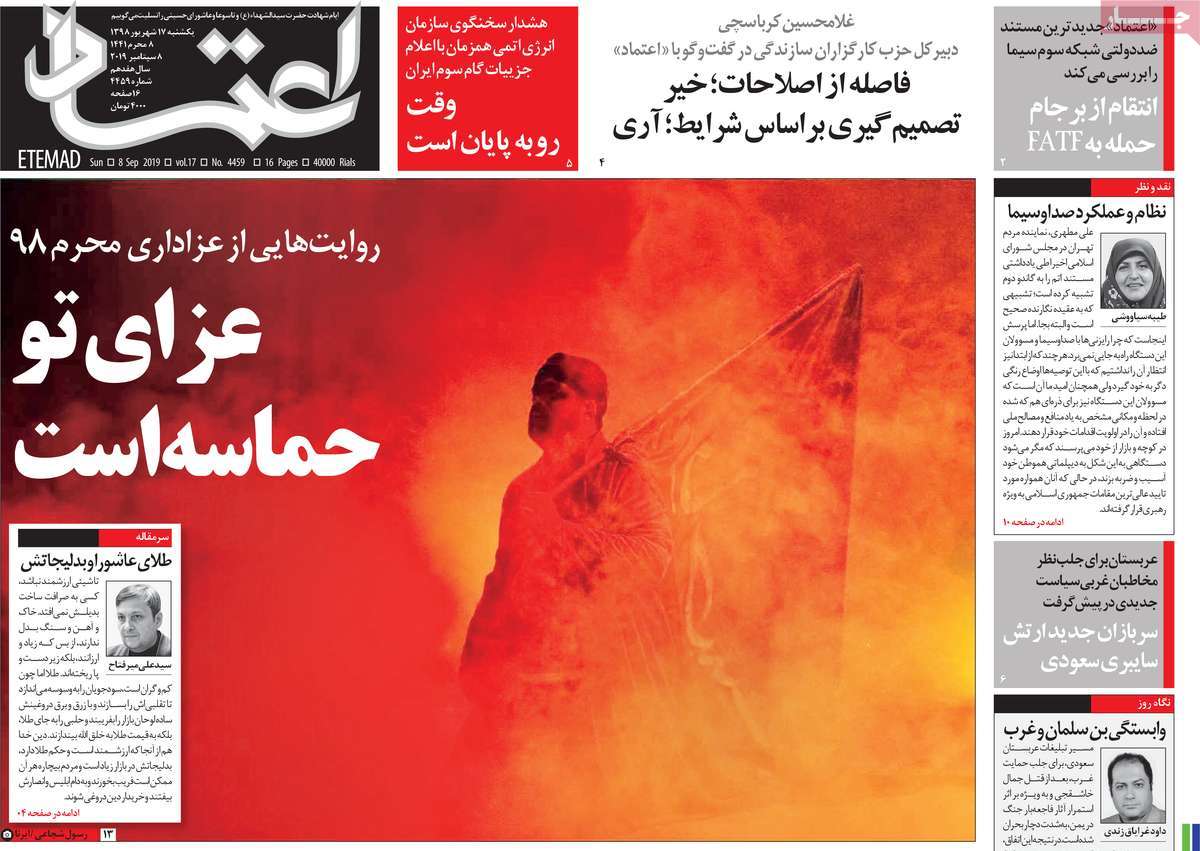
According to the data collected by E’temad daily newspaper using the 2016 census and other sources, 1,583,979 Afghan migrants live in Iran, accounting for two percent of Iran’s population. Almost 11,000 are studying in Iranian universities and 360,000 go to Iranian schools.

The majority of these migrants (516,000) live in Tehran province. 220,000 live in Khorasan Razavi (which shares border with Afghanistan), 183,000 in Isfahan, 125,000 in Kerman, and 109,000 in Fars province.