Wednesday, April 8, 2026
Home Blog Page 3124

Saudis Must See Aramco Attack as ‘Warning’: Iran President

rouhani

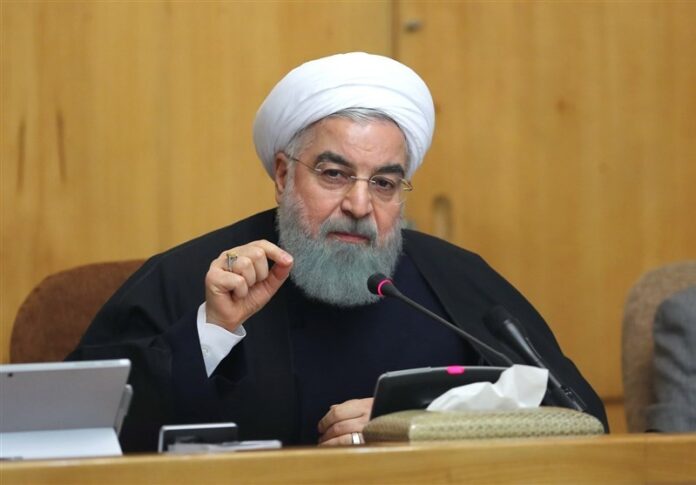
“Yemenis have not targeted a hospital, a school, or a grocery market [as Saudis did]; why are you so upset?” Rouhani told a Wednesday cabinet session.

“They have attacked an industrial center to warn you! Learn from this warning,” he added, referring to the recent drone attacks which paralyzed Saudi Arabia’s oil industry, halving its daily oil output.

Attacks by 10 Yemeni drones on Saudi Arabia’s key oil facilities in Abqaiq and Khurais have shut down about 50 percent of the kingdom’s crude and gas production, cutting the state oil giant’s crude oil supply by around 5.7 million barrels per day.

An informed Saudi source says the damages inflicted on the Aramco oil facilities in the recent attacks are so massive that it is not clear when the country’s oil output can return to normal.

Saudi Energy Minister Prince Abdulaziz bin Salman said Tuesday Riyadh does not yet know who were behind the highly disruptive attacks, which sent crude prices skyrocketing.

The remarks come as the United States has tried to build its case that Iran was behind the attacks. Iran has denied being behind the assaults, which knocked out half of Saudi Arabia’s oil production.

In his Wednesday remarks, Rouhani once again rejected the US’ accusations as baseless and groundless, saying the US’ “maximum pressure” policy has turned into “maximum accusations”.

President Rouhani said Washington’s “maximum pressure” policy is coming to an end.

“Of course, this pressure has created hardship for people, but this maximum pressure has reached its apex and is poised to drop,” he noted.

He said the Americans cannot achieve their objectives through the “maximum pressure” approach.

“I’m telling US officials that talks under maximum pressure is impossible, and if you are honestly after talks, all pressure on Iran should stop,” he noted.

President Rouhani also touched upon the Iran nuclear deal known as the Joint Comprehensive Plan of Action (JCPOA).

“Iran still remains committed to its obligations under the JCPOA and International Atomic Energy Agency agents are still present at Iran’s nuclear centers and keep monitoring [Iran’s activities],” he said.

President further referred to Iran’s policy of boosting relations with neighbouring countries.

“As the Islamic Republic of Iran has friendly, brotherly and cordial relations with all of its neighbours in the north, east and west, it seeks to have cordial ties with its southern neighbours as well,” President Rouhani noted.

He said Iran has never wanted conflict in the region, urging all to work towards establishing peace and security in the region.

The president further said there are two opposing fronts in the region now.

“On the one hand, some regional countries are trying to establish peace and security and combat unrest and terrorists’ movements; on the other, in another corner of the region we are seeing warmongering and efforts to fuel the flames [of unrest],” he said.

He then referred to the fifth summit of Iran, Russia and Turkey as part of the trend of Astana talks aimed at securing a ceasefire in Syria. The president said the negotiations are aimed at establishing peace and security in Syria, helping Syrian refugees return to their homeland and fighting the remnants of terror groups in the region.
‘Saudi Arabia, UAE First Opponents of Military Attack on Iran’

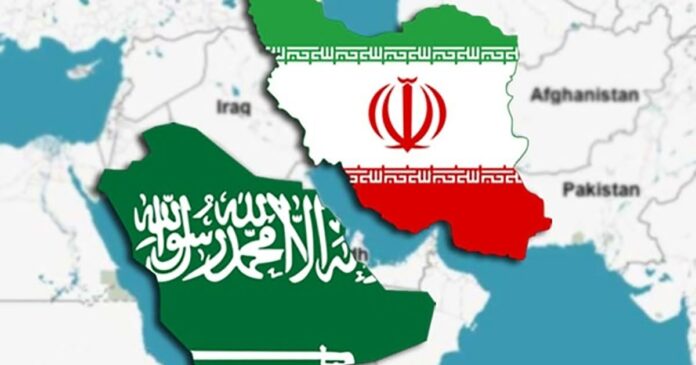
Mostafa Danandeh has written in a piece that the United States is awaiting Saudi’s comment on the attack on the Aramco oil refinery. The US and Saudis have accused Iran, saying the attacks could only be performed by the Islamic Republic, and Yemenis have no such power to attack Saudi Arabia’s oil facilities many miles away.

“Some international observers and analysts believe that the United States is waiting for the green light of Saudi Arabia and of course its money to attack Iran. They say an attack on Iran will happen sooner or later.”

According to Danandeh, the most significant parties which are against any attack on Iran are the Arab states of Persian Gulf, especially Saudi Arabia and the United Arab Emirates. If a fire breaks out in Tehran, it would certainly spread to the whole Middle East.

The recent attack on Saudi Arabia showed how fragile the defence system of the kingdom is. Saudi Arabia, despite purchasing advanced equipment from the US, has yet to find out the source of the attack on its oil facilities and is still seeking to find those behind it.

One should not forget that 50% of Saudi Arabia’s oil industry has been paralysed by drone strikes. Let alone the country wants to go to war. The situation in the UAE is no better than in Saudi Arabia. The Arab country is heavily dependent on world trade and is seeking peace in the region. So Abu Dhabi does not welcome the flames of war in the Middle East. The war in the Middle East means the closure of oil trade and exports, which means the beginning of an economic crisis and of course a security crisis in the Arab states of the Persian Gulf.

On the other hand, on the eve of the US presidential election, Donald Trump does not want to go to war and lower his chances of winning the vote. It seems the US president views the negotiation and agreement with Iran and North Korea as the key to success in the upcoming presidential election. “I would certainly like to avoid war with Iran,” he said in his latest speech.

It should also be noted that Trump and his advisers did not press the military attack button after their drone was destroyed in the Iranian sky and preferred not to wage a war. Now, it is unclear why some people think the United States is ready to go to war with Iran for the sake of another country.

“The least the United States would do in the face of a recent attack on Saudi oil facilities is to sell missile systems to Arab countries. An example is the purchase of a missile system from the United States by Bahrain. In this way, Washington makes a lot of money and will not spend a penny.  Of course, in the world of politics, we have to wait for strange decisions every moment, but the evidence suggests that there will be no war in the Middle East at present,” concludes Danandeh.

Minister: Iran to Outpace Qatar in South Pars Gas Extraction

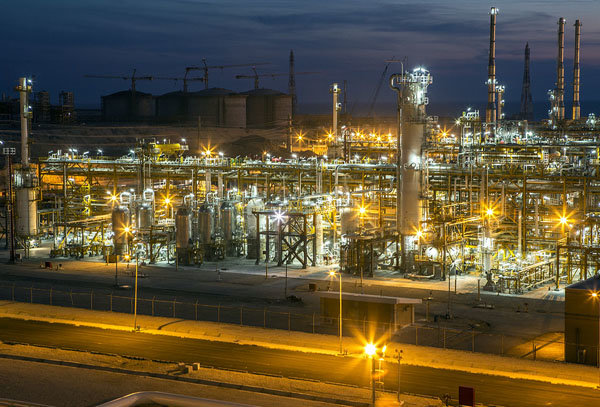
Iran’s gas extraction from the giant offshore South Pars field will exceed that of Qatar as soon as the current development projects are completed, Zanganeh said on Monday.

The oil minister noted that the daily output of natural gas from the common reserve in the Iranian installations is set to hit 790 million cubic meters, much higher than Qatar’s daily production of 620 million.

Zanganeh pledged that Iran will complete the phases 13, 22, 23 and 24 of the South Pars gas field by March 2020, and will also finish the offshore section of phase 14.

South Pars gas field (aka North Dome) is one of the largest independent gas reservoirs in the world lying on the common border between Iran and Qatar. The gas field covers an area of 9,700 square kilometers, of which 3,700 square kilometers belongs to Iran.

It is estimated that the Iranian section of the field contains 14 trillion cubic meters of gas and 18 billion barrels of condensates in place.

Turkey Deplores US Sanctions, Pledges Support for Iran

In a Tuesday meeting with an Iranian economic delegation in Ankara, Pekcan said Turkey has sadly borne the brunt of the US sanctions on Iran.

The Turkish trade minister also pledged that her country will support the Iranian government and nation, who she described as brother of Turkey.

She then hailed the positive results of expert-level talks in various committees of Iran-Turkey Joint Economic Cooperation Commission, saying Ankara would be pleased to enhance trade ties with Tehran.

For his part, head of the Iranian delegation praised the Turkish president and trade minister for their “positive and explicit” stances in support of Iran vis-à-vis the US sanctions.

The Iranian President’s Chief of Staff Mahmoud Vaezi then unveiled plans for the opening of a secretariat in Tehran to oversee the decisions made by the expert committees of the Joint Economic Cooperation Commission and to resolve the problems of Iranian and Turkish business people.

Vaezi has travelled to Turkey with Iranian President Hassan Rouhani, who returned to Tehran on Monday night after attending a trilateral summit with the leaders of Turkey and Russia about Syria.

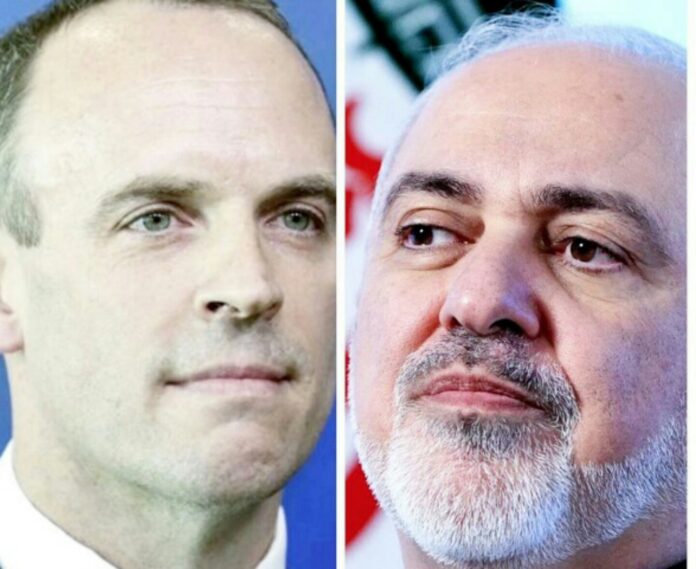
Iran, UK Discuss Bilateral Ties, Yemen Crisis

UK Secretary of State for Foreign and Commonwealth Affairs Dominic Raab held a telephone conversation with Iranian Foreign Minister Mohammad Javad Zarif on Tuesday evening.

In the conversation, the two ministers discussed the latest developments concerning the bilateral ties and implementation of the JCPOA, a series of consular affairs between the two countries, the ongoing developments in the region, particularly the situation in Yemen, as well as the other issues of mutual interest.

Political tensions between Iran and the UK grew recently after the British Royal Navy captured an Iranian supertanker in the international waters off the coasts of Gibraltar in early July.

Two weeks later, the Islamic Revolution Guards Corps (IRGC) Navy captured British oil tanker Stena Impero in Iran’s southern waters because the UK vessel had switched off its GPS locator, in contravention of international regulations, and was sailing into the Strait of Hormuz in a wrong traffic pattern.

The British tanker was entering the strait from the southern route which is an exit path, increasing the risk of an accident.

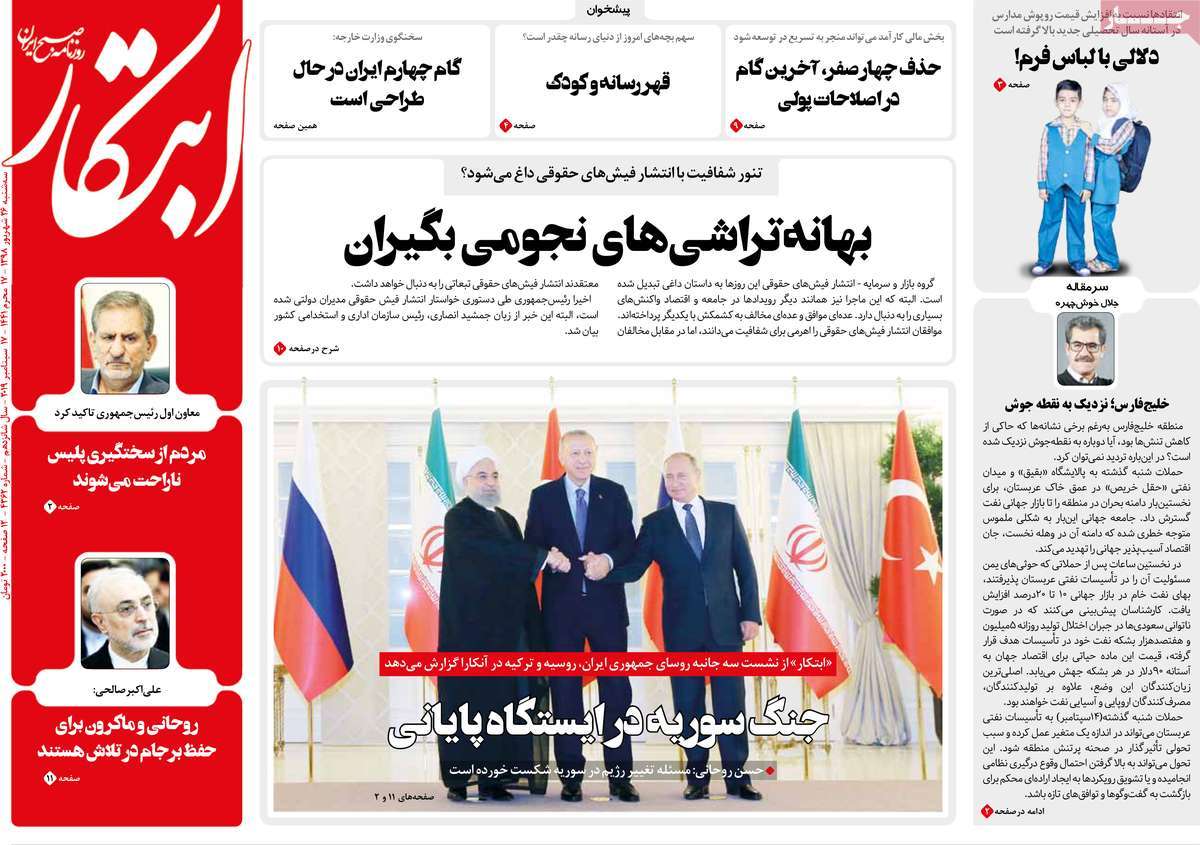
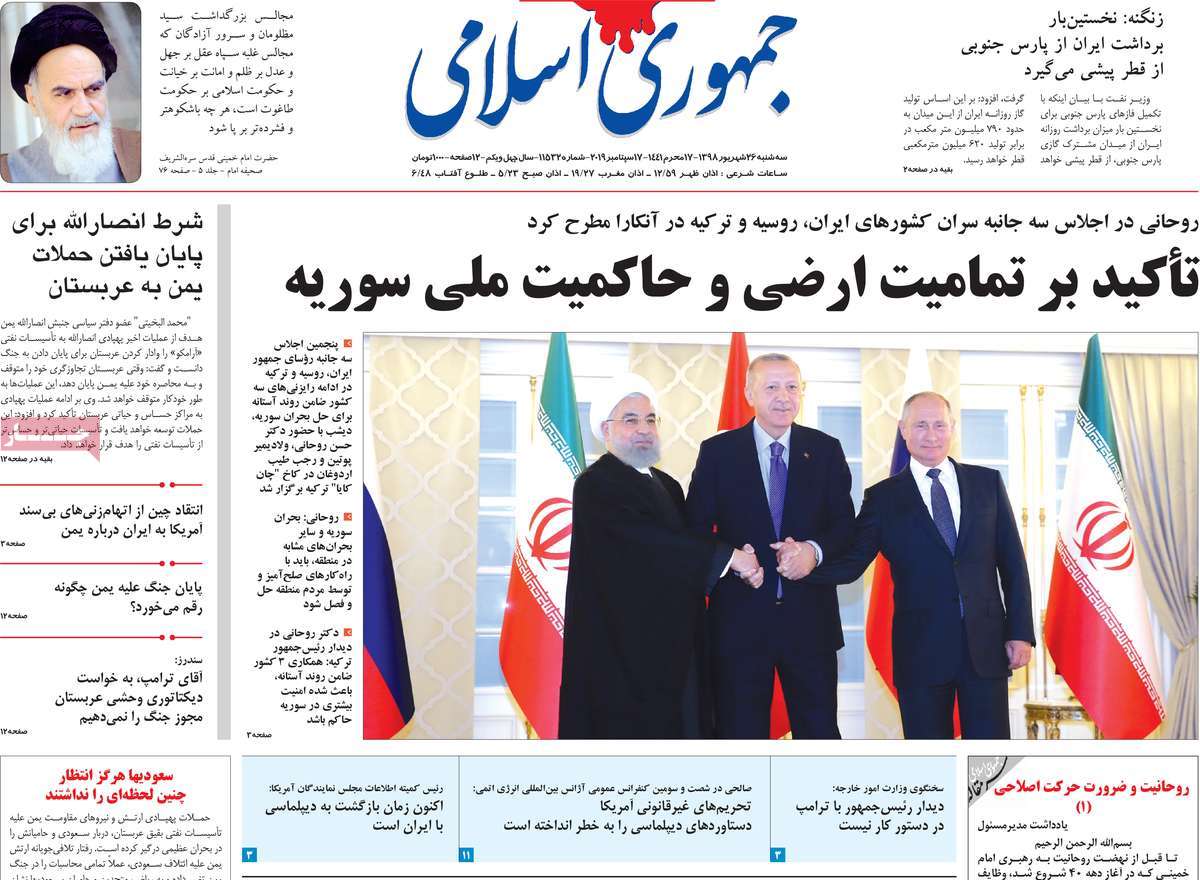
A Look at Iranian Newspaper Front Pages on September 17

A Look at Iranian Newspaper Front Pages on November 19

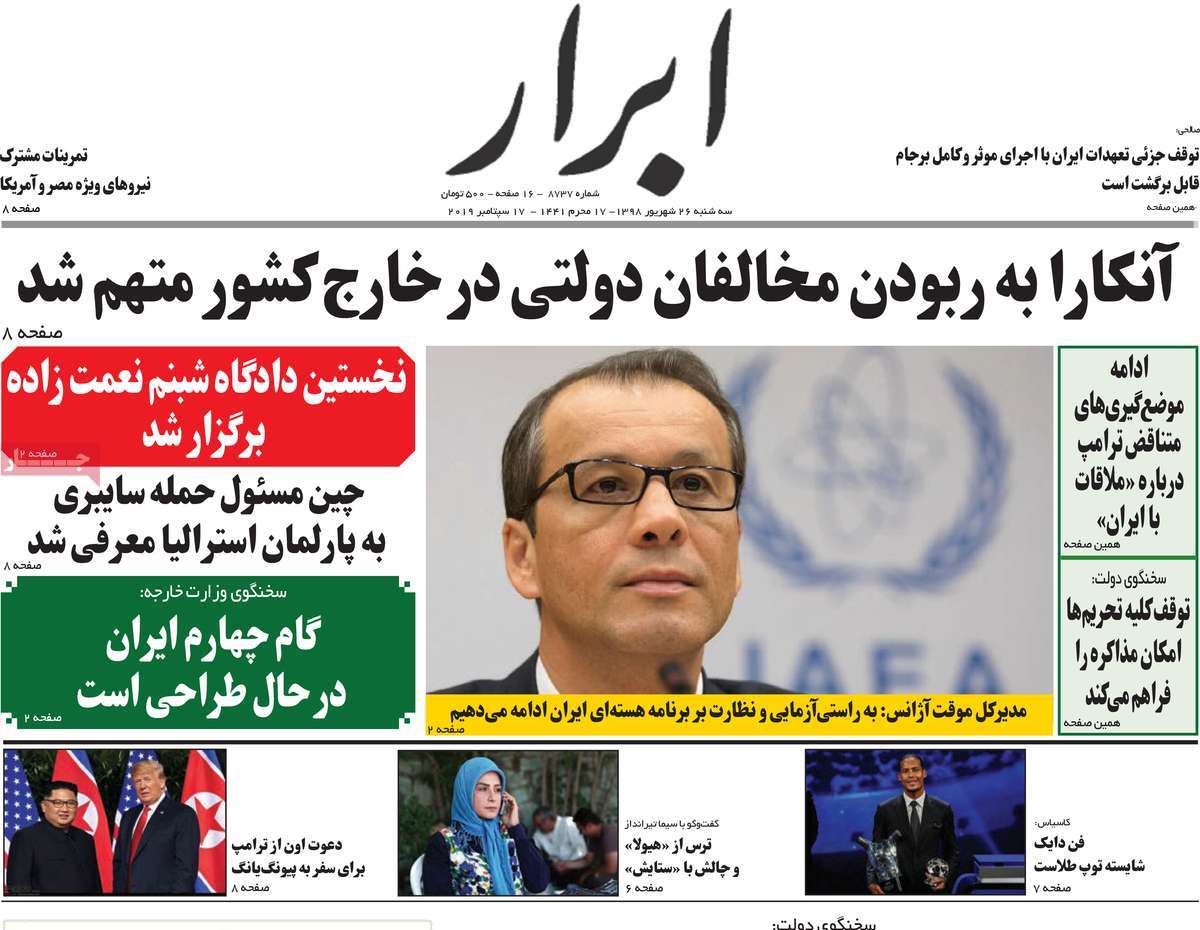
Abrar:
1- IAEA Acting DG: We’ll Continue Verifying Iran’s Compliance
2- Trump Continues Taking Contradictory Stances on Iran Meeting
3- Government: Lifting All Sanctions Will Pave Way for Negotiation

A Look at Iranian Newspaper Front Pages on September 17


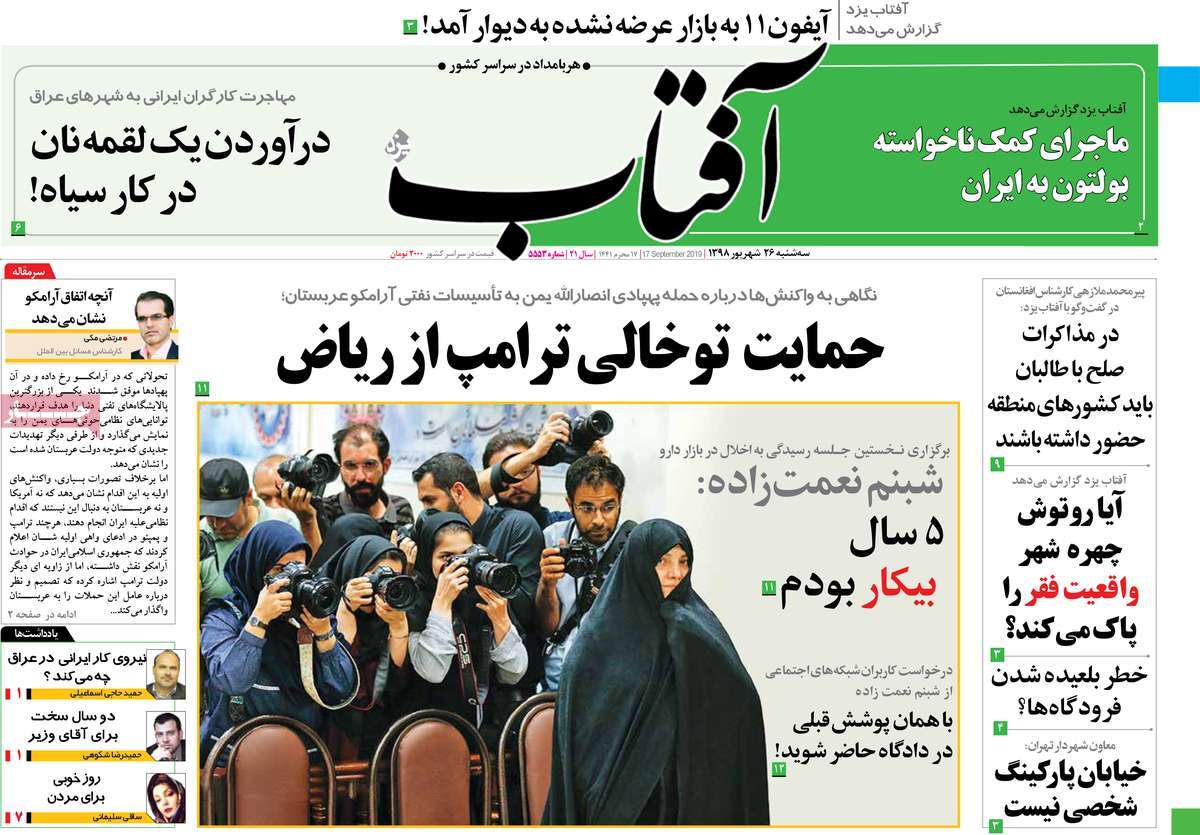
Aftab-e Yazd:
1- Trump’s Hollow Support for Riyadh
2- Bolton Unintentionally Helps Iran
3- What Aramco Incident Reveals [Editorial]

A Look at Iranian Newspaper Front Pages on September 17


Ebtekar:
1- Syria War at Final Station
* Iran, Russia, Turkey Presidents Meet in Ankara
2- Rouhani, Macron Trying to Save JCPOA: Iran Nuclear Chief
3- Foreign Ministry Spokesman: Iran Designing Its Fourth Step in Reducing Commitments

A Look at Iranian Newspaper Front Pages on September 17


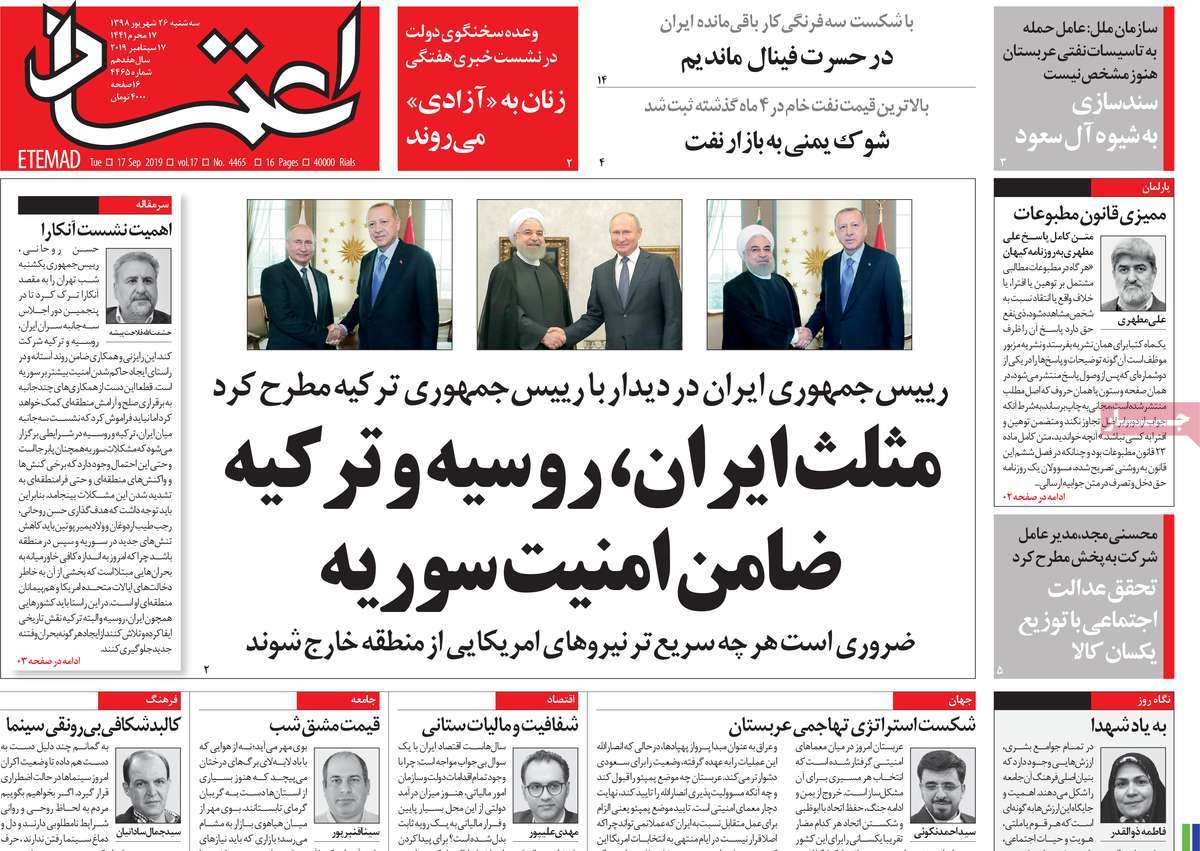
Etemad:
1- Iran-Russia-Turkey Triangle Guarantor of Syria Security: Rouhani
2- Women Will Go to Stadiums: Government Spokesman
3- Fabricating Documents in Saudi Way
* UN: Not Clear Yet Who’s Behind Attack on Saudi Oil Plants

A Look at Iranian Newspaper Front Pages on September 17


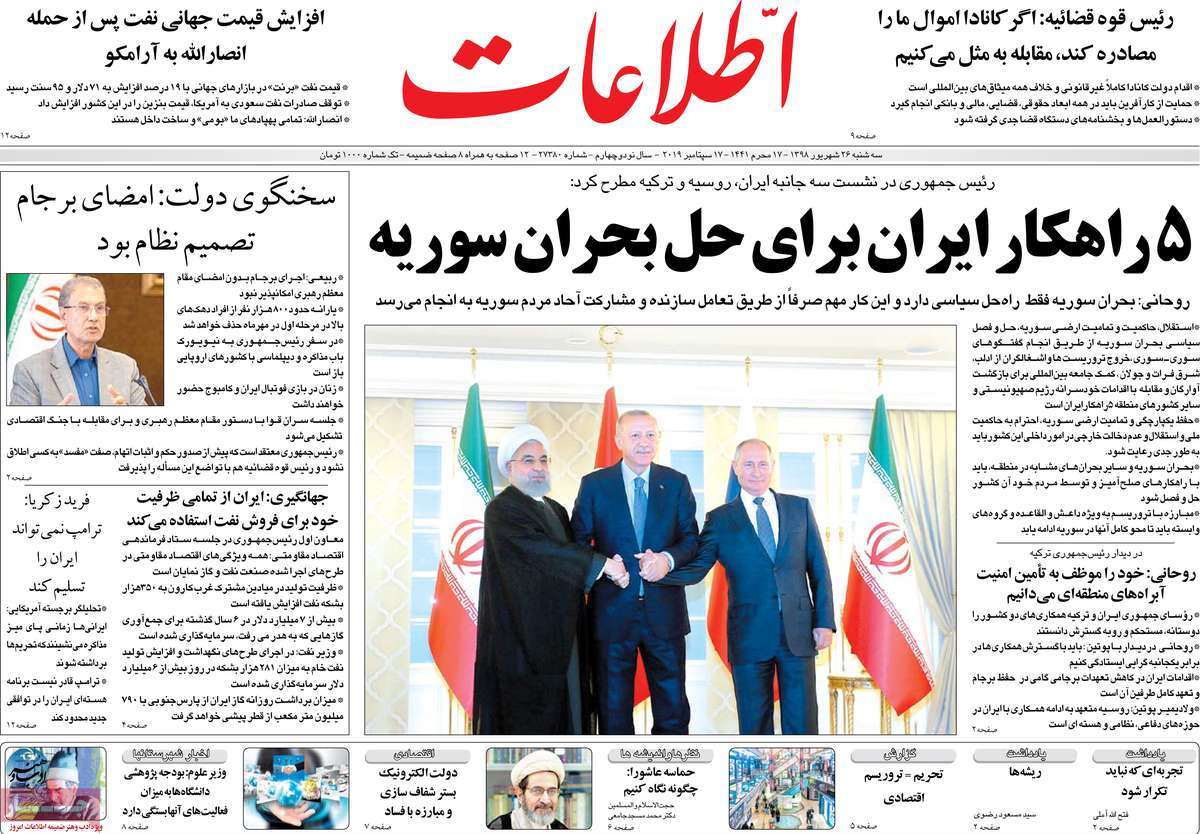
Ettela’at:
1- Five Solutions of Iran for Settlement of Syria Crisis
2- Government Spokesman: Signing JCPOA Was Establishment’s Decision
3- First VP: Iran to Use All Its Capacities to Sell Its Oil

A Look at Iranian Newspaper Front Pages on September 17


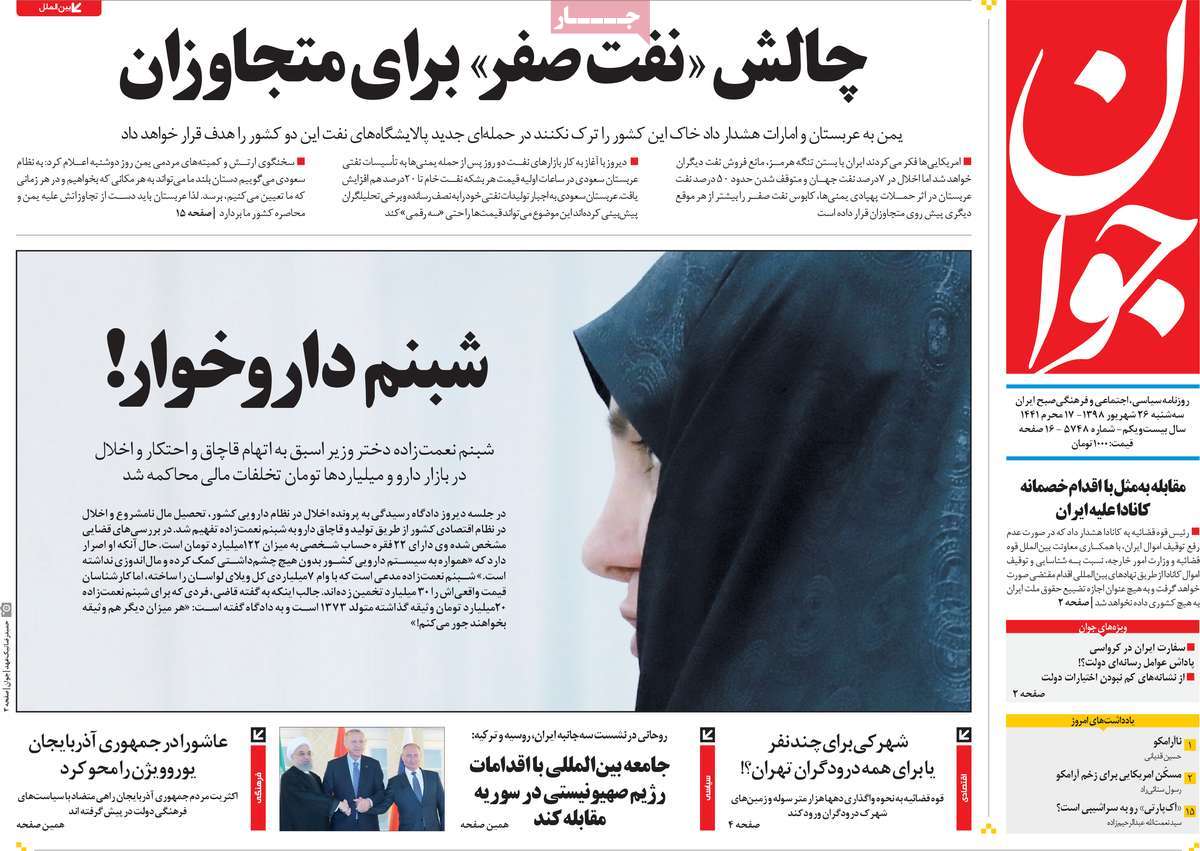
Javan:
1- ‘Zero Oil’ Challenge for Aggressors
* Yemen Warns Saudi, UAE: If You Fail to Leave Yemen, More Refineries Will Be Attacked

A Look at Iranian Newspaper Front Pages on September 17


Jomhouri Eslami:
1- Iran to Outpace Qatar in Gas Extraction from South Pars for First Time: Minister
2- Rouhani Stresses Need for Respecting Syria’s National Security, Territorial Integrity
3- Sanders: Mr Trump! We Won’t Allow You to Wage War at Request of Barbaric Saudi Dictatorship

A Look at Iranian Newspaper Front Pages on September 17


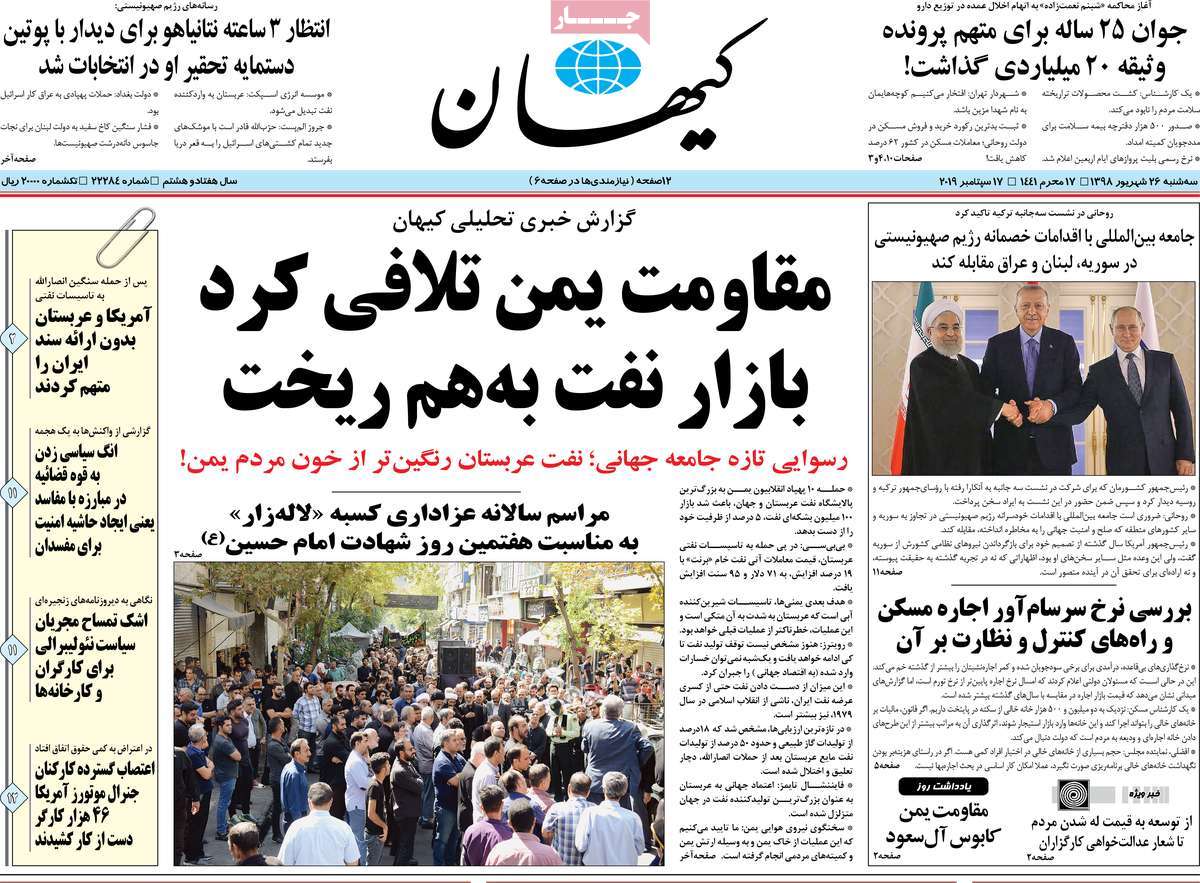
Kayhan:
1- Yemeni Resistance’s Retaliation Creates Chaos in Oil Market
2- New International Scandal: Saudi Oil More Important than Yemeni People’s Lives!

A Look at Iranian Newspaper Front Pages on September 17


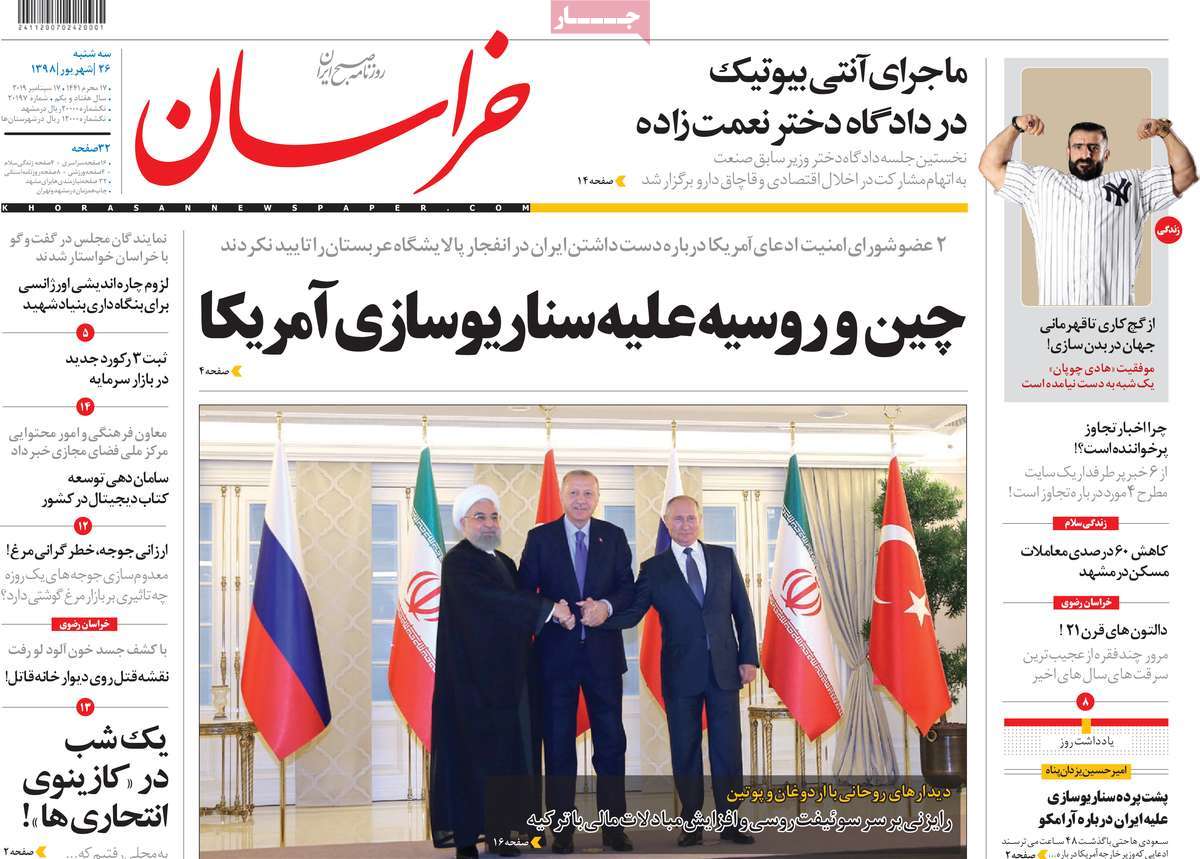
Khorasan:
1- China, Russia against US Fabrication of Scenarios

A Look at Iranian Newspaper Front Pages on September 17


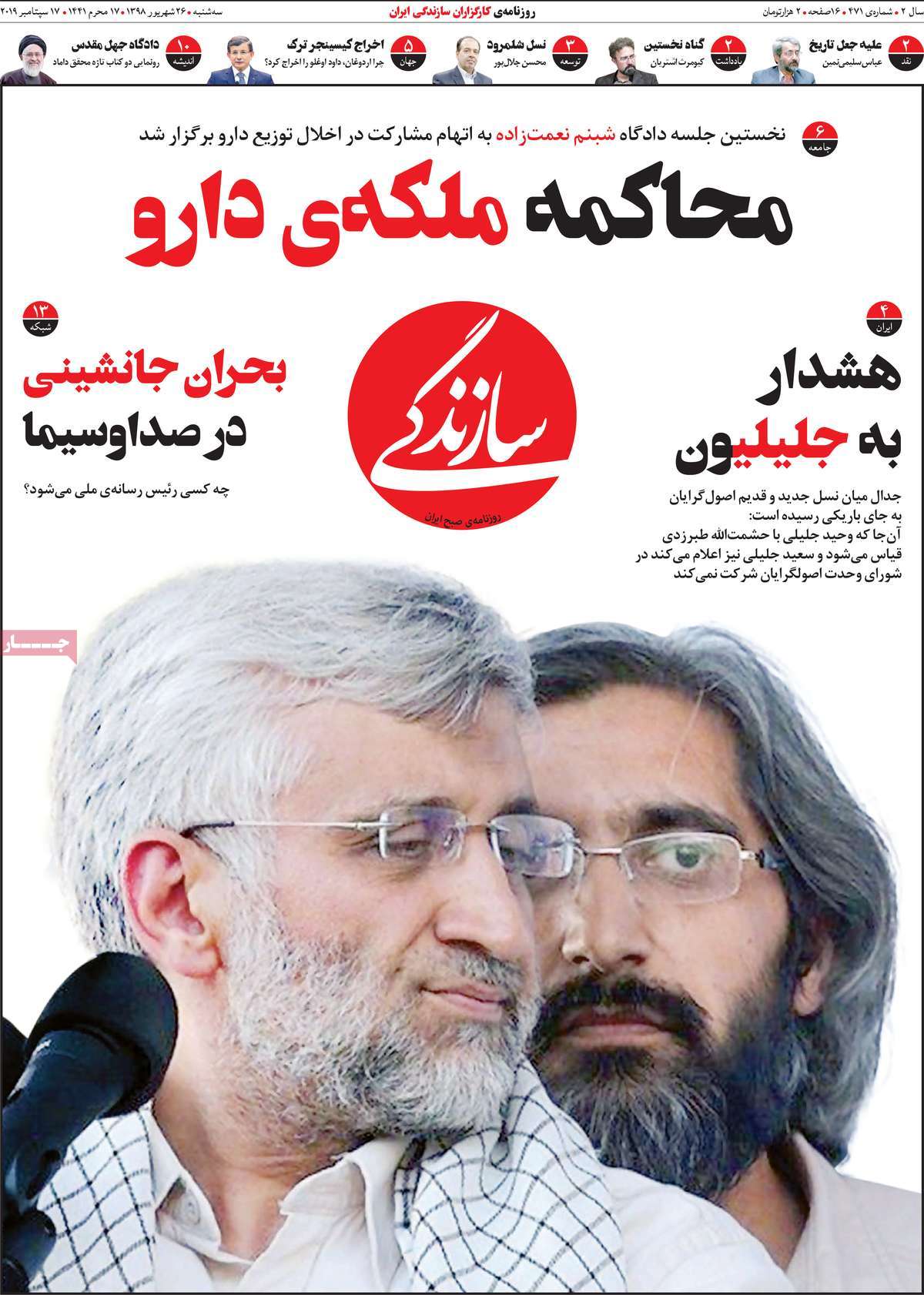
Sazandegi:
1- Queen of Medicine Appears in Court
* Former Trade Minister’s Daughter on Trial for Disrupting Medicine Distribution

A Look at Iranian Newspaper Front Pages on September 17


Shahrvand:
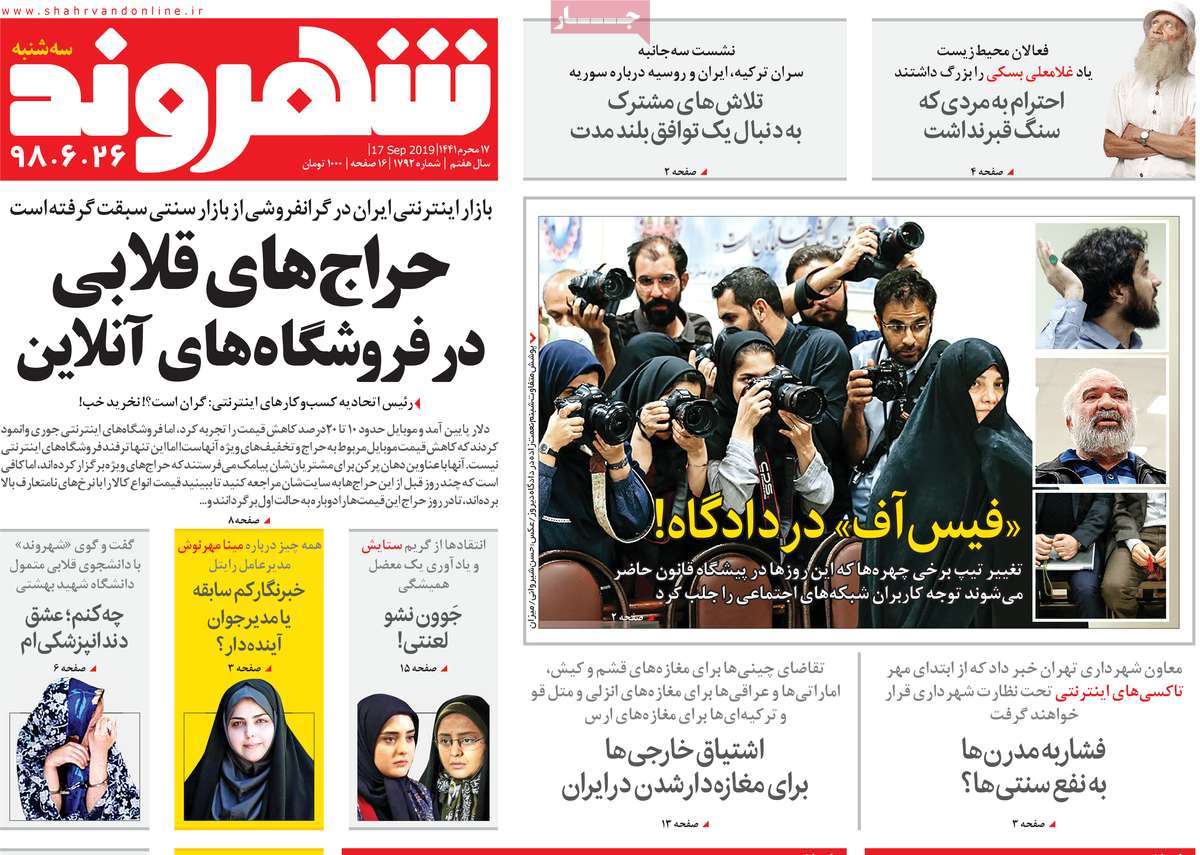
1- Foreigners Very Much Interested in Owning Shops in Iran
* Chinese in Qeshm and Kish, Emiratis and Iraqis in Anzali and Salmanshahr, Turkish in Aras

A Look at Iranian Newspaper Front Pages on September 17


Shargh:
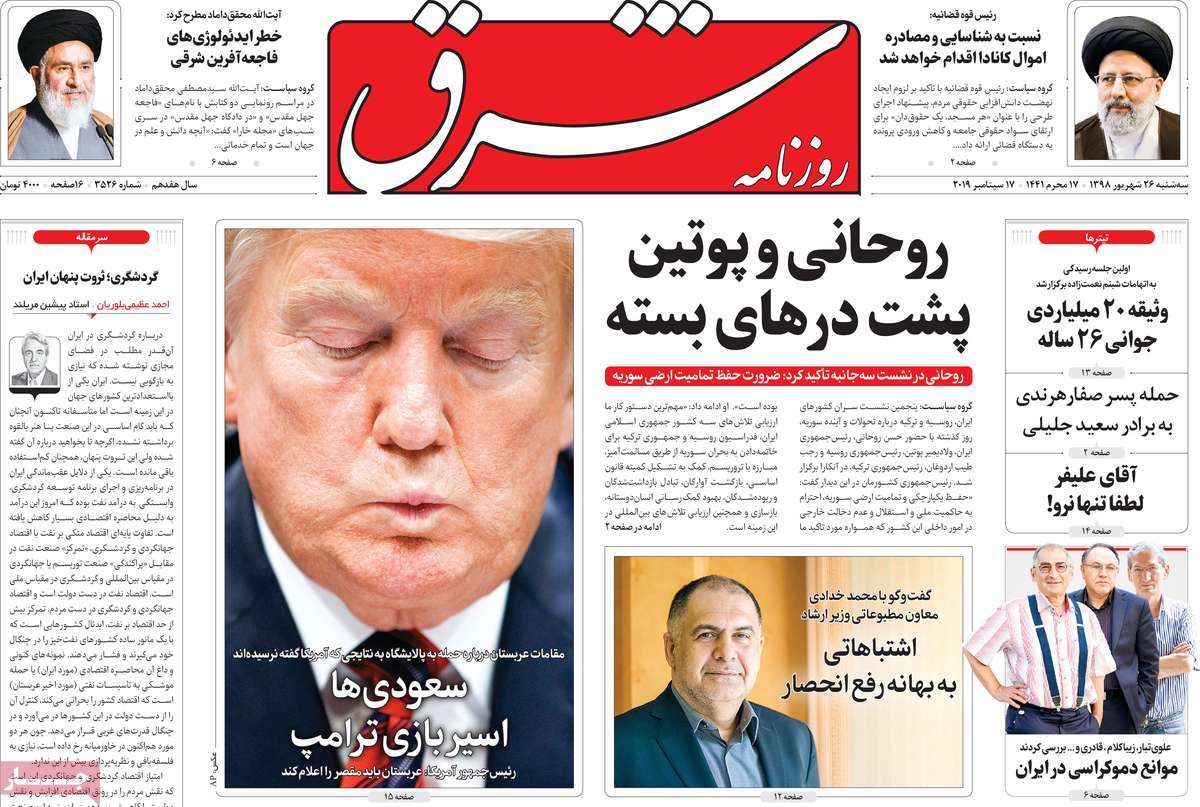
1- Saudis Being Played by Trump
* Saudi Officials Didn’t Reach Conclusions Americans Arrived at on Refinery Attacks
2- Rouhani and Putin Hold Talks behind Closed Doors

A Look at Iranian Newspaper Front Pages on September 17


Sobh-e Now:
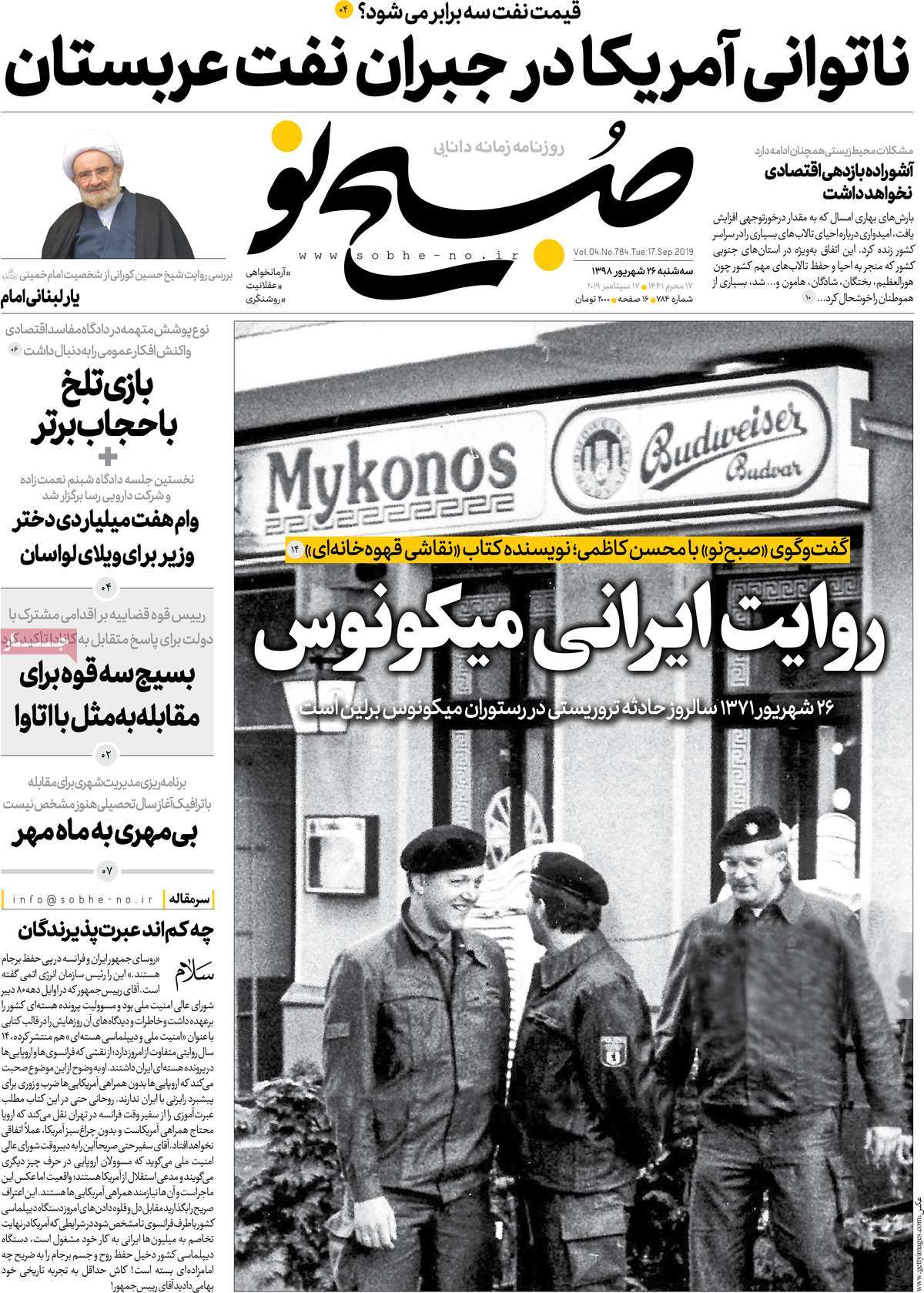
1- Iranian Account of Mykonos Incident
* Anniversary of Mykonos Restaurant Assassinations
* New Book Focuses on One of Most Controversial Cases of German Judiciary

A Look at Iranian Newspaper Front Pages on September 17

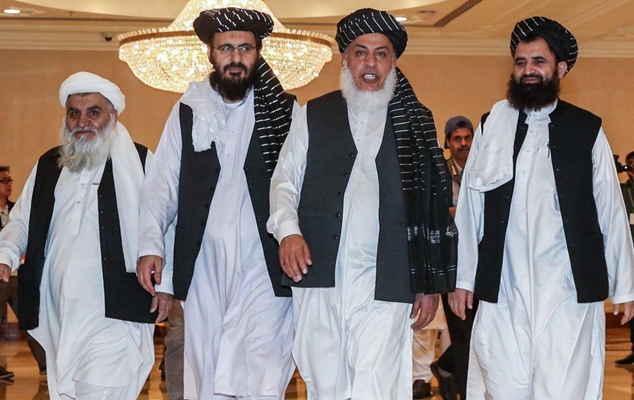
Iran Confirms Taliban Delegation’s Visit

In their visit to Iran, the Taliban political delegation held talks and exchanged views with relevant Iranian authorities on the latest developments of Afghanistan, Mousavi said on Tuesday.

Mousavi’s comments came after a report that members of Taliban’s Qatar-based political bureau have visited Iran following their trip to Moscow.

The delegation has reportedly conferred with a number of political and foreign ministry officials of Iran on the Afghan peace talks, the intra-Afghan negotiations, and the breakdown of US-Taliban negotiations.

A senior Taliban leader in Qatar had earlier said, “The purpose of these visits is to inform leaders of these countries about the peace talks and [US] President [Donald] Trump’s decision to call off the peace process at a time when both sides had resolved all outstanding issues and were about to sign a peace agreement.”

US President Donald Trump cancelled high-level talks with the group last week, citing a deadly bomb blast in Kabul that also left an American soldier dead.

“They thought that to kill people in order to put themselves in a little better negotiating position when they did that they killed 12 people … And you can’t do that can’t do that with me. So they’re dead as far as I’m concerned,” he said.

Russia Hosting ‘Beautiful Iran’ Photo Exhibition

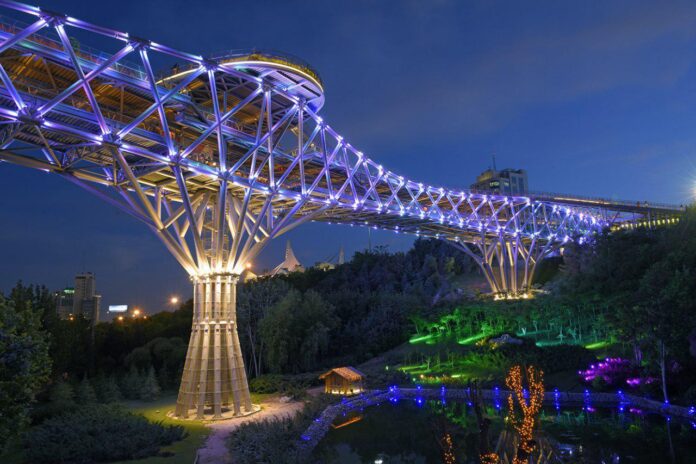
Photo of Tehran's Tabiat Bridge by Ebrahim Safi

The exhibition features about 40 works by contemporary Iranian artists such as Seyyed Ali Miremadi, Mohammad Reza Momeni, Hamid Hashemi, Ebrahim Saafi, etc.

Snow-capped peaks of northern Iran, night-time views of Tehran, and tombs of classical Persian poets have been displayed in these photographs.

The exhibition is being held with the support of the Iran’s Embassy in Russia. The Congress of Persian-speaking Ethnic Groups will also be held in collaboration with Nizhny Novgorod Regional Social Organisation.

On the sideline of this event, Persian language workshops are being held as well.

Iran is one of the most ancient countries in the world with rich history and traditional cultures.

What follows are Mehr News Agency’s photos of the exhibition, which will run through September 22:

Iran Demands Official Apology from Canada over Sale of Its Assets

The demand was made in a Tuesday statement, the full text of which follows.

More than three centuries on since the birth of the idea of a modern government and the acceptance of this principle in international law that governments possessing exclusive domestic eligibility and sovereignty are equal and that all world governments enjoy the right to sovereignty, the Canadian government’s move to try the Iranian government in its own courts under the pretext of breaching human rights and supporting terrorism, and the seizure and sale of the Iranian assets in that country, are, to all appearances, a mockery of the definitive principles of international law and governments’ right to sovereignty. Canada’s move adopted with reference to the “Justice for Victims of Terrorism Act” adopted in the country back in 2012 allows citizens of this country to call for the seizure and sale of Iran’s property in order to pay damages to so-called victims of terrorism. Canada’s move to confiscate and sell Iran’s property run counter to the basic principles of international law and principle of governments’ sovereignty. This action is in breach of the State Immunity Act, war on terrorism and human rights. They claim that countries’ sovereignty and independence are not referable to human rights, and that governments can ignore a country’s independence and sovereignty due to rights issues, and it is with the same mentality that the Justice for Victims of Terrorism Act was ratified in Canada. Canada, which has always tried to pressure the Islamic Republic of Iran in international circles under the pretext of violating human rights, has decided to sell Iranian assets at a time when its own hands are stained with blood for breaching the rights of native people of this land, and it should be accountable for its crimes. By comparing these contradictory behaviour patterns with regards to human rights by international institutions and Western countries such as Canada, whose behaviour is even devoid of the basic principles of international law and human rights, and given that these countries even consider the idea of human rights as pointless at the theoretical level and inside their own legal systems, one should acknowledge that by looking at the issue of human rights at both theoretical and practical levels, we can find conclusive evidence to prove the claim that the concept of human rights and war on terror is nothing more than a modern tool in the hands of hegemonic powers to advance their policies.

The Justice Ministry’s Human Rights and International Affairs Department condemns this move by the Canadian government, which is against human rights and international law, and demands immediate return of Iranian assets and an official apology from the Canadian government.

Doors of Dialogue with Regional States Always Open: Iran

Iran Vows Appropriate Response to US Interception of Mahan Air Flight

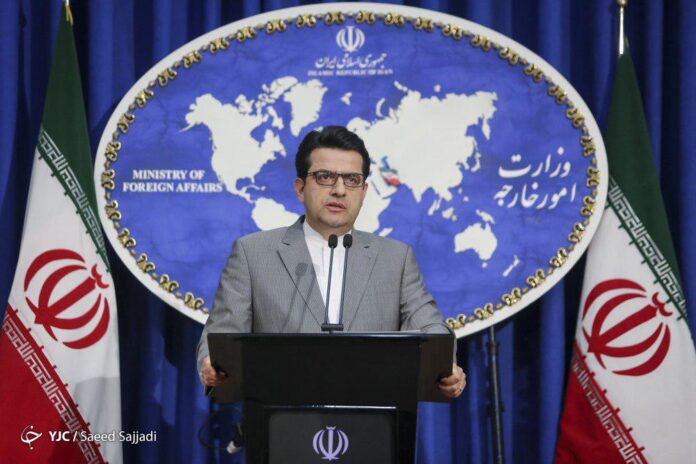
“Our proposal for dialogue with regional countries is still on the table in various forms – either in the form of a Dialogue Forum in the Persian Gulf or through the non-aggression treaty signed among regional countries individually or collectively, proposed by Foreign Minister Zarif,” Mousavi said.

“Despite the developments unfolding in the region, we still stress that the region belongs to the regional countries; the region’s security is dependent on regional states, and the source of insecurity is the presence of ultra-regional forces here,” he told a press briefing on Monday.

“Therefore, we believe Iran and regional countries deserve more than any other country and individual to defend the region, maintain the region’s peace, stability, and security.”

Mousavi said Iran has always, and under any circumstances, made its neighbours the priority, even though they sometimes suffer from misunderstandings under the influence of enemy’s psy-wars.

“However, the doors are open for dialogue between Iran and regional states which are our brothers and Muslim countries, even though they have disagreements with us. We always defend and welcome this stance,” he noted.