Saturday, December 27, 2025
Home Blog Page 3123

Geometric Art of Girih Revived in Iran after a Century

Girih; Geometric Art Revived in Iran after a Century

Girih art was prevalent in Iran in the 12th century, but considerably faded in the contemporary era. However, the art has been revived in the country again over the past decade.

Girih is one of the subdivisions of wood arts in the architecture domain. Works produce in Girih art are used both in decorations and architecture.

Girih is one of the ancient forms of wood art; where small pieces of wood are put next together to produce traditional and geometric shapes. The geometric art is among the delicate art forms which were all the rage from the early years of the Islamic era onwards. Some researchers believe the Girih art emerged during the Abbasid Caliphate and became popular during the 12th to 14th centuries in Egypt and Syria from where the art found its way to Iran.

Evidence shows that the Girih art in Iran dates back to the Seljuk and Safavid eras. Isfahan is the birthplace of this art. It is usually used in building holy shrines, tombs, minarets; also in lattice work used in the windows of houses, palaces and fences.

This geometric art was also used widely in designing wooden lattice frames of windows with coloured glass from the Safavid era onwards.

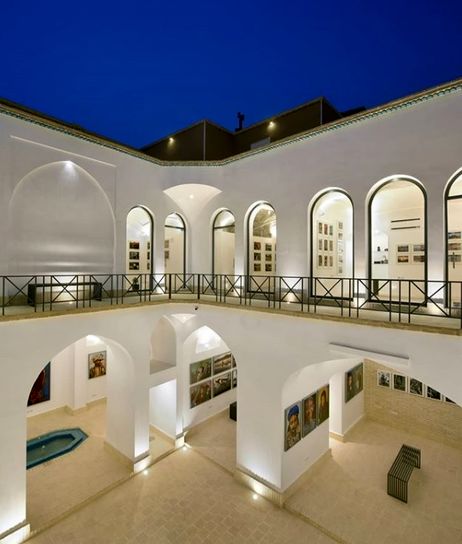
The following are images of a revived Girih workshop in Arak:

A Look at Iranian Newspaper Front Pages on August 31

A Look at Iranian Newspaper Front Pages on November 19

Abrar:

1- Zarif: If US Seeks Negotiation If Must First Buy Ticket

2- Japan PM: I’ll Meet Rouhani for De-Escalation

A Look at Iranian Newspaper Front Pages on August 31


Aftab-e Yazd:

1- Ahmadinejad’s Efforts to Be Noticed

* This Episode: Happy Birthday Michael Jackson

2- IRGC Construction Base to Construct Artificial Island in Kish

A Look at Iranian Newspaper Front Pages on August 31


Ebtekar:

1- Economic Problems Getting Over: Rouhani’s Deputy

2- Zarif Rules Out Possibility of Renegotiating JCPOA

A Look at Iranian Newspaper Front Pages on August 31


Etemad:

1- Axios Reveals Netanyahu Afraid of Zarif-Trump Meeting

A Look at Iranian Newspaper Front Pages on August 31


Ettela’at:

1- Iran, Malaysia Agree to Form High Council on Bilateral Ties

2- UAE’s Aerial Attack on Saudi-Backed Forces in Yemen Leaves 40 Killed, 70 Injured

A Look at Iranian Newspaper Front Pages on August 31


Javan:

1- Moving Over JCPOA

* Mogherini’s Support for Macron’s Offer Confirms Death of JCPOA

2- Zarif: Europe Lacks Political Resolve to Implement JCPOA

A Look at Iranian Newspaper Front Pages on August 31


Jomhouri Eslami:

1- Coup against Democracy in UK: Queen Shuts Down Parliament

2- Pakistanis Hold Rallies in Support for Kashmiris

3- Japan PM Calls for Meeting with Rouhani to Ease Mideast Tensions

A Look at Iranian Newspaper Front Pages on August 31


Kayhan:

1- Controversy of Johnson and Queen; Rumours of Ending Royal System in UK

2- Zarif: We’ll Remain Committed to JCPOA as Much as Other Parties Do

3- Good News Imminent on Arak Reactor in Two, Three Months: Official

A Look at Iranian Newspaper Front Pages on August 31


Khorasan:

1- Secrets Cults, Societies Making Historical Inroads into White House

* From Radical Evangelists to Skull and Bones Society

2- Opening of Trade with Eurasia, India

A Look at Iranian Newspaper Front Pages on August 31


Sazandegi:

1- Coup against Parliament

* 400 Years after Last Shutdown of Parliament, This Time Johnson Does It

* Rise of Populism in a Country that Founded Constitutional Monarchy in World

A Look at Iranian Newspaper Front Pages on August 31


Shargh:

1- $15 Billion to Be Injected into INSTEX to Stop Iran from Implementing 3rd Phase

A Look at Iranian Newspaper Front Pages on August 31

Iran Says US Shows ‘Some Flexibility’ on Easing Oil Bans

Mark Dubowitz’s Delight over Coronavirus in Iran ‘Shameful’: Araqchi

According to Araqchi, the issue was raised in a recent meeting between French President Emmanuel Macron and US President Donald Trump in the French city of Biarritz.

“Macron met with Trump during the G7 meeting, where the US side showed some flexibility in the licensing of Iranian oil sales,” Araqchi said on Saturday.

“This is a breach in the US maximum pressure policy and a success for Iran’s policy of maximum resistance,” he noted.

Iran is currently reducing its commitments under the 2015 nuclear deal with world powers, which the US withdrew from last year.

The country has implemented the first and second phases of reducing its commitments, and is preparing to begin the third phase in coming days, unless the European Union fulfils its side of the bargain, and Iran could reap the benefits of the multilateral agreement.

Otherwise, Iran has warned that it may push forward with 20% uranium enrichment and resume previous activities at the Arak heavy water nuclear reactor in the third nuclear commitment containment.

As a first step, Iran increased its enriched uranium stockpile to beyond the 300 kilograms set by the JCPOA. In the second step, Tehran began enriching uranium to purity rates beyond the JCPOA-limit of 3.76 percent.

The Europeans have already missed two 60-day deadline set by Tehran, prompting Iran to go for the third phase of cutting its commitments on September 6, which will mark the start of a third such deadline for them.

Consequences of Israeli Attacks on Iran-Backed Forces in Iraq

Mourners hold a banner with Arabic that reads, "Masses of the Popular Mobilization Forces chant death to America, death to Israel" during the funeral procession of Abu Ali al-Dabi, a fighter of the Popular Mobilization Forces, who was killed in a drone attack, in Baghdad, Iraq, August 26, 2019. / Photo by AP

It was January 19 when a rather strong blast rocked one of the bases of the 52nd Brigade of the Popular Mobilization Forces (PMF). That was the beginning of serial attacks on PMF positions. Afterwards, the former Ashraf camp and the Sayyid of Martyrs Battalions, or Kata’ib Sayyid al-Shuhada (KSS), in Baghdad’s Dora were targeted. And recently, an explosion hit an arms depot belonging to one of the groups affiliated with the PMF. The depot lies near Balad base 64 kilometres from Baghdad.

Then, Israeli Prime Minister Benjamin Netanyahu implicitly claimed responsibility for the attacks on PMF bases. He also stressed the need for such attacks to continue. Netanyahu’s comments made Iraqi officials, especially PMF commanders, break the silence and release more information on the attacks.

Deputy PMF Commander Abu Mahdi al-Muhandis in a statement blamed the United States for the recent blasts at the PMF’s ammunition depots. He stressed that Washington seeks to violate Iraq’s sovereignty and attack PMF forces. He said he has precise and confirmed intelligence suggesting the Americans have brought four unmanned aerial vehicles into Iraq this year via the Azerbaijan Republic in order to work on the trend of conducting flights against Iraqi military bases. He also referred to other information, including maps and audio files, saying US drones have recently been gathering information on PMF bases rather than chasing ISIS terrorists, and have collected data on the PMF’s divisions as well as arms and ammunition depots.

Iraqi National Security Advisor and PMF chief Falih al-Fayyadh announced in a statement the following day that al-Muhandis’ comments did not reflect the PMF’s official stance, but he did not reject those comments, either. It seems the PMF’s official stance will be announced by Iraqi Prime Minister Adil Abdul Mahdi’s office after his probe is complete. It goes without saying that a delay in the announcement of the details of the attacks and making plans to adopt deterrent moves will only result in an increase in threats against the PMF. The Iraqi Army and people’s security is closely intertwined with that of their popular forces, and the continuation of attacks on PMF bases will be a serious threat against different areas across Iraq. Conducting assaults against the positions of popular mobilization forces, who are now legally part of Iraq’s Armed Forces, amounts to targeting Iraq’s territorial integrity, sovereignty and security.

One of the reasons that prompt Iraqi authorities to drag their feet on unveiling the hidden dimensions of raids on PMF bases is Baghdad’s weakness in dealing with parties involved in the attacks. This precaution and patience has its root in Iraq’s weakness in political and military domains.

On the one hand, this political weakness can be attributed to the enforcement, to the letter, of orders and the power of decisions by the prime minister. Despite the recent order by Abdul Mahdi to bring the country’s airspace under full control and cancel all permits of flight in the Iraqi skies, still we saw another attack against PMF positions, a similar attack from a single command centre inside Iraq.

On the other hand, a lack of state-of-the-art equipment and air defence systems have weakened the Iraqi military, so much so that it cannot monitor the violation of the country’s airspace by Israeli drones and US military movements on Iraqi soil. Under such circumstances, it is clear that the US, with its 15 bases, is well able to have control over Iraq’s day-to-day affairs and achieve its objectives one after the other.

If we regard a weak air defence system with a limited ability to spot and hit targets as one of the major military weaknesses of Iraq, we should not forget that the challenges Baghdad is facing with regards to purchasing these systems have added to the problem. Iraq is unable to buy Russian-made air defence systems because Moscow itself along with the United States as the Israeli regime’s allies is not willing to sell the systems to Baghdad.

Even if the Abdul Mahdi government wants to purchase systems such as S-300 and S-400 from another country, it will face pressure and threats by Washington. The US reaction may even be stronger than the sanctions Washington slapped on its NATO ally Turkey over the purchase of the air defence systems. Iraq is also unlikely to import air defence systems via Iran due to Tehran’s strategic considerations, the high risk of transfer, the threat of Washington’s confrontations and even opposition from inside Iraq.

In any case, PMF forces should reciprocate and show its deterrent power in order to stop threats against its bases. Now that the US and the Israeli regime’s joint strategy is to deal a blow to Iran’s proxy troops, more attacks should be expected in Lebanon, Syria and Yemen. Under such circumstances, only the “threat against threat” strategy will work.

So, the PMF’ future moves may be planned based on the decisions made within the organization independently from the Iraqi government’s official reactions. The reason is that the Iraqi government does not favour confrontation with American troops and fears the consequences of threatening the interests of the United States in Iraq. However, the PMF’s calculations are different and it is expected to go into action independently.

Due to distance and the fact that PMF forces lack the necessary resources to launch similar air raids against the Israeli regime, they will focus on ground operations. If they adopt such an approach, they will be able to use the territories of the resistance front, especially the Syrian soil, to deal a direct blow. Israeli embassies in Iraq’s neighbouring countries can also be struck as indirect Israeli targets.

As for Iran’s backing or lack of backing for the PMF’s reciprocal measures, it should be noted that operations against PMF forces has been to harm Tehran’s interests and trigger objections over Iraq’s cooperation with Iran. It goes without saying that Iran will move to counter such conspiracies and call for support for the PMF. Nevertheless, one should wait and see how and at what level this support will be. Head of the Iraqi State of Law Alliance Nuri Maleki warned Israel that if Tel Aviv’s attacks continue, Iraq will turn into a battlefield where more than one country, including Iran, will be involved.

This warning can be analyzed in two ways. On the one hand, the remarks can be evaluated as being aimed at preparing the Iraqi public opinion for possible cooperation between Tehran and Baghdad on Iraqi soil. On the other hand, since these attacks were the first Israeli threats against Iraq following Operation Opera in 1981where Iraq’s nuclear installations were targeted in a bid to threaten Iran’s interests, the remark by Maleki could be seen as a hint to bring responsibility upon Iran toward the situation in Iraq and suggesting that Iran is expected to get involved in the current crisis. Of course, a more logical decision would be to take the necessary reciprocal actions without Iran getting directly involved as Iran’s engagement may lead to a standoff between the government and part of Iraqi people.

Iran Marks National Day of Asiatic Cheetah

As part of its efforts to save the highly-endangered species, the Asiatic Cheetah Research Centre in Iran is currently hosting two female cheetahs named “Delbar” and “Iran”, and a male one named “Koushki”.

Since 2014, experts are endeavouring to create a professional research site there to improve empirical knowledge about cheetahs, their behaviours in particular.

Researchers also put emphasis on educational values, genetic conservation and disease diagnostic of the remaining Asiatic cheetahs kept in captivity all around the world. Iran is known as the last habitat of this species.

What follows are IRNA’s photos of the beautiful cheetahs at the Iranian research centre:

Iran Shows Satellite to Reporters in Rebuttal of US Claim

Iranian Minister of Information and Communications Technology Mohammad Javad Azari Jahromi took the reporters on Saturday morning to a space research center, where the domestically-made satellite was showcased undamaged.

Earlier in the day, Jahromi posted a picture of himself along with the telecommunication satellite, saying, “Me & Nahid 1 right now. Good Morning Donald Trump!”

It came one day after Trump posted on Twitter a black-and-white photo of what he claimed to be a “catastrophic accident” at the launchpad in a space center in Iran’s northern Semnan Province, saying it involved Safir (ambassador) satellite-carrier rocket.

“The United States of America was not involved in the catastrophic accident during final launch preparations for the Safir SLV Launch at Semnan Launch Site One in Iran. I wish Iran best wishes and good luck in determining what happened at Site One,” Trump said.

Some media reports said that the picture showed a third failed attempt by Tehran to lift a satellite into space.

Azari Jahromi, however, took to Twitter to reject the reports, saying, “Frankly, Nahid 1 is doing well, is in the laboratory, and reporters can come visit.”

Iran is expected to launch three satellites into orbit by the end of the year despite US warnings against the country’s aerospace program.

The satellites include Nahid 1, which has Iran’s first foldable solar panels, as well as Zafar and Pars 1 sensing satellites.

Iran launched its first locally-built satellite, Omid (Hope), in 2009. The country also sent its first bio-capsule containing living creatures into space in February 2010, using Kavoshgar (Explorer)-3 carrier.

In February 2015, Iran placed its domestically-made Fajr (Dawn) satellite into orbit, which is capable of taking and transmitting high-quality photos to stations on Earth.

In January 2019, the domestically-built Payam (Message) satellite was launched into space with an aim to collect environmental information; however, technical problems that occurred during the final stage of the launch prevented the spacecraft from reaching orbit.

Philanthropist Using Instagram to Help Children’s Dreams Come True

In an interview with ISNA, she has spoken about her life and explained how she set foot on this path. Excerpts from her interview follow.

“I always liked to help people and I actually did it; but at a certain point, I decided to pay more attention to children’s needs. Suppose I really wanted a doll when I was a child, but was unable to get it at that time. Now, I have enough money to buy a thousand dolls, but I can never ever have the same feeling that I had during my childhood again. So, I decided to help make children’s dreams come true; all children, ill and healthy alike. I began with children living in remote areas. Many of them don’t know what a dream is, and I needed to tell them the meaning of this word.”

Philanthropist Using Instagram to Help Children’s Dreams Come True“I opened the ‘Dreams’ page on Instagram and identified children with the help of reliable people. I would post videos of those children on the page, and followers of the page would voluntarily help make children’s dreams come true. The good point is that many of the volunteers do not settle for fulfilling just one dream; rather, they go on to, for example, pay children’s education costs. This way, children’s lives get improved.”

“I run the Dreams page alone. Of course, I need my husband’s financial support, too. In fact, the idea is mine, and children from different towns and cities help select the children. So far, I have helped fulfill the dreams of 400 children. Of course, we are constructing several schools in deprived regions, too. We are also equipping several sports complexes. Things are going well and the schools will be ready in a month’s time and children can use them in the new academic year.”

“In the videos I post on Instagram, I cover children’s faces in order to protect their dignity. However, I sometimes see their faces when editing the films both before and after their dreams have come true, and it is the most beautiful feeling for me.

She says she had been working as a teacher for twenty years before she was diagnosed with cancer at the age of 40. She says she found a chance to continue her life after undergoing a surgery. From then on, she decided to open that Instagram page to help give people a new lease of life.

US Sanctions Iranian Tanker Adrian Darya 1, Its Captain

“The US Department of the Treasury’s Office of Foreign Assets Control (OFAC) took action today against Adrian Darya 1, an oil tanker transporting 2.1 million barrels of Iranian crude oil ultimately benefiting Iran’s Islamic Revolutionary Guard Corps-Qods Force (IRGC-QF),” the Department said in a statement on Friday.

“Anyone providing support to the Adrian Darya 1 risks being sanctioned,” said Treasury Under Secretary Sigal Mandelker.

The US earlier threatened those potentially assisting the return of the tanker that had been released by Gibraltar after more than a month of detention there by Britain.

A State Department official was cited by Reuters as saying on August 19 that aiding the vessel had “potential criminal consequences.”

On July 4, Britain’s naval forces unlawfully seized the vessel, then known as Grace 1, and its cargo in the Strait of Gibraltar under the pretext that it had been suspected of carrying crude to Syria in violation of the European Union’s unilateral sanctions against the Arab country.

Tehran, however, rejected London’s claim about the tanker’s destination and slammed the seizure as “piracy.”

Gibraltar’s government later announced it was releasing the supertanker despite pressure from the US for the vessel’s continued detainment.

Soon after the announcement, the US Department of Justice unveiled a warrant for the seizure of the ship. Gibraltar, however, knocked back the request.

According to Spain’s Foreign Ministry, the UK had seized the vessel at the request of the US, which has been trying to trouble Iran’s international oil vessels as part of its campaign of economic pressure against the Islamic Republic.

The Gibraltar government had also said the US applied to seize the oil tanker after a report by British media that the vessel’s release was imminent.

Iran, Indonesia Hold Joint Consular Commission Meeting

The meeting was attended by an Iranian delegation led by the Director-General of the Consular Department of the Iranian Ministry of Foreign Affairs and an Indonesian delegation led by the Deputy Directorate General of Protocol and Consular Affairs at the Ministry of Foreign Affairs of Indonesia.

In the meeting, the two delegations discussed the common consular issues, including the visa affairs, the issues relating to university students, the judicial affairs, as well as the issues surrounding prisoners of the two countries, the migrants and the refugees.

The two sides also welcomed the ratification of two bills on mutual legal assistance in criminal matters and the extradition of criminals, and expressed hope that Iran and Indonesia would soon sign a cooperation agreement in the fight against drug trafficking.

In the meeting, the Iranian delegation called for efforts to extradite the Iranian convicts from Indonesia and improve the conditions of Iranian inmates in that country.

The Costs of European Integration to White House

Europe-america

Macron has warned Western nations against the “strategic mistake” of alienating Russia – but in doing so, he seeks a bigger role for himself in international politics.

“We are living the end of Western hegemony,” Macron told diplomats, after hosting the G7 meeting in the city of Biarritz on France’s Atlantic coast over the weekend. He named the rise of Beijing and Moscow as signs of a shift on the world scene.

The reality is that the European Union and the Eurozone, on the one hand, acknowledge the end of Western hegemony, and in particular the United States, and on the other hand, continue to be dominated by Washington. The EU’s inactivity towards Europe has led to anger and frustration among citizens.

The EU and the Eurozone have a very uncertain future. In other words, America and Europe can no longer speak of international domination.

In such a situation, people like the French President and German Chancellor are worried about the future of the Eurozone and the European Union. This concern increases over time. The occurrence of a variety of security, political, economic and social crises has created many challenges in the European Union and the Eurozone.

The emergence of these challenges has led to a sharp decline in the popularity of traditional parties in Europe. In such a way, nationalist parties have been able to increase their popularity with the public. Which side are the European Union and the Eurozone really heading to? Will the future of Europe finally be clear these are the questions that concern the mentally ill, such as Merkel and Macron?

Ultimately, the more Europe delays in moving away from the United States, the more it will pay. It is as if European officials have not yet understood it. There is a long gap between the recent remarks of the French President and the EU’s practical approach.