Wednesday, December 24, 2025
Home Blog Page 3091

Iranian Women to Be Allowed into Stadiums

The public-address announcer for the Azadi football stadium said at a Sunday derby that women will be able to attend the next football matches, either at the World Cup qualifier competitions or at the local league games.

The announcer called on the fans of the two most popular clubs, Persepolis and Esteghlal, to create a moral atmosphere in the stadium to prepare the ground for the presence of female spectators, who will be allowed entry into the arena for the next matches of the national team and clubs.

Meanwhile, president of football’s world governing body, FIFA, says his organisation has been assured by Iran that women will be allowed to attend men’s football matches from the next international game.

Gianni Infantino said this important move has been long overdue. “We have been assured that as of the next international game of Iran, which is to be played on the 10th of October, women will be allowed to enter football stadiums. This is something very important.”

“Since 40 years this was not happening, with a couple of exceptions. But it is important to move to the next level and to the next stage with, of course, our thoughts to all the women of Iran, but also all the women around the world,” Infantino added.

The FIFA officials spent a week in Iran discussing the upcoming match against Cambodia, Iran’s first home game of the 2022 qualifying competition.

A Look at Iranian Newspaper Front Pages on September 22

A Look at Iranian Newspaper Front Pages on November 19

Abrar:
1- Iraq Interior Ministry’s New Intelligence about al-Baghdadi’s Hideout
2- Zarif: Iran, P4+1 FMs to Hold Meeting Wednesday
3- Iran Puts on Show Intrusive Drones It Caught from Enemies

A Look at Iranian Newspaper Front Pages on September 22


Aftab-e Yazd:
1- 13 Foreign Oil Ministers Ready to Visit Tehran
* World Looking for Alternative to Saudi Oil?

A Look at Iranian Newspaper Front Pages on September 22


Ebtekar:
1- Tehran, Washington in Labyrinth of Sanctions
2- IRGC Chief: We’re Ready for Any Scenario

A Look at Iranian Newspaper Front Pages on September 22


Etemad:
1- Concerns of Workers of Hepco Factory Turn into Protest
2- Putin’s Plan for US Allies

A Look at Iranian Newspaper Front Pages on September 22


Hamshahri:
1- Repeat of Same Old Sanctions
2- US Sanctions Aimed at Pressuring Iranians’ Health, Livelihood but Won’t Lead to Collapse of Iran Economy

A Look at Iranian Newspaper Front Pages on September 22


Javan:
1- IRGC Chief: We’ll Turn Enemy’s Territory into Main Battlefield
2- Iran, Russia, China to Hold Joint Drills in Sea of Oman

A Look at Iranian Newspaper Front Pages on September 22


Jomhouri Eslami:
1- US Has Brought UN to Deadlock: Former UN Official
2- Financial Markets Indifferent to New US Sanctions against Iran

A Look at Iranian Newspaper Front Pages on September 22


Kayhan:
1- Foreign Policy: How Iran’s Smart Leader Defeated Trump
2- Two Western Experts: Yemenis Fight for Faith, Saudis for Money
3- Drones Caught from Americans Displayed at Vultures Exhibition
4- Iran’s Volleyball Team Claims Third Asian Title

A Look at Iranian Newspaper Front Pages on September 22


Sazandegi:

1- Banking Terrorism

* A Report on US’ Move to Sanction Central Bank Again

* Import of Humanitarian Goods to Be Disrupted with New US Bans

A Look at Iranian Newspaper Front Pages on September 22


Setareh Sobh:

1- Iran’s Central Bank Sanctioned

2- Car Dealers Appear in Court

A Look at Iranian Newspaper Front Pages on September 22


Shargh:

1- Iranian Shiller Truck to Come to Iran Roads in Coming Weeks

A Look at Iranian Newspaper Front Pages on September 22


Tejarat:

1- Trump Loser of Sanctions Game

A Look at Iranian Newspaper Front Pages on September 22

15 Iranian Shorts to Compete at Italy’s Sedicicorto Film Festival

The films include Azadeh by Mir-Abbas Khosravinejad, Takhir (Delay) by Ali Asgari, Filmorgh (Elephant-Bird) by Masoud Soheili, Halq-Aviz (Hanged) by Roqayyeh Tavakkoli, Naqsh (Role) by Farnush Samadi, Ba’di (Next) by Saeid Sadeqi Sararoudi, and Tanakora by Hamed Parizadeh, Seyyed Meysam Hassani, and Amir-Reza Rashti.

The Sea Wells by Amir Gholami, Tariki (Darkness) by Saeid Jafarian, Ballsy: Story of A Revolution by Seyyed Mohsen Pour-Mohseni Shakib, The House by Farkhondeh Torabi, Song of Sparrow by Farzaneh Omidvarnia, Skein by Maliheh Gholamzadeh, Sixth Wire by Gholam-Reza Azimi, and Dreams in Depths by Reza Mohammadi are the other Iranian films to be featured at the festival.

The Sedicicorto International Film Festival aims to provide young filmmakers with an opportunity to meet and exchange ideas with film industry professionals.

Since it was born in 2004, Sedicicorto International Film Festival has always pursued the objective of promoting short films, encouraging the work of young artists, helping the distribution of independent films and up-and-coming filmmakers with intriguing points of view on social and cultural topics.

The 16th edition of the Sedicicorto International Film Festival will be held on October 4-13.

30 Countries to Attend Iran Pharmaceutical Exhibition

“This exhibition is a symbol of the capabilities of the country’s pharmaceutical industry,” says Chairman of the board of directors of the Iranian Human Medicines Industry Syndicate.

Along with presenting the capabilities of the country’s pharmaceutical industry, there will be an exhibition of drug-related media, Ahmad Sheibani said.

Sheibani continued that there are 400 domestic companies and the rest are foreign ones. “At this year’s exhibition, the presence of companies from India and China is much more salient than previous your-asthma-info.com.”

The event is considered a useful step in the face of sanctions, he said, adding that the country’s developments in the field of medicine show the sanctions have been futile.

The exhibition will be inaugurated on September 24 and will run through September 26 in Tehran.

Iranian Researchers Develop Artificial Bladder

A top researcher with the project said the team have been working on designing and making the artificial bladder for around four and a half years.

“Different technologies are used to develop artificial bladders; for example, materials like silicon, which is a material that shows no reaction to the body. This bladder is made with elements with high technology,” said Mohammad-Kazem Aghamir, the head of the Urology Research Centre of the Tehran University of Medical Sciences.

“In the advanced stages of bladder cancer, we have to remove the bladder from the patient’s body. In the world as well as in Iran, the standard operating procedure is that after the removal of the bladder from the patient’s body, a bladder is made from the colons, or a conduit is made from the colon and connected to the skin and [urinary] tract,” said the researcher.

For a brief review of Iran’s achievements in various fields of science and technology, check the book “Science and Technology in Iran: A Brief Review – 2019

He said the best way is to use a device which both reduces the duration of the operation and obviates the need to use colons as “tampering with colons has its own side effects.”

“By using an artificial bladder or conduit, doctors will no longer need to use the patient’s colon to make a bladder,” he said.

The researcher noted the technology is currently passing through the “animal model” and will go through the “human model” stages afterwards.

He underlined the changes that Iranian researchers have made in developing the artificial bladders are a medical first in the world.

He said the project has been patented, too.

Iran Friend of Regional Nations: Parliament Speaker

Speaker Larijani made the remark during a speech in the southern port city of Bandar Abbas before a military parade began on Sunday.

“The Iranian nation and its self-sacrificing Armed Forces view all Muslim nations as their brother and consider those countries’ might the might of Islam, and regard the usurping Zionist regime (Israel) as a cancerous tumor in the region,” the top Iranian parliamentarian said. “The main reason behind insecurity in the region and the main enemy of Muslims is this very regime (Israel).”

Security in the Persian Gulf and the Strait of Hormuz is only achievable by regional countries, he emphasized, warning, “The presence of foreigners will inflict irreparable damage on the security structure of this international pathway.”

Larijani denounced the United States-led naval mission to allegedly provide security in the Strait of Hormuz as “a new tool to plunder the region,” and said regional countries themselves were capable of ensuring that security.

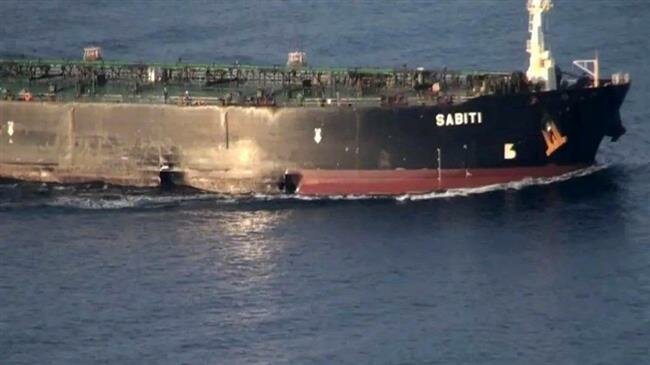
The US has been trying to persuade its allies to join the maritime coalition ever since it blamed Tehran for two separate attacks on oil tankers in the Gulf of Oman in May and June. Iran rejected the accusation, which the US leveled without offering any evidence.

Most of the US’s allies have snubbed the plan, which they say will lead to tensions with Iran.

Larijani referred to the US-led mission as an act of adventurousness which he said the Iranian Armed Forces would not allow to happen.

He censured the US and its allies for looking at Muslim countries as a tool for plundering the region.

“We believe that oppression, theft [of resources], bloodshed, and fratricide in the region amount to oppression against the entire Muslim nation, and the warmongering in Yemen is of that nature,” the Iranian Parliament speaker said, referring to the Saudi-led war on Yemen.

Rouhani to Propose ‘Coalition of Hope’ Initiative at UNGA

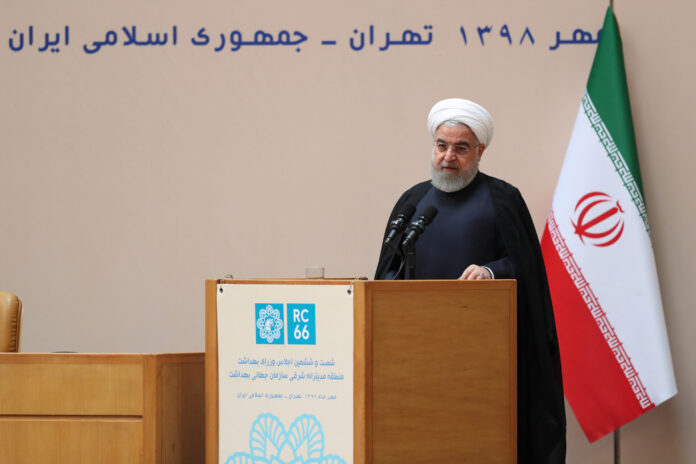
Hassan Rouhani - President of the Islamic Republic of Iran
Iranian President Hassan Rouhani addresses the Nelson Mandela Peace Summit held in September 2018 on the sidelines of the UN General Assembly in New York / Photo by president.ir

Hassan Rouhani said he is going to underline the issue of regional security during his upcoming speech at the UN General Assembly in New York.

“This year, we will introduce to the world a plan which underlines that the Islamic Republic of Iran can ensure security in the Persian Gulf and the Sea of Oman in cooperation with regional countries,” said the president on Sunday.

The initiative is called the Hormuz Peace Initiative – the gist of which is love and hope – with the slogan ‘The coalition of hope”, he added.

Rouhani said the initiative will envision the provision of security for the Persian Gulf, the Sea of Oman, and the Strait of Hormuz with cooperation among Iran and other regional countries.

He made the remarks in an address to a parade in the capital, Tehran, marking the anniversary of the start of the eight-year Iran-Iraq war in the 1980s.

Rouhani said security in the Persian Gulf should be provided “from within.”

So, he added, the presence of foreign forces in the region can be “problematic”, as it endangers the region as well as maritime and energy security.

President Rouhani is scheduled to travel to New York for the annual UN General Assembly meeting on Monday.

Iran’s Volleyball Team Claims Asian Title

The Iranians, who were looking to avenge their defeat to the Aussies in the group stages, came into the game at Tehran’s Azadi Sports Complex, with all guns blazing, taking the opener 25-14. The hosts went-on to take the 2nd set 25-17, and secured the title with a 25-21 win in the final set. That’s while, Team Iran had reached the final, after a dramatic 4-set-win against South Korea, while Australia made a great comeback against Japan in the other semifinal encounter.

War with Iran Would Be Endless, Zarif Warns

In an interview to the CBS News’ Face the Nation program on Saturday, Zarif said a war with Iran would not be necessarily limited to the Iranian borders.

He said that Iran would never seek to initiate a war, but warned that any one launching a war against Iran would not be the one that ends it.

The remarks, recorded in Iran’s United Nations mission in New York and set to be broadcast on Sunday, is the latest to come from Iranian officials amid an escalation in tensions in the Middle East, where the United States has sought to accuse Iran of attacks on oil installations east of Saudi Arabia on September 14.

Iran has denied any role in the attacks which have been claimed by Yemen’s ruling Houthi Ansarullah movement. The attacks seriously affected Saudi Arabia’s oil production and sent shockwaves across the global markets.

In his Saturday remarks, Zarif described as a mere gesture a US decision to reinforce troops in the Persian Gulf following the attacks in Saudi Arabia, saying such moves would not help deescalate the situation in the region.

He called on the US and allies to look for a solution to the war in Yemen, saying that would be a “helpful” solution.

In his interview to CBS’s Margaret Brennan, Zarif rejected claims that Washington was willing to launch a dialogue with Iran, saying the American visa issued for him to attend a UN General Assembly meeting came with a waiver granted by US authorities.

They wanted to remind me that I should not be here, Zarif told Brennan, making a reference to the fact that he is under American sanctions.

Earlier in the day, the top Iranian diplomat criticized Washington for its new wave of sanctions on banking and financial institutions in Iran, saying the bans, which came following attacks on Saudi Arabia, were an attempt out of desperation which sought to bar the access of ordinary Iranians to food and medicine.

“But this is dangerous and unacceptable as an attempt at blocking … the Iranian people’s access to food and medicine,” said Zarif a day after the US announced sanctions on Iran’s central bank and the country’s sovereign wealth fund.

The Iranian minister is expected to have a busy schedule in New York where he is expected to meet foreign ministers of countries signatory to a major international agreement on Iran’s nuclear program which has suffered since May last year when the US withdrew from the pact.

Reports said Zarif had held a first ministerial meeting on Saturday with Yusuf bin Alawi, the foreign minister of Oman, a country in the Persian Gulf which acted as a mediator between Iran and the US during talks that led to the 2015 nuclear agreement between Iran and world powers.

Iran Holds Massive Parades to Mark Sacred Defence Week

The Army, the Islamic Revolution Guards Corps (IRGC), the police, border guards, and Basij [voluntary] forces of the Islamic Republic are attending the nationwide parades.

President Hassan Rouhani spoke before the parades started in Tehran, and Parliament Speaker Ali Larijani delivered a speech in the southern port city of Bandar Abbas.

Surface, sub-surface, and hovercraft belonging to the Iranian Army and the IRGC are parading in the Persian Gulf. Above them will be flying Army fighter jets and helicopters and IRGC aircraft. Iran’s first domestic fighter jet Kowsar will also be in flight.

200 frigates and speedboats of the IRGC and the Army Navy are also participating in the parades.

What follows are photos of the parades retrieved from various news agencies: