Monday, January 12, 2026
Home Blog Page 308

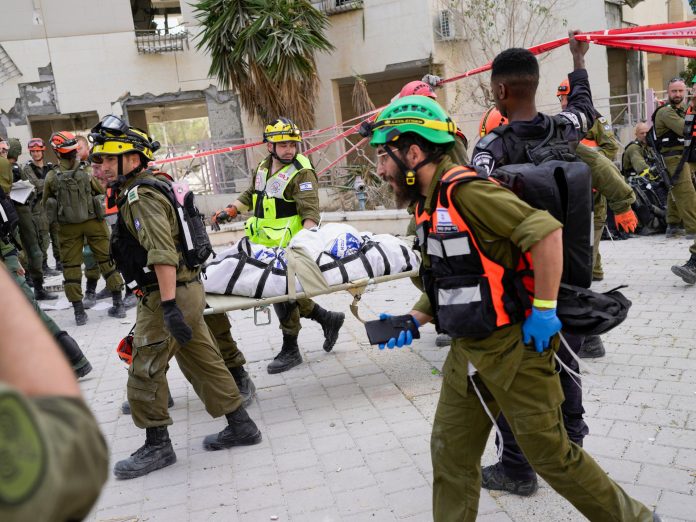
Iran reports 610 killed in Israeli strikes

Spokesperson Hossein Kermanpour said 971 people remain hospitalised, while 687 underwent surgery.

Thirteen children are among those killed, with the youngest a two-month-old, as are 49 women, including two who were pregnant.

He added that five healthcare workers have been killed and 20 others are wounded. Seven hospitals have been damaged, as were six emergency response bases, four clinics and nine ambulances.

Russia remains ‘the most significant, direct threat’ to NATO: Secretary-General

NATO

“Moscow continues to wage war against Ukraine, with support of North Korea, Iran, and China, as well as Belarus,” Rutte stressed.

The Secretary General told reporters that the alliance leaders are set to adopt a historic defense investment plan at the summit in The Hague on June 24-25, including a new benchmark of 5% of GDP for defense spending and a strengthened commitment to Ukraine.

“All leaders will take bold decisions to strengthen our collective defense, making NATO a stronger, fairer, and more lethal alliance,” Rutte stated at a press conference before the summit.

“This is a leap that is ambitious, historic, and fundamental to securing our future.”

Rutte said the plan includes major increases in air defense systems, tanks, armored vehicles, and artillery, a response to the evolving threat landscape, particularly Russia’s war against Ukraine.

“We see Russia’s deadly terror from the skies over Ukraine every day. We must be able to defend ourselves from such attacks,” Rutte added.

The Secretary General warned that NATO must act urgently to prepare for future threats, citing assessments that Russia could rebuild sufficient military capacity to challenge NATO within five years.

“Our security environment has changed, and not for the better. The threats we face today demand that we do far more,” he continued.

Rutte emphasized that the new defense investment plan will be reviewed in 2029, with annual reporting to ensure credibility.

He stressed that NATO remains committed to supporting Kyiv and reaffirmed the alliance’s long-standing position that “Ukraine’s path to NATO membership is irreversible.”

According to Rutte, the allies have pledged over 35 billion euros ($40,6 billions) in military aid to Ukraine for the first half of 2025, up from 20 billion announced earlier this year.

President Volodymyr Zelensky is attending the summit and will hold multiple meetings with NATO leaders. However, NATO’s Ukraine Council will not convene, a decision seen as part of efforts to keep the summit’s focus narrow, a move aimed at appeasing U.S. President Donald Trump, according to Politico.

The summit, shortened to 24 hours, has only one major session on defense spending. European officials cited by Politico said the format was designed to deliver a clear win to Trump, who is expected to tout the 5% spending pledge as a personal success. The U.S. is reportedly exempting itself from the new benchmark.

While recent summits have centered on Russia’s invasion of Ukraine, this year’s joint communique may omit references to the war.

During the briefing, Rutte said that the final communique, agreed by NATO ambassadors, has “important language” about Ukraine, including defense spending up until 2035.

“This is a clear commitment by allies,” Rutte added.

Iran dismisses launch of missiles after ceasefire with Israel

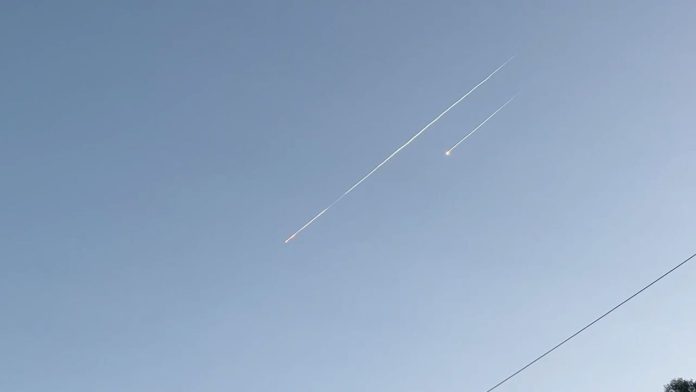
The general staff of the Iranian army “denied the launch of missiles from Iran to the occupied territories (Israel) in the last few hours”, state television reported.

Hours after the Zionist regime was forced to halt its onslaught against Iran as part of a deal with US President Donald Trump, Israeli war affairs minister Israel Katz stated he had instructed the Israeli military to “respond forcefully” to what he claimed to be Iran’s violation of the “truce”.

Iran could ‘target’ US officials if Tehran believes government’s survival at risk: DHS

Other scenarios for potential Iranian targeting of US officials include if Tehran considers them to be involved in the deaths of senior Iranian leaders or believes US airstrikes will continue, according to the bulletin from DHS’ Office of Intelligence and Analysis, which was sent to state and local law enforcement and is dated June 22.

On Monday, Iran fired missiles towards a US military base in Qatar in retaliation for the US strikes on Iran, according to two officials familiar with the matter.

But the DHS bulletin is one of the clearest connections yet drawn by US intelligence and law enforcement analysis about the potential violent backlash against civilian government officials for President Donald Trump’s decision to bomb Iranian nuclear sites.

“It is our duty to keep the nation safe and informed, especially during times of conflict,” Homeland Security Secretary Kristi Noem said in a statement to CNN when CNN asked DHS for comment on the bulletin.

“The ongoing Israel-Iran conflict brings the possibility of increased threat to the homeland in the form of possible cyberattacks, acts of violence, and antisemitic hate crimes,” Noem added.

The bulletin does not specify what the “targeting” of US officials might look like but the Justice Department has previously alleged that Iran has tried to kill Trump and his former national security adviser, John Bolton, in retaliation for a 2020 US military strike that killed Iran’s top anti-terror commander, Lieutenant General Qassem Soleimani.

“We have not yet observed Tehran threaten this kind of retaliatory action in response to the US airstrikes, and recent law enforcement action could challenge Iran’s ability to execute a plot against US officials in the short-term,” the bulletin said.

Trump raised the topic of regime change in Iran in a social media post on Sunday evening.

“It’s not politically correct to use the term, ‘Regime Change,’ but if the current Iranian Regime is unable to MAKE IRAN GREAT AGAIN, why wouldn’t there be a Regime change??? MIGA!!!” Trump wrote.

White House press secretary Karoline Leavitt on Monday stated that Trump was “simply raising a question” when he brought up the topic.

CNN reported last year that intelligence about a threat from Iran to Trump led the Secret Service to step up security around the then-presidential candidate. Ultimately, those protections did not prevent a security lapse that allowed a 20-year-old lone gunman unaffiliated with Iran to nearly kill Trump at a July 2024 rally in Pennsylvania.

Several top former Trump aides who continued to have security details due to the threat from Iran have since faced retribution from their former boss and had those details pulled. In the years since the US killing of Soleimani, multiple former Trump administration officials have beefed up their personal security details.

The new DHS bulletin, labeled “For Official Use Only,” adds more context to the department’s public warning on Sunday of a “heightened threat environment” in the US, citing the possibility of “low-level cyberattacks” and continued potential of lone-wolf attacks.

Days before the US strikes on Iran, law enforcement officials told CNN that they were reexamining known or suspected Hezbollah associates in the US, looking for possible threats that could arise as tensions with Iran increase. There’s no indication of credible threats at this time, the sources said.

Iran’s security services often use hacking to gather intelligence on targets of assassination or surveillance, Iran-focused cybersecurity experts have told CNN. A former Trump official and onetime confidant of Bolton was hacked in 2022, in a possible effort to track Bolton’s movements as part of the assassination plot, CNN previously reported, not naming the ex-official.

“In the short-term, we are most concerned that Iran-aligned hacktivists will conduct low-level cyberattacks against US networks, including distributed denial-of-service attacks,” the new DHS bulletin obtained by CNN noted.

“We are also concerned about cyber or physical attacks against critical infrastructure in the Homeland,” it added.

Iran’s top security body says armed forces ready to deliver crushing response to US, Israel

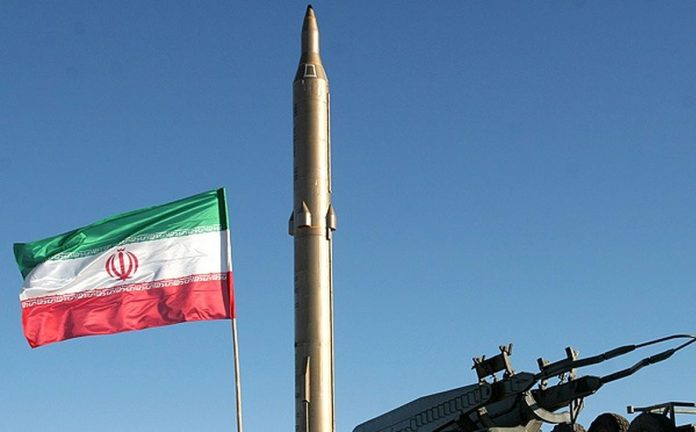
Iran Missile

Following the imposition of a ceasefire on the Zionist regime, the Supreme National Security Council of Iran stated in a communiqué on Tuesday that, in response to the Zionist enemy’s aggression, the Armed Forces of the Islamic Republic of Iran — in obedience to the command of the Supreme Leader — delivered a crushing response to every act of hostility. In the latest instance, the American base at Al Udeid and subsequently all parts of the occupied territories came under missile attacks.

The Council added that the vigilance, sense of timing, resistance, solidarity, and extraordinary unity of the Iranian people shattered the enemy’s core strategy.

It added, this created an opportunity to fully utilize the endurance and astonishing power of the Islamic fighters during twelve days of bloody and resistance, ensuring that every aggression received a timely and proportionate response.

The Supreme National Security Council concluded that the result of this approach was a divine victory for the nation — one that forced the enemy into regret, compelled it to acknowledge defeat, and brought about a one-sided halt to its aggression.

Iran’s parliament says weighing suspension of cooperation with IAEA

“Majlis (the Iranian Parliament) is drafting a plan to suspend cooperation with the agency until tangible guarantees regarding the professional attitude of this international organization are received,” Qalibaf said during an open session of the parliament.

Pointing to a religious decree by Leader of the Islamic Revolution Ayatollah Seyyed Ali Khamenei that prohibits nuclear weapons, the top lawmaker reiterated that Iran has no plans for non-peaceful use of nuclear energy.

“But the world clearly saw that the IAEA has failed to uphold its commitments and has become a political instrument,” he stressed, holding the UN nuclear agency responsible for the Israeli and American aggression against the Islamic Republic that started on June 13.

He added the US made another “strategic mistake” in its all-out support for the criminal Zionist regime, and that Washington’s “direct” involvement in Israel’s acts of aggression against Iran exposed the Tel Aviv regime’s inability to counter the Islamic Republic.

Iran regards the US’s “engagement in a war” on the Islamic Republic, which, Qalibaf said, is “intolerable,” as an indication of the Israeli regime’s “strategic failure in achieving its goals.”

“We will definitely respond in a way that will make gambler [US President Donald] Trump regret this act of aggression,” Qalibaf warned, only hours before Iranian armed forces pounded the US military base Al-Udeid in Qatar with a barrage of ballistic missiles.

The Iranian parliament speaker added the armed forces’ solid defense of the country and the nation’s full support have neutralized the Israeli-US military plot against the country.

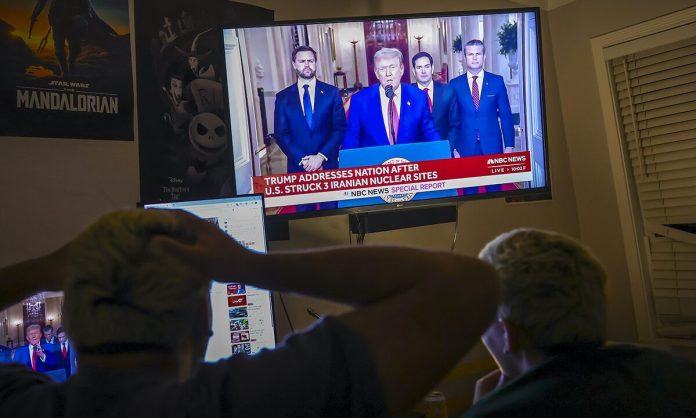
In a social media post on Sunday morning, Trump himself claimed responsibility for the act of aggression against Iranian nuclear sites that violated international law.

“We have completed our very successful attack on the three nuclear sites in Iran, including Fordow, Natanz, and Esfahan,” Trump declared.

In another decisive response to the US aggression against Iran’s peaceful nuclear facilities, the Iranian Parliament on Sunday voted to close the strategically vital Strait of Hormuz.

A member of the Parliament’s committee on national security and foreign policy, Esmaeil Kowsari, said on Sunday that the Majlis has agreed to close the key artery for global energy trade in response to the US aggression and the silence of the international community.

The Strait of Hormuz, situated at the mouth of the Persian Gulf, is one of the most critical chokepoints in global trade, with roughly 20 percent of the world’s oil passing through it.

Israel and Iran agree to ceasefire amid waves of missile attacks

Prime Minister Benjamin Netanyahu said in a statement on Tuesday morning that Israel had agreed to the truce proposal announced by United States President Donald Trump overnight.

Earlier, Iranian state television reported that the ceasefire had begun.

The Israeli statement came not long after Trump had stated in a post on social media that the ceasefire was under way.

“The ceasefire is now in effect. Please do not violate it!” he noted.

While Netanyahu threatened that Israel would respond forcefully to any violation of the ceasefire, the agreement raises hopes for a de-escalation in a conflict that intensified dramatically in recent days, as the US bombed Iran’s nuclear facilities and Tehran attacked an American base in Qatar.

“In light of the achievement of the objectives of the operation, and in full coordination with President Trump, Israel has agreed to the President’s proposal for a bilateral ceasefire,” he added.

A fragile peace appeared to take hold early on Tuesday, with reports of hostilities ceasing following six waves of missile launches by Iran.

Iranian Foreign Minister Seyed Abbas Araghchi implied the strikes were launched just before a 07.30 GMT deadline announced by Trump.

“The military operations of our powerful Armed Forces to punish Israel for its aggression continued until the very last minute,” he wrote on social media.

Several people were killed in the attacks, emergency services and the Israeli military confirmed. Not long afterwards, Israelis were told they could leave missile shelters, and no further launches have been reported.

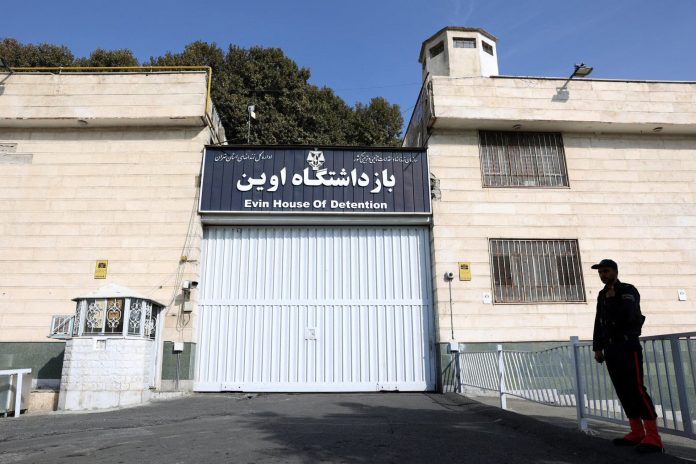
Israel’s attack on Evin Prison ‘grave breach of international law’: UN

Evin Prison

“Evin prison is not a military objective, and targeting it constitutes a grave breach of international humanitarian law,” UN human rights spokesperson Thameen al-Kheetan told reporters in Geneva on Tuesday, without naming Israel.

People were killed and injured in the strike, according to Iranian judiciary spokesperson Asghar Jahangir, who did not give details about the number of victims.

The judicial news outlet Mizan has reported that inmates held in Evin Prison have been transferred to other sites in Tehran province.

IRGC chief warns US president any further aggression will be met with stronger, more regretful responses

US Iran Attack

In a statement honoring the memory of fallen commanders and other victims of Zionist regime’s aggression, the IRGC chief announced that, in retaliation for Washington’s “criminal and unjustified aggression” against Iranian territory, IRGC forces launched a strategic missile strike on the Al-Udeid Air Base in Qatar, the main command center for US military operations in West Asia.

“This operation, carried out with the help of Almighty God, inflicted damage on a facility that is considered one of the most highly protected US installations in the region”, the IRGC commander said.

He described the U.S. attack on Iranian nuclear sites as a clear act of support for the illegitimate and child-killing Zionist regime.

Addressing the US president, he said, “To the foolish and reckless president of the US, who has put the lives and security of the American people at risk for the survival of a cursed regime, we warn if you repeat this aggression against the sacred soil of Iran and the Islamic Republic, you will face even more crushing and regret-inducing retaliation, the kind that will serve as a lesson for history”.

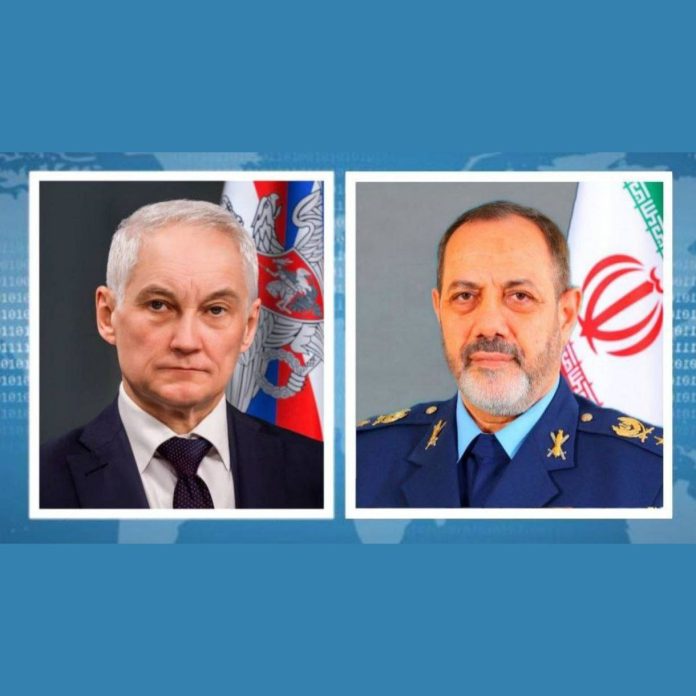
Iranian defense minister to Russian counterpart: Tehran will punish aggressor with full force

Nasirzadeh’s remarks came during a phone call initiated by Russian Defense Minister Sergey Shoigu, who declared Moscow’s solidarity with Tehran amid the Zionist regime’s aggression against Iran. Shoigu extended condolences over the martyrdom of senior Iranian military commanders and civilians, saying the attack on Iranian territory under the pretext of nuclear concerns was merely a cover.

“Their actual goal is to weaken the Islamic Republic and spread unrest throughout the region”, Shoigu said.

He added that Russia continues to monitor all developments and supports Iran.

Nasirzadeh thanked Russia for its clear stance on the issue stressing that this is not just a war as the US and certain other countries are actively supporting the Zionist regime.

He noted that Iran’s decision is clear and “we will punish the aggressor with all our power, and we reject any form of imposed peace”.

The Iranian defense chief further asserted that the root-cause of regional instability is the US.

He added that Iran and Russia can work together to strengthen peace and stability across the region and the world.