Wednesday, December 24, 2025
Home Blog Page 3079

Migraine Call Centre in Iran Monitoring Patients 24/7

Migraine Cut is a product of the knowledge-based company Mim Daroo, which was launched 13 years ago in Iran with the aim of treating migraines.

After 12 years of therapeutic experience in this field and use of aromatherapy method, they changed the treatment method by producing “Migraine Cut” sprays, which have so far treated many patients inside Iran.

Out of the 2,000 patients who took the drug, 79% reported that their pain has stopped.

The CEO of the company, who himself suffered from migraine for 28 years, has dedicated his life to treating patients from Iran and other countries by running this migraine treatment clinic.

The company has been producing and marketing these migraine sprays for a year, so that more people can get rid of migraine pain at a very low cost.

For a brief review of Iran’s achievements in various fields of science and technology, check the book “Science and Technology in Iran: A Brief Review – 2019

Prior to the production of this spray, patients had to be exposed to humidifiers for 20 sessions; each time for 30 to 40 minutes. They were treated in a period of about one year at a very high cost.

According to the Ministry of Health, 757 million drug units used to be sold in Iran during a single year to relieve headaches, as there are 9 million people suffering from migraine in the country. This led Iranian knowledge-based company Mim Daroo to think about mass production of migraine sprays.

“Before mass distribution of the spray, we distributed it among our clients in the clinic, and out of 300 patients, 81% stated that after 4 to 5 months the drug stopped their migraine headaches and turned them into ordinary headaches,” say the company officials.

IRGC Providing ‘Advisory’ Aid to Yemen, Not Missiles: Top General

“We are giving Yemen’s popular Army advisory and intellectual assistance and the Islamic Revolution Guards Corps (IRGC) is in charge of this,” General Baqeri told China’s Phoenix TV during a recent visit to Beijing.

He further stressed that the Islamic Republic will stand by the Yemeni people until the Saudi-led aggression comes to an end.

The top general also rejected claims that Iran has provided the Arab country with missiles, saying, “Today, Yemen is under a complete blockade (by Saudi Arabia), which has blocked all paths and prevented the delivery of food and even medicine”.

“How can one transfer several-meter-long missiles to Yemen when it is not possible to send medicine (to the Arab country)?” he asked.

In an interview with Tasnim in late August, Yemen’s Minister of Information Zaifullah al-Shami highlighted the Yemeni nation’s strong resistance to the acts of aggression by the Saudi-led military coalition.

“Yemen’s missile and military power is growing day by day,” the minister stressed, adding that his country is working on several new achievements which the aggressors could not tolerate.

Since March 2015, Saudi Arabia and some of its Arab allies have been carrying out deadly airstrikes against the Houthi Ansarullah movement in an attempt to restore power to fugitive former president Abd Rabbuh Mansour Hadi, a close ally of Riyadh.

Official UN figures say that more than 15,000 people have been killed in Yemen since the Saudi-led bombing campaign began.

The Saudi war has impacted over seven million children in Yemen who now face a serious threat of famine, according to UNICEF figures. Over 6,000 children have either been killed or sustained serious injuries since 2015, UN children’s agency said. The humanitarian situation in the country has also been exacerbated by outbreaks of cholera, polio, and measles.

Tahdig; A Dish All Your Dinner Guests Will Be Fighting Over

Saffron Tahdig / Photo by Kate Sears for The Wall Street Journal, Food Styling by Nora Singley, Prop Styling by Vanessa Vazquez

Growing up in Iran, Google chef Hoss Zaré so coveted tahdig, the crisped layer of rice from the bottom of the pot, that he would make a game of hiding it in the kitchen. “I’d say, ‘It’s burned, you can’t have it,’” he confessed. “I was just trying to keep it from my brothers so I could have more.”

With a flavour that is part popcorn, part fried chicken, and the crunch of a thick potato chip, tahdig has been stirring covetous feelings stateside, too. Last year, in the final episode of the Netflix series “Salt, Fat, Acid, Heat,” Iranian American cookbook author Samin Nosrat cooked a beautiful iteration with her mother that made a case for the pleasure and drama of preparing it. On Instagram, one can browse endless documentation of rice inverted from the pot to display a golden-toasted crown—the sort of achievement a cook wants to broadcast.

Iranians often embellish tahdig’s lacquered layer with potato slices, lettuce leaves, sliced eggplant or onion rounds; sometimes they’ll swap in spaghetti for the rice. Chef Zaré, who for years helmed Zaré at Fly Trap restaurant in San Francisco, posts some of Instagram’s most awe-inspiring tahdig shots. He has a version that incorporates whole fish, a culinary hat-trick that results in crisp-skinned fish, fluffy rice and that crunchy layer of tahdig in one dish.

At the live-fire restaurant Maydan in Washington, D.C., it’s been served with clotted cream and caviar; at the Israeli restaurant Zahav in Philadelphia, tahdig comes topped with dried fruit and nuts. At Kismet in Los Angeles, it’s the best-selling dish. “A lot of people come for dinner just to taste the tahdig,” said co-chef and co-owner Sara Kramer. “It’s so universally lovable.”

There’s a certain suspense built in: You never know whether you’ve successfully pulled off that prized layer of gold until you flip over the pot and release the rice. Mr. Zaré, who now cooks at Google, enjoys teaching the young chefs he oversees to master it. “There’s a wow factor that you can see in their eyes,” he said. “When I demo tahdig, everyone has questions about how you do it.”

Iranian cooks hone their tahdig skills over a lifetime. Everyone else can turn to a slew of books, blogs and videos wherein tahdig masters share hard-earned secrets and turn their misfires into your future success. (See “The Golden Rules of Tahdig,” at left, for a solid primer.)

Naz Deravian, author of the cookbook “Bottom of the Pot,” sees herself as a sort of tahdig doctor. “I can look at pictures that people send me and figure out what went wrong,” she said. Azita Mehran, whose “Turmeric and Saffron” blog features traditional Iranian dishes, has a key piece of advice: “For Iranian cooking you really need to be focused, in tune and present.”

For Ms. Mehran, the passion tahdig inspires goes beyond the effort and attention required to make it. “It brings all the good memories back,” she said—of home, of growing up, of a country that no longer exists as it once did.

While tahdig is easy to love and anyone can master its making, Firoozeh Dumas, author of “Funny in Farsi: A Memoir of Growing Up Iranian in America,” noted the particular ferocity her Iranian family brings to their pursuit of that crisped rice. At first, her French husband, François, hung back on occasions when her relatives gathered for a meal as everyone else battled for the tahdig. Then her mother took pity. “Before anyone had a chance to take food, François would be handed his plate, with a large portion of tahdig already on it,” she said. That’s how much she loved him.

Tahdig; A Dish All Your Dinner Guests Will Be Fighting Over
Tahdig: A Yummy, Globally Popular Part of Persian Cuisine

Saffron Rice Tahdig

Depending on the size of your skillet or pot, you may need more than 2 cups of rice to cover the bottom.

TOTAL TIME: 2½ hours SERVES: 4

2 cups basmati rice

Salt

1 teaspoon saffron threads

2 tablespoons warm water

3 tablespoons olive oil

1 tablespoon butter, broken in pieces, plus more to garnish

Dash of turmeric curcumin, optional

  1. Soak rice in salted cold water at least 1 hour or up to 24.
  2. Grind saffron, combine with warm water and let steep 15 minutes. Drain rice and rinse under cold water. In a stockpot, combine 8 cups water and 2 heaping tablespoons salt, and bring to a boil. Add rice and return to a boil, uncovered. After a few minutes, test a grain of rice by breaking it in half. The rice is ready when it’s still a little chewy and not fully cooked, like al dente pasta. Drain the rice and rinse under cold water to halt cooking. Set aside 2 cups parcooked rice.
  3. Heat a lidded deep 10” cast-iron skillet or Dutch oven over low heat 2 minutes, then add oil. Add two cups reserved rice, 1 teaspoon saffron water, turmeric if using, and ½ teaspoon salt. Stir to combine, then spread rice evenly over bottom of skillet, packing it down tightly with a spatula or wooden spoon.
  4. Heap remaining rice in center of skillet, coaxing it away from sides and shaping a dome. Poke holes in rice with the handle of a wooden spoon, avoiding packed layer on bottom. Drizzle remaining saffron water over rice. Scatter butter and ½ teaspoon salt on top. Cover tightly. Increase heat to medium and cook 7 minutes. Rice will sizzle and pop. Reduce heat to low and place a heat diffuser under skillet. Place a kitchen towel under lid and cover tightly. Cook 40 minutes.
  5. Fill sink with ice water 1 inch deep. Set skillet in ice water and let sit 2 minutes. Gently run a spatula under tahdig to loosen at edges. Place a kitchen towel on counter. Take a platter and place it on top of skillet. Wearing oven mitts, firmly hold skillet and platter together, and flip so platter is resting on dish towel. Carefully remove skillet.
  6. Show off the tahdig to your guests, then slide that layer onto a cutting board and gently slice it into pieces. Serve rice and tahdig on separate platters. Garnish rice with more butter.
Tahdig; A Dish All Your Dinner Guests Will Be Fighting Over
Spaghetti and Meatballs Tahdig / Photo by Kate Sears for The Wall Street Journal, Food Styling by Nora Singley, Prop Styling by Vanessa Vazquez

Spaghetti and Meatballs Tahdig

It’s important that the pasta for this dish be cooked only until al dente when it goes into the skillet, otherwise it will become mushy.

TOTAL TIME: 2½ hours SERVES: 4

For the meatballs:

¼ cup basmati rice, soaked in water 1 hour

3 cloves garlic, chopped

2 tablespoons dried mint

½ onion, chopped

½ pound ground lamb, beef or mix

1 egg, whisked

2 teaspoons salt

1 teaspoon black pepper

3 tablespoons olive oil

For the spaghetti:

Pinch of saffron

2 tablespoons warm water

½ pound spaghetti

3 tablespoons olive oil, plus extra

2½ cups tomato sauce

½ cup grated Parmesan cheese, plus extra

Salt and pepper

Handful of parsley leaves

Chile flakes (optional)

  1. Make the meatballs: Strain rice and shake off excess water. In a food processor, combine rice with garlic, mint and onion, and pulse until coarsely ground. Transfer to a large bowl and add meat, egg, salt and pepper. Mix well. Form meat into approximately 20 heaping-tablespoon-size balls. Heat a large skillet over medium heat and add oil. Working in batches, cook meatballs until they’re well browned all over, about 10 minutes. Set aside.
  2. Grind saffron, combine with warm water and let steep 15 minutes. Meanwhile, fill a large pot with water and add a generous amount of salt. Cook pasta according to package instructions, stopping when pasta is just al dente. Strain under cold water to halt cooking and toss with a little olive oil. Set aside 2 cups plain pasta. Transfer remaining pasta back to pot along with tomato sauce, and toss over medium heat until heated through. Gently fold in meatballs and season everything to taste with salt and pepper.
  3. Make the spaghetti:Heat a deep, 10-inch cast iron skillet over medium heat. Once skillet is hot, add olive oil, then scatter plain pasta evenly over bottom. Sprinkle with a dash of salt, and drizzle with 1 teaspoon saffron water. Pour pasta and meatballs into skillet, coaxing them into the middle and away from the sides. Pour remaining saffron water over pasta. With the handle of a wooden spoon, poke holes into pasta mound, stopping short of bottom layer. Put a tight fitting lid over skillet and cook on medium heat 8 minutes. Pasta will sizzle loudly and oil will bubble up around the sides.
  4. Reduce heat to low and place a heat diffuser under skillet. Place a towel or damkoni under lid and cover skillet. Cook 30 minutes.
  5. Fill sink with ice water 1 inch deep. Place bottom of skillet in water to loosen tahdig. Gently run a spatula under tahdig to loosen at edges. Place a kitchen towel on counter. Take a platter and place it on top of skillet. Wearing oven mitts, firmly hold skillet and platter together, and flip so platter is resting on dishtowel. Carefully remove skillet.
  6. Finish tahdig with parsley, shaved cheese, salt and pepper, a drizzle of olive oil, and chile flakes, if using. Slide onto a cutting board and slice into quarters with a serrated knife.
Tahdig; A Dish All Your Dinner Guests Will Be Fighting Over
Potato Tahdig with Herb Rice / Photo: Kate Sears for The Wall Street Journal, Food Styling by Nora Singley, Prop Styling by Vanessa Vazquez

Potato Tahdig with Herb Rice

TOTAL TIME: 2 hours SERVES: 4

2 cups white basmati rice, soaked in salted cold water for at least 1 hour

Large pinch of saffron

2 tablespoons warm water

1 scallion, sliced

2 cups fresh fava beans, shelled and peeled, or 2 cups frozen lima beans, thawed

1 cup grated multi-colored carrots

2 cups minced fresh herbs, any combination of dill, tarragon, parsley, cilantro, basil and mint

4 tablespoons olive oil

½ pound purple potatoes, peeled and sliced into rounds ¼-inch thick

Salt

1 tablespoon butter, broken in a few pieces, plus more to garnish

Edible flowers for garnish (optional)

  1. Drain rice and rinse under cold water. In a stockpot, combine 8 cups water and 2 heaping tablespoons salt, and bring to a boil. Add rice and return to a boil, uncovered. After a few minutes, test a grain of rice by breaking it in half. The rice is ready when it’s still a little chewy and not fully cooked, like al dente pasta. Drain rice and rinse under cold water to halt cooking. Set aside 1½ cups rice.
  2. Grind saffron, combine with warm water and let steep 15 minutes. In a large bowl, toss remaining rice with scallions, beans, carrots and herbs.
  3. Heat a deep 10” cast-iron skillet over low heat, then add oil. Cover bottom of skillet with a single layer of potato slices, leaving about ¼-inch of space between. Sprinkle with 1 teaspoon salt and drizzle with 1 teaspoon of saffron water. Scatter 1½ cups plain rice over top, pressing rice into crevices between potatoes with the back of a spoon.
  4. 4. Heap remaining rice in center of skillet, coaxing it away from sides and shaping a dome. Poke holes in rice with the handle of a wooden spoon, avoiding packed layer on bottom. Drizzle remaining saffron water over rice. Scatter butter and ½ teaspoon salt on top. Cover tightly. Increase heat to medium and cook 8 minutes. Potatoes and oil will sizzle loudly. Reduce heat to low and place a heat diffuser under skillet. Place a towel or damkoni under lid and cover tightly. Cook 40 minutes.
  5. Fill sink with ice water 1-inch deep. Set skillet in ice water and let sit 2 minutes. Gently run a spatula under tahdig to loosen at edges. Place a kitchen towel on counter. Take a platter and place it on top of skillet. Wearing oven mitts, firmly hold skillet and platter together, and flip so platter is resting on dishtowel. Carefully remove skillet.
  6. Show off the tahdig to your guests, then slide that layer onto a cutting board and gently slice it into pieces. Serve rice and tahdig on separate platters. Garnish rice with more butter and edible flowers, if using.


The Golden Rules of Tahdig

  1. Have everything at your fingertips. You will need to work fast.
  2. Stay within a moderate temperature range: medium/medium-low heat.
  3. Soak the rice in cold water for 1-24 hours before cooking to remove excess starch.
  4. Parcook the rice in salty water and finish by gently steaming.
  5. Put a towel under the pot lid to catch steam that rises as the rice cooks. Or use an Iranian damkoni, a fitted cloth.
  6. Use a heat diffuser, a metal disc that sits on the burner, to disperse heat.
  7. Dome the rice to give it room to expand and keep dried rice from sticking to the sides of the pot.
  8. Poke holes in the rice, without going as far down as the tahdig layer, to let steam escape.
  9. After cooking, loosen the tahdig by shocking the bottom of the pot in an inch of ice water for 2 minutes, or on a cool, damp towel for 5.Source: Wall Street Journal

Tips for Doing Homework for Engineering and Science Students

As a student, you have to do a lot of homework, don’t you? We know it well. We were students too. The situation is even worse at the end of the semester (or quarter). You have to submit term papers, lab reports, etc. You usually stress yourself out with so many assignments. Sometimes, you think (or wish) that “someone that delivers excellence in every technical task could do my homework for me.”

Well, you may be surprised, but there is a company that can do your technical assignments for you. AssignCode.com provides assignment help online for engineering and science students. Does it sound too good to be true? Well, visit our website and see by yourself that our services are legit. We provide professional assistance to do your homework. Put simply, one of our experts will do your homework when you cannot do it for a reason. There is nothing wrong about it. You need a service, and we provide it for a fee. It is a fair deal, isn’t it?

Other websites also provide ehelp to students. In most cases, those are tutoring sites. Those services are quite different. When you place an order with us, we provide a helper, not a personal tutor. A tutor usually teaches you lessons or a tutorial at home. This approach is expensive and takes part of your time. That is not good if money and/or time availability are issues. Contrastingly, our service is more straightforward. We do your homework and deliver an editable file that you can submit as it is. We do it for a low fee. Do not worry. Helping students is our main motivation. Hence, our prices are affordable. Most students can benefit from our online homework help.

Our Assignment Help Service Is Provided by Experts in Different Technical Fields

Our technical assignment help service is the best you can get online. This is in great part the result of the excellent work done by our experts. All our experts have university degrees in at least one technical specialty. We cover many technical subjects: IT/web, math, finance, statistics, accounting, engineering, and more. The proficiency of our experts is ensured by the strict recruitment and training process that includes:

  • Tests in the disciplines they are going to work with;
  • Verification of diplomas and university degrees;
  • Training in technical writing;
  • Technical English proficiency tests.

Moreover, our experts are continuously being evaluated. The best ones are promoted. Hence, when you place an order you can be sure that your expert will handle your assignment very professionally.

The Best Homework Tips for Students Include Our Assignment Help Service

You probably have gotten many homework tips for students. Well, we will give you one more. This is the only tip you need to be an excellent student with top grades. Use the technical assignment help service provided by AssignCode.com. We deliver your assignment timely. Our experts know that completing your assignment on time is a must. This is why you will have to meet at least once with your expert via live chat. You can use a smartphone app like WhatsApp to establish this meeting.

Our experts will use all the technological resources at their disposal to solve the problems in your homework. For instance, for complex algebra problems, a computer math solver will be used. Other specialized apps are used too. Thereafter, the expert will write the corresponding essay or report from scratch. The uniqueness of your assignment will be verified with specialized computer tools before we deliver it to you. Hence, you can rest assured your assignment will be free of plagiarism.

If you have questions about our service, contact our customer service center. Our helpline is available 24/7 to provide tips for doing homework and answers to all your questions. Entrust us with your homework when you want to ask someone “please, help me with my technical assignments.” Let one of our experts work while you spend time with your friends, relatives, and/or kids.

Great Mansion of Ilkhanid Era Found Near Tehran

Mohammad-Reza Nemati, head of the excavation team said the hill is about 4,400 square metres located in the centre of Mahdasht village in Malard, 60 kilometres southwest of Tehran.

Miras-e Arya quoted Nemati as saying that at the second workshop, located at the highest point of the hill, the remains of a precious architectural work were found within a large building. “The entrance is from the west and is connected by a corridor and large and small rooms,” he added.

“The walls of these rooms are made of brick and have a crescent-shaped ceiling, the traces and remnants of which could be seen in some rooms,” he underlined.

Among the valuable artifacts, there is a large number of stamped ornamented caps, chess pieces, coins, Uyghur pottery and many pieces of earthenware, he pointed out.

This archaeologist said, after completing the excavation, the hill will be organised and the documentation of the findings and the initial protection of the artifacts would begin. Then, the discovered region will be roofed for further studies.

Nemati explained the excavation of Khatounlar hill was carried out with the permission of the Iranian Research Institute for Cultural Heritage and Tourism (RICHT) and the mansion is registered as a National Heritage of Iran.

CIA Agent Sentenced to Death: Iran’s Judiciary

Two Swedish Nationals Arrested in Iran on Drug Smuggling Charges

Speaking to reporters in a press briefing on Tuesday, Esmaeili said he cannot announce the name of the one sentenced to death as the verdict is not final yet.

However, he identified the three other CIA agents as Ali Nafarieh, Mohammad Amirnassab, and Mohammad-Ali Babapour, and said each of them has received a 10-year prison term.

“Their verdicts have been upheld,” Esmaeili said.

In addition to their prison terms, Nafarieh and Babapour must also return the 55,000 dollars each had received, he added.

According to the spokesman, the agents had been arrested last year.

Back in July, Esmaeili had announced that a number of spies trained by the CIA working at sensitive Iranian military centres have been arrested, and may receive death penalties for espionage.

The spies were arrested in late 2018 and early 2019 by Iranian intelligence forces, while they were working in sensitive centres, Esmaeili said at the time.

Back in April, Intelligence Minister Mahmoud Alavi announced Iran has identified 290 CIA agents across different countries, forcing the US to form a special committee to reassess its cloak-and-dagger operations.

“CIA operatives in those countries were identified and arrested and the contacts of the US intelligence agency with its sources were disrupted in such a way that a committee to assess the failure was set up in America,” Alavi said.

Iran Ready to Export Engineering Services to Armenia

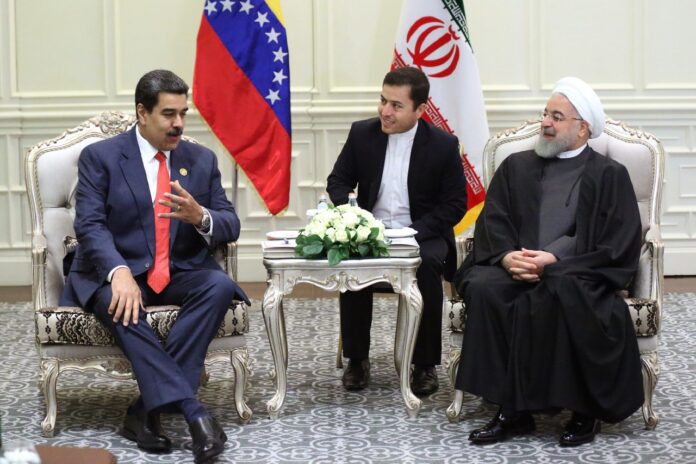
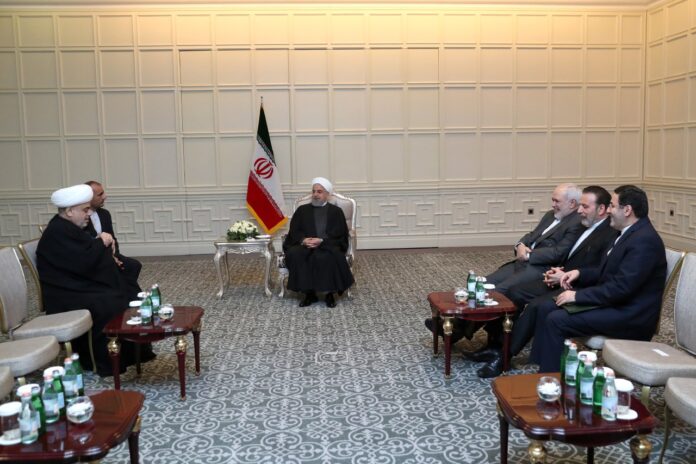
During the Monday meeting, the two sides highlighted the importance of developing relations between Tehran and Yerevan in different political, economic and cultural fields.

Rouhani said, “Further development of relations with neighbouring countries, including Armenia, is a tenet of the foreign policy of the Islamic Republic of Iran.”

The Iranian president highlighted the cultural and historical commonalities between the two countries and nations, and said, “The Islamic Republic of Iran and Armenia have ample capacities in different fields, including energy, transit and transportation, tourism, and industry, which can be used to the benefit of both nations’ interests.”

Rouhani further stressed the capabilities of the private sectors of the two countries, and said, “The Islamic Republic of Iran is ready to share with Armenia its experience in different technical and engineering fields, dam construction and energy.”

He further highlighted the significance of cooperation under the Eurasian Economic Union (EAEU), saying, “Iran’s participation in Eurasian Union’s economic relations can be a very good opportunity for deepening bilateral economic relations, and also at the regional level.”

The president also called for enhanced relations and cooperation between the two countries’ free economic zones, including Aras and Meghri, and further attention to the environment and optimal use of the two neighbours’ tourism potentialities.

In turn, Sarkissian stressed that his country attaches great importance to cementing its ties with Iran. “Armenia is seeking to develop relations with the Islamic Republic of Iran in different fields, including economy, industry, energy and environment.”

“The Eurasian region can extend its activities, and in this regard, we are ready to develop relations Tehran,” he added.

The Iranian president arrived in Yerevan on Monday in order to attend a meeting of the Eurasian Economic Union (EAEU), which Iran is going to join as of October 27 as its first membership in a regional economic union.

Before leaving Tehran for Yerevan, Rouhani had noted that joining the EAEU is an opportunity to enhance the economic power at the regional level before a competition on a global scale.

Based on Iran’s agreement with the EAEU, 502 Iranian goods will be subject to preferential tariff rates for the exports to the EAEU members.

The Eurasian Economic Union is an international organization of regional economic integration with international legal personality. It has international legal personality and is established by the Treaty on the Eurasian Economic Union.

Iran Says Prepared to Deal with All Kinds of Enemy Plots

General Baqeri made the remarks while addressing a national gathering of commanders and staff officials of Iran’s Islamic Revolution Guards Corps (IRGC) on Monday.

“Praise be to God, at the present time, a sustainable and strong form of deterrence has been created in the face of enemy’s plot to carry out any act of aggression against the Islamic Iran and enemies have understood that the Islamic Iran enjoys the readiness, determination and courage and will not hesitate to defend its ideals, land and people,” he said.

The top Iranian commander noted, “At the present time, the Islamic Republic of Iran, as a superior regional power, recognizes its responsibility for maintaining regional security and stability and plays a basic role in this regard… it does not think about … waging war and sowing insecurity and seeks calm and tranquility through regional cooperation.”

Baqeri pointed to great achievements made by the IRGC’s Aerospace Division and said the reinforcement of the country’s defense, missile and drone capabilities, showing off the vigilant and firm preparedness of the country’s armed forces to counter the enemy’s threats and plots, the destruction of the terrorists’ bastions in different regional areas and the downing of an intruding US drone demonstrated only parts of the might of the IRGC and the Islamic establishment.

In June, Iran shot down an intruding American spy drone in the southern coastal province of Hormozgan.

The IRGC said in a statement that the US-made Global Hawk surveillance drone was brought down by its Air Force near the Kouh-e Mobarak region — which sits in the central district of Jask County — after the aircraft violated Iranian airspace.

Meanwhile, Iran’s Defense Minister Brigadier General Amir Hatami also said on Sunday that the Islamic Republic will give a strong response to the slightest act of aggression.

“We will deal severely with the slightest act of aggression and if such behavior is repeated, our response will certainly be stronger,” Hatami said in an address to National Conference on Jihad and Resistance in Tehran.

Iran Says US’ Irresponsibility No Excuse for EU’s Failure on JCPOA

Iran Says Ready for Prisoner Swap with US without Preconditions

Speaking at a press conference on Monday, Ali Rabiei said President Hassan Rouhani has reminded the European leaders during a recent UN trip that the US government’s irresponsibility had nothing to do with their commitment to the Joint Comprehensive Plan of Action (JCPOA).

The EU officials have been told that the US policy is no justification for their failure to honour their legal commitments, the spokesman added.

On the US push for talks with Iran during President Rouhani’s stay in New York, Rabiei said diplomacy and a final solution were at hand, but the US government prevented it.

“The responsibility for the lack of formation of dialogue in New York lies directly with the US government, although Trump does not have the courage to do the right thing.”

Rabiei added that the American officials have realized that the policy of maximum pressure on Iran is futile, because Tehran will never enter talks under the sanctions, imposed by the US or any other country.

Asked about a new plan for talks, known as ‘more for more’, the spokesman explained that the initiative would totally come within the framework of the JCPOA, stressing that it excludes subjects such as Iran’s missile power or a severance of ties with the groups that receive Iran’s spiritual support.

The president has made it clear for the European parties to the nuclear deal that Iran is ready for the US presence in the JCPOA meetings provided that Americans lift the sanctions, Rabiei added.

He further described Iran’s new initiative for regional peace, known as the “Hormuz Peace Endeavor” or HOPE, as a replacement for the US-led “provocative and hostile” coalition against Iran in the Persian Gulf.

Unlike the US-led coalition, the coalition of HOPE proposed by Iran excludes foreign powers in the Persian Gulf security arrangement, does not omit any of the regional countries in the efforts for collective security, is not against any state, and pursues peace, Rabiei underscored.

The spokesperson also touched on the plans to boost the country’s economy and promote trade, saying oil incomes have been excluded from the next year’s national budget.

He noted that the oil revenues would be spent on construction projects.

Iran’s efforts to cut reliance on the oil incomes began long before the US administration announced plans in 2018 to drive the Islamic Republic’s oil exports down to zero.

Tensions between Iran and the US have escalated since US President Donald Trump walked away from the 2015 nuclear deal between Iran and world powers in May 2018 and re-imposed sanctions on the Islamic Republic.

Ancient Persian Artifacts Held in US for Decades Return to Iran 

Iran’s Minister of Cultural Heritage, Handicrafts and Tourism Ali Asghar Mounesan said on Monday that 1783 ancient tablets, dating back to the Achaemenid Empire and excavated from Persepolis in Iran, are going to return home from the University of Chicago’s Oriental Institute.

The clay tablets from the Persepolis fortification have been taken back after a US court ordered, after 14 years of legal procedures, that the ancient Persian artifacts could not be confiscated by any plaintiff, the minister noted.

He said Iran has taken back three consignments of the Persian artifacts over the past 70 years, but the dispatch of the fourth consignment ran into trouble in 2004, when a group of American plaintiffs laid claim to some 2,500-year-old cuneiform tablets that are on loan from Iran to the University of Chicago’s Oriental Institute, ISNA reported.

The University of Chicago has defended Iran’s right to the artifacts, arguing that the Oriental Institute has an obligation to return them as promised.

The University of Chicago has argued that the cuneiform tablets and fragments sought by the plaintiffs –surviving administrative records of the Persian Empire from around 500 B.C.– are far too valuable as sources of study to be put up for auction, according to NY Times.

The tablets were excavated in the 1930s by University of Chicago archaeologists at the ruins of Persepolis, on a plain near Iran’s southern city of Shiraz. The Iranian government lent them to the university in 1937 so they could be translated and cataloged. Because the clay tablets were unbaked and fragile, many of them were recovered largely in fragments.

Professor Stein of the university estimated that 37,000 tablets had been returned to Iran after study between 1938 and 2004, and that about 5,000 tablets and 10,000 fragments remain at the institute.