Wednesday, December 24, 2025
Home Blog Page 3080

Iran Says Prepared to Deal with All Kinds of Enemy Plots

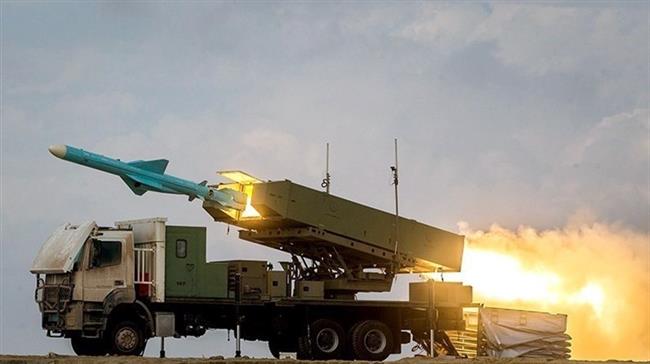
General Baqeri made the remarks while addressing a national gathering of commanders and staff officials of Iran’s Islamic Revolution Guards Corps (IRGC) on Monday.

“Praise be to God, at the present time, a sustainable and strong form of deterrence has been created in the face of enemy’s plot to carry out any act of aggression against the Islamic Iran and enemies have understood that the Islamic Iran enjoys the readiness, determination and courage and will not hesitate to defend its ideals, land and people,” he said.

The top Iranian commander noted, “At the present time, the Islamic Republic of Iran, as a superior regional power, recognizes its responsibility for maintaining regional security and stability and plays a basic role in this regard… it does not think about … waging war and sowing insecurity and seeks calm and tranquility through regional cooperation.”

Baqeri pointed to great achievements made by the IRGC’s Aerospace Division and said the reinforcement of the country’s defense, missile and drone capabilities, showing off the vigilant and firm preparedness of the country’s armed forces to counter the enemy’s threats and plots, the destruction of the terrorists’ bastions in different regional areas and the downing of an intruding US drone demonstrated only parts of the might of the IRGC and the Islamic establishment.

In June, Iran shot down an intruding American spy drone in the southern coastal province of Hormozgan.

The IRGC said in a statement that the US-made Global Hawk surveillance drone was brought down by its Air Force near the Kouh-e Mobarak region — which sits in the central district of Jask County — after the aircraft violated Iranian airspace.

Meanwhile, Iran’s Defense Minister Brigadier General Amir Hatami also said on Sunday that the Islamic Republic will give a strong response to the slightest act of aggression.

“We will deal severely with the slightest act of aggression and if such behavior is repeated, our response will certainly be stronger,” Hatami said in an address to National Conference on Jihad and Resistance in Tehran.

Iran Says US’ Irresponsibility No Excuse for EU’s Failure on JCPOA

Iran Says Ready for Prisoner Swap with US without Preconditions

Speaking at a press conference on Monday, Ali Rabiei said President Hassan Rouhani has reminded the European leaders during a recent UN trip that the US government’s irresponsibility had nothing to do with their commitment to the Joint Comprehensive Plan of Action (JCPOA).

The EU officials have been told that the US policy is no justification for their failure to honour their legal commitments, the spokesman added.

On the US push for talks with Iran during President Rouhani’s stay in New York, Rabiei said diplomacy and a final solution were at hand, but the US government prevented it.

“The responsibility for the lack of formation of dialogue in New York lies directly with the US government, although Trump does not have the courage to do the right thing.”

Rabiei added that the American officials have realized that the policy of maximum pressure on Iran is futile, because Tehran will never enter talks under the sanctions, imposed by the US or any other country.

Asked about a new plan for talks, known as ‘more for more’, the spokesman explained that the initiative would totally come within the framework of the JCPOA, stressing that it excludes subjects such as Iran’s missile power or a severance of ties with the groups that receive Iran’s spiritual support.

The president has made it clear for the European parties to the nuclear deal that Iran is ready for the US presence in the JCPOA meetings provided that Americans lift the sanctions, Rabiei added.

He further described Iran’s new initiative for regional peace, known as the “Hormuz Peace Endeavor” or HOPE, as a replacement for the US-led “provocative and hostile” coalition against Iran in the Persian Gulf.

Unlike the US-led coalition, the coalition of HOPE proposed by Iran excludes foreign powers in the Persian Gulf security arrangement, does not omit any of the regional countries in the efforts for collective security, is not against any state, and pursues peace, Rabiei underscored.

The spokesperson also touched on the plans to boost the country’s economy and promote trade, saying oil incomes have been excluded from the next year’s national budget.

He noted that the oil revenues would be spent on construction projects.

Iran’s efforts to cut reliance on the oil incomes began long before the US administration announced plans in 2018 to drive the Islamic Republic’s oil exports down to zero.

Tensions between Iran and the US have escalated since US President Donald Trump walked away from the 2015 nuclear deal between Iran and world powers in May 2018 and re-imposed sanctions on the Islamic Republic.

Ancient Persian Artifacts Held in US for Decades Return to Iran 

Iran’s Minister of Cultural Heritage, Handicrafts and Tourism Ali Asghar Mounesan said on Monday that 1783 ancient tablets, dating back to the Achaemenid Empire and excavated from Persepolis in Iran, are going to return home from the University of Chicago’s Oriental Institute.

The clay tablets from the Persepolis fortification have been taken back after a US court ordered, after 14 years of legal procedures, that the ancient Persian artifacts could not be confiscated by any plaintiff, the minister noted.

He said Iran has taken back three consignments of the Persian artifacts over the past 70 years, but the dispatch of the fourth consignment ran into trouble in 2004, when a group of American plaintiffs laid claim to some 2,500-year-old cuneiform tablets that are on loan from Iran to the University of Chicago’s Oriental Institute, ISNA reported.

The University of Chicago has defended Iran’s right to the artifacts, arguing that the Oriental Institute has an obligation to return them as promised.

The University of Chicago has argued that the cuneiform tablets and fragments sought by the plaintiffs –surviving administrative records of the Persian Empire from around 500 B.C.– are far too valuable as sources of study to be put up for auction, according to NY Times.

The tablets were excavated in the 1930s by University of Chicago archaeologists at the ruins of Persepolis, on a plain near Iran’s southern city of Shiraz. The Iranian government lent them to the university in 1937 so they could be translated and cataloged. Because the clay tablets were unbaked and fragile, many of them were recovered largely in fragments.

Professor Stein of the university estimated that 37,000 tablets had been returned to Iran after study between 1938 and 2004, and that about 5,000 tablets and 10,000 fragments remain at the institute.

Rouhani Says Way Paved for US to Join JCPOA Meeting

In comments before leaving Tehran to Armenia for a summit of the Eurasian Economic Union (EAEU) on Monday, President Rouhani said during his recent UN trip, the Group 4+1 (Russia, China, the UK, France and Germany) and Iran held a ministerial meeting on the JCPOA.

He also noted that some preparations were done in the session for a meeting of the Group 5+1, saying the framework of such meeting was agreed upon by all parties.

“The framework of that meeting (of the P5+1) was approved by the seven countries, and I believe that a major step has been taken,” the Iranian president added.

He said he will give more details of the plenary meeting of the JCPOA in an upcoming session of the cabinet on Wednesday.

“Such step could go on in other forms, and it is very important to be able to put the nuclear issue in the legal and international procedure, and encourage the others to repent,” President Rouhani added.

Iranian authorities have already made it clear that Washington should honor its obligations under the 2015 nuclear deal between Tehran and world powers if it wants to meet for talks.

In remarks earlier this month, Leader of the Islamic Revolution Ayatollah Seyyed Ali Khamenei suggested that Iran may sit for multilateral talks with the US within the framework of the P5+1 in case the US takes back its words, repents, and return to the 2015 nuclear deal.

“If the US takes back its word, repents and returns to the nuclear deal it violated, then it may join other JCPOA parties’ talks with Iran. Otherwise, there will be no negotiation at any level between Iranian and American officials, neither in New York nor elsewhere,” the Leader said on September 17.

Iran to Join EAEU in Weeks: President Rouhani

Iran’s President

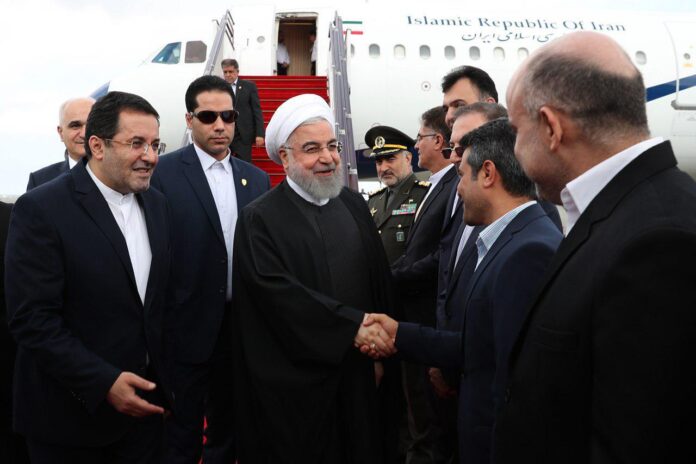
Speaking to reporters on Monday evening before leaving Tehran for Yerevan, President Rouhani said his visit to Armenia for attending the EAEU summit will mainly pursue economic purposes.

He noted that Iran’s agreement with the EAEU will take effect on October 27, according to which 502 Iranian goods will be subject to preferential tariff rates for the exports to the EAEU members.

The president said it will be the first time that the Islamic Republic is joining a regional economic union.

President Rouhani described Iran’s membership in the EAEU as an opportunity to enhance the economic power at the regional level before a competition on a global scale. 

He also noted that Iran’s interaction with the EAEU members, with a total population of 180 million, could be of great significance given the US attempts to mount the pressure of cruel sanctions on people of Iran.

Rouhani stated that Iranian business people and economic sectors could seize the opportunity to enhance trade with the five members of the EAEU (Russia, Belarus, Kazakhstan, Armenia and Kyrgyzstan) and also have access to the markets of other regions subsequently.

A high-ranking politico-economic delegation is accompanying Rouhani on this visit.

In June, the Iranian parliament ratified an agreement allowing the administration to join a free trade zone with the EAEU countries.

The agreement, signed in Kazakhstan in May 2018, set the main rules of trade between the EAEU, Iran and those of the World Trade Organization (WTO), of which Iran is not a member.

The free trade zone is planned to be in effect for four years, under which the EAEU will grant Iran tariff concessions on more than 500 items.

US Trying to Hijack UN Forum to Attack Independent States: Iran

The remarks were made by Iran’s Foreign Ministry spokesman Seyyed Abbas Mousavi in a piece published by the Iran newspaper on Monday.

“However, despite all subversive acts adopted and restrictions imposed by the US government to prevent foreign delegations, particularly Iran’s team, from entering the UN headquarters in New York, the presence of the Iranian president and foreign minister as well as their entourage at the General Assembly meeting plus the other programs held on the sidelines of the event turned into a major opportunity to display Iran’s dignity and might,” he added.

What follows is the full text of his piece entitled “Diplomacy of Honour and Power in Shaddad’s Paradise”:

The 74th meeting of the UN General Assembly has started and is underway in the city of New York in the third week of September as usual. New York can be described as the hub of hegemony and modern Shaddad’s Paradise because the United States, especially under President Donald Trump, has turned into a symbol of arrogance and vanity, even in the eyes of his own friends and allies. The US nurses the idea of America’s superiority over everything and everybody and the dominance of an American lifestyle in the world. This is an evil dream which will never come true given the willpower of freedom-seeking nations and the existence of independent political systems and thanks to the justice-oriented ideology and paradigm of pure Islam which Iran is promoting.

Annual and rotating meetings of the UN, especially the annual UN General Assembly meeting attended by heads of state, leaders, presidents and foreign ministers of an overwhelming majority of countries, are an ideal opportunity for independent and freedom-seeking countries to make their voice heard across the globe loud and clear and in the best way possible.

In recent years, especially with the current ruling elite led by Trump coming to power – elite who look more like mafia groups and gangs of New York in the 19th and first half of the 20th century rather than political and responsible rulers – American leaders and authorities together with a host of criminals called the B-Team are seeking to hijack the UN forum in order to attack and accuse independent countries, including the Islamic Republic of Iran. However, despite all subversive acts adopted and restrictions imposed by the US government to prevent foreign delegations, particularly Iran’s team, from entering the UN headquarters in New York, the presence of the Iranian president and foreign minister as well as their entourage at the General Assembly meeting plus the other programs held on the sidelines of the event turned into a major opportunity to display Iran’s dignity and might.

Perhaps this year’s General Assembly meeting was different from that of previous years due to the existing circumstances, the international situation, the complexity of the situation ruling the West Asia region, the escalation of animosity and hostility by the US and crisis-provoking elements of B-Team toward the Islamic Republic of Iran, and the occurrence of major developments on the ground in Yemen, Syria and Lebanon. In the meeting, which was marked by the usual ploy of hegemonic powers to threaten and restrict freedom-seeking and independent nations, the Iranian president and foreign minister were able to speak from a position of dignity, wisdom and expediency with reliance on the support of the Iranian nation and guidelines of Leader of the Islamic Revolution Ayatollah Seyyed Ali Khamenei and by focusing on soft diplomacy along with the hard power of the Establishment which has the upper hand in security-political equations in the region. By the admission of friend and foe alike, this year’s UN General Assembly meeting not only provided a broad arena for the Islamic Republic of Iran’s prudent diplomacy, but also turned into a field for the political isolation, humiliation and reprehension of US leaders.

During his short stay, the respected Iranian president adopted a very active and dynamic diplomacy by taking part in numerous meetings with world leaders and heads of state and foreign ministers from different Western and non-Western countries, attending meetings held on the fringes of the main event, giving exclusive interviews even with the most radical American and international media outlets, and more importantly, and offering plans and initiatives and proposals in order to settle regional crises and the issue of the Iran nuclear deal known as the Joint Comprehensive Plan of Action (JCPOA), which, in turn, was a show of Iran’s dignity.

Incontrovertibly, the apex of Iran’s dignity-oriented diplomacy was manifested in the Iranian president’s speech at the UN General Assembly, a forum where the president used the language of logic and a tranquil tone to highlight human and ethical principles and reiterate the Iranian nation’s abidance by its commitments and the other parties’ non-compliance and breach of promises. Accordingly, he shed light on the path that would offer a solution to the current nonessential crisis, which is the fallout from the United States’ excessive demands and breach of obligations. 

More importantly, the presentation of an idea called “The Coalition of Hope Plan; The Hormuz Peace Endeavour” along with other plans and initiatives, including the initiative of forming a forum for regional dialogue and the idea of concluding a non-aggression treaty with neighbouring countries, bear witness to the peace-loving nature of the great Iranian nation. 

The most significant part of the president’s speech was a “No” to the proposal of holding talks while under sanctions and threats, and that the great Iranian nation and Establishment will stand firm to safeguard national principles, values, interests and security the same way that it stands ready for peace. Active and innovative diplomacy (diplomatic resistance) is a major and essential part of the Iranian nation’s maximum resistance. 


‘Trump’s Possible Impeachment Not Important to Iran’

“We don’t incorporate the US’ internal affairs into our political calculations very much. What happens in the United States of America is related to the US nation and government,” said Seyyed Abbas Mousavi, the Iranian Foreign Ministry spokesman, on Monday.

“If there are offences, the US Congress will investigate and deal with it,” he noted when asked about Trump’s scandals that are resulting in his impeachment.

“These domestic changes don’t have much value and credit for us, and as we announced in the case of Mr Bolton, the change of individuals is not that much important,” Mousavi noted.

“What matters is their approach and action. While their action is important, they have shown nothing but lip services and gestures,” he added.

He also referred to Trump’s contradictory remarks about Iran, and said such stances indicate a chaos in the US politics.

“Many of Trump’s remarks are lies, and the Islamic Republic of Iran has not seen any intention in him to implement them. While he has announced he wants to meet with Iran’s president, in his UN General Assembly address, he declares he would not only not lift the sanctions and decrease them, but would also increase the bans.”

“This shows both their confusion and a chaos in the minds of politicians and decision-makers in the US at least regarding the Islamic Republic of Iran,” he added.

The interest in the impeachment of Trump is snowballing among the opposition Democratic party.

More and more lawmakers are now expressing their support for the move, among them politicians that used to fiercely oppose the launch of the proceedings.

House Speaker, Nancy Pelosi who was against impeaching Trump over his alleged collusion with the Russians in the 2016 presidential election has now ordered the inquiries to begin over the president’s Ukraine scandal.

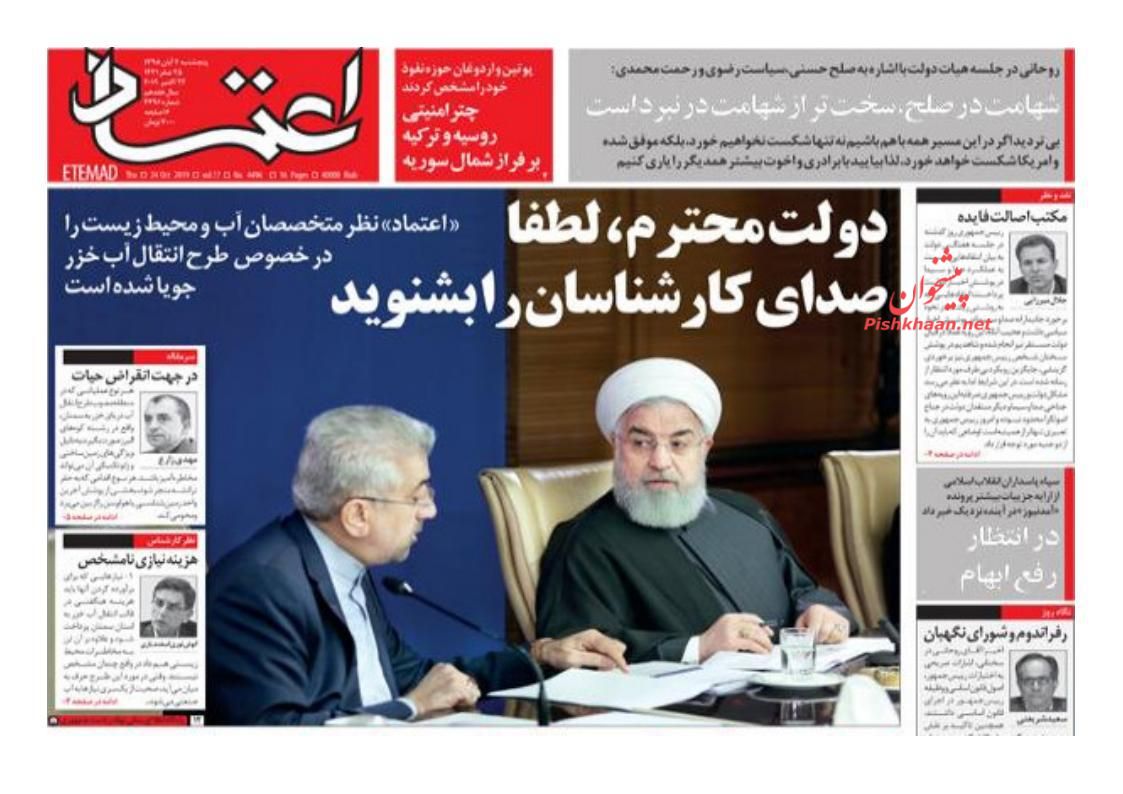
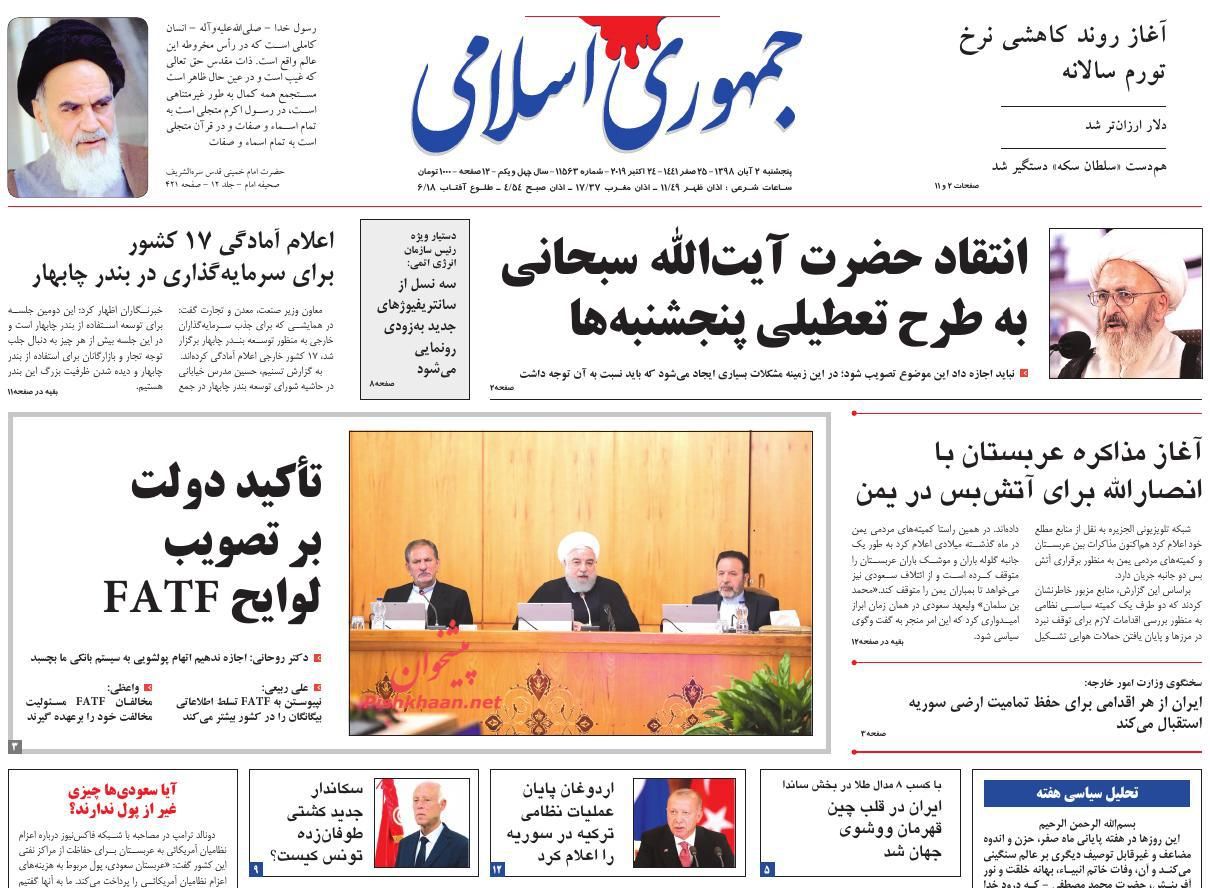
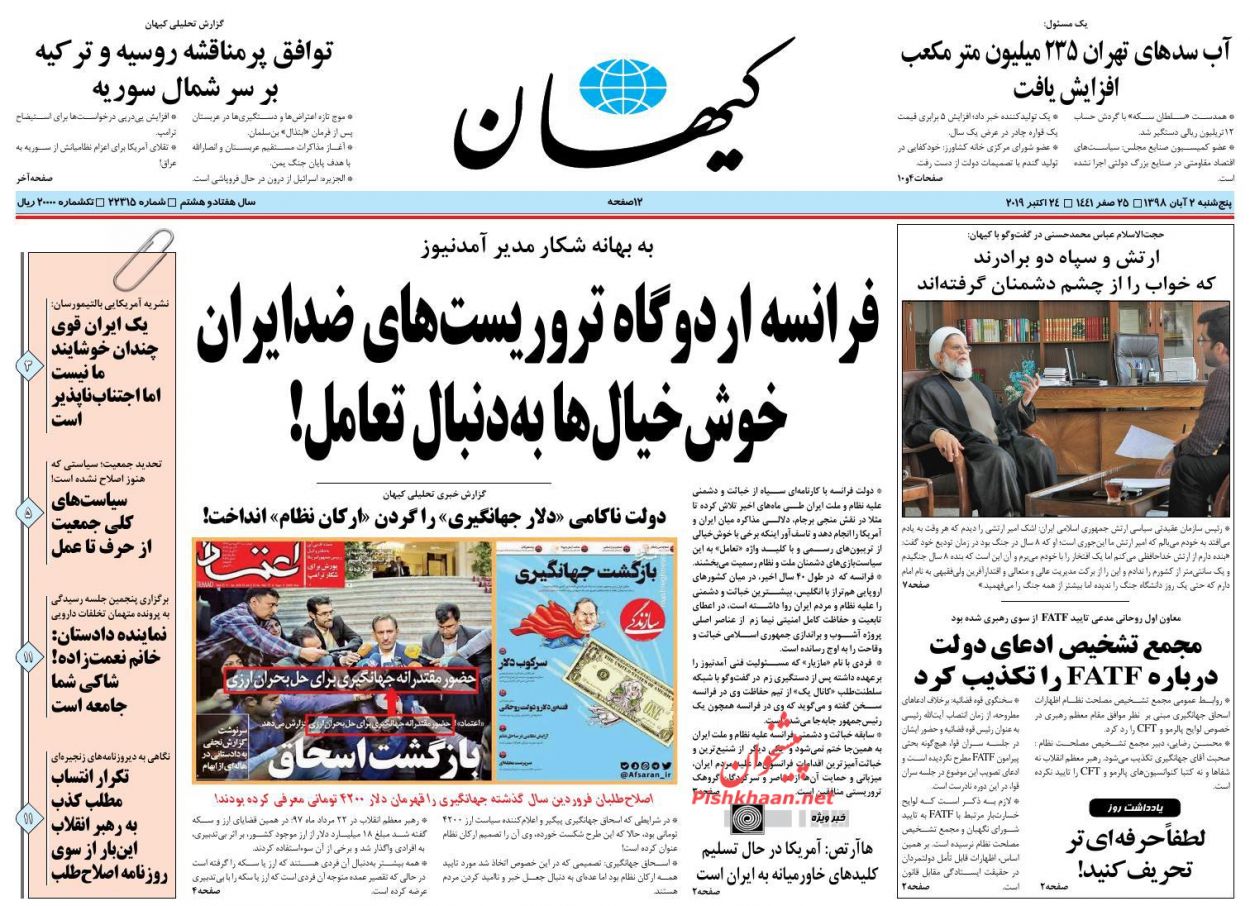
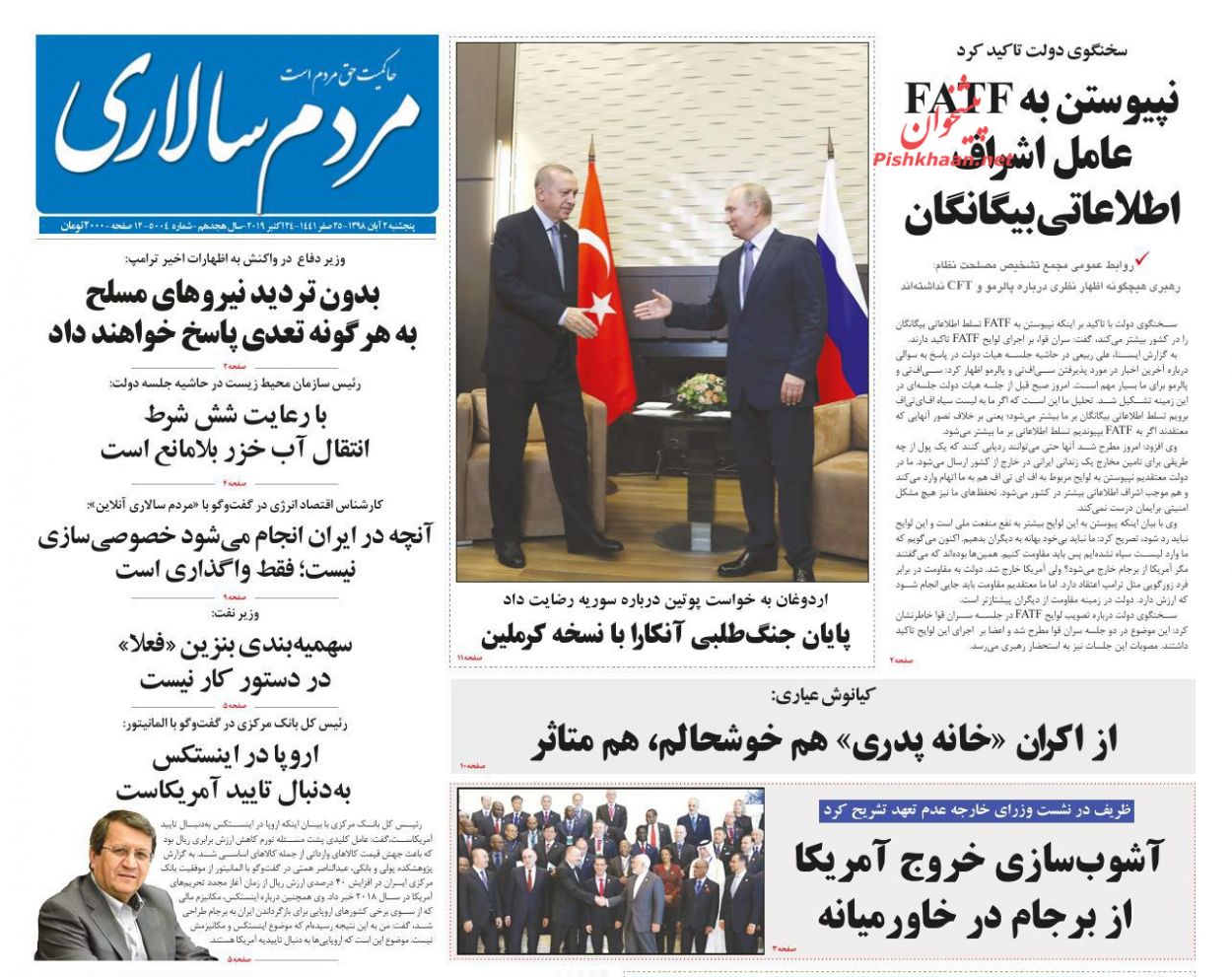
A Look at Iranian Newspaper Front Pages on September 30

A Look at Iranian Newspaper Front Pages on November 18

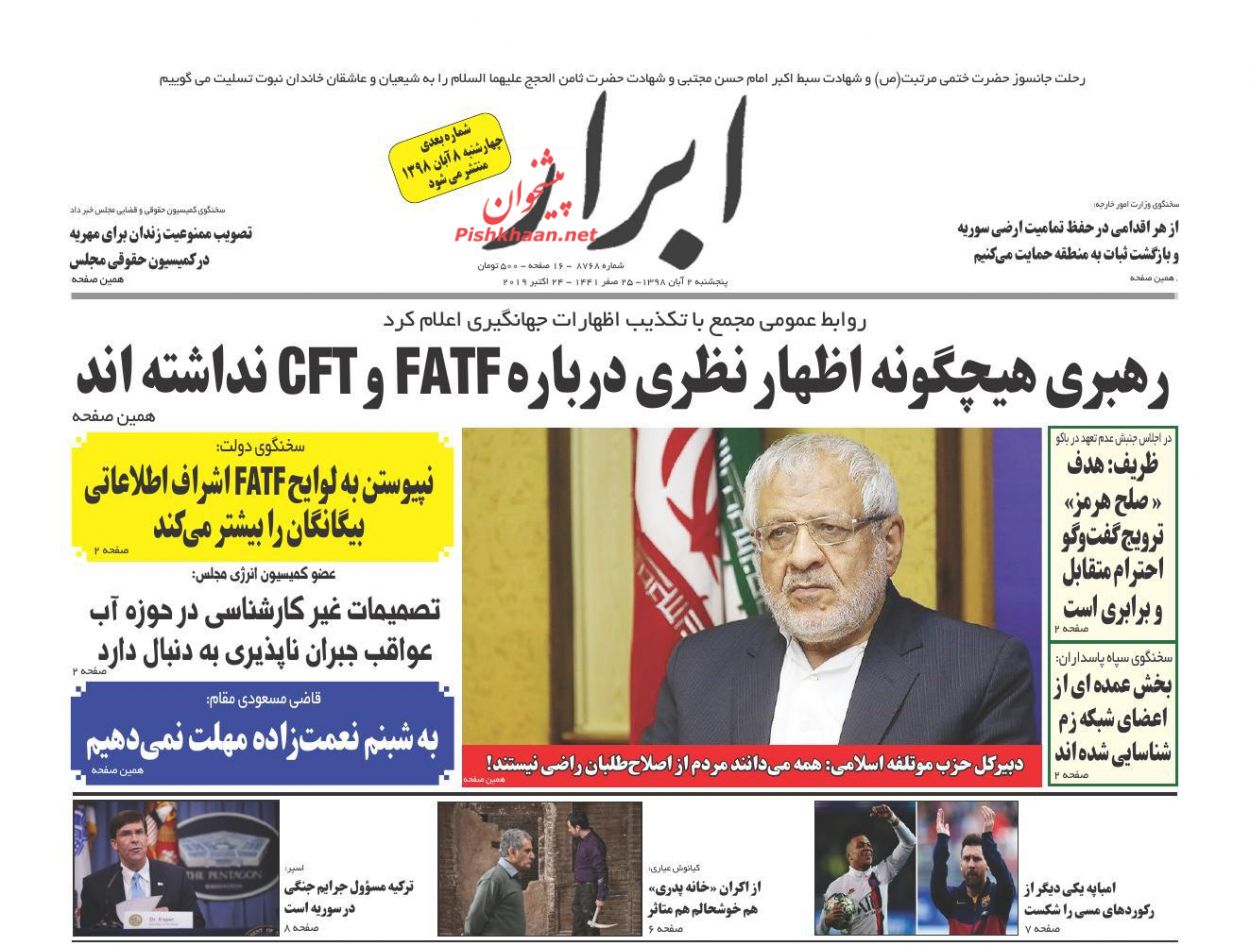
Abrar:

1- UN Special Envoy: Five Different Armies’ Presence in Syria Threaten Its Sovereignty

2- Zarif: Sanctions Removal Was Our Precondition for P5+1 Meeting with Rouhani

A Look at Iranian Newspaper Front Pages on September 30


Aftab-e Yazd:

1- MP: We’re Worried about Biological Assassination of Takht-Ravanchi

2- Democrats’ Gamble on Ukraine-Gate

3- Trump’s Impeachment Plan Only for Election Purposes

A Look at Iranian Newspaper Front Pages on September 30


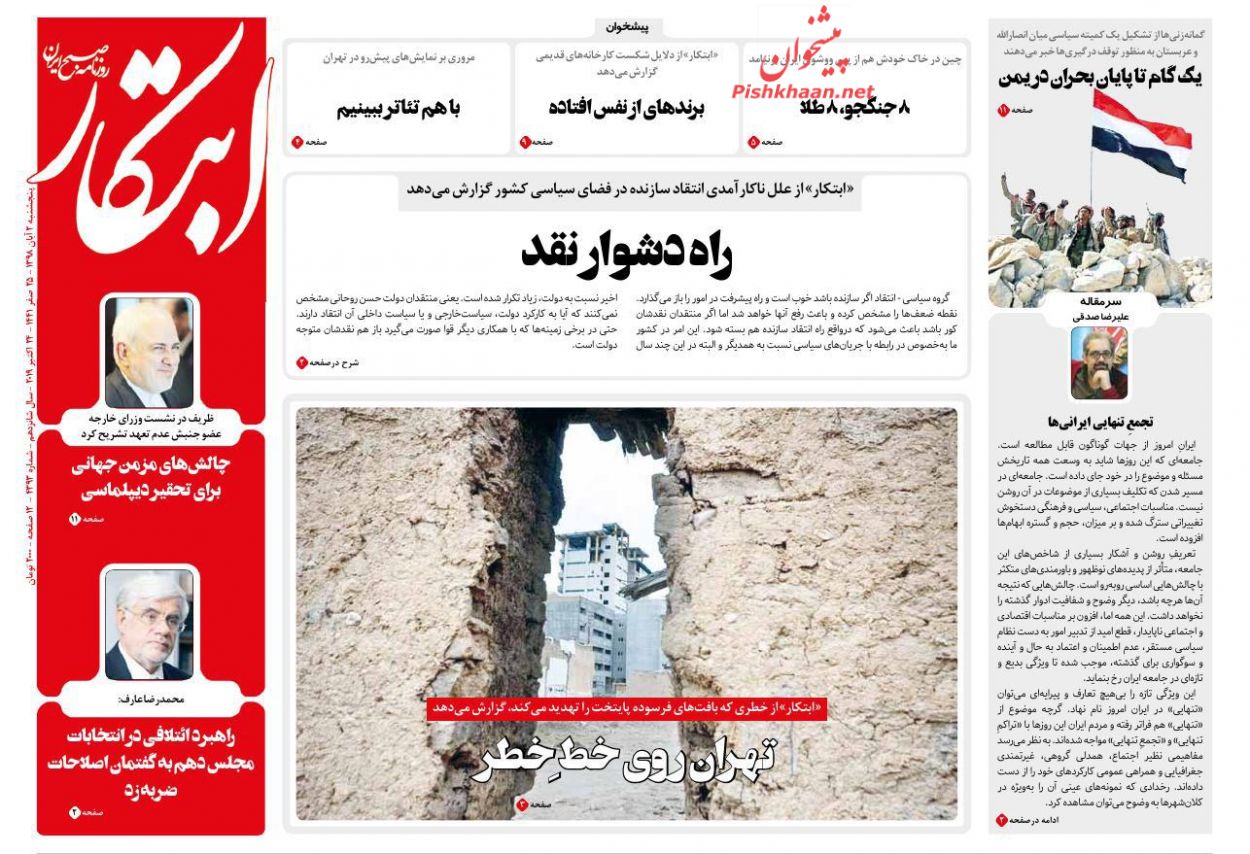
Ebtekar:

1- Yemeni Storm in Najran

2- Zarif to NBC News: Iran and US Are in Cyber-War

A Look at Iranian Newspaper Front Pages on September 30


Etemad:

1- Two Sources Discuss Why Rouhani, Trump Didn’t Meet

2- Saudi’s Strategic Mistake

* Yemen Provides Details of Its Great Operation

A Look at Iranian Newspaper Front Pages on September 30


Ettela’at:

1- Zarif: Whatever War US Starts, It Won’t Be Able to Finish

2- American People Support Trump’s Impeachment in Latest Poll

3- Judiciary Chief: We Should Listen to Labourers’ Protests Before Prosecuting Them

A Look at Iranian Newspaper Front Pages on September 30


Iran:

1- Several Members of US Congress Contact Zarif

2- Houthis’ Second Fatal Blow to Riyadh

A Look at Iranian Newspaper Front Pages on September 30


Javan:

1- Bin Salman Ready to Surrender: Trump Afraid of Impeachment

2- Trump: US in Unprecedented Danger

3- Riyadh’s Positive Response to Baghdad’s Offer to End Yemen War

A Look at Iranian Newspaper Front Pages on September 30


Jomhouri Eslami:

1- Brexit Crisis: Johnson May Receive Vote of No Confidence; Corbyn May Become PM

2- 40 Killed, 200 Wounded in Attacks of Afghan Election Day


A Look at Iranian Newspaper Front Pages on September 30


Kayhan:

1- 18 Months of Hollow Promises: Why Iran Must Stop Pinning Hope on EU

2- Ansarullah: Era of Al Saud, US’ Bullying Over

3- Zarif to NBC: Trump Only Interested in Meeting Iran, Regardless of Content

A Look at Iranian Newspaper Front Pages on September 30


Mardom Salari:

1- Parliament Approves Single-Urgency of Removing Zeroes from National Currency

A Look at Iranian Newspaper Front Pages on September 30


Setareh Sobh:

1- Thousands of Euros Robbed from Iranian Lawmaker’s House

2- Contradictory Reports of Ansarullah’s Great Operation against Saudi Coalition

A Look at Iranian Newspaper Front Pages on September 30


Shargh:

1- Saudi King’s Guard Murdered

2- Expert Discusses Three Decades of Iran’s Dealing with Taliban

A Look at Iranian Newspaper Front Pages on September 30

Afghan Peace Process Must Include All Afghan Groups: Iran

“The Islamic Republic of Iran basically agrees with any adoption of peaceful and democratic means of governing regional countries,” Mousavi told reporters in his press briefing on Monday.

“Iran supports the fact that the government, nation, and various groups of Afghanistan have adopted the approach of elections,” he noted.

“Iran believes the solution to current problems in Afghanistan is the presence of all political groups and players in the country, and that they – under the support and guidance of the central government of Afghanistan – are incorporated into a process that would finally result in peace and stability in the country and in our region,” he went on to say.

“The Islamic Republic of Iran supports a stable and secure Afghanistan, and has always – in its talks with Afghan groups – insisted on its principled policy, and will continue to do so,” he added.

People of Afghanistan headed to the polls on Saturday to pick their next president, even as the threat of violence and concerns over electoral fraud led many to stay home.

The vote, the fourth since the Taliban’s removal from power by a United States-led coalition in 2001, came as heavy fighting between the armed group and government forces has led to a spike in the number of civilians killed.

Abdullah Abdullah, Afghanistan’s chief executive and President Ashraf Ghani’s top rival, has claimed victory after the first round of voting in the presidential election over the weekend, though official counting is still under way.

“We have the most votes in this election,” Abdullah said at a news conference on Monday.

“The results will be announced by the IEC [Independent Election Commission], but we have the most votes. The election is not going to go to a second round,” he said.

EU’s Threat to Leave JCPOA ‘Laughable’: Iran

“I’m not informed about the European Union’s threat, but if they mean they would use some of these mechanisms in case Iran takes the fourth step, this is nonsense, unlawful, and illegal,” Mousavi told reporters on Monday.

“If they are thinking of – I don’t know – taking the issue to the Security Council or using the snapback and the like, I hereby tell them the move is already dead, because we had predicted compensatory measures for ourselves and for the other side in the JCPOA,” he added.

“Their compensatory measure was that if the Islamic Republic of Iran violates the JCPOA first, they could use the snapback mechanism. And if they breach the deal, Iran could take measures in line with the Articles 26 and 36 of the JCPOA, either step by step or all of a sudden.”

However, he said, it is quite laughable, unacceptable, and nonsense that they want to take compensatory measure against our compensatory measure. I hereby tell them not to bother.

His comments came after reports that the European Union has privately warned Iran it will be forced to start withdrawing from the nuclear deal in November if Tehran goes ahead with its threat to take new steps away from the deal.

Iran has already taken three separate calibrated steps away from the deal, and has warned it will take a fourth in November unless the US lifts economic sanctions.

The warning to Iran, pre-agreed by the three EU signatories to the 2015 deal, was made at a meeting on Wednesday, and makes clear that the agreement is now on life support.

The EU told Iran that it would put the issue of Iranian non-compliance into the agreement’s formal dispute mechanism if the next Iranian move away from the deal is significant.

Iran says it has been taking advertised, reversible and calibrated steps away from the deal as a reprisal for US sanctions, including its ban on Iranian oil exports, and the failure of the EU to do more to build trade with Iran. Tehran is due to take a fourth step on 7 November.